The average depth of the ocean is roughly 3,800 metres, yet sunlight strong enough for photosynthesis reaches only the top 200 metres or so. Most of Earth's ocean is permanently dark. With no light, the reasoning went, deep-sea creatures could only survive on the thin rain of organic particles — marine snow — drifting down from the surface. For a long time, that was the scientific consensus.
That consensus collapsed in 1977. At a depth of about 2,500 metres off the Galápagos Islands, a survey team found clusters of white tubes more than a metre long and a carpet of white clams. Hot fluid was venting from the seafloor, and that spot alone teemed with life like a different planet. How could such a dense community exist where no sunlight ever arrives? The answer lay in chemosynthesis — a second energy foundation that owes nothing to the sun.
This article follows the story in order: how hydrothermal vents form, the remarkable symbioses of the animals that live there, the debate over the origin of life, and the conservation questions raised by seabed mineral development. The deep sea may feel remote, but Japan hosts some of the world's richest concentrations of hydrothermal vents, which makes this anything but someone else's problem.
What you will learn
- Where hydrothermal vents form and why — plate boundaries and the circulation of seawater
- How chemosynthesis generates energy without relying on photosynthesis
- The shared symbiotic strategy behind tubeworms, vesicomyid clams and the Goemon squat lobster
- Extreme adaptations such as the scaly-foot snail's armour of iron sulphide scales
- Why hydrothermal vents are considered a leading candidate for the origin of life
- The international debate playing out between seafloor massive sulphide mining and ecosystem conservation
What is a hydrothermal vent? Where Earth's interior pours into the sea
A hydrothermal vent is, as the name suggests, a place on the seafloor where hot water is discharged. It helps to picture a hot spring, but the scale and the temperature are nothing like anything on land. The venting fluid frequently exceeds 300°C, and the only reason it does not boil is that the immense pressure of the deep sea keeps it liquid.
More importantly, this fluid is far more than hot water. On its journey underground it dissolves metal ions out of the rock, along with hydrogen sulphide, methane and hydrogen. To land-dwelling life most of those are poisons — but to certain deep-sea microbes they are a feast laid out on the table.
Hot fluid wells up where plates are born
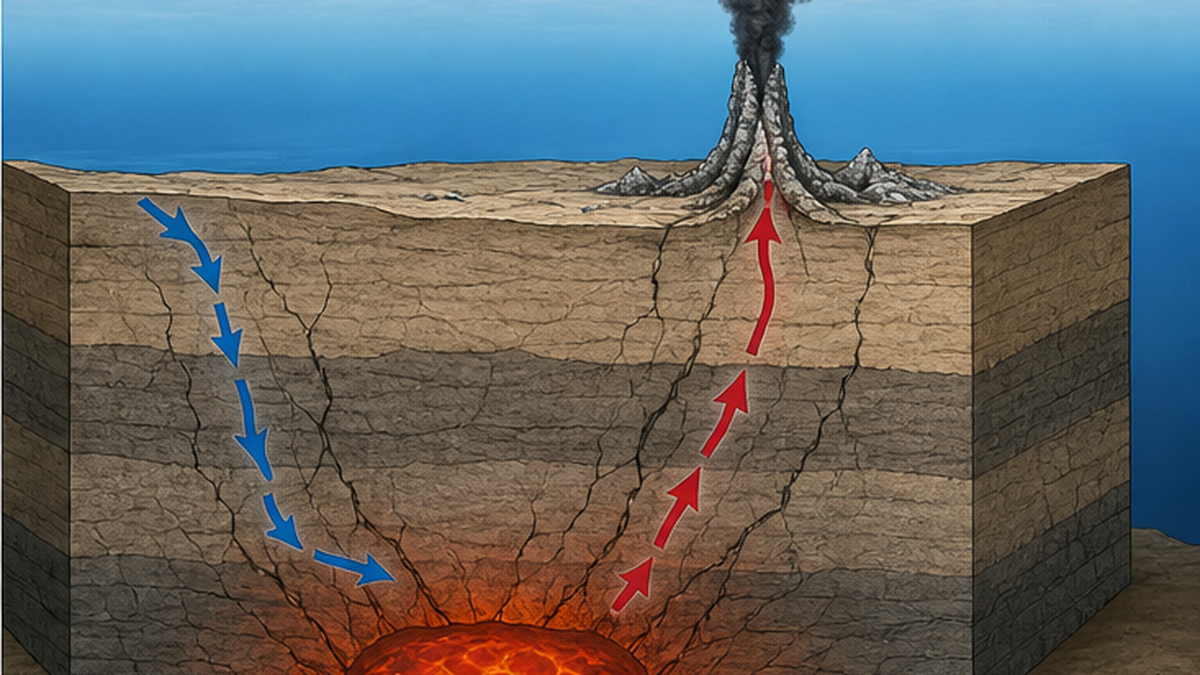
Hydrothermal vents form where heat is supplied from Earth's interior. The classic settings are mid-ocean ridges, where new oceanic plate is created, and back-arc basins, where the seafloor spreads behind a subducting plate. In both, magma chambers sit relatively close to the surface and the seafloor rock is riddled with fractures.
Cold seawater seeps into the crust through those fractures. As it descends several kilometres it is heated by the magma and reacts vigorously with the surrounding basalt. Magnesium and sulphate ions are taken up by the rock, while iron, copper, zinc and manganese — along with hydrogen sulphide — are leached out into the water. Now hot and buoyant, the fluid turns upward and eventually bursts out of a vent on the seafloor. That is the hydrothermal circulation loop in full.
In other words, a hydrothermal vent is the outlet of a pipe connecting Earth's interior to the ocean. The entire volume of the ocean is estimated to pass through this circuit once every few million to ten million years, which means hydrothermal circulation helps regulate the chemistry of seawater itself.
Many readers will wonder why 300°C water does not simply boil. The answer is pressure. At 2,000 metres depth the pressure reaches roughly 200 atmospheres, and — exactly as in a pressure cooker — the boiling point rises dramatically. In the deep sea water stays liquid well above 300°C, so the fluid jets out rather than turning to steam. Put another way, this phenomenon cannot be reproduced at the surface: the deep-sea setting is itself a precondition for the ecosystem.
Black smokers and white smokers
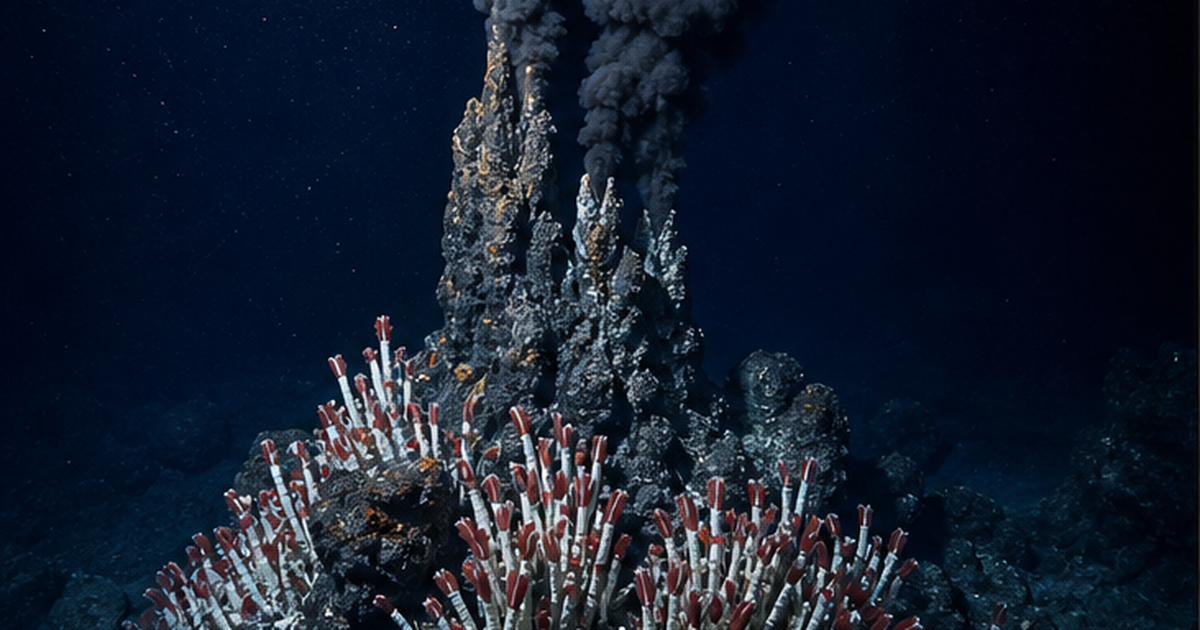
When the hot fluid meets cold seawater — the deep ocean sits at around 2°C — the dissolved metals precipitate instantly as solid particles. Where those particles billow up like black smoke, the vent is called a black smoker. The darkness comes mainly from fine particles of iron and copper sulphides, and such vents commonly reach 300–400°C.
Where the discharge temperature is lower, paler minerals such as barite, silica and anhydrite precipitate instead, producing what looks like white smoke: a white smoker. The precipitated minerals pile up around the opening to build the chimney structures that define these sites. A chimney is essentially a mass of sulphide ore — and, as we will see, the physical substance of a seafloor massive sulphide deposit.
| Property | Vent fluid (black smoker) | Surrounding deep seawater |
|---|---|---|
| Temperature | Typically 300–400°C (464°C observed at the extreme) | About 2°C |
| pH | Strongly acidic (often around pH 3) | Slightly alkaline (about pH 8) |
| Oxygen | Essentially absent (reducing) | Dissolved oxygen present |
| Hydrogen sulphide | Present at high concentration | Almost none |
| Metals | Iron, copper and zinc at high concentration | Only trace amounts |
The highest temperature on record is 464°C. Reported by Koschinsky and colleagues in the journal Geology in 2008, it was measured at a vent called Two Boats near 5°S on the Mid-Atlantic Ridge. The critical point of seawater is 298 bar and 407°C, which means this fluid was in a supercritical state — neither liquid nor gas. Conditions this extreme still occur routinely on the seafloor of our own planet.
1977: the community that should not have existed, off the Galápagos
The existence of hydrothermal vents had been predicted theoretically by the early 1970s. Heat-budget calculations for the ocean floor simply did not balance unless hot fluid was escaping somewhere. But when researchers finally saw one with their own eyes, the shock went far beyond anything geology had anticipated.
A geology cruise that rewrote biology
In 1977 a survey team led by the geologist Jack Corliss dived on the Galápagos Rift in the crewed submersible Alvin. The objective was simply to confirm hydrothermal venting, and no biologist was aboard — nobody expected to find animals there.
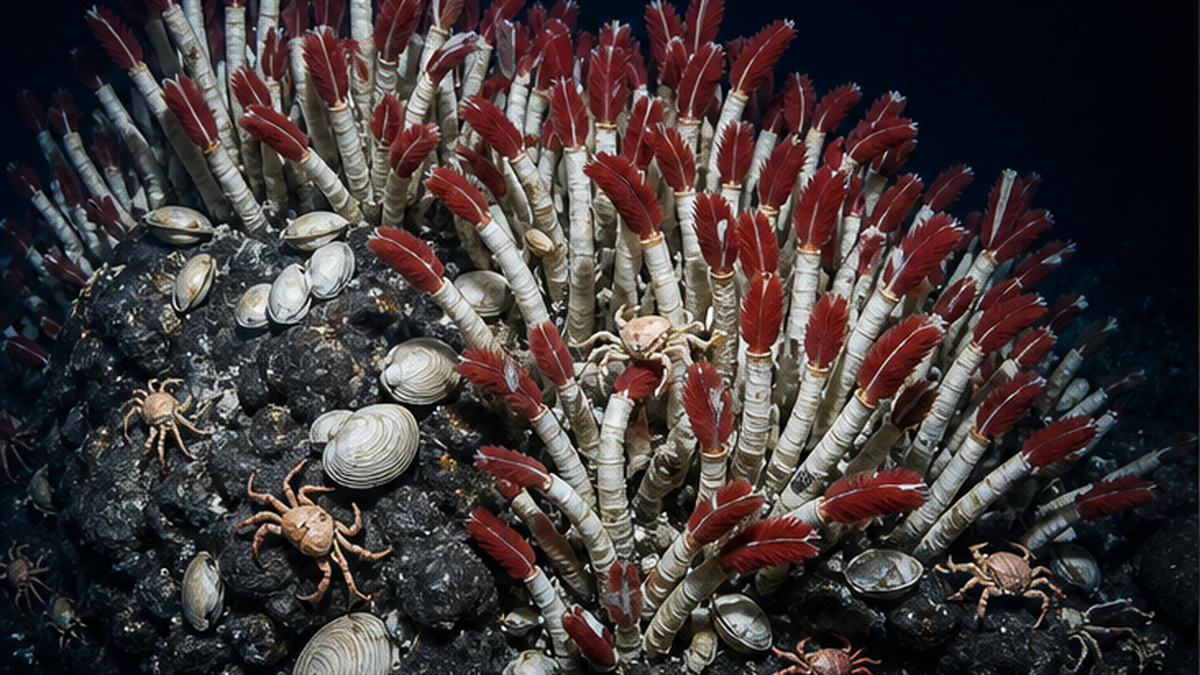
What the floodlights revealed instead was a forest of white tubes tipped with waving, blood-red plumes. Beneath them lay dense beds of white clams the size of a human palm, with crabs and shrimp moving among them. The surrounding seafloor was a near-lifeless desert; only the area around the vent was as busy as a city.
The giant tube-dwelling animal was later described as Riftia pachyptila. It can reach two metres in length, and when dissected it turned out to have no mouth, no gut and no anus. An animal with no feeding apparatus was growing to enormous size in the deep sea. That contradiction was the doorway to the next discovery.
Chemosynthesis — a second energy base independent of light
The puzzle was solved by Colleen Cavanaugh, then a graduate student, and colleagues. Their 1981 paper in Science showed that a spongy organ inside the worm called the trophosome was packed with bacteria that obtain energy by oxidising sulphur. It was the first confirmed symbiosis between an animal and sulphur-oxidising chemosynthetic bacteria.
The tubeworm was not failing to eat: it was carrying a farm inside its body. Through its red plume it takes up hydrogen sulphide, oxygen and carbon dioxide and delivers them to the bacteria, which use them to synthesise organic matter; the worm then lives on what the bacteria produce. This was the first demonstration that a food web independent of sunlight exists on Earth.
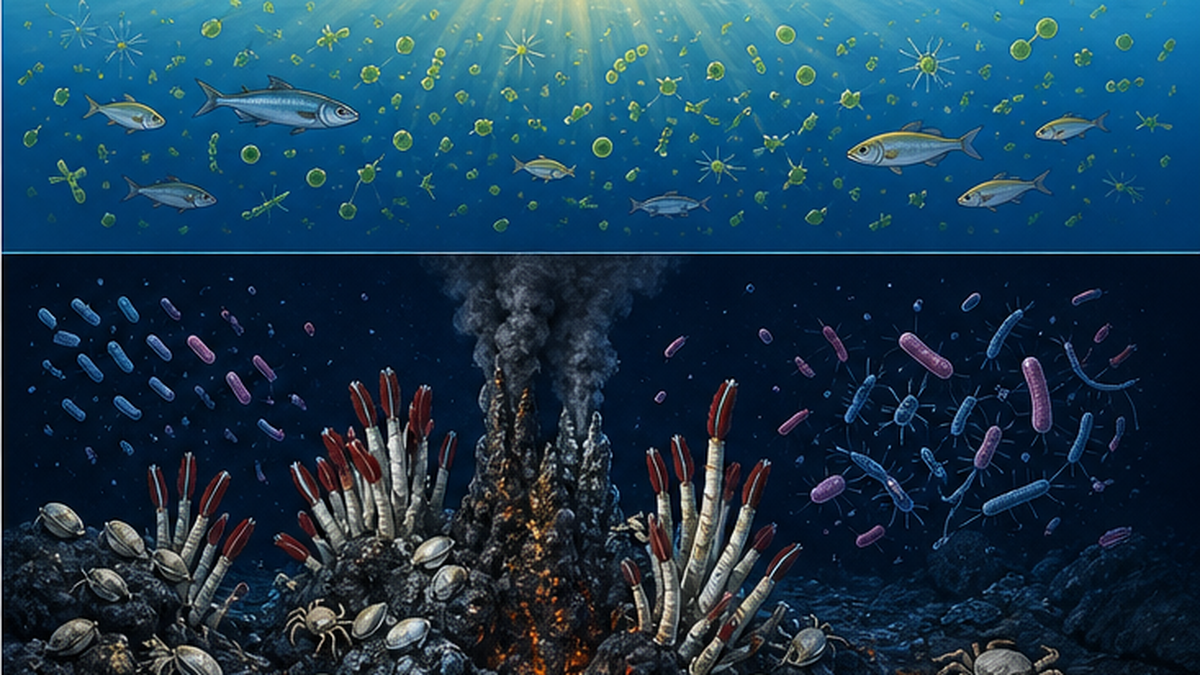
Ever since the discovery, researchers have asked how self-sufficient this ecosystem really is. Strictly speaking, vent animals still depend on surface photosynthesis for oxygen: the oxygen dissolved in deep water was originally produced by phytoplankton near the surface and carried downward with cold water masses. Even so, the fact that these communities generate their own food without any input from the sun is what fundamentally rewrote our picture of life on Earth.
What the 1977 discovery changed
- It overturned the assumption that every ecosystem on Earth ultimately traces back to sunlight
- It greatly widened the range of conditions under which life is thought possible, influencing the search for life beyond Earth
- It showed the deep sea is not a uniform desert but contains local hotspots of extraordinary productivity
Hydrogen sulphide instead of light: how chemosynthesis works
The word chemosynthesis may be unfamiliar, but the idea closely parallels photosynthesis. Both assemble organic matter — food — out of carbon dioxide. The single difference is where the energy for that assembly comes from.
How sulphur-oxidising bacteria extract energy
Hydrogen sulphide (H₂S), abundant in vent fluid, releases energy when it reacts with oxygen. Sulphur-oxidising bacteria run that reaction under controlled conditions inside their cells and use the released energy to build sugars and other organic compounds from carbon dioxide. Where plants use light energy to do the same job, these bacteria use chemical energy.
Crucially, both hydrogen sulphide and oxygen are required. The vent fluid itself contains almost no oxygen, while the surrounding seawater contains no hydrogen sulphide. Chemosynthesis is therefore most active in a narrow band where fluid and seawater mix. That chemical constraint is exactly why vent communities cluster in rings around the chimneys.
- Sulphur oxidation — oxidises hydrogen sulphide or elemental sulphur; the most common type at vents
- Methane oxidation — oxidises methane; dominant at methane-rich vents and cold seeps
- Hydrogen oxidation — oxidises hydrogen; considered important at alkaline vents driven by serpentinisation
- Iron and manganese oxidation — oxidises dissolved metal ions; seen at low-temperature vent sites
Photosynthesis and chemosynthesis: what differs, what does not
Set side by side, the two turn out to share a strikingly similar design. In both cases autotrophs — organisms that make their own organic matter — form the base, with consumers stacked above. What differs is the energy source and which planetary process ultimately supplies it.
| Property | Photosynthetic ecosystem | Chemosynthetic ecosystem |
|---|---|---|
| Energy source | Sunlight | Chemical energy in hydrogen sulphide, methane, hydrogen |
| Main producers | Plants, phytoplankton, algae | Sulphur-oxidising bacteria, methanotrophs, archaea |
| Carbon feedstock | Carbon dioxide | Carbon dioxide (the same) |
| Where it occurs | The sunlit layer, roughly the top 200 m | Vent fields, cold seeps, whale-fall communities |
| Underlying process | Nuclear fusion in the sun | Earth's internal heat and plate tectonics |
One point is easily overlooked: chemosynthetic systems have exceptionally high productivity. On the surrounding abyssal plain, organisms scrape by on the meagre organic matter sinking from above, and biomass per unit area is tiny. Around a vent, by contrast, local biomass can rival that of a shallow seagrass meadow. On a spot that is vanishingly small in the context of the whole deep sea, life is packed at astonishing density.
Chemosynthetic ecosystems are not confined to vents. Cold seeps, where methane and hydrogen sulphide ooze out at ambient temperature, and whale-fall communities, which develop as a whale carcass decomposes on the seafloor, run on the same chemistry. JAMSTEC and the Enoshima Aquarium have worked jointly to reproduce all three types of chemosynthetic ecosystem in aquarium tanks.
Symbiosis as a survival strategy: farming bacteria inside and out
Survey the animals of a hydrothermal vent and a pattern emerges: almost every species is in some kind of partnership with chemosynthetic bacteria. Hydrogen sulphide is, after all, a potent poison that blocks respiration. Detoxifying it while turning it into energy is no small feat — so evolution, in effect, decided to team up with organisms that were already good at it.
The tubeworm with no mouth and no gut
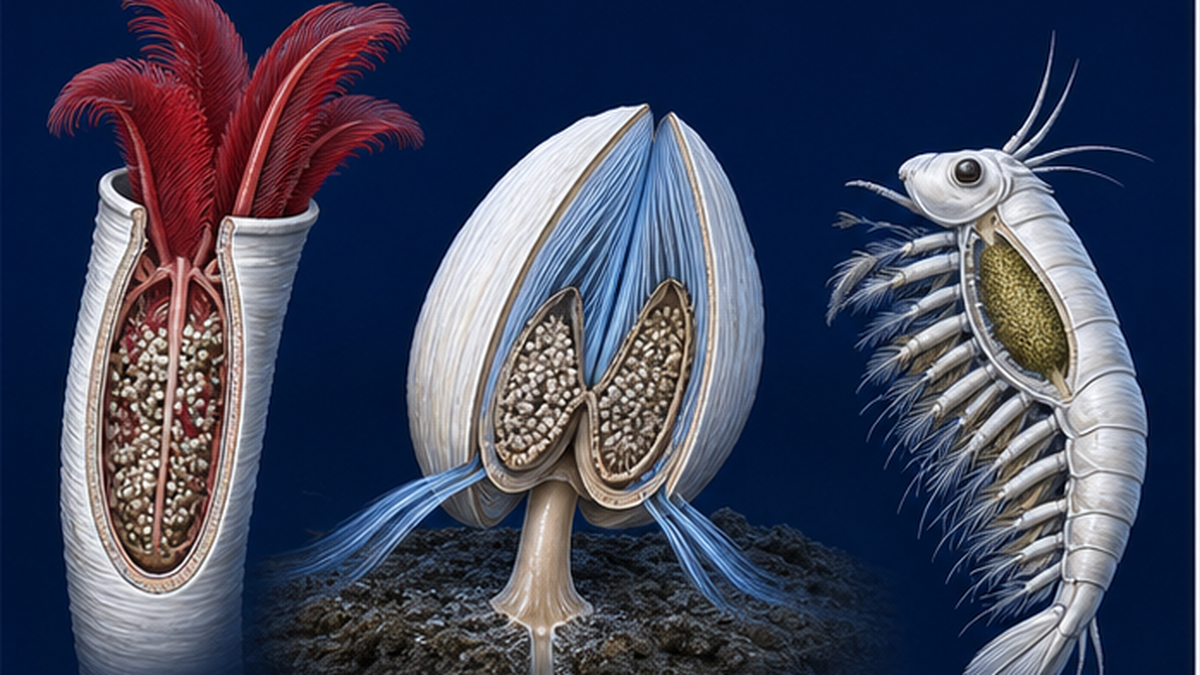
Tubeworms represent the extreme end of that strategy. As larvae they briefly possess a mouth and gut, and during that window they take up symbiotic bacteria from the surrounding seawater. Once the bacteria are secured the digestive organs degenerate, the trophosome develops in their place, and bacteria come to account for a substantial share of the animal's body mass. It never uses a mouth again.
The red plume owes its colour to haemoglobin, just as our blood does. The tubeworm's haemoglobin is unusual, however: it can carry oxygen and hydrogen sulphide simultaneously, at separate binding sites. Hydrogen sulphide normally poisons oxygen transport, and this arrangement is what allows both to be delivered safely to the bacteria.
The growth this symbiosis supports is remarkable. Under favourable conditions Riftia pachyptila has been reported to grow as much as 85 cm in a year, among the fastest rates known for any marine invertebrate. Vents are ephemeral, shutting down within years to decades. To leave descendants in a habitat that could vanish at any moment, an animal has little choice but to grow fast and reproduce fast — and that urgency is written into these growth rates.
Vesicomyid clams that house bacteria in their gills
The white bivalves that carpet vent and seep floors are vesicomyid clams (including the genus Calyptogena). They keep sulphur-oxidising bacteria inside their gill cells and live on the organic matter those bacteria produce. Their digestive tract is reduced, though not abolished as completely as in tubeworms.
What is fascinating is how they use their bodies. The clam pushes its elongated foot down into the sediment to draw up hydrogen sulphide, while its exposed gills take oxygen from the seawater above. The animal turns itself into a bridge between two chemically incompatible worlds. In Japanese waters, large colonies are known from seep sites such as those off Hatsushima in Sagami Bay and along the Nankai Trough.
The Goemon squat lobster, which farms bacteria on its hairs
The signature animal of Japan's vent fields is the Goemon squat lobster (Shinkaia crosnieri) of the Okinawa Trough. Its name alludes to the outlaw Ishikawa Goemon, boiled alive in a cauldron, because the animals crowd around cauldron-like pools of hot fluid. Its underside is covered with dense setae, and those hairs host both sulphur-oxidising and methane-oxidising bacteria.
That the hair bacteria nourish the lobster had long been suspected, but proving it was hard because deep-sea animals rarely survive collection. A JAMSTEC group developed a capture method that gradually removes dissolved gases from the body to prevent bubble formation, brought animals up alive, and in 2014 demonstrated through rearing experiments that the lobster uses its mouth to harvest and ingest the symbionts growing on its own setae. Rather than housing bacteria internally, it cultivates them externally and eats them — aquaculture, deep-sea style.
Symbiosis comes with one unavoidable problem: how does the next generation reach a new vent? Vent fields are scattered islands in the ocean, and each one falls silent within years to decades. Staying where your parents lived is not an option.
Most vent animals solve this by broadcasting larvae into the currents. Hatchlings drift for a period, travelling tens to hundreds of kilometres, and only those that happen to settle at another active vent survive to grow. In many symbiotic species the bacteria are not inherited directly from the parent but acquired afresh from seawater at the new site. Vent ecosystems are therefore maintained as a vast network loosely stitched together by larval dispersal — a fact that bears directly on the conservation questions discussed later.
Three broad patterns of symbiosis
- Internal (intracellular) symbiosis — the tubeworm trophosome, vesicomyid gill cells: bacteria are enclosed within the body
- External symbiosis — the setae of the Goemon squat lobster, the body surface of vent crabs: bacteria are cultivated outside and consumed
- Grazing on free-living bacteria — snails and small crustaceans scrape microbial mats from rock surfaces or the water column
Bodies built for extremes: the scaly-foot snail and the Pompeii worm
Beyond symbiosis, some vent animals have features that invite the question: why build a body like that? Heat, pressure, strong acidity, heavy metals and highly toxic sulphides all combine here. In a place that ought to be uninhabitable by terrestrial standards, evolution has produced some singular solutions.
A snail in iron-sulphide armour
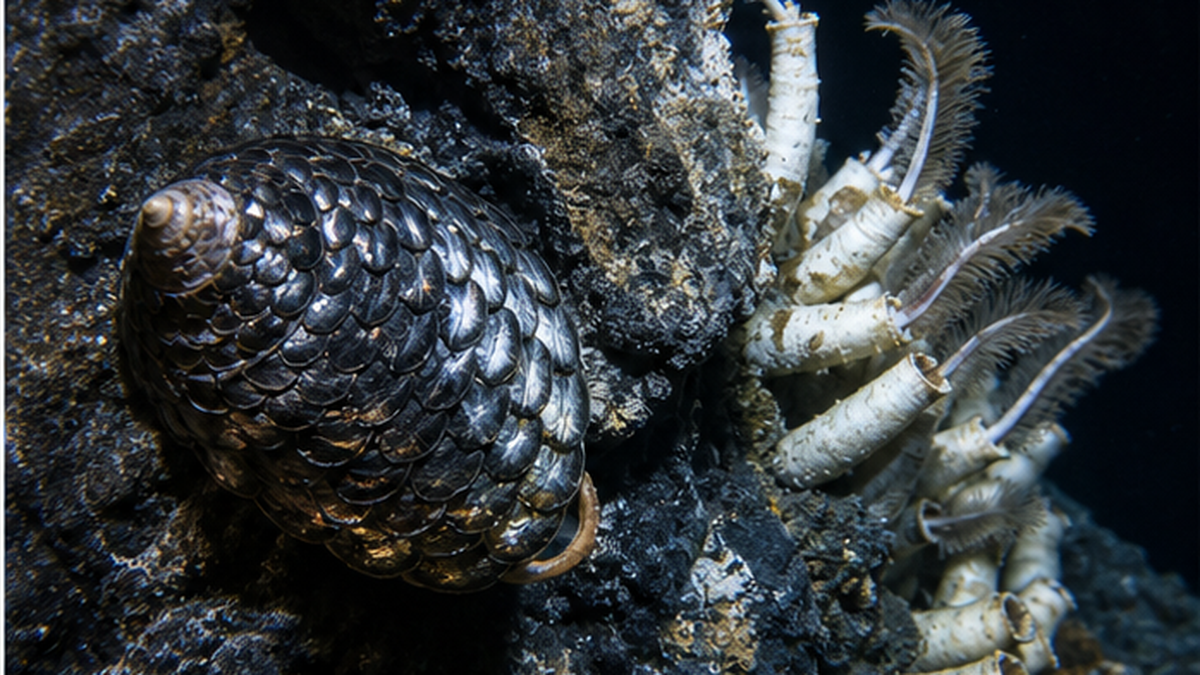
In the deep Indian Ocean lives a snail clad in metal scales: the scaly-foot snail. The scales around its foot are made of iron sulphide, a feature unmatched anywhere in the animal kingdom. Because iron sulphide responds to a magnet, this is also known as the animal that sticks to magnets.
The first specimens were collected from the Kairei vent field on the Central Indian Ridge, at a depth of roughly 2,400 metres. It was reported in Science in 2003, but the formal name Chrysomallon squamiferum was not assigned until 2015, more than a decade after its discovery. The genus name means 'golden fleece', a nod to the Greek myth. JAMSTEC has published a detailed account of how the research unfolded.
Read the research historyA short history of scaly-foot snail research | JAMSTEC BASEHow the iron-scaled snail of the Indian Ocean vents went from discovery to formal description and endangered listing (in Japanese)🔗 jamstec.go.jpIntriguingly, the snail changes appearance from one vent field to another. Populations that incorporate iron sulphide into their scales look black, while those at iron-poor vents are pale. Within a single species, the chemistry of the surroundings is expressed directly in the colour and material of the body. Few examples show so plainly how tightly biology and geology are coupled.
The Pompeii worm, straddling a thermal gradient
At eastern Pacific vents, the Pompeii worm (Alvinella pompejana) builds tubes on chimney walls. Its back is coated with a mat of bacteria, giving it the appearance of a body buried in volcanic ash — hence the name. The rear of the tube sits close to the hot fluid while the opening is bathed in cold seawater, so the worm is described as living across two radically different thermal environments at once.
Early observations put the back of the tube near 80°C, and the worm was celebrated as the most heat-tolerant animal known. Later work, however, has raised careful questions about how such measurements were made and where the true limit lies, and the experimentally confirmed ceiling may be somewhat lower. Even so, given that most animals suffer tissue damage at a few tens of degrees, its adaptation to extremes is not in doubt.
These adaptations extend inside the body as well. Some vent animals have enhanced systems for repairing heat-damaged proteins; others sequester heavy metals in harmless forms within their tissues. Tolerance of hydrogen sulphide works the same way: living calmly at concentrations that would halt respiration in most animals is possible because of specialised proteins that bind and transport sulphide. The more extreme the environment, the more inventive the solution — vent animals are a showcase of exactly that.
Treat 'world record' figures with care
Record-setting numbers for deep-sea animals are often revised by later research, because measurement conditions are so constrained. The Pompeii worm's heat tolerance is one such case. When reading about the deep sea it pays to look past the number itself and ask how it was measured.
Japanese waters are a treasure house of hydrothermal vents
Hydrothermal vents are scattered across the world's oceans. Version 3.4 of the international InterRidge database (2020) records 721 vent fields, of which 666 are confirmed or inferred to be active. That is only the count of sites found so far, however; given how little of the deep sea has been surveyed, the real number is thought to be far higher.
The Okinawa Trough, the Izu-Ogasawara Arc and the southern Mariana Trough
The Japanese archipelago sits where several plates converge, and as a result the country hosts one of the world's densest concentrations of hydrothermal vent fields. The best known are the Okinawa Trough behind the Nansei Islands, the volcanic Izu-Ogasawara Arc, and the southern Mariana Trough. All lie within or near Japan's exclusive economic zone (EEZ) and have been surveyed continuously by Japanese research institutions.
Fluid chemistry and fauna vary by region. Okinawa Trough fluids pass through sedimentary layers and are consequently rich in methane and ammonia, supporting distinctive communities such as the Goemon squat lobster and vent crabs. Mid-ocean-ridge-type fields with little sediment are dominated by a different cast of species. The chemistry of the fluid determines which organisms can live there.
| Region | Tectonic setting | Characteristics |
|---|---|---|
| Okinawa Trough | Back-arc basin behind the Nansei Islands | Sediment-hosted fluids rich in methane and ammonia; distinctive fauna including the Goemon squat lobster |
| Izu-Ogasawara Arc | Volcanic island arc | Volcanic vent fields scattered across calderas and seamounts |
| Southern Mariana Trough | Junction of back-arc basin and island arc | Diverse vent types in close proximity, useful for comparative research |
| Central Pacific and Indian Ocean | Mid-ocean ridges surveyed by Japanese vessels | Classic high-temperature black smokers; home of the scaly-foot snail |
Submersibles and remotely operated vehicles make the research possible
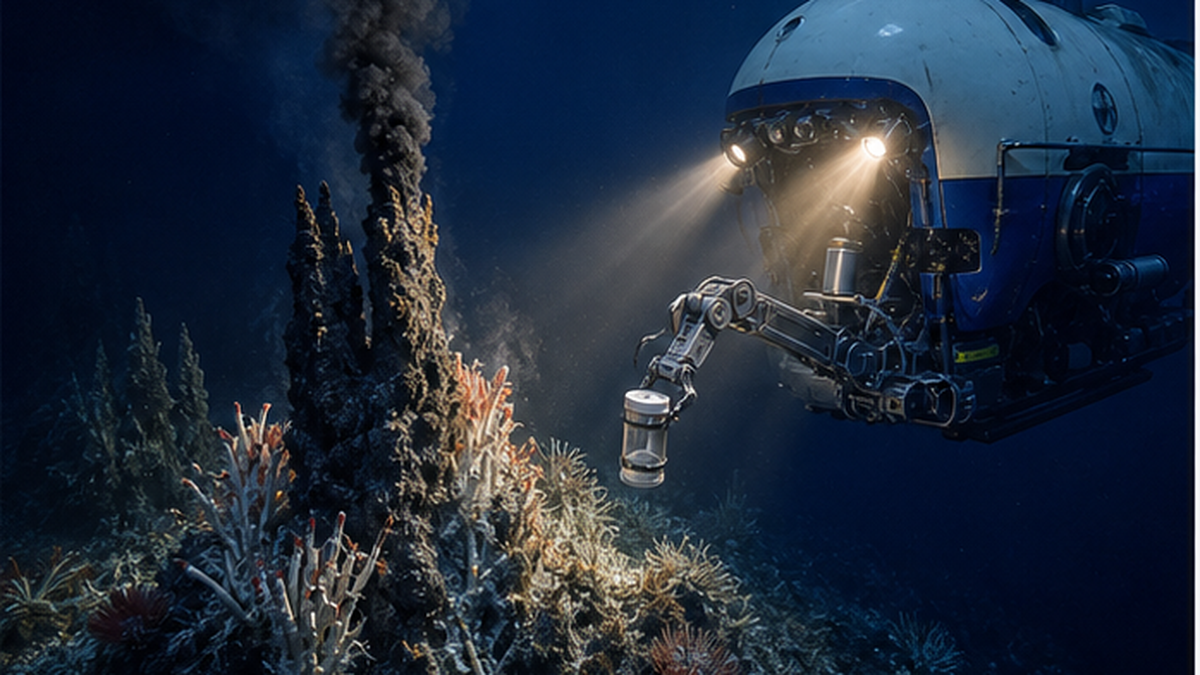
Observing the seafloor below 2,000 metres directly requires dedicated hardware. Japan has deployed the crewed submersible Shinkai 6500, remotely operated vehicles (ROVs) and autonomous underwater vehicles (AUVs). In recent years, devices that bring living deep-sea animals to the surface under pressure, and shipboard systems for keeping them alive, have advanced to the point where deep-sea biology is shifting from observation to experiment.
New findings continue to emerge about the vents themselves. In January 2026 a group at Tohoku University announced that they had explained how the growth of chimneys promotes a deep-sea electricity generation phenomenon that converts heat into electrical energy. Vents may be not merely a source of chemicals but also a site where electrical energy is produced — a possibility with implications for microbial metabolism and for the origin of life.
What repeated surveys have made clear is that vents are dynamic features that constantly appear and disappear. If the underground plumbing shifts, venting stops and the community vanishes within a few years. Where a new fissure opens, animals colonise within years. There are documented cases of a community being wiped out by seafloor volcanic activity and of the subsequent recovery being tracked. Vent fields are not stable paradises but places of continual reset and regrowth.
For more on deep-sea adaptation itself, see The extraordinary adaptations of deep-sea creatures: how life survives extreme environments. Reading both gives a fuller sense of just how unusual vent organisms really are.
Did life begin here? What Lost City suggests
Hydrothermal vents hold attention for more than their unusual animals. There is a hypothesis that the first life on Earth arose in exactly such a place. Around four billion years ago there was no ozone layer and no stable land environment; intense ultraviolet radiation and meteorite impacts battered the surface. The deep sea was one of the few available refuges.
Lost City — alkaline fluid produced by serpentinisation
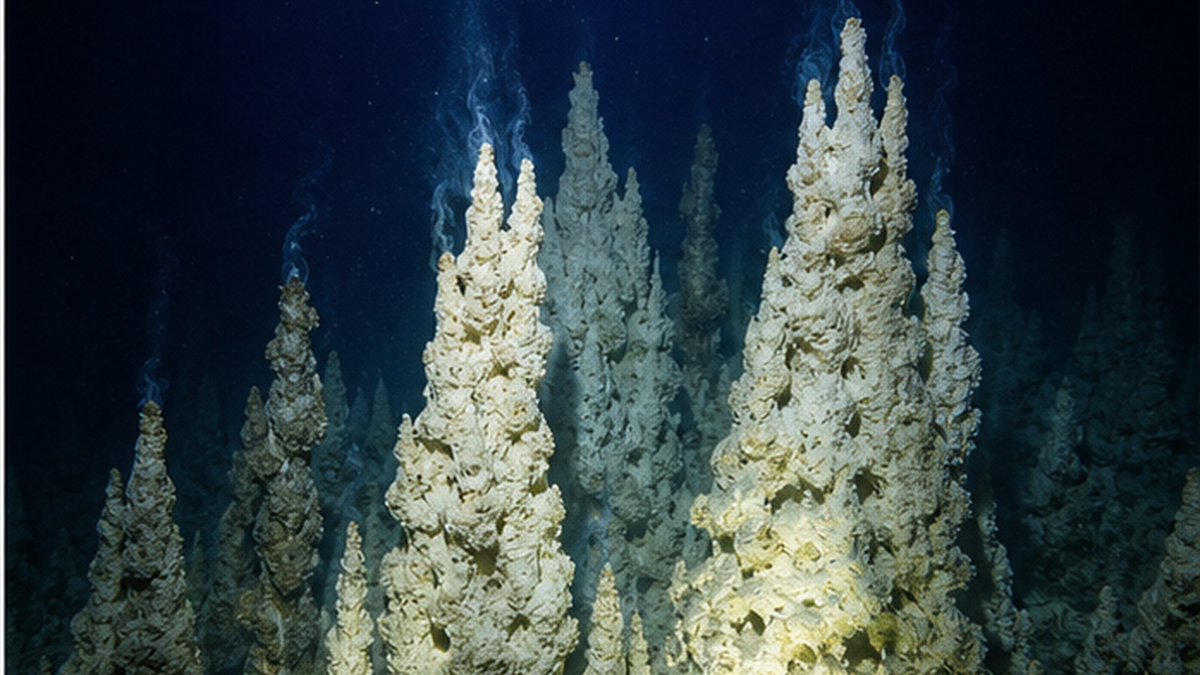
The site that matters most to this debate is Lost City, discovered in 2000 on the Atlantis Massif of the Mid-Atlantic Ridge. It is fundamentally unlike a typical black smoker. The heat comes not from magma but from serpentinisation — the chemical reaction between mantle-derived peridotite and seawater.
That reaction turns the water strongly alkaline and generates large quantities of hydrogen and methane. The venting fluid is a comparatively mild 40–90°C, far below the 300°C-plus of black smokers. What precipitates is carbonate rather than sulphide, producing a forest of white towers — the landscape that earned the site its name.
Equally striking is its longevity. Strontium, carbon and oxygen isotope data together with radiocarbon dating indicate that hydrothermal activity at Lost City has continued for at least 30,000 years. Compared with black smokers that fall silent within years to decades, that is two orders of magnitude more stable. For the long chemical trial and error required before life could emerge, that sheer span of time may have been exactly what was needed.
Recreating primordial metabolism in the laboratory
The hydrogen supplied by serpentinisation is the raw material for reducing carbon dioxide into organic matter. Laboratory work under vent-like conditions has indeed produced simple organic acids such as formate and acetate from carbon dioxide and hydrogen. These overlap with the intermediates of the metabolic pathways considered most ancient among modern microbes.
Where alkaline fluid meets mildly acidic primordial seawater, a natural pH gradient arises. Given that modern cells generate their energy currency (ATP) from a proton concentration difference across a membrane, the idea that the prototype of that machinery was already present in the fine pores of vent minerals is genuinely compelling.
The question is far from settled
Several strong competing hypotheses exist for the origin of life, including one that points to cycles of wetting and drying in shallow hot springs or tide pools. The vent hypothesis is among the best-studied candidates, but it is worth remembering that nothing has been proven about where life actually began.
The debate extends beyond Earth. Jupiter's moon Europa and Saturn's moon Enceladus are thought to harbour liquid oceans beneath their ice, possibly with hydrothermal activity on their seafloors. If a hydrothermal vent alone is enough to sustain life, those sunless oceans might hold life too. Exploring the deep sea is, in that sense, also astrobiology.
Seafloor massive sulphides: between resource development and conservation
The chimneys built by hydrothermal vents are masses of sulphide enriched in copper, lead, zinc, gold and silver. Some ore bodies mined on land today are thought to have formed by seafloor hydrothermal activity before being uplifted. A hydrothermal vent, in other words, is an ore deposit forming in front of our eyes.
Japan achieved the world's first continuous ore lifting
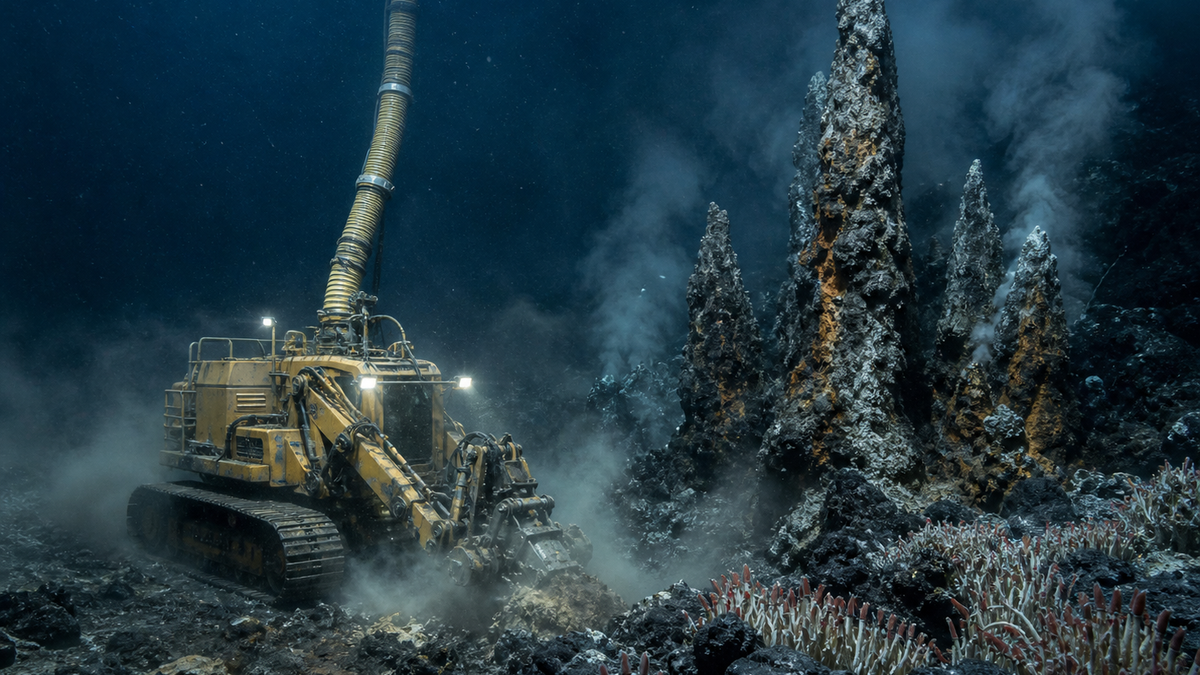
For a resource-poor country, seafloor massive sulphides inside the EEZ look attractive. In 2017, JOGMEC (the Japan Organization for Metals and Energy Security) announced that it had excavated and collected ore at about 1,600 metres depth off Okinawa and lifted it continuously to the surface using a submersible pump and riser pipe — the world's first successful mining and lifting pilot test. Technically, it was a major step.
Check the primary sourceWorld's first success in continuous ore lifting from a seafloor massive sulphide deposit | JOGMECOfficial announcement of the mining and lifting pilot test conducted at about 1,600 m depth off Okinawa (in Japanese)🔗 jogmec.go.jpBeing technically possible, however, is not the same as being commercially viable or environmentally acceptable. JOGMEC has continued its overall assessment of seafloor massive sulphide development, weighing economics alongside environmental impact. Many hurdles remain before commercial production could begin.
Mining is contentious because the target deposit and the habitat coincide exactly. The chimney itself is where the animals live, and symbiotic communities spread around its base. Extracting the ore means physically removing the foundation of the ecosystem. On top of that, fine sediment stirred up by excavation stays suspended and is carried by currents far beyond the mining site. For filter feeders and gill-breathing animals, that plume is a significant burden.
The warning sounded by the scaly-foot snail
Vent communities are, in area terms, a collection of very small islands. Losing a single vent field can mean losing a substantial fraction of a species' entire habitat at a stroke. International recognition of that peculiar vulnerability arrived in July 2019.
The IUCN (International Union for Conservation of Nature) listed the scaly-foot snail as Endangered on its Red List. The snail is known only from a handful of Indian Ocean vent fields, several of which overlapped with exploration areas for mineral resources. It is regarded as the first Red List assessment driven directly by the risk of deep-sea resource development — the moment when the deep-sea-specific problem of losing an entire habitat entered international conservation debate.
International rules are still a work in progress
The deep seabed beyond national jurisdiction is administered by the International Seabed Authority (ISA) under the UN Convention on the Law of the Sea. The ISA has been developing regulations for commercial mining, but progress has been difficult. Its council failed to reach overall agreement on the draft regulations in July 2025, and deliberations were carried over to 2026 and beyond.
Scientists have repeatedly argued that active vents should be excluded from mining altogether, because entire communities could be lost with them. Set against that is the practical demand for the metals a decarbonising society needs, so there is no easy compromise. Uncertainty about how much is actually known regarding deep-sea environmental impacts makes the discussion harder still.
Key points of contention over deep-sea mining
- Active vents host endemic communities that could lose their habitat outright to mining
- Suspended sediment plumes disperse widely and may affect ecosystems well beyond the mine site
- Recovery in the deep sea is thought to take decades to centuries, making impacts hard to bound in time
- Baseline data on deep-sea ecosystems are sparse, so the foundation for impact assessment is thin
Mining is not the only human pressure reaching the deep sea. For plastic pollution that has penetrated even the deepest trenches, see Deep-sea waste: how plastic pollution reaches the ocean's deepest points.
What the deep sea has to offer us
The story of hydrothermal vents is not merely a curiosity from a distant seafloor. It was the work of rethinking what life is and what our planet is. To close, it is worth setting out what this discovery has left us.
The conditions under which life can exist turned out to be far wider
Before 1977, sunlight was taken for granted as a prerequisite for life. We now know that was wrong. What is required is not light as such but an energy gradient and a chemical route capable of exploiting it. That shift in understanding is precisely what widened the search for life to include deep rock formations and the oceans of ice-covered moons.
Our view of the planet changed too. The ocean is not a passive body of water warmed by the sun but a dynamic system continually exchanging material with Earth's interior through heat and plate motion. Hydrothermal circulation regulates the chemistry of seawater and nurtures ecosystems of its own. The workings of Earth's interior shape even the form of living things — and vents show that connection more vividly than anywhere else.
Making an invisible ocean visible
The hardest part of protecting the deep sea is that nobody is watching it. Deforestation or coral bleaching can be conveyed in a single photograph, but what happens at 2,000 metres reaches us only through the camera of a survey vehicle. That is why publishing deep-sea footage and research findings, and getting them in front of many eyes, is itself an act of conservation.
What you can do today
- Watch the deep-sea footage and research presentations published by JAMSTEC and universities to see these places for yourself
- Visit deep-sea exhibits at aquariums; the Enoshima Aquarium and others display results from chemosynthetic-ecosystem rearing research
- Follow news on deep-sea mining and marine protected areas back to primary sources such as JOGMEC, the ISA and the IUCN
- Think about where the metals in your phone and appliances end up, and recycle them; reducing metal demand reduces pressure on the deep sea
Hydrothermal vents fall silent within years to decades, then form anew somewhere else. The animals that gather there multiply explosively in that brief window and send larvae onward to the next vent, sustaining their lineages across hundreds of millions of years. When human hands reach into that process, what do we gain and what do we lose? Answering that starts with knowing.
Summary of this article
- Vents form at mid-ocean ridges and back-arc basins, discharging metals and hydrogen sulphide in fluid above 300°C (the record observation is 464°C)
- The 1977 Galápagos discovery proved that ecosystems based on chemosynthesis, independent of sunlight, exist
- Tubeworms, vesicomyid clams and the Goemon squat lobster all live through symbiosis with chemosynthetic bacteria
- The alkaline Lost City field has been active for at least 30,000 years and is a leading candidate for the origin of life
- Seafloor sulphide development is advancing technically, while the 2019 endangered listing of the scaly-foot snail highlighted the conservation stakes
References and sources
- Japan Agency for Marine-Earth Science and Technology (JAMSTEC) – A short history of scaly-foot snail research — the iron-scaled gastropod of the Indian Ocean vents
- JAMSTEC press release (14 October 2014) – Demonstration that the Goemon squat lobster feeds on the symbiotic bacteria growing on its own setae
- Japan Organization for Metals and Energy Security (JOGMEC) – World's first continuous ore lifting from a seafloor massive sulphide deposit — pilot test off Okinawa
- JOGMEC metal resources development – Progress and overall assessment of seafloor massive sulphide development
- Cavanaugh, C. M. et al. (1981) Science – The original paper reporting chemoautotrophic bacteria inside the tubeworm Riftia pachyptila
- Koschinsky, A. et al. (2008) Geology – Observation of 464°C venting above the critical point of seawater at 5°S on the Mid-Atlantic Ridge
- InterRidge Global Database of Active Submarine Hydrothermal Vent Fields v3.4 – International database compiling the world's submarine hydrothermal vent fields (hosted on PANGAEA)
- Woods Hole Oceanographic Institution (WHOI) – On the life-essential chemicals supplied by the alkaline Lost City hydrothermal field
- International Seabed Authority (ISA) Scientific Advisory Board – Scientific brief on deep-sea mining
- Tohoku University press release (16 January 2026) – Explaining the deep-sea electricity generation phenomenon at hydrothermal vents and the role of chimneys
Listed in order of reliability: government and academic institutions > peer-reviewed papers > specialist organisations > trusted media