⚡ In short
IUU fishing (illegal, unreported and unregulated fishing) is estimated to take 11–26 million tonnes of fish worth up to USD 23 billion every year. This article covers poaching in Japan, foreign vessels at the Yamato Bank, the 24–36% import problem, satellite surveillance and the international rules now closing in — all based on primary sources.
One of the biggest problems facing ocean resources is simple to state: nobody really knows who caught how much. You can set catch limits scientifically and try to verify compliance, but if a large volume of fishing never appears in the statistics, the whole management system collapses at its foundation. At the centre of this "invisible catch" sits IUU fishing (Illegal, Unreported and Unregulated fishing).
Estimates cited by the FAO (Food and Agriculture Organization of the United Nations) and others put the catch from IUU fishing at 11 to 26 million tonnes per year, worth USD 10 billion to 23 billion. That is a scale comparable to a substantial slice of global marine capture production. It depletes stocks, strips markets and income from fishers who play by the rules, and hits food security and employment in coastal communities in developing countries. In recent years it has also been linked internationally to human rights abuses on board, including forced labour and human trafficking.
This article first sorts out the three categories that make up IUU fishing, then looks at what is actually happening globally and in Japan, based on primary sources. It goes on to examine the surveillance technologies — satellites and AI — that make "invisible vessels" visible, and how far regulation has progressed, from the Agreement on Port State Measures (PSMA) and the EU's card system to Japan's Fisheries Distribution Optimization Act. Finally, it sets out what consumers and companies can do at the shelf and in procurement.
What you will learn
- The difference between the three "U"s — illegal, unreported and unregulated — and why IUU fishing means far more than poaching
- The basis for the 11–26 million tonne / USD 10–23 billion damage estimates, and why those figures span such a wide range
- The structures that sustain IUU fishing: flags of convenience, transshipment at sea, harmful subsidies and forced labour
- How satellite AIS, SAR (synthetic aperture radar), night-light sensors and AI reveal vessels that do not want to be seen
- The layered net of the PSMA, the EU card system, the US SIMP and Japan's Fisheries Distribution Optimization Act
- Concrete checks consumers and companies can make to reduce IUU risk at the shelf and in procurement
What is IUU fishing? Separating "illegal", "unreported" and "unregulated"
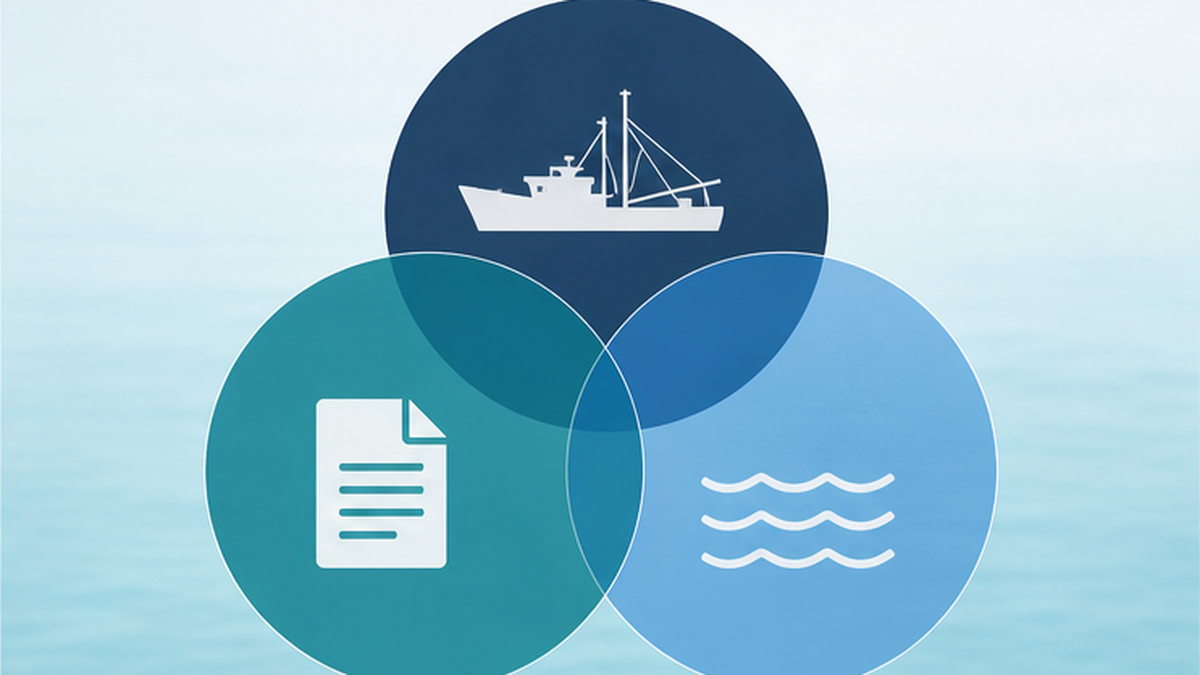
IUU fishing takes its name from the initials of Illegal, Unreported and Unregulated. Most people first picture poaching, but the term covers far more ground: it includes vessels that hold legitimate licences yet fail to report accurately, and fishing in waters where no rules exist in the first place. Understanding these three categories separately is the starting point for thinking about solutions.
Illegal — fishing without authorization or against the rules
Entering another country's exclusive economic zone (EEZ) without permission, fishing during closed seasons or in closed areas, exceeding catch quotas, using prohibited gear — these all fall under "illegal". It covers not only breaches of domestic law but also operations that violate the conservation and management measures of the regional fisheries management organizations (RFMOs) a country belongs to. The abalone and sea cucumber poaching that troubles Japan's coasts is a textbook example.
Unreported — caught, but never recorded
This means failing to report catches, or reporting less than was actually taken. It includes not only deliberate concealment but also structural problems such as the absence of a reporting system, or small-scale fisheries slipping through the statistical net. Because stock assessments rest on catch statistics, heavy unreported catch leads to the false conclusion that "there is still room", and overfishing follows. For how stock collapse unfolds, see Why overfishing causes fish stocks to collapse.
Unregulated — fishing in the gaps where no rules exist
This covers operations by stateless vessels, fishing in an RFMO's area of competence by vessels flagged to non-member states, and fishing for high-seas species for which no conservation and management measures yet exist. The difficulty here is that such fishing can damage stocks without necessarily "breaking the law" — and the risk is highest precisely where international frameworks have not yet caught up.
| Category | Typical conduct | Why it is hard to detect |
|---|---|---|
| Illegal | Unauthorized entry into an EEZ, fishing in closed seasons, exceeding quotas, using prohibited gear | Catching vessels in the act is difficult on the open ocean, at night and in remote waters |
| Unreported | Non-reporting or under-reporting of catch, concealment via transshipment at sea | The paperwork is internally consistent; cross-checking against landing sites is required |
| Unregulated | Operations by stateless vessels or by vessels of RFMO non-member states, fishing for unmanaged species | Not necessarily illegal, so there is little legal basis for enforcement |
Key points
- IUU is not the same as poaching. "Unreported" catch by legally licensed vessels is a major pillar of the problem
- "Unregulated" fishing stems from the absence of rules, so the remedy is framework-building rather than enforcement
- The three categories often occur simultaneously, and no single measure can close them all
How much fish is being taken? Global scale and economic loss
The most widely cited figure for the scale of IUU fishing is 11 to 26 million tonnes a year, worth USD 10 billion to 23 billion. It rests on a study published in 2009 (Agnew et al., PLOS ONE) and has been referenced ever since by the FAO, national governments and NGOs. The FAO describes IUU fishing as amounting to "up to 26 million tonnes annually", indicating that a far from negligible share of global marine capture sits outside the statistics.
Why the estimates differ by more than a factor of two
There is more than a twofold gap between 11 million and 26 million tonnes. That width is itself the essence of the problem: when you are inferring hidden activity from the outside, precision has hard limits. Estimates combine national statistics, discrepancies between stock assessments and actual catch, expert interviews and reconciliation of trade statistics — but because the methods are not standardized, the underlying assumptions differ from study to study. The FAO itself cautions that, given the lack of robust and consistent methods and the inherently non-transparent nature of IUU fishing, any estimate is extremely uncertain.
Some recent studies point to higher figures. Analyses of international fisheries economics have reported estimates of economic losses attributable to IUU fishing running as high as around USD 50 billion a year. The number swells because it counts not only the lost catch itself but also forgone tax revenue, reduced income for legitimate fishers, and the future catch that would have been available had stocks recovered (opportunity cost).
| Indicator | Estimate | Source / year |
|---|---|---|
| Annual IUU catch | 11–26 million tonnes | Agnew et al. (2009), cited by the FAO |
| Annual estimated value | USD 10–23 billion | Same as above |
| Broader estimate of economic loss | Up to around USD 50 billion | Recent fisheries economics research |
| Industrial vessels absent from public tracking | About 75% | Paolo et al., Nature (2024) |
The harm of invisibility, which runs deeper than the numbers
Attention tends to focus on tonnages and dollar figures, but the real damage from IUU fishing lies in the way it renders resource management itself dysfunctional. A total allowable catch (TAC) is set on the premise of knowing how much is currently being taken. If the actual catch far exceeds reported figures, a quota that scientists judged "sustainable" becomes, in practice, a rubber stamp for overfishing. When the fishers who restrained themselves lose out and those who ignored the rules gain, trust in the management system itself is lost.
How to read these estimates
- Estimates of IUU fishing are approximate ranges; no single definitive value exists
- The 2009 estimate is still widely cited because no more comprehensive study has superseded it
- As satellite data spreads, more precise region-by-region estimates are expected to emerge
Why IUU fishing persists — four structural drivers
Tougher enforcement has not eradicated IUU fishing, because the mechanisms that make it possible lie within the international system itself. Here are four of the main drivers.
1. Flags of convenience — when the flag state fails to take responsibility
A ship is subject to the law of the country where it is registered (the flag state), and that state has a duty to oversee it. Yet some countries grant registration with minimal scrutiny in order to earn registration fees; such vessels are known as flags of convenience. Register in a state with little capacity to supervise, and a vessel can effectively operate under nobody's watch. Operators also engage in "flag hopping" — switching registration to another country when enforcement closes in — which makes tracking harder still.
2. Transshipment at sea — moving fish without ever entering port
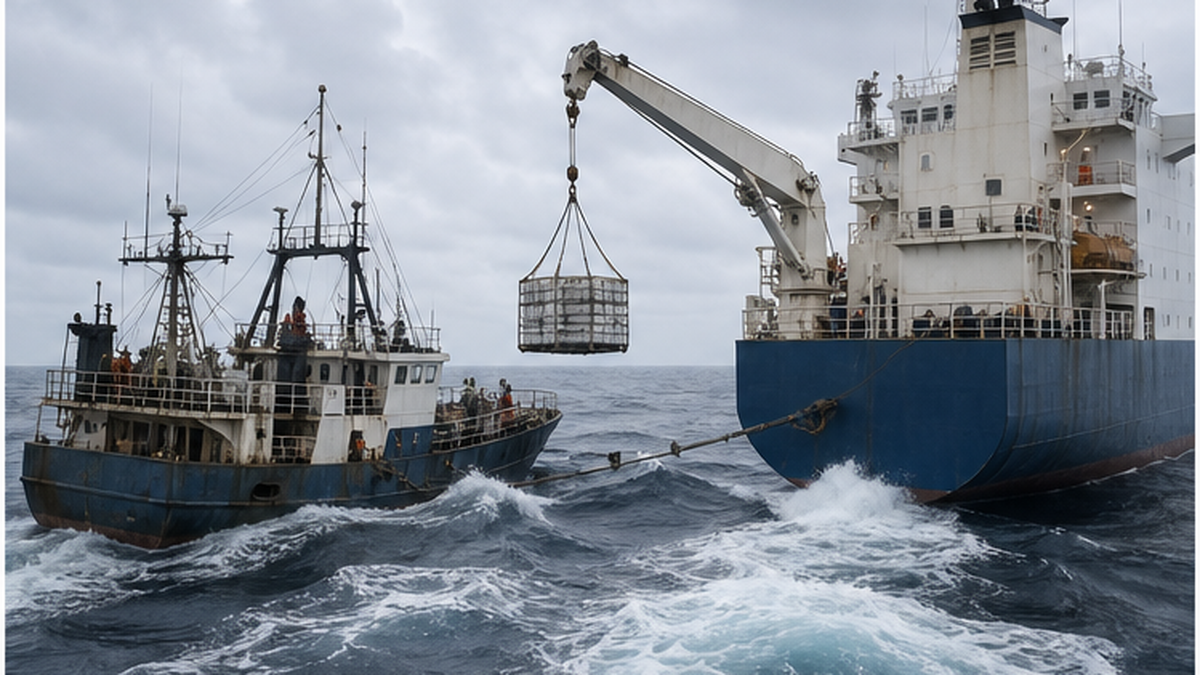
Transshipment is the practice of transferring catch from a fishing vessel to a carrier vessel at sea. It is often done legally as an efficient way to operate, but it is also an ideal means of mixing illegally caught fish into legitimate landings. Because a vessel can keep fishing for months without returning to port, it slips past the single most effective enforcement opportunity: inspection on arrival. Some RFMOs require observers on board during transshipment or advance notification, but coverage does not extend across the entire high seas.
3. Harmful fisheries subsidies — keeping unprofitable fishing afloat
Distant-water fishing carries heavy fuel costs, and many grounds would not be viable on their own. Fuel subsidies and vessel construction subsidies, however, allow operations to continue even where stocks have declined. This structure was finally addressed internationally by the WTO Agreement on Fisheries Subsidies, which entered into force on 15 September 2025. Having secured ratification by two-thirds of WTO members, the agreement prohibits subsidies for IUU fishing, for fishing of overfished stocks, and for fishing on the unregulated high seas. It is the WTO's first-ever multilateral agreement on environment and sustainability; Japan ratified it in July 2023.
4. Forced labour and trafficking — IUU as a human rights issue
On distant-water vessels that do not return to port for months, working conditions are invisible from outside. The International Labour Organization (ILO) and numerous international NGOs have repeatedly documented forced labour, unpaid wages, violence and passport confiscation in distant-water fisheries. Vessels that break the rules on resources tend to break them on their crews as well — as this recognition has spread, tackling IUU fishing has come to be treated as a human rights due diligence issue as much as an environmental one.
Connections that are easily overlooked
- IUU fishing sometimes shares routes with transnational organized crime such as drug and arms smuggling and people smuggling
- The heaviest damage falls on coastal waters of developing countries with limited surveillance capacity, directly hitting local food and jobs
- Fishing gear abandoned at sea (ghost gear) is also closely tied to unregulated operations (see the ghost gear problem)
What is happening in Japan's EEZ — poaching and the Yamato Bank
IUU fishing is not a distant story. It occurs routinely, in different forms, along Japan's coasts and within its exclusive economic zone.
Abalone and sea cucumber poaching, and its links to organized crime
According to Fisheries Agency reporting, more than 1,400 cases of illegal fishing are detected in Japan every year (a figure for fiscal 2019 cited by WWF Japan and others). Abalone, sea cucumber and glass eels are the most serious cases. All command high unit prices — dried sea cucumber in particular fetches soaring export prices as a luxury ingredient for Chinese-speaking markets — which has made them targets for organized poaching. Mass night-time harvesting using diving equipment, the use of proceeds to fund crime syndicates, and buyers who slip poached goods into legitimate distribution all chain together, eating away at local stocks and fishers' livelihoods.
The revised Fisheries Act in force since December 2020 — fines of up to JPY 30 million
In response, the Fisheries Act as revised in 2018 came into force in December 2020 with sharply increased penalties. Abalone, sea cucumber and glass eels were designated "specified aquatic animals and plants", and taking them without authorization now carries up to three years' imprisonment or a fine of up to JPY 30 million. JPY 30 million is the highest level of fine for an individual anywhere in Japan's legal system. The maximum fine for members of the public taking species covered by fishing rights, such as turban shells and spiny lobster, was also raised from JPY 200,000 to JPY 1 million.
| Subject | Conduct | Penalty (revised Fisheries Act, in force December 2020) |
|---|---|---|
| Specified aquatic animals and plants (abalone, sea cucumber, glass eels) | Taking them without authorization | Up to 3 years' imprisonment or a fine of up to JPY 30 million |
| Specified aquatic animals and plants | Transporting, storing or acquiring them knowing they were illegally taken | Same as above (receipt is also punishable) |
| Species subject to fishing rights (turban shell, spiny lobster, etc.) | Taking them in violation of fishing rights | Fine of up to JPY 1 million (previously up to JPY 200,000) |
What matters here is that "it was only enough for dinner" or "I thought it was just leisure" is no defence. The prohibition on taking specified aquatic animals and plants applies regardless of quantity or place. There have been real reports of people facing criminal proceedings after taking shellfish home as an extension of rock-pooling or clam digging. Before heading out for a day at the sea, it is essential to check the local fisheries adjustment regulations on the prefectural government website.
Foreign fishing vessels at the Yamato Bank in the Sea of Japan
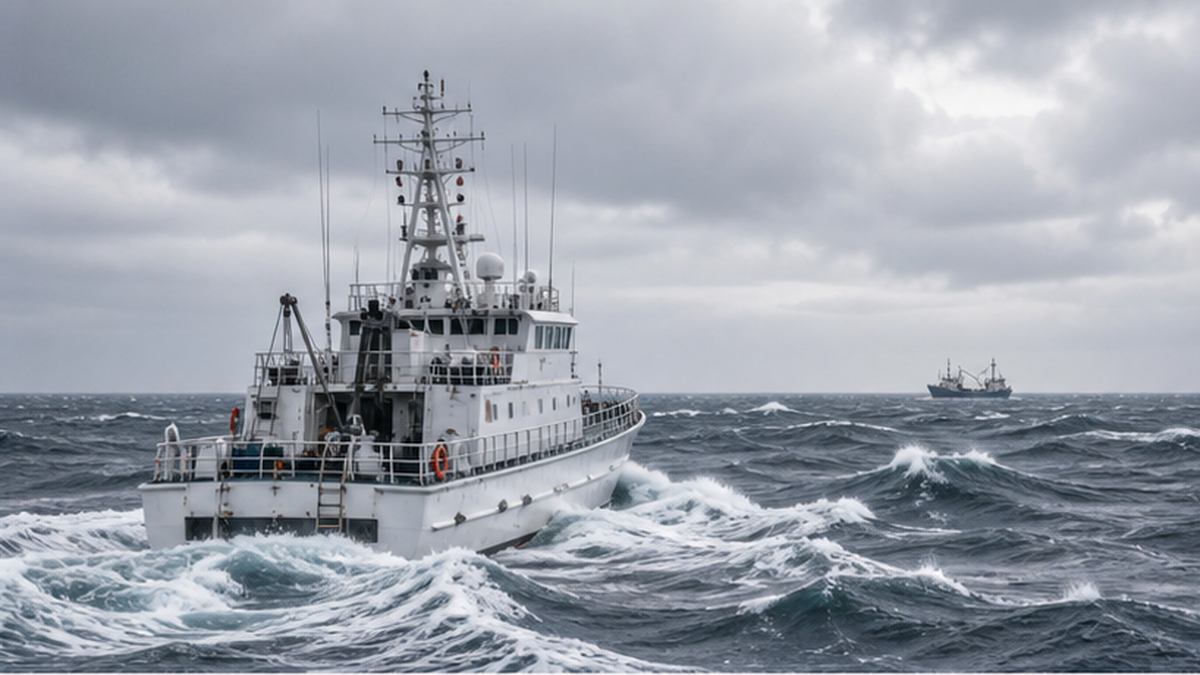
The Yamato Bank, in the central Sea of Japan, is a shallow, highly productive ground and an important fishery for Japanese common squid and red snow crab. It lies within Japan's EEZ, yet from around 2017 large numbers of North Korean fishing vessels crowded in, endangering the safe operation of Japanese boats. In recent years, activity by Chinese vessels has also been noted. Fisheries Agency patrol vessels and Japan Coast Guard patrol boats issue withdrawal warnings and deploy water cannon; according to the Fisheries Agency's foreign vessel enforcement records, the cumulative number of withdrawal warnings has swung widely from year to year, from dozens of vessels to several hundred.
Japan's dinner table and IUU — the 24–36% import problem
Japan is one of the world's largest importers of seafood. That makes a second question even weightier than domestic poaching: is Japan, through its imports, propping up IUU fishing in other countries?
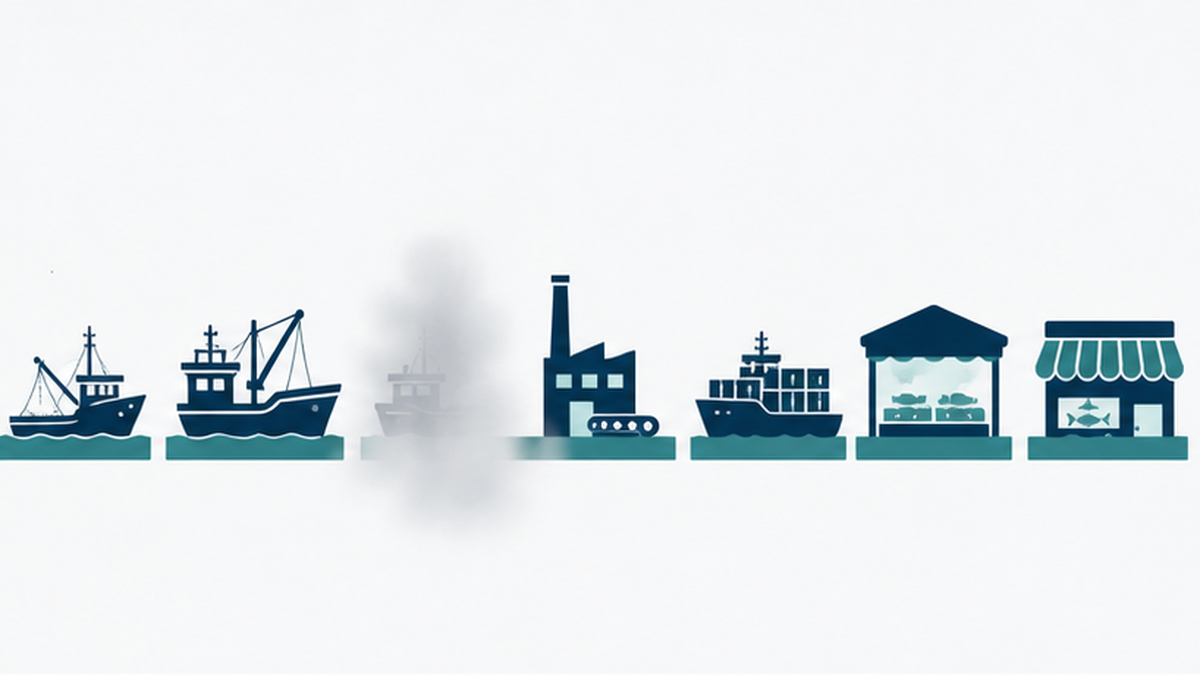
A 2017 study by G. Pramod and colleagues put numbers on this. It estimated that of the 2.15 million tonnes of wild-caught seafood Japan imported in 2015, 24–36% — worth JPY 180 billion to 270 billion — derived from illegal or unreported fishing. Roughly a quarter to a third of imported wild fish: the figure shows that Japan's dinner table is far from unconnected to IUU fishing.
| Product | Estimated IUU-derived volume | Notes |
|---|---|---|
| Squid and cuttlefish from China | 26,950–42,350 tonnes | Management and reporting in distant-water squid jigging remain problematic |
| Alaska pollock from the United States | 18,342–26,901 tonnes | Processing and re-export routes are complex |
| Eel from China | 8,162–13,603 tonnes | Equivalent to 45–75% of the 18,138 tonnes imported |
Why the flow tended to converge on Japan
Analysts point to a time lag in regulation. The EU brought its IUU Regulation into force in 2010, shutting out seafood without a catch certificate, and the United States introduced the Seafood Import Monitoring Program (SIMP) in 2018. While Europe and North America narrowed their entrances, Japan for some time had no equivalent import controls. Many experts conclude that this created a structure in which IUU-derived seafood with nowhere else to go flowed more readily into the comparatively lightly regulated market.
Caveats when reading this figure
- The 24–36% figure covers imports in 2015 and does not reflect the effect of regulations introduced since
- "IUU-derived" includes not only egregious poaching but also unreported catch arising from immature reporting systems
- The estimate is an indirect inference from reconciling trade statistics with stock assessments, and should be read as a range
Technology for finding invisible vessels — satellites, AIS, SAR and AI
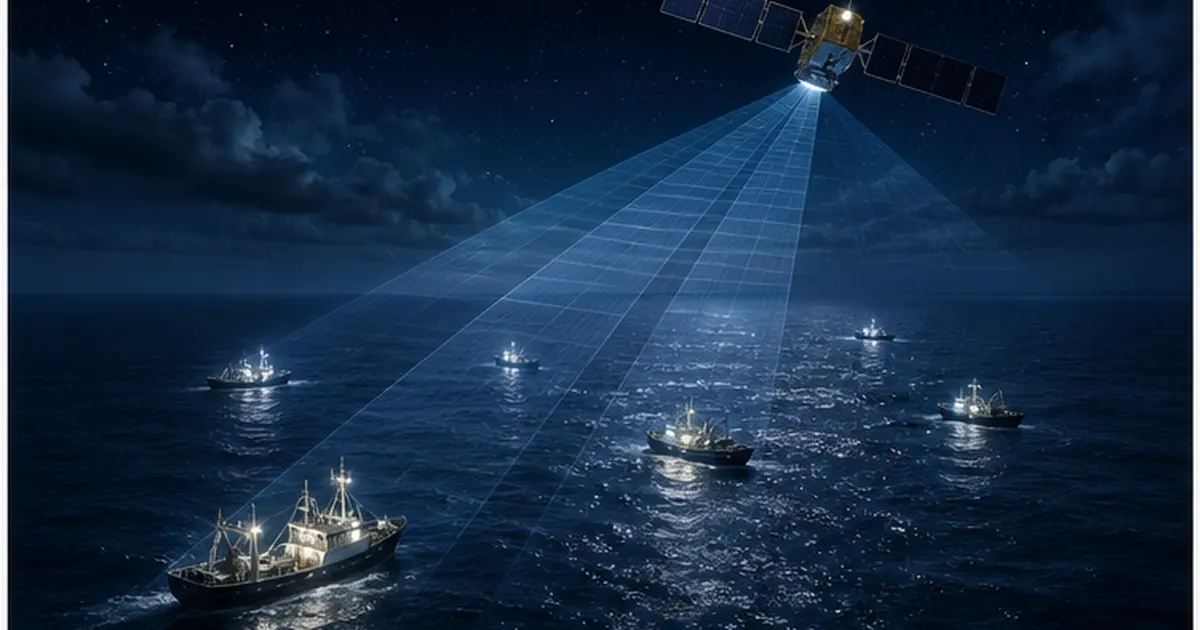
The ocean is vast, and patrol vessels and aircraft cannot begin to cover it. What has transformed the fight against IUU fishing over the past decade is surveillance from space.
AIS — self-broadcast positions, and their limits
The Automatic Identification System (AIS) is a mechanism by which a ship broadcasts its own position, course, speed and identification number by radio; it was designed for collision avoidance. Receive those signals by satellite and you can track vessel movements worldwide. But it has a decisive weakness: AIS is self-declared, and the switch can be turned off. In practice, "dark activity" — vessels suspected of illegal fishing going silent before and after entering particular waters — has been documented, along with spoofing, in which position data is falsified to make a vessel appear to be somewhere else entirely. On top of that, AIS carriage requirements vary by country according to vessel size and use, and small fishing boats are often outside them — a structural hole.
SAR (synthetic aperture radar) — seeing hulls through night and cloud
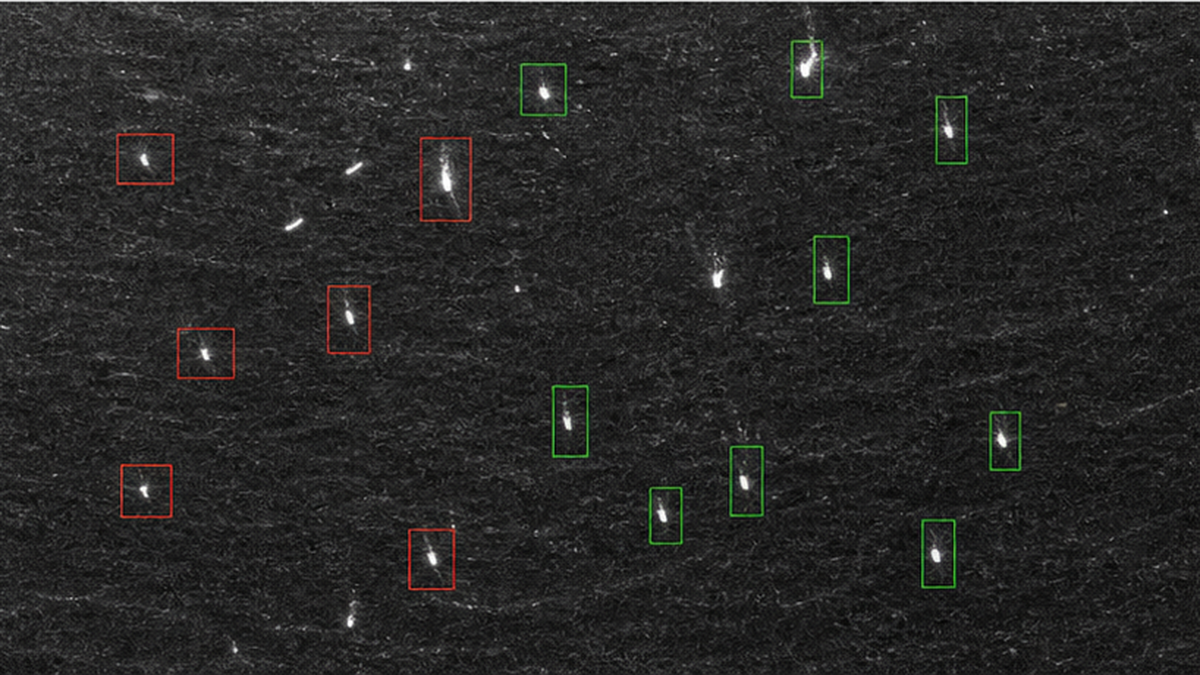
This is where SAR (synthetic aperture radar) comes into its own. As an active sensor that emits microwaves and images the returns, it can observe land and sea surfaces at night and through cloud. Metal hulls reflect radio waves more strongly than the sea surface, so they appear as bright points in the imagery. Whatever a vessel chooses to broadcast, if an object is there, it shows up — that is SAR's fundamental strength. The availability of freely published SAR data such as the European Space Agency's Sentinel-1 has accelerated research in this field enormously.
Night-light sensors (VIIRS) — counting boats by the glow of their fishing lamps
Squid jiggers and similar vessels use powerful fishing lamps, so they can be detected as lights at sea by the satellite sensors (VIIRS) that observe the Earth at night. Even when a vessel stops broadcasting, it cannot hide its light. Combining SAR, night lights and AIS makes it possible to match "vessels that are broadcasting" against "vessels that are not broadcasting but are certainly there".
The 2024 Nature paper — about 75% of industrial vessels were off the radar
The culmination of this approach is a paper published in Nature in 2024 by a research team including Global Fishing Watch. Analysing SAR imagery from 2017 to 2021 with machine learning and cross-checking it against AIS data, the study found that roughly 75% of the world's industrial fishing vessels do not appear in public tracking systems. The share of untracked vessels was especially high in coastal waters of Asia and Africa, showing that debate on ocean activity has proceeded with a large part of the picture missing. The same paper also mapped, for the first time at global scale, the spread of offshore infrastructure such as wind farms.
| Technology | What it detects | Weakness |
|---|---|---|
| Satellite AIS | Detailed tracks including vessel name, type and course | Can be switched off or spoofed; small vessels are often exempt from carriage requirements |
| SAR (synthetic aperture radar) | The hull itself, at night and in bad weather | Reveals nothing about identity; wooden and small vessels are hard to detect |
| Night lights (VIIRS) | Positions of vessels using fishing lamps | Useless against gear types that use no lights; blocked by cloud |
| VMS (vessel monitoring system) | Reliable authority-side tracking of licensed vessels | Covers only vessels that hold a licence |
What the technology changed
- The bottleneck shifted from "there is no evidence" to "we have the data but not the legal authority"
- Freely published satellite data and open platforms turned NGOs and researchers into surveillance actors in their own right
- Making the surveillance net visible is itself a deterrent against illegal operations
Mechanisms to stop it — ports, markets and subsidies
Finding vessels does not stop them. Making IUU fishing genuinely unprofitable requires encirclement from three directions: no landing in port, no sale in the market, no support from subsidies. Over the past decade, that framework has come together rapidly.
The Agreement on Port State Measures (PSMA) — closing the ports
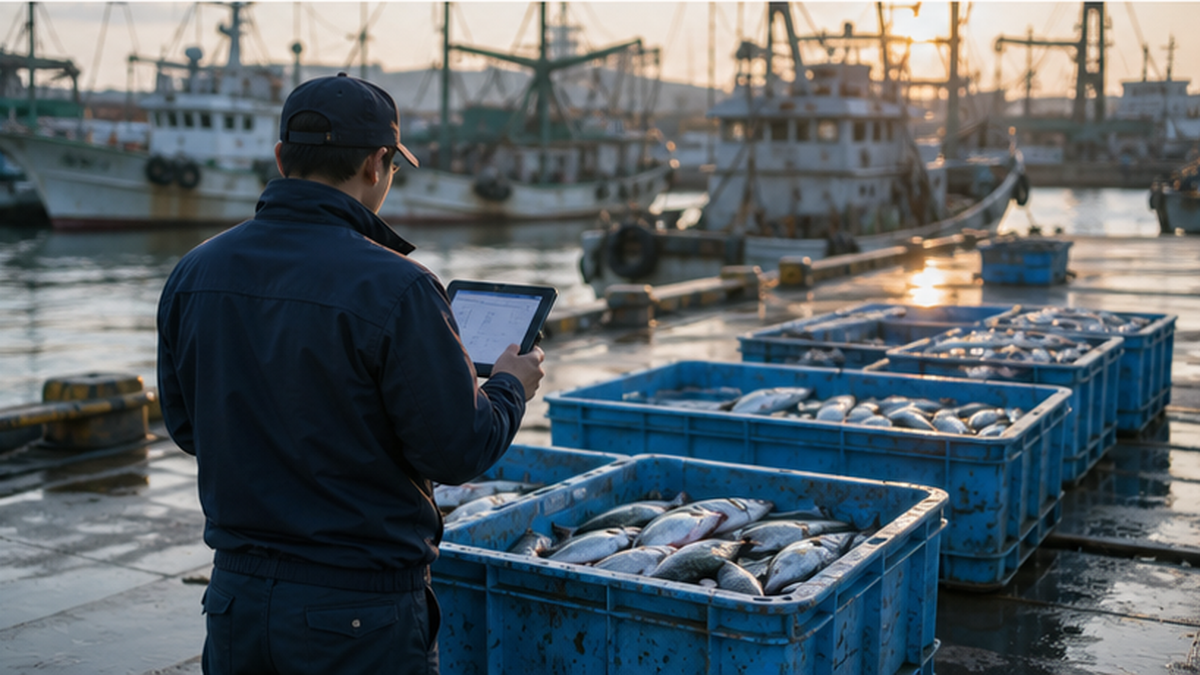
The FAO's Agreement on Port State Measures (PSMA), which entered into force in June 2016, is the first legally binding international agreement targeting IUU fishing. The mechanism is straightforward: parties require foreign fishing vessels to submit information before entry, and deny entry, landing, resupply or repair where there is suspicion of involvement in IUU fishing. The logic is that casting a net at a limited number of ports is far more efficient than chasing vessels across the ocean. Participation has grown steadily, and the FAO reports that more than 100 states and territories have committed to the agreement (with the EU participating as a single party).
The EU card system — using market access as leverage
Under the IUU Regulation it brought into force in 2010, the EU issues a "yellow card" (formal warning) to countries it judges to be doing too little about IUU fishing, and a "red card" — banning seafood imports from that country — if no improvement follows. It is a powerful instrument that holds access to one of the world's largest seafood markets hostage, and it has pushed many countries into legislative reform and stronger monitoring. Thailand, yellow-carded in 2015, overhauled its fisheries law and introduced VMS among other measures, and had its card lifted in January 2019.
The US SIMP — demanding "when, where and by whom" at the border
Since 2018 the United States has operated the Seafood Import Monitoring Program (SIMP). Covering 13 species groups considered at high risk of IUU fishing and seafood fraud, it obliges importers to declare and retain records of harvest, landing and chain of custody. Because goods cannot clear customs without the documentation, pressure to "keep records" travels up the supply chain.
Japan's Fisheries Distribution Optimization Act — in force since December 2022
Japan's response took shape with the Act on Ensuring the Proper Domestic Distribution and Importation of Specified Aquatic Animals and Plants (the Fisheries Distribution Optimization Act). In force since 1 December 2022, it rests on three pillars.
- For species at high risk of illegal harvest domestically (Class I specified aquatic animals and plants), it requires harvesters and handlers to notify the authorities, and mandates the transmission of catch numbers and other information between businesses along with the creation and retention of transaction records
- For exports, it requires a legal harvest certificate showing that the product was lawfully taken
- For imports of species at high risk of illegal fishing (Class II specified aquatic animals and plants), it makes a certificate issued by a foreign government a condition of import
Class I coverage began with abalone and sea cucumber, and glass eels come under the regime from December 2025. Opacity in the distribution route for juvenile eels (glass eels) has been flagged for years, so this addition marks a significant step forward for domestic traceability. On the state of Japanese eel stocks, see also the front line of Japanese eel conservation.
| Regime | Actor | How it works | Start |
|---|---|---|---|
| Agreement on Port State Measures (PSMA) | FAO / parties | Denies entry, landing and resupply, removing places to hide at sea | In force June 2016 |
| IUU Regulation and card system | EU | Bans imports from countries that fail to improve, driving legislative reform | In force 2010 |
| SIMP (Seafood Import Monitoring Program) | United States | Requires declaration and retention of harvest records for 13 species groups | Operational from 2018 |
| Fisheries Distribution Optimization Act | Japan | Notification and record-keeping duties in domestic distribution, plus certificates for exports and imports | In force December 2022 |
| WTO Agreement on Fisheries Subsidies | WTO | Prohibits subsidies for IUU fishing, overfished stocks and unregulated high-seas fishing | In force September 2025 |
Remaining challenges
- Rules alone achieve little without enough trained inspectors to apply them
- Paper certificates can be forged; digitization and interoperable data formats are the next focus
- Targeting a limited list of species tends to produce a "balloon effect", pushing illegal harvest toward unregulated species
What consumers and companies can do — change starts at the shelf and in procurement
IUU fishing is a problem of international politics and enforcement, but it is also a market problem that exists because there is demand. As long as illegally caught fish sells at a good price, the incentive to take the risk remains. Conversely, action on the buyer's side genuinely works.
Use certification labels as a starting point
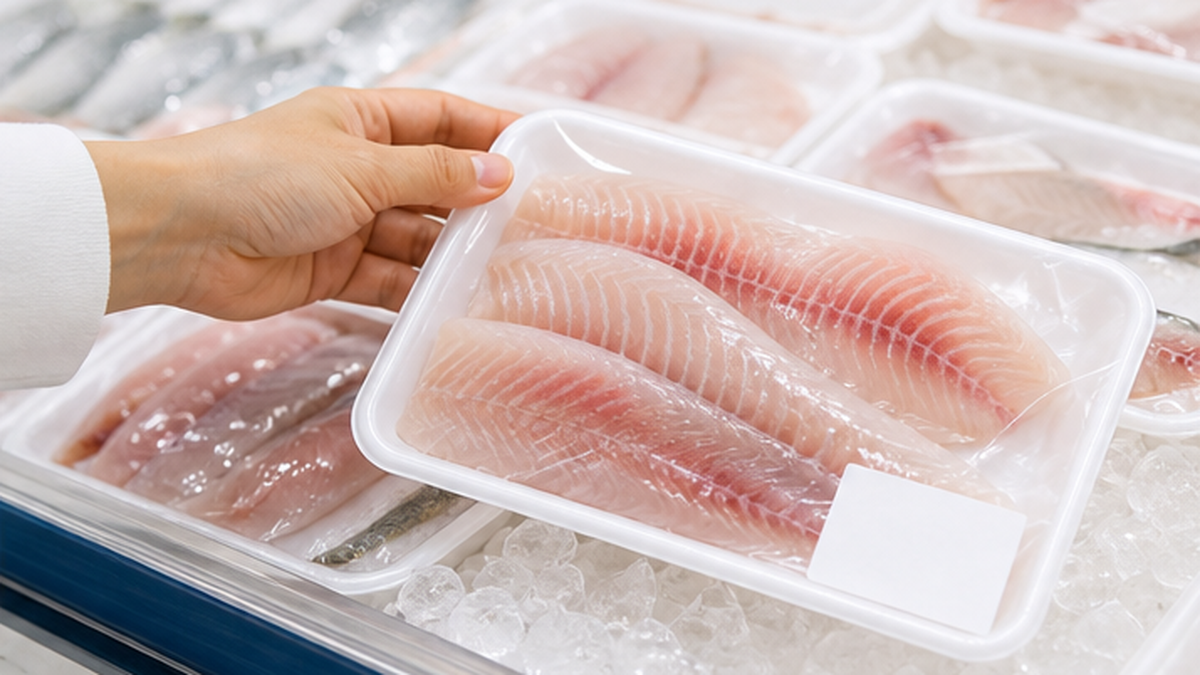
The clearest signposts are MSC (Marine Stewardship Council) certification for wild-caught seafood and ASC (Aquaculture Stewardship Council) certification for farmed products. Beyond stock status and environmental impact, these schemes require a chain-of-custody (CoC) system that allows the product to be traced back to certified fisheries at every stage of distribution. Before answering "is it sustainable?", they guarantee "can we tell where it came from?" — and that is their value as an IUU countermeasure. For details, see What is the MSC blue fish label?
Three things you can check in the store
- Origin labelling: not just the country, but ideally the fishing area and gear type as well
- Certification marks: is there an MSC or ASC label? Do processed products carry a CoC certificate number?
- Unnatural cheapness: when a species known to be in decline is conspicuously cheap, that is a cue to question the supply route
What is expected of corporate procurement
For companies handling seafood, IUU risk is already a compliance issue. The level of engagement generally rises in the following order.
- Establish a procurement policy that explicitly states, in public, that IUU-derived seafood will not be handled
- Build a list of species handled and trace each back to fishing area, gear type and stock assessment status
- Starting with the highest-risk species, shift toward certified products and fisheries participating in FIPs (fishery improvement projects)
- Require suppliers to submit catch records and verify them on site through audits
- Publish progress and shortfalls annually so that outsiders can verify them
In Japan too, major retailers and seafood companies are publishing procurement policies and expanding certified ranges, and the choices on the shelf are steadily growing. Consumers choosing that shelf is the most direct signal that justifies the investment on the corporate side.
What you can do today
- Make a habit of glancing at the origin and any certification mark when buying fresh or canned seafood
- Before heading to the coast for leisure, check the prefecture's fisheries adjustment regulations on its website (even a single shellfish can count as poaching)
- Look up the seafood procurement policy of the retailers and restaurant chains you use most. If a company does not publish one, ask
- For species under pressure such as eel and tuna, choose shops that can explain the origin and the fishing method
Summary
- IUU fishing comprises three categories — illegal, unreported and unregulated — and the term means far more than poaching
- Estimates run to 11–26 million tonnes and USD 10–23 billion a year; the very width of that range reflects how opaque the problem is
- Flags of convenience, transshipment at sea, harmful subsidies and forced labour are the structures that have sustained it
- In Japan, more than 1,400 cases of illegal fishing are detected each year, and 24–36% of wild-caught seafood imports were estimated to be IUU-derived (2015)
- Satellite SAR and AI revealed that about 75% of the world's industrial fishing vessels sit outside public tracking systems (2024)
- The PSMA, the EU card system, the US SIMP, Japan's Fisheries Distribution Optimization Act and the WTO Agreement on Fisheries Subsidies are tightening the net from the port, market and financial directions
References and sources
- FAO – Illegal, Unreported and Unregulated (IUU) fishing (definition and scale estimates)
- FAO – Agreement on Port State Measures (PSMA) (overview and parties)
- Fisheries Agency of Japan – Anti-poaching measures (penalties under the revised Fisheries Act and the current situation)
- Fisheries Agency of Japan – Response to foreign fishing vessels around the Yamato Bank in the Sea of Japan
- Ocean Policy Research Institute, Sasakawa Peace Foundation – On the Fisheries Distribution Optimization system (Ocean Newsletter No. 542)
- WWF Japan – About IUU fishing (global and Japanese scale, import estimates)
- Global Fishing Watch – Dark Vessels (satellite detection of untracked vessels)
- WTO – WTO Agreement on Fisheries Subsidies enters into force (15 September 2025)
- PLOS ONE – Estimating the Worldwide Extent of Illegal Fishing (Agnew et al., 2009)
- IUU Fishing Risk Index – About the IUU Fishing Risk Index (152 coastal states assessed against 40 indicators)
* Ordered by reliability: government and academic institutions > peer-reviewed papers > specialist organizations > trusted media