⚡ In short
The release of ALPS treated water from Fukushima Daiichi began in August 2023 and reached 18 rounds by March 2026. We examine the science of tritium, three years of seawater and fish monitoring data, five IAEA review missions, and the path from China's blanket import ban to its conditional reopening — all based on primary sources.
On August 24, 2023, the release of ALPS treated water into the ocean began at TEPCO's Fukushima Daiichi Nuclear Power Station. Three years after this decision, which divided opinion in Japan and abroad — what has actually happened to the sea, and to the fish?
By the end of March 2026 the release had reached a cumulative 18 rounds, accompanied throughout by multi-layered monitoring by the Japanese government, TEPCO, local authorities and the IAEA (International Atomic Energy Agency). With three years of measured data now accumulated, we can finally test whether the pre-release predictions and commitments have held up.
This article works through the basics — what ALPS treated water actually is, and what kind of substance tritium is — and then examines three years of seawater and fish monitoring data, the IAEA's evaluations, and international reactions from China's import ban to its conditional reopening, all based on primary sources from governments and international organizations.
What you will learn in this article
- The difference between "contaminated water" and "ALPS treated water," and the scientific reason only tritium cannot be removed
- The properties of tritium (12.3-year half-life, weak beta radiation) and how to think about health effects
- What three years of seawater and fish monitoring data have shown since the release began
- The findings of the IAEA's comprehensive report and five review missions
- The course from China's blanket import ban to conditional reopening, and the impact on Japan's fisheries
- What the ocean release means within the overall decommissioning project, and the challenges of the next 30 years
What Is ALPS Treated Water? How It Differs from "Contaminated Water"
The nuclear fuel that melted down in the March 2011 accident (fuel debris) still requires water injection for cooling. On top of this cooling water, groundwater and rainwater seep into the buildings and come into contact with the debris, generating "contaminated water" containing high concentrations of radioactive substances every day. Countermeasures such as the frozen soil wall (land-side impermeable wall) and groundwater pumping wells have cut the generation rate sharply, from a peak of about 540 m³ per day (fiscal 2014) to below 100 m³ per day in recent years — but it has not reached zero.
The 62 radionuclides removed by the ALPS system
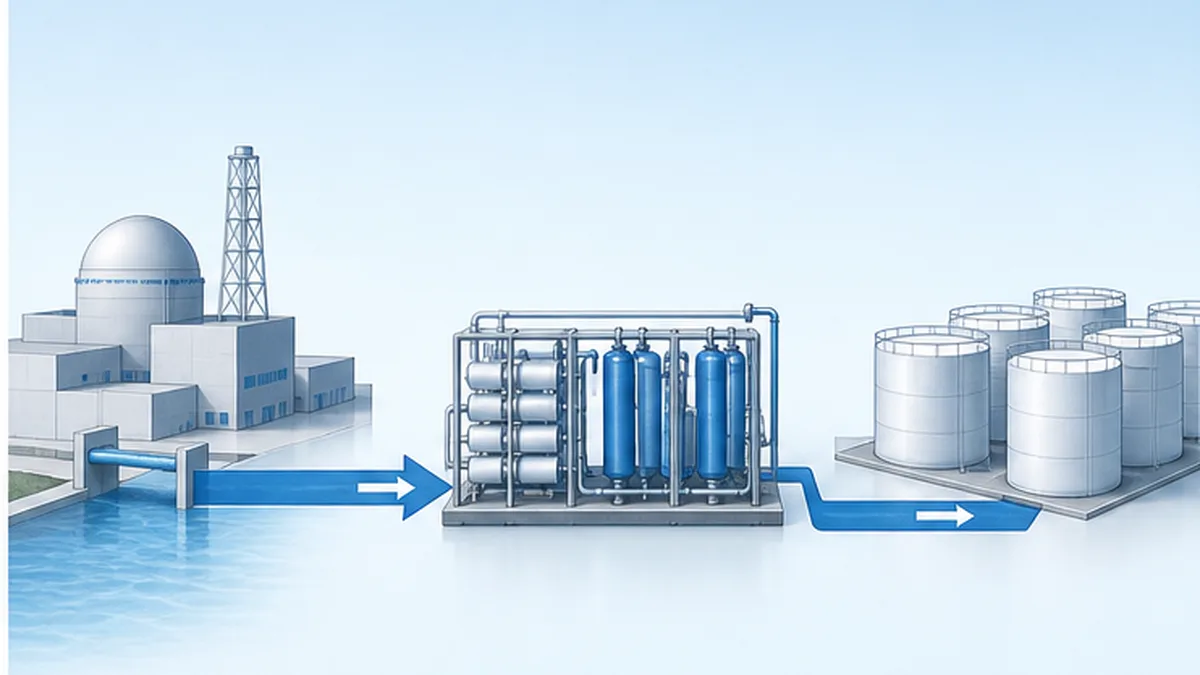
Contaminated water first passes through equipment that removes most of the cesium and strontium, and is then processed by the Advanced Liquid Processing System (ALPS). Using combinations of adsorbents, ALPS can remove 62 radionuclides — including cesium-137, strontium-90, cobalt-60 and iodine-129 — down to concentrations below national regulatory standards.
Why tritium alone cannot be removed
There is, however, one nuclide that even ALPS cannot remove: tritium. Tritium is a radioactive isotope of hydrogen that binds with oxygen to exist as tritiated water (HTO). Because it has almost exactly the same chemical properties as water itself, it cannot be separated by ordinary water-treatment technologies such as adsorption or filtration. This technical reality is why nuclear facilities around the world dilute tritium-containing effluent below their limits and release it to the sea or the atmosphere.
The precise definition of "ALPS treated water"
The government and TEPCO reserve the term "ALPS treated water" exclusively for water that has been purified until all radionuclides other than tritium meet national regulatory standards, clearly distinguishing it from water still in processing. In fact, about 70% of the water stored in tanks was below-standard water still awaiting full treatment. Rather than being released as-is, such water undergoes secondary treatment in ALPS, and only proceeds to the release process after measurements confirm the standards are met.
Why ocean release was chosen — the five disposal options considered
It was clear from soon after the accident that tank storage could not continue forever. The ever-growing tank farm was filling the site, and in a major earthquake or typhoon the tanks themselves would become a leakage risk. A government subcommittee spent more than six years comparing the following five disposal options.
- Geological injection — pumping the water into deep underground strata (site selection and long-term monitoring are difficult)
- Ocean release — diluting below standards and releasing to the sea (a well-established practice worldwide that is easy to monitor)
- Vapor release — evaporating the water into the atmosphere (precedent exists from Three Mile Island, but dispersion is hard to manage)
- Hydrogen release — electrolyzing the water and releasing it as hydrogen (technically immature)
- Underground burial — solidifying with cement and burying (would require a new regulatory framework)
In the end, ocean release — judged realistic alongside vapor release — was selected in April 2021 because it has a long track record at nuclear facilities worldwide and its effects can be measured and verified through post-release environmental monitoring. In other words, ocean release was chosen not simply because it was cheap, but in part because it is the method most verifiable through monitoring.
| Category | Condition | Handling |
|---|---|---|
| Contaminated water | Water that touched fuel debris, with high concentrations of radioactive substances | Purified with ALPS and other systems |
| Water in processing | Treated by ALPS but nuclides other than tritium still exceed standards | Undergoes secondary treatment before release |
| ALPS treated water | All nuclides other than tritium meet regulatory standards | Eligible for diluted ocean release |
Key points
- "ALPS treated water" means water purified until the 62 nuclides other than tritium are below regulatory standards
- Tritium shares water's chemical properties, so no country's technology can easily separate it
- Below-standard water in processing cannot be released until it passes secondary treatment and verification measurements
The Science of Tritium: Properties, Natural Occurrence and Health Effects
What kind of substance is tritium, the center of this debate? Its name can make it sound uniquely dangerous, but its properties are among the best understood of all radionuclides.
A 12.3-year half-life and very weak beta radiation
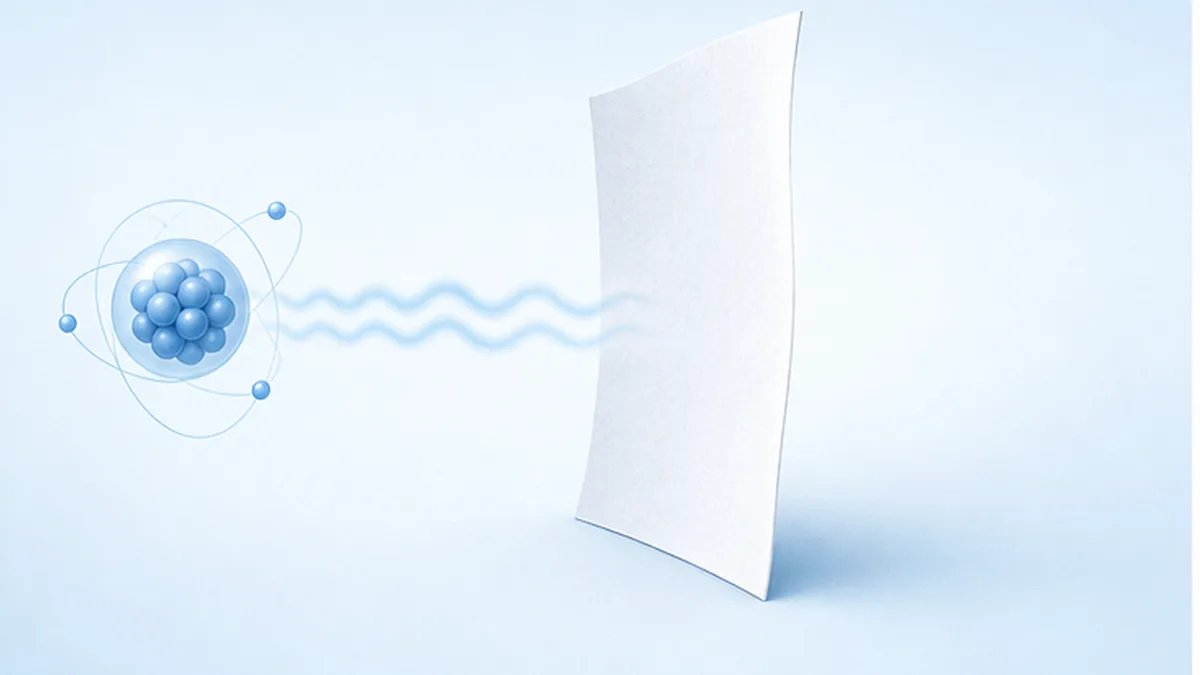
Tritium has a half-life of about 12.3 years, and when it decays it emits beta radiation of very low energy. The radiation travels only a few millimeters even in air and is stopped by a sheet of paper or the surface of human skin. External exposure from tritium outside the body is therefore practically nil. What could matter is internal exposure through water or food — but tritium is excreted quickly as water (its biological half-life is about 10 days), and many studies have confirmed that it does not readily concentrate in the body or in food chains.
Produced naturally every year
It is not widely known, but tritium is generated naturally at a rate of about 70 quadrillion becquerels (7×10¹⁶ Bq) every year through reactions between cosmic rays and the atmosphere. As a result, trace amounts of tritium have always been present in rainwater, tap water, and our own bodies. Tap water and rainwater in Japan generally contain less than 1 becquerel of tritium per liter.
How to think about concerns over organically bound tritium
One scientific question raised about tritium concerns organically bound tritium (OBT) — tritium incorporated into proteins and other organic matter rather than existing as water — and whether it stays in the body longer. Experiments show that a fraction of OBT can indeed take from tens of days up to about a year to be excreted. However, the proportion that becomes OBT is very small, and analyses by assessment bodies in Japan and abroad have shown that accounting for its dose contribution does not materially change the impact assessments. The IAEA's safety review also evaluated exposure pathways including OBT before reaching its conclusion that the impact is negligible.
So how large is the estimated impact of the release on nearby residents? In TEPCO's radiological environmental impact assessment, conducted with internationally standard methods, even a person assumed to eat far more fish and seaweed than average would receive an additional dose of less than 0.0001 millisieverts per year — an assessment whose validity has been confirmed by the Nuclear Regulation Authority's review and by the IAEA. That is more than four orders of magnitude below the roughly 2.1 millisieverts per year received from natural background radiation.
Compared with releases from nuclear facilities worldwide
Releasing tritium-containing effluent is not something unique to Fukushima Daiichi; it is done routinely, under controlled conditions, at nuclear facilities around the world. France's La Hague reprocessing plant discharges about 11.4 quadrillion becquerels (11,400 trillion Bq, 2021, liquid) into the sea each year, and South Korea's Wolsong nuclear plant released about 71 trillion becquerels in liquid form the same year. Fukushima Daiichi's annual release cap of under 22 trillion becquerels is comparable to or lower than these overseas facilities.
| Facility | Annual tritium release (liquid) | Notes |
|---|---|---|
| La Hague reprocessing plant (France) | About 11,400 trillion Bq (2021) | Discharged into the English Channel |
| Wolsong NPP (South Korea) | About 71 trillion Bq (2021) | Plus about 92 trillion Bq as vapor |
| Fukushima Daiichi (cap) | Under 22 trillion Bq/year | Carries over the pre-accident control target |
| Fukushima Daiichi (FY2023 actual) | About 7.8 trillion Bq | Total of four release rounds |
A benchmark for health effects
Even if you drank two liters of water at exactly the operational limit of 1,500 Bq/L every day for a full year, the estimated dose would be about 0.02 millisieverts — roughly one-hundredth of the annual dose received naturally by living in Japan (about 2.1 millisieverts). Actual seawater concentrations, even near the outlet, are far below this level.
How the Release Works: Three Tiers of Limits and Pre-Release Checks
The process is sometimes mischaracterized as "just diluting and dumping," but the actual release procedure layers measurement and verification at every step.
Measuring before release — double-checking with third-party labs
Water slated for release is first agitated and circulated in dedicated measurement and confirmation tank groups (such as the K4 area) to homogenize its quality. Then, TEPCO and third-party analytical laboratories independently measure the water to confirm that the concentrations of nuclides other than tritium meet regulatory standards (that the sum of ratios to regulatory concentration limits is below 1). Water that fails cannot proceed to release and is sent back for secondary treatment.
The measurements analyze, one by one, the radionuclides identified as originating from the damaged reactors (cesium-137, strontium-90, iodine-129 and others), confirming that the sum of each concentration divided by its regulatory limit comes to less than 1. Crucially, this verification is performed on the concentrated water before dilution. Rather than diluting first and measuring afterward, the system first establishes that everything other than tritium is within standards, and only then dilutes — as the countermeasure for tritium. That ordering is the backbone of the regime.
Diluted more than 100-fold and released about 1 km offshore
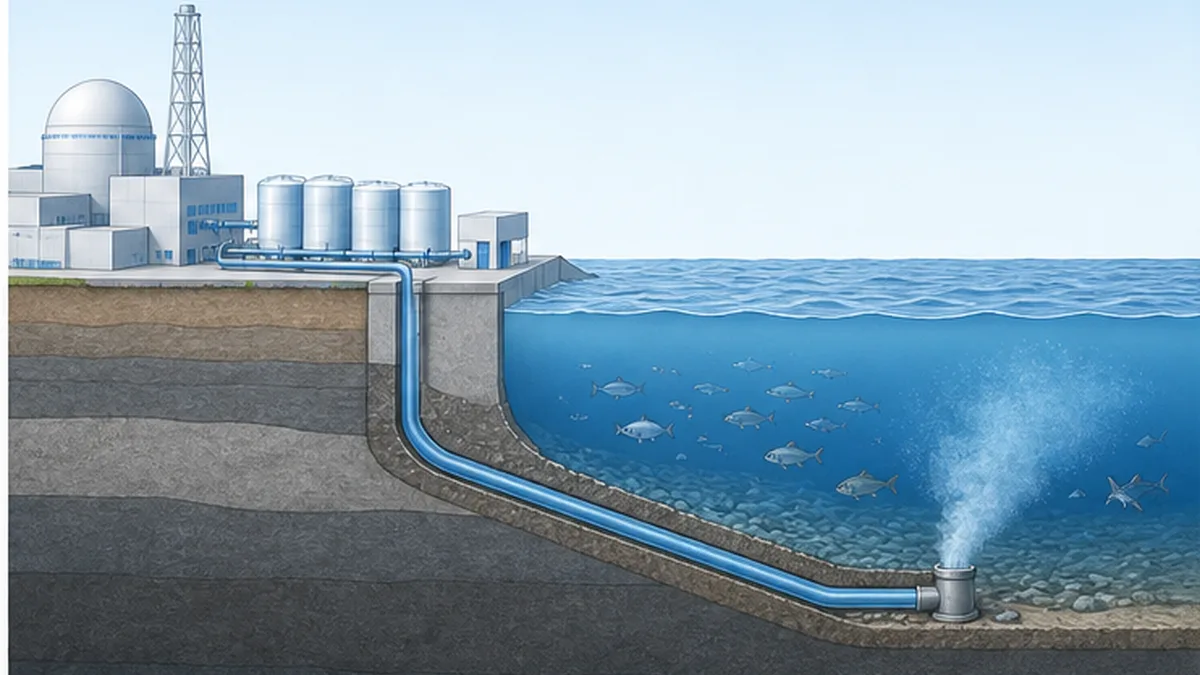
Once verified, the treated water is mixed with large volumes of seawater and diluted more than 100-fold, confirmed to be below 1,500 Bq/L of tritium, and then released through an undersea tunnel from an outlet about 1 km offshore. Throughout each release period, the diluted water is sampled and analyzed for tritium every day to confirm it stays below the operational limit.
Three tiers of limits — 60,000, 10,000 and 1,500
Japan's regulatory standard for tritium is 60,000 Bq/L, set so that drinking water at that concentration every day would still not reach an annual dose of 1 millisievert. The WHO drinking-water guideline is 10,000 Bq/L. Fukushima Daiichi's operational limit of 1,500 Bq/L is a conservative value — one-fortieth of the regulatory standard and about one-seventh of the WHO drinking-water guideline. On top of that, total annual releases are capped below 22 trillion becquerels, the control target that applied to Fukushima Daiichi before the accident.
These limits are not arbitrary numbers: they derive from the internationally shared framework of the International Commission on Radiological Protection (ICRP), which recommends keeping additional public exposure below 1 millisievert per year. Fukushima Daiichi's operational limit thus builds in a further forty-fold margin below the international protection standard.
| Limit | Tritium concentration | Significance |
|---|---|---|
| National regulatory standard | 60,000 Bq/L | Daily consumption would stay under 1 mSv/year |
| WHO drinking-water guideline | 10,000 Bq/L | International benchmark for drinking water |
| Fukushima Daiichi operational limit | 1,500 Bq/L | 1/40 of the regulatory standard, about 1/7 of the WHO guideline |
Safeguards for abnormal situations are also built in. Because the release relies on pumps to mix the water with seawater rather than gravity flow, a loss of power physically stops the release. In addition, if an anomaly is detected — such as tritium in seawater near the outlet exceeding the release-suspension threshold of 700 Bq/L — a two-stage emergency shutoff valve halts the release. Releases have in fact been promptly suspended during power outages and equipment trouble, demonstrating that the fail-safes work in practice.
Three Years of Releases: What the Measured Data Show
18 rounds so far — results by fiscal year
From the first round on August 24, 2023, releases proceeded in stages: 4 rounds in fiscal 2023 (about 31,000 m³, roughly 7.8 trillion Bq of tritium), 7 rounds in fiscal 2024, and 7 rounds in fiscal 2025 — a cumulative 18 rounds completed by the end of March 2026. For fiscal 2026, the published plan calls for 8 rounds, about 62,400 m³, and roughly 11 trillion Bq of tritium. Every year has stayed within the annual cap of 22 trillion becquerels.
| Fiscal year | Rounds | Notes |
|---|---|---|
| FY2023 | 4 | About 31,000 m³, about 7.8 trillion Bq of tritium (first round on Aug 24) |
| FY2024 | 7 | Carried out per the annual plan |
| FY2025 | 7 | About 1.7–3.0 trillion Bq of tritium per round |
| FY2026 (plan) | 8 | About 62,400 m³ and about 11 trillion Bq planned |
What happened to tritium levels in seawater
The Ministry of the Environment, TEPCO, the Nuclear Regulation Authority, Fukushima Prefecture and others continuously sample seawater at numerous points from the outlet area to offshore waters. During release periods, temporarily elevated values (from a few Bq/L up to the 20 Bq/L range) are sometimes detected in the immediate vicinity of the outlet — but these are far below the 1,500 Bq/L operational limit and the 700 Bq/L release-suspension threshold. At monitoring points within 3 km and in the 10-km-square area around the plant, most samples have remained below detection limits, consistent with the dispersion simulations run before the release.
Tritium in fish remains below detection limits
To address the worry that tritium might accumulate in fish, the Fisheries Agency analyzes tritium in flounder and other fish caught off Fukushima and publishes the results regularly. To date, almost all samples have been below detection limits, and no exceedance attributable to the treated water release has been found. Radioactive cesium testing likewise shows marine fish off Fukushima consistently far below regulatory limits.
"Below the detection limit" means lower than the smallest level the instruments can measure. Rapid seawater analysis can measure down to around 10 becquerels per liter and precise analysis down to around 0.1 Bq/L — and even so, most samples show nothing detectable. Results are published within days of sampling and can be tracked over time by anyone. What matters most for transparency is that everything is published — including the temporary rises near the outlet, not just the convenient numbers.
No anomalies in seabed sediment or seaweed either
Monitoring extends beyond tritium. The Ministry of the Environment and the Nuclear Regulation Authority analyze radionuclides in seabed sediment, and TEPCO regularly analyzes seaweed near the outlet; no concentration increases attributable to the treated water have been found since the release began. Since autumn 2023, joint surveys by the IAEA and laboratories from multiple countries have also collected seawater, sediment, fish and seaweed, confirming that Japan's published values are consistent with independent measurements.
See the official dataTreated Water Portal Site | TEPCO HoldingsOfficial site compiling release records, daily tritium measurements and equipment status🔗 tepco.co.jp See the monitoring resultsMarine Monitoring Information on ALPS Treated Water | Ministry of the EnvironmentRapid and precise tritium measurements for seawater, sediment and aquatic life🔗 policies.env.go.jp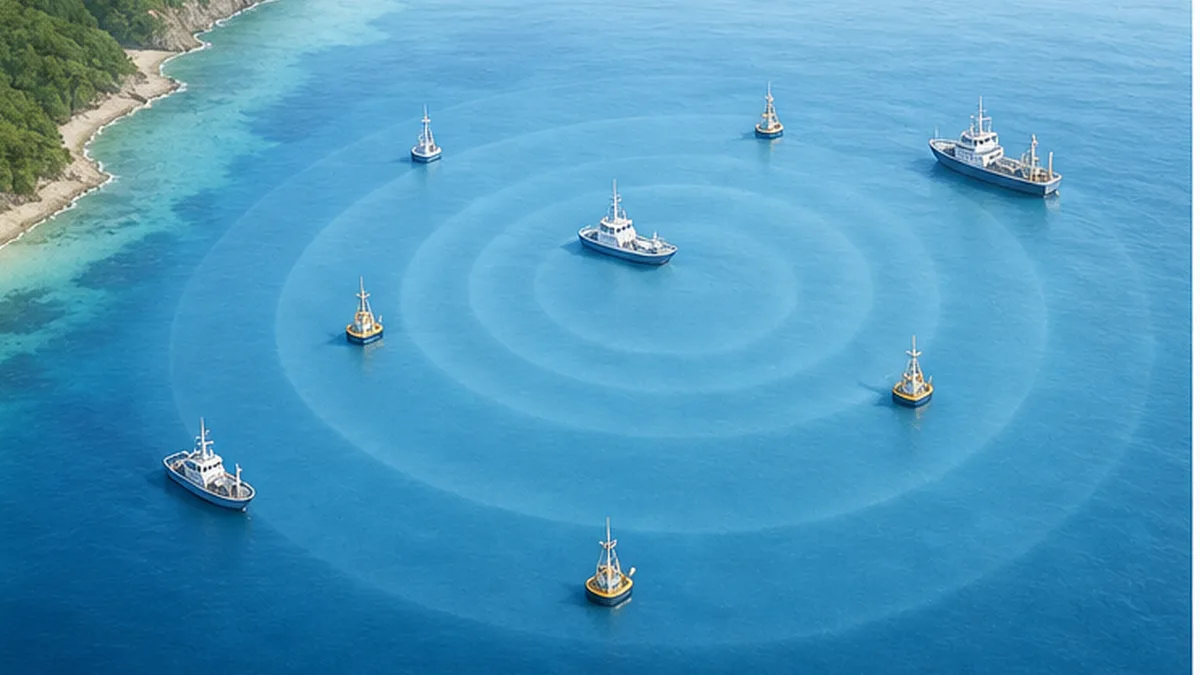
What three years of data have shown
- Tritium rises in seawater have been temporary and confined to the immediate outlet area, far below the limits
- Seawater beyond 3 km has remained mostly below detection limits, matching pre-release dispersion modeling
- Tritium in fish has been below detection limits in almost all samples, with no sign of accumulation
The Monitoring System: Who Watches, and How
The credibility of measured data rests on who does the measuring. Marine monitoring around Fukushima Daiichi is structured as a multi-layered system that does not depend on any single organization.
Layered checks by the government, TEPCO and local authorities
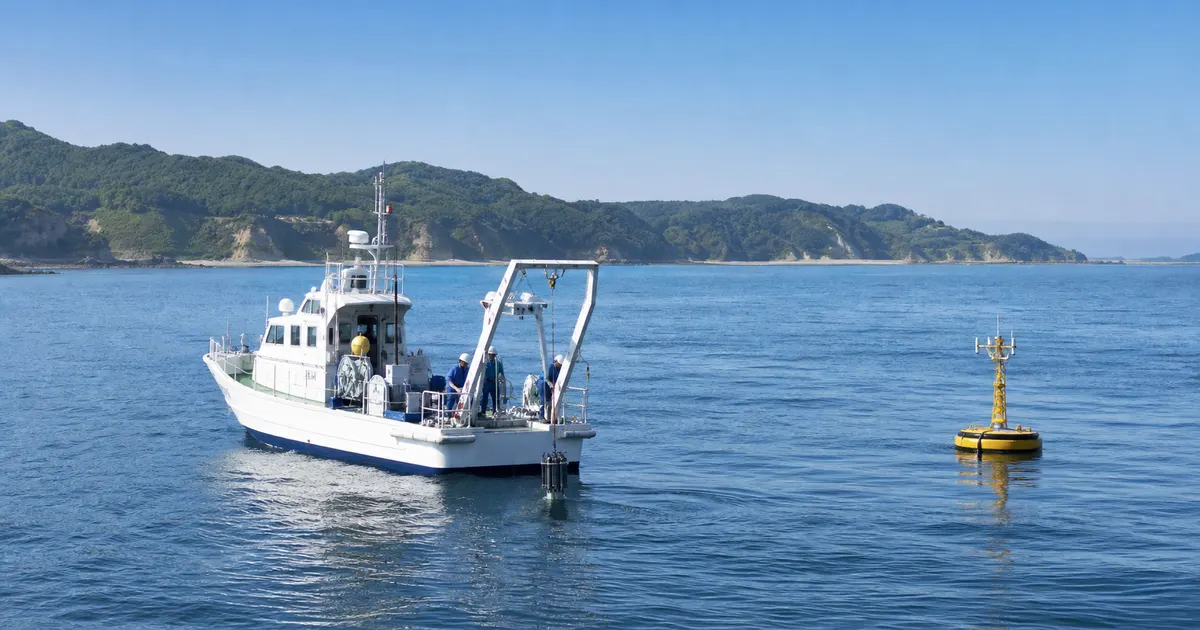
TEPCO analyzes seawater around the outlet daily during release periods, while the Ministry of the Environment regularly surveys seawater, seabed sediment and aquatic life from the coast to offshore waters. Layered on top are the Nuclear Regulation Authority's monitoring, the Fisheries Agency's seafood surveys, and Fukushima Prefecture's independent surveys, creating a structure in which results can be cross-checked against each other. All results are published online, with rapid reports available within days of sampling.
Independent verification by the IAEA and international proficiency testing
The IAEA stations staff at Fukushima Daiichi, tracks the release equipment continuously, and independently collects and analyzes its own samples of seawater and fish. In addition, interlaboratory comparisons (ILCs) — in which laboratories from multiple countries measure the same samples — have repeatedly confirmed the accuracy of Japan's measurements. In 2026 the IAEA conducted its third large-scale marine sampling campaign since the release began (seawater, sediment, fish and seaweed), with results due in the second half of 2026.
Neighboring countries also conduct their own checks. The South Korean government sends experts to Fukushima Daiichi and the IAEA on a regular basis and has strengthened radioactivity surveys in its own waters, reporting no anomalies to date. Since the 2024 Japan–China agreement, analytical institutions from third countries including China have participated in sampling and analysis under the IAEA framework — dissolving the notion that the world simply has to take Japan's measurements on faith.
Where to see the monitoring results
- Ministry of the Environment "Marine Monitoring Information on ALPS Treated Water" — rapid and precise analyses of seawater and fish
- TEPCO "Treated Water Portal Site" — release records and daily measurements
- Fisheries Agency — radioactive substance testing of seafood (searchable by species)
- IAEA — review reports and independent sampling results (English)
The IAEA and International Assessments
The comprehensive report: "negligible radiological impact"
In July 2023, before the release began, the IAEA published its comprehensive report concluding a two-year safety review. Director General Grossi traveled to Japan to hand the report to the government; it assessed the release plan as consistent with international safety standards.
Japan's approach and activities for the discharge of ALPS treated water are consistent with relevant international safety standards. The radiological impact of the discharge on people and the environment is negligible.
― Summary of the conclusions of the IAEA Comprehensive Report (July 2023)
Five review missions since the release began
The IAEA's scrutiny did not end when the release started. A task force of IAEA staff and international experts from 11 countries visits Japan regularly to examine the equipment, operations and monitoring. The report of the fifth review mission, conducted in December 2025 and published on April 30, 2026, concluded — as did all its predecessors — that nothing was identified that is inconsistent with the requirements of international safety standards. Notably, the task force includes experts from China, South Korea and Russia.
The countries that lifted restrictions — the EU and US decisions
The import bans made headlines, but the traffic has mostly run the other way. The United States removed all remaining import restrictions on Japanese food related to the Fukushima accident in September 2021, and the EU completely lifted its remaining restrictions in August 2023, just before the ocean release began. Some 55 countries and regions imposed import restrictions on Japanese food after the accident; the great majority have since removed them, and judging restrictions unnecessary on the basis of scientific assessment has become the international mainstream.
How the scientific community responded, and the remaining caution
Among marine scientists abroad as well, the prevailing view is that a release managed according to plan has an extremely small environmental impact. At the same time, cautionary voices pointing to long-term data uncertainties and insufficient consideration of alternatives have existed — the US National Association of Marine Laboratories (NAML) issued a statement of opposition in 2022. The only way to answer such critiques is continued publication of measured data and independent verification. Three years of transparency in practice have been slowly building international confidence.
The Pacific island countries (Pacific Islands Forum), sensitized to radioactive substances by their historical experience of nuclear testing, also voiced strong concern when the release was decided. The Japanese government and the IAEA engaged in repeated explanation and dialogue, including opportunities for independent verification by an expert panel. Differences of position remain, but the fact that a data-based framework for dialogue has been maintained is itself an important asset for a project that will run for 30 years.

From China's Import Ban to Conditional Reopening: Reactions at Home and Abroad
A blanket ban that began the day of the release
Apart from the scientific assessments, the diplomatic and trade reaction was severe. On August 24, 2023 — the first day of the release — China suspended imports of all Japanese seafood. Hong Kong and Macau banned seafood from 10 prefectures including Fukushima, and Russia followed with import restrictions in October of the same year. China was then the largest export market for Japanese seafood (about 87.1 billion yen in 2022), and scallop exports in particular took a heavy blow.
Two years of talks and the conditional reopening of June 2025
The two governments held repeated talks and in September 2024 reached a shared understanding on measures including additional sampling under the IAEA framework with participation by institutions from third countries, including China. Chinese laboratories did in fact take part in seawater sampling and analysis, and after confirming no anomalies, on June 29, 2025, China's General Administration of Customs announced a conditional reopening of imports of Japanese seafood, excluding 10 prefectures including Fukushima. The reopening after roughly two years stands as a case where measured data and an international verification framework moved diplomacy.
The instability that remains
In November 2025, however, exports to China were reported to have effectively halted again against the backdrop of deteriorating Japan–China relations — a reminder that the export environment is shaped not only by science but by politics. In the meantime, Japan's fisheries industry accelerated its shift to markets in the United States and Southeast Asia, diversifying scallop export destinations and building up domestic processing capacity. The government has supported the transition with funds and policy packages totaling roughly 100 billion yen, covering market development, temporary purchases and storage.
Scallops tell the story best. Before the ban, the mainstream route was to export them in-shell to China for processing and re-export to the West; after the ban, processing shifted to Japan, Vietnam and Thailand, and direct exports to the US and Southeast Asia expanded. Having learned the hard way that concentration on a single market is a risk, the industry underwent a structural shift toward market diversification, accelerated by the very ban that caused the pain.
Domestic consumer attitudes have also shifted measurably. In the Consumer Affairs Agency's ongoing surveys, the share of people who hesitate to buy Fukushima produce because of radioactive substances has declined year after year, and in recent years has run at record lows, well below 10%. No notable consumer pullback occurred in Japan even immediately after the release began — if anything, support for the affected regions outweighed it, a result built on more than a decade of testing records and information disclosure since the accident.
| Date | Event |
|---|---|
| April 2021 | Government decides on the policy of ocean release for ALPS treated water |
| July 2023 | IAEA publishes comprehensive report (consistent with international safety standards) |
| August 24, 2023 | Ocean release begins; China imposes blanket ban on Japanese seafood the same day |
| September 2024 | Japan and China reach shared understanding, including third-country monitoring participation |
| June 29, 2025 | China conditionally reopens imports, excluding 10 prefectures |
| November 2025 | Imports reported effectively suspended again amid worsening Japan–China relations |
| April 30, 2026 | IAEA fifth review mission report published (no inconsistency with safety standards) |
Within Japan, the feared flight from seafood never really materialized, and a movement to actively choose "Joban-mono" seafood from off Fukushima spread instead. For the structure of reputational damage and the countermeasures, see ALPS treated water and reputational damage; for the story of the fishing industry's recovery from the disaster, see Rebuilding fisheries after the Great East Japan Earthquake.

The Release Within Decommissioning: The Challenges of the Next 30 Years
The ocean release is not an end in itself but one step toward keeping the promise of decommissioning Fukushima Daiichi. Finally, let us place these three years within the decommissioning project as a whole.
Removing tanks to make room for decommissioning
About 1,000 tanks holding roughly 1.37 million m³ stand on the Fukushima Daiichi site, crowding out land needed for the facilities required to retrieve fuel debris. Dismantling of tanks emptied by the release began in January 2026 (the J8 area), with the third tank completed in March of the same year — the conversion of tank space to the next phase of decommissioning is taking concrete shape. The hardest part of decommissioning, retrieving the fuel debris itself, achieved its first trial extraction (under one gram) with a telescopic device in November 2024, followed by further extractions in 2025 — against an estimated total of about 880 tons of debris across the three reactors. That challenge will span decades in the most literal sense.
How long will the release continue?
The government and TEPCO expect to continue planned releases for about 30 years, until around 2051, the target for completing decommissioning. As long as contaminated water keeps being generated, the volume needing treatment keeps growing — so further reducing the inflow of groundwater and rainwater into the buildings, and with it the generation rate itself, will determine how long the releases must continue.
Issues ahead
- Managing the higher-concentration waste and effluent generated by fuel debris retrieval is only beginning
- Whether transparency in monitoring and the verification system can be sustained over three decades
- The export environment remains hostage to politics, keeping market diversification essential
- Scientific safety confirmation and building social trust are separate processes, and dialogue must continue
Three years of measured data are bearing out the pre-release predictions and commitments. But numbers take time to turn into trust. Whether this long-term project can be brought to a close in a way every user of the ocean can accept will depend on the coming 30 years of data disclosure and dialogue.
What we can do — look at the data, and taste the results
The most constructive thing an individual can do on this issue is neither vague anxiety nor vague reassurance, but to look at the published data at least once for yourself. The monitoring results from the Ministry of the Environment and the Fisheries Agency are published in a form non-specialists can read. Beyond that, choosing Japanese seafood — including "Joban-mono" from off Fukushima — for your table supports both safety backed by testing and the recovery of the affected region's fisheries at the same time.
Actions you can take today
- Open the Ministry of the Environment's rapid marine monitoring reports once and see the actual measured values with your own eyes
- When you see seafood from Fukushima or Sanriku at the supermarket, try choosing it rather than avoiding it because of the label
- When you encounter treated-water information on social media, check whether the source is primary (government, IAEA, etc.) before sharing
- To learn more about reputational damage and how monitoring works, read on through related articles and official sites
Summary
- ALPS treated water is water purified until the 62 nuclides other than tritium are below regulatory standards — distinct from contaminated water
- Tritium emits only weak beta radiation and is a familiar radionuclide produced naturally at about 70 quadrillion Bq per year
- The release is managed under an operational limit of 1,500 Bq/L (1/40 of the regulatory standard) and under 22 trillion Bq per year, with 18 rounds completed
- Measured values in seawater and fish have remained mostly below detection limits, consistent with pre-release predictions
- The IAEA's comprehensive report and five review missions have consistently found the release consistent with international safety standards
- China's ban moved to a conditional reopening in June 2025, though political instability remains

References
- TEPCO Holdings – Treated Water Portal Site (release records and daily measurements)
- Ministry of the Environment, Japan – Marine Monitoring Information on ALPS Treated Water
- Fisheries Agency, Japan – Results of radioactive substance testing of seafood
- IAEA (International Atomic Energy Agency) – Fukushima Daiichi ALPS Treated Water Discharge (comprehensive and review reports)
- Ministry of Economy, Trade and Industry – Publication of the IAEA fifth review mission report (May 2026)
- TEPCO Holdings – Status of the ALPS treated water release and the FY2026 release plan (March 2026)
- METI Subcommittee on Handling of ALPS Treated Water – On the properties of tritium (reference material)
- JETRO (Japan External Trade Organization) – China partially reopens imports of Japanese seafood (June 2025)
※ Ordered by reliability: government and academic institutions > peer-reviewed papers > specialized organizations > trusted media