⚡ In short
Green Planet (PHBH), a biodegradable biopolymer developed by Kaneka, is made from plant oil by microorganisms and breaks down even in seawater. This article explains its development history, mechanism, and real-world applications with data.
Plastic bags and straws swept away by the waves, injuring marine life — one material tackles this ocean plastic problem with a bold idea: "plastic that dissolves and disappears in the sea." It is Green Planet (chemical name: PHBH), a biodegradable biopolymer developed by Kaneka.
Made from plant oil rather than petroleum, and produced through the action of microorganisms, this material has been certified by a third-party organization to biodegrade not only in soil but also in seawater. It is already being adopted in everyday products such as Starbucks straws and convenience store cutlery.
This article organizes how Green Planet is made, how far its practical application has progressed, and how much it can contribute to solving the ocean plastic problem, using publicly available figures.
What you'll learn in this article
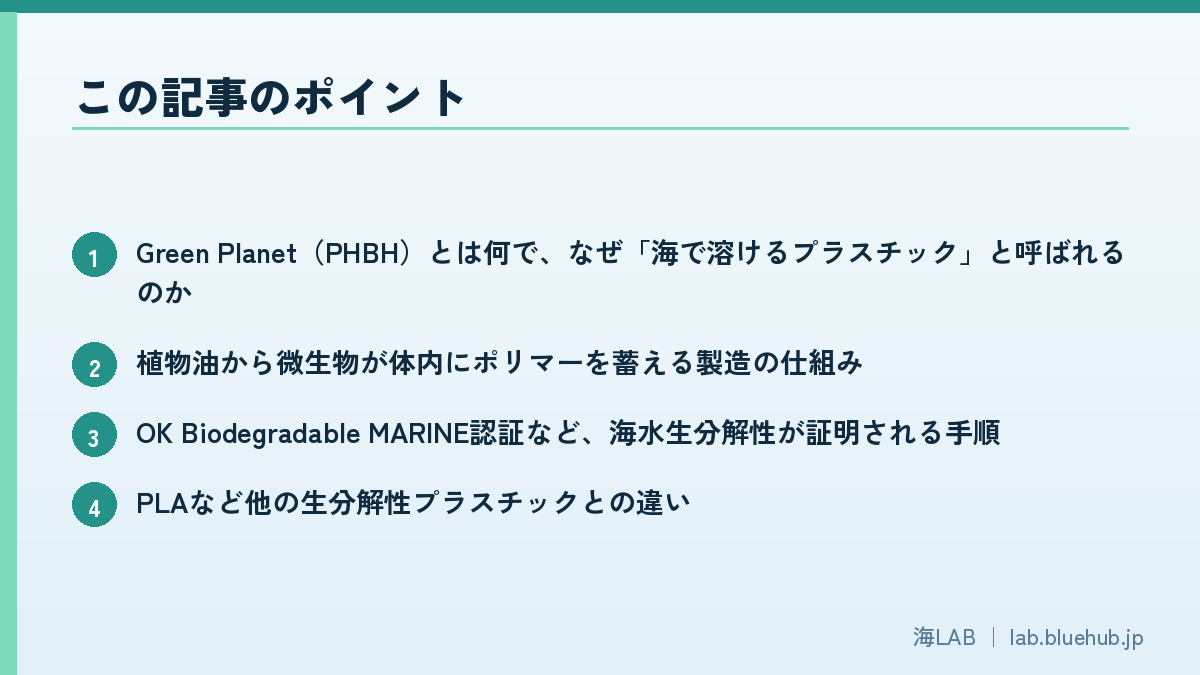
- What Green Planet (PHBH) is, and why it is called "plastic that dissolves in the sea"
- The manufacturing mechanism by which microorganisms accumulate polymer in their bodies from plant oil
- The process by which marine biodegradability is proven, including the OK Biodegradable MARINE certification
- How it differs from other biodegradable plastics such as PLA
- Real-world product examples already in practical use, such as Starbucks and 7-Eleven
- Differences from petroleum-based plastics, and the expectations and limits regarding solving the ocean plastic problem
The ocean plastic problem and expectations for bioplastics
More than 8 million tons of plastic waste are said to flow into the world's oceans every year, and fragments broken down by waves and ultraviolet light are absorbed into marine organisms as microplastics, raising concerns about impacts across entire ecosystems. Cases in which sea turtles mistake plastic bags for jellyfish and swallow them, or in which large amounts of plastic fragments are found inside seabirds, have been repeatedly reported as symbolic examples of the real impact of ocean plastic waste on ecosystems. In response, the Japanese government proposed the Osaka Blue Ocean Vision at the G20 Osaka Summit in 2019, aiming for "zero additional pollution from ocean plastic waste by 2050," and four ministries — the Ministry of the Environment, the Ministry of Economy, Trade and Industry, the Ministry of Agriculture, Forestry and Fisheries, and the Ministry of Education, Culture, Sports, Science and Technology — formulated the "Biomass Plastics Introduction Roadmap."
This roadmap sets a target of introducing biomass plastics to the maximum extent possible (approximately 2 million tons) by 2030, and indicates a policy of promoting the development and use of "materials that decompose in the sea," such as paper and marine-biodegradable plastics. Kaneka's Green Planet is one of the few examples that has achieved industrial-scale practical application of precisely this kind of "material that decomposes in the sea."
The policy measures are organized into four pillars: "promoting use," "appealing to consumers," "research and development," and "follow-up," and the government is putting effort not only into developing new materials but also into raising awareness so that consumers can understand the value of these materials and choose them. The fact that materials like Green Planet are covered in news and media is also backed by this kind of national policy support.
In Japan, the "Act on Promotion of Resource Circulation for Plastics" came into force in April 2022, requiring businesses to work toward resource circulation with an eye toward the entire lifecycle of plastic products, from design to disposal. The use of biomass plastics and biodegradable plastics is positioned as one of the measures envisioned under this law, and the development of materials like Green Planet has progressed in step with this kind of legal and institutional support.
The difference between biodegradable plastic and biomass plastic
These terms are often confused, but "biomass plastic" refers to material made from renewable resources such as plants, and does not necessarily mean it decomposes in nature. "Biodegradable plastic," on the other hand, refers to material that is ultimately broken down into carbon dioxide and water through the action of microorganisms. Since Green Planet is made from plant oil and also biodegrades in seawater, it can be described as a material that combines both of these properties.
For example, even materials labeled as "biomass-derived" in the same way may only have part of their raw material replaced with plant-derived content, or may simply be considered carbon-neutral when burned without actually decomposing in nature. Rather than judging a product as "environmentally friendly" based on its label alone, it is important for consumers to distinguish which property — raw material origin or biodegradability — is actually being referred to.
In fact, much of the biomass plastic distributed in Japan is a mixed material containing only a few percent to a few dozen percent of plant-derived raw material, and is not necessarily 100% biomass-derived. In that sense, the fact that Green Planet explicitly states it is "100% biomass-derived" is one feature that makes its position as a material easier to understand.
The Osaka Blue Ocean Vision
An international framework proposed by Japan at the G20 Osaka Summit in 2019. It aims to achieve zero additional pollution from ocean plastic waste by 2050, and is shared among participating countries and regions.
Why companies are investing heavily in this field
As policy frameworks such as the Plastic Resource Circulation Strategy and the Osaka Blue Ocean Vision have become established, the development and adoption of alternative materials has come to be positioned for companies not merely as a social contribution activity, but as a management issue tied directly to the sustainability of their business. The growing number of situations in which international business partners and brand-conscious consumers ask companies to explain their use of single-use plastics is also one of the factors driving chemical manufacturers to develop new materials.
What kind of material is Green Planet (PHBH)?
Green Planet is the product name of a biodegradable biopolymer developed by Kaneka, with the chemical name PHBH (a copolymer of 3-hydroxybutyrate and 3-hydroxyhexanoate). It is a 100% biomass-derived material made by extracting the polymer that microorganisms store inside their own cells as an energy source, using plant oil as the raw material.
PHBH is a member of the PHA material family
PHBH belongs to a group called PHA (polyhydroxyalkanoate), the general term for "microbially produced polyesters" that microorganisms make inside their bodies. PHA includes several types, such as PHB (poly-3-hydroxybutyrate) and PHV (polyhydroxyvalerate), and PHBH is positioned among them as a copolymer with an excellent balance of flexibility and processability.
Among PHA materials, the single-component PHB (poly-3-hydroxybutyrate) has the weakness of being hard and brittle, making it unsuitable as-is for processing into everyday items such as food containers and straws. Kaneka's technical originality lies in combining it with another component, 3-hydroxyhexanoate, to create a copolymer (PHBH) that achieves both flexibility and practical strength and processability.
Differences from petroleum-based plastic and PLA
Conventional petroleum-based plastics used in plastic bags and PET bottles are said to take hundreds of years to break down naturally, breaking into fine fragments that remain in marine ecosystems as microplastics for a long time. PLA (polylactic acid), another plant-derived bioplastic, tends to decompose readily in high-temperature, high-humidity composting environments such as composting facilities, but faces the challenge of decomposing poorly in natural soil or seawater. In contrast, a major difference with Green Planet (PHBH) is that it is broken down by microorganisms not only in soil but also in seawater.
This means there are two significantly different types of biodegradable plastic: "materials that decompose when brought to a composting facility" and "materials that continue to decompose even if released into the natural environment." For products such as straws and cutlery that are used outdoors or at the beach and have a high risk of unintentionally being released into the natural environment, the latter type of material with marine biodegradability is considered a more effective measure.
| Material | Main raw material | Environments where it readily decomposes |
|---|---|---|
| Petroleum-based plastic (PE, PP, etc.) | Petroleum | Decomposition takes on the order of hundreds of years; barely decomposes in the natural environment |
| PLA (polylactic acid) | Starch from corn, etc. | Mainly in high-temperature, high-humidity composting facilities |
| Green Planet (PHBH) | Plant oil | Soil and fresh water, as well as seawater |
The origin of the name PHBH
- P = Poly
- HB = 3-Hydroxybutyrate
- H = Copolymer with 3-Hydroxyhexanoate
A field drawing attention from chemical manufacturers worldwide
PHA-based marine-biodegradable materials are a field of research and development being pursued not only by Kaneka but also by chemical manufacturers around the world. Investment toward mass production of PHA-based materials is progressing in the United States, Thailand, China, and elsewhere, and which manufacturer can commercialize the added value of marine biodegradability faster and more cheaply is becoming one of the competitive axes in the future bioplastics market. The fact that Kaneka has continued research since the 1990s and achieved industrial production ahead of the rest of the world is an example that demonstrates its technological advantage in this field.
How plastic is made from plant oil and microorganisms
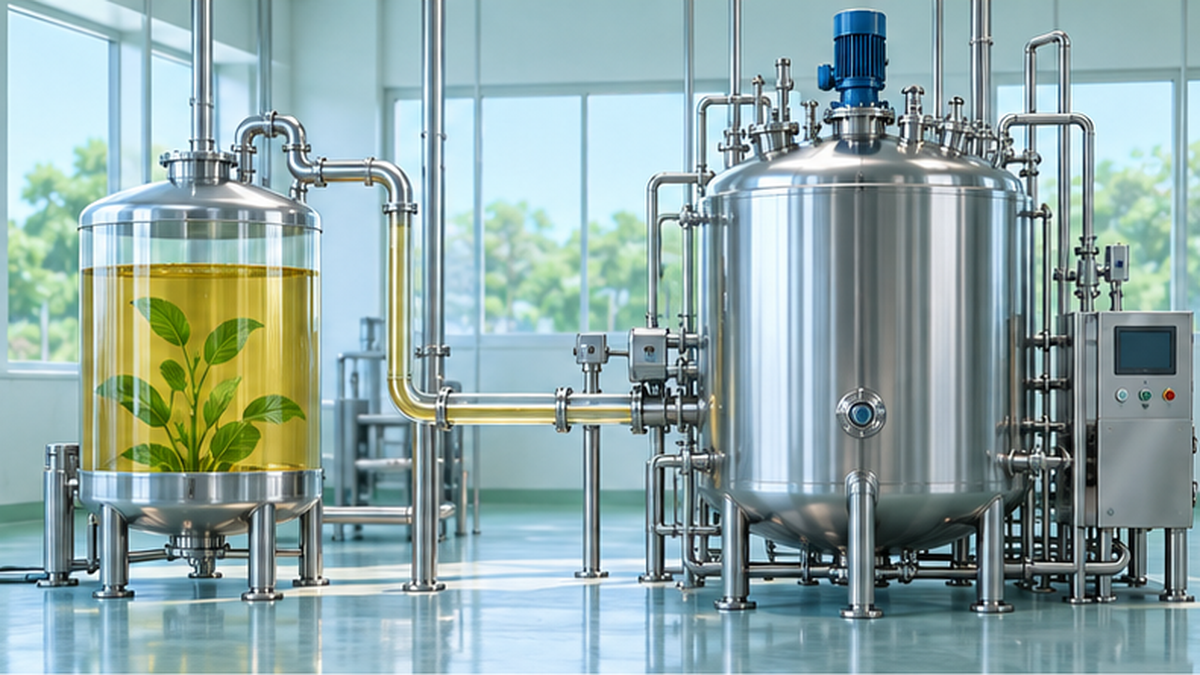
The manufacturing of Green Planet broadly proceeds in three stages: "fermentation," "extraction," and "processing." First, microorganisms are cultured in large quantities in culture tanks using plant oil as a nutrient source, and as they grow, the microorganisms accumulate polymer (PHBH) inside their own cells. This makes use of the natural mechanism by which microorganisms store energy, and the manufacturing principle itself is fundamentally different from conventional plastics chemically synthesized from petroleum.
The road to the world's first industrial production
Kaneka began researching PHBH in the 1990s, developing it based on microorganisms collected from the soil at its Takasago Plant (Takasago City, Hyogo Prefecture). Production efficiency was initially low and it took many years to bring to practical use, but by combining its proprietary "polymer technology" and "biotechnology," Kaneka succeeded in achieving the world's first industrial production of PHBH. This process involved steady research and development combining knowledge from both chemical manufacturing and biotechnology, including breeding to improve microbial productivity and optimizing fermentation conditions suited to mass culture.
At the time, ocean microplastics did not become widely recognized as a global social issue until the late 2010s, and when Kaneka began researching PHBH in the 1990s, the ocean plastic problem had not yet attracted the level of attention it does today. The fact that basic research, which began from the long-term perspective of "materials that do not depend on petroleum resources," ended up becoming one of the solutions to the ocean environmental problem decades later is a distinctive part of this material's development history.
Microbial breeding and fermentation technology
To efficiently produce PHBH, it is necessary to select microbial strains with the property of accumulating large amounts of polymer inside their bodies, and to further optimize the culturing conditions. Kaneka has improved microorganisms it discovered in-house over a long period, enhancing their ability to efficiently take in plant oil as a raw material and convert it into polymer. The breeding of these microorganisms and the establishment of a stable fermentation process in large tanks were the keys to connecting laboratory-level results to industrial production.
After fermentation, the process continues with "extraction," in which the microbial cells are broken open to isolate only the polymer, and "compounding," in which the extracted polymer is processed into a form that is easy to melt and mold. In the extraction stage, it is necessary to extract polymer of as high a purity as possible using methods with a low environmental burden, and the know-how behind this extraction technology is said to be one of the strengths Kaneka has cultivated over many years.
Approval as a food-contact material and production expansion
In 2019, its use as a food-contact packaging material was approved in the EU (European Union), earning international recognition in terms of safety as well. At that time, annual production capacity was 5,000 tons. In advancing applications for food packaging and food-service cutlery, this kind of international safety approval is an essential requirement, and clearing it made adoption by food-related companies such as Starbucks and convenience stores a realistic option.
Expansion of production capacity
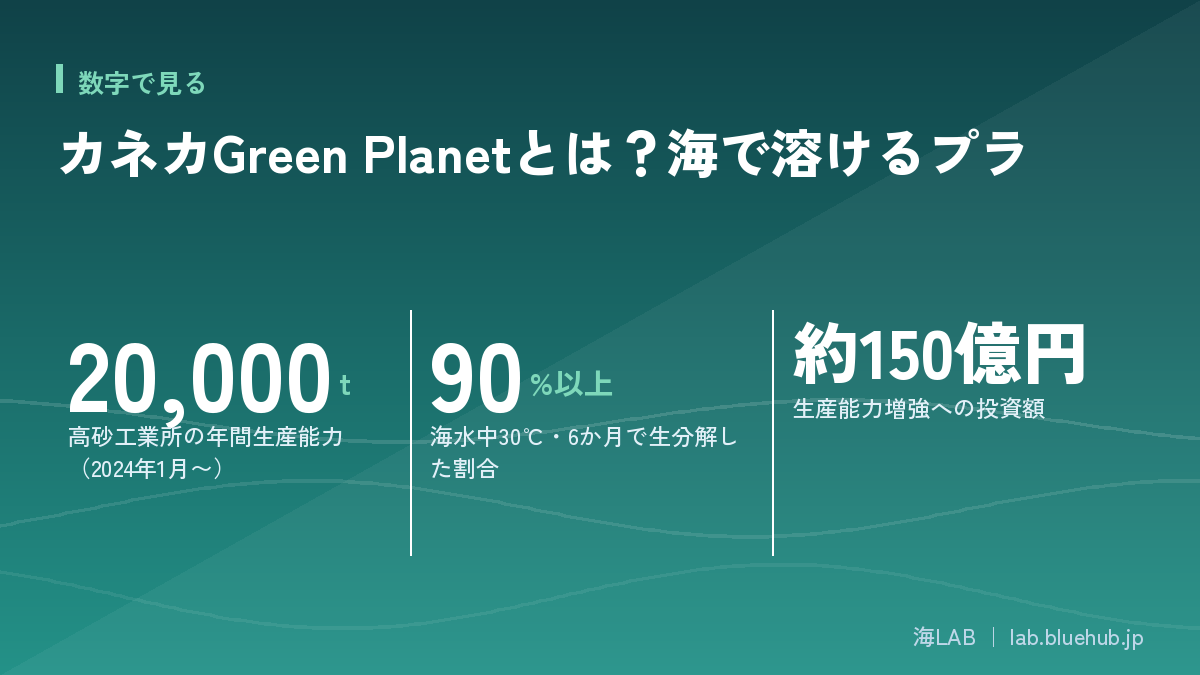
In response to growing demand, Kaneka built new production facilities within the Takasago Plant, which began operating in January 2024. As a result, annual production capacity expanded from the previous 5,000 tons to a combined total of 20,000 tons including existing facilities, with an investment of approximately ¥15 billion. Expanding production scale in stages is also aimed at reducing manufacturing costs, thereby encouraging adoption in an even wider range of products.
Materials that use biotechnology are generally said to face challenges such as quality variability accompanying the scaling-up of fermentation tanks, and sharp cost increases, when moving from laboratory-scale success to industrial-scale mass production. The fact that Kaneka was able to achieve a fourfold expansion from 5,000 to 20,000 tons shows that sufficient mass-production know-how had already been accumulated with its existing facilities, and further expansion is also anticipated should demand continue to grow.
How it decomposes in seawater
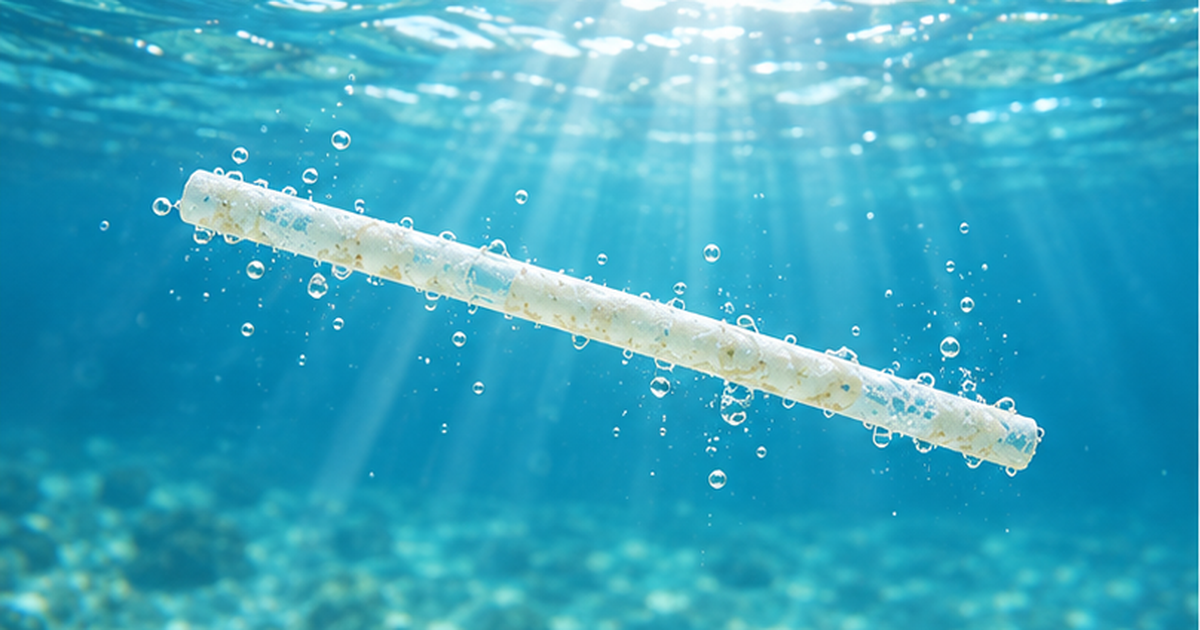
The basis for calling Green Planet "plastic that dissolves in the sea" lies in biodegradability tests verified by a third-party certification body. The Belgian certification body Vincotte (now TÜV Austria Belgium) issued "OK Biodegradable MARINE" certification to Green Planet (then called PHBH) in 2017. This certification requires that a certain percentage or more biodegrades within a certain period under seawater conditions, and it has been confirmed that more than 90% of Green Planet biodegrades into carbon dioxide and water within six months in seawater at 30°C.
The mechanism of decomposition
Seawater naturally contains a wide variety of microorganisms. When Green Planet is released into the sea, these microorganisms attach to the surface of the material and gradually break down the polymer's molecular chains through the action of enzymes. It is ultimately broken down into carbon dioxide and water, and unlike petroleum-based plastics, it does not leave behind fine fragments that persist semi-permanently.
This decomposition process follows basically the same principle as microorganisms in compost breaking down dead leaves and food waste back into soil: the enzymes possessed by microorganisms in seawater cut the long molecular chains that make up Green Planet. The fact that no harmful chemical substances remain during the decomposition process is also one of the important items confirmed when obtaining certification.
Decomposition speed depends on water temperature
The rate of biodegradation varies with water temperature, and it has also been reported that decomposition slows down in colder waters. It is important to note that garbage released into the sea does not disappear immediately — decomposition only progresses once conditions are in place for naturally occurring microorganisms to be active, which is a conditional characteristic. In actual tests, the progress of decomposition was confirmed in stages over 88 days of observation, suggesting that, depending on environmental conditions, it can take on the order of several months.
In warm tropical and subtropical waters, microbial activity is more vigorous, so decomposition proceeds relatively quickly, whereas decomposition speed is believed to drop significantly in cold deep-sea or cold-water regions. In other words, Green Planet is not a "magic material that disappears quickly and uniformly in any sea," but rather, an understanding closer to reality is that it returns to nature far faster than petroleum-based plastics when conditions are right.
Looking at waters near Japan, it is expected that decomposition would progress at different rates for the same product depending on whether it was released into the warm waters of the Kuroshio Current or the cold waters influenced by the Oyashio Current. This kind of regional variation is a property common to biodegradable plastics in general, not a weakness unique to Green Planet.
The testing process required to obtain certification
To obtain certification such as OK Biodegradable MARINE, a material manufacturer must submit test samples to a third-party certification body, which measures the biodegradation rate over a set period in a closed test environment using actual seawater. Testing is carried out in accordance with internationally established standards, and certification is only issued once the biodegradation rate exceeds the required benchmark within the specified period. This provides a mechanism by which performance is guaranteed based on objective data, rather than a company simply claiming on its own that a material "decomposes in the sea."
Such certification systems also play a role in preventing "greenwashing" — appealing to environmental consciousness without substance behind it. When consumers and buyer companies check for the presence of a certification mark when choosing a product, they can distinguish between an unsubstantiated "eco-friendly" label and performance backed up by third-party testing.
Biodegradability in fresh water and soil
Green Planet has been confirmed to biodegrade not only in seawater but also in fresh water and soil. If released into rivers or lakes, it decomposes through the action of naturally occurring microorganisms just as it does in the sea, so its expansion into products used inland is also being considered.
What is OK Biodegradable MARINE?
An international certification system issued by a Belgian certification body that proves biodegradability in seawater environments. It confirms, based on test data, that plastic actually decomposes in the marine environment.
Product examples already in practical use
Green Planet is being put into practical use mainly in single-use plastic products, which are considered one of the major sources of ocean plastic waste. As the food and beverage industry as a whole moves to reconsider single-use plastics — as seen in Starbucks' elimination of plastic straws and switch to paper products — demand for biodegradable materials like Green Planet is also rising.
| Adopting company/organization | Product | Timing |
|---|---|---|
| Starbucks Coffee Japan | In-store straws (first rolled out at 32 stores in Okinawa Prefecture, then nationwide) | Initial rollout in January 2025, nationwide expansion in March |
| Seven-Eleven Japan | Straws for Seven Café | Already adopted |
| Japan Airlines (JAL) | In-flight meal containers and shopping bags | Already adopted |
| Tokyu Hotels | Guest-room amenities (toothbrushes, hairbrushes) | Already adopted |
| Ito En | Telescoping straws for "Jujitsu Yasai" vegetable juice (containing lactic acid bacteria) | 2021 |

Why straws and cutlery were adopted first
Straws and cutlery are "single-use" products that are discarded immediately after use, and because their shapes are simple and easy to process, they tend to be chosen as the first products for putting new materials into practical use. They are also symbolic products for restaurant and retail companies, allowing them to visibly demonstrate a switch to alternative materials amid the trend of charging for plastic bags and eliminating plastic straws.
Detailed material information and adoption case studies are published on the official website.Visit the official websiteKaneka Green Planet (PHBH) official websiteIntroduces the material's mechanism and case studies of adopting companies🔗 kaneka.co.jp
Applications in cosmetic containers and textiles
Applications in rigid containers and textiles are also progressing, including adoption in cosmetic containers jointly developed with Shiseido, and the range of uses is expanding beyond just straws and cutlery. Rigid containers require strength and transparency, while the textile field emphasizes suppleness and dyeability, and since the physical properties required differ by application, research and development to improve the certainty of processing technology is proceeding in parallel.
Expanding adoption overseas
Green Planet (PHBH) is being adopted not only domestically but also by overseas brands, including use in straws provided at outdoor brand stores. Having obtained approval as a food-contact material in Europe is also a factor supporting its expanding adoption in overseas markets.
Overseas, there are regions where municipal-level regulation of single-use plastics is intensifying, and demand for a material with the property of "decomposing even in seawater" is expected to keep growing within such a regulatory environment. The track record built up within Japan is also being used as material to propose to companies considering how to respond to overseas regulations.
Recognition and awards
Green Planet has received growing social recognition as a new material contributing to reducing environmental impact, including winning the Grand Prize at the "2025 Nikkei Excellent Products and Services Awards." The Nikkei Excellent Products and Services Awards is a system that honors particularly outstanding products and services released or announced that year, with evaluation criteria said to include not only technological capability but also practical usefulness in the market and social impact.
How much can it contribute to solving the ocean plastic problem?
Biodegradable biopolymers like Green Planet are one promising option for curbing the generation of ocean plastic waste, but it must also be understood that they are not a cure-all solution.
Three perspectives to avoid overestimating its impact
- Biodegradable material does not mean it is "fine to throw away." It is effective only when combined with efforts to reduce and collect waste
- Decomposition requires certain environmental conditions (water temperature, presence of microorganisms), and it does not decompose at the same speed in all sea areas
- While production capacity is expanding, it remains small in scale compared to the volume of petroleum-based plastic distributed worldwide
Cost and adoption challenges
It has been pointed out as a challenge that PHA-based materials tend to have higher manufacturing costs compared to petroleum-based plastics and the already-established PLA. Kaneka's staged expansion of production capacity is also thought to be aimed at lowering costs through economies of scale, bringing prices closer to a range that more companies can readily adopt.
There are also indications that, as biodegradable plastics become more widespread, sorting and collection alongside recyclable petroleum-based plastics becomes more complicated. When biodegradable and recyclable materials are mixed together, it can become unclear which waste processing route they should be placed on, and experts have raised concerns that this could end up reducing recycling efficiency. Alongside the spread of these materials, building mechanisms for collection and sorting is also an important challenge.
For this reason, companies introducing biodegradable plastics are required not simply to switch materials, but also to make operational efforts such as in-store sorting labels and educating employees. Even if a material that decomposes in seawater is used, its properties cannot be fully leveraged if consumers treat it the same as conventional plastic waste.
Summary of this section
- Biodegradable material does not mean it is "fine to throw away" — it is effective only when combined with waste-reduction efforts
- PHA-based materials have high manufacturing costs, and reducing costs through mass production is key to their spread
- Building mechanisms for sorting and operating biodegradable materials alongside recyclable materials is also a future challenge
Even so, the fact that it has been demonstrated that a material which decomposes even in the ocean can be produced at industrial scale from a renewable raw material — plant oil — carries significance in broadening the technological options available for addressing ocean environmental problems.
Issues surrounding the sourcing of plant oil as a raw material
Since plant oil is used as the raw material, the more production volume is expanded, the more the balance with the land and water resources needed to cultivate the crops used as raw material can become a point of debate. Selecting oil raw materials that do not compete with food production, and whether a sustainable sourcing policy can be maintained, are challenges that cannot be avoided as this kind of biomass-derived material expands over the long term, and companies will increasingly be required to demonstrate transparency in their raw material sourcing going forward.
How we can get involved
As consumers, choosing products that use Green Planet is one way to show support, but even more important is continuing to properly sort and dispose of plastic waste — whether biodegradable or not — and reducing single-use consumption as much as possible.
What you can do in daily life
- Even for products labeled biodegradable, prioritize reusable containers and cutlery when possible
- Participate in beach cleanup activities and help collect waste that has already been released into the environment
- Learn about companies' SDG efforts and support them through your purchasing choices
Biodegradable plastic is, at most, a technology that "reduces the damage in cases where it does end up being released" — it is only by combining it with efforts to avoid generating waste in the first place and to collect it that we can move closer to solving the ocean plastic problem.
A perspective for looking at corporate SDGs efforts
When you come across news about a new material like Green Planet, forming the habit of checking "what it is made of," "how far it has been proven," and "which companies have adopted it" will help you avoid simply accepting SDG-related information at face value, and instead judge for yourself whether an initiative is genuinely effective. The figures and certification mechanisms introduced in this article are also intended to serve as one clue for making such judgments.
Ocean environmental problems cannot be solved by a single company or a single new material alone. Only when material development by manufacturers like Kaneka, the efforts of retail and food-service companies that adopt them, and the actions of individual consumers all accumulate together do we move closer to the larger goal of reducing ocean plastic waste. Green Planet can be described as a solid step within that accumulation of efforts.
References and sources
- Kaneka "Green Planet (PHBH)" official website – Material characteristics and biodegradation mechanism
- Kaneka "Biodegradable Biopolymer" business introduction – Business and product page
- Kaneka news release, "Decision on large-scale capacity expansion for Green Planet" – February 2022
- Kaneka "2025 Nikkei Excellent Products and Services Awards, Grand Prize" award information – Award information
- KANEKA CORPORATION (English site), Green Planet – OK Biodegradable MARINE certification and overseas adoption cases
- Ito En news on adoption in "Jujitsu Yasai" telescoping straws – May 2021
- Journal of the Society for Biotechnology, Japan, "Development and commercialization of production microorganisms for Kaneka's biodegradable biopolymer Green Planet" – Academic explanatory article
- Ministry of the Environment, "Biomass Plastics Introduction Roadmap" – Formulated January 2021
- Hi-Chem, "What is marine-biodegradable plastic PHA? Differences from PLA" – Material explanatory article
* Listed in order of reliability: government/academic institutions > peer-reviewed papers > specialized institutions > reliable media