⚡ In short
In 2018 Starbucks announced a global phase-out of plastic straws, switching to paper in Japan in 2020 and to a biomass material in 2025. We trace that history and check, with numbers, what it really achieves for the ocean plastic problem.
Have you ever noticed the mouthfeel change slightly when you pull a paper straw out of an iced coffee cup? In 2018, Starbucks announced it would phase out plastic straws worldwide, switching to paper straws in Japan in 2020, and then to a new biomass material in 2025.
This five-plus-year shift is more than an "eco-friendly gesture" — it is a record of trial and error spanning materials engineering, customer experience, and environmental impact calculations. At the same time, research suggests straws account for only a tiny fraction of ocean plastic waste, which fuels the persistent question: "why focus so much on straws?"
This article draws on Starbucks' official announcements and news coverage to lay out, based on primary sources, the history of the straw phase-out, the evolution of materials, and where straws truly stand in the broader ocean plastic problem.
What you'll learn in this article
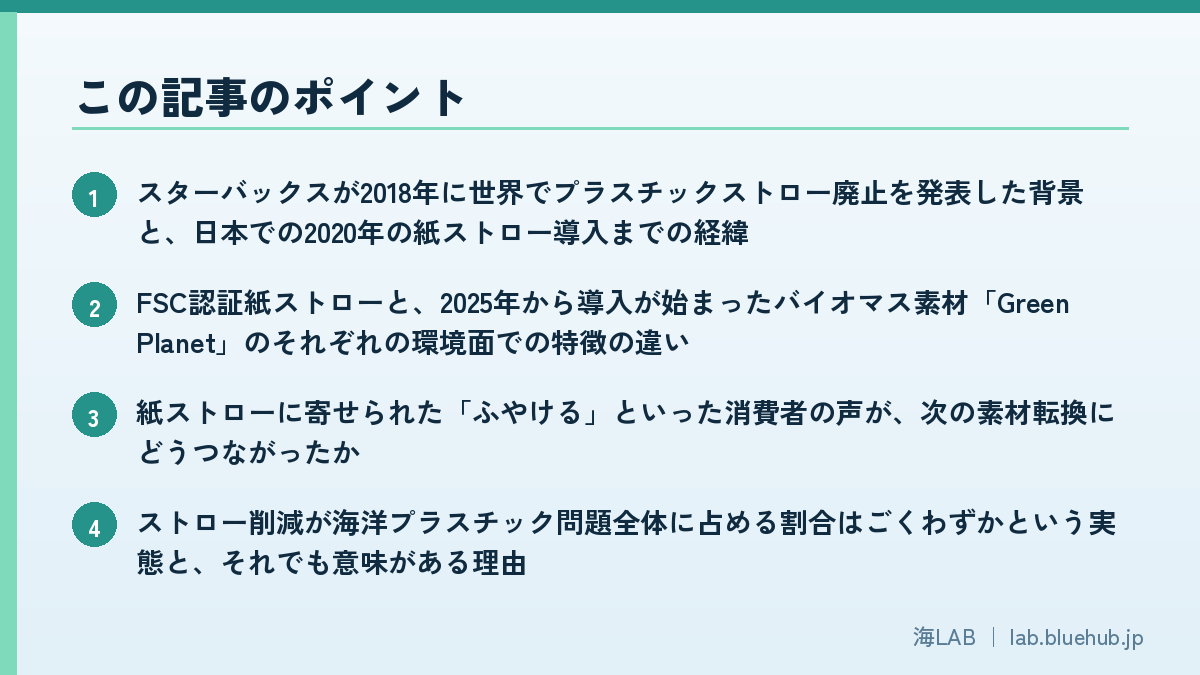
- The background to Starbucks' 2018 global plastic straw phase-out announcement and the path to Japan's 2020 paper straw rollout
- How FSC-certified paper straws differ environmentally from the biomass material "Green Planet," introduced from 2025
- How customer feedback about paper straws going "soggy" fed into the next material switch
- The reality that straws make up only a tiny share of the ocean plastic problem — and why the effort still matters
- Global regulatory moves, such as the EU's single-use plastics directive, that reinforce corporate voluntary action
Why Starbucks stopped using plastic straws
Single-use plastic products are light, cheap, and easy to handle, but they have a weakness: low recycling rates and a tendency to flow from rivers and coastlines into the ocean. Straws in particular are thin and lightweight, making them prone to being blown away — from outdoor cafe terraces, event venues, and park trash cans — and leaking into the environment. Even though each individual straw is small, the sheer volume consumed daily at cafes and fast-food chains worldwide made straws an easy target for reduction efforts.
The climate around 2018 that put single-use plastics in the spotlight
In 2015, a video of a sea turtle with a straw stuck in its nose went viral on social media, and plastic straws became a global symbol of the "single-use plastics problem." The video was viewed tens of millions of times and is said to have been, for many people, the first time the ocean plastic problem felt personal and immediate. In the years that followed, local governments and environmental groups around the world began considering plastic straw bans, and as momentum built for reducing single-use plastics, both consumers and investors turned their attention to how major restaurant chains would respond.
July 2018: a global phase-out policy announced
In July 2018, Starbucks announced a policy to phase out single-use plastic straws across more than 28,000 company-operated and licensed stores worldwide. The company projected the move would eliminate more than 1 billion plastic straws per year. The centerpiece of the phase-out was the introduction of a "strawless lid" that let customers drink iced beverages without a straw at all. At the time, the policy shift by one of the world's largest coffee chains had a major impact both inside and outside the industry, prompting other food-service and retail companies to reconsider their own single-use plastic strategies.
It's also worth noting that Starbucks framed this not as a one-off campaign but as "part of a global environmental strategy." The straw phase-out was designed as an entry point into a broader set of initiatives, alongside rethinking cup materials and promoting resource circulation in stores, such as recycling used coffee grounds.
Regulations followed in country after country
Around the same time as Starbucks' announcement, local governments and national authorities in various countries introduced their own regulations on plastic straws. The city of Seattle, in the United States, banned single-use plastic straws at food-service businesses by ordinance starting in July 2018. The UK government announced a policy in 2018 to ban the sale of plastic straws, stirrers, and cotton buds, which actually took effect in October 2020. With voluntary corporate action and government regulation emerging at nearly the same time, straw reduction spread rapidly worldwide as a shared trend during this period.
- Seattle, USA: banned single-use plastic straws at food-service businesses by ordinance from July 2018
- UK: announced a ban in 2018, with the sales ban taking effect in October 2020
- Starbucks: announced a phased global phase-out across more than 28,000 stores in July 2018
The view that "some people need straws"
From the outset, some disability advocacy groups and supporters raised concerns about this wave of global bans and regulations. For people with limited chewing or swallowing ability, or with limited hand and finger mobility, a bendable, flexible plastic straw can serve as an assistive tool for eating and drinking safely. Paper and biomass straws differ from plastic in durability and flexibility, so a blanket switch to alternative materials is not equally desirable for everyone — that is the point critics raised. The fact that Starbucks continues to offer straws at the counter to anyone who needs one, even after introducing the strawless lid, can be seen as an operational accommodation that reflects these concerns.
The "strawless lid": a rethink, not a swap
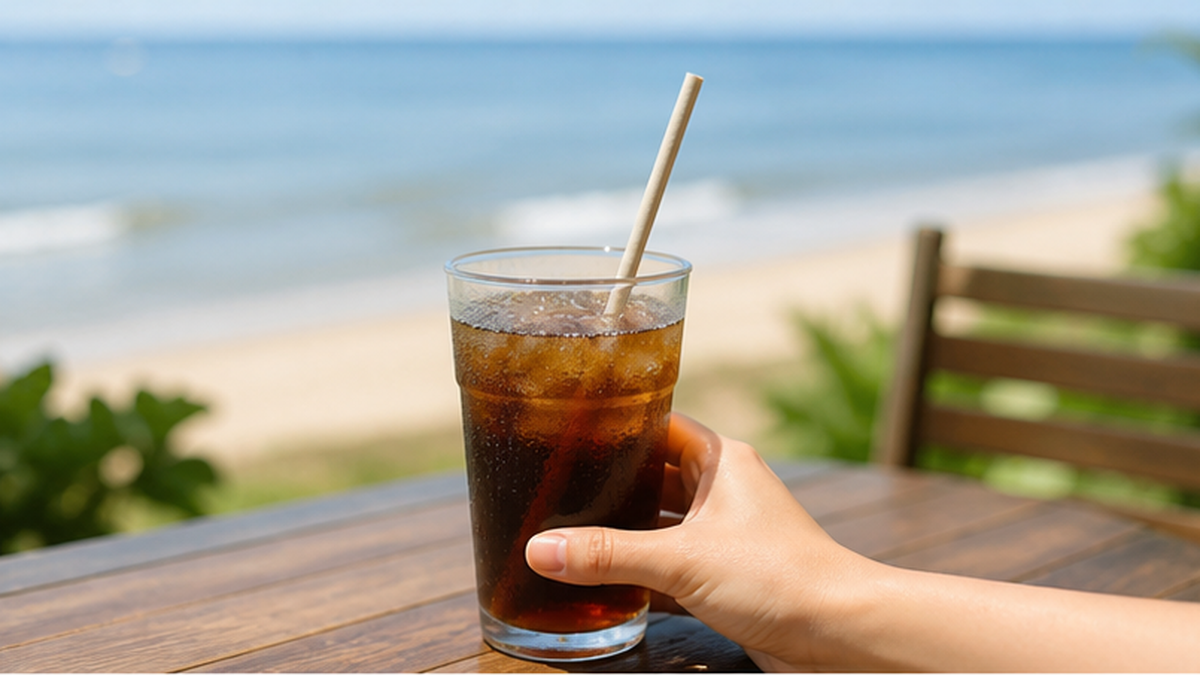
Rather than simply swapping straws for an alternative material like paper, Starbucks made the centerpiece of its global rollout a newly designed lid that let customers drink "without needing a straw at all." This approach was praised not as a symptomatic fix that just swaps materials, but as a genuine rethink of product design itself.
A new, recyclable polypropylene lid
The newly developed lid was said to reduce plastic use by 9% compared with the combination of a flat lid and a straw, and it is made of polypropylene, designed to be recyclable in many regions. It was first introduced in select stores in France, the Netherlands, and the UK in Europe, before spreading to the US and other regions. Straws (made of alternative materials) continue to be offered at the counter to anyone who needs one.
Overseas media sometimes called this lid an "adult sippy-cup lid," and it drew attention as an industrial design that balanced approachability with functionality. The shape of the drinking opening reportedly went through multiple prototypes to balance spill resistance with ease of drinking.
Changing a product's packaging design requires far more coordination than it might appear. Rolling out a new lid across 28,000 stores worldwide meant redesigning molds, aligning with existing manufacturing lines, confirming compliance with food-safety regulations in each country, and communicating the operational change to store staff — coordination across the entire supply chain. It's worth remembering that behind the transition of one small product like a straw lies this kind of unglamorous, painstaking work.
Criticism that the lid itself used more plastic
On the other hand, the strawless lid actually uses more resin than a conventional flat lid on its own, and overseas media raised the criticism that "the added weight of the lid might outweigh the reduction from removing the straw." The claimed 9% reduction in plastic use is a comparison specifically against the combination of "flat lid plus straw," and some caution that it would be premature to simply conclude that "plastic use dropped significantly." Indeed, some articles cite analyses showing the lid alone weighs more than before, using this as an example of why evaluating environmental measures requires looking beyond the number of units to multiple metrics, including total weight and how easily the material can be recycled.
This criticism is a useful reminder not to take corporate environmental claims at face value but to examine them from multiple angles — while also giving Starbucks credit for continuing to revisit its materials in the years since, using this lid as a starting point.
| Timing | Event |
|---|---|
| July 2018 | Announced a plastic straw phase-out policy for more than 28,000 stores worldwide |
| From 2019 | Strawless lids rolled out progressively across Europe and North America |
| Jan–Mar 2020 | Paper straws introduced in Japan, expanded to roughly 1,500 stores nationwide |
| July 2021 | The EU directive bans the distribution of single-use plastic straws and similar items |
| Jan 2025 | Biomass "Green Planet" straws piloted in Okinawa, Japan |
| From Mar 2025 | Green Planet straws progressively expanded to stores nationwide |
Japan's paper straw rollout and FSC certification
In Japan, rather than the globally standard strawless lid, the response took the form of switching to paper straws — reflecting differences in how cold drinks are served locally. This suggests that, because cup shapes and menu composition vary by region, the approach to material transition was not one-size-fits-all but tailored to the circumstances of each market.
Phased rollout from January 2020, all stores by March
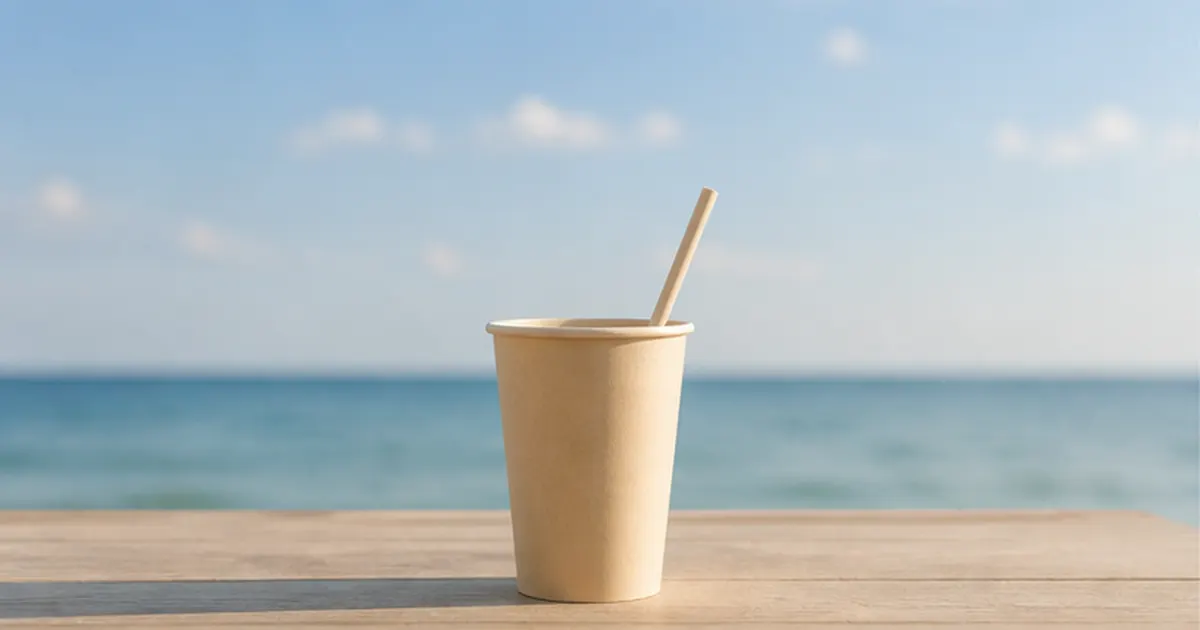
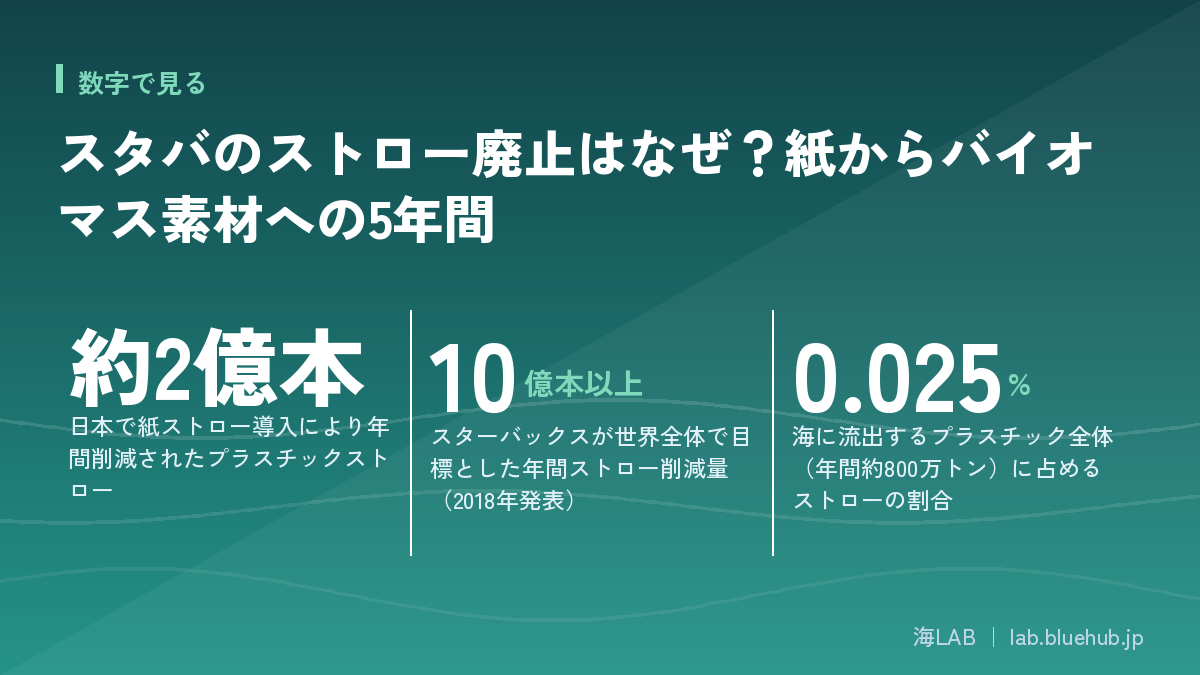
Starbucks Coffee Japan began phasing in paper straws made with FSC®-certified paper from January 2020, completing the rollout to roughly 1,500 stores nationwide by that March. According to the company, the switch was expected to reduce plastic straw use by about 200 million straws per year. Starting with trial runs at select stores and then scaling to every store nationwide in a short period, while checking supply capacity and operations along the way, reflects the seriousness with which the Japan operation approached the global phase-out policy.
View this press releaseAnnouncement of FSC®-Certified Paper Straws (Starbucks Coffee Japan)The official press release announcing paper straws at roughly 1,500 stores nationwide from January 2020🔗 starbucks.co.jpWhat is FSC-certified paper?
FSC® (Forest Stewardship Council) certification is an international scheme that verifies wood and paper products come from responsibly managed forests. To earn certification, producers must meet multiple criteria, including protecting biodiversity, respecting the rights of local communities and workers, and eliminating illegal logging. Using FSC-certified paper for straws provides assurance, from the raw-material sourcing stage onward, that the product does not contribute to deforestation or illegal logging. It's a choice that reflects care not just for reducing ocean plastic, but for forest conservation further upstream in the supply chain.
This certification mark appears on many paper and wood products and is used in everyday items such as notebooks, copy paper, and packaging. Beyond Starbucks straws, seeing the FSC mark signals a product where thought has gone into "where this paper came from."
Paper straws are hardly a novel idea globally — before plastic straws became widespread, paper was once the mainstream material. In that sense, Starbucks' effort could be described as an attempt to "revive a once-lost option, rebuilt to modern quality standards." Building a consistent supply chain — from sourcing certified materials to printing and processing — at nationwide scale within a short period was also a significant achievement in supply-chain management terms.
Key points about FSC-certified paper straws
- An international certification showing wood and paper come from responsibly managed forests
- A material choice that considers both ocean plastic reduction and forest conservation
- Rolled out to roughly 1,500 stores nationwide in Japan between January and March 2020
Customer feedback and the difficulty of choosing materials
While the switch to paper straws was praised on environmental grounds, actual customers offered candid feedback as well. When a company pursues an environmental initiative, how it channels this kind of user feedback into the next round of improvement becomes an important question.
"It gets soggy," "the flavor changes"
A certain number of customers felt that paper straws, especially when used over a long time with an iced drink, absorbed moisture and became soggy, changing the texture and feel of the drinking experience. This kind of feedback about the user experience has repeatedly become a topic on social media and in the press. Some stores accommodated requests to swap in a plastic straw, but paper straws remained the standard offering. Balancing environmental consideration with a comfortable customer experience is a challenge shared across the food-service industry.
The environmental footprint of paper straws themselves
While paper straws avoid petroleum-based plastic, media coverage has pointed out that, depending on the energy consumed during manufacturing and the type of waterproof coating used, it isn't necessarily accurate to say "paper is automatically eco-friendly." Between the added waste weight and changes in how easily the product can be recycled, material selection doesn't come with a single clear-cut answer. Evaluating whether a product is "good for the environment" requires considering the entire product lifecycle — sourcing, manufacturing, transport, use, and disposal — and even a small product like a straw turns out to be far from simple to assess.
Debates around paper straws
- Prone to going soggy and changing texture when used for a long time with a cold drink
- Environmental impact isn't straightforward to assess, depending on the type of waterproof coating used
- Waste weight itself can be higher than plastic in some cases
These challenges around user experience and environmental footprint can't be solved simply by asking customers to "put up with it." Over these five years, Starbucks appears to have kept listening to customer feedback while searching for a more satisfying alternative material. That search bore fruit in the switch to a biomass material starting in 2025, covered next.
It helps to think of corporate sustainability initiatives not as ending the moment they're announced, but as an ongoing process of refinement based on feedback gathered as the product continues to be used. Rather than framing the paper-straw switch as simply a "success" or a "failure," it's more accurate to see it as an important step toward the next material transition.
2025: the switch to the biomass material "Green Planet"
From January 23, 2025, Starbucks Coffee Japan announced it would replace paper straws with straws made of the biodegradable biopolymer "Green Planet®," first piloting the switch at all 32 stores in Okinawa Prefecture before progressively expanding it to stores nationwide from early March that year.
A biodegradable material made mainly from plant-derived raw materials
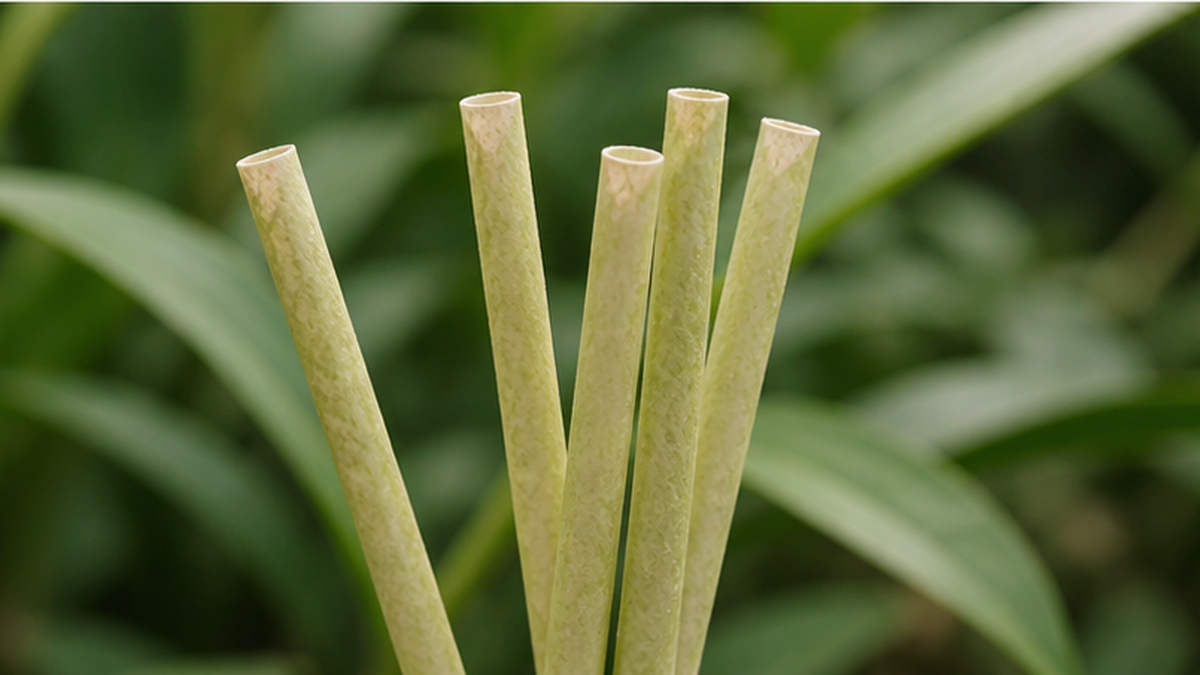
Green Planet is a biodegradable biopolymer made mainly from plant oils and other plant-derived raw materials, designed to balance a pleasant drinking experience with a reduced environmental footprint. According to the company, compared with the current paper straws, the material is expected to lower CO2 emissions from manufacturing and disposal, and to cut the weight of straw waste generated by stores by nearly half. The "sogginess" issue raised about paper straws is also expected to improve given the material's different properties, suggesting the aim is to raise the bar on both environmental impact and user experience at the same time.
The company positions this switch not as a standalone measure but as part of its longer-term "resource positive" environmental goal, alongside efforts such as environmentally conscious store design and promoting the recycling of used coffee grounds — the straw material transition is just one piece of it. It shows that behind a single product lies a broader strategy spanning everything from raw-material sourcing to store operations.
The term "biodegradable biopolymer" may sound unfamiliar, but simply put, it refers to "a plant-derived plastic alternative that is ultimately broken down by microbial activity into water, carbon dioxide, and other simple compounds." The key difference from petroleum-based plastic — which barely breaks down in the natural environment and instead fragments into microplastics that persist — is that biodegradable materials break down under certain conditions. That said, the speed and conditions required for biodegradation vary by material, so it would be a mistake to assume "it's biodegradable, so it's fine even if it ends up in the ocean." It's worth understanding that this material choice still assumes proper disposal as store waste, not release into the environment.
From Okinawa to nationwide: a phased expansion
Just as with the 2020 paper straw rollout, this transition also began with a pilot in one region, expanding nationwide step by step while monitoring store operations and supply conditions. This measured approach — rather than an abrupt, all-at-once switch across every store — can be seen as a lesson learned from the customer feedback gathered during the paper straw rollout. Choosing Okinawa, an island region, as the first testing ground also makes sense from the standpoint of verifying logistics and supply networks.
View this press releaseIntroduction of Biodegradable Biopolymer "Green Planet" Straws (Starbucks Coffee Japan)The official press release announcing the Okinawa pilot in January 2025 and nationwide expansion🔗 starbucks.co.jpHow much does cutting straws really help the ocean plastic problem?
As we've seen, Starbucks has spent more than five years continually revisiting the material used for its straws. So how much does this effort actually matter within the broader ocean plastic problem? Let's return to the numbers and examine this calmly.
Straws account for just 0.025% of the total
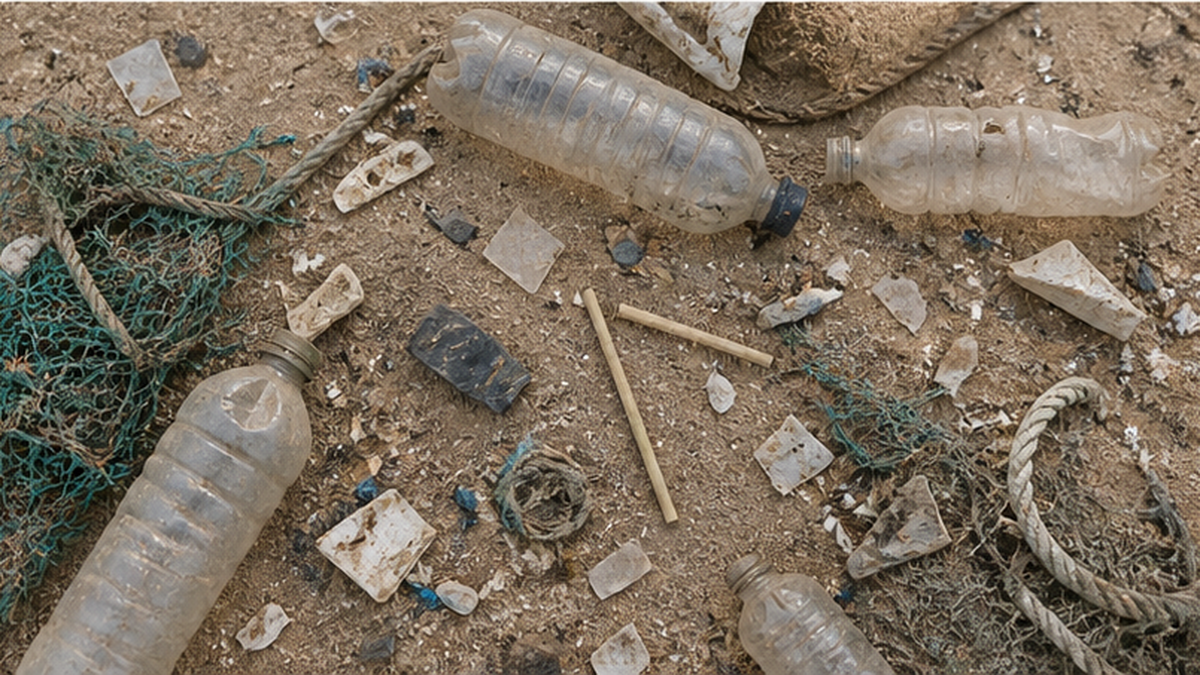
According to reports, roughly 8 million tons of plastic are estimated to flow into the ocean each year, and straws are said to account for a mere 0.025% of that total. The point that removing straws alone won't come close to solving the ocean plastic problem has been repeatedly noted in environmental media. Most ocean plastic waste is thought to consist of fishing gear such as nets and rope, plastic bags, food packaging, and PET bottles, and there is a persistent view that tackling those categories should be a higher priority, given the scale of their impact.
It's worth noting that the "roughly 8 million tons per year" figure itself carries a range of estimates across different research bodies and years, given how difficult it is to precisely measure the total volume of plastic flowing into the ocean. Even Japan's Ministry of the Environment's estimates of domestic outflow vary depending on the calculation method used. In discussions of ocean plastic, it's often more practically useful to grasp the general trend of which sources contribute the largest share, rather than fixating on a single "exact" figure.
Why the straw phase-out still matters
Even if the quantitative impact is small, the straw phase-out carries other kinds of significance. One is that it gave consumers a personal, tangible reason to see the single-use plastics problem as their own — realizing that a straw they used without a second thought is tied to a broader environmental issue tends to spill over into greater interest in other single-use products, like plastic bags and packaging. Another is that as major chains commit to material transitions, it helps grow the production technology and supply chains for paper and biomass materials, which in turn makes it easier to develop alternative materials for other single-use products. Straws being a small numerical share and being a symbolically meaningful step are both true at once, and it's important to hold both ideas together.
In other words, evaluating the straw phase-out requires more than the narrow question of "how much waste did this single measure reduce?" — it also calls for the broader question of "how much did it shift society's awareness and technology?" Dismissing the effort as "meaningless" because the numbers are small, or conversely overstating it as having "solved the problem," both drift away from reality.
What measures would actually move the needle
If the goal is a meaningful quantitative reduction in ocean plastic waste, measures such as tackling waste from fishing gear like nets and rope, reducing packaging such as plastic bags and food trays, and cutting off the pathways by which land-based waste reaches rivers and then the sea are considered to carry far greater impact. The straw phase-out functions largely as an "entry point" that builds broader interest in these more fundamental measures, and it's important to keep the direct reduction effect of straws separate from the wider social ripple effect that flows from it.
Putting the straw problem in numbers
- An estimated 8 million tons of plastic flow into the ocean each year
- Straws are estimated to account for about 0.025% of that
- Most ocean plastic is thought to come from fishing gear, packaging, and plastic bags
Ripple effects across the industry, and the regulations pushing it forward
Starbucks' initiative hasn't stayed confined to a single company — it has spread with support from both the food-service industry and regulators. Voluntary corporate action and government regulation often reinforce each other, together driving broader societal change.
The EU's Single-Use Plastics Directive
The EU (European Union) adopted a directive on single-use plastic products in 2019, and from July 3, 2021, banned the distribution across all member states of single-use plastic straws, stirrers, cutlery, cotton buds, and similar items for which readily available alternatives exist. The directive also includes provisions requiring clear, standardized labeling about disposal methods and environmental impact for certain single-use plastic products, aimed partly at giving consumers more information to inform their choices. This illustrates how voluntary corporate action and government regulation work as two wheels of the same cart, together pushing single-use plastic reduction forward.
Regulation in Japan: the Plastic Resource Circulation Act
In Japan, too, the "Act on Promotion of Resource Circulation for Plastics" (commonly known as the Plastic Resource Circulation Act) took effect on April 1, 2022. Under this law, 12 categories of single-use plastic products commonly provided to consumers free of charge — including straws, spoons, forks, stirrers, and hairbrushes — are designated as "specified plastic-use products," and businesses are required to rationalize their use, whether through reduction, charging fees, or switching to alternative materials. Businesses that handle five tons or more per year of these 12 designated products are required to set reduction targets and implement measures — a threshold that most major food-service chains meet. Starbucks' efforts, in this sense, were already underway voluntarily well ahead of this legal requirement.
Common ground with household goods makers and other industries
Reducing single-use plastic isn't a challenge unique to food-service chains. It overlaps considerably with efforts by household goods manufacturers to cut plastic use through, for example, wider adoption of refill packaging, and know-how around material transitions is increasingly being shared across industries. Whether in raw-material sourcing, manufacturing, or distribution, the shift from "designs that assume single use" toward "designs built for reuse, or for lower-impact materials" is becoming a common theme regardless of industry.
This cross-industry movement also creates new business opportunities for material manufacturers. As demand for biomass materials and biodegradable resins rises from both the food-service and household goods industries, production volumes grow, and economies of scale tend to bring costs down. The fact that one major chain's decision can help accelerate the pace of technology development across an entire materials industry is an indirect ripple effect worth considering when evaluating this kind of initiative.
As an entry point into the ocean plastic problem, it isn't just sea turtles that are affected — seabirds mistakenly ingesting plastic is also widely reported. Readers interested in learning more may also want to check out our articles on seabirds mistakenly eating plastic and Kao's plastic reduction efforts.
What consumers can do, and the link to the SDGs
What emerges from the history of Starbucks' straw phase-out is both the reality that "there is no perfect material yet" and the attitude of "continuing to improve regardless." What looks like a story about a single straw actually condenses years of trial and error across product design, supply chains, and the customer experience.
Reusable straws and bottles as an option
Rather than waiting for companies to make the next material switch, carrying a reusable straw or bottle is itself an option for reducing single-use products altogether. Stainless steel or silicone reusable straws can be washed and used repeatedly, reducing the amount of single-use product consumed regardless of what material a disposable straw is made from. For those who don't need a straw at all, simply telling staff "no straw, please" also helps reduce the amount of paper or biomass material used.
The connection to SDG 14, "Life Below Water"
Reducing single-use plastics connects directly to SDG 14, "Life Below Water," one of the United Nations Sustainable Development Goals. Even though the impact of a single straw is small, the combination of corporate material choices and everyday consumer decisions is steadily broadening awareness of the ocean plastic problem. It will be worth watching how far biomass materials like Green Planet can scale in terms of cost and supply, and which single-use product gets reconsidered next.
The five-plus-year journey of a single straw offers a lesson that applies to sustainability more broadly: there is no single fixed "right answer" for environmental consideration from the start — it keeps being updated in response to consumer feedback and technological progress. The next time you pick up a straw at a cafe, taking a moment to think about where its material came from and the path that led it there might be a small step toward thinking more about the ocean and the environment.
Summary
- Starbucks announced a global plastic straw phase-out in 2018, switching to paper straws in Japan in 2020
- From 2025, it is transitioning to the biodegradable biopolymer "Green Planet"
- Straws account for only a tiny share of ocean plastic, but the awareness-raising effect matters
- Regulatory support, such as in the EU, and voluntary corporate action are advancing together
References & sources
- FSC®-Certified Paper Straws Rolled Out from January 2020 – Starbucks Coffee Japan press release
- Introduction of Biodegradable Biopolymer "Green Planet®" Straws – Starbucks Coffee Japan press release (2025)
- Starbucks to Eliminate Plastic Straws Globally by 2020 – Starbucks Stories Asia (2018)
- Say hello to the lid that will replace a billion straws a year – Starbucks Stories
- Estimate of Japan's Marine Plastic Waste Outflow (FY2024 study results) – Ministry of the Environment, Japan, Office for Marine Plastic Pollution Countermeasures
- 353 Million Tons of Plastic Waste Generated in 2019: OECD Report Warns of Continued Ocean Pollution – Science Portal (JST)
- The Short, Sweeping History of How the Straw Took Over the World – National Geographic Japan
- EU: Single-Use Plastics Directive Applies Across All Member States from July 3 – Sustainable Japan
- Plastic Resource Circulation Act – Ministry of the Environment, Japan (effective April 2022, 12 specified plastic-use products)
- UK Government Bans Sale of Plastic Straws and Cotton Buds – Sustainable Brands Japan
- Starbucks to Discontinue Paper Straws: What Happened to the Goal of Reducing Plastic? – ITmedia Business Online (2024)
※ Listed in order of reliability: government/academic institutions > peer-reviewed papers > specialist organizations > trusted media