⚡ In short
Some 3,100 lighthouses stand along Japan's coast, and many are technological heritage still working since the Meiji era. This guide traces the treaty lighthouses, the age of the keepers, the working towers designated Important Cultural Properties, the 16 lighthouses you can climb, and the front line of tourism use — all from primary sources.
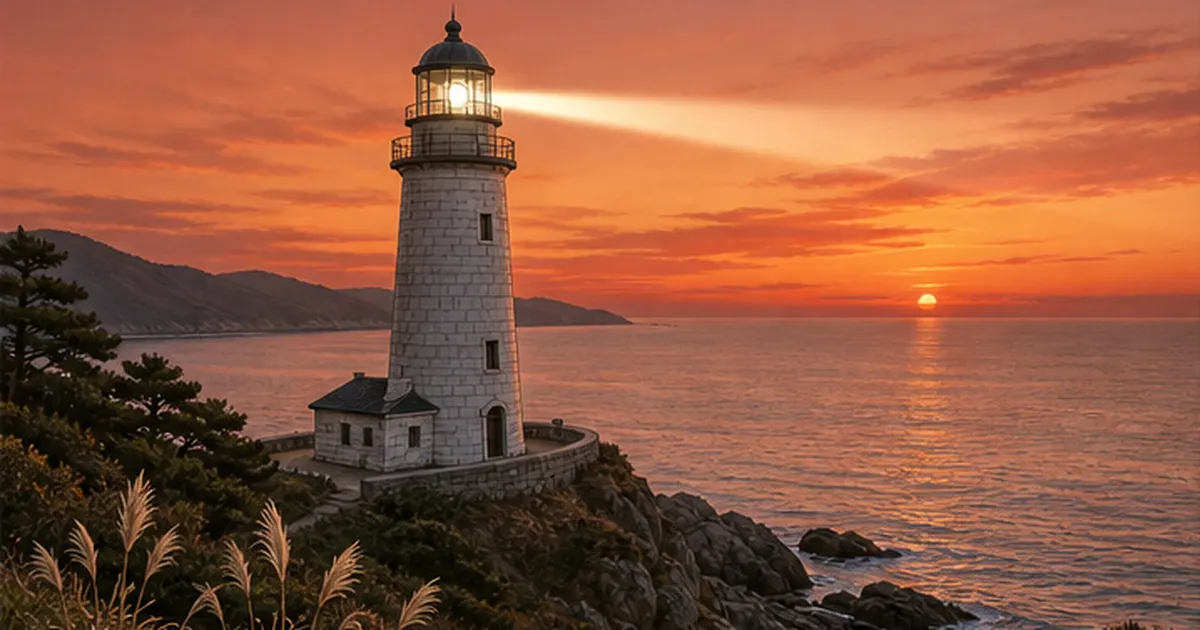
A white tower stands at the tip of a cape, and after dark its beam sweeps the sea in a steady rhythm. The lighthouse is one of the most familiar structures on Japan's coastline — yet few people realize that many of these towers are living industrial heritage, still on active duty since the Meiji era.
As of March 31, 2026, the Japan Coast Guard manages 5,094 aids to navigation in total, of which 3,096 are lighthouses. In an age when a ship can fix its position to within a few meters by satellite, why do this many lights still come on every single night?
This article traces the history of Japan's lighthouses from the treaties signed at the end of the shogunate, the technology of stone, brick and lens, the keepers who tended the flame, and the path that led working lighthouses to be designated national Important Cultural Properties. It also introduces the 16 lighthouses you can climb and the tourism initiatives led by The Nippon Foundation and the Japan Coast Guard. Towers that have long guarded safety at sea are now taking on a new role.
What you will learn
- The role lighthouses play as "visual aids to navigation" and why they survive in the GPS era
- The 13 "treaty lighthouses" fixed by the Edo and Osaka treaties, and the work of Verny and Brunton
- The technology behind lighthouses: double-wall stone and brick towers, Fresnel lenses and more
- The 79 years lighthouse keepers lived on site, and the automation that ended in 2006
- How working lighthouses came to be designated Important Cultural Properties, and what that means
- The full list of Japan's 16 publicly accessible lighthouses and how tourism is reviving them
What Is a Lighthouse? The Sea's Signpost Today
A lighthouse stands at the tip of a cape or the entrance to a harbor, telling ships where they are and warning them of reefs and shallows. The Japan Coast Guard groups such facilities together as aids to navigation and is responsible for installing and maintaining them.
A lighthouse is one type of "visual aid to navigation"
Aids to navigation fall into three broad groups: visual aids, which convey position by light and shape; radio aids, which use radio waves; and other aids, which report vessel traffic and tidal currents. Lighthouses are the flagship of the visual group. According to Japan Coast Guard figures, the breakdown as of March 31, 2026 is as follows.
| Category | Type | Number |
|---|---|---|
| Visual aids | Lighthouses | 3,096 |
| Visual aids | Lighted buoys | 1,148 |
| Visual aids | Lighted beacons | 455 |
| Visual aids | Floodlights | 135 |
| Visual aids | Unlighted beacons | 106 |
| Visual aids | Leading lights, direction lights and buoys | 89 |
| Radio aids | AIS stations and radar beacons | 33 |
| Other | Vessel traffic signal stations and tidal current signal stations | 32 |
| Total | All aids to navigation | 5,094 |
Note that lighted buoys alone exceed 1,000. The towers we picture when we hear the word "lighthouse" account for only about 60 percent of the total; real navigation routes are marked by a dense network that includes floating buoys and small beacons on quay walls.
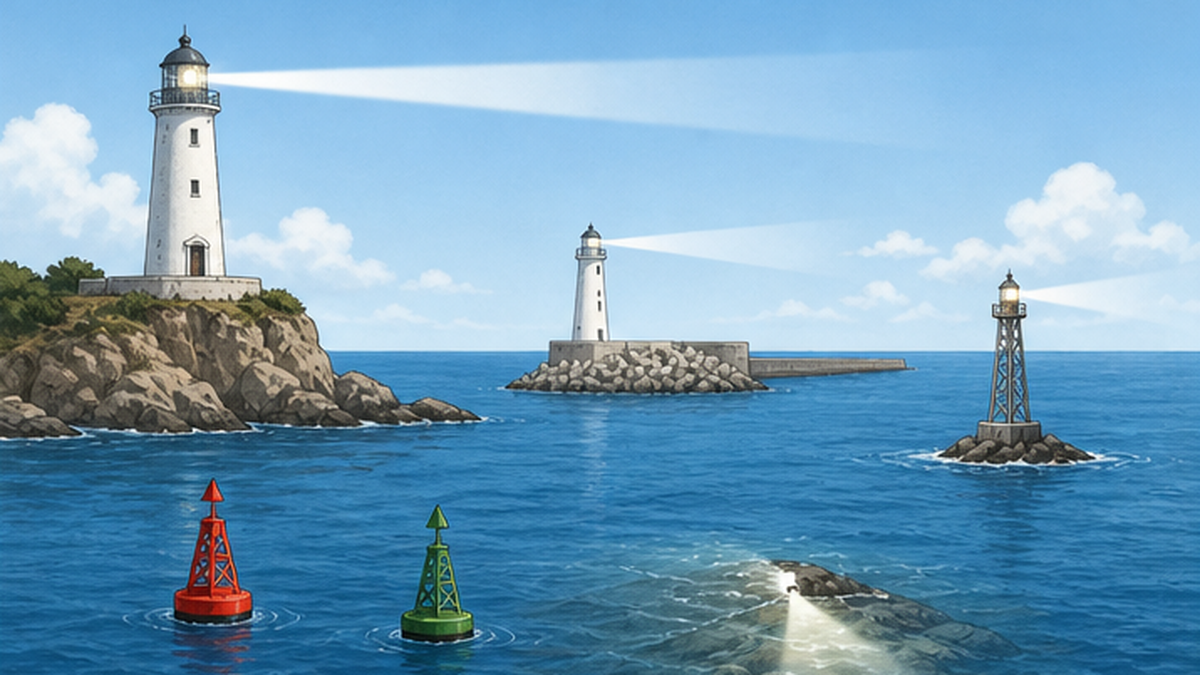
Why lighthouses have not disappeared in the GPS era
With satellite positioning (GNSS) now widespread, ships can track their own position on an electronic chart in real time. Lighthouses are nonetheless maintained, for the following reasons.
- They allow direct, intuitive confirmation: in some situations it is safer to look straight ahead at a light than to drop one's eyes to an instrument screen while steering
- They avoid dependence on a single system: reception failures, equipment faults and jamming cannot take away a light you can see with your own eyes
- They reach small craft and pleasure boats: for vessels without advanced navigation equipment, lighthouses remain a basic positional cue
- They are landmarks from shore too: for fishers and coastal users, a lighthouse is a shared reference point when describing a stretch of sea
Tower height and how far the light reaches
How far a lighthouse beam carries is not determined by the brightness of the source alone. Because the Earth is curved, once the light drops below the horizon no amount of intensity will make it visible. In other words, the combination of the height of the light and the height of the observer's eye sets the upper limit on visible range.
That geometric constraint is why large lighthouses are placed on clifftops or on tall towers. It is also why specifications list "tower height" and "height of the light above sea level" separately: Izumo Hinomisaki Lighthouse, for example, has a tower height of 43.65 m but its light sits 63.30 m above the sea. The elevation of the cape itself is the platform that carries the beam farther.
Conversely, the lighthouses at harbor entrances and on breakwater heads are only a few meters tall. They do not need to signal distant ships; they only need to tell an approaching vessel "this is the entrance." Differences in a lighthouse's size directly reflect differences in the job it does.
Terms worth remembering
- Aids to navigation: the general term for facilities installed for the safety of marine traffic, administered in Japan by the Japan Coast Guard
- Visual aids: markers that convey position or danger by light, shape and color, including lighthouses, beacons and lighted buoys
- Light character: the pattern of the light. How many flashes appear in how many seconds identifies which lighthouse you are seeing
- Luminous range: the distance the light carries, expressed in nautical miles (1 nautical mile = 1,852 m)
Why Lighthouses Stand Where They Do: Capes, Straits and Harbor Mouths
A map of Japan's lighthouses is also a map of its maritime dangers. Wherever a lighthouse stands, there is a reason ships lose their bearings there — or run aground.
A cape is both a landmark and a hazard
Inubosaki, Shionomisaki, Satamisaki, Toimisaki, Shiriyazaki. It is no accident that so many lighthouse names contain the words for "cape" and "point." A cape juts out into the sea, so it is easily seen by ships offshore. At the same time, the rock that projects above water continues below it, so capes tend to be surrounded by reefs and shallows.
A cape, then, is simultaneously "easy to spot" and "dangerous to approach." That is exactly why it makes sense to place a light there — to give position while warning ships not to come too close. The 13 treaty lighthouses of the late shogunate covered the key points of the main sea routes, from Boso and Miura to Izu, Kii and Satsuma, following precisely this logic.
Straits and channels need several lighthouses at once
Waters that are narrow, swift-flowing and heavily trafficked cannot be covered by a single light. It is telling that among the five lighthouses fixed by the Osaka treaty, Rokurenjima and Hesaki guard the Kanmon Strait, Esaki the Akashi Strait and Tomogashima the Kitan Strait — all of them gateways into the Seto Inland Sea.
In such waters, lighthouses are combined with beacons, lighted buoys and floodlights so that the safe channel is drawn out by an arrangement of lights. There are also leading lights, a system in which two lights appear vertically aligned only when the ship is on the safe track, allowing vessels to follow the centerline of a narrow channel.
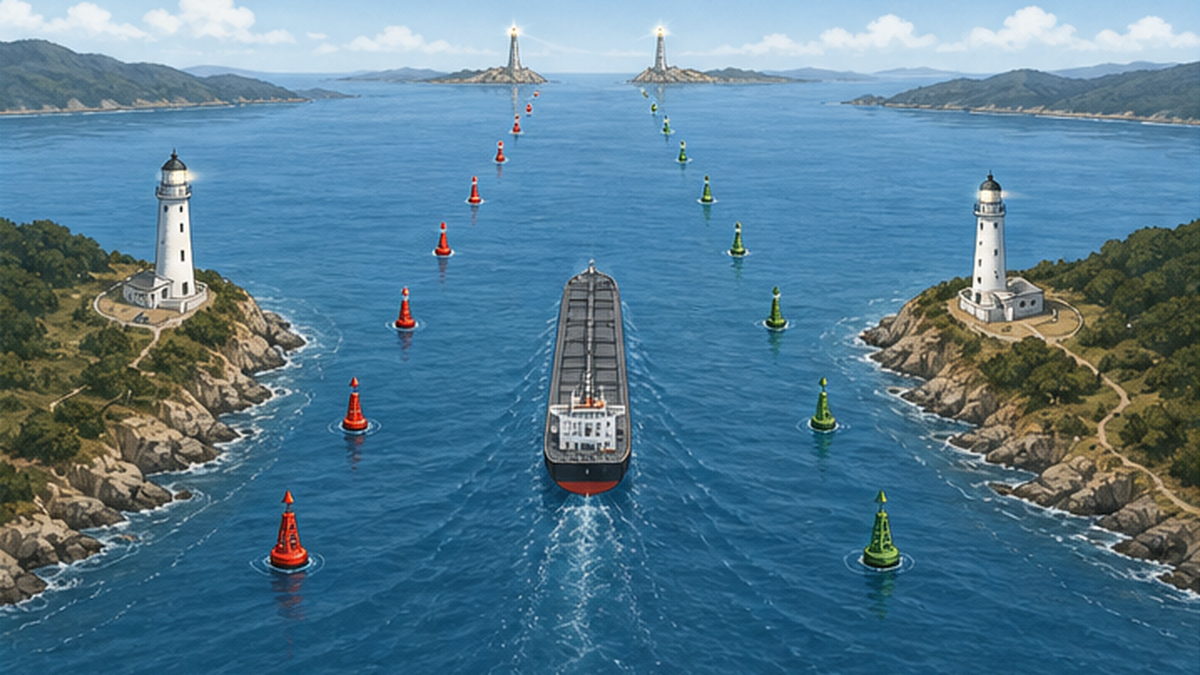
Red lighthouses and green lighthouses: the rule at harbor mouths
Have you noticed that the small lighthouses at harbor entrances are painted red or green? This is not decoration but an international convention. Japan belongs to IALA Region B, where markers are placed red to starboard and green to port as seen by a vessel entering harbor (in Region A, which covers Europe and elsewhere, the sides are reversed).
- Red lighthouse: the starboard side as seen by an entering vessel. Outside it is not the channel
- Green (or white) lighthouse: the port side as seen by an entering vessel
- Buoys follow the same colors: floating buoys also mark left and right in red and green, showing lights of matching color at night
- The sides swap by region: because the rules differ between IALA Region A and Region B, navigators on ocean-going ships always check the chart
"The view with a lighthouse in it" is no coincidence
The lighthouse scenery beloved by visitors largely exists because those spots are strategic points for navigation. Open views, steep cliffs, a wide sweep of open sea — those are the flip side of the condition that the lighthouse must be clearly visible from a ship. When you visit a lighthouse, asking "why was it built here?" from the shape of the land reveals that place's maritime history.
Japan's Western-Style Lighthouses Began in the 1860s: the 13 "Treaty Lighthouses"
Japan's Western-style lighthouses were born of diplomacy after the country opened to foreign trade. Against a background of repeated groundings by foreign ships calling at the treaty ports, the shogunate promised in its treaties with the Western powers to build lighthouses.
Eight sites under the Edo treaty, five under the Osaka treaty
In May 1866, the Tokugawa shogunate concluded the Tariff Convention (the Edo treaty) with the United States, Britain, France and the Netherlands, committing to lighthouses at eight locations. In April 1867 the Osaka agreement (the Osaka treaty) with Britain added five more. These 13 came to be known as the treaty lighthouses.
| Treaty | Year | Lighthouses stipulated |
|---|---|---|
| Tariff Convention (Edo treaty) | 1866 | Kannonzaki, Tsurugizaki, Nojimazaki, Mikomotoshima, Kashinozaki, Shionomisaki, Satamisaki, Iojima (8 sites) |
| Osaka agreement (Osaka treaty) | 1867 | Rokurenjima, Hesaki, Esaki, Wadamisaki, Tomogashima (5 sites) |
Plotting these 13 sites on a map shows them positioned to command the main sea routes of the day — Boso, Miura, Izu, Kii, the Seto Inland Sea and Kyushu. Building lighthouses was not merely civil engineering; it was a national project to bring Japan's maritime traffic into line with international standards.
Verny and Brunton: two foreign advisers
The first to break ground was Kannonzaki Lighthouse at the tip of the Miura Peninsula. It was designed by the French engineer Leonce Verny, who had come to Japan to build the Yokosuka ironworks (shipyard). Construction began on November 1, 1868, and the light was first lit on February 11, 1869, making it Japan's first Western-style lighthouse.
The lighthouse construction that followed was taken on almost single-handedly by the British engineer Richard Henry Brunton. Arriving in 1868, he designed and supervised the country's major lighthouses over roughly eight years. Because he established everything from stone and brick construction techniques to material procurement and the training of keepers, he is known as "the father of Japan's lighthouses."
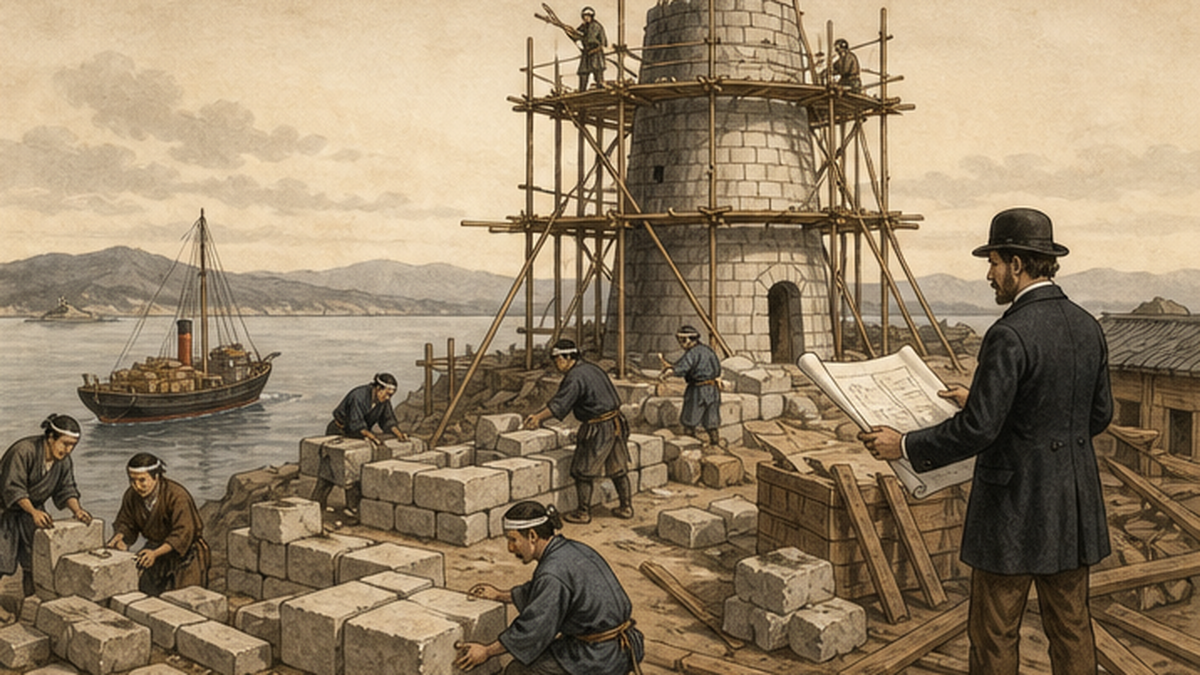
From foreign advisers to Japanese engineers
The Meiji government set up a dedicated bureau for lighthouse construction, handling everything from importing materials to training keepers and operating lighthouse tenders. After Brunton left Japan, the engineers who had trained under him took the work over. Skills such as stone dressing, brick firing and lens installation took root domestically, and by the 1890s large lighthouses were being completed with Japanese designers and builders throughout.
Izumo Hinomisaki Lighthouse, first lit in 1903, is the structure that marks that achievement. Counting from the era when foreign powers demanded the towers be built, it took barely 35 years for the technology to become Japan's own. Today, aid-to-navigation partner organizations such as the Tokokai Association operate the publicly accessible lighthouses and promote lighthouse culture, sustaining the broad base of an enterprise that began in the Meiji era.
The oldest surviving working lighthouse is Mikomotoshima
Among the treaty lighthouses, the oldest still operating in essentially its original form is Mikomotoshima Lighthouse, off Shimoda City in Shizuoka Prefecture. Completed on January 1, 1871, this Brunton-designed stone tower was reportedly first lit in the presence of Meiji statesmen including Sanjo Sanetomi, Okubo Toshimichi and Okuma Shigenobu, together with the British minister Harry Parkes. It is designated a National Historic Site and was chosen for the International Association of Marine Aids to Navigation and Lighthouse Authorities (IALA) list of 100 historic lighthouses of the world.
A structure that has spent more than 150 years on an isolated rock at sea cannot, however, remain unscathed. Because deterioration of the quick-setting cement and wave damage were confirmed, seismic reinforcement using carbon fiber and other materials was carried out in 1982 and 1995. The difficulty of "preserving" a historic structure while keeping it "in service" had already begun at that point.
Why Lighthouse Day falls on November 1
November 1 is Lighthouse Day in Japan. The date commemorates the groundbreaking of Kannonzaki Lighthouse, the country's first Western-style lighthouse, on November 1, 1868. That the anniversary marks the day construction began rather than the day the light was first lit reflects how the era regarded lighthouse building itself as a turning point.
Stone, Brick and Lens: the Technology That Shapes a Lighthouse
A lighthouse combines two technologies: the tower and the light. Both were introduced from abroad in the Meiji era and then adapted to Japan's climate and earthquakes.
A double-wall structure protects the tower
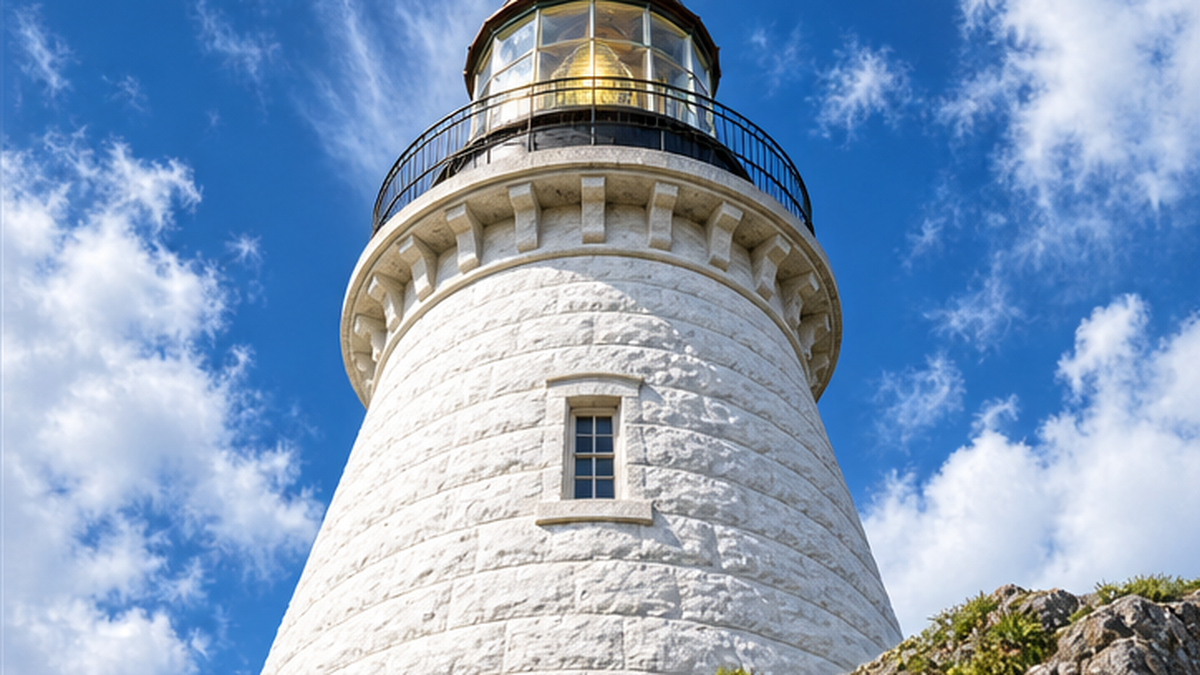
Many of the large lighthouses built in the Meiji era use a double-wall structure with separate outer and inner walls. Inubosaki Lighthouse in Choshi City, Chiba Prefecture, is a brick double wall about 31 m tall; Izumo Hinomisaki Lighthouse in Izumo City, Shimane Prefecture, combines a stone outer wall with a brick interior. Doubling the wall keeps the loads, heat and moisture absorbed by the outer skin from passing directly to the stairwell inside.
The structure also turned out to help with earthquake resistance. Even so, more than a century after construction, deterioration of concrete and mortar joints and corrosion of ironwork are unavoidable. Alongside carbon-fiber reinforcement like that at Mikomotoshima, maintenance work such as replacing the iron frames of the lantern room, repainting outer walls and updating lightning protection is carried out on a regular cycle.
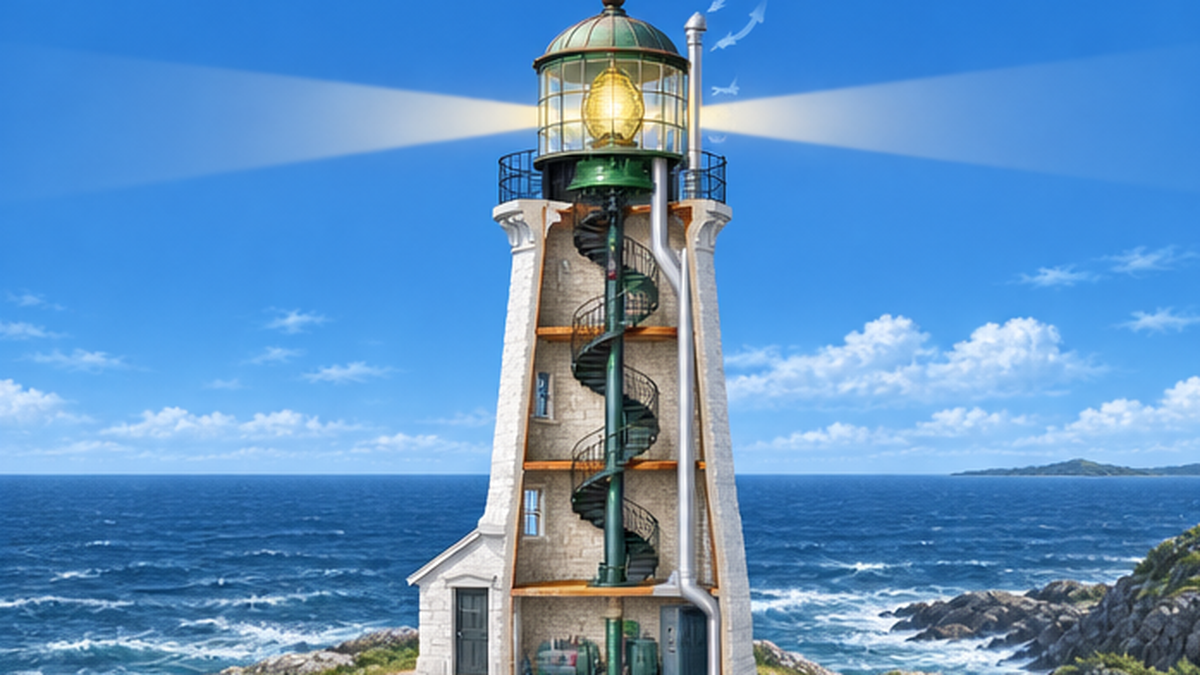
The Fresnel lens carries the light far out to sea
What sends a lighthouse beam into the distance is a large lens with a concentric stepped profile, known as a Fresnel lens. Shaped as though a thick convex lens had been sliced into rings and laid out flat, it concentrates light in one direction while keeping weight down. Lenses are graded by size, and the largest, the first-order lens, has a focal length of 920 mm and stands taller than a person. First-order lenses can be seen at Inubosaki and Izumo Hinomisaki lighthouses.
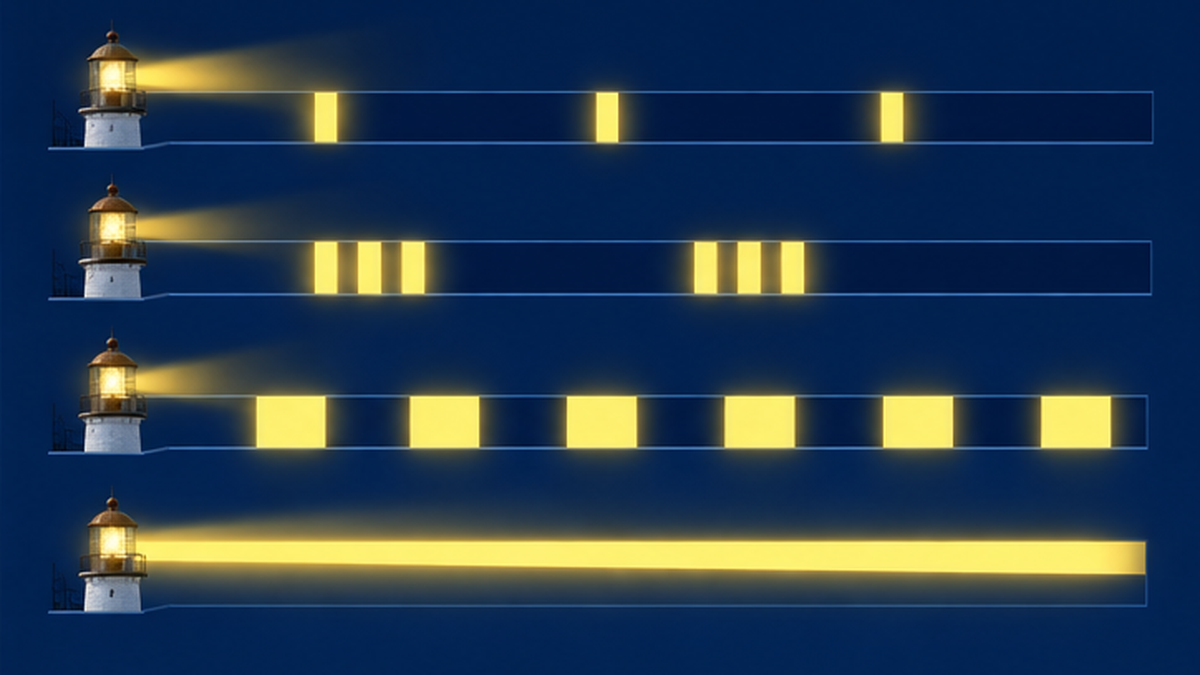
As the lens rotates, the light seen by an observer brightens and fades on a fixed cycle. This pattern is called the light character, and by varying it from lighthouse to lighthouse, mariners can tell which light they are looking at.
- Single flashing: one flash per fixed cycle, the most basic light character
- Group flashing: flashes in groups of two or three, encoding a "count" within the cycle
- Isophase: equal periods of light and darkness alternating
- Fixed: a steady light that does not blink
- Color of the light: besides white, red marks the dangerous side and green the safe side
On foggy days, sound takes the place of light
Light has one weakness: fog. Once visibility is gone, no beam however strong is of any use. That is why fog signal stations (fog horns) were installed to give position by sound, sounding a low, long note at fixed intervals to announce a presence in place of light.
The former fog signal house attached to the Important Cultural Property of Inubosaki Lighthouse is the building that housed such equipment. Sound, however, attenuates more readily than light, is strongly affected by wind direction, and is hard to hear aboard ship. As radar, satellite positioning and AIS (Automatic Identification System) spread, fog signal stations were retired one after another, and in many cases only the buildings now remain as relics.
Japan's tallest stone lighthouse: Izumo Hinomisaki
Izumo Hinomisaki Lighthouse, at the western end of the Shimane Peninsula, rises 43.65 m from the ground to the top of the tower, with its light 63.30 m above sea level — the tallest stone lighthouse in Japan. First lit in 1903, this large Western-style tower was designed and built by Japanese engineers, and it demonstrates that within some three decades of the treaty-lighthouse era the technology had been fully domesticated.
Generations of light sources
Lighthouse light sources have moved from oil lamps to electrification, incandescent bulbs and metal halide lamps, and are now being replaced by LEDs. LEDs draw little power and last a long time, so combined with solar panels they are easy to install on remote islands and sites without mains power. At the same time, some lighthouses keep their historic rotating lenses and update only the light source, making the balance between "value as cultural property" and "efficiency as equipment" a practical point of debate.
The Light the Keepers Kept: 79 Years to Mejima Lighthouse
Before automation, a lighthouse was something people lived beside to make sure the flame never went out. The lives of the lighthouse keepers and their families are part of Japan's maritime memory.
The keeper's work and daily life
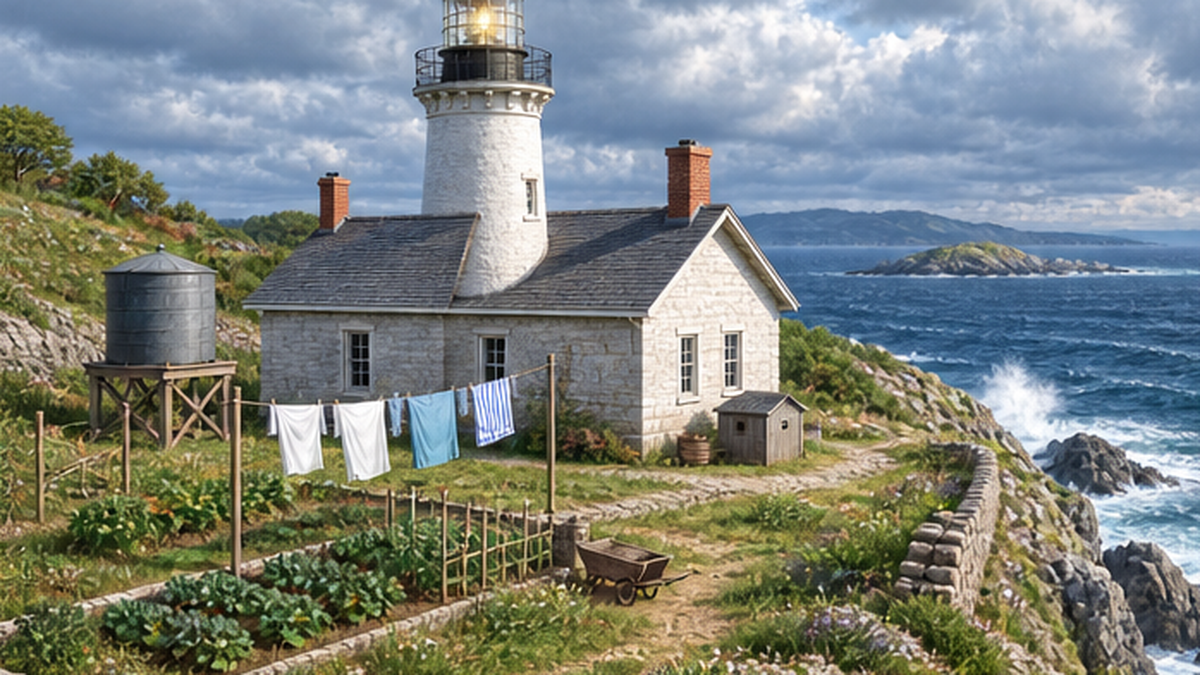
A keeper's job was not simply to light the lamp at sunset and put it out at dawn. Cleaning the lens, winding the clockwork of the rotation mechanism, refueling the light source, sounding the fog horn when fog rolled in, observing and recording the weather, and maintaining both the tower and the keeper's quarters — work and life were completely intertwined.
- Operating and maintaining the light: lighting and extinguishing, polishing the lens, adjusting the rotation mechanism, checking the backup source
- Running the fog horn: giving position by sound when visibility was poor. The former fog signal house still stands at Inubosaki Lighthouse
- Weather and sea observations: recording wind direction and speed, visibility and sea state at set times
- Life in the quarters: on remote islands and clifftops, the supply boat carrying food, water and fuel was the only lifeline
- Children's schooling: island postings made education difficult, and it was not unusual for families to live apart
What the film "Times of Joy and Sorrow" conveyed
What brought the keeper's profession to a wide audience was the Shochiku film "Times of Joy and Sorrow", released in 1957. Directed by Keisuke Kinoshita and starring Keiji Sada and Hideko Takamine, it followed 25 years in the life of a keeper and his wife as they transferred from lighthouse to lighthouse across Japan. Together with its title song it struck a deep chord, and the public became conscious of the people tending lights on remote islands and clifftops.
When the film came out, staff were still stationed at many lighthouses. The life it depicted became entirely a thing of the past over the following half century. The record of the keepers matters as "cultural heritage" because it holds not only a history of technology but a history of family life.
In 2006, the last keeper left
Automation and destaffing proceeded in stages across Japan after the war. The last place where staff remained on site was Mejima Lighthouse in the Danjo Islands, Goto City, Nagasaki Prefecture. First lit on December 1, 1927, it was destaffed on December 5, 2006, and the occupation of lighthouse keeper disappeared from Japan. For 79 years from its first lighting, people had lived on that island to keep the light burning.
Destaffing was both a rationalization that cut labor and a safety measure that withdrew people from hazardous postings. A duty pattern in which whole families endured months of isolation on an island that supply boats could not reach in rough weather had become hard to sustain as a modern working environment.
How lighthouses are looked after today
Today's lighthouses run unstaffed through the following arrangements.
- Automatic lighting: a sensor detecting ambient brightness turns the light on and off in step with sunset and sunrise
- Automatic switchover to a backup lamp: when the light source fails, the mechanism switches to the spare on its own
- Emergency power: batteries and solar panels take over during outages so the light never breaks
- Remote monitoring: regional Coast Guard offices watch operating status continuously over communication lines and dispatch staff when something goes wrong
- Scheduled inspections: equipment renewal, repairs to the tower and cutting back nearby trees (so they do not block the beam) are carried out on a plan
Summary of this chapter
- Lighthouses were once places where staff and families lived on site to keep the light burning
- Mejima, the last staffed lighthouse, was destaffed on December 5, 2006, closing a 79-year chapter of keeping
- Automatic lighting, backup lamp switching, emergency power and remote monitoring now keep the lights on without staff
- Quarters, fog signal houses and other ancillary buildings survive as valuable evidence of how keepers lived
Lighthouses as Cultural Heritage: When Working Structures Become Important Cultural Properties
Because a lighthouse is a facility that stays in use, it long sat outside the world of cultural property assessment. That premise changed in 2020.
Why lighthouses stayed outside the cultural property system for so long
The value of Meiji-era lighthouses as modern architecture had been recognized early on. Several circumstances nonetheless kept Important Cultural Property designation from advancing until 2020.
- They are working facilities: equipment must keep being updated for safety, which sits awkwardly with the cultural-property principle of preserving the current state
- Their locations are severe: sitting on remote islands and clifftops, they are costly and laborious just to survey and document in detail
- They were treated as civil engineering rather than architecture: until the framework of modern industrial heritage took hold, there was no settled yardstick
- The custodians were hard to see: ownership and management rest with the state, and there were few channels for local communities to engage
Since the 2000s, nationwide surveys of modern industrial heritage have systematically organized the technical and historical value of lighthouses. Rather than deferring assessment on the grounds that a structure is still working, the approach became to design ways of protecting it while keeping it in service. The 2020 designation marked that shift in policy.
In 2020, working lighthouses became Important Cultural Properties for the first time
On December 23, 2020, four lighthouses built in the early Meiji era were designated national Important Cultural Properties (structures). It was the first time lighthouses in active operation received the designation. All four were built under the direction of R.H. Brunton and represent the founding period of Japan's Western-style lighthouses.
| Lighthouse | Location | Notes |
|---|---|---|
| Rokurenjima Lighthouse | Shimonoseki City, Yamaguchi Prefecture | Stone lighthouse from the early Meiji era |
| Hesaki Lighthouse | Kitakyushu City, Fukuoka Prefecture | Stone lighthouse guarding the eastern entrance to the Kanmon Strait |
| Inubosaki Lighthouse | Choshi City, Chiba Prefecture | First lit in 1874; brick double wall, about 31 m tall. Designated together with the former fog signal house and former storehouse |
| Tsunoshima Lighthouse | Shimonoseki City, Yamaguchi Prefecture | Unpainted granite lighthouse facing the Sea of Japan |
At Inubosaki, the designation covered not only the tower itself but also the former fog signal house and former storehouse. Rather than assessing the tower in isolation, the decision recognized the value of the whole "lighthouse complex" — fog horn, storehouse and quarters included — as modern industrial heritage.
The 2022 designation of Izumo Hinomisaki Lighthouse
On February 9, 2022, Izumo Hinomisaki Lighthouse followed. This 1903 tower was designed and built by Japanese engineers rather than foreign advisers, and it is valued as the point at which imported technology became fully Japan's own. Its record as the country's tallest stone lighthouse also speaks to the standard of construction at the time.
The 100 historic lighthouses of the world and Japan's own top 50
Beyond cultural property designation, several other listings signal the value of lighthouses.
- The 100 historic lighthouses of the world: chosen in 1998 by the International Association of Marine Aids to Navigation and Lighthouse Authorities (IALA) as globally significant. Japan's five entries are Inubosaki (Chiba), Himezaki (Sado, Niigata), Mikomotoshima (Shizuoka), Mihonoseki (Shimane) and Izumo Hinomisaki (Shimane)
- "Japan's 50 best lighthouses, chosen by you": 50 lighthouses selected by public vote, organized by the Japan Coast Guard to mark the 50th Lighthouse Day on November 1, 1998
- National Historic Site designation: some, like Mikomotoshima, are protected as historic sites rather than as structures
The difficulty of a "working cultural property"
Every designated lighthouse remains in active service as an aid to navigation. As cultural property, any alteration requires strict procedures; as an aid to navigation, the light source and equipment must be kept current to ensure safety. Reconciling those two demands is a challenge unique to lighthouse preservation. The Japan Coast Guard, the Agency for Cultural Affairs and local governments consult to separate what must be renewed from what must be kept.
Japan's 16 "Climbable" Lighthouses
Most lighthouses cannot be entered, but some are open inside. The Japan Coast Guard calls these publicly accessible lighthouses and defines them as "lighthouses open to the public year-round for the purpose of promoting public understanding and knowledge of aids to navigation." There are 16 such lighthouses nationwide.
| Prefecture | Lighthouse |
|---|---|
| Aomori | Shiriyazaki Lighthouse |
| Akita | Nyudozaki Lighthouse |
| Fukushima | Shioyazaki Lighthouse |
| Chiba | Inubosaki Lighthouse / Nojimazaki Lighthouse |
| Kanagawa | Kannonzaki Lighthouse |
| Shizuoka | Hatsushima Lighthouse / Omaezaki Lighthouse |
| Mie | Anorizaki Lighthouse / Daiozaki Lighthouse |
| Wakayama | Shionomisaki Lighthouse |
| Shimane | Izumo Hinomisaki Lighthouse |
| Yamaguchi | Tsunoshima Lighthouse |
| Miyazaki | Toimisaki Lighthouse |
| Okinawa | Zanpamisaki Lighthouse / Hennazaki Lighthouse |
The 16 include Kannonzaki, Japan's first Western-style lighthouse, and the Important Cultural Properties of Inubosaki, Tsunoshima and Izumo Hinomisaki. That historically significant lighthouses tend to be the ones open to visitors reflects a management policy of pursuing preservation and public access together.
How to visit, and what to know first
Publicly accessible lighthouses are operated by aid-to-navigation partner organizations such as the Tokokai Association. Here are points worth checking before you go.
- A visitor donation is required: around 300 yen per adult at many lighthouses, though amounts and age categories vary by site
- Opening hours change with the season: they are often shortened in winter and suspended in rough weather
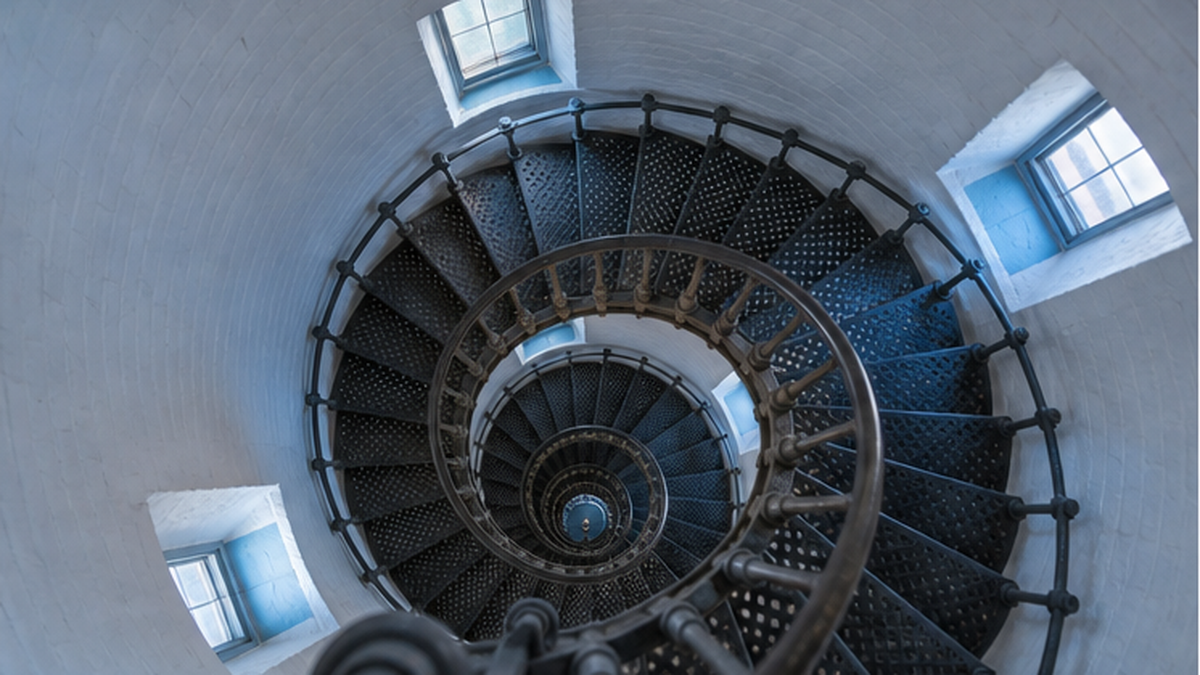
- The stairs are steep and there are no elevators: you must climb roughly 90 to 160 spiral steps under your own power
- Mind the wind and the height: the outdoor balcony is fully exposed, and hats and small items blow away easily
- Check official sources for the latest information: repairs or weather can close a lighthouse temporarily
The 16 are scattered from Shiriyazaki in Aomori Prefecture in the north to Hennazaki in Okinawa in the south, but some prefectures have two: Chiba (Inubosaki and Nojimazaki), Shizuoka (Hatsushima and Omaezaki), Mie (Anorizaki and Daiozaki) and Okinawa (Zanpamisaki and Hennazaki). Pairing two nearby towers lets you compare structures and light characters in a single day.
Ways to enjoy a lighthouse visit more
- Check the light character: read "how many flashes in how many seconds" on the information board and picture the pattern as seen from offshore at night
- Look at the lens up close: the stepped profile of a Fresnel lens reveals its precision only in person
- Visit the ancillary buildings too: many lighthouses have a fog signal house, former quarters or a small museum alongside
- Join a stamp rally: events touring the accessible lighthouses are held from time to time and are a good reason to visit several
- Walk the surrounding coast: the capes that hold lighthouses are usually key points of terrain and current
Romance Lighthouses and the Sea and Lighthouse Project: Rediscovery as a Tourism Resource
Alongside their role as aids to navigation, lighthouses have since the late 2010s increasingly been repositioned as local tourism and cultural resources. At the center of this are initiatives by The Nippon Foundation and the Japan Coast Guard.
"Romance lighthouses": a shift in how we look
The Romance Lighthouse Project is run jointly by the Japan Romanticist Association, headquartered in Unzen City, Nagasaki Prefecture, and The Nippon Foundation. Reframing lighthouses as "places to talk about a shared future," it certifies towers worthy of being "sacred sites of romance" as romance lighthouses and their surrounding areas as romance lighthouse towns. Between 2016 and 2017, 31 lighthouses across 30 areas nationwide were certified.
Presenting the lighthouse as "a place you want to visit," apart from its function as an aid to navigation, was itself a turning point. The aim of revaluing lighthouses as local tourism resources and drawing visitors of every generation to raise interest in the sea was carried over into the projects that followed.
Sea and Lighthouse Week (November 1-8)
In 2020, The Nippon Foundation and the Japan Coast Guard designated November 1 to 8 as Sea and Lighthouse Week. Starting from Lighthouse Day on November 1, it aims to convey the role and value of the roughly 3,000 lighthouses across Japan and to create new ways of experiencing the sea. During the week, lighthouses around the country hold illuminations, special openings, guided tours and symposiums.
The initiative grew into the Sea and Lighthouse Project, part of The Nippon Foundation's Umi to Nippon PROJECT. It is a framework for increasing the number of municipalities partnering as "sea and lighthouse towns" and supporting community building with the lighthouse at its core.
The "sea and lighthouse town" framework
The Sea and Lighthouse Project also builds partnerships with municipalities that treat their lighthouse as a local asset. The work varies by area: designing tourism routes centered on the tower, marine learning in schools, product development with local businesses. What they share is a reframing of the lighthouse from "a facility the government manages" to "a place the town is proud of."
That reframing has practical value too. When local people take part in mowing and cleaning the grounds, maintaining signage and greeting visitors, they fill gaps that national budgets cannot reach — and more eyes keep watch on the lighthouse's condition day to day.
The lighthouse utilization model program: staying in the keeper's quarters
At the heart of the Sea and Lighthouse Project is the new lighthouse utilization model program, which invites proposals from organizations, businesses and municipalities nationwide and supports their trials. In fiscal 2024, surveys and events were carried out in 15 areas across Japan.
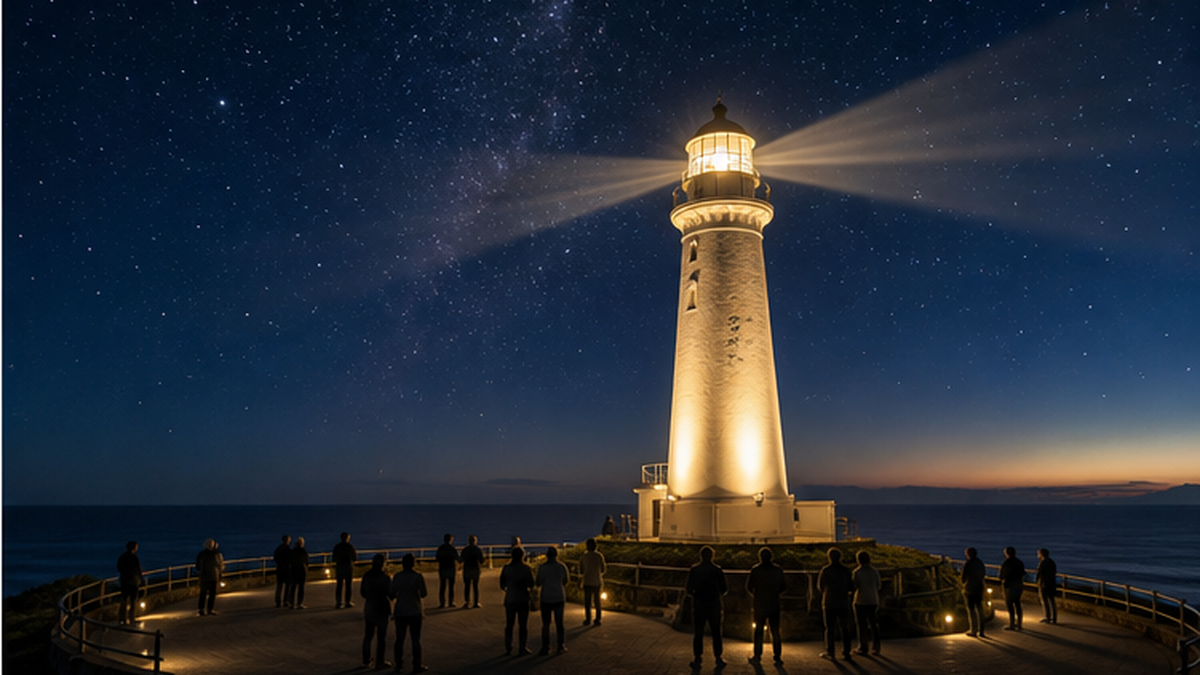
A leading example is Muroto Misaki Lighthouse in Kochi Prefecture, where the stone quarters once occupied by keepers are being revived as lodging. The idea is to convert disused ancillary buildings into places where the memory of the lighthouse can be experienced. In fiscal 2025 the program invited proposals in two tracks, a "survey and verification" course and an "implementation" course, running from June to December 2025 and trialing retreat programs, guide scripts and monitor tours.
Ground rules for using a lighthouse
A lighthouse is, above all, a working aid to navigation that protects ships. Tourism use comes with constraints: not interfering with operation of the light, not erecting structures that block the beam, and following alteration procedures where the structure is an Important Cultural Property. Sharing the premise that this is "borrowing a working facility" rather than "an old building free to use" is the condition for sustainable use.
The Future of Lighthouses: Preservation Challenges and What We Can Do
How can 3,096 lighthouses be maintained? For lighthouses as cultural heritage, there is an element of racing against time.
Salt damage, aging and disaster are built into the job
By their very function, lighthouses stand in the harshest places there are: salt-laden wind, waves, gales, lightning, earthquakes, and in recent years intensifying typhoons. For Meiji-era structures especially, upkeep demands continuous funding and skill.
- Corrosion of ironwork from salt: handrails, lantern-room window frames, doors and stairs inevitably corrode and need regular painting and replacement
- Deterioration of stone, brick and mortar joints: freeze-thaw cycles and rainwater ingress gradually loosen the masonry
- Erosion of the foundation ground: for lighthouses on the tip of a cape, cliff collapse itself is a risk
- Effects of sea level rise and storm surge: low-lying breakwater lighthouses and ancillary buildings may face growing flood risk
- Passing on the skills: few technicians can still do masonry work or service historic lenses
Sea level rise and intensifying storm surges driven by climate change affect not only the lighthouse itself but the access roads and the surrounding coastal landform (see Will sea level rise erase Japan's beaches?). As the coastline moves, the meaning of the "position of the cape" that a lighthouse marks shifts a little too.
Communities become the custodians
It is not realistic for government alone to preserve more than 3,000 facilities as cultural property. That is why it matters for the communities around lighthouses to understand their value and protect them through use. The Sea and Lighthouse Project's engagement with municipalities and private groups is an attempt to grow that pool of custodians.
Parts of the work of recording lighthouses are open to non-specialists. Accumulating visit records, collecting old photographs, gathering local oral histories and observing illuminations closely resemble the methods of citizen science. The idea of satoumi — that human hands can make the sea richer — is also a useful reference when thinking about the relationship between a lighthouse and its community.
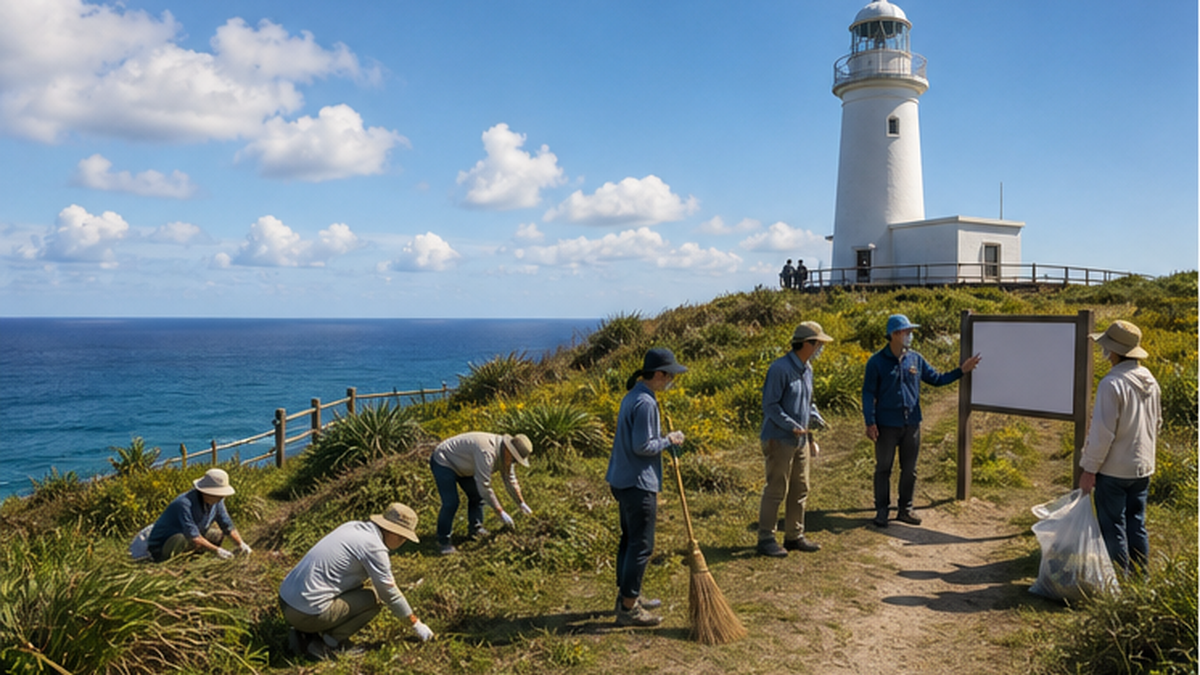
Tourism use is not simply a measure to increase visitor numbers. If visitor donations and local spending can be made to flow back into maintaining the lighthouse and its surroundings, the funding base for preservation itself grows stronger. Visiting a lighthouse can, in other words, be an act that pays for the next round of repairs.
At the same time, more visitors mean more burden on the receiving side: parking, footpaths, restrooms and waste. Where the site is close to a cliff, safety management is essential. Sustaining lighthouse use comes down to how you design the balance between the people who visit, the people who protect and the facility that is still at work.
Passing on maritime heritage to the next generation
A lighthouse is heritage of the shipping industry, a monument to modernization, the centerpiece of a local landscape, and equipment still keeping ships safe. Few single buildings wear so many faces at once. That is precisely why the meaning of "preservation" changes depending on which face you look at.
The five designated Important Cultural Properties matter, but so do the many undesignated lighthouses, each a clue to the maritime history of its place. Visit an accessible lighthouse, join an event on Lighthouse Day or during Sea and Lighthouse Week, look up the year your local lighthouse was first lit. Small actions like these, accumulated, are what will keep the light burning for another century.
Summary of this article
- The Japan Coast Guard manages 5,094 aids to navigation in total, including 3,096 lighthouses (as of March 31, 2026)
- Japan's Western-style lighthouses began with 13 "treaty lighthouses" — 8 under the Edo treaty and 5 under the Osaka treaty
- The oldest surviving Western-style stone lighthouse still in service is Mikomotoshima, completed in 1871
- The destaffing of Mejima Lighthouse on December 5, 2006 closed the history of Japan's lighthouse keepers
- Four working lighthouses were designated Important Cultural Properties in 2020, and Izumo Hinomisaki in 2022
- Sixteen lighthouses nationwide are open inside to the public year-round
- Romance lighthouses, Sea and Lighthouse Week and the utilization model program are turning lighthouses into tourism resources
References and sources
- Japan Coast Guard – Types and numbers of aids to navigation (as of March 31, 2026)
- Japan Coast Guard – Lighthouses open to the public nationwide (list of the 16 accessible lighthouses)
- Agency for Cultural Affairs – Preservation and Use of Modern Cultural Heritage | Lighthouses
- Agency for Cultural Affairs, Cultural Heritage Online – Inubosaki Lighthouse (Important Cultural Property, structure)
- Agency for Cultural Affairs – Mikomotoshima Lighthouse (Preservation and Use of Modern Cultural Heritage)
- Agency for Cultural Affairs, Cultural Heritage Online – Tsunoshima Lighthouse (Important Cultural Property, structure)
- The Nippon Foundation – The Nippon Foundation and the Japan Coast Guard designate November 1-8 as Sea and Lighthouse Week
- Sea and Lighthouse Project (The Nippon Foundation) – FY2025 new lighthouse utilization model program and utilization challenge program
- Umi to Nippon PROJECT (The Nippon Foundation) – The Romance Lighthouse Project
- Tokokai Association – Japan's 50 best lighthouses, chosen by you
- Japan Coast Guard, Nagasaki Coast Guard Office (7th Regional Headquarters) – On the destaffing of Mejima Lighthouse
Listed in order of reliability: government and academic institutions > peer-reviewed papers > specialist bodies > trusted media