⚡ In short
What does it mean to eat "in season"? This article explains the nutritional and price benefits of seasonal food, then unpacks "food mileage" (transport volume × distance) to show why Japan is a major food importer and what Japan's 56% seafood self-sufficiency rate really means.
Supermarket shelves now carry the same vegetables and fish all year round, so it's easy to lose track of what's actually "in season." But before refrigeration and long-distance transport were widespread, people had no choice but to eat what the season offered — and that was also when the food was at its most nutritious, most abundant, and cheapest. Eating seasonally was a rational choice aligned with the rhythms of nature.
At the same time, our tables today are supported by food carried in from far away. The indicator that quantifies the environmental burden of that transport is called "food mileage." Japan's food self-sufficiency rate is low even among major developed countries, and because of this dependence on imports, Japan is known to rank among the highest in the world in per-capita food mileage.
This article organizes why eating seasonally is said to be good for both the body and the environment, explains how the food mileage indicator works and what it reveals about Japan, and examines the relationship between "seasonality" and self-sufficiency for fish and shellfish — the bounty of the sea — based on statistics from the Fisheries Agency and the Ministry of Agriculture, Forestry and Fisheries (MAFF) as well as academic research. It also considers, drawing on academic studies, the fuller picture of environmental impact that food mileage alone cannot show.
What you'll learn in this article
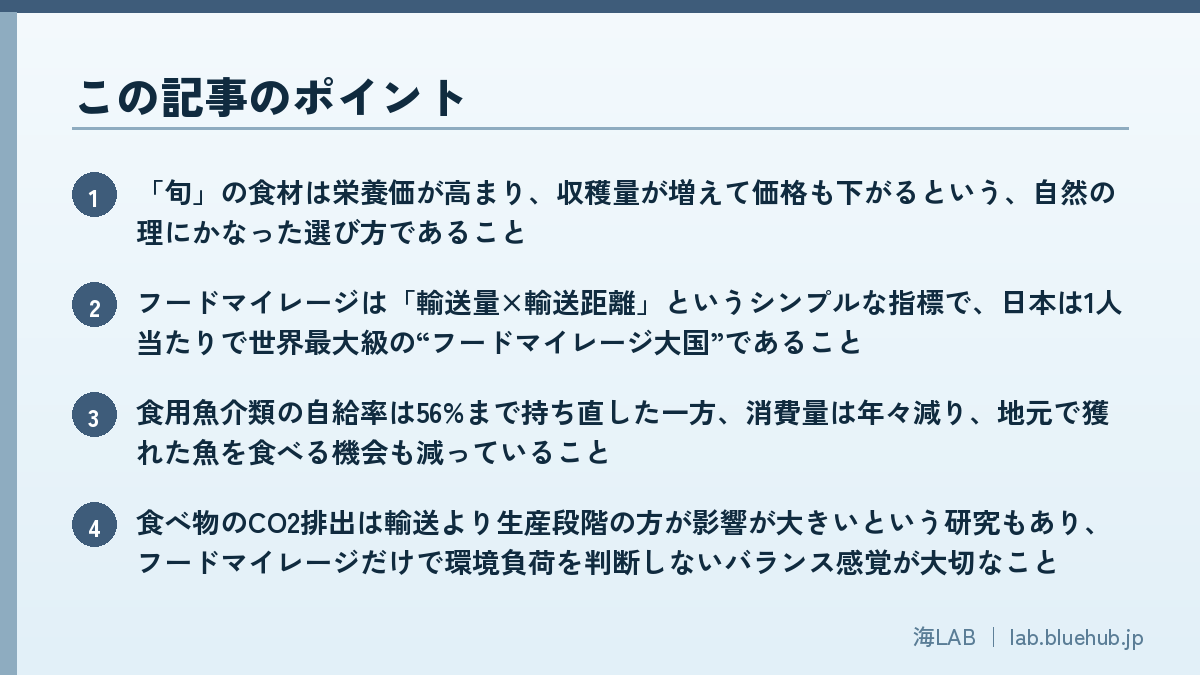
- That seasonal foods are a naturally rational choice — their nutritional value rises, harvest volumes increase, and prices fall
- That food mileage is a simple indicator of "transport volume × transport distance," and that Japan ranks among the world's largest "food-mileage nations" per capita
- That while the self-sufficiency rate for edible fish and shellfish has recovered to 56%, consumption itself keeps falling, and opportunities to eat locally caught fish are shrinking
- That research shows production, not transport, drives most of a food's CO2 emissions — so food mileage alone shouldn't be the sole yardstick for environmental impact
- That choosing seasonal, local food brings benefits beyond lower environmental impact, including freshness, price, and support for the local economy
- That rising sea temperatures are shifting the range of fish such as yellowtail and Spanish mackerel northward, changing regional "seasonal calendars" themselves
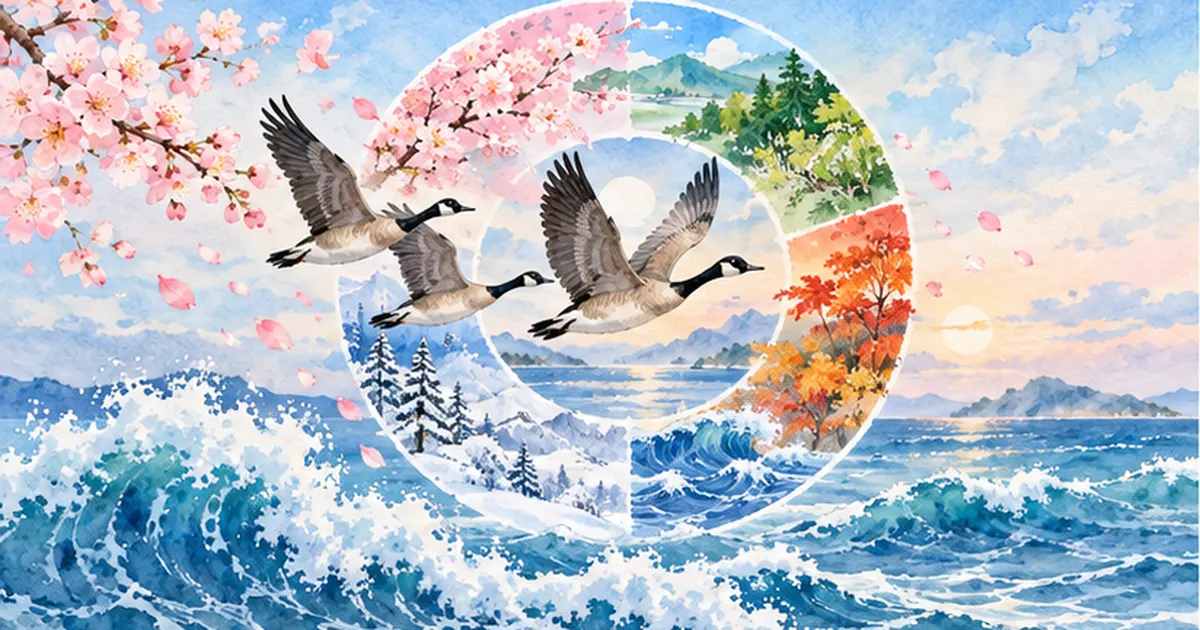
What Does "In Season" Really Mean? — What Nature's Rhythm Teaches Us
"In season" refers to the period when vegetables and fruit grown naturally, without forcing, reach peak harvest, or when fish and shellfish are caught in the greatest volume and at their best flavor for the year. MAFF's food education pages describe it as the time when food is "at its most delicious and most nutritious." Today, thanks to greenhouse cultivation and freezing and import technology, many foods are available year-round — but foods eaten in season still carry advantages that off-season versions don't.
Season Has Three Stages: Early, Peak, and Late
In Japanese cuisine, a single season is often divided into three stages: "hashiri" (the early stage, when a food first appears in small quantities), "sakari" (the peak, when flavor and volume are both at their best), and "nagori" (the late stage, savored as the season winds down). Being conscious of these three stages has nurtured a food culture that values the seasons — enjoying the same ingredient's changing character at different points in time.
Seasonal Food Is More Nutritious and More Affordable
Seasonal vegetables are known to have higher nutritional value than their off-season counterparts. Grown outdoors with ample sunlight, they photosynthesize more actively, increasing their vitamin and mineral content. In-season crops are also produced in greater volume nationwide, so more of them reach the market — which, through supply and demand, tends to push prices down. Summer vegetables like tomatoes and cucumbers are said to help cool the body, while winter root vegetables are said to warm it, suggesting that seasonal foods carry properties the body needs at that time of year.
Three Benefits of Eating Seasonally
- Higher nutritional value (peak of outdoor cultivation, when photosynthesis is most active)
- Lower prices (larger harvests ease the supply-demand balance)
- Properties suited to the season (summer vegetables cool the body, root vegetables warm it, and so on)
The Link Between Seasonal Food and Traditional Events
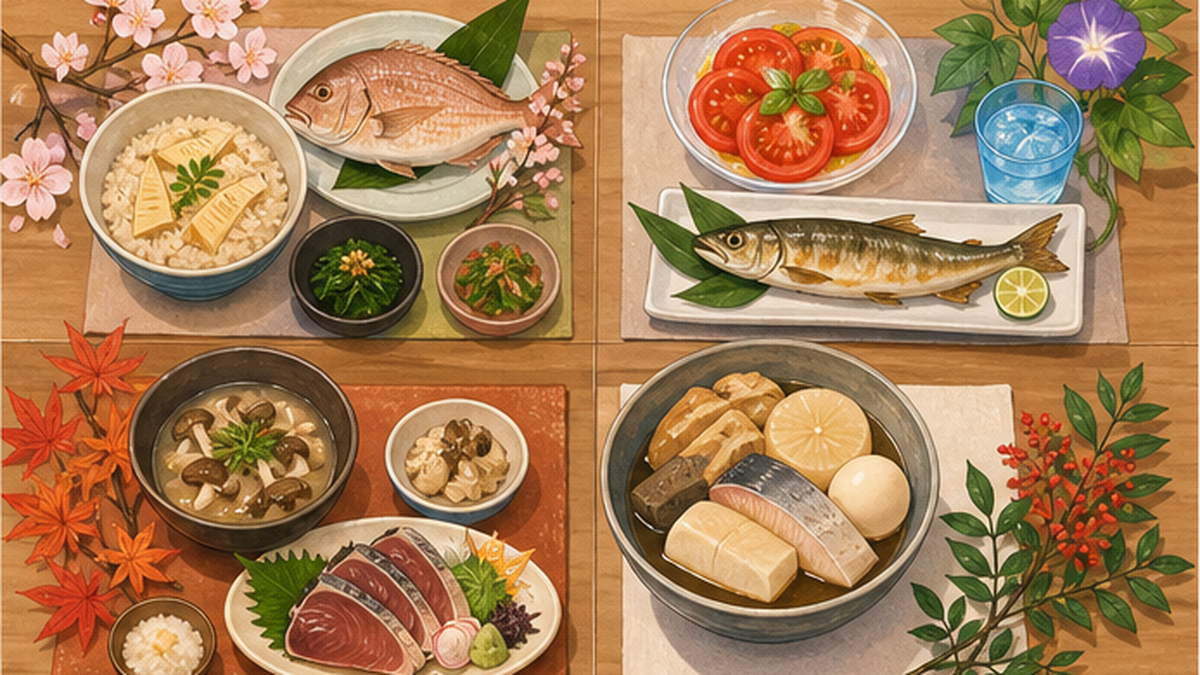
Japan's annual events are deeply tied to seasonal dishes. In spring, people eat sea bream and bamboo shoots around cherry-blossom season; in summer, eel on the midsummer "Day of the Ox"; in autumn, taro and chestnuts with pampas grass at moon-viewing time; and in winter, black beans and herring roe as part of New Year's osechi cuisine. These are more than mere customs — they're thought to be wisdom built into the calendar, built around foods that taste best and support health at that particular time. Paying attention to what's in season is also a way of feeling the changing of the seasons in daily life.
Because Japan stretches so far from north to south, the season for the same ingredient can shift by months depending on the region. Bonito (katsuo), for example, comes into season around April in southern Kyushu but not until around July off the Sanriku coast, as the fish rides the northward-flowing Kuroshio Current. Season isn't a single nationwide calendar — it's shaped by regional climate and ocean currents, a point worth keeping in mind.
Food Mileage: A Yardstick for Distance
Understanding another dimension of eating seasonally requires the concept of "food mileage." This indicator quantifies the environmental burden of food transport as a product of "quantity" and "distance." It traces back to 2001, when Tetsuya Nakada, then at Japan's Policy Research Institute of the Ministry of Agriculture, Forestry and Fisheries, calculated a Japan-specific version based on the UK concept of "food miles."
Born in the UK, Out of a Citizens' Movement
The concept behind food mileage, "food miles," was proposed in 1994 by Tim Lang, a UK food-policy researcher and professor at City University London. It spread as a citizens' movement — centered on the UK NGO Sustain, which Lang was involved with — built around the idea of "food weight × transport distance," encouraging people to consume food produced as close to home as possible in order to reduce environmental impact. Nakada introduced this concept to Japan and produced calculations that made Japan's food-import structure visible in numbers.
The Formula: "Transport Volume × Transport Distance"
The calculation itself is simple: transport volume (tons) × transport distance (kilometers), expressed in the unit "ton-kilometers (t·km)." For example, shipping one ton of a food item 2,000 km yields a food mileage of 2,000 t·km. For processed foods, the calculation often traces back to the import stage of raw ingredients rather than stopping at the finished product, so products whose raw materials travel farther score higher.
Japan, One of the World's Leading "Food-Mileage Nations"
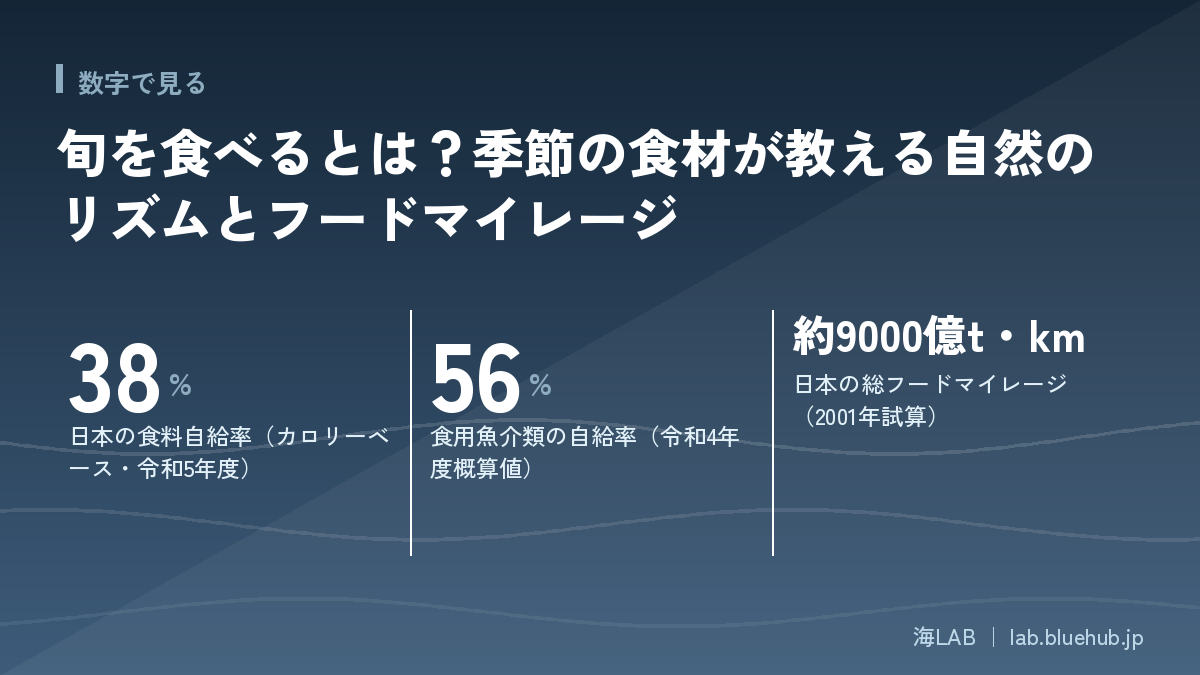
According to Nakada's estimate, Japan's total food mileage reaches roughly 900 billion t·km — about three times that of South Korea or the United States, roughly 4.5 times that of the UK or Germany, and about nine times that of France, a strikingly high figure even compared with other developed countries. On a per-capita basis, Japan ranks at the very top of the world. By category, grains such as corn — imported in bulk for feed and raw materials — account for over 50% of the total, and oilseeds such as soybeans account for over 20%, with imports from the long-distance markets of North and South America pushing the figure higher.
View the MAFF pageEat What's in Season (MAFF)A food-education page explaining the meaning of "season" and the importance of eating seasonal food.🔗 maff.go.jpWhy Is Japan's Food Mileage So Exceptionally High?
The biggest reason Japan's food mileage is so high by global standards is its low food self-sufficiency rate. According to the "FY2023 Food Self-Sufficiency Rate and Food Self-Sufficiency Potential Indicators" published by MAFF in August 2024, Japan's overall calorie-based food self-sufficiency rate stood at 38%, roughly unchanged from the previous year. In other words, more than 60% of the energy in the food we eat is sourced from overseas imports.
Self-Sufficiency and Food Mileage: Two Sides of the Same Coin
The more a country imports, the higher its food mileage tends to be. Japan is also an island nation, and the long distances to its major trading partners — the United States, Australia, Canada, and others — further push the figure upward. The combination of a low self-sufficiency rate and long transport distances is what makes Japan's food mileage stand out so sharply on the world stage.
How Self-Sufficiency Has Changed Over 60 Years
Japan's calorie-based food self-sufficiency rate fell from 73% in FY1965 to 38% in FY2023 — a drop of 35 percentage points in under 60 years. MAFF cites, as the main causes, a fall in per-capita annual rice consumption from about 112 kg in 1965 to about 51 kg in 2023, alongside a sharp rise in consumption of livestock products and oils and fats. Rice is a crop Japan can supply almost entirely on its own, while much of the grain and oilseed used as livestock feed and for oil production must be imported — so this shift in diet has translated directly into a falling self-sufficiency rate, and by extension, rising food mileage. Notably, the "production-value basis" self-sufficiency rate fell from 86% to 64% (a 22-point drop) over the same period — a smaller decline than on the calorie basis.
| Fiscal year | Calorie-based self-sufficiency | Production-value-based self-sufficiency | Per-capita annual rice consumption |
|---|---|---|---|
| FY1965 | 73% | 86% | ~112 kg |
| FY2023 | 38% | 64% | ~51 kg |
Self-Sufficiency Varies Widely by Item
Behind the overall 38% figure lies enormous variation by item. According to MAFF's item-level self-sufficiency data, rice is almost entirely domestic at 98%, while wheat stands at just 17% and soybeans at 7%; much of the concentrated feed used for livestock is also imported (the feed self-sufficiency rate was 27% in FY2023). Vegetables, at 76%, look relatively high, but that figure is calculated by weight, and the real self-sufficiency rate — including seeds and seedlings — is thought to be lower still. Much of what we eat daily, from bread and noodles to eggs, meat, and milk, rests on a foundation of "invisible food mileage" accumulated through imported grain.
Import Dependence by Category
| Category | Typical share of food mileage | Main import sources |
|---|---|---|
| Grains such as corn | Over 50% of the total | North and South America |
| Oilseeds such as soybeans | Over 20% of the total | North and South America |
| Meat and livestock products | Mostly long-distance transport | Australia, North America |
| Fish and shellfish (partial) | Includes aquaculture feed and imported raw materials | Asia, South America, and others |
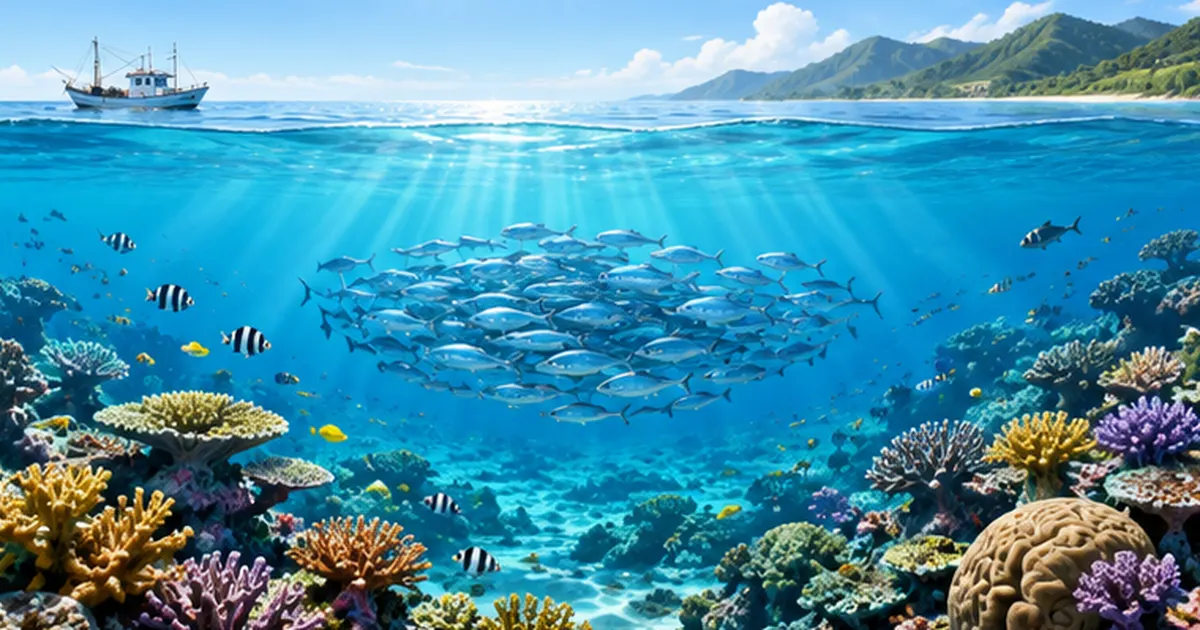
The Sea's "Season" — Food Mileage and Self-Sufficiency for Fish and Shellfish
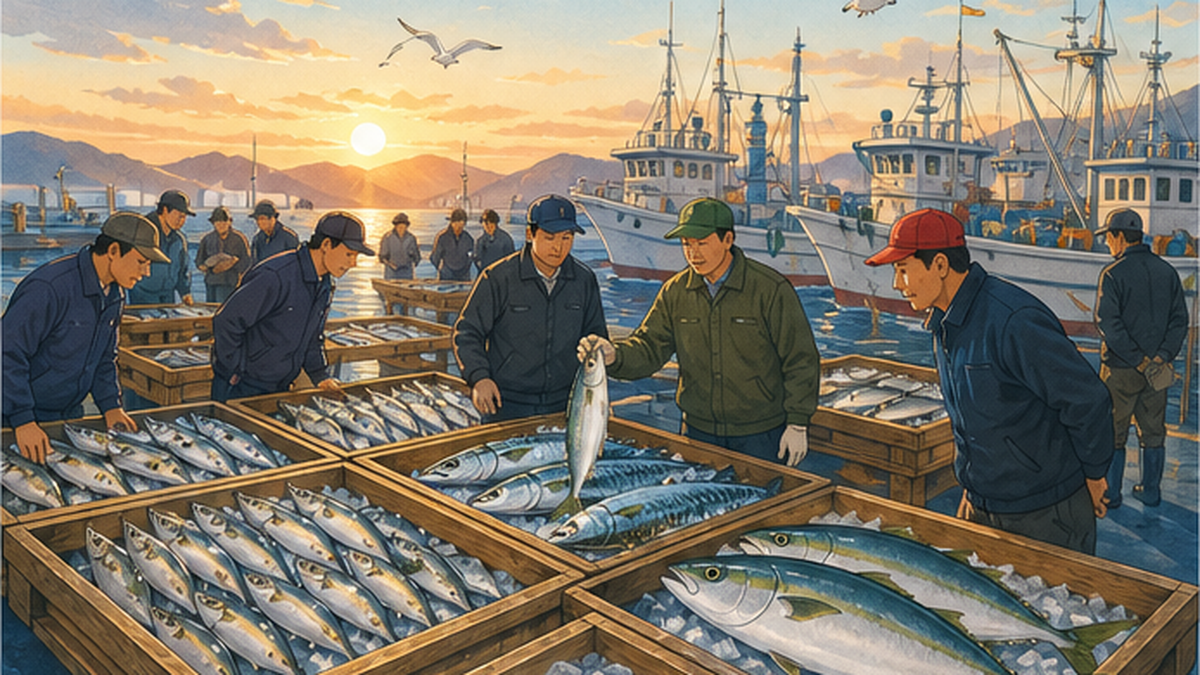
For readers of Umi LAB, the relationship between "season" and self-sufficiency in fish and shellfish is likely of particular interest. According to the "FY2023 Fisheries White Paper" published by the Fisheries Agency in June 2024, the self-sufficiency rate for edible fish and shellfish (estimate) in FY2022 was 56%. This figure peaked at 113% in FY1964, declined to a low of 53% in FY2000–2002, and has since been on a slight upward or flat trend.
Fish Consumption Itself Is Declining
Behind this partial recovery in self-sufficiency lies not just falling imports but also a decline in fish and shellfish consumption itself. Per-capita annual consumption of edible fish and shellfish (net food basis) peaked at 40.2 kg in FY2001 and has fallen steadily since, reaching 22.0 kg in FY2022. Since FY2011, it has remained below per-capita meat consumption. Per-capita annual purchases of fresh fish and shellfish also fell 5% year-on-year to 18.5 kg in 2023.
From "Local Catch" to "Nationally Distributed" Fish
The Fisheries White Paper points to another notable shift. Around 1989, squid and shrimp topped the list of fresh fish and shellfish purchases. In recent years, salmon, tuna, and yellowtail have taken the top spots instead. Local catch used to be the center of the table in each region, but improvements in distribution and refrigeration have made salmon, tuna, and yellowtail easier to find even in areas where they were once rarely sold, and these fish are now consumed fairly uniformly nationwide. Salmon in particular has become less regionally distinctive, partly due to a major increase in imports of farmed salmon from Norway and Chile during the Heisei era. And as the next section explores, warming sea temperatures are starting to shift the distribution of fish themselves, meaning the lineup of "local seasonal fish" is starting to change in some regions too.
Key figures from the Fisheries Agency's "FY2023 Fisheries White Paper"
- Self-sufficiency rate for edible fish and shellfish: 56% (FY2022 estimate; peaked at 113% in FY1964)
- Per-capita annual consumption: 22.0 kg (FY2022; peaked at 40.2 kg in FY2001)
- Per-capita annual purchases of fresh fish and shellfish: 18.5 kg (2023, down 5% year-on-year)
- Most-consumed species: squid and shrimp (around 1989) → salmon, tuna, and yellowtail (in recent years)
Where Do Imported Fish and Shellfish Come From?
The more than 40% of fish and shellfish Japan cannot supply domestically is imported from abroad. According to Fisheries Agency data, salmon and trout come mainly from Chile and Norway, tuna and bonito mainly from Taiwan, China, and South Korea, and shrimp mainly from India, Vietnam, and Indonesia — import sources vary widely by item, and for salmon and trout, shrimp, crab, cod, and squid, the top three countries often account for 60–90% of imports. The fact that so much of the salmon and shrimp on Japan's tables travels from countries on nearly the opposite side of the globe is something worth keeping in mind from a food-mileage perspective.
There is also a distinction between wild-caught and farmed fish among domestic catches. Wild fish are subject to day-to-day fluctuations in catch volume depending on fishing conditions and are typically caught in concentrated seasonal bursts, whereas aquaculture allows producers to plan shipping schedules to some extent by managing water temperature and feed. For species with major aquaculture sectors, such as yellowtail, red sea bream, and oysters, the wild season and the farmed shipping period can diverge — meaning the sense of "what's in season" can differ between wild-caught and farmed fish, a distinctive feature of seafood.
Climate Change Is Starting to Shift "Season" Itself
An impact that can no longer be ignored when thinking about "season" is climate change. Season is fundamentally determined by natural conditions such as sea temperature and climate — and those natural conditions themselves are now shifting. Japan Meteorological Agency observations show that, over roughly 100 years up to 2019, the average sea surface temperature around Japan rose at a rate of +1.14°C per 100 years, a pace faster than the global average rate of sea-surface warming.
An Era When Yellowtail Is Caught Off Hokkaido
The Fisheries Agency's white paper notes that rising sea temperatures are shifting the ranges of species such as yellowtail and Spanish mackerel northward. Yellowtail, once landed mostly in areas west of the Kanto region, has seen catches increase off Hokkaido in recent years. Spanish mackerel, which favors warmer waters and was traditionally associated with Kyushu and the Seto Inland Sea, has also seen catches rise farther north as water temperatures increase in the Sea of Japan. As spawning grounds, feeding grounds, and migration routes shift, the very places and times where fish are caught are starting to change.
The "Seasonal Calendar" Keeps Getting Rewritten
In the Seto Inland Sea, the range of the spotted eagle ray — a southern species — has expanded, with reports of increased damage to clam populations as a result. Along the coast of Kyushu, the spread of "isoyake" (barren, seaweed-depleted rocky shores) has reduced coastal resources such as spiny lobster and abalone in some areas. These changes suggest that the regional seasonal calendars long taken as "common knowledge" may need to be revisited going forward. Enjoying what's in season isn't just about memorizing fixed facts — it also means engaging each year with the changing state of nature itself.
What Food Mileage Alone Cannot Measure
Having examined the structure of Japan's food imports through the lens of food mileage, it's worth noting the indicator's limits. Academic research cautions against the simple equation of "longer transport distance = worse for the environment."
"What You Eat" Matters More Than "Where It Came From"
A 2008 study by Christopher Weber and H. Scott Matthews of Carnegie Mellon University, published in an environmental science journal, found that production accounts for an average of 83% of a food's life-cycle greenhouse gas emissions, while transport as a whole accounts for just 11%, and "final delivery" from producer to retailer accounts for only 4%. In other words, the biggest factor shaping a food's environmental impact isn't "how far it traveled" but "what it is, and how it was produced."
Environmental Impact Also Depends Heavily on the Mode of Transport
Even at the same "transport distance," environmental impact varies enormously depending on the mode of transport. According to an analysis by the research organization Our World in Data, moving one ton of cargo one kilometer by air emits roughly 1.13 kg of CO2-equivalent, compared with roughly 0.023 kg CO2-equivalent by sea — a roughly 50-fold difference. However, the vast majority of global food transport moves by ship, and air freight accounts for only about 0.16% of global food transport measured in ton-kilometers. In other words, "how the food was transported" matters more, in practice, than the mere fact that it "came from far away." Highly perishable, high-value fruit that is air-freighted to preserve freshness is an exception with a disproportionately high footprint, but the fish, shellfish, and grain that make up the bulk of shipments — carried mostly by sea — have a comparatively small environmental footprint per shipment relative to the distance traveled.
Reading the Numbers With Care
These studies were conducted primarily on food systems in the United States and Europe, and their findings don't transfer directly to Japan, an island nation with long transport distances. Local production for local consumption also brings benefits beyond reduced transport CO2, including greater freshness, support for the local economy, and the preservation of food culture built around seasonal eating. Food mileage is a useful, easy-to-visualize indicator of one aspect — transport — but rather than judging a food's overall environmental impact by that measure alone, it's important to also weigh production methods, transport modes, and food-loss reduction.
Points to Keep in Mind When Reading Food Mileage
- t·km (ton-kilometers) is not CO2 emissions itself — it is a "proxy indicator" for transport-related burden
- Even at the same distance, environmental impact varies greatly depending on the mode of transport (ship, truck, or aircraft)
- For many foods, the burden from the production stage (fertilizer, feed, energy use, etc.) is larger than that from transport
- Avoid oversimplifying with assumptions like "imported = bad for the environment" or "domestic = good for the environment"
In food-related greenhouse gas emissions, production accounts for an average of 83%, transport as a whole for 11%, and final delivery for just 4%.
― Weber & Matthews (2008), "Food-Miles and the Relative Climate Impacts of Food Choices in the United States"
Choosing to Eat Seasonal, Local Food
Even though food mileage isn't the only yardstick, choosing seasonal and local food brings multiple benefits beyond a lower transport-related environmental footprint.
The Multiple Benefits of Local Production for Local Consumption
- Shorter transport distances mean less time between harvest or landing and the table, so food can be enjoyed at peak freshness
- Lower intermediate distribution costs mean producers tend to keep more of the revenue
- Money circulates within the region, helping support the people who carry on local farming and fishing
- Seasonal ingredients help pass on local food culture and cooking know-how to the next generation
The Challenge of Using Local Ingredients in School Lunches
MAFF's Fourth Basic Plan for the Promotion of Food Education, adopted in March 2021, sets a goal for at least 90% of prefectures to maintain or increase, from FY2019 levels, the share of local ingredients used in school lunches. Fisheries Agency materials note a key challenge: even when schools want to use locally caught fish and shellfish in lunches, catch volumes are unstable, subject to weather and fishing conditions, making it difficult to guarantee a stable supply of consistent quality on set dates. Local production for local consumption can't succeed on goodwill alone — it also requires building out the supply side. Efforts to make use of underutilized fish that don't fit standard market specifications or are too small to sell, turning them into school lunch ingredients or processed products, are also spreading as a way to bring local seafood to the table without waste.
Farm Stands and Roadside Stations: An Easy Entry Point
A familiar place to put local production for local consumption into practice is the local farm stand or "michi-no-eki" (roadside station). Roadside stations, registered under a Ministry of Land, Infrastructure, Transport and Tourism program, now number more than 1,200 nationwide, and many include direct-sales corners for locally grown vegetables and locally caught fish and shellfish. Seasonal food sold with the producer's face attached tends to convey the day's harvest or catch more directly than a typical supermarket shelf. Simply stopping by while traveling or running errands can be a useful way to learn what's "in season" in that particular area right now.
Efforts led by fishing cooperatives and producer groups to turn substandard or underutilized catch into processed products — a form of "sixth-industry" development — are also spreading across the country. By keeping everything from fresh sale to drying, processing, and restaurant service within the region, rather than simply selling the raw catch, these efforts reduce transport-related environmental impact while helping stabilize producer income. Building systems that make full use of the seasonal harvest, without waste, forms the foundation for more sustainable local production for local consumption.
Such efforts don't succeed on the production side alone. Farm stands and sixth-industry initiatives can only be sustained if consumers keep choosing locally sourced food. The small, everyday act of choosing what's in season, repeated over time, ends up supporting the region's production base — another important dimension of local production for local consumption.
Keeping a Seasonal Food Calendar — Knowing When Fish and Vegetables Are in Season
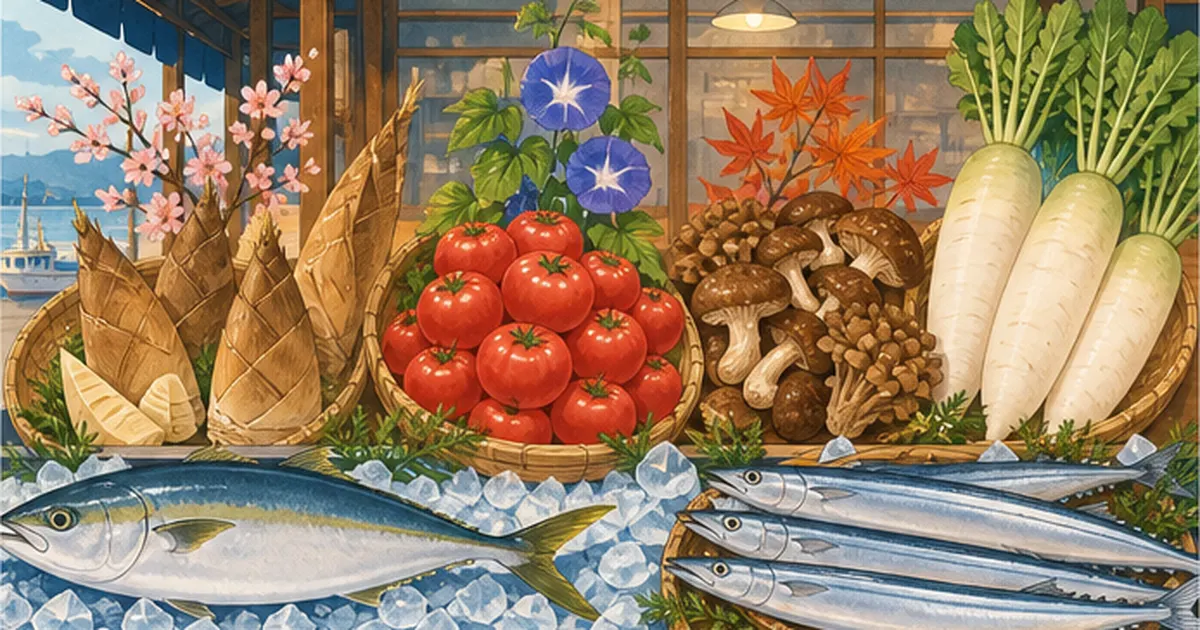
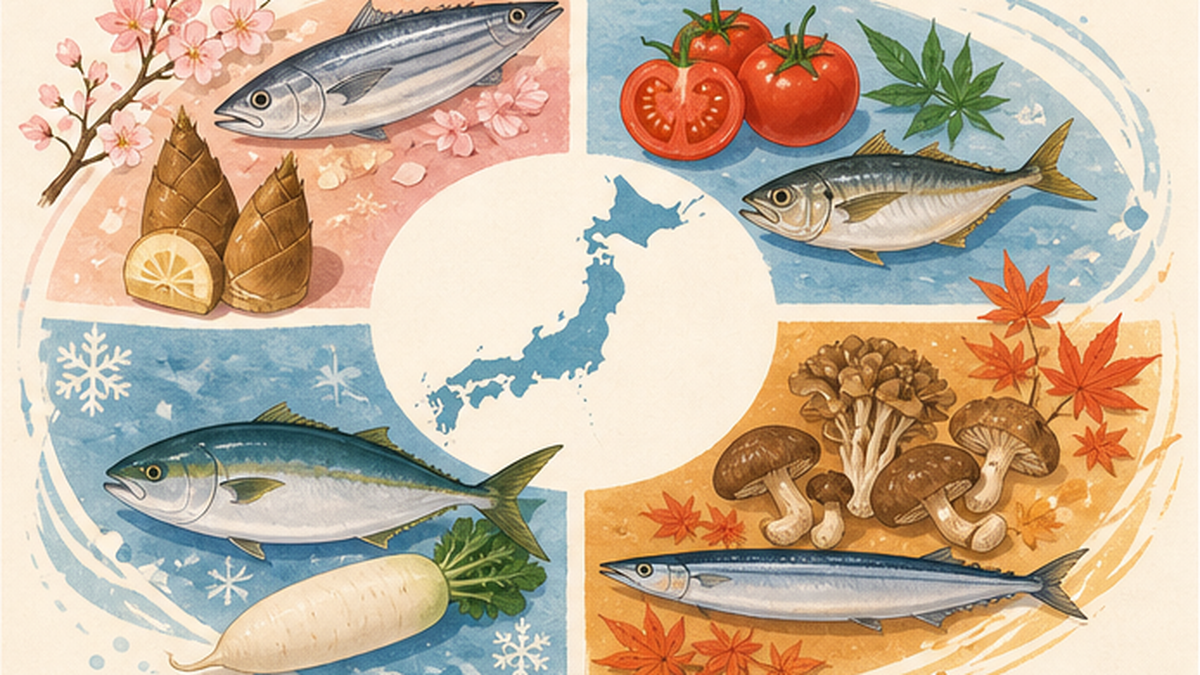
The first step toward a more seasonally aware diet is knowing which foods are typical of each season. Fish come in many varieties and their seasons vary by region, but the following offer a general nationwide guide.
| Season | Representative fish | Representative vegetables and fruit |
|---|---|---|
| Spring (Mar–May) | Spanish mackerel, rockfish, icefish | Bamboo shoots, rapeseed blossoms, strawberries |
| Summer (Jun–Aug) | Horse mackerel, bonito (first catch), sweetfish (ayu) | Tomatoes, cucumbers, corn |
| Autumn (Sep–Nov) | Pacific saury, bonito (return catch), mackerel | Mushrooms, sweet potatoes, persimmons |
| Winter (Dec–Feb) | Yellowtail, cod, oysters | Daikon radish, napa cabbage, mandarin oranges |
Even the Same Fish Has Two Seasons: "First Catch" and "Return Catch"
Bonito is a classic example: it comes into season twice a year — as the "nobori-gatsuo" (first catch), riding the Kuroshio Current northward in spring and early summer, and as the "modori-gatsuo" (return catch), heading back south in autumn after fattening up. Even the same species can vary dramatically in fat content and flavor depending on the time of year, and comparing the two is part of the pleasure of eating seasonally.
When in Doubt, Ask at a Local Farm Stand or Fish Shop
What counts as "in season" shifts from region to region and year to year, depending on fishing conditions. The most reliable way to find out what's truly in season right now is to ask at a local farm stand, fish shop, or fishing cooperative's direct-sales corner what's on display that day. Many local governments and fishing cooperatives also publish their own regional "seasonal fish calendars" online.
Shellfish and Seaweed Have Seasons Too
Fish aren't the only foods with a season. Short-necked clams and hard clams are said to peak in spring, when they fatten up before spawning, while oysters are famously best "in months with an R" — that is, in the cooler months when water temperatures fall and the risk of bacteria drops. Seaweeds such as wakame and kombu are also harvested heavily from late autumn through early spring, as water temperatures begin to cool. Knowing the seasonal lineup of shellfish and seaweed, not just fish, opens up even more ways to enjoy what's in season.
Season Shifts From North to South Across Japan
Because Japan stretches so far from north to south, the lineup of seasonal food can differ by region even within the same season. Oysters, generally considered a winter food, peak in the depths of winter in cold-current-influenced areas like Hiroshima and Miyagi, while in warmer regions like Okinawa, where winters are relatively mild, the range of foods that come into season looks quite different from the main islands. Rather than taking a single nationwide "seasonal calendar" at face value, reinterpreting it in light of your own region's climate and fishing conditions is a good way to feel more connected to what's actually in season.
Everyday Ways to Choose What's in Season
A seasonally aware diet doesn't require a major lifestyle overhaul. It can be put into practice with just a little extra attention during everyday shopping and dining out.
What You Can Do When Shopping
- Start by checking the supermarket's "today's special" or "local produce" corner
- Check origin labels, and choose shorter-distance options when available
- Make regular use of farm stands and fishing cooperative direct-sales corners that carry seasonal food
- Try enjoying the same ingredient's changing flavor across its "early," "peak," and "late" stages
What You Can Do in the Kitchen
- Seasonal fish are often rich in fat — let that shine through simple preparations like sashimi or salt-grilled dishes
- Try lighter preparations early in the season and richer, fattier preparations at the peak
- Seasonal food bought cheap can be prepped and frozen, or dried, to enjoy for longer
- Look to recipe cards from local fishing cooperatives and farm stands, or municipal food-education websites, for ideas
Looking to Restaurants, School Lunches, and Corporate Initiatives
Beyond individual shopping choices, the restaurant industry, school lunch programs, and corporate procurement policies also have the power to encourage the use of seasonal and local ingredients. Through initiatives such as "Sakana no Hi" (Fish Day), the Fisheries Agency is working to give consumers everyday opportunities to choose domestic seafood. Choosing only as much seasonal food as you can actually eat also helps reduce food loss at home. The accumulation of small habits like choosing what's in season supports local fishing and farming communities and feeds into a broader societal shift toward lower food mileage.
Article Summary
- Seasonal food is a naturally rational choice — more nutritious and typically more affordable
- By food mileage (transport volume × transport distance), Japan is one of the world's most import-dependent nations
- Self-sufficiency for edible fish and shellfish has recovered to 56%, but consumption itself keeps declining
- Environmental impact depends heavily on the production stage, not just transport — the numbers deserve a multifaceted reading
- Choosing seasonal, local food brings benefits beyond lower environmental impact, including freshness and support for the local economy
References and Sources
- Eat What's in Season – Ministry of Agriculture, Forestry and Fisheries (MAFF)
- The Link Between Food and Japan's Four Seasons – MAFF
- FY2023 Food Self-Sufficiency Rate and Food Self-Sufficiency Potential Indicators – MAFF
- Food Mileage Resource Room – Information site on food mileage research by Tetsuya Nakada
- Policy Research Institute Review No. 11 – Policy Research Institute, MAFF
- FY2023 Fisheries White Paper, Chapter 1 (1): Trends in Fish and Shellfish Supply and Demand – Fisheries Agency
- FY2023 Fisheries White Paper, Chapter 1 (2): Status of Fish and Shellfish Consumption – Fisheries Agency
- Food-Miles and the Relative Climate Impacts of Food Choices in the United States – Weber & Matthews (2008), Environmental Science & Technology/PubMed
- Seasonal Fish and Shellfish Calendar – City of Hamamatsu
- FY2023 Fisheries White Paper, Chapter 1 (4): Trends in Fish and Shellfish Trade – Fisheries Agency
- Very little of global food is transported by air; this greatly reduces the climate benefits of eating local – Our World in Data
- Ocean Health Report: Long-Term Sea Surface Temperature Trends (Waters Around Japan) – Japan Meteorological Agency
※ Listed in order of reliability: government and academic institutions > peer-reviewed papers > specialist organizations > trusted media