⚡ In short
In 2025, 760 people died or went missing in water accidents in Japan. This article draws on statistics from the National Police Agency and Japan Coast Guard to explain how to spot rip currents, the life-saving effect of life jackets, beach flag meanings, SUP and jellyfish risks, and reef-safe sunscreen.
Summer at the sea is a treasure trove of leisure to share with family and friends — swimming, surfing, SUP, tide-pooling. Time spent feeling the sea breeze offers a sense of openness city life can't match. Yet according to National Police Agency statistics, 760 people died or went missing in water accidents in Japan in 2025 alone. The sea is a stage for leisure, but it is also a natural environment where a moment's carelessness can cost a life.
Many accidents are ones that "could have been prevented if only people had known." Knowing how to spot rip currents, the protective effect of life jackets, what beach flags mean, precautions specific to activities like SUP and snorkeling, and how to prepare for drinking, jellyfish, and heatstroke — none of it requires special training, and all of it can be put into practice today as concrete tools for saving a life.
This article draws on the latest statistics and primary sources from the National Police Agency, the Japan Coast Guard, and related organizations to lay out what you need to know to enjoy ocean leisure safely — and with care for the marine environment. Please take a look before you head to the beach with family or friends.
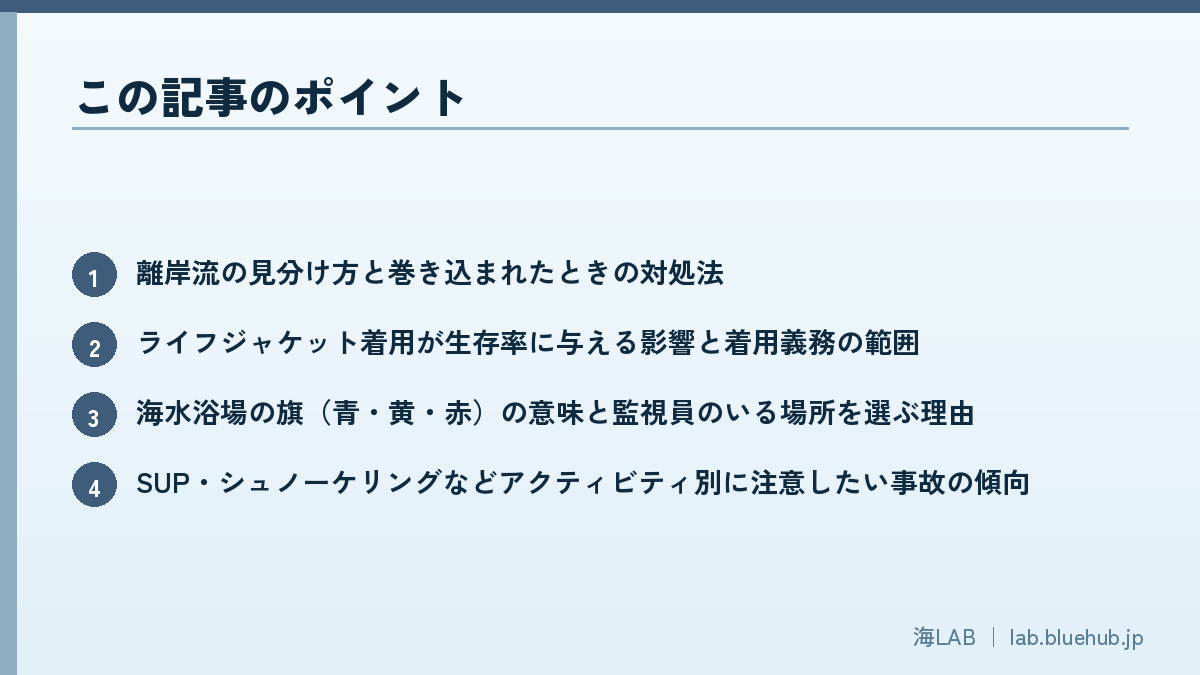
What you'll learn in this article
- How to spot rip currents and what to do if you're caught in one
- How much life jackets affect survival rates, and who is legally required to wear one
- What the blue, yellow, and red beach flags mean, and why to choose a beach with lifeguards
- Accident trends to watch for by activity — SUP, snorkeling, and more
- How to prepare for other risks such as jellyfish stings, heatstroke, and swimming after drinking
- How to enjoy the sea responsibly, including choosing reef-safe sunscreen
The reality of water accidents: what 2025 data tells us about dangerous places and times
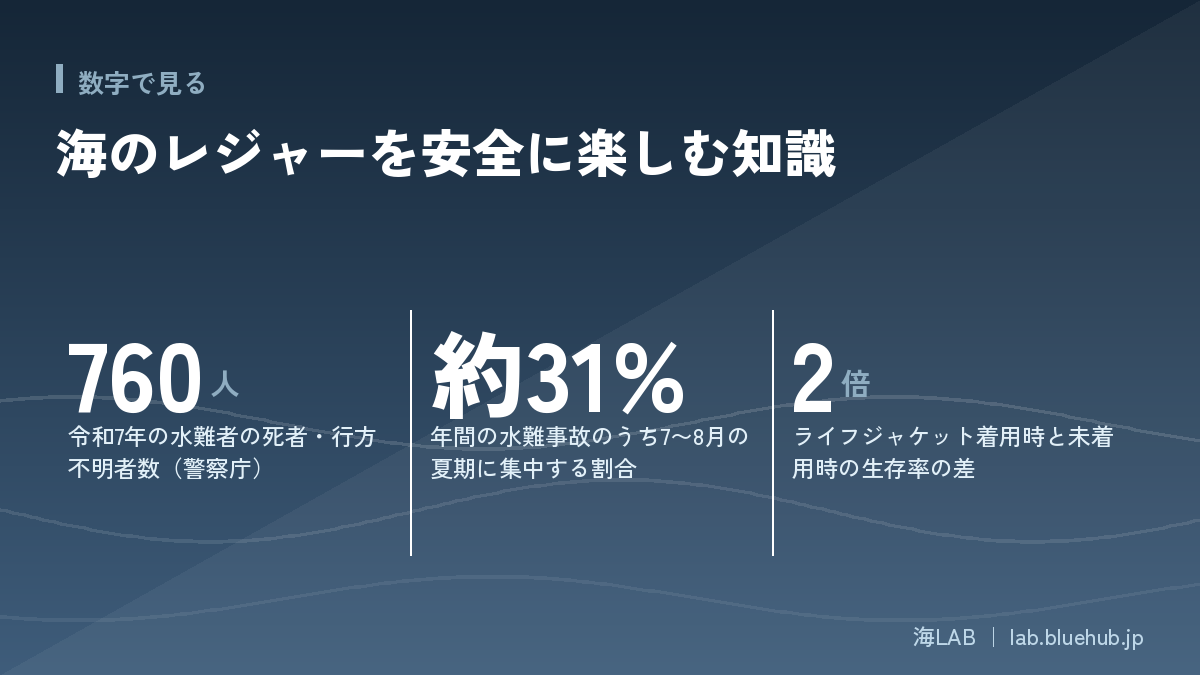
Ocean leisure is enjoyable, but every year in Japan, many people are caught up in water accidents. According to the National Police Agency's "Overview of Water Accidents in 2025," published on June 18, 2026, 760 people died or went missing in water accidents that year. In summer, when more people swim, fish, and surf, statistics-based knowledge is what protects lives. Let's start with the big picture, in numbers.
Nearly a third of accidents cluster in two summer months
According to National Police Agency figures, 1,426 water accidents occurred in 2025, and 446 of them — about 31% of the total — happened during the July–August summer season alone. As every year, accidents cluster in the months when swimming, tide-pooling, and river play are in full swing. Japan Coast Guard data, published as "Marine Accident Status in 2025 (Preliminary)," similarly shows that 702 people were injured in accidents tied to marine leisure activities such as swimming, fishing, and surfing (down 33 from the previous year), while 206 died or went missing — 17 more than the year before. Even as the number of incidents trends down, the number of fatal accidents is not falling.
Who is most at risk
By age group, 45.7% (731 people) of water accident victims were working-age adults from high-school-graduation age up to 65, 36.1% (578 people) were 65 or older, and 11.1% (177 people) were junior-high-school age or younger. The numbers show that it isn't just children who need to stay alert — confident adults and older people are at risk too. Some observers note that working-age adults in particular tend to overreach out of confidence in their swimming ability, swimming out too far without noticing a rip current or a sudden drop-off.
| Age group | Share | Tendency |
|---|---|---|
| Under 65 (high-school age and up) | 45.7% | Accidents often stem from overconfidence and exhaustion while swimming |
| 65 and older | 36.1% | Falls while fishing or tide-pooling, and sudden health issues, are cited |
| Junior-high age and younger | 11.1% | Accidents often happen when a guardian's attention lapses |
A dangerous combination: alcohol and swimming
The Japan Coast Guard runs an ongoing campaign warning against "drinking and swimming." Swimming accidents that involve alcohol are said to have roughly double the fatality rate of those that don't, and the Japan Lifesaving Association's own figures suggest alcohol is a factor in around 30% of all water accidents. Alcohol dulls balance and judgment, raising the drowning risk even for people who normally swim without trouble. Precisely because barbecues and fireworks so often go hand in hand with a day at the beach, "no swimming after drinking" is worth making a firm family or group rule.
Learn moreDanger of Swimming While IntoxicatedJapan Coast Guard warns that drinking before swimming sharply raises the risk of death.🔗 kaiho.mlit.go.jpTurning the statistics into lessons
The National Police Agency and Japan Coast Guard publish these statistics every year to make the reality of accidents visible, so that people enjoying leisure activities can see concretely what to watch out for. The rip current, life jacket, and beach flag guidance introduced in the following chapters are all concrete measures backed by this data.
Lifesaving activity across Japan
Organizations such as the Japan Lifesaving Association run patrols, surveillance, and first-aid training at swimming beaches nationwide. During summer vacation, volunteer student lifeguards staff many beaches, but they can't cover every stretch of coastline. Choosing a beach with lifeguards is one of the easiest ways to make use of this local safety net.
Key points from this chapter
- 760 people died or went missing in water accidents in 2025
- About a third of accidents cluster in the July–August summer season
- Swimming accidents involving alcohol have roughly double the fatality rate
Spotting rip currents and staying alive
What is a rip current?
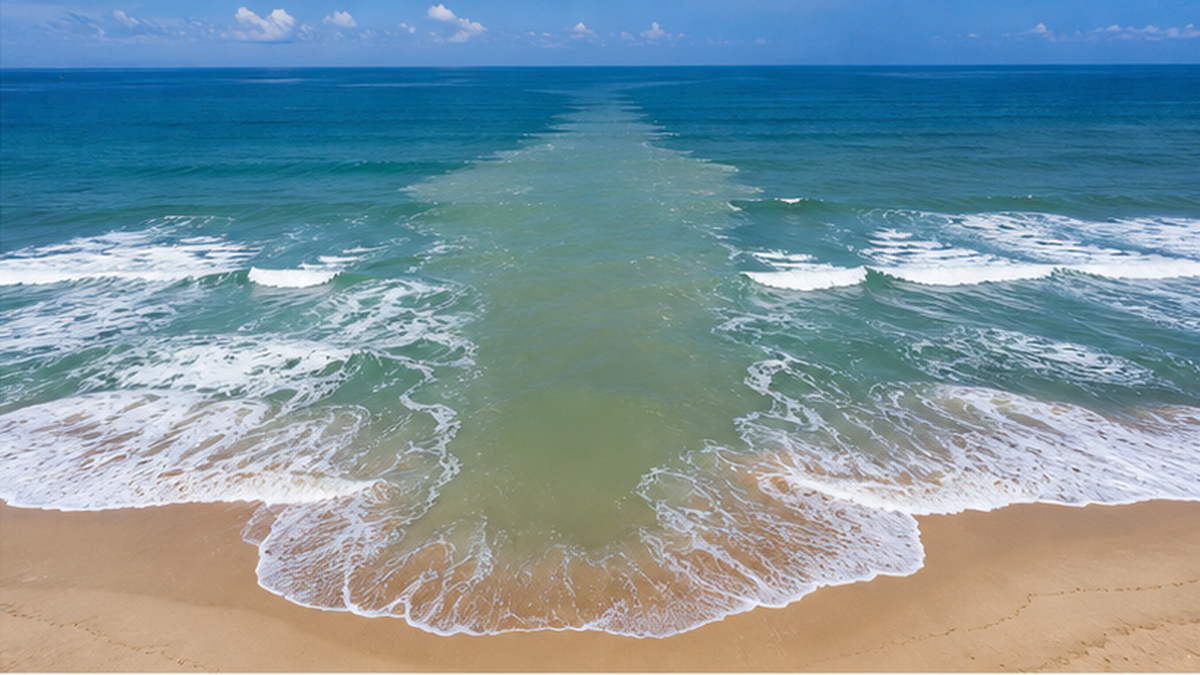
A rip current is a river-like flow that forms as waves pushed onto the shore pull back out to sea. The Japan Coast Guard explains that these currents can be tens of meters wide, with speeds reaching up to 2 meters per second. That's faster than most people can swim, so fighting the current to swim straight back to shore exhausts you and can lead to drowning. Rip currents are believed to be involved in roughly half of all water accidents nationwide, and they can catch surfers and snorkelers, not just swimmers.
Four signs of a rip current
- An area with oddly calm water and no breaking waves amid the surrounding surf
- Water that looks murkier or darker than the surrounding sea
- Foam, debris, or seaweed drifting offshore in a band
- A dip or notch in the shoreline where the sand looks scooped out toward the sea
A hazard recognized around the world
A rip current is called exactly that in English — an international term for the same phenomenon known in Japanese as "rigan-ryu." In countries with many swimmers, such as Australia and the United States, rip currents are recognized as one of the leading causes of water accidents, and flag warnings and lifeguard systems have been developed accordingly. If you swim on beaches overseas, it's worth watching for the same warning signs.
Stay away from the sea when a typhoon or bad weather approaches
When a typhoon is approaching, or shortly before or after one passes near Japan, high swells — sometimes called "doyo-nami" — can reach even distant coastlines, making conditions dangerous even under blue skies. When the Japan Meteorological Agency has issued a high-wave warning or advisory, it's important to call off swimming or marine leisure plans even if the weather looks fine.
Where and when rip currents tend to form
Rip currents tend to form at specific kinds of terrain — near breakwaters or jetties on sandy beaches, or where a shallow, sloping beach has a trench-like channel running out to sea. Because the location can shift with the waves and tide even on the same beach, "it was fine yesterday, so it should be fine today" is a dangerous assumption. Where a lifeguard or beach house is present, checking that day's rip-current conditions before entering the water is a good habit. It's also worth remembering that as a typhoon approaches or a low-pressure system passes, swells can push into normally calm beaches and strengthen rip currents.
What to do if you're caught in one
If you get caught in a rip current, the golden rule is not to fight it and swim straight back to shore. Stay calm, float first to conserve energy, swim parallel to the shore to escape the band of current, and then head back toward shore. If you're not confident in your swimming ability, prioritize shouting or waving to get help from people nearby or a lifeguard. Panicking and trying to force your way back to shore is the single biggest factor that drains your strength and leads to drowning. If you spot someone else being swept away, don't try to rescue them yourself — call a lifeguard or throw something buoyant instead, which is the basic way to avoid a second person being caught in danger.
- Don't fight the current — stay calm, float, and secure your breathing first
- Swim parallel to the shore to get out of the band of current
- Once clear of the current, swim back toward shore
- If you're not a confident swimmer, shout and wave for help from people nearby or a lifeguard
Why a life jacket can be the difference between life and death
A history of mandatory wear
On February 1, 2018, Japan's Ministry of Land, Infrastructure, Transport and Tourism amended regulations under the Act on Officers of Vessels and Small Craft Operators, making life jackets mandatory for everyone aboard a small boat. Since February 2022, penalties have been tightened further: a captain who fails to have passengers wear one incurs two penalty points, must take a retraining course, and can face a business suspension (license suspension) of up to six months. Anyone boarding a pleasure boat or charter fishing boat should get in the habit of checking that these rules are being followed.
Choosing a life jacket: the "cherry blossom mark" and types
Life jackets that the Ministry has tested and certified as meeting safety standards carry a "cherry blossom mark" (sakura mark). Since February 1, 2018, captains have been required to have essentially everyone on the open deck of a small boat wear a cherry-mark life jacket. Buoyancy designs fall broadly into two types: "solid foam" types, which contain foam material and provide constant buoyancy simply by being worn, and "inflatable" types, which stay compact in normal use and inflate with gas either automatically on submersion or by manual trigger. Safety standards require at least 7.5kg of buoyant lift in water and the ability to keep the wearer's face above the surface.
| Type | Characteristics |
|---|---|
| Solid foam | Contains foam material and provides constant buoyancy simply by being worn. Common for children's sizes |
| Inflatable | Stays compact in normal use, and inflates with gas on submersion or by manual trigger. Mainly used by adults |
How survival rates change with and without one
The effect shows up clearly in the data. Among people who fell overboard, those wearing a life jacket had a survival rate roughly twice that of those who weren't wearing one — and conversely, the rate of death or disappearance among those without one is said to be roughly five times higher than among those who were wearing one. Whether or not you have secured buoyancy makes a huge difference in whether you can avoid panic and hold on until rescue arrives.
Who else should consider wearing one at the beach
The legal requirement applies to people aboard small boats, but children, weak swimmers, and anyone playing around breakwaters or rocky shores are strongly encouraged to wear a life jacket regardless of whether it's legally required. Simply securing buoyancy raises the odds of avoiding a panic-driven drowning. More and more beach houses offer rentals, making this easy to adopt even for travelers who don't want to pack extra gear.
What to watch for when choosing a child's life jacket
It's important to choose a children's life jacket sized to the child's weight and build. One that's too large can slip off in the water, while one that's too small won't provide enough buoyancy. Types with a crotch strap help prevent the jacket from riding up and slipping off when the head dips underwater, and are especially recommended for small children. Before buying, it's worth testing it in water to confirm the child's face stays reliably turned upward.
How it differs from a swim ring or arm floats
Swim rings and arm floats are aids for water play, not designed like a life jacket to keep the whole body stably afloat. In waves or currents they can come off or flip over, so it's risky to rely on them where there's no lifeguard or in areas closer to open water. It's best to treat them strictly as "shallow-water fun" and switch to a proper life jacket in areas closer to open water or deeper water.
Using rental services
Even if you don't own a life jacket, many swimming beaches and marine leisure facilities offer rentals. Travelers who don't want to carry extra luggage on a trip or day outing can easily add this safety measure by renting one locally. It's worth checking with the facility in advance to make sure children's sizes are available.
Regular inspection and proper storage
Because age and UV exposure can degrade a life jacket's buoyant material over time, it's recommended to check for tears or loose hardware before the season starts, and to store it out of direct sunlight. Even with a rental, it's a good habit to check with your own eyes and hands before wearing it that the straps fasten securely and fit your body.
Reading the flags and rules at swimming beaches
What blue, yellow, and red flags mean
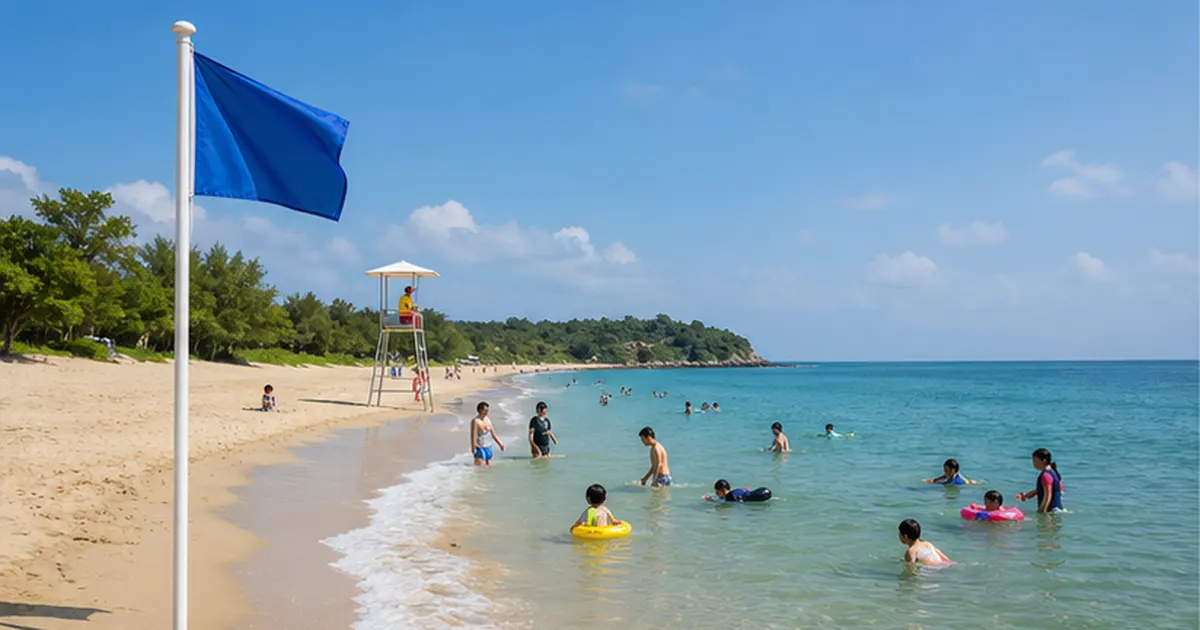
At swimming beaches with lifeguards, flags signal whether swimming is allowed based on weather, wave conditions, and the presence of rip currents. Generally, a blue flag means "swimming allowed," a yellow flag means "caution — follow lifeguard instructions," and a red flag means "no swimming." The Japan Lifesaving Association also encourages people to understand and follow these "sign flags."
Learn moreDo You Know the Meaning of Beach Sign Flags?Japan Lifesaving Association explains what the flags at swimming beaches mean.🔗 jla-lifesaving.or.jp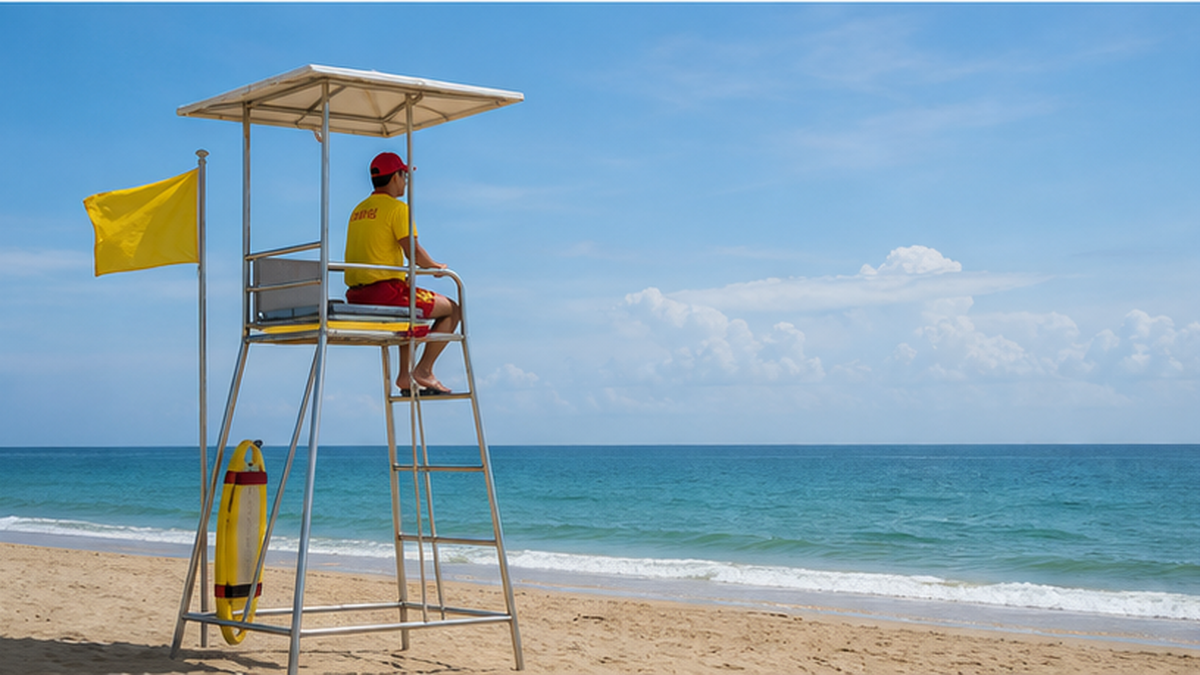
Why to choose a beach with lifeguards
The Japan Coast Guard's Water Safety Guide warns against swimming at "unopened" beaches with no lifeguards or lifesavers on duty. Where there's no monitoring system, accidents can go unnoticed and rescues can be delayed. Checking the opening period and lifeguard hours, and swimming within those times and zones as a rule, is the basic approach. It's worth being especially careful just before or after the official opening period, since lifeguards may be absent even in good weather.
Why you should never swim in a closed zone
Zones marked off-limits for swimming often hide specific hazards — a rip current, a boat channel, a sudden drop in depth, or reefs and rocks. The assumption that "it must be fine since everyone else is in the water" tends to lead to accidents, so it's important to follow the signs and flags. Many beaches also separate surfing or boating lanes from swimming areas, and crossing that boundary raises the risk of collisions.
Keeping distance between surfers and swimmers
Some swimming beaches clearly separate surfing and swimming zones, while others don't. Surfers paddle quickly and may pass close to swimmers while waiting for waves, so on beaches popular with surfers it's especially worth checking zone markings and any staff instructions. Surfers, for their part, should also be careful not to approach areas crowded with swimmers.
Checking tides and sea conditions in advance
Before heading out, it's reassuring to check the day's sea conditions using the Japan Meteorological Agency's weather and wave forecasts, plus the Japan Coast Guard's Marine Safety Information system. Because tide levels and currents in shallow areas change with the tide, it's worth checking a tide table as well. Some prefectures and municipalities also have their own ordinances governing swimming zones or distance from personal watercraft, so checking the latest rules on the local government's or beach house's official information for your destination can help you avoid trouble.
Precautions by activity: SUP, snorkeling, and more
SUP: about 90% of accidents involve being swept offshore
Stand-up paddleboarding, done standing while paddling, has grown more popular in recent years — and so have accidents. Japan Coast Guard analysis of SUP accidents by cause finds that roughly 90% involve being blown offshore by wind or waves and being unable to paddle back. The Ministry of Land, Infrastructure, Transport and Tourism recommends staying within 1km of shore, and extra caution is needed on windy days or in areas prone to offshore drift. Even beginner classes have reported cases of people paddling too far out during unsupervised practice without an instructor.
A life jacket and leash are essential gear
For SUP and surfing, a leash cord connecting the board to your body, plus a life jacket style that doesn't restrict paddling motion, are both recommended. If the board separates from you, you lose that buoyancy and tire more quickly. Check wind direction, wind speed, and current before launching, and don't push beyond your comfort level. Bringing a phone in a waterproof case gives you a way to call for help if something goes wrong.
Never snorkel or free-dive alone
Snorkeling and free-diving can bring unexpected trouble even with fins on — a cramp, or getting caught by a wave. Always go with at least one other person, and follow the "buddy system," where one person rests while the other keeps watch, as a basic safety measure. It's also important not to dive in areas with strong currents or near boat channels.
Watch for collisions with sea kayaks and small boats
Sea kayaks, small boats, and personal watercraft sometimes travel near swimming areas. Because their hulls sit low in the water and they're relatively quiet, swimmers may not notice them approaching — and conversely, operators can easily miss a swimmer whose head is barely visible above the surface. At beaches where swimming and navigation zones are separated, staying within your boundary is the most basic way to prevent accidents on both sides.
The benefits of using a rental shop or school
The first time you try SUP, snorkeling, or sea kayaking, it's reassuring to use a local rental shop or school that knows the area's sea conditions well. You'll get properly sized gear and advice tailored to that day's wind and current, and many operators have emergency contact systems in place. This significantly lowers the risk compared with bringing your own gear and figuring it out on your own.
Enjoying the sea safely with children and older adults
Practice "float and wait" with your children beforehand
"Float and wait" (ui-te mate) — floating on your back to secure your breathing and wait for rescue, rather than panicking and trying to swim, if you suddenly find yourself out of your depth or in trouble — is a basic self-rescue technique taught in school clothed-swimming lessons. Practicing it as a family before entering the water builds confidence. It's also worth mentioning that holding an empty plastic bottle or clothing for extra buoyancy can help you float longer.
Why water accidents among older adults are rising
Behind the fact that people 65 and older make up 36.1% of water accident victims are factors such as falls while fishing or tide-pooling, and sudden health issues linked to underlying conditions. Basic precautions — warming up, checking one's physical condition, and avoiding solo outings — matter even more for this age group than for younger people. Avoiding slippery footwear on breakwaters and rocky shores, and staying away from unstable footing, is also essential.
Preparations to make before a summer trip
Before heading to a swimming beach far from home, it helps to check the local government's or tourism association's official website in advance for that area's accident trends, lifeguard hours, and places prone to rip currents. Sharing basic first-aid steps within the family and packing a simple first-aid kit also help everyone respond calmly if something happens.
Know who to call in an emergency
If an incident or accident happens at sea, or you witness one, call the Japan Coast Guard's emergency number, 118. Like the police's 110 and the fire department's 119, it's a three-digit number with no area code, in operation since May 1, 2000. Turning on your smartphone's GPS when you call helps convey your exact location. If you spot someone drowning, secure your own safety first, then call 118 or 119 promptly, and if possible throw something buoyant rather than swimming out to rescue them yourself.
The hidden risk when siblings swim alone
When siblings are left to play in the water on their own, an older child may not notice if a younger one is in trouble. Unlike a supervised school swimming class, on a beach or rocky shore without a monitoring system, an adult should always accompany them — and if there are multiple children, assigning one adult specifically as the "watcher" improves safety.
Things to check as a family
- Never take your eyes off children — keep them within arm's reach
- Check the weather, waves, and tide times before you leave
- Bring a life jacket, swim ring, or other buoyancy aid
- Confirm the lifeguard zone and hours before entering the water
Preparing for jellyfish, heatstroke, and other risks in the marine environment
The right way to treat a jellyfish sting
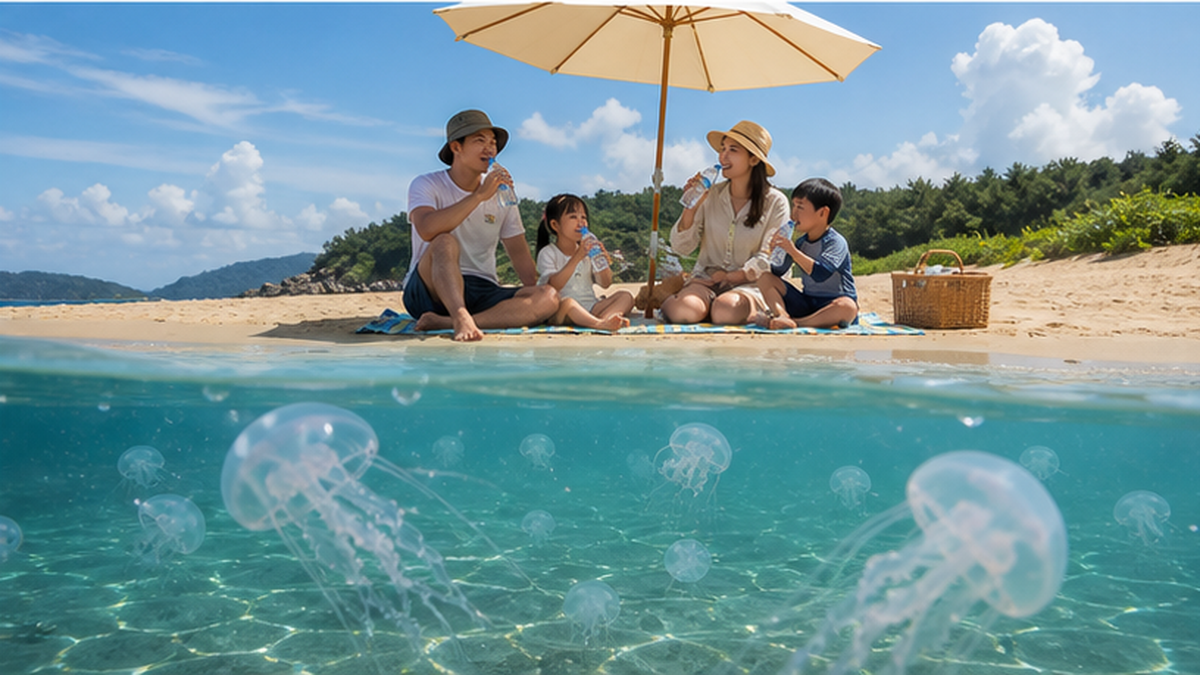
Jellyfish blooms are another risk not to underestimate in summer. Like the mass appearances of Nomura's jellyfish covered in this article on jellyfish blooms, the timing and scale of an outbreak can vary widely from year to year. If you're stung, first rinse the stinging cells away with seawater — never with fresh water or vinegar. The Portuguese man o' war, commonly nicknamed the "electric jellyfish" in Japanese, is a particular exception: vinegar stimulates the remaining stinging cells and triggers them to release more venom, making things worse. Rinsing with cold water should also be avoided, since the resulting osmotic effect can help spread the venom.
The Japan Lifesaving Association recommends heat therapy — soaking the affected area in water at roughly 42–45°C for about 30 minutes — and advises seeing a doctor promptly if symptoms are severe or the species is unknown. If tentacles remain on the skin, remove them with tweezers or a towel rather than bare hands. Wearing a rash guard or other clothing that covers the skin also reduces the chance of being stung in the first place.
Watch out for stingrays, stonefish, and other dangerous creatures
Jellyfish aren't the only creatures to watch for in shallow water. A stingray hidden on the seabed can strike with the venomous barb on its tail if stepped on from above, so shuffling your feet along the sandy bottom rather than lifting them high when walking in shallow water helps you avoid contact. In the seas of Okinawa and southern Japan, the reef stonefish — which mimics a rock and rarely moves — carries a powerful neurotoxin in its dorsal spines, and people have been stung after accidentally stepping on one. Fatalities have been reported in the past, so if you're stung, don't wait and see — call 119 immediately and get medical treatment.
Preparing for heatstroke and sudden weather changes
A sun-baked beach also carries a real risk of heatstroke. On days when the Ministry of the Environment or Japan Meteorological Agency issues a heatstroke alert, it's wise to avoid long stretches of activity in direct sun, hydrate and replenish salt regularly, and rest in the shade. Children regulate body temperature less efficiently than adults and are more affected by heat reflected off the ground, so they need shorter intervals between rest breaks. Thunder or a sudden swell can also signal changing conditions that strengthen rip currents, so it's a good habit to check weather forecasts and thunderstorm warnings regularly. If you hear thunder, stop swimming and head promptly to a safe indoor location or a car.
Enjoying the sea with care for the environment
Choosing reef-safe sunscreen
UV-absorbing chemicals commonly found in sunscreen, such as oxybenzone and octinoxate, have been linked to accelerated coral bleaching. In November 2018, Palau became the first country in the world to announce a ban on sunscreens containing harmful ingredients, and from January 1, 2020, it legally banned their import, sale, and even bringing them into the country. Hawaii has likewise banned the sale of sunscreens containing oxybenzone and octinoxate since January 1, 2021. When you plan to swim in the sea, choosing a mineral (non-chemical) sunscreen based on zinc oxide or titanium dioxide reduces the impact on coral and marine life. It's also worth not relying on sunscreen alone, and combining it with a rash guard, hat, or other UV-protective clothing.
Learn moreBan on Sunscreens Containing Chemicals Harmful to Coral ReefsEmbassy of Japan in Palau explains the world's first reef-safe sunscreen regulation.🔗 palau.emb-japan.go.jpTake your trash home, and don't touch the wildlife
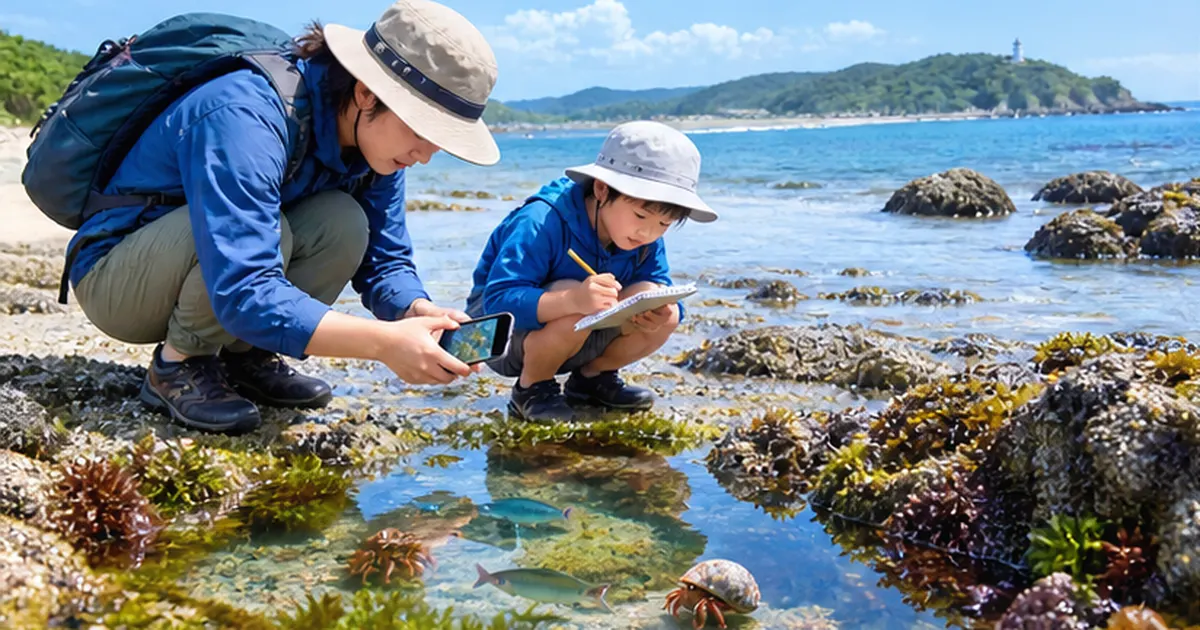
Much of the litter that washes up on beaches is plastic, and leaving trash behind at the beach contributes directly to ocean pollution. Always take food wrappers and plastic bottles home with you, and where possible, pick up even a single piece of litter you find — the spirit of a "beach clean." When you find a creature while tide-pooling, return it to where you found it after observing it, and be careful with your footing so you don't step on coral or rocky habitat.
Reducing the trash you generate on-site also helps. Bringing a reusable bottle or bag instead of disposable straws or plastic bags, and quickly bagging lightweight litter that could blow away in the wind, are small habits that add up to less litter washing ashore.
Snorkeling and diving etiquette in coral reef areas
When snorkeling or diving in Okinawa or other islands, be careful not to kick coral with your fins or stand on it. Coral takes a very long time to grow, and once damaged, it can take decades to recover. On a guided tour, following the guide's instructions and keeping an appropriate distance while observing is the basic way to help the beautiful sea last for years to come.
Local efforts toward zero marine litter
Japan's Ministry of the Environment is working to reduce marine litter through initiatives such as its Action Plan for Marine Plastic Litter. Joining even one local beach clean gives you a real sense of how much litter washes ashore, and what kind — a useful trigger for rethinking your own daily habits around waste. If you spot litter while traveling, picking it up within reason is a small gift to the next person who visits.
Keeping a respectful distance from wildlife
You may also encounter wild creatures at the beach — seabirds, sea turtles, and more. Getting too close or trying to touch them can stress the animal and cause it to waste energy fleeing. As with birdwatching using binoculars, developing the habit of quietly observing from a distance keeps things comfortable for both people and wildlife.
Respecting local fishers and beach house rules
Swimming beaches and rocky shores are often also working fishing grounds for local fishers. Staying away from fixed nets or aquaculture rafts without permission, and not touching fishing gear or live tanks, is part of respecting the local sea. It's also worth reading the rules posted by beach houses or local municipalities, and enjoying the sea in a way that respects the local community.
Conclusion: enjoying the sea safely and responsibly
The appeal of ocean leisure comes through even more clearly once you understand and prepare for its risks. Knowing rip current warning signs, wearing a life jacket, following flags and rules, understanding what to watch for by activity, and keeping an eye on children and older adults — none of these require special skill, and all of them are things you can start doing right away.
Small choices — how you pick sunscreen, taking your trash home, minding your manners in coral reef areas — add up to protecting an environment the next generation can still enjoy at the sea. Balance safety with care for the environment, and make the most of the sea this summer too.
As a small step before you head out, make it a habit to check the weather and sea conditions, prepare a life jacket, and practice "float and wait" with your family. As the statistics show, most accidents aren't just bad luck — they're the kind that preparation can prevent. Carry the right knowledge with you, and enjoy ocean leisure to the fullest.
Summary
- Learn the signs of a rip current, and if caught in one, swim parallel to shore
- Wearing a life jacket roughly doubles your survival rate
- Understand blue, yellow, and red flags, and swim where lifeguards are present
- About 90% of SUP accidents involve drifting offshore — stay within 1km of the beach
- Don't forget environmental care, from sunscreen choice to taking your trash home
References and Sources
- National Police Agency, "Overview of Water Accidents in 2025" – Water accident figures by age group
- Japan Coast Guard, "Marine Accident Status in 2025 (Preliminary)" – Statistics on marine leisure accidents
- Japan Coast Guard, Choshi Coast Guard Office, "About Rip Currents" – How rip currents form, and how to spot and respond to them
- Ministry of Land, Infrastructure, Transport and Tourism, Maritime Bureau, "Expansion of Mandatory Life Jacket Wear" – Details of the requirement and penalties
- Ministry of Land, Infrastructure, Transport and Tourism, Maritime Bureau, "Types and Features of Life Jackets" – Solid and inflatable types, and cherry-mark safety standards
- Japan Lifesaving Association, "Do You Know the Meaning of Sign Flags?" – What beach flags mean
- Embassy of Japan in Palau, "Ban on Sunscreens Containing Chemicals Harmful to Coral Reefs" – The world's first such regulation
- Japan Coast Guard, "Danger of Swimming While Intoxicated" – Data on elevated fatality rates from drinking and swimming
- Japan Coast Guard, "Safety Information for Stand-Up Paddleboarding (SUP)" – SUP accident trends and countermeasures
- Japan Lifesaving Association, "If You're Stung by a Jellyfish" – First aid for jellyfish stings
- Japan Coast Guard, "Call 118 for Incidents and Accidents at Sea" – About the emergency phone number
Listed in order of reliability: government and academic institutions > peer-reviewed papers > specialist organizations > trusted media