⚡ In short
Why do tuna and alfonsino contain more mercury? Learn how mercury entering the ocean becomes methylmercury and concentrates 10,000–100,000-fold through the food chain. Covers intake guidelines for pregnancy (80 g per week), the lessons of Minamata disease, and the Minamata Convention.
Tuna is one of the most popular items at any sushi restaurant. But did you know that its red flesh contains trace amounts of methylmercury concentrated through the natural food chain? Mercury in seawater is extremely dilute, yet in the bodies of large fish at the top of the food chain it is concentrated 10,000 to 100,000 times. This phenomenon is called biomagnification.
You may wonder, "Is fish dangerous?" The short answer: with a normal diet, there is very little cause for concern about health effects from eating fish. The average mercury intake in Japan is only about 30–40% of the tolerable intake considered to have no health effects. However, because unborn babies are more sensitive to methylmercury, the government provides intake guidelines for certain fish that apply only to pregnant women.
In this article, we trace the scientific mechanism by which mercury enters the ocean and becomes concentrated in large fish, review measured mercury levels by species, and clearly summarize the intake guidelines for pregnancy. We also look at the lessons of Minamata disease, one of the world's most serious pollution-related diseases, and the international treaty that bears its name: the Minamata Convention.
What you will learn in this article
- How mercury enters the ocean, is converted to methylmercury by microorganisms, and becomes concentrated through the food chain
- Why large fish such as tuna, marlin, and alfonsino contain more mercury, with measured concentration data
- The health effects of methylmercury, the tolerable weekly intake, and how Japan's average intake compares to it
- How to eat fish during pregnancy — the 80 g weekly guideline and which fish need no special caution
- The lessons of Minamata disease and the Minamata Convention, the global framework for reducing mercury
Where Does the Mercury in the Ocean Come From?
Mercury (chemical symbol Hg) is a natural metallic element found in the Earth's crust. It is the only metal that is liquid at room temperature and has long been used in thermometers, fluorescent lamps, and gold refining. When thinking about mercury pollution in the ocean, the first thing to understand is that mercury enters the sea via both natural and human-activity routes.
Natural and Anthropogenic Mercury
In nature, volcanic eruptions, rock weathering, and forest fires release mercury into the air and water. Fish have contained trace mercury since long before the Industrial Revolution — they would contain small amounts even without humans. Since industrial activity took off, however, the amount of mercury that humans dig out of the ground and release into the environment has increased substantially.
According to the UN Environment Programme's Global Mercury Assessment 2018, approximately 2,220 tonnes of mercury were emitted to the atmosphere from human activities in 2015. The largest source is artisanal and small-scale gold mining (ASGM), accounting for about 38% of the total, mainly in developing countries. The age-old refining method — mixing mercury with gold ore to amalgamate the gold, then heating to evaporate the mercury — still scatters large amounts of mercury into the environment today.
- Artisanal and small-scale gold mining (ASGM) — about 38% of global anthropogenic emissions, concentrated in South America, Sub-Saharan Africa, and Southeast Asia
- Coal combustion — trace mercury in coal is released from power plants and other facilities
- Non-ferrous metal smelting and cement production — mercury contained in ores and raw materials is released during processing
- Waste incineration — improper disposal of mercury-containing fluorescent lamps, batteries, and thermometers
In Japan, mercury thermometers and blood-pressure meters have largely been replaced by digital devices and fluorescent lamps by LEDs, greatly reducing mercury use in products. On the other hand, if used fluorescent lamps, dry-cell batteries, or mercury thermometers are thrown out with ordinary household waste, the mercury is released into the air during incineration. Following your municipality's sorting rules for mercury-containing products is one of the most accessible mercury countermeasures a household can take.
Riding the Atmosphere around the Globe
A troublesome property of mercury is that gaseous mercury remains in the atmosphere for a long time and is carried around the globe by winds. It does not stay in the country or region where it was emitted: it crosses borders and falls with rain into distant oceans and even the Arctic, where there is almost no industrial activity. Mercury pollution is thus a global problem that no single country can solve alone — which is precisely why the international Minamata Convention, discussed later, became necessary.
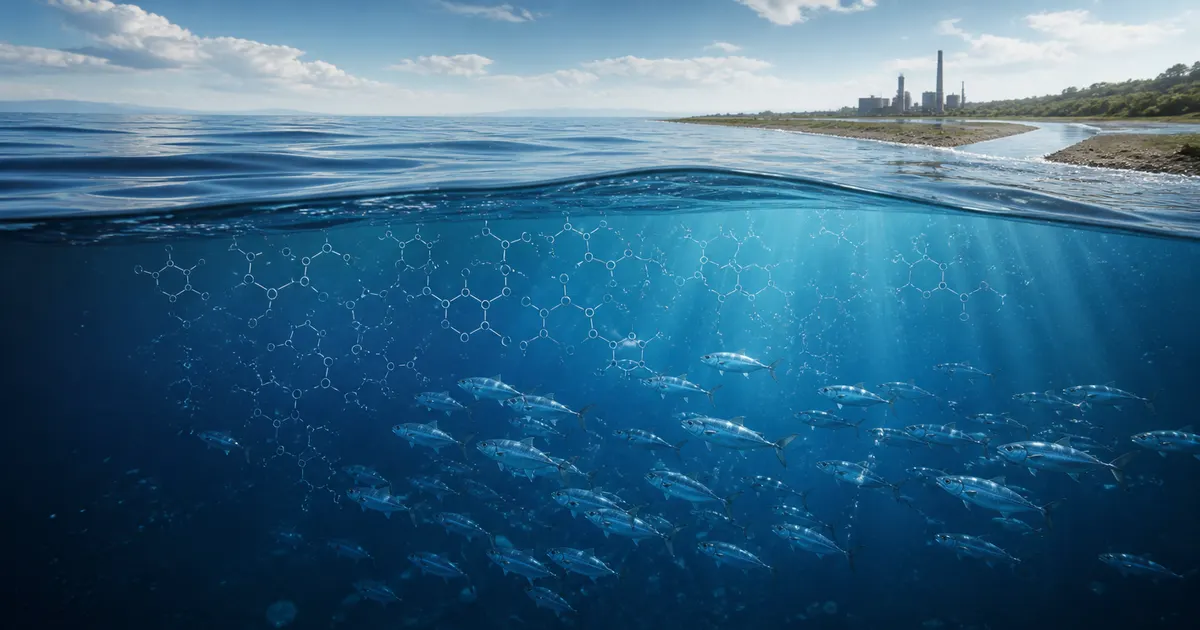
Mercury enters the ocean by three main routes. First is atmospheric deposition, in which mercury in the air falls onto the sea surface with rain and particles — the main supply route for the open ocean, far from any emission source. Second is river inflow, carrying mercury deposited on land or contained in soils. Third is direct discharge, such as industrial wastewater released into the sea. The tragedy of Minamata Bay was a textbook case of direct discharge; in today's Japan, where wastewater is strictly regulated, atmospheric mercury circulating on a planetary scale has become the main player.
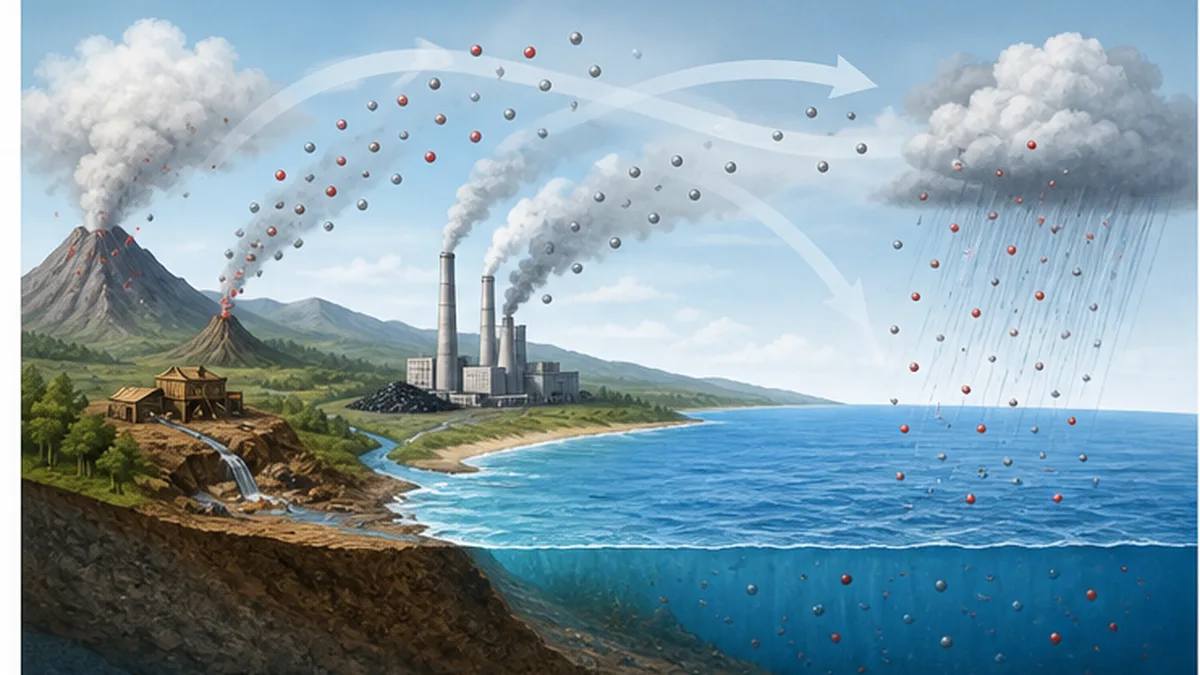
Mercury in seawater is extremely dilute
Mercury in seawater itself is at the nanogram (one-billionth of a gram) level — so dilute that swimming in the sea or eating salt poses no mercury concern. The problem lies at the end of the food chain, in the bodies of large fish, where this trace mercury has been concentrated tens of thousands of times.
When Inorganic Mercury Turns into Methylmercury
Mercury that enters the sea in its original form (inorganic mercury) does not accumulate much in living organisms. The turning point comes when microorganisms living in seafloor sediments and oxygen-poor waters convert inorganic mercury into an organic compound called methylmercury. When bacteria such as sulfate-reducing bacteria attach a methyl group to mercury during their metabolism, the behavior of mercury changes completely.
Three Reasons Methylmercury Is a Problem
- Easily absorbed — it is fat-soluble and absorbed from the digestive tract at a very high rate
- Slow to be excreted — it binds tightly to proteins in the body, with a half-life in humans of about 70 days (Food Safety Commission of Japan)
- It reaches the brain — it can cross the blood–brain barrier, which normally blocks harmful substances, and the placenta connecting mother and fetus
In short, methylmercury is a substance that "gets in easily, leaves slowly, and reaches the places that should be protected most (the brain and the fetus)." Most of the mercury in fish takes this methylmercury form, and from a food-safety perspective, methylmercury is essentially the only form that matters.
Where Does Methylation Occur? — Ongoing Research
The classic sites of methylation are oxygen-poor, organic-rich environments such as coastal seafloor sediments and lakes. But coastal processes alone cannot explain why open-ocean fish like tuna carry high levels of methylmercury. Recent ocean observations have shown that methylmercury is also produced in the mid-depth layers of the open ocean (depth zones low in oxygen where organic matter actively decomposes). Where and how mercury turns into its most toxic form remains a frontier that ocean researchers around the world are actively pursuing. Understanding the methylation process would also help predict future mercury levels in fish and estimate the effects of countermeasures.
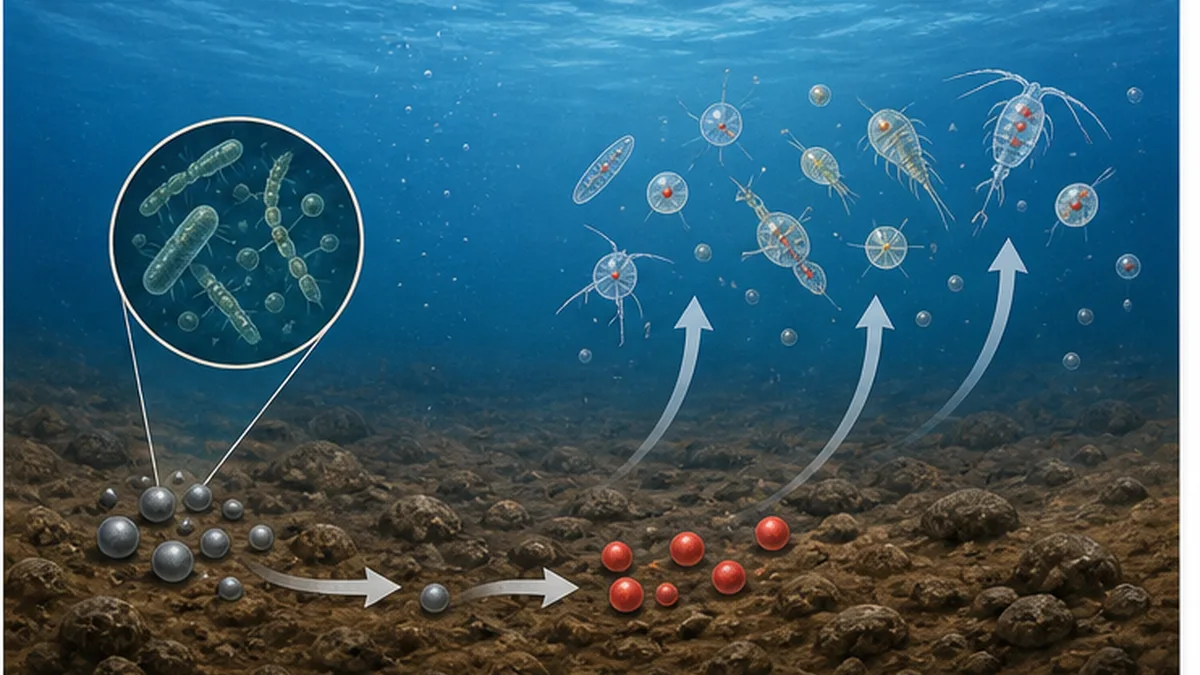
Key points
- The problem begins not with mercury itself but "after it becomes methylmercury"
- The conversion is carried out by microorganisms in seafloor sediments and similar environments
- Most mercury in fish is stored in muscle in the form of methylmercury
How Biomagnification Works — Why Larger Fish Carry More Mercury
"Bioaccumulation" and "Biomagnification"
When an individual organism takes in methylmercury from its environment or food faster than it can excrete it, raising its internal concentration, this is called bioaccumulation. When the concentration in predators becomes higher than in their prey at each step up the food chain, that phenomenon is called biomagnification. Methylmercury is a textbook example in which both processes operate strongly.
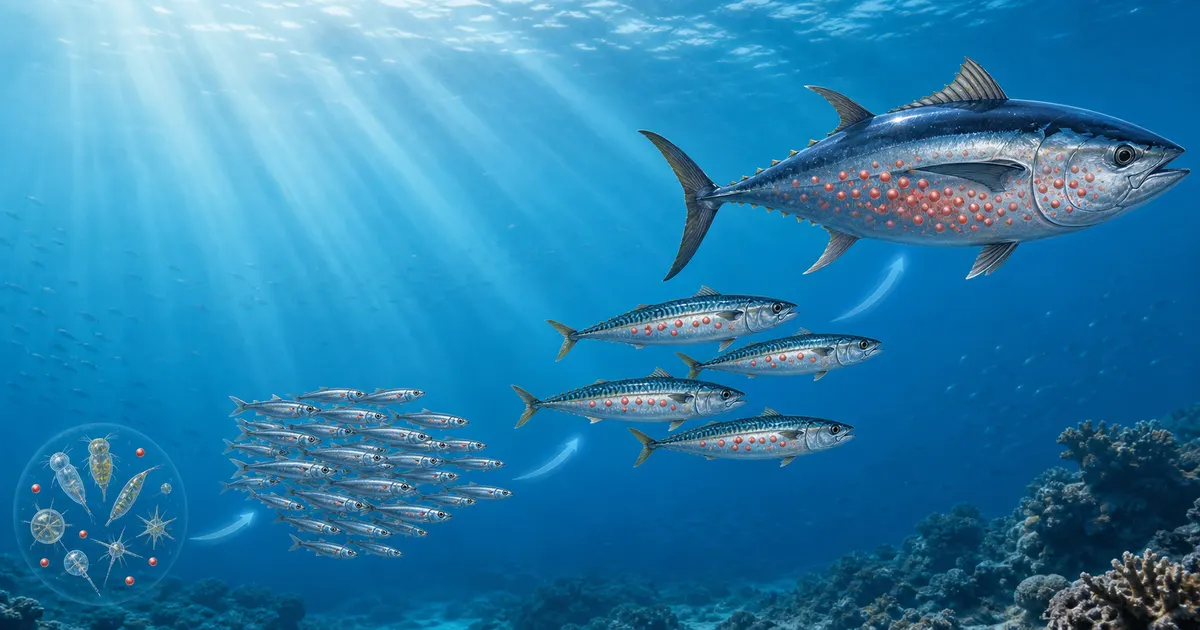
The mechanism is easiest to grasp as multiplication. Plankton take up methylmercury from seawater and store it. Small fish eat large amounts of plankton every day; mid-sized fish eat the small fish; large fish eat the mid-sized fish. A predator consumes many times its own body weight in prey over its lifetime, and the methylmercury in that prey transfers to the predator's body each time, accumulating steadily.
10,000–100,000-fold at the Top of the Food Chain
- Phytoplankton take up the extremely dilute methylmercury in seawater
- Zooplankton eat the phytoplankton, concentrating it further
- Small fish such as sardines eat large amounts of plankton, concentrating it again
- Mid-sized predators such as mackerel and squid eat the small fish
- In apex predators like tuna, marlin, and sharks, levels reach 10,000–100,000 times that of seawater
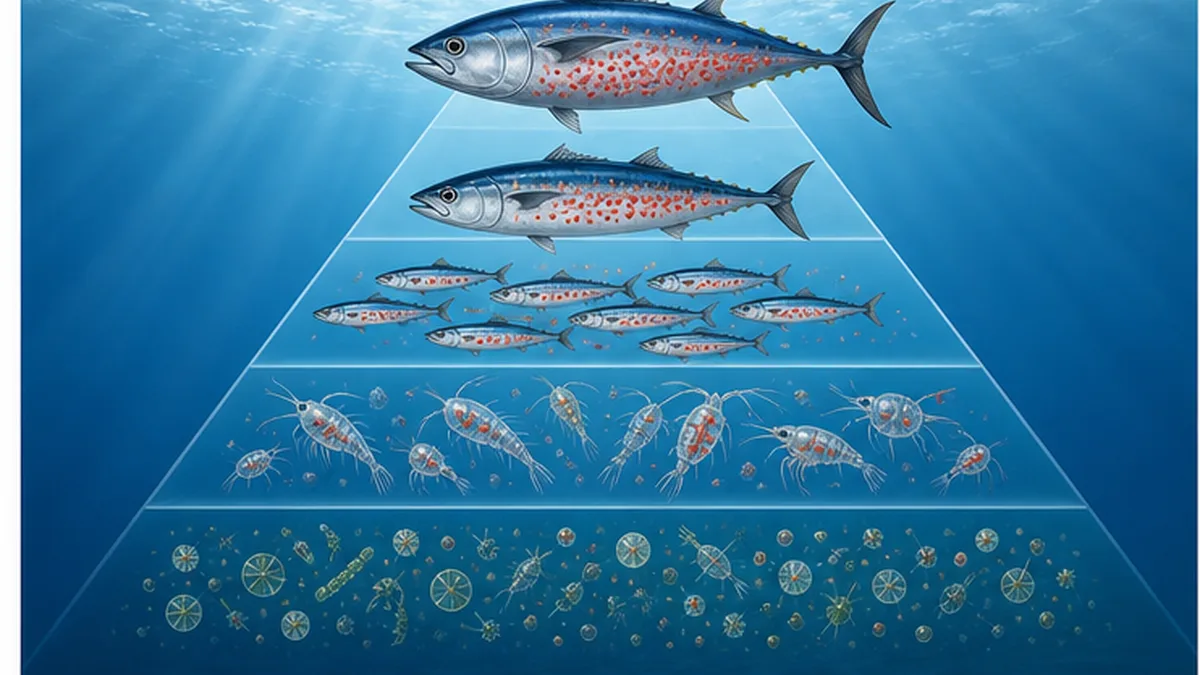
Three Conditions: Large, Long-lived, High on the Food Chain
Fish with high mercury levels share three traits: (1) they sit high on the food chain, (2) they are large, and (3) they live long. Because methylmercury is excreted slowly, the longer a fish lives and keeps feeding, the more it accumulates. Pacific bluefin tuna — which migrate as far as 8,500 km across the Pacific and can live more than 20 years — meet all three conditions (see our article The Science of the Great Bluefin Tuna Migration for more on their biology). Long-lived deep-sea fish such as alfonsino also tend to have high mercury levels, since they grow slowly and accumulate over a long period.
Humans Stand One Step Beyond the Food Chain
And we must not forget: we humans, who eat large fish, stand one step above this food chain. When we eat fish, methylmercury enters our bodies too. Fortunately, methylmercury in the human body is excreted little by little, so as long as intake stays within the tolerable level, accumulation is not a problem. The same logic of biomagnification applies to other persistent, fat-soluble chemicals such as PCBs (polychlorinated biphenyls) and dioxins. "The higher a creature sits on the food chain, the more it is affected by persistent substances in the environment" — an essential perspective for thinking about marine ecosystems.
Even among tuna, species differ greatly
As described below, bluefin and bigeye tuna have relatively high levels, while yellowfin and albacore (the main ingredients of canned tuna) are low. Differences in food-chain position, lifespan, and growth rate show up directly as differences in mercury concentration.
Mercury Levels in Fish: The Actual Data
So how much mercury do fish actually contain? Japan's Ministry of Health, Labour and Welfare has conducted a large-scale survey of mercury in seafood covering about 450 species and roughly 16,400 samples, which forms the scientific basis for its advisory for pregnant women. Let's look at average values for large fish high on the food chain.
| Species | Average total mercury | Characteristics |
|---|---|---|
| Swordfish | 0.969 ppm | Large predator at the top of the food chain |
| Bluefin tuna | 0.723 ppm | Large, long-lived apex predator |
| Alfonsino | 0.684 ppm | Deep-sea species, long-lived and slow-growing |
| Chub mackerel (ref.: Aichi Pref. survey) | 0.14 ppm | Mid-sized migratory fish |
| Pacific saury (ref.: Aichi Pref. survey) | 0.05 ppm | Small plankton-feeding fish |
| Japanese sardine (ref.: Aichi Pref. survey) | 0.02 ppm | Plankton feeder low on the food chain |
Between swordfish, an apex predator, and plankton-eating sardines, concentrations differ by a factor of about 50 — direct evidence of biomagnification. Most familiar table fish such as sardines, horse mackerel, saury, salmon, and sea bream are low in mercury and require virtually no concern.
Why Are Yellowfin and Albacore So Low?
Even within the tuna genus, yellowfin and albacore have far lower mercury levels than bluefin or bigeye, and they are not on the health ministry's list of "fish requiring special caution." The reason lies in their ecology. Yellowfin grow quickly and are caught relatively young, so their accumulation period is short. Feeding at relatively shallow depths on small prey also works to keep levels down. The data show that the reality is not "all tuna is risky" but "species differ completely." The fact that yellowfin and albacore — widely used at conveyor-belt sushi restaurants — are low in mercury is reassuring news for consumers.
Provisional Regulatory Limits and Why Tuna Is Exempt
In 1973, Japan set provisional regulatory limits for mercury in seafood: 0.4 ppm total mercury and 0.3 ppm methylmercury. However, these limits do not apply to tuna species or deep-sea fish. The reasoning: these fish naturally exceed the limits through biomagnification, yet within the overall Japanese diet, intake remains at levels with no health effects. That is why the approach is not a blanket ban but the finer-grained "intake guidelines for pregnant women" described below.
Note that cooking can do almost nothing to reduce the amount of mercury that enters your body. Methylmercury binds tightly to proteins in fish muscle, so it cannot be removed by grilling, boiling, or rinsing. Unlike dioxins, which concentrate in fat, "cooking methods that render off fat" have no effect either. The practical way to control intake therefore comes down to choosing which fish to eat and how often. Put another way: get the species choice right, and no special cooking tricks are needed at all.
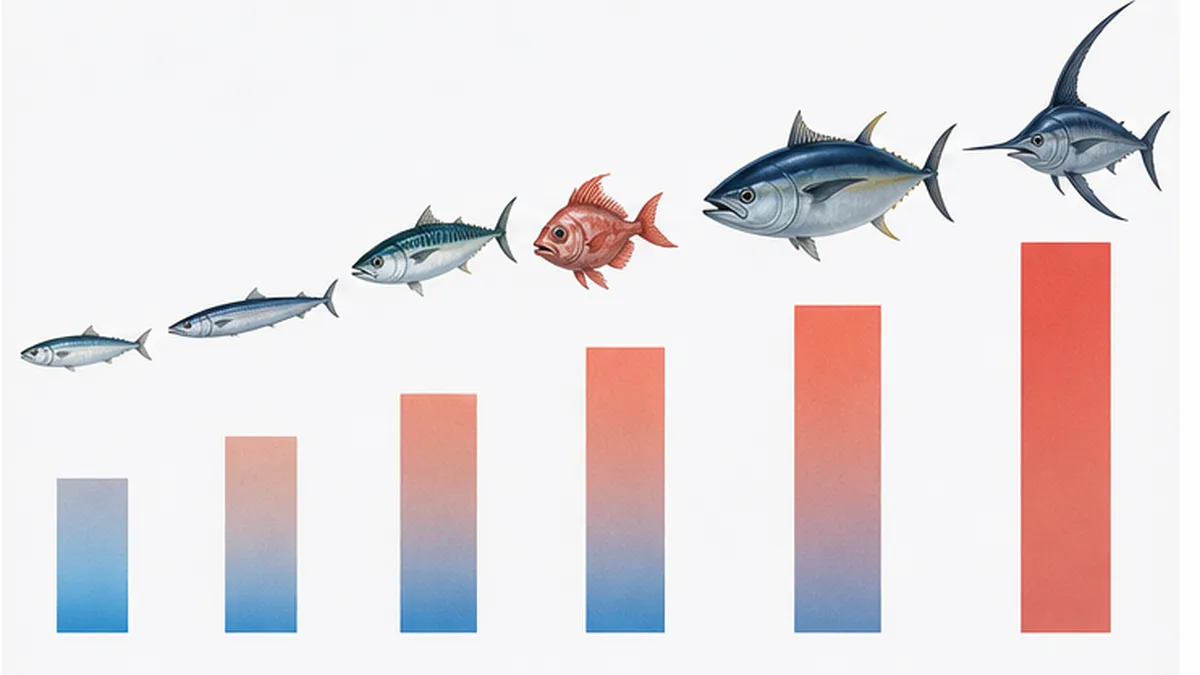
Within a species, bigger individuals run higher
The health ministry's survey confirms that within the same species, larger and older individuals tend to have higher mercury levels. Accumulation is a multiplication over the years — exactly as the logic of biomagnification predicts.
Methylmercury and Health — Where Does Risk Begin?
The Most Vulnerable: Babies in the Womb
At high doses, methylmercury damages the central nervous system. And the most sensitive stage of life is the fetus, whose brain is developing at tremendous speed. Because methylmercury crosses the placenta, intake levels that cause no symptoms in the mother could subtly affect fetal neurodevelopment. This is why intake guidelines in many countries target pregnant women.
The Tolerable Weekly Intake as a Yardstick
The yardstick for "how much can be consumed for a lifetime without health effects" is the tolerable weekly intake. In 2003, the Joint FAO/WHO Expert Committee on Food Additives (JECFA) lowered the provisional tolerable weekly intake of methylmercury to 1.6 micrograms per kilogram of body weight per week to protect the fetus. In August 2005, the Food Safety Commission of Japan conducted its own evaluation reflecting Japan's fish-eating habits and set a tolerable weekly intake of 2.0 micrograms per kilogram of body weight per week (as mercury), with the fetus identified as the high-risk group.
How the Tolerable Intake Was Determined
These figures rest on large epidemiological studies in regions where fish and whale consumption is high. In the Faroe Islands in the North Atlantic, long-term follow-up of mothers and children in a population that traditionally eats pilot whale suggested an association between maternal mercury exposure and subtle differences in children's neurodevelopment. In the Republic of Seychelles in the Indian Ocean, by contrast, a similar study found no clear effects even in a population that eats a great deal of fish. International bodies and Japan's Food Safety Commission weighed these multiple studies and set tolerable intakes with a safety margin below the levels at which effects appear. The tolerable intake is thus not a cliff edge — "cross it and danger begins" — but a conservative yardstick meaning "a long-term average within this range is safe."
Japan's Average Intake Is 30–40% of the Tolerable Level
As for the actual situation: mercury intake in Japan averages about 8.2 micrograms per day (about 57 micrograms per week), mostly from seafood. According to the Ministry of Agriculture, Forestry and Fisheries, the average intake is about 35% of the provisional tolerable weekly intake. In other words, with an ordinary fish-eating diet, there is comfortable headroom — for adults, of course, and also for pregnant women with an average diet.
Your Mercury Level Can Be Measured from Hair
Part of the methylmercury taken into the body transfers into hair and is fixed there, so analyzing a hair sample gives an estimate of a person's approximate mercury intake. Hair works like the body's recording medium: sampling is easy and painless, so it has been used as an exposure indicator in epidemiological surveys worldwide. Research institutions including the National Institute for Minamata Disease also conduct hair-mercury measurement and research. People who eat a lot of fish show higher hair mercury than those who do not, but the average level in Japan remains far below anything of health concern.
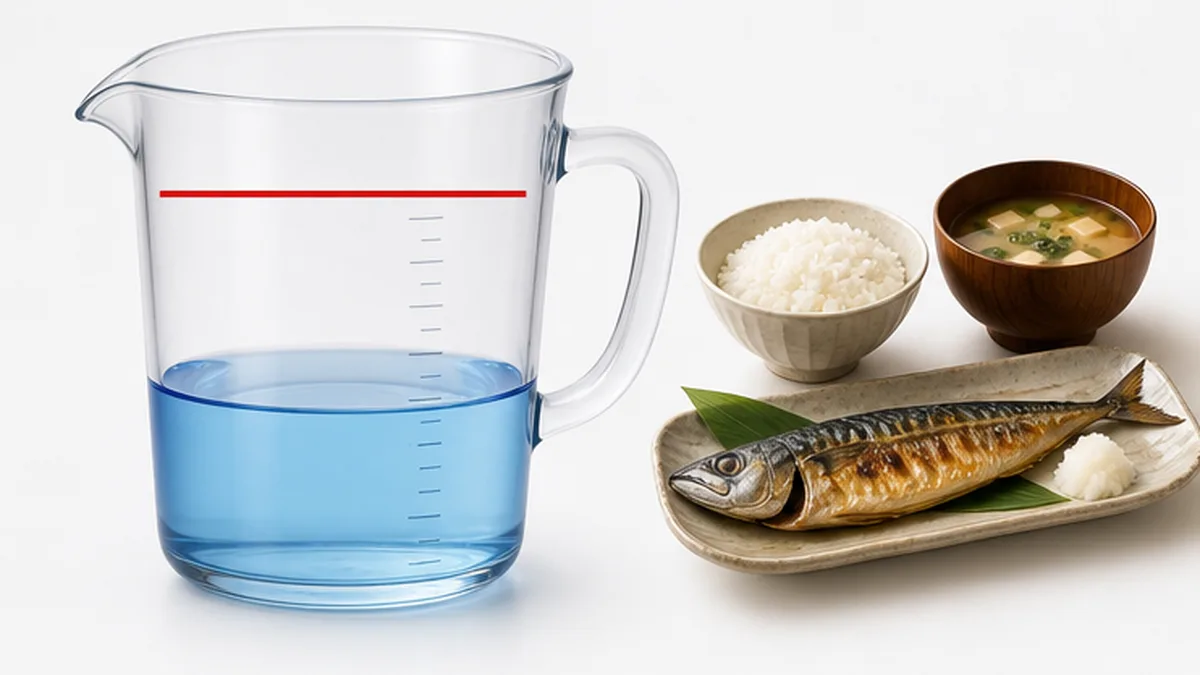
What needs caution is an unbalanced diet
- Eating high-mercury fish (tuna, alfonsino, etc.) almost every day
- Overconsumption of high-mercury fish during pregnancy or when pregnancy is possible
- Risk arises not from the average but from skewed amounts and frequency
Getting Along with Tuna — Intake Guidelines during Pregnancy
In 2005, Japan's Ministry of Health, Labour and Welfare published its advisory on fish consumption and mercury for pregnant women (revised in June 2010), giving intake guidelines for fish with relatively high mercury levels. The base unit is about 80 g per serving — one serving of sashimi or one cut of fillet.
| Guideline (pregnant women) | Fish and seafood covered |
|---|---|
| Up to once a week (about 80 g) | Bluefin tuna, bigeye tuna, alfonsino, swordfish, Baird's beaked whale, sperm whale, Ezo-bai whelk (Etchu baigai) |
| Up to twice a week (about 160 g total) | Southern bluefin tuna, striped marlin, yellowback seabream, gnomefish, hilgendorf saucord, blue shark, Dall's porpoise |
| No special caution needed | Yellowfin tuna, albacore, young bluefin (meji), canned tuna, salmon, horse mackerel, mackerel, sardine, saury, sea bream, yellowtail, skipjack, etc. |
The important point is that these guidelines apply only to those who are pregnant or may be pregnant. Adults and children in general need no special caution as long as they eat a balanced diet. Moreover, exceeding the guideline in a given week is not an immediate problem — the advisory explains that you can simply even things out by eating less the following week.
What about Breastfeeding Mothers and Children?
The advisory covers only those who are pregnant or may become pregnant. The ministry's Q&A notes that only a tiny fraction of methylmercury passes into breast milk, so no special restrictions are set for breastfeeding mothers or small children. Nor is mercury advice unique to Japan: in the United States, the FDA (Food and Drug Administration) and EPA (Environmental Protection Agency) advise pregnant women and others to eat two to three servings of low-mercury fish per week while avoiding a few high-mercury species such as swordfish and shark. "Do eat fish — but choose the species" is the shared direction worldwide.
Don't Give Up the Benefits of Eating Fish
What must not be forgotten is that fish is an especially important food during pregnancy. The DHA and EPA (omega-3 fatty acids) abundant in fish support fetal brain and nervous-system development, and fish is also a source of high-quality protein, calcium, and vitamin D. The health ministry emphasizes making the most of the benefits of eating fish; avoiding fish altogether out of fear of mercury is a nutritional loss. The smart approach is to center your diet on low-mercury fish and spread your choices across many species. Incidentally, on the topic of fish and chemical substances, research on the human health effects of microplastics has also been advancing in recent years.
Picture a concrete week: grilled salmon on Monday, fried horse mackerel on Wednesday, one serving of bluefin sashimi on Friday, and simmered mackerel plus a tuna salad on the weekend. This menu stays comfortably within the guidelines while delivering plenty of DHA, EPA, and protein. In short, "a wide variety of fish, none in excess" is itself the mercury countermeasure. The traditional Japanese table, which has always rotated through many kinds of fish, turns out to make excellent sense for both nutrition and risk diversification.
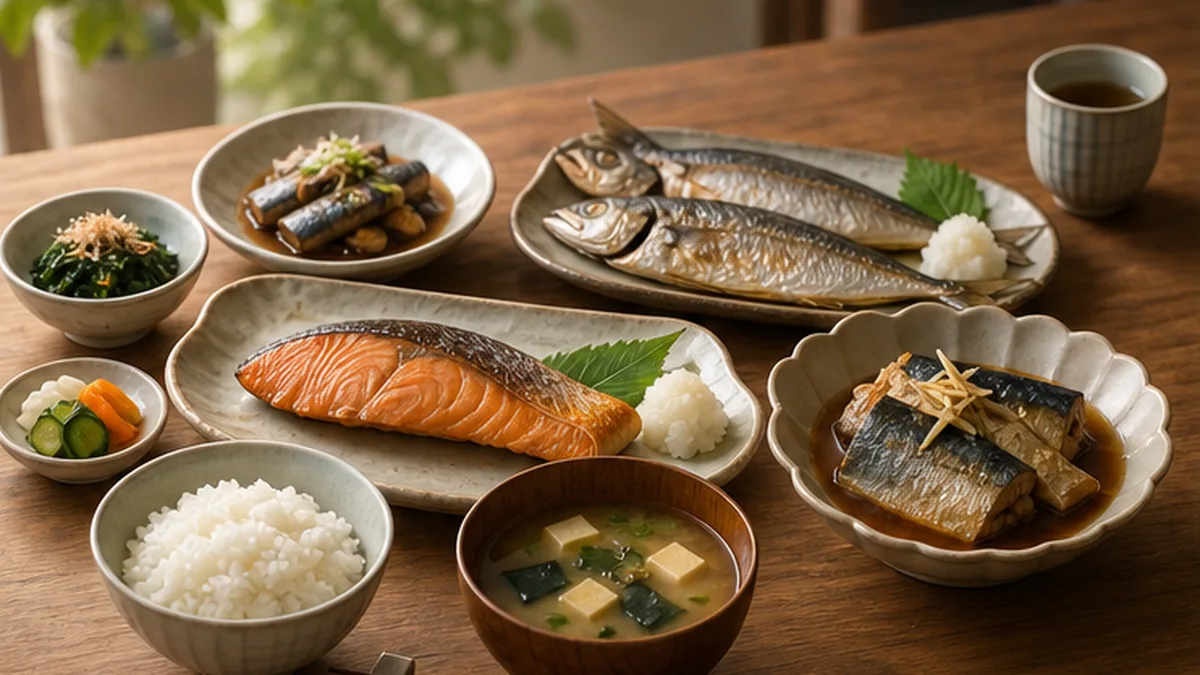
Smart fish-eating habits you can start today
- Rotate among oily fish, white fish, salmon, and others instead of fixating on one species
- During pregnancy, remember: bluefin, bigeye, alfonsino, and swordfish — up to 80 g once a week
- Canned tuna (mainly yellowfin/albacore), salmon, horse mackerel, and sardines are fine as usual
- If you overdo it one week, don't panic — just even out the amount the next week
The Lessons of Minamata Disease — Never Again
No discussion of mercury in fish can avoid Minamata disease — one of the world's most serious methylmercury poisoning incidents, caused by contamination on a scale utterly different from ordinary biomagnification in the sea.
Twelve Years from Official Recognition to the Government's Conclusion
On May 1, 1956, an outbreak of an unexplained central nervous system disease was reported to the public health center in Minamata City, Kumamoto Prefecture — the official recognition of Minamata disease. The cause was wastewater containing methylmercury compounds, generated in the acetaldehyde production process at the Minamata factory of Shin Nippon Chisso Hiryo (later Chisso Corporation), discharged continuously into Minamata Bay. Seafood in the bay became highly contaminated, and the fishing families who ate it daily developed severe neurological symptoms including sensory disturbance, ataxia, and constriction of the visual field.
Yet it was not until September 1968 — twelve years after official recognition — that the national government announced its unified conclusion that the cause was "methylmercury compounds generated in the acetaldehyde acetic acid facilities of the Chisso Minamata factory." Throughout those years the wastewater kept flowing, damage spread along the Shiranui Sea coast, and a second outbreak — Niigata Minamata disease (officially recognized in 1965) — occurred along the Agano River in Niigata Prefecture, caused by wastewater from a Showa Denko plant.
Although Chisso knew by 1959 that its factory wastewater was the cause, it continued to discharge it, and the number of patients continued to grow.
— Kumamoto Prefecture, "The Outbreak and Symptoms of Minamata Disease"

The Long Road to Restoring the Sea
Restoring the contaminated bay also took many years. Kumamoto Prefecture carried out a major remediation project, dredging the heavily mercury-laden sediments and reclaiming them behind containment, while a partition net was installed to keep contaminated fish from leaving the bay and seafood was monitored continuously. Only after mercury levels in the bay's seafood were repeatedly confirmed safe was the partition net finally removed — in 1997, more than 40 years after official recognition. Today Minamata Bay is once again a rich sea full of fish and serves as a site for environmental education. How much time and money it takes to win back a broken sea — the story of Minamata Bay's restoration itself testifies to the value of never causing pollution in the first place.
Three Lessons Left by Minamata Disease
- "Do not wait for complete scientific proof before acting" — damage kept spreading while the cause was being confirmed. Minamata showed the world the importance of acting preventively at the stage of suspicion
- The importance of environmental monitoring and disclosure — continuous monitoring of the sea and its fish, with openly shared data, is essential (this lesson lives on in today's marine monitoring of ALPS treated water)
- Harm concentrates on the most vulnerable — fishing families and unborn children (fetal Minamata disease), those least able to raise their voices, suffered most severely
It bears repeating that Minamata disease was an exceptional event caused by extraordinarily concentrated industrial contamination: eating fish sold in today's markets cannot cause Minamata disease. Japan's Food Safety Commission states this clearly.
The Minamata Convention — A Global Framework to Reduce Mercury
Born from the resolve that the tragedy of Minamata must never be repeated anywhere in the world, the Minamata Convention on Mercury was adopted in October 2013 at a diplomatic conference held in Kumamoto City and Minamata City, and entered into force on August 16, 2017. It is extraordinary for an international treaty to bear the name of a Japanese place — the site of a pollution disease — reflecting a strong will to turn the affected community's experience into a lesson for all humanity.
What the Convention Requires
- Ban on new mercury mining — phasing out the extraction of new mercury from the ground
- Regulation of mercury-added products — phase-out of designated products such as thermometers, blood-pressure meters, batteries, and fluorescent lamps, including their manufacture, import, and export
- Measures on artisanal and small-scale gold mining (ASGM) — requiring national action plans to reduce the largest emission source
- Reduction of air emissions — requiring best available techniques at major sources such as coal-fired power plants
- Sound management of mercury waste — mandating environmentally sound storage and disposal
More than 140 countries and regions, including Japan, are parties to the convention, which functions as the first framework to manage the entire life cycle of mercury — from mining through use to disposal — under international control. The parties hold regular Conferences of the Parties (COP) to expand the scope of regulation and review implementation, so the convention is not "done once signed" but designed to grow with scientific knowledge. Ahead of the convention's adoption, Japan enacted domestic legislation (the Act on Preventing Environmental Pollution of Mercury) and has pursued measures on mercury-added products and waste management that exceed the convention's requirements.
Japan's Role and Continuing Research
Japan led the treaty negotiations and continues to provide technical cooperation for mercury control in developing countries. The National Institute for Minamata Disease (NIMD) in Minamata City serves as the national research institution on the health effects and environmental behavior of methylmercury, hosting joint research and training for scientists from around the world. The community once devastated by pollution has become a global hub for mercury research and countermeasures.
One more word about the meaning carried by the convention's name. The adoption conference was held in Kumamoto and Minamata, and delegates from around the world visited the communities affected by the disease. That representatives who had listened to survivors' testimony agreed to a treaty bearing the name "Minamata" was a symbolic moment: the lessons of industrial pollution became the shared inheritance of humanity. The long-held wish of Minamata patients and their families — that no one else in the world should ever suffer the same — bore fruit in the form of international law.

The convention's effects will appear slowly
Because atmospheric mercury keeps circulating, it takes a long time for mercury levels in the ocean and in fish to fall even after emissions are cut. The Minamata Convention is not about "making fish safer right now" — it is a long-term investment to make certain the next generation inherits a cleaner ocean.
Conclusion — Know the Facts, Eat Wisely
Trace mercury in seawater is transformed by microorganisms into methylmercury and concentrated 10,000–100,000-fold in the bodies of large fish through the food chain. Biomagnification is, in a sense, the strength of the ocean's ecological connections shown from their shadow side. Tuna and alfonsino carry more mercury precisely because they are large, long-lived fish standing at the top of the food chain.
At the same time, average mercury intake in Japan is only 30–40% of the tolerable level, and an ordinary diet gives little cause for worry. Only pregnant women need caution, and even then the rule is simple: bluefin, bigeye, alfonsino, and swordfish — up to 80 g once a week. Carrying the lessons of Minamata disease, the world is reducing mercury emissions under the Minamata Convention. Not fear, but knowledge and wise choices — that is the best way to live with the blessings of the sea.
The story of mercury in fish also teaches us that the health of the ocean circles back to our own. Mercury released into the air falls with the rain into the sea, passes through microbes and the food chain, and arrives at our tables. That long journey is proof that the atmosphere, the ocean, living creatures, and human beings form a single connected system. Keeping the ocean clean is not a distant environmental issue — it is the very act of protecting our own table, and our children's.
Summary of this article
- Mercury enters the ocean from both natural and human sources and circulates globally through the atmosphere (about 2,220 tonnes of anthropogenic emissions in 2015)
- Seafloor microbes convert inorganic mercury into methylmercury, which is concentrated up to 10,000–100,000 times seawater levels at the top of the food chain
- High-mercury fish are the "large, long-lived, high-on-the-food-chain" species — swordfish 0.969 ppm, bluefin tuna 0.723 ppm, alfonsino 0.684 ppm (Japanese national survey averages)
- Average mercury intake in Japan is about 30–40% of the tolerable weekly intake — no concern with a normal diet
- During pregnancy, limit bluefin, bigeye, alfonsino, and swordfish to 80 g once a week; yellowfin, albacore, canned tuna, salmon, horse mackerel, sardines, and others are fine as usual
- Under the Minamata Convention (in force since 2017), born from the lessons of Minamata disease, the world is managing the entire life cycle of mercury
References
- Ministry of Health, Labour and Welfare – Mercury in fish and seafood (advisory and Q&A)
- Ministry of Health, Labour and Welfare – Advisory on fish consumption and mercury for pregnant women (2010 revision)
- Food Safety Commission of Japan – Q&A on the risk assessment of methylmercury in seafood
- Ministry of Agriculture, Forestry and Fisheries – Japan's risk assessment of methylmercury (tolerable intake)
- Ministry of Agriculture, Forestry and Fisheries – Mercury intake in Japan
- Ministry of the Environment, Japan – The Minamata Convention (health and chemicals policy)
- National Institute for Minamata Disease – Minamata disease and mercury (history of the cause investigation)
- Kumamoto Prefecture – The outbreak and symptoms of Minamata disease
- UNEP (UN Environment Programme) – Global Mercury Assessment 2018
- Aichi Prefectural Institute of Public Health – Mercury content in fish and seafood (survey data by species)
* Ordered by reliability: government and academic institutions > peer-reviewed papers > specialist organizations > trusted media