⚡ In short
"Bottle-to-bottle" recycling turns used PET bottles back into new PET bottles. Japan's collection rate is 91.9% and its recycling rate 85.1%, both world-leading — yet the true bottle-to-bottle rate is still just 33.7%. Here's why sorting quality matters and how it curbs ocean plastic.
The PET bottle you finish today can become a brand-new PET bottle — if it's sorted correctly. This is called "bottle-to-bottle" horizontal recycling.
Japan's PET bottle collection rate stands at 91.9% and its recycling rate at 85.1%, far ahead of Europe (42.7%) and the United States (19.6%) — a world-leading level. Yet the share of collected bottles that actually become new bottles again, the true "bottle-to-bottle rate," is still only 33.7%, and the government has set a target of raising it to 50% by 2030. The gap between these two numbers — a collection rate above 90% and a bottle-to-bottle rate barely above 30% — points to exactly where Japan's recycling system needs to go next.
This article lays out how horizontal recycling works and what Japan's actual performance data shows, explains why sorting quality determines whether recycling succeeds, and connects the dots between this system and the fight against ocean plastic pollution — all grounded in primary sources.
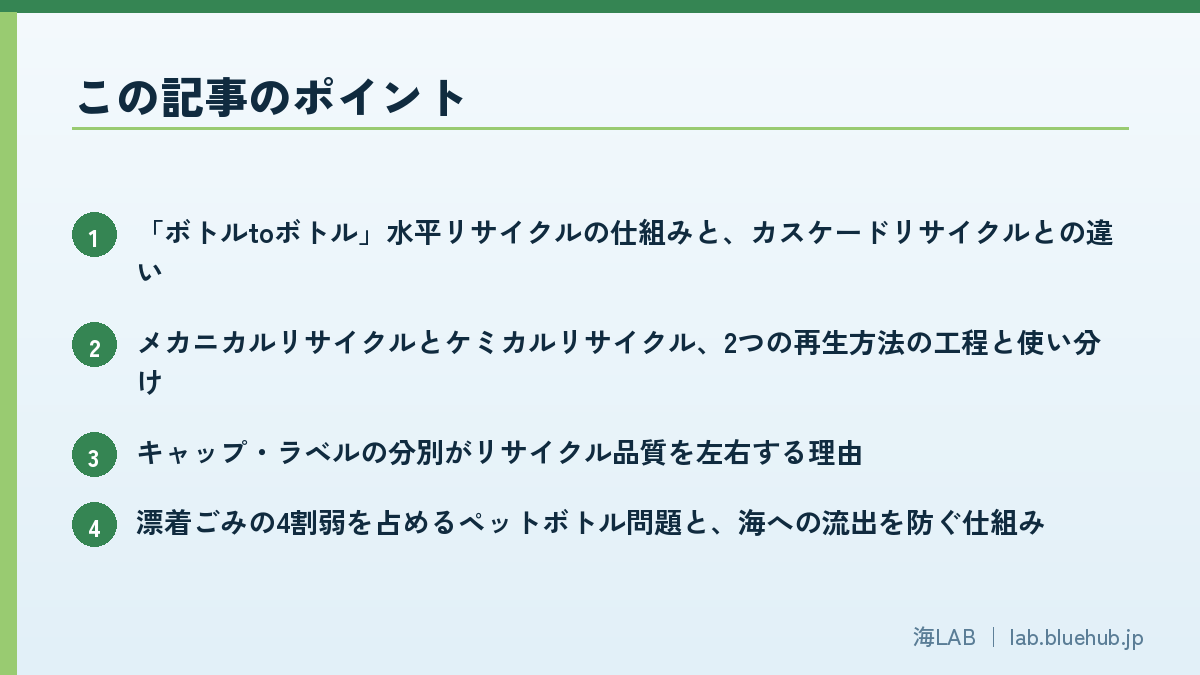
What you'll learn in this article
- How "bottle-to-bottle" horizontal recycling works, and how it differs from cascade recycling
- The two recycling methods — mechanical and chemical — and how each is used
- Why sorting caps and labels correctly determines recycling quality
- How PET bottles make up nearly 40% of beach litter, and how recycling curbs the flow into the ocean
- What beverage makers are doing, and what consumers can start doing today
- Why Japan achieves the world's highest collection rate, and what challenges remain
What Is "Bottle-to-Bottle" Horizontal Recycling?
"Bottle-to-bottle" refers to a system that collects and reprocesses used PET bottles and uses them again as raw material for new PET bottles. Because the material returns to the same type of product, it's also called "horizontal recycling."
Horizontal recycling vs. cascade recycling
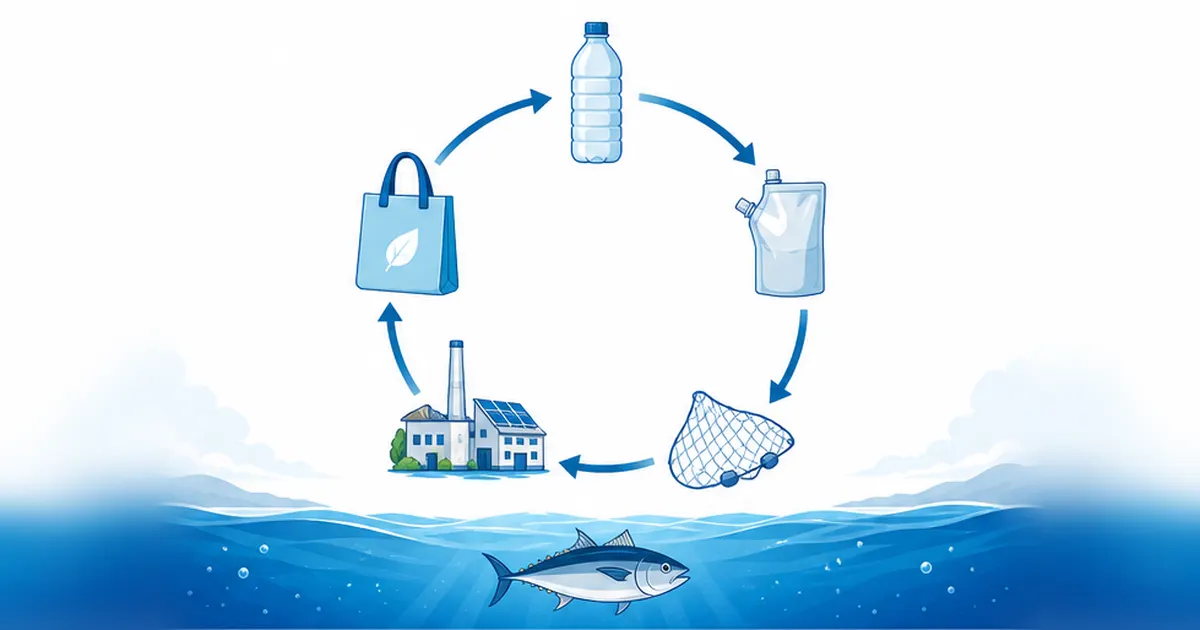
Recycling broadly follows one of two paths: "horizontal recycling," which turns a PET bottle back into a PET bottle, and "cascade recycling," which turns it into a different product such as an egg carton, fiber, or sheet material. Cascade recycling has somewhat looser quality requirements and is easier to adopt, but in most cases it's a one-way trip that ends in incineration or landfill. Horizontal recycling can return material to the same bottle specification again and again, so in principle it can keep resources circulating almost indefinitely — that's the key difference.
- Horizontal recycling: PET bottle → PET bottle (reused for the same purpose, easy to keep circulating repeatedly)
- Cascade recycling: PET bottle → egg cartons, fiber, sheet material, etc. (reused for a different purpose, usually just once)
Why PET resin can be recycled "again and again"
PET (polyethylene terephthalate) is a thermoplastic resin — it softens when heated and hardens again as it cools. That property is what lets it go through crushing, melting, and remolding repeatedly while largely keeping its basic material structure. Heat and UV exposure do shorten its molecular chains over time, gradually lowering quality, but careful washing and purification can keep it at a quality that withstands repeated regeneration. This ability to be melted down and remade over and over is the material property that makes bottle-to-bottle recycling possible in the first place.
Why bottle-to-bottle recycling matters
- It reduces the amount of new fossil-based raw material (virgin PET resin) needed
- It's said to lower CO₂ emissions during manufacturing compared with virgin resin
- Material can be circulated repeatedly as the same type of container, extending how many times a resource gets used
- It reduces the total volume of waste sent to incineration or landfill, easing pressure on final disposal sites
Identification marks help with sorting
A PET bottle's body carries a "PET" identification mark, and its cap and label carry their own material marks. This labeling is required under Japan's Containers and Packaging Recycling Act specifically so consumers can sort correctly. Getting into the habit of checking these marks is a good way to stay aware that the body, cap, and label are different materials — and that awareness leads to correct sorting.
Not all plastics can be recycled the same way
Bottle-to-bottle recycling works well for PET bottles because PET is a single material and Japan has a nationwide sorted-collection system in place. Containers made of multiple combined resins, or colored, multi-layer plastic products, are much harder to horizontally recycle in the same way. PET bottle-to-bottle recycling is often called the "star pupil" of recycling precisely because it has both a simple material and the social infrastructure to match.
Japan's PET Bottle Recycling Performance Data
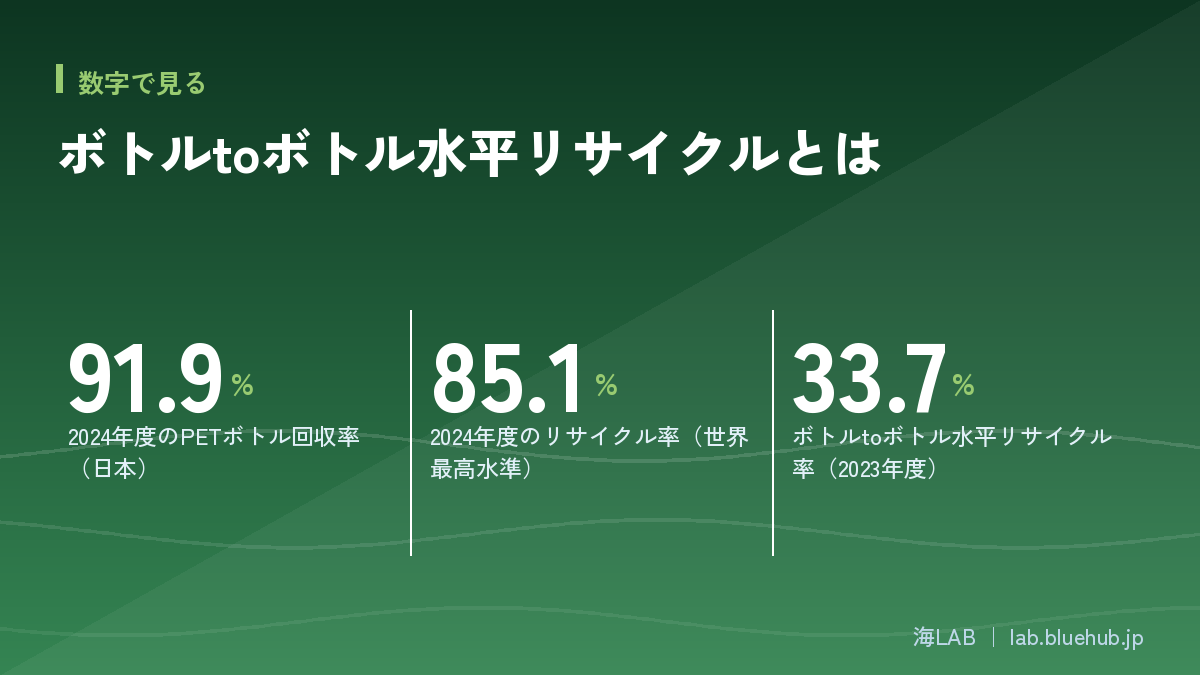
According to the annual report from the Council for PET Bottle Recycling, Japan's PET bottle collection rate reached 91.9% in fiscal 2024, with a recycling rate of 85.1%. That meets the council's own target of "maintaining a recycling rate above 85%."
"Collection rate" vs. "recycling rate": what's the difference?
These two figures are often confused, but they mean different things. The collection rate measures "the share of PET bottles put on the market that are collected as a resource." The recycling rate measures "the share of collected bottles that are actually reprocessed into some kind of product material." In other words, if some collected bottles end up discarded rather than reprocessed — due to contamination or poor quality — a gap opens up between the two figures. Both are at world-leading levels in Japan, but neither is at 100%, which is exactly where the remaining room for improvement lies.
Lightweighting and the trend in the bottle-to-bottle rate
According to the council, the fiscal 2024 lightweighting rate (versus fiscal 2004) reached 28.1%, also meeting the target of "25% or more lightweighting." Making bottles thinner and lighter reduces the amount of resin used in manufacturing in the first place, and that effort is proceeding in parallel with collection. Meanwhile, the share of collected used PET bottles that are actually reprocessed into new PET bottles — the true "bottle-to-bottle horizontal recycling rate" — was still only about 33.7% as of fiscal 2023. The government has set a target of raising that figure to 50% by 2030, and it also aims to raise the overall resource collection rate for used PET bottles to 95% by 2030 (it stood at 94% in 2023).
This gap — a collection rate above 90% but a bottle-to-bottle rate still in the low 30s — means a large share of collected bottles are being routed into cascade recycling for other uses, such as fiber or sheet material. Cascade recycling isn't a bad thing in itself, but from the standpoint of keeping resources circulating repeatedly, raising the horizontal recycling share delivers a bigger impact.
| Indicator | Current level | 2030 target |
|---|---|---|
| Collection rate | 91.9% (FY2024) | 95% resource collection rate |
| Recycling rate | 85.1% (FY2024) | Maintain 85%+ |
| Bottle-to-bottle rate | 33.7% (FY2023) | 50% |
| Lightweighting rate (vs. FY2004) | 28.1% (FY2024) | Maintain 25%+ |
Twenty years of accumulated improvement
Fiscal 2004 was chosen as the baseline year for lightweighting because that's roughly when beverage makers began seriously pursuing thinner, lighter bottles. Using less resin for the same volume of content cuts both resource use and CO₂ emissions at the manufacturing stage. Building out collection and recycling systems and designing lighter bottles look like separate efforts, but both point in the same direction: using less resource per bottle. Reaching a 28.1% lightweighting rate and a 91.9% collection rate by fiscal 2024 reflects twenty years of accumulated progress across regulation, technology, and day-to-day operations.
The industry's own data collection behind these numbers
These figures come not just from government statistics but from the Council for PET Bottle Recycling, a body that the beverage and packaging industry itself participates in and that compiles and publishes the numbers every year. Continuously gathering data across the whole chain — from collection volumes to shipment volumes to reprocessing volumes — and publishing progress against targets through a voluntary action plan is one of the distinctive features of Japan's recycling system: the industry holds itself accountable for the numbers rather than relying on regulation alone.
One note: the "PET bottle" figures discussed here refer specifically to "designated PET bottles" — those used for soft drinks, soy sauce, alcoholic beverages, and similar products. Other PET containers with different specifications, such as egg cartons or food trays, are tracked separately even though they're made of the same PET resin.
How Recycling Works: Two Methods, Mechanical and Chemical
Turning collected PET bottles back into raw material for new bottles broadly involves two methods: "mechanical recycling" and "chemical recycling." Both ultimately produce bottle-grade raw material, but they differ in process and in what kind of bottle they can handle.
The mechanical recycling process
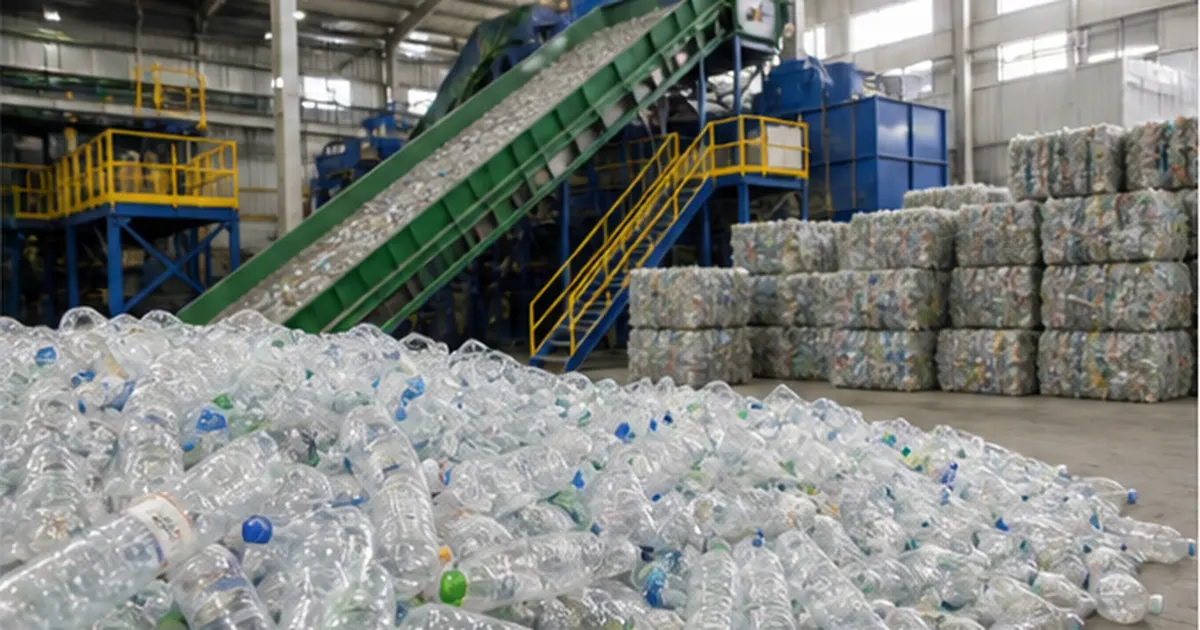
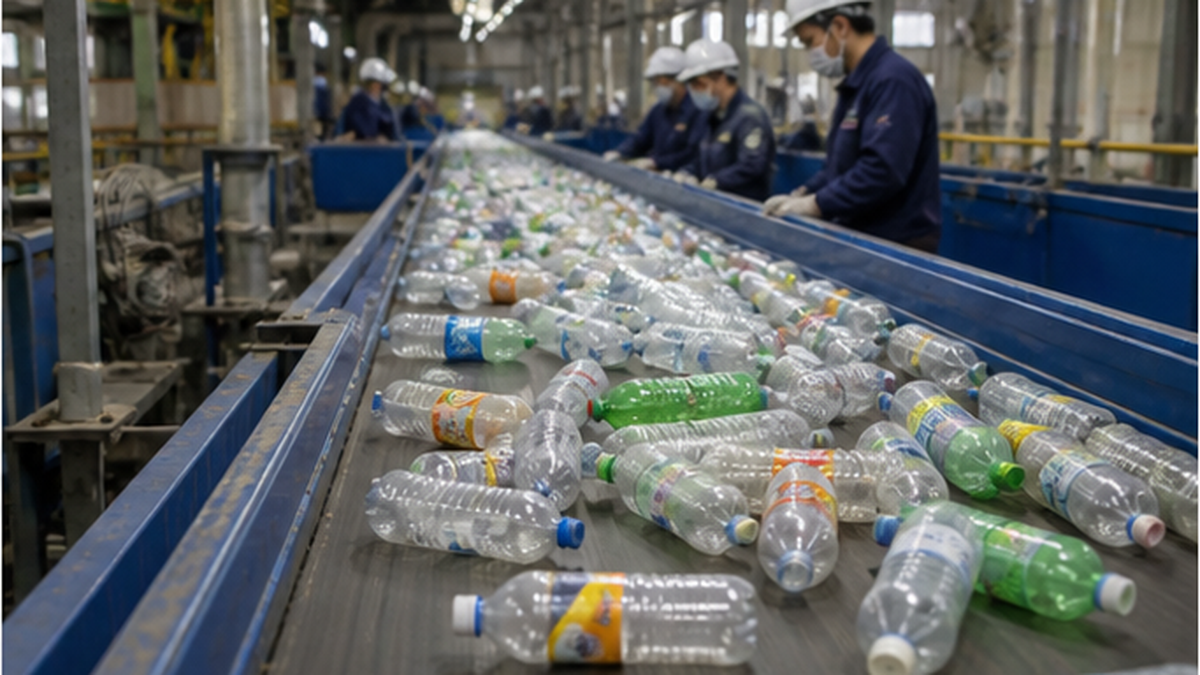
Mechanical recycling produces recycled pellets using only physical processing, without chemical breakdown. Collected bottles first go through sorting to remove leftover cap and label material along with other contaminants, then get shredded into fine flakes. Next comes high-temperature washing and decontamination to remove any remaining dirt and impurities, followed by drying and pelletizing. The process is simple and keeps costs down, but it only works with clean, well-sorted used PET that has little contamination.
The chemical recycling process
Chemical recycling chemically breaks PET resin down into intermediate raw materials (monomers) and then re-polymerizes them into new PET resin. Because the breakdown and purification steps remove even trace impurities, this method can turn colored bottles or bottles with some contamination — which mechanical recycling struggles to handle — into bottle-grade material as pure as virgin PET. The tradeoff is that the equipment investment and energy costs for chemical breakdown tend to run higher than mechanical recycling.
How the two methods are used
- Mechanical recycling: best for clean, mostly clear, well-sorted bottles. Low cost, but strict quality requirements
- Chemical recycling: can handle colored or contaminated bottles and produces virgin-equivalent quality, but at a higher equipment cost
- In practice, facilities route clean bottles to mechanical recycling and everything else to chemical recycling, lifting the overall recovery rate
Safety standards for food-contact use
Reusing recycled PET for a container that touches food directly, like a beverage bottle, requires a stricter safety assessment than ordinary recycling. Japan's Food Safety Commission conducted a food health impact assessment of PET-based packaging regenerated through chemical breakdown, referencing guidelines on recycled plastics from the US Food and Drug Administration (FDA) and Germany's Federal Institute for Risk Assessment (BfR), among others, and concluded that testing of collected PET quality, regenerated PET quality, and surrogate contaminant removal turned up no safety concerns. In parallel, a November 30, 2023 revision to Japan's Food Sanitation Act positive list incorporated physical regeneration processes for PET and PS, and a set of guidelines on the use of recycled materials was issued on March 28, 2024. It's this backing — proof that the material can safely go back into food-contact use again and again — that makes bottle-to-bottle recycling practical in the first place.
Which method is used depends on the quality going in
At actual recycling facilities, staff decide whether a batch of collected bottles goes through mechanical or chemical recycling based on its condition. Clear, mostly contaminant-free bottles with caps and labels properly removed tend to go through mechanical recycling, which keeps processing costs down. Colored bottles, or bottles showing some contamination or degradation, go through chemical recycling, which chemically strips out impurities and brings the material up to virgin-equivalent quality. In other words, the quality of a bottle at the moment a consumer puts it out for collection determines which recycling route it takes afterward — and how much cost and energy go into regenerating it.
In recent years, "hybrid" recycling setups that combine both methods have started to appear. These first use mechanical recycling to remove most of the contamination, then finish the job with a chemical recycling step to deal with the small amount of impurity that remains. This approach can produce high-quality recycled PET suitable for food-contact use while using less energy than either method alone.
Sorting Quality Determines Whether Recycling Succeeds
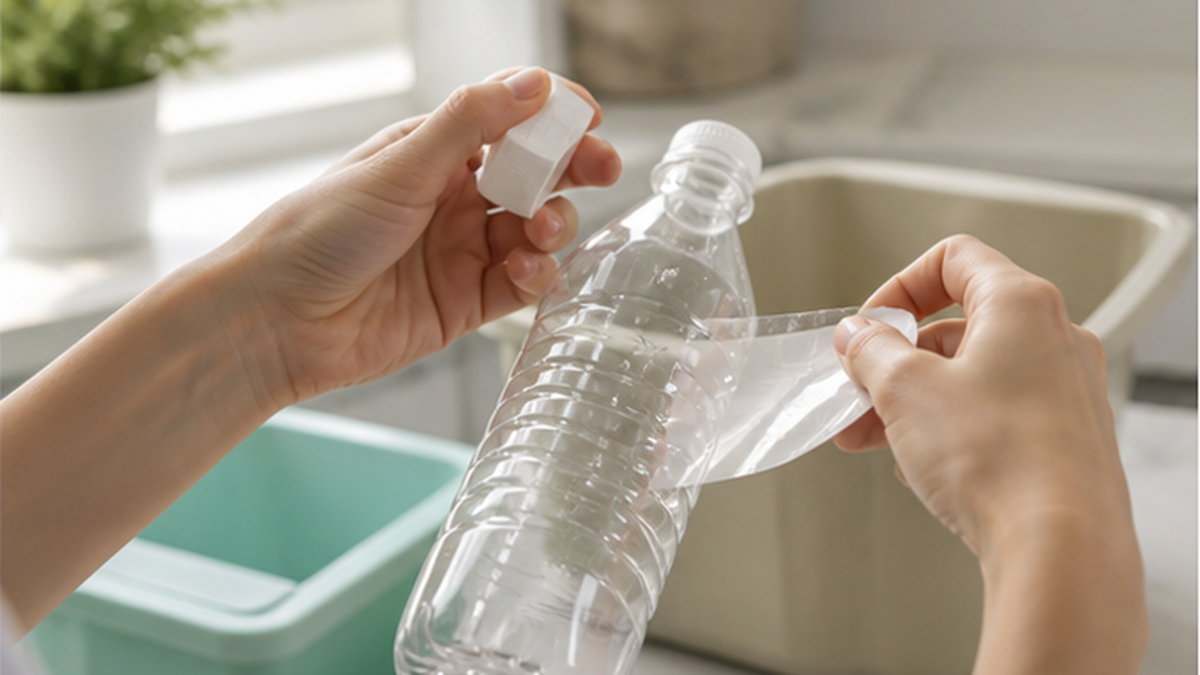
A single PET bottle is actually made of several different plastic materials. The body is PET (polyethylene terephthalate), but the cap is typically PE (polyethylene) or PP (polypropylene), and the label is often PS or PE — each a different material. When these stay mixed together, they get treated as contaminants during sorting, which lowers both the efficiency and the quality of recycling.
Why caps and labels need to be removed
- Mixing in a material different from the body (PET) lowers the quality of the recycled pellets, and it's more likely to fall outside what bottle-to-bottle recycling can use
- Putting bottles out with liquid still inside adds to the washing workload and increases how much manual sorting is needed on the line
- Because bottles have gotten lighter in recent years, the weight difference between the body and the cap/label has narrowed, making accurate sorting more important than ever
- Contaminants unrelated to the bottle itself, like cigarette butts or lighters, can stop the whole sorting line or cause defective batches
Rules vary from one municipality to the next
How caps and labels should be sorted varies by municipality, under category names like "plastic packaging," "other plastics," or "combustible waste." Some municipalities also specify whether bottles should be crushed or left as-is, a difference that comes down to how efficiently collection trucks can be loaded and how the local sorting facility processes material. Following local rules ultimately helps make the whole recycling system more efficient.
The basics of putting bottles out correctly
- Remove the cap and label (sort them separately as plastic resources or other plastic waste)
- Rinse out any leftover liquid
- Don't crush the bottle too much — put it out roughly as-is (recommended shape varies by municipality)
- Don't put in anything other than the bottle, such as cigarette butts or food scraps
The "unexpected contaminants" found on sorting lines
At recycling facility sorting lines, staff find more than just forgotten caps and labels — cigarette butts, disposable chopsticks, batteries, and even medical syringes turn up among items that have nothing to do with PET bottles at all. Automated sorting machines can't remove all of this, so many facilities rely on manual visual sorting as a final step. The more contamination there is, the more labor and cost sorting requires, which in turn drags down the share of bottles that can actually be recycled — the recycling rate itself.
Put another way: if households and offices consistently do just three things — remove the cap and label, rinse out the contents, and don't add anything but the bottle — the load on sorting lines drops sharply, and both the volume and the quality of what can be recycled go up. Sorting can feel like a hassle, but looked at across the whole recycling process, it's only a small piece of the work consumers are responsible for. Doing that small piece carefully shapes the efficiency of everything downstream.
Label designs built to peel off easily
Recent PET bottles are increasingly designed with perforations in the label, or clearly marked starting points for tearing, so consumers can peel them off quickly without much effort. Manufacturers are also developing labels that use less adhesive, or that exploit whether the label floats or sinks in water to make separation from the body easier. How easy a bottle is to sort depends not just on consumer awareness but on the design of the container itself.
The Link to Ocean Plastic: Why Recycling Protects the Sea
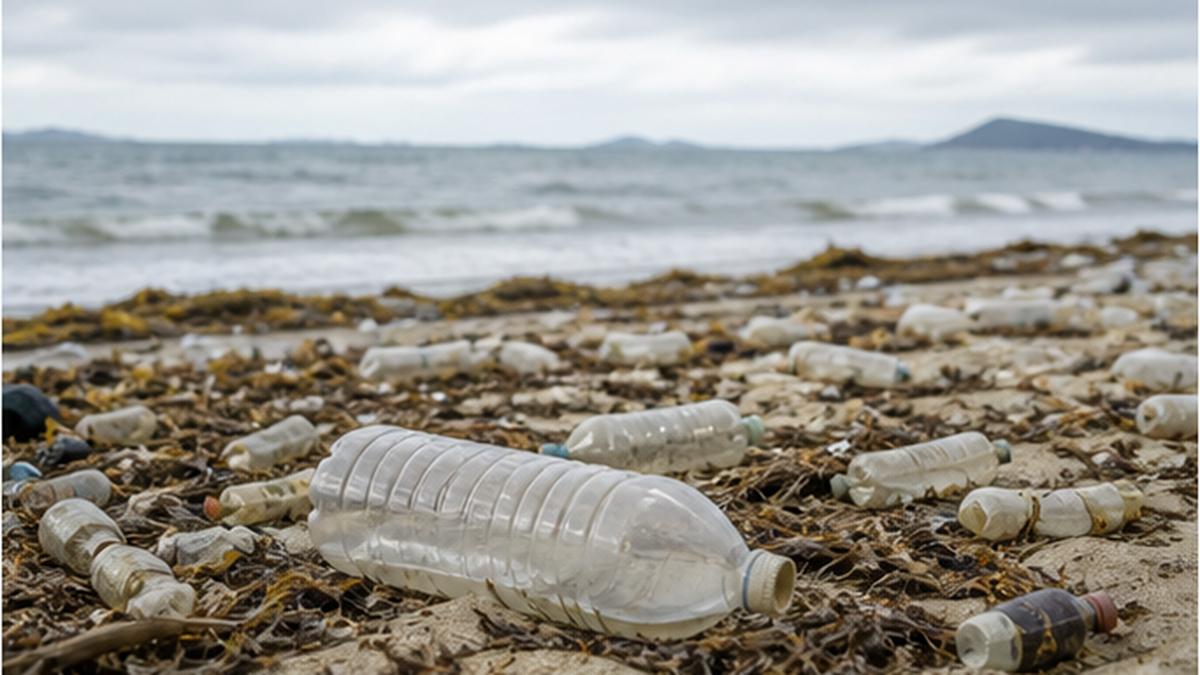
According to a Japanese Ministry of the Environment survey of beach litter at 10 sites nationwide, plastic items accounted for 65.8% of litter by count, and beverage bottles (PET bottles) alone made up 38.5% — the largest single category. In other words, more than one in every four pieces of plastic beach litter traces back to a PET bottle.
How bottles leak out through rivers at home
The same survey found that the country-of-origin breakdown of washed-up PET bottles varies widely by region. In Amami, over 80% were foreign-made, while in Nemuro, Hakodate, and Kunisaki, Japanese-made bottles made up 50-70% of what washed ashore. That points to a domestic pathway as well: bottles that weren't properly collected and recycled at home are leaking into the ocean via rivers. A typical route runs from littered trash left outdoors, or waste blown around while waiting for collection day, into gutters and rivers with the rain, and eventually out to sea.
Why a higher recycling rate means less plastic escaping
Reliably collecting used bottles as a resource and feeding them back into the horizontal recycling loop keeps that material circulating as something of value, rather than letting it leak into the natural environment as "waste." In regions where collection and sorting systems work well, bottles have far less chance of sitting outdoors for long stretches of time, which in turn lowers the risk of them ending up in rivers and the ocean. Bottle-to-bottle recycling isn't just a resource-saving or decarbonization measure — it's also a way of narrowing the "entry point" for ocean plastic pollution.
Containers and packaging waste from households accounts for roughly 20-30% of household waste by weight and about 60% by volume. Japan's Containers and Packaging Recycling Act, which came into full effect in 1997, aims to reduce waste and make effective use of resources by requiring separate collection and reprocessing of this waste.
― Japan's Ministry of the Environment, "What Is the Containers and Packaging Recycling Act"
Where uncollected bottles end up
A PET bottle that ends up in a river or the ocean doesn't just drift around intact forever. UV exposure and friction against waves and rocks gradually break it apart into ever-smaller fragments, eventually becoming "microplastic" — particles smaller than 5mm. Once microplastic forms, it's extremely difficult to recover, and it's known to be ingested by plankton and marine life, persisting in the ecosystem for a long time. Feeding used bottles back into the recycling loop as a resource is one of the few reliable ways to pull them back into circulation before they degrade to the point of no return.
What Beverage Makers Are Doing
To raise the bottle-to-bottle rate, major beverage makers are investing in facilities to collect and reprocess used PET bottles. Industry bodies — the Japan Soft Drink Association and the Council for PET Bottle Recycling — also support these efforts through the "PET Bottle Voluntary Action Plan," publishing progress against recycling targets across the industry every year.
Suntory is one of the companies that has expanded bottle-to-bottle horizontal recycling across its flagship products, alongside its watershed conservation work through the "Natural Water Sanctuaries" program. You can read more about how it works in Suntory Tennensui's Bottle-to-Bottle Horizontal Recycling and the Full Story of Its "Natural Water Sanctuaries".
See Suntory's initiativesRecycle: Promoting "Bottle-to-Bottle" Horizontal Recycling | SuntorySuntory's official page introducing its horizontal recycling efforts to turn used PET bottles back into new bottles.🔗 suntory.co.jpCoca-Cola is also rolling out bottles made with 100% recycled PET (recPET) across its major domestic brands, accelerating its own bottle-to-bottle efforts. Read more in What Is Coca-Cola's 100% Recycled PET Bottle? The Mechanics of Bottle-to-Bottle and How It Protects the Ocean.
See Coca-Cola's initiativesToward Sustainable Packaging | Environment | Coca-Cola (Japan) CompanyCoca-Cola Japan's official page on reducing packaging waste and greenhouse gas emissions and raising the share of recycled material used.🔗 coca-cola.comAsahi Soft Drinks, meanwhile, has rolled out "label-free bottles" that cut down on sorting work by eliminating the label altogether — an approach that raises sorting quality right at the entry point of the recycling chain. Read more in What Are Label-Free Bottles? Asahi's 90% Plastic Cut and Japan's 2026 Rules.
See Asahi Soft Drinks' label-free bottlesEasy & Eco, Thanks to No Label | Asahi Soft DrinksAsahi Soft Drinks' feature page on its label-free bottles, with photos showing eligible products and how the "nothing to peel off" design works.🔗 asahiinryo.co.jpWhat all these companies share is a focus on the same question: how do you get a collected, used bottle back into high-quality recycled raw material? Lightweighting bottles, designing materials that are easy to identify, and investing in recycling facilities are all, in the end, part of the same push to raise the bottle-to-bottle rate.
More collection boxes at stores
It's not just beverage makers — convenience store chains and vending machine operators are also expanding in-store collection boxes for used PET bottles. Layered on top of municipal resource collection, this growing network of store-front collection gives people more chances to put out a bottle they finished away from home, without having to carry it all the way back. More collection "entry points" ultimately raises the collection rate itself and gets bottles into the recycling loop earlier, while they're still in good condition.
An increasing number of companies now set explicit targets for the share of recycled PET in their bottles, as disclosed in their sustainability reports. Raising that share reduces reliance on new virgin resin, but it depends on a steady supply of good-quality used bottles being collected in the first place. A manufacturer's technology and equipment investment and society's collection infrastructure and consumer sorting habits aren't things that can succeed on their own — they work like two wheels on the same cart.
What Consumers Can Do
The bottle-to-bottle loop doesn't close on its own, no matter how much beverage makers or municipalities do. Removing the cap and label and rinsing out the contents before putting a bottle out as a resource is a step only the person who drank it can actually do.
Three things you can do today
- After finishing a bottle, remove the cap and label and put each out in its designated category
- Rinse it out lightly, and don't add contaminants like leftover liquid or cigarette butts
- Check your municipality's or workplace's sorting rules and put it out correctly as a resource (not mixed in with combustible waste)
Sorting at the office and on the go
Even people who sort carefully at home often throw bottles into office or street-side collection boxes near vending machines with the cap and label still on, or mixed in with other trash. Following the sorting categories marked on a collection box, and not mixing in non-bottle waste, matters just as much away from home as it does at home. When collection boxes at events or train stations get used without following the rules, the whole batch can end up treated as contaminated and excluded from horizontal recycling.
More products, like label-free bottles, are designed to cut down on sorting effort in the first place. Choosing them is another way to indirectly support higher recycling quality.
A few habits to build at home
- Keep a small container in the kitchen just for caps and labels, and build the habit of removing them the moment you finish a bottle
- Post your municipality's rules — crush or don't crush, for example — somewhere visible like the fridge, so the whole household follows the same routine
- When you finish a bottle away from home, bring it back when you can and sort it under your own household's rules
What workplaces and schools are doing
More collection boxes with clearly marked sorting categories are showing up near vending machines in offices and schools. Rather than relying on individual awareness alone, building a system at the workplace or school level — one where "putting it here means it gets sorted correctly" — is an effective way to raise recycling quality across society. Some municipalities and schools now include hands-on experience removing caps and labels, or visits to recycling plants, as part of environmental education, and building that habit early is part of what will raise the bottle-to-bottle rate over time.
Japan vs. the World: What Challenges Remain
According to statistics from the Council for PET Bottle Recycling, Japan's recycling rate reached 85.1% (FY2023), compared with 42.7% in Europe and 19.6% in the US (both 2021). Japan's collection rate reached 92.6% (FY2023), against 56.8% in Europe and 28.6% in the US (both 2021) — Japan maintains the world's highest levels on both counts.
| Region | Collection rate | Recycling rate |
|---|---|---|
| Japan (FY2023) | 92.6% | 85.1% |
| Europe (2021) | 56.8% | 42.7% |
| United States (2021) | 28.6% | 19.6% |
A high collection rate reflects a different kind of system
Behind this gap is a system unique to Japan: the Containers and Packaging Recycling Act requires households to sort their waste and municipalities to run separate collection. In the US and Europe, collection systems vary widely by region or state, and it's common to see a large gap in collection rates between states or countries that have adopted deposit-return systems — where a deposit is refunded when a container is returned — and those that haven't. Japan's near-nationwide sorted-collection network is what underpins its high collection rate.
From "quantity" to "quality"
Still, a high collection rate doesn't automatically translate into a high bottle-to-bottle rate. Some collected bottles are routed into cascade recycling for other uses, such as fiber or sheet material, which is why the bottle-to-bottle rate remains at 33.7%. The challenge going forward isn't just the "quantity" collected but the "quality" — how much of what's collected in good condition can be routed into horizontal recycling. Three factors will shape that quality: design choices that reduce colored bottles and composite materials, more thorough sorting that cuts down on contamination, and expanded chemical recycling capacity.
Challenges that remain
- The bottle-to-bottle rate (33.7%) still lags well behind the collection rate
- Colored bottles and composite-material containers tend to cost more to sort and reprocess
- Expanding investment in chemical recycling facilities is key to cutting reliance on fossil-based raw material
- Both consumer education to sharpen sorting accuracy and container designs that are easier to sort are needed
How this differs from deposit-return systems
Some countries and states in Europe and the US use a "deposit-return system," where a deposit added at purchase is refunded when the container is returned to a store or dedicated machine. It's an effective way to directly boost return rates, but it works differently from Japan's system, where municipalities run regular door-to-door collection of resource waste from every household. Japan has reached the world's highest collection rate through the breadth of its statutory sorted-collection network rather than a deposit-return approach — a distinction worth keeping in mind when comparing systems.
How this connects to reduce and reuse
Bottle-to-bottle recycling is a recycling effort, but recycling itself is only one part of the broader 3Rs — reduce, reuse, recycle. Lightweighting bottles falls under reduce (cutting down on what gets generated in the first place), while expanding the use of refillable personal bottles falls under reuse. Recycling is the last line of defense for turning waste that has already been generated back into a resource; ideally, reduce and reuse should come first to cut down on the volume of waste in the first place. Raising the bottle-to-bottle rate and expanding the use of personal bottles and refill products aren't competing efforts — both support the same goal of cutting resource consumption, just from different angles.
Conclusion: A Small Sorting Habit Protects the Sea
"Bottle-to-bottle" horizontal recycling is a system that turns used PET bottles back into new PET bottles, cutting the need for new fossil-based raw material and keeping resources circulating repeatedly. Japan's collection and recycling rates are world-leading, but its bottle-to-bottle rate is still only 33.7% — there's substantial room left to grow.
A 91.9% collection rate and an 85.1% recycling rate rest on the combined efforts of several different players: the legal framework, municipal collection networks, recycling facilities, beverage-maker investment, and sorting at home. If any one of these were missing, this level couldn't be sustained.
Removing the cap and label, rinsing it out, and putting it out correctly — that small extra step shapes the quality of sorting at recycling plants, which in turn helps cut down on PET bottles, which make up nearly 40% of beach litter. It takes both beverage makers' technology investment and each of our own sorting habits for resources to keep circulating without leaking into the ocean. Next time you pick up a PET bottle, it's worth remembering the sorting line waiting for it — and the new bottle it might one day become again.
References and sources
- Council for PET Bottle Recycling – Collection rate trends (statistical data)
- Council for PET Bottle Recycling – Comparison of recycling status in Japan, the US, and Europe
- Council for PET Bottle Recycling – Mechanical recycling (physical regeneration)
- Council for PET Bottle Recycling – PET Bottle Voluntary Action Plan 2025
- Ministry of the Environment, Japan – What is the Containers and Packaging Recycling Act
- Food Safety Commission of Japan – On the safety of recycled PET resin
- Ministry of the Environment, Japan – Nationwide survey of beach litter at 10 sites (FY2017)
- Mitsui Chemicals – What is chemical recycling? Benefits and challenges
- Suntory – Recycle: Promoting "bottle-to-bottle" horizontal recycling
※ Ordered by reliability: government/academic institutions > peer-reviewed research > specialized organizations > trusted media