⚡ The answer in 30 seconds
- Nori color fading is mainly caused by a lack of nutrients such as nitrogen in seawater, made worse by high water temperature and red tides.
- The guideline temperature to start rearing is about 23°C. If autumn water does not cool, seeding is delayed and harvests suffer.
- Domestic output has shrunk since its 1994 peak and fell to about 4.8 billion sheets in the 2022 season.
- Torn nori and offcuts are still edible. Using them up cuts food loss.
Nori is a crop grown in the sea. It is now suffering from "color fading," in which the seaweed turns pale because of rising water temperatures and a shortage of nutrients.
Output has declined over the long term and prices have risen. Drawing on public documents and news reports, this article sorts out the causes, the countermeasures, and the food-loss angle.
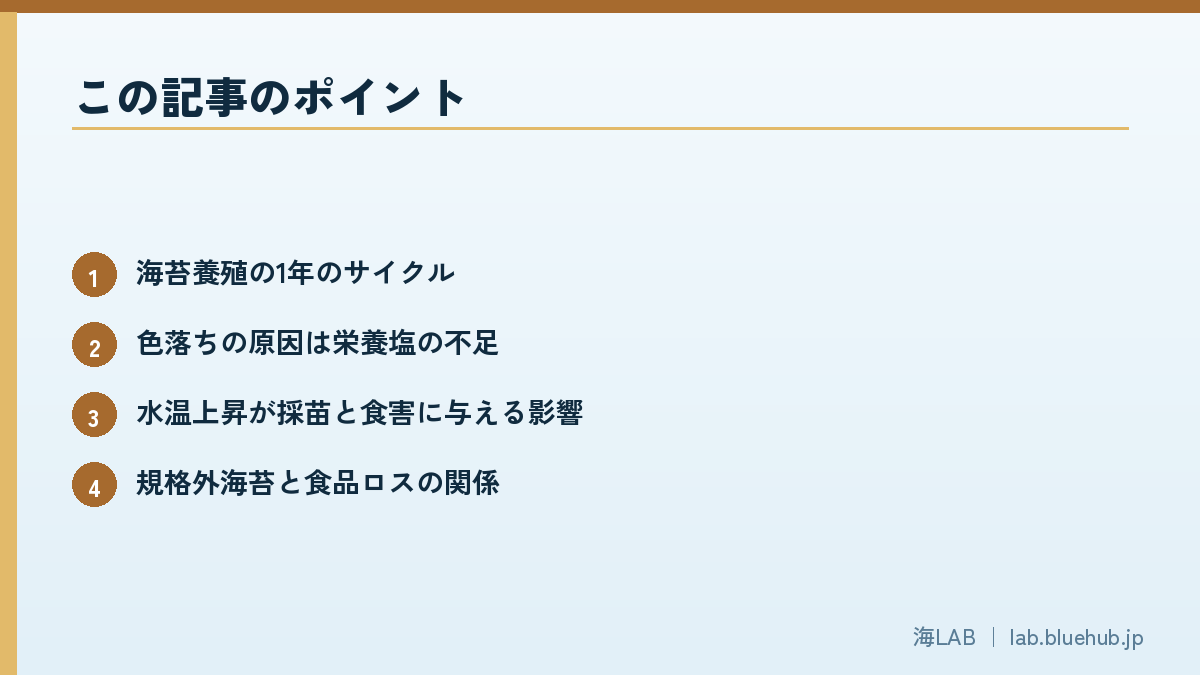
What you will learn in this article
- The yearly cycle of nori farming
- Color fading is caused by a lack of nutrients
- How warming affects seeding and fish grazing
- How substandard nori relates to food loss
- Ways to use every bit at home
When nori does not turn black: what is happening in the sea?
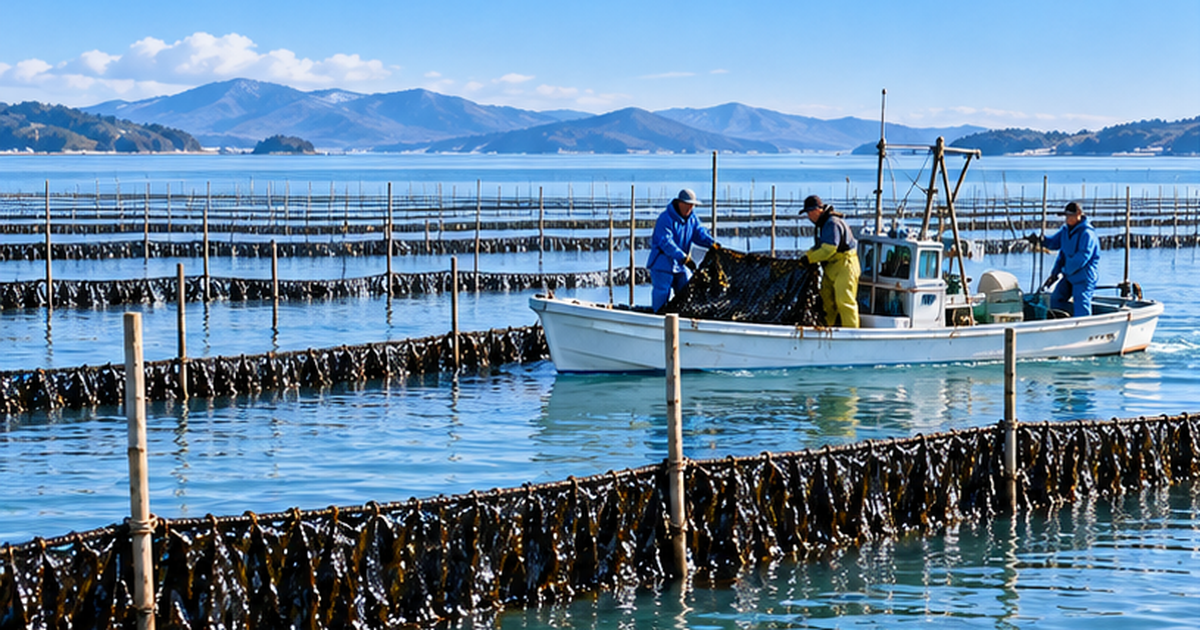
Nori, a staple of rice balls, hand-rolled sushi and miso soup, is actually a "farmed crop" grown in the sea. The main species is susabi-nori (Pyropia yezoensis). Spores are attached to nets in autumn, the nets grow in the sea through winter, and the blades are harvested and dried. In recent years this farming has been shaken badly by rising water temperatures and nutrient-poor seas.
A poor nori harvest shows up as "color fading." Nori that should be dark, close to black, turns yellow or brown. Pale nori loses aroma and taste, and its commercial grade drops.
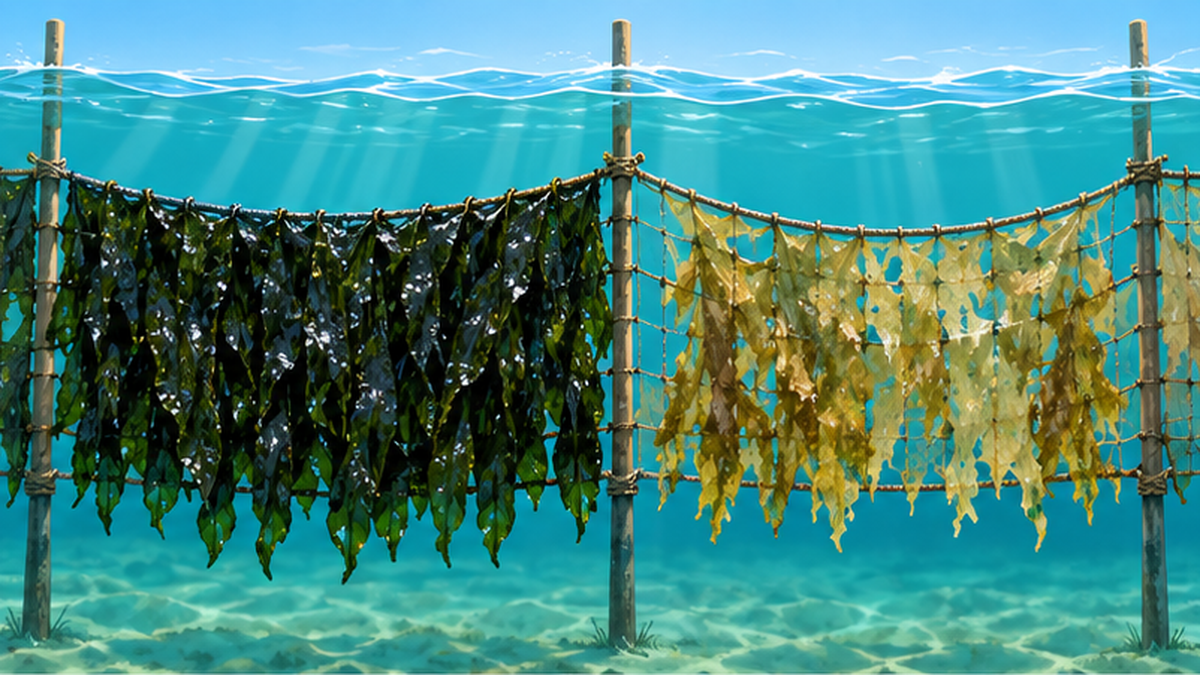
The yearly cycle of nori farming
Nori farming starts in autumn with "seeding" (saibyo). Spores released from thread-like seed stock (conchocelis) grown on oyster shells are attached to nets, the nets are set out in the sea, grown and harvested. Harvest is mainly from winter to spring; the picked blades are chopped fine, spread thin like paper and dried.
- Autumn (around Oct–Nov): seeding and early rearing. Spores are attached to nets and tiny sprouts are raised
- Winter (around Dec–Feb): main farming and harvest. Nori is picked repeatedly in nutrient-rich water
- Spring (around Mar–May): end of the season. Quality tends to fall as water warms and nutrients run low
Of these, the first stage, "seeding and early rearing," is now the phase most exposed to climate change.
Domestic nori output and prices in numbers
The long-term shrinkage of nori production is confirmed by several sources. The overseas fisheries outlet The Fish Site, citing Nikkei Asia, reports that Japan's nori harvest (wet weight) fell from a peak of about 480,000 tonnes in 1994 to about 288,000 tonnes in 2020.
| Year / season | Event / figure | Source type |
|---|---|---|
| 1994 | Peak of about 480,000 tonnes (wet weight) | The Fish Site (citing Nikkei Asia) |
| FY2019 | Domestic output of about 6.37 billion sheets; concern that warm seas lead to poor harvests | Nissyoku (report on the Osaka Nori Cooperative general meeting) |
| 2020 | About 6.5 billion sheets, below 7 billion for a third straight year | Nissyoku |
| 2022 season | About 4.8 billion sheets; first time below 5 billion in 52 years | The Fish Site (citing Nikkei Asia) |
| Same | Average price of 17.24 yen per sheet; above 17 yen for the first time in 40 years | Same |
In the 2022 season a red tide broke out in the Ariake Sea, the main production area. Reports say low rainfall and high water temperature lay behind it. River flow dropped, little nitrogen and phosphorus reached the sea, and the nori faded. An aging workforce and slow mechanization are also cited as challenges on the production side.
Key point
- The decline cannot be explained by a single cause. High water temperature, nutrient shortage, red tide, fish grazing and a shrinking workforce overlap.
- Higher prices are a sign that the poor harvest has reached household budgets.
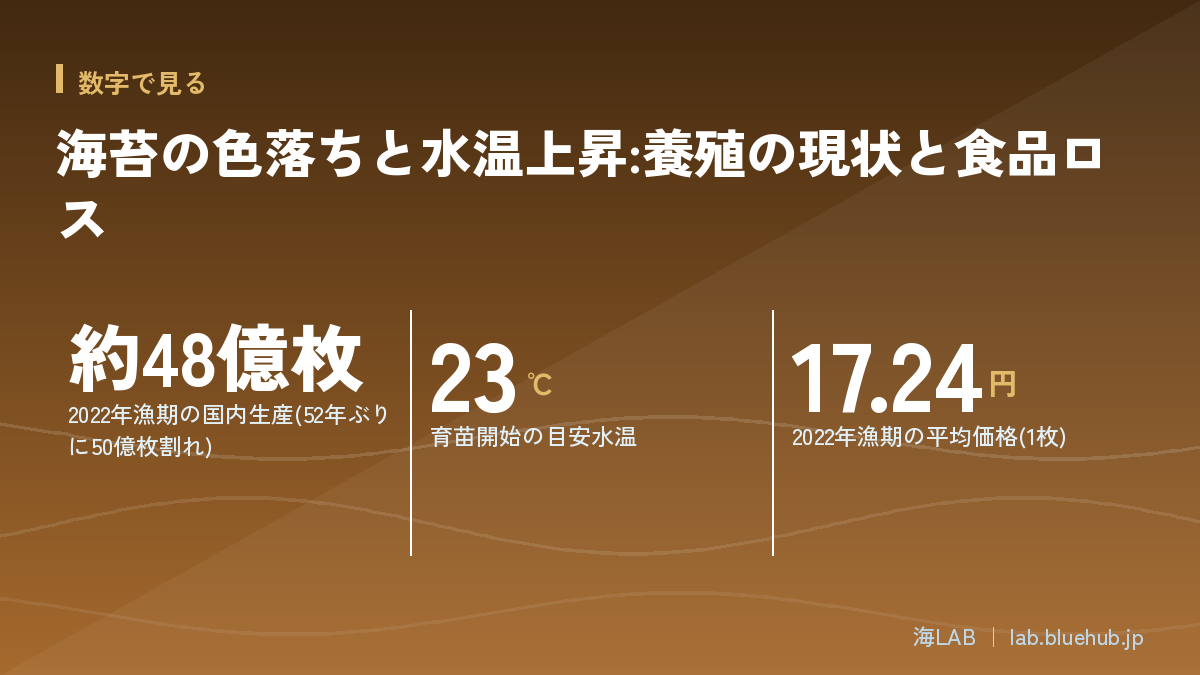
The head of the Osaka Nori Cooperative reportedly said at its general meeting in June 2026 that "last year's result was about 5.43 billion sheets." Because the report does not specify which season this refers to, we treat it only as a reference value.
How rising water temperature hits nori farming
The guideline seeding temperature is about 23°C
Nori seeding is done in autumn as the water begins to cool. Chiba Prefecture's nori bulletin gives 23°C as the guideline temperature to start rearing and says that judging the recovery of nutrients and the cooling trend is the key first point of the season. Miyagi Prefecture also starts setting nets only after confirming the temperature has fallen to 23°C or below.
A Kumamoto Prefecture document points out that in recent years water temperature has not fallen smoothly during the rearing period and sometimes even rises, which is one cause of later poor harvests.
Fish eat nori in warm seas
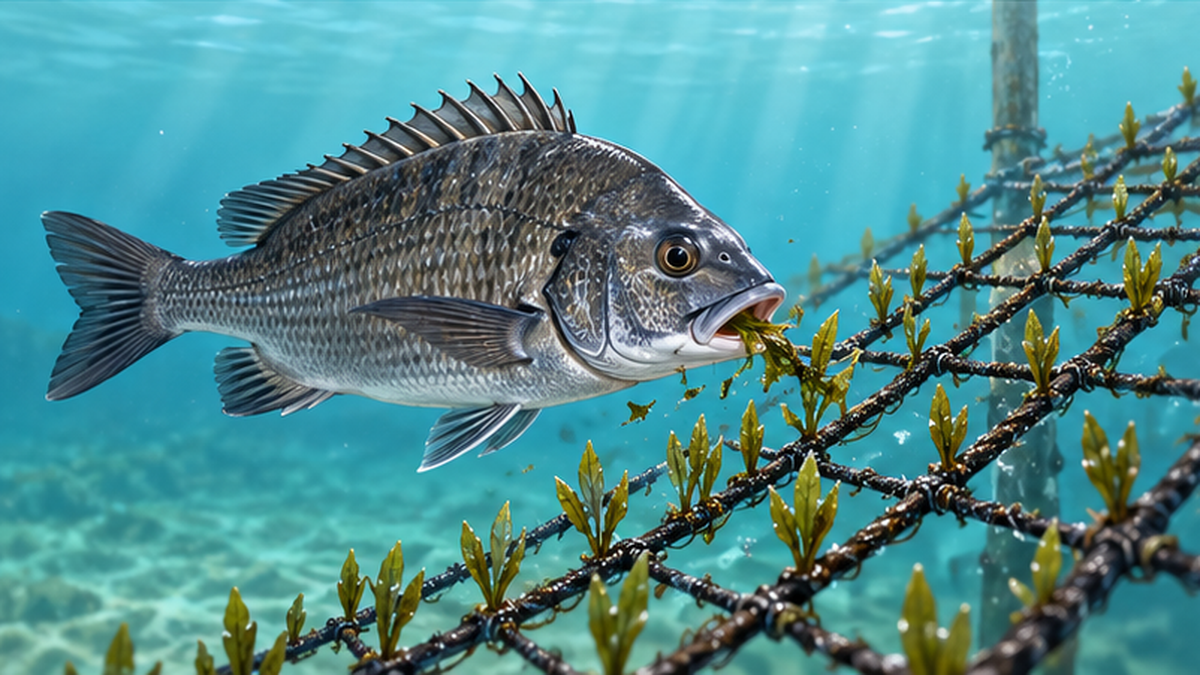
A March 2026 Yomiuri Shimbun report says that, according to the Fisheries Agency and others, the main cause of poor harvests is rising sea temperature. It also notes that in warm water fish such as black sea bream become active and eat nori sprouts (fish grazing).
Too cold is a problem too: research in Tohoku
Warming is not a one-way story. The KAKEN research project "Establishment of cold stress-resistant nori strains specialized for mariculture in Tohoku" looks for cold-tolerant strains against the background of production dropping in Tohoku because of cold seawater in early spring. That the trouble is the opposite depending on the region is what makes this problem hard.
Good to know
- Nori grows poorly when the water is either too warm or too cold. Breeding is being pursued in both directions: "heat-tolerant strains" and "cold-tolerant strains."
The real cause of color fading: a shortage of nutrients
The direct cause of color fading is a shortage of nutrients in seawater, especially nitrogen. Nori absorbs nitrogen and phosphorus from seawater to make its pigments. Miyagi Prefecture materials say that color holds when the three forms of nitrogen (nitrate, nitrite and ammonium combined) are at 5 µg-at/L or more, and tends to fade below 3 µg-at/L.
Why do nutrients run short?
- Less river water: with little rain, supply of nitrogen and phosphorus from rivers to the sea falls
- Competition with phytoplankton: when diatoms increase, they use up nutrients before the nori can
- High water temperature: red tides and phytoplankton blooms occur more easily
A Hyogo Prefecture research report says that color fading caused by a shortage of dissolved inorganic nitrogen (DIN) has become a major issue in recent years, and that rivers, sewage treatment plants and industrial effluent are important nitrogen sources for nearby fishing grounds.
| Period / place | Color fading observed | Source |
|---|---|---|
| Feb 2025, Ariake Sea (Fukuoka) | Confirmed at 18 survey points, 13 of them severe | Fukuoka Prefecture fisheries information |
| Mar 2025, Ariake Sea (Fukuoka) | Confirmed at all survey points: 10 severe, 5 moderate, 4 mild (water temperature below normal) | Same |
In the March 2025 case, water was cooler than normal yet color fading spread. This shows that the amount of nutrients, not only temperature, is decisive.
Caution
- "Cold water means safety" is not true. If nutrients are short, color fading occurs even in cold seas.
Substandard nori and food loss: what happens to faded nori?
In the processes before and after roasting, a certain amount of nori comes out misshapen, holed or unevenly colored. Faded nori also drops in grade and price. From a food-loss viewpoint, the pattern "edible but devalued because it does not meet the standard" is the same as with substandard vegetables.
On products made from nori offcuts, materials from the Kanto Regional Agricultural Administration Office of MAFF (FY2025 Green Strategy Student Challenge, Kanto Block) introduce the business research club of Chiba Prefectural Oyu High School, which is working on cutting food loss and revitalizing the community by developing and selling products made from nori offcuts. We could not confirm the product details or distribution, so we state only the fact that the initiative exists.
What you can do at home
- Eat it before it loses flavor to humidity: after opening, store it sealed with a desiccant
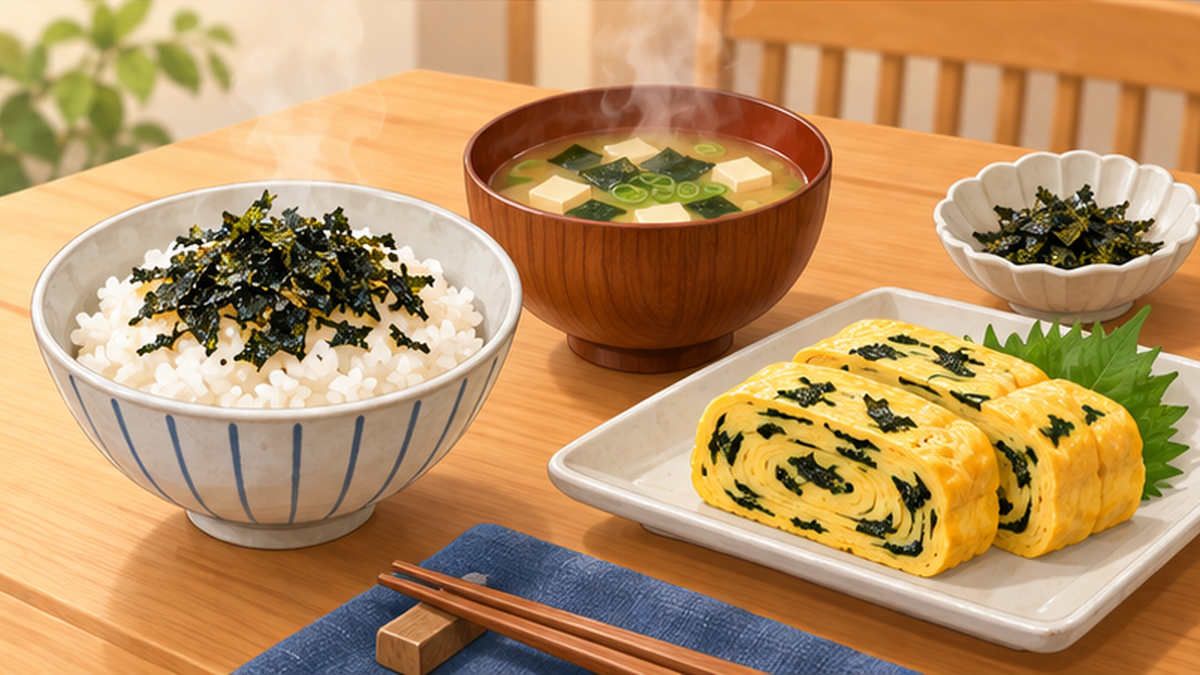
- Do not throw away torn nori or offcuts; use them as seasoning for furikake, tsukudani, soups and stir-fries
- Tear leftover roasted nori into small pieces, freeze it and use it like a seasoning
For food loss in seafood overall, see also Seafood food loss and Household food loss.
Producer measures: raise it earlier, stronger and more efficiently
Judging when to start seedling
Prefectural fisheries experiment stations frequently send producers nori bulletins with water temperature and nutrient measurements. The decision to wait until the water falls below 23°C before seeding is supported by this information.
Delivering nutrients to the sea
As the Hyogo Prefecture research report shows, rivers, sewage treatment plants and industrial effluent are important nitrogen sources for nearby grounds. How to balance cleaner water with delivering nutrients to the sea is a challenge for coastal water management.
Breeding better strains
The search for strains tolerant of heat and cold continues at research institutions. Besides the research project on cold-tolerant strains for Tohoku, breeding heat-tolerant strains is also considered a challenge.
For the spread of seaweed farming, see also Seaweed farming and recovery.
Summary of producer efforts
- Monitoring and sharing of water temperature and nutrients
- Judging when to start rearing
- Searching for heat- and cold-tolerant strains
- Reviewing nutrient management
Links between ocean warming and fisheries as a whole
Nori is not special. Rising sea temperature is changing the species and distribution of fish caught. We discuss this in Ocean warming and fisheries.
Seaweed absorbs carbon dioxide in the sea and is also a place where fish grow. Declining seaweed beds are a similar problem involving warming and grazing. A poor nori harvest can be called one "sensor" of environmental change in the sea.
Summary of this section
- Poor nori harvests are part of the effects of warming across fisheries as a whole.
- Seaweed problems let us feel changes in the sea close to home.
What we can do: how we eat and choose
- Understand why prices rose and use what you need with care
- Eat without waste, including torn, offcut and pale nori
- Take an interest in producing-area and season information (fishery cooperatives, prefectural announcements)
- Join activities that protect the sea, such as local beach cleanups and river conservation
Buying and supporting also supports the people who farm. We do not intend to recommend any specific product or company.
Summary
- The color of nori is the sea's health checkup. When the balance of temperature and nutrients breaks, the nori that reaches our tables changes too.
References and sources
- Chiba Prefecture Fisheries Research Center, Nori bulletin – guideline temperature of 23°C to start rearing, etc.
- Chiba Prefecture Fisheries Research Center, Nori bulletin (Jan 2018) – nutrient and temperature information
- Kumamoto Prefecture, Overview of nori farming – water temperature in the rearing period and poor harvests
- Miyagi Prefecture, Nori farming information – three-form nitrogen and color fading guideline
- Hyogo Prefectural Technology Center for Agriculture, Forestry and Fisheries, Fisheries technology research report – DIN shortage and nori color fading
- Fukuoka Prefecture, Ariake Sea fishing ground information – color fading observations
- The Fish Site: Japan suffers major nori slump – the poor 2022 season
- Nissyoku – report on the Osaka Nori Cooperative general meeting
- MAFF Kanto Regional Agricultural Administration Office, Green Strategy Student Challenge – product development with nori offcuts
- KAKEN, cold stress-resistant nori strains – breeding research for Tohoku
* Ordered by reliability: government and academic institutions > peer-reviewed papers > specialist organizations > reliable media