Right now, in the breath you just took, roughly one out of every two units of oxygen was created not by forests on land, but by tiny, invisible organisms in the ocean called phytoplankton. About half of Earth's oxygen is produced by the sea, most of it generated by microscopic algae drifting in the water and photosynthetic bacteria.
Phytoplankton are a collection of microorganisms only a few micrometers in size (a few hundredths of a millimeter). They are far too small to ever catch our eye in daily life. Yet the photosynthetic power generated by their total mass is greater than that of all the world's tropical rainforests combined, quietly supporting our very survival.
This article explains, based on primary sources from Japan's Ministry of the Environment, the Japan Meteorological Agency, JAMSTEC, NOAA, and others, how phytoplankton produce oxygen, why they are the "starting point" of the ocean food chain, and how a mechanism called the "biological pump" carries Earth's carbon to the deep sea. Let's also look at what global warming is bringing to these small protagonists.
What you'll learn in this article
- That roughly half of our breathing is supported by ocean phytoplankton invisible to the naked eye
- The identity of the key players driving the oxygen and carbon cycles — diatoms, coccolithophores, Prochlorococcus, and more
- That phytoplankton are the starting point of the ocean food chain, supporting fisheries and our dinner tables
- How the "biological pump" sinks carbon dioxide to the deep sea, regulating Earth's climate on scales of centuries to millennia
- How rising sea temperatures and stratification are changing the amount and distribution of phytoplankton worldwide
- Why protecting these tiny ocean organisms is directly tied to the stability of oxygen, food, and climate
What Is Phytoplankton? The "Invisible Forest" Drifting in the Sea
"Plankton" is a general term for organisms that can barely swim under their own power, instead drifting along with the flow of water. The word derives from the Greek for "that which drifts." Among these, those that carry out photosynthesis to create their own nutrients (organic matter) are called phytoplankton, while those that survive by eating them are called zooplankton.
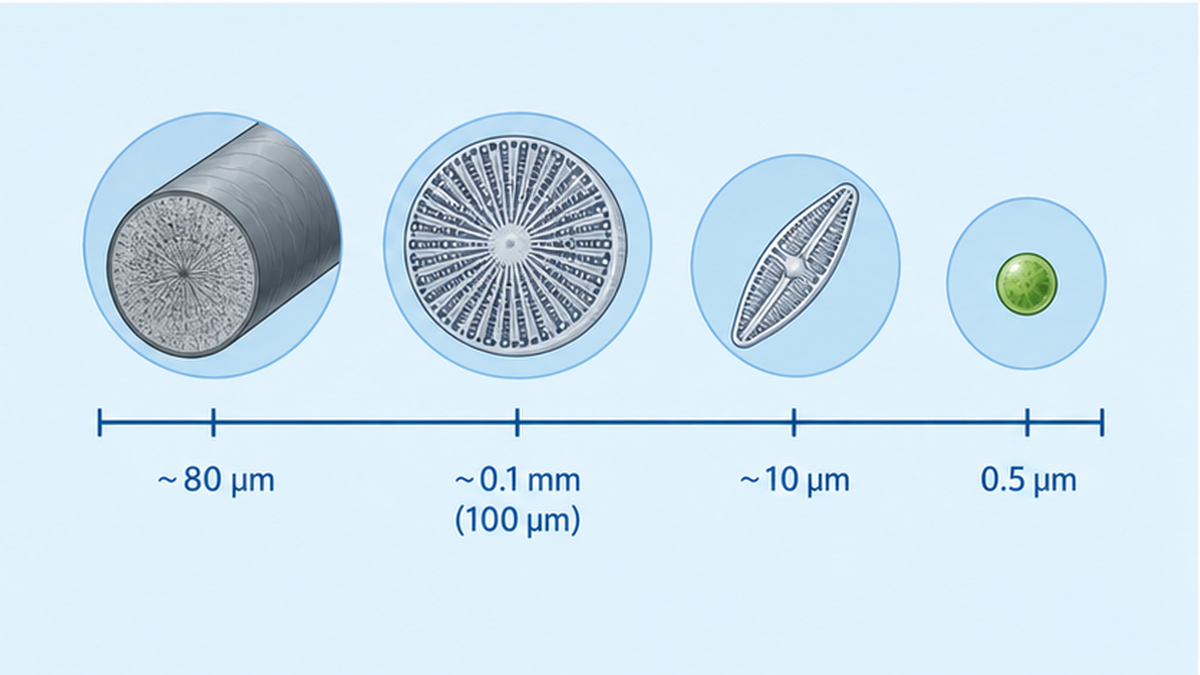
Most phytoplankton are microalgae too small to see with the naked eye. A single cell may be as large as about 0.1 millimeters, or as small as less than a thousandth of a millimeter (one micrometer). Even so, given sunlight, water, carbon dioxide, and just a trace of nutrient salts, they carry out exactly the same photosynthesis as plants on land, releasing oxygen.
"Ocean Photosynthesis" That Rivals Plants on Land
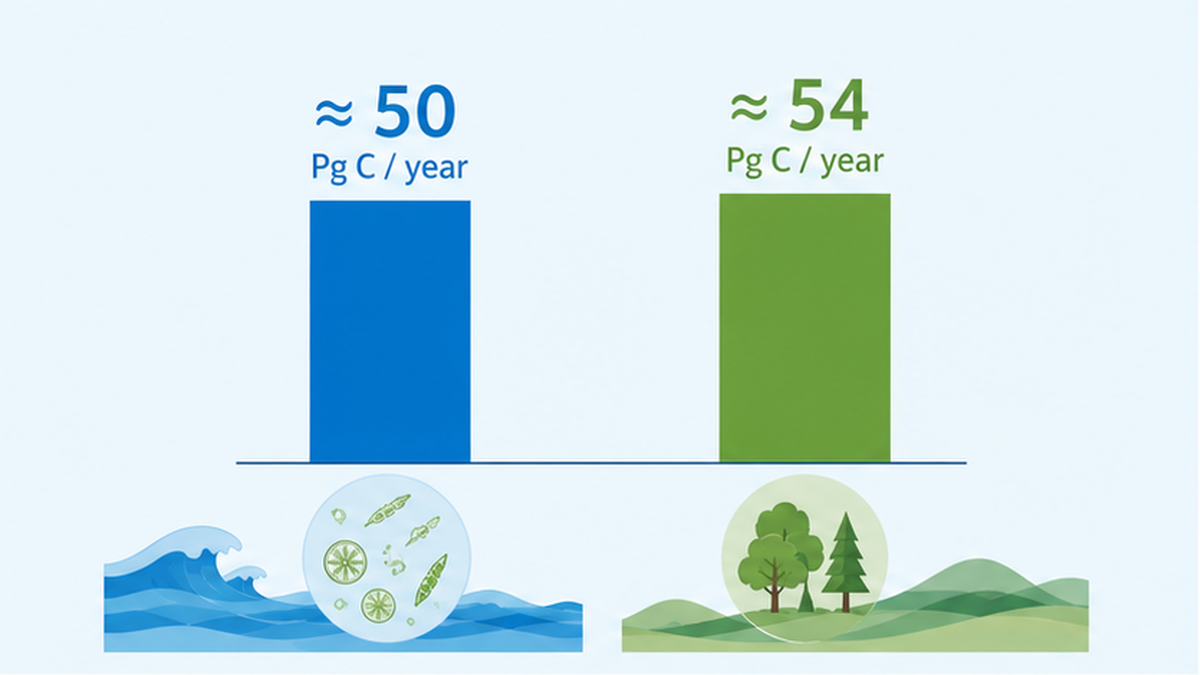
What's astonishing is the sheer scale of their total production. According to a summary by Japan's National Institute for Environmental Studies, the ocean's annual net primary production (the amount of organic matter newly created through photosynthesis) reaches about 50 petagrams (50 billion tons) in carbon terms — nearly the same scale as the roughly 54 petagrams produced by land plants. Moreover, phytoplankton account for about 93% of the ocean's net primary production, with seaweeds such as wakame and kombu contributing only about 7%. These invisible tiny cells are creating an "invisible forest" in the sea that rivals the great forests on land.
A Diverse Cast: Diatoms, Coccolithophores, Dinoflagellates, and Cyanobacteria
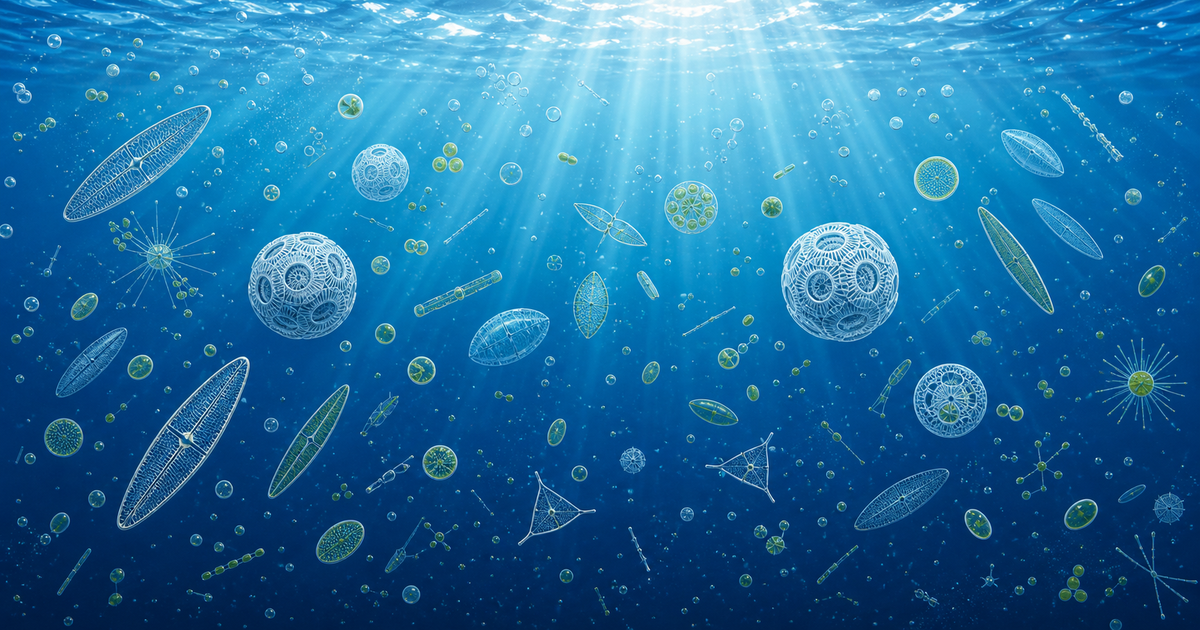
Even under the single umbrella term "phytoplankton," the cast of characters is remarkably diverse. It includes glassy-shelled diatoms, chalk-shelled coccolithophores, swimming dinoflagellates, and even cyanobacteria (blue-green algae) — photosynthetic bacteria — spanning a wide range of sizes, shapes, and lifestyles.
- Diatoms: Possess elaborate shells made of silica (the same material as glass). They bloom explosively in cold, nutrient-rich seas and are a leading contributor, responsible for about 20% of Earth's primary production.
- Coccolithophores: Wear disc-shaped shells of calcium carbonate (limestone), called "coccoliths," like armor. After death, their shells accumulate on the seafloor, forming white limestone.
- Dinoflagellates: Swim using two flagella. Some species cause red tides, while others include the bioluminescent "noctiluca" (sea sparkle).
- Cyanobacteria: The smallest class of photosynthetic organisms, represented by Prochlorococcus. Unmatched in sheer numbers, they are the hidden champions of oxygen supply.
"Phytoplankton" Is Not a Taxonomic Category
Phytoplankton is not the name of a single biological group, but a term grouping organisms by lifestyle — "microorganisms that drift in water and photosynthesize." In reality, it includes both algae and bacteria, with entirely different evolutionary paths. What they share is simply their role: "creating organic matter and oxygen using light."
Incidentally, even within the same marine ecosystem, deep-sea creatures that never receive sunlight cannot rely on photosynthesis at all. Phytoplankton can only be active near the sea surface where light reaches (from the surface down to roughly 100-200 meters). This thin "layer of light" is precisely Earth's oxygen factory.
The Ancient Protagonists That Remade Earth's Atmosphere
What the ancestors of phytoplankton brought to Earth is not limited to today's oxygen supply. Roughly 2.7 to 2.4 billion years ago, photosynthetic bacteria called cyanobacteria began releasing oxygen in the ocean, causing oxygen to begin accumulating in an atmosphere that had previously contained almost none. This is known as the "Great Oxidation Event," and it opened the path of biological evolution that would eventually lead to oxygen-using organisms, and ultimately to us humans — a major turning point in Earth's history. In other words, the ancestors of today's phytoplankton were, then as now, the true architects of "the planet that could breathe."
The Oxygen the Ocean Makes — The True Nature of "Earth's Other Lung"
It's often said that "Earth's lungs are the tropical rainforests." But more precisely, Earth has another lung — and it may well be an even bigger one. The ocean. The U.S. National Oceanic and Atmospheric Administration (NOAA) estimates that roughly half of Earth's oxygen production is carried out by the ocean, explaining that most of it is generated by drifting phytoplankton and photosynthetic bacteria.
The Chemistry of Photosynthesis: Turning Carbon Dioxide into Oxygen
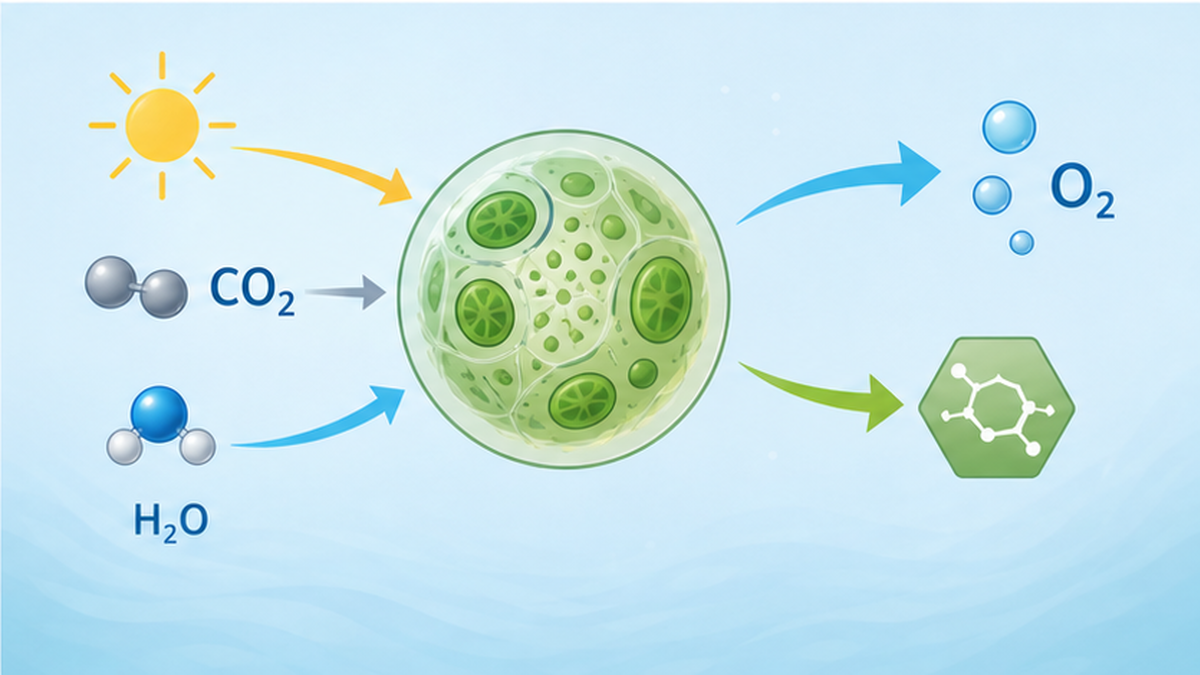
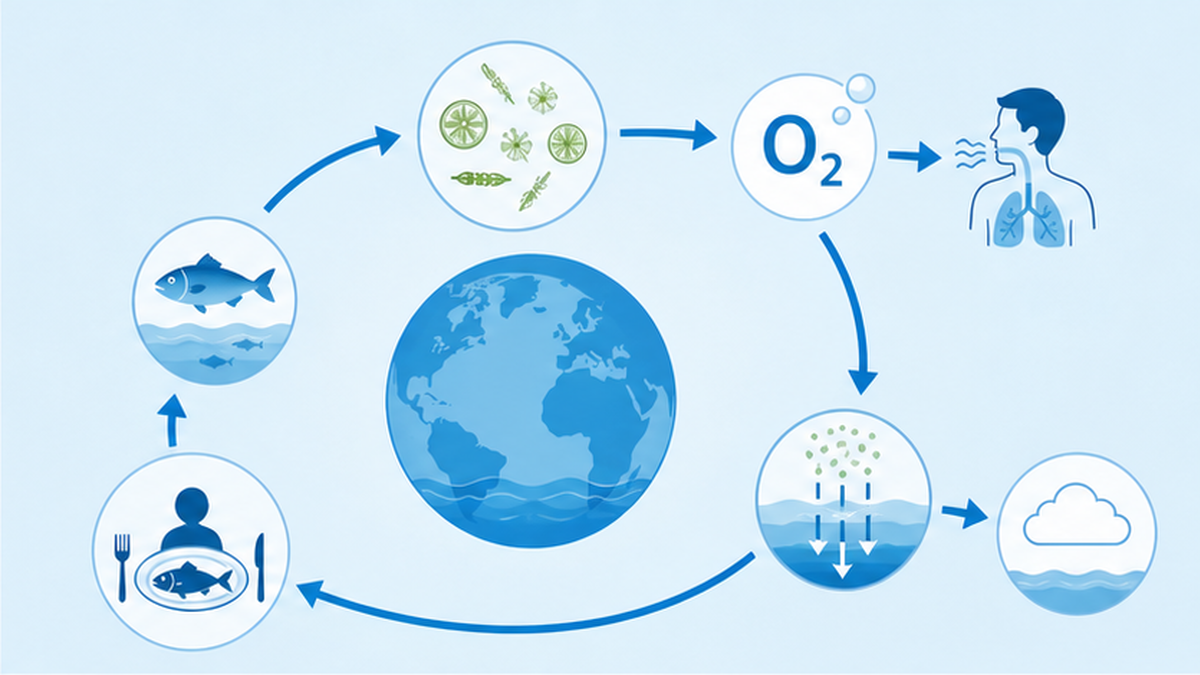
Phytoplankton photosynthesis follows the same basic reaction as plants on land. Using the sun's light energy, they create sugars (organic matter) from water (H₂O) and carbon dioxide (CO₂), releasing oxygen (O₂) as a byproduct. In other words, they are entities that take in the carbon dioxide we exhale and give back the oxygen we breathe. This photosynthesis is also the gateway through which the ocean absorbs carbon dioxide from the atmosphere.
20% of Oxygen from a Single Species — The Astonishing Prochlorococcus
Among all the ocean's oxygen production, there is one organism whose importance stands head and shoulders above the rest: a photosynthetic bacterium called Prochlorococcus. At only 0.5 to 0.7 micrometers in diameter, it is the smallest photosynthetic organism on Earth, yet it is also the most numerous photosynthetic organism on the planet. Researchers estimate that this single, invisible species of bacterium alone produces up to 20% of the oxygen in Earth's biosphere. That's a greater share than all the world's tropical rainforests combined.
Every other breath we take is supported by phytoplankton in the ocean.
— A phrase often used in the field of ocean science (NOAA and others)
An Important Caveat About the Ocean's Oxygen
- The ocean "produces" about half of Earth's oxygen, but a roughly equal amount is also "consumed" through the respiration of marine life and the decomposition of organic matter.
- So it's not that "the ocean keeps continuously adding half of Earth's oxygen to the atmosphere" — over the long run, the balance is roughly even.
- Even so, if this enormous production and cycling of oxygen were to stop, neither the marine ecosystem nor the composition of the atmosphere could be sustained. It's the sheer scale of the process that matters most.
In other words, the value of phytoplankton lies less in "continuously increasing atmospheric oxygen" than in "continuously circulating oxygen and carbon on a global scale, keeping the foundation of life turning." And it is these invisible, tiny cells that hold the entry point to this cycle.
At Night, Oxygen Is Also "Consumed"
Since phytoplankton are living organisms, they breathe just as we do. During the day, when photosynthesis is possible, they release oxygen; but at night, without light, they instead take in oxygen and release carbon dioxide. Even so, in a healthy ocean, daytime oxygen production through photosynthesis far exceeds consumption through respiration, so on net, an abundance of oxygen is produced. This day-and-night rhythm causes oxygen and carbon dioxide concentrations in the sea to fluctuate over the course of a day, pulsing slowly like the breath of the ocean itself.
The vigor of phytoplankton also varies greatly by season and location, depending on the strength of sunlight, water temperature, and the amount of nutrient salts. When light and nutrients align in spring, they multiply explosively, then decline once the nutrients are used up — this rhythm of "boom and bust" determines the seasonal cycle of the entire marine ecosystem.
The oxygen created by phytoplankton first dissolves into seawater, supporting the respiration of marine life. In recent years, however, "ocean deoxygenation," in which warming and pollution reduce the ocean's oxygen, has become a problem in regions worldwide. As water temperature rises, oxygen becomes harder to dissolve in water, and as stratification makes it harder for the surface and deep layers to mix, oxygen has a harder time reaching greater depths. The vigor of phytoplankton, as the producers of oxygen, is also a critical key that determines the oxygen balance of the entire ocean.
Diatoms and Coccolithophores — Two Shell-Bearing Protagonists
Among all phytoplankton, two groups with hard "shells" have a particularly large influence on Earth's material cycles: glass-shelled diatoms and chalk-shelled coccolithophores. These two types are involved not only in oxygen production, but also in Earth's carbon and silicon cycles, and even in the formation of rock over tens of millions of years.
Diatoms — Kings of Production, Wrapped in Glasswork-Like Shells
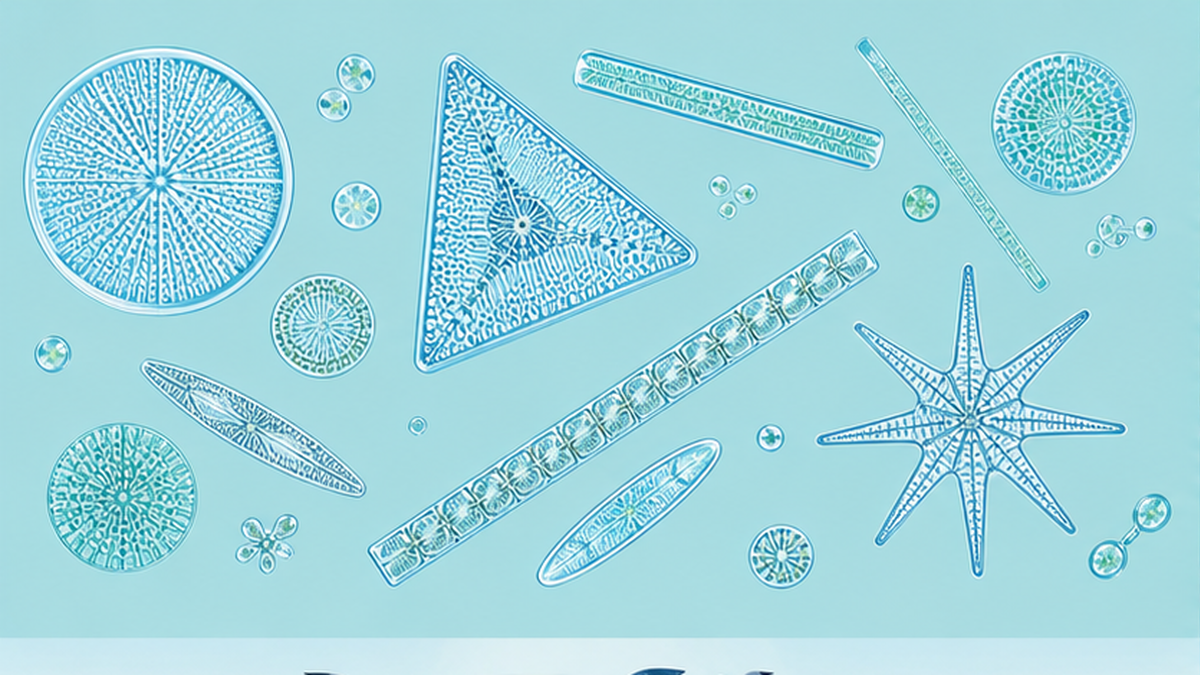
Diatoms are phytoplankton encased in elaborate shells made of silica (silicon dioxide — the same material as glass). Their shells are as geometrically intricate as works of glass artistry, each species bearing its own beautiful pattern. With a structure like a "bento box," lid fitting into body, they present breathtaking sculptural beauty under a microscope.
Their significance goes beyond visual beauty. Diatoms are said to be responsible, on their own, for roughly 20% of Earth's total primary production — "kings of production," carrying out photosynthesis on a scale rivaling the tropical rainforests on land. In particular, they bloom explosively in early spring in cold, nutrient-rich seas (polar regions, or waters like the Oyashio Current near Japan), turning the ocean green in what is known as the "spring bloom." This massive bloom is the driving force behind rich fishing grounds for fish.
Coccolithophores — The Limestone Plankton That Built White Cliffs
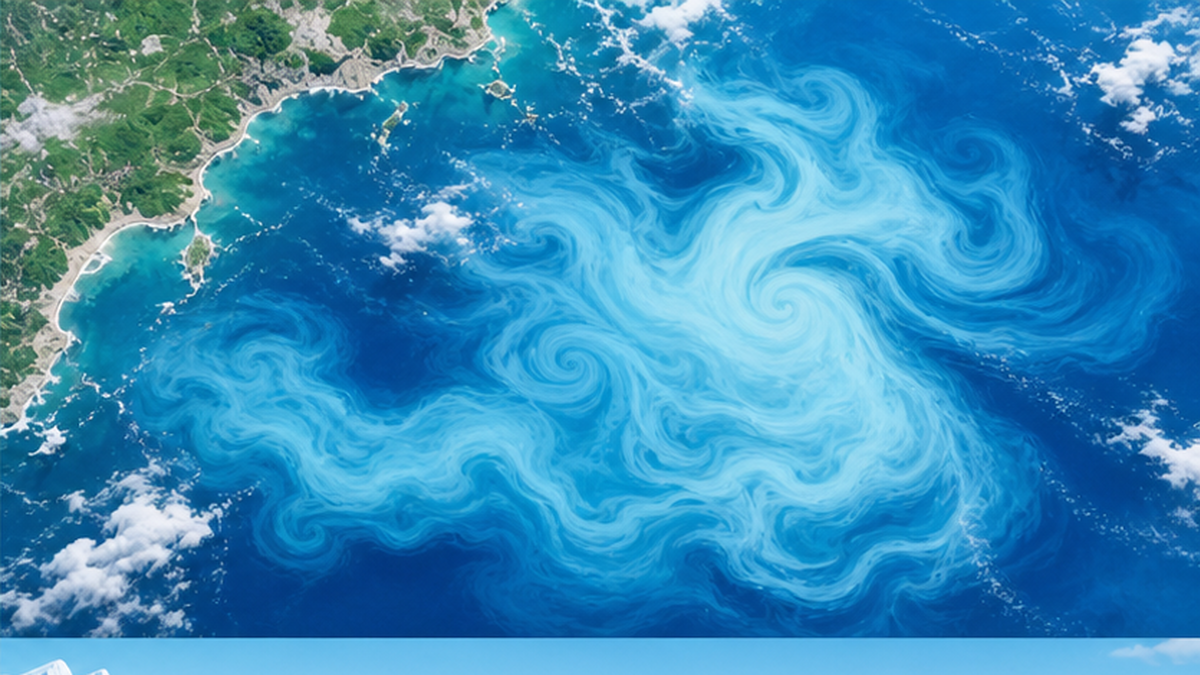
The other protagonist, coccolithophores, are phytoplankton wrapped, like armor, in tiny disc-shaped shells called "coccoliths," made of calcium carbonate (limestone). When coccolithophores bloom massively, the ocean's color changes to a milky white or pale blue — a phenomenon striking enough to be observed even from satellites in space.
The historic contribution of coccolithophores lies in what happens after their death. Calcium carbonate, the main component of their shells, accumulates on the seafloor as cells die, forming thick layers of limestone over the course of long ages. The "White Cliffs" of the Strait of Dover in England were formed precisely from the accumulated shells of coccolithophores tens of millions of years ago. Invisible, tiny plankton have literally reshaped the very landscape of Earth.
| Diatoms | Coccolithophores | |
|---|---|---|
| Shell material | Silica (same as glass) | Calcium carbonate (limestone) |
| Preferred environment | Cold, nutrient-rich seas | Relatively warm, calm seas |
| Strength | Explosive blooms, high production | Fixing carbon as limestone |
| What they leave behind | Diatomaceous earth on the seafloor | Limestone, white cliffs |
A Familiar Gift from Diatoms
Sedimentary layers formed from accumulated diatom shells on the seafloor or lakebed are called "diatomaceous earth," used in bath mats, charcoal braziers, filtration media, insulation, and more. Even in things we use casually every day, the shells of ancient phytoplankton live on.
Roles Shared Between Two Protagonists
Diatoms and coccolithophores are both phytoplankton, yet each excels in a different specialty. Diatoms are a "speed type" that grows quickly in nutrient-rich seas, producing large amounts of oxygen and organic matter through vigorous photosynthesis and creating fishing grounds that nurture fish. Coccolithophores, meanwhile, survive even in relatively calm, nutrient-poor seas, fixing carbon over the long term in the form of calcium carbonate shells. Diatoms for production, coccolithophores for storage — this division of labor gives the ocean's oxygen and carbon cycles an exquisite balance.
The Starting Point of the Food Chain — Where All Ocean Life Begins
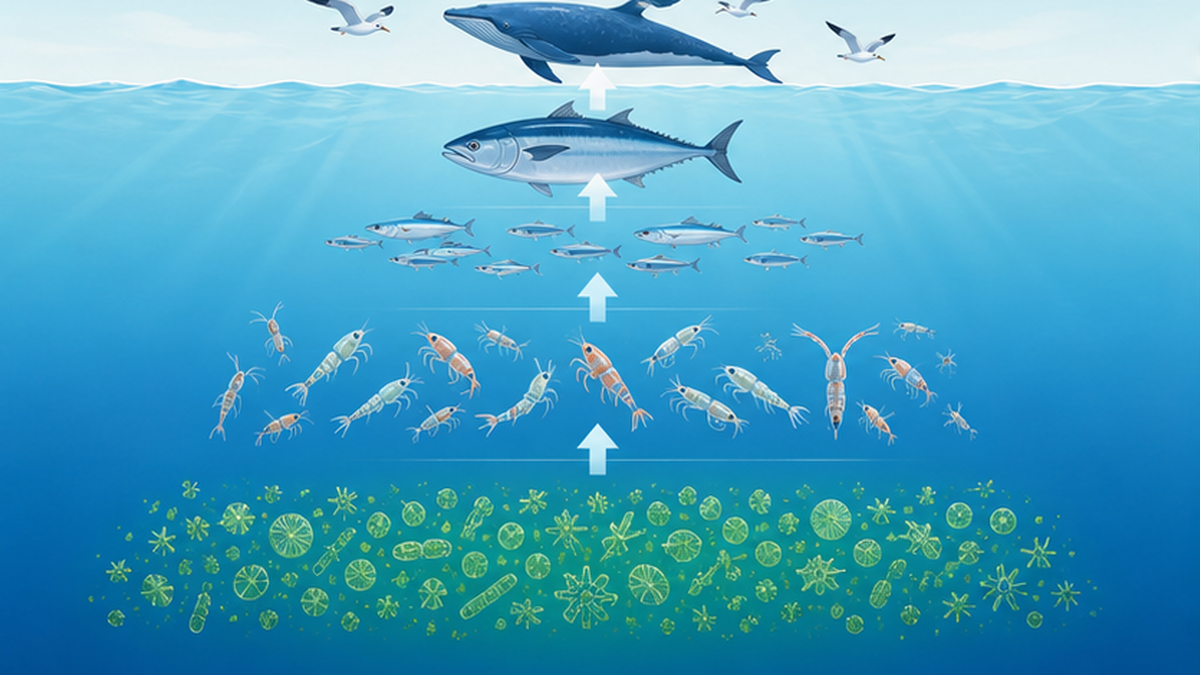
Phytoplankton are not merely producers of oxygen. They are also the "starting point of the food chain" that nourishes every creature in the sea. Only photosynthetic organisms can convert the sun's light energy into organic matter — an "edible form." Phytoplankton alone shoulder this entry point. It would hardly be an exaggeration to say that all life in the ocean, directly or indirectly, is sustained by the nutrients created by these tiny producers.
Small Herbivores: Zooplankton
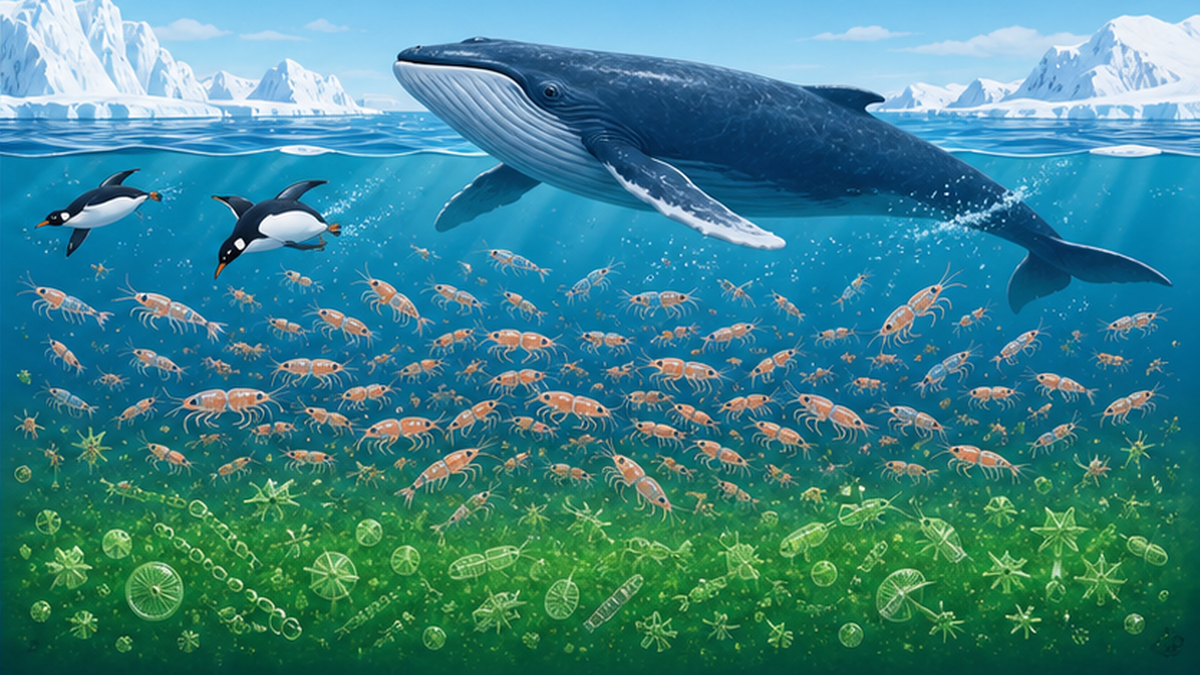
The first to eat phytoplankton are zooplankton, such as copepods, krill, and the larvae of various organisms. They serve as the ocean's "herbivores," diligently grazing on the meadow of phytoplankton to grow. Krill, in particular, form enormous swarms in places like the Antarctic Ocean, acting as a keystone that supports the ecosystem as food for large animals such as whales, penguins, and seals.
The Fish on Our Table, Traced Back to Phytoplankton
Small fish eat zooplankton, larger fish eat small fish, and we humans eat those larger fish. The tuna, bonito, and sardines that appear on our tables can, if traced back, always be found to originate from phytoplankton. Rich fishing grounds in the ocean are heavily determined by how much phytoplankton grows in that sea area. The more phytoplankton grows in nutrient-rich waters, the richer the fishing grounds become. One reason Japan's coastal waters are among the world's best fishing grounds is that nutrient-rich currents such as the Oyashio nurture phytoplankton so well. Ultimately, the bounty of the sea is the bounty of phytoplankton.
- Phytoplankton create energy and organic matter through photosynthesis (primary producers)
- Zooplankton (krill, copepods, etc.) eat them (primary consumers)
- Small fish eat the zooplankton
- Large fish, seabirds, and marine mammals eat the small fish
- Ultimately, it reaches our own dinner tables
When the "Foundation" of the Food Chain Wavers
- If phytoplankton decrease, the zooplankton that eat them decrease too.
- If zooplankton decrease, small fish decrease, and the fish above them decrease as well.
- Small changes at the foundation are amplified as they travel up the food chain (trophic amplification).
- That is precisely why fluctuations in invisible phytoplankton are directly tied to fisheries and our own food security.
Ocean plastic waste and microplastics can also be taken into the bodies of living creatures through this same food chain, potentially finding their way back to us in the end. Related topics are covered in more detail in our article on microplastics and health.
Krill: The Keystone Supporting the Antarctic Ocean
A clear example of the role connecting phytoplankton to large animals is Antarctic krill. Antarctic krill are small crustaceans only a few centimeters long, but they feed on diatoms and other phytoplankton that bloom explosively in summer, multiplying into vast numbers and forming enormous swarms. These swarms are relied upon all at once by blue whales and other large whales, penguins, seals, and seabirds. If phytoplankton decrease even slightly, krill decrease as well, and the entire vast Antarctic ecosystem that depends on them could be thrown off balance.
The Biological Pump — The Ocean's Vast Device for Sinking Carbon to the Deep Sea
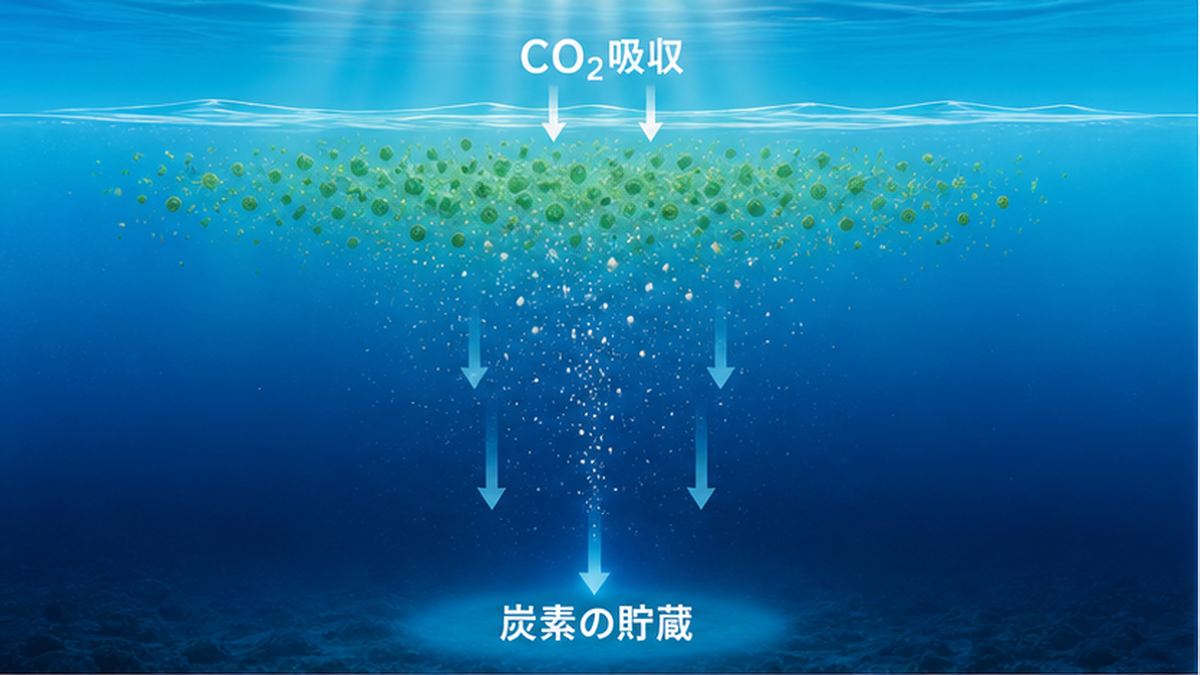
Another crucial role of phytoplankton is the "biological pump," which carries atmospheric carbon dioxide away to the ocean floor. This is a vast, planetary-scale mechanism that stabilizes Earth's climate. The ocean is said to hold roughly 50 times as much carbon dissolved in it as the atmosphere (Japan Meteorological Agency), and this biological pump is what supports that enormous carbon storage. Without the biological pump driven by phytoplankton, atmospheric carbon dioxide concentrations would be far higher than they are today, and Earth is thought to have become a substantially hotter planet. The fact that we can maintain a livable climate is owed to this invisible pump, which has been working tirelessly since ancient times.
Marine Snow — Snow Made of Life
Phytoplankton take in carbon dioxide through photosynthesis and convert it into their own bodies (organic matter). Eventually, when they die, or are eaten by zooplankton and turned into fecal pellets, they become small particles that slowly sink to the ocean floor. Viewed from the deep sea looking up, it appears as though snow is falling, which is why this sinking organic matter is called marine snow.
About 10 Billion Tons a Year — Carbon Transport Rivaling Fossil Fuels
The amount of carbon this biological pump carries to the deep sea is estimated at a staggering roughly 10 billion tons a year (about 10 gigatons of carbon). This is a scale comparable to the amount of carbon humanity emits every year by burning fossil fuels. Carbon that sinks to the deep sea is drawn into a long cycle circulating through the ocean's depths, sometimes remaining isolated from the atmosphere for over 1,000 years. Phytoplankton function as part of "Earth's air conditioner," regulating climate on scales of centuries to millennia.
Recent research by JAMSTEC has revealed that mineral components acting as "ballast" — such as the calcium carbonate of coccolithophores or the silica of diatoms — govern the sinking speed and durability of these sinking particles, determining how deep the carbon ultimately reaches. Shell-bearing phytoplankton are not merely producers; they also excel as "carriers" that efficiently transport carbon to the deep sea.
The Solubility Pump and the Biological Pump
The ocean's mechanism for absorbing carbon dioxide includes two pathways: the "solubility pump (physical pump)," in which CO₂ dissolves directly into water, and the "biological pump," in which organisms take it in as organic matter and sink it. Phytoplankton are responsible for the latter. The very activity of life is what drives Earth's carbon budget.
However, the efficiency of this biological pump is sensitive to the ocean's condition. It has been pointed out that as ocean acidification progresses, coccolithophores, which build calcium carbonate shells, may be affected, leaving uncertainty over the future of the biological pump as well.
The Enormous Carbon Dissolved in the Sea
As a result of organisms continuously transporting carbon over such long ages, the ocean now stores dozens of times more carbon than the atmosphere. According to the Japan Meteorological Agency, the ocean stores roughly 50 times as much carbon as the atmosphere, making it one of the largest carbon reservoirs on Earth. What continuously replenishes and maintains this enormous store is the daily photosynthesis and sinking of phytoplankton. If the biological pump were to weaken, carbon that should have been carried to the deep sea would instead remain in the surface layer or the atmosphere, potentially accelerating warming even further.
Why the Biological Pump Matters for Climate
- Phytoplankton convert CO₂ into organic matter at the surface and sink it to the deep sea (about 10 billion tons of carbon per year).
- Carbon that reaches the deep sea can be kept isolated from the atmosphere for over 1,000 years, helping to curb warming.
- Shell-bearing diatoms and coccolithophores act as "ballast," efficiently carrying carbon down to great depths.
- If this mechanism weakens, the ocean's capacity to absorb carbon declines, making climate change more likely to accelerate.
How Will Warming Change Phytoplankton?
Producing oxygen, supporting the food chain, and carrying carbon to the deep sea — this critically important phytoplankton is now changing quietly, but steadily, due to global warming. The keys to this change are "ocean stratification" and "nutrient salts."
The Ocean's "Lid" Grows Thicker — Stratification and Nutrient Shortage
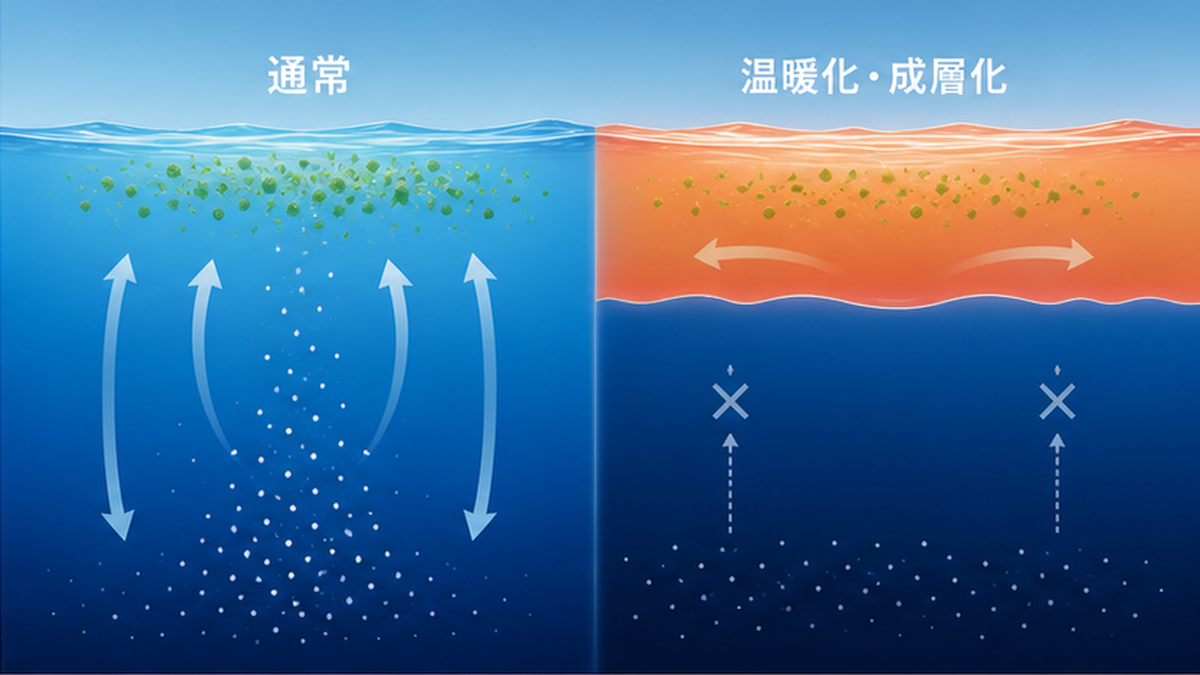
For phytoplankton to grow, both light and nutrient salts (such as nitrogen and phosphorus) are needed. Light is abundant near the sea surface, but nutrient salts are more abundant at depth. Normally, the vertical mixing of seawater carries nutrient salts from the depths up to the surface. However, as sea surface temperature rises, warm, light surface water sits atop the heavier deep water like a lid, making it harder for the two to mix. This is called stratification.
As stratification intensifies, the supply of nutrient salts from the depths to the surface thins out. Even with sufficient light, nutrients become insufficient, making it harder for phytoplankton to grow. Japan's Ministry of the Environment and Fisheries Agency have also pointed out that intensified stratification due to warming may weaken nutrient salt supply in the open ocean at low and mid latitudes, potentially reducing basic (primary) production.
Satellites Have Captured Signs of a Worldwide Decline
This change has already begun to appear in satellite observation data. Research estimating phytoplankton amounts from ocean color has confirmed a significant decline in net primary production (NPP) across roughly half of the world's oceans, with this trend reported to be especially strong in stratified tropical and subtropical waters. Some studies also show that surface chlorophyll-a concentration (a phytoplankton pigment) has been gradually declining at low and mid latitudes.
Future projections are even more severe. Research integrating multiple climate models suggests that as warming progresses, ocean primary production will decline, amplified through the food chain, reducing the total amount of ocean animal life (biomass). It has even been suggested that current climate models may be underestimating this decline.
| Change | What Happens | Impact |
|---|---|---|
| Rising sea surface temperature | Surface layer warms and becomes lighter | Stratification intensifies |
| Intensified stratification | Deep nutrient salts have a harder time reaching the surface | Phytoplankton decrease |
| Decline in primary production | The foundation of the food chain thins | Fishery resources and ocean biomass decrease |
| Change in distribution | Cold-water-loving species shift to higher latitudes | The composition of the ecosystem changes |
Shifting Distribution — A Changing of the Species
It's not just the amount that is declining — "which species live where" is also shifting. Cold-water-loving species such as diatoms are projected to shift their range toward higher latitudes (toward the poles) as warming progresses, while smaller species that prefer warmer waters expand their territory instead. If the cast of phytoplankton changes, the zooplankton and fish that eat them will change too, potentially reshaping the entire marine ecosystem. These changes are also deeply connected to rising sea temperatures and changes in ocean currents.
What's worth noting is that the direction of change differs by sea region. While phytoplankton decline in low- and mid-latitude seas plagued by nutrient shortages, in high-latitude regions such as the Arctic Ocean — previously covered in ice and cold water — melting ice has extended the period during which light can penetrate, and some regions are reported to actually see phytoplankton increase. However, even if some places see an increase while others see a decrease, it remains true that the map of ecosystems and fishing grounds across the entire ocean is being redrawn. The disruption itself of the delicate balance of "where, which species, and how much" is, for us, a source of major uncertainty.
The miniaturization of phytoplankton is also a concern. In warm, nutrient-poor seas, smaller species that can survive on less nutrition tend to dominate over larger diatoms. As miniaturization progresses, particles become smaller and lighter, making them less likely to sink as marine snow, potentially reducing the efficiency of carbon transport to the deep sea via the biological pump. Oxygen production, the food chain, and carbon fixation — three functions that may weaken in tandem through warming. This is the greatest concern surrounding phytoplankton.
Small Changes, Big Consequences
Because phytoplankton sit at the very foundation of the food chain, even a slight decline or shift in their distribution can be amplified as it ripples up to higher organisms, fisheries, and even the carbon and oxygen cycles. Precisely because they are invisible, these changes are hard to notice — and by the time we do notice, the impact may already have grown large.
Us and Phytoplankton — What It Means to Protect Tiny Life
Phytoplankton may seem like a story about some distant ocean. But their gifts extend to every corner of our lives — the oxygen we breathe, the fish on our table, and even the stability of the climate. Protecting these tiny protagonists is, ultimately, directly tied to protecting our own lives.
Curbing Warming Is the Best Form of Conservation
The greatest threats to phytoplankton are rising sea temperature, stratification, and ocean acidification. At the root of all of these lies the increase of carbon dioxide in the atmosphere — in other words, global warming. Reconsidering how we use energy, and each of us acting to reduce carbon dioxide emissions, is connected to protecting tiny life in a distant sea. Phytoplankton are, in a sense, Earth's partners — diligently absorbing the carbon dioxide we emit and carrying it to the deep sea to help moderate the climate. If we keep emitting carbon dioxide while relying entirely on this function, our partner itself will eventually weaken. Curbing warming means protecting this reliable ally, and preserving its power for the future.
Keeping the Ocean Clean
Plastic waste flowing into the sea, and excess nutrients from domestic wastewater (eutrophication), also disrupt the balance of the phytoplankton world. When nutrients become excessive, specific species can proliferate abnormally, sometimes causing red tides or oxygen-depleted water masses (layers of low-oxygen water). For more on the ocean debris problem, see our article on the degradation of ocean plastic.
What You Can Do Starting Today
- Reduce waste in electricity and energy use, curbing carbon dioxide emissions
- Reduce plastic waste, avoiding an increase in debris flowing into the sea
- Be mindful of detergent use and domestic wastewater to help prevent ocean eutrophication
- Take an interest in ocean news and observation data, cultivating an eye for noticing change
- Share the existence of these "invisible protagonists" supporting the foundation of marine ecosystems with those around you
At Umi LAB, we work to clearly convey these ocean changes together with scientific data. Please also take a look at related topics, such as our article on the deep-sea trash problem.
Moving Beyond "Can't Protect What You Can't See"
What makes the challenge facing phytoplankton so difficult is precisely that it is invisible. A decline in forests can be noticed through satellite imagery or familiar scenery, but a decline in ocean phytoplankton can only be understood by looking at specialized observations and satellite data. That's exactly why paying attention to the observational data scientists continue to accumulate, and understanding that these "invisible protagonists" truly exist and are indeed changing right now, is the first step toward conservation.
Each of our own lives is connected to tiny life in a distant sea. Actions like saving energy or reducing plastic use may, at first glance, seem unrelated to phytoplankton. But reducing carbon dioxide and keeping the ocean clean is, in fact, connected — ultimately — to protecting the ocean's protagonists, the very ones that give us oxygen, food, and a stable climate.
Conclusion — The Invisible Protagonists That Support Earth
Phytoplankton are organisms so small they are invisible to the naked eye. Yet their function supports our very survival on a planetary scale. Producing oxygen, serving as the starting point of the food chain, and transporting carbon to the deep sea — every one of these is directly connected to our breathing, our meals, and our climate.
And right now, these quiet protagonists are changing, in both amount and distribution, due to global warming. Small changes could be amplified through the food chain, eventually returning to affect our own lives. That is precisely why it matters to understand and protect the existence of this invisible life.
Beyond the blue of the ocean lies countless tiny lives, thinner than a strand of hair, ceaselessly letting the planet breathe. Reflecting on their existence is a starting point for thinking about how we should engage with the ocean. The next time you gaze out at the sea, take a moment to remember that in every single drop of that water drift tiny protagonists supporting oxygen, food, and climate.
Summary of This Article
- Roughly half of Earth's oxygen is produced by the ocean, most of it by phytoplankton. Prochlorococcus alone supplies up to 20%.
- The ocean's net primary production is about 50 petagrams of carbon per year, nearly matching land plants. Phytoplankton account for about 93% of it.
- Diatoms (glass shells) and coccolithophores (limestone shells) are the two main protagonists. Coccolithophore shells even built the White Cliffs of Dover.
- Phytoplankton are the starting point of the food chain: energy flows from zooplankton to small fish, to large fish, and to our own tables.
- The "biological pump" carries about 10 billion tons of carbon to the deep sea each year, sequestering it from the atmosphere for over 1,000 years — Earth's climate-regulating device.
- Warming-driven stratification is reducing nutrient salt supply, with declining primary production confirmed across roughly half of the world's oceans, and distribution is shifting too.
- Curbing warming and keeping the ocean clean is connected to protecting both these invisible protagonists and our own lives.
References and Sources
- U.S. National Oceanic and Atmospheric Administration (NOAA) – How much oxygen comes from the ocean?
- National Institute for Environmental Studies, Japan – How much photosynthesis do Earth's plants carry out? A meta-analysis of net primary production (NIES News, Vol. 30, No. 3)
- Japan Meteorological Agency – The ocean's carbon cycle and carbon budget (knowledge on ocean greenhouse gases)
- Japan Agency for Marine-Earth Science and Technology (JAMSTEC) – Elucidating the ocean's ability to absorb and fix atmospheric CO₂ (press release on the biological pump)
- Fisheries Agency – Changes in the marine environment and their relation to fishery resources (Fisheries White Paper)
- Hokkaido University – Plankton supporting marine ecosystems and the effects of climate change (Tackling Climate Change)
- Nature Communications – Global declines in net primary production in the ocean color era
- PNAS – Global ensemble projections reveal trophic amplification of ocean biomass declines with climate change
※ Listed in order of reliability: government/academic institutions > peer-reviewed papers > specialized organizations > reliable media