⚡ The answer in 30 seconds
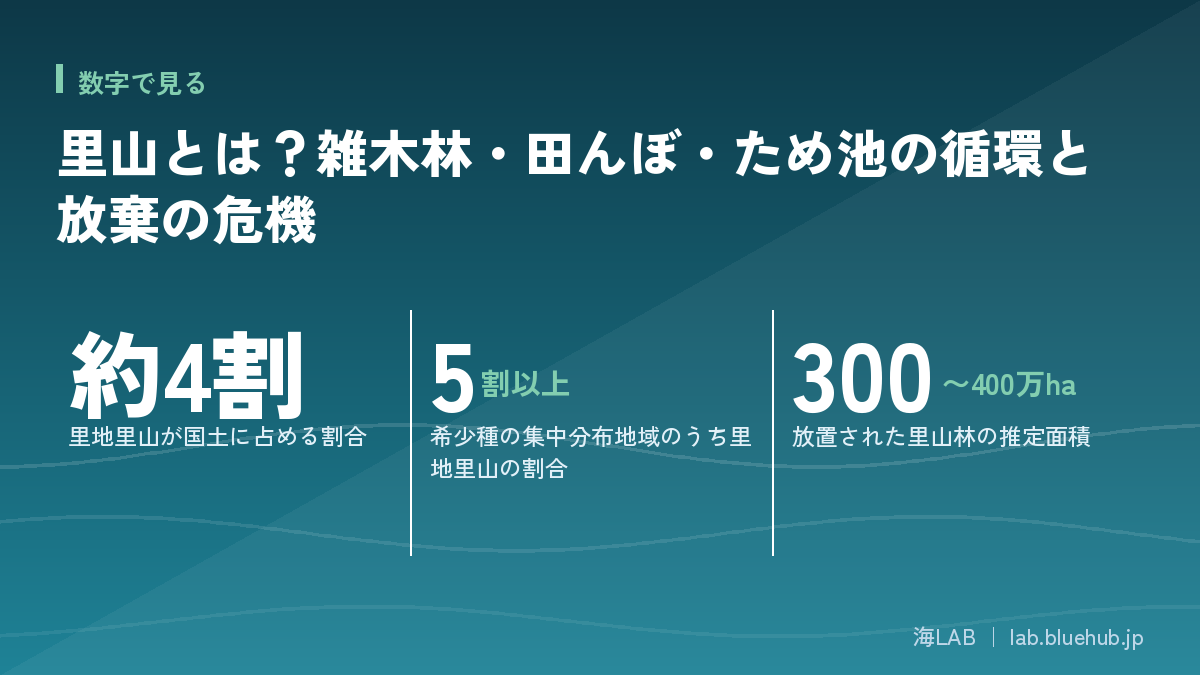
- Satoyama (satochi-satoyama) is nature kept up by people, between the deep mountains and the city, made up of secondary forest, farmland, irrigation ponds, grassland and settlements. It covers about 40% of Japan.
- 49% of areas with five or more endangered animal species and 55% for plants lie within satochi-satoyama, making it a pillar of Japan's biodiversity.
- The greatest crisis is abandonment caused by reduced use since the fuel revolution, in addition to development. Abandoned satoyama forest is estimated at about 3 to 4 million hectares nationwide.
Satoyama is not "pristine wilderness" but nature that has been sustained by people continuing to tend it.Covering about 40% of Japan's land, this familiar nature now faces a new crisis: abandonment.
People gathered firewood from coppice woods, turned fallen leaves into compost, and circulated water through paddies and irrigation ponds. That way of life also created homes for creatures such as the medaka and the Luehdorfia butterfly.
Drawing on materials from the Ministry of the Environment and the Forestry Agency, this article explains how satoyama works, what it gives us, the crisis it faces, and its links to the sea.
What you will learn in this article
- The definition of satoyama (satochi-satoyama) and the idea of secondary nature
- The cycle of resources and water created by coppice woods, paddies and irrigation ponds
- Why about half of Japan's rare species live in satoyama
- The crisis of "abandonment" that has advanced since the fuel revolution
- Efforts to protect satoyama, such as the Important Satoyama 500 and new uses of local resources
- How satoyama connects to rivers and the sea
What is satoyama? The "nearest nature" between the deep mountains and the city
Definition: what the Ministry of the Environment calls "satochi-satoyama"
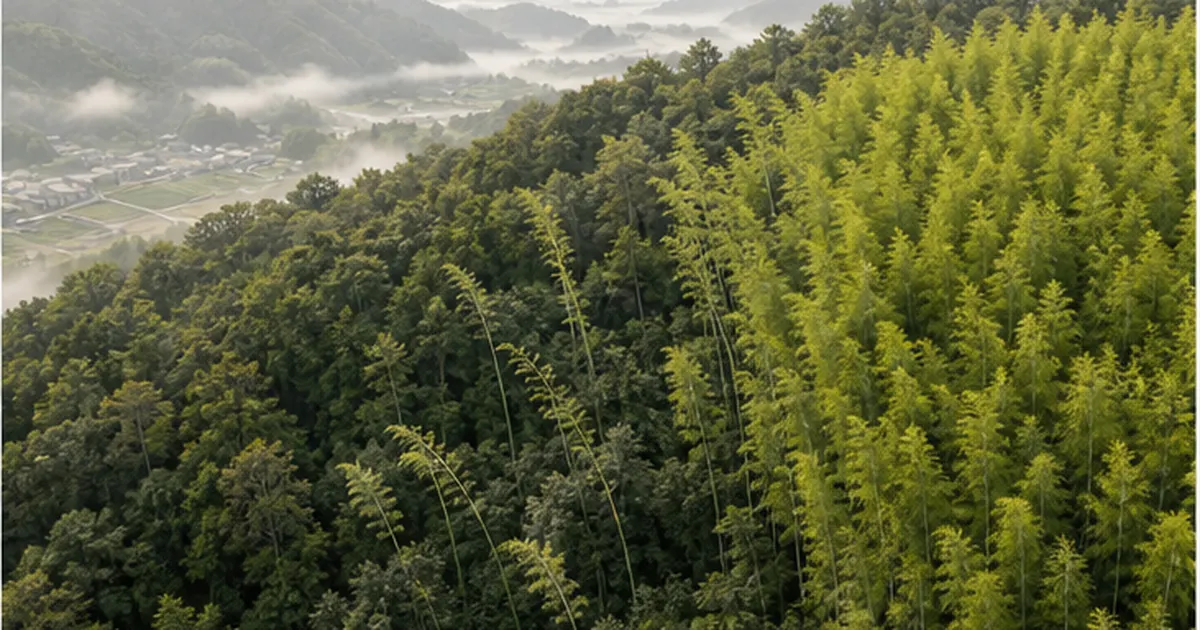
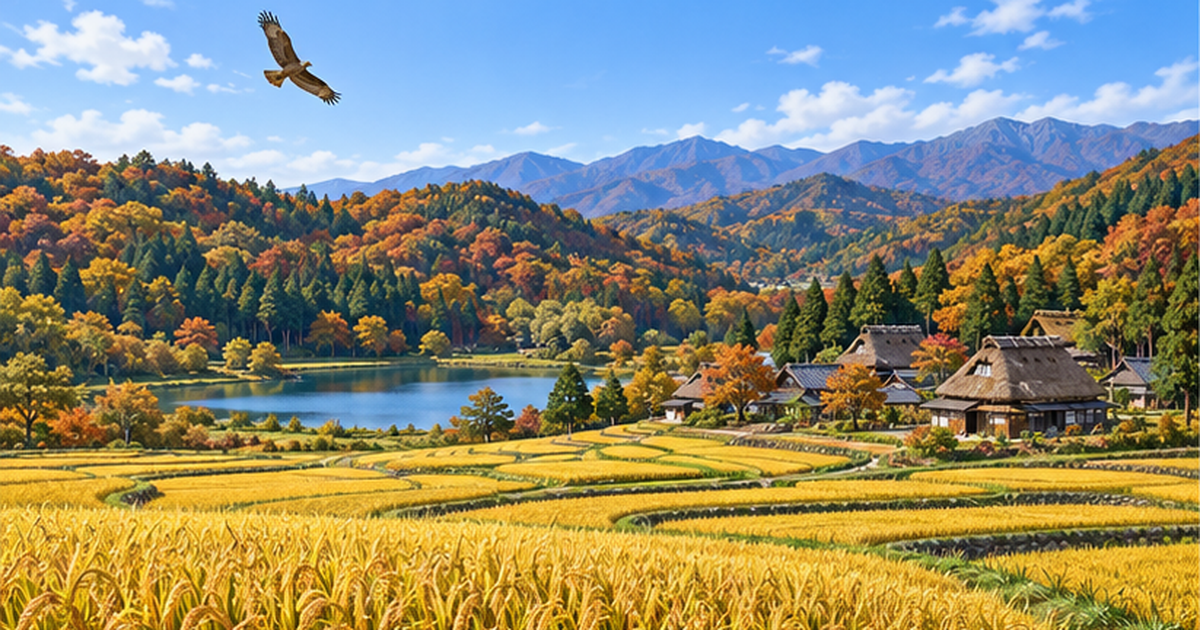
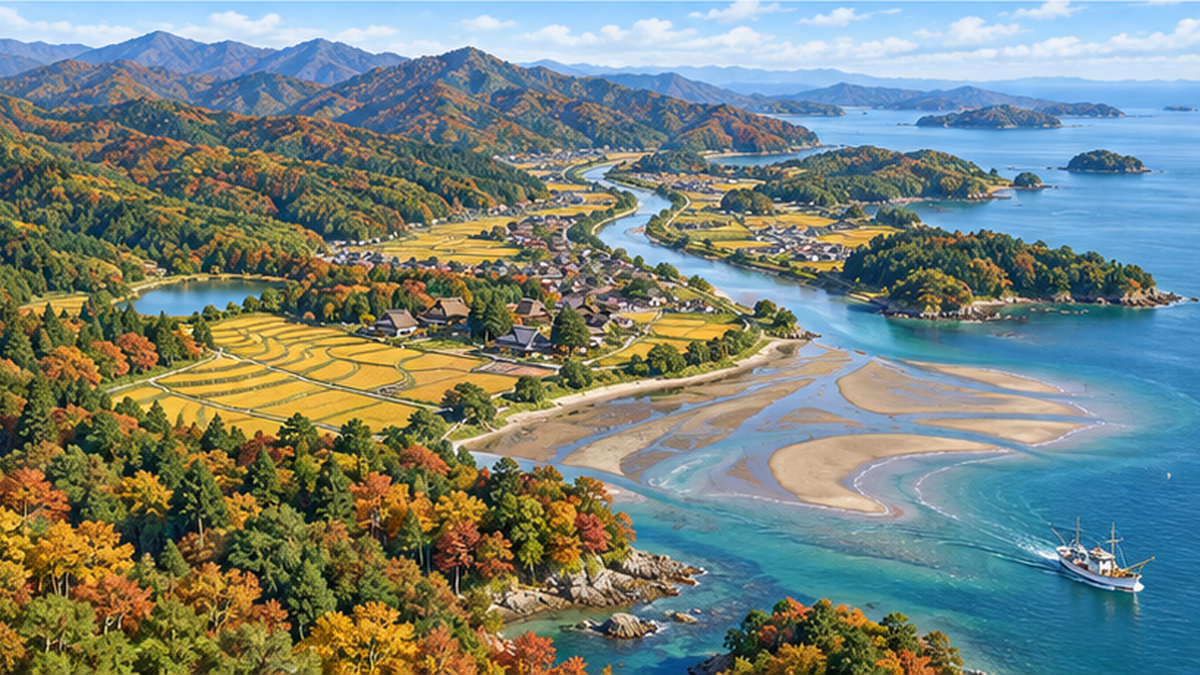
When people hear "satoyama," many picture a thatched-roof house and terraced rice fields with a thick coppice wood behind them. The Ministry of the Environment calls this satochi-satoyama and describes it as "an area located between the deep mountains and cities, made up of settlements, the secondary forests surrounding them, and the farmland, irrigation ponds and grasslands interspersed with them." The key point is that the term refers not only to a mountain but to the whole area where human life and nature overlap.
The sheer size also matters. According to the Ministry of the Environment, satochi-satoyama, centered on secondary forests and farmland, occupies about 40% of Japan's land. In a country where untouched primary nature is limited to a small part of the land, most of our encounters with "nature" actually happen in satochi-satoyama.
The idea of "secondary nature"
The Ministry of the Environment calls nature that has been shaped and maintained through long-term, sustainable use and management by people, such as farmland and secondary forests, secondary natural environment. Unlike primary forest, which is "nature untouched by people," satoyama is "nature that exists because people tend it."
This difference changes the whole idea of conservation. For primary nature, leaving it alone is conservation, but in satoyama, leaving it alone is itself a cause of decline. As we will see later, satoyama is endangered not only by development but also by people withdrawing.
| Category | Typical places | How the nature is sustained |
|---|---|---|
| Deep mountains (primary nature) | Beech primeval forests, alpine zones, etc. | Little human influence; sustained by natural processes |
| Satochi-satoyama (secondary nature) | Coppice woods, paddies, irrigation ponds, grasslands, irrigation channels | Sustained by human use and management |
| City | Urban areas, residential areas, parks | Mainly artificial structures; green space is maintained by planning |
Five elements that make up satoyama
- Coppice woods (secondary forest): Woods centered on deciduous broadleaf trees such as konara oak and kunugi oak, used as a source of firewood, charcoal and leaf compost
- Paddies and fields: Farmland that serves as seasonal wetland, supporting many aquatic creatures
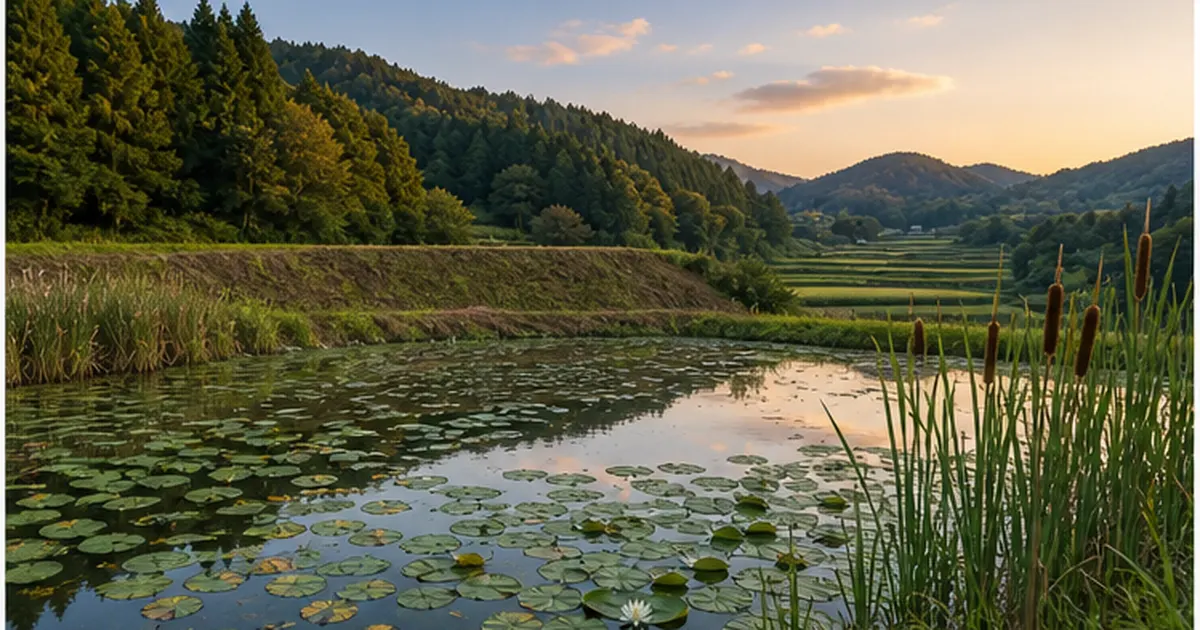
- Irrigation ponds and channels: Artificial waters that store water and send it to the paddies. See also our article onthe ecosystem of irrigation ponds for details.
- Grasslands: Bright habitats maintained by continued mowing, such as thatch fields and hay meadows
- Settlements and homestead woods: The places where people actually live. Garden trees and shrine woods also give wildlife a foothold
How satoyama works: the cycle created by coppice woods, paddies and irrigation ponds
Coppice woods were a "factory for fuel and fertilizer"
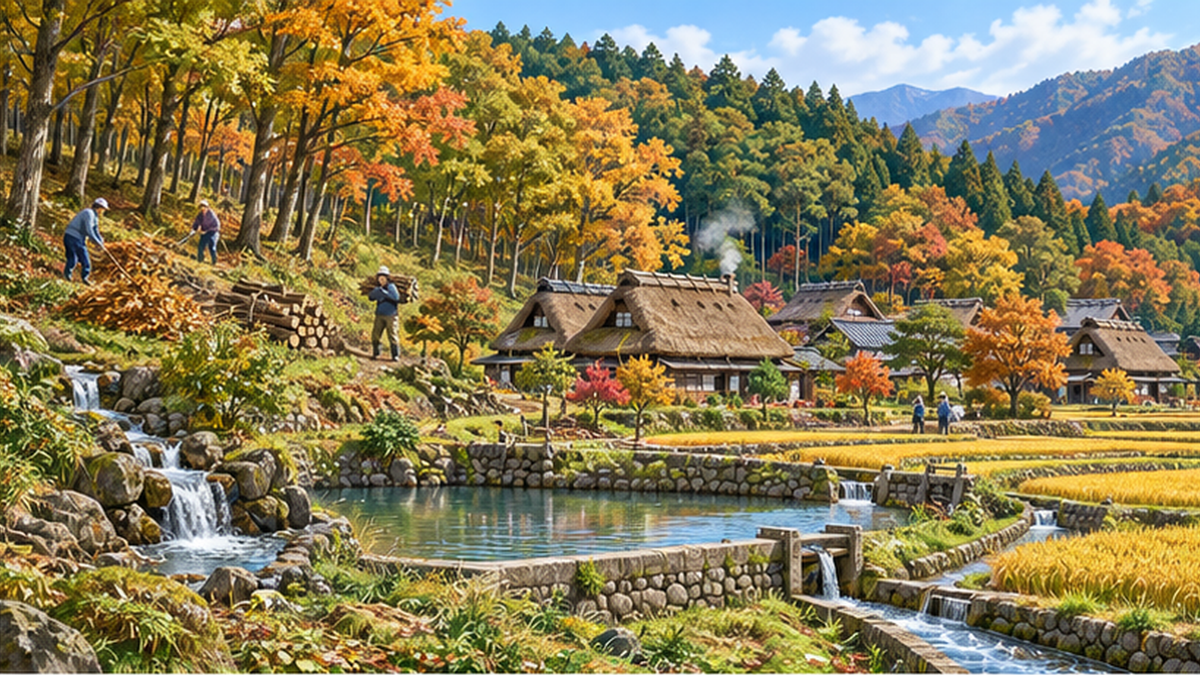
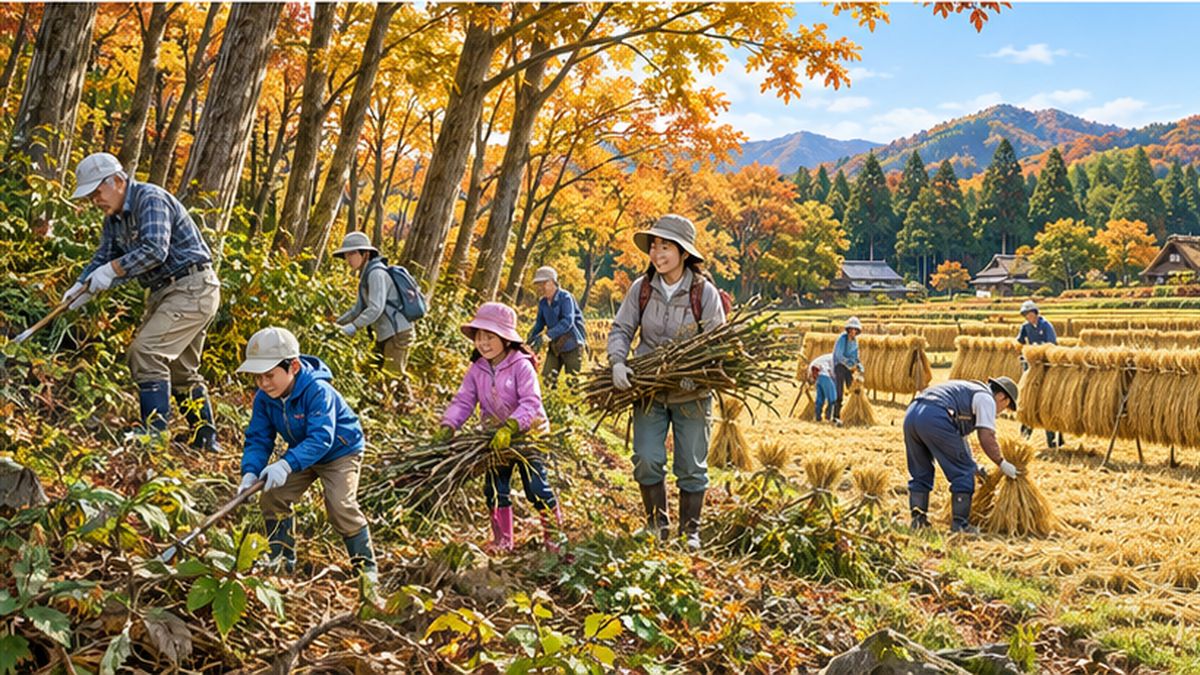
The coppice woods of satoyama were once places that produced resources essential to daily life. Konara and kunugi oaks were cut for firewood and charcoal, and fallen leaves were gathered and worked into fields as compost. Materials from the Forestry Agency and local governments describe these woods as having been maintained through short-rotation management, cutting about every 15 to 20 years.
Konara and kunugi are species with a strong ability to sprout new shoots from their stumps. Using this, people repeated coppicing, cutting and letting the trees regrow, so the woods revived again and again without replanting. A freshly cut wood is bright, then thickens after a few years and finally grows tall. This mosaic of different stages in time became a home for diverse creatures.
Key point: cutting trees was protecting the forest
- Satoyama coppice woods were forests that "could not be protected without cutting." Regular cutting let light into the wood and kept it bright enough for the spring flowers, and the insects that use them, to live.
Paddies and irrigation ponds: people create the water cycle
Satoyama waters have been created by people carrying, storing and releasing water. Rain that soaks into the mountain slopes flows out as streams, is stored in irrigation ponds, and reaches the paddies through channels. A paddy is a shallow wetland flooded only during the rice-growing season, and from spring to summer it serves as a place for frogs, loaches and aquatic insects to lay eggs and grow (see our article on life in rice paddies for details).
The role of the forests that supply the water is also covered in our article on water-source conservation forests. A hallmark of satoyama is that mountains, paddies, channels and ponds are connected as a single water system, so if one part is lost, the others are affected too.
A "circular" way of using land in which people and nature support each other
The essence of satoyama is a circular way of life in which resources circulate within the community. Fallen leaves become compost, compost grows crops, crops become food, and firewood and charcoal become fuel. In the process, woods, grasslands and waterside areas were tended regularly, and as a result the environment stayed good for wildlife too.
People's use of nature for their own benefit was at the same time the maintenance of that nature. This is why satoyama is spoken of as a symbol of "coexistence between people and nature."
Life that satoyama nurtures: where about half of the endangered species live
More than half of the concentrated rare-species areas lie in satoyama
According to Ministry of the Environment materials, more than half of Japan's concentrated rare-species areas overlap satochi-satoyama. In the ministry's survey and analysis, 55% of areas with five or more endangered plant species and 49% of areas with five or more endangered animal species lay within satochi-satoyama.
Species that were once familiar are also concentrated in satochi-satoyama. The same survey found that 69% of the areas where medaka were recorded and 58% of those where the Luehdorfia butterfly was recorded lay within satochi-satoyama. Many of the creatures that were "once everywhere, then somehow gone" have declined along with changes in satoyama.
| Indicator | Figure | Source notes |
|---|---|---|
| Share of Japan's land area occupied by satoyama | about 40% | Ministry of the Environment |
| Share of concentrated rare-species areas that overlap satoyama | Over 50% | Ministry of the Environment |
| Distribution of areas with five or more endangered plant species | 55% in satochi-satoyama | Ministry of the Environment survey and analysis |
| Distribution of areas with five or more endangered animal species | 49% in satochi-satoyama | Ministry of the Environment survey and analysis |
| Share of medaka-recorded areas in satochi-satoyama | 69% | Ministry of the Environment survey and analysis |
| Share of Luehdorfia-recorded areas in satochi-satoyama | 58% | Ministry of the Environment survey and analysis |
Why so many different creatures gather in satoyama
One reason is the mosaic of environments. Woods, grasslands, paddies, irrigation ponds and channels lie side by side in a small area, so creatures that need several habitats can complete their whole lives in one region. A frog, for example, lays eggs in paddies and ponds in spring and, once grown, lives in woods and grasslands.
Another is the rhythm of human work. Cutting, mowing, plowing and changing the water reset the environment at a steady pace and keep succession from going too far. Species that like bright places and species that like dark woods could coexist by sharing different places and times.
- Plants that like bright forest floors: Spring flowers and others that use woods where light reaches the ground
- Creatures of paddies and channels: Medaka, loaches, frogs, aquatic insects and more
- Grassland insects: Butterflies and others that use grasslands kept up by regular mowing
- Animals that move between woods and waterside: Raptors such as the gray-faced buzzard that use satoyama widely
What satoyama does for us: benefits beyond biodiversity
Supply, regulation and culture: the ecosystem services of satoyama
Satoyama provides, all at once, provisioning services such as food and timber, regulating services such as water purification and flood mitigation, and cultural services as a place for scenery, traditional events, education and recreation.
- Food and resources: Rice, vegetables, wild vegetables, mushrooms, firewood, charcoal and compost
- Water regulation: Forests, paddies and irrigation ponds temporarily hold rainwater and slow runoff
- Soil conservation: Woods and grasslands reduce soil runoff
- Culture and education: Festivals, food culture, nature experiences and environmental learning
Note: the "water-holding power" of paddies and ponds
- Flooded paddies temporarily hold rainwater, and irrigation ponds are facilities that store agricultural water. That they also serve as wildlife habitat is part of what makes satoyama so interesting.
Satoyama, satokawa and satoumi: the link from mountains to sea
Water in satoyama flows through rivers to the sea. Care for the mountains, how paddy water is used and the condition of rivers ultimately affect the coastal sea too. Satoumi, which refers to coastal waters that people have tended to gain rich benefits, is a word born of the same idea as satoyama.
The SATOYAMA Initiative, proposed by the United Nations University and the Ministry of the Environment, aims to protect and make use of land and sea uses in which human activity and nature maintain production and diversity together, as in satoyama and satoumi (socio-ecological production landscapes and seascapes, SEPLS), around the world. It spread internationally on the occasion of the 10th Conference of the Parties to the Convention on Biological Diversity (COP10), held in Nagoya in 2010.
A year in satoyama: how life and wildlife change with the seasons
Spring: budding and preparing the paddies
As the snow melts, the trees in the coppice woods bud, and spring flowers appear on the forest floor. For a short period before the trees open their leaves, plenty of light reaches the woodland floor, so quite a few plants flower and set seed near the ground only at this time. Woods kept bright by cutting were an important stage for such plants.
In the paddies, nursery beds are prepared, channels are cleaned and levee banks are mowed. When water is let in, paddies that were dry all winter turn at once into shallow wetlands, and the calls of frogs begin.
Summer: when paddies and grasslands are liveliest
After rice planting, tadpoles, dragonfly nymphs and diving beetles appear in the paddies, attracting herons and raptors that hunt them. Mowing levees and banks prevents rice pests and diseases, and it also keeps the bright environment where grassland plants and insects live. In some areas, fireflies glow around channels and paddies at night.
Autumn: the season of harvest and fallen leaves
After the rice harvest, the paddies dry out again. In the coppice woods, acorns of konara and kunugi oaks fall, and the animals that eat them become more active. Autumn into winter was also the season for raking fallen leaves to gather material for compost. Gathering leaves kept nutrients on the forest floor from building up too much, and plants that prefer poor soil are said to have been able to survive.
Winter: making firewood and renewing the coppice
Winter, when the leaves have fallen, is the season for cutting trees. Coppice woods were traditionally cut in winter, when trees are dormant, which led to coppicing, with new shoots rising from the stumps the next spring. A cut wood becomes bright, grasses and shrubs grow over a few years, and it eventually grows into tall woodland again.
| Season | Human work | Movement of wildlife |
|---|---|---|
| Spring | Preparing nursery beds, cleaning channels, mowing levee banks | Forest-floor flowers bloom; frogs lay eggs in paddies |
| Summer | Managing paddy water, mowing | Tadpoles and dragonfly nymphs grow in paddies; birds gather |
| Autumn | Rice harvest, raking fallen leaves | Acorns ripen and animals become active |
| Winter | Cutting trees, making firewood and compost | Cut woods brighten and prepare for spring sprouting |
Key point: the rhythm of work becomes the rhythm of the ecosystem
- Because farm work and woodland care were done at fixed times each year, wildlife also lived in step with that rhythm. When the work stops, the rhythm is lost.
The crisis of satoyama: nature lost not only to development but to "abandonment"
The fuel revolution and changing lifestyles
From the Showa 30s (around 1955), the fuel revolution and the spread of chemical fertilizers greatly reduced everyday use of satoyama forests. According to the Forestry Agency, use of firewood and charcoal as fuel has fallen to about 2 million m³, less than one tenth of the 1960 level. Once firewood, charcoal and leaf compost are no longer needed, there is no reason to cut the coppice woods.
Abandoned satoyama forest covers an estimated 3–4 million hectares
Many satoyama forests that had been grown and managed by hand have been left unattended, and the Forestry Agency's proposal estimates that abandoned satoyama forest covers about 3 to 4 million hectares nationwide. Oaks and other trees that are no longer cut age and grow oversized, the woods grow dark, and this has various harmful effects on both human life and ecosystems.
| Change | What is happening | Impact |
|---|---|---|
| Reduced use | Demand for firewood, charcoal and compost fell with the fuel revolution and chemical fertilizers | Coppice woods are no longer managed |
| Aging and oversized trees | Oaks and others are left uncut and grow large | Woods grow dark and creatures of bright habitats decline |
| Spread of pests and disease | Large-diameter broadleaf trees are prone to damage from the ambrosia beetle (oak wilt) | Death of satoyama forest spreads |
| Fewer people to tend it | Depopulation and aging | Mowing and channel upkeep fall behind and the landscape deteriorates |
The "second crisis" identified by Japan's national biodiversity strategy
Japan's national biodiversity strategy organizes the crises facing biodiversity in stages. Against the "first crisis" of development and overexploitation, the change in the quality of satochi-satoyama and similar areas caused by people reducing or withdrawing their involvement is positioned as the "second crisis," so satoyama abandonment is an issue the national strategy addresses head-on. The disturbance caused by introduced species such as alien species is treated as a separate crisis.
Caution: conservation does not mean "no entry"
- Because the main cause of satoyama decline is that people stopped tending it, fencing it off and keeping people away will not restore it. Building systems that continue moderate use and management is the central task of satoyama conservation.
Oak wilt and the problem of oversized trees
Satoyama broadleaf forests that have been left alone and grown oversized are said to be a factor in the spread of oak wilt, carried by the ambrosia beetle (Kashinonagakikuimushi). As use disappeared after the fuel revolution that began in the 1950s, the unhealthy state of satoyama has become evident, with pine wilt and oak wilt.
Visiting satoyama: ways to enjoy it and manners to protect it
Tips for your first satoyama walk
Satoyama is nearby nature that needs no mountaineering gear. Start by visiting a satoyama park, citizens' forest or satoyama experience facility within reach of home. Some areas selected as Important Satoyama offer observation events and experience programs.
- Visit several times in different seasons: Spring flowers, summer waters, autumn harvest and winter woods — the same place looks very different
- Look into the water: In channels and ponds you may find small fish and aquatic insects
- Look at your feet and overhead: Notice forest-floor flowers, birds in the trees and sprouts from stumps
- Talk to local people: Once you know what is grown and how it is tended, the landscape looks different
Manners when you visit
- Paddies, fields and levee paths are places where someone earns a living. Do not enter without permission, and do not touch crops or equipment
- Do not take too many living things or plants. Keep to observation and photos rather than taking them home
- Take all litter home, and never release non-native creatures
- Dress and pack for ticks, bees and snakes (long sleeves, long trousers, insect repellent and so on)
- Respect private-land and no-entry signs, and park only in designated places
Action tip
- First, try "walking a nearby satoyama three times in different seasons." Just leaving photos and a short note will train your eye for change.
Bringing the gifts of satoyama into daily life
The easiest way to connect with satoyama is to choose local products. Buying rice and vegetables grown in satoyama, locally produced timber and firewood, and mushrooms economically supports the care of that land. Some regions also offer farming experiences, rice-planting and harvest events, and terraced-rice-field owner schemes.
Efforts to use satoyama for tourism and education are also spreading. Continuing to use satoyama not only as something to "protect" but as a place to "enjoy, learn and receive its gifts" leads to conservation in the end.
Protecting and using satoyama: national government, communities, companies and citizens
Important Satoyama 500: making the places worth protecting visible
The Ministry of the Environment has selected 500 sites across Japan as "Important Satochi-Satoyama" for biodiversity conservation. A site must meet at least two of three criteria: (1) it has diverse and excellent secondary natural environments, (2) it is habitat for diverse wildlife characteristic of satochi-satoyama, and (3) it contributes to forming ecological networks.
Selection criteria for Important Satochi-Satoyama
- It has diverse and excellent secondary natural environments
- It is habitat for diverse wildlife characteristic of satochi-satoyama
- It contributes to forming ecological networks
- It meets at least two of the three criteria above
Protecting through use: new value for satoyama broadleaf forests
For the regeneration of satoyama broadleaf forests through use, the Forestry Agency set up a promotion team for domestic broadleaf use and compiled a proposal in March 2025 (Reiwa 7). The idea is to create new value and outlets for the cut trees, such as firewood, mushroom log wood, and woodwork and furniture material, so that people have a reason to keep tending the woods.
- Firewood and wood biomass: Use as a local heat source
- Mushroom log wood: Kunugi and konara oaks are used as logs
- Furniture and craft material: Use of locally grown broadleaf timber
- Tourism and experiences: Satoyama experiences, rice planting and harvesting, guided tours
What citizens can do
- Join volunteer satoyama conservation activities (undergrowth clearing, thinning, paddy work) near you
- Choose local rice, vegetables and wood products to economically support the care of satoyama
- Join wildlife observation events and environmental learning, and keep records
- Record changes in nearby satoyama in photos and a diary (see also nature journaling)
Connection to the sea: protecting satoyama means protecting the ocean
Care for the mountains reaches the coast
Rain that falls in the mountains gathers in rivers via forest soil, paddies and irrigation ponds, and enters the sea at the river mouth. If forests deteriorate and soil washes out, or waterside habitats are lost, estuaries, tidal flats and seaweed beds may be affected. Conversely, a watershed where satoyama is well tended helps deliver water and nutrients to the sea steadily.
The view that links rivers with satoyama and satoumi overlaps with river restoration and the idea of satoumi. To protect the sea, first look to the watershed, which is satoyama. That is the idea of the "connection of mountains, rivers, villages and sea."
Passing familiar nature on to the next generation
Satoyama is not a special protected area but a place where someone lives, works and tends the land. That is why our consumer choices and ways of getting involved shape satoyama's future directly. Walk a nearby satoyama once. Use rice or timber grown there. Small connections support nature that extends all the way to the sea.
Summary
- Satoyama is secondary nature, covering about 40% of Japan, that has been maintained by people's hands. About half of endangered species' hotspots lie within it, yet abandonment caused by reduced use is its greatest crisis. The key to protecting it is "continuing to use it in moderation."
References and sources
- Ministry of the Environment, "Satochi-Satoyama and Biodiversity" – Definition of satochi-satoyama and distribution of rare species
- Ministry of the Environment, "Survey and Analysis of Japan's Satochi-Satoyama (Interim Report)" – Distribution shares of endangered species, medaka and Luehdorfia
- Ministry of the Environment, "Important Satochi-Satoyama" – Selection criteria for the Important Satoyama 500
- Ministry of the Environment, "What Is Satochi-Satoyama" guide – The idea of secondary natural environments
- Forestry Agency, "Proposal for Regenerating Satoyama Broadleaf Forests through Use (March 2025)" – Estimate of abandoned satoyama forest and ways to use it
- Forestry Agency, "Use of Satoyama Forest for Firewood, Charcoal and Mushroom Production Materials" – Changes in firewood and charcoal use
- International Partnership for the Satoyama Initiative (IPSI) – Concept of the SATOYAMA Initiative
- United Nations University Institute for the Advanced Study of Sustainability (UNU-IAS) – Satoyama and traditional knowledge
* Listed in order of reliability: government agencies > academic institutions > peer-reviewed papers > specialist organizations > reputable media