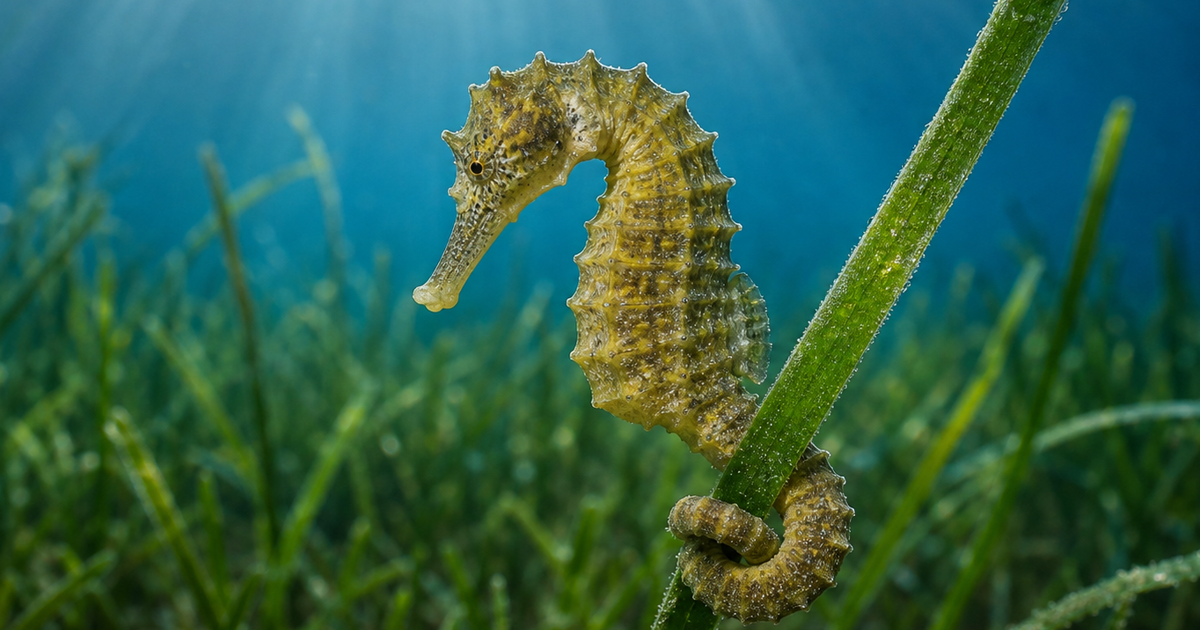
With its tail curled around a blade of seagrass and a face like a bowed horse's head, the tiny seahorse drifts through the water. It's a popular sight in aquariums, but hidden within its life is one of the rarest reproductive systems among vertebrates: the male becomes pregnant and gives birth. A pouch on the male's belly, called the brood pouch, functions much like a mammalian uterus and placenta, protecting the eggs and raising hundreds of fry before finally releasing them into the sea.
Yet this endearing creature is quietly declining in number today. It faces overharvesting for use as dried medicine and souvenirs, bycatch in shrimp nets and other fishing gear, and the loss of the seagrass meadows that serve as its spawning and nursery grounds. Every seahorse species in the world is now covered by CITES, the Convention on International Trade in Endangered Species of Wild Fauna and Flora, which regulates international trade in wildlife at risk of extinction.
This article draws on reliable sources such as Japan's Ministry of the Environment, the Japan Science and Technology Agency (JST), Project Seahorse, and peer-reviewed papers to gently organize the mysterious biology of seahorse reproduction, courtship, and camouflage, along with the conservation challenges we need to face. By the end, you'll see that this small resident of the sea also serves as a yardstick for ocean health.
What you'll learn in this article
- The extremely rare reproductive mechanism, even among vertebrates, in which males protect eggs in a brood pouch and give birth to fry
- How the brood pouch functions much like a mammalian uterus and placenta, delivering oxygen and nutrients to the young
- The daily courtship dance and the monogamous-like pair bonds seen in many species
- Camouflage that mimics seagrass and seaweed, and a life of suction feeding with no stomach
- Conservation challenges of overharvesting, bycatch, and seagrass meadow loss, and international trade regulation under CITES
What kind of fish is the seahorse?
The seahorse is classified in the genus Hippocampus, in the family Syngnathidae, order Syngnathiformes — a bona fide fish. With its horse-like head, a body segmented like a shrimp's, and a tail that curls like a snake, many people don't think of it as a fish at all, yet it is unmistakably a bony fish that breathes through gills and swims by beating its dorsal fin. The scientific name Hippocampus comes from the Greek words for "horse" (hippos) and "sea monster" (kampos), and in English it's called a "sea horse."
About 46 species of seahorse are known worldwide. Sizes vary enormously, from pygmy seahorses barely 2cm long as adults to larger species exceeding 30cm. Most live in shallow tropical to temperate seas, favoring "quiet environments rich in hiding places" such as coral reefs, seagrass meadows, and mangroves. In Japanese, the seahorse is written as "tatsu no otoshigo" (dragon's child), likening it to the offspring of a dragon ascending to heaven, and it has long been cherished as an auspicious creature.
Seahorses have close relatives too. The same family, Syngnathidae, includes pipefish, which stretch their slender bodies straight, and leafy or weedy seadragons, which mimic seaweed with fluttering skin appendages. These relatives also share the trait of males carrying and caring for the eggs, showing that "male child-rearing" is a special trait shared across this family. Despite their varied appearances, the shared underlying reproductive mechanism hints at their evolutionary connection.
The body structure hidden beneath its horse-like appearance
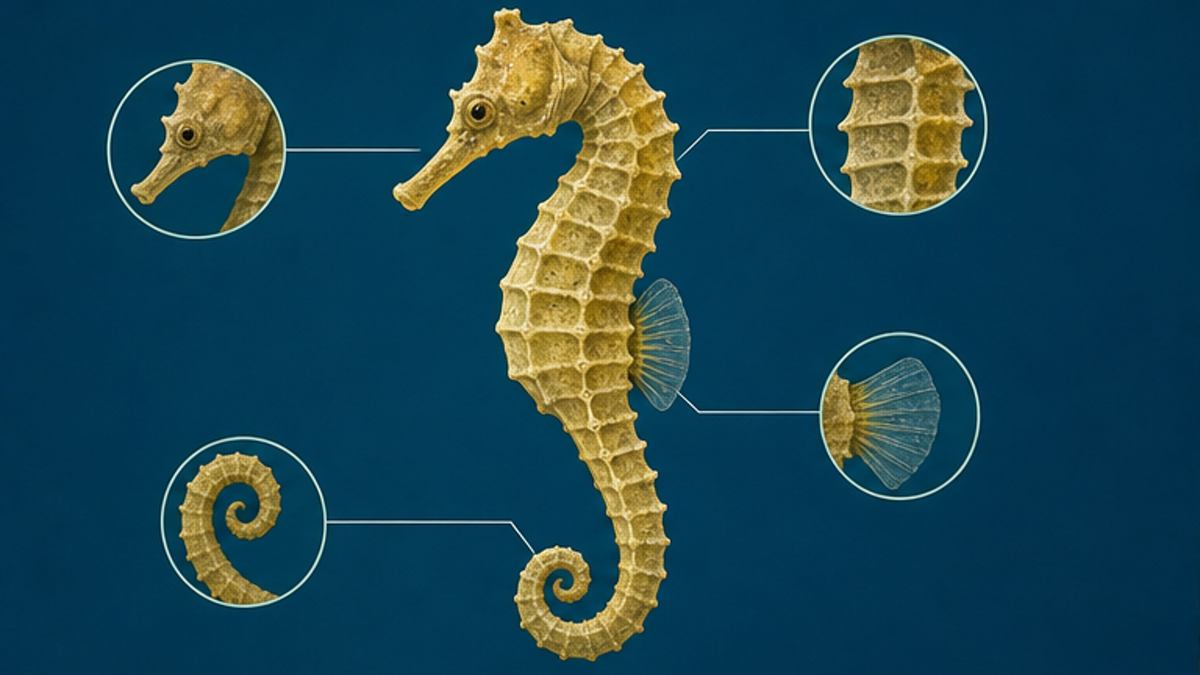
Instead of scales, the seahorse's body is covered by a hard exoskeleton made of stacked bony rings. This armor-like structure protects it from predators and is also used to distinguish species. Unlike ordinary fish, it cannot swim quickly by undulating its body; instead, it beats its dorsal fin dozens of times per second to move slowly while remaining upright.
- The head bends nearly at a right angle to the body, giving it the profile of a bowed horse
- It has no tail fin; instead, it uses a prehensile tail to anchor itself to seagrass or branches
- Both males and females have bony body rings, and blend into their surroundings through color and projections
- Poor swimmers, they favor a strategy of "staying put" over long-distance movement
A lifestyle built around choosing not to move
Being a poor swimmer might look like a weakness, but the seahorse has turned it to its advantage. By camouflaging its color and shape to closely resemble seagrass, seaweed, or coral, and anchoring itself firmly with its tail while waiting motionless, it becomes hard for predators to spot while also allowing it to ambush small prey that wander close. Rather than swimming about flamboyantly, "erasing its presence and waiting" is this small fish's survival strategy. This ambush-based lifestyle is, much like the relationship between coral and its symbiotic algae discussed in the article on the symbiosis between coral and zooxanthellae, a good example of a creature with little movement living in deep connection with its environment.
There's ingenuity in the tail structure too. While most fish have a round tail in cross-section, research has shown that the seahorse's tail has a nearly square cross-section. This square shape allows it to grip firmly onto the surface of seagrass or branches, resisting deformation under outside pressure and holding up well against twisting forces. This "gripping tail," which lets it anchor itself even in strong currents, is a literal lifeline for a seahorse living a stationary life. It's a striking reminder of how well an organism's body shape suits its way of life.
Key points to remember first
- Though it looks like a horse, the seahorse is a genuine fish
- About 46 species exist worldwide, ranging in size from 2cm to over 30cm
- A poor swimmer, but survives through camouflage and ambush
Male pregnancy — the brood pouch, a miraculous organ
The biggest reason seahorses are beloved around the world lies in their reproductive mechanism: the male becomes pregnant and "gives birth" to fry. Animals in which the male carries the young are limited to a very small group among vertebrates, including seahorses and other members of the family Syngnathidae. A pouch called the brood pouch, located on the underside of the male's belly near the base of the tail, is the stage for this child-rearing.
The combination of "the female lays eggs, and the male cares for them" does exist elsewhere in nature, but in most cases the eggs are protected outside the body. What makes the seahorse especially remarkable is that the male raises the eggs inside a pouch within his body, protecting them until the babies are fully developed before releasing them into the world. By enclosing the eggs within his body, he hides them from predators and shields them from changes in water temperature and salinity. The male's own body becomes the very first "safe cradle" for his young.
From fertilization to birth
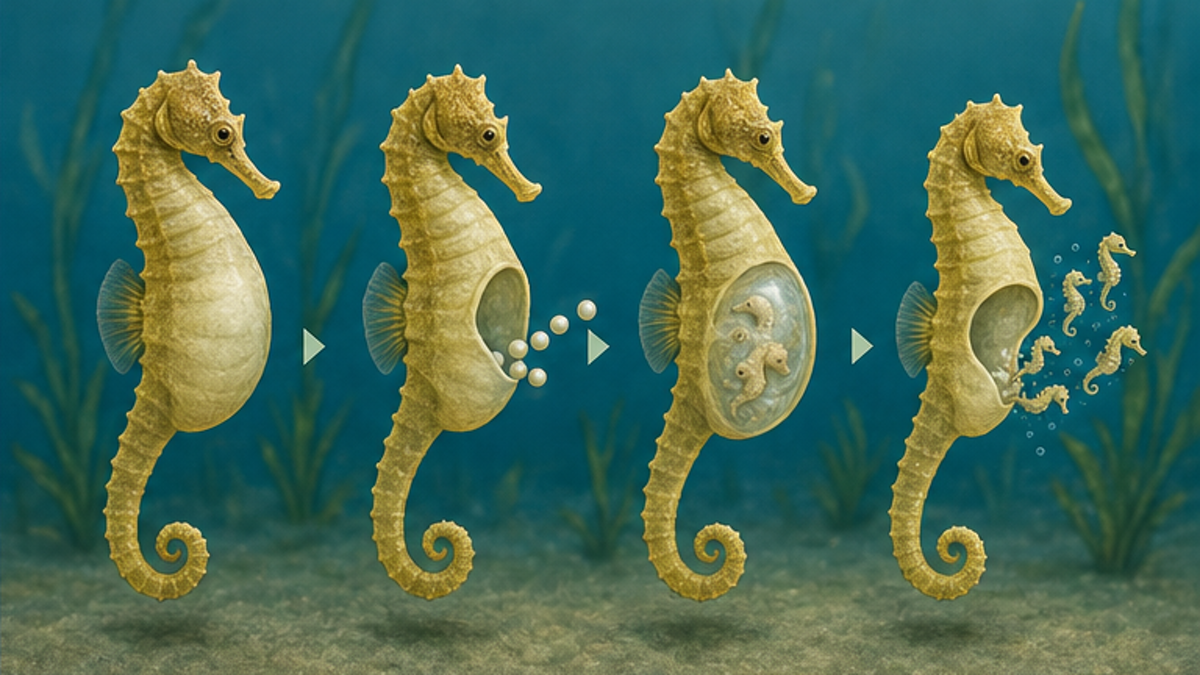
During reproduction, the female uses her ovipositor to deposit eggs into the male's brood pouch. The male then releases sperm onto the eggs, fertilizing them inside his body (within the pouch), and carries them all the way to birth. Because fertilization happens at the moment he receives the eggs, the male gains an unusually high degree of paternity certainty — rare in the animal kingdom — knowing for certain that the offspring are his own.
- Courtship dancing readies the pair, and the brood pouch begins to swell
- The female transfers eggs into the brood pouch using her ovipositor
- The male releases sperm to fertilize them inside the pouch
- Depending on species and water temperature, he carries the eggs and embryos in the pouch for about 2 to 4 weeks
- Contracting the muscles at the pouch's opening, he gives birth to dozens to hundreds of fry
Functions resembling a mammalian uterus and placenta
What makes the brood pouch remarkable is that it's far more than a simple "container." A network of capillaries develops on the inside of the pouch, delivering oxygen to the embryos. The pouch's interior is also sealed off from the surrounding seawater, and it handles waste removal, regulation of salt concentration (osmotic pressure), and even the supply of a nutrient-rich "placental fluid." This is thought to be an independently evolved set of functions similar to a mammalian uterus and placenta, built from an entirely different type of tissue. Recent research has also found that androgens (male hormones), rather than female hormones, are involved in forming this pouch, and that a special immune mechanism operates to prevent rejection of embryos that are genetically distinct from the father.
The male brood pouch is an evolutionarily novel organ that functions like a mammalian uterus, yet its tissue origins are entirely different.
— Summarized from research on male seahorse pregnancy, including Nature Ecology & Evolution (2025)
The length of pregnancy varies by species and water temperature, ranging from as short as about 10 days in some species to nearly 6 weeks in others. Generally, higher water temperatures speed embryonic growth and shorten the pregnancy. As pregnancy progresses, the environment inside the pouch is gradually adjusted to more closely match the surrounding seawater, preparing the newborn fry to adapt quickly once released into the sea. It's remarkable that even this kind of "acclimatization" for life in the outside world happens inside the male's body.
At the time of birth, the male uses large skeletal muscles and bones near the opening of the pouch to contract it, forcefully expelling the fry. This muscle is far more developed than anything found in females, and is thought to support the active "pushing" behavior of giving birth. The newborn fry already resemble tiny versions of their parents and immediately begin drifting on their own.
Hundreds at a time, yet few survive
The number of fry born in a single birth varies greatly by species — sometimes just a few dozen, and in larger species, several hundred. The numbers may seem large, but most of the fry are preyed upon while drifting, or fail to find suitable habitat, and only a tiny fraction survive to adulthood. Even though parental protection of the eggs raises survival rates, the overall pace of reproduction is not especially fast to begin with. This trait — "many are born, but few survive to maturity" — means that once numbers decline due to overharvesting or environmental degradation, recovery is difficult, a point connected to the conservation challenges discussed later in this article.
Male pregnancy has also become a valuable "research model" for understanding reproduction and evolution more broadly. How did structures similar to the uterus and placenta arise along an entirely different evolutionary path from mammals? Why doesn't the male's body reject embryos that are genetically distinct from his own? These questions are expected to offer hints that could deepen our understanding of pregnancy and immunity in ourselves as well. A great mystery of life is packed into the pouch of this tiny fish.
Why does the male become pregnant?
By having the male carry the young, the female can immediately begin preparing her next batch of eggs. While the male is pregnant, the female matures her eggs, and once he gives birth, she can hand over new eggs within hours to days. This efficient ability to "reproduce without pause" is thought to be advantageous for leaving behind many offspring during a limited breeding season.
Courtship dances and pair bonds
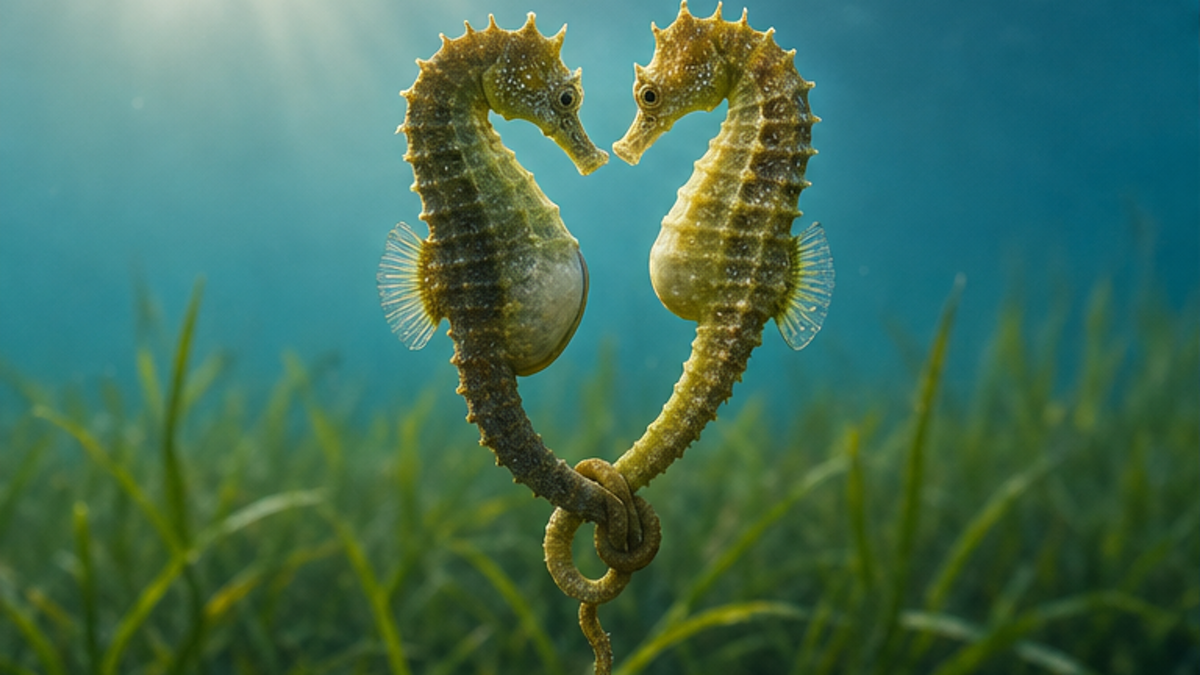
Another famous aspect of seahorse reproduction is the graceful courtship dance. During the breeding season, males and females meet almost daily, brightening their body color, entwining their tails, and spinning together in the water or swimming up and down side by side. This dance is not merely romantic to watch — it plays a vital role in synchronizing the pair's reproductive timing.
It's also known that courtship can continue for several days before a pair forms. The male and female repeat the dance over and over, gradually closing the distance between them, preparing to accept one another. This process of building a bond patiently over time is, in a sense, careful groundwork to ensure a limited reproductive opportunity leads to success. Even without flashy displays, there is something distinctly seahorse-like in this steady, step-by-step approach.
Daily greetings that maintain the bond
Many seahorses are known to maintain a "monogamous-like" relationship, staying with a specific partner throughout the breeding season. Pairs exchange a brief dance (a greeting-like behavior) nearly every morning, confirming each other's presence. This daily exchange keeps the male's preparation of the brood pouch in step with the female's egg maturation, creating a state in which the female can hand over new eggs immediately after the male gives birth. For a poor swimmer with a limited range of movement, being able to reunite with the same partner every morning is also a reliable mechanism for not missing a reproductive opportunity.
At the climax of courtship, males and females rise together through the water in a behavior called "rising," swimming close together as if dancing in unison. Eggs are often transferred at this moment, making the dance not only a signal for reproduction but also a precisely coordinated maneuver to safely move the eggs into the brood pouch. If the partners are out of sync, the eggs cannot be transferred properly. What looks like a graceful dance is, in fact, a joint effort that allows no room for failure.
- Brightening body color to appeal to the partner
- Entwining tails and swimming close together
- The male swells his brood pouch to signal readiness
- The daily dance synchronizes the pair's reproductive rhythm
Why it's called a "symbol of love"
From the male's devoted care of the young and the pair's daily closeness, seahorses have long been cherished as a symbol of love and marital harmony. However, this is ultimately a human interpretation of their reproductive behavior, and not every species stays with the same partner for life. Some species change partners, and the strength of pair bonds is reported to vary with environmental conditions. It's fine to enjoy this as a romantic story, but scientifically, it's more accurate to understand it as "behavior that improves reproductive efficiency."
Summary of the dance's role
- Beyond visual romance, its true purpose is to synchronize reproduction
- Many species maintain monogamous-like pairs during the breeding season
- The daily greeting supports a mechanism for continuous reproduction without a break
A life of camouflage among the seagrass
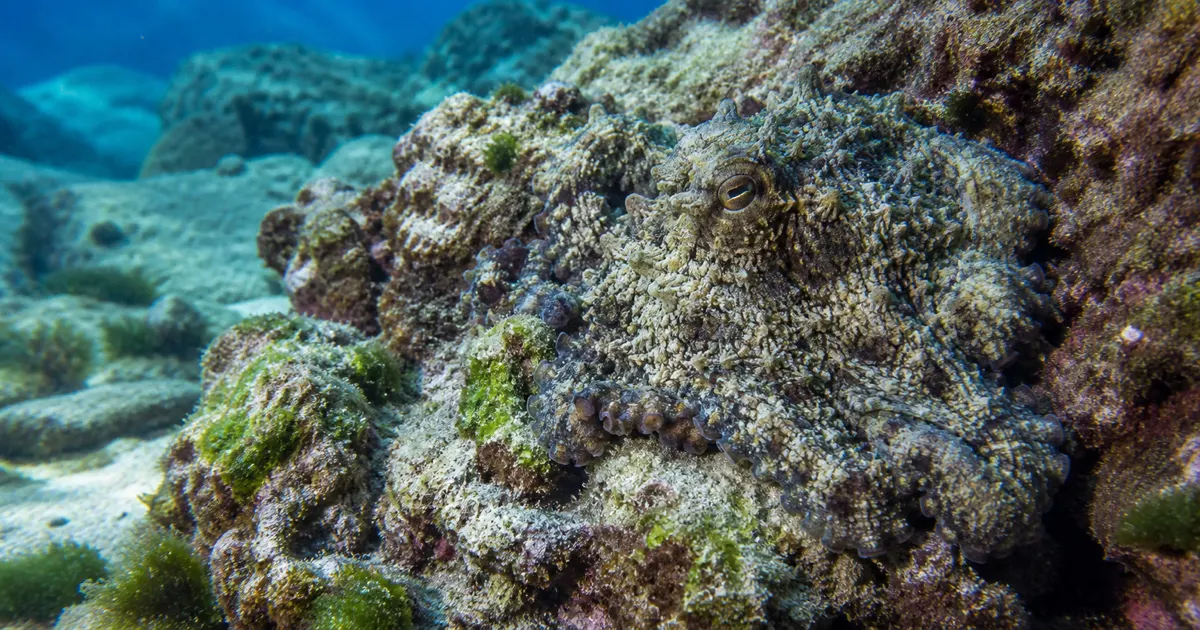
For a poor-swimming seahorse, the greatest weapon of self-defense is camouflage. Its skin contains pigment cells (chromatophores) that allow it to change color to match its surroundings. Some species also have branch-like protrusions on their skin resembling seaweed, making them almost indistinguishable from their surroundings when hiding in seagrass meadows or coral. Chromatophores expand and contract under nervous and hormonal control, shifting the seahorse's color to pale on sand and darker amid dense seaweed, matching whatever backdrop it's against.
Camouflage isn't limited to color — it also extends to shape. In individuals that spend long periods in the same spot, the skin protrusions (dermal appendages) can lengthen, taking on an outline resembling the surrounding seaweed. Staying still, matching color, and even matching shape — this triple layer of camouflage makes the seahorse disappear from the eyes of both predators and prey. It's a remarkable strategy for a creature without flashy weapons or speed, surviving instead by blending into its environment.
Tiny masters of disguise that look just like seagrass
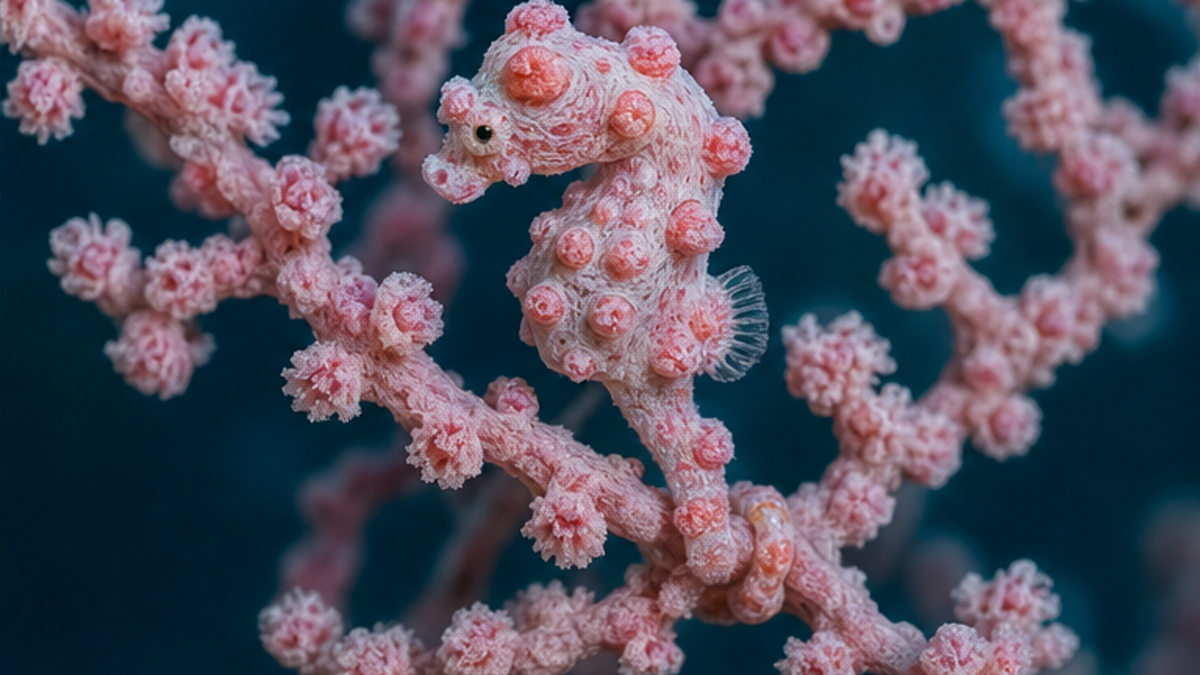
Pygmy seahorses are widely known as masters of camouflage. Measuring only about 2cm, they live exclusively on particular sea fans (gorgonian corals), replicating even the polyps and colors of their host so precisely that one species was discovered by chance while researchers were examining the host sea fan in a laboratory. In Japan's waters too, species such as Hippocampus sindonis (hana-tatsu / enshu-tatsu), which are covered head to toe in seaweed-like protrusions, skillfully hide themselves within seagrass meadows.
Seagrass meadows as a cradle
For many seahorses, seagrass meadows filled with eelgrass and similar plants are the setting for their entire lives. They rest with their tails wrapped around seagrass, court their partners there, raise their young, and lie in ambush for prey while camouflaged. Hippocampus coronatus, found in Japan, is common in bay eelgrass meadows and is known, along with pipefish and filefish, as a species that spends its entire life in seagrass meadows. These meadows serve as spawning and nursery grounds for many fish, while also acting as "blue carbon" reservoirs that store carbon dioxide — meaning their conservation supports the health of the entire ocean, not just seahorses. Conserving coastal environments including seagrass meadows is also deeply connected to the framework of Marine Protected Areas (MPAs).
| Habitat | Characteristics | Example seahorses living there |
|---|---|---|
| Seagrass meadows (eelgrass beds) | Quiet bays thick with seagrass, offering many hiding places | Hippocampus coronatus, and others |
| Coral reefs | Complex terrain and diverse life | Pygmy seahorses |
| Rocky reefs and seaweed beds | Ideal for mimicking seaweed | Hippocampus sindonis (hana-tatsu/enshu-tatsu), and others |
| Mangroves | Tangled roots providing shelter for fry | Various tropical species |
Seagrass meadows are also called "cradles of the sea." Areas thick with eelgrass and other seagrasses soften waves, purify water, and provide countless hiding places for small creatures. Not only seahorses, but many fish species lay their eggs and raise their fry here. Seagrasses also absorb carbon dioxide through photosynthesis and store it in their tissue, drawing recent attention as "blue carbon" that helps mitigate climate change. Protecting seahorses is inseparably tied to protecting the seagrass meadows themselves, which hold this multifaceted value.
Camouflage as an "invisible armor"
Alongside its hard bony body rings, camouflage that matches color and shape to its surroundings protects a seahorse that cannot swim well. Conversely, if the seagrass or coral it mimics disappears, it loses both its hiding places and its prey at the same time. The health of its habitat and its own survival are inseparably linked.
A body without a stomach, and instantaneous suction feeding
Small and seemingly gentle, the seahorse turns out to be a surprisingly fierce hunter at mealtime. Using its tiny, pursed mouth at the tip of a slender snout, it targets small zooplankton, crustaceans, and fish eggs. It cannot open its mouth wide, but instead sucks in prey at astonishing speed.
A feat performed in six-thousandths of a second
The seahorse slowly brings its snout close to prey, and the instant it comes within striking range, it sucks in the water and the prey together in a flash lasting roughly six-thousandths of a second (about 0.006 seconds). The unique shape of its head is thought to allow it to approach prey underwater while creating almost no disturbance in the water. It will actively strike at crustaceans just barely small enough to fit through its narrow snout, sometimes even producing an audible "clicking" sound as it feeds.
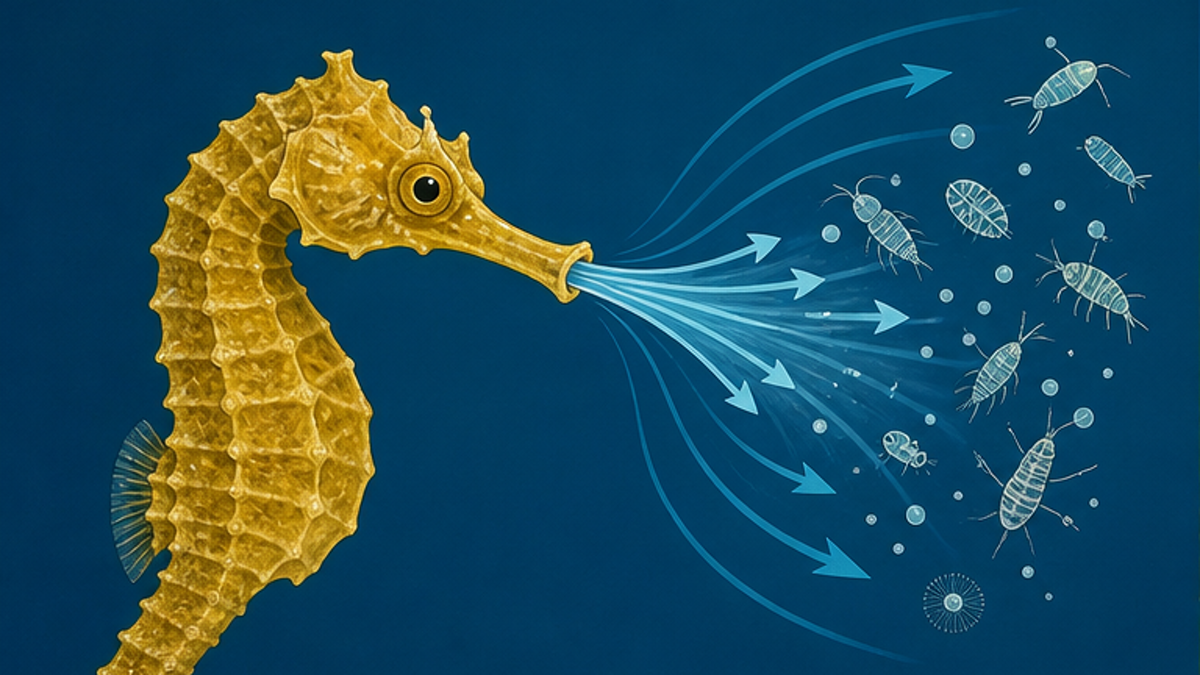
No stomach means eating little and often
Seahorses have no stomach and lack a highly efficient capacity for digesting and absorbing food. This means they cannot store much at once, and must continue eating small amounts many times throughout the day. In captivity, seahorses with hearty appetites have been reported to eat thousands of brine shrimp (small crustaceans) per day. A body that cannot store nutrients means it cannot survive without an environment where prey is constantly nearby — that is, a rich seagrass meadow or coral reef teeming with life.
The narrowness of its mouth also limits the size of prey it can eat. Because seahorses can only eat creatures small enough to pass through their snout, fry in particular need vast quantities of extremely fine plankton. For newly born babies to avoid starving, an abundance of food must be drifting nearby. And the small creatures that serve as this food can only thrive where healthy seagrass meadows or coral reefs exist. Even in the way it feeds, the seahorse's life is clearly sustained by the richness of its habitat.
Its independently moving eyes are also useful when searching for prey. A seahorse can move its two eyes independently — looking forward with one and backward with the other, for example. This lets it keep watch over a wide area without moving its body at all, perfectly suited to ambush-style hunting. It has no teeth, and swallows captured prey whole. Staying still, searching only with its eyes, and sucking in prey in an instant — the seahorse's hunting style is an efficient balance of energy conservation and certainty.
- An ambush hunter that sucks in prey in about 0.006 seconds
- With no stomach, digestive efficiency is low, requiring frequent small meals
- Sometimes eats thousands of tiny crustaceans in a single day
- Cannot survive without a healthy ecosystem rich in prey
What the body structure tells us
- Though a poor swimmer, it reliably captures prey with an instantaneous suction strike
- Lacking a stomach, it depends heavily on a rich feeding environment
- This is precisely why it is so vulnerable to habitat degradation
Seahorses of Japan — six familiar coastal species
Seahorses are not creatures of a distant sea. Several species live along Japan's coast, with the larger species including the common seahorse, Hippocampus trimaculatus, the larger o-umiuma, Hippocampus histrix (ibara-tatsu), Hippocampus coronatus (sango-tatsu), and hana-tatsu (enshu-tatsu), among others. In addition, tiny pygmy seahorse relatives have also been confirmed in Japanese waters, and research continues to advance in this field, including the recent description of a new pygmy seahorse species from Japan.
Living quietly in bays and seagrass meadows
Most of Japan's seahorses live in the seagrass meadows and rocky reefs of calm, slow-current bays. Hippocampus coronatus is distributed from southern Hokkaido to Kyushu and along the Chinese coast, favoring eelgrass meadows in bays. Hana-tatsu is covered head to toe in seaweed-like protrusions and hides remarkably well in the rocky reefs of western Japan and elsewhere. Divers and snorkelers searching for them can sometimes spot their small, motionless bodies, though their skillful camouflage often means they go unnoticed.
Seahorses are also a familiar and popular sight at aquariums across the country. Their gently drifting movements, the male's swollen belly, and displays of newly born tiny fry give many people a chance to encounter the wonders of the ocean. As breeding and husbandry techniques have advanced, more aquariums are now able to display individuals bred in captivity. Breeding in aquariums can also help conservation efforts by reducing the pressure to collect too many wild individuals. Being able to see the real thing up close quietly sustains public interest in this creature.
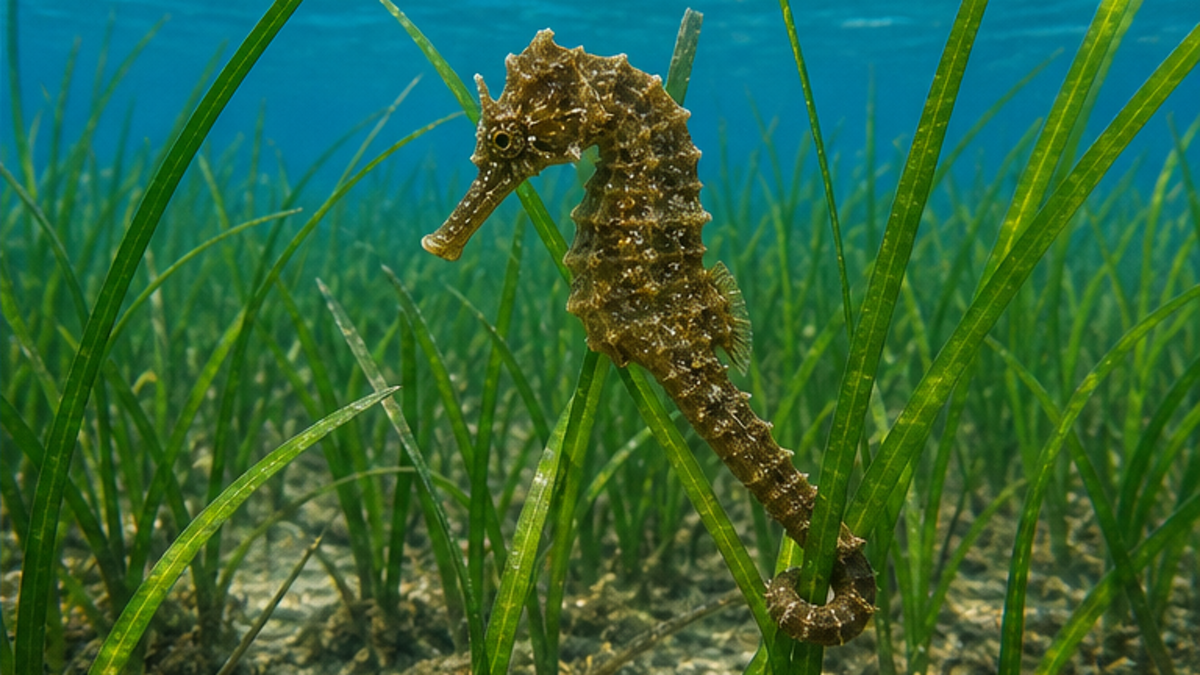
| Species | Characteristics | Main distribution/environment |
|---|---|---|
| Common seahorse | The most familiar representative species | Coastal waters south of Honshu |
| Hippocampus coronatus (sango-tatsu) | Common in bay eelgrass meadows | Southern Hokkaido to Kyushu, coastal China |
| Hana-tatsu (enshu-tatsu) | Camouflages with seaweed-like protrusions | Rocky reef areas of western Japan and elsewhere |
| Larger o-umiuma | A species that grows large | Coastal waters of southern Japan |
Being familiar makes it easier to notice change
Seahorse lifespans vary by species and environment, but in the wild they are generally thought to live around a few years. Smaller species tend to be shorter-lived, packing multiple reproductive chances into their limited lives. Living in pairs and repeatedly giving birth several times each season could be seen as a strategy for making the most of a short life to leave behind offspring. Individuals cared for meticulously in aquariums sometimes live longer than they would in the wild.
Living in familiar coastal waters also means we are well-positioned to notice changes in the ocean early. If seagrass meadows decline, the seahorses living there disappear too. Conversely, if local efforts to restore eelgrass meadows advance, there's a chance they could return. Just as sea turtle conservation is inseparable from the condition of nesting beaches — the article on sea turtle conservation is a useful reference here as well — seahorse numbers directly reflect the health of their marine habitat.
In recent years, a growing citizen science movement has emerged, gathering records of seahorse sightings from divers, anglers, and local residents. If the vast coastline, too large for experts alone to survey, can be watched over through many people's "I found one" reports, it becomes much easier to grasp which species live where, and where their numbers are changing. Aquariums, too, are working to convey seahorse biology through breeding and exhibits, and being a familiar, popular creature naturally serves as a gateway to broader interest in the ocean.
They live in Japan's seas too
Seahorses aren't just creatures found in aquariums — they live quietly in bays and seagrass meadows throughout Japan. Precisely because they are a familiar species, they hold value as a "yardstick" for watching over the health of local marine environments.
Looming crises — overharvesting, bycatch, and habitat loss
Endearing and familiar as they are, seahorses are, on a global scale, a creature in decline. The main threats can be organized into three categories: overharvesting aimed at producing dried products, bycatch caught up in other fisheries, and the loss of the seagrass meadows and coral reefs that serve as breeding grounds.
Enormous volumes are being traded
Seahorses have long been dried and used as ingredients in traditional medicine and as souvenirs. One estimate found that more than 32 million seahorses (including both live and dried) were exported by about 70 countries between 2004 and 2011, the vast majority of them caught from the wild. Some are traded live for the ornamental fish market, but the overwhelming majority circulate as dried products. For a small creature with limited reproductive capacity, this represents enormous pressure.
Behind this demand lies a long tradition and culture. That is precisely why simply banning use outright doesn't easily solve the problem — expert groups such as Project Seahorse have engaged in repeated dialogue with industries connected to traditional medicine, working together to explore ways of using seahorses within sustainable limits, or finding alternatives. Stopping overharvesting while respecting culture is one of the defining challenges of seahorse conservation, and a patient effort combining prohibition with dialogue, and regulation with cooperation, continues today.
Most are lost through "unintended capture"
An issue that shouldn't be overlooked is bycatch. Many seahorses are caught unintentionally, alongside the intended catch, in fishing gear such as shrimp trawl nets that scoop up everything in their path rather than targeting specific fish. Even with no intention of catching them, enormous numbers end up in nets and are lost as a result. Bycatch is a challenge common to fisheries worldwide, and is closely linked to the broader issue of bycatch, as well as ghost gear — abandoned nets left in the sea that continue to trap marine life.
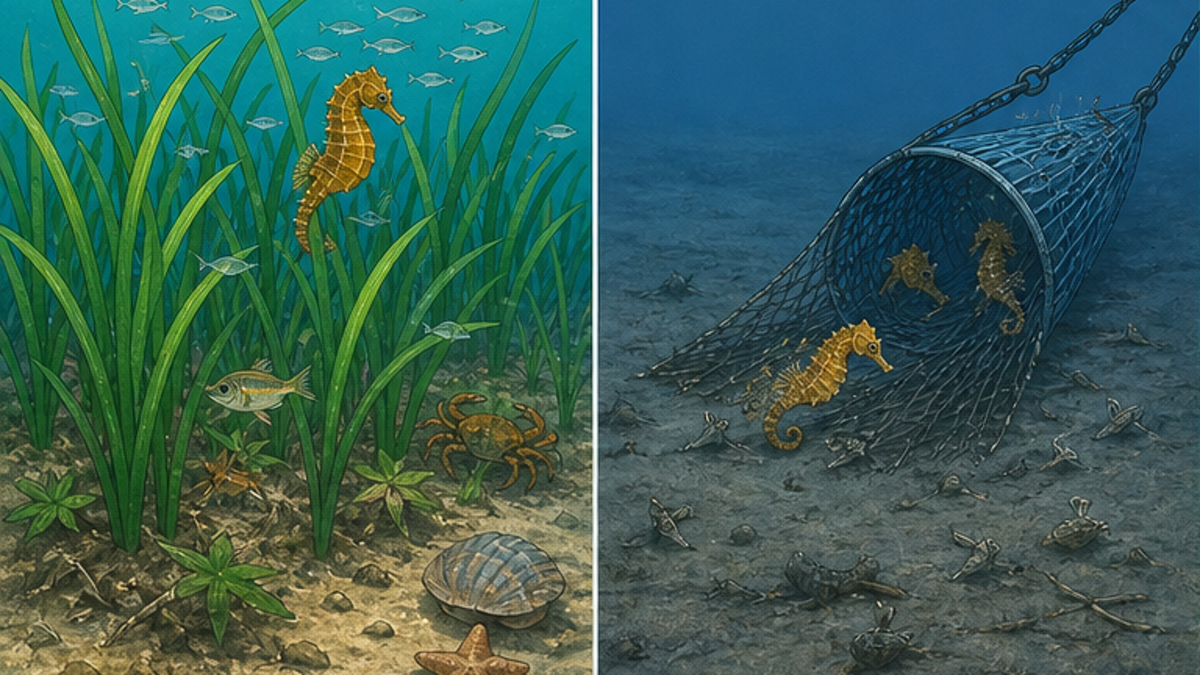
The habitat itself is disappearing
The third threat is the loss of habitat — seagrass meadows, coral reefs, and mangroves. When coastal development, water quality degradation, or rising water temperatures shrink seagrass meadows, seahorses simultaneously lose their hiding places, breeding grounds, and prey all at once. Japan's Ministry of the Environment continues to monitor the condition of seagrass meadows across the country through ongoing surveys. For species living on coral reefs, habitat degradation from rising water temperatures — of the kind discussed in the article on the mechanism of coral bleaching — is also an indirect threat.
What makes these threats more serious is the seahorse's own slow rate of reproduction, discussed earlier. As mentioned, even when many fry are born, only a tiny fraction reach adulthood. Moreover, pair bonds are strong, and in some species, if one partner is lost, the other cannot easily move on to a new breeding partner. With a limited range of movement and no great speed to flee, sea areas where numbers have already declined take a long time to recover. Many seahorse species worldwide are classified as "data deficient," lacking enough information to properly assess their extinction risk, raising concerns that risks may be advancing without our even grasping the true situation.
Three overlapping threats
- Overharvesting: enormous numbers caught for traditional medicine and souvenirs
- Bycatch: massive numbers lost as unintended catch in shrimp nets and similar gear
- Habitat loss: shrinking seagrass meadows, coral reefs, and mangroves
- Every species worldwide is regulated under CITES
What can be done to protect them
Efforts to protect seahorses are advancing across multiple layers, from international rules to local activities and our own daily choices. Rather than simply feeling pessimistic, the first step is to understand "where the levers for change exist." No single measure alone will solve the problem, but if progress accumulates gradually across each layer, it is entirely possible to change the situation. Let's look through them in order, from the broadest frameworks to the actions closest to home.
International rules and expert efforts
In 2004, the genus Hippocampus became the first marine fish listed under Appendix II of CITES, requiring permits and confirmation of sustainability for international trade. It covers every species worldwide, functioning as a framework to curb overharvesting. Project Seahorse, an international conservation project involving organizations such as the Zoological Society of London, has since its founding in 1996 worked to reduce bycatch, regulate trade appropriately, and conserve habitats, cooperating with those involved in traditional medicine to pursue sustainable use.
Restoring seagrass meadows — local revival efforts
An initiative spreading rapidly in Japan in recent years is restoring seagrass meadows such as eelgrass beds. Citizens, fishers, businesses, and government working together to plant seedlings and revive the ocean's cradle are underway in various regions. Since seagrass meadows also store carbon dioxide as blue carbon, restoring them advances seahorse conservation and climate action at the same time. For examples of efforts to protect marine resources, cases that reconsider how fish are caught and used — such as Kura Sushi's wild-caught fish project run by a seafood company — offer useful reference points.
Efforts to reduce bycatch are advancing as well. Installing devices in nets that allow non-target species to escape, and reconsidering how operations are conducted in areas rich in life, such as seagrass meadows, help save not only seahorses but also sea turtles, small fish, and many other lives. Bycatch countermeasures don't just help a single species — they lift protections for the entire ocean's inhabitants. Seafood companies such as Nissui are also increasingly placing sustainable resource use and environmental consideration at the core of their business, and moves to protect the ocean are gradually spreading from the industry side as well.
Choices we can make as consumers
There are things each of us can do too: not buying dried seahorse souvenirs or products of unclear origin; if keeping one as an ornamental fish, checking the background of its breeding and distribution; and choosing seafood caught through sustainable fisheries. MSC and ASC certifications, which indicate properly managed fisheries, provide an easy-to-recognize marker — and opportunities to choose them are growing even at familiar local stores, as with AEON's efforts with MSC/ASC certification.
Protecting a corner of the sea — the idea of protected areas
To protect seagrass meadows and coral reefs themselves as connected areas, the framework of Marine Protected Areas (MPAs) — designating sea areas and restricting development and fishing there — is also effective. Creatures like the seahorse, with a limited range of movement and strong dependence on a specific habitat, can breed stably when a favorable environment is preserved as a continuous whole. A protected area doesn't just serve a single species; it becomes a refuge for the countless lives that gather there. Combining this kind of area-based conservation with point- and line-based measures such as bycatch reduction and trade regulation is what truly boosts effectiveness.
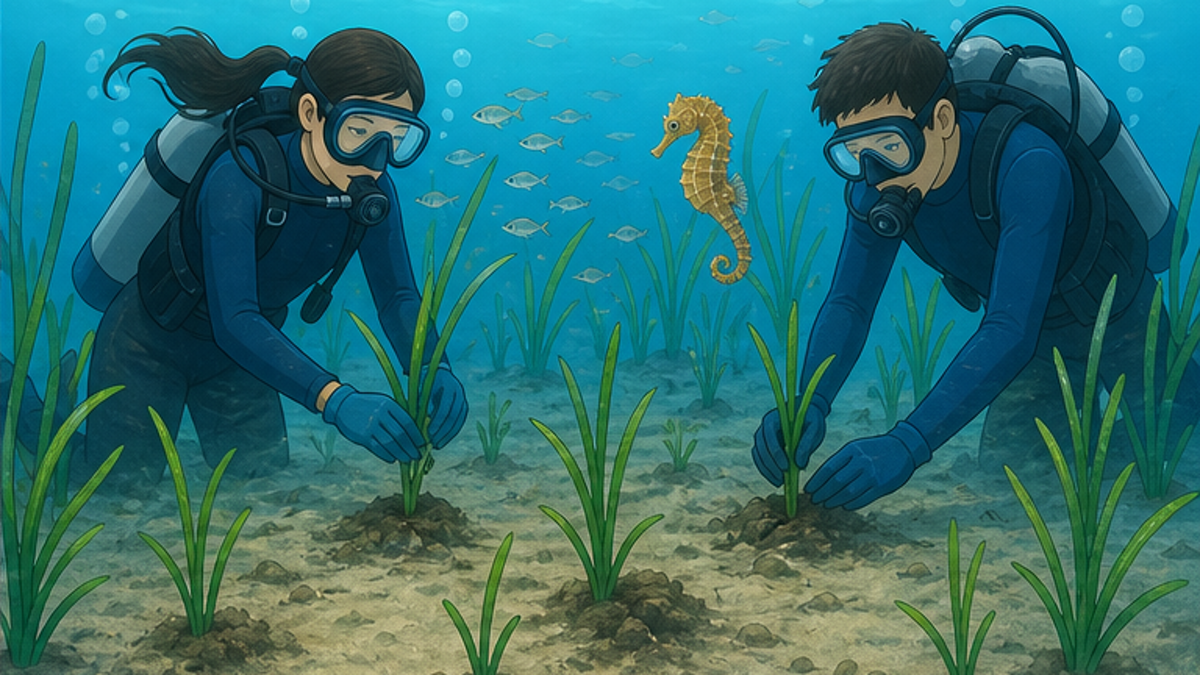
- Avoid buying dried seahorse souvenirs or products of unclear origin
- If keeping one, check the background of its breeding and distribution
- Choose sustainable seafood, such as MSC or ASC certified products
- Take an interest in local seagrass restoration and coastal cleanup activities
Small steps you can take starting today
- When choosing an ocean-related souvenir, be mindful of whether it comes from an endangered species
- Choose seafood by checking certification marks and place of origin
- Look into local seagrass restoration and ocean conservation activities
- Share what you've learned about "male pregnancy" from this article with someone else
Conclusion — a small body that reflects the health of the sea
The seahorse is a fish with an extremely rare reproductive mechanism, even among vertebrates: the male protects eggs in a brood pouch and gives birth to fry. Maintaining a pair bond through a daily courtship dance, camouflaging among seagrass and coral, and lying in ambush for prey with a body that has no stomach — each of these behaviors depends entirely on a rich coastal environment.
As we've seen throughout this article, the male's pregnancy, the courtship dance, the remarkable camouflage, and even the way it feeds are all deeply connected to its "habitat" — seagrass meadows and coral reefs. In other words, whether that habitat is healthy or not can be measured by whether seahorses are present there. This small, inconspicuous fish is also a reliable indicator species, quietly telling us about the state of the ocean.
That is precisely why the three threats of overharvesting, bycatch, and habitat loss, seen through this tiny creature, reveal changes affecting the entire ocean. A sea where seahorses thrive is also a healthy sea for many other creatures. International rules, local seagrass restoration, and the choices we make as consumers — accumulating what can be done at each of these layers is what will protect both this endearing marine resident and the future of the ocean that surrounds it.
The next time you see a seahorse at an aquarium, take a moment to look at its belly. If it's swollen, that may be proof that a male is carrying young. A male becoming pregnant, a pair dancing together, hiding quietly among the seagrass — each of these small acts of life is also proof that our ocean is still rich. Learning about the great mystery packed into such a small body may be the most reliable starting point for wanting to protect the sea.
Summary of this article
- The seahorse is a rare fish in which the male protects eggs in a brood pouch and gives birth (about 46 species worldwide)
- The brood pouch functions like a mammalian uterus and placenta, delivering oxygen and nutrients to the young
- Courtship dances, monogamous-like pair bonds, and camouflage among seagrass support their way of life
- Overharvesting, bycatch, and seagrass meadow loss are threats, and every species is covered under CITES
- CITES regulation, seagrass restoration, and sustainable consumption are the keys to conservation
References and sources
- Japan Ministry of the Environment, Setouchi Net – What Are Seagrass Meadows (their role and conservation)
- Ministry of the Environment Biodiversity Center – Monitoring Site 1000 Eelgrass/Seagrass Meadow Survey Report (FY2022)
- Japan Science and Technology Agency (JST), Science Portal Oceania – Elucidating the unique body structure involved in male seahorse "birth"
- Nature Ecology & Evolution – Cellular and molecular mechanisms of seahorse male pregnancy (2025)
- Project Seahorse (ZSL) – About Seahorses: Reproduction
- National Geographic Japan – Males give birth: the seahorse's devoted act of love
- Natural History Museum (UK) – Are seahorses the ocean's quirkiest fish?
- Oceana – Millions of seahorses wind up dead on the black market (an explanation of trade and overharvesting)
* Listed in order of reliability: government/academic institutions > peer-reviewed papers > specialist organizations > reputable media