⚡ The answer in 30 seconds
- Oriental storks went extinct in the wild in Japan in 1971, but after five birds were released in Toyooka in 2005 the nationwide wild population passed 500 in 2025.
- The key was not protecting the bird alone but building paddies where its prey can live: the pesticide-free or reduced-pesticide "Stork-Nurturing Farming Method".
- The recovery is not complete: low genetic diversity and changes to paddies caused by extreme heat remain challenges.
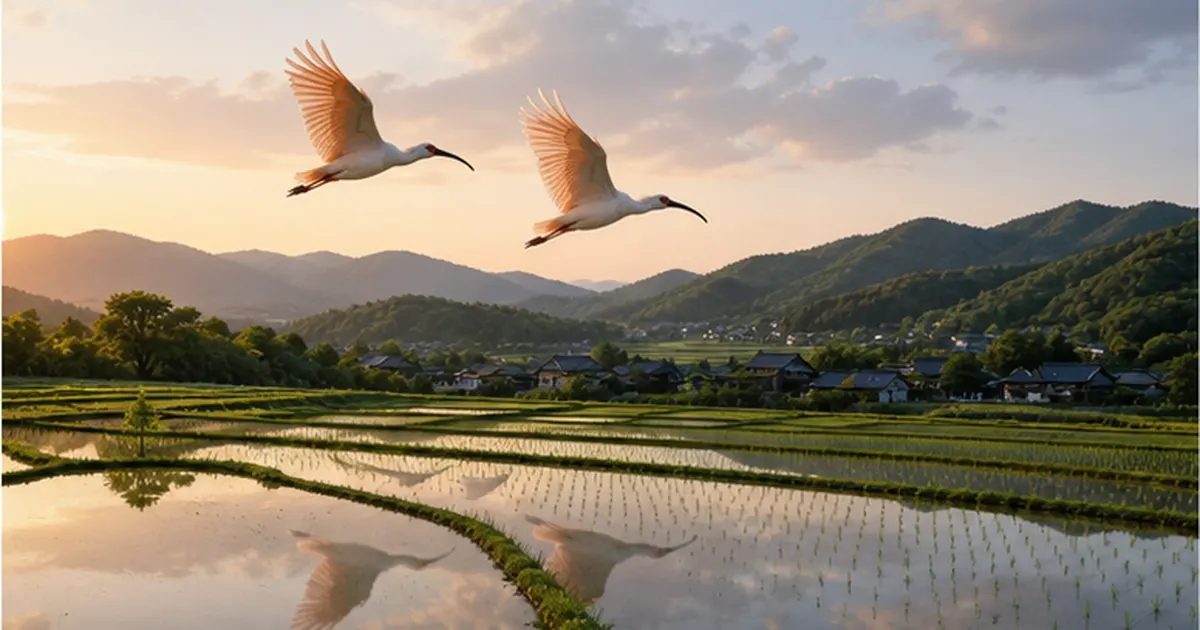
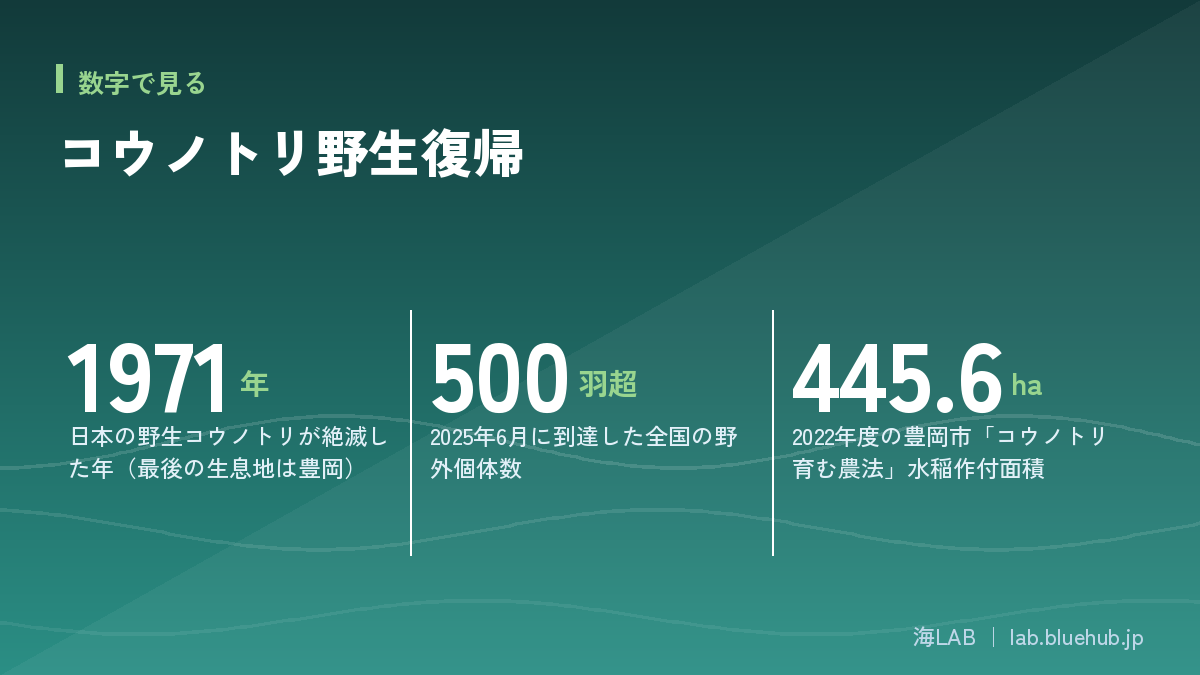
The Oriental stork is a bird that once vanished completely from Japan's skies.In 1971 the last wild bird died in Toyooka, Hyogo Prefecture, and wild storks became extinct in Japan. More than half a century later, in 2025, the number living in the wild nationwide has passed 500.
This recovery was supported by more than captive-breeding technology. It took a shift in farming to rebuild paddies where loaches, frogs and insects can thrive, plus community-wide efforts such as artificial nesting towers and citizen monitoring. Toyooka shows that bringing back one species means restoring the whole environment it lives in.
This article organizes the path to extinction, the captive breeding begun in 1965, the 2005 release, how the "Stork-Nurturing Farming Method" works, and the challenges that remain, based on public materials from the Ministry of the Environment, Toyooka City and Hyogo Prefecture, with a view on the water cycle linking rivers and the sea.
What you will learn
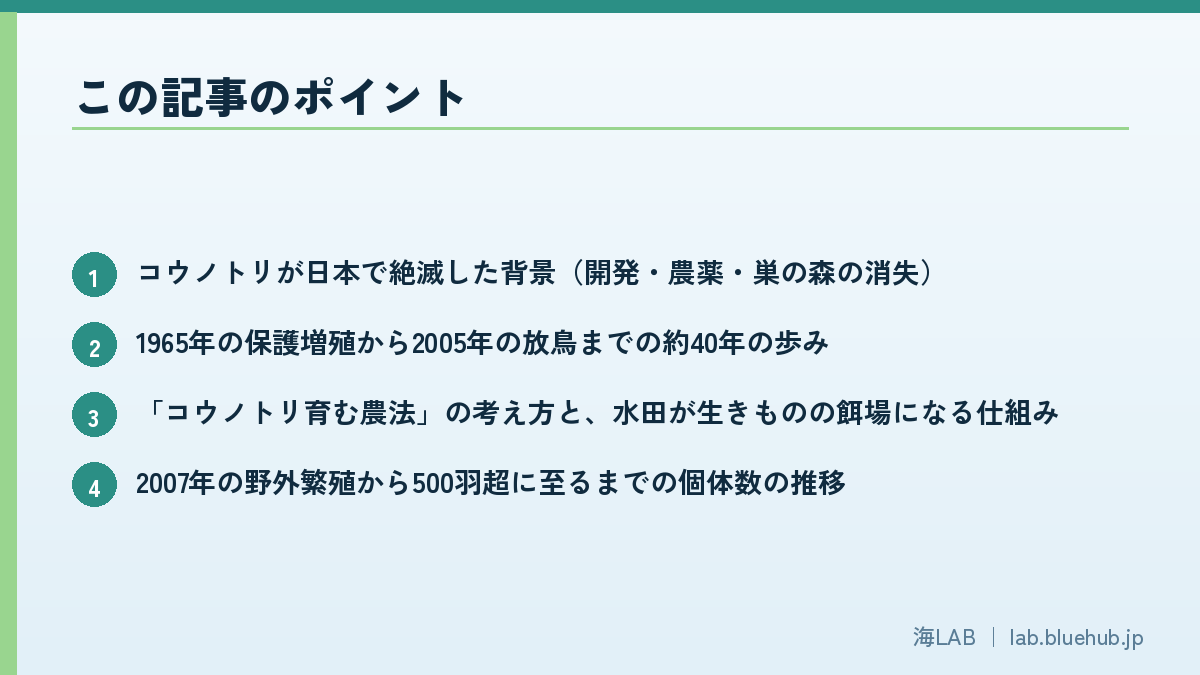
- Why storks went extinct in Japan (development, pesticides, loss of nesting forests)
- The roughly 40 years from captive breeding in 1965 to the 2005 release
- The idea behind the Stork-Nurturing Farming Method and how paddies become feeding grounds
- Population trend from wild breeding in 2007 to over 500 birds
- Challenges ahead, such as genetic diversity and extreme heat and low rainfall
- Lessons from the links between sea, rivers and paddies
What kind of bird is the Oriental stork? A top predator of Japan's wetlands
A large wading bird with a wingspan near 2 metres
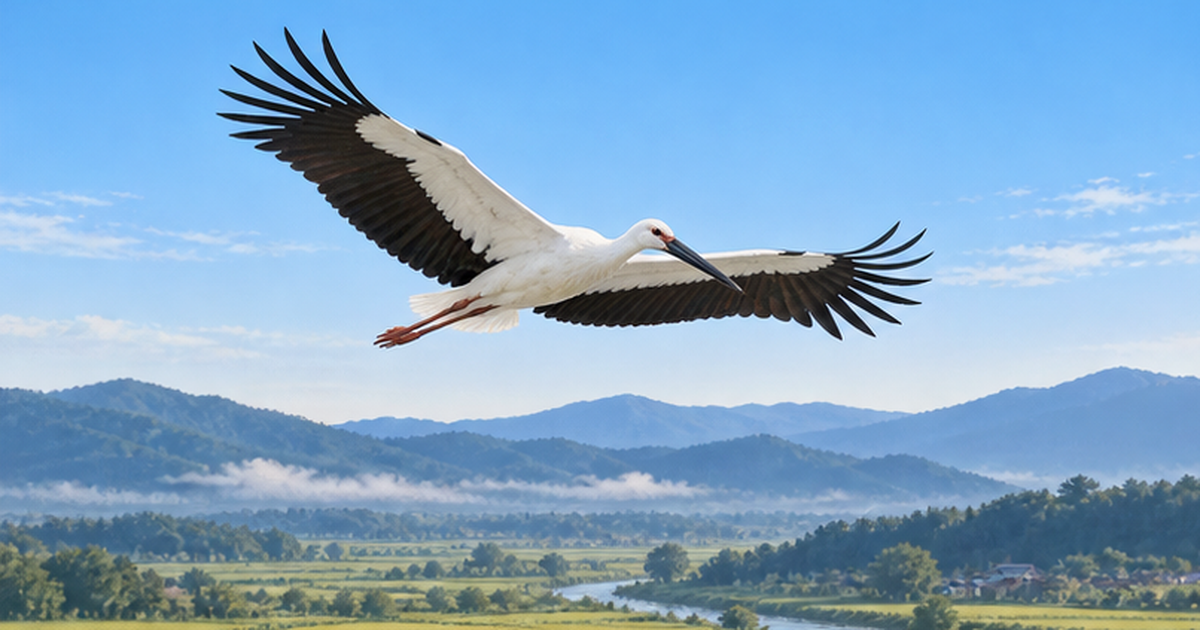
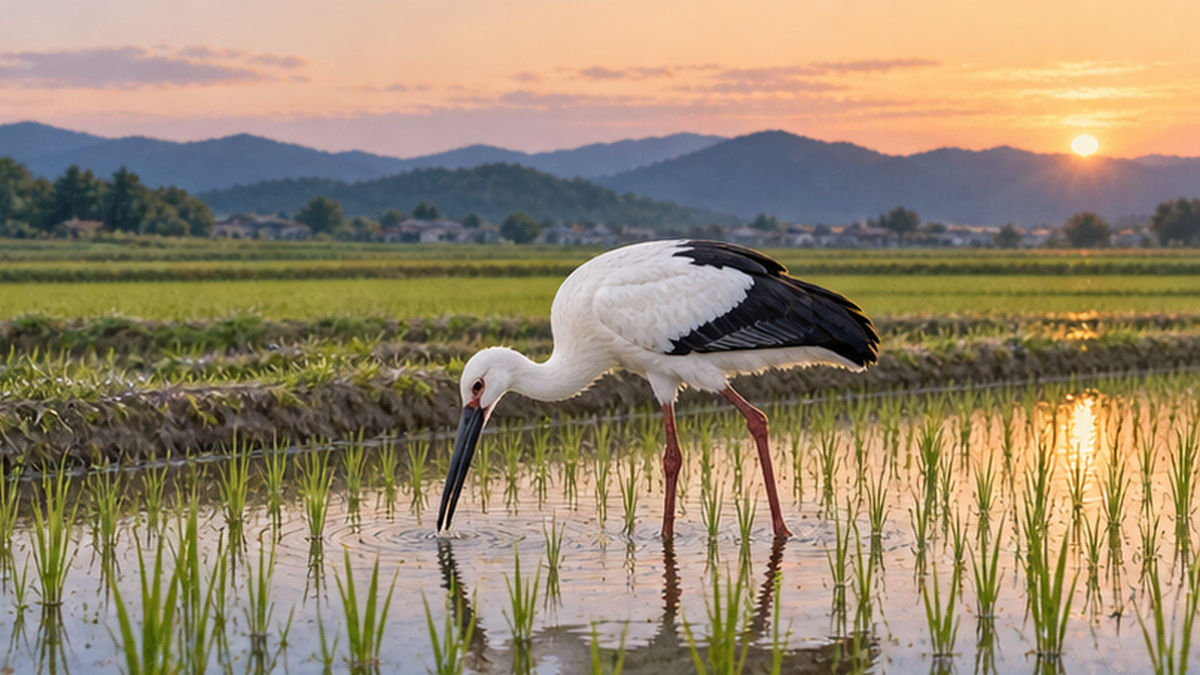
The Oriental stork (Ciconia boyciana) is a large waterbird of the stork family. It is about 110 cm long with a wingspan approaching 2 m. White with black flight feathers and red skin around the eyes, it is a carnivore that walks through shallow water catching fish, amphibians and insects. It was once seen in paddies and wetlands across Japan and, like cranes, was cherished as an auspicious bird.
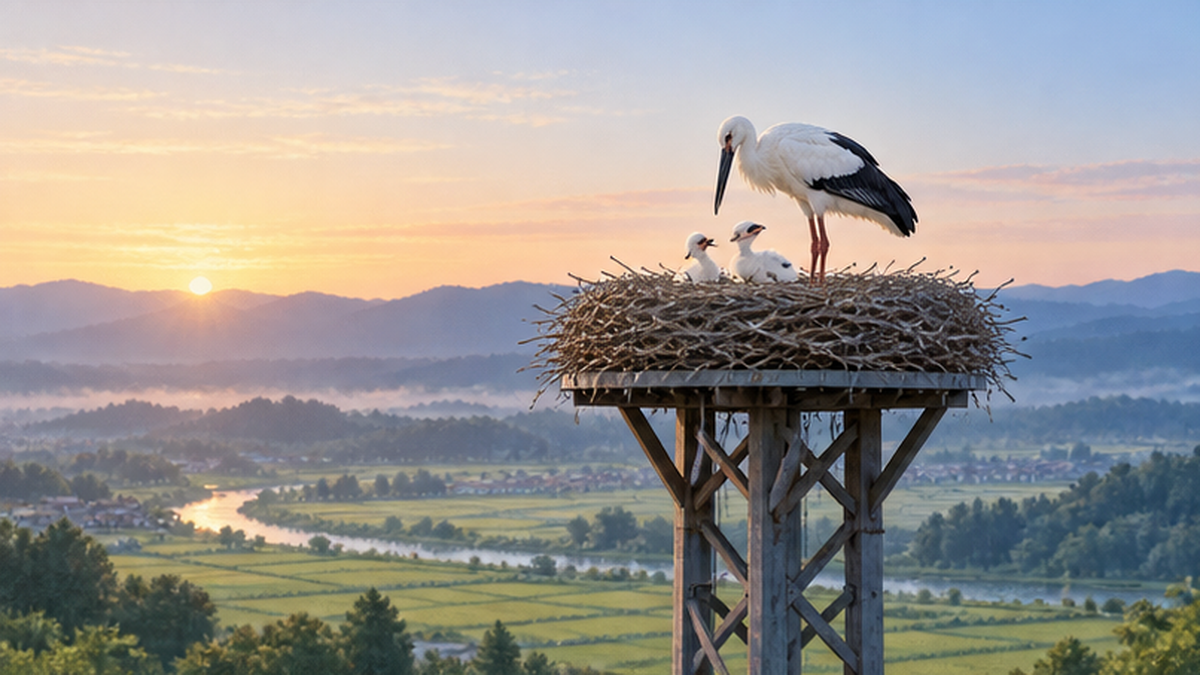
While the white stork of Europe nests on utility poles and chimneys, Japan's storks have long nested in tall trees such as pines. This habit is why artificial nesting towers later became important in the reintroduction.
Daily food needs and the paddy as a feeding ground
Being large, storks need a lot of food. They eat a variety of small animals such as loaches, crucian carp, frogs, crayfish and grasshoppers, so they cannot live without shallow waters rich in preyIn Japan's rural landscapes, paddies, channels, ponds and rivers together have played that role.
- Feeding: shallow paddies, channels, riverbanks, wetlands
- Nests: tall trees (pines etc.); artificial towers are now also used
- Roosting and resting: woods near water and river sandbars
- Movement: East Asian populations move to and from the continent, but Japan's population is mostly resident
Place in the ecosystem
The stork sits near the top of the wetland food chain. An environment where storks can live is one where the fish, amphibians, insects, aquatic plants and microbes below them are also healthy. For this reason it is treated as an indicator and flagship species of ecosystem health.
Why did Japan's storks go extinct?
Hunting and habitat change
Once seen across the country, storks declined through hunting, and their habitat shrank quickly as large pines for nesting were felled and wetlands and rivers were modified.
The Toyooka Basin (Maruyama River basin) became the last area in Japan where breeding was confirmed. Kobe Shimbun reports that urban development and pesticide use reduced numbers after the war and that the basin was the country's last breeding ground.
Pesticides and loss of prey: the high-growth era
The decisive factor was the worsening food environment. In the high-growth era pesticides came into wide use in paddies and the animals storks feed on declined. A Ministry of Land, Infrastructure, Transport and Tourism document also lists repeated heavy pesticide use among the causes, along with changes in farming and deforestation. It has been reported that during early captive breeding, older birds affected by pesticides died without hatching chicks.
| Year | Event |
|---|---|
| 1955 | Conservation support association formed in Toyooka |
| 1965 | Wild pairs captured; captive breeding begins |
| 1971 | Wild storks extinct in Japan (last habitat: Toyooka) |
| 1989 | Captive breeding succeeds (25th year of the effort) |
| 2005 | Five birds released for the first time in Toyooka |
| 2007 | A released pair hatches chicks on their own on an artificial tower |
Development was not the only cause
The extinction resulted from several overlapping factors: hunting, deforestation, river modification and pesticides. Removing just one would not bring recovery, a point reflected in the later design of the reintroduction.
1965 to 2005: about 40 years from captive breeding to release
The painful decision to capture wild birds
In 1965 Toyooka began captive breeding by capturing wild pairs. Capturing wild birds must have drawn strong criticism, but it was a choice made on the promise to return them to the sky someday. However, the remaining birds, burdened by accumulated pesticides and other factors, died one after another without hatching eggs.
When the last wild bird died in 1971, storks vanished from the wild in Japan. Young birds were later received from the former Soviet Union and became the basis of captive breeding. In 1989, the 25th year of Toyooka's artificial rearing, captive breeding finally succeeded, and chicks have hatched every year since.
Hyogo Prefectural Park of the Oriental White Stork and preparing for release
To return captive-bred birds to nature, it was necessary to prepare not just numbers but the environment they would return to. In Toyooka, the Hyogo Prefectural Park of the Oriental White Stork became the base for rearing, breeding, research and release training, and preparations advanced alongside work on local paddies, rivers and nesting towers.
- Genetic lineage management of captive birds and selection of birds for release
- Identifying individuals with leg bands and transmitters to track them after release
- Restoring paddies, channels and wetlands to increase prey
- Building cooperation among local farmers, government, researchers and residents
Five birds released in 2005
In 2005, five captive-bred birds were released for the first time in Toyooka. Hyogo Prefecture reports that the wild population exceeded 500 within 20 years of that release. At first the birds were still learning to find food, fly and avoid danger, and not everything went smoothly, but it was the first step toward a population living in the wild.
The "Stork-Nurturing Farming Method": turning paddies back into feeding grounds
Aims and basic ideas of the method
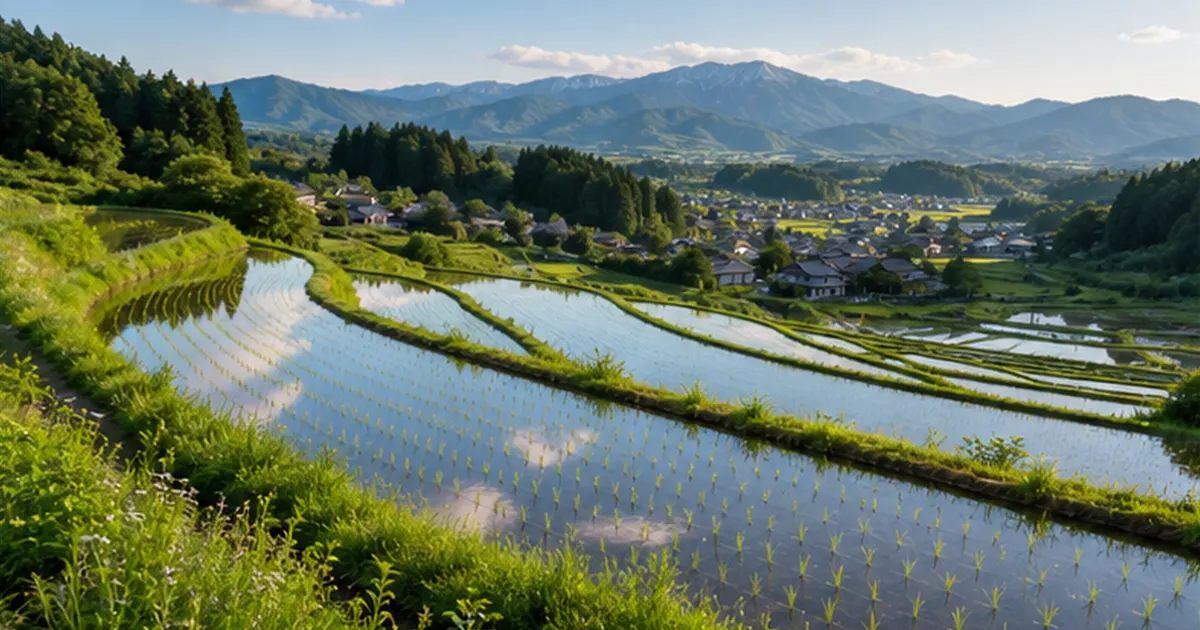
The "Stork-Nurturing Farming Method" born in Toyooka is farming that grows rice while making the paddy function as a feeding ground for storksmethod. Ministry of Agriculture, Forestry and Fisheries materials describe its differences from ordinary rice growing: careful water management from spring to autumn and winter flooding (filling paddies with water in winter).
- No pesticides (pesticide-free) or greatly reduced pesticides
- Winter and early flooding create habitat for frogs, loaches and aquatic insects
- Delaying midseason drainage (draining the field once during rice growth) to give animals time to grow
- Fishways so fish can move between paddies and channels
Acreage trend and results
According to Toyooka City, acreage was 407.1 ha in 2017 and 445.6 ha of rice in FY2022 (162.5 ha pesticide-free, 283.1 ha reduced-pesticide), a record high. The city has branded rice grown this way as "Stork-Nurturing Rice" and built a system that balances environmental care with sale prices.
| Fiscal year | Acreage | Notes |
|---|---|---|
| 2017 | 407.1ha | Toyooka City materials |
| FY2022 | 445.6ha | Pesticide-free 162.5 ha, reduced-pesticide 283.1 ha (record high) |
Rice that carries "environmental value"
The spread of the method also matters for farmers' incomes. Environment-friendly cultivation takes extra work, so a system that buys the rice at a fair price is essential. Toyooka is seen as a pioneering example of an environmental economy that combines biodiversity conservation with farmers' livelihoods, and is a reference for efforts elsewhere.
Key points
- The keys to increasing wildlife are water management and less pesticide
- It spreads only when farmers have prices and markets that let them continue
- Rice paddies are places of food production and also of biodiversity conservation
From wild breeding in 2007 to over 500 birds: population trend
2007: the first chicks hatched on their own in the wild
In 2007, two years after the release, a wild pair hatched chicks on their own on an artificial tower. Chicks hatching in the wild for the first time in about half a century marked the turning point at which reintroduction moved from simple release to forming a self-sustaining population.
Growth of the wild population
- 2013: more than 70 birds living in the wild (Hyogo Prefecture)
- 2021: the Hyogo Prefectural Park announced that breeding-age birds aged 3 or older exceeded 50 for three years in a row
- End of July 2022: nationwide wild population passes 300
- June 2025: nationwide wild population exceeds 500
- End of November 2025: reported at over 550 nationwide
Beyond the Toyooka area, visits and breeding have recently been reported outside Hyogo, and their range is spreading nationwide. A widening distribution, however, requires each region to create feeding grounds and monitoring systems.
Nesting towers and community monitoring
Where tall trees such as pines have declined, artificial towers help storks nest. Setting up towers, tending nest material, watching fledging and tracking birds by leg bands are often done not only by researchers but also by residents and schools, nurturing a culture of a bird watched over by everyone.
Challenges ahead: genetic diversity, extreme heat and coexistence
Low genetic diversity
The wild population descends from a limited number of captive birds. This lowers genetic diversity and raises the risk of weaker resistance to future disease and environmental change. Kobe Shimbun also cites low genetic diversity as a challenge even as numbers grow. Introducing diverse lineages and exchange with overseas populations are being discussed.
Extreme heat and low rainfall change the paddy environment
The effects of climate change are also appearing. According to Kobe Shimbun, Toyooka's mean temperature in July 2025 was 29.4°C, far above the 26.1°C of July and August 1971, and rainfall was about one-tenth of normal, so water temporarily disappeared from paddies in the Maruyama River basin. Without water in paddies, prey animals cannot grow.
What happens when paddy water disappears
- Habitat for prey such as loaches and frogs is lost
- Rising water temperatures make survival harder for aquatic life
- Farmers' workload grows, making it harder to continue environment-friendly cultivation
Preparing for crop damage, accidents and disease
As numbers grow, risks such as collisions with power lines, accidents and infections like avian influenza also rise. Reintroduction does not end with the release; it requires long-term management and dialogue.
Storks seen through the links between paddies, rivers and sea
The water cycle of the Maruyama River basin
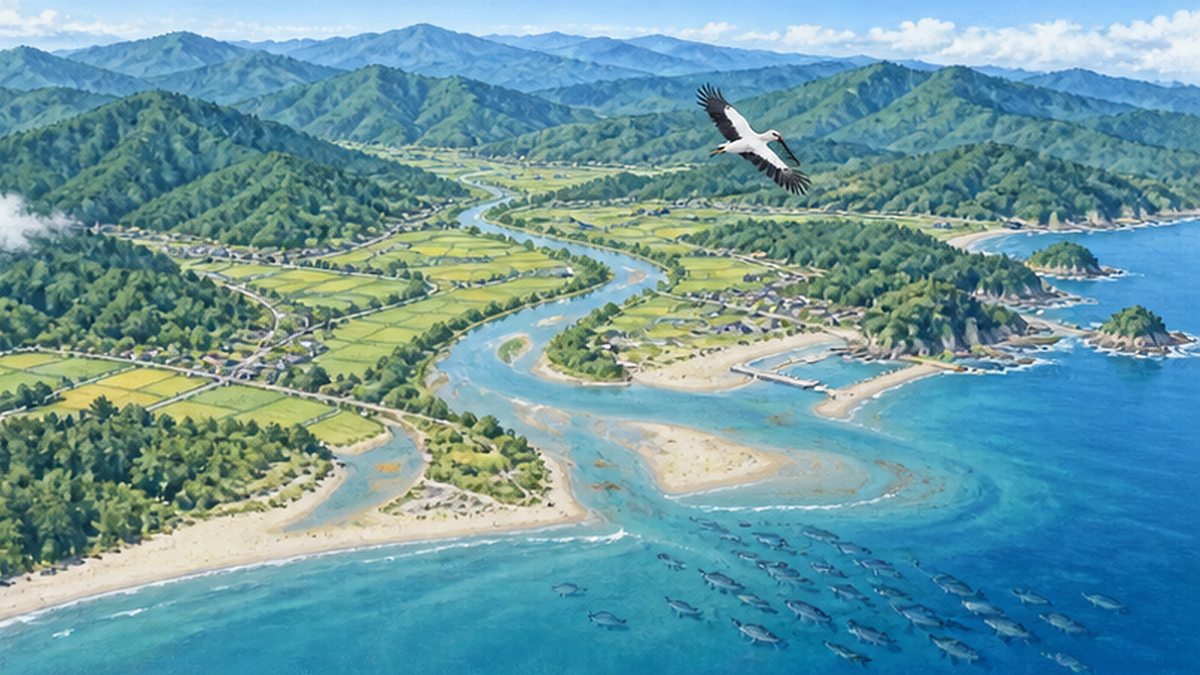
Toyooka's paddies are part of the water cycle running from the Maruyama River to the Sea of Japan. Reducing pesticides and fertilizer in paddies also benefits the water quality of rivers, estuaries and coasts. For the link between rivers and sea, see also What links forest, river and sea: how river basins nurture a rich ocean
Paddies and the biodiversity of rural landscapes
Paddies, channels and ponds are secondary nature shaped over a long time by human activity. For paddy biodiversity, see Biodiversity of rice paddies; for how rural satoyama landscapes work, see What is satoyama? The cycle of woodland, paddies and ponds and the crisis of abandonmentfor details.
Another reintroduction: comparison with the crested ibis
On Sado Island in Niigata Prefecture, reintroduction of the crested ibis is under way. For details see the article crested ibis reintroduction. For both storks and ibises, restoring rural environments including paddies is a shared key.
What we can do: putting what we learn into daily life
Choose environment-friendly rice
Choosing rice grown without or with fewer pesticides, or products from wildlife-nurturing methods, is a concrete way to support producers. Look for products whose environmental care is certified or labelled, such as "Stork-Nurturing Rice".
Observe good manners when watching
- Do not get too close to nests or parent birds (observe from a distance)
- Do not feed them or bring drones near
- If you find a bird with leg bands or a transmitter, report it to the local contact or the Park
- Do not throw litter into paddies or channels
Join local activities
There are events you can join in Toyooka and elsewhere, such as observation meetings, paddy wildlife surveys and winter-flooding visits. Getting to know nearby waterside environments and noticing change gives strength to the next reintroduction.
Summary
- Storks went extinct in the wild in 1971 but recovered to over 500 in the wild within 20 years of the 2005 release
- The key to recovery was restoring paddies that nurture prey (reduced or no pesticides, winter flooding)
- Genetic diversity and extreme heat and low rainfall are future challenges
- Within the links among paddies, rivers and sea, our choices support wildlife
References and sources
- Kobe Shimbun NEXT, "20 years since the stork release" (June 2025) – History and timeline of 20 years since release
- Kobe Shimbun NEXT, Tajima edition (December 2025) – Over 550 birds; extreme heat and paddies
- Kobe Shimbun NEXT, "Wild storks pass 300" (October 2022) – Passing 300 and challenges
- Hyogo Prefecture "Kenmin Dayori" stork feature – 20 years since release; over 500 in the wild
- Toyooka City: Stork-Nurturing method acreage data (2023) – Acreage trend
- MAFF Organic Village case study (Toyooka City) – Explanation of winter flooding and delayed midseason drainage
- Ministry of the Environment, Mori-Sato-Kawa-Umi case: Toyooka's storks – Reintroduction and community building
- MLIT multilingual material (storks and pesticides) – Summary of causes of decline
* Ordered by reliability: government and academic bodies > peer-reviewed papers > specialist organizations > reliable media