⚡ In short
Foraging wild mountain vegetables (sansai) is a spring pleasure, but it comes with risks: poisonous look-alikes, bears and trespass rules. This guide covers 218 poisoning cases in 10 years, forest-entry procedures and foraging etiquette.
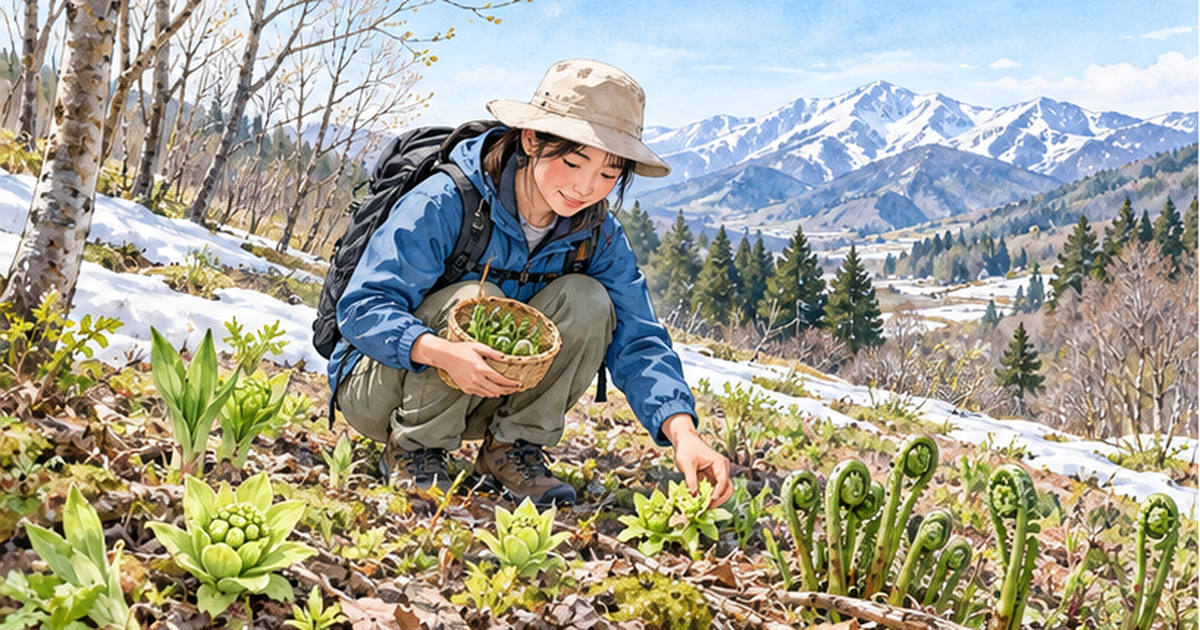
Butterbur buds, fiddleheads, angelica-tree shoots and bracken push up as the snow melts. Sansai are a gift of nature that Japanese people have enjoyed for centuries, and their aroma and gentle bitterness let you feel spring with your whole body. They are sold at markets and online, but picking them yourself is a special joy.
Yet there are pitfalls. Food poisoning from poisonous plants that closely resemble sansai is reported nearly every year, and some cases are fatal. Trespassing, over-harvesting and bear encounters are also problems on the ground.
Based on official materials from the Ministry of Health, Labour and Welfare, prefectures, the Forestry Agency and the Ministry of the Environment, this article sets out the rules and etiquette of foraging, commonly confused poisonous plants, safety measures and ways to pick that protect satoyama nature.
What you'll learn in this article
- The scale of poisonous-plant food poisoning and the most common culprits
- Commonly confused pairs such as wild garlic, chives and Japanese windflower, and the basic principle for telling them apart
- Rules for national forests, private forests and protected areas, and entry procedures
- Safety measures against bears and getting lost
- Foraging etiquette that keeps wild plants and satoyama alive for the next generation
What Is Sansai? A Long Relationship with Japanese Life
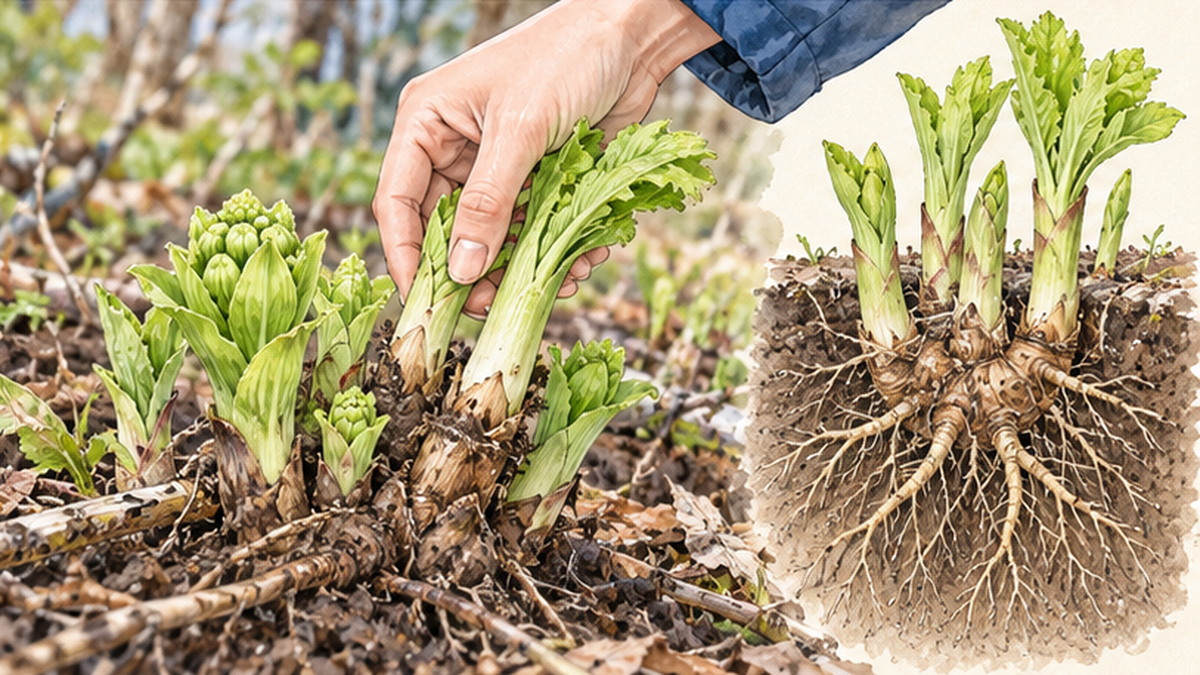
Sansai are wild plants whose young shoots, stems, leaves or roots are eaten. Unlike cultivated vegetables, they are not sown by people; they are resources nature produces each year that we are allowed to share.
Typical sansai and their seasons
Sansai peak later in snowy regions and earlier in warm ones. Roughly, the season begins with butterbur buds, followed by ostrich fern fiddleheads, royal fern, bracken, angelica-tree shoots, aralia shoots and wild garlic. Summer to autumn adds mizu (Elatostema) and mushrooms.
| Sansai | Part eaten | Approx. season (lowland–mountain) | Notes |
|---|---|---|---|
| Butterbur bud (fukinoto) | Flower bud | Early spring | Pleasantly bitter; tempura or miso |
| Ostrich fern (kogomi) | Coiled shoots | Spring | Little bitterness; ohitashi or dressed dishes |
| Bracken / royal fern | Young shoots | Spring–early summer | Bracken must be de-bittered |
| Tara no me / koshiabura | Tree buds | Spring | Often tempura; beware of thorns |
| Wild garlic (gyōja ninniku) | Leaves | Spring | Strong garlic smell; easily confused with poisonous plants |
| Mizu (Elatostema) | Stems | Early summer–summer | Grows in colonies along damp streams; crunchy |
Sansai in daily life and culture
Sansai have long supplied vitamins and fibre in winter, especially in snow country. Preservation methods such as salting, drying and bottling developed in each region, and sansai dishes are part of local cuisine. Life in the satoyama was closely tied to this resource.
For how satoyama works, see What Is Satoyama? Coppices, Rice Paddies and Ponds. It shows how land managed by people created the places where sansai grow.
The Reality of Poisonous-Plant Food Poisoning in Numbers
People often think only careless people are poisoned while foraging. The statistics say otherwise: even experienced people make mistakes every year.
Over 200 cases and 17 deaths in 10 years
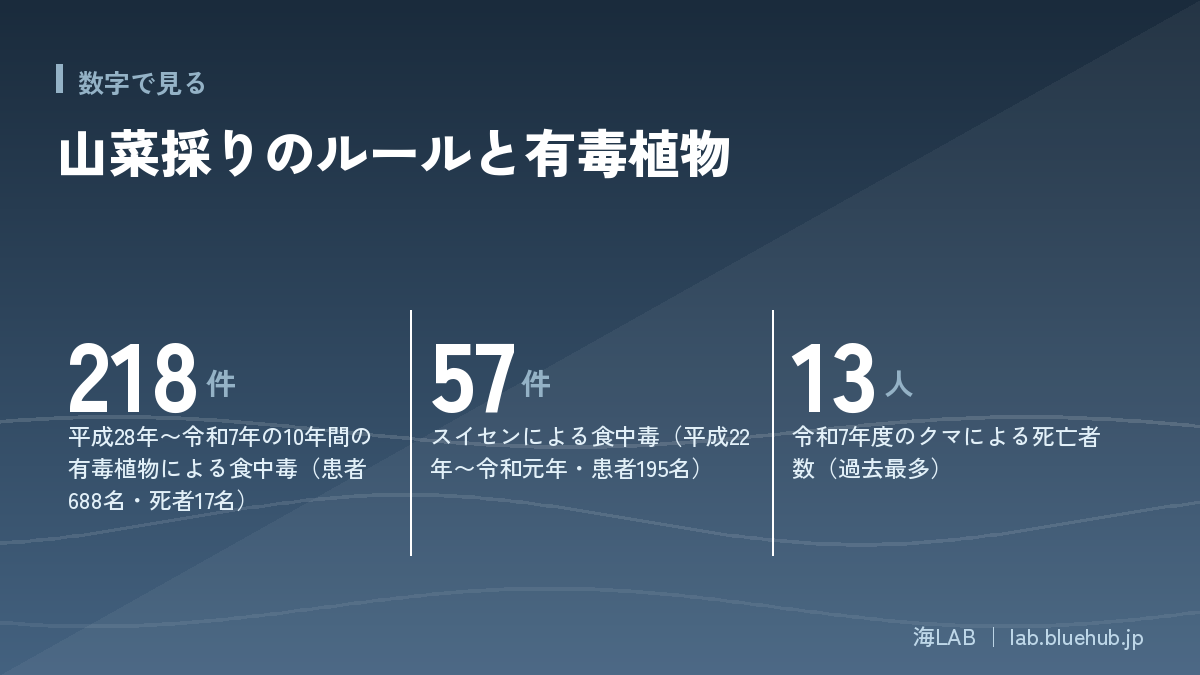
According to Hiroshima Prefecture, poisonous plants caused 218 food poisoning cases, 688 patients and 17 deaths between FY2016 and FY2025. Ibaraki Prefecture counts 213 cases, 821 patients and 17 deaths for FY2013–2022. Periods and tallying differ, so the figures do not match, but both show around 20 cases a year and deaths almost every year.
Reading the figures
These statistics mainly cover cases reported to health centres. Mild cases that never saw a doctor are not included, so actual mistaken ingestion is probably higher.
The plants most often responsible
Okayama Prefecture's summary of national statistics (2010–2019) highlights these plants.
| Plant | Cases | Patients | Deaths | Commonly confused with |
|---|---|---|---|---|
| Daffodil | 57 | 195 | 1 | Chives, wild onion, onion |
| Potato (sprouts, green skin) | 21 | 327 | 0 | — (common in home and school gardens) |
| False hellebore | 15 | 33 | 0 | Hosta (urui), wild garlic |
Note that garden and ornamental plants, not just mountain sansai, often cause poisoning. Daffodil leaves are long and thin like chives and wild onion, so the risk exists even if you never enter the mountains.
Recent trends
According to Shiga Prefecture, mistaken ingestion of autumn crocus, false hellebore, daffodil and others in 2025 amounted to 17 cases, 40 patients and 1 death nationwide. Hiroshima Prefecture gives 35 cases (90 patients, 1 death) for 2025, so figures differ by scope and date of tally. Either way, life-threatening accidents occur every year.
Commonly Confused Poisonous Plants and Iron Rules
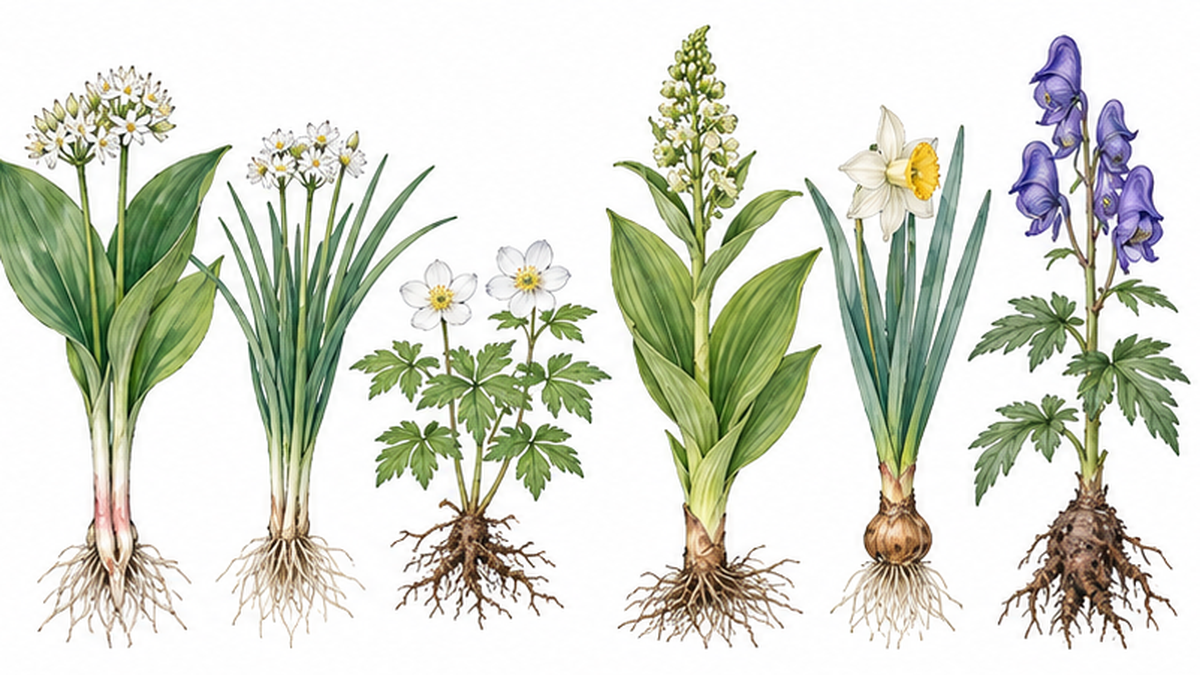
Here are pairs known to cause accidents. However, you cannot reliably tell them apart from text or photos. This information is for awareness of danger, not for deciding what to pick.
Typical look-alike pairs
| Edible | Poisonous look-alike | Main toxin (example) | Point |
|---|---|---|---|
| Wild garlic, hosta shoots | False hellebore | Alkaloids (veratrum type) | Leaves look similar in new growth; don't rely on garlic smell alone |
| Wild garlic | Autumn crocus | Colchicine | Early spring leaves look similar; can be severe |
| Chives, wild onion | Daffodil | Lycorine, calcium oxalate, etc. | Mistakes are common near gardens and fields |
| Japanese windflower (nirin-sō) | Monkshood | Aconitine-type | Leaves look similar; even small amounts can kill |
In early spring, when leaves are still rolled up, false hellebore can grow mixed with wild garlic and hosta. Monkshood often grows in the same places as windflower, so mixing during harvest is a typical accident.
Five iron rules
- If you cannot be sure it is edible, don't pick it, eat it, sell it or give it away.
- Don't trust folk rules such as 'it smells right' or 'animals eat it'.
- Young shoots without flowers or fruit are especially risky; check roots, stems and leaf arrangement where possible.
- Learn a new sansai first with an experienced person, looking at the real plant.
- Inspect each plant after picking, and throw away anything doubtful.
If you think you may have eaten one
- Stop eating immediately and keep leftovers and remaining plants
- Contact a medical facility or health centre early, even without symptoms
- Call an ambulance without hesitation if you have nausea, numbness, dizziness or tremors
- Photograph the plant and show the actual specimen to the doctor
Who Owns the Mountain? Foraging Rules and Forest Entry
It is a misunderstanding that anything growing in the mountains is free to take. Forests have owners and managers, and entering and picking without permission may constitute trespass or theft.
Entry procedures for national and prefectural forests
National forests are managed by the Forestry Agency. The Tohoku Regional Forest Office explains that, in principle, people who wish to enter should submit an entry notification beforehand. Hokkaido also requires notification for entry into prefectural forests for sansai gathering, and warns that accidents occur every year.
In some areas, entry itself for sansai gathering is restricted. Aomori City's material states that entry for sansai gathering is restricted under the Forest Act in the Hakkōda national forest. Yamagata City issues paid entry permits for some national forest districts (500 yen per district, valid one year).
Rules differ by region
Whether notification is needed, whether fees apply, and the allowed quantity and period differ by manager and region. Always check with the local forest office, municipality or forestry cooperative before you go.
Private forests, protected areas and parks
- Private forests require the owner's permission; communal forests may have their own rules.
- Plant collecting may be restricted in national and quasi-national parks and special protection zones.
- Collecting is prohibited in protected areas and natural monuments with rare plants.
- Near farmland, orchards and pasture, take care not to hinder farm work.
Selling sansai
Selling sansai at markets or between individuals brings food-safety responsibility. Public agencies call for not selling plants you cannot be sure are edible. Cases of health harm from sansai given in good faith have been reported.
Before You Go: Bears, Getting Lost and Health
An overlooked risk is personal injury. Sansai often grow along quiet streams, in thickets and on slopes; absorbed in picking, people get lost, fall or meet bears.
Growing bear damage
According to a Cabinet Secretariat document dated 19 May 2026, FY2025 bear sightings numbered 50,776, with 216 attacks injuring 238 people and 13 deaths. The document says sightings, victims and deaths were all records. It cites crop failures of acorns and other nuts in the Tohoku region, which drove bears to human areas.
These figures are not specific to sansai gathering, but spring foraging overlaps with bears waking from hibernation. Stream edges and new growth where sansai thrive are food spots for bears too.
Basic bear measures
- Avoid going alone; go in a group.
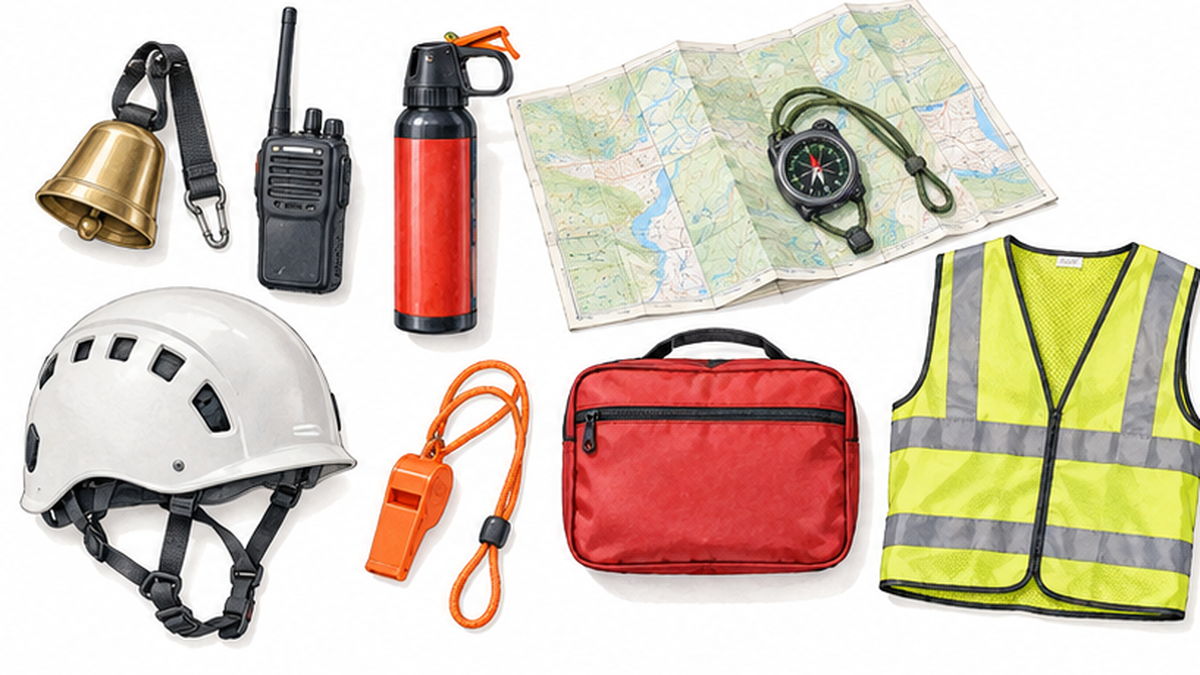
- Make your presence known with bells or a radio.
- Carry bear spray and learn how to use it beforehand.
- Avoid dawn and dusk, when bears are active.
- Check local bear sighting information before leaving.
- If you find droppings, tracks, claw marks or feeding signs, turn back immediately.
Getting lost and health
Accidents in sansai gathering are said to happen in 'the usual place' and 'a familiar mountain'. Absorbed in moving across slopes, people lose track of their position and night falls. Always submit a climbing plan, use a map app and share your destination and return time with family.
Pre-departure checklist
- Told family the destination, route and return time
- Completed entry notification or permits
- Checked the forecast and local bear information
- Prepared phone charge, spare battery and map
- Packed water, food, warm clothes, rain gear and first aid
Etiquette and Protecting the Resource
Sansai are renewable, but over-picking can kill them. To keep harvesting every year, we must pick with the attitude of 'being allowed to share'.
Tips for long-term enjoyment
- Don't pull up whole plants; take only part of a clump (for example, about a third).
- Leave buds and leaves needed for the next growth.
- Don't pick small or young plants.
- Spread out the places and times you visit.
- Take only what you eat yourself; avoid mass harvesting for sale.
Niigata Prefecture also lists basic manners: pick only where picking is allowed, don't enter forbidden areas, pick carefully without damaging plants, and know your limits.
Don't destroy the habitat
Places where sansai grow are home to many plants, insects and soil life. Trampling, compacted soil, slope collapse and litter damage the very environment sansai need. Take everything you bring back home.
To learn about stream life, see What Lives in Mountain Streams? Char and Aquatic Insects. When foraging along streams, care for the water environment too.
Don't bring in litter, invasive species or disease
- Remove mud and seeds from shoes and clothing before and after entering the mountain.
- Don't carry plants or soil other than your harvest to other regions.
- Take home all lunch wrappers, bottles and disposable items.
Sansai and the Link Between Forest, River and Sea
Umi Lab is a marine learning medium, but sansai are not unrelated to the sea. The forests and streams where sansai grow are part of a watershed that flows through rivers to the sea.
Forest nutrients flow to the sea
Nutrients from fallen leaves and forest soil dissolve in rain and snowmelt and flow to rivers and then the sea. The idea that this 'forest–river–sea link' supports rich coastal fishing grounds is widely known. See The Forest–River–Sea Connection for details.
Not disturbing the mountain protects the sea
Damaging slopes, dumping litter in streams or causing soil runoff can muddy rivers and degrade ecosystems, and may eventually affect downstream environments. Each person walking in the mountains contributes to the health of the whole watershed.
Foraging as a chance to think about the watershed
Going to the mountains is also a chance to feel that the water at your feet eventually reaches the sea. As recipients of the mountain's bounty, act so as to minimise your impact.
Local efforts to protect life and environment
The satoyama environments where sansai grow have been maintained by continued human care. In abandoned woods the undergrowth declines and sansai habitat changes. Joining satoyama conservation by forestry cooperatives, municipalities and NPOs is a concrete way to pass the sansai culture on.
Eating Sansai Safely and Deliciously
Even safely picked sansai are not safe without proper preparation. Many contain bitter compounds and sometimes trace harmful substances.
Basics of de-bittering and preparation
- De-bitter bracken and royal fern with baking soda or wood ash.
- Even low-bitterness ones such as fiddleheads and tara shoots should be cooked.
- Avoid eating raw; blanch and soak in cold water to soften harshness.
- Freshness drops fast, so prepare them the same day.
Bracken has long been eaten after de-bittering, but insufficient de-bittering may leave harmful components. Avoid overeating and raw eating, and enjoy a moderate amount, well cooked.
Preservation
Freshness matters, but traditional salting, freezing, drying and bottling make sansai last. When freezing, blanch, drain and portion for easy use.
A first step for beginners
If you are new, join local sansai workshops, nature observation events or municipal experience programmes. Learning from experts with the real plant gives a sense you cannot get from books or the internet. Buying sansai at market stalls and roadside stations is also a fine way to enjoy the season.
Summary: Taking Nature's Gift by 'Being Allowed to Share'
Foraging sansai is a distinctly Japanese culture where nature and daily life overlap. But risks such as mistaken ingestion of poisonous plants, breaking entry rules and meeting bears cannot be ignored.
Key points
- Poisonous plants caused 218 cases and 17 deaths in 10 years; if in doubt, don't pick or eat
- National forests may require notification or permits; check beforehand
- FY2025 bear damage hit record levels; avoid going alone and prepare well
- Don't pull up whole plants or damage the habitat; protecting mountains protects watersheds and the sea
- Beginners should learn with experienced people, looking at the real plant
Sansai are a yearly gift of nature. If you face the mountain with the attitude of 'being allowed to share' rather than 'taking', you can avoid danger and pass on the bounty to the next generation. Picture the mountain water reaching the sea and enjoy the taste of spring safely.
References
- Hiroshima Prefecture: Beware of Poisonous Plants – 10-year tally of poisonous-plant food poisoning (FY2016–2025)
- Okayama Prefecture: Materials on Poisonous-Plant Food Poisoning – Case counts for daffodil, false hellebore, potato, etc.
- Shiga Prefecture: Beware of Poisonous-Plant Food Poisoning – 2025 cases and warnings
- Ibaraki Prefecture Public Health Institute: Poisonous Plants – Tally of poisonous-plant food poisoning, FY2013–2022
- Ministry of Health, Labour and Welfare: Natural Toxin Risk Profile – Official information on poisonous plants and natural toxins
- Forestry Agency, Hokkaido Regional Forest Office: Entering National Forests – Guide to national forest entry procedures
- Hokkaido: For Visitors to Prefectural Forests – Notification and cautions when entering for sansai gathering
- Niigata Prefecture: Sansai Gathering Etiquette – Basic manners for sansai gathering
- Cabinet Secretariat: Bear Damage Prevention (4th meeting material) – FY2025 bear sightings and injuries
- Ministry of the Environment: Responding to Bear Sightings – Basic material on bear measures
* Listed in order of reliability: government and academic institutions > peer-reviewed papers > specialized organizations > reputable media