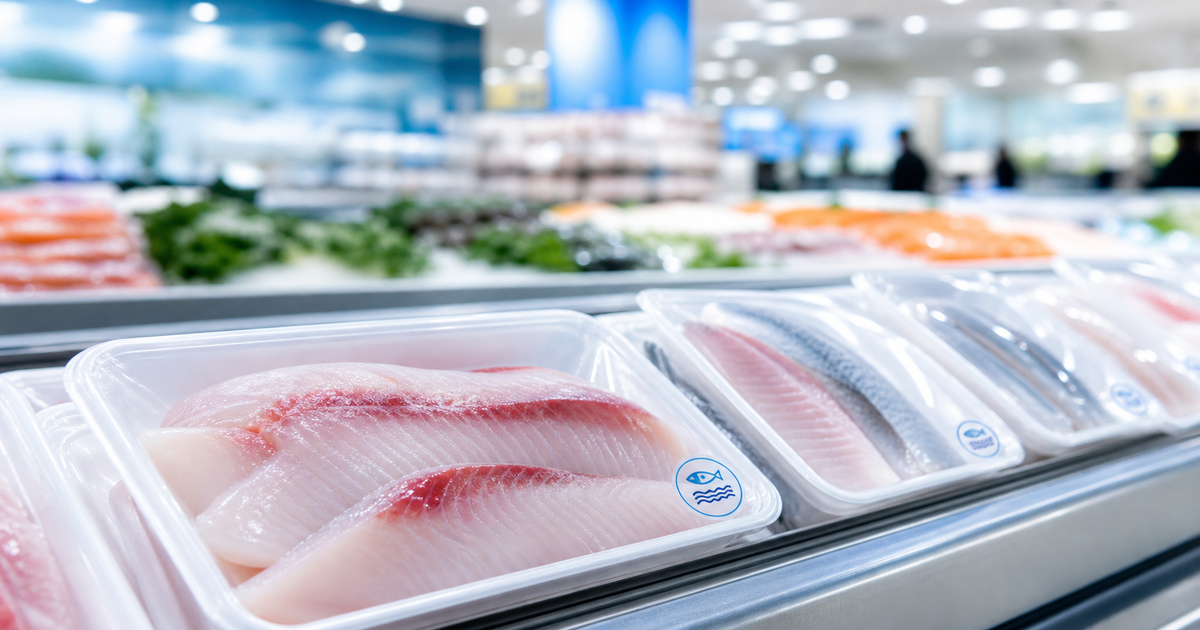
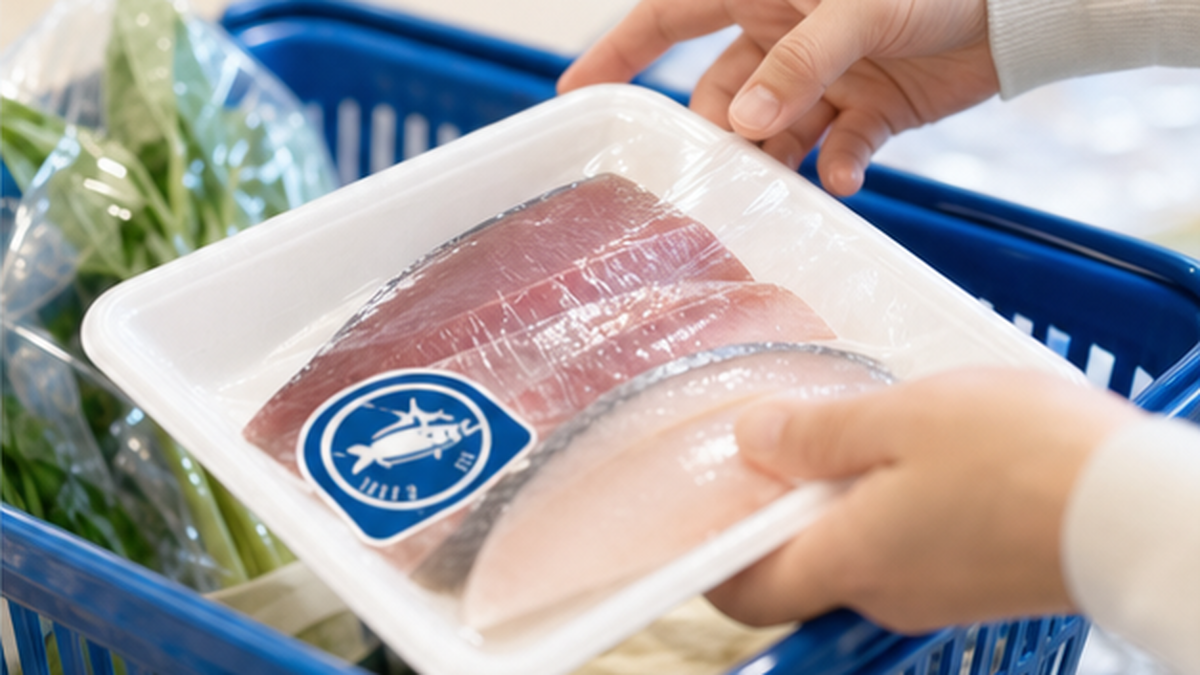
Have you ever noticed a small blue label tucked in the corner of a package in the seafood aisle of a supermarket? That fish-shaped mark is the MSC "Blue Fish" ecolabel—proof that "this fish was caught in a way that does not deplete ocean resources." There is also a similar-looking green mark: the ASC label, proof of seafood farmed with consideration for the environment and local communities.
AEON was among the first retailers in Japan to place these two labels on its shelves, and in large volume. Through its private brand "TOPVALU," AEON has expanded its certified seafood lineup to as many as 23 species and 48 items (the published figure for TOPVALU at time of writing)—one of the largest lineups in the country. It all began in 2006, at a time when the term "sustainable seafood" was not yet common, when AEON decided as a company to begin this initiative.
This article carefully traces, with primary-source figures, why the world's oceans have now been pushed to the point of needing "certification," what the two labels MSC and ASC actually guarantee, and how AEON has transformed its procurement system itself so that consumers can naturally choose sustainable fish in the aisle. This is a story about the future of the ocean and our dinner table, on the other side of that blue label.
What you will learn in this article
- MSC certification guarantees the sustainability of "wild-caught" fisheries, and ASC certification guarantees that of "farmed" aquaculture—two wheels of the same cart
- The history of how AEON became the first retailer in Asia to sell MSC-certified products in 2006, and fundamentally transformed its procurement policy from there
- How the "Sustainable Procurement 2020 Targets" and 100% CoC certification form the foundation for stocking certified fish on the shelves
- How the small consumer action of choosing the blue label becomes a market force that changes the practices of fisheries and aquaculture operations
- The challenges certified seafood faces around price, awareness, and supply—and why it is still worth expanding
Why "Certified Seafood" Is Needed Now—The Crisis Facing the World's Oceans
Key points of this article
- About 37.7% of the world's fishery resources are overfished, and the share has worsened every year (FAO, 2024)
- MSC is the "Blue Fish" ecolabel guaranteeing sustainability for wild-caught fish, and ASC guarantees it for farmed fish
- AEON became the first retailer in Asia to sell MSC-certified products in 2006, and has since expanded to as many as 23 species and 48 items (published figure at time of writing)
- The "Sustainable Procurement Policy" of 2017 and CoC certification form the foundation for stocking certified fish on the shelves
- Consumer choices around labels become a market force that changes fishery and aquaculture practices
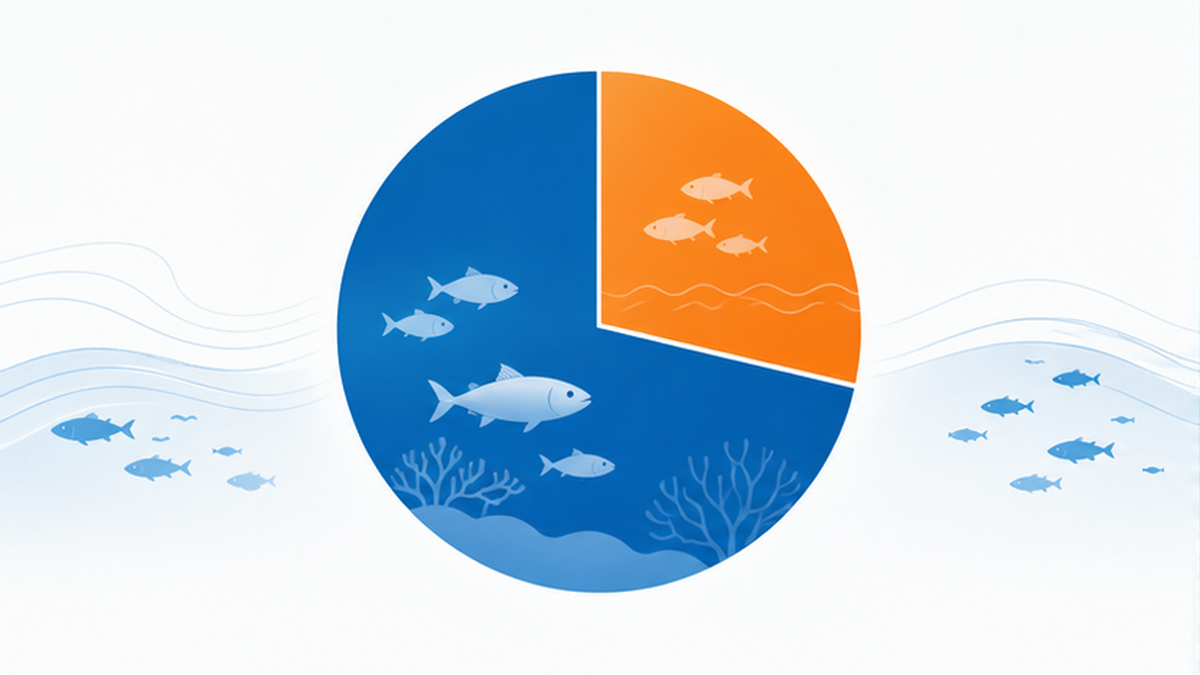
"There are plenty of fish in the sea"—that sense of things is fast becoming a thing of the past. According to "The State of World Fisheries and Aquaculture 2024" (SOFIA 2024), published by the United Nations Food and Agriculture Organization (FAO), among the world's scientifically assessed marine fishery resources, the share in a state of "overfishing" that is not biologically sustainable reached 37.7%. This figure has worsened further from the previous survey's 35.4%, showing that the decades-long trend of "overfishing" has not stopped.
Looked at another way, there is also a more positive figure: on a catch-volume basis, roughly 76.9% (in 2021) of catches come from sustainable stocks. But that is because a handful of species with abundant stocks are pulling up the overall average—when counted by the "number of stocks themselves," nearly 40% are flashing a warning sign. Fish are a renewable resource, but if the speed of catching outpaces the speed of regeneration, stocks can be depleted in the blink of an eye. Species like sardines and tuna see their stock levels swing widely in response to fishing pressure and changes in the marine environment, so there is no guarantee that "a good catch this year means a good catch next year too."
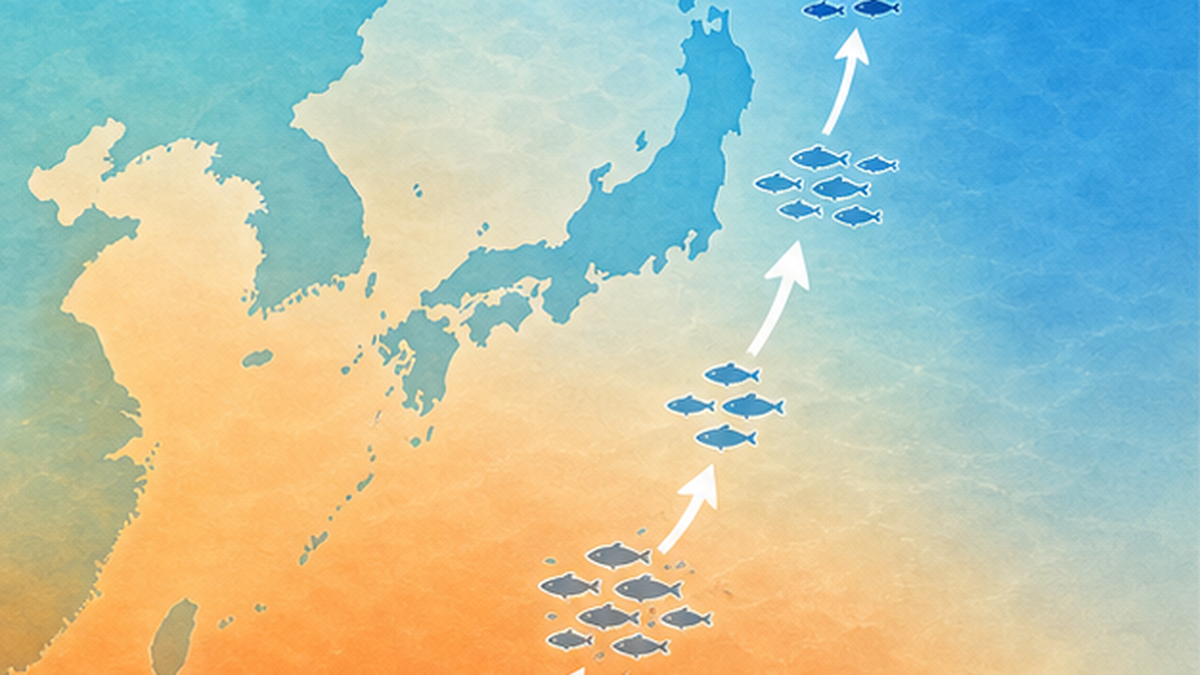
Overfishing is not the only cause of declining stocks. Rising sea temperatures driven by global warming are themselves changing the distribution of fish. Fish that used to be caught in certain waters can no longer be found there, while different species move in from the north instead—this kind of change is occurring in fishing grounds around the world. The relationship between ocean warming and fisheries is also explained in detail in the article on rising sea temperatures and changing ocean currents. As the two pressures of resource management and climate change overlap, the situation surrounding fishery resources is growing ever more complex.
"Wild-Caught Fishing" Alone Can No Longer Sustain Us—Entering the Age of Aquaculture
Amid this, aquaculture is gaining increasing prominence. SOFIA 2024 reported that in 2022, global aquaculture production surpassed wild-caught fishing (marine capture fisheries) for the first time. Combined global fisheries and aquaculture production reached 223.2 million tons per year, and aquaculture has become an indispensable pillar supporting food for a growing population. But aquaculture, too, can carry its own environmental burdens, such as overfishing of small forage fish used as feed, overuse of antibiotics, and the clearing of mangrove forests. The problems of the ocean can no longer be described with a simple binary of "wild-caught means safe" versus "farmed means bad for the environment."
For example, it is well known worldwide that mangrove forests in Southeast Asia have been cleared on a large scale for shrimp farming, destroying coastal ecosystems and disaster-prevention functions. The feed problem is also serious—some species require several kilograms of wild small fish to raise just 1 kg of farmed fish, which risks defeating the very purpose of "farming fish to protect wild resources." That is precisely why aquaculture, too, needs a yardstick that asks "how was it raised?" That yardstick is ASC certification, described later. Only when both wild-caught and farmed seafood have mechanisms guaranteeing sustainability can we continue to eat fish with peace of mind.
Another Crisis Underway at Japan's Dinner Table: "Fish Avoidance"
Meanwhile, looking within Japan reveals a challenge running in the opposite direction. According to the Fisheries Agency of Japan's "White Paper on Fisheries," per capita consumption of seafood in Japan in fiscal year 2023 was 21.4 kg annually—nearly half of the peak of 40.2 kg in fiscal year 2001, over roughly two decades. High prices, the trouble of cooking, and the hassle of cleanup are among the reasons fish is becoming a harder sell at the family dinner table. Ocean resources are in crisis even as consumer interest in fish fades—this twisted situation is exactly what makes it all the more meaningful for companies to place "easy-to-choose sustainable fish" on the shelves. Readers should also see the article on rising sea temperatures and impacts on fisheries regarding the changing environment surrounding fish.
| Indicator | Figure | Source |
|---|---|---|
| Share of the world's fishery resources that are overfished | 37.7% | FAO SOFIA 2024 |
| Share of catch volume from sustainable stocks (2021) | 76.9% | FAO SOFIA 2024 |
| Global fisheries and aquaculture production (2022) | 223.2 million tons | FAO SOFIA 2024 |
| Per capita seafood consumption in Japan (FY2023) | 21.4 kg | Fisheries Agency of Japan, White Paper on Fisheries |
Quick term guide: Sustainable Seafood
This refers to wild-caught fish harvested in ways that avoid depleting resources or damaging the environment, and farmed fish raised with consideration for the environment and society. The representative "certificates" for these are MSC certification (wild-caught) and ASC certification (farmed). As a keyword for protecting "an ocean where we can keep eating fish ten and twenty years from now," it is spreading rapidly across retail and food-service settings.
MSC and ASC—What Do the Two "Blue Fish" Ecolabels Actually Guarantee?
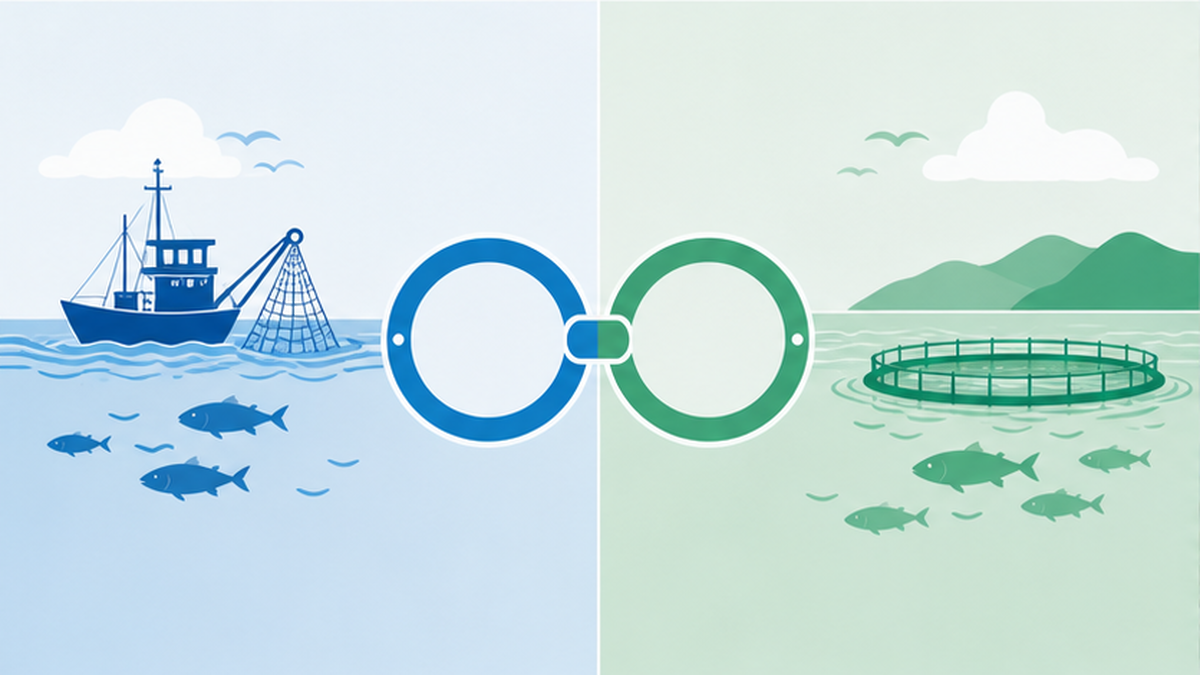
Understanding the substance of the two certifications, MSC and ASC, is essential to understanding AEON's initiative. Both are third-party certifications run by international nonprofit organizations, and while the names sound similar, there is a decisive difference: "wild-caught" versus "farmed." The two function like two wheels of the same cart, supporting sustainable seafood.
MSC Certification—Proof of Sustainable "Wild-Caught" Fishing
MSC stands for "Marine Stewardship Council." Founded in 1997, it is an international nonprofit organization whose label is commonly known as the "Blue Fish" ecolabel. MSC certification applies to wild-caught seafood and assesses fisheries against three principles: (1) whether the stock is not being overfished, (2) whether the fishery limits its impact on the ecosystem, and (3) whether an appropriate management system is functioning. Only fish caught by fisheries that meet these standards earn the right to be sold with the blue MSC label.
What matters is that this is not a fisherman's self-declaration but an evaluation by an independent third-party assessment body. The assessment scrutinizes whether the target fish stock is at a sufficient level based on scientific data, whether the fishing method has an excessive impact on the seafloor environment or on other creatures caught as bycatch (such as sea turtles or seabirds), and whether a management system is in place that can restrict fishing should the stock happen to decline. Certification is not a one-time achievement—it is maintained through regular audits and can be suspended if the standards are no longer met. This rigor is what upholds the credibility of the label.
ASC Certification—Proof of Environmental and Social Responsibility in "Aquaculture"
ASC, on the other hand, stands for "Aquaculture Stewardship Council," and it applies to farmed seafood. Based on seven principles, ASC certification strictly checks the burden a farm places on the environment and local communities. Specifically, this includes compliance with laws and regulations, conservation of natural habitats and biodiversity, avoidance of impact on wild populations, conservation of water resources and water quality, responsible feed sourcing, appropriate management of antibiotics and chemicals, and responsibility toward the working environment and local communities. It is a system that confronts head-on the problems of water pollution and antibiotic use that so often accompany aquaculture.
- Compliance with national and local laws and regulations
- Conservation of natural habitats, local biodiversity, and ecosystems
- Maintaining the diversity of wild populations (preventing farmed fish escapes and disease spread)
- Conservation of water resources and water quality (limiting pollution from wastewater)
- Responsible use of feed and other resources
- Appropriate fish disease management and responsible use of antibiotics and chemicals
- Responsibility toward local communities and appropriate working conditions for laborers
Aquaculture wastewater, if it contains excessive nutrient salts, can also become a cause of coastal red tides. The mechanism of eutrophication and red tides is covered in detail in the article on red tides and eutrophication, but ASC certification precisely requires curbing this kind of impact on water quality. If the habit of "choosing the green label for farmed fish" spreads, it will, in a roundabout way, help protect coastal seas.
| Item | MSC Certification | ASC Certification |
|---|---|---|
| Scope | Wild-caught seafood (fisheries) | Farmed seafood |
| Operating body | Marine Stewardship Council (MSC) | Aquaculture Stewardship Council (ASC) |
| Common name of the label | Blue Fish ecolabel (blue) | ASC label (green) |
| Main assessment criteria | Stock levels, ecosystem impact, management system | Seven principles including water quality, feed, chemicals, biodiversity, and labor conditions |
CoC Certification, Connecting "Boat to Plate"
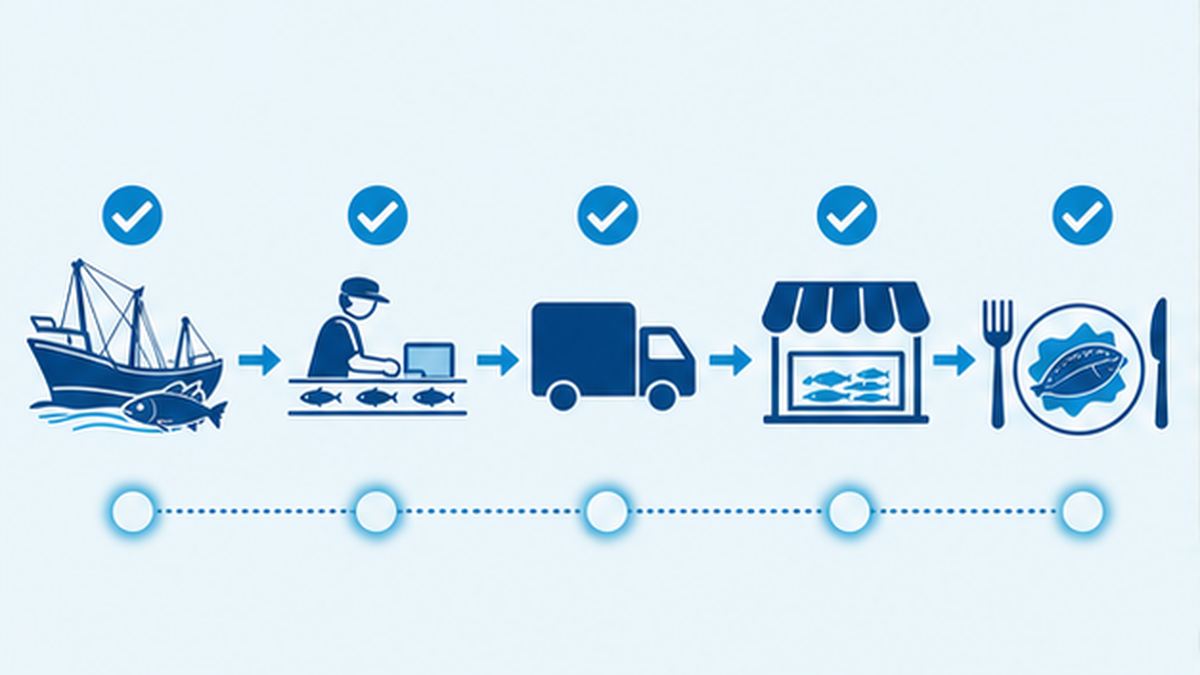
However, no matter how thoroughly a fishery or farm is certified, that alone will not deliver "sustainable fish" all the way into consumers' hands. If certified and non-certified fish get mixed together during processing and distribution, the credibility of the label collapses. That is where CoC certification (Chain of Custody) becomes essential. CoC certification guarantees that at every stage from landing, through processing and distribution, to the store shelf, certified seafood is not mixed with non-certified product and that traceability is reliably maintained. Ensuring the chain of certification is never broken "from boat to plate" is the lifeline that supports trust in the blue label.
In other words, behind that one label we see on the shelf lies a three-tiered structure of certification. First, the fishery (or farm) that catches or raises the fish must meet MSC/ASC standards. Second, the processors, distributors, and retailers who handle the fish must prevent mixing with non-certified product through CoC certification. Only when both of these are in place can consumers trust that "this is indeed a sustainable fish." The label is not merely a mark—it is a "through-ticket" that guarantees the entire long journey from ocean to dinner table. The market for seafood carrying this blue label continues to expand worldwide year after year, and consumer trust itself is the driving force nurturing the system.
Awareness in Japan Still Has a Long Way to Go
In a 2024 consumer survey across 23 countries published by MSC Japan, awareness of the MSC "Blue Fish" ecolabel in Japan stood at 22%. Although this rose 7 percentage points from the previous survey, it still trails far behind the global average of roughly 50%. Increasing the number of people who not only know the label exists but understand its meaning is the next challenge in expanding sustainable seafood.
AEON and TOPVALU—A Sustainable Seafood Challenge That Has Continued Since 2006
Now that we understand the certification framework, let us look at AEON's initiative itself. What stands out is how early it began. AEON first sold MSC-certified products in 2006. At a time when the term "sustainable seafood" was barely known in Japan, it became the first retailer in Asia to begin selling certified seafood. The first products were cod roe, seasoned cod roe (mentaiko), and salmon.
Born from the Sense of Crisis That "An Age of Resource Depletion Is Coming"
Even back then, signs of decline were already emerging in the world's fishery resources. Amid a sense of crisis that an era in which fish could no longer be caught might be approaching, AEON began carrying certified products not as a one-off campaign but as a company-wide decision. In 2014, it became the first retailer in Asia to also sell ASC-certified products, building a system to offer sustainable seafood across both wild-caught and farmed categories.
Such pioneering efforts came with their share of quiet struggle. In 2006, Japan barely had any processing or distribution infrastructure capable of handling certified seafood at all. Few fisheries had obtained certification to supply from, and the effort had to start from getting processing plants to acquire CoC certification. Awareness was low, and there were likely voices asking, "why go to all this expense and trouble?" Even so, the initiative continued because of a long-term perspective—not immediate sales, but a commitment to "being a company that can keep selling fish ten and twenty years from now."
A Hit Product Selling Five Million Packs a Year Was Born
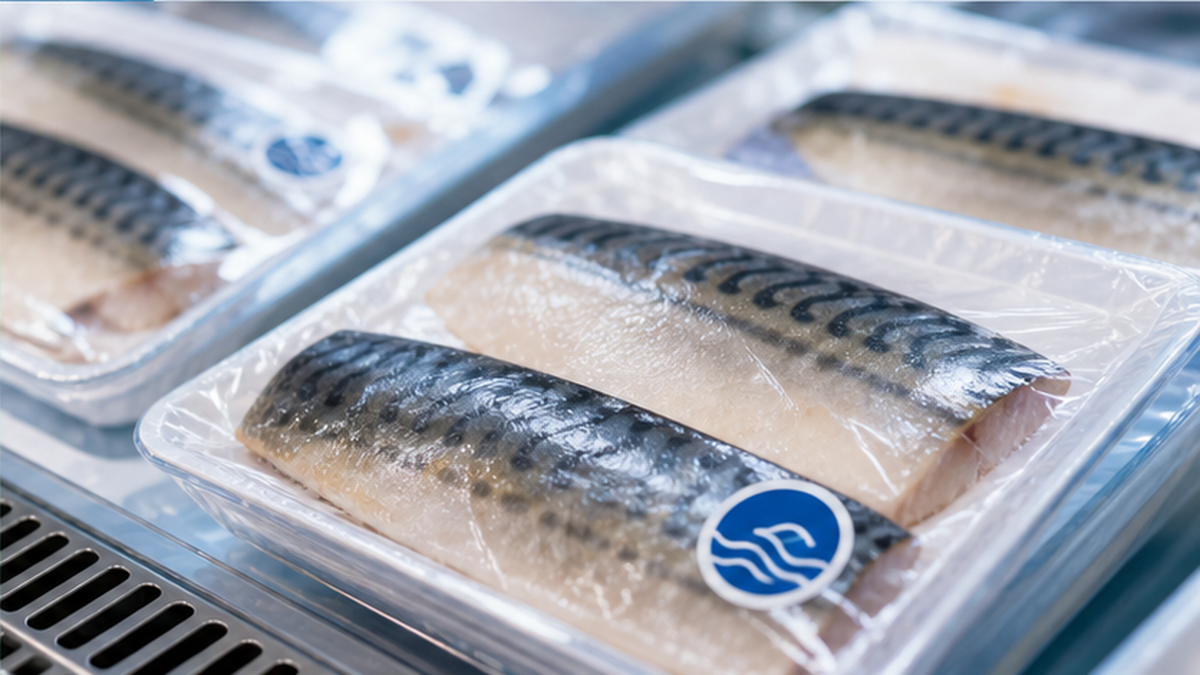
The initiative took a major leap forward in 2017. AEON launched Asia's first MSC-certified salted mackerel under the TOPVALU brand. Not only did the product carry the "rightness" of sustainability, but by offering a staple fish that regularly appears on the dinner table at an accessible price, the salted mackerel became a runaway hit, selling roughly 5 million packs a year. Rather than "buying it because it's sustainable," the appeal was "buying it because it's delicious and affordable, and it happened to be sustainable"—and this natural entry point became the decisive factor in expanding certified seafood beyond a niche of highly conscious consumers to ordinary households.
| Year | Key AEON milestones |
|---|---|
| 2006 | First retailer in Asia to sell MSC-certified products (cod roe, seasoned cod roe, salmon) |
| 2014 | First retailer in Asia to sell ASC-certified products |
| 2017 | Launched Asia's first MSC-certified mackerel, a hit selling roughly 5 million packs a year |
| April 2017 | Established the "AEON Sustainable Procurement Policy" and "Sustainable Procurement 2020 Targets" |
| 2020 | Launched ASC-certified amberjack (farmed) at roughly 600 stores |
| Present (at time of writing) | Expanded MSC- and ASC-certified seafood to as many as 23 species and 48 items (among the largest in Japan; the lineup fluctuates with catch and supply conditions) |
As a result of this accumulation, AEON, according to the published figure at time of writing, has achieved one of the largest lineups in Japan, with up to 23 species and 48 items across both MSC and ASC certification. Mackerel, albacore tuna, sockeye salmon, capelin, cod roe, seasoned cod roe, amberjack, wakame seaweed, shrimp, mussels—if you look closely at the shelves, you will likely find that products carrying a certification label are more common than you might expect. The article on marine biodiversity in Japan is also a useful reference regarding the situation facing marine life.
So that we can keep eating fish ten and twenty years from now, we are promoting sustainable seafood. Please look for the "MSC" and "ASC" certified products in stores—the proof of this effort.
— AEON (TOPVALU)
This nearly two-decade-long journey has also influenced other retailers and food manufacturers. As of 2018, AEON's certified products had expanded to as many as 29 species and 53 items (note: since the lineup of certified seafood fluctuates year to year with catch volumes and supply conditions, this differs in reference point from the 23-species, 48-item figure published at time of writing). Restaurant chains, other supermarkets, and consumer co-ops have also begun carrying certified seafood, and the base of sustainable seafood is expanding across Japan as a whole. The presence of a company that pioneers a market first serves as a guidepost for the players who follow—AEON's example illustrates this pattern well.
The "Sustainable Procurement Policy"—A Declaration That Transforms Procurement at Its Roots
Behind each individual hit product lies a clear corporate policy. In April 2017, AEON established the "AEON Sustainable Procurement Policy." This was not simply a matter of "increasing" certified products—it was a declaration to restructure the very concept of procurement (purchasing) around sustainability as its central axis.
What Is in the "Sustainable Procurement 2020 Targets"?
Paired with this policy were the "Sustainable Procurement 2020 Targets." For seafood, two ambitious goals were set. One was to achieve 100% CoC certification acquisition for MSC and ASC across the general merchandise stores and supermarkets within AEON's consolidated group. The other was to develop private-brand products backed by sustainability credentials across all major fish species.
Why Having a "Procurement Policy" Matters
- It embeds sustainability as a company-wide rule, not the goodwill of individual staff members
- It sends a clear signal to suppliers (fisheries, farms, processors) to pursue certification
- Setting a numerical target for "how far to go" makes progress verifiable
- It ensures the effort takes root as a long-term system rather than ending as a one-off campaign
Building the Foundation: Obtaining CoC Certification at Every Store
Within this target, the unglamorous but decisively important element is the 100% CoC certification piece. As noted earlier, CoC certification is the mechanism that guarantees certified seafood is not mixed with non-certified product during processing and distribution. AEON has obtained CoC certification at every store that processes seafood carrying the MSC/ASC certification label. In other words, it built a system that keeps the chain of certification unbroken all the way down to the stage where fish are cut and packed in the back rooms of stores. It is precisely because of this that consumers can trust and pick up a label, confident that "this label is genuine."
Obtaining and maintaining CoC certification across hundreds of stores nationwide is a far more demanding job than it might sound. Staff at each store must follow procedures for handling certified fish, keep records to prevent mixing with non-certified fish, and undergo regular audits. It is only through this painstaking, on-the-ground operation that the chain "from boat to plate" holds together. There is nothing flashy about it, but it is precisely this behind-the-scenes system-building that has been the decisive factor in embedding certified seafood not as a "special event" but as part of the "everyday shelf."
By 2020, achieve 100% CoC certification acquisition for MSC and ASC across general merchandise stores and supermarkets—the procurement policy was set forth not merely as an ideal, but as a promise accompanied by a deadline and a number.
— AEON Sustainable Procurement 2020 Targets (summary)
This kind of procurement reform is also part of a larger movement that goes beyond seafood alone. AEON is working to reduce its environmental footprint across logistics and its business operations as a whole, and moves toward decarbonization in the shipping sector are covered in detail in the article on ammonia fuel and the decarbonization of ships. The procurement policy can be described as a backbone that binds these individual efforts together under the single axis of "sustainability," rather than leaving them scattered.
Building a System Consumers Can Choose From—The Effort Behind Reaching Consumers
No matter how fine a policy a company sets, it is ultimately the consumer standing at the shelf who picks up the fish. What makes AEON's initiative praiseworthy is that it placed sustainable fish on the shelf not as something special, but as a "normal option." Let us look at the concrete efforts behind reaching consumers.
Replacing Everyday Staples with Certified Versions
The core of AEON's strategy is not to make certified seafood "a rare item in a special corner." Instead, it directly replaces everyday staple fish that households routinely eat—mackerel, salmon, tuna, capelin, cod roe—with certified versions. Consumers, even without consciously thinking about sustainability, end up making a sustainable choice simply by buying the fish they always buy. "Sustainable by default, without having to try"—this design is what made it possible to spread the practice without relying on highly conscious consumers alone.
This idea connects to what behavioral economics calls "the power of the default." People are more likely to go with the "normal option" in front of them than to make the effort of a special, deliberate choice. If that is the case, then all one needs to do is replace that "normal" with something sustainable. If the staple fish lined up on the shelf are certified from the start, consumers make a sustainable choice without even being conscious of it. A model that relies on "a conscious minority making an effort" has its limits, but a system where "anyone can choose unconsciously" can move society as a whole. This design philosophy is the single biggest reason AEON's initiative deserves recognition.
Pricing Them at an Accessible Level
Because certified seafood incurs the costs of auditing and management, it tends to be priced higher in general. But AEON has leveraged the scale advantages of its private brand to keep staple certified fish at an accessible price point. For example, MSC-certified products expanded to roughly 380 stores in August 2025 included up to six items—such as sashimi-grade albacore tuna, Karafuto capelin, low-salt cod roe and seasoned cod roe, and salted sockeye salmon—priced at roughly 198 to 398 yen (before tax). Breaking down the preconception that "sustainable means expensive" is also an indispensable element in spreading the practice.
The private-brand model itself also supports achieving this pricing. Because TOPVALU is planned and procured by AEON itself and sold in large volumes, the costs of certification acquisition and management can be absorbed at a large scale. For a special product that sells only in small quantities, the cost of certification weighs heavily on the price, but for a staple product that sells in the millions of packs, the added cost per pack is minimal. "It can be made cheap because it sells a lot, and it sells even more because it's cheap"—the ability to create this virtuous cycle is precisely the strength that allows major retailers to lead the way on sustainable seafood.
| Example product (MSC certified) | Details | Base price range |
|---|---|---|
| Albacore tuna (thawed), for sashimi | Per 100g | From ¥198 |
| Karafuto capelin | 8 pieces | Around ¥298 |
| Low-salt cod roe / low-salt seasoned cod roe (bite-sized cuts) | 100g each | Around ¥398 |
| Salted sockeye salmon (mildly salted) | Per 100g | From ¥298 |
"Ease of Discovery" and "Ways of Communicating"
AEON has also made repeated efforts to communicate the meaning of the blue and green labels to consumers through in-store POP displays, social media, and dedicated web pages. With awareness of the label still at only 22%, simply "putting it on the shelf" is not enough to get it chosen. Communicating, without being pushy, why this mark matters is what turns certified seafood into something consumers choose "with understanding." The article on seafood food loss is also worth reading alongside this, for a deeper understanding of the perspective of eating fish without waste.
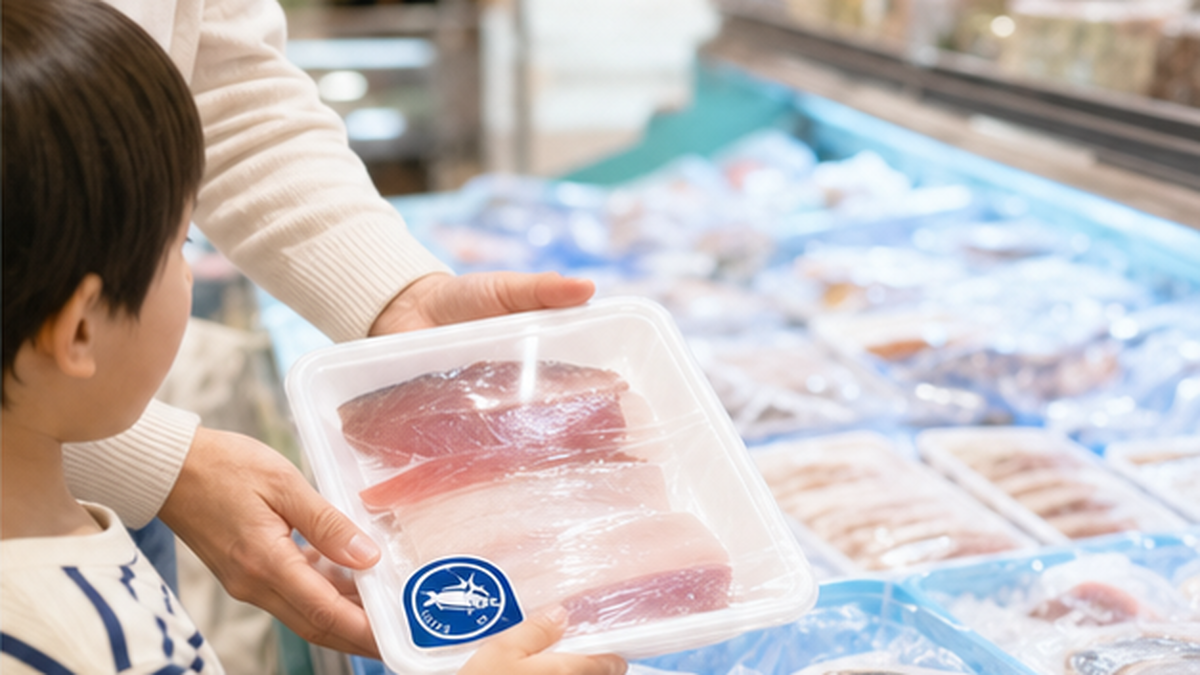
Collaboration with education is also expanding. Efforts such as using MSC-certified fish in school lunches, or creating opportunities for children to learn about sustainable seafood, are taking root in various places—initiatives to "learn about the ocean through eating." A parent picking up a blue label at the shelf and explaining the reason to their child—the accumulation of such everyday exchanges gradually pushes up the awareness figure, and in time nurtures a culture in which "checking the label when choosing fish" becomes taken for granted. Building the system and communicating its meaning—only when both wheels are in place does certified seafood truly take root in society.
Tips for Choosing Certified Fish at the Shelf
- Remember: a blue fish mark means MSC (wild-caught), a green mark means ASC (farmed)
- Start by looking among staple fish such as mackerel, salmon, tuna, and capelin—they are easier to find
- Check not only special display corners but also the regular fresh, frozen, and processed-food shelves
- Prices are more accessible than you might think. Start by swapping just one everyday fish for a certified version
The Challenges Facing Certified Seafood—The Dilemma of Awareness, Price, and Supply
Up to this point, AEON's initiative has been described in a positive light, but certified seafood still faces many challenges to overcome. It would be premature to look only at the good side and conclude "this alone will protect the ocean." Let us calmly confirm the walls that remain.
Challenge 1: Low Awareness and the Problem of "Meaning That Doesn't Get Across"
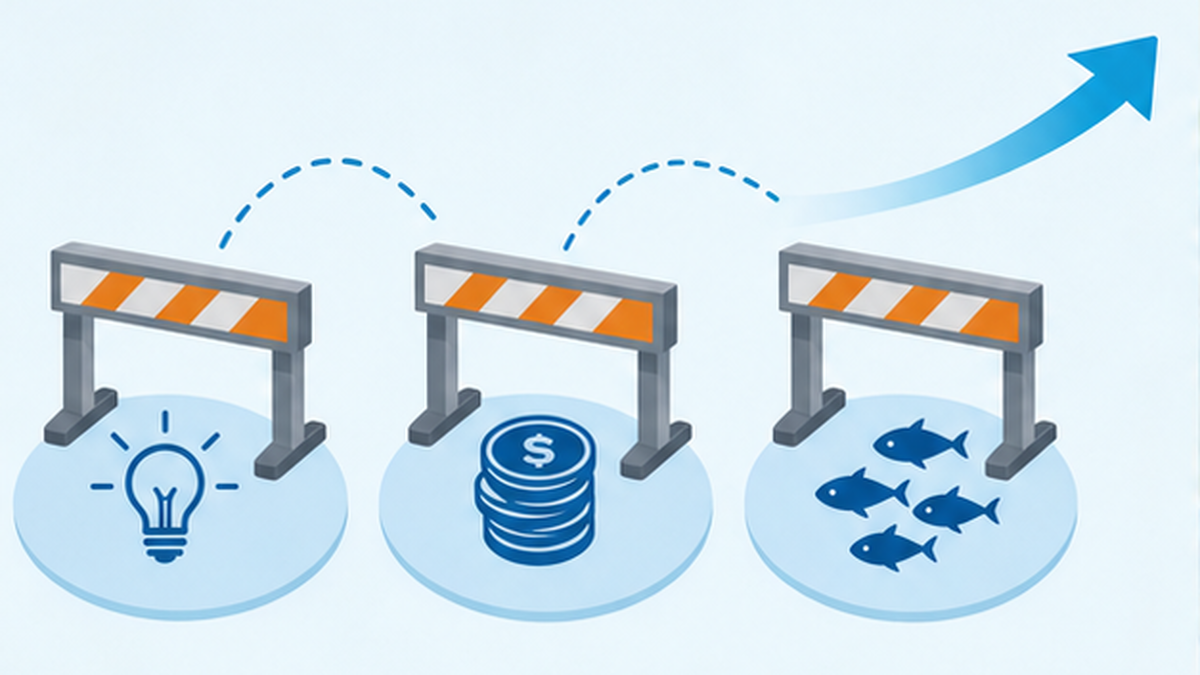
The biggest wall is, after all, low awareness. About 22% of people in Japan report having "seen" the MSC label (MSC Japan's 2024 survey). Moreover, even among those who recognize it, only about 40% understand that the label relates to sustainability and certification. Calculated across the population as a whole, fewer than 10% truly understand its meaning. Even if the label is right there, if its meaning does not get across, a fish that costs slightly more risks simply going unchosen. Steady, ongoing education and awareness-raising are indispensable.
Challenge 2: Constraints of Cost and Supply Volume
Obtaining and maintaining certification requires audit fees and management effort, and that cost is reflected in the price. There is also, fundamentally, a limited number of certified fisheries and farms, and for some species, supply cannot keep up even as consumer demand grows. How to balance supply and demand, and price and quality, is a structural challenge that a single retailer cannot fully resolve on its own.
In particular, coastal fishing in Japan involves many small-scale fishing operators, for whom the cost and paperwork burden of obtaining certification can weigh heavily. Globally as well, MSC and ASC certifications tend to be concentrated among large-scale fisheries and farms with well-developed management systems, creating an ironic structure in which the hurdle to certification is highest for the small-scale fisheries that most need resource management. Rather than leaving certification as "a system only for those who can already achieve it," it is also necessary to expand support (such as fishery improvement projects) that helps small-scale operations raise their sustainability step by step.
Challenge 3: Certification Alone "Is Not Enough"
It is also important to recognize that certification is not a cure-all. The strictness of standards and assessment differs from scheme to scheme, and certification does not mean environmental impact drops to zero. There is also a risk that a company might use "selling certified products" as a kind of alibi, falling into environmental appeals unsupported by substance—greenwashing. That is precisely why certification should be viewed not as a "goal" but as a "starting point," demanding a stance of continuously improving fisheries and aquaculture operations on the ground. Ocean environmental problems cannot be solved by certification alone—it only becomes effective when combined with multifaceted efforts such as ghost gear (marine debris from fishing equipment) and marine protected areas.
None of these challenges are unique to AEON. Rather, precisely because it is a company running at the front, it is the first to hit these walls—and overcoming them one by one paves the way for the industry as a whole that follows. What matters is not shrinking back from the effort to avoid criticism, but honestly acknowledging the challenges while continuing to move forward. If awareness is low, refine how you communicate; if supply is insufficient, support producers; if certification has its limits, get involved in building better standards—rather than waiting for perfection, start imperfect and keep improving. That is arguably the realistic stance for confronting the complex problems of the ocean.
Don't Stop Thinking Just Because "There's a Label, So It's Fine"
A certification label is a powerful signpost for consumers to make a sustainable choice. But it is neither the only right answer nor a perfect guarantee. Taking an interest, prompted by the label, in where and how a fish was caught or raised—and working to improve the certification system itself—only when both of these are present does the blue label take on its true meaning.
What We Can Do—A Vote for the Ocean, Starting with the "Blue Label"
After all this difficult discussion, what a consumer can do is very simple. When shopping, choose fish with a blue label (MSC) or a green label (ASC). Just by doing that, we cast "one vote" for sustainable fishing and aquaculture.
Shopping Is a "Vote" for the Ocean
A supermarket increases the products that sell and reduces the products that do not. So the more certified seafood sells, the more retailers expand their lineup of certified fish, and the more they push fisheries and farms toward obtaining certification in order to supply it. Each individual consumer's choice is small, but when accumulated, it becomes a market force that changes how distant fisheries are conducted. The fact that AEON's salted mackerel sold 5 million packs a year is proof of exactly that power. Your one vote helps build an ocean where we can keep eating fish ten and twenty years from now.
You might think "it won't change anything if only I choose it." But a market is an accumulation of countless small choices. If a certain fish goes unsold, the store stops stocking it. If a certain fish flies off the shelves, the store scrambles to increase its supply. Every time we choose the blue label at the register, that information travels back up the distribution stream as sales data, ultimately influencing decisions on the ground about "what kind of fish to catch, and how." Just as one vote in an election changes politics, one purchasing decision changes the ocean. And unlike an election, shopping lets you vote every single day.
Five Actions You Can Take Starting Today
- When buying fish, look for a blue MSC label or a green ASC label on the package
- Start by swapping just one staple fish—mackerel, salmon, or tuna—for a certified version
- Bring it up with family or friends: "Do you know what this mark means?"
- Eat the fish you buy without waste, making an effort to avoid food loss
- Don't rely on certification alone—broaden your interest in the ocean by learning about seasonal and local fish too
Connecting This to Broader Efforts to Protect the Ocean
Choosing sustainable fish is one piece of a much larger puzzle in protecting the ocean. The ocean today is under compound pressures, including rising water temperatures, acidification, and ecosystem change. The effects of marine heatwaves on ecosystems are covered in the article on marine heatwaves and the waters around Japan; the role of bivalves and seaweed in storing carbon is covered in the article on blue carbon ecosystems; and the role tidal flats play in nurturing a rich ocean is covered in the article on tidal flat conservation. Let the habit of choosing certified seafood be an entry point for gradually broadening your interest in the ocean as a whole.
And this effort is not just for adults. As the phrase TOPVALU has adopted—"passing the ocean's rich blessings on to children's futures"—suggests, this is also a question of what we leave for the next generation. A child who grows up watching a parent choose a blue-labeled fish at today's dinner table will likely go on to naturally make that same choice at their own table one day. Passing sustainable choices on to the next generation not as "something special" but as "an ordinary habit"—that may well be the surest way to keep sharing the ocean's rich blessings, ten years, twenty years, and far beyond into the future.
On Your Next Shopping Trip, Look for the Blue Label
- Find one certified product at the fish counter of your nearby supermarket
- Try to tell apart MSC (wild-caught) from ASC (farmed) by the color and shape of the label
- If you like it, choose it again next time. Your continued choice is what changes the shelf's lineup
Conclusion—A Quiet but Certain Step Toward Changing the Ocean, Starting from the Shelf
About 40% of the world's fishery resources are overfished, and fish consumption is declining in Japan. Amid this double crisis, AEON has, since 2006, continued to place certified seafood—an "easy-to-understand sustainable option"—on its shelves. The two labels MSC and ASC, the CoC certification and procurement policy that support them, and affordably priced staple products—all of this together forms a system that lets consumers choose sustainable fish without having to try especially hard.
Many challenges remain. Awareness stands at only 22%, and there are walls of cost and supply. Certification is not a cure-all—it is merely a starting point. Even so, what a lineup of up to 23 species and 48 items (the published figure at time of writing), among the largest in Japan, and a hit product selling 5 million packs a year demonstrate is this: when "rightness" is combined with "deliciousness and affordability," a sustainable choice can belong not just to a select few, but to everyone's everyday life. Changing the ocean, starting from the shelf. That quiet but certain step begins with the next pack you carry to the register.
Summary of this article
- About 37.7% of the world's fishery resources are overfished. In Japan, per capita seafood consumption has nearly halved over 20 years
- MSC is the "Blue Fish" ecolabel guaranteeing sustainability of wild-caught fish, and ASC guarantees it for farmed fish. CoC certification supports trust throughout processing and distribution
- AEON became the first retailer in Asia to sell MSC-certified products in 2006, and expanded to as many as 23 species and 48 items (published figure at time of writing), among the largest lineups in Japan
- The 2017 "Sustainable Procurement Policy" and 100% CoC certification form the foundation for stocking certified fish on the shelves
- By pricing staple fish at an accessible level, AEON achieved a system in which consumers make sustainable choices "naturally"
- Challenges of awareness, cost, and supply remain, but consumers choosing the blue label becomes a market force that changes the ocean
References and Sources
- United Nations Food and Agriculture Organization (FAO) – The State of World Fisheries and Aquaculture 2024 (SOFIA 2024)
- Fisheries Agency of Japan – FY2024 White Paper on Fisheries (trends in seafood consumption)
- Marine Stewardship Council (MSC Japan) – Overview of the MSC "Blue Fish" ecolabel and MSC certification
- ASC Japan (Aquaculture Stewardship Council) – The seven principles of ASC certification and CoC certification
- MSC Japan press release – Consumer survey conducted across 23 countries: awareness of the MSC "Blue Fish" ecolabel in Japan rises to 22% (2024)
- AEON (TOPVALU) – MSC/ASC environmental initiatives and sustainable seafood
- AEON Co., Ltd. – AEON Sustainable Procurement Policy and Sustainable Procurement 2020 Targets (press release)
- Ministry of the Environment, Japan – Environmental Label Database (MSC "Blue Fish" ecolabel / ASC label)
- WWF Japan – A mark that protects the ocean—about the ASC certification system for farmed seafood
* Listed in order of reliability: government and academic institutions > peer-reviewed papers > specialized organizations > reputable media