⚡ In short
A complete beginner's guide to birdwatching, from choosing binoculars and using call-identification apps to seasonal must-visit spots, including the hawk migration at Cape Irago, Yatsu Tidal Flat, and Izumi Plain.
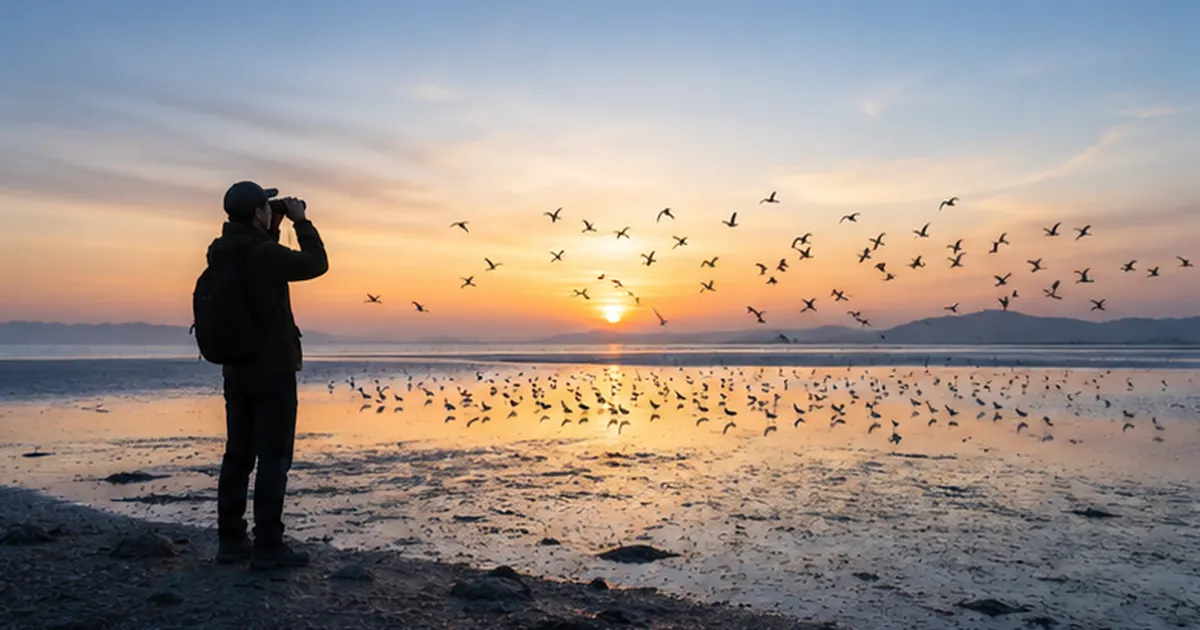
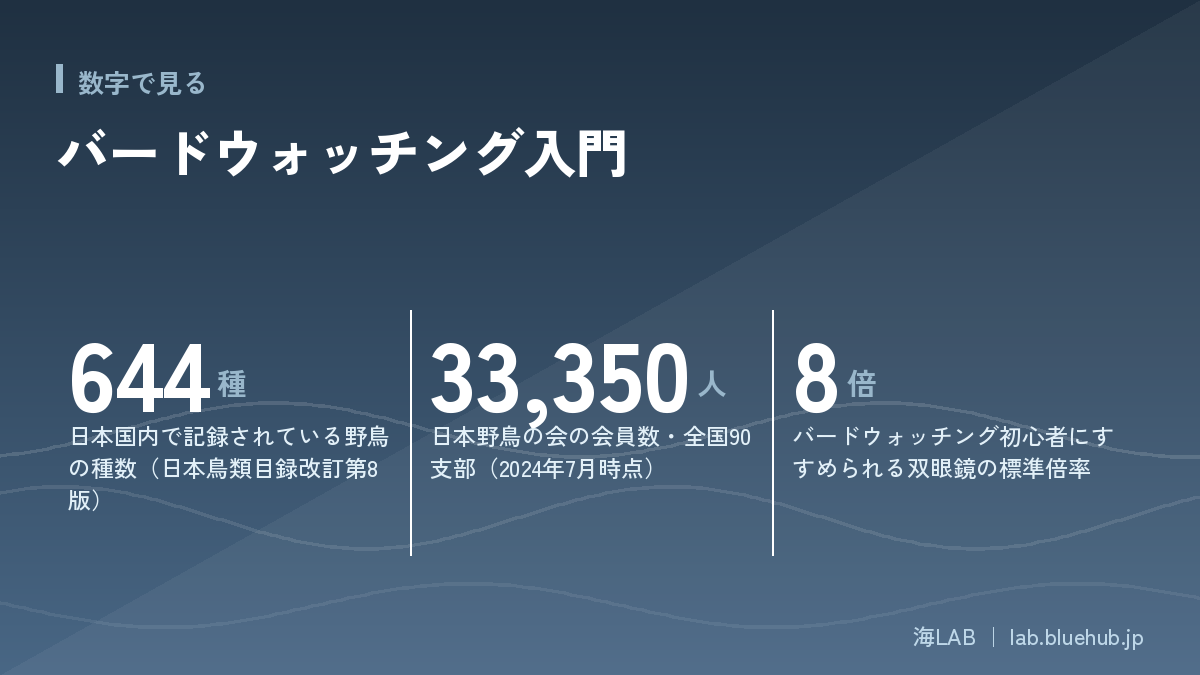
If you've ever looked up at the sky and wondered "what bird is that?", that moment is already the entry point to birdwatching. It requires no special qualifications or physical strength — a single pair of binoculars is enough to start today. Japan alone has 644 recorded wild bird species, and birding spots exist everywhere from city parks to remote island capes.
Umi Lab has mostly covered marine life and ocean environmental issues so far, but wild birds are inseparable from the sea, tidal flats, and wetlands too. Sandpipers and plovers use tidal flats as stopover points during migration, while gulls and ducks winter along the coast. Observing land birds is also a chance to notice how ecosystems connect the sea and the land.
This article walks through everything from choosing your first pair of binoculars, clothing and etiquette, tips for learning birds by their calls, seasonal birding spots worth visiting, and finally how birdwatching connects to biodiversity conservation. By the end, you should have a concrete idea of where to go and what to bring next weekend. The fact that you can start the moment you decide to, with no special preparation, is exactly why this hobby has been loved across generations for so long.
What you'll learn in this article
- How to choose binoculars that suit you, based on magnification, objective lens diameter, and price range
- Tips for learning bird species by their calls, and how to use free identification apps
- Recommended seasonal birding spots, from spring/autumn migration to winter waterfowl
- Observation etiquette that avoids stressing wild birds
- How birding at a nearby park or coastline connects to biodiversity conservation
What Is Birdwatching? Why It's Growing in Popularity
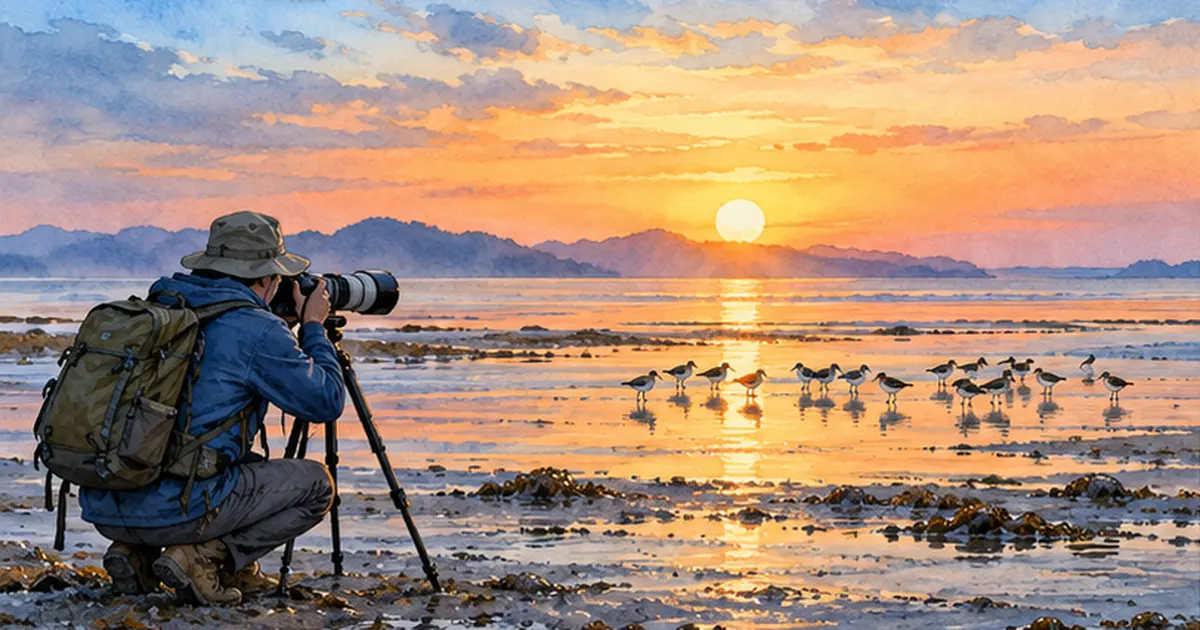
Birdwatching is the general term for observing wild birds through binoculars or a spotting scope, and enjoying their species and behavior. Unlike hunting or keeping birds, it's fundamentally about observing birds in their natural state without touching them. You can start with just one pair of binoculars, and the low barrier to entry is one reason its popularity keeps growing. In recent years the hobby has diversified into styles such as "bird photography," focused on the camera, and "listing," focused on identification and record-keeping — giving the same hobby several different doors in.
A hobby that needs no special skills
Unlike hobbies such as mountaineering or diving that require specialized skills, birdwatching can be done by anyone, anywhere they can walk. Just sitting on a bench in a nearby park, as the seasons progress you'll encounter species beyond sparrows and brown-eared bulbuls, such as Japanese white-eyes and daurian redstarts. It offers flexibility to choose a level of difficulty suited to age and physical condition, making it one of the few outdoor hobbies that people of any age, from children to seniors, can enjoy together in the same place. As long as the weather cooperates, even a 30-minute morning walk is enough to count — and that ease is part of what makes it sustainable.
Its value as citizen science
Individual observation records can also become valuable data for research institutions. Japan's Ministry of the Environment incorporates citizen volunteer cooperation into its nationwide bird breeding distribution survey, part of the basic survey on the conservation of the natural environment, supplementing data over a scope and time span that professional researchers alone could not cover. Continuing to birdwatch effectively means participating in biodiversity monitoring.
Online databases for submitting observation records have also been built up both in Japan and abroad, where casually recorded information — "when, where, what was seen" — accumulates into material for reading broader trends, such as shifts in migration timing or changes in population size. The sense that you can contribute to science without being an expert is one reason people keep this hobby up for years.
How a hobby connects to research
- Individual observation records accumulate in research databases via apps and web services
- Long-term accumulation of records becomes a clue for tracking changes in migration timing and population size
- Continuous observation itself becomes a contribution to research, even without special training
Why birdwatching thrives in Japan
The Japanese archipelago stretches roughly 3,000km north to south, spanning climate zones from subarctic to subtropical. Being surrounded by the ocean, and sitting where the warm Kuroshio and Tsushima Currents meet the cold Oyashio Current, is one reason for its rich fishing grounds — and also for its diverse bird life. Because of its geographic proximity to the continent, birds that breed in Siberia and mainland China and birds that winter in Southeast Asia and Oceania both pass through the Japanese archipelago, and this geographic diversity is exactly what underpins the large number of recorded species — 644.
The person who coined the words "yacho" and "tancho"
In fact, the Japanese words for "wild bird" (yacho) and "bird walk" (tancho) are relatively recent additions to the language. When the Wild Bird Society of Japan was founded on March 11, 1934, with ornithologist and poet Godo Nakanishi as its initiator, these two words — not previously in use — are said to have been coined then and spread nationwide. Under the philosophy that "wild birds belong in the wild," the idea of enjoying wild birds as they are, without capturing them, was put forward, and Japan's first bird walk was held at the foot of Mt. Fuji. This philosophy, begun more than 90 years ago, carries directly through to today's birdwatching etiquette.
Choosing Binoculars: Standards for Magnification, Lens Size, and Price
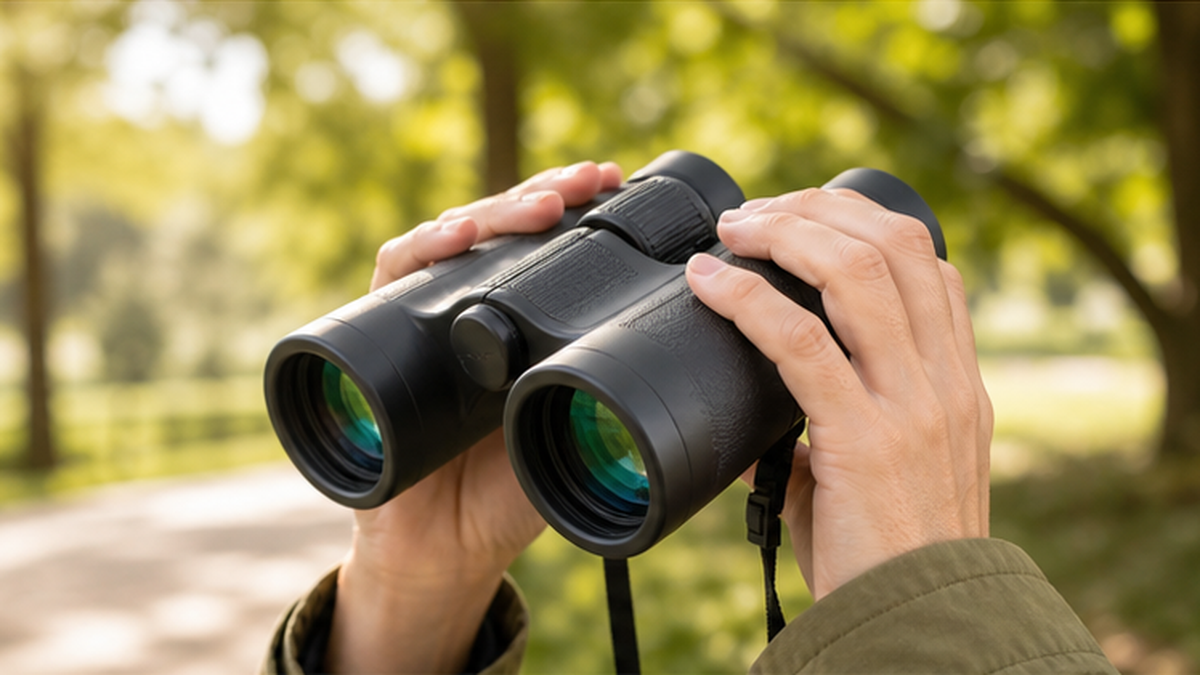
Binoculars are the first piece of gear you'll assemble for birdwatching. You don't need to brace for a major expense the way you might with a telephoto camera lens — as long as you know the basic standards, an entry-level pair in the 10,000–20,000 yen range is plenty enjoyable. On the other hand, choosing poorly can end the hobby before it starts, with complaints like "it's too dark to see the bird" or "it's too heavy and tires my arms" — which is exactly why your first pair deserves some real criteria.
8x is the standard magnification
In a binocular spec like "8x30," the first number is the magnification. Higher magnification makes birds appear larger, but narrows the field of view and amplifies the effect of hand shake. For beginners, around 8x is easy to handle, and 6–8x is widely recommended for entry-level use. As a rule of thumb, up to about 10x can still be used stably handheld; anything higher becomes an advanced option that assumes use with a tripod.
Objective lens diameter and brightness of view
The second number in "8x30" is the diameter of the objective lens in millimeters — the larger it is, the more light it gathers, brightening the view even in a dim forest. If you prioritize portability, a lightweight model around 20mm works well; if you prioritize brightness, 30–40mm is considered an easy-to-handle balance. Models with a real field of view (the angle of the visible range) of around 7–8 degrees make it easier to catch flying or fast-moving birds in frame.
Price range and care
Products priced at 5,000 yen or below are often not up to the task for birdwatching, lacking in lens coating quality or waterproofing. Aiming for something in the 10,000+ yen range as your first pair makes a real difference in the brightness of the view and ease of focusing. Since it's a tool you'll use for years, it's worth picking one up in person to check its weight and fit before deciding. After use, simply wiping off dust with a dedicated lens cloth and storing it somewhere with low humidity will greatly extend its lifespan.
Binoculars vs. spotting scopes
| Tool | Best suited for | Characteristics |
|---|---|---|
| Binoculars (around 8x) | Forests, parks, observing while on the move | Lightweight and portable, easy to track moving birds |
| Spotting scope (20–60x) | Distant tidal flats, waterfowl on lakes | Requires a tripod. High magnification allows close observation of detail |
What to check in-store before buying
Binoculars can be bought online, but it's worth trying to look through a pair in person at a store first if possible. If you wear glasses while using them, you'll need a model with enough eye relief (the distance between the eyepiece and your eye), or the edges of your field of view will be cut off. Whether it has a diopter adjustment to correct for differences between your left and right eyesight, how heavy it feels hanging from your neck, and how easily the focus dial turns are all points that are hard to judge without holding the binoculars yourself. It's also worth checking whether they're waterproof and fog-resistant, given rainy days and morning dew on tidal flats.
Monoculars and camera-equipped binoculars
If you want to keep your gear to a minimum, a monocular — viewed with one eye — is another option. It's lighter and more compact than binoculars, but falls short on depth perception and field of view compared to viewing with both eyes. In recent years, camera-equipped binoculars that let you capture photos and video directly while looking through them have also appeared. They're convenient if you want to observe and record at the same time, but tend to cost more than standard binoculars, so it's not too late to consider one after you've built up the basics with a standard pair.
Clothing, Gear, and Etiquette to Know Before You Go
Once your gear is settled, the next step is clothing, what to bring, and the observation etiquette that avoids putting stress on wild birds. Getting prepared beforehand means you can focus entirely on finding birds on the day itself.
Clothing and basic gear
- Clothing in unobtrusive colors that won't easily put birds on alert (camouflage isn't necessary — anything not too bright will do)
- Comfortable walking shoes for long stretches on foot (rubber boots can help in tidal flats or wetlands)
- A field guide or a smartphone bird identification app
- A notebook or app for recording observations, plus drinks and insect repellent suited to the season
- A hat and sunscreen in strong-sun seasons, and cold-weather gear in winter (waterside winds make the felt temperature drop faster)
Etiquette that avoids stressing wild birds
The Wild Bird Society of Japan has published etiquette guidelines aimed at beginners in bird observation and photography, calling for avoiding loud voices or sudden movements that startle birds, and staying away from nests. In particular, approaching a nest during incubation or chick-rearing risks having the parent birds abandon it out of alarm. It's easy for consideration of one's surroundings to slip as you get absorbed in observation, so it's important to consciously hold back.
Also, "playback" — using a speaker to replay a bird's call to lure it closer — is banned at many birding sites, since it further exhausts birds that are already spending energy during migration. Avoiding unauthorized entry into protected areas, private land, or farmland, and following local rules, form the basic ground rules. Crowds of people gathering for photography can also become a source of stress for birds, so keeping some distance between observers matters too.
The best time of day and weather for observation
Wild birds are most active from early morning through late morning. During the heat of midday they tend to stay hidden in shade, making them harder to spot. In summer especially, the cool period right after sunrise is your best bet. As for weather, strong winds tend to push birds into hiding and make observation harder, but on lightly overcast days the soft light actually makes colors easier to see through binoculars, making it a surprisingly good time to go. On rainy days, it's best not to push it — reschedule for another day.
Learning Birds by Their Calls: Mnemonics and Apps
Wild birds are often noticed by their call before they're seen. Once you can tell species apart by voice, the number of birds you're able to spot increases dramatically. In leafy forests especially, noticing a bird by its call before seeing it is actually the more common case.
The traditional method: birdsong mnemonics
Japan has a long tradition of "kikinashi" — turning a bird's call into a human phrase to help remember it. For example, the common cuckoo's call is rendered as "teppen-kaketaka," and the Japanese leaf warbler's as "shochu ippai gu-i" (roughly, "a glass of shochu, gulp"). Because they work as memorable wordplay, they're a standard mnemonic device found in field guides. The exact phrasing can vary by region or by book for the same bird's call, and coming up with your own version is part of the fun.
Identifying calls with AI apps
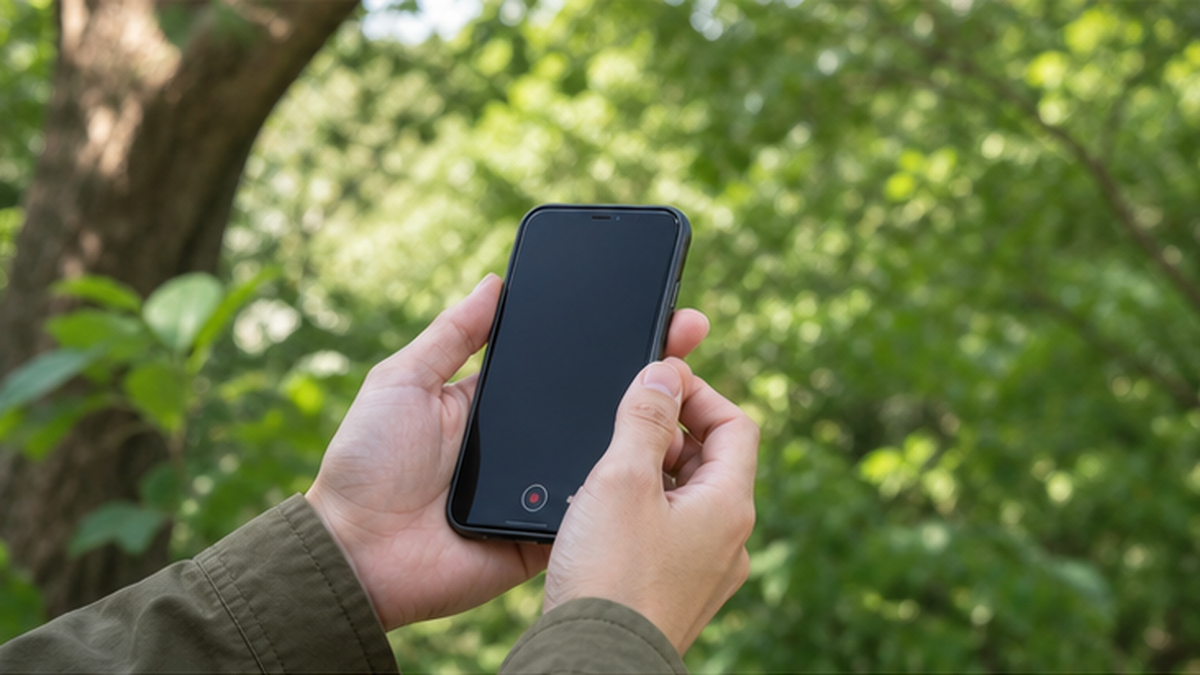
In recent years, apps that identify candidate species just from a recorded call on your smartphone have become widespread. "Merlin Bird ID," developed by the Cornell Lab of Ornithology, is free to use and lets you identify birds through several methods: recording a call, uploading a photo, or answering a few simple questions. It supports Japanese language and Japanese bird data, and, linked to your location, it can automatically generate a list of birds likely to be seen at that time and place.
Using apps alongside field guides
An app's identification result is only a suggested candidate, not a guarantee of 100% accuracy. Misidentification can happen when several closely related species have similar calls, or in noisy environments. Cross-checking with a field guide's description of the bird's appearance — size, color, bill shape — and building the habit of confirming with your own eyes and ears will steadily improve your identification accuracy.
Calls vs. songs: what's the difference?
Wild bird vocalizations broadly fall into two types: "calls" and "songs." Calls are short sounds like "chit" or "juit," given year-round for alarm or to communicate with other birds. Songs, on the other hand, are the complex, extended phrases mostly given by males during breeding season to claim territory or court a mate. Since the type of vocalization you hear from the same species changes with the season, it tends to be easier to identify species from spring into early summer. In winter, many birds give only calls, which makes identification harder — but it also makes winter a good season to practice picking apart simple vocal patterns carefully.
Tips for learning bird calls
- Don't try to memorize every species at once — start with the regulars at a nearby park
- Listening to the same individual's call repeatedly helps its distinctive rhythm stick in your ear
- Don't take an app's identification at face value — cross-check it against the bird's visible features
Seasonal Birding Spots ①: Watching Spring and Autumn Migration
One of the great pleasures of birdwatching is the migratory birds that appear with each season. In spring and autumn, birds traveling between breeding and wintering grounds pass through the Japanese archipelago, and there are spots around the country where you can observe large flocks during a limited window. Since the peak of migration can shift a few days to about a week depending on the weather and the year, checking local observation reports before heading out raises your odds of a good encounter.
Cape Irago (Aichi): the hawk migration
Cape Irago in Tahara City, Aichi Prefecture, is known as a famous spot for the autumn "hawk migration." From late September through mid-October, the medium-sized grey-faced buzzard — listed as an endangered species (Category II) — along with the oriental honey buzzard and others, pass through the cape en route to Southeast Asia. On days when conditions align well, more than 2,000 birds can take flight in a single day, and you may witness a "hawk pillar," where dozens of hawks spiral upward together on a thermal updraft. The area around the Koijigahama parking lot is a well-loved observation spot, and smaller hawk species such as the Japanese sparrowhawk can also be seen through around mid-November.
Yatsu Tidal Flat (Chiba): a stopover for shorebirds
Yatsu Tidal Flat in Narashino City, Chiba Prefecture, is roughly 40 hectares of tidal flat remaining at the innermost part of Tokyo Bay, and in 1993 it became the first tidal flat in Japan to be registered under the Ramsar Convention. It is an important stopover for sandpipers and plovers traveling between Siberia and Alaska and Southeast Asia and Australia, providing a place to refuel and rest mid-migration; around 110 species are observed there annually, representing about a tenth of all the shorebird species that visit Japan. The role tidal flats play as migration stopovers is covered in more depth in our article on the crisis facing shorebirds and tidal flats.
Tips for not missing migration season
The trick to watching migratory birds is to plan around the weather forecast. Hawk migration tends to peak on clear days with north to northwest winds, while it tends to stall on rainy days or when strong south winds blow. Checking local bird walk schedules and observation reports in advance can help you avoid a wasted trip.
Hegura Island (Ishikawa): a sanctuary for birds crossing the Sea of Japan
Hegura Island, floating about 50km off the coast of Wajima City in Ishikawa Prefecture, is one of the few stopover points for birds crossing the Sea of Japan, and is regarded as one of Japan's foremost birdwatching sanctuaries. To date, 361 bird species have been recorded there — about 60% of all species recorded in Japan, and over 80% of those recorded within Ishikawa Prefecture. Ninety-five percent of the birds seen there are migratory, with the peak arrival in early May in spring and early October in autumn. In spring, southern species that breed in southern mainland China and Southeast Asia arrive; in autumn, northern species that breed mainly in Siberia arrive — a striking seasonal turnover in the cast of characters. A bird observation hut sits at the center of the island, but the northwest side is designated a special protection zone, and observation there calls for care not to disturb migratory birds that arrive exhausted and need to rest.
Rough guide to migration timing
- Spring migration: late March to mid-May (mostly birds heading to breeding grounds)
- Autumn migration: late August to mid-October (mostly birds heading to wintering grounds)
- Hawk migration peaks in autumn; shorebird migration offers chances in both spring and autumn
Seasonal Birding Spots ②: A Winter Paradise for Waterfowl
Winter is the season for waterfowl arriving in Japan from the north. Ducks gather at lakes and tidal flats, and one corner of Kyushu is home to a crane wintering ground that is exceptional even by global standards. The fact that leaves have fallen from the trees, improving visibility compared to summer, is another reason winter is a good season for birding.
Izumi Plain (Kagoshima): one of the world's largest crane wintering grounds
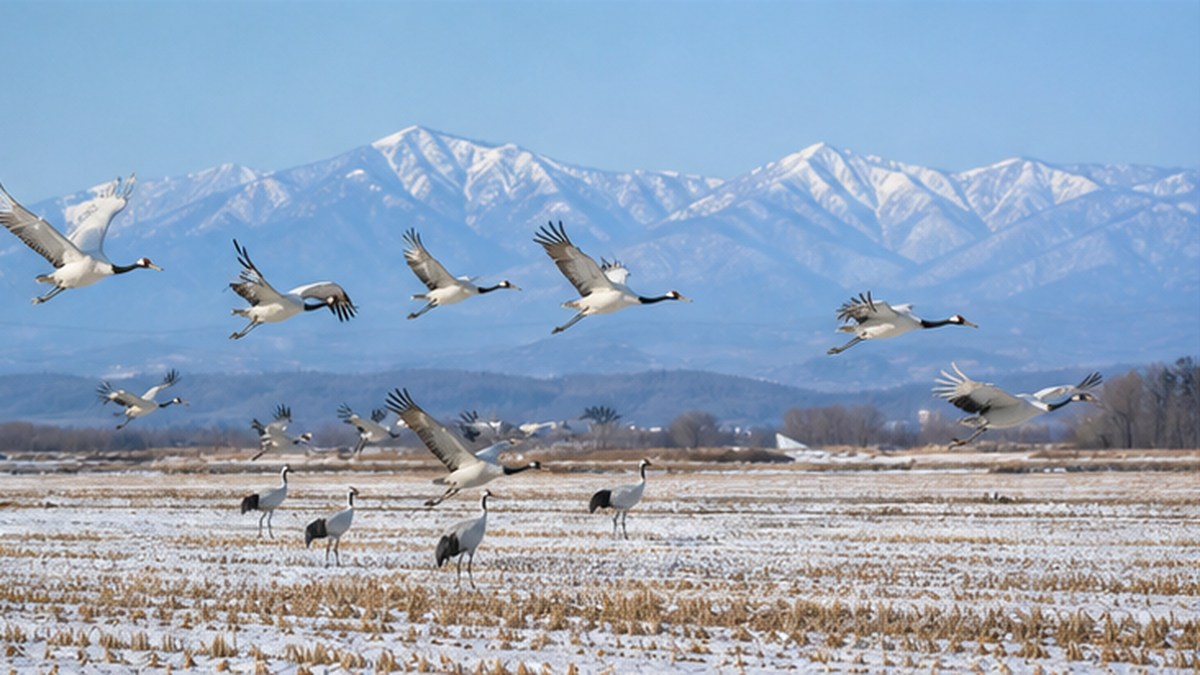
The Izumi Plain in Izumi City, Kagoshima Prefecture, is one of the largest wintering grounds in the world for the hooded crane and the white-naped crane. Every year, in early October, they arrive from Siberia and northeastern China via the Korean Peninsula, and spend the winter here until migrating back north between February and March the following year. In recent years the total number arriving has exceeded 10,000, with over 80% of the world's hooded cranes and about 40% of white-naped cranes concentrated in this one area — positioning it as an important wintering ground not just domestically, but globally.
Hyoko (Niigata): where the swans arrive
Hyoko, in Agano City, Niigata Prefecture, is a lake originally built as an irrigation reservoir in 1639, early in the Edo period. It became known nationwide as "the Lake of Swans" after feeding was first successfully carried out there in 1954, and in 2008 it was officially registered as a Ramsar wetland at the 10th Conference of the Parties to the Ramsar Convention, held in Changwon, South Korea. The first wave of swans arrives every year in early October, and by the peak around late November, roughly 5,000 swans fill the lake's surface. Wintering continues until around late March the following year, and thanks to the long history of feeding there, being able to observe them from relatively close range is a welcome plus for beginners.
Winter birds can be enjoyed at nearby lakes and river mouths too
You don't have to travel far — come winter, ducks show up at nearby river mouths and park ponds too. Species like the northern pintail, Eurasian wigeon, and mallard are relatively easy to observe even at urban waterside spots, and encountering species not seen in summer is part of the pleasure of winter birding. Since male ducks have molted into their distinctive, colorful breeding plumage, it's also a season when even beginners can identify them fairly easily by comparing them to a field guide.
Combining long trips with regular local observation
Combining an expedition to a major migration hotspot with regular observation at a familiar local waterside makes it easier to really feel the seasons turning. Walking the same spot every week lets you notice small changes — "a species that wasn't here last week has arrived this week" — which in turn becomes a way to feel, firsthand, the scale of migration and year-to-year climate variation.
Summary of seasonal birding spots
| Birding spot | Prefecture | Best season | Main target species |
|---|---|---|---|
| Cape Irago | Aichi | Late Sep – mid Oct | Hawk migration: grey-faced buzzard, oriental honey buzzard |
| Yatsu Tidal Flat | Chiba | Spring & autumn (migration season) | Sandpipers and plovers |
| Hegura Island | Ishikawa | Early May / early Oct | Southern and northern migratory birds |
| Izumi Plain | Kagoshima | Oct – Feb/Mar following year | Hooded crane, white-naped crane |
| Hyoko | Niigata | Early Oct – late Mar following year | Swans |
Starting Close to Home: Parks, Riverbanks, and the Coast
You don't need to travel to a famous distant spot — birdwatching can start at a nearby park, a riverbank, or a coastal walking path. In fact, it's often faster to improve if you spend the first few months nearby, training your eye.
Parks and green spaces are ideal for beginners
Parks with plenty of trees host familiar wild birds year-round, such as the Japanese white-eye, Japanese tit, and Japanese pygmy woodpecker. Visiting the same park repeatedly across the seasons lets you experience firsthand the turnover between resident birds (present year-round) and summer or winter visitors. Choosing a first birding spot that's easy to reach from home or work lowers the barrier to keeping it up. In fact, the most experienced birdwatchers often have a "home ground" — a nearby spot they observe regularly.
Riverbanks and the coast widen the range of species
Along riverbanks you can observe waterside specialists like the common kingfisher and white wagtail, while at river mouths and harbors near the sea, you can encounter birds closely tied to the marine environment, such as gulls, black-tailed gulls, and great cormorants. Some seabirds are known to accidentally ingest marine plastic debris mistaking it for food, and observing a familiar coastline can also spark interest in the problem of marine debris (related: our article on the problem of plastic ingestion by seabirds).
Try joining a bird walk
Once you're comfortable observing on your own, it's worth joining a bird walk organized by groups such as the Wild Bird Society of Japan, held all over the country. Experienced participants accompany you and share tips on spotting and identifying birds, so you pick up knowledge faster than going it alone. An organization with 90 chapters nationwide and around 33,350 members runs beginner-friendly bird walks continuously, and some sessions even lend out binoculars if you don't have your own.
The motivation of keeping records
Recording the birds you've observed in a notebook or app lets your own "observation list" grow little by little. As the number of species you've seen increases, so does the joy of new discoveries, which in turn motivates you to keep returning to the same spot. Records serve a dual purpose: they're a record of your own hobby, and, as noted earlier, they can also become part of research data.
Enjoying it with family and friends
Birdwatching might seem like a solitary, quiet pursuit, but it's plenty enjoyable with family or friends too. With kids, turning it into a game — "whoever spots it first wins" — helps keep things from getting boring, and having two pairs of binoculars lets you chat while observing. As long as you avoid loud voices, going out in a group is not itself a breach of etiquette. Sharing a moment of excitement with someone else brings a different kind of satisfaction than observing alone.
Using online communities and social media
More enthusiasts are sharing observation records and photos through social media and online communities these days. Posting a photo you're unsure how to identify can get you advice on candidate species from more experienced birders, making it a useful way to overcome the limits of learning alone. That said, carelessly sharing precise location data for rare species or nesting sites risks drawing thoughtless photographers who stress the birds or raise the risk of poaching. It's worth being careful about how widely you share location information.
Why Birdwatching Connects to Ocean and Global Biodiversity Conservation
Birdwatching is a personal hobby, but it also functions as an "observation network" that reflects changes in the ecosystem.
Population changes reveal environmental shifts
When a species arrives in smaller numbers than usual, or its migration timing shifts earlier, it's often a sign that something has changed in its breeding grounds, stopover sites, or wintering grounds. The accumulation of long-term observation records becomes a way to catch large-scale changes — like climate change or habitat loss — early. Any single record may be small, but when the records of enthusiasts across the country pile up, they form data with a resolution that specialized institutions alone couldn't achieve.
For example, if the number of ducks arriving at a particular lake drops sharply one winter, the cause might be local water quality degradation, or it might be unusual weather in their Siberian breeding grounds. A single record can't tell you which — but cross-referencing records from across the country starts to reveal the pattern. Each birdwatcher's small, everyday record — "this species was here today, or wasn't" — becomes one piece of the puzzle in reading these larger environmental changes.
A conservation success story: the crested ibis and Sado Island
Bird conservation is often carried out hand in hand with local environmental restoration efforts. On Sado Island in Niigata Prefecture, in an effort to return the crested ibis — once extinct in the wild — to nature, initiatives such as certified "rice grown alongside the crested ibis" using reduced pesticides have moved forward, and the population on the island has now recovered to around 500 birds. You can read more in our article on the crested ibis's recovery on Sado Island. Learning about local conservation efforts through birdwatching is part of what makes this hobby expand outward.
Migratory birds protected by cross-border networks
Birds that migrate between continents, such as sandpipers, plovers, and cranes, cannot be protected through the efforts of a single country alone. Japan participates in the East Asian-Australasian Flyway Partnership (EAAFP), working to protect important habitats across the countries and regions along the migration route as a connected network. The fact that individual observation records form the foundation of this kind of international conservation is what makes birdwatching more than "just a hobby."
Marine debris and birds: tracking change in tidal flats
Keep birding along the coast for a while, and you'll naturally start noticing not just the birds themselves, but changes in the amount and type of debris washing up on tidal flats and shores. Some seabirds have been reported to swallow marine plastic debris after mistaking it for food, and this affects not just individual birds' health but the overall environmental quality of tidal flats as stopover sites. It's not uncommon for birdwatchers to develop an interest in coastal debris through their observations, and channel that into cleanup activities or efforts to sort and reduce waste.
The wide world seen through a small pair of binoculars
Spending time gazing at a single bird through binoculars can spark the imagination to reach toward the sea or continent it crossed to get here, and the environmental changes unfolding there. Just like marine creatures, birds in flight are part of a nature that connects on a planetary scale. The fact that a single sandpiper resting its wings at Yatsu Tidal Flat or Hegura Island is connected to a wetland in Siberia or a tidal flat in Australia thousands of kilometers away offers, for a brief moment, a sense of the Earth's scale that's hard to grasp from a map alone.
Let the one bird you saw today lead you to look a little further afield tomorrow. Birdwatching that starts at a neighborhood park tends to expand its range season by season, and before you know it, connects your interest to the sea, wetlands, and environmental issues in distant countries — the kind of hobby that keeps unfolding for a lifetime.
References & Sources
- Wild Bird Society of Japan, "Getting Ready to Go Out" – Birdwatching introductory guide
- Wild Bird Society of Japan, "Name and Purpose" – Membership and chapter count (as of July 2024)
- Ornithological Society of Japan, "Check-List of Japanese Birds, 8th Revised Edition" – 644 species recorded in Japan
- Ministry of the Environment, Ramsar Wetland Leaflet: "Yatsu Tidal Flat" – Area, registration year, number of species recorded
- Ministry of the Environment, Kyushu Regional Office, "One of the World's Leading Wintering Grounds for Hooded and White-Naped Cranes" – Arrival numbers at Izumi Plain and share of world population
- Ministry of the Environment, "Nationwide Survey of Hooded and White-Naped Crane Arrivals" – Wintering timing and northward migration
- Tahara City Tourism Association, "Hawk Migration" – Observation information for grey-faced buzzards at Cape Irago
- Wild Bird Society of Japan press release, "Bird Observation and Photography Etiquette Guidelines Established" – Etiquette guidance for beginners
- Ministry of the Environment, "Current Status and Challenges of Bird Monitoring in the East Asian-Australasian Flyway Network" – International framework for migratory bird conservation
- Merlin Bird ID by Cornell Lab (App Store) – Free call and photo identification app
※ Listed in order of reliability: government and academic institutions > peer-reviewed papers > specialized organizations > trusted media