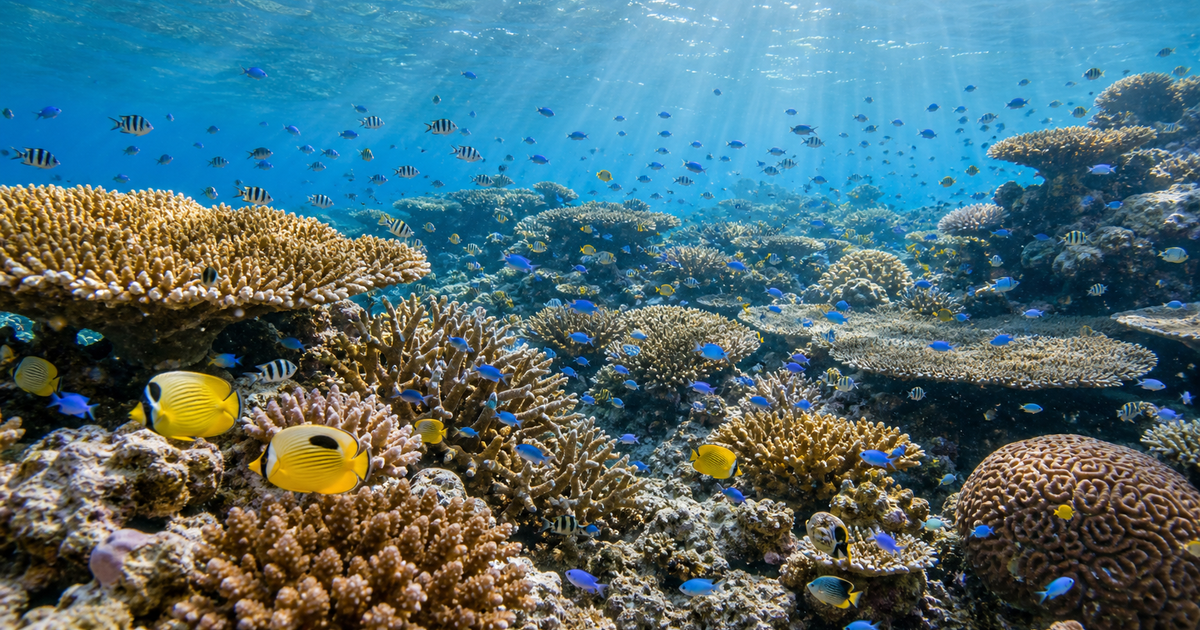
Dive into the clear blue sea and you enter another world. Amid table-shaped corals and forest-like branching coral, small fish in blue, yellow, and striped patterns swarm together, while moray eels peer out from crevices in the rock. Few places on Earth pack so many colors and shapes of living creatures into a single coral reef. That is exactly why coral reefs are called the "rainforests of the sea."
What is truly astonishing is how little area supports this diversity. Coral reefs occupy less than 1% of the seafloor, yet they are said to host roughly a quarter to a third of all marine fish—more than 6,000 species. This is exactly the same pattern seen on land, where tropical rainforests hold more than half of all terrestrial species within a tiny fraction of the planet's surface. So why can so many fish live in such a small space?
The answer lies in the complex terrain that coral creates. Branches, holes, hollows, tunnels—this three-dimensional, intricate structure forms countless hiding places, providing a home for predator and prey, territory-holders and wanderers alike. Drawing on research from Japan's Ministry of the Environment, NOAA, and studies in Japan and abroad, this article gently unpacks how coral reefs nurture fish, the roles played by their vividly colored inhabitants, and the web of symbiosis exemplified by cleaner fish and sand-producing species.
What You'll Learn in This Article
- Why coral reefs are called the "rainforests of the sea," and the astonishing numbers behind their diversity
- Why complex terrain—intricate branches and holes—can support countless fish
- The three roles coral reefs play: dining table, spawning ground, and nursery for juvenile fish
- The protective, identifying, and warning functions behind fish's vivid colors and stripes
- The ecosystem jobs and symbiotic relationships of cleaner wrasse and parrotfish
- How bleaching and warming affect fish diversity, and what we can do about it
Why Coral Reefs Are Called the "Rainforests of the Sea"
"Rainforest of the sea"—this phrase comes up almost without fail whenever coral reefs are discussed. Japan's Ministry of the Environment describes coral reefs as "one of the places on Earth with the highest number of species per unit area," an ecosystem as complex and rich as a tropical rainforest on land. An almost unbelievable variety of creatures packed tightly into a small space—this sheer density is the biggest reason coral reefs are likened to rainforests.
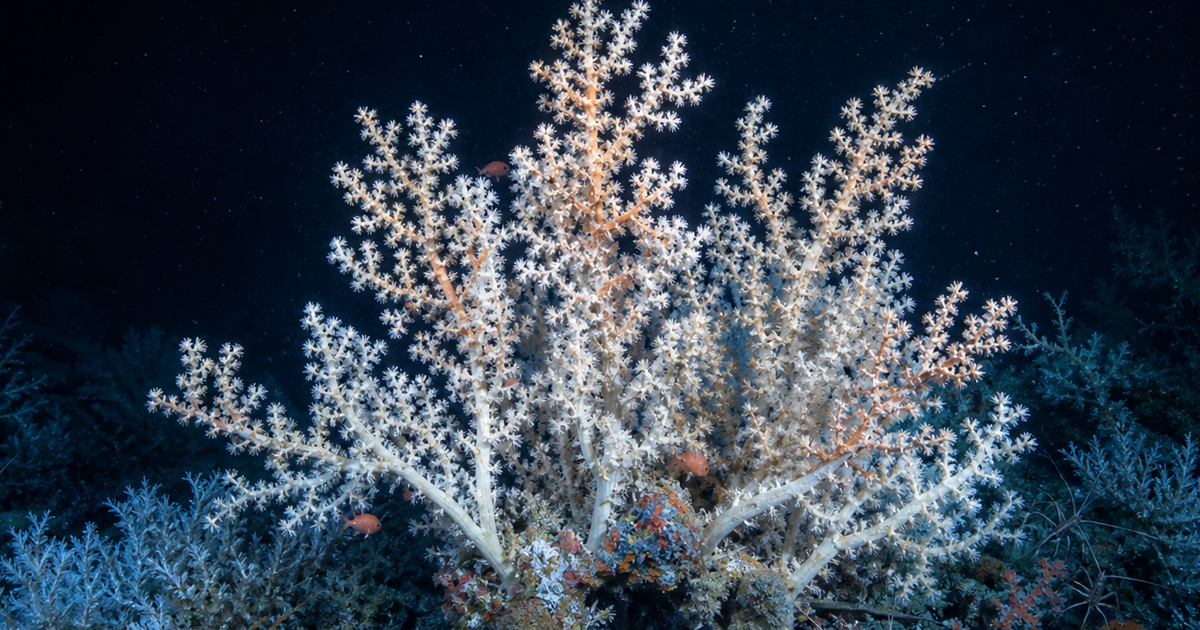
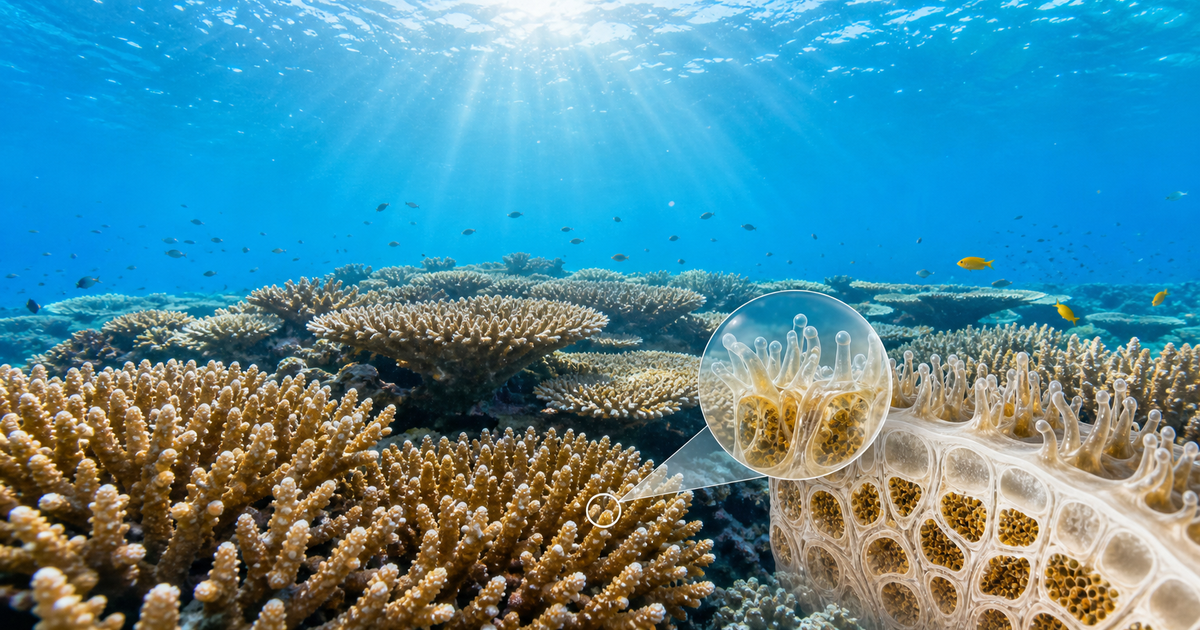
The star of the coral reef is a tiny animal only a few millimeters across: coral (reef-building coral). Coral is a cnidarian, related to sea anemones and jellyfish, and it lives by hosting microscopic algae called zooxanthellae inside its tissue, drawing on the benefits of their photosynthesis. This mechanism is covered in detail in our article on the symbiosis between coral and zooxanthellae, but in short, coral itself builds a "forest of stone that grows on solar power" beneath the sea. This forest becomes the home of countless fish.
A Third of All Fish Packed into Less Than 1% of the Seafloor
Seen in numbers, the diversity of coral reefs is even more striking. According to the U.S. National Oceanic and Atmospheric Administration (NOAA) and others, although coral reefs occupy less than 1% of the seafloor, they are said to be home to roughly a quarter to a third of all marine fish. In terms of species alone, more than 6,000 species of fish live there—over a third of all fish species known in the world's oceans. New species continue to be discovered, so the true number is thought to be even higher.
Fish are not the only residents. Coral reefs also gather an astonishing variety of shellfish, shrimp and crabs, sea urchins and sea cucumbers, worms, and corals themselves. Across the world's coral reefs combined, roughly 90,000 species of such organisms are said to have been recorded. How can a coral reef—a mere speck within the ocean as a whole—support so much life? This gap between "tiny area" and "enormous diversity" is the central theme this article sets out to unravel.
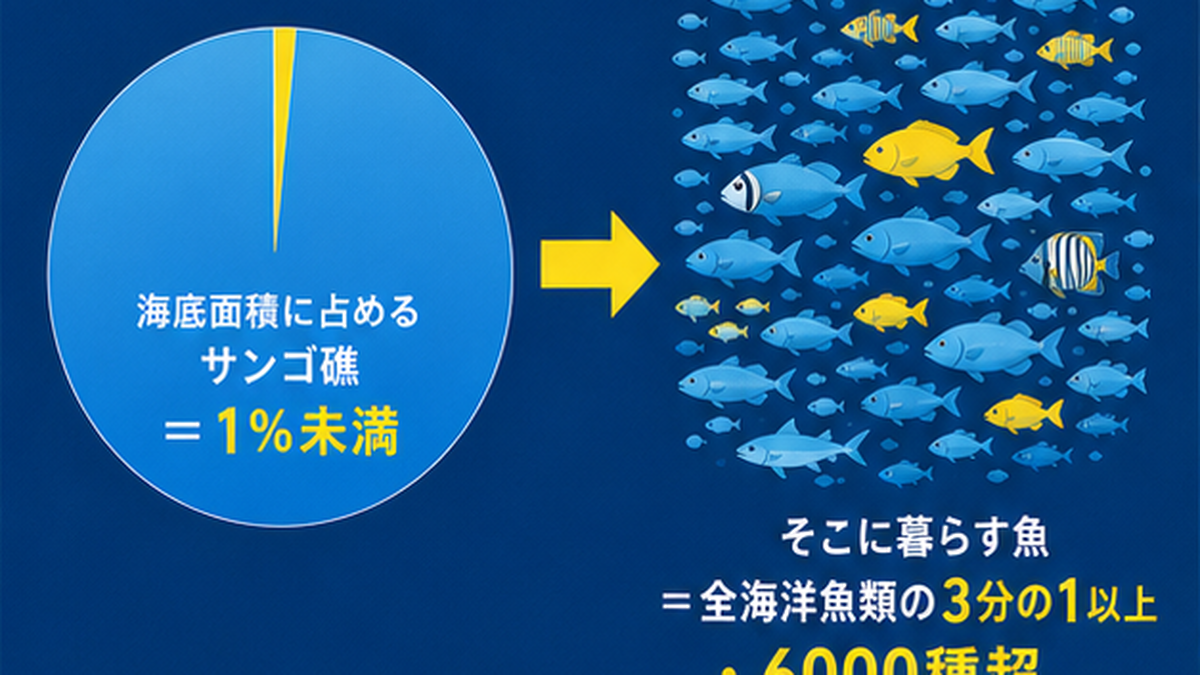
Why Coral Reefs Are Called the "Rainforests of the Sea"
- They have one of the highest numbers of species per unit area on Earth
- Roughly a quarter to a third of all marine fish gather in less than 1% of the seafloor
- More than 6,000 fish species alone, and roughly 90,000 organisms are known across the world's coral reefs
- The three-dimensional "stone forest" built by coral becomes home to countless lives, just as forests do on land
The Same "Niche Partitioning" Seen in Forests
In a tropical rainforest on land, different creatures live at different heights—the high canopy, the trunks, the undergrowth, the forest floor—dividing the space among themselves. Exactly the same thing happens on coral reefs. The tips of coral branches, their bases, gaps in the rock, sandy patches, and the open water a little further out—each has fish that prefer it, and they divide up the space accordingly. That is precisely why so many species can coexist in such a limited area. Even in a small area, if you multiply the number of "rooms" three-dimensionally, you can house many more residents—coral reefs are, in effect, natural apartment buildings built on exactly this principle.
What creates this abundance of "rooms" is the complex terrain that coral builds. In the next section, we'll look concretely at how this intricate terrain supports fish diversity.
Complex Terrain Creates Countless Hiding Places
The single biggest factor determining fish diversity on a coral reef is the "complexity" of its terrain. Table-shaped coral, forest-like branching coral, mound-shaped coral swelling up like a hump—corals of different shapes pile up on top of each other, and in the gaps between them countless tunnels, holes, hollows, and overhang-like structures form. This intricate three-dimensional structure becomes an irreplaceable hiding place for fish.
The More Complex the Terrain, the More Fish
Researchers have measured the complexity of coral reef terrain using indicators such as "rugosity" (the degree of surface unevenness) and compared it against the diversity of fish living there. Furthermore, a study focusing on the diversity of coral species themselves found that coral species diversity alone could explain roughly 64% of the variation in fish species richness. The same study found that the explanatory power of terrain complexity alone was unclear; rather, in addition to how intricate the terrain is, how many different kinds of coral are thriving there greatly influences the amount and variety of fish that can live there. A reef with jagged, intricate terrain can support far more fish than one with simple terrain.
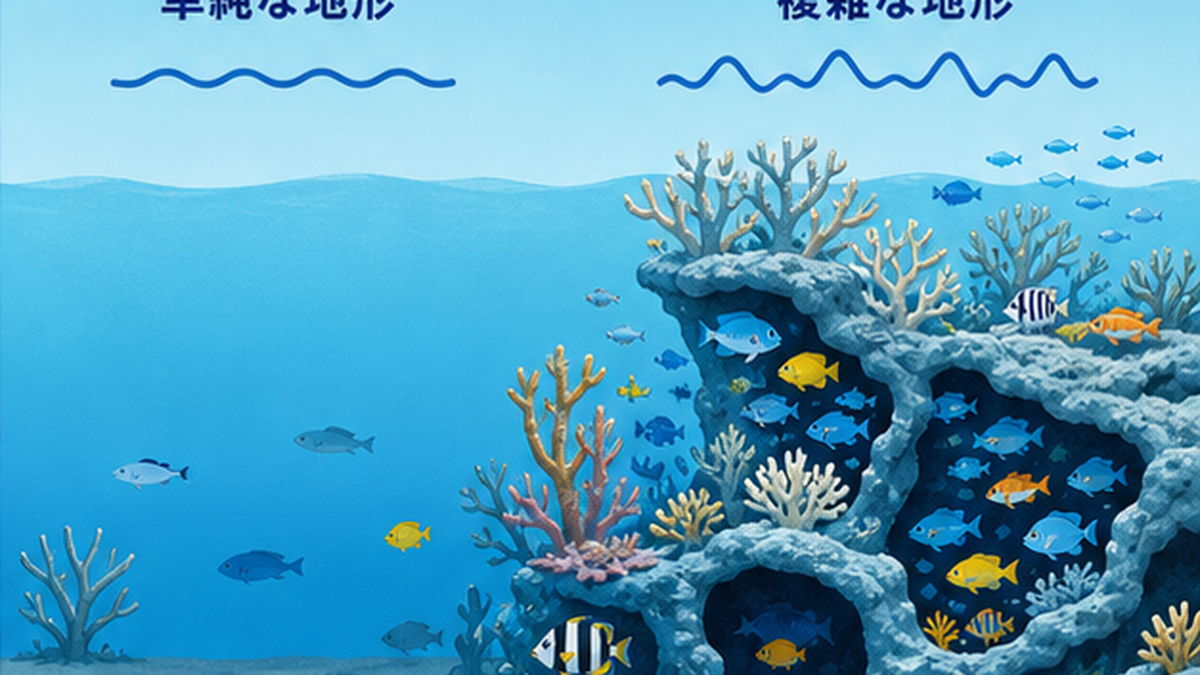
Hiding Places Ease "Competition and Predation"
Why does complex terrain generate diversity? One reason is that more hiding places mean less "risk of being eaten." With gaps and holes available, small fish can quickly dart away from larger predators. The more escape routes there are, the more species can safely remain in that spot. Another reason is thought to be that more hiding places reduce "chance encounters" between creatures, easing territorial disputes and competition. Just as residents of an apartment building with many rooms are less likely to bump into each other, three-dimensional terrain reduces friction and enables many species to coexist.
Different Residents by Day and Night
Who uses a coral reef's hiding places also changes with the time of day. During the day, vividly colored fish such as butterflyfish and damselfish swim about actively, then hide in holes to sleep at night. In their place, nocturnal creatures that lurked deep in holes during the day—cardinalfish, spiny lobsters, moray eels—come out and become active. A single hole can be used by entirely different residents by day and by night—this kind of "time-of-day partitioning" is another way more species can live in a limited space. The complexity of the terrain allows creatures to share not just space finely, but time as well.
Three Reasons Complex Terrain Generates Diversity
- More hiding places: small fish gain more places to escape predators, letting more species settle in
- Eased competition: fewer chance encounters mean fewer territorial disputes
- Niche partitioning: residents can be divided by location and time—branch tips, bases, holes, sandy patches
Coral "Shape" Determines the Fish Menu
Recent research has also revealed that it's not just terrain complexity, but the "shape" (growth form) of the coral itself that shapes which fish appear. Finely branching staghorn-type coral makes an ideal hiding place for small juveniles and timid fish. The surface of boulder- or mound-shaped coral, meanwhile, nourishes fish that graze on the algae growing there. The underside of table-shaped coral becomes a shady resting spot for larger fish. The diverse shapes of coral act as the "vessel" that accommodates the diverse lifestyles of fish—which is exactly why reefs where a variety of coral shapes are thriving healthily also tend to have a richer array of fish.
So complex terrain provides the "home." But what do fish eat there, and where do they leave their offspring? In the next section, we look at how coral reefs "raise" fish, in terms of both food and child-rearing.
Table, Spawning Ground, Nursery—How Coral Reefs Raise Fish
A coral reef is not merely a hiding place for fish. It is a "table" that supplies food, a "spawning ground" where eggs are laid, and a "nursery" that protects and raises the juveniles that hatch. It is precisely because shelter, meals, and child-rearing are all available in one place that so many fish gather on coral reefs.
Photosynthesis Sustains a "Rich Table"
The starting point of a coral reef's richness is the photosynthesis carried out by the zooxanthellae living in symbiosis with coral. Sunlight pouring into the clear, warm sea is converted into energy by the zooxanthellae, and part of that energy passes through the coral to the ecosystem as a whole. Fish that eat coral polyps directly, fish that graze algae growing on the coral's surface, fish that prey on plankton and small fish—layer upon layer of eating-and-being-eaten relationships (the food chain) build up. In a tropical sea otherwise poor in nutrients, the coral reef alone is rich like an "oasis," precisely because of this foundation of photosynthesis.
In fact, the food preferences of coral reef fish are neatly divided. Fish that graze algae like grazing animals, fish that peck at coral polyps, fish that dig small creatures out of the sand, fish that filter drifting plankton in schools, and large carnivorous fish that swallow all of the above whole. It is precisely because a single reef offers this many diverse "food niches" that so many species can coexist without fighting over food.
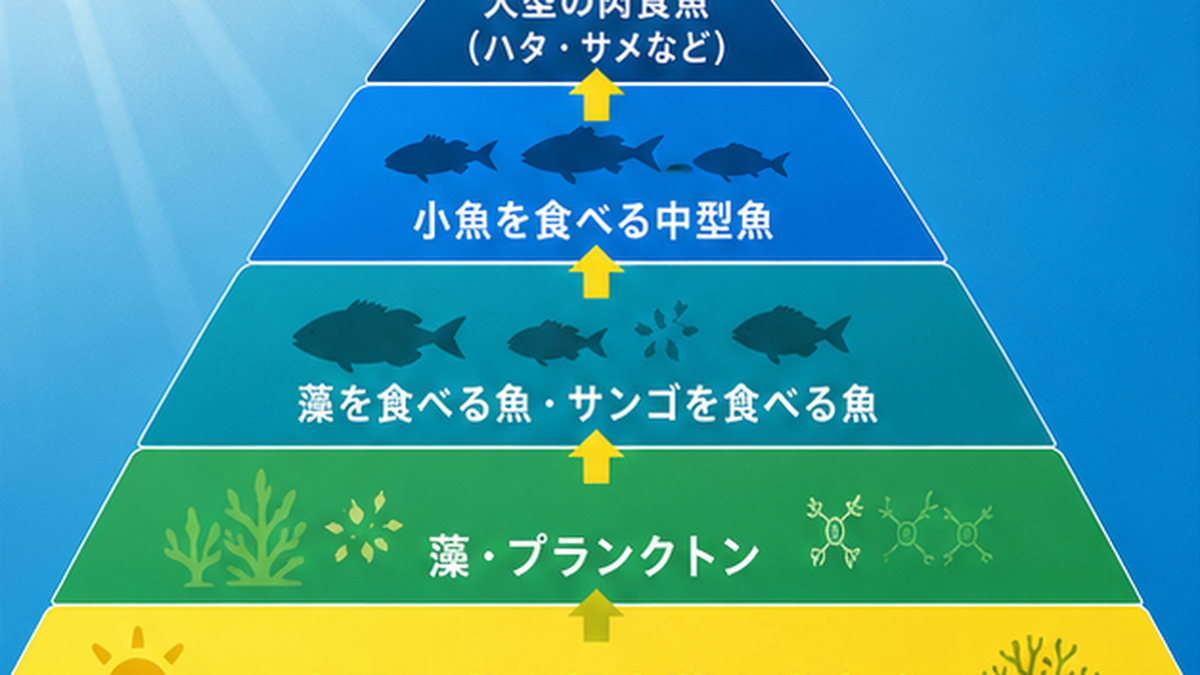
A "Safe Spawning Ground" for Eggs
Coral reefs are also an important spawning ground where fish lay their eggs. Damselfish species lay their eggs on the surface of rock or coral, and the males guard and raise them, chasing off predators. Clownfish lay their eggs at the base of a sea anemone, where the parents diligently tend them. The complex terrain hides these eggs from predators' eyes and shields them from wave action—it functions as a shelter. Having a safe place to entrust their eggs is another reason so many fish choose coral reefs.
A "Sea Nursery" That Protects Juveniles
For newly hatched, tiny juvenile fish, the open ocean is far too dangerous. The depths of coral branches and shallow waters become a "safe zone" that large predatory fish cannot enter, functioning as a nursery that protects and raises juveniles. Furthermore, coral reefs don't function alone; together with nearby seagrass meadows and mangrove forests, they form a network of nursery habitats for juvenile fish. Many fish grow up in the shallows of seagrass meadows or mangroves as juveniles and then move to the coral reef as they mature—and it is these connections between environments that underpin the richness of coral reef fish from the ground up.
Three Roles Coral Reefs Play for Fish
- Table: layer upon layer of food chain built on zooxanthellae photosynthesis, from algae and plankton to small fish
- Spawning ground: complex terrain protects eggs from predators and waves, allowing safe spawning
- Nursery: the depths of branches, shallow waters, and adjoining seagrass meadows and mangroves protect and raise juveniles
Fish that rely on the coral reef for both table and nursery are often strikingly colorful. Blue, yellow, red, striped—why are they so flamboyant? The next section explores the meaning behind the "color" of these vividly hued fish.
Vividly Colored Fish—There's Meaning Behind the Flash
Think of coral reef fish, and the first thing that comes to mind is probably their startlingly vivid coloring. Blue damselfish, yellow butterflyfish, blue-and-yellow stripes, crimson groupers—a flamboyance rarely seen among land animals. At first glance it might seem like this would attract predators, but in fact each of these colors and patterns hides a strategy for survival.
The Curious Way Bright Colors Become Camouflage
It may be surprising, but on a coral reef where colorful coral and anemones mix with light and shadow cast by strong sunlight, vivid colors and patterns are thought to actually function as camouflage. Because the background itself is colorful and complex, a vividly patterned body can blend into the scenery and become harder to make out than a plain, single-colored one—its outline blurring into the surroundings. In a solid green meadow, dull colors are advantageous; but in a field of primary-colored flowers, a flashy butterfly can go surprisingly unnoticed—a similar logic is at work in the sea.
Stripes That "Erase" the Outline
There's also a reason so many coral reef fish have clear stripes or spots. Bold bands or large patterns break up a fish's body outline, making it harder to see—an effect called "disruptive coloration." Predators target prey based on the cue of a "fish-like shape," but a bold pattern crossing the body interrupts that outline, making it harder to tell "where one fish begins and ends." Many fish also have a black band around the eye, thought to be a device for disguising the eye's position—the part most likely to be targeted.
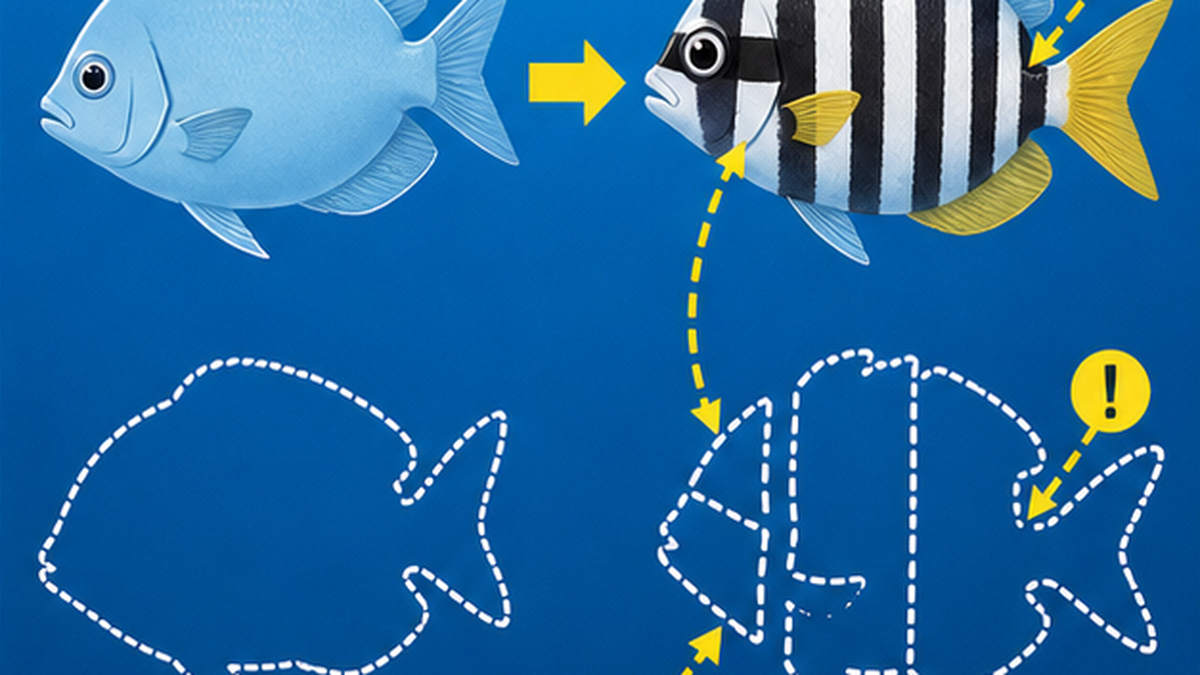
Signals for "Recognizing Kin" and "Warning"
Color and pattern also serve roles beyond self-protection. One is as a signal for recognizing kin or rivals. Coral reefs teem with closely related species, and color and pattern act as a species-specific "nametag," allowing fish to quickly find a mate of the same species for reproduction or to assert territory. The other is warning coloration. Fish with venom or spines deliberately wear flashy colors to signal to predators, "I am dangerous—stay away." Flamboyance can also be a means of self-protection by advertising danger.
Why Coral Reef Fish Are So Vividly Colored
- Camouflage: against a colorful, complex background, vivid colors can actually blend in and be harder to see
- Disruptive coloration: bold stripes and spots break up the body's outline, throwing off a predator's aim
- Recognition: color and pattern serve as species-specific nametags, helping identify kin and assert territory
- Warning coloration: venomous or spiny fish use flashy colors to signal "danger" and protect themselves
Interestingly, even within the same species, color and pattern can change so dramatically with growth that a fish looks almost like a different species. Many species have a drab pattern as juveniles that helps them blend into hiding places, only to don brilliant breeding colors as adults. Color and pattern are, in effect, meticulously "switched" to match the stage and role a fish is living through. The next section turns to the concrete "jobs"—cleaning, sand-making, and more—that these fish perform within the coral reef.
Cleaners and Cultivators—The Workers Sustaining the Ecosystem
Coral reef fish don't just live there. Some clean the bodies of other fish, some gnaw at coral to make sand, and some mow algae to protect coral—each performs an indispensable "job" within the ecosystem. Like a small, role-divided society, the work of these fish keeps the coral reef healthy.
The Ocean's "Cleaning Shop": Bluestreak Cleaner Wrasse
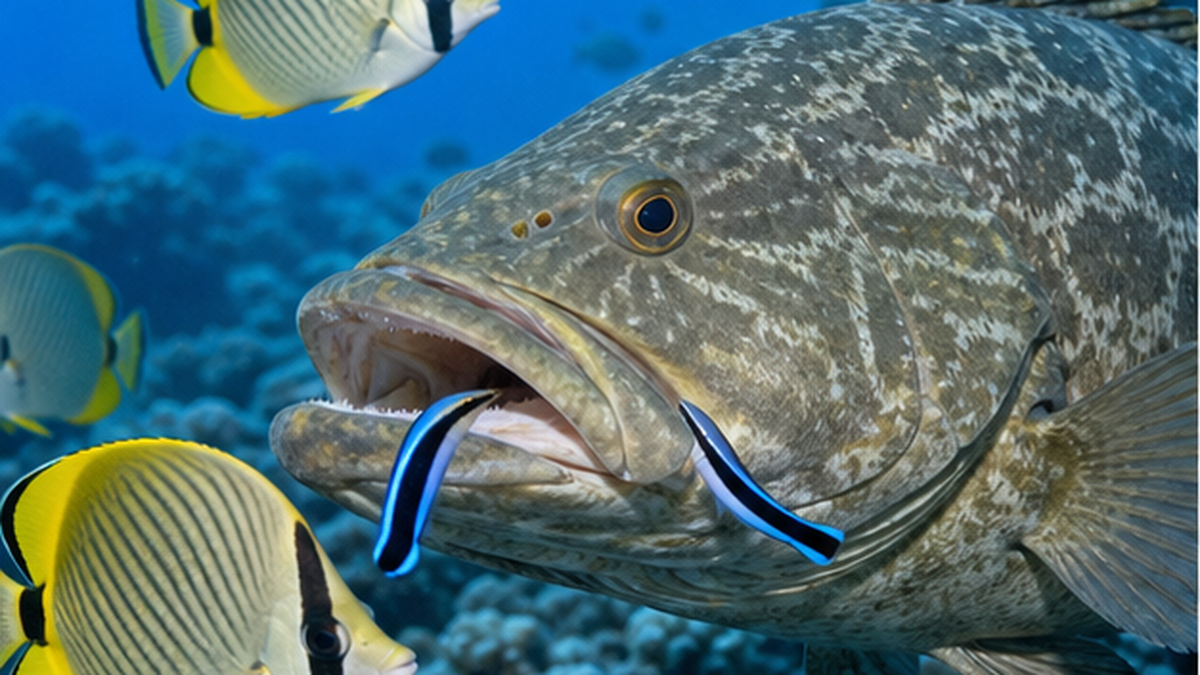
The most famous worker on a coral reef is the bluestreak cleaner wrasse, a small wrasse only about 10 centimeters long. This fish "cleans" the skin, mouth, and gills of other fish, eating parasites, old mucus, and leftover food scraps. The larger fish being cleaned gets to stay healthy by having parasites removed, while the cleaner wrasse gets a meal—a mutualistic relationship that benefits both sides. Interestingly, this cleaning happens at fixed spots called "cleaning stations," where large fish sometimes even form a queue to wait their turn. The fish being cleaned never attacks the cleaner wrasse, even though it's small enough to be swallowed in a single bite.
Parrotfish That Make White Sand
The pure white, powdery sand spread across tropical beaches—much of it is produced by parrotfish. Parrotfish scrape at the surface of coral with their sturdy, beak-like teeth, biting off chunks of the coral skeleton along with the algae and symbiotic-algae-filled polyps growing on it. The calcium carbonate skeleton they can't digest is excreted as fine sand in their droppings. In other words, most of the sand on white beaches is coral fragments that have passed through a parrotfish. Some estimates suggest a single large parrotfish can produce tens to a hundred kilograms of sand per year.
The process by which creatures like parrotfish scrape away coral skeleton is called "bioerosion." At first glance it looks like coral destruction, but it is in fact essential to keeping a reef healthy. By scraping away old coral and algae that hinder coral growth, it creates space for new coral to grow. The sand excreted by parrotfish settles on the seafloor, filling gaps between coral and becoming food for other creatures such as worms and sea cucumbers. Destruction and nurturing are, here, one continuous process.
Herbivorous Fish That Mow Algae and Protect Coral
Herbivorous fish such as surgeonfish, rabbitfish, and parrotfish play a decisive role as the coral reef's "lawn-mowing crew." Coral's biggest rival for growth is, in fact, seaweed. If seaweed grows unchecked, it robs coral of light and space, smothering and weakening it. By steadily grazing on seaweed, herbivorous fish keep it from overgrowing and preserve room for coral to grow. If herbivorous fish decline due to overfishing, seaweed can smother the coral entirely, triggering a "phase shift" in which the reef turns into a field of algae. These small lawn-mowers hold the fate of the entire reef in their hands.
| Worker Fish | Main Job | Effect on the Coral Reef |
|---|---|---|
| Bluestreak cleaner wrasse | Cleans parasites and mucus off other fish | Keeps fish healthy and curbs the spread of disease |
| Parrotfish | Gnaws coral skeleton and excretes it as sand | Scrapes away old skeleton, producing white sand and new space to grow |
| Surgeonfish, rabbitfish, and other herbivores | Eat the seaweed smothering coral | Prevent seaweed overgrowth and support coral growth |
Seen this way, a coral reef is a finely tuned "network of mutual support" in which fish and coral, and fish and fish, sustain one another. In the next section, we focus on the flagship example of this symbiosis—clownfish and sea anemones—and dig deeper into the bonds that hold a coral reef together.
Symbiosis and Connection—The Bonds of the Coral Reef Network
The reason a coral reef can be a "rainforest of the sea" is that the creatures living there are deeply interconnected. Beyond simple eating-and-being-eaten relationships, bonds of mutual support, shared housing, and close cohabitation are woven throughout the reef in layer upon layer. The symbol of this is the relationship, famous from film, between clownfish and sea anemones.
Clownfish and Sea Anemones: A Mutual Give-and-Take
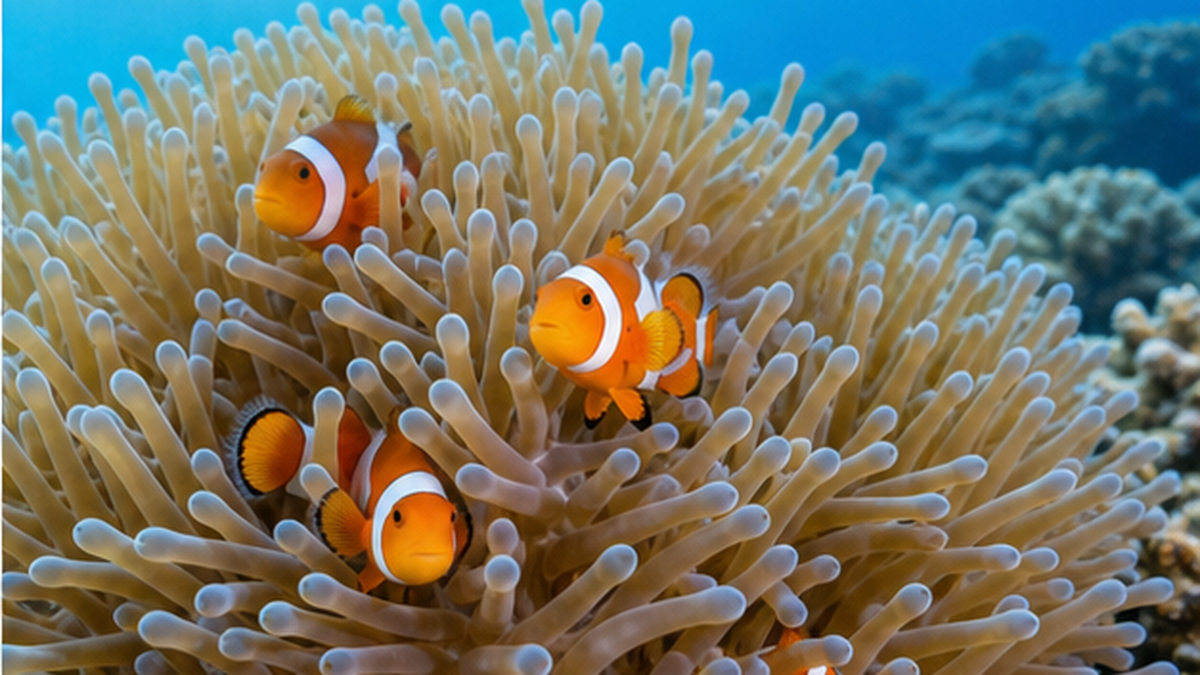
Clownfish make their home among the venomous tentacles of a sea anemone that would sting any ordinary fish. Thanks to a special mucus covering their skin, they avoid being stung. Sheltered from enemies by the anemone's venomous tentacles, the clownfish in turn chases away fish that would eat the anemone and fans its body to circulate fresh seawater. This mutually beneficial relationship is covered in detail in our article on the symbiosis between clownfish and sea anemones. Coral reefs are full of countless such "give-and-take" relationships.
Coral and Fish Also Support Each Other
Symbiosis isn't limited to relationships among fish alone. There are also mutually supportive relationships between coral and fish. For example, small damselfish that permanently reside in the gaps of staghorn coral protect the coral from predators, and their droppings and swimming movements are thought to help circulate water and supply nutrients around the coral. Fish are protected by coral, and coral is nourished by fish. When the coral foundation is healthy, fish gather; when fish gather, the coral in turn stays healthy—this interaction binds the coral reef ecosystem together as if it were a single living organism.
When One Link Breaks, the Chain Unravels
The strength of this symbiotic network lies in the "resilience" of mutual support. But the flip side is a vulnerability: when one part collapses, the effects can spread through the chain. For instance, if herbivorous fish decline through overfishing, seaweed overgrows and weakens the coral; if coral weakens, hiding places disappear and many fish vanish from the area—when one thread snaps, the whole net begins to unravel. That is exactly why conserving coral reefs requires a perspective that protects the entangled web of connections as a whole, not just a single species. This way of thinking is closely tied to efforts to protect Japan's marine biodiversity.
Examples of Symbiosis Woven into a Coral Reef
- Clownfish and sea anemones: turning venomous tentacles into a safe home, protecting each other
- Cleaner fish and large fish: mutualism where parasites are removed and the cleaner fish gets a meal
- Coral and zooxanthellae: photosynthesis nourishes the coral, sustaining the whole reef's table
- Coral and small fish: fish protect coral, and coral provides fish with a hiding place—mutual dependence
This elaborate, rich network of symbiosis also spreads through the seas close to home in Japan. In the next section, let's turn to Japan's coral reefs and the diversity of fish living there.
Japan's Coral Reefs and Fish Diversity
Coral reefs may sound like a story about southern islands, but Japan too is home to some of the world's finest coral reefs. In particular, the Nansei Islands, including Okinawa, sit on the edge of a sea region with extremely high biodiversity among the world's coral reef distributions, and are a treasure trove of reef-building coral and vividly colored fish.
On the Edge of the World's Diversity Hub: The Coral Triangle
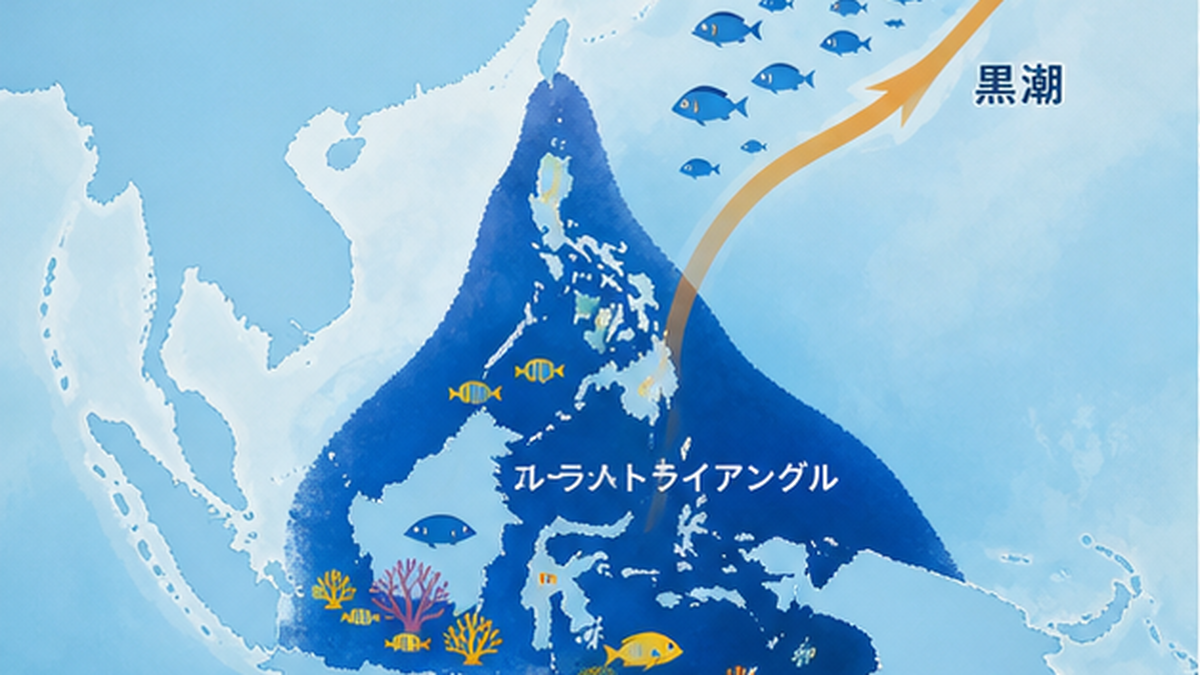
The sea region with the highest coral reef diversity in the world is the "Coral Triangle," surrounded by Indonesia, the Philippines, Papua New Guinea, and neighboring countries. Within roughly 2% of the world's ocean area, it holds about 76% of the world's coral reef species and more than 3,000 fish species—truly the epicenter of biodiversity. Japan's Nansei Islands lie on the "edge" connected to this hub of diversity by the Kuroshio Current, which carries the larvae of many corals and fish on its warm flow, sustaining a rich ecosystem.
The Richness of Japan's Coral and Fish
Around roughly 400 species of reef-building coral have been recorded in the waters around Japan, a richness that accounts for a large share of the world's reef-building coral. The order Scleractinia (stony corals) in particular is species-rich, with more than 300 species known within Japan alone. As this diverse coral builds complex terrain, the fish living there also become more varied. Across the world's coral reefs as a whole, roughly 90,000 species of fish, shellfish, crustaceans, and others are said to have been recorded, and Japan's coral reefs, including the Nansei Islands, form part of this—making them one of the country's foremost biodiversity hotspots.
Coral Reefs Also Sustain Livelihoods and Culture
The richness of coral reef fish is also deeply tied to human life. Coral reefs are an important fishing ground supporting coastal fisheries, and hundreds of millions of people worldwide are said to rely on their bounty as a source of food and livelihood. In Japan too, traditional Okinawan fisheries have long targeted the colorful fish of the coral reefs. Coral reefs also enrich local economies as diving and tourism destinations, and serve as a natural breakwater that softens wave energy and protects the coastline. Protecting fish diversity is, in effect, directly tied to protecting our food, livelihoods, and culture.
Japan's Coral Reefs—Richness by the Numbers
- Roughly 400 species of reef-building coral around Japan; more than 300 stony coral species within Japan alone
- The Nansei Islands are an edge connected by the Kuroshio Current to the world's diversity hub, the Coral Triangle
- Roughly 90,000 species are known across the world's coral reefs, with Japan forming one of the country's foremost hotspots
- Supports fisheries, tourism, and coastal protection in multiple ways, sustaining our daily lives
Yet these rich coral reefs of Japan now face a great trial: bleaching caused by rising sea temperatures. The next section considers how warming affects the diversity of coral reef fish, and what we can do about it.
A Shaking Cradle—Protecting Fish Diversity from Warming
The coral reef cradle that has nurtured countless fish is now quietly shaking. The cause is rising sea temperatures driven by global warming. If the coral foundation weakens, the world of the fish that live there will also change dramatically.
Bleaching Withers the Coral "Forest"
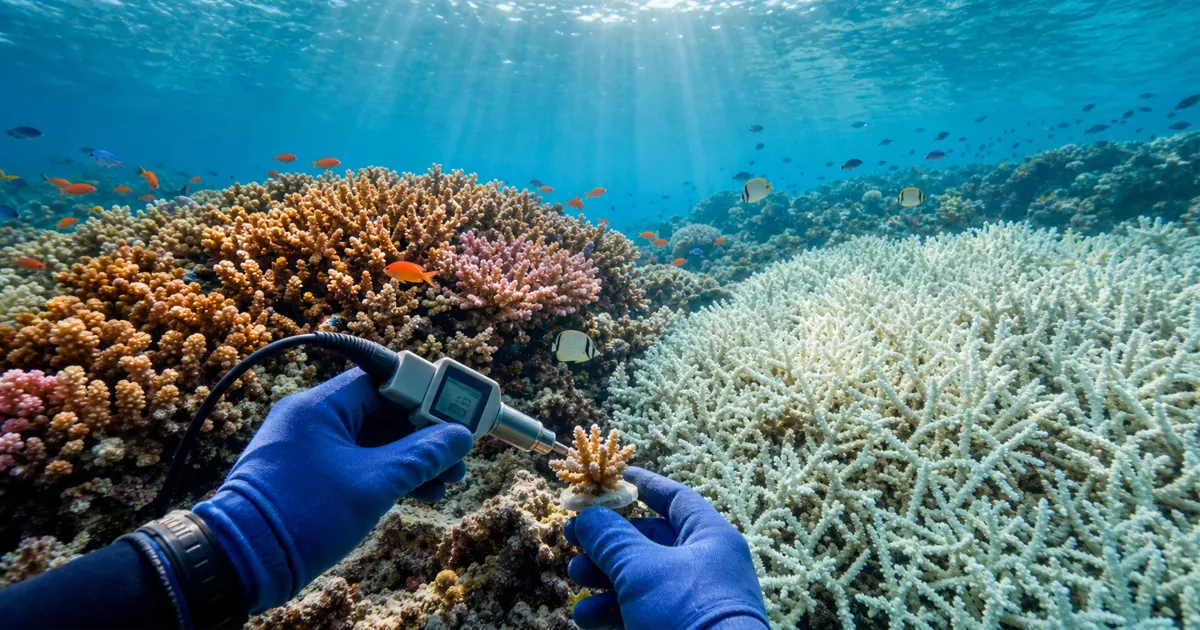
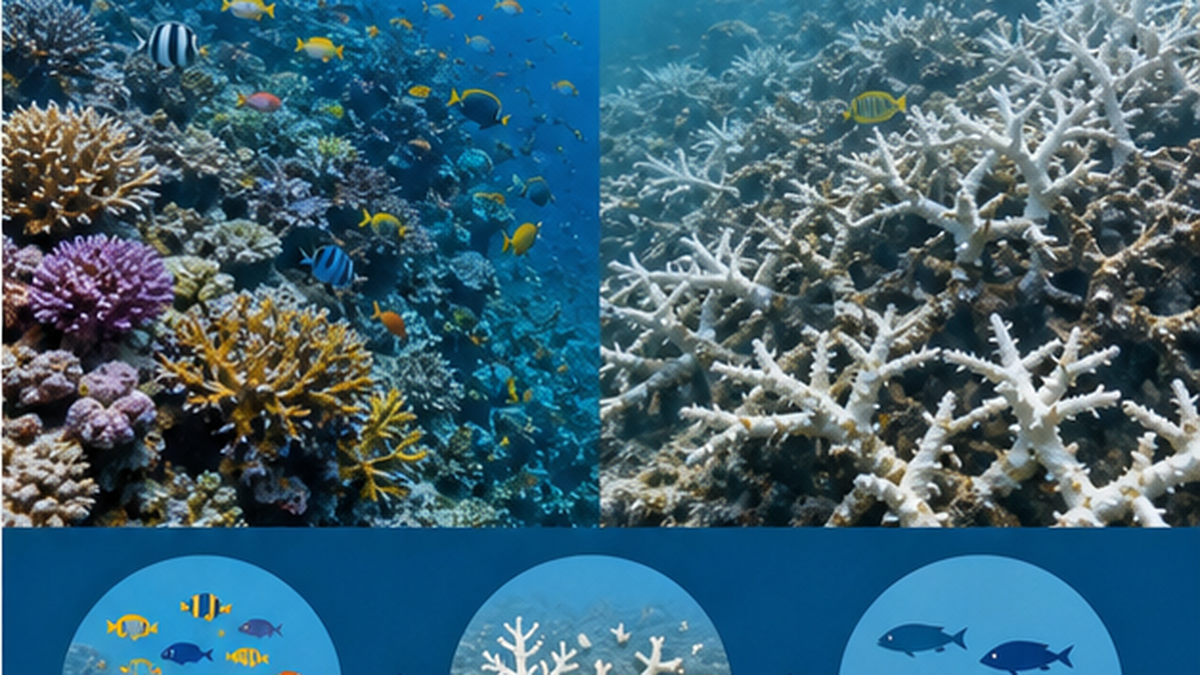
When summer water temperatures stay too high for too long, coral loses its symbiotic zooxanthellae, turns white, and eventually dies—a phenomenon known as bleaching. On land, this is equivalent to a forest's trees withering all at once. When coral dies and its skeleton crumbles, the complex terrain—the fish's hiding places—is lost. As we saw in an earlier section, simpler terrain means fewer species and fewer fish can live there. In recent years, periods of high water temperature known as marine heatwaves have become more frequent worldwide, and bleaching now recurs every few years.
Research shows that damage to coral translates directly into a decline in fish diversity. In particular, highly specialized fish that eat a specific type of coral or use its branches as a hiding place are the first to disappear when that coral is lost. It has also been pointed out that in more biodiverse sea regions, there tend to be more coral-dependent fish of this kind, making them especially vulnerable to the loss of coral. When the foundation crumbles, those who live on top of it are hurt the deepest—the fate of coral reef fish is inseparably tied to the fate of the coral itself.
Impacts Reaching Fisheries and Livelihoods
The loss of fish diversity is not simply a matter of losing beautiful scenery. Coral reef fish are an important resource for coastal fisheries, and their decline directly affects fisheries, food supply, and local economies. Rising sea temperatures are beginning to impact not only coral reefs but Japan's fisheries as a whole. The decline of the coral reef cradle is, in the end, a problem that comes back around to our own tables and livelihoods.
Efforts to Protect and Rebuild
There is still hope. Efforts at coral reef restoration to rebuild damaged reefs are underway in many places, including growing and replanting coral seedlings, and using larvae born from spawning to increase numbers while preserving diversity. Establishing marine protected areas to restrict fishing and development, and protecting creatures such as herbivorous fish, are also gaining attention as ways to help a coral reef recover on its own. Preserving a healthy reef is also about protecting the "spark" that will supply the next generation of fish.
What We Can Do to Protect the Diversity of Coral Reef Fish
- Reduce greenhouse gas emissions to curb the rise in sea temperature that causes bleaching
- Reduce the runoff of red soil and wastewater to keep the sea clean for coral to grow
- Choose reef-safe sunscreen to avoid burdening the sea
- Refrain from touching coral or fish while diving or snorkeling—observe quietly instead
- Support marine protected areas, restoration activities, and sustainable fisheries to preserve healthy reefs
The diversity of coral reef fish rests entirely on the health of the coral foundation beneath it. That is precisely why protecting coral is directly tied to protecting the thousands of fish that live there. Each of our individual choices determines whether this "rainforest of the sea" can be passed on to the next generation.
Conclusion—What the Rainforest of the Sea Teaches Us
More than 6,000 fish species—over a third of all marine fish—gather in coral reefs that cover less than 1% of the seafloor. Behind this astonishing fact lies the magic of the "complex terrain" that coral creates. Branches and holes, hollows and tunnels become countless hiding places, providing a table, a spawning ground, and a nursery, allowing many fish to coexist by sharing space and time. This is exactly why coral reefs are called the "rainforest of the sea."
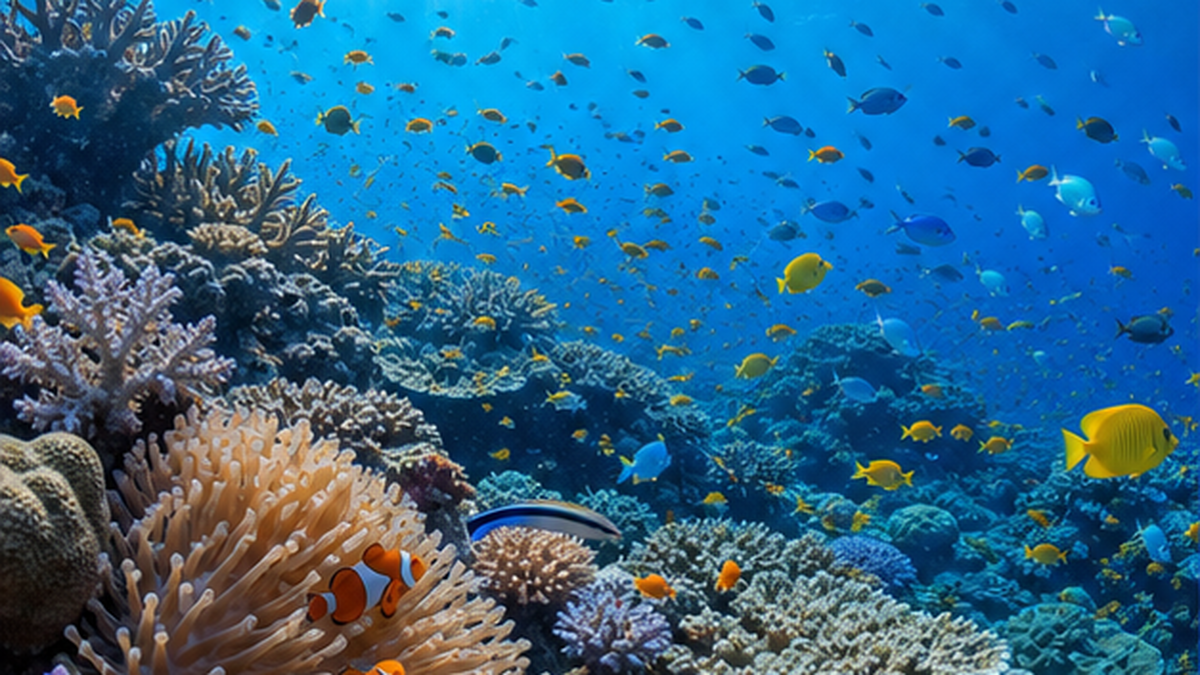
The flamboyance of vividly colored fish was a piece of wisdom for survival—serving as camouflage and disruptive coloration to protect themselves, and as a way to recognize kin and signal danger. The bluestreak cleaner wrasse, the sand-making parrotfish, herbivorous fish that mow seaweed—each plays its role, and through bonds of symbiosis exemplified by clownfish and sea anemones, the coral reef is tied together like a single living organism. Yet this elaborate network also carries a delicate fragility: if the coral foundation is lost to bleaching, it can unravel in a chain reaction.
Summary of This Article
- Coral reefs are a "rainforest of the sea" where roughly a quarter to a third of all marine fish—more than 6,000 species—gather in less than 1% of the seafloor
- The source of this diversity is the complex terrain coral creates; countless hiding places ease predation and competition, enabling coexistence
- Coral reefs serve as fish's table, spawning ground, and nursery for juveniles, connecting with seagrass meadows and mangroves to support their growth
- Vivid coloring is a survival strategy—camouflage, disruptive coloration, kin recognition, and warning coloration all protect fish
- Cleaner fish, sand-making parrotfish, and grazing herbivores keep the reef healthy through symbiosis and division of labor
- Japan's Nansei Islands are a rich sea region connected by the Kuroshio Current to the Coral Triangle, the world's center of diversity
- When bleaching destroys the coral forest, hiding places vanish and fish diversity declines in a chain reaction
- Climate action, water quality conservation, marine protected areas, and restoration efforts can carry this rainforest of the sea into the future
What coral reefs teach us is a simple yet powerful truth: "diversity is born of complexity." Intricate terrain creates many homes, diverse fish divide up the roles, and bonds of symbiosis support one another—only when all of this comes together does that rich sea come into being. And that richness depends on whether we can protect the coral foundation beneath it. Umi LAB will continue to bring you the latest science and conservation efforts surrounding coral reefs, backed by reliable data. The next time you encounter a vividly colored fish in the sea, imagine the grand network of life stretching out behind that single fish.
References and Sources
- Ministry of the Environment, Japan – Significance of coral reef ecosystem conservation (coral reefs as the "rainforest of the sea"; involving roughly a quarter of all marine life)
- Ministry of the Environment, Japan – Coral reefs called the "rainforest of the sea" for their diverse, rich ecosystem (status report on coral reef ecosystem conservation)
- Ministry of the Environment, Japan International Coral Reef Research and Monitoring Center – About coral reefs (distribution of reef-building coral; more than 300 stony coral species within Japan alone)
- WWF Japan – Japan's coral reef ecosystems and their conservation (roughly 25% of all marine species concentrated in coral reefs; roughly 400 coral species in Japan)
- NOAA National Ocean Service – Corals Tutorial (coral reefs cover less than 1% of the seafloor yet support roughly 25% of all marine life and more than 4,000 fish species)
- NOAA CoRIS – National Coral Reef Monitoring Program (monitoring of coral reef fish diversity and habitat complexity)
- PLOS ONE (PMC) – Relative Importance of Coral Cover, Habitat Complexity and Diversity in Determining the Structure of Reef Fish Communities (coral species diversity best explained the structure of fish communities)
- Research Institute of Marine Invertebrates – Column 5: The Organisms That Make Coral Sand (bioerosion by parrotfish and sand production)
- Ministry of the Environment, Japan – Coral Reef Ecosystem Conservation Action Plan 2022-2030 (Japan's policy for coral reef conservation)
※ Listed in order of reliability: government and academic institutions > peer-reviewed papers > specialized organizations > reliable media