A shift of just a few degrees in sea surface temperature along the equatorial Pacific can tip the livelihoods of fishers on the other side of the globe — and even decide whether Japan gets a scorching summer or a cool one. Hard to believe, but that is exactly the chain reaction triggered by El Niño and La Niña. Most people have heard the names in the news, but surprisingly few know exactly how these events connect to their own daily lives.
These two phenomena are often called the largest natural climate fluctuation on Earth — one born from the ocean and atmosphere acting in tandem. Fish migration patterns shift, pushing up the price of seafood on our tables; crop yields change; and even the likelihood of disasters such as heavy rain and drought moves. A small imbalance in ocean temperature ripples outward to shake up weather and food supplies across the entire planet.
In this article, drawing on reliable primary sources such as the Japan Meteorological Agency (JMA), the Fisheries Agency of Japan, and JAMSTEC (Japan Agency for Marine-Earth Science and Technology), we will walk step by step through how El Niño and La Niña form, why they cause fish catches to boom or bust, how they relate to scorching summers and cool ones, and what may happen to them as global warming progresses.
What you'll learn in this article
- How El Niño and La Niña arise from "a deviation in sea surface temperature in the equatorial Pacific"
- How ocean temperature changes affect fish abundance through upwelling and plankton, and the food-chain connections involved
- Why a poor anchovy catch off the coast of Peru ripples out to global food prices and even Japan's dinner table
- Japan's weather tendencies — El Niño bringing cool summers and warm winters, La Niña bringing scorching summers and cold winters — and their exceptions
- How global warming may change the strength and frequency of El Niño and La Niña going forward
- How to put JMA and Fisheries Agency monitoring information to use in daily life and fisheries
What Are El Niño and La Niña?
According to the Japan Meteorological Agency's definition, El Niño is "a phenomenon in which sea surface temperatures from around the International Date Line in the equatorial Pacific to the coast of South America rise above normal and remain elevated for about a year." Conversely, La Niña is when sea surface temperatures in the same region stay below normal for an extended period. Both occur every few years, alternating on an irregular cycle.
The key point is that the changes take place in the middle of the Pacific, near the equator — a stretch of ocean far removed from Japan. And yet the effects reach the entire world. Why does a shift in sea temperature on the far side of the planet end up changing Japan's weather and even its dinner table? Answering that question is the thread running through this entire article.
Where the Names Come From: Spanish for "The Child of God"
"El Niño" is Spanish for "boy," and more precisely refers to the infant Jesus Christ. The name originated with fishers in northern Peru, who called the small warm current that flowed along the coast every year around Christmastime "the current of the Child of God." Because the warm water arrived around the time of Jesus's birth, it was given this name.
Over time, the term came to describe the especially large and long-lasting rise in sea surface temperature that appears only once every few years. Its counterpart, "La Niña," is Spanish for "girl" — named as the opposite of El Niño to signal that it is the reverse phenomenon. A name born from the simple observations of local fishers has since become common vocabulary in global climate science — a reminder that the people who live by the sea are often the first to notice its changes.
Three terms to know first
- El Niño = sea surface temperatures in the eastern-to-central equatorial Pacific staying above normal
- La Niña = sea surface temperatures in the same region staying below normal
- El Niño–Southern Oscillation (ENSO) = a term that captures both the ocean change and the linked atmospheric change together
How the Japan Meteorological Agency Determines an Event
The JMA continuously monitors sea surface temperatures in the "El Niño monitoring region" (5°S–5°N, 150°W–90°W). When the five-month running average of sea surface temperature in this region is 0.5°C or more above the baseline (the 30-year average) for six months or longer, JMA declares an El Niño event; when it is 0.5°C or more below the baseline for the same duration, it declares a La Niña event.
"Just 0.5°C?" you might think. But when an entire vast stretch of equatorial ocean tilts by 0.5°C or more for six months or longer, the amount of heat stored there is enormous. This huge heat imbalance becomes the engine that drives the atmosphere. The temperatures we see in weather forecasts are air temperatures, but air's heat capacity is tiny compared with water's. The ocean is, in effect, the planet's giant heat reservoir, and even a slight tilt across its vast surface makes the atmosphere above react sharply.
Besides the JMA, meteorological agencies around the world — including the U.S. National Oceanic and Atmospheric Administration (NOAA) — monitor the same region using their own criteria. The exact boundaries of the monitored area and the thresholds for declaring an event differ slightly by institution, but they share the same basic approach: continuously watching sea surface temperature in the equatorial Pacific and tracking its deviation from normal. Scientists around the world are, in effect, joining forces to keep their eyes on this single stretch of ocean.

El Niño and La Niña cannot be understood just in terms of the "cause" of sea temperature; they must be understood together with the atmospheric changes that ride on top of it. The ocean and atmosphere shape each other — a two-person, three-legged relationship we will unpack in the next chapter. This is also deeply connected to ocean warming and fisheries, where ocean temperatures keep rising on a global scale.
The "Two-Person Three-Legged Race" Between Ocean and Atmosphere
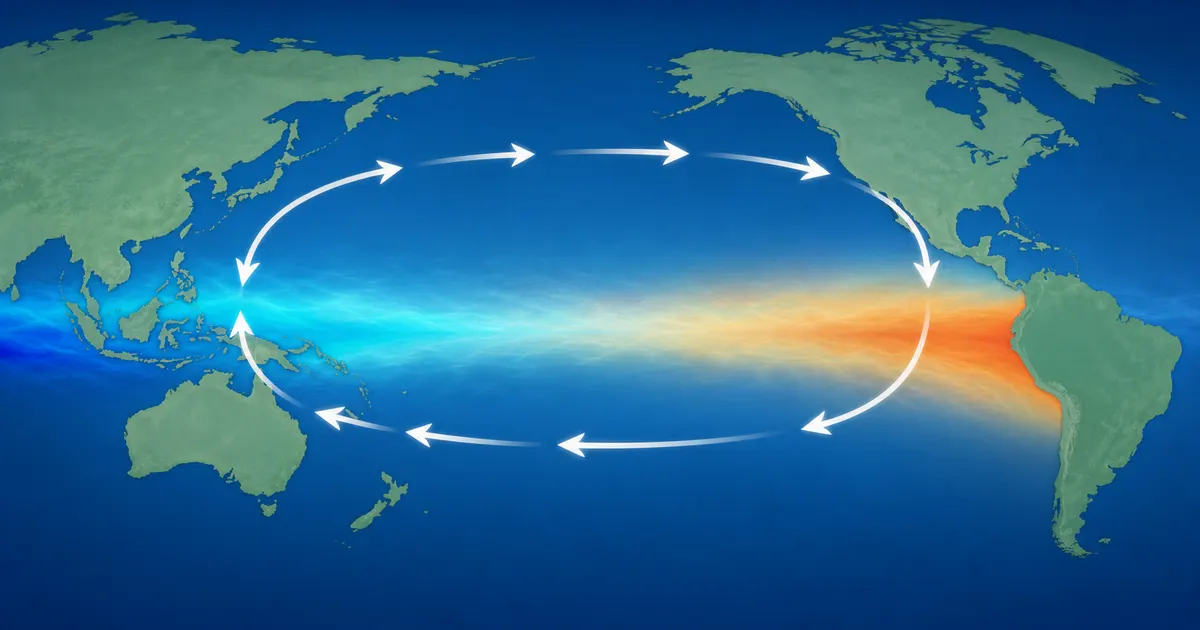
The key to understanding El Niño and La Niña lies in the "trade winds" — easterly winds that blow over the equator. Normally, near the equatorial Pacific, these trade winds blow constantly from east to west — that is, from the South American side toward the Asia-Australia side. This wind continually pushes the warm surface water westward.
Normal Conditions: Warm Water in the West, Cold Water in the East
Because the trade winds push warm surface water toward the western Pacific (near Indonesia), sea surface temperatures there are normally high. As a counterbalance, off the coast of Peru in the east, cold water rises from the depths to replace the surface water that has been carried west. This is called upwelling.
This upwelling is the true source of the "rich fishing grounds" we will look at later. Deep ocean water is packed with nutrients, and when it is carried up to the sunlit surface layer, it lays the foundation that sustains marine life. Under normal conditions, the waters off Peru rank among the best fishing grounds in the world.
El Niño: When the Trade Winds Weaken
When the trade winds weaken for some reason, the force holding back the warm water pooled in the west loosens. Warm water then spreads eastward, raising sea surface temperatures in the eastern Pacific, which is normally cold. At the same time, the upwelling of cold water in the east also weakens. This is El Niño.
Over waters that have warmed at the surface, the air above heats up too, generating rising air currents and rain clouds. During El Niño, the center of this rain-cloud activity and convection shifts eastward from its usual position in the western Pacific. As the main stage of atmospheric flow relocates, effects ripple out like falling dominoes to weather around the world.

La Niña: When the Trade Winds Strengthen
La Niña is the exact opposite. When the trade winds blow stronger than usual, warm water is pushed even further west, triggering stronger upwelling in the eastern Pacific and causing sea surface temperatures there to drop sharply. The warm-water pool in the western Pacific grows even warmer and thicker, and the center of rain-cloud activity shifts west.
ENSO: Ocean and Atmosphere Are a Package Deal
Changes in sea surface temperature (El Niño/La Niña) and the associated changes in atmospheric pressure and wind above it (the Southern Oscillation) are a single, inseparable phenomenon. When the ocean warms, the atmosphere moves; when the atmosphere moves, the winds change and further alter the ocean. Together, this interaction is called the "El Niño–Southern Oscillation (ENSO)." The fact that cause and effect loop back on each other is part of what makes this phenomenon fascinating — and part of why it is so hard to predict.
This two-person, three-legged relationship has a tricky trait: once it gets going, it is hard to stop. When the trade winds weaken and the eastern sea surface warms, the warmed ocean further alters atmospheric convection, which in turn weakens the winds even more — a small initial nudge reinforces itself. This is called positive feedback. The reason El Niño tends to last about a year once it starts is this self-amplifying effect.
That said, the runaway effect does not continue forever. Through the action of waves traveling within the ocean and other mechanisms, the accumulated warm water eventually begins to dissipate, and a rebound occurs. This rebound can swing toward La Niña. El Niño and La Niña alternate every few years precisely because of this pendulum-like nature. However, the cycle is irregular, and it is not easy to predict exactly when the switch will happen.
In short, both El Niño and La Niña are phenomena born from the ocean and atmosphere amplifying each other, centered on the strength of a single wind system — the trade winds. Next, let's look at why this change in sea surface temperature so dramatically affects fish populations.
Why Does a Change in Sea Temperature Make Fish Populations Rise and Fall?
Why would a change of just a few degrees in sea temperature cause such a huge swing in fish numbers? The answer lies at the very bottom of the marine food chain — in phytoplankton, organisms too small to see with the naked eye. Ultimately, the abundance of marine life comes down to how well these microscopic producers can grow.
It All Starts With Upwelling
Phytoplankton need both sunlight and nutrients such as nitrogen and phosphorus to grow. In the ocean, however, while sunlight reaches the surface layer, nutrients get used up by plankton and the remains of organisms and sink, accumulating on the deep sea floor. Light and nutrients do not naturally come together.
Upwelling is what links the two. When nutrient-rich water is carried from the deep ocean up to the surface, nutrients become available where sunlight reaches, and phytoplankton multiply rapidly. This, in turn, increases the zooplankton that feed on them, which draws in small fish, which then attract the larger fish and seabirds that prey on the small fish — setting off a chain of life.

El Niño Breaks the Chain
When El Niño occurs, upwelling weakens in the eastern Pacific, and the surface is effectively capped with warm water. Once nutrients from the deep sea stop reaching the surface, the phytoplankton that form the base of the food chain plummet. Once the plankton that serve as food vanish, the small fish that fed on them can no longer survive — they either die off or migrate in search of colder, more nutrient-rich waters.
In other words, the rise in sea temperature itself does not directly kill the fish. Rather, it is the collapse of the food chain — "upwelling stops → nutrients stop arriving → plankton decline → food disappears" — that deals the blow to fisheries. Temperature is, in a sense, the trigger; what really matters is the depletion of nutrients and food.
"Nutrients and Food" Matter More Than Temperature
- Upwelling carries deep-sea nutrients to the surface, allowing phytoplankton to grow
- Life connects up the chain: phytoplankton → zooplankton → small fish → large fish
- When El Niño weakens upwelling, the foundation of the chain collapses and fish leave due to lack of food
- By the same logic, too many nutrients cause different problems, such as red tides
Temperature Also Acts Directly on Fish "Bodies"
Food is not the only issue. Fish are cold-blooded, so the surrounding water temperature directly affects their body temperature and metabolism. Many fish have a water-temperature range best suited to spawning and growth, and straying outside that range can prevent eggs from developing properly or make it harder for young fish to survive. Temperature changes driven by El Niño and La Niña shake fish populations on two fronts: indirectly, through the amount of available food, and directly, through effects on the fish's own bodies.
There is also the fact that warm water holds less dissolved oxygen than cold water. As water temperature rises, the dissolved oxygen fish rely on for respiration decreases, making the ocean a harder place to live. Declining plankton, worsening spawning conditions, and falling oxygen levels — these changes combine to push down the ocean's overall productivity.
Note that too few nutrients reduce fish numbers, but too many can cause different kinds of damage to fisheries, as in red tides and eutrophication. The ocean's bounty rests on a delicate balance among nutrients, temperature, and light. In the next chapter, we will look at the most dramatic real-world example of this mechanism: the waters off Peru.
How a Disturbance Off Peru Shakes the World's Dinner Tables
No discussion of El Niño and fisheries is complete without the waters off Peru in South America. This is one of the world's premier fishing grounds, home to huge catches of anchovies (Peruvian anchoveta). The catch is so massive it single-handedly supports the country's fishing industry and shapes the scale of the world's fisheries overall.
Where Do the Anchovies Go?
Under normal conditions, the waters off Peru are sustained by strong upwelling, rich in nutrients and plankton, and teeming with anchovies. But in El Niño years, warm water lingers, upwelling weakens, and plankton decline. Having lost their food, anchovy populations crash, and catches drop sharply. The very fact that the temporary warm water around Christmastime was originally called "El Niño" reflects how familiar and immediate this impact on the fishery was.
In fact, the Peruvian government has repeatedly imposed bans on anchovy fishing whenever sea temperatures rise or El Niño concerns emerge, in order to protect the resource. When the catch that should be there simply is not, year after year, the livelihoods of fishers — and the industries that rely on anchovies as raw material — take a heavy hit.

The "Soybean Shock" — A Distant Ocean Reaches Japan's Table
This poor catch ripples out even to Japan, on the opposite side of the globe. Anchovies are mainly processed into fishmeal, used worldwide as feed for livestock and farmed fish. When the Peru fishery fails, feed shortages appear globally, and substitute feeds such as soybean meal are called on to fill the gap.
A historic example is the massive El Niño of 1972–1973. Peru's anchovy catch hit a record low, demand for substitute soybeans surged, and prices soared. In Japan, this triggered turmoil known as the "soybean shock." A change in sea temperature in the distant waters off Peru ended up affecting the price of tofu, miso, and cooking oil in Japan.
Soaring Fishmeal Prices Hit Farmed Fish
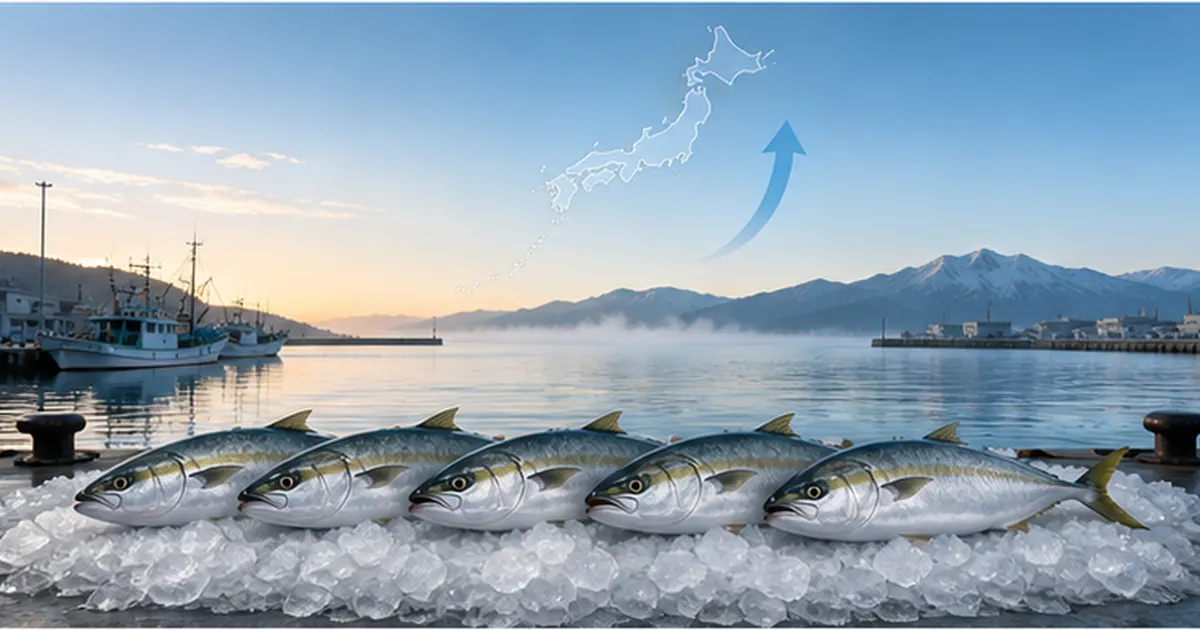
Anchovies are a key raw material for farmed-fish feed. When a poor catch off Peru pushes up fishmeal prices, the cost of farming yellowtail, red sea bream, and other species rises — and that feeds through to the prices of farmed fish in Japan. Behind the price tag on the fish we pick up at the supermarket lies the sea temperature on the far side of the Pacific.
| Period | Event | Ripple Effect |
|---|---|---|
| 1972–73 | A massive El Niño causes a record-low anchovy catch in Peru | Surging demand for substitute soybeans drives up prices (Japan's "soybean shock") |
| 1982–83 | An extremely strong El Niño | Droughts and wildfires in Australia, Africa, and Indonesia; worldwide weather disasters |
| 1997–98 | Super El Niño | Global coral bleaching; severe damage to agriculture, fisheries, and infrastructure worldwide |
| 2015–16 | Super El Niño | Global coral bleaching again, with record losses of live coral |
The Toll on Seabirds and Marine Mammals
A poor anchovy catch is not only a problem for human fisheries. Off the coast of Peru, huge populations of seabirds, fur seals, and sea lions live on a diet of anchovies. When El Niño wipes out their food, these animals can fail to breed or die in large numbers. Seabird droppings have historically been used as a high-quality fertilizer (guano), so their decline casts a shadow not only on the ecosystem but on the local economy as well.
The rise and fall of a single small fish species can shake the countless creatures that feed on it — and the human communities that depend on that sea. The waters off Peru make it clearer than anywhere else just how tightly the marine food chain is linked, and just how deeply human society depends on it.
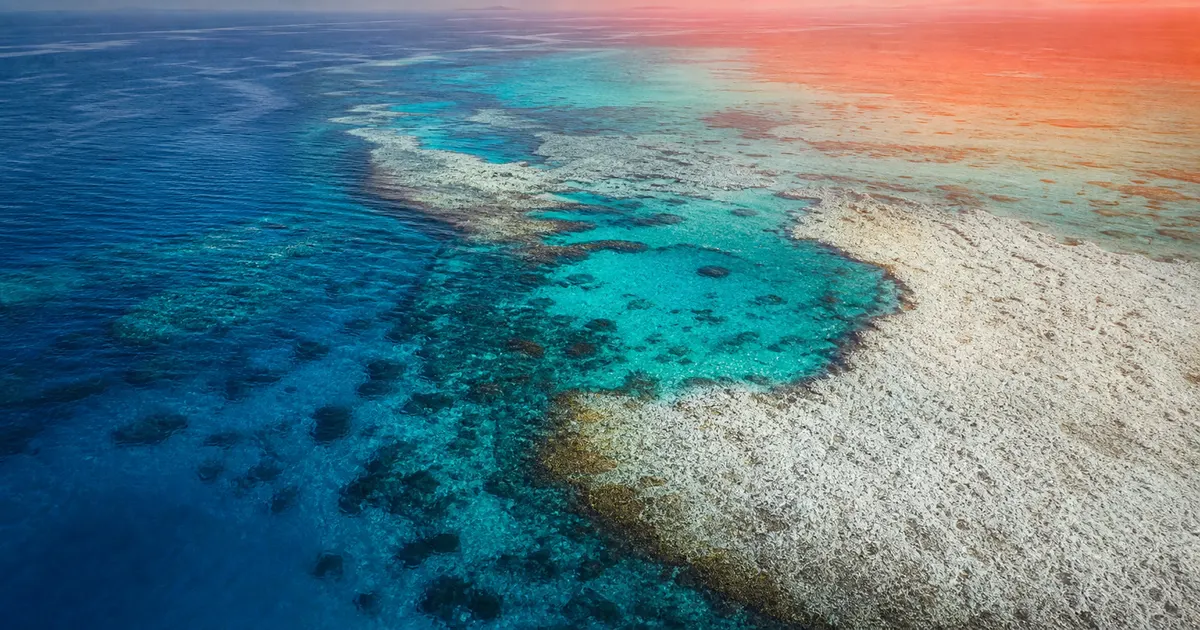
The coral bleaching repeatedly triggered by these large-scale El Niño events is another classic example of high water temperatures shaking an entire marine ecosystem. Historical records show just how far a small disturbance in the ocean can cascade — into food supplies, ecosystems, and economies alike.
What's Happening in Japan's Fisheries?
So what about fisheries in Japan? The waters around Japan are not a simple upwelling zone like those off Peru — they are a complex sea where the warm Kuroshio Current and the cold Oyashio Current collide. On top of the effects of El Niño and La Niña, changes in these currents and longer-cycle climate variability combine to determine fish abundance.
The Record Pacific Saury Shortage
Pacific saury is a familiar example. Japan's saury catch once topped 200,000 tons in the 1980s, but has plummeted in recent years, hitting a record low of about 46,000 tons in 2019 — less than a quarter of its peak. According to analyses by the Fisheries Agency of Japan and the Japan Fisheries Research and Education Agency, changes in the marine environment are deeply involved in this shortage.
In recent years, the cold Oyashio Current has weakened, and sea temperatures off eastern Hokkaido and the Sanriku coast have risen. Warm Kuroshio-derived water has pushed northward, warm-water eddies have formed offshore, and while the seas around Japan have warmed overall, the cold Oyashio water that saury prefer has been pushed far offshore, away from Japan. As a result, saury migration routes have shifted further out to sea, into waters Japanese fishing boats have a harder time reaching.

Migratory Fish Change Course With Water Temperature
Migratory fish such as Pacific saury, tuna, and bonito move along water-temperature bands suited to them. That is precisely why even a small shift in sea temperature can drastically alter their route — causing them to skip their usual fishing grounds, or, conversely, bringing in fish species not normally found there. Temperature changes driven by El Niño and La Niña are one factor that disturbs these migration routes.
Rising Temperature and Poor Catches Are Not a One-to-One Relationship
The causes of the Pacific saury shortage go beyond sea-temperature change; they include fishing pressure from foreign vessels, declines in the stock itself, and reductions in the zooplankton that saury feed on, among other intertwined factors. It would be inaccurate to single out El Niño or global warming as the sole culprit. Changes in the ocean emerge as the combined result of many overlapping factors.
Regime Shifts — Species Turnover on a Decades-Long Scale
The waters around Japan also have an even larger rhythm than El Niño — one that plays out over decades. This is known as a regime shift, in which the baseline state of the ocean, atmosphere, and ecosystem transforms on a decades-long scale. Along with it, eras when Japanese sardines are abundant and eras when sardines decline while other species such as chub mackerel increase alternate every few decades. This is called "species turnover."
Behind this lies a long-term fluctuation called the Pacific Decadal Oscillation (PDO), in which the Pacific's temperature distribution shifts on a roughly 20-year cycle. If El Niño and La Niña are "waves that come every few years," a regime shift is "a swell that rolls in over decades." Japan's fisheries operate atop this overlap of short- and long-term ocean variability of all different scales. Interestingly, fluctuations in sardine and anchovy populations are linked across the entire Pacific through the PDO, so the species turnover happening in Japan's coastal waters moves in step with changes occurring far away, off the coasts of Central and South America.

Because of these long-term fluctuations, a few years of poor catches for a given fish species does not necessarily mean it is "heading toward extinction" — and conversely, a run of good catches is no reason for complacency. Marine resources swing dramatically on rhythms far longer than the human sense of time. That is precisely why it is essential to read the ocean's condition scientifically at any given moment and manage resources so as not to overfish, if fisheries are to remain sustainable.
Sanriku and other fishing regions are working on recovery and resource management while confronting these ocean changes. Regional efforts are covered in more detail in our article on the revival of Sanriku's fisheries.
Effects on Weather — The Truth Behind Scorching Summers, Cool Summers, and Warm Winters
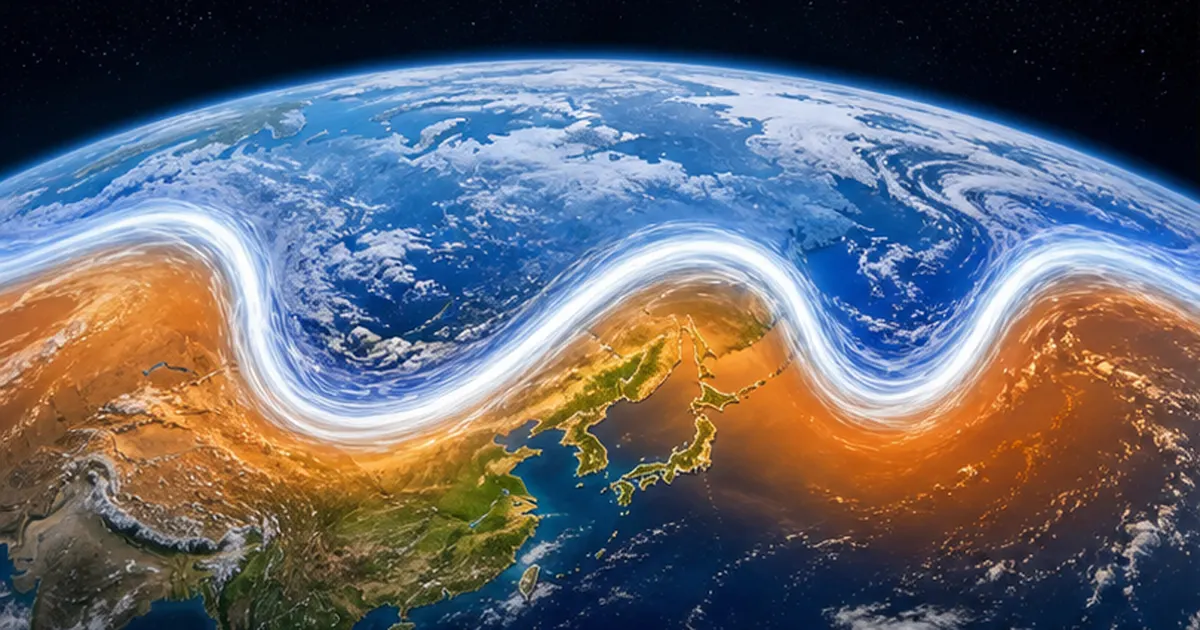
The effects of El Niño and La Niña are not limited to fisheries. The sea surface temperature deviation in the equatorial Pacific reaches far-off regions' weather through atmospheric circulation. This is called teleconnection. A disturbance in the ocean changes weather patterns around the world in a chain reaction, like falling dominoes.
Japan in an El Niño Year
According to JMA statistics, years when El Niño occurs show a clear tendency in Japan. Summers tend to be cool, with temperatures especially likely to run low in western Japan, and near or below normal in northern and eastern Japan as well; in some years the rainy season ends later than usual. Winters, on the other hand, tend to be warm, with temperatures likely to be near or above normal, especially in western Japan.
Japan in a La Niña Year
La Niña years tend to run largely opposite, with scorching summers and cold (severe) winters more likely. Statistically, summer temperatures in northern Japan in particular tend to run high. This is thought to stem from changes in tropical convection affecting the position and strength of the high-pressure system that extends over Japan.
| Season | El Niño Tendency | La Niña Tendency |
|---|---|---|
| Summer | Tends toward cool summers (especially low temperatures in western Japan) | Tends toward scorching summers (high-temperature tendency in northern Japan) |
| Winter | Tends toward warm winters (high temperatures especially in western Japan) | Tends toward cold winters |
| World | Droughts in Australia and Indonesia; heavy rain in Peru | A largely opposite pattern |

Extreme Weather Around the World
Looking globally, El Niño years tend to bring drought and wildfires to Australia and Indonesia, and can even bring heavy rain to Peru's normally arid coastal desert. The powerful El Niño of 1982–83 is said to have triggered droughts, floods, and other weather disasters on nearly every continent, making the scale of its impact known worldwide.
It Does Not Happen "Every Single Time"
These are ultimately statistical "tendencies," not guarantees that things will always turn out this way. In fact, in recent years, the baseline rise from global warming has meant that even years that should lean toward cool summers under El Niño have seen record-breaking heat instead. El Niño and La Niña are important factors shaping the weather, but it is important to understand they are not the sole determining factor.
Why a Distant Ocean Changes Japan's Weather
You might wonder, "Why would something happening in the equatorial ocean even affect Japan's summer?" The key lies in the position of the rain clouds (cumulonimbus clouds) that thrive over the warmed equatorial sea. When the center of this convective activity shifts, disturbances ripple outward through the atmospheric flow like waves, moving the position of the high-pressure system and the jet stream even around distant Japan. It is much like stirring the water on one side of a bathtub with your hand and seeing ripples reach the far side. The ocean's heat travels as an atmospheric wave, circling nearly halfway around the globe.
It is precisely this mechanism that allows monitoring just a single spot — the equatorial Pacific — to give some sense of seasonal outlooks for regions around the world. Conversely, misreading conditions in the equatorial ocean can throw off weather forecasts for far-away countries as well. El Niño and La Niña monitoring is taken so seriously worldwide precisely because of this almost "remote-control"-like influence.
In other words, El Niño and La Niña impose a strong tendency that shapes a given year's weather "personality," while also overlapping with the separate, larger trend of global warming. So as warming progresses, how will this phenomenon itself change?
How Will Global Warming Change El Niño?
In recent years, we have started hearing the phrase "the double punch of El Niño and global warming." As global warming progresses, how will El Niño and La Niña themselves change? This is a major research theme scientists worldwide are pursuing, and while it is not yet fully understood, several important projections have emerged.
The Possibility of More Intense El Niño Events
The IPCC's (Intergovernmental Panel on Climate Change) Sixth Assessment Report and large-scale climate model calculations known as CMIP6 show, with high confidence, that the frequency of strong El Niño events will increase as long as anthropogenic greenhouse gas emissions continue. As warming increases the heat energy stored in the ocean, extreme ENSO states are expected to appear more frequently.
At the same time, some research suggests that the way the phenomenon changes may depend on how warming progresses. Some studies indicate ENSO may strengthen under relatively moderate warming, but could weaken and shorten its cycle under extremely severe warming — so it is not a simple straight line. Research in this area is still evolving.

The Compound Risk of a "Raised Baseline"
What matters is that warming is pushing up the average sea surface temperature itself. Even an El Niño of the same strength will reach a more severe peak temperature if the starting point is already higher. Years that should have been cool summers turn into scorching ones; coral more easily reaches the bleaching-inducing high temperatures — in these ways, El Niño and warming act multiplicatively rather than additively.
Ocean warming affects not just water temperature but also the amount of oxygen dissolved in seawater. Warmer oceans hold less oxygen, contributing to the expansion of low-oxygen ocean areas (dead zones) where marine life cannot survive. El Niño and La Niña variability overlaps with these multiple warming-driven stresses to shape the ocean's future.
Long-Term Effects on Marine Ecosystems
The overlap of warming and El Niño carries heavy implications for the future of fisheries as well. As the ocean as a whole warms, fish shift their distribution northward or move to deeper layers in search of cooler water. Fish species long familiar in Japan are becoming harder to catch, while southern species are increasing in their place — such changes have already been reported in various regions. Shifts in the distribution of migratory fish force a rethink of the entire fisheries system, from fishing grounds and gear to processing and distribution.
The diversity of marine life itself is also affected by temperature change. An ocean that is comfortable for one species may become harsh for another. If the balance of the ecosystem breaks down, the resources we are able to use will change as well, in a chain reaction. To deepen your understanding of the richness of life in Japan's coastal waters and how it is changing, our article on marine biodiversity in Japan is also worth a read.
Research Is Still a Work in Progress
How warming will change ENSO is a cutting-edge theme that research institutions worldwide continue to test using the latest climate models. While views are converging on the point that "strong El Niño events are likely to become more frequent," uncertainty remains around the finer details. That is exactly why ongoing observation and monitoring by the JMA, JAMSTEC, and other bodies is becoming ever more important.
Putting Monitoring Data to Work in Daily Life and Fisheries
El Niño and La Niña are not phenomena we can stop with our own hands. But we can learn about their onset early and prepare. The JMA publishes a monthly "El Niño Monitoring Report," releasing the current state of the phenomenon and the outlook for the months ahead. For 2026, there is said to be a high probability that El Niño will develop by summer (the JMA put the figure at 90%), and it is drawing considerable attention.
Watching the Ocean From Space and Underwater
This kind of monitoring is supported by satellites and ocean observation networks. Satellites operated by JAXA and others measure sea surface temperatures across the vast ocean every day from space. In addition, numerous buoys are deployed across the Pacific, automatically recording water temperatures from the surface down to great depths. In recent years, autonomous observation devices called "Argo floats" have drifted through oceans worldwide, measuring temperature and salinity within the water column and continuously transmitting the data via satellite. Both from space and from within the ocean itself, we now keep watch over a vast sea that human eyes alone could never cover.

How Fisheries Use This Information
Forecasts of sea surface temperature and ocean currents are valuable information for fisheries. Being able to anticipate how fish migration routes are likely to shift ahead of time helps with choosing fishing grounds and planning operations. Initiatives like JAMSTEC's "Kuroshio-Oyashio Watch," which communicates the state of the seas around Japan in an accessible way, are advancing, bridging the gap between science and the field. The data collected is also used for forecasting fish arrivals and assessing stocks, forming the foundation for resource management aimed at preventing overfishing.
Everyday Preparedness
El Niño and La Niña outlooks are useful for each of us individually, too. Knowing the tendency toward a cool or warm summer, or a hot or cold winter, helps us prepare — managing our health, guarding against heatstroke, and bracing for shifts in crop and food prices. Hearing "this summer is expected to be scorching due to La Niña" and taking early precautions against the heat — that is one way global-scale science connects to our everyday lives.
Things You Can Do Starting Today
- Check the JMA's "El Niño Monitoring Report" for the latest status and outlook
- Use seasonal weather tendencies to prepare for heatstroke risk and disaster readiness
- Read news about fish price swings and poor catches as signals of ocean change
- Keep up daily decarbonization efforts to help curb ocean warming
When it comes to protecting the ocean's bounty, efforts that harness the ocean's own power — like blue carbon ecosystems, which absorb and store carbon dioxide — matter too. Understanding El Niño and La Niña is a first step toward coexisting wisely with a changing ocean.
Conclusion — A Small Ocean Imbalance Moves the Whole World
El Niño and La Niña begin with a small deviation in sea surface temperature in the equatorial Pacific, and by drawing in the trade winds and the atmosphere, they trigger a chain reaction on a global scale. Through upwelling and plankton, they determine whether fish catches boom or bust; a poor catch off the coast of Peru ripples out to global food prices and even Japan's dinner table. And they help decide the very "personality" of Japan's weather — scorching or cool summers, warm or cold winters.
The key to understanding this phenomenon lies in three perspectives: "the ocean and atmosphere act as one," "temperature change takes effect through the food chain," and "there are tendencies, but also exceptions." With the added overlay of global warming raising the baseline, El Niño and La Niña going forward may become more extreme. That is exactly why scientific monitoring — and our own understanding and preparedness — are indispensable.
Key Points of This Article
- El Niño = a state of elevated sea surface temperature in the eastern-to-central equatorial Pacific; La Niña is the reverse. The JMA declares an event when the deviation in the monitoring region reaches +0.5°C and persists for six months
- As the trade winds strengthen or weaken, the positions of warm water, cold water, and rain clouds swap, with ocean and atmosphere driving the phenomenon together like a two-person, three-legged race
- Sea temperature change affects fisheries through the food chain of upwelling → plankton → fish. The poor anchovy catch off Peru during El Niño ripples out worldwide, as in the soybean shock
- In Japan, El Niño tends to bring cool summers and warm winters, while La Niña tends to bring scorching summers and cold winters — though warming is increasing the exceptions
- Changes in Japan's coastal waters, such as the Pacific saury shortage, arise from the overlap of multiple factors, including the Kuroshio and Oyashio currents and regime shifts
- Warming may increase the frequency of strong El Niño events. It is important to put the JMA's monitoring information to work in daily life and fisheries
A small imbalance in the distant Pacific Ocean ripples outward, in the end, to touch our dinner tables and our weather. Learning about this grand web of connections is a chance to take a fresh look at our changing ocean and planet. Staying engaged with ocean change is a sure first step toward passing a rich sea on to the next generation.
References and Sources
- Japan Meteorological Agency – Knowledge about El Niño/La Niña phenomena
- Japan Meteorological Agency – Characteristics of Japan's weather during El Niño events
- Japan Meteorological Agency – Characteristics of Japan's weather during La Niña events
- Fisheries Agency of Japan – On the factors behind the Pacific saury shortage and its relationship to the marine environment
- Fisheries Agency of Japan – Summary of the review committee on the fishing shortage issue
- JAMSTEC (Japan Agency for Marine-Earth Science and Technology) – Seasonal Watch, "What Is El Niño?"
- National Institute for Environmental Studies – How will global warming change the El Niño–Southern Oscillation?
- JAXA (Japan Aerospace Exploration Agency) – El Niño & La Niña
* Listed in order of reliability: government/academic institutions > peer-reviewed papers > specialized institutions > reputable media