⚡ In short
Found only on Okinawa's Iriomote Island, the roughly 100 remaining Iriomote cats are a "living fossil" listed as Critically Endangered by the IUCN. Their biggest threat is traffic accidents, and the island is now combining data-driven speed control with wildlife underpasses. Sixty years after their discovery, this is the story of the push toward zero roadkill by changing human behavior.
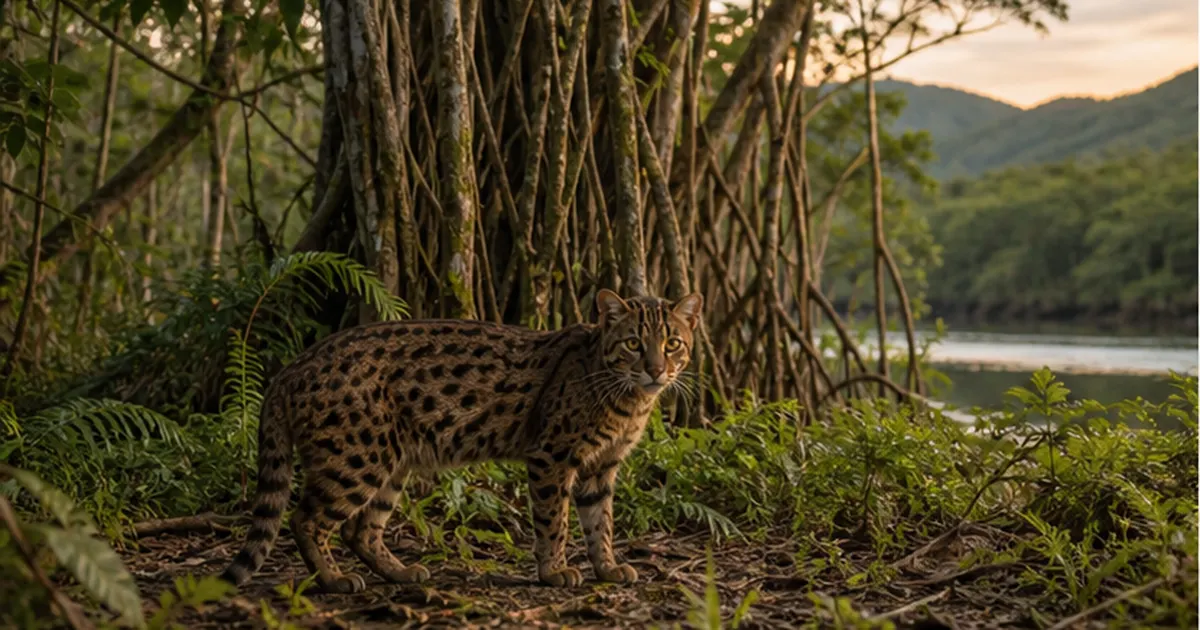
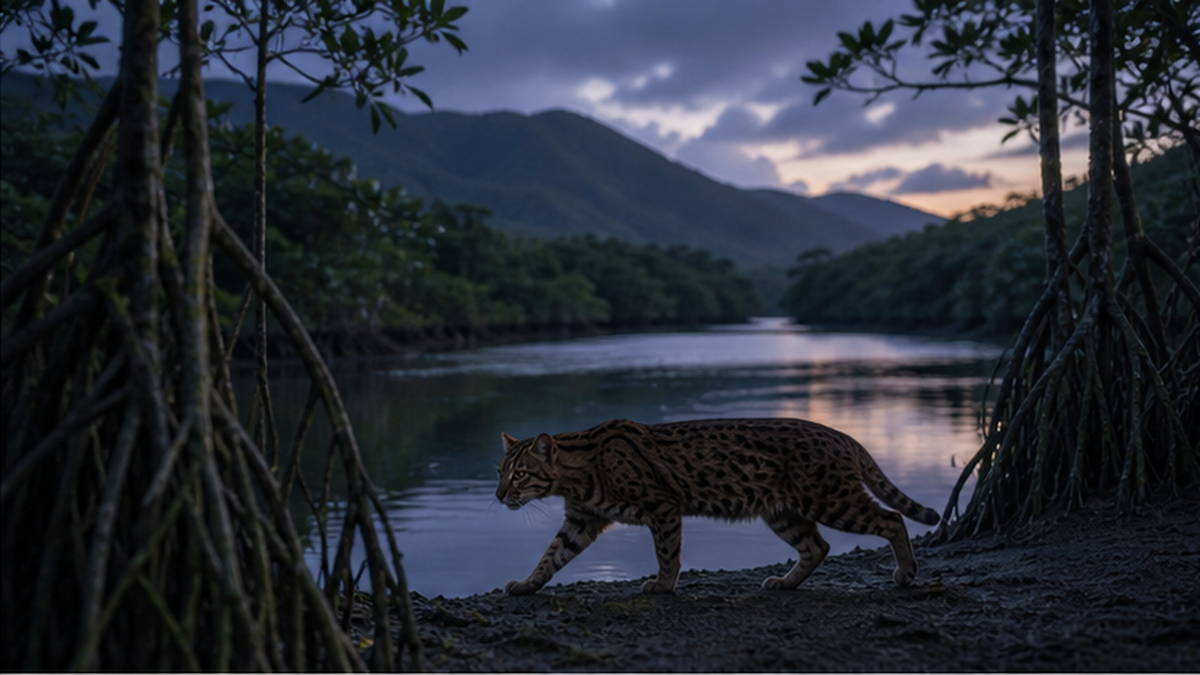
Okinawa Prefecture, Iriomote Island. On this small island where mangrove roots blanket the waterways and subtropical evergreen forest covers ninety percent of the land, a wild cat lives that exists nowhere else on Earth. The Iriomote cat. A medium-sized wildcat about 50–60cm long and 3–5kg in weight, it marked 60 years in 2025 since the first clues to its discovery emerged in 1965.
But "60 years since discovery" is not something to celebrate unreservedly. According to Ministry of the Environment surveys, the estimated population of Iriomote cats on this island still hovers around 100 individuals. Both the International Union for Conservation of Nature (IUCN) and Japan's Ministry of the Environment Red List place this subspecies in the most severe category: "Critically Endangered." Because its entire habitat is confined to the single island of Iriomote, even one major environmental change or a chain of accidents could threaten the survival of the entire subspecies.
In recent years, the most direct threat to its survival has been traffic accidents (roadkill). Since record-keeping began in 1978, 102 accidents had occurred by August 2025, with 94 confirmed cat deaths. The cause is nothing exotic: growing numbers of tourists and rental cars have raised the danger on roads the cats routinely cross. Iriomote Island, a UNESCO World Heritage site, is also a symbol of Nansei Islands biodiversity alongside the coral reefs that color Okinawa's seas — and there is a bitter irony in the fact that the very visitors drawn by these natural riches are, through their own actions, endangering the cat that embodies them. This article traces the Iriomote cat's true nature and the island-wide push toward zero traffic deaths.
What you'll learn in this article
- Why the Iriomote cat is called a "living fossil" found only on Iriomote Island, and the story of its discovery
- The weight behind an estimated population of 100, and the IUCN/Ministry of the Environment evaluation criteria
- Why traffic accidents (roadkill) became the greatest threat
- The island-wide push toward zero accidents, from underpasses to visualizing speeding
- Hybridization and disease risk from domestic cats, Taketomi Town's ordinance, and the results of feral cat management
- Lessons for rare-species conservation drawn from 60 years since discovery
What Is the Iriomote Cat? The Discovery Story and the Ecology of a "Living Fossil"
The story goes back to February 1965. Togawa Yukio, a writer known for his animal literature, visited Iriomote Island and heard from locals about an unfamiliar wildcat, collecting fur and bone specimens. When the Mammal Society of Japan examined them, the verdict was that this might be a new species or subspecies — and word that an unknown felid lived on the island began to spread through the academic world.
A Cat Captured by a Hunter, and the Story Behind Its Name
Confirming this required a living specimen. In 1967, local hunter Kuroshima Hiroshi captured a live wildcat, which was delivered to Imaizumi Yoshinori, head of the zoology department at the National Science Museum. Imaizumi announced it academically as a new species, and reportedly first proposed naming it the "Togawa cat" in honor of Togawa's role in its discovery — but Togawa himself declined, and it was instead named the "Iriomote cat" after the island where it was found. Initially treated as an entirely new genus and species, subsequent research no longer supported the new-genus theory, and today it is generally regarded as a subspecies of the leopard cat, which is widely distributed across the Eurasian continent.
A Lineage That Survived on an Island Cut Off From the Continent
Iriomote Island was once connected to the continent by land, and the ancestors of today's wildcats are thought to have crossed over during that era, continuing to survive in isolation even after rising sea levels cut the island off. It retains features that differ subtly in appearance and ecology from the continental leopard cat, which is part of why it is called a "living fossil." The only two cases of wildcats confirmed living in the wild in Japan are the Iriomote cat on Iriomote Island and the Tsushima leopard cat on Tsushima Island (also a subspecies of the leopard cat) — both extremely limited regional populations that are subjects of conservation.
An Unusually Broad Diet That Doesn't Rely on Rodents
Many small felids rely mainly on rodents and rabbits as prey, but the Iriomote cat's diet is markedly different. It is known for an unusually broad diet that includes reptiles and amphibians such as lizards, snakes, and frogs; insects such as crickets; fruit bats; birds; and even freshwater prawns living in mountain streams. This is thought to reflect an adaptation to the island's particular ecosystem, where large rodent species and competing carnivores are largely absent.
- A medium-sized wildcat about 50–60cm long and 3–5kg in weight
- Brownish to grayish-brown fur with dark spotted markings and rounded ears
- Mainly nocturnal and crepuscular, living and holding territory alone
- Home ranges span roughly 1–3 square kilometers for females and 2–7 square kilometers for males, which are broad; one male's range typically overlaps with 1–2 females
- The peak breeding season is around February to April, with 1–2 kittens born around April to June; the mother raises them through summer, and the young become independent in autumn to winter
Interestingly, the Iriomote cat does not rely solely on untouched primary forest. It is known to use a wide range of habitats — from lowland evergreen forest and mangrove forest to the edges of rice paddies and farmland, and even secondary forest near settlements. As a result of favoring the moist environments rich in frogs, lizards, and insects that make up its prey, it frequently appears in places close to human life. This very proximity to human settlement is a fundamental reason behind the traffic accident risk discussed later.
In the 60 years since its discovery, the Iriomote cat has become a symbol of Iriomote Island itself. Its silhouette appears everywhere visitors go — on airport and port signage, souvenir designs, and road-sign illustrations. While it serves as a tourism icon supporting the island's economy, actually seeing one in the wild is extremely difficult. Because the nocturnal, wary Iriomote cat can be pushed toward stress or accident risk by aggressive tracking or feeding aimed at observation, most people come to know its ecology through camera-trap footage or exhibits at the conservation center.
What "100 Individuals" Really Means: A History of Surveys and Evaluation Standards
Ecological surveys of the Iriomote cat on Iriomote Island have been carried out by the Ministry of the Environment since fiscal year 1974. The "comprehensive habitat status survey," which estimates the population across the whole island, has been conducted multiple times: the second survey (1982–1984) estimated roughly 83–108 individuals, the third survey (1992–1993) roughly 99–110, and the fourth survey (2005–2007) roughly 100–109. Across decades of surveys, the population has held roughly steady around 100, though the Ministry of the Environment assesses the long-term trend as declining.
The reason such long-term, repeated surveys have been necessary is that population change needs to be understood as a "trend" rather than a single-point figure. Multiple methods are combined to estimate the population — individual identification via camera traps, DNA analysis of feces, and radio-tracking of home ranges — building up, over time, a record of a nocturnal animal's habitat status that simple visual surveys alone could never capture. Even lining up the results from the second through fourth surveys, no change clear enough to call a simple increase or decrease emerges — itself a testament to how hard it is to read the fluctuations of such a small population.
Legal Protection — Four Pillars
| System | Year designated/established | Content |
|---|---|---|
| Law for the Protection of Cultural Properties | 1972 (National Natural Monument) / 1977 (Special Natural Monument) | The highest tier of protection the state designates for cultural properties |
| Act on Conservation of Endangered Species | 1994 (designated a Domestic Endangered Species) | Legal protection that in principle bans capture, transfer, and the like |
| Program for the Protection and Propagation | Established 1995 | The basis for comprehensive measures including monitoring, home-range surveys, and traffic accident prevention |
| Wildlife Protection and Management Act | National Iriomote Wildlife Protection Area | Designates the habitat itself as a protected area |

Both the IUCN and the Ministry of the Environment Rank It in the Most Severe Category
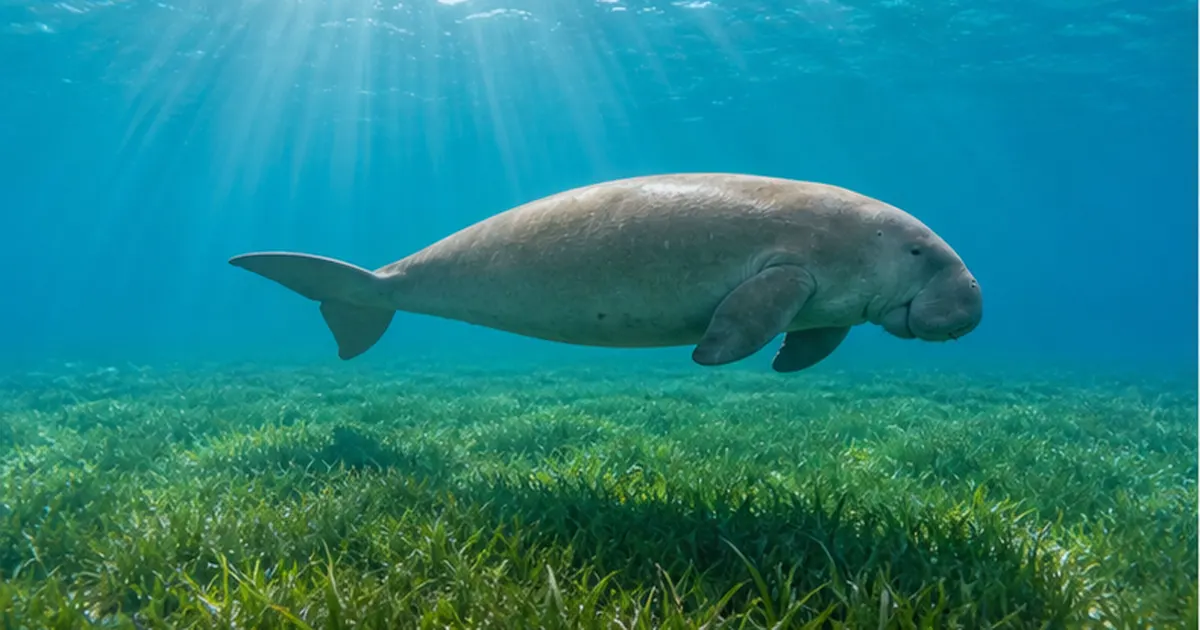
The IUCN Red List's most recent assessment, in 2015, rated the Iriomote cat "Critically Endangered." The main reasons are that it is confirmed only on the single island of Iriomote and that its small population is in decline. Japan's Ministry of the Environment Fourth Red List likewise classifies it as Critically Endangered (CR), placing it among the mammals confirmed in Japan facing the most severe extinction risk. Another creature classified as Critically Endangered within Okinawa Prefecture is the dugong, a marine mammal that grazes on seagrass. The very fact that a habitat is confined to a single sea area or a single island means that a single event — a disease outbreak, a major natural disaster — could threaten the survival of the entire species.
The difficulty of individual identification is another reason surveys have taken so long. The Iriomote cat is nocturnal and wary, so opportunities for direct observation are limited. Researchers estimate the population by piecing together indirect clues: distinguishing individuals by differences in the spotted patterns caught on camera traps, and analyzing DNA left in feces. Before such methods were established, researchers had no choice but to infer population indirectly from sighting reports and the age structure of roadkill carcasses; only relatively recently has high-precision estimation become possible. In addition, a population as small as roughly 100 individuals also carries the long-term risk of reduced genetic diversity through inbreeding.
The 2024 Monitoring Survey: 60 Individuals Confirmed, a Record Number of Births
Surveys tracking the population "trend" year by year also continue. In monitoring results compiled by the Ministry of the Environment in 2024, camera traps and other methods confirmed 60 individuals over the course of the year — 37 male, 15 female, and 8 of unknown sex — with no major change from the previous year. The same survey confirmed births from 6 individuals across three areas, reportedly a record number. Such year-by-year monitoring is essential for catching short-term changes that a comprehensive survey conducted only once every few decades cannot reveal.
The Ministry of the Environment has formulated a 10-Year Conservation Plan for the Iriomote Cat covering fiscal years 2022 through 2031, organizing goals and measures around five perspectives: social structure, traffic accidents, habitat, infectious disease, and invasive species. Rather than ending as a one-off project, the plan's distinguishing feature is sharing an overall picture of conservation among stakeholders as a decade-long long-term framework.
Why Traffic Accidents Became the Greatest Threat
The habitat environment on Iriomote Island itself is relatively well preserved compared with other remote islands. Even so, traffic accidents have become the standout cause of death for the Iriomote cat in recent years. Records from the Iriomote Wildlife Conservation Center (IWCC) show a cumulative 102 traffic accidents from the start of record-keeping in 1978 through August 2025, with 94 confirmed cat deaths. The prefectural road circling the island cuts directly through the lowland habitat the cats use daily, and the fundamental cause is structural: cats have no choice but to cross the road to move between feeding grounds and territory.
2013: The Ministry of the Environment Declares a "State of Emergency"
In years when traffic-accident deaths were especially high, the Ministry of the Environment has, in unusually strong language, issued a "state of emergency" warning. Rising tourist numbers and the spread of rental car use have been cited as the background to this rise in accidents. Iriomote Island, also a UNESCO World Heritage site, sees its visitor numbers rise year after year. There is a bitter irony in the fact that the very cars of tourists drawn by the island's rich nature end up endangering the cat that symbolizes it.
Some years have seen a genuine surge in accidents. In one year, six fatal accidents had already been confirmed by August, a pace reportedly on track to match the worst full-year total on record at the time, from 2013, according to local newspapers. That such "bad years" have recurred rather than remaining one-off anomalies has been a driving force behind developing measures into a permanent framework rather than letting them end as a one-time campaign.
The island's topography itself is also part of why accidents are so frequent. Much of the road network on Iriomote Island threads between the coastal flatlands and the forest beyond — precisely the lowland belt where cat density is highest. With almost no alternate routes available, cats have no choice but to cross the road each time they move between feeding grounds and territory.
A Shared Challenge Across the Nansei Islands: Comparison With the Amami Rabbit
Roadkill of rare wildlife is not unique to Iriomote Island. On Amami Ōshima, registered as a World Heritage site together with Iriomote as part of "Amami-Oshima Island, Tokunoshima Island, northern part of Okinawa Island, and Iriomote Island," traffic deaths of the natural monument Amami rabbit (Amami Ōshima figures) surged — from 61 in 2021 to 107 in 2022 and 147 in 2023, repeatedly setting new records since statistics began. In 2024 the figure eased slightly to 121, though the Ministry of the Environment attributes this to a population recovery reaching a "plateau at a high level," with the toll remaining elevated overall. As mongoose eradication efforts progress and the rabbit population recovers, its habit of freezing in headlights at night has, ironically, been blamed for the rise in accidents. Across the World Heritage-listed islands of the Nansei chain, a shared problem looms: conservation success can itself generate new traffic-accident risk.
More Than Just Traffic Accidents: Compounding Pressures
For a population this small to begin with, factors beyond traffic accidents cannot be ignored either. Habitat fragmentation from road and settlement expansion, declining prey along the edges of farmland, and the hybridization and disease risk from domestic cats discussed below all compound one another. Each individual effect may look small, but for a population of roughly 100, every one of them carries weight that can translate directly into population decline.
Conditions Where Traffic Accidents Tend to Concentrate
- Summer vacation season (July–August) and long holidays, when tourist numbers rise
- Times of day with many drivers unfamiliar with driving on rental cars
- Early evening, when travelers rush to make ferry departure times
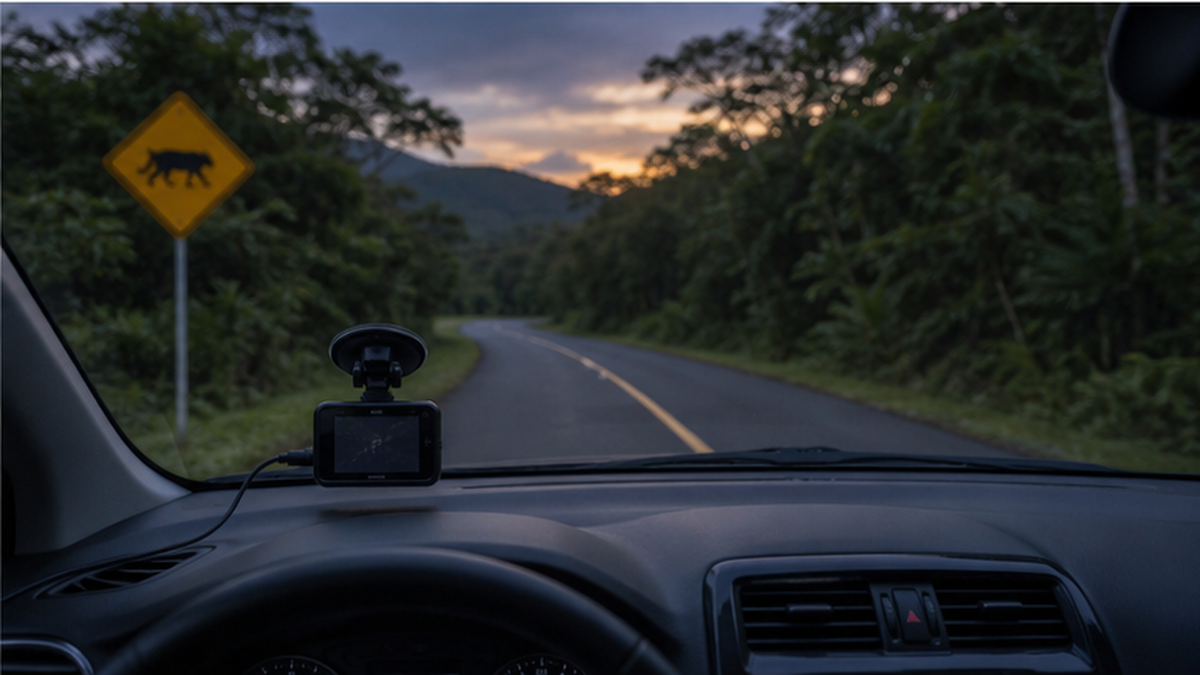
- The dim hours of night to dawn that overlap with the cat's active periods
On-the-Ground Measures Toward Zero Accidents: Underpasses and Zebra Zones
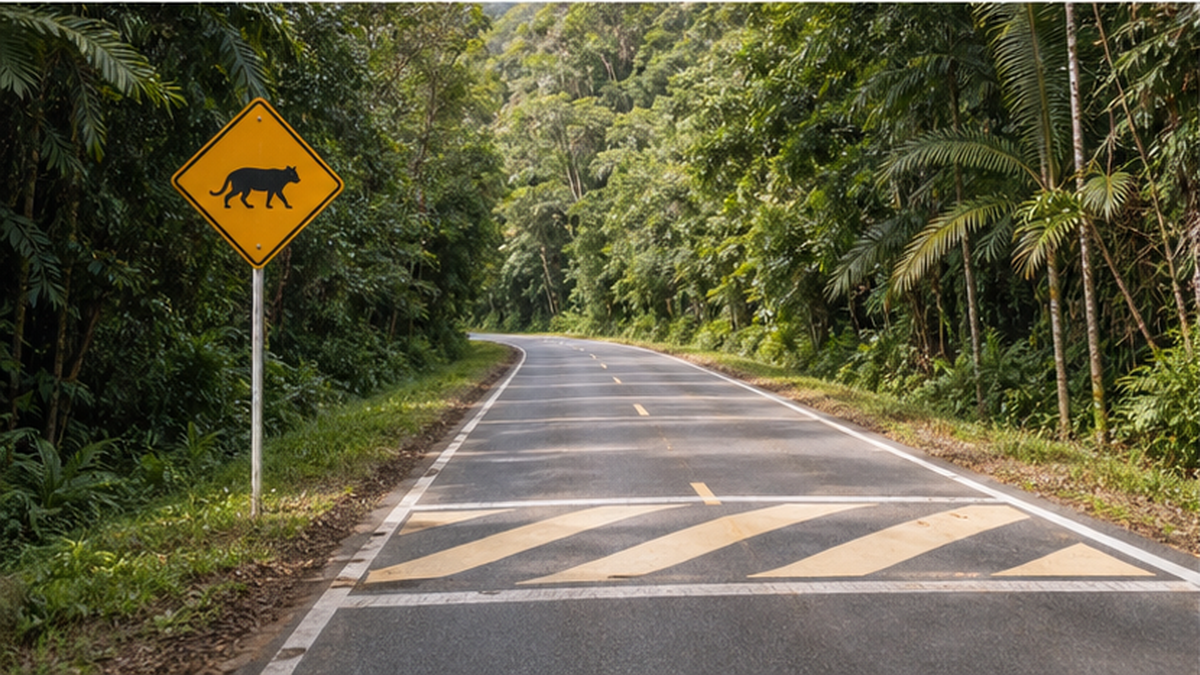
Iriomote Island has long continued building infrastructure to reduce traffic accidents. A representative example is the "underpass" (an animal tunnel, often called a "cat box culvert") built so wildlife, including the Iriomote cat, can safely cross beneath the road; these have been installed at multiple points across the island, straddling the roadway. In sections with frequent cat sightings, painted "zebra zones" that draw attention to the road surface and signs urging drivers to slow down have also been set up.
Monthly Sighting Maps and Alerts
The Iriomote Wildlife Conservation Center compiles sighting and accident reports into a monthly alert map, sharing accident-prone sections and time periods with local communities and tourism operators. Sections where accidents concentrated over the past decade have been designated a traffic-accident-prevention priority zone nicknamed the "Yamaneko Yonnaa Road" (yonnaa is Okinawan for "slowly"), with intensified measures such as additional signage and patrols.
What a Rumble-Strip Experiment Taught About the Limits of Habituation
The history of countermeasures has been one of trial and error. One attempt installed rumble strips — pavement that produces vibration and noise — at points with frequent sightings, hoping the vibration and noise would keep the cats away from the road themselves; but over time, both cats and people grew accustomed to the noise, and the effect faded. Worse, some drivers, disliking the vibration, actually sped up to get past it faster — an ironic backfire that made clear the limits of an approach aimed only at changing the animal's behavior.
A Shift in Thinking: "The Problem Isn't the Cat — It's People"
From these experiences, recent measures have shifted focus away from "changing the wildlife" and toward "changing human driving behavior." Analysis suggests many tourists, driving rental cars on tight itineraries, tend to speed up as they rush to make ferry departure times. That measures meant to protect an animal have come to be reframed, in the end, as a problem of human behavioral design is the major shift of roughly the past decade.
The island's countermeasures were not built overnight. Starting from civil-engineering infrastructure such as underpasses and zebra zones, moving through stronger signage and awareness campaigns, and now toward data-driven measures like the Bluetooth detection survey and the yuriCargo project, the center of gravity of these efforts has gradually shifted. The move away from relying solely on physical infrastructure and toward an approach that combines behavioral science with data science carries implications applicable to other rare-species conservation efforts as well.
Okinawa Prefecture's Bluetooth Detection Survey
On the government side too, efforts to quantitatively grasp actual traffic conditions are advancing. Okinawa Prefecture has permanently installed Bluetooth detection equipment on the accident-prone Shirahama–Haimi Prefectural Road, anonymously logging the MAC addresses of passing devices such as smartphones and car navigation systems to calculate average speeds from travel time between points — a survey it has run continuously since February 2022. The resulting data is shared with the Iriomote Island subcommittee and is expected to be used not only for traffic-accident countermeasures but also for managing the flow of tourists.
Changing Human Behavior With Data: The Iriomote Island yuriCargo Project
A symbolic example of this shift is the "Iriomote Island yuriCargo Project," launched on May 17, 2023 by auto-parts maker DENSO together with the Ministry of the Environment's Iriomote Nature Conservation Office. Anyone can join simply by installing the dedicated "yuriCargo" smartphone app and driving as usual; the app records and scores driving behavior such as acceleration and braking, requiring no hardware installation in the vehicle — a key feature of its simplicity. More than ten organizations cooperate, including Taketomi Town Hall, Okinawa Prefecture, and local tourism and transport bodies, and drivers who maintain safe driving are issued a "certified safe driver" recognition, forming an island-wide framework aimed at zero traffic accidents for the cat.
It might seem surprising for an auto-parts maker to join a rare-species conservation project, but for a company that already holds technology for collecting and analyzing driving-behavior data, gathering and analyzing speed and acceleration data through a smartphone is really an extension of its core business. As a framework where private-sector technology fills a gap that government agencies and research institutions alone found difficult — obtaining real-time behavioral data from a large number of drivers — this collaboration has become something of a model case for rare-species conservation.
Where Okinawa Prefecture's Bluetooth detection survey captures the "area-wide" traffic picture, the yuriCargo project complements it with detailed driving-behavior data from the "points" represented by participating drivers. Combining broad, government-led surveys with fine-grained, company-led data collection from individual drivers is making it possible to grasp where, when, and how much speeding occurs with a resolution higher than before.
The Change Brought by Speed Loggers and Voice Guidance
In a similar data-driven effort to change behavior, speed loggers were installed on 20 vehicles to gather two months of driving data; after the system was introduced in March 2022, from May of the same year it evolved into a system delivering voice guidance such as: "This is Iriomote cat habitat ahead. A safe target speed is 40 km/h. At this speed, you will reach the ferry terminal in about [X] minutes." Rather than an abstract "Danger, please be careful," pairing a concrete target speed with an estimated arrival time was designed to make it easier for drivers to choose to slow down.
| Stage | Measure | Result |
|---|---|---|
| Before introduction | Only general warnings, without grasping actual speeding conditions | Over 500 confirmed speeding incidents |
| After voice guidance | Voice announcements of safe speed and travel time before habitat sections | Speeding incidents fell to about 20 |
The Meaning of Making "Rush Hours" Visible
What only became visible once the data was collected was that speeding concentrated in the afternoon hours, as ferry departure times approached. It also became clear that the timing when tourists rush to return their rental cars and catch the outbound ferry tends to overlap with the dusk hours when cats are most likely to cross the road. The significance of this effort lies not just in calling for general caution, but in being able to pinpoint, with data, exactly when and where vigilance should be strengthened. It is also beginning to draw in tourism operators such as rental car companies and ferry operators, leading toward a rethink of the island's traffic flow as a whole.
Hybridization and Disease Risk, and Taketomi Town's Domestic Cat Ordinance
Traffic accidents are not the only threat to the Iriomote cat. Contact with domestic and stray cats brought in by people is also considered a major risk. If a domestic cat hybridizes with an Iriomote cat in the wild, the genetic distinctiveness maintained over a long time could be compromised. Diseases that domestic cats can carry, such as feline leukemia virus and feline immunodeficiency virus, are also pointed to as a transmission risk to the Iriomote cat. Competition for food is another issue that cannot be ignored.
Capturing and Rehoming Stray Cats, and a Record of "Zero" Feral Cats
Iriomote Island has confronted these risks early on. Most stray cats on the island have been captured and rehomed with new owners off-island, an effort that continues today. Together with spay/neuter surgeries and proper-care guidance carried out with veterinary cooperation, this has meant that no "feral cats" — domestic cats gone wild and breeding independently across generations in the countryside — have been confirmed living on the island as of 2018. In contrast to islands such as Amami Ōshima, where feral cat populations in the hundreds are a management challenge, Iriomote Island's situation can be called the fruit of sustained effort.
In practice, disease countermeasures include testing captured stray cats for feline leukemia virus (FeLV) and feline immunodeficiency virus (FIV), with infected individuals kept from being released back outdoors. Cutting off the route by which pathogens could spread from domestic cats to wild Iriomote cats requires both health management by individual owners and a capture-and-testing system run by the government.
Taketomi Town's Domestic Cat Management Ordinance, Covering Iriomote Island
- Requires registration and microchipping of domestic cats
- Requires vaccination, reducing the risk of bringing in disease
- Imposes quarantine-like procedures when bringing cats onto the island
- Promotes spay/neuter surgery to curb the growth of the stray cat population
Rather than restricting owners' rights, such an ordinance can be understood as a shared rule for how residents and visitors alike should behave as "part of the single ecosystem that is Iriomote Island." Protecting both cats beloved as pets and the endangered wildcat requires a change in behavior from those who keep pets.
Lessons From 60 Years of Discovery History and the Challenges Ahead
Sixty years have passed since 1965, when Togawa Yukio grasped the first clue, to 2025. In this time, the situation surrounding the Iriomote cat has changed greatly. World Heritage registration raised the island's profile and brought more visitors, while a new form of threat — traffic accidents — emerged. Ministry of the Environment reports suggest there was a period of over two years, following December 2022, with no confirmed traffic accidents, suggesting that steady, accumulated countermeasures are beginning to bear fruit.
Considering the "Object of Protection" and the "Agent of Protection" Together
What these 60 years teach us is that conserving a rare species cannot succeed by looking at the animal alone. On top of conventional efforts — habitat conservation, legal protection, and population monitoring — it is necessary to redesign around tourist behavior and driver psychology as well. Iriomote Island's case is one of the few concrete examples showing that conserving an endangered species reaches into the domain of "behavioral science" as much as "natural science." Some efforts, like feral cat management, build results over decades; others, like yuriCargo, produce visible change within a few years. Continuing both in parallel is the realistic path to protecting a small population. Now that a decade-long conservation plan is in place, the question is how this accumulated effort will bear fruit over the next ten years.
In Japan, the reintroduction program for the crested ibis on Sado Island in Niigata Prefecture is often cited as an example of recovering a population from the brink of extinction. Where the ibis program centered on captive breeding and release, the challenge for the Iriomote cat is how to reduce a human-caused risk — accidents — while maintaining the wild population itself. The objects and methods of protection differ, but the shared stance is the same: sustaining measures over the long term while engaging the entire region.
At the same time, the Iriomote cat should not be spoken of only in terms of crisis. The sight of it moving silently along mangrove shores, hunting a diverse range of prey, is itself proof that Iriomote Island's subtropical ecosystem still functions richly today. Amid all the statistics and countermeasures, it's worth remembering that the creature's very existence is a joy of visiting the island, and a landscape worth leaving to the next generation.
Article Summary
- The Iriomote cat is a subspecies living only on Iriomote Island, with an estimated population of roughly 100; both the IUCN and Japan's Ministry of the Environment classify it as Critically Endangered
- Since 1978, 102 traffic accidents have occurred with 94 confirmed deaths (as of August 2025)
- Beyond underpasses and zebra zones, measures that visualize driving data to change human behavior are spreading
- Sustained capture and rehoming of stray cats mean no feral cats had been confirmed on the island as of 2018, and Taketomi Town's ordinance supports proper management of domestic cats
What Visitors to Iriomote Island Can Do
Anyone visiting Iriomote Island, whether for travel or work, can take action right away. No special knowledge or equipment is needed — small changes to daily driving and behavior can substantially lower the risk of a traffic accident.
- Obey the speed limit in a rental car, and slow down further at night and dawn in particular
- Slow down even more when wildlife warning signs or zebra zones appear
- Build in a time buffer for ferry schedules and avoid driving in a rush
- If you see what looks like an Iriomote cat, or an accident, promptly contact the Iriomote Wildlife Conservation Center
- If bringing a pet cat to the island or receiving one, manage it properly under Taketomi Town's ordinance
- Stop by the exhibits at the Iriomote Wildlife Conservation Center to learn about the cat's ecology and conservation efforts before touring the island
Contact if You're in Trouble or Spot Something
- If you see an injured animal or an accident, contact the Iriomote Wildlife Conservation Center (Ministry of the Environment)
- The Center was established in 1995 as a base for habitat monitoring, public outreach, and accident response
If you have the opportunity to approach the cat's habitat on a night tour or similar, be sure to follow a certified guide's instructions and observe rules for walking or moving vehicles at low speed. Acting independently at night not only stresses the cats but also raises accident risk.
Discussion is also underway on controlling the growth in visitor numbers itself. The Ministry of the Environment and Taketomi Town continue to consider an "entry fee" system that would collect funds from island visitors for environmental conservation, with proposals to spend the funds on facility maintenance, monitoring activities, and traffic-accident countermeasures. Should such a system be introduced in the future, it's worth understanding its purpose as a visitor and being prepared to bear the cost.
References & Sources
- Ministry of the Environment, Japan: "Iriomote Cat" – Overview of the protection and propagation program and its legal basis
- Ministry of the Environment, Japan: "Iriomote Wildlife Conservation Center" – The role and history of the conservation base facility
- Iriomote Wildlife Conservation Center: "About the Iriomote Cat" – Explanation of diet, home range, reproduction, and other ecology
- Iriomote Wildlife Conservation Center: "Iriomote Cat Accident Countermeasures" – On-the-ground measures such as underpasses and zebra zones
- Iriomote Wildlife Conservation Center: "Iriomote Cat Accident Numbers" – Cumulative traffic accident statistics since 1978
- Iriomote Wildlife Conservation Center: "Protecting the Iriomote Cat" – Overview of stray-cat measures, ordinances, and other conservation activities
- Okinawa Prefecture: "Traffic Survey for Iriomote Cat Accident Prevention" – A traffic survey using Bluetooth detection equipment
- National Association of Local Newspapers: "Record Number of Births Confirmed — Iriomote Cat Population Stable" – Reporting on the 2024 monitoring survey results (Ministry of the Environment / Protection and Propagation Committee)
- Ministry of the Environment, Japan: "Formulation of the Iriomote Cat 10-Year Conservation Plan" – Overview of the FY2022–2031 long-term conservation plan
- Nankai Nichinichi Shimbun: "Amami Rabbit Accidents Rise Sharply" – Traffic accident statistics for the Amami rabbit on Amami Ōshima and Tokunoshima
- Nikkei: "World Heritage Site Iriomote Island Expands Entry Restrictions, Considers a 'Visitor Tax'" – Status of discussions on an entry fee/visitor tax
- DENSO news release: "Iriomote Island yuriCargo Project" – A data-driven roadkill countermeasure launched in May 2023
- ResorTech Okinawa: "Iriomote Island's Data-Driven Roadkill Countermeasures That Change Human Behavior" – Detailed case study on introducing speed loggers and voice guidance
- Okinawa Times: "Awareness of Protecting the Iriomote Cat Takes Hold" – Reporting on 60 years since discovery and over 900 accident-free days
- Nikkei: "Iriomote Cat: Islandwide Push for Traffic-Accident Prevention, 60 Years Since Discovery" – Reporting on the 60th-anniversary milestone
※ Listed in order of reliability: government/academic institutions > peer-reviewed papers > specialized organizations > reliable media