⚡ The answer in 30 seconds
- Karün is a Chilean eyewear brand that launched the 100% recycled fishing-net Ocean Collection in 2015.
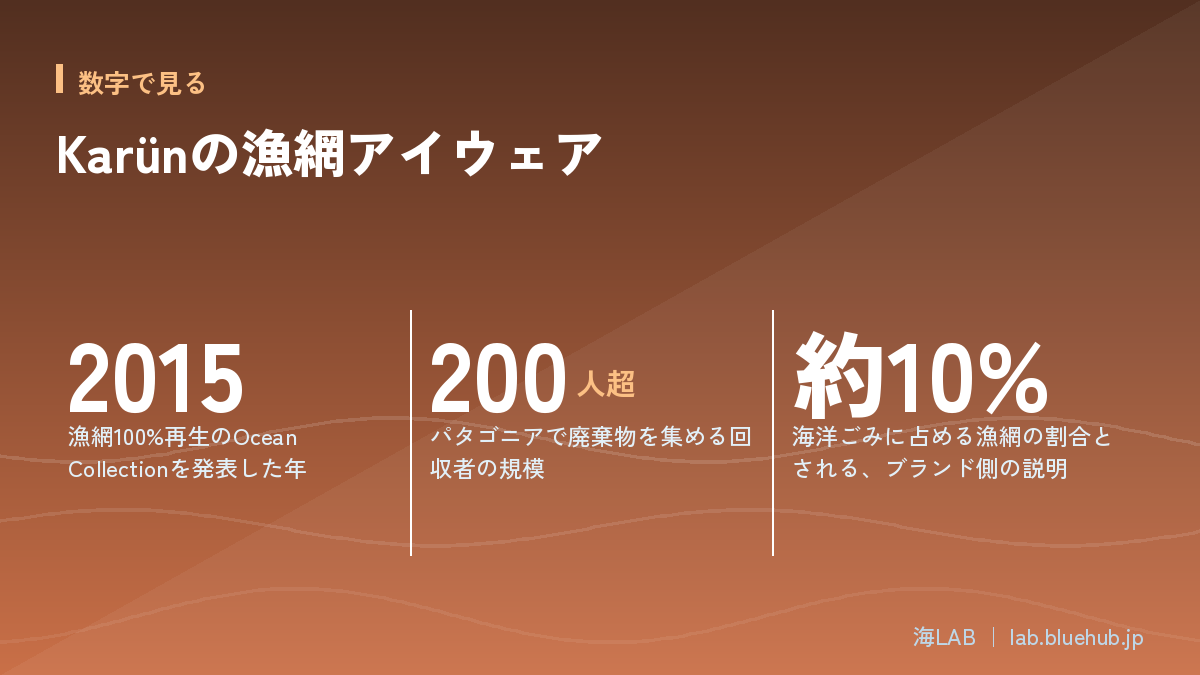
- Materials include fishing nets recovered from shorelines and recycled metal, reportedly supported by 200+ collectors in Patagonia.
- For recycled materials, being able to trace what, who and where is what separates trust from doubt.
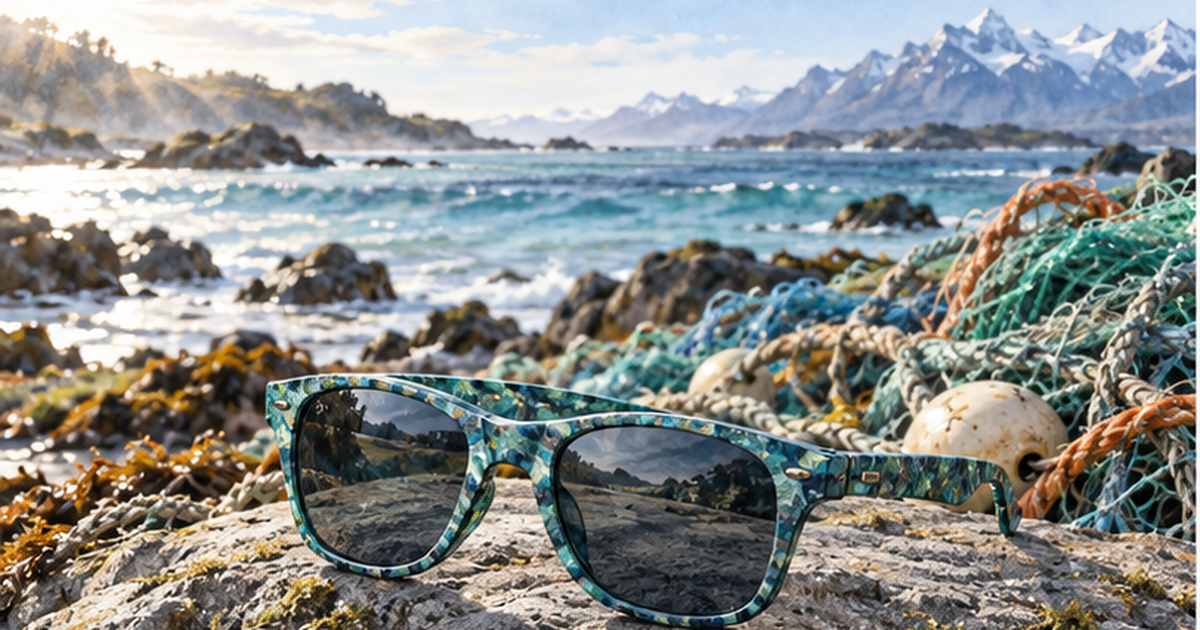
Old fishing nets washed up on the shore are reborn as sunglasses frames. Karün, an eyewear brand from Patagonia, Chile, turned this idea into a product.
Fishing nets are made of strong synthetic fibers; once they leak into the sea they can entangle animals and drift for a long time. Such discarded gear is called “ghost gear” and is one of the world’s marine environmental problems.
Based on information published by Karün, this article organizes the materials, the collection system and the production flow, and considers what buyers of recycled-material products should check. Most figures are the brand’s own statements, so please read them separately from third-party verification.
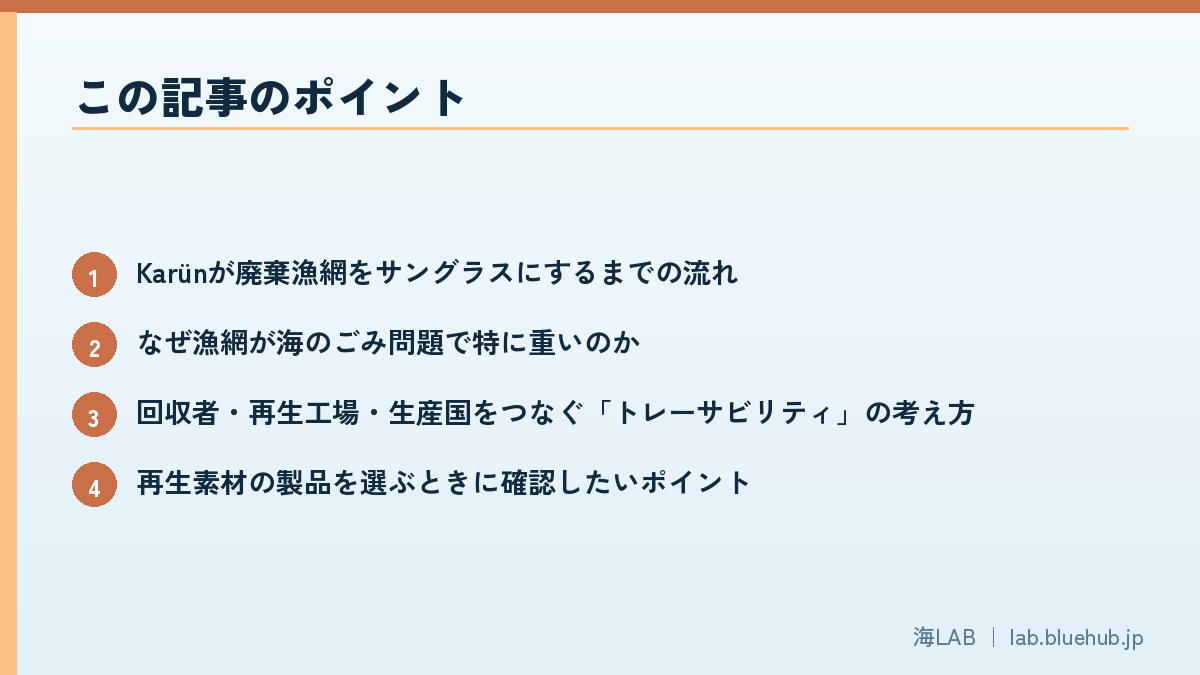
What you will learn
- How Karün turns discarded fishing nets into sunglasses
- Why fishing nets weigh so heavily in the marine litter problem
- Traceability linking collectors, recycling plants and production countries
- What to check when choosing recycled-material products
- Actions individuals can take to reduce fishing gear waste
What is Karün? An eyewear brand from Patagonia
The meaning of the name
The name Karün is said to mean “we are nature” in Mapudungun, the language of the indigenous Mapuche people of southern Chile. The brand positions itself as a company that makes high-quality eyewear from waste materials.
Design is done in Santiago, the capital of Chile, and the frames are reported to be produced at a factory in Italy. In short, it is a cross-border division of labor: materials from the Chilean coast, manufacturing at a specialist European factory.
The birth of the Ocean Collection
The brand’s turning point came in 2015. On the crowdfunding platform Kickstarter it unveiled the “Ocean Collection”, billed as the world’s first sunglasses made from 100% recycled fishing nets collected along the Chilean coast. According to the brand’s official blog, the campaign raised US$180,000 from about 1,300 backers in 20 countries, and about 1,800 pairs were sold in 30 days.
These figures are one example of consumer interest in products made from marine waste. However, they are numbers published by the brand and do not show post-sale results or environmental effects.
Karün basics (as published)
- Origin: Chile (working with Patagonian local communities)
- Design: Santiago
- Production: factory in Italy
- Flagship collection: Ocean Collection (since 2015)
- Meaning of the name: “we are nature” in Mapudungun
Why fishing nets matter so much in marine litter
The ghost gear problem
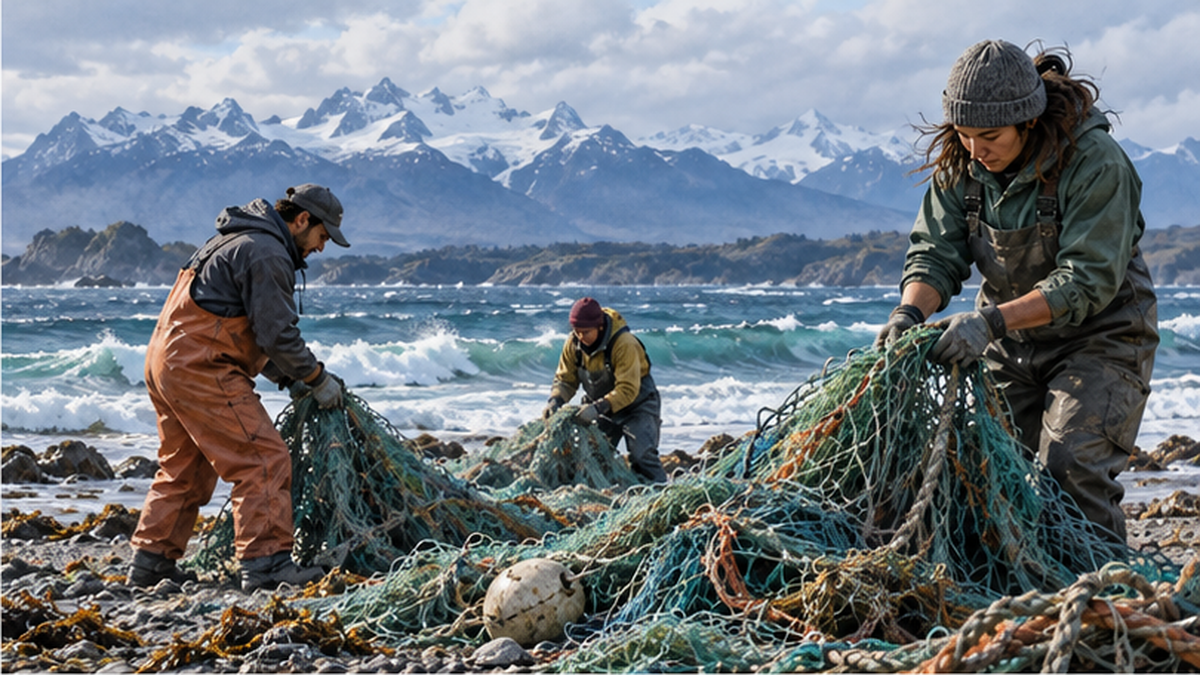
Fishing gear is meant to catch fish, so nets are made to tangle easily, resist cutting and last underwater. Once they leak into the sea, these very properties become a problem.
Discarded or lost fishing gear is called “ghost gear”; even without anyone operating it, it can keep entangling fish, seabirds, sea turtles and marine mammals. Internationally, frameworks to tackle ghost gear have been established.
For details, see our article on ghost gear fishing.
Share of fishing nets in marine plastics
Karün explains that fishing nets account for about 10% of ocean pollution. However, such a share varies greatly depending on the baseline (weight or count, sea surface or seabed). Treat the figure as a rough guide and check the definition in primary sources.
| Aspect | Feature of nets | Impact at sea |
|---|---|---|
| Material | Synthetic fibers such as nylon | Hard to degrade; persists for a long time |
| Shape | Mesh that tangles easily | Animals get entangled; bycatch continues |
| Size | Large and heavy | Can damage the seabed and reefs |
| Degradation | Breaks into fragments under UV | Can become a source of microplastics |
Key point
Because nets are strong and long-lasting, the problem lingers once they enter the sea. The value of recovering and recycling them lies in turning this property to advantage.
Materials and the collection system
Materials used
The Ocean Collection is explained as using 100% recycled fishing nets collected along the Chilean coast. Other collections are said to use rope, nylon, recycled metal and ECONYL regenerated nylon. Because materials differ by collection, check the material label on the product page when buying.
- Discarded fishing nets (nylon, etc.)
- Rope and nylon
- Recycled metal (for metal frames)
- ECONYL regenerated nylon (collaboration products)
- Lenses: polycarbonate (described as recyclable)
The collector network
Karün is said to network more than 200 Patagonian residents as “Karün Collectors”. Collectors gather waste on beaches and natural areas near their homes and sell it directly to the brand, earning supplementary income.
The aim of this system is to advance environmental cleanup and local income generation at the same time. The brand calls this approach the “Karün Conscious Development Model”.
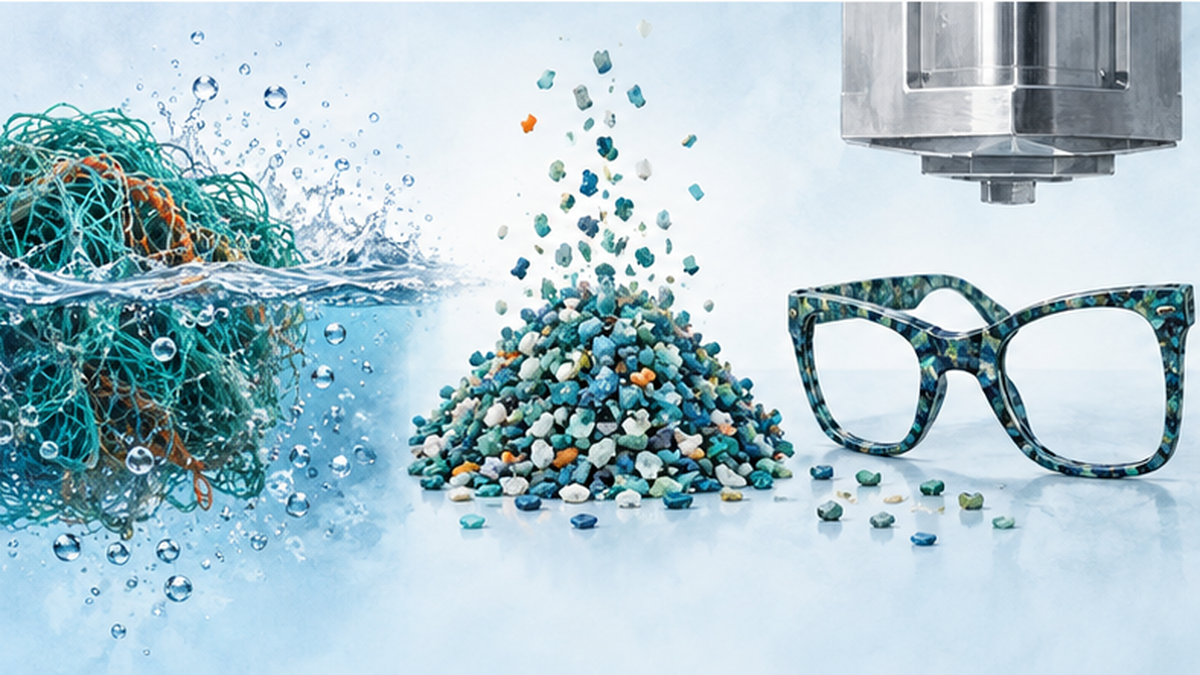
Rough flow of recycling
- Collectors gather waste on beaches and elsewhere
- Recycling partners sort and clean it
- Nets and nylon are shredded and processed into pellets
- Frames are molded and assembled at a factory in Italy
From production to your hands
How recycled plastic is made
Recovered nets contain much salt, sand, seaweed and metal fragments, so sorting and cleaning are key steps. After cleaning, the nets are crushed, melted and turned into pellets, a raw material usable in ordinary plastic processing such as injection molding.
Plastic products made from fishing nets extend beyond eyewear to skateboards, apparel and bags. According to the brand’s official blog, the Ocean Collection involved a collaboration with Bureo, a B Corp certified company that also recycles fishing nets.
Fishing net recycling is also progressing in Japan; see our article on products made from recycled fishing nets for domestic trends.
Production country and distance
With materials collected in Chile and production in Italy, some may worry about transport-related greenhouse gas emissions. The brand is reported to offset its operational emissions and be carbon neutral, but it is wise to check the specific calculation method and scope in official information before buying.
Notes for reading
Terms such as “recycled material” and “carbon neutral” vary in meaning depending on scope and calculation method. Read the brand’s explanations separately from third-party certification.
Thinking about traceability
Can we trace where it came from?
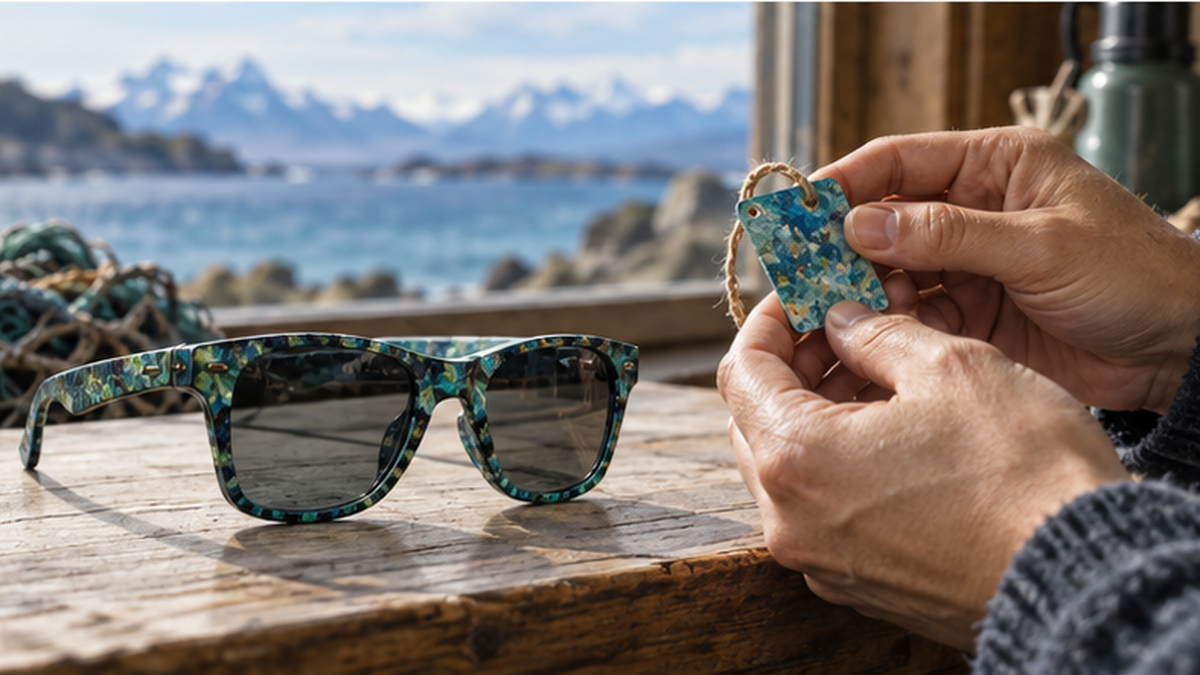
For recycled-material products, being able to trace where the material was collected, by whom, and at which factory it was processed is called “traceability”. Karün’s emphasis on direct dealings with collectors can be read as an intention to build trust on this traceability.
Information useful for tracing
- Collection area (country, region, shoreline, etc.)
- Collectors (individuals, groups, companies)
- Recycling process (operators of cleaning, shredding, pelletizing)
- Place of production (factory that molded the frames)
- Presence of third-party certification or audits
How much of this is disclosed differs by brand and product. It is important to understand separately what is disclosed and what is not.
| Item to check | What to look at | Where to find official info |
|---|---|---|
| Material share | 100% recycled or partial | Material label on the product page |
| Collection system | Who collects, and where | Sustainability page |
| Production site | Which country manufactures it | Brand and company information |
| Third-party certification | Whether certification or audits exist | Public list of the certifying body |
What to check when choosing
Avoiding greenwashing
Some products that advertise environmental consideration improve their image with weakly grounded claims; this is called greenwashing. Even for recycled marine-material products, the words “ocean plastic” alone may not tell you whether it was recovered at sea or on land before reaching the sea.
Pre-purchase checklist
- Is the recycled share given as a concrete number?
- Are the collection place and collectors explained?
- Are material differences between collections stated?
- Is there third-party confirmation such as certification or audits?
- Is it designed to be repaired and used for a long time?
What to consider before buying
Being made of recycled material does not necessarily mean it is good for the environment. The lowest impact comes from using what you already own for a long time. The basic order is to consider whether you need it, and if you buy, choose something that lasts.
For recycled-net products, our article on Patagonia’s NetPlus products is also a useful reference.
Circularity challenges seen in this case
Recycled products alone cannot keep up
Eyewear uses only a small amount of material per person, so the amount of netting usable per pair is limited. There is a big gap between the number of products sold and the amount of gear leaking into the sea, so recycling alone cannot solve the problem.
What matters is to use recycled products as “an opportunity to learn about the problem”. We need to think together with mechanisms to prevent gear loss, systems to support recovery, and the efforts of fishers.
Fishing gear challenges in Japan
In Japan too, proper disposal and recovery of fishing gear is an issue. Our article on extended producer responsibility for fishing gear offers an institutional perspective.
Summary
- Karün drew attention in 2015 with the Ocean Collection made from 100% recycled fishing nets
- It is said to work with more than 200 collectors in Patagonia
- In evaluating recycled materials, traceable information matters more than numbers
- The lowest-impact choice is to keep using what you already have
What we can do
Everyday actions
- Join beach cleanups (if you find washed-up fishing gear, contact the local authority or site manager)
- When choosing recycled-material products, check material labels and explanations
- Take fishing line and tackle home instead of leaving it behind
- Consider repairing, handing on or returning products you no longer use
The habit of reading information critically
A brand’s explanation is an important entry point for understanding its efforts. Beyond that, the habit of separating where the figures come from, whether a third party has confirmed them, and what is “fact” versus “the brand’s claim” will become ever more important.
References and sources
- Karün (official) — The first sunglasses made with 100% recycled fishing nets – Announcement of the Ocean Collection and backing results
- Field Mag — Karün Recycled Eyewear Supports Patagonia – Introduction of materials and the collector network
- WWD — Karün Offers Sustainable Eyewear – Brand profile article
- Contxto — Chilean startup Karun raises US$2.82 million – Reporting on fundraising
- Global Ghost Gear Initiative – International framework for tackling ghost gear
- Fisheries Agency of Japan – Policies on fisheries and fishing gear
- Ministry of the Environment, Japan – Marine litter and plastic resource circulation policy
* Arranged in order of reliability: government and academic institutions > peer-reviewed papers > specialist organizations > reliable media