Have you ever noticed that the fish at the supermarket seafood counter seem smaller, pricier, and less varied than before? Behind this lies a problem advancing on a global scale: overfishing. According to the UN Food and Agriculture Organization (FAO), 37.7% of the world's fish stocks are now "overfished," a share that has roughly quadrupled over half a century from 10% in 1974. The ocean's bounty is not infinite—keep harvesting faster than stocks can recover, and one day they will collapse all at once.
Once such a collapse happens, moreover, it does not easily reverse. The Atlantic cod off Newfoundland, Canada—once among the largest fisheries in the world—was driven to virtual extinction in 1992, and more than 30 years later it still has not substantially recovered. Japan has its own history of loss too: the herring fishery that once supported Hokkaido's economy collapsed in the mid-20th century. When a fish disappears, it drags down the creatures that ate it and the creatures it ate, throwing the balance of the entire marine ecosystem into disarray.
This article examines why overfishing leads to the collapse of fish stocks, drawing on the real-world cases of cod, herring, and sardines. It then lays out, with a focus on Japan's efforts, how the scientific resource-management concepts of "MSY (Maximum Sustainable Yield)" and "catch limits (TAC)" are working to rebuild a battered ocean.
What you'll learn in this article
- More than a third of the world's fish stocks are overfished, a share that has roughly quadrupled over half a century
- Once collapsed from overfishing, stocks like Atlantic cod and Hokkaido herring are slow to recover even after decades
- Overfishing doesn't just reduce one species—it throws off the balance of the entire ecosystem through the food web
- Natural swings in the marine environment (regime shifts) also affect fish population changes, and combined with overfishing they make collapse more likely
- Stocks can recover through catch limits (TAC) based on MSY (Maximum Sustainable Yield). Japan's 2020 revised Fisheries Act marked a turning point
- Consumer choices—such as choosing certified seafood or underutilized fish—also help support sustainable fishing
Are the World's Fish Really Disappearing? A Data Snapshot of Overfishing Today
Talk of "declining fish" tends to be anecdotal, but in reality scientists around the world estimate stock sizes and track them with hard numbers. The leading indicator is The State of World Fisheries and Aquaculture (SOFIA), published every few years by the FAO. It compiles assessments of whether the world's major fish stocks are being "harvested at a sustainable level."
More Than a Third "Overfished"—Roughly Quadrupled in Half a Century
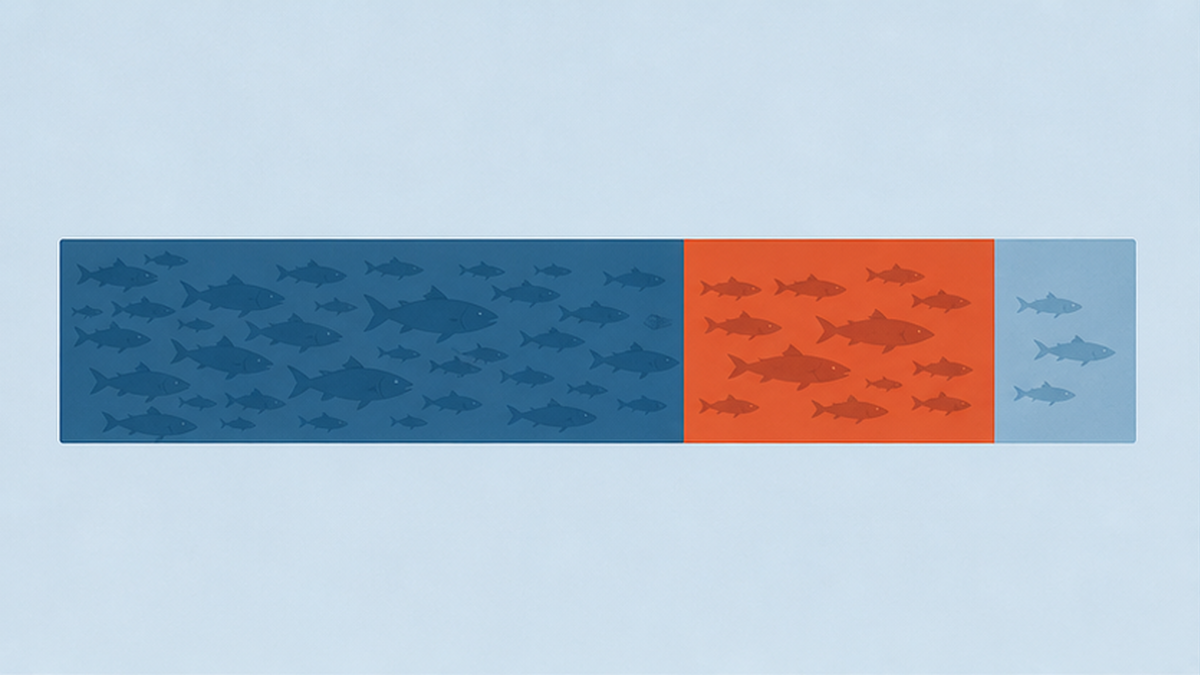
According to the 2024 edition of the report, stocks classified as "overfished"—harvested beyond biologically sustainable levels—reached 37.7% as of 2021. That figure was only 10% in 1974, meaning it has roughly quadrupled over about half a century. The remaining 62.3% are considered within sustainable bounds, but most of that (50.5%) are being fished right up to the maximum, with "no room left to increase," leaving only 11.8% of stocks with real headroom.
FAO's Global Stock Assessment (2021)
- Overfished: 37.7%
- Fished at maximum (no headroom): 50.5%
- Room to increase: 11.8%
- The overfished share, 10% in 1974, has grown roughly fourfold
Fishing That "Moves Down the Food Web"
Declining stocks show up not only in quantity but in "quality." Marine scientist Daniel Pauly and colleagues pointed out that humanity has fished out large, high-value fish first (species high on the food web, such as tuna and cod), and as those decline, shifted its target to smaller fish lower on the food web (species that eat sardines, plankton, and the like). This is called "fishing down the food web." Catches getting progressively smaller is itself a sign that the ocean's abundance is being stripped away from the top down.
Japan is no exception. Combined fishery and aquaculture production peaked at roughly 12.82 million tons in 1984 and has declined ever since, falling to the 4-million-ton range in recent years—shrinking to nearly a third of its peak. Environmental factors such as rising sea temperatures also play a role (see how rising sea temperatures are making fish disappear for details), but many experts point to overfishing as a driver of this long-term decline.
One point worth noting here: if the global catch has stayed roughly flat, how can stocks be said to be declining? The answer is that catching the same volume now requires more effort, more distant waters, and deeper fishing grounds. Fleets exhaust nearby fish, open up new fishing grounds, and switch to different species once the old ones become scarce—maintaining an "apparent stability" in total catch. In other words, behind that flat-looking graph, individual stocks are steadily being worn down. Aquaculture has been covering the shortfall, and in 2022 aquaculture production surpassed wild catch for the first time. Our tables are being supported not by the resilience of wild stocks, but by the expansion of aquaculture.
- Global wild catch itself has plateaued (roughly flat since the 1990s)
- Aquaculture has covered the shortfall, surpassing wild catch for the first time in 2022
- Even when it still "looks like there are plenty of fish," stocks are often being pushed past their limits
Key points of this chapter
- 37.7% of the world's fish stocks are overfished (FAO, 2021)
- Only 11.8% of stocks have real room to increase
- Shrinking catch sizes are evidence of "fishing down the food web"
The Myth of an "Infinite Ocean"—Why Doesn't Overfishing Stop?
If we know stocks are declining, why do people keep overfishing? Overfishing isn't caused by anyone's malice. Rather, it's a structural problem that arises as the result of individual fishers and nations behaving "rationally."
The Tragedy of the Commons—"If I Don't Catch It, Someone Else Will"
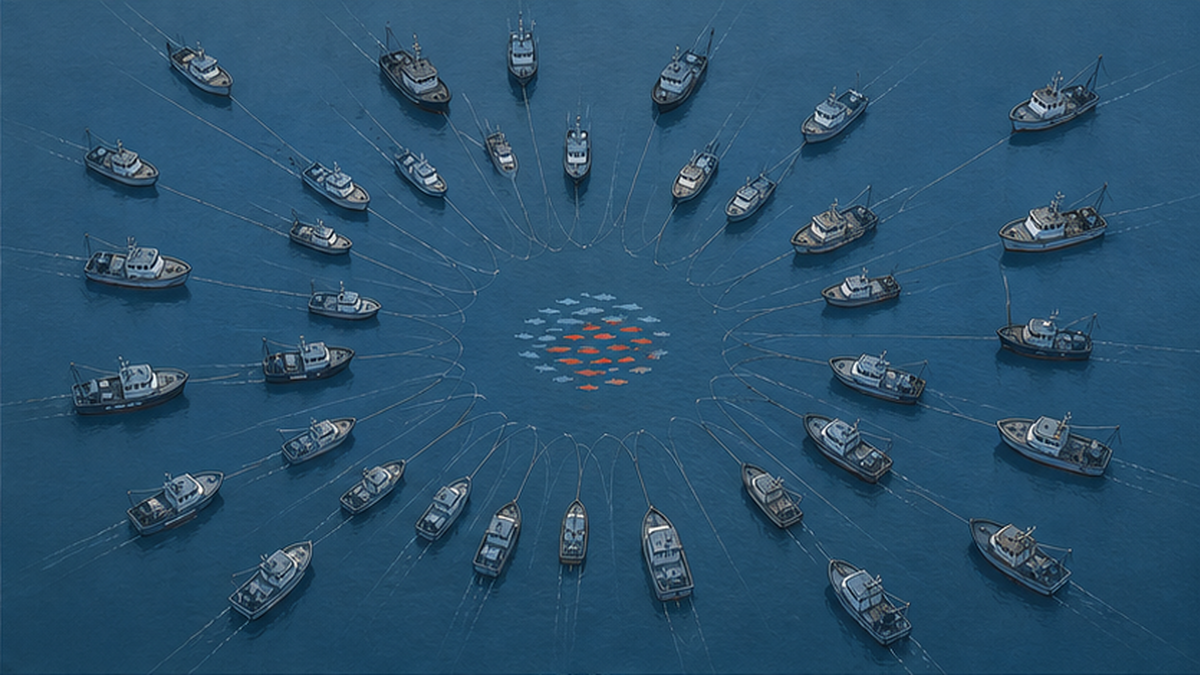
Fish in the sea generally belong, in principle, to whoever catches them first. When a resource that belongs to no one is shared by everyone, each individual tends to think, "Even if I hold back, the boat next to me will just catch it anyway." The result: everyone races to catch fish first, and the stock collapses for all. This is the phenomenon ecologist Garrett Hardin called the "tragedy of the commons," and it lies at the very root of overfishing.
How Technological Progress Accelerated Overfishing
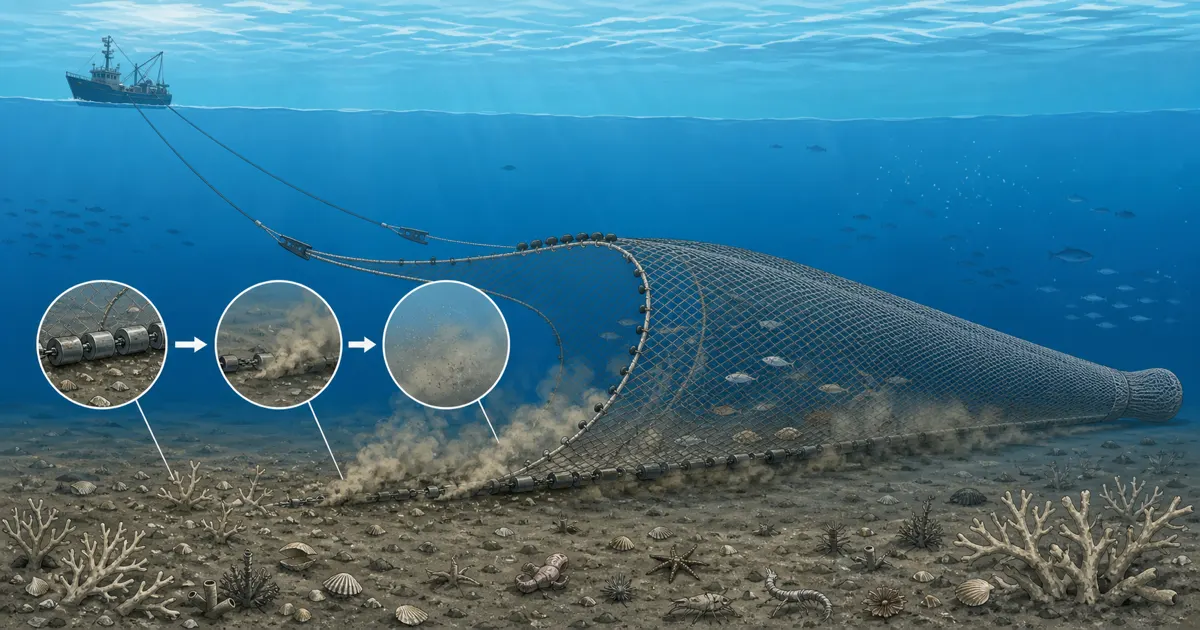
Entering the 20th century, fishing power grew by leaps and bounds: large engine-powered vessels, bottom trawls that scrape the seafloor, fish-finding sonar, GPS, and factory ships that freeze and process catches on the spot. Offshore waters and the deep sea—once "refuges" where fish could escape—became reachable too, and fish began to be caught faster than they could reproduce and recover. Overfishing occurs when technology outpaces a stock's natural resilience.
- Excess fishing capacity: the world's fishing fleet is estimated to have the capacity to catch two to three times what is needed
- Harmful subsidies: public subsidies for fuel and other costs keep unprofitable operations running and encourage overfishing
- IUU fishing: illegal, unreported, and unregulated fishing that ignores the rules undermines resource management
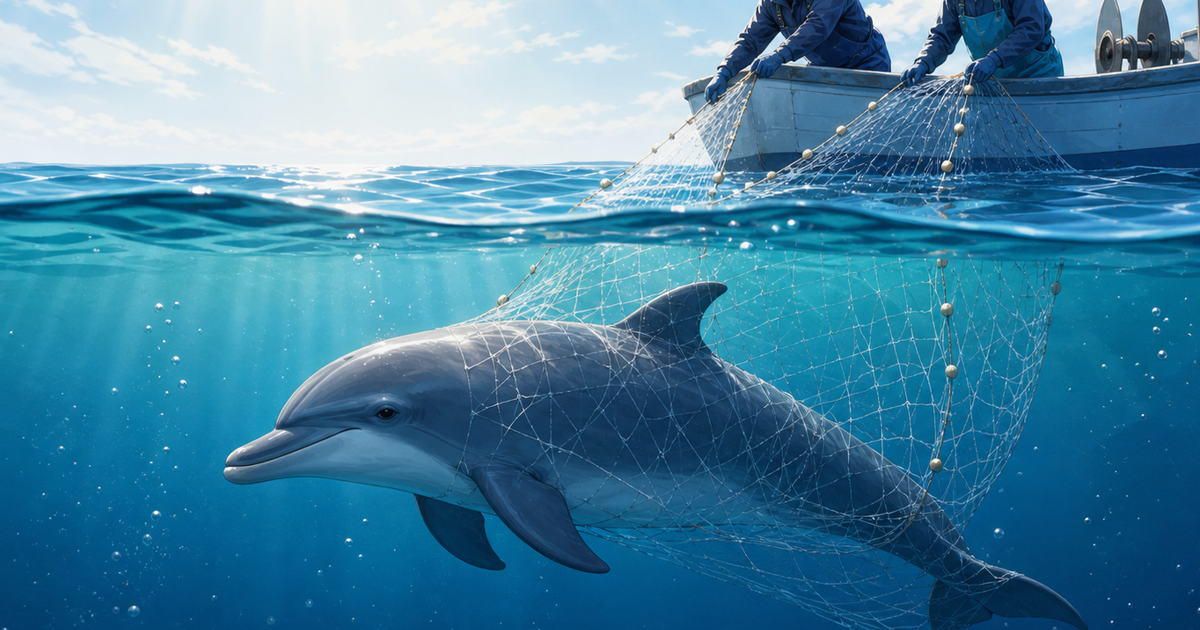
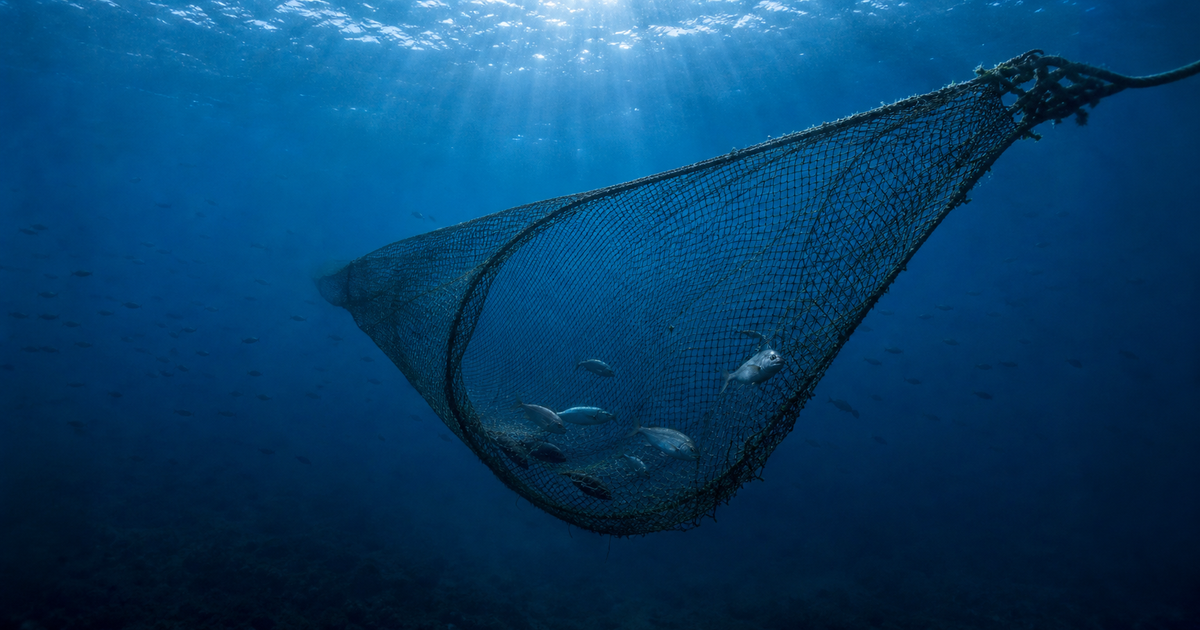
- Bycatch: the waste of catching and discarding unintended fish and other creatures also puts added pressure on stocks
Bycatch, and the problem of discarded fishing gear that keeps catching fish in the sea, are large topics in their own right. If you're interested, also read turning bycatch into food and what "ghost gear" is.
The World Starts Tackling "Harmful Subsidies"
The subsidy problem is especially deep-rooted. Global fisheries receive public subsidies worth trillions of yen annually, much of it spent on fuel costs and vessel construction. Fisheries that would normally have to stop operating because they're unprofitable can keep going, with subsidies covering their losses. The result is that boats capable only of overfishing remain stuck at sea. To curb these "subsidies that encourage overfishing," the World Trade Organization (WTO) agreed on a Fisheries Subsidies Agreement in 2022, and the international community has begun moving toward banning subsidies for IUU fishing and overfished stocks. Overfishing is now recognized as an issue whose rules need to be rewritten not by a single country, but by the world as a whole.
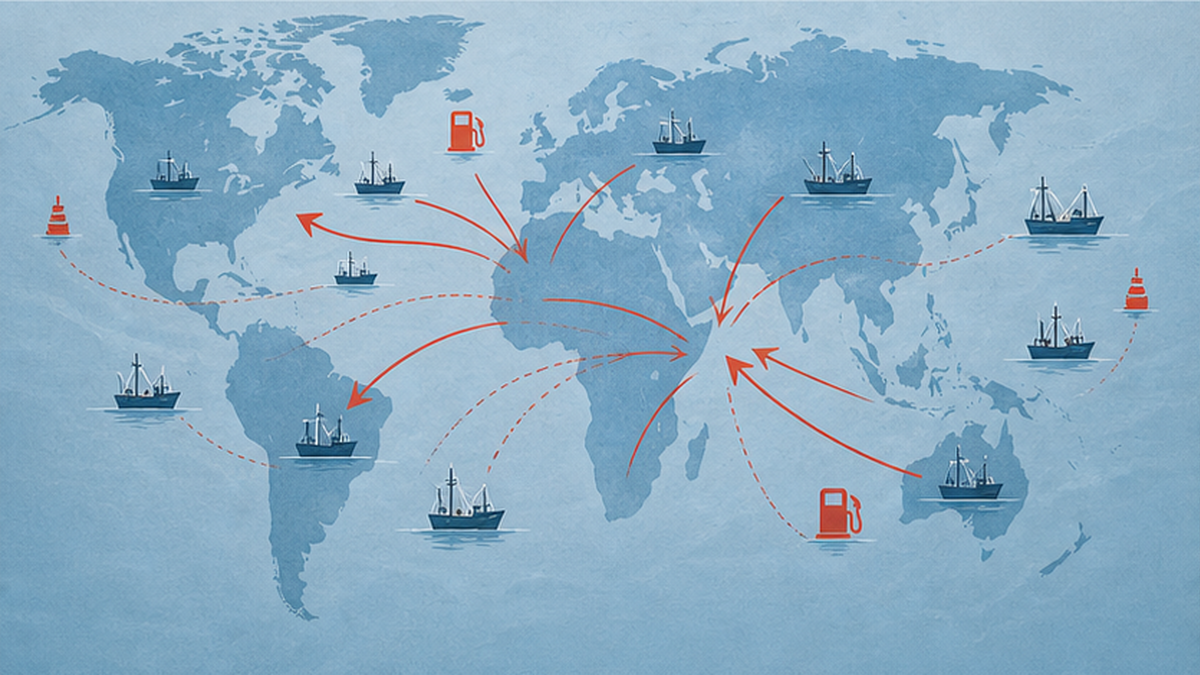
Four structures that produce overfishing
- Tragedy of the commons: first-come-first-served competition wears down stocks
- Technological progress: enables catching fish faster than they can recover
- Harmful subsidies: keep unprofitable operations running
- IUU fishing and bycatch: pile added rule-breaking catch and waste on top
In short, overfishing is a "rules problem" before it's a "morality problem." How society redesigns a system that, left alone, always drifts toward overfishing—that is the crux of the resource management discussed in the latter half of this article.
The Sea Where the Cod Disappeared—Lessons from the Newfoundland Atlantic Cod Collapse
Told and retold around the world as the "textbook case" of resource collapse from overfishing is the Atlantic cod (northern cod) off Newfoundland, Canada. It is the story of what was once one of the world's largest fishing grounds reduced to nothing in a matter of decades.
Cod So Plentiful You Could "Walk Across the Sea"
The Grand Banks, a shallow area off Newfoundland where warm and cold currents collide and plankton is abundant, was one of the world's finest fishing grounds. Discovered at the end of the 15th century, the cod fishery supported the region's economy and culture for about 500 years, and was said to be so abundant that "you could walk across the sea on the backs of cod." In the 1960s, this area alone was landing roughly 2 billion pounds (about 900,000 tons) of cod a year.
Giant Trawlers, and a Stock That Collapsed
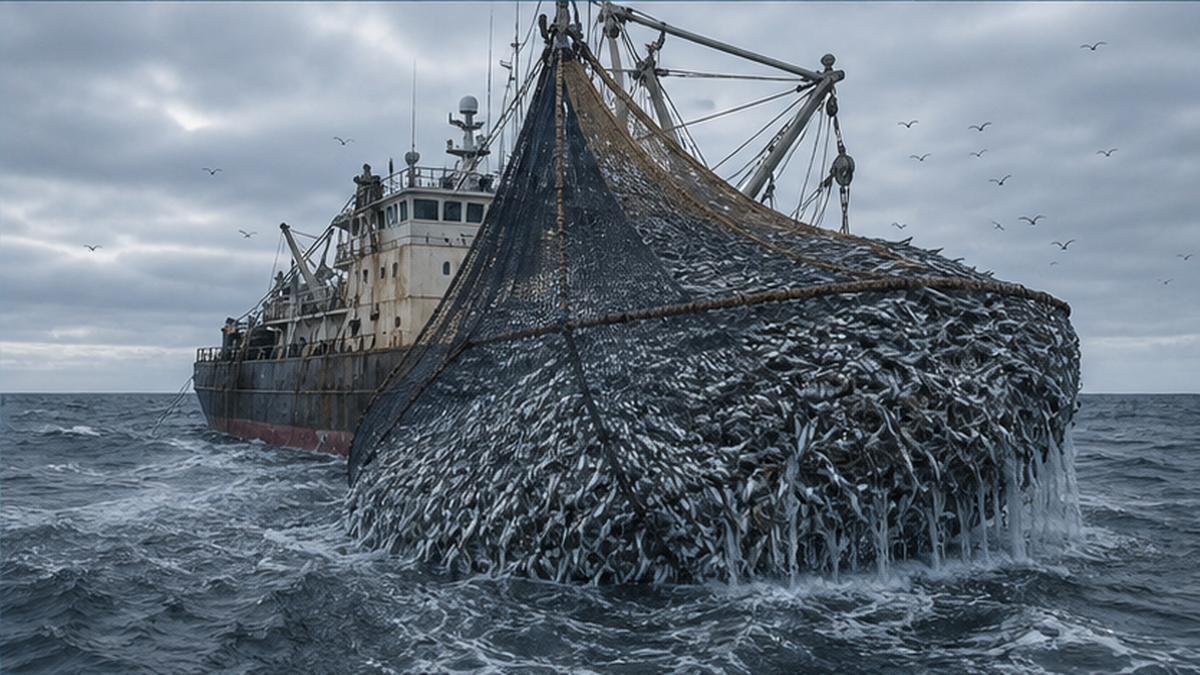
The turning point came after World War II. Large freezer trawlers from various countries flooded in, and catches surged with fishing methods that scraped the seafloor clean, destroying even the seafloor habitats used for spawning while catching cod beyond the limit at which they could reproduce. By the late 1980s, the abnormal state of the stock had become obvious to everyone, and around 1990, the cod that had once been so abundant became almost impossible to catch. The spawning stock collapsed to only about 1% of its peak level.
Northern cod effectively disappeared, and spawning-stock biomass fell to just 1% of its former level.
— From an account of the stock collapse
1992: The Total Moratorium—and a Sea That Never Returned
In 1992, the Canadian government finally declared a moratorium (total ban) on cod fishing. A core industry that had lasted about 500 years came to a halt overnight, and tens of thousands of people working in the fishery lost their jobs—said to be among the largest job losses ever caused by a single Canadian policy decision. And the heaviest lesson of all is that, more than 30 years after the ban, Atlantic cod still has not substantially returned.
Three lessons from the cod collapse
1) If you don't act while fish "can still be caught," it becomes too late. 2) Collapse doesn't happen gradually—it happens suddenly, all at once, at a certain point. 3) Once a stock is broken, it doesn't easily come back even if you stop fishing.
What cannot be overlooked is that warning signs of collapse existed but weren't heeded in time. Small-scale coastal fishers had warned early on that cod numbers had declined after large offshore trawlers arrived. But figures suggesting "we're still catching plenty" (in reality, improved vessel performance was simply masking the decline in the stock by keeping catch volumes steady) and political pressure to protect jobs led to regulation being postponed again and again. Even after scientists pointed to dangerous stock levels, the stock crossed its critical threshold before countermeasures could be put into effect.
If you only look at a graph of catch volume, things can appear "fine" right up until the moment a stock collapses. This is overfishing's most dangerous illusion.
— A lesson in resource management
This lesson is not someone else's problem for Japan. In waters around Japan too, improved vessel performance has long produced a situation where "stocks are declining even as catch volumes hold steady." Rushing to regulate only after catches suddenly drop can already be too late. Collapse doesn't arrive gradually—it arrives suddenly, like falling off a cliff. The story of the cod still stands as a living warning: protect the stock now, precisely while the catch still looks abundant.
Why doesn't the stock return even with a fishing ban in place? It has been suggested that once cod disappeared, the ecosystem itself may have subsequently "switched" into a different state. We'll examine the true nature of this "failure to return" in more detail in a later chapter.
The Northern Sea Where the Herring Runs Vanished—The Rise and Fall of Hokkaido Herring
This may sound like a story from the distant North Atlantic, but Japan has its own tale with the same structure: herring, which once supported the entire Hokkaido economy. Its prosperity—enough to leave behind the phrase "herring mansions"—and its subsequent disappearance teach us how overfishing and changes in the marine environment intertwine.
One Million Tons a Year—A Sea Alive with Herring Runs
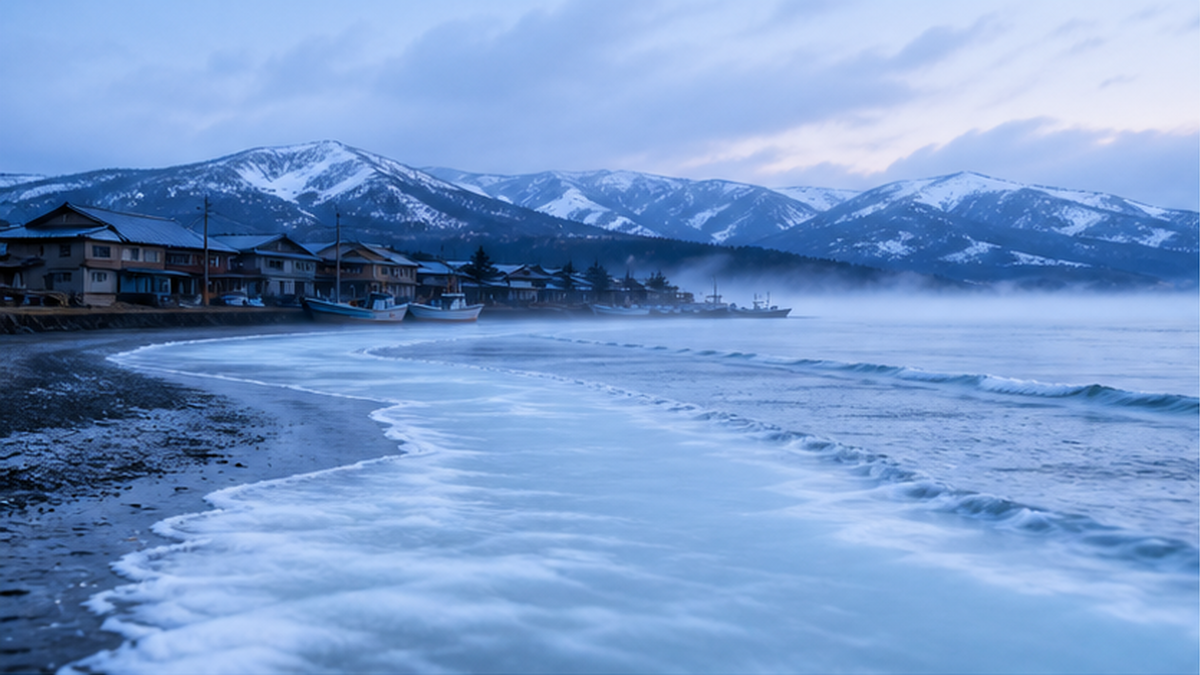
During the Meiji era, Hokkaido's Sea of Japan coast was awash with herring. Massive schools came inshore to spawn, and the sea turned milky white with male milt in a phenomenon called kuki (a "herring run")—a beloved harbinger of spring. The catch reached nearly a million tons a year at its 1897 peak, with records showing 750,000 tons landed off Rumoi alone in 1903. The herring caught were not only eaten but also shipped to Honshu as dried herring (mikaki-nishin) and as fertilizer for farmland (herring meal), supporting Japanese agriculture as well.
The Herring That Disappeared in the Showa Era
This prosperity is symbolized by the phrase "herring mansions." Fishing bosses built lavish bunkhouses, and every spring tens of thousands of migrant fishermen (yanshu) gathered on the shore from all over Honshu. Herring roe (kazunoko) and dried herring became deeply rooted in Japanese food culture, and Kyoto's "nishin soba" (herring noodles) is a remnant of this distribution network. Herring wasn't just one fish species—it moved the entire economy and culture of northern Japan. That is precisely why its disappearance came as such a shock.
But once the Showa era began, herring rapidly disappeared. Catches all but stopped in the 1950s, and the herring fishery ended after 1957. The last herring run was observed in 1954. The cause of the disappearance is still not fully understood; suggested factors include ① overfishing, ② changes in the marine environment (water temperature), and ③ degradation of coastal habitat from deforestation. In recent years, changes in the marine environment accompanied by rising water temperatures have gained favor as the primary cause, but in any case it is certain that a stock fished to its limit could not withstand the waves of environmental change. The fact that the fishery had ballooned in scale during the abundant years made the crash all the deeper once conditions worsened—a pattern that leads directly into the sardine story in the next chapter.
| Period | Hokkaido herring catch | Event |
|---|---|---|
| 1897 (Meiji 30) | About 1 million tons/year | All-time high, peak years |
| 1950s | Sharp decline | Catches nearly stop |
| 1957 | Effectively zero | Herring fishery ends |
| 1999 | — | First herring run in 45 years |
| 2022 | Over 20,000 tons | Highest level in 36 years (still only about 1-2% of the peak) |
A Comeback After Half a Century, and Its Reality
There is hope, too. In 1999, a herring run was confirmed for the first time in 45 years on the shore at Rumoi, and thanks in part to juvenile stocking and resource-management efforts, the catch subsequently turned toward recovery. In 2022, it exceeded 20,000 tons for the first time in 36 years. Even so, that is only about 1-2% of the scale of the Meiji-era peak. The herring story confronts us with both the hope that "a stock can come back" and the reality that "even when it returns, it falls far short of its former abundance."
Recent recovery has been helped by efforts to protect and cultivate the seaweed beds where herring lay their eggs (spawning grounds), by "sea ranching" that raises and releases juveniles, and by fishers themselves creating rules to limit catch volume. Repairing the marine environment—the "foundation"—while not overtaxing the stock through fishing: herring's rebound is a good example showing that a stock only returns once both wheels turn together. The role of seaweed beds is covered in more depth in the cradle of fish—restoring seaweed beds. Even among collapses that struck the same northern sea, why does one stock, like cod, fail to return while another, like herring, gradually recovers? The dividing line involves both how much the environment has recovered and how far the ecosystem switched to a different state after the collapse.
What herring teaches us
- When overfishing coincides with environmental change, a stock can collapse all at once
- Recovering a collapsed stock takes decades
- Even when it returns, it doesn't return to its former abundance
Sardines and Anchoveta—The Dangerous Combination of "Boom-and-Bust Fish" and Overfishing
Cod and herring are prime examples of "fish that don't easily return once they collapse," but sardines are a somewhat different character—"fickle fish" that naturally boom and bust on a cycle of several decades. Yet it is precisely this trait that becomes a dangerous trap when combined with overfishing.
Regime Shifts—Fish Populations Swing Wildly Even Without Humans
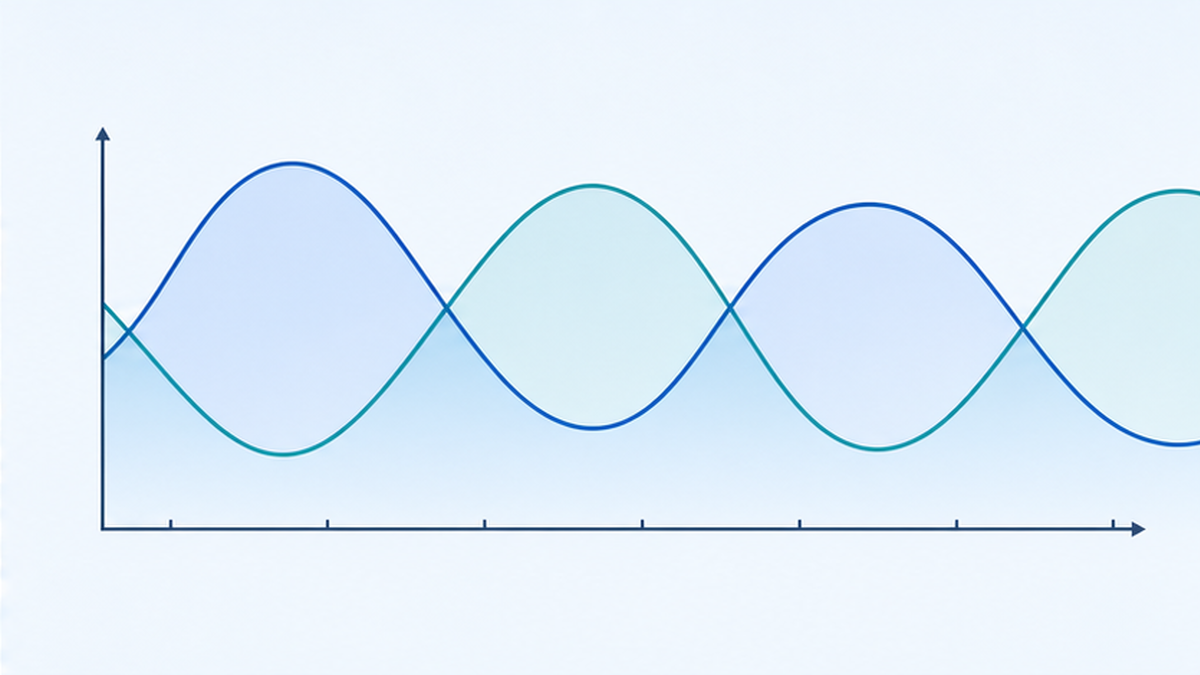
Japan's Japanese sardine (maiwashi) is known for swinging dramatically in abundance in step with decades-long shifts in the marine environment, called "regime shifts." The catch plummeted from 4.49 million tons in 1988 to just 27,000 tons in 2005—a drop to less than one one-hundred-sixtieth of its former level. This decline was not caused by overfishing alone; a sharp deterioration in juvenile survival rates due to environmental change was a major factor. During the period when sardines declined, a "changing of the guard" also occurred, with anchovy and Japanese flying squid increasing in their place.
Overfishing During the Lean Years—The Collapse of the Anchoveta
This "fickleness" meshed with overfishing in the worst possible way in the case of Peru's anchoveta (a species of anchovy), the world's largest single-species fishery—even in recent years, this one species alone has accounted for roughly 7% of the world's wild catch. But in 1972, when an El Niño event depleted ocean nutrients and the stock declined, the fishery did not ease off its catch, and the stock collapsed with startling speed. It was a major event whose effects reached even the world's protein supply.
Interestingly, Japan's sardine population has turned upward again since the mid-2010s, and is seen as entering a new "sardine era" similar to the 1970s. Now that nature's rhythm has turned favorable, it is also a golden opportunity to build up the stock. If we overfish again here, it could trigger another collapse during the next downturn. Managing carefully for the future is most important precisely when a stock is increasing—the wisdom of how to coexist well with a fickle fish is being tested right now.
The pitfall of "boom-and-bust fish"
Fisheries for species that naturally boom and bust tend to scale up based on the abundant years. If catch volume isn't reduced when a lean period arrives, a natural downturn caused by environmental factors gets amplified by overfishing into a full "collapse."
Here lies an important lesson: catches must be reined in precisely when a stock is naturally declining, yet in practice the opposite force tends to kick in—"catch fell this year, so let's catch what's left while we still can." The relationship between changes in the marine environment and fishing is covered in more depth in rising sea temperatures and Japan's fisheries. The further climate change advances, the greater this risk of "environmental variability times overfishing" becomes.
- Japanese sardine: 4.49 million tons in 1988 → 27,000 tons in 2005 (rises and falls on roughly a 60-year cycle)
- Anchoveta: overfishing under El Niño conditions collapsed the world's largest single fishery in 1972
- Common thread: when natural variability and overfishing coincide, a decline gets amplified into a collapse
Small Schooling Fish Sustain the Whole Ocean
Small schooling fish like sardines and anchoveta are not simply fish for human consumption. They are called forage fish, and serve as the shared staple diet of large marine animals—tuna, bonito, cod, seabirds, whales, dolphins, seals, and more. They effectively form the "foundation" of the ocean's food web. Yet much of the anchoveta catch is not eaten by humans at all; instead it is processed into fishmeal, used as feed for farmed fish and livestock. In other words, we are, in effect, diverting the staple food of marine life on a massive scale to livestock and aquaculture. Overfishing forage fish can immediately tip the reproduction of the large fish and seabirds that depend on them. That is precisely why managing schooling-fish stocks is a critical issue directly tied to the health of the entire ecosystem.
Beyond a Single Fish—How Overfishing Throws the Entire Ecosystem Off Balance
So far we've discussed individual species, but the real danger of overfishing is that it never stops at "one species declining." Marine life is connected through a complex food web, and overfishing one fish sends ripples through that web to the entire ecosystem.
Trophic Cascades—Removing Fish at the Top Sets Off a Chain Reaction
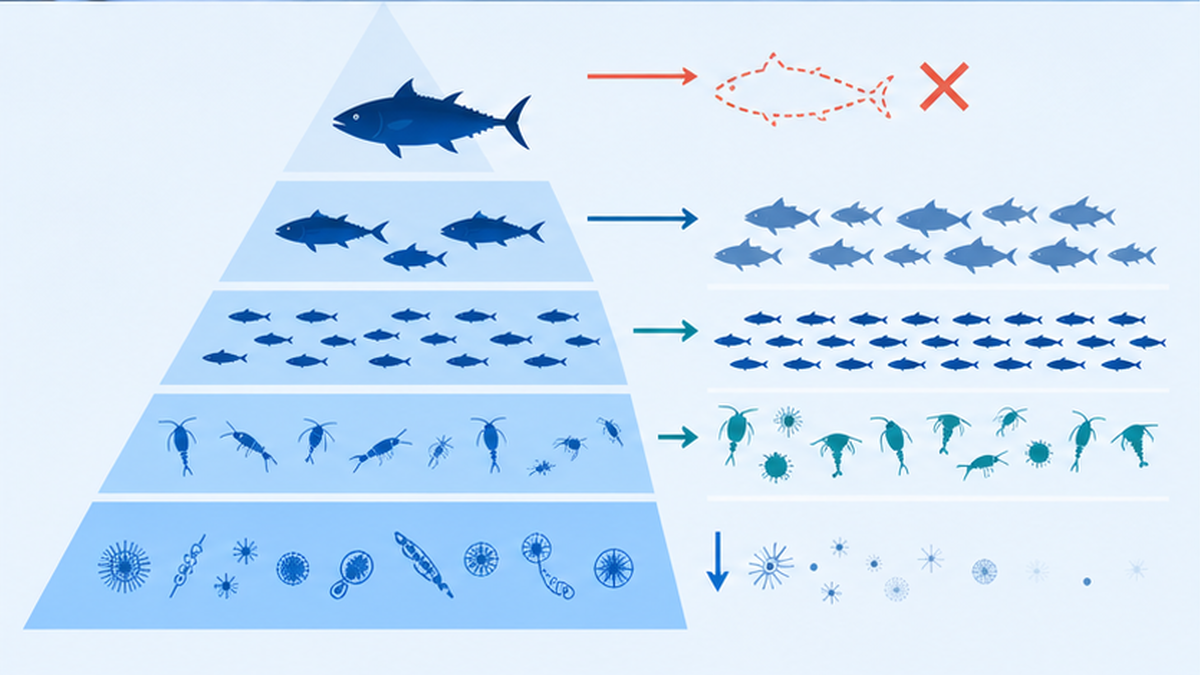
Overfishing large predator fish at the top of the food web causes the mid-sized fish they preyed on to increase, which in turn depletes the small fish and plankton those mid-sized fish ate—the effect cascades through the chain step by step. This is called a trophic cascade. It's like pulling out one pillar and having a wall collapse somewhere unexpected. Overfishing rearranges the power balance of the entire ocean, not just the targeted fish.
Switching to "a Different Sea"—Regime Shifts and the Failure to Return
This helps explain one factor behind the mystery, mentioned in Chapter 3, of why cod haven't returned even with the fishery closed. In the North Atlantic, where cod numbers plummeted, the shrimp, crabs, and small fish that cod used to eat multiplied dramatically, and the ecosystem is thought to have switched from "a sea dominated by cod" to "a sea dominated by invertebrates." What's more, the now-abundant shrimp, crabs, and small fish eat cod eggs and juveniles. In other words, even when cod try to recover, they get eaten at the baby stage by the very creatures that multiplied in their place. The ecosystem thus becomes locked into a new stable state that doesn't easily revert. This kind of "irreversible switch" is itself a type of regime shift.
Why a "sea that won't return" forms
- The predator (cod) declines → the prey species it once ate (shrimp, crabs, small fish) surge
- Those now-abundant species turn around and eat cod eggs and juveniles
- The ecosystem switches to a different stable state and cannot revert
Destroying the Seafloor, Stealing Food from Birds and Whales
Overfishing damages ecosystems physically as well, not just through the food web. Bottom trawls that scrape the seafloor destroy the terrain, seaweed beds, and coral that serve as fish habitat and spawning grounds. Small schooling fish (forage fish) like sardines and herring, meanwhile, are the staple food of many larger fish, seabirds, whales, and dolphins. When humans overfish them, seabird chicks fail to grow and whale migration is affected too. Reducing one fish species can shrink the entire dinner table of marine life.
A familiar example: when the balance between herbivorous fish (like rabbitfish and parrotfish) that eat seaweed and the predators that keep them in check breaks down, seaweed beds can be devoured and bare rock exposed—a phenomenon called "isoyake" (barren-ground syndrome). Seaweed beds are the cradle for many fish, so losing them causes fish populations across the board to decline. There are several causes, including rising water temperatures, but it's a good example of how a breakdown in the balance of power among species can cascade into changing the environment itself. Ecosystem change from overfishing can thus ultimately progress to robbing fish of the very places where they grow up. That is precisely why management that considers the entire ecosystem, not just the abundance of a single species—known as ecosystem-based fisheries management—has become a global trend.
We Never Knew "the Old Ocean"—A Shifting Baseline
Overfishing's danger also has a psychological dimension. Marine scientist Daniel Pauly pointed to what he called "shifting baseline syndrome." People tend to assume that the ocean they saw when they started fishing, or as children, was the "original" ocean. But by that point, the stock may already have declined considerably. The next generation then takes an even more depleted ocean as their baseline. In this way, the standard for a "rich ocean" quietly keeps dropping with each generation, making the decline itself harder to notice. When we consider the amount of fish we see at the supermarket to be "normal," that baseline may already have dropped several notches. This gap in perception breeds a lack of urgency and delays in regulation.
If you'd like to learn more about how the ocean is interconnected, reading phytoplankton and the ocean food web, the mystery of whale migration, and the biodiversity of Japan's coastal waters will help you see the full scope of overfishing's impact in three dimensions.
Four pathways by which overfishing throws ecosystems off balance
- Trophic cascade: removing a top predator ripples down the chain
- Regime shift: the ecosystem switches to a different stable state and can't revert
- Habitat destruction: bottom trawls destroy spawning grounds and shelter
- Collapse of the food web's base: overfishing schooling fish steals food from birds and whales
The Ocean Can Recover—Resource Management and Catch Limits as a Prescription
The story has been grim so far, but the conclusion isn't all pessimism. Since overfishing is fundamentally a "rules problem," designing the right rules can restore stocks. Around the world there are numerous examples of stocks that recovered from the brink of collapse. The keys are two concepts: MSY and catch limits (TAC).
MSY—The Science of "Catching Only What Grows Back"
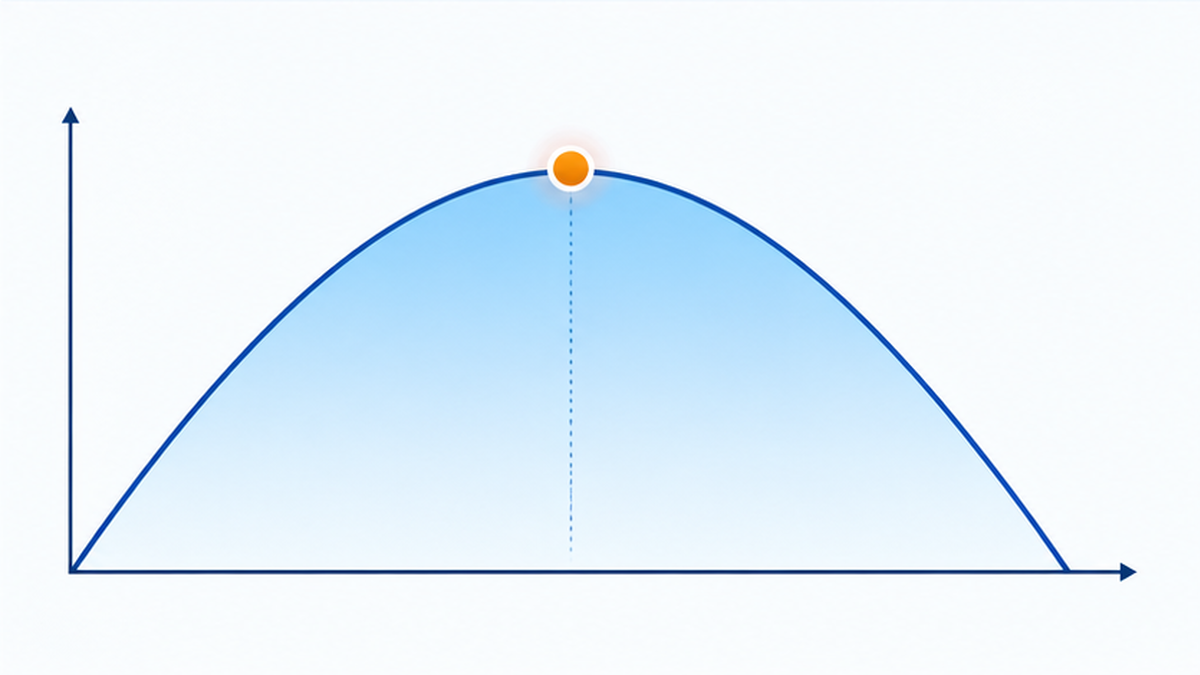
MSY (Maximum Sustainable Yield) is the largest catch that can be taken every year without depleting the stock. Fish reproduce and grow in number each year. Catch only within the range of that annual "growth," and the stock won't decline. Catch beyond that growth, on the other hand, and the stock shrinks like a savings account being drawn down. MSY is, in effect, a scientific yardstick for using ocean resources the way one would "live off the interest without touching the principal."
TAC—Stopping "Overfishing" With Catch Limits
The tool that translates MSY into actual fishing practice is TAC (Total Allowable Catch). Based on scientific stock assessments, an upper limit is set—"no more than X tons of this fish overall this year"—and fishing is conducted within that limit. Once the limit is reached, the fishery closes. This puts the brakes on the unlimited scramble to catch fish that the tragedy of the commons produces. Adopting an "individual quota (IQ/ITQ)" system, which allocates a portion of the limit to each vessel, eliminates the race-to-fish-first dynamic altogether and enables more planned, safer operations.
Eliminating the race-to-fish-first dynamic matters a great deal. When a quota is guaranteed per vessel, fishers no longer need to rush to land a huge catch before someone else does; instead they can fish in a planned way, during periods when prices are high or once fish have grown larger. Accidents at sea from reckless voyages decrease, and fishers can sell the same volume of fish for more money. In short, it's a win-win-win system that benefits the stock, fishers' businesses, and safety alike. The image of "regulation equals hardship for fishers" doesn't necessarily hold true under a well-designed system.
| Type of management | Description | Characteristics |
|---|---|---|
| Input controls | Restrict number of vessels, gear, fishing season | Narrows the "entry point" to fishing. Prone to loopholes |
| Output controls (TAC) | Set a total limit on catch volume | Directly manages the "amount" caught. Tied to MSY |
| Individual quotas (IQ/ITQ) | Allocate a share to each vessel | Eliminates the race to fish first, enabling planned operations |
Japan's Turning Point—The First Fisheries Act Overhaul in 70 Years
Japan long relied mainly on input controls restricting vessels and gear, with relatively few species covered by TAC. This changed significantly with the revised Fisheries Act, which took effect in 2020. The first fundamental overhaul in about 70 years, it explicitly wrote "sustainable use of fishery resources" into the law's purpose and steered the country toward MSY-based TAC management (output controls). Major species such as mackerel, Japanese sardine, Alaska pollock, Pacific saury, Japanese flying squid, and Pacific bluefin tuna are being shifted one by one to MSY-based management, with a goal of placing 80% of the total catch under TAC management. The UN's SDG 14 likewise calls for achieving resource management based on MSY.
Key points of the 2020 revised Fisheries Act
- The first fundamental overhaul in about 70 years; explicitly wrote "sustainable use of resources" into its purpose
- Shifted from regulations centered on vessels and gear to ones centered on catch limits (TAC)
- Introduced MSY-based stock assessments, gradually expanding the species covered
- Aims to place 80% of the catch under TAC management
Success Stories Abroad—Recovery Lies Beyond the Pain
Strict catch limits impose short-term hardship on fishers. But recovery lies beyond that pain. The United States, under the Magnuson-Stevens Act since 1976, has required time-bound "rebuilding plans" for depleted stocks and enforced scientifically set catch ceilings. As a result, dozens of stocks have been restored to sustainable levels. Australia and New Zealand adopted individual transferable quotas (ITQs) early on, eliminating race-to-fish competition and stabilizing both stocks and business operations. The high profitability that Norway's and Iceland's fisheries maintain is likewise backed by strict resource management. "The more rigorously a fishery is managed, the more it earns over the long run"—this is where the world has arrived.
Of course, simply creating a system doesn't bring the fish back on its own. Japan's resource management still faces many challenges. If TAC ceilings are set more leniently than scientists advise, their effect is diluted; if "discarding"—secretly dumping catch taken over the limit back into the sea—becomes widespread, the numbers become meaningless. Difficulties in extending management to the small vessels used by many fishers, and shortages of the data and personnel needed for stock assessments, have also been pointed out. To keep the system from becoming an empty promise, accurate catch reporting, limits faithful to the science, and mechanisms that reward fishers who comply all need to be steadily built up.
What you can do today to help protect fish stocks
- Choose seafood certified as sustainable, such as MSC or ASC labels
- Eat seasonal and underutilized fish, rather than concentrating demand on a few popular species
- Finish the fish you buy, reducing seafood food waste
- Take an interest in where and how your fish was caught, and share that information
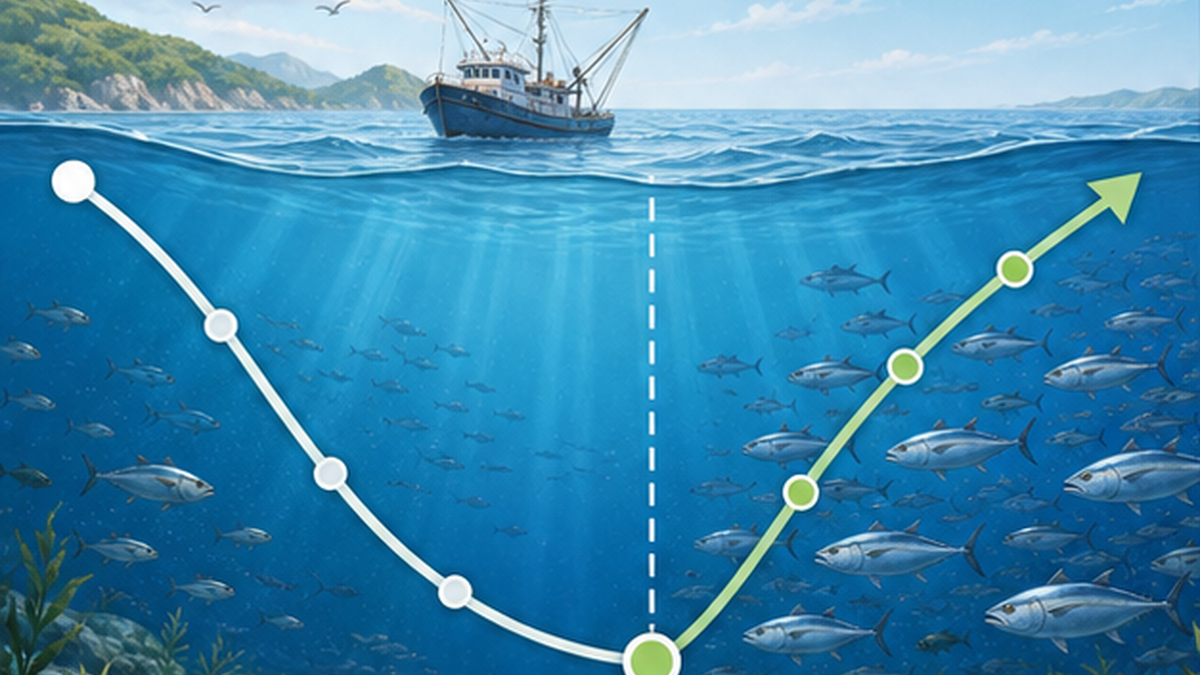
Recovered Stocks, and What We Can Do
Signs of recovery are visible in Japan too. Hokkaido herring has rebounded through management and juvenile stocking, and the operation of catch limits based on stock assessments is gradually expanding species by species. Creating "spaces where fish are left alone" in the ocean is also effective, a topic covered in the articles on marine protected areas (MPAs) and on Sanriku's fisheries revival after the disaster. And there is plenty consumers can do: choose sustainable seafood certified by labels such as MSC and ASC, make use of underutilized fish that used to be discarded, and finish what you buy without waste. When the nature of demand changes, the nature of fishing changes too. Each individual's choices are a force that helps support fishing that doesn't overfish.
- Science-based TAC and MSY management can restore even a stock on the brink of collapse
- "Spaces where fish are left alone," such as MPAs, also help support stocks
- Choose certified seafood (MSC/ASC), and eat seasonal and underutilized fish
- Don't leave food unfinished—reducing seafood food waste is also indirect resource protection
Conclusion—"Not Overfishing" as the New Frontier
Overfishing arises not from malice but from a system. As we became able to catch a resource that belongs to no one—the ocean—faster, with ever more powerful technology, we have caused stocks to collapse again and again. For Atlantic cod, Hokkaido herring, and Peru's anchoveta alike, the fatal blow was the failure to act while fish were "still being caught." And many collapsed stocks may not return, even if we stop fishing, within our own lifetimes. We must not forget the weight of that fact.
What's more, overfishing never stops at one species. Through trophic cascades and regime shifts, it reshapes the entire ecosystem into a different form, and once the sea has switched, it rarely reverts. That is exactly why the discipline of "catching only what grows back"—MSY and catch limits—is decisively important before a collapse occurs. Japan's revised Fisheries Act of 2020 marked the turning point where the country took a genuine step toward that global standard.
And there's another premise we must not forget. No matter how skillfully catches are managed, fish will not increase if the ocean itself is unhealthy. Rising sea temperatures, the spread of oxygen-poor waters, red tides, and habitat loss—such environmental degradation drives stocks toward the brink alongside overfishing. Countering overfishing and conserving the environment are two wheels of the same cart. Reading about related ocean challenges, such as ocean deoxygenation and red tides and eutrophication, will help you see the full picture of protecting ocean health.
The era in which "catching a lot" was the measure of fishing power is coming to an end. From now on, science-based "not overfishing" is the most advanced fishing there is. And that's not a job for fishers alone. Through what we choose and what we eat, each of us has a hand in the ocean's future. Whether fish are still swimming in this sea a hundred years from now may be decided by a single plate on today's table—viewed that way, eating fish "sustainably" should never feel like a distant concern.
Summary of this article
- 37.7% of the world's fish stocks are overfished; only 11.8% have real room to increase
- Atlantic cod was placed under a full moratorium in 1992; the spawning stock collapsed to about 1% of its peak and still hasn't recovered
- Hokkaido herring vanished from a peak of 1 million tons a year, returned after 45 years, but remains at just 1-2% of its peak
- Overfishing throws the whole ecosystem off balance through trophic cascades and habitat destruction, making a return to the old state difficult
- Stocks can recover through catch limits (TAC) based on MSY (Maximum Sustainable Yield); Japan's revised Fisheries Act of 2020 marked the turning point
- Consumer choices, such as choosing certified seafood and underutilized fish, also support sustainable fishing
References and Sources
- UN Food and Agriculture Organization (FAO) – The State of World Fisheries and Aquaculture 2024
- Fisheries Agency of Japan – FY2024 White Paper on Fisheries / Trends in world fisheries and aquaculture production
- Fisheries Agency of Japan / Japan Fisheries Research and Education Agency – FY2023 Status of International Fishery Resources, 01: The current state of world fisheries and stock conditions
- Japan Fisheries Research and Education Agency (FRA) – Stock assessments in waters around Japan / MSY-based resource management
- Hokkaido Research Organization – Explanation of Hokkaido herring stocks and the revival of the "kuki" herring run
- Ocean Policy Research Institute, Sasakawa Peace Foundation – Stock fluctuations and marine ecosystems: the sardine example (an explanation of regime shifts)
- WPI-AIMEC (Advanced Institute for Marine Ecosystem Change) – Column: What is a regime shift?
- Fisheries Agency of Japan – The revised Fisheries Act and the new approach to resource management via TAC and MSY
- WWF Japan – Sustainable fisheries: improving bycatch management in the anchoveta fishery
- Ministry of the Environment, Japan – Existing findings on trends in catch volume and factors behind the changes
Note: listed in order of reliability — government/academic institutions > peer-reviewed papers > specialized organizations > trusted media