⚡ The answer in 30 seconds
- Some UV absorbers (such as oxybenzone) harmed coral larvae and cells in experiments.
- Palau (2020) and Hawaii (2021) banned sales or use of products with specified ingredients.
- The scale of damage on real reefs is still under study, and the 2022 U.S. National Academies report also says further ecological risk assessment is needed.
- NOAA recommends choosing mineral products, using shade, and wearing UPF clothing.
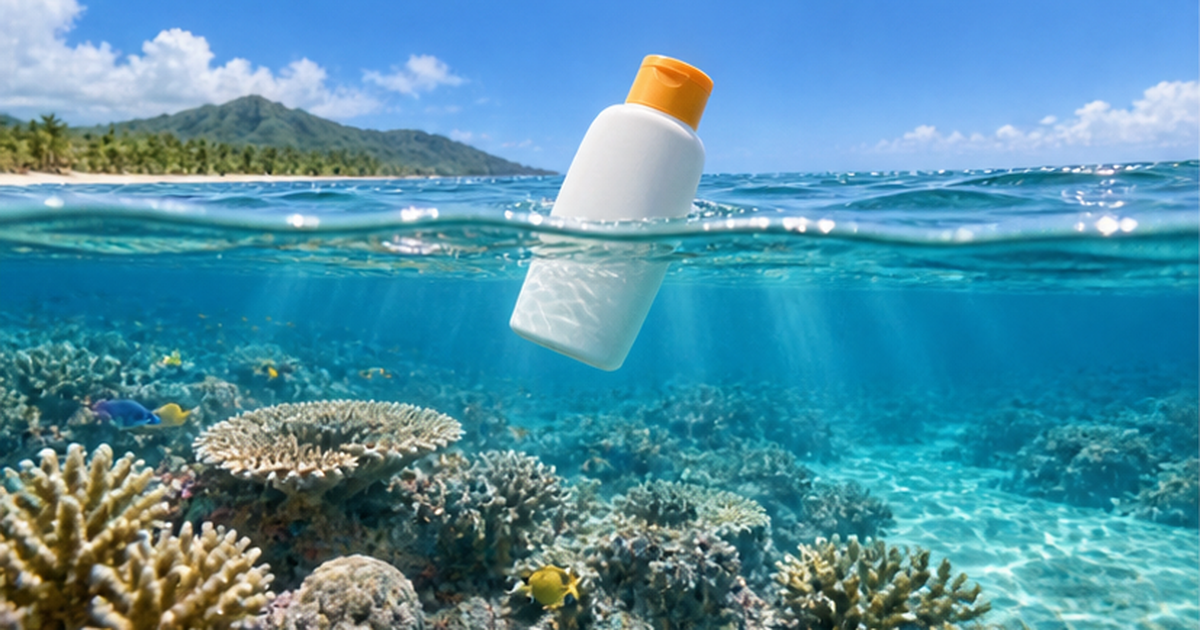
Sunscreen protects our skin, but some of its ingredients wash off into the water when we swim. What do those ingredients do to corals?
Palau and the U.S. state of Hawaii have restricted sunscreens with certain ingredients. Researchers, however, still disagree about how large the real-world impact on the ocean is.
Drawing on primary sources such as NOAA and peer-reviewed papers, this article separates what is known from what is not.
What you'll learn in this article
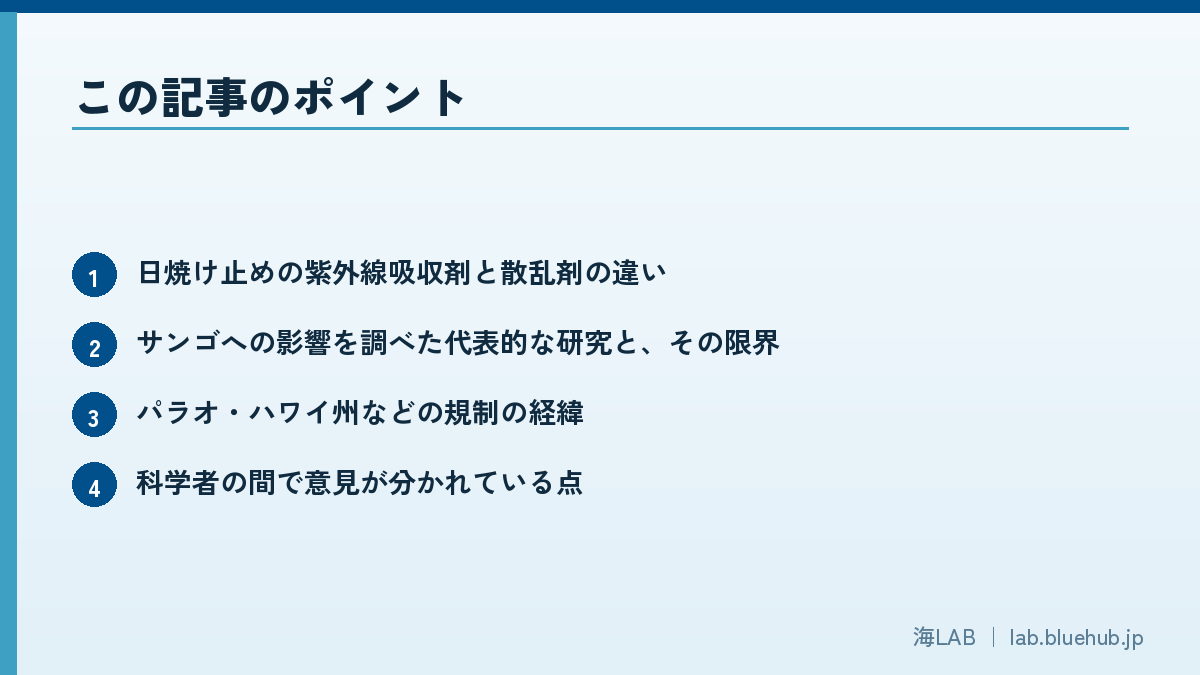
- The difference between chemical (UV-absorbing) and mineral (UV-scattering) sunscreen filters
- Representative studies on effects on corals, and their limits
- How regulation developed in Palau, Hawaii and elsewhere
- Where scientists disagree
- How to choose reef-friendlier sunscreen, and sun protection that doesn't involve applying it
Sunscreen and Corals: Why Is It an Issue Now?
The "invisible ingredients" flowing into summer seas
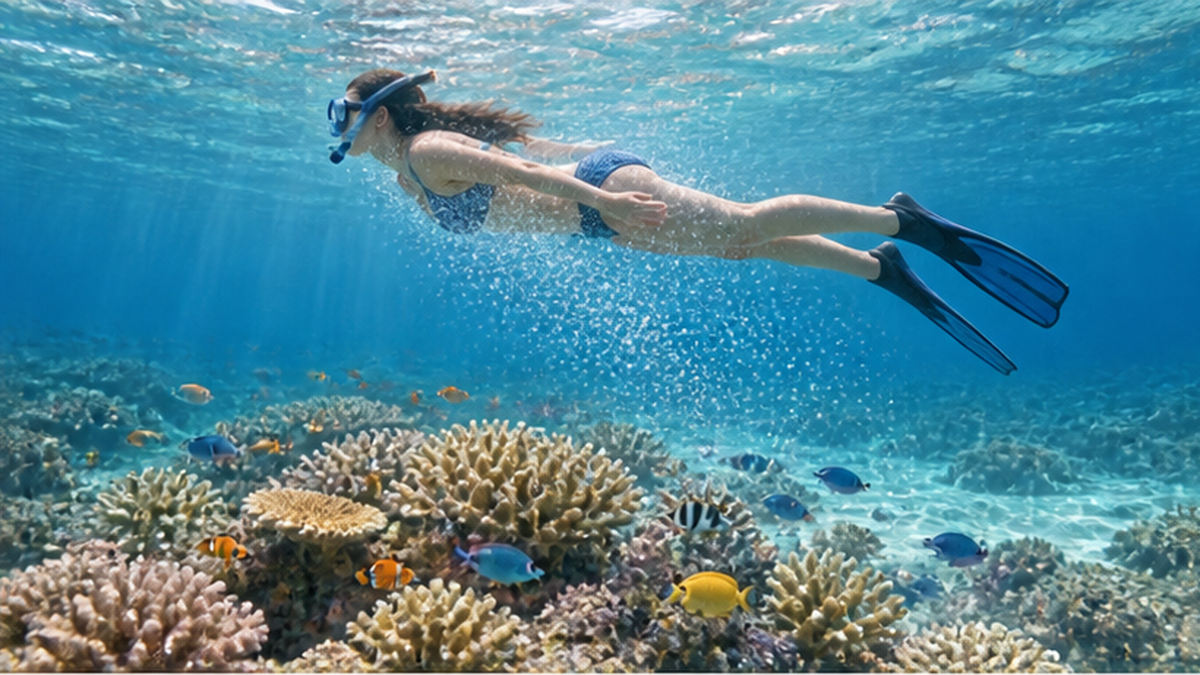
Many people put on sunscreen before swimming, diving or snorkeling. But the ingredients on the skin gradually dissolve into the water as we swim. What is rinsed off in showers and baths can also reach the coast after passing through sewage treatment. In coral reef waters crowded with tourists, it has been pointed out that these invisible ingredients may have been quietly accumulating for years.
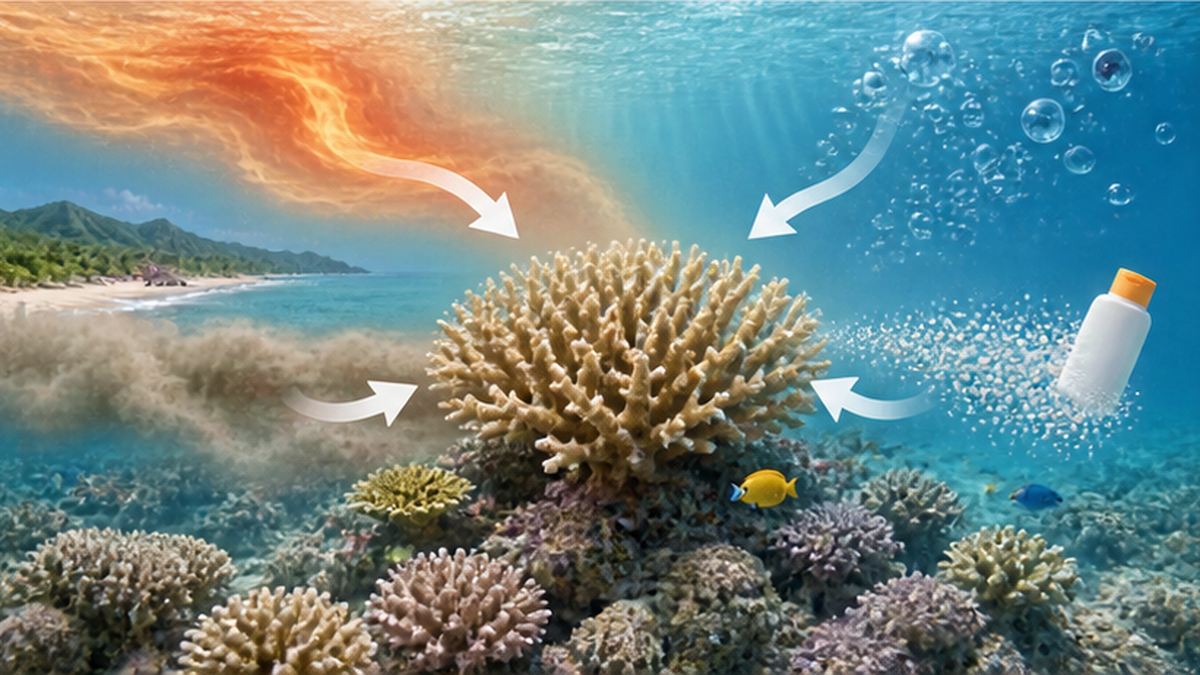
The U.S. National Oceanic and Atmospheric Administration (NOAA) explains that certain chemicals in sunscreen can accumulate in coral tissue, cause bleaching, damage DNA, deform larvae and, in some cases, kill them. The same page also states that these effects remain "an active area of research." In short, studies do show effects, but how much damage actually occurs on real reefs is still debated.
What this article covers
This article sorts out the types of ingredients of concern, the key studies on their effects on corals, the regulations introduced in Palau, Hawaii and elsewhere, and the points on which scientists disagree. It then introduces how to choose sunscreen and what you can do before entering the sea. The mechanism of coral bleaching itself is explained in detail in our earlier article "Why Does Coral Bleaching Happen?", which is a useful companion read.
Key premises to keep in mind
- The biggest threat to corals is rising ocean temperature (global warming), not sunscreen.
- Even so, sunscreen is one of the few local stressors that individual behavior can reduce.
- UV protection itself matters for health; this article does not recommend going without it.
Ingredients of Concern: Chemical Absorbers vs. Mineral Scatterers
Two ways sunscreen blocks ultraviolet light
Sunscreens fall into two broad groups according to how they block UV. Chemical UV absorbers absorb UV energy and convert it into heat. Mineral UV scatterers, such as titanium dioxide and zinc oxide powders, reflect and scatter UV light. In Japan, products built mainly on the latter are sometimes labeled "non-chemical" or "absorber-free."
| Type | Representative ingredients | How it works | Why it comes up regarding corals |
|---|---|---|---|
| UV absorbers | Oxybenzone (benzophenone-3), octinoxate (ethylhexyl methoxycinnamate), octocrylene, etc. | Absorb UV and convert it to heat | Listed by NOAA as potentially harmful ingredients |
| UV scatterers | Titanium dioxide, zinc oxide | Reflect and scatter UV | NOAA considers mineral products "a better option," but includes nano-sized particles among its concerns |
The ingredients NOAA says need caution
NOAA's explanation lists ten ingredients of potential concern for aquatic life including corals: oxybenzone, benzophenone-1, benzophenone-8, OD-PABA, 4-methylbenzylidene camphor, 3-benzylidene camphor, nano-titanium dioxide, nano-zinc oxide, octinoxate and octocrylene. The list overlaps heavily with the "10 chemicals" that Palau regulated, and it has become an international reference point.
One caution: "mineral" does not automatically mean "completely safe." NOAA's list also includes nano-sized titanium dioxide and zinc oxide. Because very small nanoparticles behave differently in water and may affect organisms differently depending on size, careful evaluation is needed.
What is oxybenzone?
Oxybenzone has long been used because it absorbs a wide range of UV light. It is used not only in sunscreen but also in cosmetics and to prevent UV degradation of plastic products. Because it is the ingredient most often examined in studies of coral effects, it has become the symbol of the regulatory debate.
- On labels, oxybenzone may appear as benzophenone-3, and octinoxate as ethylhexyl methoxycinnamate
- Even for the same ingredient, content and presence vary by country and product
- Since the names are hard to remember, you can also ask staff or the manufacturer whether a product is reef-conscious
Representative Studies on Effects on Corals
Downs et al. (2016): effects on larvae and cells
The most frequently cited study is Downs et al. (2016), published in Archives of Environmental Contamination and Toxicology (vol. 70, pp. 265–288). Using larvae (planulae) of the stony coral Stylophora pistillata and cultured cells from several corals including that species, the researchers examined the toxicity of oxybenzone.
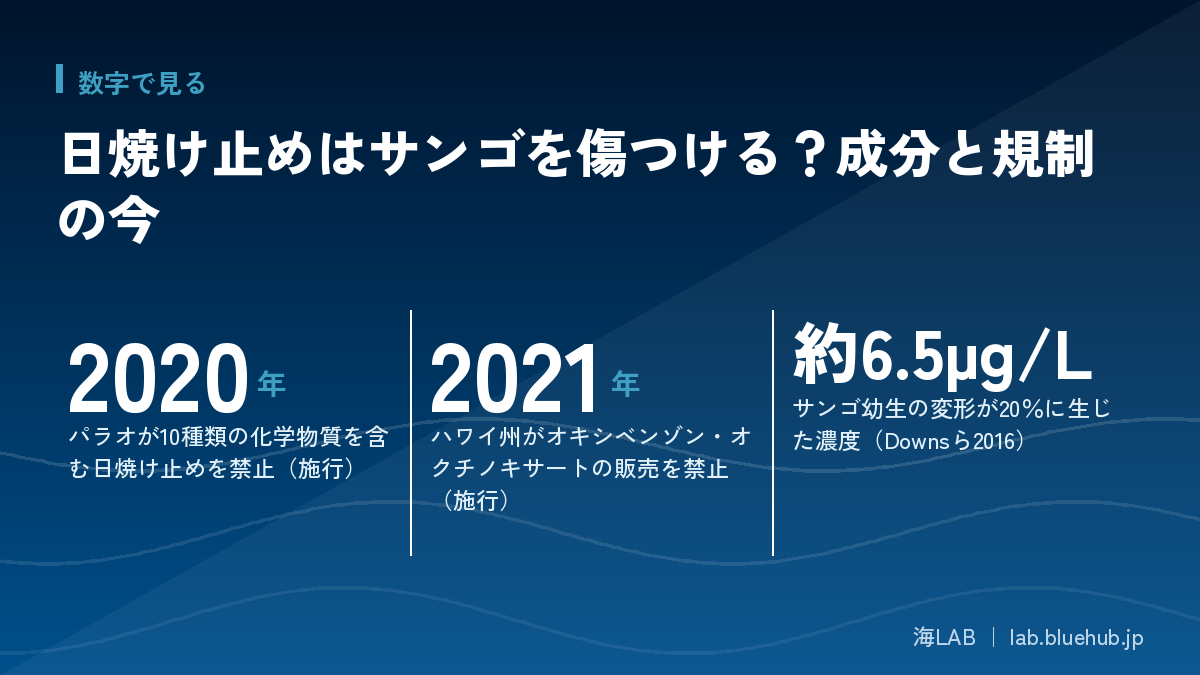
The main results can be summarized as follows. The concentration at which 20% of larvae were deformed (EC20, 24 hours) was 6.5 micrograms per liter in light and 10 micrograms per liter in darkness. The concentration at which 20% of coral cells died (LC20, 4 hours, in light) ranged from 0.062 to 8 micrograms per liter depending on species. Because 0.062 micrograms is 62 parts per trillion, news reports sometimes describe effects at "tiny concentrations." However, this is the lowest value from cultured cells, and it cannot simply be applied to coral communities in the real ocean.
How much is actually in seawater?
The same study also measured oxybenzone in seawater in Hawaii and the U.S. Virgin Islands. Hawaiian sites showed 0.8 to 19.2 micrograms per liter, while the Virgin Islands recorded very high values from 75 micrograms to 1.4 milligrams per liter. This suggests that concentrations can become high where water stagnates, such as shallow coves crowded with tourists.
| Item | Reported value (Downs et al. 2016) | How to read it |
|---|---|---|
| Larval deformity (EC20, in light) | ~6.5 µg/L | Value under laboratory exposure conditions |
| Coral cell LC20 (4 h, in light) | 0.062–8 µg/L | Sensitivity varies by species |
| Seawater concentration in Hawaii | 0.8–19.2 µg/L | Varies by site and time |
| Seawater concentration in the U.S. Virgin Islands | 75 µg/L – 1.4 mg/L | Example of local high concentrations |
Effects on organisms other than corals
NOAA's explanation notes that the effects are not limited to corals. Research examples include impaired growth and photosynthesis in green algae, defects in mussel larvae, immune and reproductive effects in sea urchins, reduced fertility and feminization of males in fish, and transfer of accumulated chemicals from dolphin mothers to young. However, many of these come from laboratory results or limited surveys and do not directly show the effects on ecosystems across the ocean.
Global Regulation: From Palau to Hawaii and Local Governments
Palau: the first country to step in
Under its Responsible Tourism Education Act, enacted in 2018, the Pacific island nation of Palau banned the sale and use of sunscreens containing chemicals considered harmful to coral reefs. The ban covers 10 chemicals including oxybenzone and octinoxate and took effect on January 1, 2020. Violators were reported to face fines of up to 1,000 dollars. It is regarded as the first national-level regulation of sunscreen ingredients.
Hawaii: sales banned from 2021
In Hawaii, the governor signed the bill in July 2018, and from January 1, 2021 the sale and distribution of sunscreens containing oxybenzone or octinoxate were prohibited. Products prescribed by a doctor and products brought in by visitors are not covered. In addition, it has been reported that from October 2022 Maui County began an ordinance banning sales of sunscreens other than mineral-based ones, such as titanium dioxide or non-nano zinc oxide.
Key West, Florida and other municipalities
In the Florida tourist town of Key West, the city commission voted 6 to 1 in February 2019 to ban the sale of sunscreens containing oxybenzone and octinoxate. It was scheduled to take effect on January 1, 2021, with an exception for medical prescriptions. Rules by municipality can change with state-level decisions and opposition, so it is important to check the latest information before you travel.
| Region | Decision / enactment | In force | Main ingredients targeted |
|---|---|---|---|
| Palau | 2018 (Responsible Tourism Education Act) | January 1, 2020 | 10 chemicals including oxybenzone |
| Hawaii | July 2018 (governor signed) | January 1, 2021 | Oxybenzone, octinoxate |
| Key West (Florida) | February 2019 (city commission, 6–1) | January 1, 2021 (planned) | Oxybenzone, octinoxate |
| Maui County, Hawaii | From October 2022 | October 1, 2022 | Sales of non-mineral products restricted (reported) |
Debate over regulation
- Because sunscreen helps prevent skin cancer, some in the medical community opposed the bans.
- Industry argues that a causal link between the ingredients and coral bleaching has not been proven.
- Researchers who support regulation point to the accumulating body of research.
Why Scientists Disagree: What Is Known and What Is Not
The gap between lab results and the real ocean
Most experiments showing oxybenzone toxicity exposed coral larvae or cells to fixed concentrations in tanks. In the real ocean, ingredients are dispersed by currents and broken down by UV light and microbes, and concentrations vary widely by place and time. How to connect the "concentration that caused effects in experiments" with "concentrations actually present on reefs" is therefore debated even among researchers.
The 2022 report of the U.S. National Academies
In August 2022, the U.S. National Academies of Sciences, Engineering, and Medicine (NASEM) published a report that comprehensively reviewed existing research on the fate, exposure and effects of sunscreens in aquatic environments. According to NOAA's explanation, the report acknowledges that certain chemical UV filters can harm aquatic life including corals, while stating that a more comprehensive ecological risk assessment of all UV filters in chemical sunscreens is needed. In other words, it takes the position that evidence is insufficient to say either "no harm" or "harm is established."
The biggest driver of bleaching is rising water temperature
What triggers mass coral bleaching is rising ocean temperature. How corals lose their symbiotic algae (zooxanthellae) in heat is covered in our article "Why Does Coral Bleaching Happen?". Sunscreen ingredients are discussed as an additional load on top of such major stress, together with ocean acidification, land-based pollution, unsustainable fishing, coastal development, disease and invasive species. For acidification, see also "Ocean Acidification and Coral Reefs".
- Probable: some UV absorbers harmed coral larvae and cells in experiments
- Still debated: the scale of damage on real reefs and the share contributed to bleaching
- Lacking information: ecological risk assessments for many ingredients, and effects of long-term low-level exposure
In Japan: Okinawa's Reefs and Tourism on the Ground
No national-level regulation found
As far as the author could confirm, Japan has no national system that uniformly regulates sunscreen ingredients for coral protection, as Palau and Hawaii do. Meanwhile, in coral reef waters such as Okinawa, diving and snorkeling operators are increasingly asking participants to be considerate. Rules differ by operator, so it is reassuring to check before joining.
Reef conservation efforts in Okinawa and sunscreen
Okinawa's coral reefs are among the places in Japan where tourism and nature conservation are most closely intertwined. Conservation work such as coral farming and transplantation and measures against red soil runoff is under way. The current state of the reefs is introduced in "Okinawa's Coral Reefs". Being considerate about sunscreen is one familiar action each visitor can take within that larger conservation effort.
How to read "reef safe" labels
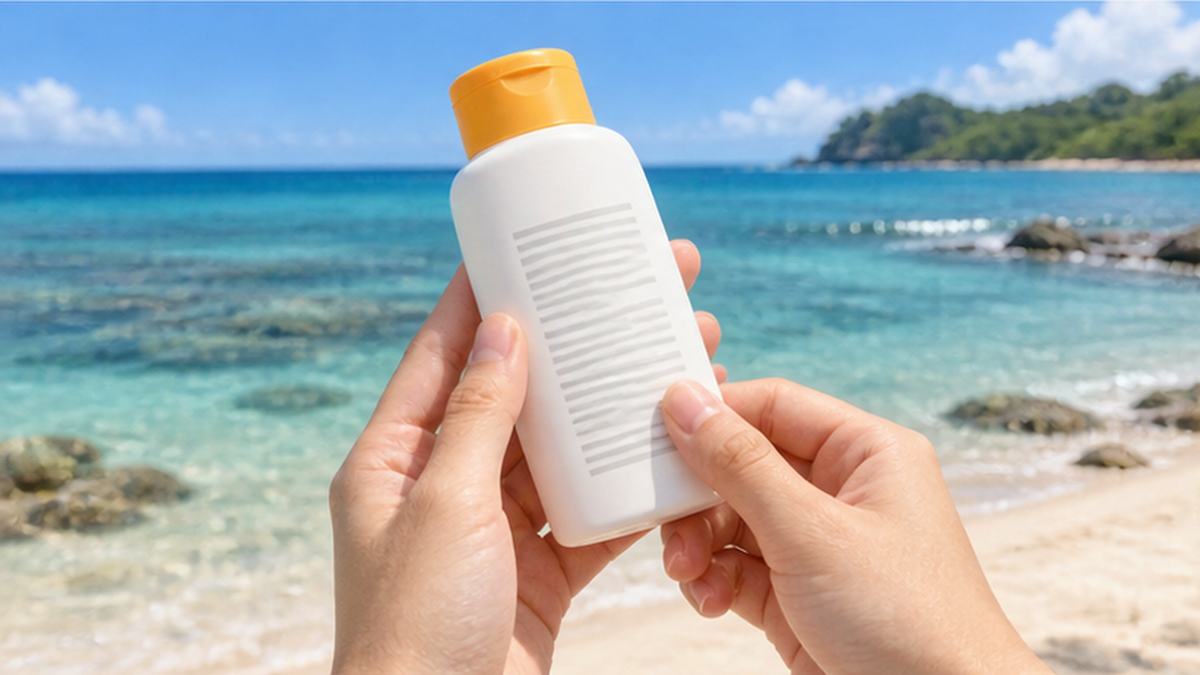
Some products say "reef safe" or "coral friendly," but as far as I could confirm, there is no official, unified certification standard behind these words. Manufacturers often define them on their own, so rather than relying on the label, check the ingredient list for the kinds of ingredients NOAA lists.
How to Choose Coral-Friendlier Sunscreen
Four points to check
- Check the ingredient list for oxybenzone (benzophenone-3) and octinoxate (ethylhexyl methoxycinnamate).
- NOAA considers mineral sunscreens (titanium dioxide, zinc oxide), which use no chemical UV absorbers, "a better option."
- Because nanoparticles are among the concerns, choosing products labeled "non-nano" adds reassurance.
- Waterproof products resist washing off in the sea but add burden to skin and environment if overused, so limit them to when needed.
Cautions when choosing mineral products
Mineral sunscreens tend to look whitish when applied and can feel heavier. It has also not been confirmed that mineral products have no effect on corals. Here too, it is appropriate to take NOAA's careful wording as it is: "a choice considered to have less impact."
Tips for choosing products in Japan
- Get into the habit of reading the ingredient list on the back of the container
- "Non-chemical" and "absorber-free" labels usually mean only that no UV absorbers are used, not that the product is certified for coral protection
- If unsure, ask a dive shop or tour company which products they recommend
Before You Enter the Sea: Reducing Runoff Without Cutting Protection
Sun protection beyond applying sunscreen, recommended by NOAA
NOAA also recommends measures other than sunscreen: staying in the shade between 10 a.m. and 2 p.m., when UV is strongest, and wearing sun-protective clothing with an Ultraviolet Protection Factor (UPF) rating, such as rash guards and long sleeves and pants. Clothing is not washed off, so nothing flows into the sea.
Tips for applying and washing off
- Applying at least 30 minutes before entering the water may let it settle into the skin and reduce how much dissolves into the water (a general usage tip)
- Rather than covering your whole body, focus on exposed areas such as the face, neck and backs of the hands, and cover the rest with clothing
- Check whether a rinse area is available near the beach or reef
- Take your trash home and follow basic manners: do not touch or step on corals
What operators and local governments can do
Dive shops and hotels can lend or sell coral-friendlier products and guide guests toward clothing-based sun protection before they enter the water. Local governments can inform tourists and monitor water quality on reefs. Only when individual effort and local rules work together will the burden on the sea actually shrink.
Actions you can take starting today
- Before your next trip to the sea, check the ingredient list of the sunscreen you already have
- Wear a UPF rash guard and apply the minimum amount of sunscreen
- When booking diving or tours, ask about their sunscreen rules
Summary: Protecting Both Corals and Skin
Key points of this article
In experiments, some ingredients in sunscreen harmed coral larvae and cells. Palau, Hawaii and some municipalities have regulated oxybenzone, octinoxate and others. Meanwhile, how large the damage on real reefs is remains under study, and the 2022 NASEM report also points to the need for further ecological risk assessment.
Furthermore, the biggest driver of coral bleaching is rising water temperature, and sunscreen is discussed as an additional load on top of it. That is why individual choices, made alongside the larger challenge of climate action, still matter.
After reading
You do not need to cut back on UV protection. Know the ingredients, use clothing and shade well, and choose products when needed. That alone may reduce what flows into the sea. We hope you will remember this article the next time you spend time on a coral reef. For how corals live, see also "Coral and Zooxanthellae Symbiosis".
Summary
- Some UV absorbers showed harm to corals in experiments
- Palau (2020) and Hawaii (2021) among others have regulated them
- The size of real-ocean impact is still under study
- NOAA recommends mineral products, shade and UPF clothing
- Water temperature is the biggest bleaching driver; sunscreen is an additional load
References and Sources
- NOAA National Ocean Service: Skincare Chemicals and Coral Reefs – Explanation of sunscreen ingredients and coral reefs
- Downs et al. (2016) Toxicopathological Effects of the Sunscreen UV Filter, Oxybenzone, on Coral Planulae and Cultured Primary Cells – Archives of Environmental Contamination and Toxicology 70:265–288
- U.S. National Academies (NASEM): report on sunscreens in aquatic environments – Published August 2022
- Reef Resilience Network: summary of Downs et al. 2016 – Key points of the study
- CNN.co.jp: Palau bans sunscreen to protect coral reefs, a world first (Japanese) – News report on Palau's regulation
- CNN.co.jp: report on Hawaii's sunscreen regulation (Japanese) – News report on the Hawaii sales ban
- PADI Japan: reef-safe sunscreen (Japanese) – Explainer for divers
- NOAA Coral Reef Conservation Program – Coral reef threats and conservation
* Listed in order of reliability: government and academic institutions > peer-reviewed papers > specialist organizations > reliable media