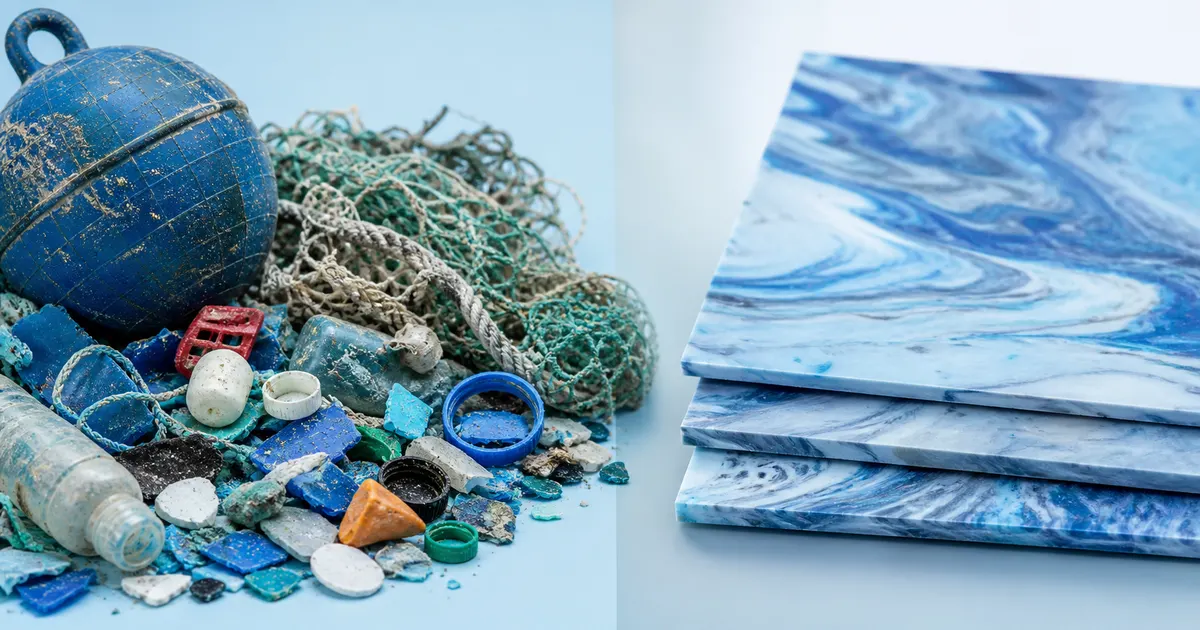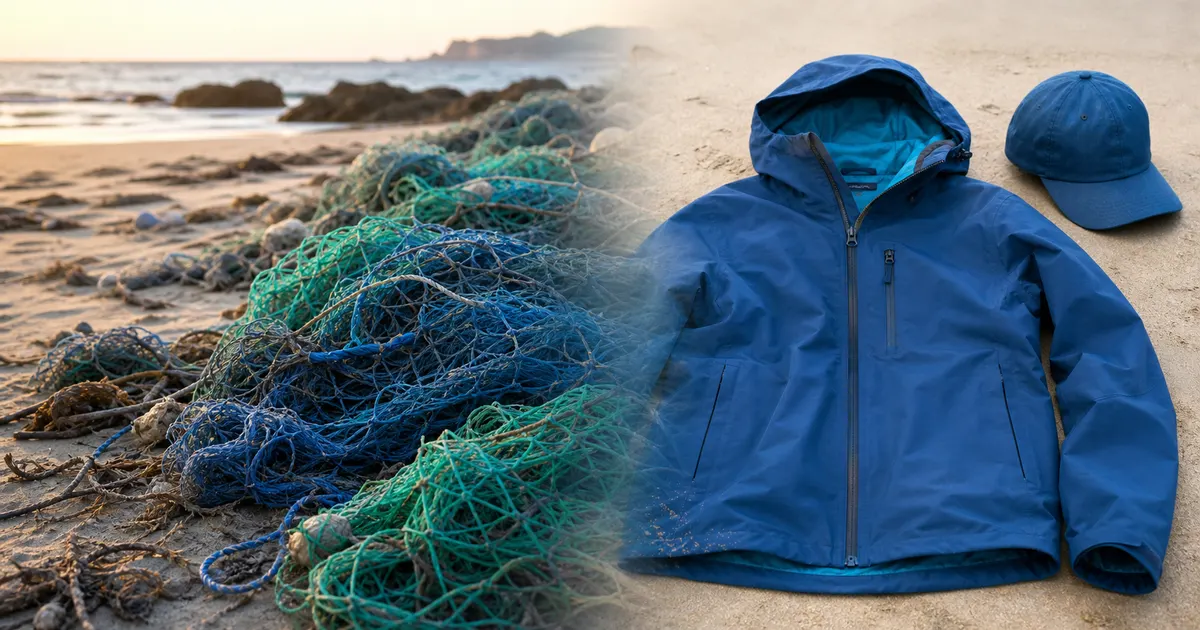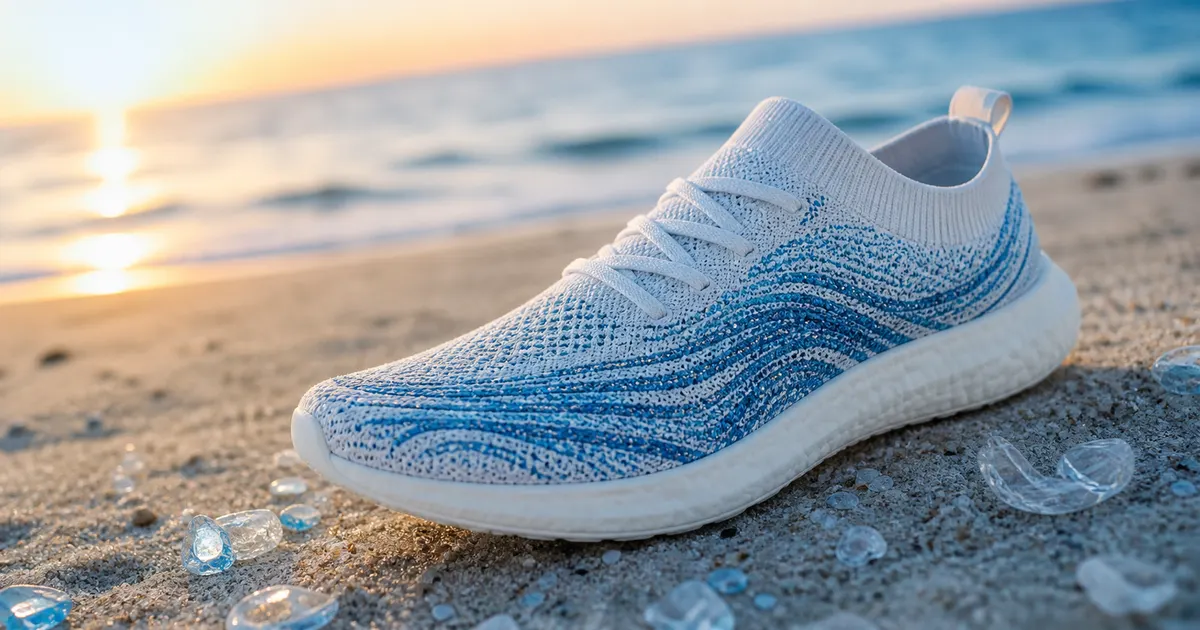
When you open a sneaker box, there's an "ocean" inside — that might sound strange at first. But the upper of the UltraBOOST Parley running shoe, created by adidas and Parley for the Oceans, is made largely from plastic waste collected from beaches and coastlines. In each pair we wear and run in, about 11 plastic bottles that once drifted in the ocean have been spun into thread and woven in. Plastic, once a symbol of pollution, reborn as a tool for running. This reversal of thinking has captured attention around the world.
In this article, from the perspective of the ocean media outlet "Umi Lab" (Sea Lab), we'll take apart the UltraBOOST Parley shoe piece by piece. Where is Parley Ocean Plastic, the material itself, collected, and how does it become fiber? What percentage of the upper is recycled material, and how does the fit differ from the standard model? And the most important question of all — "Does buying a pair of shoes really help protect the ocean?" — we'll address honestly, based on primary information from governments and international organizations. We'll lay out the numbers, the positives, and the limitations, as candidly as possible.
To state the conclusion up front: this one pair of shoes is not a "universal solution." But it can be a powerful entry point for thinking about ocean plastic pollution as our own issue. There are things we can do both before and after we buy. Let's look at the full picture, based on the facts.
What you'll learn in this article
- Parley Ocean Plastic is a material made by recycling plastic waste collected from beaches and coastlines
- The upper of the UltraBOOST Parley is made of up to 95% Ocean Plastic
- Each pair uses the equivalent of about 11 plastic bottles, with performance on par with the standard model
- Collection (Intercept) is part of Parley's AIR strategy, and the fundamental solution is reducing use
- Purchasing is only an entry point; wearing shoes for a long time and caring for them properly reduces environmental impact the most
- Choose with an understanding of the limitations of "made from ocean plastic" labeling and criticism of greenwashing
A Running Shoe Born From the Ocean — The Story of adidas × Parley
When a sports brand talks about protecting the ocean environment, we tend to become a little guarded. "Another image campaign," we think. But the initiative by adidas and Parley for the Oceans is a little different from a mere advertising campaign. In 2015, the two publicly declared an unprecedented challenge for the time: to turn discarded plastic into products that don't compromise on performance. The symbol of that declaration was a running shoe made primarily of ocean plastic. What they put forward was not an idealistic vision but an actual "product" that would land on store shelves and reach the feet of millions of people.
The Day One Pair of Shoes Became a "Declaration"
The story begins in April 2015, at Parley's event "Oceans. Climate. Life." held at the United Nations Headquarters in New York that same year. There, adidas unveiled to the world a concept shoe whose upper was knitted from thread recycled from ocean debris and fishing nets used in illegal deep-sea fishing. It wasn't meant to be sold as a product — it was a single pair of shoes meant to demonstrate the possibility that "materials can be changed." The very act of holding up a shoe on the stage of the United Nations was itself a powerful message directed at the entire industry. The problem of abandoned fishing nets becoming a new source of ocean pollution is discussed in detail in our article on the threat of ghost gear (abandoned fishing nets).

Cyrill Gutsch, who leads Parley, viewed plastic pollution as a "design failure." If humans designed and created the problem, the thinking goes, then humans should be able to solve it through design as well. That's why the solution, too, is presented through design. By partnering with adidas, one of the world's largest sports brands, the material could be replaced not at a laboratory-scale, idealistic level, but at a scale that actually reaches the feet of millions of people — and that is the essence of this collaboration. It physically drew the ocean problem close to our own feet, rather than leaving it as distant environmental news.
Why a "Sports Brand"?
Materials made from recycled ocean plastic existed at the research level even before Parley. But most never became widespread, often ending as a "niche good deed" reaching only a small group of environmentally conscious people. The significance of partnering with adidas lies precisely in overcoming that barrier. If a sports brand with stores worldwide, chosen for its functionality, seriously adopts the material, demand for it jumps by orders of magnitude, making the collection-and-recycling system itself economically viable. Creating a situation where a product sells "because it's good," rather than "because it's a good deed," was the key to sustainability.
The Motto: "Stop Waiting"
When the partnership was announced, the slogan the two put forward was "Stop the waiting game." If we wait for perfect technology or systems to be in place, the ocean will keep getting polluted in the meantime. So, imperfect as it may be, we should act now with what we can do — and this attitude applies just as much to us as consumers. The effects of ocean plastic on the human body are also discussed in our article Microplastics and Our Health, and both remind us of the value of taking a step forward without waiting for perfection.
- In April 2015, adidas and Parley officially announced their partnership
- That same year, a concept shoe made from ocean plastic and fishing nets was unveiled at a UN event
- Concrete measures were also carried out in parallel, such as retailers eliminating plastic shopping bags and care products dropping microbeads
- The goal was to create a situation where products sell "because they're good," not "because it's a good deed"
- The philosophy of "stop waiting and act now" runs through the entire product
What's interesting is that this collaboration didn't end as a "one-off campaign." Since the concept shoe was unveiled in 2015, it evolved into products that were actually sold from the following year onward, and the number of models has increased year by year. The rollout expanded beyond running shoes to soccer jerseys and apparel, and the material's applications have steadily diversified. Rather than ending as a talking point, the fact that it was steadily built into product lines is perhaps the best proof that this effort is genuine. Only through continuity can the collection-and-recycling system keep turning economically.
What Is Parley for the Oceans?
An international network working to protect the ocean environment. It connects creators, brands, researchers, and governments to raise awareness of ocean plastic pollution and drive the reinvention of materials. adidas is one of its largest product partners, and the collaboration between the two is also registered as a United Nations partnership case.
The Current State of Ocean Plastic Pollution — Why "Collect and Wear" Matters
So why go to the trouble of turning ocean plastic into shoes in the first place? To understand the significance, we need to know just how much plastic our oceans are currently exposed to. The reality shown by estimates from Japan's Ministry of the Environment, WWF, and international organizations is more urgent than we might imagine. Let's step away from the material for a moment and look directly at the problem itself.
The Scale of 8 Million Tons Every Year
According to estimates both in Japan and abroad, at least around 8 million tons of plastic waste flows from land into the ocean every year. This figure is based on a report published by the UK's Ellen MacArthur Foundation to coincide with the 2016 World Economic Forum Annual Meeting, and it is repeatedly cited in Japan's Ministry of the Environment's White Paper on the Environment. Eight million tons is a weight equivalent to tens of thousands of large jet aircraft, and it isn't a one-time figure — it piles up every single year. Even at this very moment, the ocean continues to swallow plastic.

Even more serious is the estimate that, without effective countermeasures, the weight of plastic floating in the ocean will exceed the weight of fish by 2050. Plastic barely decomposes in nature; instead it breaks down from waves and ultraviolet light into microplastics of 5mm or smaller, infiltrating every corner of the ecosystem. Why plastic is so resistant to decomposition is explained in detail in Why Ocean Plastic Doesn't Easily Decompose. Finely broken-down plastic is ingested by fish and seabirds, eventually returning to our own dinner tables through the food chain.
Japan Is Not Unrelated
Ocean plastic is not just a problem for seas far away in other countries. Surveys by Japan's Ministry of the Environment show that large amounts of plastic waste also wash up on Japan's coastlines, some of it having flowed out from towns within Japan via rivers. Plastic bottles, food trays, plastic bags, and fishing gear — our everyday consumption becomes ocean waste just as it is. Japan's own "Umi to Nihon PROJECT" (Sea and Japan Project) by the Nippon Foundation also continues to communicate the reality of this ocean waste to a domestic audience. The ocean's problems are, in fact, one of the most familiar issues in our daily lives.

Impact on Marine Life
What makes plastic pollution especially serious is the direct harm it causes to marine life. Sea turtles mistake plastic bags for jellyfish and swallow them, and seabirds mistake fragments for food and feed them to their chicks. Countless individuals also lose their lives after becoming entangled in fishing nets. The reality of this harm and conservation efforts are also introduced in On the Front Lines of Sea Turtle Conservation. Every single piece of plastic that gets collected carries the potential to reduce harm to these creatures. That is precisely why there is value in acting while it can still be collected.
The Value and Limits of "Removal"
What's important here is that much of the plastic that flows into the ocean can actually be collected along the coastline and nearshore areas, rather than out in the open sea. If plastic can be "intercepted" while it's still close to land and hasn't yet broken into fine pieces, it's possible to prevent it from becoming microplastic. Parley Ocean Plastic targets exactly this stage of plastic — the stage where it can still be collected. The problem of waste sinking to the sea floor is also covered in The Reality of Debris Sinking to the Deep Sea, but once waste sinks deep, collecting it becomes extremely difficult. That is exactly why it matters to collect it "while it's still near land, before it breaks apart."
Collection Is Not a Cure-All
Beach collection is a valuable action, but it only reaches a small fraction of the waste that has already flowed out. That is precisely why Parley places the highest priority not just on "collection," but on "not using plastic in the first place, and reducing it." Collection is the last line of defense, and it is no substitute for turning off the tap.
In other words, "collecting it and turning it into shoes" is an excellent entry point for the ocean plastic problem, but it does not, by itself, solve the problem. Keeping this premise in mind is the key to correctly understanding the material's mechanism, which we'll introduce next. Let's face this one pair of shoes having learned both its strengths and its limitations.
What Is Parley Ocean Plastic? — The Material's True Nature and How It's Made
Hearing "thread made from ocean plastic," you might imagine some kind of rough, recycled material. But Parley Ocean Plastic is actually a genuine high-performance material of a quality on par with ordinary polyester fiber. How does dirty waste turn into smooth thread that wraps around our feet? Let's look at its true nature and manufacturing process in order.
Where and How It's Collected
The raw material for Parley Ocean Plastic is upcyclable plastic collected from areas that threaten marine life and coastal communities. One representative collection site is the coast of the Maldives, where plastic bottles and other items washed up or drifted onto the islands' shores are gathered. On the ground, local people physically pick up and sort the waste by hand. The fact that this collection activity also creates local employment and environmental education is one of the material's less visible values. The collected plastic is sorted, washed, and sent to fiber-processing hubs (such as Taiwan) where it is reborn as thread.

The Three Steps From Waste to Thread
Roughly speaking, collected plastic is processed into fiber through the following flow. First, certified recycling partners wash and sort it, turning it into flakes (small fragments) or pellets (granules). Next, manufacturing partners melt the pellets and spin them into thread, which is then knitted or woven into fabric. This is how Parley Ocean Plastic threads and fabrics of various colors, thicknesses, and textures are created. The technical core of making recycled material lies precisely in this process — taking what was once miscellaneous waste and elevating it, in uniform color and quality, to product grade.
- Collection and sorting: gathering plastic waste from coastal areas, washing and sorting it
- Flaking and pelletizing: crushing it into small pieces and processing it into easy-to-handle granules
- Spinning and weaving: melting the pellets into thread and knitting it into fabric
| Step | What Happens | Output |
|---|---|---|
| 1. Collection | Plastic waste gathered from coasts and shorelines, washed and sorted | Washed plastic |
| 2. Processing | Fragmented and turned into pellets (granules) | Flakes / pellets |
| 3. Fiberization | Melted, spun into thread, and knitted into fabric | Ocean Plastic thread / fabric |
The Reality: Collected Plastic Alone Isn't Enough
Here's a point worth being honest about. Plastic collected from beaches varies widely in dirt, degradation, and contamination, and it isn't easy to make stable, high-quality thread from it "alone." That's why Parley Ocean Plastic products generally combine collected plastic with a certain amount of recycled polyester and other materials. It isn't 100% ocean waste — and knowing this fact, the fair way to look at it is to still recognize the significance of "turning a large volume of plastic into products and keeping it in circulation."
The AIR Strategy — Collection Is Just One of Three Pillars
Parley's overall activities are guided by a concept called the "AIR strategy." AIR stands for Avoid, Intercept, and Redesign. First, avoid using plastic as much as possible. For what can't be avoided, intercept it from the environment and turn it into Ocean Plastic. And fundamentally, invent entirely new materials to replace plastic. Ocean Plastic falls under the middle "I" (Intercept). Starting from collection, but the ultimate goal is "a world where plastic simply doesn't need to be used in the first place." The shoe is, in that sense, also a medium for conveying this philosophy to people.
There's also craftsmanship in color and texture. Collected plastic varies widely in color and transparency, but through sorting and processing technology, it can be refined into thread ranging from white to vivid blue. The blue-toned coloring common in the UltraBOOST Parley is both a design choice and a brand message evoking the ocean itself. The material's story is embedded directly in the product's appearance — meaningful design made possible precisely because it's a recycled material.
The Three Pillars of the AIR Strategy
- Avoid: not using plastic in the first place, or reducing its use
- Intercept: collecting waste before it flows out, at a stage where it can still be recovered
- Redesign: creating new materials and systems to replace plastic
Breaking Down the UltraBOOST Parley — What Is Recycled, and How Much
Now, let's finally break down the UltraBOOST Parley shoe itself. Even though it's called "made of ocean plastic," not the entire shoe is made from ocean waste. By looking specifically at which parts, and how much, are recycled material, the true picture of this shoe becomes clear.
The Upper Is Up to 95% Ocean Plastic
The biggest feature of the UltraBOOST Parley (including the Uncaged version and others) is the upper that wraps the foot. This upper is knitted with adidas's Primeknit technology, and is made of up to about 95% Parley Ocean Plastic, with the remaining roughly 5% recycled polyester. In other words, virtually the entire upper is calculated to be made of recycled material. The one-piece knit construction, which wraps the foot like a sock, reduces seams to achieve both lightness and fit, while also being a structure that produces little wasted material.

About 11 Plastic Bottles Per Pair
In concrete terms, the UltraBOOST Parley uses Ocean Plastic equivalent to about 11 plastic bottles per pair. Recycled material is also used in the shoelaces, heel lining and reinforcement, and insole cover, meaning ocean-derived material extends beyond the upper into the finer details. Considering that with every pair worn, more than 10 plastic bottles were spared from becoming roadside litter or landfill, it starts to feel tangible. It may look like a small number, but when it accumulates across millions of pairs, the total volume of plastic being replaced becomes enormous.
| Part | Main Material | Involvement of Recycled Material |
|---|---|---|
| Upper | Primeknit knit | Up to 95% Ocean Plastic |
| Shoelaces | Recycled material | Recycled polyester |
| Heel reinforcement / lining | Recycled material | Uses recycled material |
| Insole cover | Recycled material | Uses recycled material |
| Outsole | Recycled / reground rubber | Uses recycled rubber |
What About the Sole and Cushioning?
The outsole (the part that touches the ground) uses recycled and reground rubber. Meanwhile, the "BOOST" foam cushioning that is the UltraBOOST's biggest selling point is a TPU material made of countless small capsules fused together, and this is not derived from ocean plastic. In other words, this shoe combines "an upper made of ocean plastic with cushioning made of high-performance foam," achieving both environmental consideration and running performance at the same time. Rather than making everything recycled material, the design replaces as much as possible within the range that doesn't sacrifice performance, durability, or safety — a realistic and honest design philosophy that this composition reveals.

Primeblue and Parley — A Difference in Naming
If you search in stores or online, you'll see the word "Primeblue" alongside "Parley." Primeblue is the name of adidas's series of high-performance recycled polyester materials that include Parley Ocean Plastic. A similar sibling material is "Primegreen," which is 100% recycled polyester that does not contain ocean plastic. In other words, even under the same label of "sustainable material," the contents differ slightly from one to another. If ocean plastic involvement matters to you, the surest way is to check for the Parley/Primeblue labeling and the "where and what percentage" details.
Why It's Not "100% Ocean Plastic"
While the upper is about 95% Ocean Plastic, the shoe as a whole is a combination of recycled and non-recycled material. This is a realistic decision made to ensure performance, safety, and durability, and accurate labeling without exaggeration is exactly what builds trust. The phrase "a shoe made of 100% ocean waste" would not be accurate.
Fit and Performance — Design That Doesn't Compromise for the Sake of Being Eco-Friendly
A common worry with sustainable products is: "I understand it's good for the environment, but doesn't the performance suffer?" With the UltraBOOST Parley, that concern is largely unfounded. That's because the UltraBOOST it's based on is a flagship model known for its high cushioning even among adidas's running shoes. The performance grade hasn't been lowered simply because recycled material is used.
The Responsiveness of BOOST Foam
BOOST foam, the heart of the UltraBOOST, has the property of absorbing the impact of landing while storing energy, then returning it as responsiveness when pushing off. This cushioning, which eases the burden on the legs during long-distance running and creates a bouncy running feel, is used as-is in the Parley version too. Using ocean plastic hasn't come at the cost of running performance. If anything, this is a pair of shoes that betrays the assumption that "environmental consideration means putting up with something" through the actual wearing experience.

Primeknit's Breathability and Fit
The Primeknit knit of the upper varies its knitting density part by part, providing support where needed and flexibility and breathability where the foot moves. Because it wraps the foot like a sock, there's less shifting during running, and it also resists getting sweaty. The fact that this level of functionality is achieved even with thread derived from Ocean Plastic speaks to just how refined recycled material has become. That such a delicate wearing experience can be created from dirty waste shows how technological progress has made environmental consideration and comfort compatible.
- BOOST foam: supports running with shock absorption and high responsiveness
- Primeknit upper: lightweight, highly breathable, and wraps the foot snugly
- Recycled rubber outsole: sufficient grip and durability for everyday use
- Also for daily use: versatile enough for commuting and everyday wear, not just running
Who Is It For?
This shoe is an all-around type that can handle everything from daily jogging to commuting and everyday wear. Because the cushioning is thick and gentle on the feet, it's also well suited to people just starting to run, or those who spend a lot of time walking. On the other hand, competitively minded runners aiming for personal bests in races may find lighter, more responsiveness-focused models better suited to them. When it comes to sizing, the basic approach is to go with your true size, on the assumption that the knit will conform to your foot over time — though people with wider feet should try them on to check the fit. Whether it suits your purpose and your feet is, in the end, the most important form of sustainability.
Choosing by Looks Is a Legitimate Motivation Too
The wave-like gradation of the upper and the blue-based coloring simply look cool as a design that carries the ocean's story. There's nothing wrong with picking it up simply because "I like the design," not solely for the environment, and ending up encountering ocean issues as a result. If anything, it's precisely because neither performance nor design is compromised that the shoe reaches so many people's feet, allowing the material replacement to scale. Not "eco chosen out of self-restraint," but "I wanted it, so I chose it, and it happened to be good for the ocean too." This order may be exactly what sustainable consumption should look like.
Performance Highlights
- Cushioning and responsiveness are nearly identical to the standard UltraBOOST
- The upper's breathability and fit are also top-tier
- There's no need to put up with reduced running performance for the sake of being eco-friendly
- Highly design-forward, and easy to choose as everyday footwear too
From Purchase to Ocean Impact — Numbers Behind the Impact and Its Limits
Reading this far, you might start to think, "So the more we buy, the cleaner the ocean gets, right?" But that interpretation needs a bit of caution. In this chapter, we'll lay out, as honestly as possible, both the real impact Parley material shoes have generated and the limitations that must not be overlooked. Please take in both the good news and the harsh reality together.
A Track Record of Scaled-Up Replacement
Shoes made by adidas with Parley Ocean Plastic reportedly expanded rapidly — about 1 million pairs in 2017, about 5 million pairs in 2018, and about 11 million pairs in 2019 — reaching a cumulative total of about 30 million pairs by the end of 2020. Applying the figure of about 11 plastic bottles per pair, an enormous amount of plastic has been spared from landfill or ocean leakage and reused as product. The fact that an effort which began with a single experimental pair grew into global-scale production within a few years is an achievement that should be honestly recognized.

A Shift in Direction for the Whole Brand
Parley's initiative has also moved the entire adidas brand. The company has rolled out materials such as "Primeblue," which includes Parley Ocean Plastic, and "Primegreen," made from 100% recycled polyester, and has pursued a company-wide policy of replacing virgin (newly petroleum-derived) polyester with recycled polyester. In recent years, it has come to cover the majority of its polyester with recycled material, and it has also set a target to reduce greenhouse gas emissions compared to 2017 levels. This is a good example of how a single concept shoe went on to change a company's entire material strategy.
Behind this shift in direction lies a change in consumer awareness as well. In the past, "cheap and functional, regardless of material" was the mainstream way of choosing products, but in recent years, more and more people have come to care about "who or what this product doesn't harm." Companies investing in sustainable materials isn't simply an act of goodwill — it's also a business decision responding to these consumer voices. In other words, each and every purchase we make — what we choose, what we value — ultimately becomes a force that moves a company's material strategy. In that sense, consumers too are stakeholders in the ocean issue, and drivers of change.
| Year | Parley Material Shoe Production (Approximate) |
|---|---|
| 2017 | About 1 million pairs |
| 2018 | About 5 million pairs |
| 2019 | About 11 million pairs |
| 2020 target | About 15 million pairs |
| Cumulative (through end of 2020) | About 30 million pairs |
Limitations That Shouldn't Be Overlooked
At the same time, there are points that need to be soberly acknowledged. First, what gets collected is only a tiny fraction of the plastic that has flowed into the ocean, and the amount turned into products is minuscule compared to the roughly 8 million tons that leak out every year. Second, energy is consumed and CO2 is emitted in the process of manufacturing and transporting the shoes — it doesn't come to zero. Third, there are concerns that the phrase "made from ocean plastic" can take on a life of its own, leading consumers to perceive a greater environmental contribution than actually exists — a concern about greenwashing. What's needed is the sober awareness not to make buying itself the goal, but to treat it strictly as a gateway to understanding the problem.
Why It Still Matters
Listing out these limitations may sound pessimistic, but this initiative still carries real value. It has made the collection system economically viable, created employment in coastal areas, and, above all, spread the recognition worldwide that "plastic can be reclaimed as a resource." Just like blue carbon, which is responsible for the ocean's carbon absorption, and marine protected areas, which safeguard living creatures, there is no single, perfect solution. Only when countless imperfect steps accumulate does the ocean actually get protected.
And there's one more effect that doesn't show up easily in numbers: a shift in awareness. The experience of wearing shoes made from ocean waste reliably changes the awareness of the wearer themselves. When throwing away a single plastic bottle, or accepting a single plastic bag, you start to picture, if only slightly, the ocean that lies beyond it. This chain reaction of awareness may have a ripple effect far greater than the production tonnage a company publishes. The true role a single pair of shoes plays lies less in the reuse of plastic itself, and more in the way it subtly shifts the behavior of countless people.
It's Not True That "Buying Cleans the Ocean"
Buying a new pair always creates a new burden of manufacturing and transport. What has the lowest environmental impact is "wearing the shoes you already have for a long time." Parley shoes are a smart option to choose when it's time to replace your shoes — not an excuse to increase consumption.
Smart Choices and Tips for Wearing Them Longer — What You Can Do Before and After Buying
What actually maximizes the meaning of an ocean-plastic recycled shoe is, in fact, the behavior before and after the purchase itself, more than the purchase itself. Even with the same pair of shoes, the environmental effect can change greatly depending on how you choose and how you use them. Here, we'll summarize choices you won't regret and practical points for making a pair last a long time.
Three Questions to Ask Yourself Before Buying
First, ask yourself, "Do I really need new shoes right now?" If the shoes you already have are still usable, continuing to wear them is the most environmentally friendly choice. Only once a replacement is actually needed does a recycled-material model become a strong candidate. Next, check whether the size and features suit your purpose. Shoes that don't fit end up simply sitting unworn, and no matter the material, it goes to waste. Finally, read the labeling correctly. There is a big difference in environmental impact between "partially uses Parley material" and "upper is 95% Ocean Plastic."
- Do I really need it right now?: if the shoes you have are enough, not buying is the best choice
- Does it match your purpose and size?: shoes that go unworn are a waste, whatever the material
- Are you reading the labeling correctly?: distinguish "partially uses Parley material" from "upper is 95%"

Care Tips for Wearing Them Longer
The basic approach for the knit upper is to gently clean it early with a soft brush and neutral detergent when it gets dirty, and dry it in the shade away from direct sunlight. Avoid high-temperature drying in a washing machine, as it damages the material. Rotating between multiple pairs of shoes gives moisture time to escape, extending the lifespan of each pair. If the sole wears down, consider repair or resoling rather than simply throwing the shoes away. The longer you wear a single pair, the more the environmental burden incurred during manufacturing gets diluted across the years of wear. In other words, "wearing them with care" is itself a legitimate environmental action.
- Gently wash with a soft brush and neutral detergent, and dry in the shade
- Avoid high-temperature drying and direct sunlight, as they degrade the material
- Rotate between several pairs to reduce the burden on any single pair
- Consider repair or resoling when the sole wears down
- Once you stop wearing them, consider collection programs or handing them off for reuse

Seeing the "Cycle" Through to the End
True sustainability is completed not just on the making side, but through a "cycle" that includes what happens after use ends. Give away, sell, or donate shoes that are still wearable. For worn-out shoes, make use of municipal or brand collection systems. Let a single pair of shoes be a gateway to gradually widening the connection between the ocean and your own life. Add just a little consideration for the ocean into every choice in the sequence of buying, wearing, caring for, and letting go. That accumulation, though it may look roundabout, produces real change.
Finally, this one pair of shoes can also be used as a "conversation starter." Simply telling a friend, "Actually, these shoes are made from ocean waste," naturally brings ocean plastic pollution into the conversation. Posting on social media might connect you with others who share the same interest. One person wearing one pair of shoes with care, and telling its story to someone else. That expanding circle of interest is exactly the kind of value that we, as consumers, can create — something that doesn't show up in a manufacturer's production figures. Umi Lab, too, hopes to remain a gateway for that kind of conversation.
A Small Step You Can Take Starting Today
- First, wear out the shoes you already have to the very end, with care
- Consider a recycled-material model as a candidate when it's time to replace your shoes
- Don't take labeling at face value — check "where and what percentage" is actually used
- Review your washing and drying methods to extend the life of your shoes
- Don't throw away shoes you no longer wear — put them toward reuse or collection instead
Conclusion — Let One Pair of Shoes Be Your Gateway to Thinking About the Ocean
The adidas × Parley UltraBOOST Parley is a running shoe that uses plastic collected from beaches for up to 95% of its upper, bringing back to life about 11 plastic bottles per pair as a product. With BOOST cushioning and Primeknit, running performance is also solidly secured, achieving a level of completeness that has nothing to do with "compromise for the sake of being eco-friendly." Growing from a single experimental pair to a cumulative total of about 30 million pairs, it has even moved the material strategy of the adidas brand as a whole.
At the same time, this one pair of shoes is not a magic solution. Against the roughly 8 million tons of plastic that flow into the ocean every year, only a small portion can be collected and turned into products. Buying itself doesn't clean the ocean; what matters most is the daily choice to "keep using, reduce, and circulate." Even so, as a trigger for becoming conscious of ocean issues from the ground up — literally, from our own feet — this shoe carries real power. If the next time you choose running shoes, you can picture the ocean beyond that one pair — that is surely the biggest step of all.
The problem of ocean plastic pollution feels so enormous that it can seem beyond what any individual can do anything about. And yet, what this one pair of shoes teaches us is the hope that even pollution can be transformed into value through the power of design. Rather than waiting for a perfect solution, we can choose one imperfect step we can take right now. Through a pair of shoes, we can hold onto that attitude. Protecting the ocean isn't some special activity carried out somewhere far away — it lies within the accumulation of small daily choices.
Article Summary
- The UltraBOOST Parley's upper is up to 95% beach-collected plastic (Ocean Plastic)
- Each pair uses the equivalent of about 11 plastic bottles, with performance nearly on par with the standard version
- Parley's fundamental philosophy is the AIR strategy, prioritizing "not using it in the first place" over collection
- Expanded to a cumulative total of about 30 million pairs (as of the end of 2020), also driving the whole brand's material transition
- Purchasing is only the entry point; wearing shoes long, caring for them properly, and keeping them in circulation matter most
- Understand the limits of "made from ocean plastic" labeling too, and don't let it become an excuse to increase consumption
References and Sources
- Ministry of the Environment, Japan – FY2020 White Paper on the Environment, the Sound Material-Cycle Society, and Biodiversity (Ocean Plastic Pollution)
- Ministry of the Environment, Japan – Estimates of Ocean Plastic Waste Outflow
- United Nations SDGs Partnership Platform – Parley AIR Strategy: Avoid. Intercept. Redesign
- Nippon Foundation, Umi to Nihon PROJECT – The Reality of Ocean Waste You Should Know About Now
- WWF Japan – About the Ocean Plastic Problem
- Parley for the Oceans – Ocean Plastic – How it Works
- adidas – Sustainability: adidas x Parley Ocean Plastic
- adidas Group – adidas and Parley for the Oceans stop the industry's waiting game
※ Ordered by reliability: government/academic institutions > peer-reviewed papers > specialized organizations > reliable media