⚡ In short
Ecotourism means experiencing nature and culture while taking responsibility for protecting them. This article covers Japan's certification system and real cases from Iriomote, Kerama, and Yakushima islands.
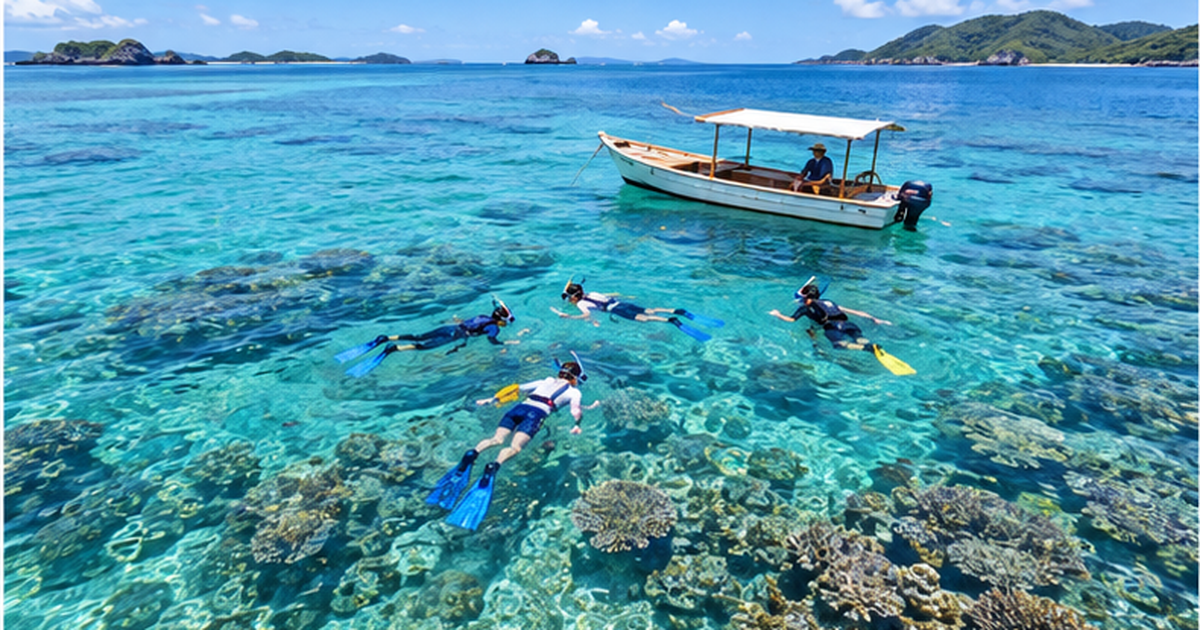
While snorkeling in Okinawa's waters, you might hear a guide say, "We won't use this spot today, another boat is crowding it." This is not a random courtesy — it's a rule rooted in a system called ecotourism.
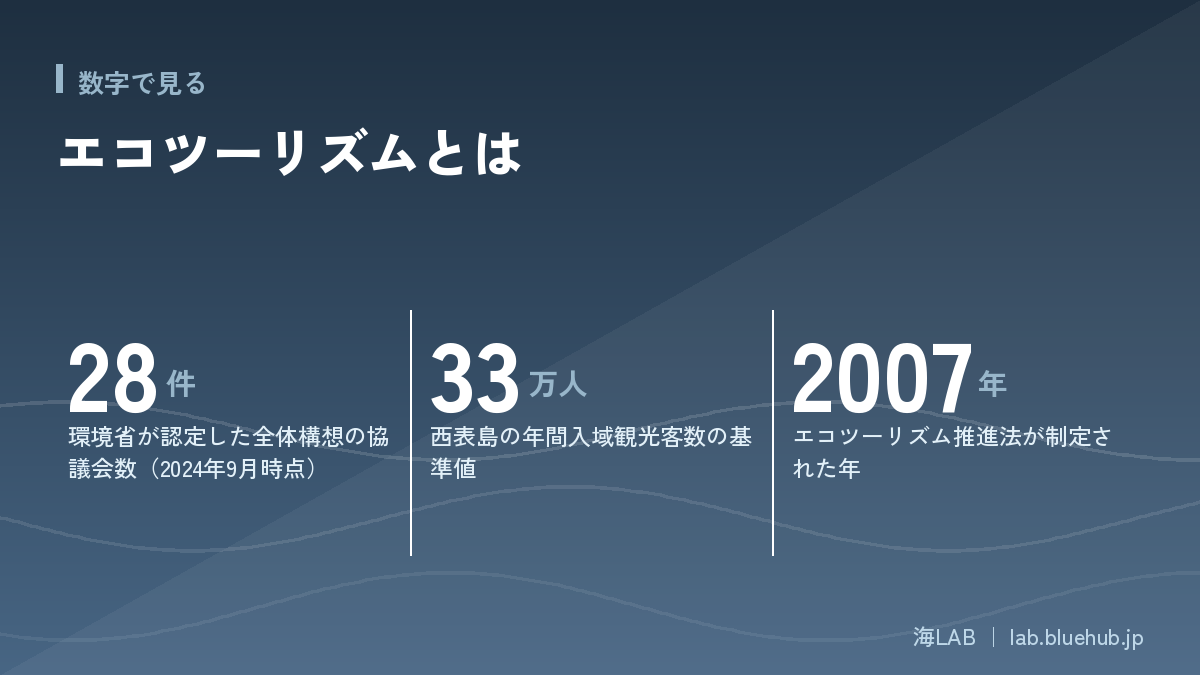
Ecotourism is a form of tourism in which travelers, operators, and local communities share responsibility for learning from and protecting nature and local culture, rather than simply "consuming" it. In Japan, the Ecotourism Promotion Act was enacted in 2007, and the Ministry of the Environment supports regions nationwide through a certification system.
This article organizes the definition of ecotourism and the rules actually in place at Japan's leading sites — Iriomote Island, the Kerama Islands, Yakushima, and Shiretoko — along with what travelers can do to enjoy and protect nature at the same time, based on primary sources.
What you'll learn in this article
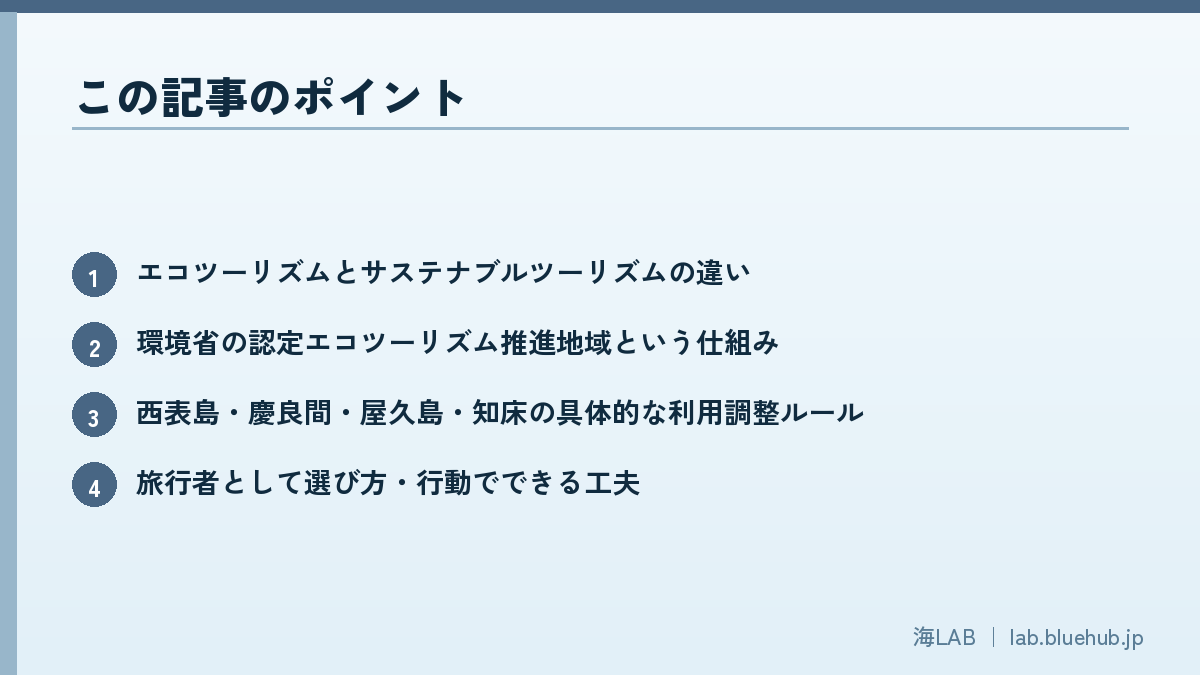
- The difference between ecotourism and sustainable tourism
- How Japan's certified ecotourism promotion area system works
- Concrete usage rules at Iriomote, Kerama, Yakushima, and Shiretoko
- Practical ways travelers can choose and act
- Challenges ecotourism faces, including the tension with overtourism
What is ecotourism?
Ecotourism refers to a form of tourism in which people experience and learn about the natural environment and local history and culture, while also taking responsibility for their conservation. It is not simply traveling amid nature — the defining feature is that "learning" and "protecting" go hand in hand.
How it differs from sustainable tourism
A concept often confused with ecotourism is "sustainable tourism." The UN World Tourism Organization (UNWTO) defines sustainable tourism as tourism that "takes full account of its current and future economic, social and environmental impacts, addressing the needs of visitors, the industry, the environment and host communities." While ecotourism centers on experiencing and conserving nature and culture, sustainable tourism is a broader concept spanning economic, social, and environmental dimensions. Ecotourism is best understood as one method for realizing sustainable tourism.
To put it more concretely, sustainable tourism is closer to an "industry-wide policy" covering the entire tourism sector — energy efficiency at large hotels, securing local employment, preserving cultural assets, and other efforts spanning economic, social, and environmental concerns. Ecotourism, on the other hand, treats nature and local culture as "the object of experience," emphasizing that the experience itself builds learning and conservation awareness in travelers. It helps to picture ecotourism as one method positioned under the broader umbrella of sustainable tourism.
The term "ecotourism" itself came into international use in the 1980s, initially discussed mostly in the context of tourism development in nature reserves in Latin America and Africa. As deforestation and poaching eroded natural resources, the idea emerged that income from tourists who came "to see nature itself" could become a source of funding to maintain protected areas. In Japan, this concept spread widely after Shirakami-Sanchi and Yakushima were registered as World Natural Heritage sites in 1993.
World Natural Heritage registration dramatically raises a region's profile, but it also brings the side effect of visitor concentration beyond what was anticipated. At Yakushima and Shiretoko, visitor numbers surged for several years right after registration, surfacing problems such as trail erosion, insufficient restrooms, and congestion. Drawing on this experience, the lesson that usage-adjustment systems should be established before raising a site's profile is now being applied to the planning of later heritage candidates.
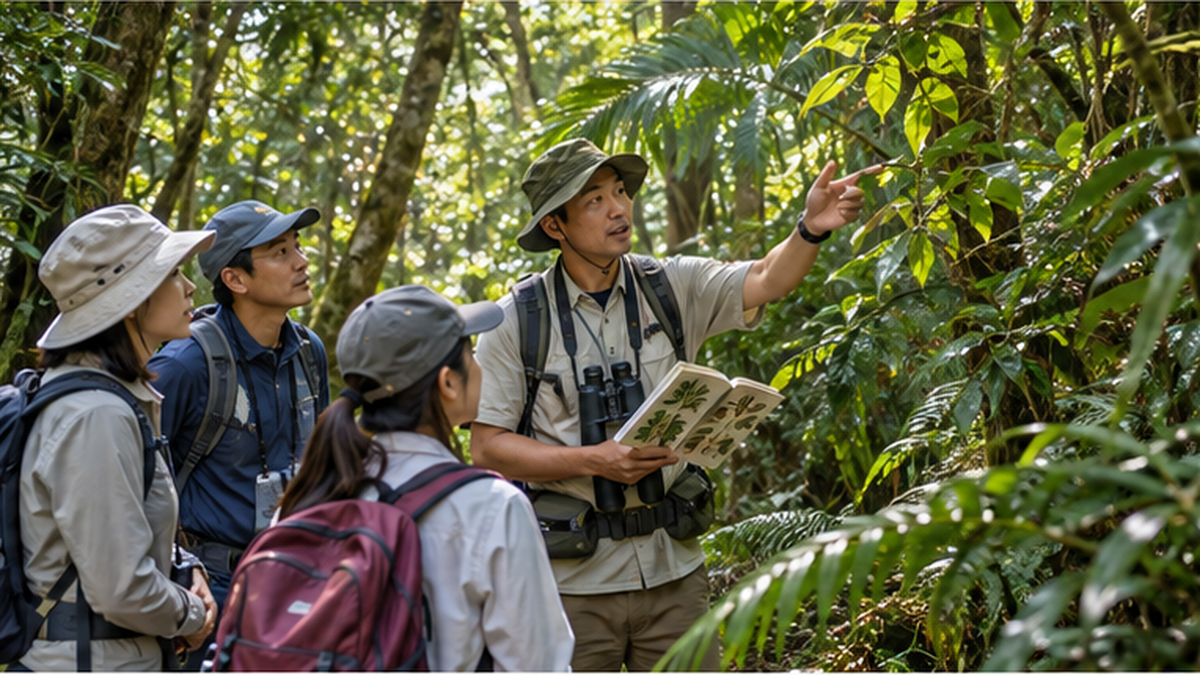
Three conditions of ecotourism
- Enables experiencing and learning about nature and culture
- The experience is linked to conservation activity
- It creates sustained benefit for the local community
The third condition: benefiting the local community
An often-overlooked part of the ecotourism definition is the condition that it must create "sustained benefit for the local community." Experiencing and learning about nature alone could, in theory, happen even with a fully self-contained tour that bypasses the local community. But in that case, funds and labor for maintaining the natural environment never flow back to the region, and conservation activity itself becomes unsustainable in the long run. Ecotourism functions as a sustainable system only when tourism spending — guide fees, lodging, food — flows into the local economy, with a portion cycling back into conservation and monitoring costs.
Conversely, a situation where tourists visit a nature reserve in a way disconnected from the lives and livelihoods of local residents departs from the ecotourism concept. The fact that fishing cooperatives, diving operators, and local residents are core members of the councils at Iriomote Island and the Kerama Islands is itself a mechanism for institutionally guaranteeing this condition of "local community benefit."
Japan's certified ecotourism promotion area system
Japan enacted the Ecotourism Promotion Act in 2007, with the Ministry of the Environment leading nationwide efforts. Under the law, municipalities engaged in ecotourism organize councils and can apply to the competent ministers (the Ministers of the Environment, Land, Infrastructure, Transport and Tourism, Agriculture, Forestry and Fisheries, and Education, Culture, Sports, Science and Technology) for certification of a "master plan" covering implementation methods and protection of natural tourism resources.
| Item | Details |
|---|---|
| Legal basis | Ecotourism Promotion Act (enacted 2007) |
| Applicant | Councils organized by municipalities |
| Certification content | Master plan (implementation methods, protection of natural tourism resources, etc.) |
| Certified cases | 28 (as of September 2024) |
| Ministry of the Environment support | Grants, human resource development programs, the Ecotourism Grand Prize, and a promotion manual |
Certified regions receive support such as grants and human resource development programs, and outstanding initiatives are recognized with the "Ecotourism Grand Prize." From 2025 into 2026, a review committee has been examining revisions to the basic policy for promoting ecotourism, and discussions on how the system should operate continue.
The path to certification
Reaching certification of a master plan involves several stages. First, diverse stakeholders — local municipalities, tourism operators, nature conservation groups, fishing cooperatives — form a council. Next, they survey what natural tourism resources exist in the area and what pressures are on them, then draft a master plan that includes usage rules such as visitor caps, no-entry zones, and whether guide accompaniment is required. The completed plan is submitted to the competent minister and certified after review. Even after certification, the council continues its activities and revises the plan as needed.
The key point of this system is its "bottom-up" design: rather than the national government imposing rules unilaterally, the region itself drafts the plan and the government supports it. Because natural environments and tourism realities differ from place to place, councils can craft rules suited to on-the-ground conditions instead of applying uniform national standards.
What a master plan includes
A master plan covers the scope of targeted natural tourism resources, basic policies for promoting ecotourism, usage rules (restricted-entry zones, visitor capacity, whether guide accompaniment is required, etc.), a promotion structure, and a monitoring plan. Rather than simply declaring "this area is rich in nature," the plan is distinctive in specifying in advance exactly which zones will be used how, how they will be monitored, and how problems will be addressed if they arise.
After certification, the council regularly tracks usage conditions and can apply to revise the master plan as needed — for example, if visitor numbers exceed projections, or if new tourism resources need to be added to the protected scope. This premise that the system is not "set once and left alone," but continuously operated and revised, is a concept common to environmental conservation efforts in general.
A global movement and a growing market
The idea of ecotourism is not unique to Japan. The 1993 registration of Shirakami-Sanchi and Yakushima as World Natural Heritage sites is considered the trigger for rising eco-tour demand within Japan. Globally, too, interest in travel that experiences nature and culture while limiting environmental impact has been rising year by year, and the ecotourism-related market is expected to expand significantly in the coming years.
The trend shift behind this growth
A shift from the traditional model of "accepting and monetizing large numbers of tourists" to a model where "a limited number of visitors experience nature deeply, and that value flows back into conservation" has become a global trend in tourism policy.
This shift is also thought to reflect a change in travelers' own values following the pandemic. After years of restricted movement, more travelers now emphasize not just "where to go" but "how to engage with a place," fueling interest in small-group tours that avoid crowds and in slower travel spent in nature. Ecotourism also serves as a receptacle for this changed demand.
At the same time, concerns have been raised about "greenwashing" — where the word "ecotourism" is used to create a vaguely eco-friendly image for tour products without real conservation substance behind it. When choosing a tour, checking specifically what conservation activities and local benefit-sharing are actually taking place, rather than just the word "eco," helps support ecotourism in its true sense.
Iriomote Island: visitor caps and zoning
Based on the "Iriomote Island Ecotourism Promotion Master Plan," Okinawa Prefecture's Iriomote Island has set a target annual visitor cap of 330,000 and a daily visitor capacity target of 1,230. Setting numerical caps is an attempt to keep the burden on the natural environment within a certain range.
The challenge of day-trip-centered tourism
On Iriomote Island, the lodging rate remains around 22% (fiscal 2015), with many visitors arriving on day trips from Ishigaki Island. A higher share of day-trippers means the environmental burden concentrates within short periods, and encouraging visitors to extend their stay on the island is cited as an ongoing challenge.
About 90% of Iriomote Island's area is designated as part of Iriomote-Ishigaki National Park, known for its subtropical mangrove forests and as habitat for the Iriomote wildcat. On canoe tours up mangrove rivers and jungle trekking tours, routes and time windows are set in advance, and some routes require certified guide accompaniment. Managing how often and along which routes people enter the habitat of rare species helps balance species conservation with tourism use.
The master plan also incorporates a mechanism for the council to consider strengthening usage adjustments if signs emerge that visitor numbers may exceed the target cap. Rather than setting a numerical target once and leaving it, the premise of continuously monitoring actual usage and revising accordingly is a concept shared across ecotourism efforts in other regions as well.
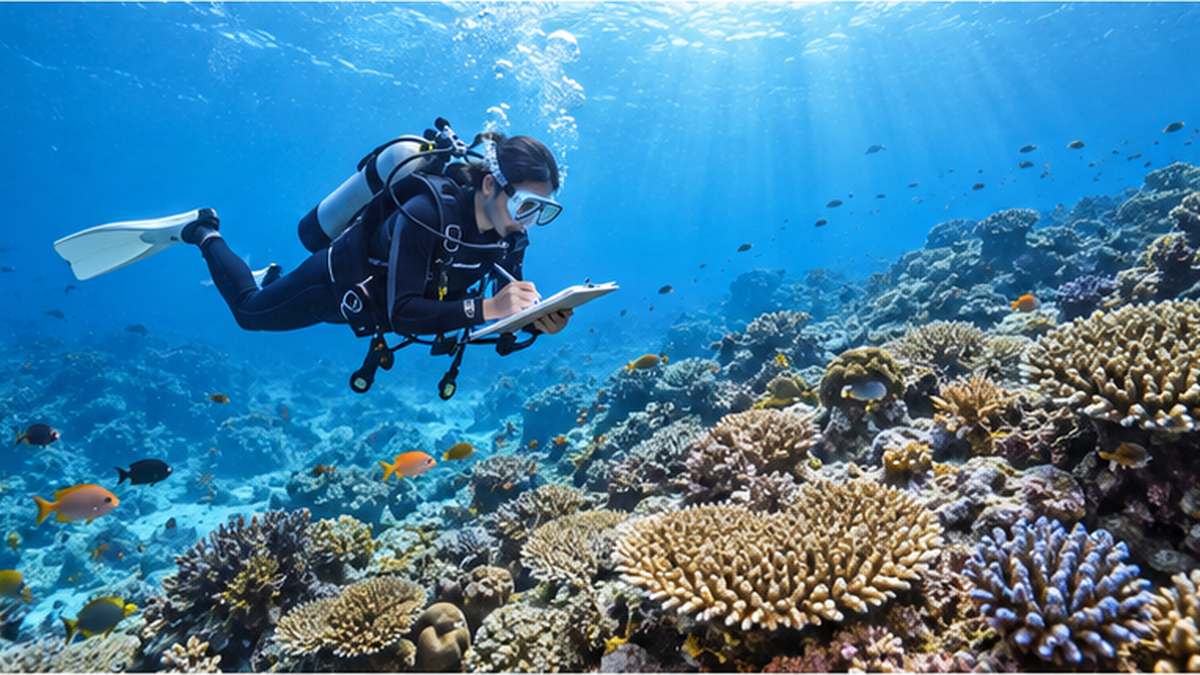
The Kerama Islands: spreading out dive points and coral protection rules
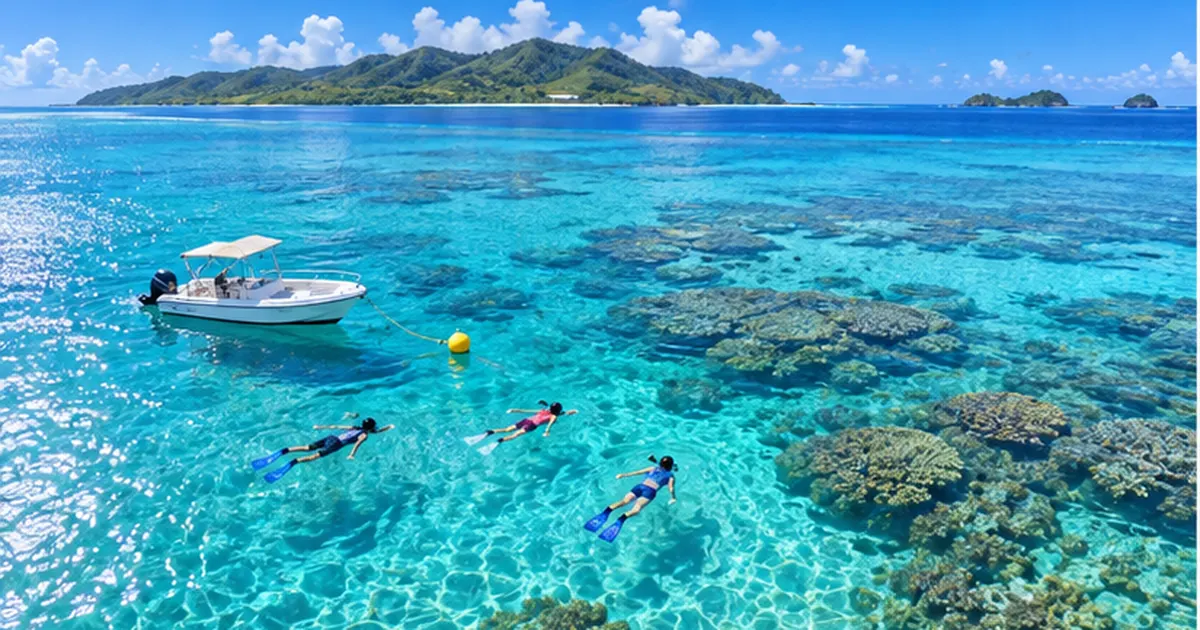
Known as a world-class diving destination, the Kerama Islands (Tokashiki Village and Zamami Village) operate under the "Kerama Region Ecotourism Guidelines," which set usage-adjustment rules for diving and snorkeling.
- If other boats are already concentrated at a point, move to a different point whenever possible
- Avoid intensively using the same point over a short period; use multiple points across a wide area
- Prohibit stopping (such as anchoring) at coral conservation points, including areas registered under the Ramsar Convention
Diving associations on each island also carry out voluntary conservation activities such as culling crown-of-thorns starfish and monitoring. Behind these rules is the recognition that factors damaging coral include not only warming and red-soil runoff but also the concentrated pressure of everyday diving use. Crown-of-thorns starfish culling is discussed in detail in the mechanism behind crown-of-thorns starfish outbreaks and frontline culling efforts.
The Kerama Islands were designated a national park in 2014, and the surrounding waters are also registered under the Ramsar Convention. Known globally for exceptionally clear water, the area draws divers from Japan and abroad seeking the blue known as "Kerama Blue." Because of this popularity, the tendency for boats and divers to concentrate at particular popular points is a challenge shared by popular dive spots well beyond Kerama.
Behind the guidelines lies a history of diving operators themselves taking the lead, driven by a sense of urgency that "if we don't protect the coral reefs that are our business, the tourism resource itself will eventually be lost." Rather than the government imposing regulation from above, the pattern in which operators voluntarily set rules that the government then backs through a master plan is a widely seen feature of ecotourism in Japan.
Yakushima and Shiretoko: managing World Natural Heritage sites
On Yakushima, total annual visitor numbers reached 310,000 (fiscal 2003), with 41,000 visitors a year (fiscal 2001) heading to the ancient Jomon Sugi cedar, said to be thousands of years old — roughly one-seventh of all visitors to the island. This concentration on a specific route has long been a challenge. Yakushima's vertically distributed ecosystem is covered in detail in Yakushima's vertical distribution and its Yakusugi cedars.
At the Shiretoko World Natural Heritage site in Hokkaido, the "Shiretoko Ecotourism Strategy" was decided in March 2013, setting basic policy for tourism use. Given the unique circumstance that brown bear habitat lies close to areas of tourism use, routes, timing, and visitor numbers are managed to balance use with conservation.
In Shiretoko, rules change with the season and animal behavior — for example, closing certain trails or requiring guide accompaniment during periods of heightened brown bear activity. Because visitor safety and the conservation of habitat for brown bears and other wildlife must be achieved simultaneously, operations here are considered more demanding than in other regions. In the Shiretoko Goko Lakes usage-adjustment area, attending a lecture during the bear-activity season is a condition for entry at certain times — a system that goes beyond simple cautionary signage.
What Yakushima and Shiretoko have in common is that international recognition as World Natural Heritage sites drove a surge in tourism demand, forcing the reception infrastructure to be built after the fact. The difficulty of establishing a careful usage plan before registration is now a lesson being applied to the planning of future heritage-site candidates.
On Yakushima, in addition to the route to Jomon Sugi, more accessible courses such as Shiratani Unsuikyo and Yakusugi Land have been developed, helping to spread visitors across multiple routes. In World Heritage sites where popularity tends to concentrate on a single point, preparing such "attractive alternative routes" is itself one effective usage-adjustment measure.
A shared approach
- Manage visitor numbers, timing, and routes through numerical targets and zoning
- Have the local council take the lead in continuously revising rules
- Operate alongside conservation activity such as monitoring, culling, and cleanups
Marine ecotourism and its relationship to tourism
Ecotourism centered on coral reefs is also drawing attention for how it balances conservation and economics. As explained in coral reefs as natural breakwaters, reefs weaken wave energy and protect coastlines, making them a resource whose tourism value overlaps with its disaster-prevention value. Coral reef tourism etiquette in Okinawa is covered in how to enjoy Okinawa's coral reef tourism while protecting it, and broader sustainable marine tourism efforts are summarized in what sustainable ocean tourism is.
This usage-adjustment thinking also overlaps considerably with the idea of "Marine Protected Areas (MPAs)," which protect ocean areas by drawing legal boundaries. The distinction is explained in detail in what Marine Protected Areas (MPAs) are. Whereas marine protected areas are "legally designated zones restricting entry or fishing," ecotourism usage adjustment is "managing tourism use itself through voluntary rules" — the two are complementary.
One reason marine ecotourism is especially valued is the scale of ecosystem services that coral reefs and tidal flats provide. Their function as spawning and nursery grounds for fish, their water-purifying role, and their economic value as a tourism resource all overlap in the same place, so overfishing or overuse can damage both fisheries and tourism at once. In several regions of Okinawa, fishing cooperatives, diving operators, and government bodies sit on the same council to shape rules together, reflecting this overlap of interests.
Ecotourism on tidal flats and in mangroves
While diving and snorkeling on coral reefs tend to draw the most attention, ecotourism centered on tidal flats and mangrove forests is also spreading in many areas. On canoe tours through mangrove waterways, routes are adjusted to match the timing of high and low tide, allowing close observation of tidal-flat creatures such as fiddler crabs and mudskippers living among the roots. These tidal-flat environments also serve as nursery grounds for juvenile fish, supporting fishery resources and forming an important foundation for both tourism and fishing.
Because tidal flats are easy to enter on foot, they are also prone to unregulated trampling and the collection of wildlife. Many mangrove tours address this by having a guide accompany visitors, limiting the areas and times entered and minimizing contact with wildlife. It is precisely because tidal flats are so accessible to individuals that guide accompaniment carries real significance.
In some tidal flats on Iriomote and Ishigaki islands, canoe tours are restricted during breeding seasons, or entry to certain waterways is limited to specific times of year. Because many tidal-flat creatures have different periods when they are most vulnerable, depending on growth stage or breeding season, flexible operation that switches between opening and restricting access by season — rather than fixing a single "no-entry zone" — is required.
The money that sustains ecotourism
Running ecotourism on a continuous basis requires funding. Beyond tourism revenue such as guide fees and facility usage fees, a growing number of regions in Japan collect small direct contributions from visitors under names such as "forest entry fees," "cooperation fees," or "conservation cooperation fees." The funds collected go toward repairing trails and hiking routes, maintaining restrooms and visitor centers, and covering the costs of monitoring surveys.
Financial support from the Ministry of the Environment
The Ministry of the Environment supports certified ecotourism promotion areas through grants, human resource development programs for guides and council staff, the "Ecotourism Grand Prize" recognizing outstanding initiatives, and the "Ecotourism Promotion Manual" as a practical guide — backing regions from multiple angles. Human resource development in particular is essential for maintaining a consistent quality of certified guides and accurately conveying usage rules to visitors.
At the same time, building mechanisms for regions to secure funding independently, rather than relying solely on public support, is recognized as a challenge. In some countries overseas, systems have been established in which national park entrance fee revenue is applied directly to conservation activity, and within Japan discussions continue on how to expand cooperation-fee schemes and link them with lodging taxes and tourism-purpose taxes.
How the money flows
- Guide fees, cooperation fees, and lodging payments from visitors flow into the region
- A portion is allocated to facility maintenance, monitoring, and human resource development
- Maintaining conservation quality also sustains the destination's appeal as a tourism site
What travelers can do
Ecotourism is sustained not only by systems and operators but also by the choices of individual travelers. Without any special preparation, small efforts like the following contribute to conservation.
- Choose a tour accompanied by a certified or local guide, who is well versed in the rules and can offer appropriate guidance
- Avoid crowded periods and times of day; choose off-peak seasons or early mornings when possible
- Do not touch coral or wildlife directly, and choose reef-friendly sunscreen ingredients
- Always check and follow locally posted usage rules, such as no-entry zones or photography restrictions
- Where possible, choose tours that include a conservation donation or a cleanup component
Preparation before your trip
- Check in advance whether your destination is a certified ecotourism promotion area
- Read through the rules published by the local council or visitor center
- Pack light and plan to carry your own trash out with you
Sunscreen ingredients and their impact on the ocean
When entering coral reef waters for snorkeling or diving, sunscreen ingredients also deserve attention. Some UV-absorbing chemicals, such as oxybenzone and octinoxate, have been linked to coral bleaching and abnormal larval development, and some destinations overseas have introduced ordinances restricting the use or sale of sunscreens containing these ingredients. Within Japan too, a growing number of tour operators recommend "reef-safe" sunscreens free of such ingredients. Combining this with UV-blocking clothing, such as rash guards, can also reduce the amount of sunscreen used overall.
What to check when choosing a guide
When choosing a tour company or guide, checking more than just price and reviews can bring you closer to a genuine ecotourism experience. First, is the guide registered under the region's certified guide system? Second, does the tour's explanation go beyond simply introducing wildlife and scenery, clearly conveying conservation precautions such as not touching, chasing, or collecting? Third, whether a portion of the tour fee goes toward conservation activity or local environmental education can often be confirmed on the operator's website or brochure.
Challenges facing ecotourism
Ecotourism is not a cure-all. Its own rising popularity can, ironically, drive an increase in visitor numbers — overtourism — that exceeds the capacity originally envisioned. As Iriomote Island's low lodging rate shows, how to disperse the concentration of day-trippers remains a common challenge across regions.
Participation in the certification system and operation of usage-adjustment rules also place an ongoing burden on local councils. In regions with limited staff or funding, simply setting rules is not enough — continuing to operate and revise them becomes a challenge in itself. Making ecotourism work over the long term requires understanding and cooperation from travelers as well.
There is also a dilemma in that overly strict usage-adjustment rules can reduce local tourism revenue, shrinking the very funding base for conservation activity. Where to strike the balance between rules and revenue differs by region, depending on the state of the natural environment and how dependent the local economy is on tourism — there is no single correct answer. This is precisely why the ongoing process of councils continuously gathering data and adjusting rules accordingly is, in itself, the essence of ecotourism.
Human resource challenges also deserve attention. Serving effectively as a certified guide — delivering nature interpretation, managing safety, and communicating conservation precautions — requires specialized training and accumulated experience. In some regional tourism areas, a shortage of younger workers and the income instability of the off-season make the sustainability of guiding as a profession a real challenge. Sustaining ecotourism over the long term requires investing not only in conserving the natural environment but also in the people who support it.
What individual travelers can do may seem limited, but in practice, the accumulation of tour choices and on-the-ground behavior becomes data that local councils draw on when designing future rules. Usage records themselves — how many people used which point, during which season — become material for future rule design. The practice of enjoying nature while protecting it exists as an extension of each traveler's individual actions.
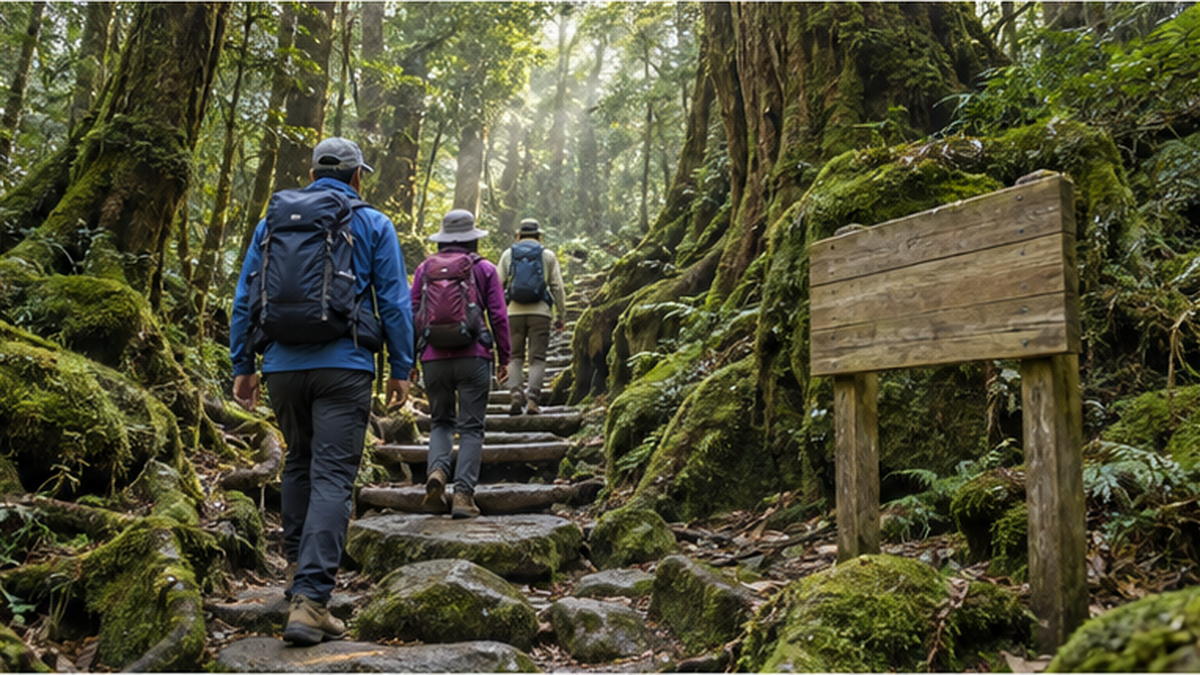
Climate change as a new variable
Many of ecotourism's usage-adjustment rules are designed based on trends in past visitor numbers. But climate change — rising sea temperatures driving coral bleaching, shifting typhoon intensity, changing snowfall patterns — is altering the natural environment itself faster than previously assumed. If coral bleaching progresses, the appeal of diving itself can be lost, potentially causing a sharp drop in tourism demand as well. The need to rethink rules not as "fixed structures based on past data" but as "something continuously updated to match a changing natural environment" is beginning to register with councils across regions.
There is also a movement to make this very environmental change part of the learning experience — tours observing bleached coral reefs and their recovery process, and study tours learning about the impact of climate change alongside experts. Ecotourism that conveys not just "nature that has been protected" but "nature that is changing" is gradually spreading as well.
Ecotourism can be reframed not as presenting nature as something fixed to be "shown," but as an ongoing practice of continuously revisiting how people relate to a changing natural world. When local councils, operators, and travelers share the same information and each contribute what they can from their own position, it builds the foundation for passing rich nature on to the next generation.
References and Sources
- Ministry of the Environment, Japan: Ecotourism – Definition of ecotourism and related initiatives
- Ministry of the Environment, Japan: List of certified master-plan councils – Status of certified ecotourism promotion areas
- Ecotourism Promotion Act – The 2007 legal basis (Wikipedia)
- Taketomi Town Iriomote Island Ecotourism Promotion Council – Iriomote Island Ecotourism Promotion Master Plan (PDF)
- Ministry of the Environment, Japan: Kerama Region Ecotourism Guidelines – Usage-adjustment rules for Tokashiki and Zamami villages (PDF)
- Hokkaido Government: Appropriate use and ecotourism in Shiretoko – On the Shiretoko Ecotourism Strategy
- UN World Tourism Organization, Asia-Pacific Office: Definition of sustainable tourism – UNWTO's definition of sustainable tourism
※ Ordered by reliability: government and academic institutions > peer-reviewed papers > specialized organizations > reputable media