⚡ In short
Fishing ports and boats in Tohoku have been restored and landing value stands at 91% of pre-disaster levels, but volume is only 54%. This article uses public documents to examine poor catches, sales channels, workforce shortages, and the shift to aquaculture.
More than a decade has passed since the Great East Japan Earthquake. Fishing ports and boats in Tohoku have been restored, buthas the fishing village truly recovered?There is no single answer to that question.
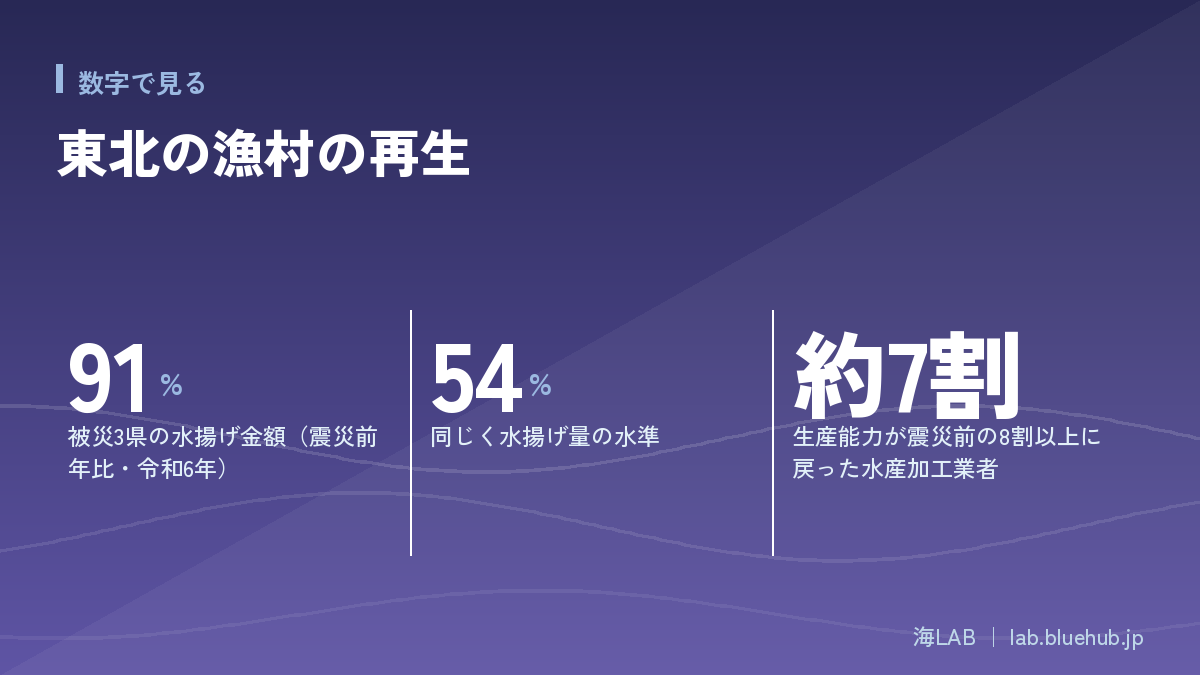
The value of landings has recovered to 91% of the year before the disaster, but the volume stands at only 54%. Poor catches of salmon and Pacific saury, lost markets, and an aging workforce all overlap.
Drawing on public documents from the Fisheries Agency and the Ministry of Agriculture, Forestry and Fisheries, this article organizes where Tohoku's fishing village revival stands today and what will be key going forward.
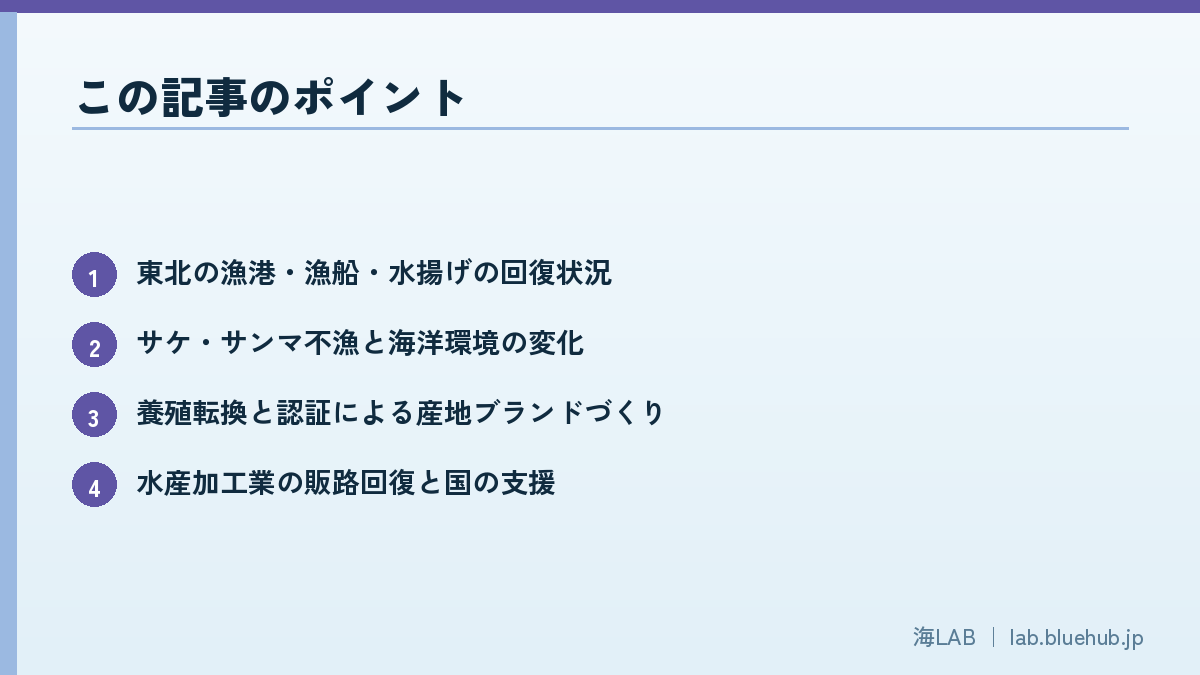
What you will learn in this article
- Recovery of Tohoku's fishing ports, boats and landings
- Poor salmon and saury catches and changes in the ocean environment
- Shifting to aquaculture and building regional brands through certification
- Restoring sales channels for seafood processors and national support
- The current state of workforce shortages and ways to keep people in the industry
- Concrete ways we can support fishing villages
More than a decade after the disaster: what has actually "come back" to Tohoku's fishing villages?
Physical reconstruction is nearly complete
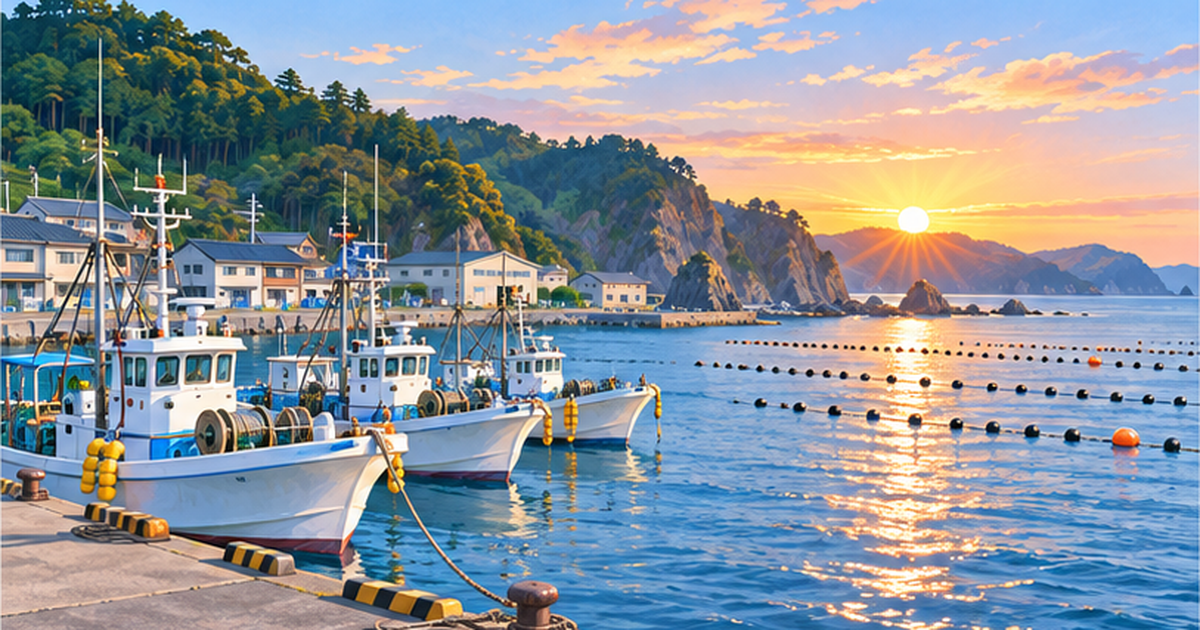
The Great East Japan Earthquake damaged many fishing ports, boats, aquaculture facilities and seafood processing plants, mainly in Iwate, Miyagi and Fukushima. According to the Fisheries Agency, restoration of landing quays and port facilities has been completed at all affected fishing ports. Fishing boat restoration for fishers who wanted it was completed at the end of FY2015 in Iwate and Miyagi. In Fukushima, delayed by the nuclear accident, restoration has proceeded in a planned manner since FY2016.
In other words, the "hardware" side, such as ports and boats, has reached a milestone. But the life of a fishing village does not rest on buildings and boats alone. Can fish be caught? Can they be sold? Are there people to carry on? This is the "second half" of reconstruction, and the central theme of this article.
Landing value is around 90%, landing volume just over half
According to the FY2024 White Paper on Fisheries, landings at the main fish markets in Iwate, Miyagi and Fukushima were compared with the year before the disaster at91% by value and 54% by volume. Compared with the post-disaster peak, value was 96% of FY2023 and volume was 79% of FY2014. That value has recovered more than volume likely reflects higher unit prices and poor catches of high-volume species such as salmon and saury.
| Indicator | Level (FY2024) | What it tells us |
|---|---|---|
| Landing value (vs. year before disaster) | 91% | Contributed by higher unit prices and added value |
| Landing volume (vs. year before disaster) | 54% | Affected by poor catches of main species and a changing species mix |
| Fishing port landing quays and facilities | Restoration complete | Infrastructure has reached a milestone |
| Seafood processing (capacity recovered to 80%+) | About 70% of businesses | Recovery varies among businesses |
What has "not come back" behind the numbers
Looking only at the numbers, recovery seems steady. However, landing volume at around half does not mean things returned to how they were before the disaster; it shows that things havechanged into a different form. Changes in the ocean environment, population decline and shifting consumption have combined, so that "returning to the way it was" no longer works as a goal.
Key points of this section
- Restoration of ports and boats is almost complete
- Landing value is 91% and volume 54%, so the shape of recovery differs
- The challenge has shifted from "restoring" to "creating a new form"
Poor catches and a changing sea: declines in salmon, saury and Japanese flying squid
Key species at record lows
The Ministry of Agriculture, Forestry and Fisheries reports that in 2021 catches of salmon, Pacific saury and Japanese flying squid all fell to record lows. Salmon was about 54,000 tons, saury about 18,000 tons and flying squid about 25,000 tons. These are species that once supported the regional economy of the Sanriku coast.
Changes in the marine environment behind the decline
Regarding saury, the Ministry explains that after the distribution moved offshore around 2010, changes in the ocean and food environment combined to drive the stock decline. Cited as background are a weakening Oyashio Current and rising water temperatures off eastern Hokkaido and Sanriku. Iwate Prefecture's materials also point out that while salmon, saury and flying squid decline, warm-water migratory fish such as yellowtail and Spanish mackerel are increasing as water temperatures rise.
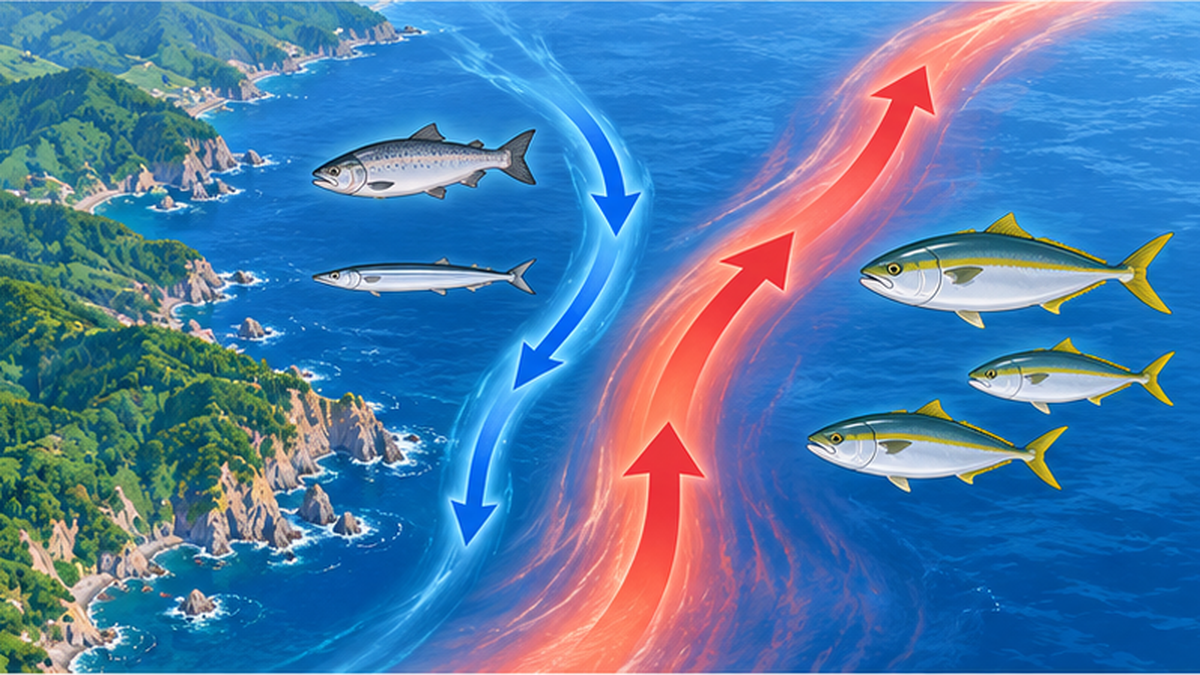
What happens when "the fish we catch" changes?
- Market and processing plants whose equipment assumes conventional species see lower utilization
- Warm-water fish have different volumes and distribution routes, so new sales channels are needed
- Fishers must review gear and operating seasons, bearing the burden of initial investment
In its June 2021 report, a Fisheries Agency panel pointed toward a shift from specialized operations that target one species per vessel to operations targeting multiple species, so-called "de-specialization." The idea is that if the sea changes, fishing must change flexibly too. For more, see also the article onocean warming and fisheries.
Things to keep in mind
Poor catches are not caused by the marine environment alone; multiple factors such as fishing pressure and foreign vessels are involved. What is described here is the representative view presented by public institutions, and research on the contribution of each factor continues species by species.
Shifting to aquaculture and regional brands: from "catching" to "raising"
Kamaishi Salmon and coho salmon farming
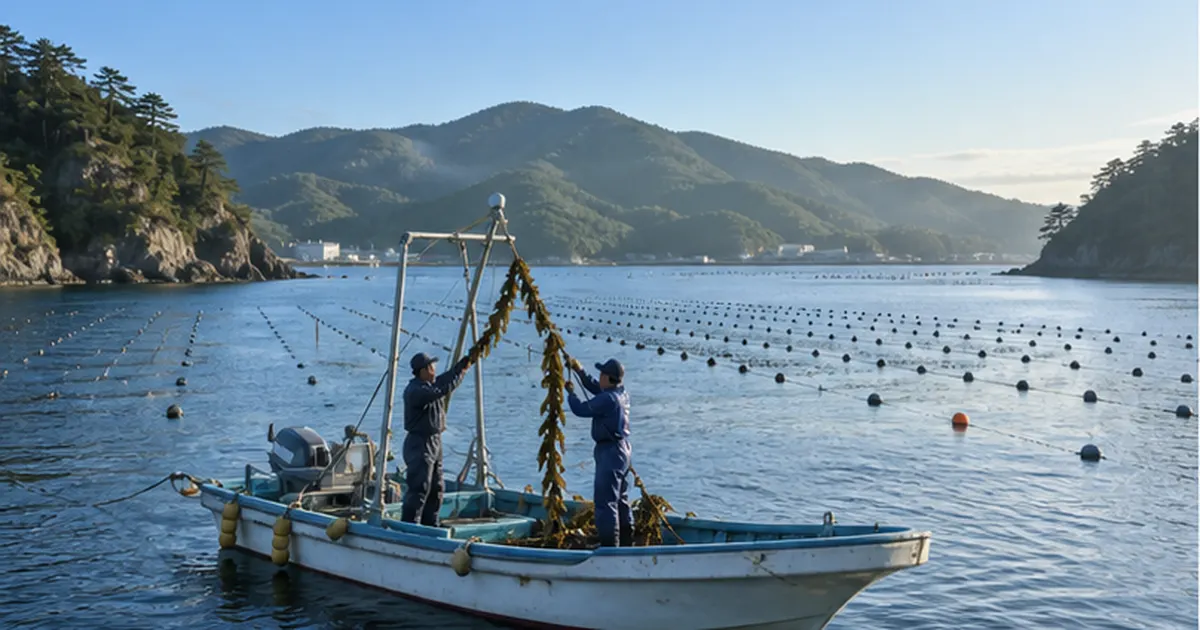
As a substitute for autumn salmon, whose catches continue to be poor, set-net operators in Iwate Prefecture are farming cherry salmon and coho salmon at sea. The coho is being branded as "Kamaishi Salmon," and prefectural materials say it obtained ASC certification, the first in Iwate Prefecture, in April 2024. Sea farming of coho is also carried out at places such as the Kuji City Fisheries Cooperative.
Aquaculture is less affected by weather and sea conditions than wild catches, and its advantage is that shipping timing and volumes are easier to plan. On the other hand, it brings new costs and risks, such as feed costs, securing juvenile fish, and mortality from red tides and high water temperatures. Environmental issues are summarized in the article onenvironmental impacts of aquaculture.
The value that certification and branding bring
ASC is an international scheme that certifies responsible aquaculture. Because a third party verifies consideration for the environment and local communities, producers can give buyers a "reason to choose." Certification takes effort and cost, but it may widen sales channels and strengthen pricing power. For the basics of the scheme, see the article onASC-certified aquaculture.
Rebuilding existing aquaculture of oysters, wakame, scallops and more
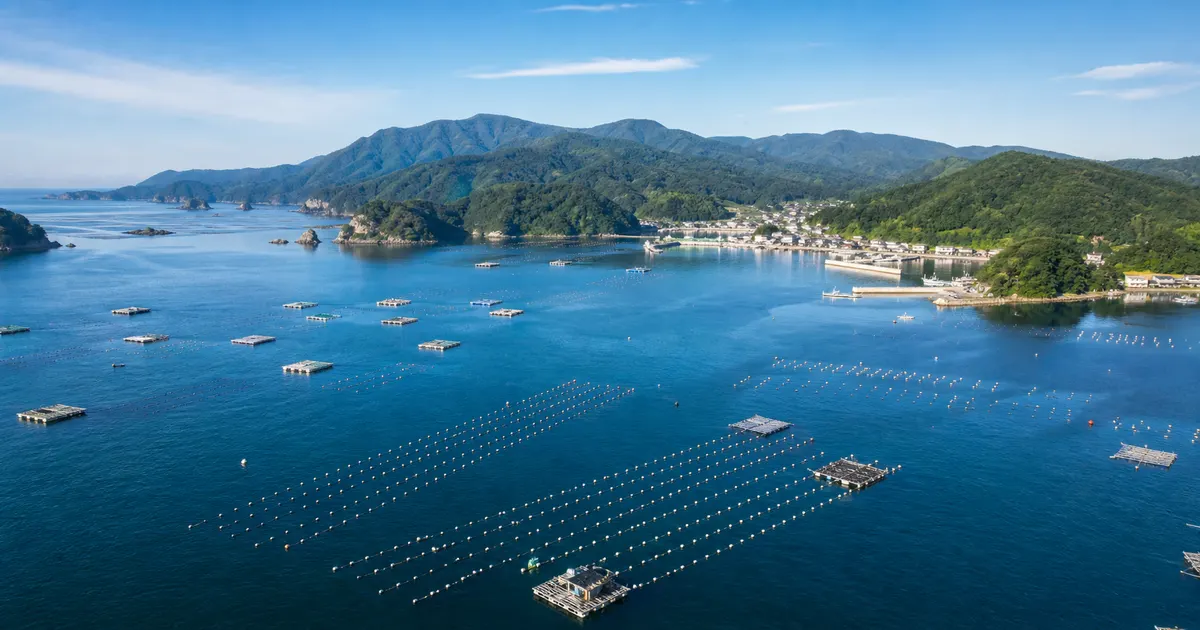
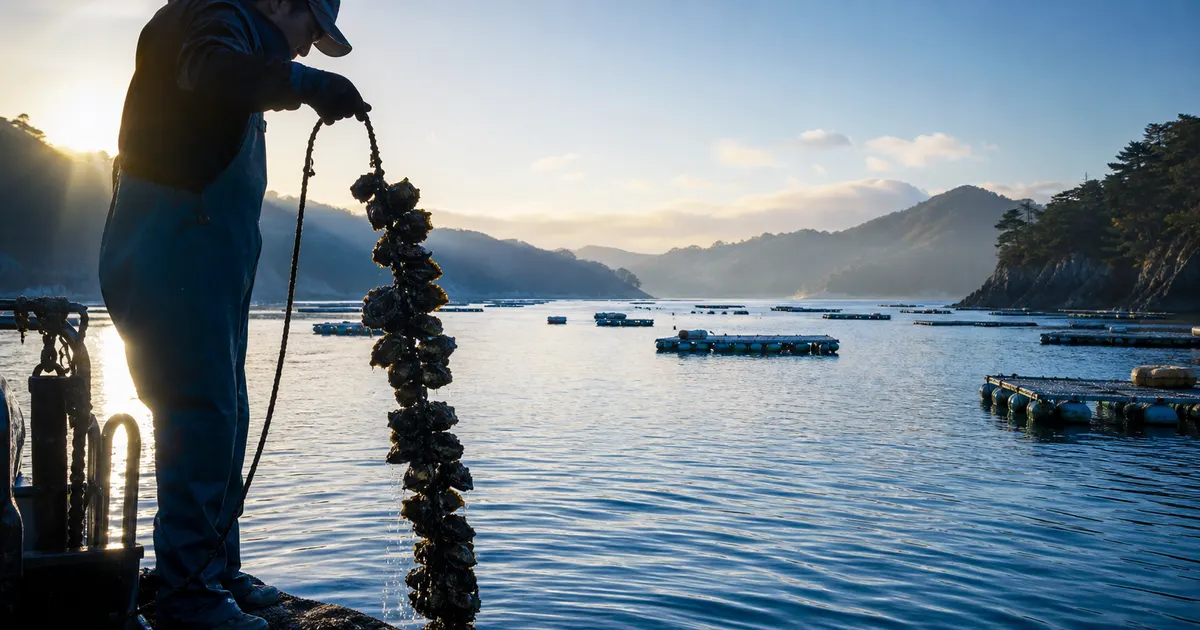
The Sanriku region has long been known for farming oysters, wakame seaweed, scallops and sea squirts. In rebuilding facilities after the disaster, efforts to reduce overcrowding and optimize the number of facilities progressed in many places, and cases of faster growth and improved quality have been reported. This experience is also covered in detail in the article onoyster farming recovery.
| Direction | Main aim | Challenges |
|---|---|---|
| Sea farming of salmon and trout | Compensating for poor autumn salmon catches | Feed costs, securing juveniles, high water temperatures |
| Optimizing existing aquaculture | Quality improvement and labor saving | Facility investment and securing workers |
| Operations targeting multiple species | Spreading the risk of poor catches | Replacing gear and developing sales channels |
| Obtaining certification | Expanding sales channels and making value visible | Effort and cost of audits |
Seafood processing and sales channels: villages survive only if products sell
Recovery in processing is polarized
In a Fisheries Agency survey in January–February 2024, about 70% of seafood processors said their production capacity had recovered to 80% or more of pre-disaster levels. On the other hand, FY2025 budget request materials say half of businesses remain whose sales are below 80% of pre-disaster levels. Even when capacity returns, sales do not. This is where the "sales channel" problem emerges.
How to win back lost customers
While factories were stopped by the disaster, buyers such as supermarkets and restaurants switched to other production areas and imported products. Winning back the original shelf space after reopening is not easy. In addition, reputational damage after the nuclear accident, centered on Fukushima products, has long cast a shadow. This point is covered in the article onseafood monitoring in Fukushima, which introduces the inspection system.
National support programs
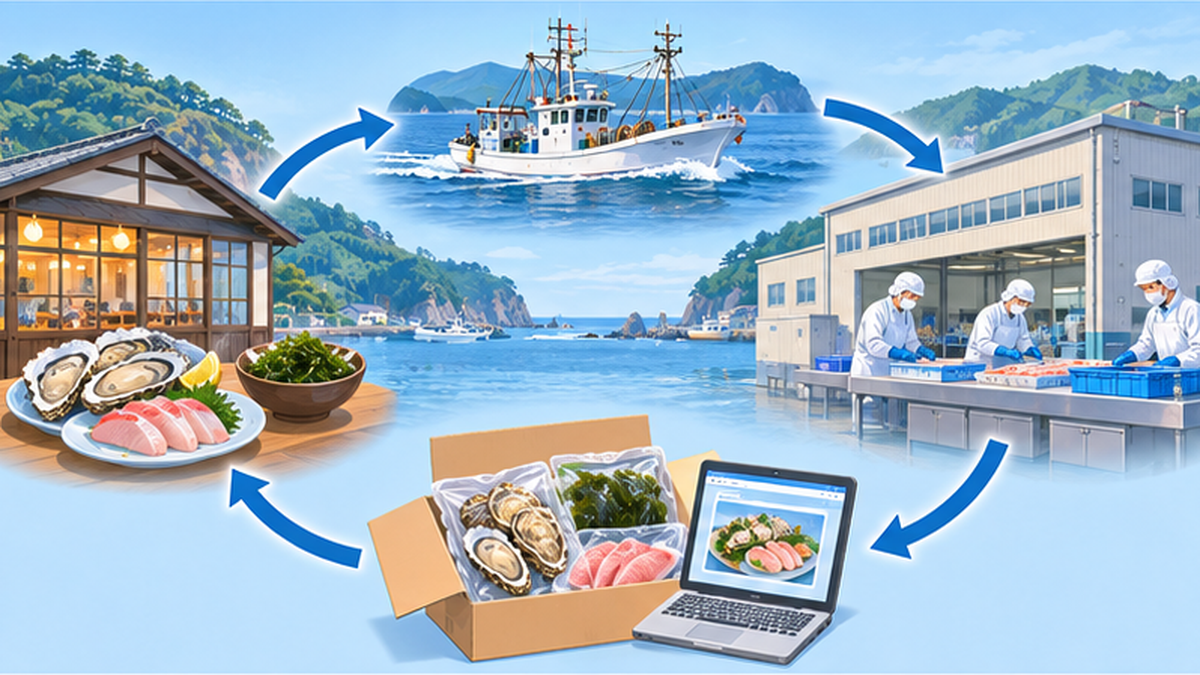
Through its "Reconstruction Seafood Processing Sales Channel Recovery Promotion Guidance Project," the Fisheries Agency supports individual guidance by experts, seminars and necessary equipment. Under the "Seafood Processing Sales Channel Recovery Support Project," processing equipment, radioactivity measuring equipment and marketing expenses are eligible. The target is the heavily affected areas of eight prefectures: Aomori, Iwate, Miyagi, Fukushima, Ibaraki, Tochigi, Gunma and Chiba. FY2025 materials also list support for efforts to sell processed products from affected areas through department store online shops and high-end food e-commerce sites.
- Put the product's strengths (freshness, origin, story) into words
- Have outlets such as mail order, e-commerce and hometown tax donations that sell even in small lots
- Build added value, such as using processing residue (see upcycling fish bones and skin for examples)
- Use certification and origin labels to give buyers a reason to choose
Workforce shortages: how to connect an aging industry with successors
Fishery workers continue to decline
According to the Ministry's Fishing Census (2023), Japan had 121,390 fishery workers, of whom 47,530 were aged 65 or older. In the FY2024 Fishery Structure Dynamics Survey, the total was 114,820, a 5.4% decrease from the previous year, and those aged 65 or older numbered 44,840, about 40% of the total. However, FY2024 is an estimate from a sample survey, so caution is needed when comparing it directly with the FY2023 full census.
Aging was already advancing in affected areas before the disaster, and not a few fishers retired after it. When the number of workers in a village falls, related industries such as markets, ice making, transport and processing also shrink, making it hard to sustain the whole community. The workforce issue is also covered in the article onthe shortage of fishery successors.
Ways to support new entrants
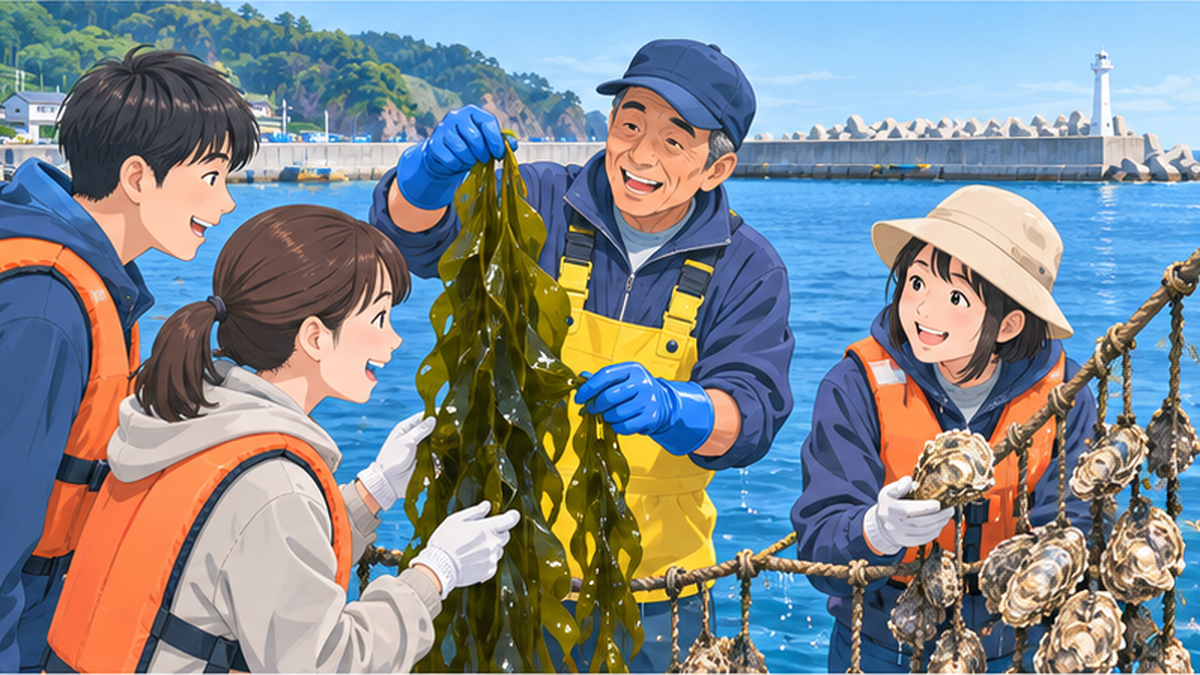
- Training programs and pre-employment trial experiences offered by cooperatives and municipalities
- Mechanisms to jointly own boats and gear and lighten the initial investment burden
- Multi-job work styles that combine fishing with processing and tourism
- Labor saving through ICT and sensors (smart fisheries)
For young people to stay, housing, childcare and education are essential in addition to income prospects. What matters is making not only fishing but life in the village as a whole attractive.
Key point
Measures for fishing village workers take effect only when three things come together: profitability of fishing, living environment, and the community's willingness to welcome newcomers. In reality, any one alone makes it hard for people to stay.
Seawalls, tourism and coastal town planning: balancing livelihoods
Seawalls and a life with a view of the sea
Under reconstruction projects, high seawalls were built in many places. While they protect lives, there were also debates about the sea becoming invisible, changes to fishers' work routes, and effects on landscapes and ecosystems. This issue is introduced in detail in the article onthe debate over rebuilding seawalls.
Turning experiences and learning into local income
Sanriku is rich in tourism resources that combine geoparks, disaster memorial facilities, fishing experiences and food. Fishing village stays that let visitors try a fisher's work, aquaculture harvest experiences, and meals using local ingredients are mechanisms that put money directly into the fishing village. Please also see the article onSanriku Geopark and tourism.
Lessons for Noto and other regions
In recent years, fishing ports and villages were also damaged by the Noto Peninsula Earthquake. Tohoku's experience offers knowledge that other regions can use, such as the order of restoration, protecting sales channels and securing workers. For Noto's efforts, see the article onthe revival of Noto's satoumi.
What we can do: eat, learn, get involved
Choices as consumers
Choosing and eating seafood and processed products from affected areas is the most familiar form of support. Choosing by origin labels and certification marks, in-season fish, and unfamiliar species is also an action that supports fisheries in an era of poor catches.
Three steps to stay involved
- First know: check the current state of landings and aquaculture in each area through public statistics and local government announcements
- Then buy: connect directly with producing areas through mail order, hometown tax donations and product fairs
- Finally visit: talk with local people through fishing experiences and tourism, and stay involved
Summary
- Restoration of ports and boats is complete, and landing value has recovered to 91% of the year before the disaster
- Landing volume is 54%; due to poor catches and ocean change, the challenge is a "new form" rather than "restoring the old"
- A comprehensive effort combining a shift to aquaculture, certification, sales channel development, workforce support and tourism is the key
- Our choices and involvement as consumers support the sustainability of fishing villages
References and sources
- Fisheries Agency, White Paper on Fisheries (FY2024) – Status of reconstruction from the Great East Japan Earthquake
- Fisheries Agency, White Paper on Fisheries (FY2023) – Reconstruction from the disaster
- MAFF, Fishery Structure Dynamics Survey – Number and age structure of fishery workers
- MAFF, Kids' Consultation Room – Poor catches of salmon, saury and flying squid
- Reconstruction Agency, project evaluation materials – Restoring sales channels for seafood processing
- Fisheries Agency, seafood processing measures – Support projects for restoring sales channels
- Iwate Prefecture, poor catch countermeasure materials – Coho salmon farming and the increase in warm-water species
* Listed in order of reliability: government agencies and academic institutions > peer-reviewed papers > specialized organizations > reliable media