⚡ The answer in 30 seconds
- FSC certification is an international system guaranteeing that wood and paper come from a "responsibly managed forest," and it's now being used for paper straws and cups too.
- Restaurant chain Skylark Group adopted FSC-certified paper straws at about 3,000 domestic locations starting January 2022, sharply cutting its use of plastic straws.
- At the same time, overseas research has found PFAS (per- and polyfluoroalkyl substances) in the waterproof coating of some paper straws, showing that paper isn't automatically safe or better for the environment.
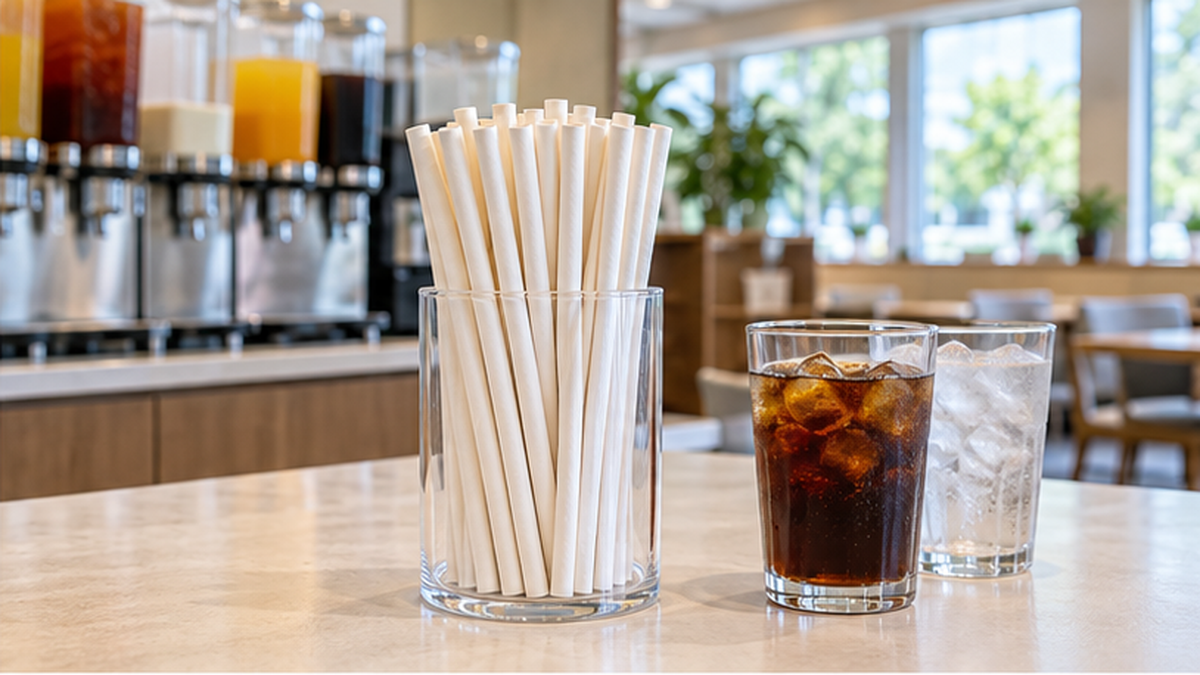
At coffee shops and family restaurants, plastic straws at the drink bar have increasingly been replaced with paper ones, and you may have noticed a small green tree logo reading "FSC" printed on the packaging. What exactly does this certification guarantee? Does switching to paper really solve ocean pollution? Many people probably walk past it without a second thought.
This article explains how the international forest certification system known as FSC works, the social background behind the spread of paper straws and cups, and real examples of companies that have adopted them. We also compare how regulations differ between Japan and the EU, and take a neutral look at issues that have recently been raised about paper products themselves — such as PFAS coatings and the difficulty of recycling.
Rather than assuming "switching from plastic to paper solves everything," this article aims to offer material for rethinking paper straws and cups from multiple angles: forest resource management, ocean plastic countermeasures, and product functionality.
What you'll learn from this article
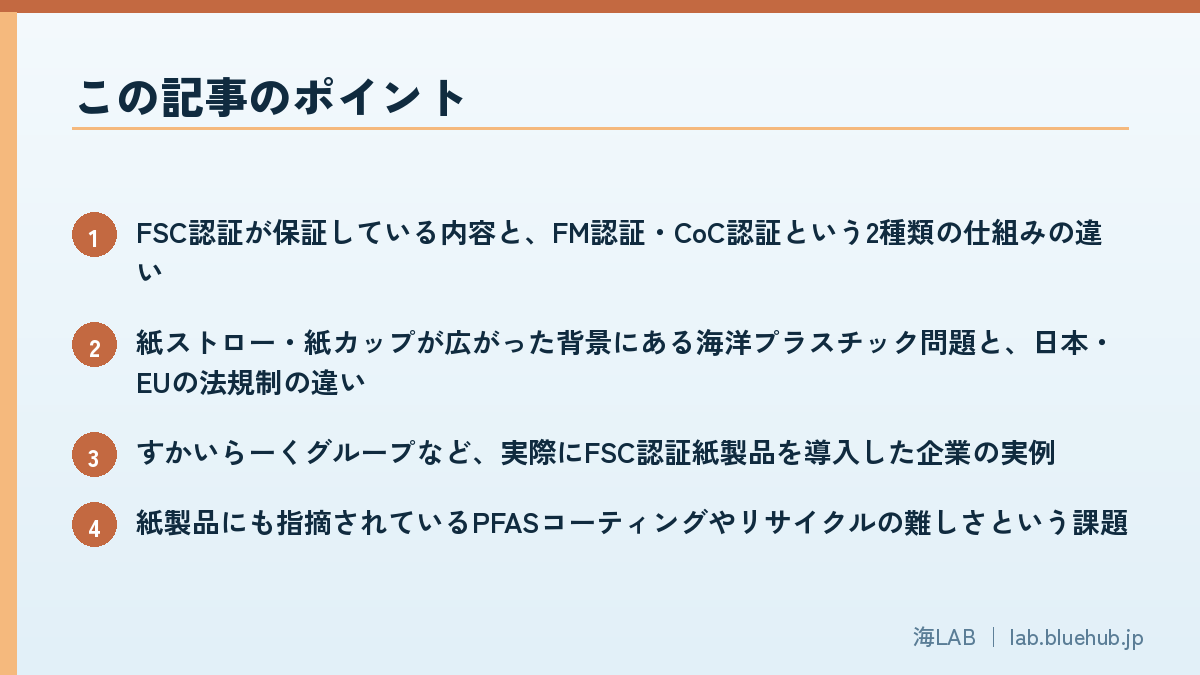
- What FSC certification guarantees, and the difference between its two mechanisms, FM certification and CoC certification
- The ocean plastic problem behind the spread of paper straws and cups, and how regulations differ between Japan and the EU
- Real examples of companies that have adopted FSC-certified paper products, including Skylark Group
- Issues raised about paper products, including PFAS coatings and the difficulty of recycling
- The regulatory momentum on PFAS building in Denmark and the EU, and how Japan's situation differs
- What to look for when choosing between paper products while shopping or eating out
Why paper straws and cups are spreading
The direct trigger behind the rise of paper straws and cups was growing public concern over ocean plastic pollution, followed by tighter regulations both in Japan and abroad.
The scale of ocean plastic waste worldwide and in Japan
One of the moments that made single-use plastic a globally recognized symbol of the problem was a video filmed in 2015 by biologist Christine Figgener. It recorded her removing a plastic straw deeply lodged in the nostril of a sea turtle off the coast of Costa Rica, visibly causing the animal pain. The video spread widely online and became a major push for companies and local governments to consider phasing out or replacing plastic straws.
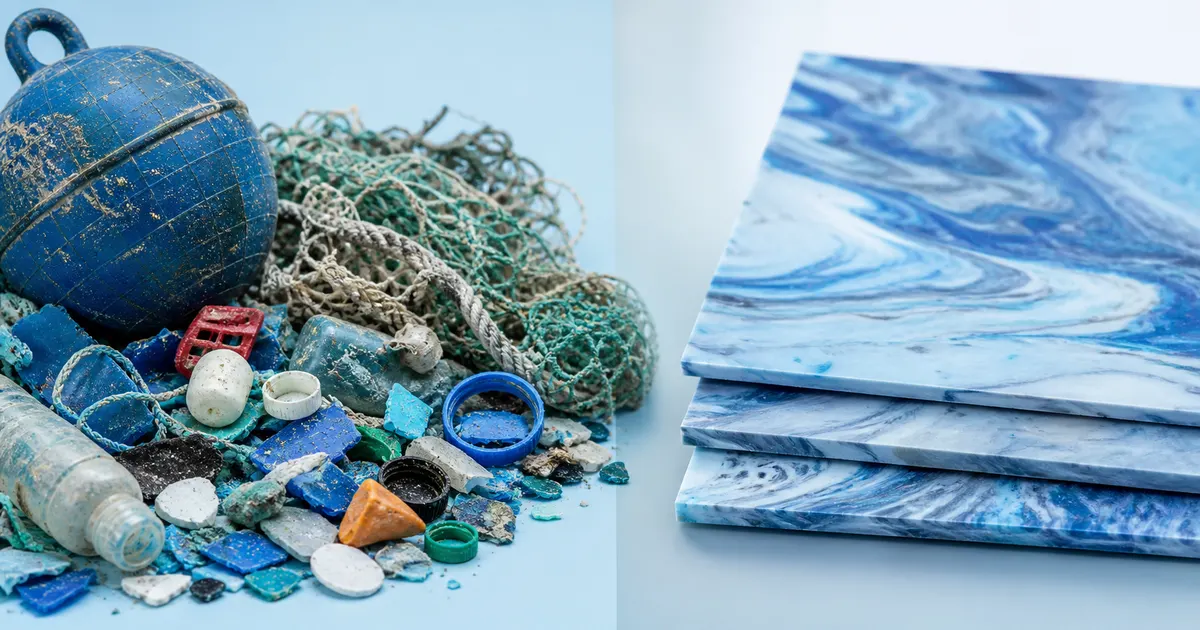
According to a 2016 report by the Ellen MacArthur Foundation in the UK, at least 8 million tonnes of plastic waste flow into the ocean worldwide every year. A 2023 estimate by Japan's Ministry of the Environment put the amount of plastic waste flowing from Japan into the ocean at roughly 11,000–27,000 tonnes using a source/item-based accumulation method, or roughly 2,300–24,000 tonnes using a macro-statistical method — figures that vary depending on methodology, but that nonetheless represent a far-from-negligible amount. Straws and cutlery are only a small part of this, but because they are handed out routinely and in huge volumes at restaurants, they tend to be picked as an easy entry point for countermeasures.
- Global ocean plastic outflow: at least 8 million tonnes per year (Ellen MacArthur Foundation, 2016)
- Estimated outflow from Japan: roughly 2,300–27,000 tonnes per year (Japan's Ministry of the Environment, FY2023 estimate)
- Disposable straws are only part of this, but they are highly visible since they are handed out routinely at restaurants
Japan's 12-item rule vs. the EU's 10-item ban: a different approach
In Japan, paid plastic shopping bags began in July 2020, and in April 2022 the "Act on Promotion of Resource Circulation for Plastics" came into force. The law designates 12 items — straws, spoons, forks, knives, stirrers, hairbrushes, combs, razors, toothbrushes, shower caps, hangers, and clothing covers — as "designated plastic-use products," and requires businesses that use more than 5 tonnes a year to rationalize their use, for example by charging for them or switching to alternative materials. Rather than an outright ban, the distinctive feature of this law is that it asks businesses to voluntarily find ways to cut usage.
The EU, by contrast, adopted its "Single-Use Plastics Directive" in 2019, which took effect across all member states on 3 July 2021. It is a stronger measure that bans the sale of the plastic products themselves for 10 items, including straws, stirrers, plates, and cutlery. These items are said to account for around 70% of the litter found on European beaches, and the directive addresses the problem by removing replaceable disposable products from the market entirely. Seen against this contrast — Japan's approach of "encouraging rationalization" versus the EU's approach of "banning sales" — it becomes clear that when Japanese restaurant chains and retailers switch to paper straws, it reflects a voluntary corporate effort rather than direct legal compulsion.
The broader move away from plastic in convenience stores and retail
Beyond straws, the move away from single-use plastic has spread across retail and food service — from paid plastic bags, to label-less PET bottles, to wrapping for convenience-store rice balls, to wooden or bio-based forks and spoons. The adoption of paper straws and cups should be seen as one piece of this broader set of measures.
What is FSC certification? An international system for protecting forests
The FSC (Forest Stewardship Council) is an international non-profit organization founded in Canada in 1993. It runs a certification system for wood and paper products sourced from "responsibly managed forests." Its purpose is to prevent the trade of timber linked to illegal logging or deforestation, and to promote forest management that respects ecosystems and local communities.
How much forest is being lost worldwide
FSC was born out of growing alarm over global deforestation. According to the Global Forest Resources Assessment published by the UN Food and Agriculture Organization (FAO), the world's forests shrank by a net average of 4.12 million hectares per year between 2015 and 2025. That is a slower pace than the average of 10.7 million hectares per year seen between 1990 and 2000, but it still amounts to the loss of an area of forest each year equivalent to roughly one-sixth of Japan's entire forest area. By region, South America lost the most at an average of 4.22 million hectares per year, followed by Africa at 3.45 million hectares and Asia at 2.02 million hectares — deforestation is concentrated in particular regions. Against this backdrop, forest certification systems like FSC play an important role in making visible where and how the wood and paper we use is sourced.
The difference between FM certification and CoC certification
A system built from two combined certifications
- FM certification (Forest Management): certifies whether the forest itself is managed according to standards covering ecosystem conservation, respect for local communities, and legal compliance
- CoC certification (Chain of Custody): certifies that timber from an FM-certified forest is managed so it does not get mixed with non-certified timber during processing and distribution
- A paper straw or cup carries the FSC mark because both certifications — from the source forest (FM) through to the factory and finished product (CoC) — are linked together
How to spot the certification mark
FSC labels come mainly in three types, used depending on where the raw material comes from.
- FSC 100%: all raw material comes from FSC-certified forests
- FSC Mix: a mix of FSC-certified material, recycled material, and other controlled wood
- FSC Recycled: all raw material is recycled
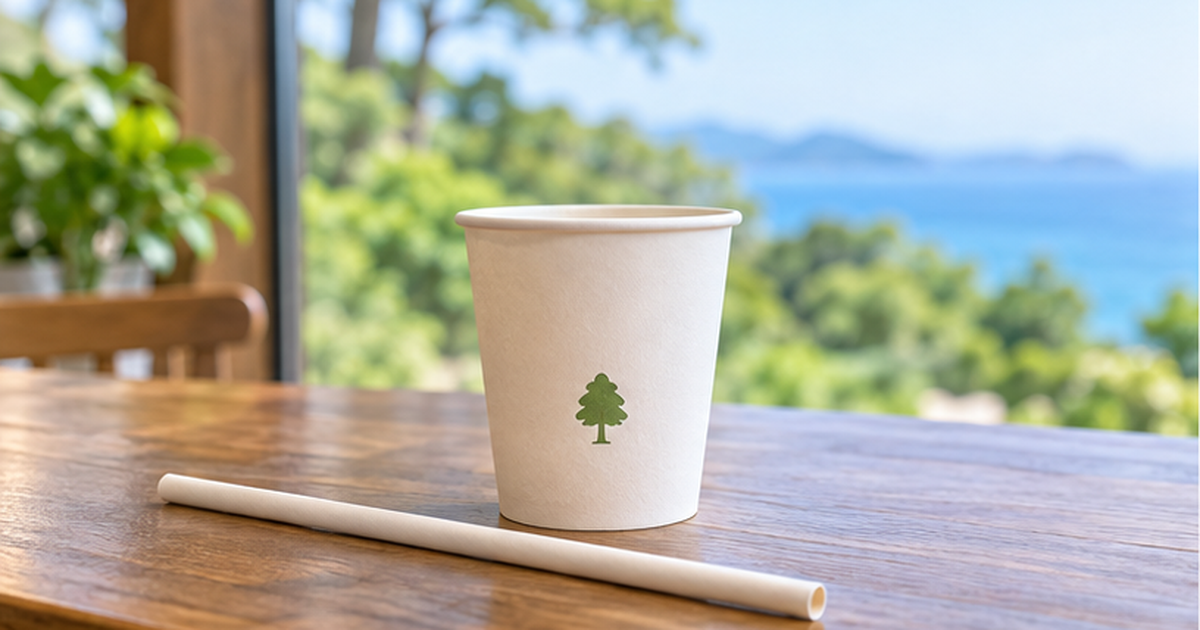
Look for the green tree-shaped logo along with the letters "FSC" and a certification (license) code printed underneath it, typically in a corner of the packaging on a paper straw or the side of a paper cup. Besides FSC, there is also an international forest certification system called PEFC (Programme for the Endorsement of Forest Certification), and in Japan, a domestic certification called "SGEC" has mutual recognition with PEFC. The green FSC logo is the one most commonly seen on paper products, but both systems share the same basic idea: a third party reviews whether forest management is being done responsibly.
FSC-certified products beyond paper straws
FSC certification is not limited to paper straws and cups. The FSC mark appears on a wide range of products, from books, notebooks, copy paper, and tissue paper, to paper food packaging, and even timber used in home construction materials and furniture. Publications and paper packaging are what people encounter most often day to day, but more companies in construction and interior design are also specifying FSC-certified materials. Paper straws and cups are just one part of this broader spread.
The numbers behind FSC-certified forest area, worldwide and in Japan
Let's look at some figures showing how widespread FSC certification has actually become.
FSC-certified forests worldwide
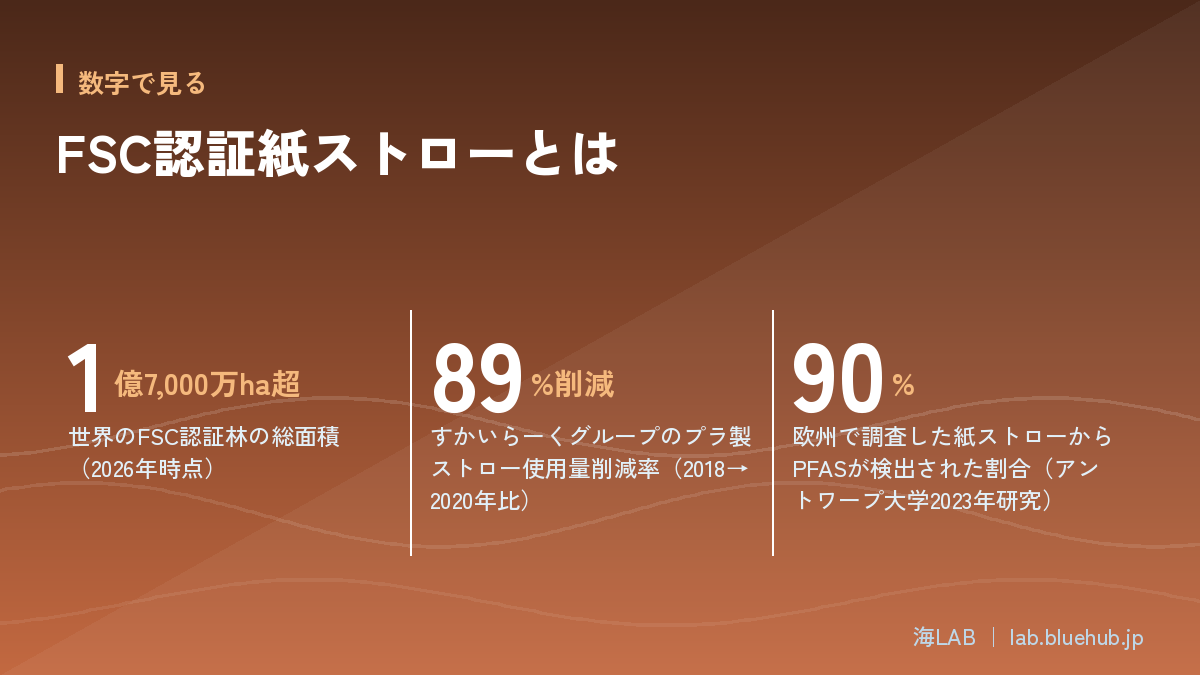
According to figures published by FSC Japan, as of April 2026 FM certification covers 89 countries and roughly 1,800 certificates, with a total certified forest area exceeding 170 million hectares. That is roughly 4.5 times the total land area of Japan (about 37.8 million hectares).
Why certified forest area in Japan remains small
By contrast, FSC-FM certified forest in Japan covers only about 410,000 hectares, spread across just a few dozen certificates. Japan's total forest area is about 25 million hectares, covering roughly 67% of the country's land, yet only about 1.6% of it is FSC certified. One reason is that much of Japan's forest is privately owned in small, fragmented parcels, and the cost and administrative burden of certification and its ongoing maintenance tend to weigh more heavily on owners with smaller landholdings. FSC certification of domestically produced timber therefore remains limited, and paper products rely heavily on certified forests overseas for their raw material.
Obtaining FSC certification in practice requires an initial assessment fee of roughly ¥300,000–¥1,000,000, followed by annual audit fees of roughly ¥200,000–¥500,000 a year, plus a license fee (annual fee) scaled to revenue. On top of that, there are ongoing indirect costs such as building internal management systems and keeping records, which makes obtaining and maintaining certification alone a high hurdle for small forest owners and businesses. As a countermeasure, a "group certification" scheme is also available, in which neighboring small forest owners jointly obtain a single certificate, spreading the cost of certification and its upkeep across the whole group.
| Area | Share of total forest | |
|---|---|---|
| FSC-certified forest worldwide (FM certification) | 170M+ ha | — |
| FSC-certified forest in Japan (FM certification) | ~410,000 ha | About 1.6% of Japan's forests |
| Japan's total forest area | ~25M ha | About 67% of Japan's land |
What these figures show is that much of the forest behind the FSC mark on a paper straw or cup comes not from within Japan, but from certified forests overseas. Because the raw material is sourced from farther away, there is also a separate environmental cost in the form of transport-related energy use. While the system is a positive step for protecting forests, how to expand certification of domestically produced timber remains a challenge going forward.
How paper straws and cups are made, and how materials compare
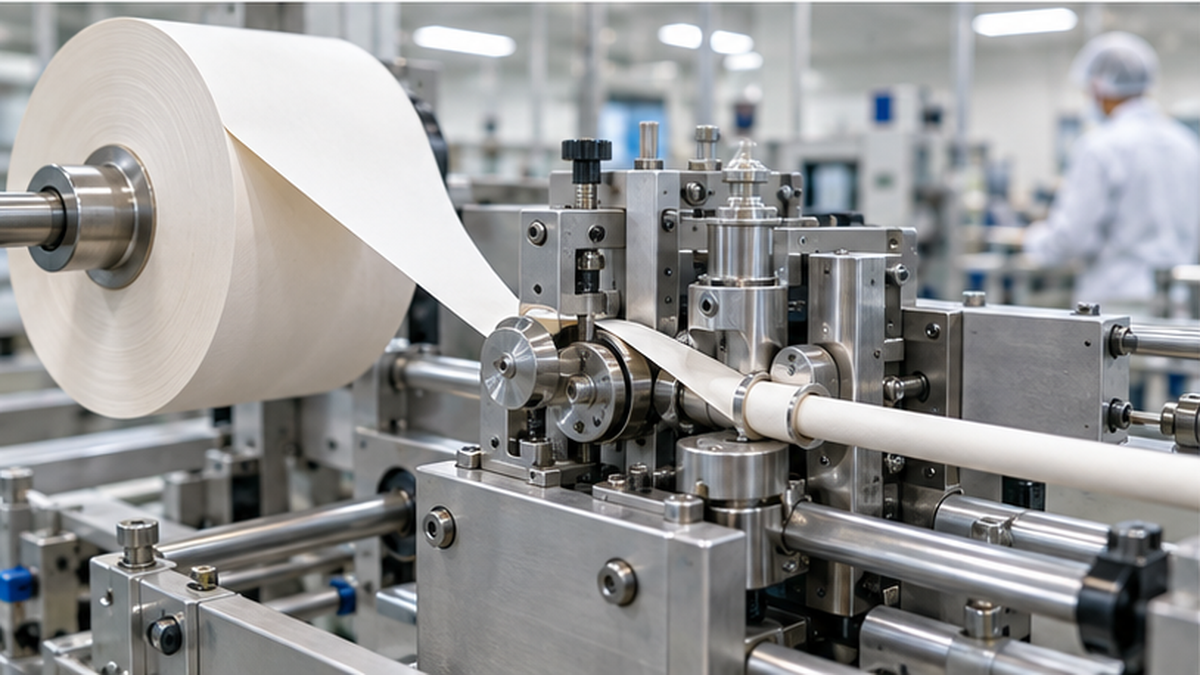
Paper straws and cups are made from paper whose main raw material is wood pulp, processed and shaped so liquids do not leak through. What sets them apart from ordinary paper products is that CoC certification makes it possible to trace which certified forest the raw paper came from.
Raw materials and manufacturing process
Straws are made by rolling paper into a tube and gluing it, with food-safe adhesive or coating applied to the inner and outer surfaces. Cups are typically formed by molding paper into shape and then laminating a thin waterproof film onto the inner surface.
Comparing the feel of paper, bamboo, bio-based, and plastic alternatives
Besides paper, alternatives to single-use plastic also include bamboo, plant-based bio-materials, and biodegradable materials. Each has its own trade-offs in durability, cost, and environmental characteristics.
| Material | Durability trend | Main challenge |
|---|---|---|
| Paper | Prone to going soggy in moisture, though improved products are increasing | Whether PFAS coating is used; difficulty of recycling |
| Bamboo | Relatively sturdy but harder in the mouth | PFAS has also been detected in some cases; many products assume washing and reuse |
| Bio-based material (e.g. plant-derived plastic) | Feels close to plastic | Even when labeled "biodegradable," the conditions under which it actually decomposes can be limited |
| Plastic (conventional) | Most durable and cheapest | Does not break down naturally and is a major contributor to ocean plastic pollution |
Even materials labeled "biodegradable" often only decompose under specific conditions, such as in an industrial composting facility with high heat and humidity, and may not break down as expected in ordinary seawater or a typical landfill. When choosing bio-based or biodegradable materials, it's worth checking under what conditions, and over what timeframe, they are actually expected to decompose.
The reality of durability and feel in use
One common complaint about paper straws is that they go "soggy" during use. Products such as Nippon Paper's "Silfeel" paper straw have emerged that emphasize a pleasant feel on the lips and durability that holds up over extended use, and materials and thickness can now be chosen depending on the type of drink and how long it will be used.
Companies and stores that have actually adopted it
FSC-certified paper products already have concrete adoption cases in the restaurant and paper industries.
Skylark Group's chain-wide rollout
Skylark Holdings switched to FSC-certified paper straws from January 2022 for drink bars and takeout orders at roughly 3,000 domestic restaurants under brands such as Gusto and Jonathan's, including wide-bore "large" straws used for smoothies and bubble tea. The company has cut plastic use by 89% compared with 2018 (from about 100 million straws in 2018 down to about 11 million in 2020), and has set a target of cutting single-use plastic use by 50% by 2026 compared with 2020 levels.
View the press releaseSwitching biomass straws to FSC-certified paper strawsSkylark Holdings' press release announcing the rollout across roughly 3,000 domestic locations.🔗 prtimes.jpPaper straw and cup products from paper manufacturers
Nippon Paper Group offers a paper straw called "Silfeel," which it says combines a pleasant feel with durability, alongside paper cup products. Adoption is spreading across a wide range of industries, from movie theaters and golf courses to restaurants, and paper manufacturers in Japan are broadening their lineups of paper products to include FSC-certified paper. The unit cost of a paper straw tends to run higher than a plastic one, which affects restaurant chains that use large volumes more than most — but the boost to corporate image and brand value is also a factor encouraging the switch.
View product informationSilfeel paper straw | Nippon Paper GroupProduct page introducing a paper straw designed for a pleasant feel and durability.🔗 nipponpapergroup.comSeven-Eleven's FSC-certified cardboard fixtures
Seven-Eleven Japan has been progressively switching the in-store fixtures used to sell Seven Café pastries to ones made from FSC-certified cardboard. At the time of the announcement, roughly 19,076 stores nationwide were covered, and the FSC label displayed on the side of the fixtures is something customers often see right by the checkout counter. It's an example showing that FSC-certified material is starting to appear not just in paper straws and cups, but in less-noticed places like in-store display fixtures too.
| Company | What they did | Scale / timing |
|---|---|---|
| Skylark Holdings | Switched to FSC-certified paper straws | ~3,000 domestic locations (from Jan. 2022) |
| Seven-Eleven Japan | Switched to FSC-certified cardboard fixtures | ~19,076 stores nationwide (at announcement) |
| Nippon Paper Group | Rolled out FSC-certified paper straw and cup products | Movie theaters, golf courses, restaurants, and more |
The PFAS issue raised about paper straws
Paper products are often described simply as having a lighter environmental footprint than plastic, but recent research has raised issues on the paper side that shouldn't be overlooked.
Findings from the University of Antwerp study
A research team led by Thimo Groffen at the University of Antwerp in Belgium analyzed 39 straw brands across five materials — paper, bamboo, glass, stainless steel, and plastic — and published their findings in the journal Food Additives and Contaminants in August 2023. PFAS was detected in 90% of paper straws, 80% of bamboo straws, 75% of plastic straws, and 40% of glass straws, while none was detected in stainless steel straws. The maximum concentration detected was 7.5 ng/g in paper straws and 4.47 ng/g in bamboo straws. The research team pointed out that PFAS is likely used as a water-repellent coating agent. Commenting on the study, Professor Mariana F. Fernández Cabrera of the University of Granada in Spain called it "a study backed by solid data and methods, carried out by a research group with a track record," while also expressing concern that "even at low concentrations, PFAS adds to the chemical burden already present in the human body."
What is PFAS?
PFAS (per- and polyfluoroalkyl substances) is a general term for a group of chemicals that repel water and oil and barely break down in nature, earning them the nickname "forever chemicals." In Japan, the Food Safety Commission has conducted health risk assessments for some substances such as PFOS and PFOA, and has stated that no significant health impact is expected from normal dietary intake (including drinking water) — though evaluation and regulatory debate continue both in Japan and internationally.
| Material | Share testing positive for PFAS |
|---|---|
| Paper straws | 90% |
| Bamboo straws | 80% |
| Plastic straws | 75% |
| Glass straws | 40% |
| Stainless steel straws | 0% |
PFAS regulation gaining momentum in Denmark and the EU
These findings have spurred regulatory action. Denmark banned the use of PFAS in paper and cardboard food-contact applications starting 1 July 2020, making it one of the earliest movers in Europe. The EU's new Packaging and Packaging Waste Regulation (PPWR) took effect on 11 February 2025, and from 12 August 2026 it will restrict the use of PFAS in food packaging across the entire EU. Japan, by contrast, has yet to establish PFAS regulation specifically targeting paper straws and cups, making it an area to watch as the Food Safety Commission's assessments and international regulatory trends develop further. Not every paper straw contains PFAS — it varies depending on the coating method and materials used — but rather than assuming "paper equals safe," it's worth checking what companies disclose.
Regulatory momentum spreading in the United States too
The US has also begun responding state by state. California Governor Gavin Newsom signed a state law (AB 1200) banning the use of PFAS in food packaging, tableware, and paper straws made from paper, paperboard, or plant-based materials. In Florida, state officials have also moved to restrict the provision of paper straws, citing health-risk concerns. California's Attorney General has also notified manufacturers of food packaging and paper straws that they have a duty to disclose their use of PFAS, showing growing pressure from the regulatory side as well.
The difficulty of recycling paper cups, and new technology
Why the plastic laminate coating makes recycling difficult
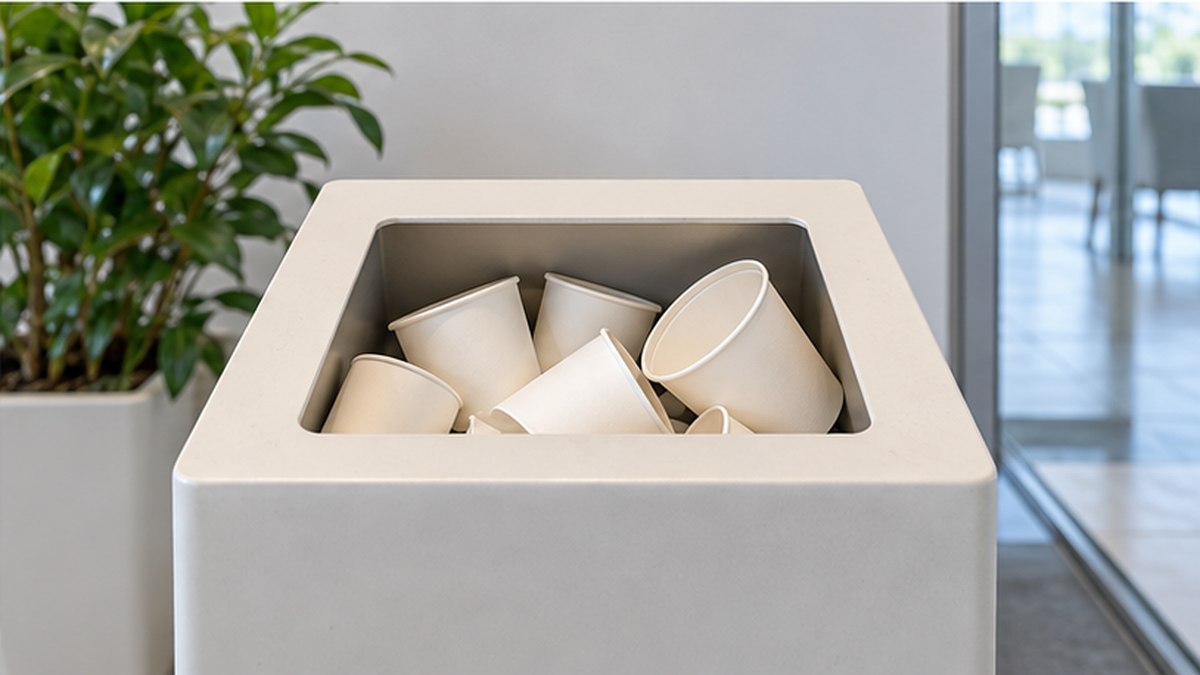
Most paper cups have a plastic film such as polyethylene laminated onto the inside to keep liquid from leaking. Because the paper and plastic are bonded so tightly, mechanically separating them is difficult, and paper cups have traditionally been treated as a "forbidden item" in paper recycling, with most ending up as burnable waste. Residue from leftover drinks also makes recycling harder.
The spread of dedicated paper-container recycling technology
To address this issue, Nippon Paper installed dedicated paper-container recycling equipment at its Fuji mill in Shizuoka Prefecture, which began operating on 28 October 2022. The equipment separates paper from resin and extracts high-quality, high-brightness recycled pulp, with the aim of reusing it as a raw material across a wide range of paper, paperboard, and household paper products.
As a concrete example using this equipment, Japan Airlines (JAL), Nippon Paper, and Tokan Kogyo announced in June 2024 that they had achieved a "cup-to-cup" horizontal recycling loop, turning used beverage paper cups into new paper cups. Cups collected and sorted onboard JAL flights are turned into recycled pulp at the Fuji mill's recycling equipment, then manufactured into new paper cups by Tokan Kogyo, and served on domestic flights departing from Haneda — the first time such a closed loop has been established in Japan. That said, this kind of dedicated collection and processing is still offered by only a limited number of businesses and facilities, and in most areas paper cups still end up as burnable waste in practice.
Store-level efforts to collect used paper cups
While not yet widespread as a nationwide system, some convenience store chains are running pilot programs at specific stores or in specific regions to test recycling used paper cups. These trials aim to verify whether collected cups can actually be reused as raw material for new paper products, and practical rollout still depends on factors such as how well consumers cooperate with sorting and bringing cups back.
Plastic or paper: which should you choose?
Looking at the reality of paper straws and cups, it becomes clear that "switching from plastic to paper solves the problem" is too simple a story.
Paper isn't necessarily better when it comes to CO2 emissions
A report published in the US in 2022 compared CO2 emissions from paper and plastic straws by disposal method, finding that paper straws emit roughly 1.4 times more CO2 than plastic straws when incinerated, and roughly 3.1 times more when landfilled. Paper tends to be heavier per straw than plastic, and when you account for the full life cycle — manufacturing energy and water use, transport, and disposal — it's not necessarily the case that paper produces less CO2. The same report also notes that plant-based bioplastic straws emit only about 33% as much CO2 as paper straws when incinerated. Choosing a material isn't just about a simple switch "from plastic to paper" — it also calls for weighing each material's full life cycle.
The bigger premise: reducing single-use items overall
Whatever the material, a product used once and thrown away still consumes resources and generates waste. Bringing your own straw or cup, or simply choosing not to use a straw at all, are ways of reducing single-use consumption itself — a bigger consideration than the choice of material. For more on the potential of bio-based and biodegradable straws, see our article examining whether biodegradable straws actually dissolve in the ocean. For how Starbucks moved from paper straws to bio-based ones, see our article tracing Starbucks' five-year journey away from plastic straws.
Checkpoints to keep in mind when choosing
Taking these various perspectives together, the practical takeaway for consumers is simple: don't judge a material by appearance alone — check the evidence behind it. Use the points below as a guide for everyday shopping and dining choices.
Things to keep in mind when choosing paper straws and cups
- Does the packaging carry the FSC mark (a sign of responsible forest management)?
- Prioritize reusables (your own bottle or straw) whenever possible
- Check whether the company discloses whether PFAS coating is used (many companies still don't disclose this)
- For paper cups, follow local collection rules and check whether they go to burnable waste or a dedicated collection stream
- Don't judge by labels like "biodegradable" or "bio-based" alone — check the actual conditions required for breakdown
Conclusion: a certification label that connects forest and sea
FSC certification is a system that guarantees the forests supplying raw material for paper straws and cups are being responsibly managed. The emergence of companies adopting it at scale, such as Skylark Group, is a positive sign that "protecting forests" has become part of the conversation around tackling ocean plastic.
Summary of this article
- FSC certification guarantees the link from forest to finished product through two stages: FM certification (forest management) and CoC certification (chain of custody)
- FSC-certified forest worldwide exceeds 170 million hectares, while Japan's is about 410,000 hectares (about 1.6% of its forests)
- Japan's regulation (the Plastic Resource Circulation Act) asks businesses to voluntarily rationalize use, a lighter touch than the EU's outright sales ban
- Companies such as Skylark Group have rolled out paper straws at scale, cutting plastic use
- Paper products also carry issues such as PFAS coatings and difficult recycling, and regulation is beginning to move in Denmark and the EU
The mechanism of protecting forests through certification also connects to beverage makers' efforts to protect the forests around their water sources, such as Suntory's initiatives. See our article on Suntory Tennensui's bottle-to-bottle recycling and its "Natural Water Sanctuary" forests for a clearer picture of how companies link protecting forests with protecting water.
Next time you pick up a paper straw or cup, take a moment to notice the FSC mark tucked in a corner of the packaging. Behind that small logo lies forest management taking place in a distant country, and an ongoing debate — in Japan and abroad — over how it should be regulated. It's worth remembering that a single everyday choice of material connects to both the forest and the sea.
References & sources
- Ministry of the Environment, Japan – Eco-label database: FSC certification (forest certification system)
- Ministry of the Environment, Japan – Estimate of ocean plastic waste outflow
- FSC Japan – Official website
- WWF Japan – The mark that protects forests: about the FSC forest certification system
- Skylark Holdings – Press release: switching biomass straws to FSC-certified paper straws
- Nippon Paper Group – Silfeel paper straw product information
- Food Additives & Contaminants: Part A – Assessment of PFAS in commercially available drinking straws (2023)
- Food Safety Commission of Japan – Information on the assessment of PFAS
- Nikkei – Mandatory reduction of single-use plastics from April, covering 12 items including straws
- FSC Japan – Seven-Eleven Japan adopts fixtures made using FSC-certified cardboard
- UN Food and Agriculture Organization (FAO) – Global Forest Resources Assessment
- Environmental Working Group – California AG notifies food packaging and paper straw makers of duty to disclose PFAS
- DIAMOND online – Is the shift to paper straws really eco-friendly? A study found more CO2 emissions than plastic straws
- Nippon Paper Group – Start of operations of food and beverage paper-container recycling equipment at the Fuji mill / "cup-to-cup" horizontal recycling with JAL and Tokan Kogyo
- National Geographic Japan – [Video] Rescuing a sea turtle with a straw stuck in its nose
* Listed in order of reliability: government and academic institutions > peer-reviewed papers > specialist organizations > reputable media