⚡ The answer in 30 seconds
- I LOHAS Natural Water Label-less launched in April 2020 as a label-free water, and its bottle is 100% recycled PET.
- The logo and recycling mark are embossed on the bottle, and the legally required information is printed on the outer carton.
- Japan's PET bottle collection rate is 92.5%, but the bottle-to-bottle share stays at 33.7%.
- Sorting gets easier, but stopping leakage into the ocean also needs measures such as preventing littering.
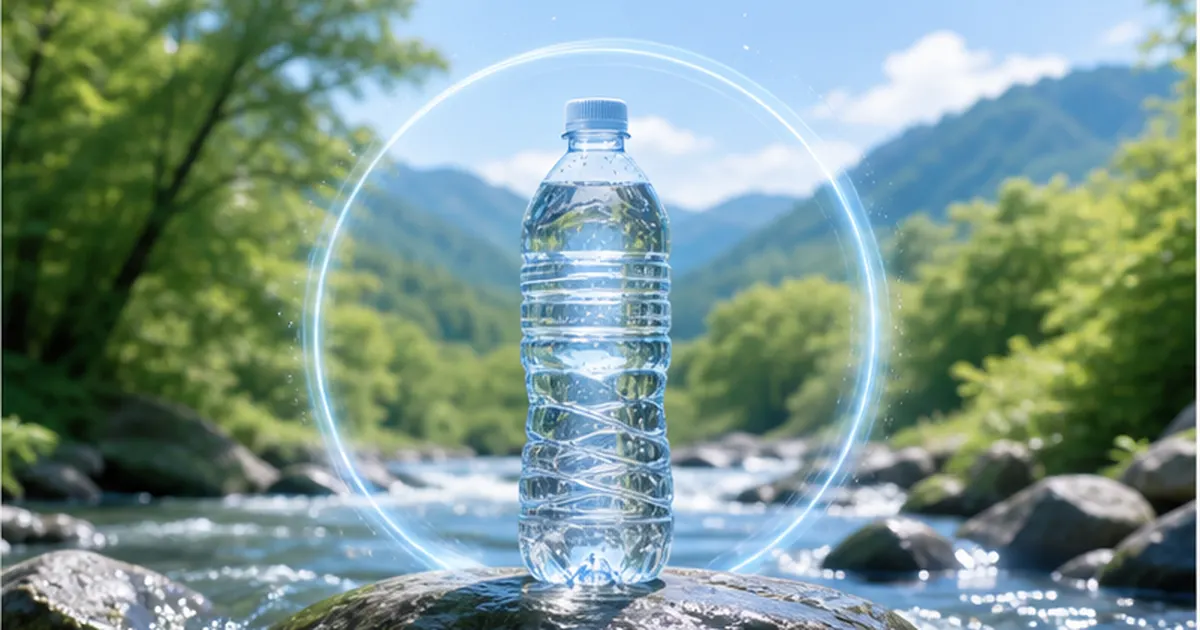
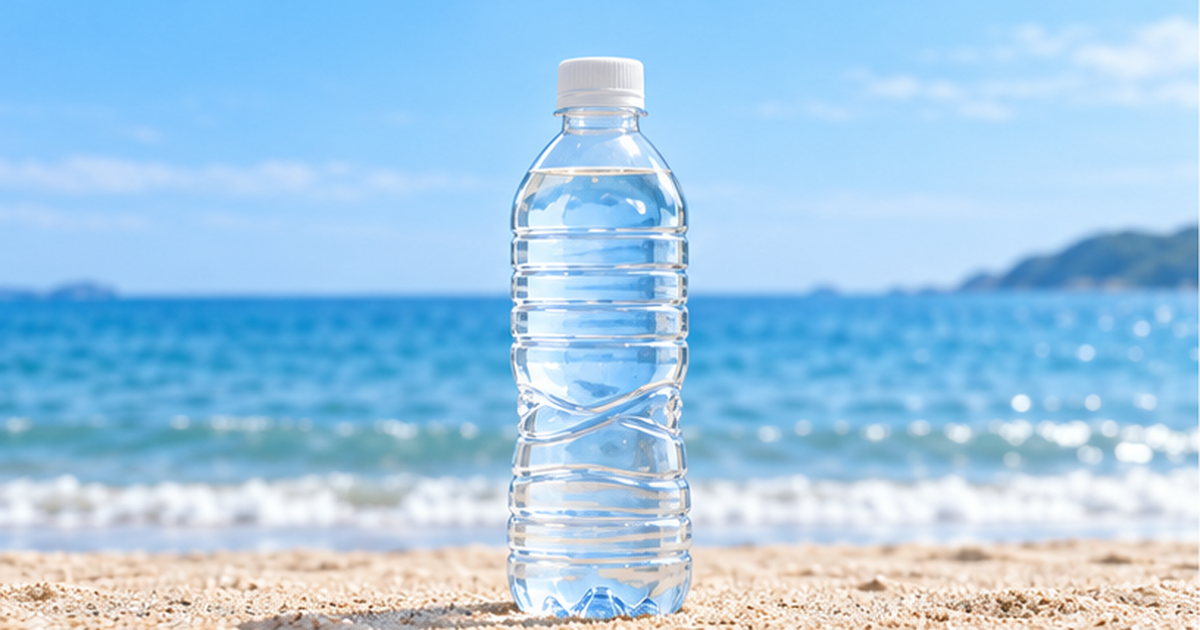
"I LOHAS Natural Water Label-less" is a product with no label on the bottle at all, made from 100% recycled PET. Launched in April 2020, it drew attention as "water with nothing to peel off."
Even in Japan, where more than 90% of PET bottles are collected, some still flow into the sea through littering, making them a familiar symbol of the marine plastic problem. How far do the two ideas of going label-less and using recycled material go toward solving it?
Based on official announcements and public-agency data, this article neutrally sorts out the strengths and limits of the approach.
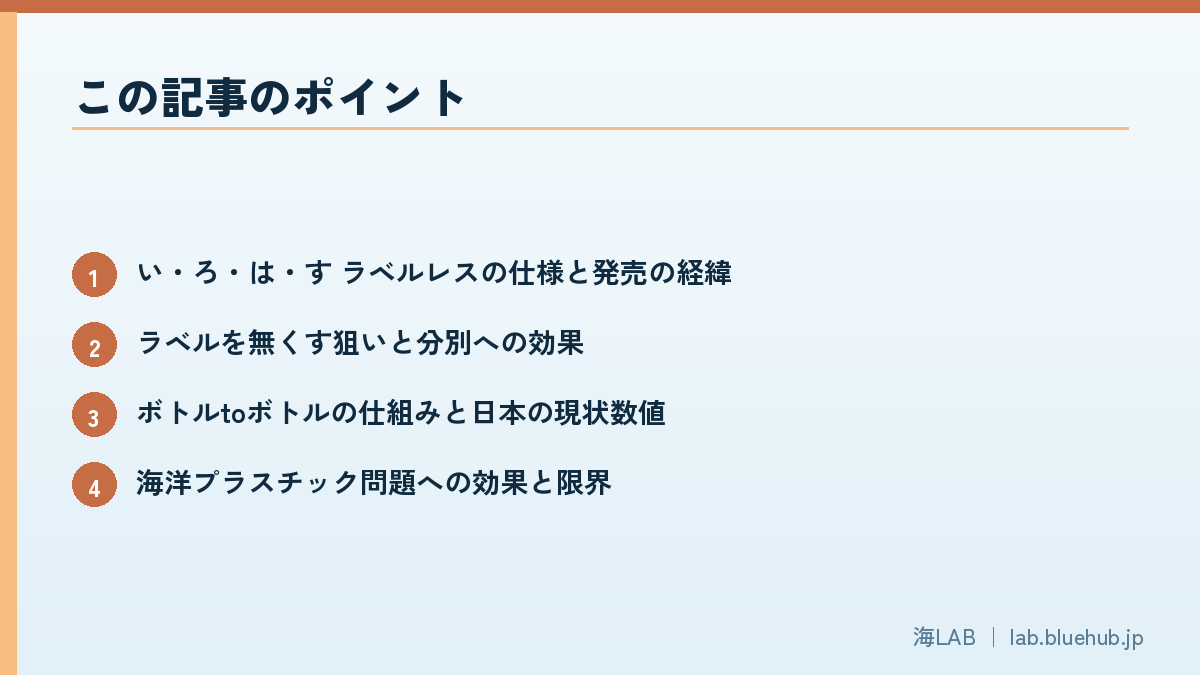
What you'll learn in this article
- Specifications and launch history of I LOHAS Label-less
- Why removing the label helps sorting
- How bottle-to-bottle works and where Japan stands in numbers
- Effects and limits for the marine plastic problem
- What to compare when choosing eco-conscious bottles
What is "I LOHAS" Label-less? A product primer
The Coca-Cola system's first fully label-free bottle
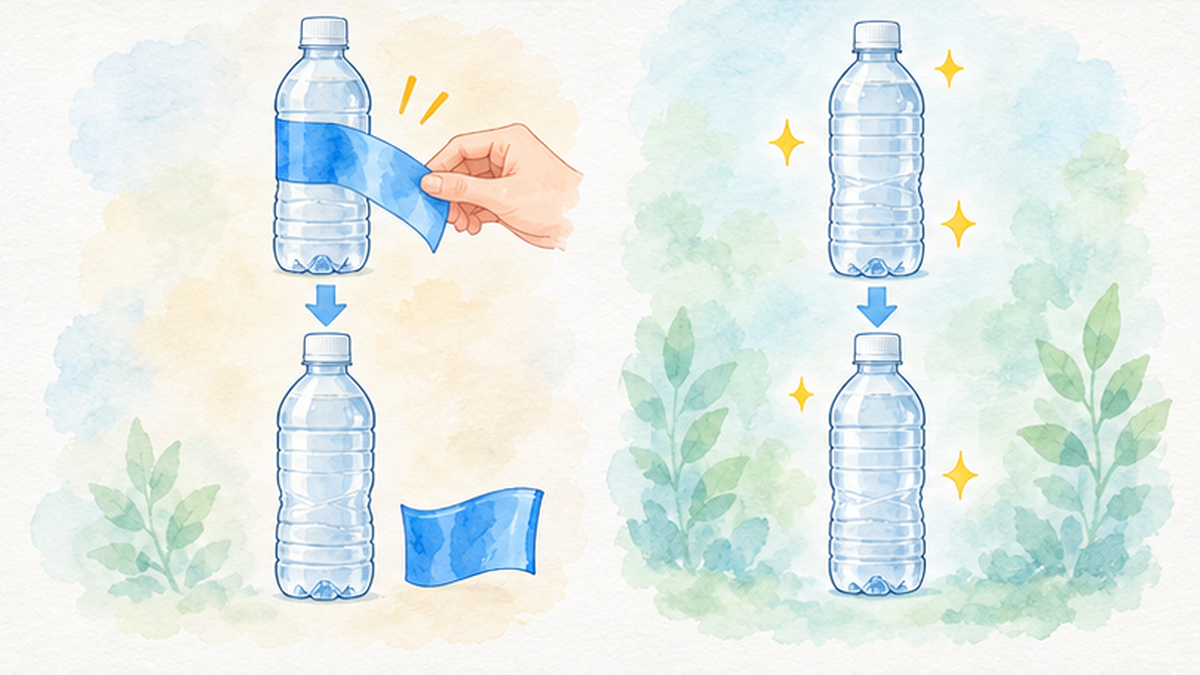
"I LOHAS Natural Water Label-less" is a natural water with no label on the bottle, rolled out nationwide in stages by the Coca-Cola system from April 2020. The I LOHAS logo and the recycling identification marks are expressed as embossed bumps on the bottle itself. The legally required information, such as ingredients, which used to be printed on the label, is placed on the outer carton of 24 bottles.
At launch, the product was a 560 ml PET bottle sold only by the case of 24, with a manufacturer's suggested retail price of 2,880 yen (excluding tax). It was sold online and at supermarkets, drugstores and discount stores. In addition, from bottles filled on April 1, even the adhesive seal showing the identification mark was dropped, making it truly "fully label-free."
The second pillar: 100% recycled PET
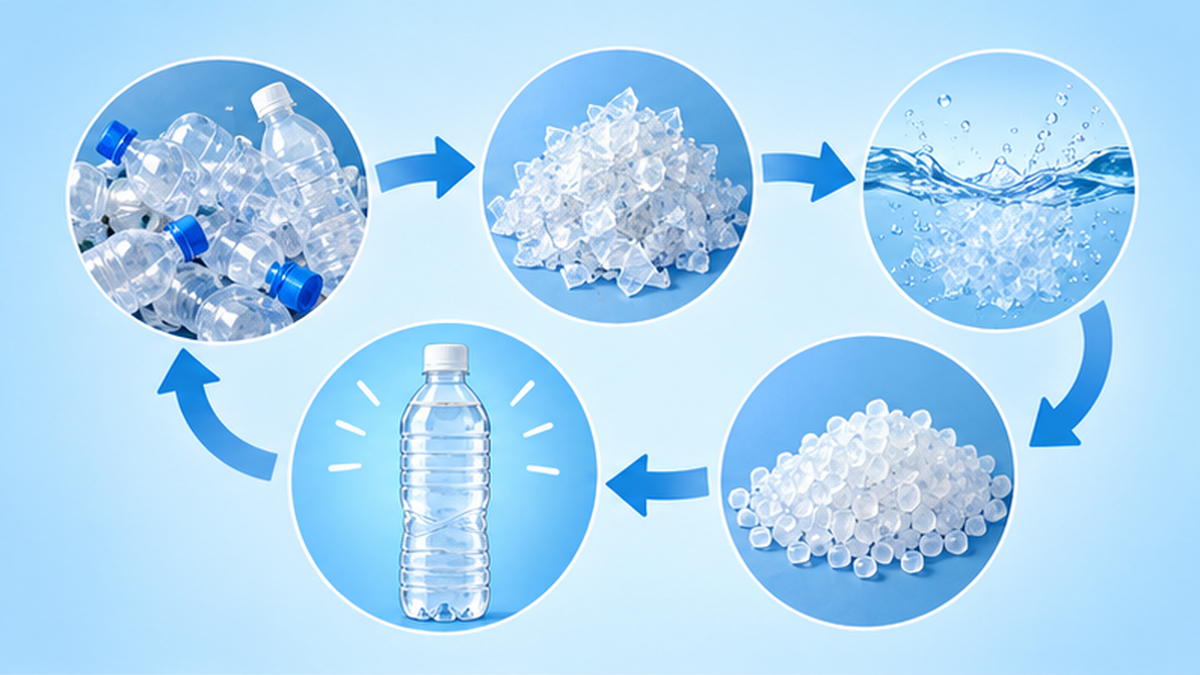
The other feature alongside going label-less is that the bottle itself uses 100% recycled PET. Used PET bottles are collected and made into bottles again through "bottle-to-bottle" horizontal recycling, so bottles are made without new petroleum-based PET resin. Coca-Cola Bottlers Japan explains that I LOHAS switched from 30% recycled material to 100% recycled PET in March 2020.
| Item | Details |
|---|---|
| Product name | I LOHAS Natural Water Label-less |
| Launch | Rolled out nationwide in stages from April 2020 |
| Size / pack | 560 ml x 24 bottles (sold by the case only) |
| Suggested retail price | 2,880 yen (excluding tax) |
| Bottle material | 100% recycled PET (bottle-to-bottle) |
| Labeling | Logo and recycling mark embossed; legal information on the outer carton |
Our stance in this article
- This article does not recommend buying any specific product. It neutrally summarizes the merits and limits of the approach using official announcements and public-agency data.
Why remove the label? Easier sorting and fewer resources
The label was a part designed to be peeled off
In Japan, the basic rule for PET bottle collection is to remove the cap and label and rinse the inside lightly. Labels are often plastic film made of a different material from PET, and recycling them together with the bottle can lower quality. Peeling the label has therefore been an essential step both in household sorting and in municipal processing.
Going label-less removes the peeling step altogether. At launch, the Coca-Cola system described its aims as removing the effort of peeling labels, reducing plastic waste and making sorting easier. Reducing the burden on users can be expected to help people keep sorting correctly.
Less material overall
If the label itself is unnecessary, each bottle uses fewer resources by the amount of film material and printing. However, the official announcement does not appear to give a specific weight (in grams) saved by removing the label, so this article only says it "works in the direction of reducing" and avoids stating figures.
- Users: no need to peel the label, so sorting takes less effort
- Collection side: fewer mixed-in or leftover labels make sorting easier
- Manufacturer: no need to procure label materials or apply labels
Note: what happens to the identification mark?
- The recycling identification mark is an item required by law. For label-less products, it has been handled by switching to embossing on the bottle.
How 100% recycled PET works: understanding bottle-to-bottle
Two recycling routes
There are broadly two ways to recycle used PET bottles. One is "cascade recycling," which turns them into non-bottle products such as fibers, trays and sheets. The other is "bottle-to-bottle (horizontal recycling)," which returns them to PET bottles. In the former, the material becomes fiber and is hard to turn back into bottles; in the latter, the resource keeps circulating as "bottle to bottle."
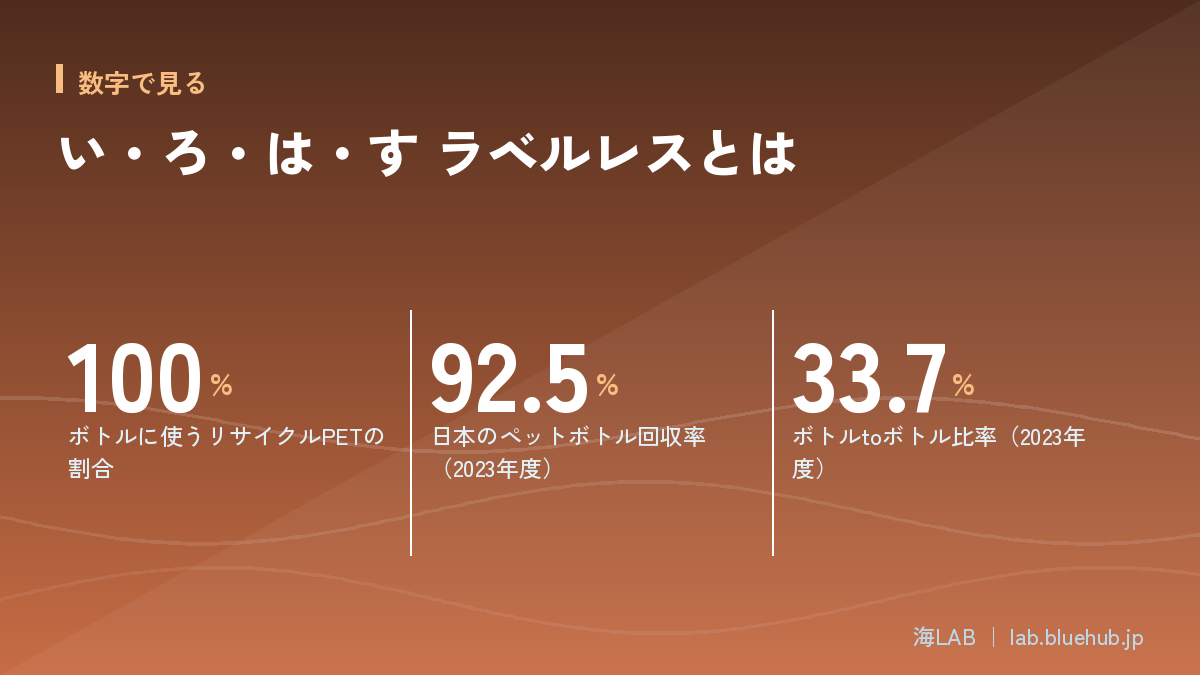
According to the Council for PET Bottle Recycling (FY2023 results), the PET bottle collection rate is 92.5% and the recycling rate is 85.0%, of which the bottle-to-bottle share is 33.7%. In other words, although the amount collected is large, only about one third returns to the same use.
| Indicator (FY2023) | Value | Source |
|---|---|---|
| Collection rate | 92.5% | Council for PET Bottle Recycling |
| Recycling rate | 85.0% | Same as above |
| Bottle-to-bottle share | 33.7% | Same as above |
Targets of the soft drink industry
The soft drink industry has declared a goal of a 50% bottle-to-bottle share by 2030. Domestic supply capacity of recycled PET resin for bottle-to-bottle use was reported to reach about 373,000 tons per year by the end of 2024. As demand grows, competition will center on how much high-quality used bottle material can be collected.
The Coca-Cola system has announced that the recycled resin usage rate across its soft drink business was 28% in 2020, and aims to switch PET bottles to 100% sustainable materials by 2030 and to use zero new petroleum-derived raw materials. I LOHAS's 100% recycled PET is a flagship product ahead of that goal.
Key point
- "100% recycled PET" means the bottle is made only from resin derived from used bottles. The system works only when bottles are collected in sufficient quality and quantity.
The brand's journey: pursuing lightness and circulation
It began with a light, easy-to-crush bottle
I LOHAS is a mineral water brand run by the Coca-Cola system, and since launch it has highlighted a light bottle that can be crushed small. A lighter bottle not only uses less material but also weighs less in transport, which helps cut transport energy. A bottle that is easy to crush also reduces bulk when put out as household waste and helps collection efficiency.
However, official materials on the specific weight of the original bottle are limited at present, so this article does not state figures. What is certain is that the design philosophy of "lightness" connects in one line to the later adoption of label-less bottles and recycled material.
2020: recycled material and label-less arrive in the same year
The turning point was 2020. In March, "I LOHAS Natural Water" switched to 100% recycled PET bottles, and in April the label-free "I LOHAS Natural Water Label-less" went on sale. Achieving 100% recycled material and label removal at about the same time was one concrete step under "World Without Waste," the global plan the Coca-Cola system announced in 2018.
The plan rests on three pillars: "design," "collection" and "partners." The idea is to rethink container design, collect used containers, and tackle waste together with companies, governments and communities. Label-less embodies the "design" pillar, while bottle-to-bottle embodies both "design" and "collection."
| Pillar | Details | Example in I LOHAS |
|---|---|---|
| Design | Make containers easy to recycle | Label-less, 100% recycled PET, weight reduction |
| Collection | Collect used containers | Bottle-to-bottle returns collected resources to bottles |
| Partners | Cooperation with companies, governments and communities | Municipal separate collection and industry-group efforts |
Later expansion
According to Coca-Cola Bottlers Japan, label-less bottles had expanded to 8 brands and 42 products as of December 2024. What began as an I LOHAS-only initiative has spread to other brands. It shows how an experiment with one product grows into a company-wide standard.
Glossary: sustainable materials
- In the Coca-Cola system, "sustainable materials" means recycled resin, plant-derived resin and the like. By 2030 it aims to switch PET bottles to 100% sustainable materials and to use zero new petroleum-derived raw materials.
Common questions: label-less and recycled PET Q&A
Isn't it worrying not to know what is inside without a label?
The logo and identification mark are embossed on the bottle, so the product name is clear. The legally required information, such as ingredients and nutrition, is printed on the outer carton, so you can check the carton when buying by the case. For single bottles, stores have taken steps such as attaching a display seal (as in the 2023 in-store sale of the 350 ml size).
If it is "100% recycled," does it use no new resources at all?
For the bottle's resin, it means only recycled resin from used bottles is used. However, parts such as the cap, factory processing and transport still require other resources and energy. The key is to separate "the bottle's resin" from "the product as a whole."
Does going label-less raise the cost?
The official announcement gives no details on price differences. The suggested retail price at launch was 2,880 yen (excluding tax) for 24 bottles of 560 ml, but comparisons with other products under the same conditions vary by store and period, so we refrain from judging here.
Are similar efforts progressing for other drinks?
The Coca-Cola system introduced a 350 ml label-less Coca-Cola bottle in 2023 and 500 ml label-less bottles of Coca-Cola and Coca-Cola Zero in 2025. All use 100% recycled PET. The same design thinking is spreading beyond water to carbonated drinks.
So how much does it actually help the environment?
The official announcement does not give specific figures for CO2 or resin saved by removing the label, so we cannot state "how much." What can be said is that, in direction, three things contribute to resource circulation: (1) less label material, (2) less sorting effort and (3) use of recycled material. To learn the numbers, checking the latest sustainability report of each company is the most reliable way.
Tip for reading information
- For environmental claims, check whether they show "what" improved, "by how much" and "compared with when." If there are no figures, avoid asserting the effect and take it only as a direction.
The history of weight reduction: making bottles thinner and smaller
Weight-reduction record across the Coca-Cola system
In parallel with going label-less, efforts to lighten the container itself are progressing. According to Coca-Cola Bottlers Japan, the Coca-Cola 700 ml bottle was reduced from 42 g to 27 g in 2021, and in 2022 the 350 ml label-less bottle saved 2 g to reach 21 g. It also has a goal to cut PET resin use per bottle by 35% by 2030 compared with 2004.
Note that these figures are not for I LOHAS itself but examples from the Coca-Cola system as a whole. I LOHAS has been a brand known for light, easy-to-crush bottles since launch, but we could not confirm the weight of the current 560 ml bottle in official materials, so this article gives no figure.
| Year | Initiative | Value |
|---|---|---|
| March 2020 | I LOHAS Natural Water moves to 100% recycled PET | Recycled material 30% to 100% |
| April 2020 | I LOHAS Natural Water Label-less launched | 560 ml x 24 bottles |
| 2021 | Weight reduction of Coca-Cola 700 ml | 42g→27g |
| 2022 | Weight reduction of 350 ml label-less bottle | 2 g saved (21 g) |
| December 2024 | Reach of label-less bottles | 8 brands, 42 products |
Trade-offs of lightening
The thinner the bottle, the less material is used, but strength, deformation during transport and the quality of recycled resin must be balanced. With the label gone, the outer packaging is simpler, and the product is redesigned as a whole, for example by putting information on the carton.
The user experience: where to buy and how to sort
How you buy: sold by the case at first
At launch, the label-less product was sold only by the case of 24. Because the legal information was placed on the outer carton, single bottles could not be sold. It was therefore aimed at bulk buying for home use and stockpiling rather than casual single purchases. Buying cases at online supermarkets and drugstores was the main way in.
Since then, the Coca-Cola system has widened how label-less products are sold. From May 29, 2023, the 350 ml label-less bottle went on limited-time in-store sale at supermarkets, discount stores and drugstores nationwide, and single-bottle sales became possible with a display seal attached. On May 1, 2025, 500 ml label-less bottles of Coca-Cola and Coca-Cola Zero also appeared.
- Bulk buying: the legal information is on the carton, so do not throw the carton away while storing
- Single bottles: with a display seal attached, in-store support is gradually spreading
- Sorting: no label to peel, so remove the cap, rinse and put it out for collection
Sorting tip: follow your municipality's rules first
Even for label-less bottles, the basics are the same: remove the cap and rinse lightly. The cap is a different material, so sort it according to your municipality's rules. The advantage is that a label-less bottle can be put out as is as a "PET bottle."
What you can do today
- Whether or not you choose label-less products, you can send finished bottles back as a resource that returns to bottles in three steps: remove the cap, rinse, and sort by your municipality's rules.
Relation to the marine plastic problem: what shrinks, what remains
The current state of plastic flowing into the ocean
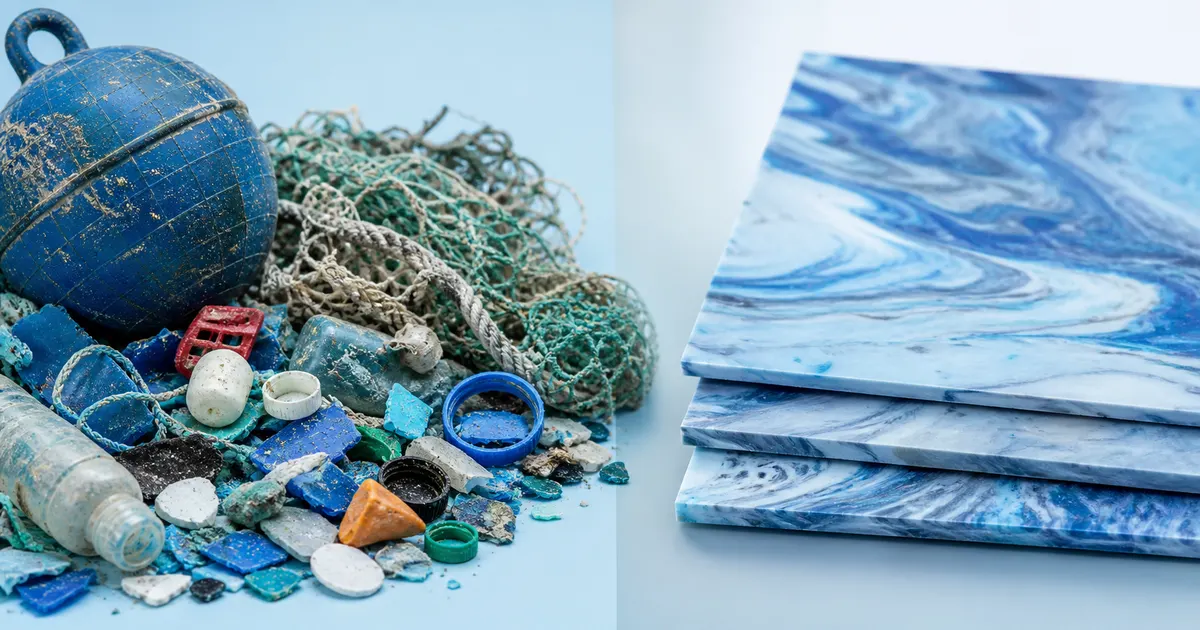
Most marine plastic waste is packaging and similar items from land that flowed into the sea via rivers and coasts. Even in Japan, where over 90% of PET bottles are collected, leakage through littering and wind and rain has not reached zero. In beach debris surveys, PET bottles repeatedly rank near the top.
Bottles that leak out break down into microplastics under 5 mm through ultraviolet light and waves. Label film likewise tends to scatter as light fragments carried by the wind. A label-free design is thought to have at least some effect in making fewer light fragments other than the bottle body.
Label-less and 100% recycled address the "entrance" and the "exit"
100% recycled PET addresses the "entrance" (resources) by not using new petroleum-based resin. Label-less addresses the "exit" (collection) by making sorting easier. Both improve circulation after collection, and their direct effect on stopping leakage into the sea is limited.
Points to note
- Even a bottle made of recycled PET becomes marine waste if it is littered. Material improvements work only together with reliable collection and proper disposal.
Because litter travels a long way from city to river to sea, collection in towns and preventing outflow at rivers are important. See also our article Plastic waste flowing from rivers to the sea.
- Entrance measures: recycled material, weight reduction, label reduction
- Exit measures: easy-to-sort design, higher collection rates
- Preventing leakage: anti-litter efforts, river and beach cleanups
Comparison with similar products: other makers' label-less and recycled bottles
Label-less and recycled bottles from other makers
Adopting label-less bottles and recycled PET is not limited to the Coca-Cola system. Other beverage makers also offer products without labels and bottles with recycled material. When comparing, it is important to check the specific scope of "what was reduced and by how much."
For another label-less example, see What are Asahi's label-less bottles? for Asahi Soft Drinks; for 100% recycled PET, see Coca-Cola's 100% recycled PET bottle and Suntory Tennensui's PET bottle.
| Viewpoint | What to check |
|---|---|
| Presence of label | Does the bottle itself have no label? Is it replaced by packaging or seals? |
| Share of recycled material | "100%" or "partial"? Is virgin or plant-derived resin also used? |
| Sales format | Case only, or can single bottles be sold? |
| Weight reduction | Is the current bottle weight or reduction rate published? |
| Published materials | Can figures be verified in the company's sustainability materials? |
Criteria for choosing
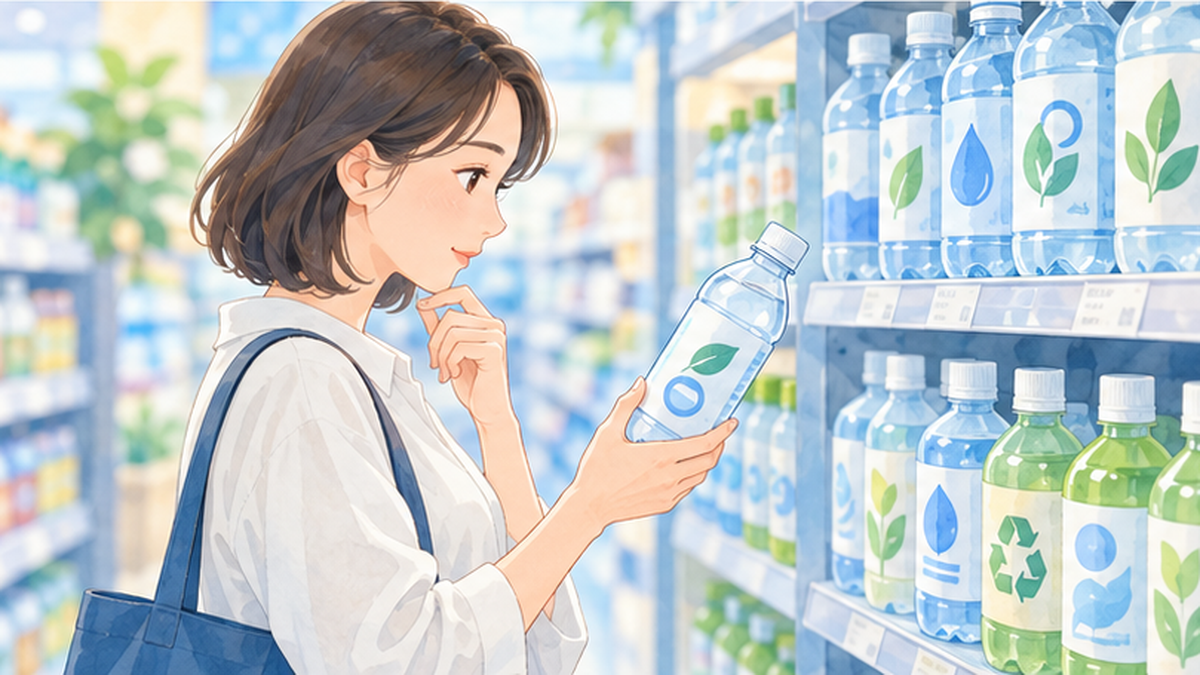
- Rather than judging by the words "label-less" or "100% recycled" alone, the habit of checking official figures on what was reduced and by how much is the shortcut to avoiding greenwashing.
Challenges and limits: beyond label-less and recycled PET
Challenge 1: securing recycled material and quality
To make 100% recycled PET stably, enough high-quality used bottles must be collected. With the bottle-to-bottle share still in the 30% range, competition for collected bottles may arise as demand grows. This is why easy-to-sort designs such as label-less, which raise collection quality, matter.
Challenge 2: number of recycling cycles and degradation
PET can be recycled repeatedly, but its quality drops a little with each recycling, so it does not circulate forever. High-quality recycling needs washing and contaminant-removal technology and uses energy and water. Environmental impact should also be assessed across the whole life cycle.
Challenge 3: it depends on consumer behavior
However good the design, if finished bottles do not enter the collection route, the cycle breaks. We also need to consider options for "reducing disposables in the first place," such as bins away from home, reusable containers and refillable bottles.
- Securing recycled material: stable collection volume and quality are a prerequisite
- Degradation and technology: recycling needs energy and capital investment
- Reducing disposables: combining with refillable bottles and refills is effective
Summary
- Label-less and 100% recycled PET are effective steps for both sorting ease and resource circulation, but they protect the ocean only when combined with efforts to reduce the amount of disposable containers themselves.
What we can do: rethinking how we use bottles
Three steps for buying and using
Choosing eco-conscious products is also a way to tell makers that we want them. Still, the biggest reduction comes from using fewer disposables. Start the following three steps within what is comfortable in daily life.
- Make a reusable bottle or flask your everyday choice and use water refill spots when out
- When buying PET bottles, choose products with recycled material or no label whose figures can be checked officially
- After drinking, remove the cap, rinse, and sort by your municipality's rules
Joining ocean-protecting activities
Besides everyday choices, joining beach cleanups and river litter picking is a direct action to collect containers that have leaked out. Taking part in local cleanups lets you see what kind of waste is common, which can change how you shop. For the full picture of PET bottle horizontal recycling, see What is bottle-to-bottle horizontal recycling?.
Action checklist
- □ Get one reusable bottle □ Make a habit of removing the cap and rinsing □ Join a local cleanup once a year
References and sources
- Coca-Cola system launches label-less "I LOHAS Natural Water Label-less" (Coca-Cola Japan) – Press release for the April 2020 launch
- Design | Sustainability (Coca-Cola Bottlers Japan) – Efforts on label-less bottles, weight reduction and recycled PET
- Fully label-less "I LOHAS" (Nihon Shokuryo Shimbun) – Dropping the adhesive seal and the container design
- I LOHAS moves to a next-generation 100% recycled PET bottle (Impress Watch) – 100% recycled PET adopted in March 2020
- Label-less "Coca-Cola" 500 ml PET bottle launched (Coca-Cola Japan) – 2025年5月1日発売
- Council for PET Bottle Recycling – Collection rate, recycling rate and bottle-to-bottle share
- Ministry of the Environment: Plastic Resource Circulation – Plastic resource circulation strategy and systems
※ Ordered by reliability: government/academic institutions > peer-reviewed research > specialized organizations > trusted media