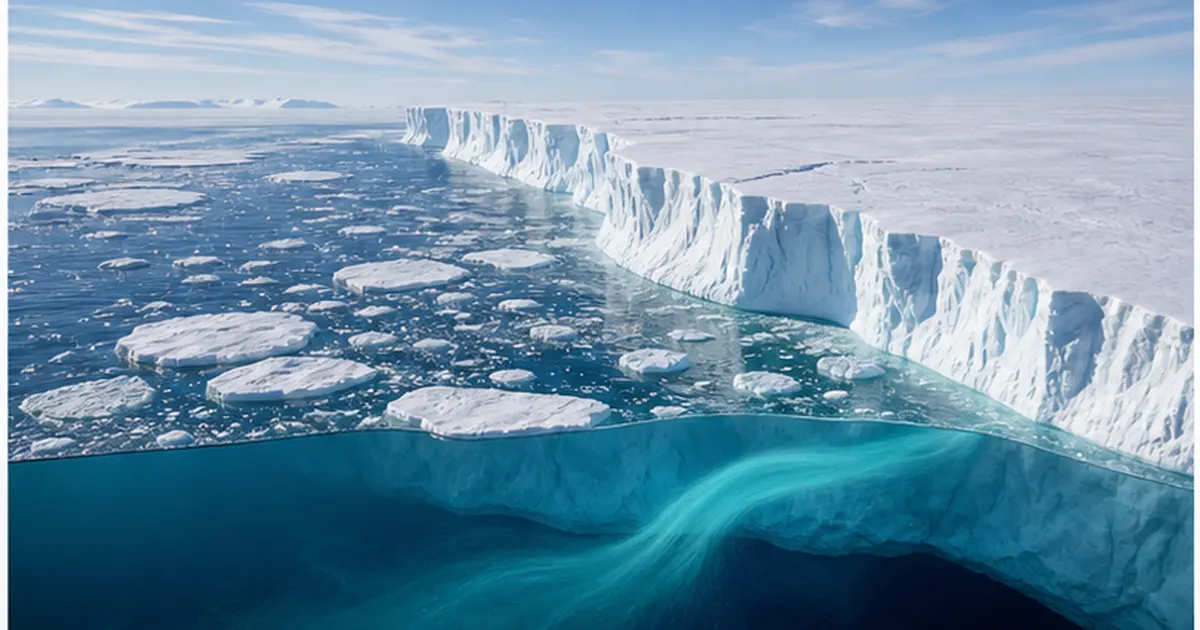
Open the lid of your washing machine and look at the grey fluff caught in the lint filter. That is a collection of fibres shed by your clothes. What the filter catches gets thrown away, but far finer fibres flow straight out with the water. When the garment is polyester or acrylic, the lint it sheds is plastic.
These microfibres are nothing like a plastic bottle on a beach. Each one is thinner than a human hair and about a millimetre long. What makes them matter is sheer number: the International Union for Conservation of Nature estimates that roughly 35% of primary microplastics entering the ocean come from washing synthetic textiles. That is more than tyre abrasion (28%), making laundry the single largest source.
This article looks at how many fibres one wash releases, why they slip through sewage treatment, and how far they travel, drawing on peer-reviewed papers and material published by governments and universities. It then sets out concrete steps you can take from your next load of laundry, and is honest about where those steps stop working.
この記事で学べること
- What microfibres are, and why lint counts as plastic pollution
- How many fibres a single wash releases, and how much fabric and settings matter
- Why sewage treatment plants cannot capture them all, with measurements from Japan
- How far fibre pollution has spread, from the Arctic Ocean to Tokyo Bay
- The real performance and limits of laundry bags, filters and in-drum devices
- How to choose clothes, and policy moves such as France's washing machine filter mandate
What Microfibres Are: The Invisible Plastic Shed by Our Clothes
Microplastics are fragments of plastic smaller than 5 mm. Japan's Ministry of the Environment uses this definition too, and it covers not only bottles and bags broken down by sunlight and waves, but also material that enters the environment already small.
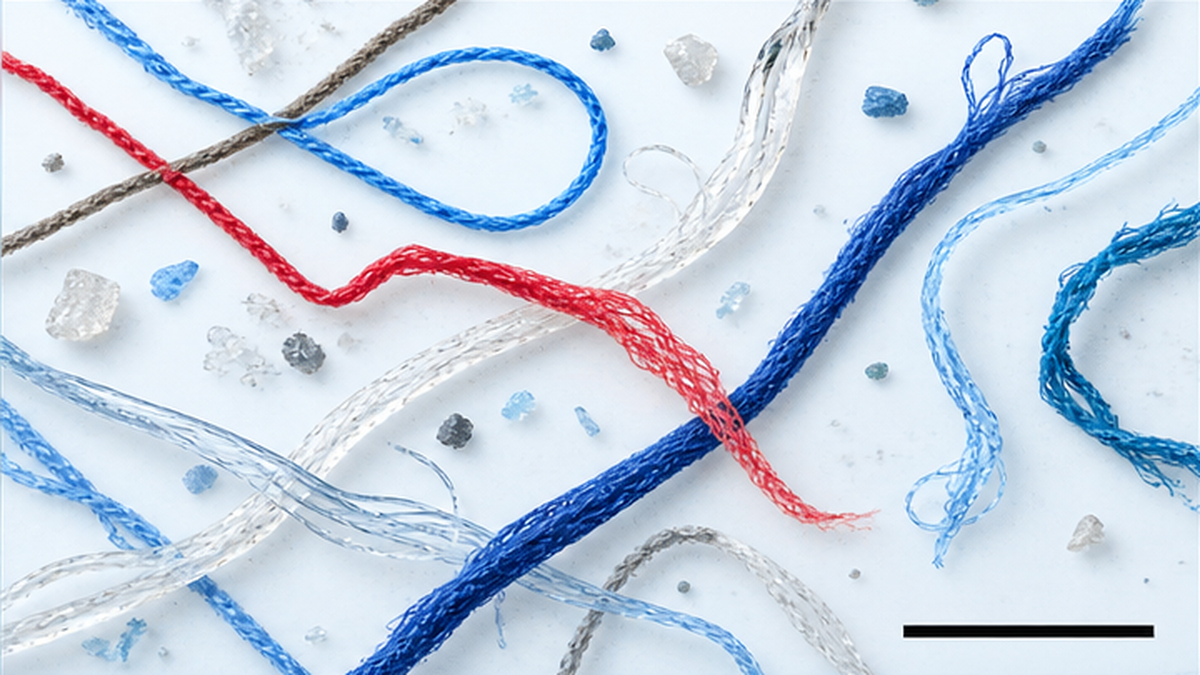
Microfibres are the leading example of the second kind. Polyester, acrylic, nylon and polyurethane are all plastics spun into thread from petroleum feedstock. So when one of those threads breaks and falls away, what you have is a long, thin fragment of plastic. The Ministry of the Environment leaflet states plainly that lint from synthetic fabric is a form of plastic.
Why Textiles Became the Leading Source
The reason lies in how quickly clothing has shifted to synthetics. According to Textile Exchange's Materials Market Report 2025, global fibre production reached a record 132 million tonnes in 2024, of which polyester accounted for 59%. Eighty-eight per cent of that polyester is fossil-based. The same report projects production reaching 169 million tonnes by 2030 if current trends hold.
In other words, more than half of what hangs in our wardrobes is plastic. And synthetics are everywhere: fleece jackets, sportswear, quick-dry base layers, soft toys, bedding, carpets.
The Main Synthetic Fibres and How They Behave
| Fibre | Typical uses | Tendency to shed |
|---|---|---|
| Polyester | Shirts, sportswear, bedding, fleece | Largest production volume; most frequently detected in the environment |
| Acrylic | Sweaters, knitwear, blankets | Released the most fibres in laboratory washing tests |
| Nylon (polyamide) | Tights, swimwear, outdoor gear | Strong and resistant to breaking, but still abrades |
| Polyurethane (elastane) | Stretch fabrics, underwear | Degrades relatively easily and is widely used in blends |
Are Cotton and Wool Safe?
Natural fibres such as cotton, wool and linen also shed lint in the wash. The difference is that microorganisms break them down, so they are not thought to persist in the environment for long. That distinction is decisive. Synthetic fibres take an extremely long time to degrade, and they drift through the ocean the entire time (see how marine plastic breaks down for details).
The essentials
- Microplastics are plastic fragments under 5 mm, and lint from synthetic fabric counts
- Polyester makes up 59% of global fibre production; petroleum-derived material now dominates clothing
- Natural fibres also shed lint, but they degrade, so persistence is much less of a problem
How Many Fibres Does One Wash Release?
Whether "a bit of lint" sounds serious depends entirely on the numbers. The most widely cited work here is the experiment published in Marine Pollution Bulletin in 2016 by Imogen Napper and Richard Thompson of the University of Plymouth, who washed different fabrics in a domestic machine and counted the fibres in the effluent.
Up to About 728,000 Fibres from a 6 kg Load
For a 6 kg load, roughly one ordinary wash, the estimates came out as follows.
| Fabric | Estimated fibres released per 6 kg wash |
|---|---|
| Acrylic | About 728,000 |
| Polyester | About 496,000 |
| Polyester-cotton blend | About 137,900 |
Acrylic released roughly 1.5 times as much as polyester and about five times as much as the blend. The striking result is that the blend shed the least. Mixing in cotton appears to change the structure of the yarn so that fibres are held more firmly.
One household washes several times a week, and tens of millions of households do the same. That multiplication is what turns textiles into the largest single primary source of marine plastic pollution.
The Delicate Cycle Makes It Worse
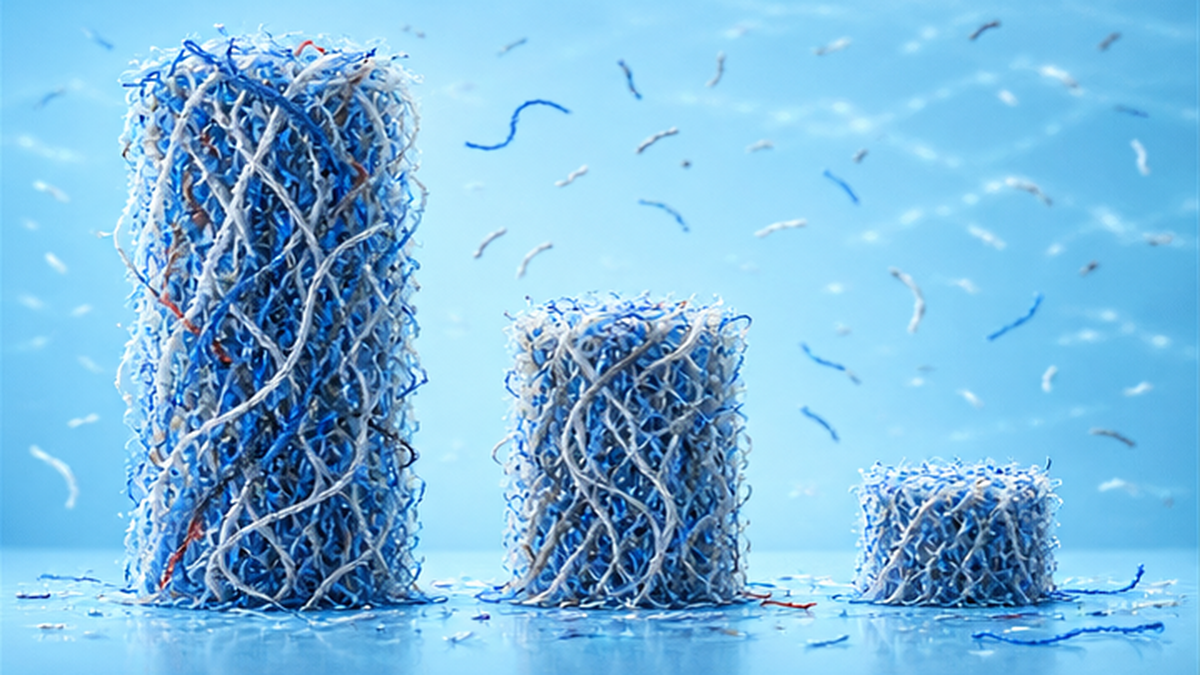
A wash setting chosen to be gentle on clothes can backfire. Research led by Max Kelly at Newcastle University, published in Environmental Science & Technology in 2019, found that the delicate cycle released on average about 800,000 more fibres than a standard cycle.
The cause was not agitation but the volume of water. Delicate cycles use more water to protect the fabric, and the more water passes through, the more fibres are pulled away and carried off. The team concluded that water volume mattered more than abrasive force.
New Clothes Shed Most, and Wearing Them Sheds Too
Several studies report that shedding peaks in the first few washes after purchase and declines thereafter, because loose ends left by manufacturing and cutting come away first. Anyone who has washed a new fleece and found the lint filter packed afterwards has seen this in action.
Laundry is not the only route, either. Friction during wear and tumble drying send fibres into the air, and they settle through household dust and outdoor air onto land and water. The finding that relatively fresh fibres turn up in the Arctic Ocean suggests atmospheric transport is at work alongside ocean currents.
So tackling wastewater alone addresses only part of the picture. Even so, laundry effluent is a clearly defined pathway where action is straightforward, which makes it a worthwhile place to start.
Why Fibres Slip Through Sewage Treatment
You might assume the treatment plant deals with it. Japan's sewage works do perform well. They still cannot stop fibres completely.

Measurements from the Lake Biwa Basin
Shuhei Tanaka, then an associate professor at Kyoto University, and colleagues measured microplastics in influent, effluent and each treatment stage at four separated-system sewage plants in the Lake Biwa basin between November 2017 and February 2018 (Journal of Japan Society of Civil Engineers, Series G, 2019). Their findings were as follows.
- Influent concentration: 158-5,000 particles/m3
- Effluent concentration: 0.3-2.2 particles/m3 (comparable to the receiving waters of Lake Biwa)
- Removal of fine particles in the 10-100 μm range was only 76.3%
- Combined load from the four plants was estimated at about 500,000 particles per day
Larger particles are removed well, but material below 100 μm passes through even after rapid sand filtration. The paper notes that the load from these four plants was roughly equal to the total load reaching Lake Biwa from its inflowing rivers in dry weather. Treatment plants work extremely well and are still a discharge point that cannot be ignored.
Why Fibres Are Hard to Catch: The Problem of Shape
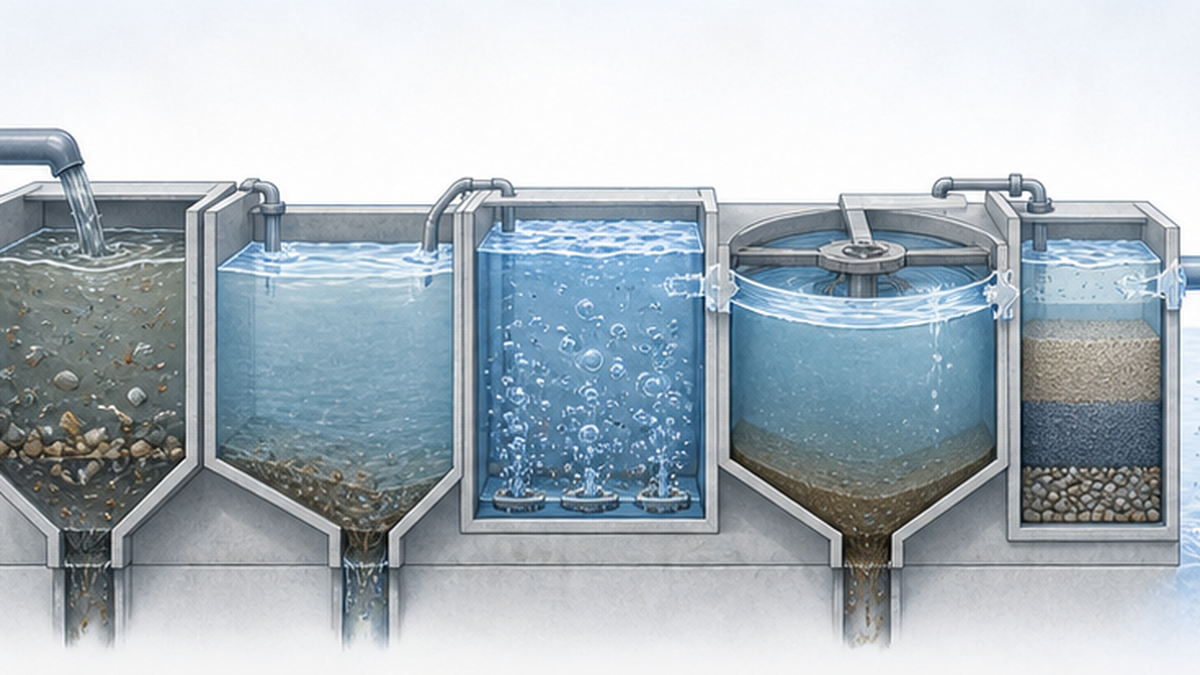
Sewage treatment removes contaminants mainly by settling heavier material, letting microbes consume organic matter, and passing water through fine gaps. Fibres evade all three.
- Light: polyester and acrylic have densities close to water, so they do not settle in sedimentation tanks
- Not biodegradable: biological treatment has no effect on plastic
- Long and thin: only a few to a dozen micrometres across, so once aligned they can pass lengthwise through a sand filter bed
For a spherical particle the rule is simple: anything wider than the gap cannot pass. Thread-like material can pass depending on its orientation. This effect of shape is thought to be a major reason fibres are harder to remove than particles of similar size.
Where Do the Captured Fibres Go?
An easily overlooked question is what happens to the fibres that are removed. Material taken out by settling and coagulation ends up concentrated in sewage sludge. Sludge may be incinerated or landfilled, but it is also reused as fertiliser or construction material. Spread on farmland, the fibres enter the soil and rain can wash them back into rivers. Treatment relocates the problem as much as it eliminates it.
Some Wastewater Never Reaches a Plant
Not all laundry water passes through treatment in the first place.
- Combined sewer overflows: where stormwater and sewage share a pipe, heavy rain sends untreated sewage straight to the river
- Areas without sewerage: septic tanks and drainage ditches offer less treatment than a plant
- Globally: large regions discharge wastewater with little or no treatment at all
How material in rivers reaches the sea is covered in detail in plastic waste flowing from rivers to the ocean.
Why treatment plants are not enough
- Japanese measurements put removal of 10-100 μm material at just 76.3%
- Removed fibres concentrate in sludge and take other routes via landfill and fertiliser use
- Storm overflows and unsewered areas discharge without treatment at all
How Far Have They Spread? From the Arctic Ocean to Tokyo Bay
How far do fibres from a washing machine travel? The answer is: to virtually every ocean on Earth.
92% of Arctic Microplastics Are Fibres
Peter Ross and colleagues in Canada sampled surface seawater at 71 stations across the European and North American Arctic and published their results in Nature Communications in 2021. About 92% of the microplastics detected were synthetic fibres, and 73% of those were polyester. Fibres turned up even near the North Pole, where almost nobody lives.
Because fibres in the eastern Arctic appeared relatively fresh, the team concluded they had most likely been carried from densely populated regions by Atlantic currents and atmospheric transport. In short, our laundry water shows up in the composition of Arctic seawater.
About 25 Tonnes of Microplastics Drift in Tokyo Bay
Measurement is advancing closer to home as well. The group of Professor Hisayuki Arakawa at Tokyo University of Marine Science and Technology surveyed Tokyo Bay aboard the training ship Seiyo-Maru, measuring microplastic concentrations at the surface and through the water column across six zones and five depth layers. They estimate the total microplastic load in Tokyo Bay at about 25 m3 (tonnes) down to 200 m depth: roughly 10 for larger surface particles (above 350 μm) and roughly 15 for finer particles (50-350 μm) at the surface and in the water column.
Concentrations were highest at the head of the bay and near the front in the central bay where water masses converge, showing that contamination concentrates directly beneath dense human activity. The work was published online in Marine Pollution Bulletin on 30 August 2024 and is described as the first estimate of total microplastic mass for a defined sea area.
Read the announcement from Tokyo University of Marine Science and TechnologyTotal microplastics in Tokyo Bay estimated at 25 m3 (tonnes)Press release from Tokyo University of Marine Science and Technology (6 September 2024) by the group of Professor Hisayuki Arakawa, based on three-dimensional measurements of the sea surface and water column🔗 kaiyodai.ac.jp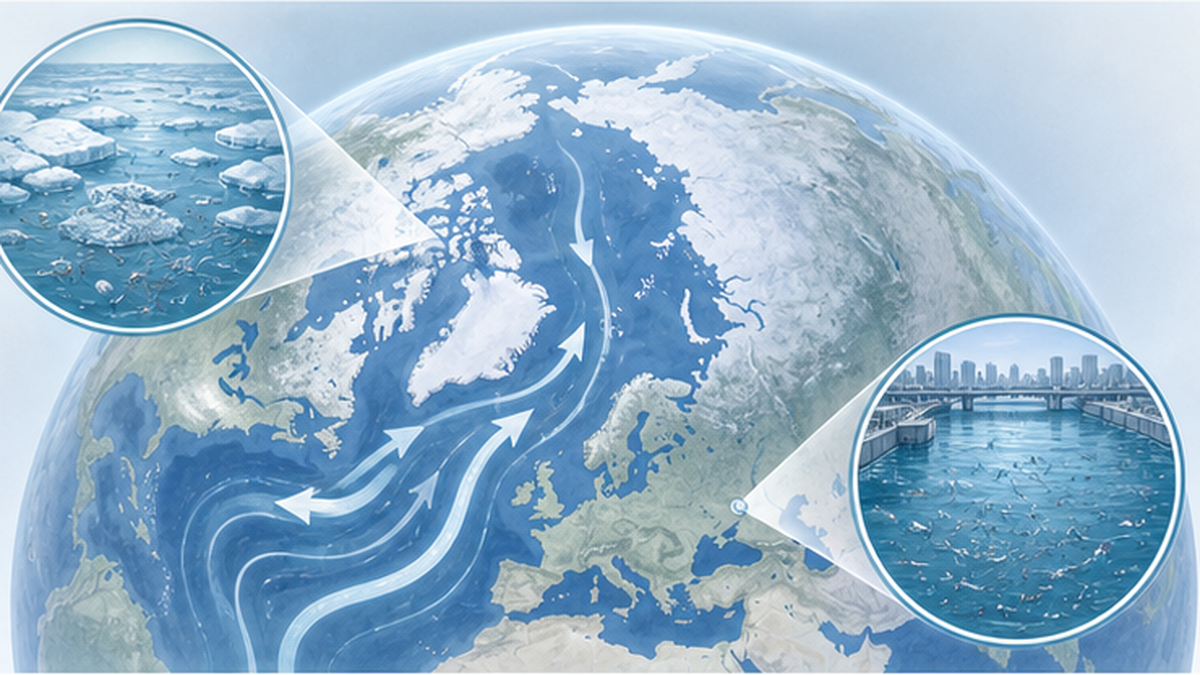
Into Wildlife, and Into Us
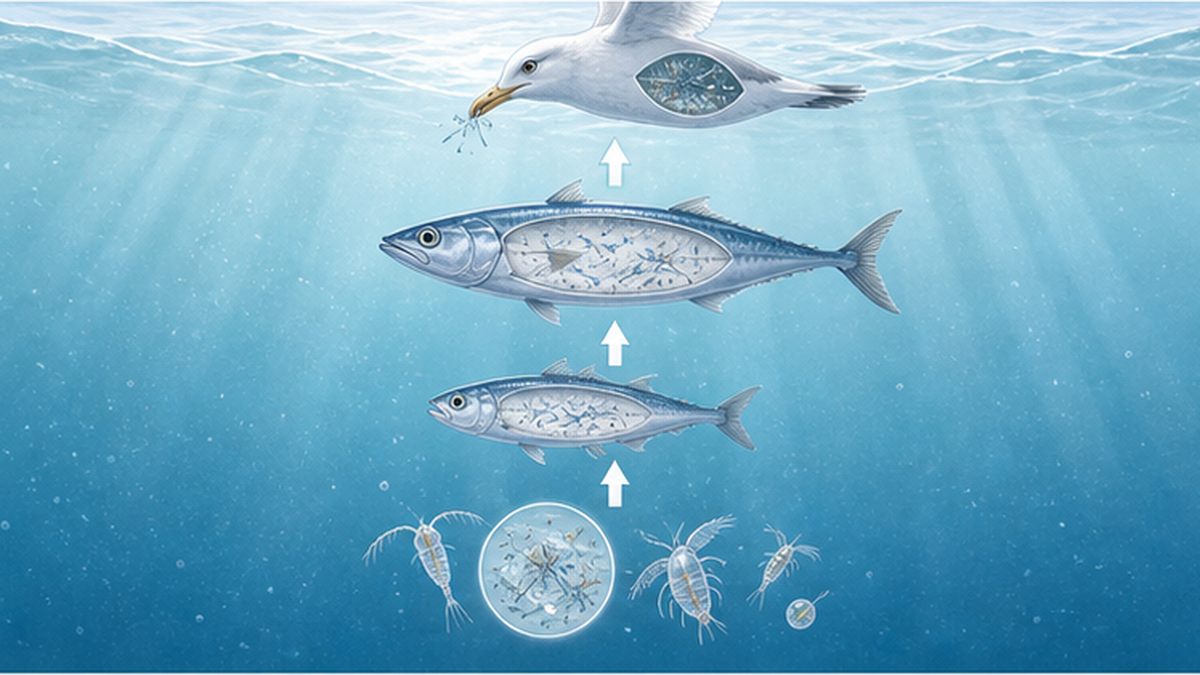
Fibrous microplastics have been found in a wide range of organisms, from zooplankton and bivalves to fish and seabirds. Some researchers suggest their elongated shape makes them more likely to tangle in the digestive tract and harder to excrete than spherical particles. How much ecological harm this actually causes, however, remains an open research question, and no firm conclusion is available.
The same applies to human health. Intake through drinking water, food and air is documented, but quantifying the risk is still work in progress. Our article on microplastics and human health separates what is known from what is not.
You Can Cut Releases from Your Next Wash
Now for the practical part. Japan's Ministry of the Environment publishes a leaflet titled "Please help prevent microplastics from clothing entering the environment", setting out what households can do. It was produced by the Marine Plastic Pollution Control Office in the Marine Environment Division, with cooperation from companies including Adastria and Teijin Frontier and from the Ministry's Fashion and Environment Task Force.
See the official leaflet from Japan's Ministry of the EnvironmentPlease help prevent microplastics from clothing entering the environmentA leaflet (PDF) produced by the Marine Plastic Pollution Control Office, Marine Environment Division, Ministry of the Environment, Japan, summarising what households can do when doing laundry🔗 env.go.jp1. Wash Less Often, and Wash Full Loads
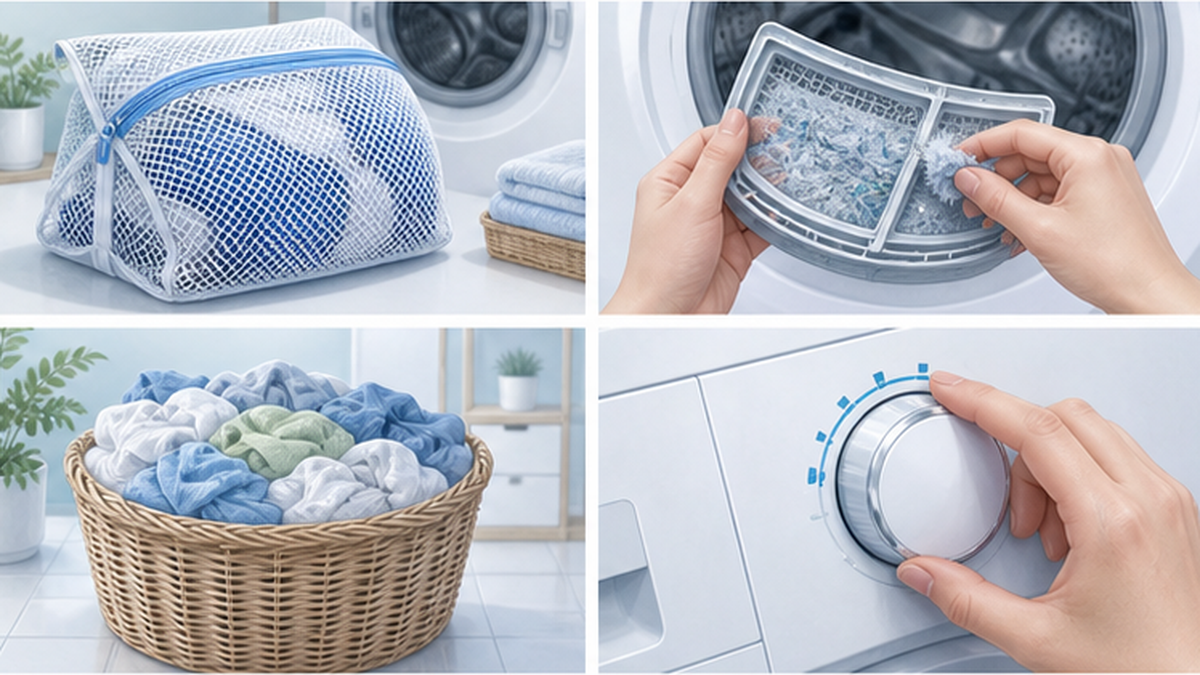
This is the most reliable measure and it costs nothing. Ask whether you are washing garments reflexively after a single wearing. Outerwear and knitwear you have not sweated in are often fine after airing in the shade. Halve the number of washes and you roughly halve the release.
Washing full loads rather than small ones repeatedly also reduces the water used per kilogram of clothing, and with it the fibres released.
2. Use a Laundry Bag, Ideally a Fine-Mesh One
The Ministry's leaflet treats following the care label and using a laundry bag as the basics, because they keep fabric from wearing and reduce lint. It singles out bags with a mesh of around 0.05 mm as effective at preventing microplastic release.
The benefit is largest for the garments that shed most: fleece, knitwear and other napped fabrics.
3. Clean the Lint Filter Regularly
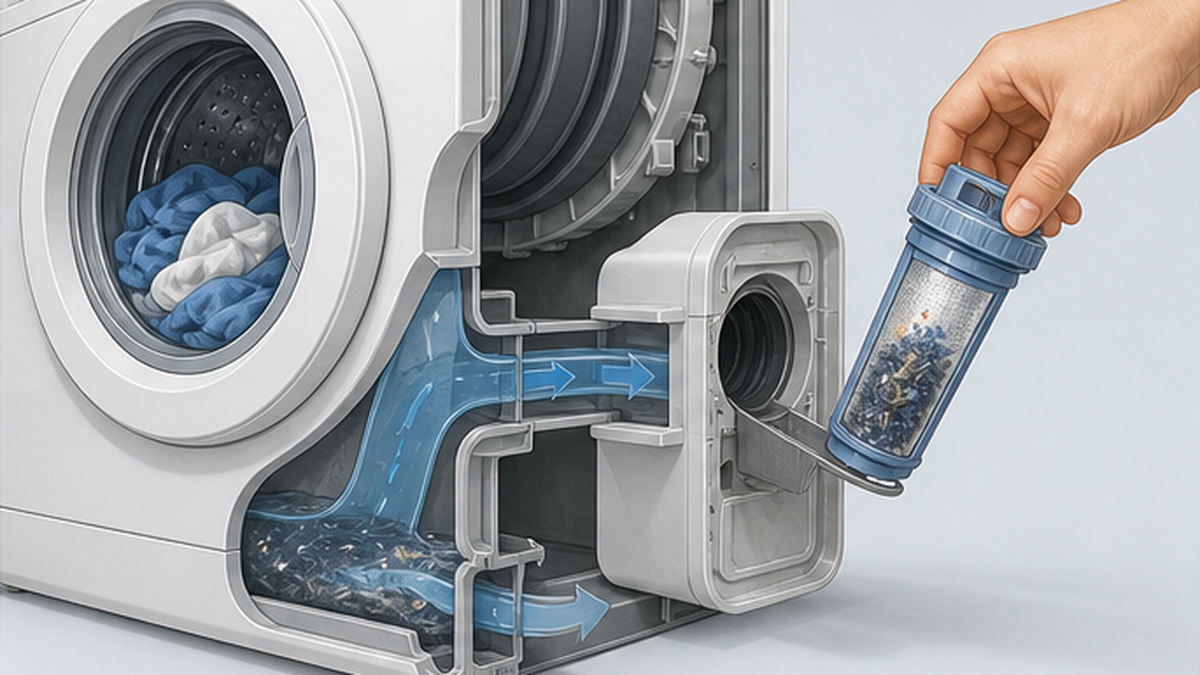
Top-loading machines have a lint filter; front-loaders have a dryer filter and a drain filter. The rule for the lint they collect is to put it in the bin, not down the sink. Rinsing it away returns to the wastewater exactly what you just captured.
Regular cleaning also prevents slime and mould, so it pays off in machine performance too.
4. Reconsider Water Volume and Cycle
As the Newcastle study showed, more water means more fibres. A delicate cycle is gentle on fabric precisely because it uses more water, so there is no need to apply it to everyday clothing. Cool, short, standard-volume settings help with colour retention, energy use and fibre release alike.
Going easy on detergent helps as well. Extra rinses mean extra water passing through the fabric, so simply following the dosage on the label reduces discharge.
5. Do Not Forget the Dryer Filter
The lint filter of a front-loader or tumble dryer collects a startling amount of fibre, shed as clothes tumble. Left uncleaned, the filter clogs and fibres it fails to catch leave with the exhaust air, indoors or out.
Longer drying also means more friction, so line drying or indoor drying part of the time cuts both electricity use and fibre release.
Five things to do today
- Air clothes that are not actually dirty instead of washing them
- Run full loads rather than frequent small ones
- Put fleece and knitwear in a fine-mesh laundry bag
- Bin the lint from filters rather than rinsing it away
- Skip the delicate cycle for everyday clothing so you use less water
How Much Can Devices Achieve? Filters and Laundry Aids
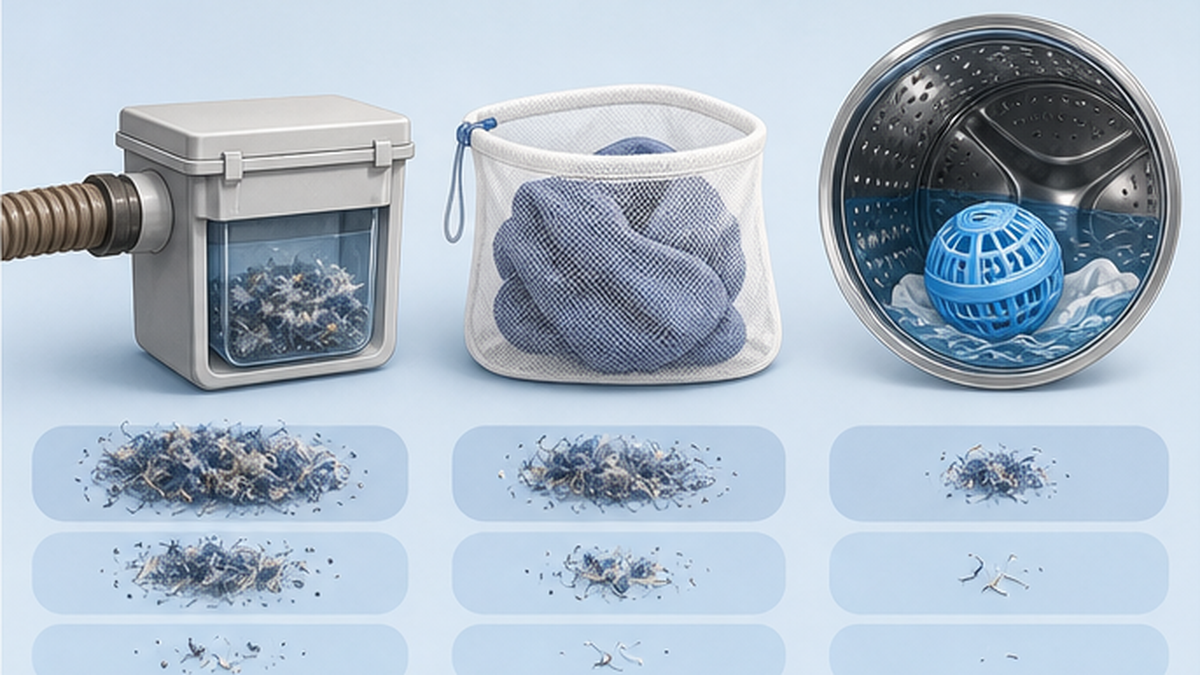
How well do commercial capture products actually work? Napper and colleagues answered that directly in a comparison published in Science of The Total Environment in 2020, testing six devices, from prototypes to retail products, under identical conditions.
Read the device comparison studyThe efficiency of devices intended to reduce microfibre release during clothes washingA peer-reviewed study by Napper and colleagues comparing six capture devices under identical conditions (Science of The Total Environment, 2020)🔗 sciencedirect.comExternal Filters Perform Best
The best result came from XFiltra, an external filter fitted to the machine's discharge, which cut fibre release to wastewater by about 78%. Because it filters the effluent itself, it works regardless of what the garments are made of.
In-Drum Products Work a Different Way
Next best was the Guppyfriend washing bag, at about 54% reduction. The researchers concluded it works less by trapping fibres than by reducing how much the clothing sheds in the first place.
The Cora Ball, dropped into the drum, shortened the average length of released fibres by 11%, but its effect on the total quantity released was limited.
| Type | Example | Reported effect | Notes |
|---|---|---|---|
| External drain filter | XFiltra | About 78% reduction in fibre release | Filters the effluent; needs installation and regular cleaning |
| Washing bag | Guppyfriend | About 54% reduction | Limits shedding; capacity is restricted |
| In-drum ball | Cora Ball | 11% shorter average fibre length | Convenient, but limited reduction in quantity |
| Fine-mesh laundry bag | Commercial 0.05 mm mesh types | Recommended by Japan's Ministry of the Environment | Cheap and easy to adopt |
Do Not Over-Rely on Them
The crucial point is that no device brings release to zero. Even at 78% capture, the remaining 22% still leaves. And captured fibres only count if they are disposed of properly. Rinse the filter out in the sink and the benefit disappears.
Devices work when they are combined with the fundamentals: washing less often and choosing fabrics carefully.
Disposing of Captured Fibres Correctly
Getting disposal wrong undercuts the whole effort. Three basics:
- Pick the lint out dry and put it in the bin
- Never rinse it away, which returns it to the wastewater
- Follow your municipality's rules, generally as combustible waste
It sounds like a small detail, but whether lint goes down the drain or into solid waste completely changes its destination. As waste it enters a managed route of incineration or landfill, and its chance of reaching the sea drops sharply.
Acting at the Point of Purchase: Choosing Clothes and Making Them Last
Changing what you buy has a bigger effect than changing how you wash, though it takes longer to show.
Napped and Long-Pile Fabrics Shed Easily
Fleece, borg, faux fur and long-pile blankets are structurally prone to shedding. For the same warmth, a tightly woven fabric, a natural fibre or a blend will release less.
That the polyester-cotton blend shed least in the Napper and Thompson experiment underlines the point. The realistic starting position is not "stop buying synthetics" but "choose structures that hold their fibres".
Quality and Lifespan: Buying Cheap and Replacing Fast Sheds More
Shedding peaks in the first few washes after purchase. Turned around, the shorter your replacement cycle, the more often you repeat the high-shedding phase. Choosing clothes that last, and extending their life by de-pilling and repair, makes sense from a fibre-pollution standpoint too.
The Ministry of the Environment leaflet frames it the same way, noting that small adjustments at laundry time make clothes last longer and protect the environment at once.
New Materials Are Being Developed
Industry is moving as well. The leaflet notes that biodegradable fibres and low-shedding garments are beginning to be commercialised to prevent microplastic release. Techniques include adjusting yarn twist and napping processes to limit shedding, and treating fibre surfaces.
That said, fabric recycled from recovered fishing nets or bottles reduces waste but still sheds fibres when washed. Recycled content is not a licence to relax (see recycled products made from ocean plastic for the benefits and the limits).
Renting, Repairing and Passing On
Renting an outfit you will wear once, sharing children's clothes, repairing a tear instead of replacing the garment: all of these avoid adding one more synthetic item. Buying second-hand also means acquiring clothes that have already been washed many times and settled down, which is rational in shedding terms.
None of this means going without clothes you need. Simply adopting the view of "more wears per garment" naturally reduces both washing and replacement.
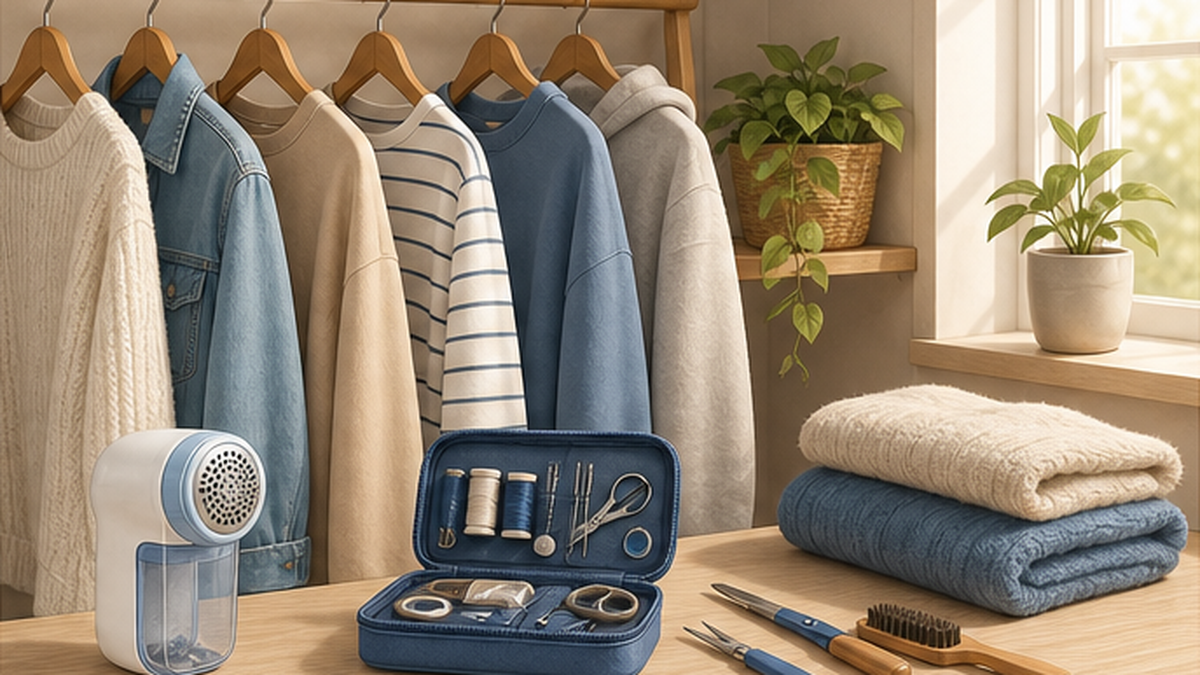
Three things to weigh when buying
- Napped and long-pile synthetics shed more readily
- Blends and tightly woven fabrics tend to release less
- Choosing durable quality reduces how often you repeat the high-shedding new-garment phase
Policy and Industry: Countries That Require Filters on Washing Machines
Individual effort has limits. That is why policy is beginning to build fibre capture into the machines themselves.
France Moved First
Under the AGEC law on waste reduction and the circular economy, enacted in 2020, France set out a requirement that new domestic and professional washing machines sold from 1 January 2025 must include a means of capturing plastic microfibres. It is regarded as the first national regulation of its kind. The gap of several years between enactment and application was designed to give manufacturers time to comply.
The move prompted debate in the European Parliament, where proposals to require microfibre filters on new washing machines across the EU have been raised repeatedly. Implementing rules vary in maturity between countries and regions, however, and how far the requirement translates into practice remains to be seen.
Where Japan Stands
Japan has no filter requirement for washing machines yet, but the Ministry of the Environment has set up a Fashion and Environment Task Force and works with apparel companies and textile manufacturers on public awareness. The leaflet described earlier is one product of that work.
Japan also led the Osaka Blue Ocean Vision agreed at the 2019 G20 Osaka Summit, which aims to reduce additional pollution by marine plastic litter to zero by 2050. The Tokyo University of Marine Science and Technology press release positions its Tokyo Bay measurements as research that supplies information needed to realise that vision.
Making an Invisible Problem Visible
Fibre pollution went unnoticed for so long simply because it could not be seen. A bottle washed up on a beach photographs well; a few dozen fibres per cubic metre of seawater do not. That is why measurement and publication, like the Tokyo Bay estimate, matter. Only once there is a number can the effect of any measure be judged.
What we can do is more mundane than it sounds: wash less often, use a bag, bin the lint. That is all. But when those modest actions are multiplied by every household, the order of magnitude changes. The starting point is simply remembering that the laundry, one of the most ordinary chores there is, connects to the sea.
Summary
- Lint shed by synthetic clothing is plastic under 5 mm, which is to say microplastic
- A single 6 kg wash releases about 728,000 fibres from acrylic and 496,000 from polyester (Napper & Thompson, 2016)
- About 35% of primary microplastics entering the ocean come from washing synthetic textiles (IUCN, 2017)
- Even in Japan, sewage plants remove only 76.3% of 10-100 μm material, so fine fibres pass through
- 92% of Arctic microplastics are fibres, and Tokyo Bay is estimated to hold about 25 tonnes
- The basics are washing less, fine-mesh bags and filter cleaning; external filters cut release by about 78%
- France requires microfibre capture in new washing machines from January 2025
参考文献・出典
- Ministry of the Environment, Japan – Please help prevent microplastics from clothing entering the environment (Marine Plastic Pollution Control Office, Marine Environment Division)
- Tokyo University of Marine Science and Technology – Total microplastics in Tokyo Bay estimated at 25 m3 (tonnes), press release of 6 September 2024, Professor Hisayuki Arakawa et al.
- Tanaka et al. (Journal of JSCE, Series G: Environmental Research, Vol.75 No.7, 2019) – Behaviour of microplastics in sewage treatment processes and estimation of the load to Lake Biwa
- Ross et al. (2021), Nature Communications – Pervasive distribution of polyester fibres in the Arctic Ocean is driven by Atlantic inputs (71 stations across the Arctic)
- Napper & Thompson (2016), Marine Pollution Bulletin 112:39-45 – Release of synthetic microplastic plastic fibres from domestic washing machines
- Napper et al. (2020), Science of The Total Environment – The efficiency of devices intended to reduce microfibre release during clothes washing (comparison of six devices)
- IUCN (Boucher & Friot, 2017) – Primary Microplastics in the Oceans: A Global Evaluation of Sources
- Newcastle University (Kelly et al., 2019) – Ditch the delicate wash cycle to save our seas (wash cycle and fibre release)
- Textile Exchange – Materials Market Report 2025 (132 million tonnes of global fibre production in 2024; polyester 59%)
※ 信頼性の高い順に配列:政府機関・学術機関 > 査読済み論文 > 専門機関 > 信頼できるメディア