⚡ In short
NYK Line plans to build a fleet of 20 LNG-fueled car carriers by fiscal 2028, while ballast water treatment systems curb the spread of invasive species. This article explains, with figures and primary sources, how the shipping industry is pursuing both CO2 reduction and marine ecosystem protection.
Shipping, which carries container ships and car carriers across the world's oceans, underpins global logistics — but it is also a major source of greenhouse gas (GHG) emissions and a vector for transporting invasive species through ballast water. These are two environmental challenges of very different natures. With more than 90% of world trade volume dependent on maritime shipping, how the industry overcomes both issues is a critical theme for climate action and ecosystem conservation alike.
NYK Line (Nippon Yusen Kabushiki Kaisha) is one of the companies taking concrete technical action on both fronts: introducing LNG (liquefied natural gas) fueled ships and installing ballast water treatment systems. Its "Sail GREEN" brand initiative — building LNG-fueled ships in succession, mainly car carriers, aiming for a fleet of 20 vessels by fiscal year 2028 — is regarded as a leading case within the shipping industry. At the same time, NYK is steadily installing ballast water treatment systems mandated by international treaty, advancing climate action and marine ecosystem protection in parallel, even though the two may appear unrelated at first glance.
This article organizes, based on publicly available information, NYK's progress in adopting LNG-fueled ships and how it addresses invasive species under the Ballast Water Management Convention. We will look at the concrete picture of how the shipping industry is trying to reduce its impact on the ocean environment, and the challenges that remain.
What you'll learn in this article
- The two environmental challenges NYK faces in shipping (GHG emissions and invasive species transport)
- The details and rollout schedule of the "Sail GREEN" LNG-fueled ship plan
- The history of the Ballast Water Management Convention and how treatment systems work
- What NYK is actually doing now and its future technology development
- Trends in decarbonization and ecosystem protection across the shipping industry
- How individuals can view the shipping industry's environmental response
Two environmental challenges facing the shipping industry
More than 90% of world trade volume is said to depend on maritime shipping, making it an indispensable industry for modern logistics. Much of the raw materials, industrial goods, and food we rely on cross the ocean, and our lives would not be possible without shipping. At the same time, ships burn large amounts of fuel during operation, making them a source of CO2 and other greenhouse gases, and their impact on global warming has been pointed out internationally.
The other challenge is the transport of invasive species via ballast water (seawater loaded to stabilize a ship's hull). When ballast water taken up in one sea area is discharged in another, plankton, microorganisms, and shellfish larvae contained in the water are carried directly into a different ecosystem. When the introduced organisms have no natural predators in that sea area, they can multiply explosively, driving out native species — cases of serious damage to fisheries and ecosystems have been reported around the world.
GHG emissions and ecosystem disruption: two different problems
GHG emissions affect the climate of the entire planet through the atmosphere, whereas the movement of invasive species can locally destroy the native ecosystem of a specific sea area — the technologies used to address them are completely different. Reducing GHG emissions requires switching the fuel itself and improving combustion efficiency, while countering invasive species requires equipment that treats the ballast water itself. NYK addresses these two challenges with separate technologies: fuel conversion and ballast water treatment systems.
Why no single company can solve this alone
Both challenges tend to have limited effect if addressed by just one company. GHG reduction only becomes effective with an industry-wide, international regulatory framework, and invasive species countermeasures also leave loopholes unless every ship calling at port applies the same level of treatment. As discussed later, regulation by the International Maritime Organization (IMO) is what drives the technology transition in both areas.
Two initiatives covered in this article
- Reducing CO2 and air pollutants by introducing LNG-fueled ships
- Curbing the movement of invasive species with ballast water treatment systems
Concrete examples of invasive species damage
A well-known case of damage caused by the movement of invasive species via ballast water is the mass proliferation of zebra mussels in North America's Great Lakes. This bivalve, native to Europe, is believed to have been brought into the Great Lakes via ships' ballast water in the 1980s. It not only drove out native shellfish but also clogged water intake pipes and power plant cooling equipment in large numbers, causing significant damage not only to ecosystems but to economic activity. The accumulation of such cases pushed forward the need for international ballast water regulation.
In Japan too, cases have been reported of shellfish and algae not originally native to the area being found around ports, and the invasion of alien species is recognized as a risk common to every port connected by international shipping routes, not just an issue for specific countries or regions.
NYK's LNG-fueled ship strategy, "Sail GREEN"
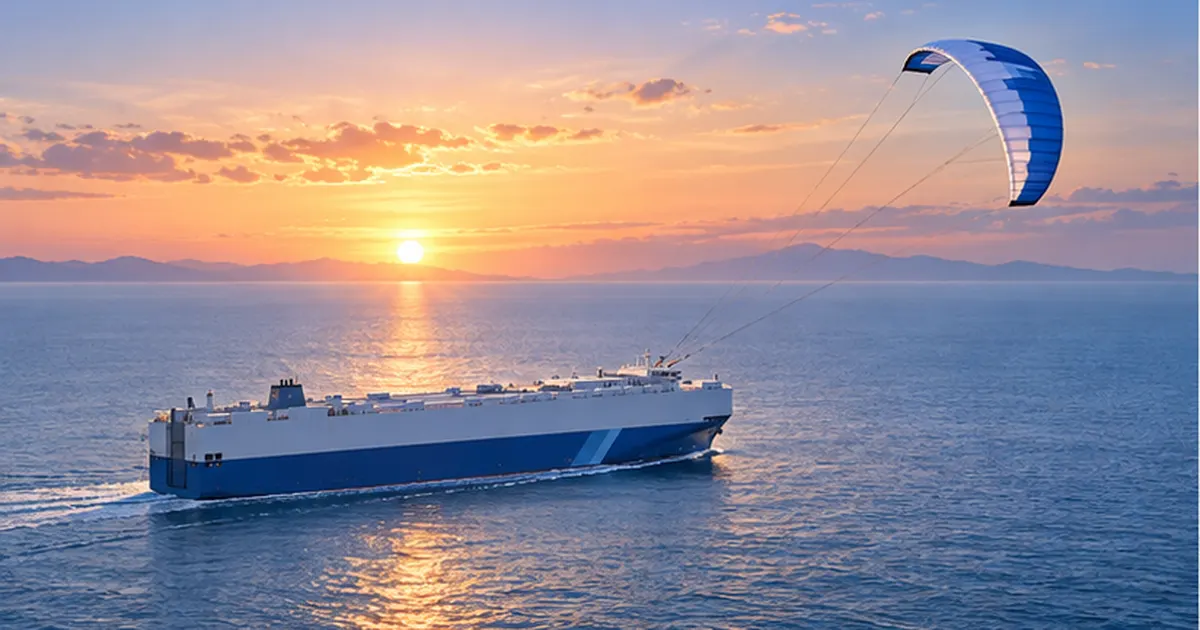
In 2021, NYK announced that it had signed a contract with Shin Kurushima Dockyard for the series construction of 12 LNG-fueled car carriers. Under this plan, Shin Kurushima Dockyard and Nihon Shipyard will each build six vessels — 12 in total — between fiscal 2025 and fiscal 2028, bringing the company's LNG-fueled car carrier fleet, combined with existing vessels, to a total of 20 ships by fiscal 2028.
In March 2026, "Elder Leader," one vessel in this series, was completed and named, showing the plan is progressing steadily. NYK is rolling out this series of environmental initiatives under the "Sail GREEN" brand, with the introduction of LNG-fueled ships positioned as one of its core measures.
See NYK's announcementNamed "Elder Leader," an LNG-fueled car carrier in the 12-ship seriesNYK's press release covering progress on its Sail GREEN newbuild LNG-fueled ship plan.🔗 nyk.comWhy start with car carriers
NYK has positioned car carriers as a priority area for fuel conversion, having earlier put into service the LNG-fueled car carrier "SAKURA LEADER" for Toyota Motor Corporation. Car carriers tend to have relatively fixed routes, which makes it easier to establish an LNG bunkering supply network. Many operate as dedicated ships for specific shippers, making it easier to plan investment payback for fuel conversion — one reason this ship type is ahead of others in adoption.
The rationale behind series construction
Building a series of 12 ships appears aimed at securing the shipyard's construction line over the long term and leveling out the cost of the vessel and LNG-related equipment. Rather than ordering ship by ship, ordering a planned batch of vessels also makes it more efficient to build up crew operating know-how and maintenance systems.

How LNG-fueled ships work and their environmental effects
LNG (liquefied natural gas) is natural gas cooled to minus 162°C to turn it into a liquid, compressing its volume to roughly 1/600th of its gaseous state — making it suitable for storage in ship fuel tanks. Compared with conventional heavy fuel oil, it can reduce CO2 emissions during combustion, and it is also said to dramatically cut emissions of sulfur oxides (SOx), nitrogen oxides (NOx), and particulate matter (PM).
Differences from conventional fuel
| Item | Heavy fuel oil (conventional) | LNG fuel |
|---|---|---|
| Sulfur oxides (SOx) | High | Nearly zero |
| Nitrogen oxides (NOx) | High | Much lower |
| Particulate matter (PM) | High | Much lower |
| CO2 emissions | Baseline | Reduced vs. heavy fuel oil |
The International Maritime Organization (IMO) has been progressively tightening its sulfur content regulation (SOx regulation) for ships, and since 2020 has required ship fuel sulfur content worldwide to be kept to 0.5% or below in principle. LNG fuel is positioned as a response to this international regulation as well: while heavy-fuel-oil ships need to additionally install exhaust gas cleaning systems (scrubbers) to comply, LNG-fueled ships, whose fuel itself has almost no sulfur content to begin with, have an advantage in regulatory compliance.
Equipment and challenges unique to LNG-fueled ships
LNG-fueled ships require dedicated tanks to safely store ultra-low-temperature LNG, along with a fuel gas supply system (FGSS) that delivers the vaporized gas as fuel. Hull design and construction costs tend to be higher than for conventional heavy-fuel-oil ships, and the still-limited number of ports where LNG can be bunkered is another factor affecting the pace of adoption.
That said, since LNG is also a fossil fuel, it does not mean zero CO2 emissions during combustion. NYK has stated that it is also looking ahead to converting to zero-emission fuels such as ammonia and hydrogen in the future, positioning LNG-fueled ships strictly as a transitional technology.
The spread of LNG bunkering hubs worldwide
Supporting the spread of LNG-fueled ships is the development of bunkering hubs where fuel can be supplied. Major ports around the world, including Singapore, Shanghai, Kashima, and Yokohama, are building dedicated facilities to supply LNG to ships, and ship-to-ship transfer systems that move LNG between vessels at sea are also spreading. Compared with the early days of adoption, when bunkering hubs were limited, it has become easier to procure LNG fuel along major international shipping routes.
LNG fuel as a "bridge" technology
LNG is not zero-emission, but because it can cut emissions compared with existing heavy-fuel-oil ships, it is increasingly being adopted across the shipping industry as a bridging option until next-generation fuels such as ammonia and hydrogen become practical.
What is the Ballast Water Management Convention?
The starting point of international discussion on the ballast water problem dates back to 1988, when the issue of invasive marine species in Canada's Great Lakes was raised at the IMO's 26th Marine Environment Protection Committee meeting. In the Great Lakes, invasive species such as zebra mussels, introduced via ships' ballast water, multiplied explosively and caused serious damage to the native ecosystem and water intake facilities, which became a matter of concern.
Since then, countries have studied countermeasures, and in 2004 the International Convention for the Control and Management of Ships' Ballast Water and Sediments (Ballast Water Management Convention) was adopted. Because entry into force required ratification by a certain number of contracting states representing a certain share of world tonnage, it took many years from adoption to entry into force.
Entry into force and mandate timing
The convention entered into force on September 8, 2017, requiring ballast water treatment systems on newly built ships from that date onward. For existing ships already in service, installation has been mandated in stages starting with vessels undergoing periodic surveys on or after September 8, 2019, so that today nearly all ships on international voyages are required to carry a ballast water treatment system.
Ships are estimated to move 3 to 5 billion tons of ballast water internationally each year, a scale that, left unregulated, could expand the impact on native ecosystems in ports around the world. Before the convention's entry into force, the main response was the simpler practice of ballast water exchange on the high seas (replacing water with open-ocean water to lower the survival rate of coastal organisms), but the mandatory installation of treatment systems has made more reliable inactivation of organisms possible.
Japan's response framework
As a ratifying state, Japan has established domestic law (the Ballast Water Management Act), with the Ministry of Land, Infrastructure, Transport and Tourism overseeing implementation of the convention. Classification society ClassNK (Nippon Kaiji Kyokai) is also involved in ensuring the convention's effectiveness, through type approval of equipment and ship inspections.
The risk Japan bears as a coastal nation
Surrounded by the sea on all sides and home to numerous international ports, Japan is a trading nation that also falls on the receiving side when it comes to the risk of invasive species. Foreign ships carrying import cargo, not just exports, regularly call at Japanese ports, so protecting the ecosystem of Japan's coastal waters from invasive species requires not only Japanese-flagged vessels but also every foreign ship calling at port to comply with the Ballast Water Management Convention. Having the convention function as an international framework helps avoid a situation where only specific countries or companies take unilateral action.

How ballast water treatment systems work
A ballast water treatment system renders harmless the microorganisms, plankton, and shellfish larvae contained in the ballast water a ship has taken up, before it is discharged. There are several methods, but a representative approach combines filtration with disinfection/inactivation using ultraviolet (UV) light or electrolysis.
The type approval process
The IMO has established guidelines (G8) for approving the performance of ballast water treatment systems, and each country's administration reviews and grants type approval based on them. In Japan, the Maritime Bureau of the Ministry of Land, Infrastructure, Transport and Tourism conducts the review, and approved equipment is then registered with the IMO. Equipment without type approval is not considered to meet the convention's requirements, so shipping companies select approved equipment suited to their hull and route.
- Intake: filters remove relatively large plankton and floating matter
- Treatment: UV irradiation or electrolysis inactivates and disinfects microorganisms
- Discharge: only treated ballast water is discharged, curbing the movement of organisms
The performance standard (D-2 standard)
The convention sets a "D-2 standard" defining upper limits, by size category, on the number of organisms allowed in discharged ballast water. Ballast water treatment systems must meet this standard to receive type approval, and whether they can consistently meet it under actual operating conditions (water temperature, salinity, turbidity, and so on) is a key factor in equipment selection.
Operational precautions in daily use
Installing a ballast water treatment system is not the end of the story. Because treatment efficiency varies with the water quality of the intake area (turbidity, water temperature, salinity), crews must operate the equipment properly according to the operating manual and detect problems such as filter clogging or UV lamp degradation early. Port state control inspections by port authorities also check the operating records and maintenance status of ballast water treatment systems, requiring thorough record-keeping as well.

NYK Group's environmental vision and targets
NYK Group has set "achieving net-zero emissions by fiscal 2050" as its long-term target for its ocean-going shipping business. In 2023 it published the "NYK Group Decarbonization Story," presenting a medium-term target of reducing total Scope 1 & 2 emissions by 45% by fiscal 2030, compared with fiscal 2008.
Initiatives beyond LNG-fueled ships
In addition to introducing LNG-fueled ships, NYK is entering renewable energy businesses such as offshore wind power and advancing technology development for ships fueled by ammonia and hydrogen. In January 2025, it published an official position on carbon dioxide removal (CDR) to address residual emissions that cannot be eliminated, aiming to achieve its 2050 net-zero target by combining fuel conversion with multiple other measures.
The significance of interim targets
Setting only a distant 2050 target makes it hard to verify progress. NYK's explicit fiscal 2030 interim target (a 45% cut in Scope 1 & 2 emissions) appears intended to make progress toward the long-term goal periodically verifiable. Whether the interim target can be met will depend heavily on the pace of LNG-fueled ship adoption and the timing of practical ammonia- and hydrogen-fueled ships.
The difference between Scope 1&2 and Scope 3
GHG emissions accounting distinguishes "Scope 1" (direct emissions from a company's own operations), "Scope 2" (indirect emissions from purchased electricity and the like), and "Scope 3" (emissions across the entire supply chain). NYK's 45% reduction target covers Scope 1 & 2, centered on emissions from burning fuel aboard the ships it operates. From a shipper's perspective, using vessels operated by NYK also helps reduce its own Scope 3 emissions (indirect emissions associated with transport), closely linking NYK's targets to shipper companies' own decarbonization goals.
NYK's environmental targets (summary)
- FY2050: achieve net-zero emissions in ocean-going shipping
- FY2030: cut total Scope 1 & 2 GHG emissions by 45% vs. FY2008
- Means: LNG-fueled ships, renewable energy business, ammonia/hydrogen ship development, use of CDR

Environmental action spreading across the shipping industry
The adoption of LNG-fueled ships and ballast water treatment systems is not limited to NYK — it is spreading across the entire shipping industry. Mitsui O.S.K. Lines (MOL), for example, has put into practical use the "Wind Challenger," a hard-sail system that harnesses wind power for propulsion, to cut fuel consumption. Each company taking a different approach to cutting fuel use and emissions shows that decarbonizing shipping is not about relying on a single technology, but about combining multiple options.
Even as these companies compete with one another, their efforts are notably being carried out within a common framework of GHG reduction targets and environmental regulations set by the IMO. For related coverage, MOL's sail-based fuel-saving technology is introduced in detail in the article below.
→ What is MOL's Wind Challenger? A ship that saves fuel with sails
Overseas container shipping majors such as Maersk and CMA CGM are also introducing newbuild ships fueled by methanol or LNG, and this fuel-conversion trend is advancing simultaneously along major shipping routes worldwide, not just within Japan. Which fuel will ultimately become dominant is still undecided, and companies investing in different fuels can also be seen as a way of spreading risk across the industry.
Given the spread of this international fuel transition, NYK's efforts are far from an isolated case — they are one practical example of the decarbonization challenge the entire global shipping industry faces in common. How the relative merits of each company's technology choices ultimately shake out will depend heavily on fuel price trends and the concretization of international regulations, making this a field that will continue to warrant close attention.
Under its revised GHG strategy adopted in 2023, the IMO has set staged targets: improving fuel efficiency relative to 2008 by 2030, substantially cutting GHG emissions by 2040, and achieving net-zero emissions by around 2050. The fact that different countries' and companies' target years and reduction rates are converging on similar levels is because this international framework functions as a common yardstick. Going forward, discussion is expected to advance on mechanisms to verify progress toward targets and economic incentives tied to emissions (such as carbon pricing for fuel), further strengthening the shipping industry's environmental response at the institutional level as well.
How international regulation drives technology transition
Both the IMO's tightened SOx regulation and the entry into force of the Ballast Water Management Convention are cases of international rules mandating a level of environmental response for shipping companies worldwide that would be difficult to achieve through voluntary corporate efforts alone. The pattern in shipping's environmental response is that regulation comes first, followed by technology investment — fuel conversion, installation of treatment equipment — to comply with it.
Demand from shipper companies as another push factor
Shipper companies that use ocean shipping, such as automakers and retailers, are also increasingly required to cut GHG emissions across their entire supply chain (Scope 3 emissions). Whether the shipping company they entrust with transport operates low-emission vessels such as LNG-fueled ships is starting to influence shippers' choice of business partner — another factor pushing shipping companies toward fuel conversion.
Comparing the environmental strategies of Japan's three major shipping companies
In addition to NYK, Japan is home to Mitsui O.S.K. Lines (MOL) and Kawasaki Kisen Kaisha (K Line), both among the world's leading shipping companies, and both have their own environmental strategies based on the IMO's GHG reduction targets. All three share "net-zero emissions by 2050" as a long-term goal, but the technical paths to get there differ.
Differences in each company's approach
| Company | Main pillar of fuel conversion | Distinctive initiative |
|---|---|---|
| NYK Line | LNG-fueled ships (Sail GREEN) | Aiming for a 20-ship fleet by FY2028, centered on car carriers; has also announced a policy of using CDR |
| Mitsui O.S.K. Lines | LNG-fueled ships + wind propulsion | Reducing fuel use with the "Wind Challenger" hard-sail technology |
| Kawasaki Kisen Kaisha (K Line) | LNG-fueled ships + hydrogen/ammonia ships | Advancing next-generation fueled ship development under "K" LINE Environmental Vision 2050 |
What all three companies have in common is a staged roadmap: establishing LNG-fueled ships as a near-term pillar first, then combining zero-emission fuels such as ammonia and hydrogen with supplementary propulsion technologies like wind power further down the road. Rather than betting on a single technology, verifying multiple options in parallel also reflects the fact that fuel infrastructure development and the timing of technology commercialization remain uncertain.
Differences by ship type are also worth noting. Car carriers and container ships, whose routes are relatively fixed, find fuel conversion easier to pursue, while bulk carriers and tankers often operate on a wide variety of unfixed routes, making conversion harder until fuel can be procured anywhere in the world. When looking at each company's environmental strategy, it also helps to consider which ship types are leading the conversion.
The perspective of investors and rating agencies
In recent years, amid the spread of ESG investing, institutional investors and rating agencies have increasingly evaluated shipping companies' environmental strategies. Whether a company has a concrete roadmap for GHG reduction, interim targets, and transparent progress disclosure now affects investment decisions and financing terms (such as sustainability-linked loans) — environmental response is becoming not just a matter of social contribution but a management issue directly tied to the cost of raising capital. NYK's explicit fiscal 2030 interim target can also be seen as aimed at meeting this kind of external evaluation.
The overall direction visible from the comparison
The fact that companies are setting similar targets around similar timeframes reflects the existence of the IMO's GHG reduction strategy, adopted in 2023, which includes achieving net-zero emissions by around 2050. Because the international regulatory framework forms the basis for each company's target-setting, it is a natural outcome that the strategies of Japan's three major shipping companies converge in direction.
Remaining challenges and outlook
While LNG-fueled ships can curb CO2 emissions, they remain fossil-fuel vessels, and achieving net-zero emissions by 2050 will require a shift to fuels such as ammonia and hydrogen that emit no CO2 when burned. The development of fuel supply infrastructure and the outlook for fuel costs are also factors that will determine the pace of future adoption. Ammonia in particular is toxic, so handling it as a fuel poses challenges around establishing safety standards and crew training systems.
In addition, LNG can experience "methane slip" — leakage of methane during extraction, liquefaction, and transport — which some researchers argue partially offsets its benefits as a greenhouse gas. Because methane has a greater short-term warming effect than CO2, evaluating the environmental benefit of LNG-fueled ships requires assessing the full life cycle, from extraction to supply, not just combustion emissions.
Ballast water treatment systems also face challenges: retrofitting existing ships takes time and money, requiring companies to plan ahead in line with the convention's mandatory schedule. Continuing to maintain the equipment's operating condition is also essential to preserving its effectiveness — if the equipment is not functioning properly, a ship may fail to meet the convention's standard even though it is installed, requiring regular inspection and maintenance systems.
The cost of adopting LNG-fueled ships and ballast water treatment systems may also ultimately be passed on through freight rates, making this a matter that concerns shippers and consumers as well. As the shipping industry's environmental response advances, it is worth keeping in mind that it could also affect the cost structure of the imported goods and domestic transport we rely on every day.
What consumers can do
It is difficult for individuals to directly influence the shipping industry's technology transition itself, but choosing products and services mindful of the environmental impact of transportation can serve as indirect support. Actions such as choosing products from companies that use low-impact transport methods, or reading the environmental reports of shipping and logistics companies to learn about their efforts, can help encourage continued disclosure and action on the corporate side. Ocean environmental issues may seem like distant events out at sea, but they are in fact connected to our own consumption choices.

Conclusion: fuel transition and ecosystem protection move forward together
NYK's efforts on LNG-fueled ships and ballast water treatment systems show a shipping industry addressing two environmental challenges of different natures — global climate change and localized disruption of marine ecosystems — each with a different technology.
The plan to reach a 20-ship fleet of LNG-fueled car carriers by fiscal 2028, and the treaty-mandated installation of ballast water treatment systems, are both initiatives proceeding on long-term schedules. It will be worth continuing to watch how the shipping industry transitions to next-generation fuels and protects marine ecosystems going forward.
References & sources
- NYK Line, "Named 'Elder Leader,' an LNG-fueled car carrier in the 12-ship series" – Press release
- NYK Line, "12 LNG-fueled car carriers to be built in series" – Press release
- NYK Line, "Long-term GHG reduction target for ocean-going shipping: 'achieving net-zero emissions by 2050'" – Press release
- NYK Line, "NYK Group Decarbonization Story" – Sustainability
- NYK Line, Environment – Sustainability
- ClassNK, "Ballast Water Management Convention" – Classification society overview page
- Ministry of the Environment, Japan, "Regulations on discharge of harmful ballast water" – Water, soil, ground, and marine environment conservation
- National Institute for Environmental Studies, Environmental Outlook, "Ballast water treatment technology" – Environmental technology explainer
※ Listed in order of reliability: government/academic institutions > peer-reviewed papers > specialized organizations > reputable media