⚡ The answer in 30 seconds
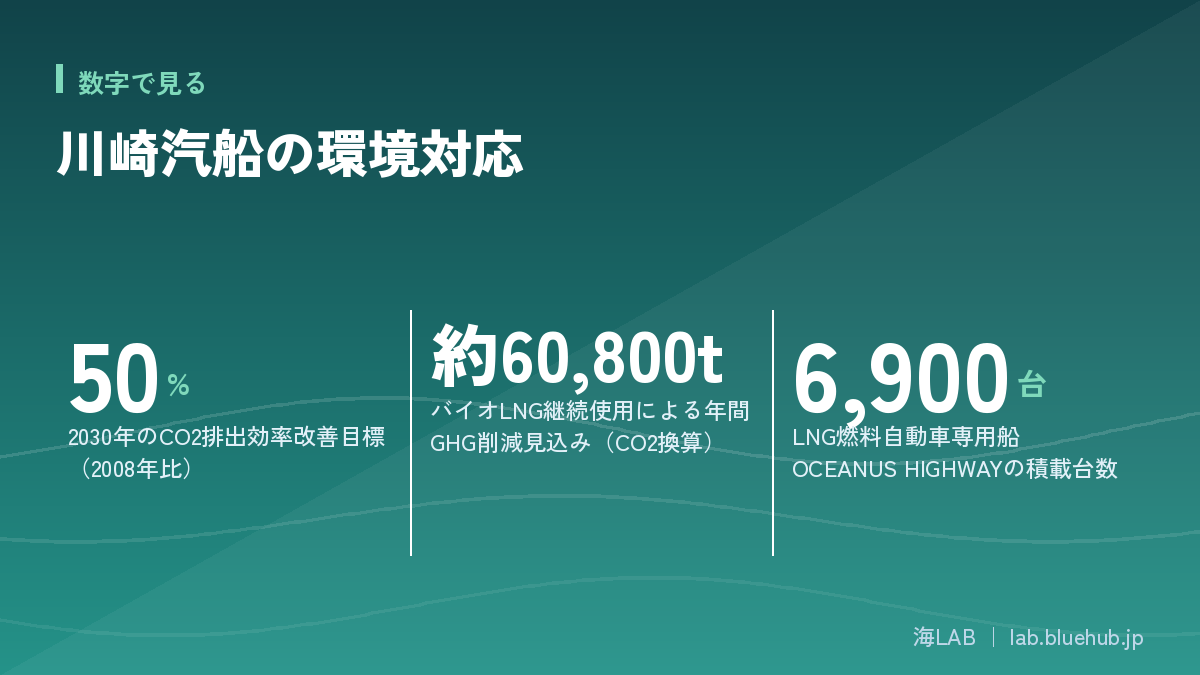
- Kawasaki Kisen has announced a 50% improvement in CO2 emissions efficiency versus 2008 by 2030 and a challenge of net-zero GHG emissions by 2050.
- LNG-fueled ships are the main pillar for now, and continued use of bio-LNG is expected to cut about 60,800 tons a year (CO2 equivalent).
- The Seawing wind kite aims to cut fuel use by 10% or more on large bulk carriers, targeting commercialization around 2027.
- Ammonia and hydrogen are planned for the end goal. It is important to read plans and results separately.
Kawasaki Kisen ("K" LINE) has announced that it will improve CO2 emissions efficiency by 50% versus 2008 by 2030 and take on the challenge of net-zero GHG emissions by 2050. The major Japanese shipping company combines several measures, including LNG-fueled ships, bio-LNG, wind kites and ammonia-fueled vessels, to decarbonize shipping.
Most of the cars, food and energy we use are carried by ship. International shipping is said to account for roughly 2–3% of global CO2 emissions, so decarbonizing it also helps protect the marine environment.
Based on official announcements, this article gives a neutral overview of Kawasaki Kisen's efforts. It also covers the challenges of LNG and the difference between plans and results, to offer a way of reading corporate environmental action.
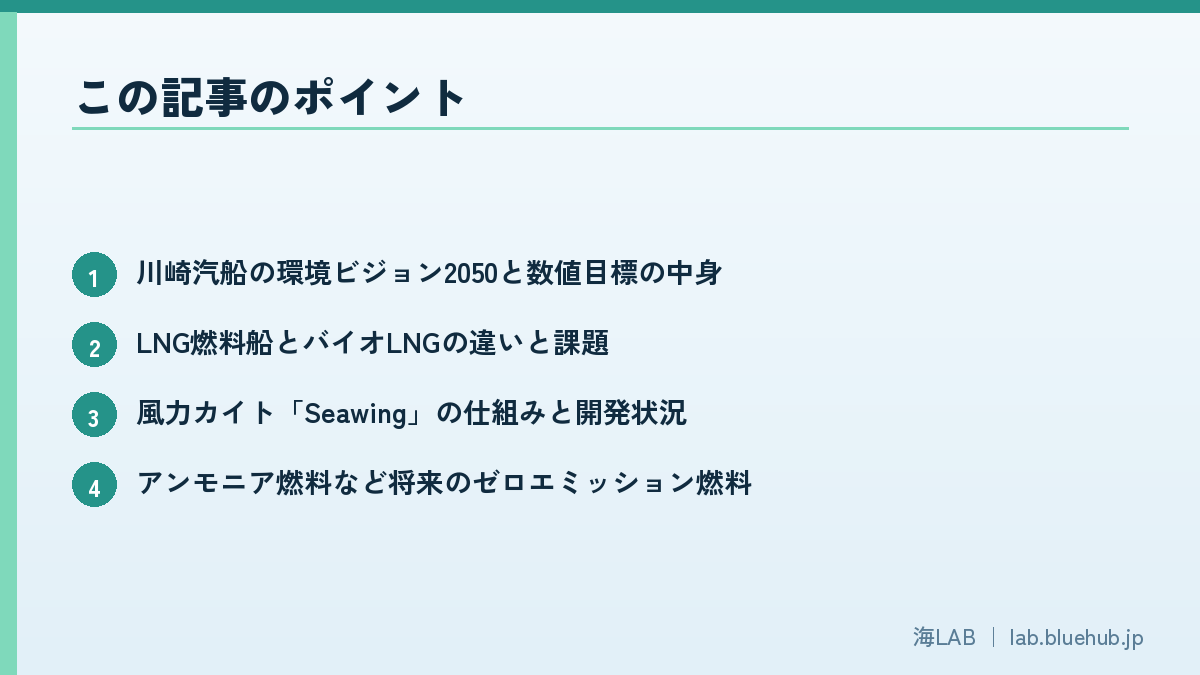
What you will learn in this article
- What Kawasaki Kisen's Environmental Vision 2050 and its numerical targets contain
- The differences and challenges of LNG-fueled ships and bio-LNG
- How the wind-power kite "Seawing" works and where its development stands
- Future zero-emission fuels such as ammonia
- Five viewpoints for fairly evaluating a company's environmental efforts
What is Kawasaki Kisen? What Is Being Asked of Shipping Decarbonization
Kawasaki Kisen ("K" LINE) is a major Japanese shipping company founded in 1919. It operates car carriers, dry bulk carriers (ships that carry iron ore, coal, grain and other loose cargo) and energy-resource carriers. Much of the world's logistics, from the cars we ride to the power we use and the wheat in our bread, depends on sea transport, and shipping companies are key players in "decarbonization at sea."
This article is a neutral explanation that organizes the environmental targets and initiatives Kawasaki Kisen has officially published, as factually as possible. It neither recommends nor criticizes any company; it uses the company as a case study of how a major shipping line is trying to decarbonize. Please note that figures and dates are based on official announcements as of the time of publication.
Why shipping decarbonization matters
International shipping carries most of world trade, and its emissions per ton of cargo per kilometer are said to be smaller than those of trucks or aircraft. However, because the volume carried is enormous, total greenhouse gas emissions from international shipping are not negligible. According to Japan's Ministry of Land, Infrastructure, Transport and Tourism and others, international shipping accounts for roughly 2–3% of global CO2 emissions, which would rank it among the largest countries if treated as one.
Shipping has traditionally run on heavy fuel oil. It is cheap and easy to handle, but it emits sulfur oxides (SOx) and nitrogen oxides (NOx) in addition to CO2. Stricter emissions regulations and fuel switching have therefore become core management issues for shipping companies.
The international target: IMO's "net zero by around 2050"
International shipping rules are set by the International Maritime Organization (IMO), a United Nations specialized agency. At the 80th session of its Marine Environment Protection Committee (MEPC 80) in July 2023, the IMO adopted the "2023 IMO Strategy on Reduction of GHG Emissions from Ships," which includes a goal of net-zero GHG emissions from international shipping by or around 2050. Japan's Ministry of Land, Infrastructure, Transport and Tourism also announced the agreement.
- By 2030, reduce CO2 emissions per transport work by at least 40% compared with 2008, on average across international shipping
- By 2030, raise the share of energy from zero or near-zero emission fuels and technologies to 5–10% (a striving target)
- Reach net-zero GHG emissions from international shipping by or around 2050
Terms used in this article
- GHG: greenhouse gases. They include methane and nitrous oxide as well as CO2.
- Net zero: reaching effectively zero by subtracting absorbed or removed amounts from emissions.
- CO2 emissions efficiency: CO2 emitted per ton of cargo carried one nautical mile. It shows how energy-efficient a ship is.
- LNG: liquefied natural gas. A transitional fuel that emits less CO2 than heavy fuel oil.
Kawasaki Kisen's business and "types of ships"
In shipping, there are specialized vessels for each type of cargo. Car carriers have multi-level decks so vehicles can drive on and be carried without damage. Dry bulk carriers load granular or lumpy cargo such as iron ore, coal and grain into large undivided holds. Kawasaki Kisen operates a mix of such ships on global routes, and because the suitable environmental technology differs by ship type, decarbonization becomes more complex.
- Car carriers: easier to introduce LNG-fueled ships and bio-LNG
- Large bulk carriers: wind-assisted propulsion (kites) is likely to be effective
- Long-distance fuel carriers: linked to the supply chains of zero-emission fuels
In other words, the combination of "which technology goes on which ship" is where each company shows its skill. Rather than solving everything with one method, shipping decarbonization is characterized by using multiple measures suited to ship type, route and timing.
Kawasaki Kisen's environmental targets: understanding "Environmental Vision 2050"
As its long-term environmental policy, Kawasaki Kisen has set out the "'K' LINE Environmental Vision 2050 – Connecting the Blue Sea to Tomorrow." In November 2021 it updated the vision and announced that it would take on the challenge of net-zero GHG emissions by 2050.
The 2030 interim target: "50% efficiency improvement"
As its 2030 interim target, the company aims to improve CO2 emissions efficiency by 50% versus 2008. Since the IMO target is "an improvement of at least 40%," the company is holding itself to a higher standard than the international rule. Note that the official announcements also organize figures on total GHG emission reductions in stages, and these may be updated. For the latest figures, check the company's official pages.
| Item | IMO target | Kawasaki Kisen's target (as published) |
|---|---|---|
| CO2 emissions efficiency improvement by 2030 (vs. 2008) | At least 40% | 50% |
| GHG emissions in 2050 | Net zero (by around 2050) | Challenge of net zero |
| Use of zero-emission fuels, etc. | 5–10% in 2030 (striving target) | Plans to introduce ammonia, hydrogen and others |
The meaning of the word "challenge"
Kawasaki Kisen's official wording is not "achieve net zero" but "take on the challenge of net zero." This can be read as reflecting that many factors, such as zero-emission fuel supply, ship technology and international rules, cannot be decided by the company alone. The cautious wording can also be seen as an honest acknowledgment of uncertainty.
Key points
- Two stages of targets: "50% efficiency improvement" in 2030 and "challenge of net zero" in 2050.
- It voluntarily sets an interim target higher than the international rule (IMO).
- The plan combines not only fuel switching but also energy-saving technology and operational improvements.
Financing that supports the targets: transition finance
Decarbonization requires large capital investment. Japan's Ministry of Economy, Trade and Industry has published Kawasaki Kisen's transition-linked loan as an example of financing that supports corporate transition. It is a mechanism to direct funds to companies working on planned reductions even in high-emitting industries, and is valued in industries like shipping where transformation takes time.
Why 2008 is the base year
Both the IMO target and Kawasaki Kisen's interim target use 2008 as the base year. This is to measure how much has been reduced from a time when international shipping emissions were near their peak. Because the same percentage means something different with a different base year, you must always check "which year is the baseline" when comparing figures.
Also, "efficiency improvement" refers to emissions per ton of cargo per nautical mile, so total emissions can rise if the volume carried grows. Efficiency targets and absolute-emission targets therefore need to be viewed separately. Shipping as a whole is expected to take two steps: raise efficiency while ultimately bringing total emissions close to zero.
Areas covered by the Environmental Vision
- Responding to climate change (reducing GHG emissions)
- Preventing air pollution (reducing SOx and NOx)
- Conserving the marine environment (ballast water, oil pollution and other measures)
- Contributing to a recycling-oriented society (ship recycling, etc.)
Kawasaki Kisen's environmental vision covers not only CO2 but the entire marine environment. For a shipping company, the sea is the workplace itself, and protecting the marine environment is directly tied to the sustainability of the business.
Transition finance in a little more detail
"Transition" means gradually reducing emissions based on realistic plans in industries that cannot reach zero immediately. METI's concept of "transition finance" emphasizes (1) a company's long-term goals, (2) a science-based pathway, (3) concrete implementation plans and (4) disclosure. Kawasaki Kisen's case has been published because it is a useful example of financing along these lines.
However, transition finance has also been criticized: "Isn't it just using transition as a pretext to justify investment in fossil fuels?" Continuing to disclose implementation plans and results is therefore essential to maintaining trust.
The transitional mainstay: LNG-fueled ships and eco-friendly car carriers
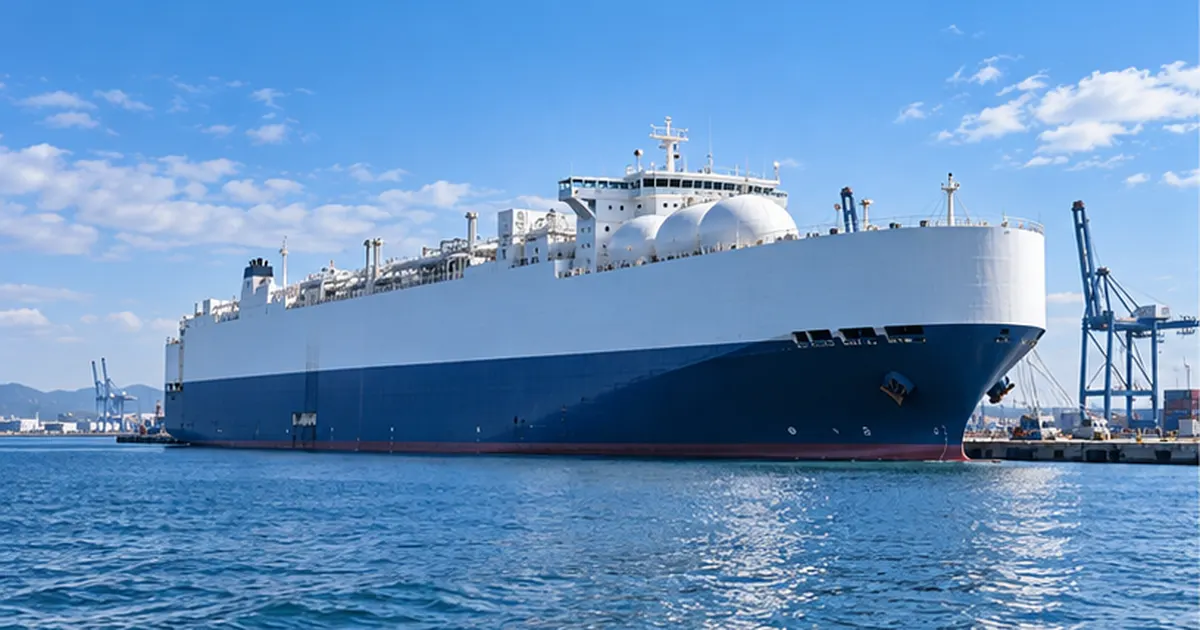
Even if zero-emission fuels become the mainstay by 2050, a "bridge" is needed along the way. What Kawasaki Kisen positions as its main force for now is ships fueled by LNG (liquefied natural gas).
Why LNG fuel?
Compared with heavy fuel oil, LNG is said to emit less CO2 when burned, produce almost no SOx, and reduce NOx and particulate matter. It can be put into practice with existing technology, and fueling hubs (bunkering) are increasing worldwide. Many shipping companies therefore adopt it as a realistic option until zero-emission fuels spread.
Case study: the 6,900-vehicle "OCEANUS HIGHWAY"
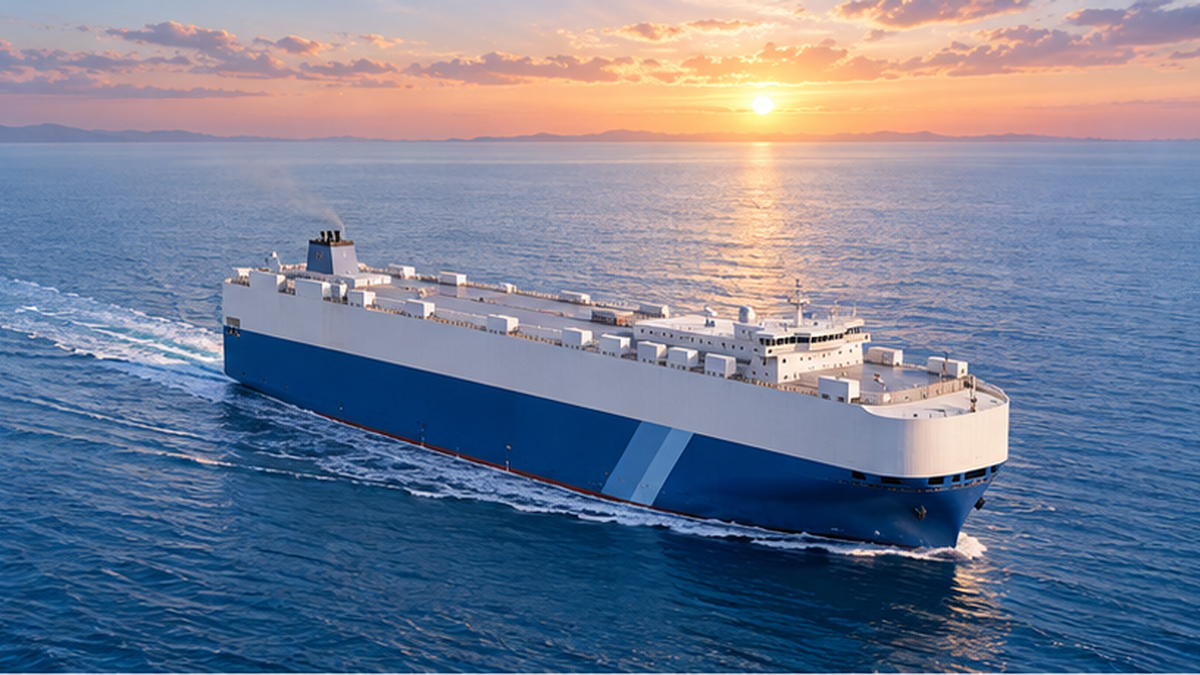
The car carrier "OCEANUS HIGHWAY," completed on February 27, 2025, is a large LNG-fueled vessel with a capacity of 6,900 vehicles. Its main specifications according to the official announcement are as follows.
| Item | Details |
|---|---|
| Vehicle capacity | 6,900 vehicles |
| Length overall | 199.95 m |
| Gross tonnage | 75,259 tons |
| Service speed | 19.00 knots |
| Fuel | LNG (liquefied natural gas) |
| Builder | Shin Kurushima Toyohashi Shipbuilding |
| Completed | February 27, 2025 |
| Environmental performance | About 25–30% less CO2 than a heavy-fuel-oil ship; almost no SOx emissions |
Note that the "25–30% reduction" is a comparison of the CO2 a ship emits from combustion when switching fuel from heavy fuel oil to LNG. Internationally, it is being discussed that the reduction may be smaller across the "whole life cycle," including methane leaks (methane slip) from LNG extraction and transport. LNG is therefore positioned as "a transitional fuel, not the goal."
Introduction plan: about 40 ships by 2030
According to trade press reports, Kawasaki Kisen completed an LNG-fueled car carrier in 2021 and has shown a plan to increase LNG-fueled ships to about 40 by 2030. In June 2026 it also officially announced shipbuilding contracts for four LNG-fueled car carriers for European short-sea transport.
Challenges of LNG
- Methane slip: unburned methane has a stronger greenhouse effect than CO2. Engine-side countermeasures are being advanced.
- The fuel itself is fossil-derived: LNG alone cannot reach net zero. Next steps (bio-LNG, ammonia and others) are needed.
How do ship engines and fuel tanks change?
LNG is a gas at normal temperature, so it is cooled to about minus 162 degrees to liquefy and stored in dedicated insulated tanks. On board, this liquefied gas is vaporized and sent to the engine. Compared with heavy-fuel-oil engines, the tank shape, piping and safety devices change significantly, so special rules apply to the design of LNG-fueled ships.
In recent LNG-fueled ships, engines that reduce unburned methane through combustion improvements are increasingly adopted. Also, being able to switch from LNG to bio-LNG without changing equipment is rational in terms of avoiding wasted investment. LNG-fueled ships built today are designed as a "bridge" that can also handle future carbon-neutral fuels.
Fuel switching advancing in European short-sea shipping
Europe has extended ship emissions regulations and emissions trading to shipping, and puts strong decarbonization pressure on shipping companies. The contract announced in June 2026 for four LNG-fueled car carriers for European waters also reflects a response to this regulatory environment. Differences in regional regulation can be said to influence the pace of fuel switching.
Bio-LNG: from fossil origin to a "carbon-neutral fuel"
Bio-LNG is attracting attention as a way to compensate for the weaknesses of LNG-fueled ships. It is liquefied biomethane made from sources such as livestock manure and food waste, and since its composition is almost the same as natural-gas-derived LNG, a major advantage is that LNG-fueled ships' engines and tanks can be used as they are.
Kawasaki Kisen's initiatives
On July 1, 2025, Kawasaki Kisen announced the start of operating car carriers on bio-LNG fuel. On April 1, 2026, it further announced continuous use of bio-LNG in LNG-fueled car carriers. According to the official announcement, a long-term procurement contract is expected to deliver annual GHG reductions of about 60,800 tons in CO2 equivalent. The fuel is ISCC-EU certified and handled in line with the EU Renewable Energy Directive (RED).
- Target: LNG-fueled car carriers (continuous use)
- Expected reduction: about 60,800 tons per year (CO2 equivalent)
- Certification: ISCC-EU certified bio-LNG
- Position: one of the measures implementing "Environmental Vision 2050"
Because how the figure of 60,800 tons looks depends on the assumptions behind the calculation, this article simply presents the official number as is.
Why "certification" matters
The actual reduction effect of biofuels varies greatly depending on feedstock and production method. For example, it would be meaningless if forests were cut down to obtain feedstock. Certification schemes such as ISCC are mechanisms in which third parties verify the sustainability of feedstock and greenhouse gas reductions across the whole supply chain, and they serve to prevent "greenwashing."
Bio-LNG key points
- Can be used in existing LNG-fueled ships (no major equipment changes needed).
- It is important to confirm feedstock sustainability through certification.
- Because supply is limited, challenges remain in covering all ships.
How bio-LNG is made
- Ferment livestock manure, sewage sludge, food waste and the like to produce biogas
- Separate and purify methane from the biogas to make biomethane
- Cool and liquefy the biomethane to make bio-LNG
- Transport it to port by dedicated ships and facilities and supply it to the ship's fuel tanks
In this way, bio-LNG is also a circular fuel that uses waste as a resource. However, the amount of waste feedstock is limited, and enough has not yet been secured to fuel world shipping. It is therefore realistic to regard bio-LNG as "a valuable fuel that complements other measures."
The idea of "mass balance"
Because LNG and bio-LNG mix in the pipes once liquefied, it is impossible to distinguish which molecules of the fuel a ship actually burned came from biological sources. A mass balance approach is therefore used, in which only the amount of bio-LNG purchased is allocated on paper as the "bio portion." Certification schemes also serve to check that this allocation is done correctly.
Reducing fuel with the power of wind: the automated kite "Seawing"
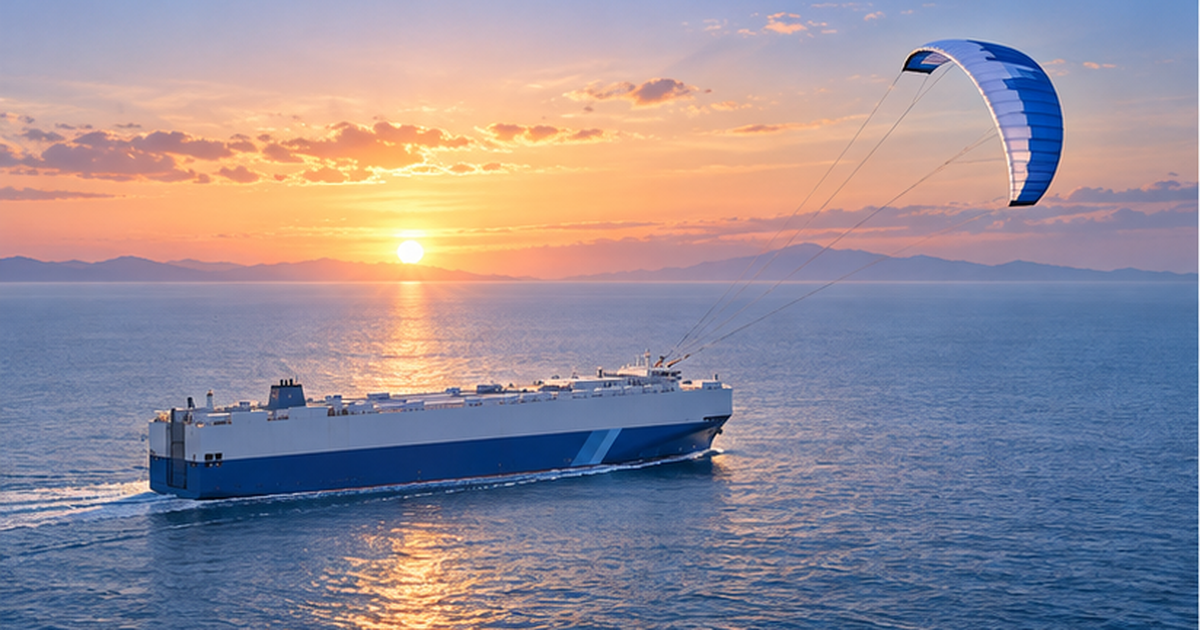
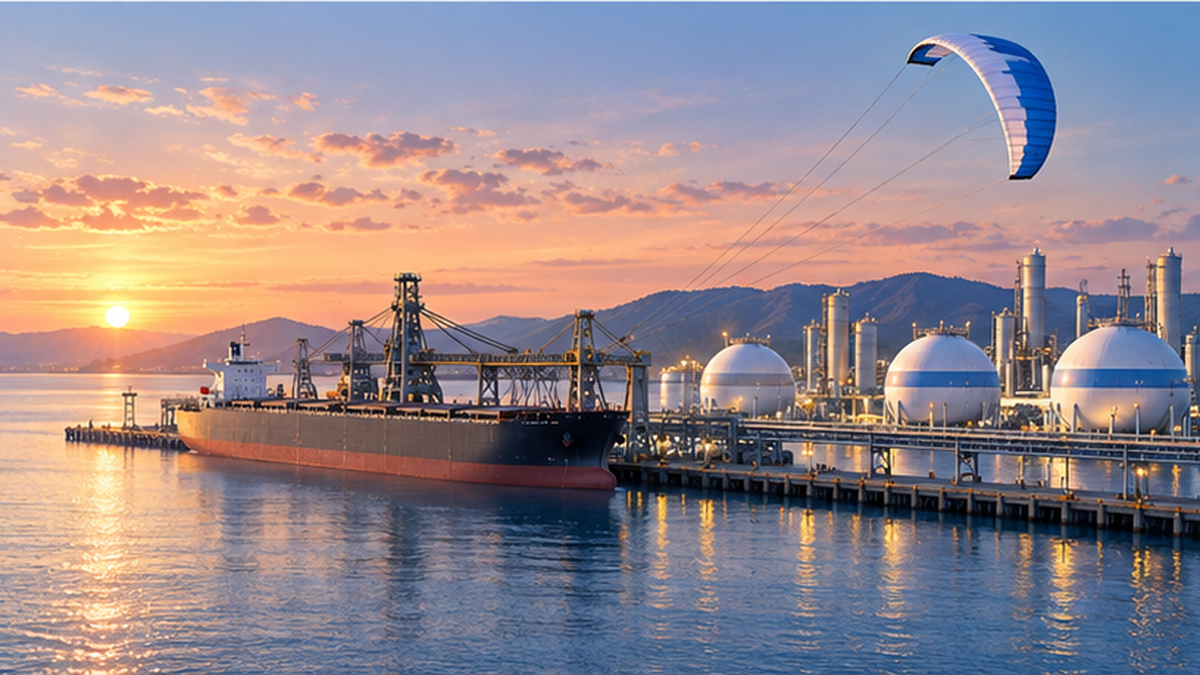
Kawasaki Kisen is working not only on switching fuels themselves but also on technologies that reduce the energy a ship uses. A leading example is the wind-powered automated kite system "Seawing," being developed by its French subsidiary OCEANICWING.
What is Seawing?
A large kite is flown high in the sky ahead of the ship, and the force of the wind pulls the ship. Simply attaching it provides part of the propulsion, and its versatility is said to be a strength, as it can be installed on both newbuilds and existing ships. It takes advantage of the stronger and steadier winds high in the sky than near the ground or sea surface.
| Period | Details |
|---|---|
| June 2025 | Verification at a land-based test facility using a 300 m² kite (Phase 1) completed |
| July 2025 | Phase 2 began toward technology establishment and commercialization |
| March 2026 | Obtained third-party verification of tension from Bureau Veritas (BV) and ClassNK |
| Around 2027 (target) | Complete testing and aim for commercialization |
Expected effects
According to the official announcement, the aim is to reduce fuel consumption by 10% or more on large bulk carriers. Thrust is up to about 50 tons, comparable to the towing force of a typical tugboat. However, the reduction varies with ship type, speed, route and season, so it cannot be asserted that "any ship will save 10%." Results from future at-sea trials will be important.
Wind-based technologies such as sails and kites are also being developed by other companies, for example Mitsui O.S.K. Lines' "Wind Challenger." For details, see What is MOL's Wind Challenger? A ship that cuts fuel with sails. The methods differ, but the idea of using free energy from the wind is shared.
Why wind power now?
Propelling ships with wind is old wisdom from the age of sailing ships, but it is being reevaluated in modern shipping. The reason is that CO2, SOx and fuel costs can all be reduced by the amount of fuel not used. Whatever fuel is switched to, if the energy used is smaller, the amount of fuel needed is smaller too. What is especially important is that wind power can be combined with fuel switching to LNG, ammonia and others.
Challenges of using it at sea
- Safety: the kite must be retrieved safely in gusts and bad weather
- Automation: it must be raised and lowered automatically without adding to the crew's workload
- Durability: it must withstand salt, ultraviolet light and strong winds for a long time
- Compatibility with operations: it must not interfere with cargo handling or entering and leaving port
Seawing is called an "automated" kite system because it automatically controls the kite's movement according to wind conditions, reducing the burden of manual operation by the crew. Verifying such practical challenges one by one before getting close to commercialization is part of the difficulty of new technology.
The final goal: ammonia-fueled ships and the road to zero emissions
Net zero in 2050 requires fuels that emit no CO2 when burned. One leading candidate is ammonia (NH3), which contains no carbon and so emits no CO2 on combustion. Kawasaki Kisen also includes the introduction of zero-emission fuels such as ammonia and hydrogen in its plans.
Development of ammonia-fueled ships
Kawasaki Kisen was reported to have received approval in principle from ClassNK for the design of an ammonia-fueled bulk carrier, and a plan targeting delivery in 2026 has been reported. It has also indicated a policy of introducing a zero-emission ship as early as possible in the 2020s. However, these timings were announced at the planning stage, so actual progress should be checked against the latest official information.
Challenges of ammonia
- Toxicity: harmful to humans, so leak prevention and crew safety are essential
- N2O (nitrous oxide): may be emitted during combustion, so technology to suppress it is needed
- Fuel supply: infrastructure for production, transport and bunkering is still limited
- Cost: green ammonia (from renewable energy) is currently expensive
The position of ammonia and methanol in international shipping decarbonization is covered in detail in What is international shipping decarbonization? A thorough guide to IMO rules and the shift to ammonia and methanol fuels.
The three-step road
| Stage | Main measures | Role |
|---|---|---|
| Now | LNG-fueled ships and energy-saving operation | Reduce emissions by switching from heavy fuel oil |
| Next | Bio-LNG and wind-assisted propulsion | Add further reductions in effective emissions |
| Future | Ammonia, hydrogen and others | Leading candidates toward net zero |
Why ammonia is attracting attention
Ammonia is a compound of nitrogen and hydrogen that is produced and transported in large quantities worldwide as a fertilizer and chemical feedstock. Experience in production and transport therefore already exists, and it has the advantage of being easier to liquefy than LNG (about minus 33 degrees, or under pressure). It emits no CO2 when burned, so using green ammonia made with renewable energy could greatly reduce CO2 across the whole life cycle.
On the other hand, because it is hard to ignite, controlling combustion in engines is a technical challenge. For now, methods that mix in a small amount of heavy fuel oil or other fuel to ignite it are mainstream, and practical pure-ammonia engines are still to come.
Hydrogen, methanol and other options
Ammonia is not the only candidate for zero-emission fuel. Hydrogen emits no CO2 when burned, but its low energy density per volume makes storage difficult. Methanol is a liquid at normal temperature and so is easy to handle, and more ships are already adopting it. Which fuel becomes mainstream will depend on international rules, fuel prices and supply-chain development, so each company is considering multiple options in parallel.
Operational ingenuity and marine conservation: reducing emissions is not only about fuel
Decarbonization is not only about fuel. Even the same ship can use very different amounts of fuel depending on how it is operated. Shipping companies are raising efficiency in three directions: hull, operation and information technology.
How efficient operation works
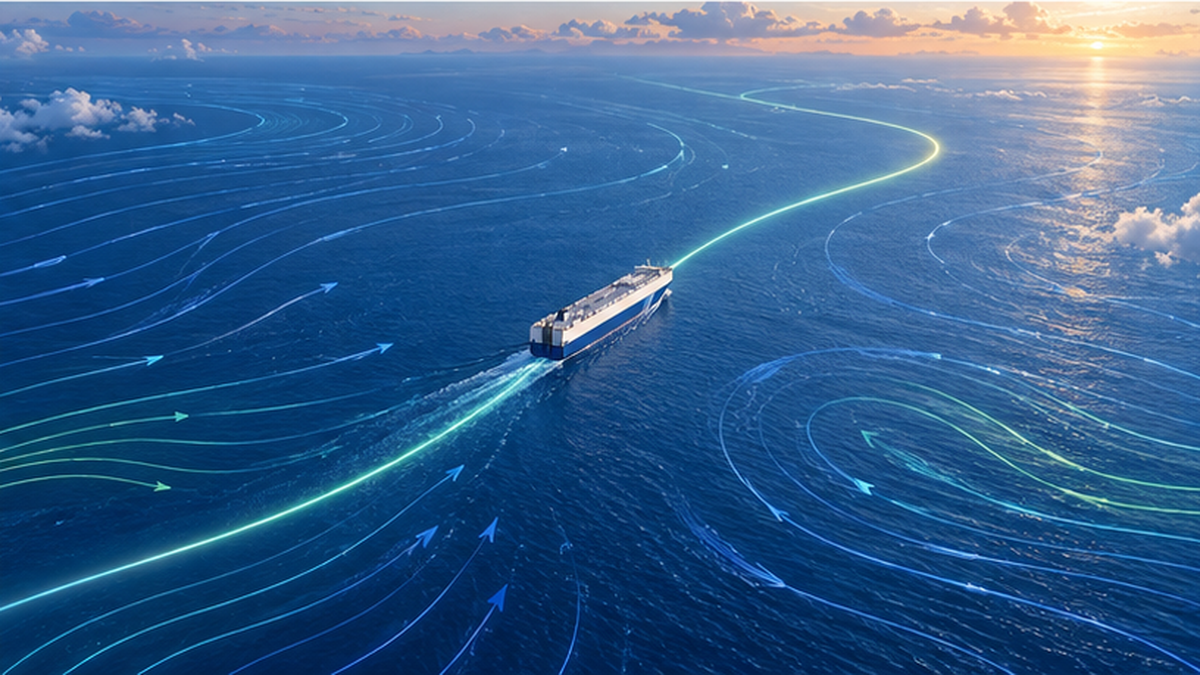
- Optimal route selection: use weather and sea-state data to choose routes and speeds with less impact from waves and currents
- Slow steaming: slightly reducing speed is said to cut fuel consumption roughly in proportion to the cube of speed, leading to large reductions
- Hull and propeller improvements: raise propulsion efficiency with bow shapes that reduce resistance and energy-saving devices
- Hull cleaning: remove shellfish and algae attached to the bottom to reduce water resistance
Kawasaki Kisen has also introduced a case of efficient operation using its own operation support system "K-IMS" in "Challenge Zero," a collection of decarbonization case studies. Optimizing ship operation with data is a quick-acting reduction method that requires no capital investment.
Relationship with marine environmental problems
The environmental impact of shipping is not only CO2. SOx (sulfur oxides) cause acid rain and air pollution, and the IMO tightened the sulfur limit for ship fuel oil from 2020. LNG fuel helps with this regulation because it emits almost no SOx. In addition, the impact on ecosystems of invasive species carried in ballast water (seawater loaded to balance a ship) is regulated by an international convention. The link between LNG-fueled ships and ballast water measures is covered in NYK's LNG-fueled ships and invasive species measures: the full picture.
The perspective of protecting the sea
- Cutting CO2 also helps curb ocean acidification and rising sea temperatures.
- Cutting SOx helps reduce the burden on coastal air and the marine environment.
- Ballast water management prevents ecosystem disruption by invasive species.
Stronger international rules: EEXI and CII
EEXI and CII: regulations that also apply to existing ships
- EEXI (Energy Efficiency Existing Ship Index): evaluates each ship's design energy efficiency, and ships that do not meet the standard need measures such as limiting engine power
- CII (Carbon Intensity Indicator): rates a ship's actual CO2 emissions per transport work each year from A to E, and ships with continued low ratings are required to submit improvement plans
Both systems began in 2023, and a key feature is that they encourage energy saving not only in new ships but also in ships already sailing. Shipping companies therefore need to improve the efficiency of existing ships in parallel with fuel switching on newbuilds. This is part of the background to Kawasaki Kisen's emphasis on wind-assisted propulsion that can be installed on "both newbuilds and existing ships."
Directions shared by major Japanese shipping companies
Japan's major shipping companies all aim for net zero in 2050 and are drawing similar paths: LNG-fueled ships, wind-assisted propulsion and zero-emission fuels such as ammonia. The specific measures and priorities differ by company, however. For NYK's LNG-fueled ships, see NYK's LNG-fueled ships and invasive species measures: the full picture; for MOL's wind propulsion, see What is MOL's Wind Challenger? A ship that cuts fuel with sails.
| Viewpoint | What to look at |
|---|---|
| Fuel | Plans and timing for introducing LNG, bio-LNG, ammonia, hydrogen and others |
| Energy-saving technology | Track record of wind-assisted propulsion, hull improvements and operational optimization |
| Targets | Figures for 2030 and 2050 and the base year |
| Disclosure | Annual emissions results and whether they are verified by third parties |
Ports and fuel supply that support shipping
For ship fuels to change, preparation on the port side is also essential. Facilities to supply LNG and ammonia to ships, shore power, and electrification of cargo-handling equipment are being advanced in parallel as decarbonization of whole ports. This field is explained in An introduction to carbon-neutral ports: hydrogen and ammonia hubs and electrified cargo handling. Only when ships and ports change together does decarbonization of shipping as a whole become realistic.
The "cube law" of slow steaming, explained simply
The force needed for a ship to move against water resistance rises sharply as speed increases. As a rule of thumb, the required power is said to be proportional to roughly the cube of speed. For example, reducing speed by 10% reduces the required power by about 27%. However, sailing slower lengthens the days to arrival, so more ships may be needed to carry the same cargo. Operation managers therefore show their skill by balancing schedules, shippers' requests and port congestion to decide the best speed.
Data is changing operations
In recent years, sensors on ships continuously measure fuel consumption, engine load and hull trim, and operation managers ashore can check them in real time. Combined with forecast data from weather companies, it is also possible to adjust routes while watching waves and wind several days ahead. Such use of information technology is valued as a means of delivering results faster and at relatively low cost compared with fuel switching.
A critical view: how to evaluate a company's environmental efforts
You cannot judge a company's environmental efforts as good or bad from announced figures alone. Using Kawasaki Kisen's case as an example, here is where to look for a fair evaluation.
Five points to check
- Level of the target: is it higher than the international rule (IMO), and what base year is used
- Scope: only ships the company operates itself, or chartered (leased) ships as well
- Disclosure of results: are reductions actually achieved disclosed every year
- Third-party verification: is it certified or verified
- Position of the transition fuel: is LNG treated as the "final answer"
Common questions and cautions
For example, LNG emits less CO2 than heavy fuel oil but is still a fossil fuel. There is therefore debate over whether increasing LNG-fueled ships is "real decarbonization." Kawasaki Kisen has indicated that LNG fuel alone is not enough to achieve the international 2030 targets, and assumes combining it with bio-LNG, wind power and zero-emission fuels.
Also, many zero-emission fuels are still maturing technologically and face challenges in supply and price. It is worth understanding, for a fair evaluation, that planned timings may slip.
Caution
- Read company announcements by separating "plans" from "results."
- Rather than vague phrases such as "eco-friendly," check whether figures and conditions are clearly stated.
The idea of looking at the life cycle
The international trend is to evaluate a fuel's environmental performance not only at the point where the ship burns it, but through life cycle assessment, from production to combustion. Looking only at emissions on board is called "tank-to-wake," and looking from fuel production through to the ship is called "well-to-wake." LNG is advantageous on a tank-to-wake basis, but the gap can narrow on a well-to-wake basis, so how it looks depends on how it is evaluated.
| Scope of evaluation | Details | How LNG looks |
|---|---|---|
| Tank-to-wake | Emissions when burned on board | More favorable than heavy fuel oil |
| Well-to-wake | Emissions through extraction, refining, transport and combustion | The gap may narrow |
What we can do: learn how shipping is connected to daily life
Shipping decarbonization may seem far from our lives, but it is actually very close. Most of what Japan imports and exports, such as cars, clothing, food and fuel, is carried by ship. In other words, every purchase is tied to shipping.
What you can do from today
- Be mindful of the efficiency of logistics as a whole, such as buying in bulk and reducing redelivery
- Take an interest in "where and how" familiar products were transported
- Read companies' environmental reports and sustainability information, focusing on figures and evidence
- Join sea and port events to learn about shipping work
To broaden your learning
The efforts of major companies such as Kawasaki Kisen influence the pace of decarbonization across society. At the same time, our continued interest as users also encourages companies to disclose information and advance their efforts. We hope this article sparks your interest in shipping and ships.
Summary
- Kawasaki Kisen sets "challenge of net-zero GHG emissions by 2050" and a 50% efficiency improvement by 2030.
- For now it advances reductions by combining LNG-fueled ships, bio-LNG, wind-assisted propulsion and more.
- In the end, it plans to introduce zero-emission fuels such as ammonia and hydrogen.
- Viewing plans and results, and the position of transition fuels, separately leads to a fair evaluation.
The perspective of people working in shipping
Shipping decarbonization is a project involving many occupations, not only seafarers but also engineers who design ships, people who procure fuel, port workers, and financial and insurance specialists. Developing people, for example in safe handling of new fuels and mastering the latest technology, has also become an important issue. For those interested in work connected to the sea, decarbonization is also a field where new opportunities are opening up.
Let's talk about it at home or at school
- Look for "which things at home were carried here by ship"
- On a world map, look up the main routes of cargo coming into Japan
- Discuss why ships have multiple fuel options such as LNG, ammonia and hydrogen
- Find one target year, base year and figure in a company's environmental report and read it
Shipping decarbonization is also an approachable topic for inquiry-based learning and independent research projects. Official websites organize ship photos, specifications and environmental targets, which makes good practice in working with primary sources.
References and sources
- Kawasaki Kisen: Delivery of the 6,900-vehicle LNG-fueled car carrier OCEANUS HIGHWAY – Ship specifications and CO2 reduction (announced Feb. 27, 2025; Japanese)
- Kawasaki Kisen: Start of continued use of bio-LNG fuel in car carriers – About 60,800 tons per year reduction expected (announced Apr. 1, 2026; Japanese)
- Kawasaki Kisen: Start of operating a car carrier on bio-LNG fuel – Efforts toward Environmental Vision 2050 (announced Jul. 1, 2025; Japanese)
- Kawasaki Kisen: Seawing development Phase 1 completed – Development status of the automated kite system (announced Sep. 4, 2025; Japanese)
- Kawasaki Kisen: Response to climate change – Official explanation of Environmental Vision 2050 and targets (Japanese)
- Kawasaki Kisen: Shipbuilding contracts for four LNG-fueled car carriers for European short-sea business – Announced Jun. 4, 2026 (English)
- METI: Kawasaki Kisen transition-linked loan overview – Transition finance case study (Japanese)
- MLIT: Agreement on international shipping GHG emissions zero by around 2050 – Results of IMO MEPC 80 (Japanese)
- Ship & Bunker: K Line Plans 40-Strong LNG-Fuelled Fleet by 2030 – Press report on the LNG-fueled ship introduction plan (English)
* Listed in order of reliability: government agencies > academic institutions > peer-reviewed papers > specialized organizations > reliable media