Japan, open to the sea on three sides, has limited flat land onshore but a vast expanse of ocean offshore where strong, steady winds blow. Offshore wind power, which converts this force of the sea into electricity, is now being pushed to the center of Japan's energy policy as the country aims for a decarbonized society. The government positions offshore wind as the "trump card" for making renewables Japan's mainstay power source, aiming to build 30-45GW of projects, including floating turbines, by 2040.
The reality, however, is not all smooth sailing. In 2023, Japan's first large-scale commercial operation began at Akita and Noshiro ports, but in 2025 the country's largest trading company announced its withdrawal from three sea areas off Akita and Chiba, sparking turmoil that came to be known as the "Mitsubishi Corporation shock." Expectations for rapid expansion and challenges around cost and institutional design are erupting at the same time—that is the present state of offshore wind in Japan.
This article carefully organizes, based on primary sources from the government and public institutions, everything from the difference between two technologies—fixed-bottom and floating—to the current state of promotion zones such as Akita and Chiba, the mechanisms for coexisting with fisheries, and the 2040 target along with the expansion of sea areas into the EEZ (Exclusive Economic Zone), breaking down technical terms along the way.
What You'll Learn in This Article
- Why offshore wind is called the "trump card" for making renewables the mainstay power source, and Japan's geographical conditions as a nation surrounded by sea
- The technical difference between fixed-bottom and floating turbines, the roughly 50m water-depth dividing line, and the types of foundation structures
- The current state of promotion zones such as Akita, Chiba, Aomori, and Yamagata, and how the public bidding (Round) system works
- The overall policy picture: the 2040 target of 30-45GW, the 7th Strategic Energy Plan, and the expansion of sea areas into the EEZ
- The funds and impact surveys that support coexistence with fisheries, and a form of power generation grown together with local communities
- The challenges of low-price winning bids and rising costs revealed by Mitsubishi Corporation's withdrawal, and the points at issue in reviewing the system
What Is Offshore Wind Power? — The "Trump Card" for Making Renewables the Mainstay Power Source
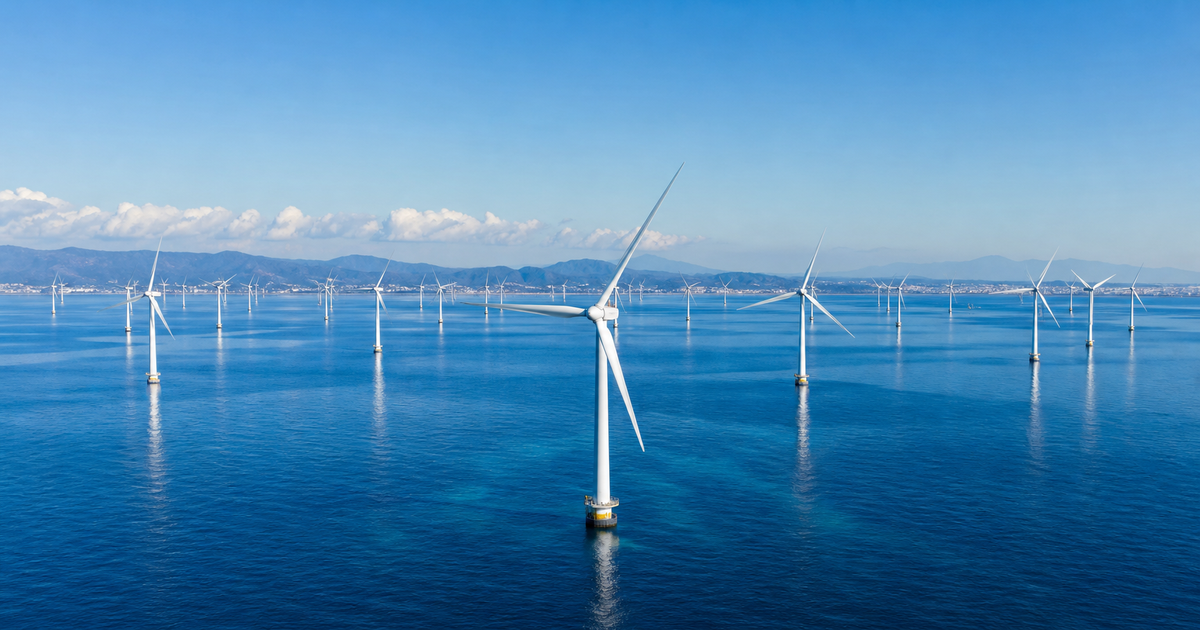
Offshore wind power is, as the name suggests, a method of generating electricity by installing wind turbines out on the sea. The principle is the same as onshore wind power: wind turns the blades, and that rotation is converted into electricity by a turbine. The difference is "where you install it." Building at sea instead of on land brings several major advantages.
The biggest advantage is the quality of the wind. Out at sea, there is less turbulence from terrain and buildings, so the wind blows stronger and steadier than on land. Because wind power output is roughly proportional to the cube of wind speed, even a slightly stronger wind greatly boosts electricity generation. The open sea also makes it easier to secure wide spaces, allowing ultra-large turbines exceeding 200 meters in diameter to be clustered offshore, where landscape and noise constraints are minimal.
Why Offshore Wind Is Drawing Attention in Japan
Japan's land area is small and mountainous, so suitable sites for large-scale power plants on land are limited. On the other hand, when the Exclusive Economic Zone (EEZ) is included, Japan's sea area is among the largest in the world. This "vastness of the sea" is said to be one of Japan's largest untapped energy resources. As suitable sites for solar power decrease after its early rollout, expectations are gathering around offshore wind as the next lead player.
The Agency for Natural Resources and Energy describes offshore wind, which is expected to see future cost reductions, as the "trump card" for making renewable energy Japan's mainstay power source. Its relationship with the marine environment and ecosystems is closely tied to perspectives such as Japan's marine biodiversity and the blue carbon ecosystem, and the question is how to develop a form of power generation that balances decarbonization with ocean conservation.
Three Reasons Offshore Wind Is Called the "Trump Card"
- Winds at sea are strong and stable, promising higher generation output than on land
- Japan, surrounded by sea, has vast sea areas still available for use
- Ultra-large turbines can be clustered together, leaving large room for cost reduction through mass production
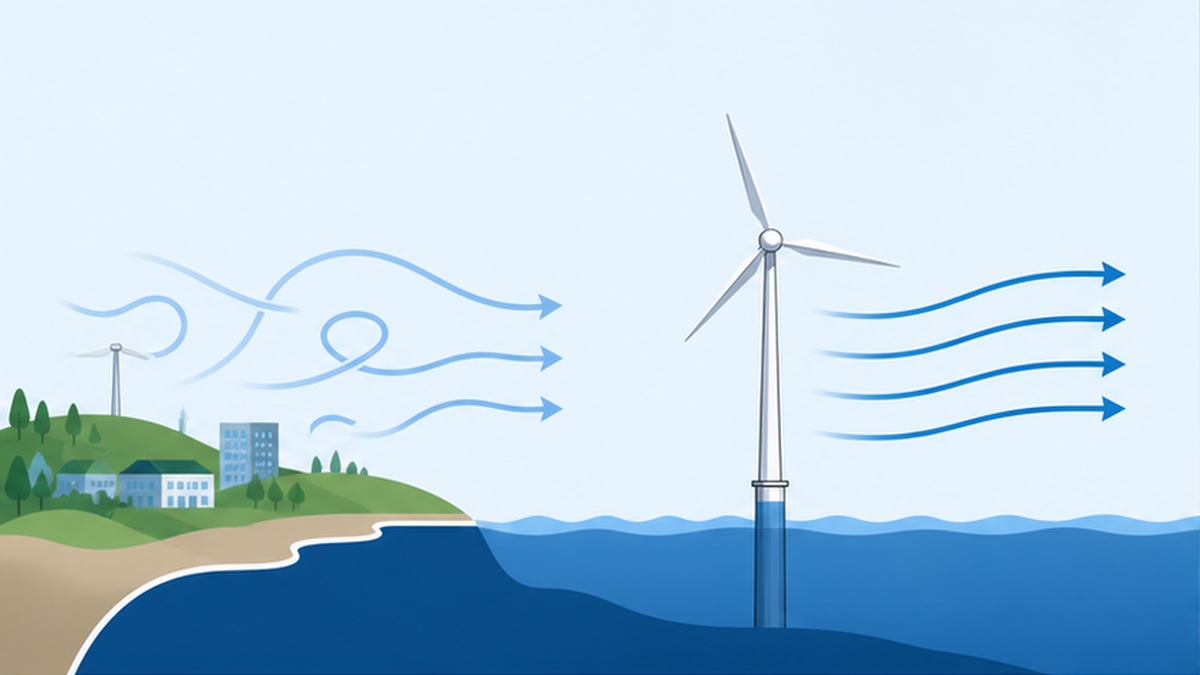
However, building at sea also means facing challenges such as salt damage, high waves, typhoons, and the difficulty of construction and inspection. Construction costs are higher than on land, and dedicated work vessels and port facilities are also needed for maintenance. Understanding both this "great potential" and these "high hurdles" is the starting point for correctly reading Japan's offshore wind situation.
Another thing worth knowing is wind power's nature as a "variable power source." Wind is never constant, and generation drops when the wind is weak. Just as solar power only generates during the day, wind power is also, to some extent, at the mercy of the weather. That's exactly why storage batteries, combinations with other power sources, and mechanisms for finely adjusting supply and demand need to be built up alongside this expansion.
Term Note: What Is GW (Gigawatt)?
A unit expressing the scale of power generation facilities. 1GW = 1,000,000kW = 1,000MW, roughly equivalent to one large nuclear power plant. The 2040 target of "30-45GW" is on the scale of 30 to 45 nuclear reactors' worth of capacity.
Its Significance as a Climate Change Countermeasure
Another reason offshore wind is being pushed forward urgently is climate change countermeasures. Wind power, which emits no carbon dioxide when generating electricity, can reduce Japan's overall emissions the more it is used in place of thermal power. Impacts on fisheries from rising sea temperatures and abnormalities such as coral bleaching show that warming is already reaching the front lines of the sea. It is precisely to protect the sea that a cycle of advancing decarbonization using the power of the sea is now needed.
That said, offshore wind alone cannot solve everything. Decarbonization is only achieved by combining various means, such as solar, geothermal, hydro power, and energy conservation. Offshore wind is not "the only answer," but should be positioned within the whole as one of the most promising options suited to Japan's geography.
Fixed-Bottom vs. Floating — How Do the Two Types Differ?
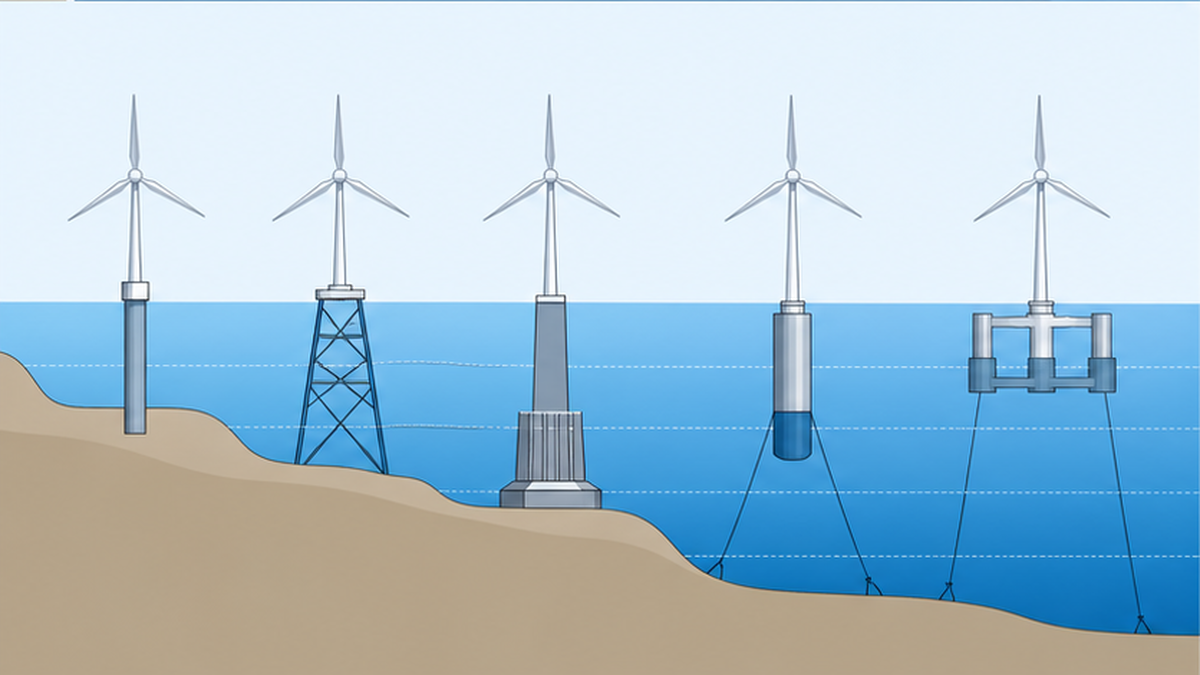
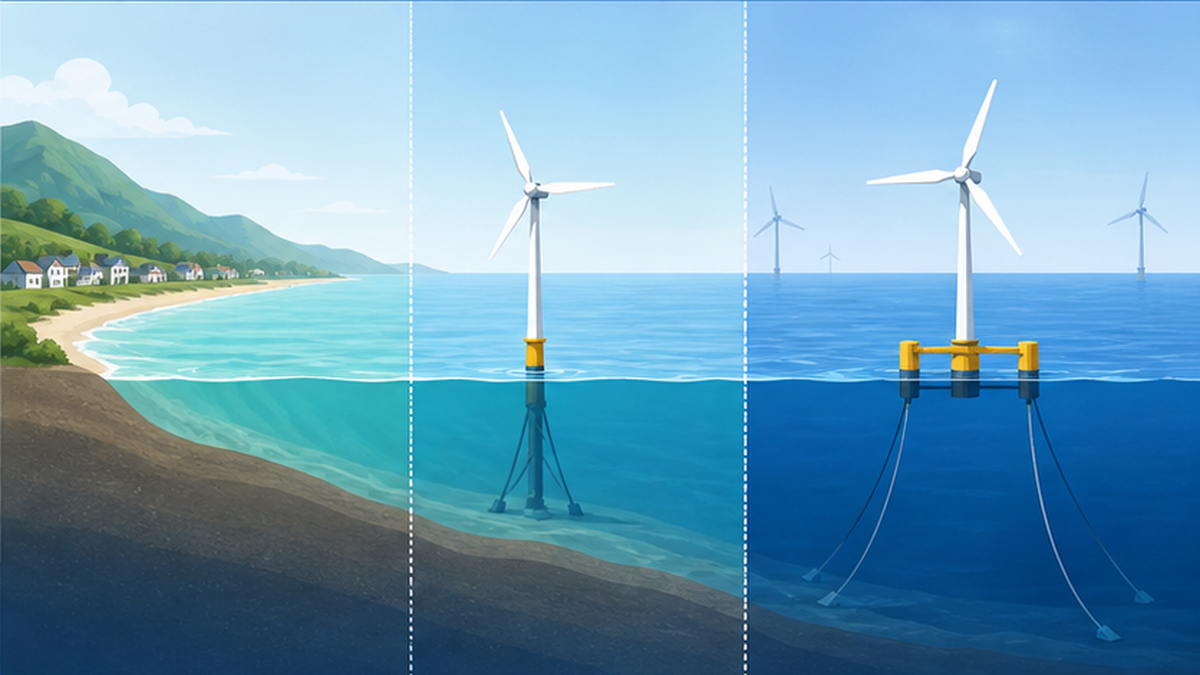
Offshore wind broadly divides into two types: fixed-bottom and floating. What separates them is "water depth." In shallow seas where a foundation can be anchored to the seabed, fixed-bottom is used; in deep seas where reaching a foundation to the seabed is difficult, floating is used. The rough dividing line is a water depth of about 50 meters.
Fixed-Bottom: A Type That Anchors a Foundation to the Seabed
Fixed-bottom turbines drive or place a foundation into the seabed and erect the turbine on top of it. They are suited to shallow seas of roughly 50 meters or less, and most of the offshore wind currently operating worldwide is this type. While the technology is mature and relatively low-cost, installation is limited to shallow coastal sea areas.
- Monopile: A single thick steel pipe driven into the seabed. The mainstream method accounting for about 70% of installations in Europe, common in water depths of 30m or less
- Gravity-based: A heavy foundation such as concrete placed on the seabed, stabilized by its own weight
- Jacket: Legs made of a truss structure assembled from steel members. High rigidity, usable even at water depths of about 30-60m
- Tripile/tripod: An advanced structure supported by multiple legs
Floating: A Type That Floats on the Sea and Is Moored
Recent offshore turbines have evolved to a staggering scale, with blade diameters exceeding 200 meters and a class of 15MW per unit. A single turbine can supply electricity for roughly 10,000 or more households, and the larger they get, the more electricity the same number of turbines can generate. Being able to install these massive turbines, which cannot be transported on land due to road and housing constraints, is also a strength unique to the sea. The 15MW-class turbines planned for adoption in Round 3 are among the largest in the world.
Floating turbines are a method in which a float carrying the turbine is set afloat on the sea and moored to the seabed with chains or wires. They can be installed even in deep seas of roughly 50 meters or more, allowing use of the strong winds far offshore. Because Japan's coastal waters often become deep very quickly, the potential of floating turbines is considered especially large, and the cultivation of domestic technology is expected.
- Semi-submersible: Combines multiple floats, stabilized with chain-type mooring. High flexibility in installation
- Spar: A slender cylinder, heavy at the bottom and light at the top, a buoy-like structure that stabilizes by lowering the center of gravity
- TLP (tension leg platform): Fixed with mooring lines under tension. Mostly still in the demonstration/development stage
| Comparison Item | Fixed-Bottom | Floating |
|---|---|---|
| Suitable water depth | Roughly 50m or less | Roughly 50m or more |
| Main structures | Monopile, jacket, gravity-based | Semi-submersible, spar, TLP |
| Technology maturity | Mature for commercial use | Moving from demonstration to commercialization |
| Cost | Relatively low | Currently high, but room to reduce through mass production |
| Position in Japan | Mainstay of promotion zones | Future mainstay candidate, aiming to lead in technology |
Japan's Floating Turbines Are at the World's Frontier
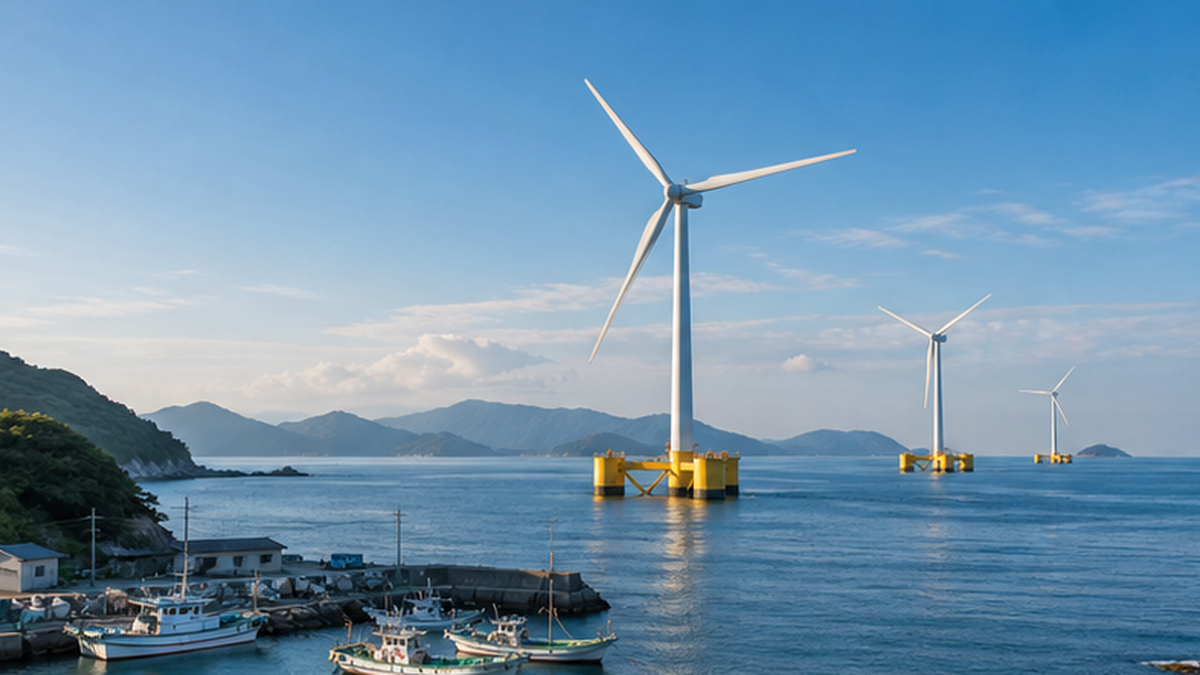
Off the coast of Goto City, Nagasaki Prefecture, Japan's first commercial floating turbine (2MW) began operating in 2016, and in January 2026, the "Goto Offshore Wind Farm," with eight turbines totaling about 16.8MW, began generating electricity. Floating in waters 130-140 meters deep, this composite wind farm uses a hybrid spar type that lowers its center of gravity with concrete, and is also the first project under the Act on Promoting the Utilization of Sea Areas for the Development of Marine Renewable Energy.
Floating turbines are still more costly than fixed-bottom ones. This is because manufacturing the float itself, the complex mooring, and offshore installation work all cost money. But conversely, this also means there is significant room to lower costs as mass production and standardization of construction methods progress. The reason the government is pouring effort into technology development for floating turbines as a "future mainstay candidate" is that it has an eye on both Japan's geography, with its abundance of deep seas, and the possibility of leading the world in this technology.
Where Are Japan's Promotion Zones Now?
Japan's offshore wind is advanced under a set of rules called the Act on Promoting the Utilization of Sea Areas for the Development of Marine Renewable Energy. The government designates promising sea areas as "promotion zones," and selects power generation operators through public bidding (auctions). This bidding is called a "Round," and Rounds 1 through 3 have been carried out so far.
Akita Prefecture Leads the Way — Japan's First Large-Scale Commercial Operation
Akita Prefecture is the leading prefecture in offshore wind. Thirteen turbines at Akita Port and twenty at Noshiro Port—33 turbines totaling about 140MW—began full commercial operation in January 2023, Japan's first large-scale project of its kind within port areas. Furthermore, two sea areas selected in Round 1—"off Noshiro City, Mitane Town, and Oga City" and "off Yurihonjo City"—are being planned as large-scale offshore projects, and Akita has become a symbol of building a regional industry centered on offshore wind.
The scale planned in Round 1 is large: off Noshiro City, Mitane Town, and Oga City, nearly 500,000kW was envisioned, and off Yurihonjo City, over 800,000kW with more than 60 turbines—offshore development on an entirely different scale from the port-area projects. If these proceed smoothly, the calculation is that Akita's coast alone would generate far more electricity than a single nuclear reactor. It is no exaggeration to say that the future of Japan's offshore wind has first been tested in Akita.
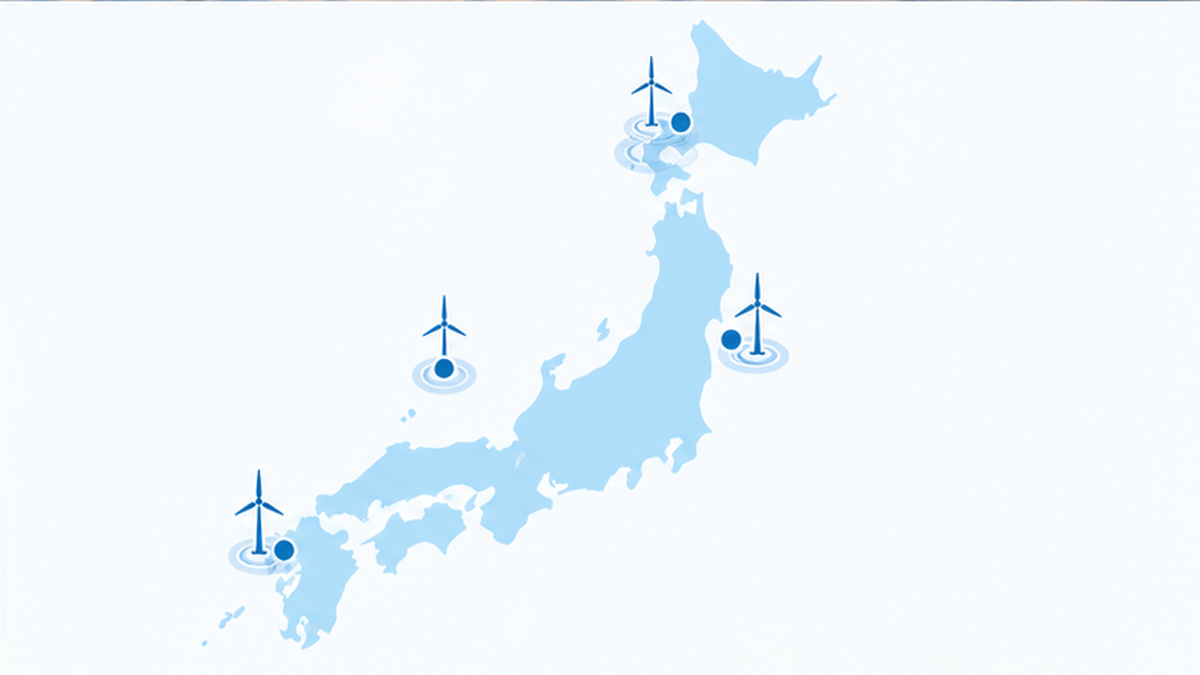
There is a reason projects cluster in Akita and elsewhere on the Sea of Japan side. In winter, the Sea of Japan has strong, steady northwesterly seasonal winds, creating wind conditions well suited to wind power. In addition, being able to make use of existing ports as bases for assembling and shipping out turbines is also a major condition. Transporting huge blades and towers requires wide quaysides and high load-bearing capacity, and the presence or absence of such port infrastructure determines which sea areas develop first.
Aomori and Yamagata, Decided in Round 3
In December 2024, operators were selected for "off the southern part of the Sea of Japan off Aomori Prefecture" and "off Yuza Town, Yamagata Prefecture" as Round 3, completing the third round of public bidding. Both are scheduled to begin operation in 2030, with plans to adopt 15MW-class turbines from Siemens Gamesa, among the largest in the world. The main plans for each sea area are as follows.
| Sea Area | Capacity | Turbines | Scheduled Operation Start |
|---|---|---|---|
| Off the southern Sea of Japan, Aomori Prefecture | About 615MW | 41 x 15MW turbines | Scheduled June 2030 |
| Off Yuza Town, Yamagata Prefecture | About 450MW | 30 x 15MW turbines | Scheduled June 2030 |
| Akita Port / Noshiro Port (operating) | About 140MW | 33 turbines total | Began operation January 2023 |
| Off Goto City, Nagasaki Prefecture (floating, operating) | About 16.8MW | 8 turbines | Began operation January 2026 |
The Ripples of the "Withdrawal" in Chiba and Akita
In August 2025, a consortium centered on Mitsubishi Corporation, which had won bids for three sea areas off Akita and Chiba in Round 1 (off Noshiro City, Mitane Town, and Oga City; off Yurihonjo City; and off Choshi City, Chiba Prefecture—totaling about 1.7GW), announced it would withdraw from development following a reassessment of business viability. Since these were Japan's first large-scale development projects, the announcement rattled the relevant local governments and became a turning point for Japan's offshore wind policy (challenges discussed later).
Off Choshi City, Chiba Prefecture, on the Pacific side, had been expected as a promising sea area with shallow waters close to shore and nearby ports, able to catch Pacific winds. The withdrawal has put the plan back to the drawing board, but this doesn't mean the sea area itself has lost its suitability; consideration is proceeding toward re-bidding after reviewing the system.
How the "Round" System Works
Operators for promotion zones are selected through public bidding (auctions) that compete on price, feasibility, and other factors. This has been repeated over Rounds 1, 2, and 3. A distinctive feature of the Japanese approach is that the government designates the sea area, and plans are discussed at a statutory council in which local governments, fishing operators, the national government, and businesses participate, building consensus step by step as the project proceeds. It takes time, but the design places importance on gaining local understanding along the way.
About 10 Years Until Operation Begins
From surveying and designating the sea area, through public bidding, environmental assessment, design, and construction, offshore wind generally takes around 10 years to reach the start of operation. Many of the projects currently in motion are expected to deliver electricity around 2030. It's easier to grasp the overall picture if you consider the "selection" seen in the news as merely the starting point of a long journey.
30–45GW by 2040 — The Government's Target and Making Renewables the Mainstay Power Source
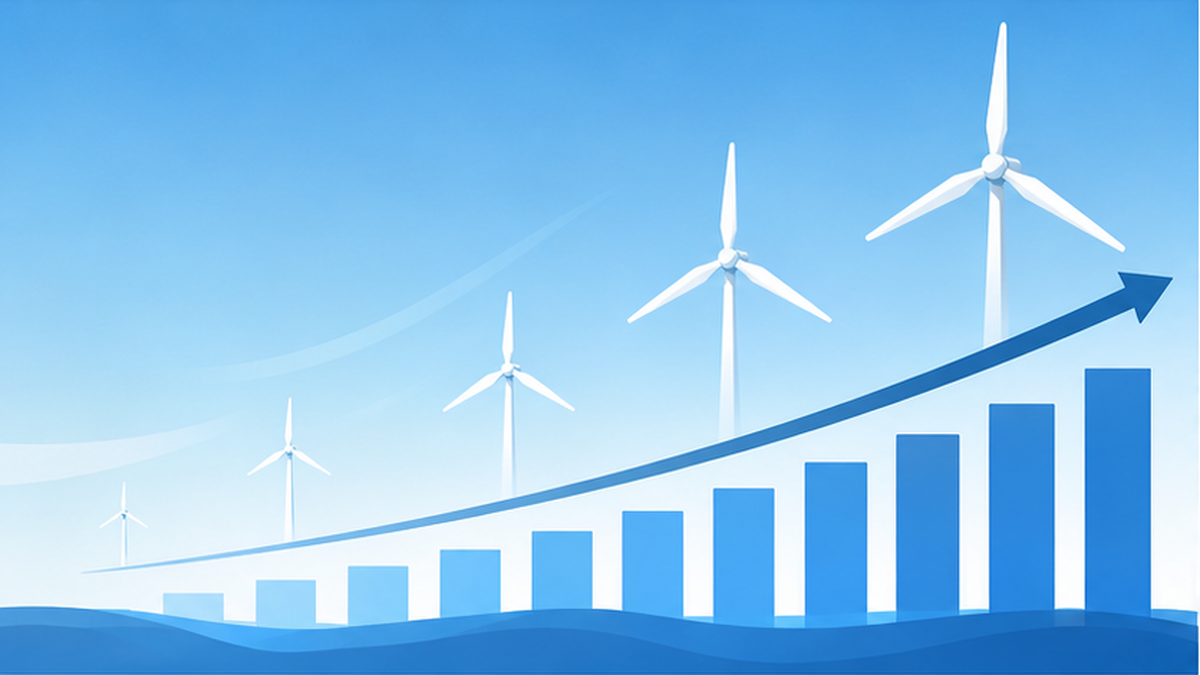
The Japanese government has set a target of forming 10GW of projects through public bidding systems by 2030, and 30-45GW, including floating turbines, by 2040. This figure originated in the "Offshore Wind Industry Vision" compiled by a public-private council in 2020, and has been carried forward into subsequent energy policy.
This target was not decided overnight. In 2020, the public-private council drew the ambitious picture of up to 45GW by 2040 in the first "Offshore Wind Industry Vision," and this has been carried into subsequent policy. Behind the figures lies a national will to grow offshore wind not as a one-off power generation business, but into a pillar supporting Japan's industry and employment over the long term. That is exactly why the target flag has not been lowered even amid recent stagnation.
Its Place in the 7th Strategic Energy Plan
Under the 7th Strategic Energy Plan, decided by the Cabinet in 2025, renewable energy as a whole is expected to make up a large share of the fiscal 2040 power source mix, with wind power expected to account for around 4-8%. Wind power, including offshore wind, is expected to expand as the pillar of renewables second only to solar (around 23-29%). Understanding the overall picture of decarbonization deepens when viewed alongside the perspective of the ocean's carbon absorption.
The Government's Main Targets (Organized by the Numbers)
- 10GW of projects formed by 2030 (of which 5.7GW on an operating basis)
- 30-45GW of projects formed by 2040 (including floating turbines)
- Wind power aiming for around 4-8% of the fiscal 2040 power source mix
- An industrial target to raise the domestic procurement ratio to 60% by 2040
Offshore Wind as an "Industry"
What the government is investing in is not just generation output. A wind turbine is a massive manufactured product made of tens of thousands of parts, and construction, operation, and maintenance require a broad accumulation of industries, from ports and work vessels to specialized personnel. The government has set a target of raising the domestic procurement ratio to 60% by 2040, aiming to grow offshore wind into a new core industry through domestic production of parts and job creation in local regions. In particular, floating turbines are targeted as an area where Japan aims to lead the world through technology development and mass production.
The figure of "around 4-8%" for wind power might seem small at first glance. But the power source mix is made up as a whole by combining renewables such as solar, wind, hydro, and geothermal with thermal and nuclear power. Only when each power source contributes the time of day or season it excels at—wind complementing solar, which is affected by weather, for instance—does stable electricity reach us. Offshore wind is an important piece making up that large puzzle.
This breadth of industrial base is also a great opportunity for regional areas. For coastal towns struggling with population decline, if companies handling offshore wind construction and maintenance, and manufacturing and logistics jobs supporting the turbines, emerge, this could become a new industry where the younger generation can work locally. The reason Akita has pursued building an industrial cluster as a "leading offshore wind prefecture" is the expectation not just of generating electricity, but of generating a future for the region. This perspective of considering power generation and regional revitalization together is a characteristic of Japan's offshore wind.
"Project Formation" and "Operation" Are Different Things
The 30-45GW target is the scale of "forming projects (launching them as plans)," and not all of it will start generating electricity right away. It typically takes around 10 years from sea area designation, through public bidding, environmental surveys, and construction, to the start of operation. It's important to read the target-year figures separately from the "operating basis" figures for electricity actually being delivered.
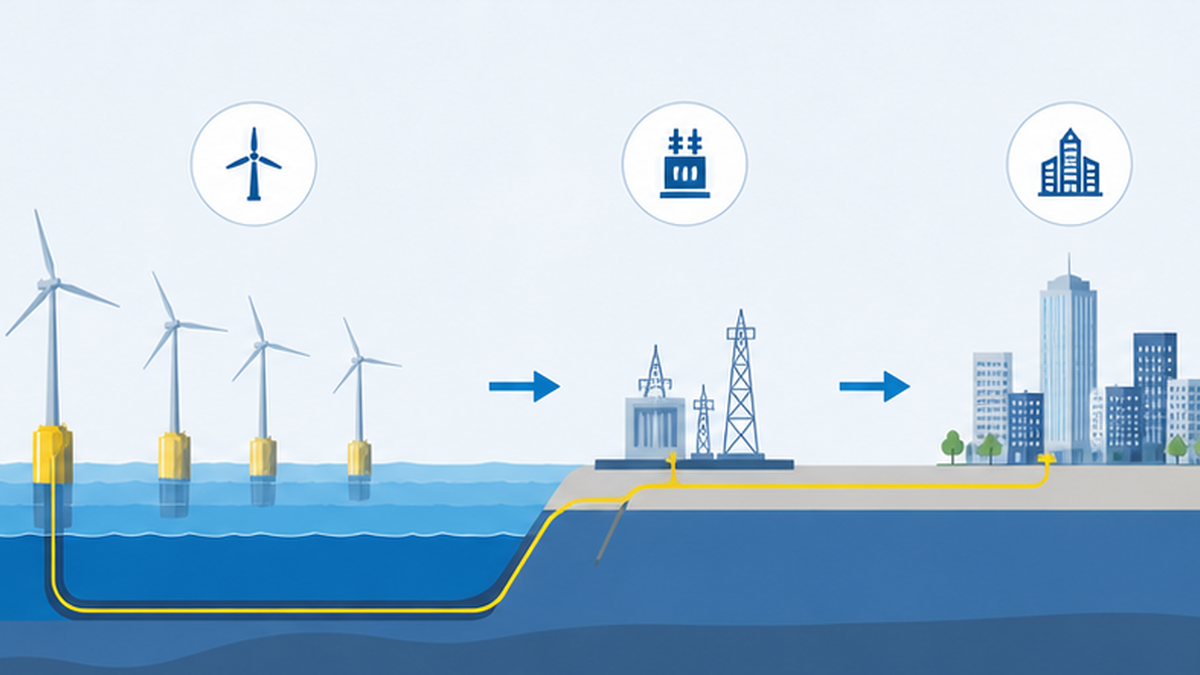
Establishing this as an industry also requires reinforcing the transmission grid that carries electricity. Because the Sea of Japan side and northern regions where strong winds blow are far from the major metropolitan areas that use large amounts of electricity, the "roads" that deliver generated electricity—the transmission lines—must be developed at the same time, or the hard-won electricity cannot be fully utilized. The expansion of offshore wind is a theme that should be discussed not as standalone power plants, but as an integrated design of the whole country, including ports, transmission grids, and human resources.
Coexistence with Fisheries — A Framework for Sharing the Sea
An issue that cannot be avoided in discussing offshore wind is its relationship with fisheries. The seas where turbines are built are also places where fishing operators have long made their living. Unless local concerns are carefully addressed—turbidity and noise from construction, worries about the shrinking of operable fishing areas—plans cannot move forward. The government too strongly requires businesses to pursue "coexistence with local communities and fisheries."
Japan's seas are among the richest fishing grounds in the world. There are many species of fish, and many small-scale fishing operators live along the coast. Unlike the broad, uniform sea of Europe's North Sea, in Japan the content of fishing and rights vary in fine detail from one sea area to another. For this reason, coexistence measures for offshore wind cannot be "uniform nationwide" but must be carefully designed to fit local circumstances. It is exactly this complexity that makes Japan's offshore wind both difficult and profound.
A "Fund" That Returns Profits to the Community
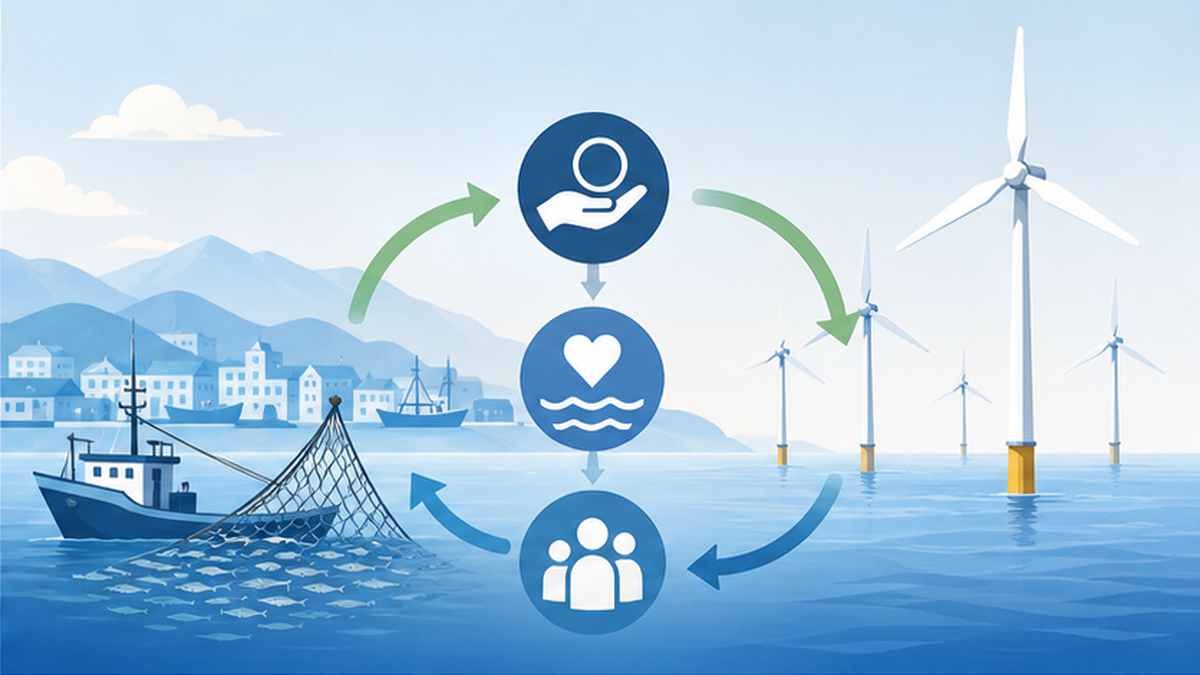
Operators selected in a promotion zone are required to return part of the profit earned from power generation to the local community and fisheries. In Akita Prefecture's case, a framework has been envisioned in which the operator selected through public bidding contributes roughly 0.5% of electricity sales revenue over 20 years as a fund, to be used for coexistence with fisheries and the local community. The aim is to create a cycle in which power generation supports local industry and daily life.
Surveys That "Visualize" the Impact
In two sea areas off Akita Prefecture, a plan has been underway to continuously survey the impact on fisheries over a total of six years, spanning before construction, during construction, and after operation begins. This effort investigates catch volumes of specific fish species, spawning and juvenile fish conditions, and changes in water quality and seabed topography around the turbine foundations, aiming to scientifically "visualize" the impact. Changes in the ocean environment also overlap with the issue of rising sea temperatures and fisheries, making long-term monitoring essential.
Main Mechanisms Supporting Coexistence with Fisheries
- Contributing part of electricity sales revenue as a fund to return to the community and fisheries
- Long-term fishery impact surveys spanning before and after construction (e.g., a six-year continuous survey)
- Local governments, fishing operators, the national government, and businesses discussing plans at a statutory council
- Consideration of ideas to use the area around turbines as a fishing ground (a place for propagation) that attracts fish
Overseas, there are reports of cases where turbine foundations become hiding places and feeding grounds for fish, and the surrounding area grows into a rich fishing ground. Coexistence is beginning to gain a forward-looking perspective, not just "sharing by putting up with it," but using offshore wind to create new marine resources. This connects with the idea of nurturing the sea together with local communities, similar to the revival of the fishing industry underway in Sanriku and elsewhere.
Still, the path to coexistence is not simple. For people who have continued fishing in these waters for many years, it is only natural to feel bewildered at huge structures lining a familiar fishing ground, or anxious about whether the impact is truly small. The steady accumulation of dialogue with fishing operators from the earliest stages of planning, answering questions one by one—not just presenting figures and survey results—is what will form the foundation for offshore wind to take root locally.
Movements are also emerging, such as in Noshiro City, to embrace offshore wind positively as "an opportunity to revive fisheries." For regions struggling with aging populations and declining catches, the profits from power generation and new industries could become a trigger for reviving a declining fishing industry. Whether a relationship of fighting over the sea can instead become one of growing the sea's bounty together—that will be the key that determines the success or failure of Japan's offshore wind going forward.
The Challenges Blocking Rapid Expansion — What the "Mitsubishi Corporation Shock" Revealed
Despite great expectations for offshore wind, the 2025 withdrawal of the Mitsubishi Corporation-affiliated consortium exposed, all at once, the challenges embedded in Japan's institutional and business environment. Because it was a withdrawal from Japan's first large-scale development project, the shock came to be called the "Mitsubishi Corporation shock." What happened?
Similarly, the plan off Choshi City, Chiba Prefecture, on the Pacific side, was also subject to withdrawal. The winning purchase price of 16.49 yen/kWh, kept low at the time of bidding, weighed heavily during the subsequent phase of rising costs. The fact that even a sea area considered promising could not resist changes in the business environment brought a strong sense of crisis to those involved in Japan.
A Global Headwind of Rising Costs
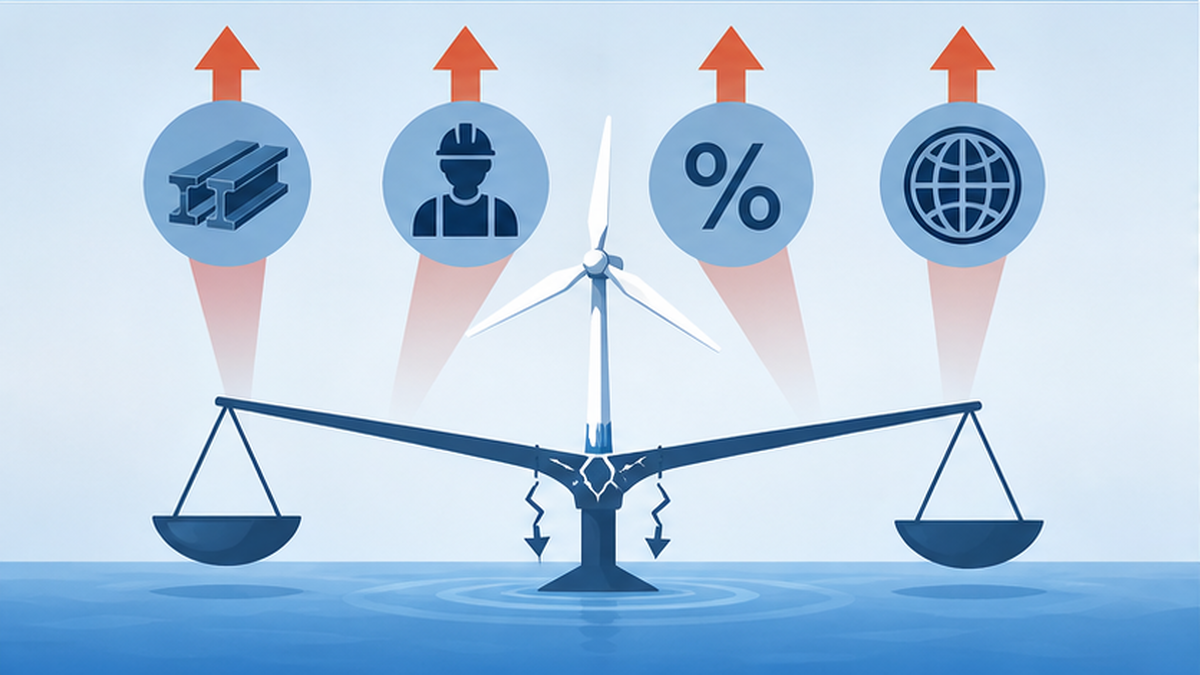
Behind the withdrawal lies a worldwide rise in material prices, labor costs, and interest rates. Soaring prices for turbines and steel, a weak yen, and ballooning construction costs pushed costs far above the initial assumptions at the time of the winning bid. This headwind was blowing not only in Japan but in Europe and the US too, with offshore wind projects being reviewed or canceled in succession around the world.
Reflecting on the System That Invited "Low-Price Bidding"
An analysis by the Ministry of Economy, Trade and Industry (METI) points out that because Round 1 used an evaluation system that emphasized price, businesses were driven into competing to offer low electricity sales prices, leaving them unable to withstand the subsequent rise in costs. Off Choshi City, the purchase price had been kept low at 16.49 yen/kWh. A promise to sell electricity cheaply squeezed business profitability when conditions changed. The government has stated that "it cannot be denied that a low supply price was also a factor inviting withdrawal."
The Challenges Are Not Just One
- Soaring construction costs from rising materials, labor, interest rates, and exchange rates
- The risk of "low-price bidding" from a public bidding system that overemphasized price
- Price volatility risk as the business environment changes during the long period before construction begins
- A shortage of surrounding infrastructure, such as grid reinforcement and port development
- A domestic supply chain and specialized workforce that have not yet fully matured
Another underlying factor in the withdrawal is the design of the support system. In Round 1, businesses submitted prices premised on the Feed-in Tariff (FIT), which buys electricity at a fixed price over a long period. But once a business wins a bid at a low price, it cannot move the price even if costs rise afterward. The government is considering a shift to Feed-in Premium (FIP), which adds a set amount on top of the market price, and introducing a mechanism that reflects price fluctuations—the price system is being redesigned.
What matters is that this withdrawal is not a "denial of offshore wind itself." Rather, it is being taken as a lesson for making the system more resilient, such as a pricing adjustment mechanism that doesn't leave all cost volatility to businesses alone, and a review toward multifaceted evaluation that isn't just about price. It could be said that Japan has entered a phase of rebuilding into a sustainable form, rather than rushing to chase numbers.
There is also a structural weakness in that Japan has almost no domestic manufacturers left to build wind turbines. If major components are imported from overseas, the business is strongly affected by exchange rates and international conditions. The government's target of 60% domestic procurement is not merely about promoting industry—it also carries the security significance of supporting stable energy supply with the country's own hands. The lessons of the withdrawal connect not only to the pricing system but also to the long-term challenge of how to cultivate a domestic supply chain.
Global Trends and Japan's Next Move — EEZ Expansion and the Potential of Floating Turbines
Looking at the world, offshore wind is steadily expanding. Global installed capacity at the end of 2024 was about 83GW. By country, China overwhelmingly ranks No. 1 with 41.8GW (about 50% share), followed by the UK with 15.9GW (about 19%) and Germany with 9.0GW (about 11%). While still small compared to onshore wind (about 1,052GW worldwide), it is a growth sector expanding steadily on an annual average basis.
| Rank | Country | Offshore Wind Capacity (End of 2024) | Global Share |
|---|---|---|---|
| 1 | China | About 41.8GW | About 50% |
| 2 | UK | About 15.9GW | About 19% |
| 3 | Germany | About 9.0GW | About 11% |
| — | World total | About 83GW | 100% |
Behind China's rapid rise to No. 1 in the world in a short period lies a huge domestic manufacturing industry and robust electricity demand, with investment concentrated at once as a matter of national policy. Europe has steadily accumulated experience for more than 20 years, nurturing an ecosystem of operators, ports, transmission grids, and human resources. For Japan, a latecomer, to close this gap requires not simply building turbines, but launching the very foundation of the industry in a short period. Herein lies both the difficulty and the room for growth in Japan's offshore wind.
The Legal Amendment Expanding Sea Areas to the EEZ
A major move by Japan is the amendment of the Act on Promoting the Utilization of Sea Areas for the Development of Marine Renewable Energy. Taking effect in April 2026, it expands the eligible development sea areas, previously limited to territorial waters (roughly 22km offshore), to the Exclusive Economic Zone (EEZ). By enabling use of deeper, more distant offshore areas, the role for floating turbines is expected to expand greatly.
Alongside this, a "central method" has also been introduced, in which the government collectively handles the early stages of environmental surveys and sea area designation. By having the government conduct wind condition and environmental surveys in advance, which used to be done separately by each business, the aim is to reduce procedural duplication and compress business risk and development timelines. Having the government take responsibility for confirming impacts on the marine ecosystem in advance also has significance for advancing development while protecting marine biodiversity.
What We Can Do
- Take a moment to check where and how your household's electricity is generated, through your electricity plan
- Pay attention to information about offshore wind plans and briefing sessions underway in local or nearby seas
- Understand that decarbonization is not just offshore wind, but a combination of energy conservation and other renewables
- Read news for and against calmly, from both the ocean environment and power generation perspectives
The Reality of Capacity Factor
Reality must be faced along with the dream. Looking at capacity factor, which shows how much of a generation facility's full potential is actually realized, offshore turbines in Japan's coastal waters average roughly in the 20% range, only exceeding 30% in windier offshore areas. Considering that some sea areas around the world reach 55%, Japan needs to identify sea areas with good conditions and head further offshore, where winds blow stronger. EEZ expansion and floating turbines are exactly one answer to this.
Looking across the world, China has rapidly expanded offshore wind as a nationwide effort, while Europe has steadily built up its position by making the most of the North Sea's favorable conditions. Because Japan faces its own unique difficulties—typhoons, complex terrain, and deep seas—it cannot simply copy other countries' success stories as they are. That is exactly why building technology and systems suited to Japan's own seas, though it may look like a detour, is the surest path. Leading in the highly challenging field of floating turbines is also a strategy with an eye on the future Asian market.
Offshore wind power is the "trump card" for making Japan's renewable energy the mainstay power source.
— Agency for Natural Resources and Energy, Offshore Wind Policy Materials
Conclusion — Holding Both Expectations and Challenges, Toward a Sustainable Form
For Japan, surrounded by sea, offshore wind is a great hope that could take on both decarbonization and new industry. Using fixed-bottom turbines for shallow coastal waters and floating turbines for deep, distant offshore areas, the government has set an ambitious target of 30-45GW by 2040. Plans and operations are now moving forward in Akita, Aomori, Yamagata, Chiba, Nagasaki, and elsewhere.
At the same time, as Mitsubishi Corporation's withdrawal showed, challenges around rising costs, institutional design, the grid, and human resources are real. Rather than rushing to chase numbers, what is now being asked of Japan's offshore wind is to build mechanisms for sharing price volatility and rebuild it into a "sustainable form" while coexisting with fisheries and local communities. Each of us taking an interest in the story of the sea and technology behind our electricity can become a force that pushes this transition forward.
Key Points of This Article
- Offshore wind is the "trump card" for making renewables the mainstay power source; Japan's vast sea area, surrounded by ocean, is its greatest strength
- Around a water depth of 50 meters, shallow seas use fixed-bottom turbines and deep seas use floating turbines
- Japan's first large-scale commercial operation began in 2023 at Akita and Noshiro ports, and floating turbines began operating off Goto City in 2026
- The government aims for 10GW by 2030 and 30-45GW by 2040, introducing EEZ sea area expansion and the central method
- Coexistence with fisheries is pursued through funds and a six-year impact survey, returning profits to the community
- Mitsubishi Corporation's withdrawal exposed the challenges of rising costs and low-price bidding, becoming a lesson for making the system more resilient
News about offshore wind mixes bright topics like "operation begins" with harsh ones like "withdrawal," which can seem confusing at first glance. But both can be understood as progress reports along the way of Japan seriously trying to launch this new industry. Hope from the successes, lessons from the setbacks—calmly accepting both leads to a stance of correctly supporting offshore wind.
The challenge of converting the power of the sea into electricity has only just begun. How will Japan nurture its own form of offshore wind while coexisting with the rich creatures of the sea? The next ten years will draw out that answer.
References and Sources
- Agency for Natural Resources and Energy (Ministry of Economy, Trade and Industry) – About Offshore Wind Power / Progress of Offshore Wind Policy to Date (10GW by 2030, 30-45GW by 2040 targets)
- Ministry of Economy, Trade and Industry / Ministry of Land, Infrastructure, Transport and Tourism – On the Selection Results of Offshore Wind Power Operators for "Off the Southern Sea of Japan off Aomori Prefecture" and "Off Yuza Town, Yamagata Prefecture" (Round 3)
- Ministry of Economy, Trade and Industry / Ministry of Land, Infrastructure, Transport and Tourism – Analysis of the Factors Behind the Withdrawal from the Round 1 Public Bidding Project for Offshore Wind Power (December, Reiwa 7)
- Ministry of the Environment – On the Bill to Partially Amend the Act on Promoting the Utilization of Sea Areas for Marine Renewable Energy (EEZ expansion, survey by the Minister of the Environment)
- NEDO (New Energy and Industrial Technology Development Organization) – Floating Offshore Wind Power Technology Guidebook (classification of fixed-bottom and floating structures)
- Renewable Energy Institute – Offshore Wind Power Trends 2025 / Recommendations on the Withdrawal of the Mitsubishi Corporation Consortium
- Mitsubishi Corporation – On the Results of the Business Viability Reassessment for the Domestic Offshore Wind Power Business (August 2025)
- Akita Prefecture Department of Industry and Labor – Akita's Offshore Wind Power (educational materials for local middle/high school students and parents: funds, coexistence with fisheries, etc.)
- Toda Corporation – Floating Offshore Wind Power Project off Goto City (Japan's first commercial floating type, hybrid spar)
※ Listed in order of reliability: government and academic institutions > peer-reviewed papers > specialized organizations > reliable media