⚡ In short
They look like nothing more than slimy lumps on the sand, yet sea cucumbers eat and till the seafloor and even alter the chemistry of coral reef water. This article covers the 64,000 tonnes of sediment they process each year on a single reef, their bizarre defence of ejecting their own organs, and the overfishing and poaching driven by their value as a luxury food.
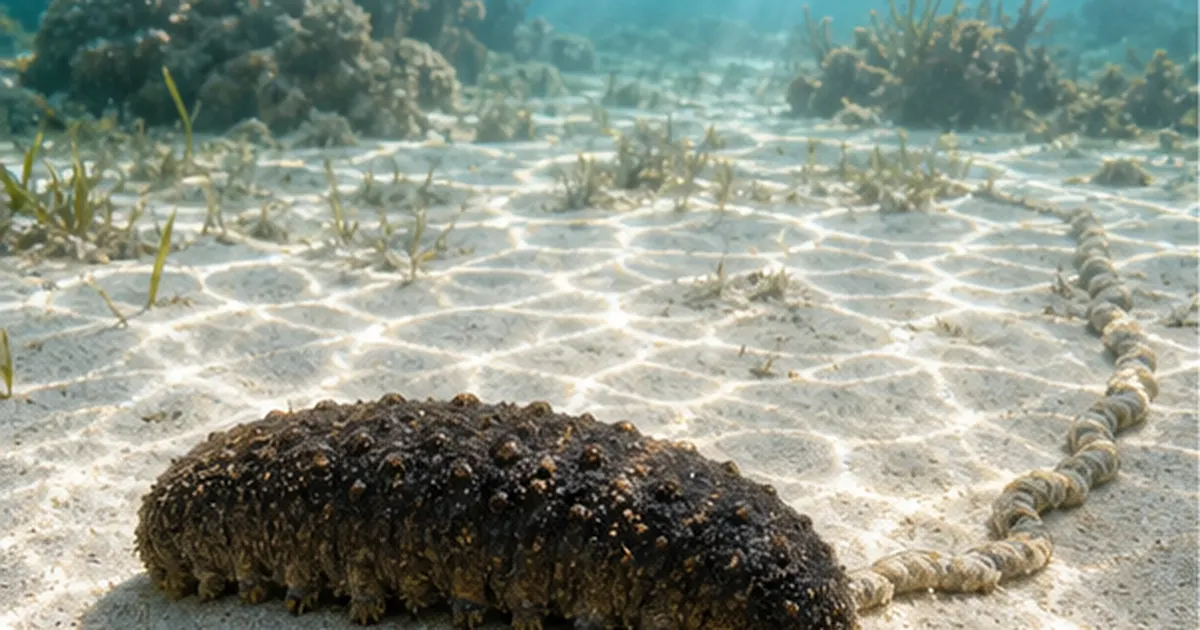
On the sand of a tide pool lies something like a thick black sausage. Poke it and it barely moves; press it and it suddenly turns soft and floppy. This is a sea cucumber. It looks plain, moves slowly, and has no brain. For most people it is either an unusual delicacy with a distinctive texture, or simply an unidentifiable thing in the sea.
And yet, in the seafloor ecosystem, this animal is a cleaner, a tiller of the ground, and a chemical plant all at once. Using the tentacles around its mouth, a sea cucumber gathers sand and mud, swallows it whole, absorbs only the organic matter and bacteria inside, and excretes the rest. Repeated endlessly, this unremarkable work tills more than 60,000 tonnes of sand a year on a single coral reef and even changes the chemical properties of the surrounding seawater.
At the same time, sea cucumbers are a luxury food known in Chinese-speaking markets as the ginseng of the sea. Dried products fetch high prices, and those prices have driven overfishing and poaching worldwide. In Japan, sea cucumbers rank alongside abalone and glass eels as a prime poaching target, and harvesting them without permission can bring a fine of up to 30 million yen. This article draws on primary sources to lay out both the surprisingly multifunctional biology of this animal and the current state of the rules that protect it.
What you'll learn in this article
- That sea cucumbers are echinoderms, like sea urchins and starfish, and till the seafloor as deposit feeders that eat sand
- How their feeding changes the grain size, oxygen and nutrients of coral reef sediment, and raises seawater alkalinity enough to locally buffer acidification
- How evisceration and Cuvierian tubules work as a defence, and how the lost organs are rebuilt within weeks
- How sea cucumber derived materials, such as mutable catch connective tissue, are used in medical research
- How the high price of dried sea cucumber drove global overfishing, leading to CITES Appendix II listings and tougher penalties in Japan
- What fisheries and consumers can each do to keep using this resource without depleting it
What Exactly Is a Sea Cucumber? An Echinoderm Without a Brain
Sea cucumbers belong to the class Holothuroidea within the phylum Echinodermata, making them relatives of sea urchins, starfish, brittle stars and sea lilies. That may seem surprising if you picture an urchin's spines or a starfish's five-armed body, but cut a sea cucumber crosswise and the same pentaradial symmetry found in starfish is hidden inside. The calcareous ossicles that all echinoderms share also remain, scattered as tiny fragments through the skin. The sleeping-bag shape is what you get when an animal gives up building a hard shell like an urchin and stretches its body out softly instead.
About 1,500 species worldwide, around 200 in Japanese waters
Sea cucumbers are distributed widely across the world's oceans. Species counts range from roughly 1,250 to 1,700 depending on the source, but around 1,500 is the figure usually cited. Some 200 species are known from Japanese waters alone, and only about 30 species worldwide are used as food. In Japan, sea cucumber almost always means the Japanese sea cucumber (Apostichopus japonicus), distinguished by colour into red, green and black forms. According to material from the Aomori Prefectural Industrial Technology Research Center, this species lives more than 10 years and matures at about age six at a body weight of roughly 300 g, making it far longer-lived than its appearance suggests.
Their habitat range is extremely broad, from the shallow intertidal zone to abyssal depths of several thousand metres. Some burrow into sand, some cling to rock, and some swim through the water column. What they share is a way of life built on gathering sediment or drifting organic particles on or near the seafloor.
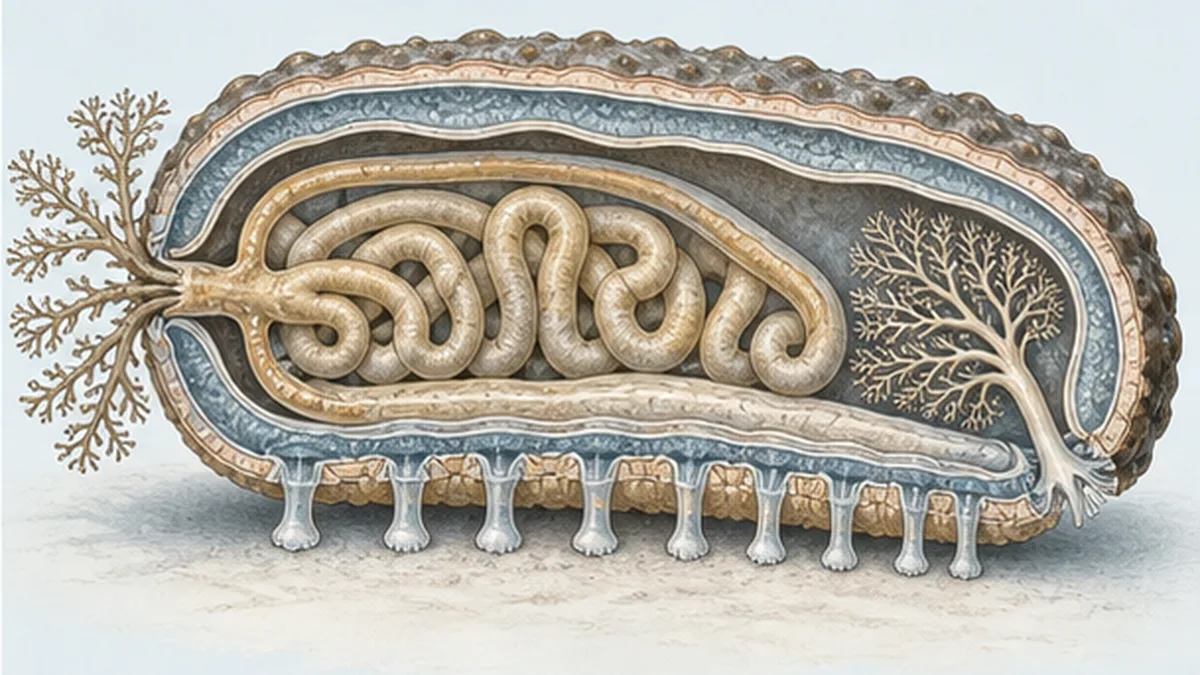
No brain, yet it reads its environment
Sea cucumbers have nothing that qualifies as a brain. All they have is a nerve ring encircling the mouth and five radial nerves running the length of the body. Even so, they sense light, water flow and the amount of organic matter in the sand, and move slowly toward richer feeding grounds. Movement relies on the rows of tube feet on the underside and on peristaltic contractions of the body wall muscles. Many species travel only a few metres a day, and this unhurried strategy is closely tied to the energy-saving body mechanisms described later.
An animal that breathes through its rear end
Another distinctive feature is the respiratory tree. Seawater is drawn in through the cloaca at the rear of the body and pumped into a branching, tree-shaped internal organ where oxygen is absorbed. In other words, a sea cucumber quite literally breathes through its bottom. This organ is central to both the organ-ejecting defence and the fish that lodge inside sea cucumbers, described later.
Sea cucumber basics
- Classification: class Holothuroidea, phylum Echinodermata (relatives of urchins and starfish)
- Species: about 1,500 worldwide, around 200 in Japanese waters, about 30 used as food
- Main Japanese species: Japanese sea cucumber (lives 10+ years, matures at age six at about 300 g)
- Feeding: deposit feeding, gathering sand and mud with oral tentacles
- Respiration: respiratory trees that draw seawater in through the rear of the body
The Seafloor's Cleaner: A Life Built on Eating Sand
In a single phrase, the ecological role of the sea cucumber is that of a seafloor deposit feeder. Just as earthworms on land eat soil, excrete it, and in doing so till and enrich the ground, sea cucumbers do the same job on the seabed. Researchers often call them the earthworms of the sea.
Gathering sand with tentacles and swallowing it whole
Sea cucumbers in the order Aspidochirotida carry 10 to 20 leaf-like branching tentacles around the mouth. As they crawl, they press these tentacles against the sediment surface, trap organic matter and sand grains together in mucus, and carry the mixture to the mouth. What goes down is not only food but the sand and mud themselves. The intestine is a long tube folded back on itself many times inside the body, and over the several hours it takes material to pass through, the following are digested and absorbed.
- Detritus: fragments of dead seaweed and seagrass, and animal remains
- Bacteria and microalgae such as diatoms attached to the surfaces of sand grains
- Organic nitrogen and phosphorus held in the sediment
The remaining sand and mud are excreted from the rear of the body as long, string-like faecal casts. Those winding sandy strings you often see on exposed sand flats and reef flats at low tide are, for the most part, the traces of sea cucumbers at work.
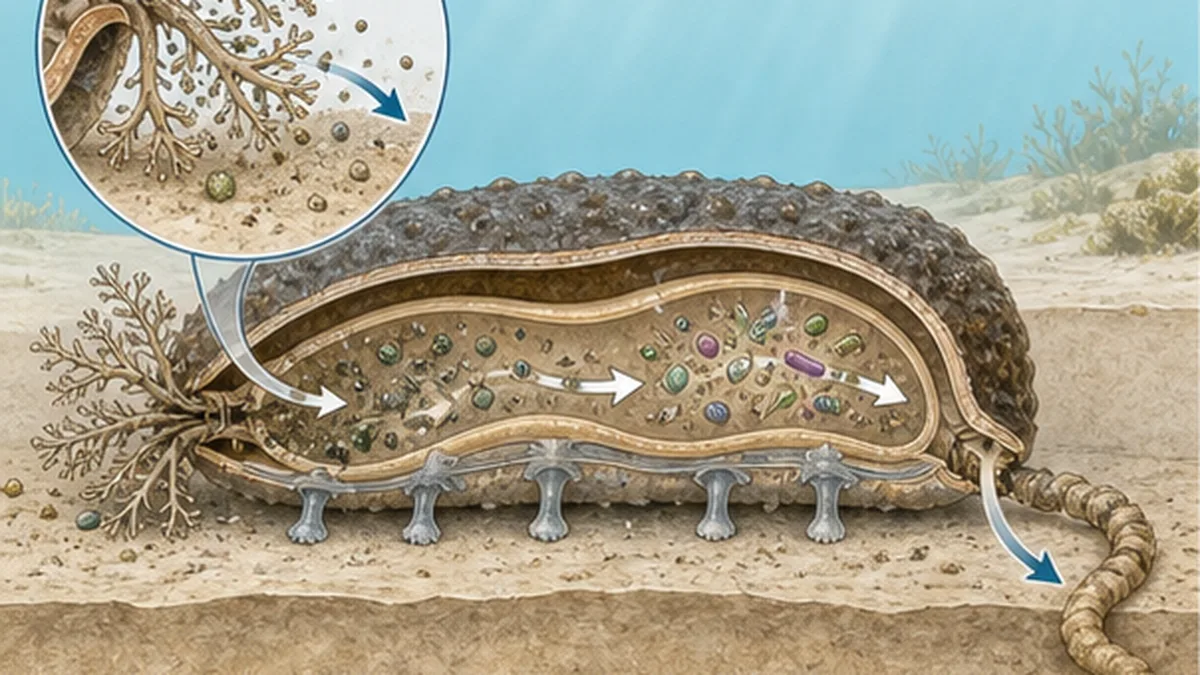
Sand comes out cleaner than it went in
Sediment that passes through a sea cucumber undergoes several changes. Excess organic matter is removed, the microbial balance shifts, and grains are broken down so that particle size changes as well. Seafloor sediment overloaded with organic matter runs short of oxygen and generates hydrogen sulphide until nothing can live there. By processing organic matter before that point, sea cucumber feeding helps keep sediment in a state where it can still breathe. For more on declining oxygen in bottom waters, see our article on deoxygenation and dead zones.
Tilling circulates oxygen and nutrients
The mixing of sediment by animals is called bioturbation. As sea cucumbers swallow sand, dig it over and restack it as faeces, oxygen penetrates the surface layer more easily and nutrients locked in the sediment are returned to the water column. Sea cucumbers also excrete inorganic nitrogen (such as ammonia) and phosphorus as a product of metabolism. In nutrient-poor waters, such as tropical coral reefs, this acts as valuable fertiliser for benthic microalgae and symbiotic algae.
A review of the ecological roles of commercially exploited sea cucumbers (Purcell et al.) notes that of the more than 70 species exploited commercially, at least 12 burrow into sand and mud and play a major role in bioturbation. As enormous volumes of sediment pass through their bodies, grain size, microalgal productivity, nutrient cycling, oxygen profiles and biogeochemistry all change, with benefits for ecosystem functioning.
Four jobs sea cucumbers perform
- 1. Processing organic matter: eating accumulated organic material and preventing the seafloor environment from degrading
- 2. Mixing sediment: tilling sand so oxygen penetrates, and changing grain size
- 3. Resupplying nutrients: excreting nitrogen and phosphorus that support algae and symbiotic algae
- 4. Buffering water chemistry: dissolving calcium carbonate and raising seawater alkalinity (see next section)
The Tilling Power in Numbers: 64,000 Tonnes a Year on One Reef
Calling them cleaners may sound like a metaphor, but researchers have measured just how much sand actually moves. A study at Heron Island Reef in the southern Great Barrier Reef of Australia (Williamson et al., Coral Reefs, 2021) estimated the scale at the level of an entire reef.
Counting with drones, measuring by experiment
The team first photographed each reef zone using drone and satellite imagery and cross-checked it against in-water counts to build a map of where sea cucumbers were and in what numbers. They then ran 24-hour feeding experiments on the most abundant species to measure how much sediment an individual processes. Multiplying the two allowed them to estimate bioturbation across the roughly 19 square kilometre reef.
| Item | Estimate |
|---|---|
| Study site | Heron Island Reef (southern Great Barrier Reef, Australia), about 19 square kilometres |
| Annual reef-wide bioturbation | More than 64,000 tonnes (excluding the lagoon) |
| Per individual Holothuria atra | Roughly 14 kg of sediment processed per year |
| Method | Density estimation from drone and satellite imagery plus 24-hour feeding experiments |
64,000 tonnes a year. That is the equivalent of 6,400 loads from a 10-tonne dump truck, tilled steadily by animals that do not even have brains. And this is the figure for a single reef. Considering that the same thing is happening on sandy bottoms, coral reefs and tidal flats around the world, the scale of the sea cucumber's contribution to seafloor material cycling starts to come into view.
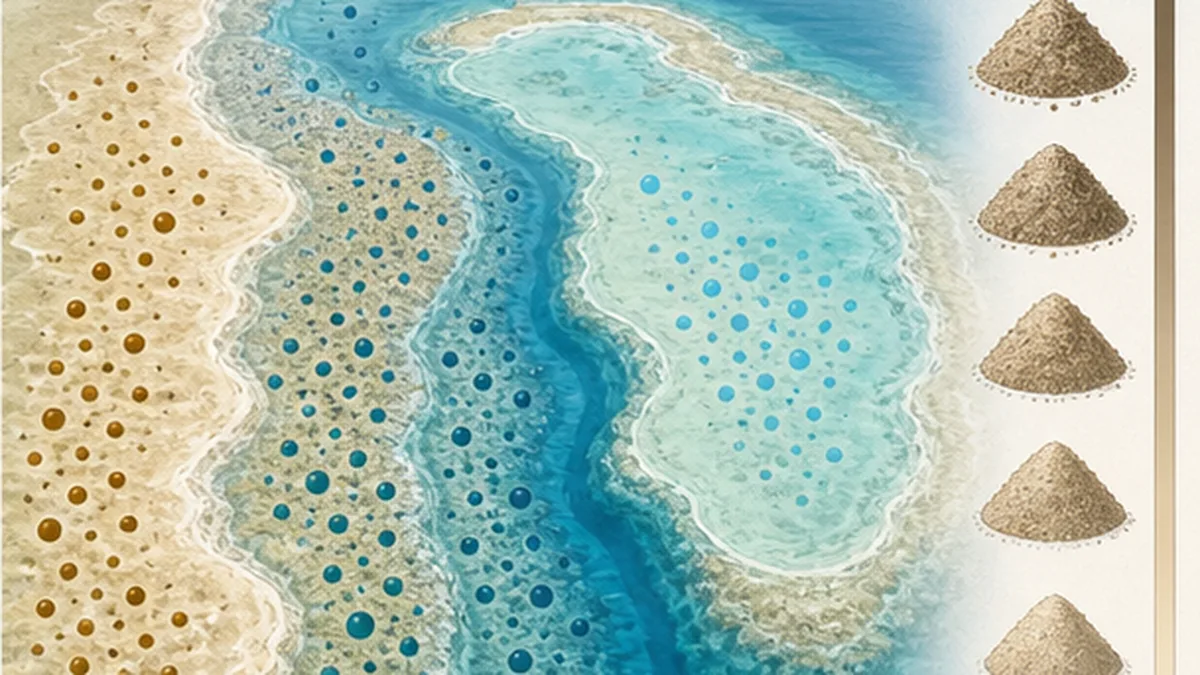
Warmer water changes how they work
Bioturbation rates are not fixed. A 2023 study in Scientific Reports compared sea cucumber bioturbation capacity under different water temperature regimes and showed that temperature changes how much sediment is processed and how benthic trophic status is affected. As sea temperatures keep rising, the very nature of the work sea cucumbers do may shift. Read it alongside our article on marine heatwaves as an example of warming quietly rewriting ecosystem function.
What happens when you take them away
The reverse experiment has also been done. In shallow waters in Fiji, researchers artificially removed sandfish (Holothuria scabra), an edible species, and tracked how sediment properties changed, effectively recreating what happens on a seafloor stripped of sea cucumbers by overfishing. As such studies accumulate, the difference between having and not having sea cucumbers can increasingly be described in quantitative terms.
Bioturbation of reef sediments aerates the upper sediment layers and releases organic material to benthic communities.
― Williamson et al. (2021), Coral Reefs (sense of the abstract)
A Hidden Ally of Coral Reefs: Faeces That Soften Acidification
Among all the work sea cucumbers do, the function drawing the most recent attention is their ability to change the chemical properties of seawater. The setting is the coral reef, where much of the sand is calcium carbonate derived from coral and shell fragments.
Calcium carbonate dissolves inside the gut
The interior of a sea cucumber's digestive tract is a low-pH, acidic environment. When calcium carbonate sand grains enter, some of them dissolve. The dissolved carbonate is excreted along with the faeces as carbonate and bicarbonate ions, so sea cucumber faeces have a higher pH and greater alkalinity (buffering capacity) than the surrounding water. The animals also release ammonia, which likewise pushes the buffering capacity of nearby seawater upward.
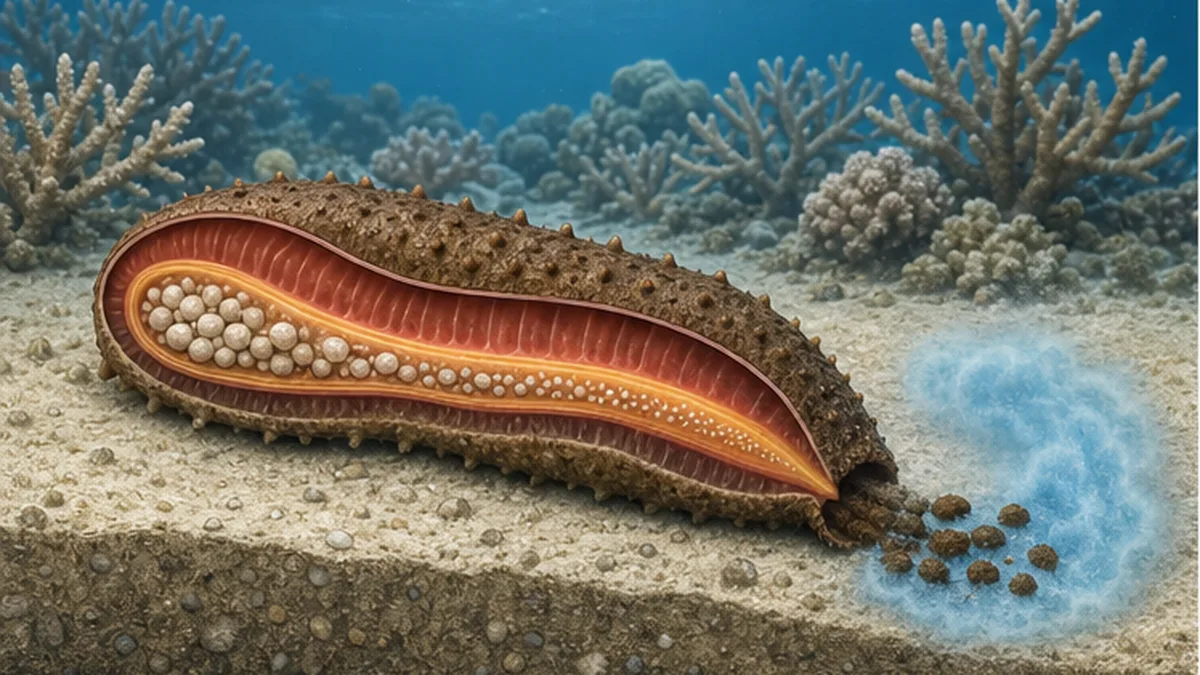
About half of the reef's night-time dissolution
This effect was quantified by Schneider and colleagues at One Tree Reef in Australia, published in the Journal of Geophysical Research: Biogeosciences in 2011. The study estimated that calcium carbonate dissolution associated with sea cucumber feeding could account for about half of the total night-time dissolution on that reef. At night, coral photosynthesis stops, respiration raises carbon dioxide, and seawater tips toward the acidic side. It is precisely during those hours that sea cucumbers are supplying alkalinity.
The researchers argue that this additional alkalinity could partly offset, at a local scale, the drop in seawater pH driven by rising atmospheric carbon dioxide, easing the impact on coral growth. The mechanism of ocean acidification itself is covered in detail in our article on ocean acidification and coral reefs.
A caution: sea cucumbers are not a solution to acidification
- The alkalinity they supply is only a local, temporary buffer within the reef
- Because they also dissolve calcium carbonate, the net effect on a reef's carbonate budget depends on context
- Without cutting atmospheric carbon dioxide, no biological process can stop ocean acidification
- The idea that more sea cucumbers would solve acidification is not scientifically sound
Cleaning the surface of corals
Another suggested benefit is the reduction of sediment-related stress. When fine sediment and organic matter settle on coral surfaces, the coral must expend energy producing mucus to shed them. Stagnant organic matter also encourages pathogenic microbes. By processing sediment around and on corals, sea cucumbers may be lowering both sediment-driven stress and disease risk. In waters where sediment loads have risen because of red-soil runoff, that function matters even more (see protecting the coral reefs of Okinawa and the Nansei Islands).
Throwing Out Your Own Organs: A Strange Defence and Remarkable Regeneration
Slow-moving, without a hard shell or sharp teeth, a sea cucumber looks like an easy meal to a predator. Yet it possesses a defence that, by vertebrate standards, is startling: it throws its own internal organs out of its body.
Evisceration
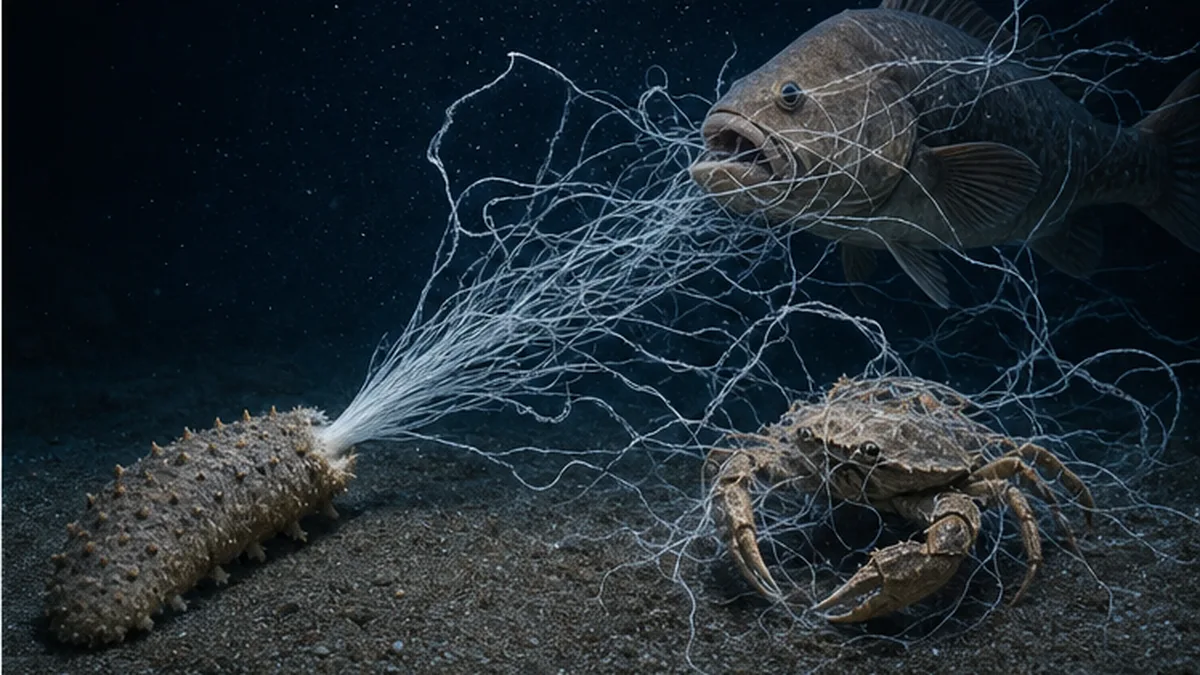
When strongly provoked, a sea cucumber contracts its body wall muscles hard, raises internal pressure, ruptures specific points of the body and expels organs such as the intestine and respiratory trees. This is called evisceration. The predator's attention is captured by the nutritious mass suddenly in front of it, and the sea cucumber itself escapes in the meantime. This is not an accident but a controlled behaviour acquired over long evolutionary time.
Cuvierian tubules and their sticky threads
Some species have an even more specialised apparatus: bundles of fine tubes called Cuvierian tubules, which elongate rapidly on contact with seawater and become strongly adhesive. The ejected threads entangle predators and immobilise them. Studied in detail in species such as Holothuria forskali, these tubules are numerous, used sparingly, and regenerate efficiently, which is why they are regarded as an almost inexhaustible line of defence maintained at limited energy cost.
Rebuilt within weeks
Discarding your organs is survivable only because sea cucumbers possess extraordinary regenerative capacity. Ejected intestines and respiratory trees are rebuilt within a matter of weeks. In the regeneration of Cuvierian tubules, existing cells first dedifferentiate back to an undifferentiated state, then proliferate, and finally differentiate again to restore the original tissue architecture. Molecular work tracing which cells switch on which genes to rebuild the intestine is also advancing, including research in Japan on regeneration in the Japanese sea cucumber after evisceration and transverse fission.
Mutable catch connective tissue
Pick up a sea cucumber and it may feel firm at first, then melt into softness. This is due to mutable (catch) connective tissue, a mechanism unique to echinoderms. The sea cucumber dermis consists of collagen fibres interwoven like felt and embedded in a proteoglycan gel, and it can take three mechanical states: soft, standard and stiff.
The switch is under nervous control. Neurosecretory cells governed by stiffening nerves release stiffening proteins, while those governed by softening nerves release softening proteins, altering the interactions between collagen and proteoglycan molecules and thereby changing rigidity. What stands out is the efficiency: holding the same posture is said to require only a quarter to a fifth of the energy that muscular contraction would need. It is the ultimate energy-saving mechanism, and a very sea-cucumber-like commitment to not moving.
The sea cucumber body is also studied as a material
- Catch connective tissue, whose stiffness changes in response to stimuli, is studied as a model for variable-stiffness materials
- Sea cucumber collagen is used in biomaterials research, including cell culture substrates and artificial blood vessels and skin
- Mechanisms of organ and body wall regeneration are valuable comparative subjects in basic regenerative medicine research
- Saponins (holothurins) are known for antifungal activity and are studied as bioactive compounds
Chemical defence
They also defend themselves chemically. Sea cucumbers and some other echinoderms such as starfish contain saponins, and those of sea cucumbers are collectively called holothurins. They disrupt cell membranes, making the animal unpleasant to predators, and are known for strong antifungal activity. In parts of the Pacific islands, traditional fishing methods survive in which crushed sea cucumber fluid is released into tide pools to stun fish.
Lodgers and the Deep Sea: How Sea Cucumbers Connect the Ecosystem
Sea cucumbers are woven into the ecosystem not only as consumers but also as housing for other creatures.
Pearlfish, which come and go through the rear end
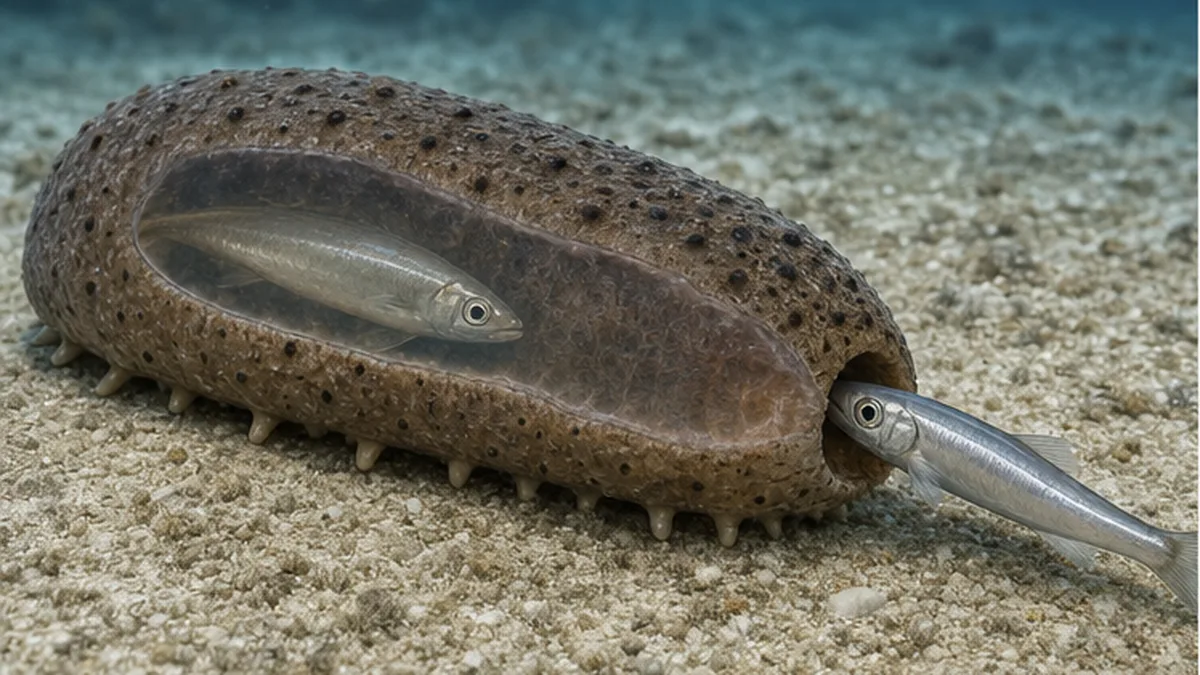
Pearlfish (family Carapidae) comprise eight genera and 36 species of slender small fish worldwide, many of which live hidden inside sea cucumbers, starfish, bivalves and sea squirts. To enter a sea cucumber, a pearlfish characteristically slips in tail-first through the cloaca, and there are records of 15 individuals sharing a single host. They are typically around 20 cm long, with large individuals reaching 40 cm.
The relationship is usually classified as commensalism rather than parasitism. The pearlfish gains a safe shelter and scraps of food left in the host's intestine, while the sea cucumber is thought to gain and lose little (in some species, however, feeding on host tissue has been reported, so the nature of the relationship varies).
The dominant animals of the deep seafloor
On the abyssal plains several thousand metres down, sea cucumbers loom even larger. The only food reaching that lightless seafloor is the rain of sinking organic particles known as marine snow. As deposit feeders able to gather this sparse food efficiently, sea cucumbers account for a large share of megabenthic biomass and often dominate it. In places such as the Peru Basin in the Pacific, large species like Psychropotes longicauda have been reported as major contributors to that biomass.
That means how carbon and nutrients settling on the deep seafloor are subsequently distributed, and how quickly they are buried in sediment, depends strongly on the work of sea cucumbers. How deep-sea creatures adapt to extreme conditions is explained in our article on deep-sea adaptation strategies. Deep-sea mineral resource development has been under discussion in recent years, and the fact that this seafloor is the principal habitat of sea cucumbers is an important point in environmental impact assessment.
Ginseng of the Sea: Sea Cucumbers as a Luxury Food
Separate from their ecological role, sea cucumbers have an economic face. And it is precisely that economic value which has made them one of the most heavily overfished marine animals in the world.
Sea cucumbers in Japanese food culture
In Japan they have long been eaten raw, typically dressed in vinegar. Konowata, salted and fermented sea cucumber intestines, is counted among the country's three great delicacies alongside dried mullet roe and sea urchin. Dried ovaries, known as kuchiko, are also a premium product. It is a difficult ingredient to process with poor yields, but its distinctive texture cannot be replaced by anything else, and it has taken root in regional food cultures.
Dried sea cucumber drives the global market
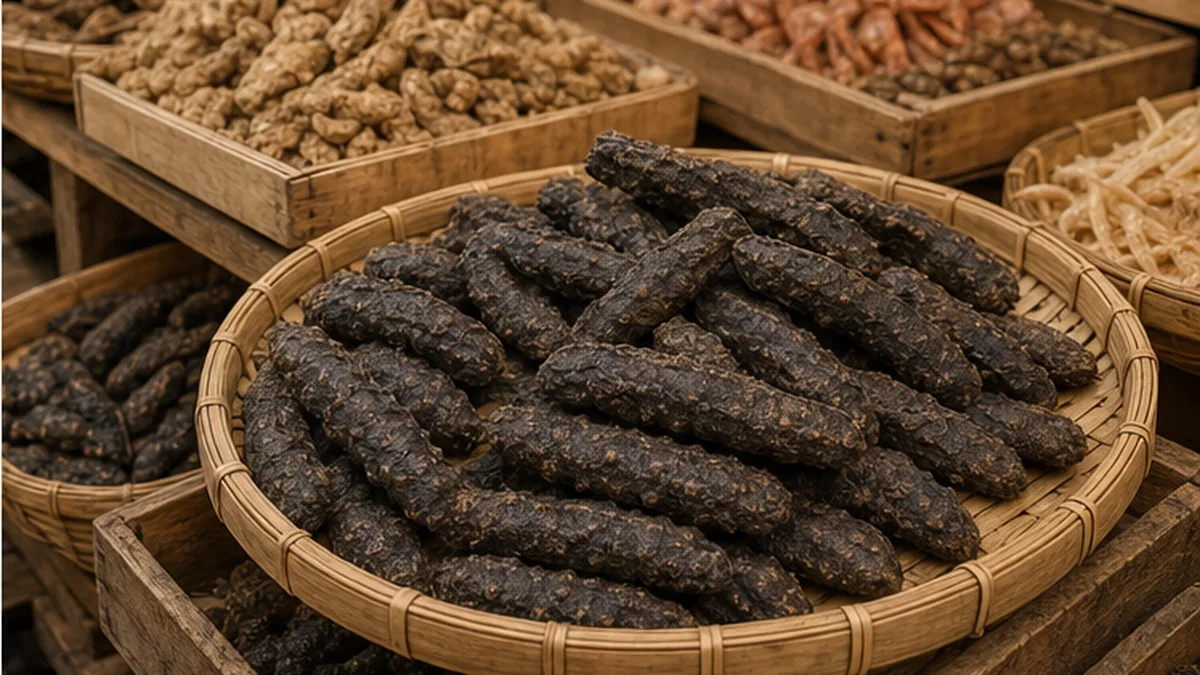
What moves the international sea cucumber market is not Japanese domestic consumption but demand for dried sea cucumber in Chinese-speaking markets. Prized as a luxury item in Chinese cuisine, it is regarded as indispensable at celebratory banquets. Japanese dried sea cucumber is rated highly for quality, and a distribution structure running through Hong Kong to mainland China has persisted for a long time.
| Indicator | Figure or content |
|---|---|
| Hong Kong sea cucumber imports (2023) | About 217.98 million US dollars (up 12.1% year on year) |
| Of which imports from Japan (2023) | About 72.40 million US dollars (top source country or region) |
| Japan's exports to Hong Kong (2024, prepared sea cucumber) | About 9.1 billion yen (among the top items) |
| Main use | Consumed as dried sea cucumber in Chinese-speaking markets |
How high prices corner a resource
When the price of a seafood rises, fishing pressure rises, stocks fall, and scarcity pushes prices higher still. This vicious circle has repeated itself around the world, and sea cucumbers meet all the conditions for it. They live in shallow coastal waters, move slowly and can be taken even by free diving, while drying makes them storable for long periods and their high unit price makes them easy to transport. In regions with weak resource management, serial depletion has genuinely occurred, with one area fished out before harvesters move to the next. The general mechanism by which overfishing collapses a stock is summarised in our article on overfishing and stock collapse.
Overfishing, Poaching and International Rules
A resource that fetches high prices always attracts illegal harvesting. The situation surrounding sea cucumbers has tightened on both the international treaty and domestic law fronts.
Listing on CITES Appendix II
The framework for international trade regulation is CITES, the Convention on International Trade in Endangered Species of Wild Fauna and Flora. Once a species is listed in Appendix II, export requires a permit from the exporting country, and issuing that permit requires a scientific finding that the trade will not threaten the survival of the species. For sea cucumbers, listings have progressed as follows.
- 2019, 18th Conference of the Parties (CoP18, Switzerland): Appendix II listing adopted for three Holothuria species (teatfish)
- 2022, 19th Conference of the Parties (CoP19, Panama): Appendix II listing adopted for three Thelenota species
More than 70 sea cucumber species are said to be exploited commercially, and only a fraction are covered by these regulations. Even so, the succession of CITES listings for marine species itself shows that coastal fishery resources are now recognised as an international conservation issue.
Japan's catch hovers in the 5,000-tonne range
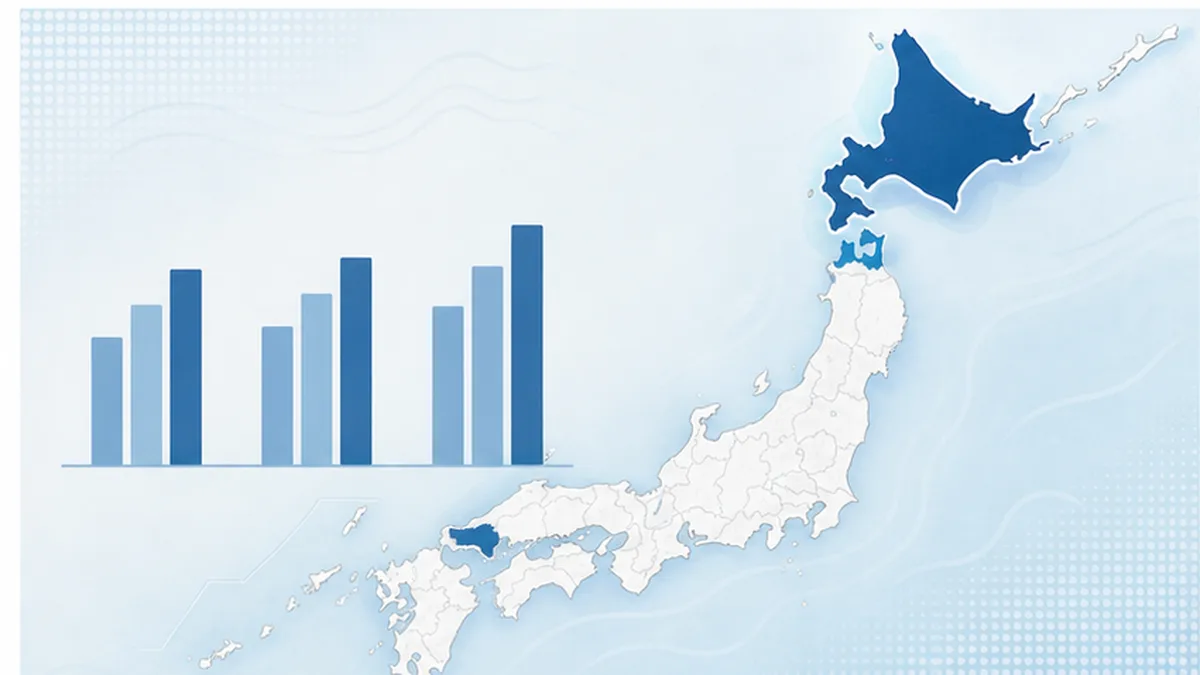
According to the Marine Fishery Production Statistics of Japan's Ministry of Agriculture, Forestry and Fisheries, the domestic catch of sea cucumbers has moved as follows. Hokkaido is the largest production area at around 30% of the national total, followed by Aomori and Yamaguchi prefectures.
| Year | National total | Hokkaido (share) |
|---|---|---|
| 2021 | 5,564 tonnes | 2,143 tonnes (38.5%) |
| 2022 | 5,349 tonnes | 1,743 tonnes (32.6%) |
| 2023 | 5,777 tonnes | 1,690 tonnes (29.3%) |
The national total looks flat, but the breakdown shows that Hokkaido's catch and share have kept falling. Prices surged from around 2003, and cases in which stocks appeared to have been depleted by overfishing were reported across the region. Today, fishers and research institutions work together to survey stock levels and are tightening quota allocations and rules.
A 30 million yen fine: tougher penalties under the revised Fisheries Act
In Japan, sea cucumbers are a prime target for poaching. The Fisheries Agency states plainly that abalone, sea cucumbers and similar species live in coastal waters and are easy to harvest, making them frequent targets of organised, wide-area poaching. The 2018 revision of the Fisheries Act sharply strengthened penalties.
The offence of harvesting designated aquatic species (revised Fisheries Act)
- Covers three designated species: abalone, sea cucumber and glass eel
- Harvesting without a permit or fishery right carries up to three years' imprisonment or a fine of up to 30 million yen
- 30 million yen is at the highest level of fines imposed on individuals
- The same penalties apply to anyone who knowingly transports, stores, acquires, or brokers the disposal of poached goods
- Taking them just to eat yourself, or as a bit of leisure, is still an offence
According to the Fisheries Agency, 1,661 cases of violations of fisheries-related laws were recorded nationwide in 2024: 131 by commercial fishers, 1,465 by non-fishers, and 65 others. In recent years, violations by commercial fishers have declined while poaching by non-fishers has increased. It is worth knowing that casually taking home a sea cucumber spotted at the shore can amount to a serious criminal offence.
Abalone, sea cucumbers and similar species live in coastal areas and can be harvested easily, making them frequent targets of organised and wide-area poaching.
― Japan Fisheries Agency, Zero Tolerance for Poaching
Using It While Protecting It: Management and What We Can Do
Sea cucumbers underpin ecosystem function and are at the same time an important source of income for coastal fishers. The challenge for this resource is to find a path that is neither do not harvest nor harvest freely.
Building harvest rules
Fisheries cooperatives across Japan have accumulated their own rules to protect stocks. The main ones are as follows.
- Defined seasons: avoiding the spawning period and operating only when condition is good
- Size and weight limits: leaving small individuals to grow to spawning size
- Catch quotas: setting totals and individual allocations based on stock surveys
- No-take zones: securing areas that retain adults as a source of larvae
- Limits on operating hours and gear: building in mechanisms that prevent taking too much at once
The Japan Fisheries Research and Education Agency publishes stock assessment reports for the Japanese sea cucumber by sea area, continuously monitoring catches and stock trends. Linking these assessments to on-the-ground rules is the precondition for sustainable use.
Producing and releasing juveniles
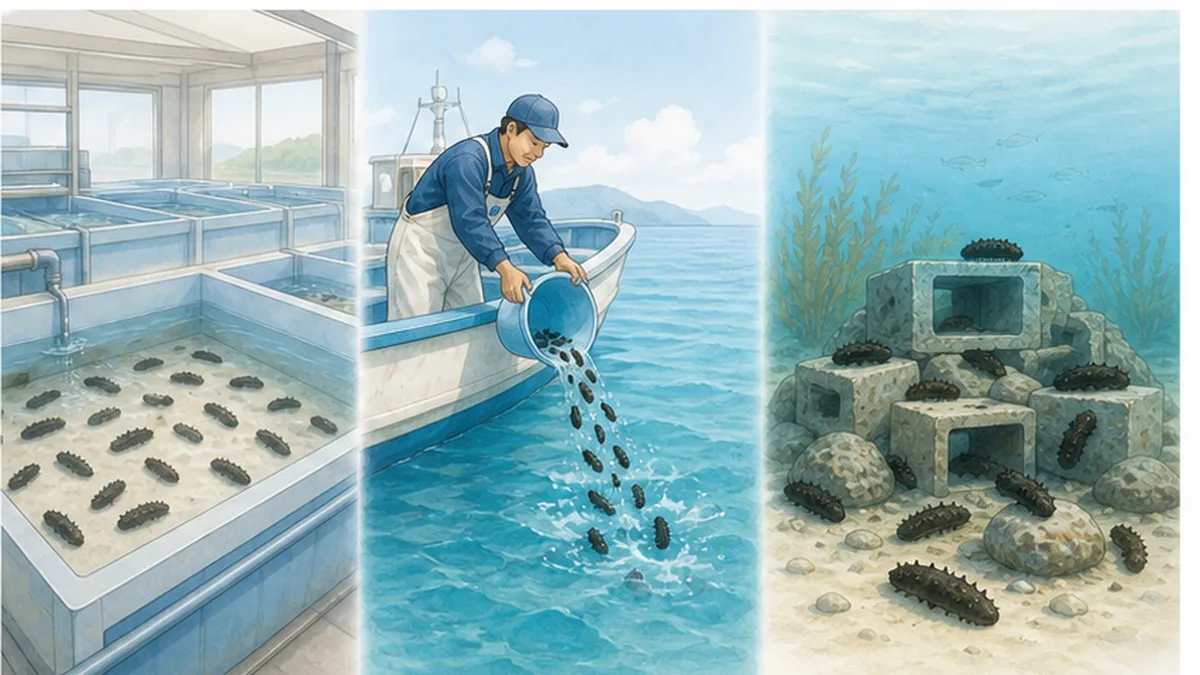
Efforts to increase stocks, not just harvest them, are also under way. The Japanese sea cucumber can be spawned and reared artificially, and stock enhancement programmes releasing hatchery-raised juveniles operate in Hokkaido and elsewhere. Recent years have also seen the installation of artificial habitat structures that give juveniles places to hide and grow, and research into integrated multi-trophic aquaculture (IMTA), in which sea cucumbers consume the waste and uneaten feed from fish farming to reduce environmental load. The idea is to put the sea cucumber's cleaning habits to work improving aquaculture sites.
Stopping poaching is also a job for the supply chain
The key to stopping poaching is to make it unsellable. That is the thinking behind the revised Fisheries Act extending criminal liability to the transport, storage, acquisition and brokering of poached goods. As origin certification and traceability improve, sea cucumbers of unknown provenance become harder to move into the market. For consumers, choosing products distributed through legitimate channels directly reduces poaching.
What we can do
Five things you can do today
- Never take home a sea cucumber or abalone you find on the rocks or in a tide pool (harvesting without a permit is a crime)
- Recreational fishing rules differ by prefecture, so check the prefectural website before you go
- Buy sea cucumber products through legitimate channels where the origin is clear
- When diving or exploring the shore, do not carelessly lift or provoke sea cucumbers (evisceration costs them dearly)
- Learn about, and support, local marine resource management efforts
A sea cucumber's life looks like nothing more than eating sand, excreting sand and moving slowly, over and over. Yet the accumulation of that work lets oxygen into the seafloor, circulates nutrients, and even changes the chemistry of coral reef water. The foundation supported by this unglamorous animal is far too broad to notice only after it is gone.
Summary of this article
- Sea cucumbers are echinoderms like urchins and starfish, and deposit feeders that eat sand. About 1,500 species worldwide, around 200 in Japanese waters
- As earthworms of the sea they process organic matter and till sand to circulate oxygen and nutrients; at Heron Island Reef they mix more than 64,000 tonnes of sediment a year
- By dissolving calcium carbonate in the gut and excreting high-alkalinity faeces, they can locally soften acidification within a reef
- They defend themselves by evisceration and Cuvierian tubules and regenerate within weeks; catch connective tissue uses a quarter to a fifth of the energy of muscle
- High prices for dried sea cucumber drove global overfishing, prompting CITES Appendix II listings; in Japan poaching carries fines of up to 30 million yen
- Seasons, size limits, quotas, juvenile release and supply chain regulation are being combined to build a system that uses the resource while protecting it
参考文献・出典
- Japan Fisheries Agency – Zero Tolerance for Poaching: the Fisheries Agency's anti-poaching measures (designated species, penalties, case numbers)
- Ministry of Agriculture, Forestry and Fisheries, Japan – Marine Fishery Production Statistics (catch statistics for sea cucumbers)
- Hokkaido Government, Department of Fisheries and Forestry – Zero tolerance for poaching: strengthened penalties under the revised Fisheries Act
- Japan Fisheries Research and Education Agency – FY2024 stock assessment report (expanded species): Japanese sea cucumber, central and southern Pacific waters
- Aomori Prefectural Industrial Technology Research Center – Material on the ecology, lifespan and maturation of Apostichopus japonicus
- Coral Reefs (Springer) – Williamson et al. (2021) Putting sea cucumbers on the map: projected holothurian bioturbation rates on a coral reef scale
- Journal of Geophysical Research: Biogeosciences – Schneider et al. (2011) Potential influence of sea cucumbers on coral reef CaCO3 budget: A case study at One Tree Reef
- Scientific Reports (Nature) – Sea cucumbers bioturbation potential outcomes on marine benthic trophic status under different temperature regimes (2023)
- Ministry of Foreign Affairs of Japan – Overview of CITES and how the appendices work
- Nippon Suisan Gakkaishi – Mini-symposium record: latest research toward sustainable use of the Japanese sea cucumber
* Listed in order of reliability: government and academic institutions > peer-reviewed papers > specialized organizations > reputable media