⚡ The answer in 30 seconds
- Three species nest in Japan: loggerhead, green and hawksbill turtles, with the loggerhead at the center.
- A turtle's sex is set by sand temperature while the egg develops; heat produces more females.
- Warming raises concerns about sex skew and lower hatching rates, making long-term monitoring essential.
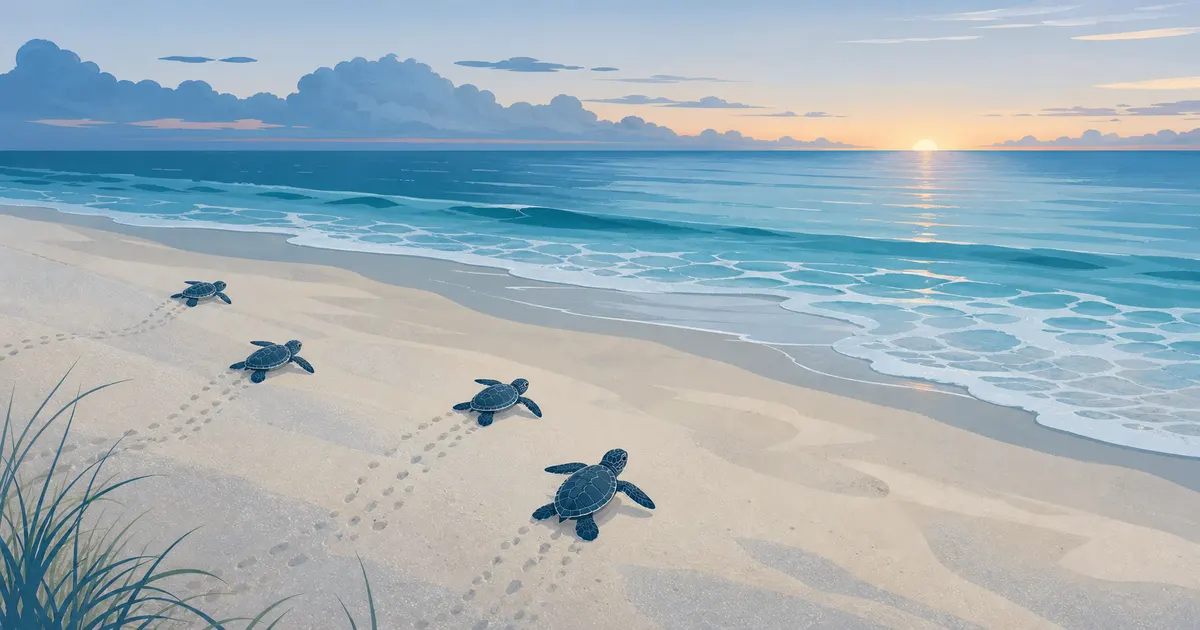
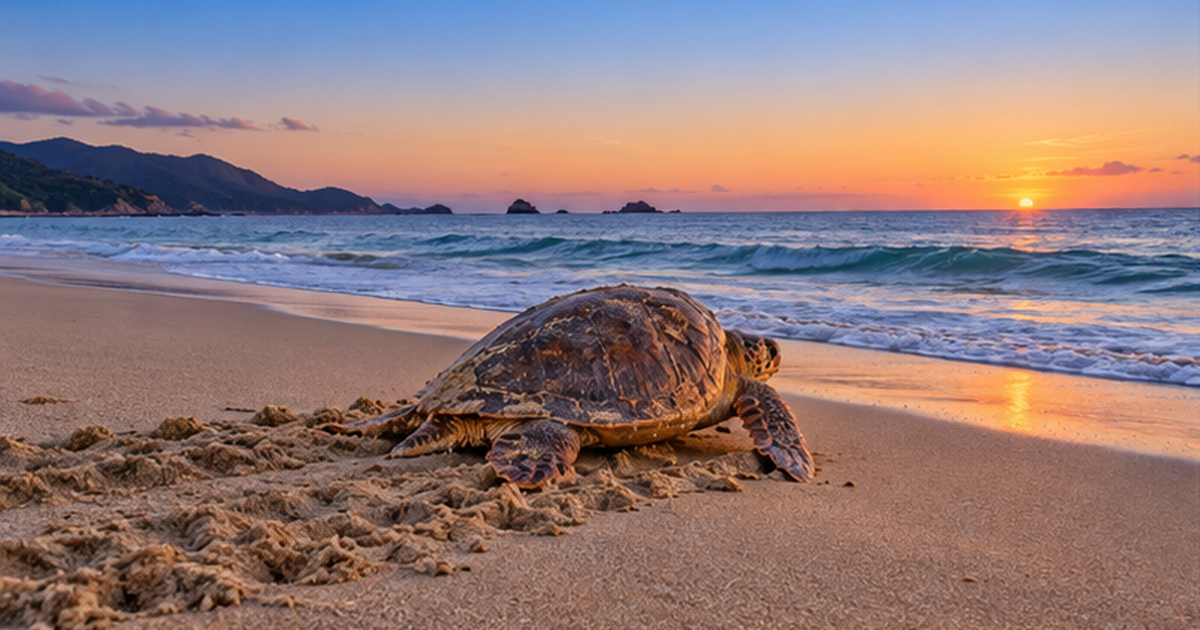
Every early summer, sea turtles come ashore on Japan's beaches to nest. Digging a hole in the dark, laying eggs and returning to the sea, they embody the cycle of life itself.
Yet the curious fact that an egg's sex is decided by sand temperature can become a weakness in an age of warming. What is happening on Japan's beaches now?
This article organizes the three sea turtles that visit Japan, how they nest, the problem of sex skew, and conservation efforts, based on primary sources such as the Ministry of the Environment.
What You Will Learn
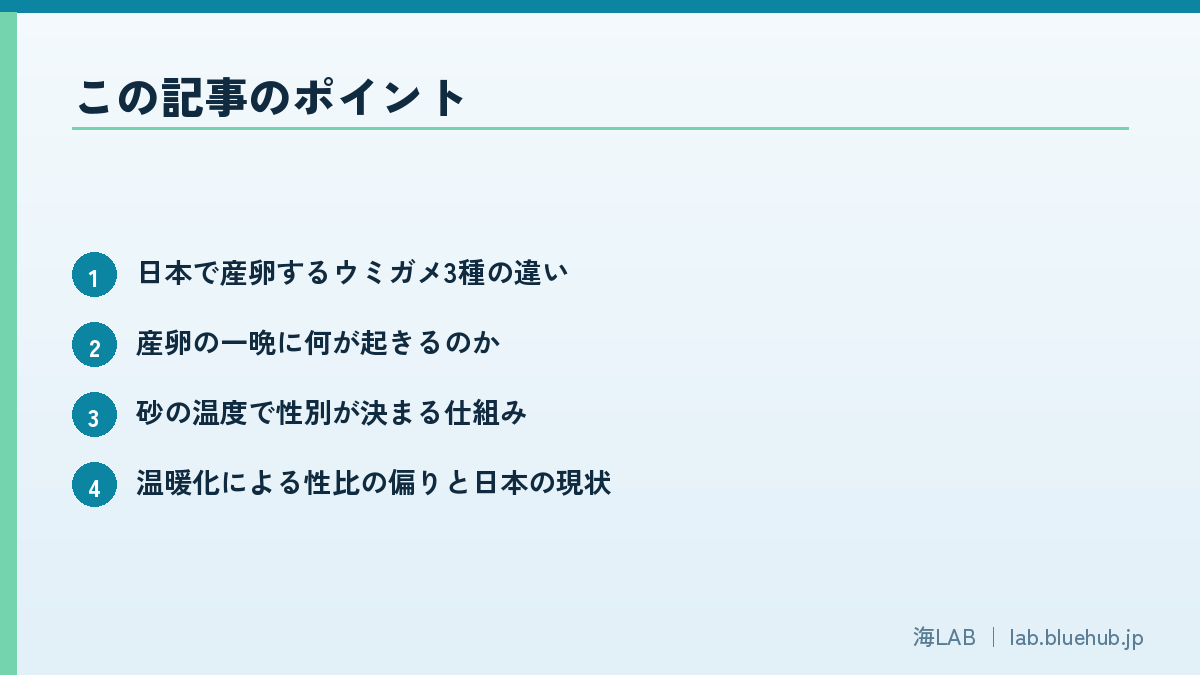
- Differences among the three sea turtles nesting in Japan
- What happens during one night of nesting
- How sand temperature determines sex
- Sex skew from warming and Japan's current situation
- Nagata Beach on Yakushima and how to read nesting counts
- Threats to beaches and what we can do
Three sea turtles come ashore in Japan: loggerhead, green and hawksbill
Seven species worldwide, three nest in Japan
Seven species of sea turtle are known worldwide. Of these, three are confirmed nesting on Japan's beaches: the loggerhead, green and hawksbill turtles. Each prefers different coasts and seasons, sharing Japan's long north-south coastline.
The loggerhead is the most familiar. It nests every year on beaches mainly along the Pacific coast of Kyushu, Shikoku and Honshu. Green turtles nest mainly on warm island beaches such as the Ogasawara and Nansei Islands, and hawksbills are said to nest in very small numbers in places like Okinawa's Yaeyama region.
| Species | Main nesting areas (approx.) | Nesting season (approx.) | Features |
|---|---|---|---|
| Loggerhead | Yakushima; Pacific coast from Kyushu to Honshu | About May-August | Center of nesting in Japan. Reddish-brown shell, large head |
| Green turtle | Ogasawara Islands, Nansei Islands, etc. | Early summer to summer | Adults feed largely on seagrass and algae |
| Hawksbill | A few places such as Okinawa's Yaeyama region | Around summer | Pointed, bird-like beak. Rare worldwide |
All species are at risk
On the IUCN Red List, many sea turtles fall in categories at risk of extinction. Ministry of the Environment materials likewise introduce the loggerhead and green turtles nesting on Yakushima as highly threatened. They migrate widely and take decades to mature, so recovery is slow once numbers fall.
Key points of this chapter
- Three species nest in Japan: loggerhead, green and hawksbill
- The loggerhead is the center of nesting and mostly lands on Pacific-side beaches
- All are treated as species facing decline or extinction risk
One night of nesting: from coming ashore to digging, laying and returning
What happens on a night beach
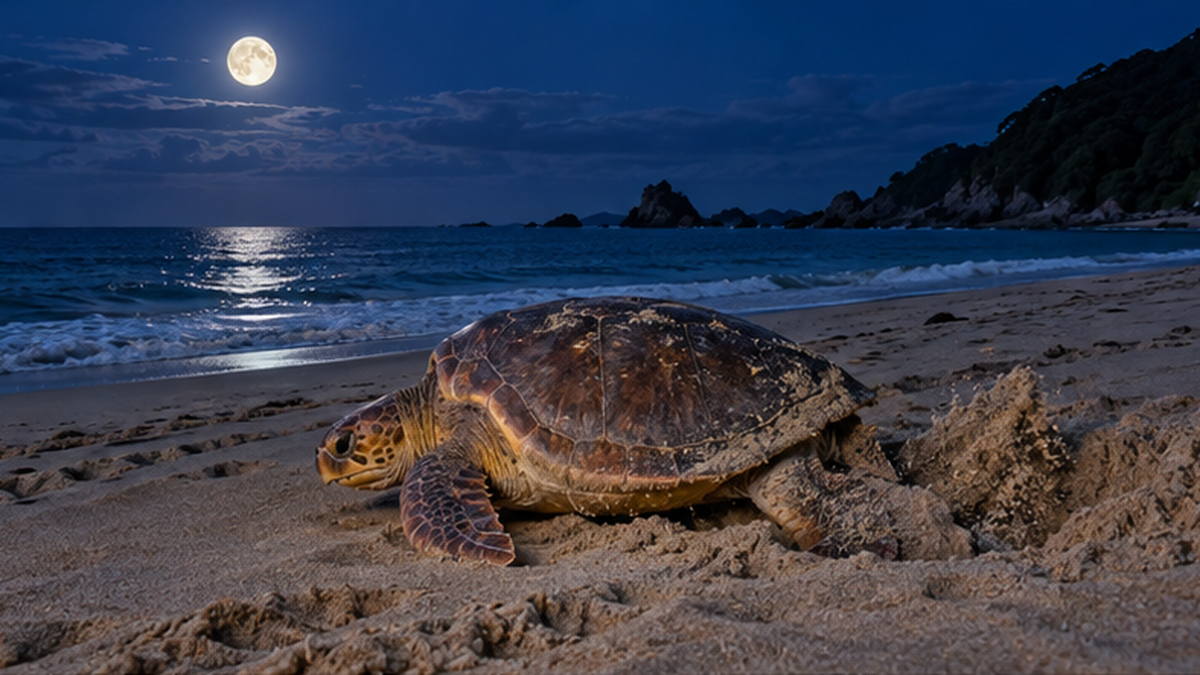
Sea turtles nest at night on beaches when few people are around. The female comes ashore from the waterline, crawls to a spot where she feels safe, and uses her front and rear flippers to dig a shallow body pit and a deeper hole for the eggs.
The laying itself is short, but the whole trip from landing to returning to the sea can take hours. She fills the hole with sand and scatters sand around to hide the nest before heading back. She may seem to weep, but this is thought to be a way of excreting excess salt.
How many eggs, and why nest repeatedly
A loggerhead lays roughly 100 eggs per clutch, white, soft-shelled and shaped like ping-pong balls. A female may nest several times at intervals within a season and returns every few years. Counts of landings and nests are therefore much larger than the actual number of turtles.
- Landings: times a female came up the beach (including those that returned without laying)
- Nests: times eggs were actually laid
- Individuals: number of nesting females (fewer than nest counts, since one turtle nests repeatedly)
Coming ashore without nesting
The gap between landings and nests exists because some turtles turn back to the sea. Lights, human presence or obstacles on the beach can be the cause. In Ministry of the Environment surveys, some years show few nests relative to landings, which is watched as a rough indicator of nesting success.
Good to know
- Nest holes are dug where seawater is unlikely to reach even at high tide
- Females are thought to return near the beach where they hatched, called natal homing
- After laying, the female does not care for the hatchlings
Sex decided inside the egg: sand temperature shapes destiny
What is temperature-dependent sex determination (TSD)?
In many animals, including humans, sex is set at fertilization by chromosomes. Sea turtles are different. The temperature during incubation in the sand decides whether the hatchling becomes male or female. This is called temperature-dependent sex determination (TSD).
For loggerheads, around 29°C is taken as a rough pivotal temperature at which the sexes are equal. Cooler sand yields more males and warmer sand more females. A difference of just a few degrees changes the ratio greatly, so they are sensitive to small shifts in sand temperature.
| Sand temperature (approx.) | Sex more likely | Notes |
|---|---|---|
| Below about 29°C | More males | Cool beaches, shade, after rain |
| Around 29°C | Even males and females | Pivotal temperature (varies slightly by species and region) |
| Above about 29°C | More females | Sunny beaches, summer heat |
| About 33°C or higher | Higher risk of embryo death | Lower hatching rate |
The sensitive period for sex determination
Sex is thought to be set by temperature during a limited sensitive period in mid-development. So how nesting overlaps with the rainy season or heat waves, and whether a nest is shallow or deep, can make sex ratios differ from nest to nest on the same beach.
While the climate was stable, this system probably helped sea turtles balance sex ratios. In an era of rapid climate change, however, it can become a weakness.
Caution
- Sex ratio is a proportion, not the number of hatchlings
- Hatchling sex in Japan's turtles cannot be told by appearance and requires specialized methods
Sex skew from warming: global cases and Japan's situation
A striking report from Australia
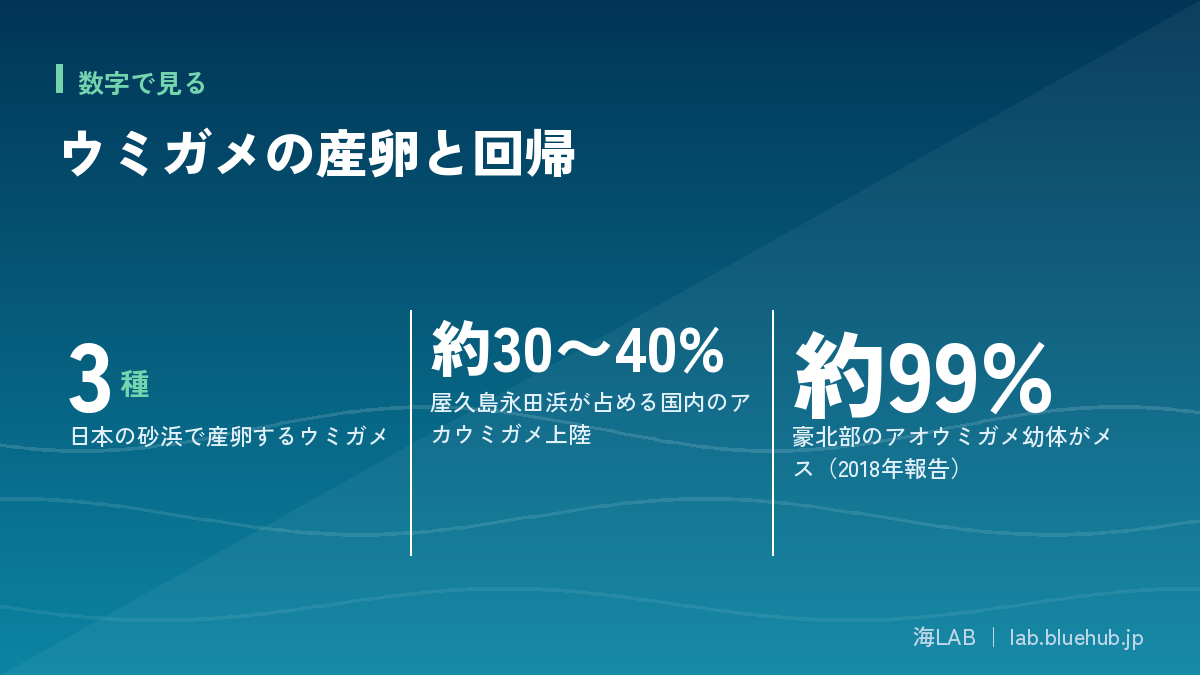
In 2018, US researchers published a study on the sex ratio of green turtles in the northern Great Barrier Reef. According to press and organization summaries, among green turtles from the warmer northern nesting beaches, 99.1% of juveniles, 99.8% of subadults and 86.8% of adults were female. In the cooler south, the female share was 65-69%.
The northern population is reported to have produced mostly female hatchlings for over twenty years. The authors warned that a shortage of males could eventually affect the population's reproduction and persistence.
- North (warmer nesting areas): about 99% of juveniles were female
- South (cooler nesting areas): about 65-69% female
- The northern population studied is said to include over 200,000 nesting females
What about Japan?
For Japan's sea turtles, large-scale sex-ratio results like Australia's are not yet available. However, the Ministry of the Environment's Monitoring Sites 1000 continuously records nest counts and sand temperatures at beaches nationwide. Its 2023 report recorded sand temperatures of 33.0°C or higher, where embryo death risk rises, at two sites: the Izu Islands and Tahara in Aichi.
If hot summers continue, sand temperatures in Japan may rise and the female share may increase. If it gets too hot, the eggs may not develop at all. Warming can show up in two ways: sex skew and lower hatching rates.
What is happening on Japan's beaches
- Sand temperature monitoring continues, but nationwide sex-ratio data are still insufficient
- Sites recording high temperatures (33°C or above) have appeared
- Both sex ratio and hatching rate need attention
Japan's largest nesting site, Yakushima's Nagata Beach, and swings in nest counts
The largest loggerhead nesting site in the North Pacific
Nagata Beach on the northwest coast of Yakushima in Kagoshima Prefecture is, according to the Ministry of the Environment, the largest loggerhead nesting site in the North Pacific. About 30-40% of Japan's loggerhead landings are said to occur here. It was designated a protected area of a national park in 2002 and registered as a Ramsar wetland in 2005.
Nesting begins around late April, and hatchlings begin emerging around early July. Locally, observation rules and guided viewing sessions help keep a good distance between turtles and people.
Nest counts vary greatly by year
Sea turtle nest counts are not the same every year. The Ministry of the Environment's Monitoring Sites 1000 recorded 18,650 landings and 10,142 nests in fiscal 2012, the most since the survey began. Counts have since risen and fallen: nests were 930 in 2022, up about 62% from the previous year, but 634 in 2023 (1,129 landings), down about 31%, with decreases in all five regions nationwide.
| Year | Target | Main figures | Source |
|---|---|---|---|
| FY2012 | All survey sites | 18,650 landings, 10,142 nests (highest since the survey began) | Monitoring Sites 1000 |
| 2022 | Loggerhead | 930 nests (about 62% up year on year) | 2023 report |
| 2023 | Loggerhead | 1,129 landings, 634 nests (about 31% down year on year) | 2023 report |
Reading the numbers: separate fluctuation from long-term trend
Females do not nest every year but on a cycle of about two to three years, which makes counts rise and fall. So judging 'increase' or 'decrease' from one year is risky. To see long-term trends, multiple years of data must be analyzed together.
Worth remembering
- Nest counts fluctuate yearly, so evaluate over the long term
- Nagata Beach is an important place holding about 30-40% of Japan's total
- Monitoring is supported by citizens and local groups
Ogasawara's green turtles: nesting and visits passed down on the islands
The Ogasawara Islands are a leading green turtle nesting area in Japan
The Ogasawara Islands are a main nesting area for green turtles in Japan. The Ministry of the Environment's 5th Red Data Book (2026) introduces them as a valuable case with catch records going back to 1880. The number of visiting turtles around 2015 was estimated at roughly 250-600 per year.
The same document states that if visits once numbered about 800 and now about 500, the decline exceeds 30%. Past hunting, island development and changes in the marine environment are all possible factors.
Herbivorous turtles supporting seagrass beds
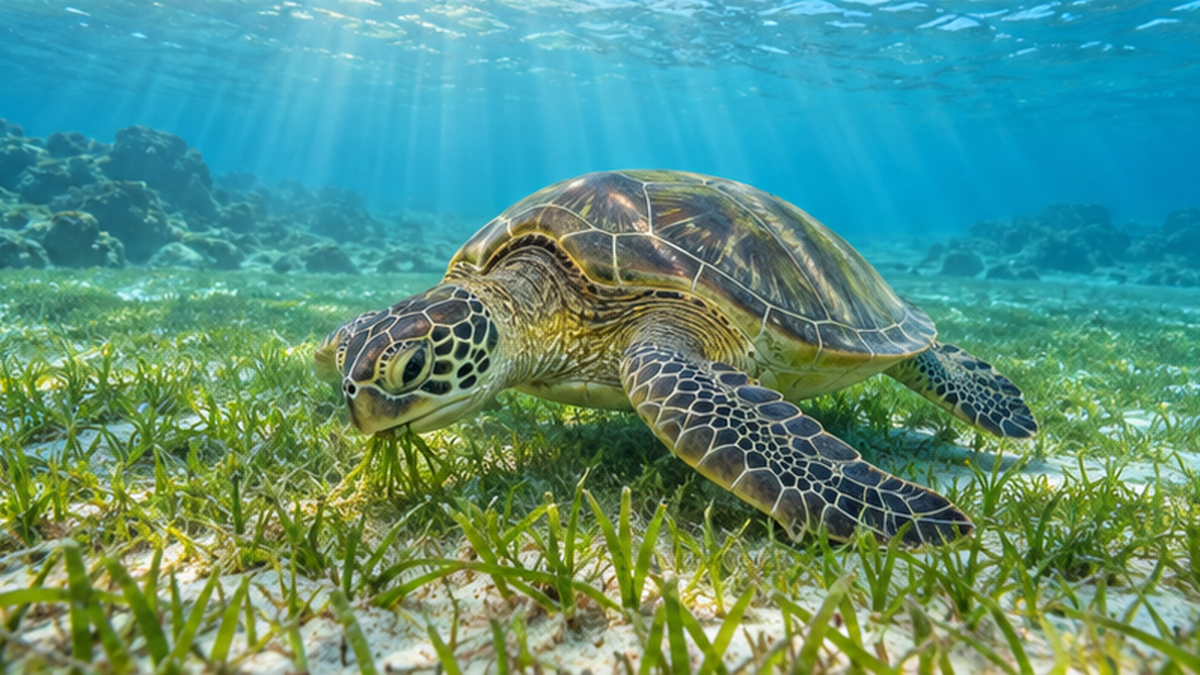
As green turtles grow, they feed mainly on seagrass and algae and play a large role in seagrass-bed ecosystems. The name is said to come from their greenish body fat, a case where diet directly shapes body features.
The island beaches where green turtles nest are vulnerable to erosion from sea-level rise and typhoon waves, and are exposed to climate change.
- Visit numbers vary yearly, so long-term trends matter
- Nesting beaches are vulnerable to sea-level rise, high waves and erosion
- Protecting seagrass beds also protects the green turtle's feeding grounds
Threats facing beaches: light pollution, erosion, marine debris and bycatch
Artificial light confuses hatchlings
After hatching, hatchlings are thought to head to sea guided by light reflected off the sea and by starlight. If lights from roads and buildings reach the beach, they may crawl inland and perish. During the nesting season, lighting around beaches is dimmed or shielded from the sea side.
Fewer beaches mean fewer nesting places
Japan's beaches are shrinking due to dams trapping sediment, seawalls and sea-level rise. A narrower beach means fewer places to nest. For erosion and sea-level rise, see our articles on coastal erosion and sea-level rise and Japan's disappearing beaches.
Marine debris and hard-to-see bycatch
Debris washed ashore can hinder nesting and block hatchlings' movement. At sea, accidents continue in which turtles mistake plastic bags for food or become entangled in fishing gear as bycatch. For the whole picture, see The Life and Conservation of Sea Turtles.
| Threat | Effect on beaches and sea | What we can do |
|---|---|---|
| Light pollution | Hatchlings cannot reach the sea and wander inland | Turn off or shield lights facing the sea during nesting season |
| Loss of beach | Less area to nest | Review seawalls and sediment flow; support beach restoration |
| Marine debris | Hinders nesting; mistaken for food | Join beach cleanups and reduce plastic waste |
| Bycatch | Entanglement in nets and lines | Learn about and support bycatch-avoidance in fisheries |
Cautions when watching
- Flash photography and flashlights startle turtles
- If you find a nesting turtle, do not get too close or touch it
- Follow the rules of observation events and guides
Conservation efforts: monitoring, protection and what we can do
Walking beaches and counting: citizens and researchers together
Sea turtle research in Japan is supported not only by researchers but by local volunteers and groups. The Japan Sea Turtle Association connects survey sites nationwide and accumulates records of landings, nests and hatching. Observations by such groups also feed into the Ministry of the Environment's Monitoring Sites 1000.
Protecting nests and managing lights: on-site efforts
- Record nest locations and mark them so people and vehicles do not trample them
- Nests easily washed by waves are sometimes moved to safer places
- Dim beach lighting so hatchlings find the sea more easily
- Set observation rules and watch with a guide
What we can do while traveling and in daily life
When visiting nesting beaches, follow local rules and take care with lights at night. Joining beach cleanups and cutting single-use plastic also help the seas where turtles live. For practical ways to join, see how to take part in beach cleanups.
Three things you can do today
- Take your litter home or pick it up on the beach
- Avoid strong lights on night beaches and watch turtles quietly
- Learn about and support local sea turtle conservation groups
Sea turtles and beaches ahead: preparing for an uncertain future
What we know and what we do not
That temperature sets sex and that high temperatures lower hatching rates are widely confirmed. But much remains unclear, such as how skewed sex ratios are at each Japanese nesting site and how survival at sea is changing.
Keeping the beach's cool places
Elsewhere, experimental efforts such as shading beaches or watering nests to lower temperatures have been reported. But intervention itself carries risks, so the basics are to protect the natural environment and keep beach vegetation. See our article on coastal dune vegetation.
Long-term data support future decisions
Sea turtles are said to take about 30 years to mature, so the results of today's conservation will show decades later. That is why steady yearly observation becomes the foundation for future decisions. Together with ocean warming and fisheries, let us think of it as change across the whole ocean.
Summary
- Three species nest in Japan: loggerhead, green and hawksbill
- Because egg temperature sets sex, warming may affect sex ratios and hatching rates
- Nest counts swing widely by year, so long-term observation is essential
- Threats such as light pollution, erosion, debris and bycatch are tied to our daily lives
References and Sources
- Ministry of the Environment, Yakushima Nature Conservation Office: Sea Turtles – Position of Nagata Beach and Ramsar registration
- Ministry of the Environment Biodiversity Center, Monitoring Sites 1000 Sea Turtle Survey 2023 Report – Loggerhead landings, nests and sand temperatures
- Ministry of the Environment Biodiversity Center, Monitoring Sites 1000 Sea Turtle Survey 2024 Report – Latest survey results
- Ministry of the Environment, Monitoring Sites 1000 Sea Turtle Survey FY2012 Report – Record landings and nests
- Ministry of the Environment, 5th Red Data Book: Green Turtle – Visiting numbers and decline in the Ogasawara Islands
- WWF-Australia: Warm north turning green turtles female – Sex-ratio report from the northern Great Barrier Reef
- National Geographic: 99% of These Sea Turtles Are Turning Female – 2018 study coverage
- Japan Sea Turtle Association – Sea turtle surveys and conservation nationwide
- IUCN Red List – Conservation status of sea turtles
* Ordered by reliability: government agencies and academic institutions > peer-reviewed papers > specialist organizations > reliable media