⚡ The answer in 30 seconds
- Sealand Gear, founded in 2015, hand-turns yacht sails, tents and billboards into bags in Cape Town.
- Sourcing has moved from used waste to manufacturing surplus such as B-grade stock and offcuts (official blog).
- It is not a brand that regenerates fishing nets or marine debris, so do not confuse it with such products.
- A lifetime guarantee and repair support long use; read the environmental figures as company-reported.
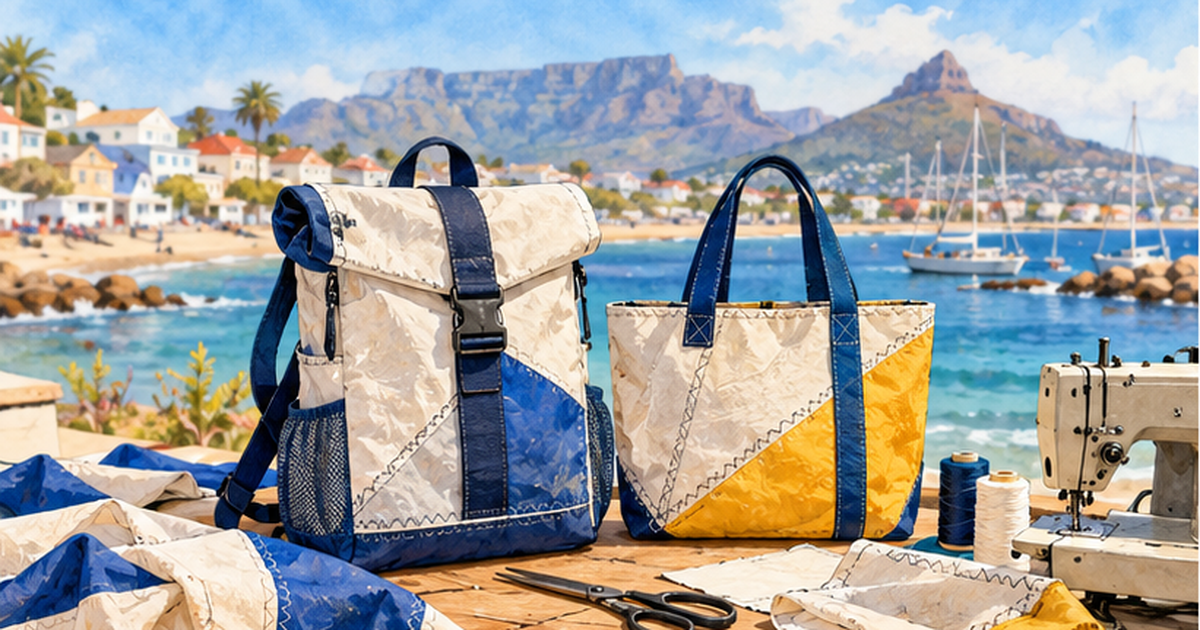
Yacht sails become bags. Sealand Gear of Cape Town, South Africa, turns tough fabrics that have finished their outdoor life into one-of-a-kind bags.
Materials include sails, tents, billboards, tarpaulins and seatbelts. Used waste was the core at first; today B-grade stock and offcuts are the mainstay.
This article organizes the materials, production, figures and caveats from public information, and the difference from fishing-net products.
What You Will Learn
- What Sealand Gear is
- Materials: sails, tents, billboards
- Why sourcing moved from used waste to B-grade stock and offcuts
- A lifetime guarantee and repair for long use
- How to read the published figures and their limits
- How it differs from fishing-net products
What Is Sealand Gear? An Upcycled Outdoor Brand from Cape Town
A South African brand founded in 2015
Sealand Gear is an outdoor bag and accessories brand based in Cape Town, South Africa. It was founded by Mike Schlebach, a surfer and businessman, and Jasper Eales, a product designer. According to the design site Design Indaba, the brand started in early 2015 and launched its products on 1 December that year.
Its defining feature is that it does not make bags from new material. It collects tough fabrics that have finished their first job, or were left over unused, and turns them into bags. Typical materials are yacht sails, stretch tents, advertising billboard mesh, truck tarpaulins and seatbelts. Having been built for outdoor use, they are strong and water-resistant.
This article is a neutral overview of a real initiative, not an advertisement. It organizes the materials, production, figures and caveats based on public information.
What is upcycling?
Recycling breaks a material down and remakes it. Upcycling keeps the original form and texture and turns the item into something of higher value. It needs less energy and fewer chemicals, but because the materials vary in size and condition, mass production and quality control are harder.
| Approach | Degree of processing | Example at Sealand |
|---|---|---|
| Recycling | Material is broken down and regenerated | Not the main approach; some products have used Recover, a fabric from recycled PET bottles |
| Upcycling | Form and texture are kept and reworked | Yacht sail or tent fabric used directly as the outer shell |
| Downcycling | Converted into a lower-grade use | Not the goal, since Sealand aims for durability |
Key points
- Founded in 2015 in Cape Town
- Materials are tough outdoor fabrics such as sails, tents and billboards
- Upcycling: reshaping items without starting from new material
What the Bags Are Made Of: Sails, Tents, Billboards and Seatbelts
What each part is made from
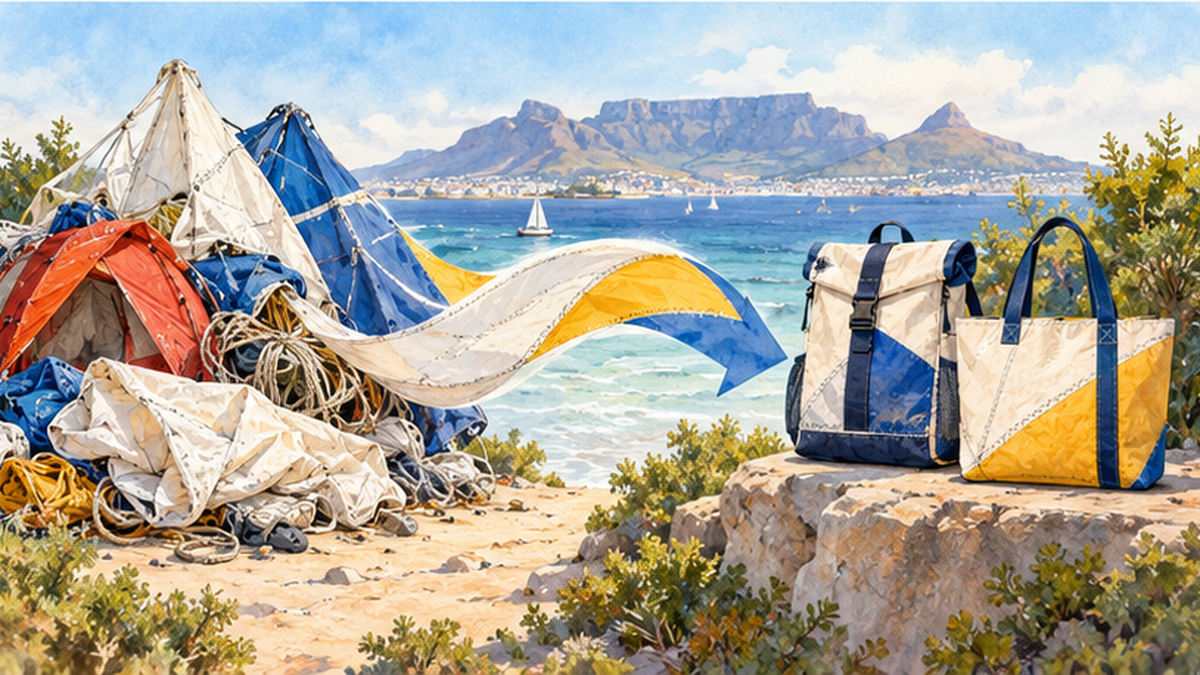
According to Cape Town media, Sealand uses different waste materials for different parts of a bag: tent canvas or yacht sail for the outside, advertising banners for the lining, and seatbelt straps for the handles. An interview on the upcycling site UpcycleThat adds that webbing from one-tonne sugar bags is also used for handles.
| Part | Material | Original use |
|---|---|---|
| Outer shell | Yacht sails, stretch tents, truck tarpaulins | Outdoor use exposed to wind, rain and sun |
| Lining | Advertising banners, billboard mesh | Shop-front and outdoor advertising |
| Handles and straps | Seatbelts, sugar-bag webbing | Load-bearing straps |
Why sails and tents suit bags
A yacht sail must withstand strong wind, seawater and ultraviolet light while keeping its shape. That gives it high tear strength and weather resistance, which also suits a bag used every day. Tents and truck tarpaulins are waterproof fabrics made to shelter against wind and rain.
- Strength: designed to bear tension outdoors, so resistant to fraying
- Water and weather resistance: built for rain, sea air and UV
- Character: sail logos, seams and fading become part of the design
Note: it does not use fishing gear
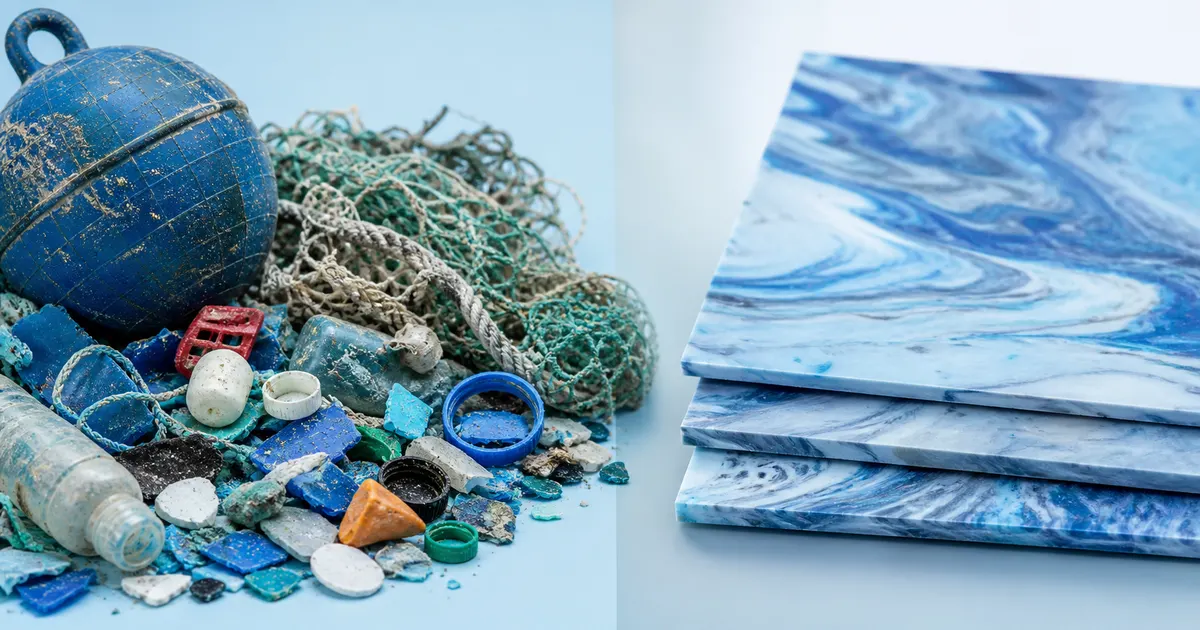
Hearing “bags from ocean waste”, some people imagine products regenerated from discarded fishing nets (nylon). However, in the public information we checked (Design Indaba, UpcycleThat, the company blog, Cape Town Magazine and others), we found no mention of fishing nets or fishing gear as a material. The main materials are cloth products used on land and at sea: yacht sails, tents, billboard banners, tarpaulins and seatbelts. For net-based products, see What Is ECONYL? How Discarded Fishing Nets Become Swimwear and Bags.
Avoid confusion
- Sealand's main materials are sails, tents, banners and tarpaulins, not fishing nets
- No claim that it collects marine plastic directly
- “Related to the sea” does not always mean “made from marine debris”
How Sourcing Changed: From Used Waste to B-Grade Stock and Offcuts
At first, post-consumer waste was the core
According to Sealand's official blog post “Where Does Our Waste Come From?”, the early materials were mainly post-consumer waste: yacht sails, billboards, truck tarpaulins, stretch tents, advertising banners and old seatbelts.
The blog explains that used sails sometimes kept mould and stains even after washing as much as possible. For a product used every day, keeping quality stable was difficult.
Now B-grade stock and offcuts are the mainstay
The blog says the main source today is pre-consumer surplus from manufacturing: B-grade yacht sails (damaged, creased, marked or unevenly dyed), sail offcuts from makers, nylon ripstop, canvas, overproduced inventory and roll remnants too small for their intended use. The partners are described as mills and textile makers producing high-quality outdoor materials; their names are not disclosed.
| Category | Content | Characteristics |
|---|---|---|
| Post-consumer | Used sails, tents, billboards, tarpaulins | Distinctive, but quality varies (dirt, mould) |
| Pre-consumer | B-grade items, offcuts, surplus stock, small remnants | Stable quality, easier to secure in volume |
How to read this change
It is a step away from the image of picking up discarded waste, but rescuing material before it is thrown away at the factory still reduces waste. Readers should note that which materials are post-consumer and which are offcuts differs by product.
Points to watch
- “Waste” covers both used items and manufacturing surplus
- Partner names and volumes are not published, and no third-party verification was found
- Read the environmental figures as company-reported values

Handcrafted in Hout Bay: Every Piece Is One of a Kind
Made by hand in a workshop near Cape Town
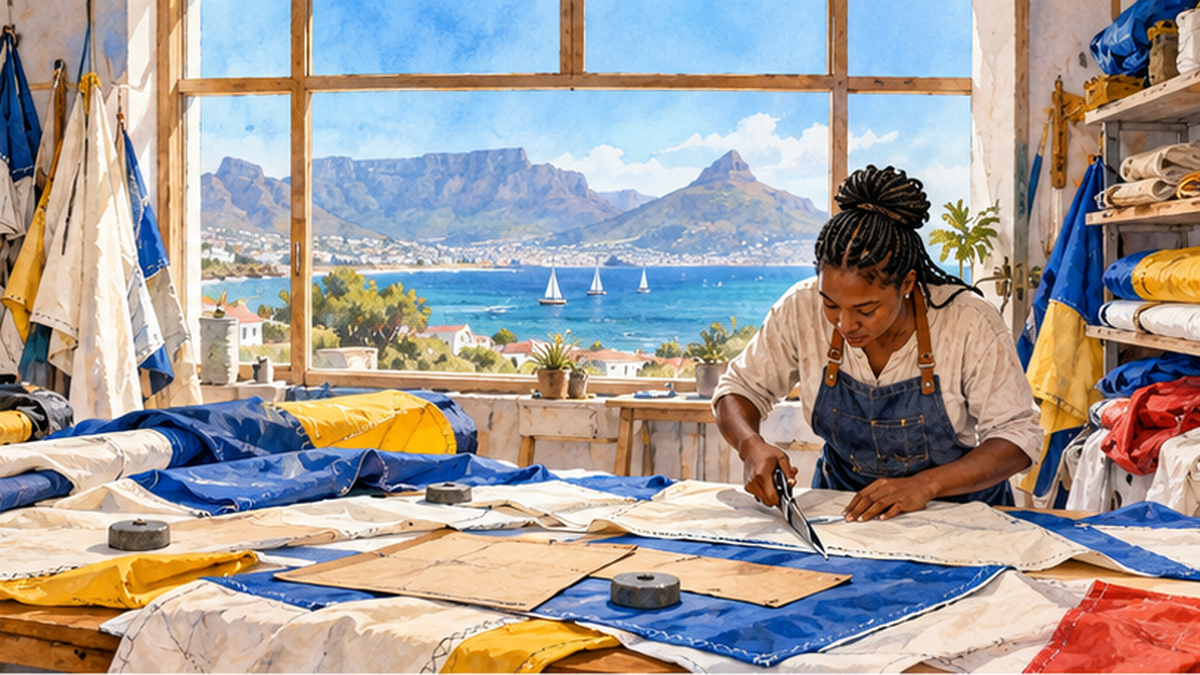
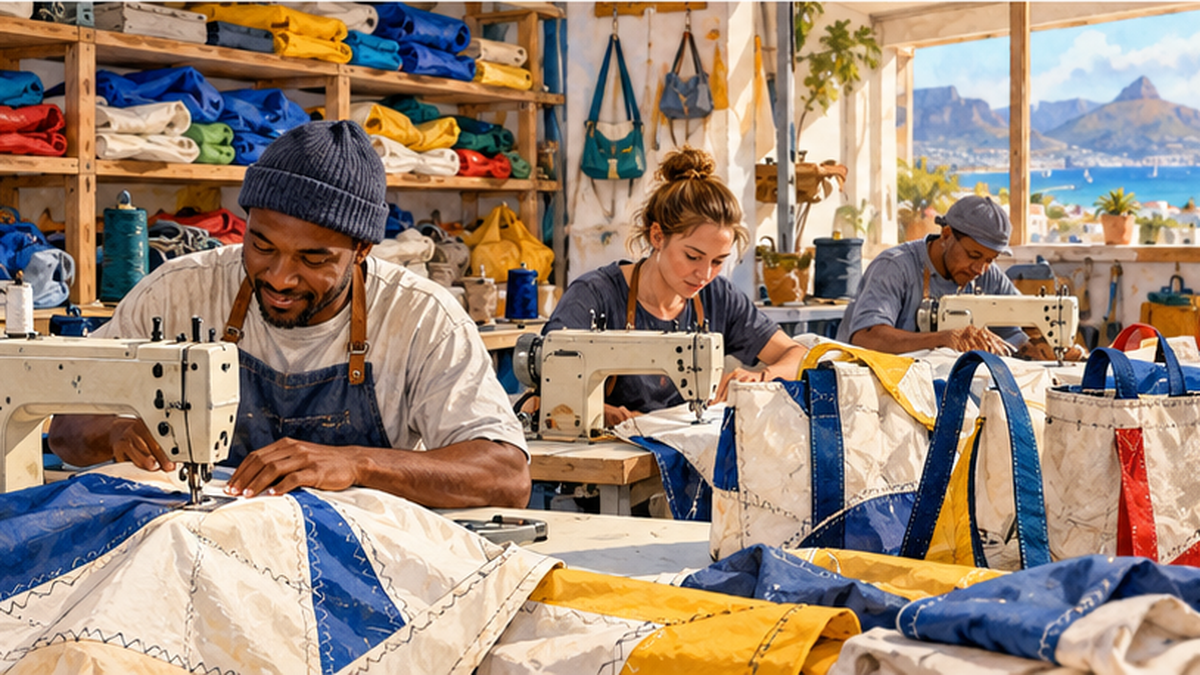
According to Cape Town Magazine, the bags are made at the company's workshop in Hout Bay, south of Cape Town. UpcycleThat describes a hand-based process: cutting-room staff choose the fabric, and a team of seamstresses assembles it in the sewing studio.
Materials are chosen one by one for colour and pattern, so no two bags of the same model look exactly alike. Design Indaba also quotes the founders saying every upcycled product is 100 per cent unique.
Repair instead of replace
Sealand gives its upcycled products a lifetime guarantee. Cape Town Magazine reports the idea “we don't believe in replacement but repair”, and damaged items can be sent in for repair. Environmentally, making products last matters as much as reusing materials.
- Cutting: fabric chosen by colour, pattern and condition
- Sewing: assembled by hand by a team of seamstresses
- Guarantee and repair: fewer replacements
Jobs and community
Green Economy Media reported that the company had 24 full-time employees at the time. Reusing waste also creates local cutting and sewing jobs.
Sail logos and seams become the design
Sails can carry sail numbers, boat logos and reinforcing seams. In a bag made from reclaimed fabric these marks become part of the design. It is not the uniformity of an industrial product, but you can imagine what the bag used to be, which helps build attachment.
What buyers should know
- Colour variation, small scuffs and creases can be characteristics of the material, not defects
- The bag you receive may differ from the one in the photo, so read the description before buying
- Fabric tends to be thick and stiff: built for durability rather than lightness
- Ask the seller before buying if anything is unclear
Column: common misunderstandings about upcycled goods
- “Made from waste” does not always mean better for the environment; using up what you already own has less impact than adding a new bag
- “Handmade” does not always mean high quality; look at the guarantee and repair system
- “Sea-related material” does not always mean “marine debris collected”
Product Line-up and How to Use It
From backpacks and totes to duffels and pouches
According to UpcycleThat and other sources, the main products include the following. Names may change over time, so check the official site for the current line-up.
| Product (example) | Type | Use |
|---|---|---|
| Dune Duffel | Duffel bag (several sizes) | Travel, gym, weekend trips |
| Jolla Backpack | Backpack | Commuting, school, day trips |
| Tommy Tote | Tote bag | Shopping, the beach |
| Toastie Pouches | Pouches (S/M/L) | Organizing small items and toiletries |
| Choob Medium | Barrel-shaped bag (sail version available) | Water sports, gym |
Cape Town Magazine adds that T-shirts, caps, face masks and surfboards are also offered. The range leans towards outdoor and seaside use, fitting its surfer founders.
Cautions when using
- Large individual variation in colour and pattern: you may not get exactly the item in the photo
- Water resistance depends on the material: unless sold as fully waterproof, contents may get wet in long heavy rain
- Care: washing differs by material and product, so follow the official care guidance
- Heavy loads: even tough fabric suffers if weight concentrates on handles and base seams
Pre-purchase checklist
- Check material, size and guarantee on the official site
- Confirm whether you can choose by photos of individual items
- Look up international shipping, customs and how to send items for repair
The Numbers: Effects and Limits
Figures the company has published
An article by Green Economy Media on the opening of a new store at Dock Road Junction, V&A Waterfront, Cape Town, gives the following figures. All are reported company-published values, and in what we could check, neither the calculation method nor third-party verification is public.
| Item | Published figure |
|---|---|
| Waste kept out of landfill | About 5 tonnes per year |
| CO2 emissions avoided | 108 tonnes per year |
| Employees | 24 full-time (at time of the article) |
| Sales growth | 25% per year on average |
| Export share | From 5% to 40% of turnover in 12 months |
How to read the numbers
Five tonnes a year is small against national waste volumes. South Africa is reported to generate about 100 million tonnes of waste a year, and media reported that 60% of landfill sites failed compliance inspections in 2023/24. One brand can only move a limited amount.
But the value of such a business is not measured by volume alone: it gives waste the value of usable material, creates jobs, and shows consumers the idea of “material saved before disposal”. Read the figures without over- or under-estimating them.
Limits and challenges
- Material supply is unstable and unsuited to mass production
- Used materials vary in quality (hence the shift to B-grade stock and offcuts)
- Environmental figures are self-reported, with little third-party verification
- Shipping abroad adds transport impact
From small workshop to overseas markets
Green Economy Media says the company sold online and through high-end retailers before opening its first own store at the V&A Waterfront. It also reports that export share rose from 5% to 40% in 12 months and that sales grow about 25% a year.
A product chosen because people want it, not only because it is eco-friendly, is a healthy example. But growing exports raise transport impact, so balancing growth and sustainability is a constant question.
Common challenges for small brands
- Sourcing waste and offcuts is hard to predict in volume and quality
- Handwork means output cannot be raised quickly
- Calculating environmental effects and getting certification costs money
- Hard to distinguish from imitations and greenwashing
As a buyer, check material, figures and guarantee yourself rather than taking claims at face value.
Connection to the Sea: Sails, Marine Plastic and Fishing-Gear Upcycling
Why introduce it from an ocean-learning view?
A yacht sail is cloth that works at sea. Turning it into a long-lasting bag is an example of cycling a material used at sea into a product used long on land. The founders' love of surfing also ties the brand's world to the sea.
But, to repeat, Sealand is not a brand that directly collects marine debris or discarded nets. To understand the link to ocean issues, compare it with nearby initiatives.
| Initiative | Main material | Link to the sea |
|---|---|---|
| Sealand Gear | Yacht sails, tents, billboards | Sails are used at sea, but collecting marine debris is not the aim |
| ECONYL (regenerated nylon) | Discarded fishing nets etc. | Recovers nets that would enter the sea |
| REMARE | Marine plastic, discarded fishing gear | Upcycles marine debris into building materials and goods |
| Patagonia NetPlus | Discarded fishing nets | Recovers nets for use in items such as cap brims |
See also What Is REMARE? Upcycled Material from Marine Debris and Patagonia NetPlus Explained.
How cloth and fibers connect to ocean problems
Textile waste is growing worldwide. UNEP and other materials put it at about 92 million tonnes a year, with only a small share regenerated into new clothing. Synthetic fibers shed microfibers when washed or worn, which can eventually reach the sea.
Using cloth longer and throwing away less may help reduce a source of microplastics. But there are few public figures showing how much a specific product helps the ocean, so avoid overestimating.
Section summary
- Sealand reuses cloth used at sea rather than collecting marine debris
- Its starting point differs from net- and marine-plastic brands
- Using cloth longer reduces waste and fiber-derived microplastics
Why Sails Finish Their Service: Thinking About a Material's Second Life
The life of a sail
A sail's performance depends on holding its shape in the wind. With use, ultraviolet light degrades the fabric and repeated tension stretches it, so the designed curve is lost. A distorted sail may look usable but is no longer suited to racing or efficient sailing. So a sail can finish its job as a sail even before it tears.
Sail materials generally include polyester woven fabrics (such as Dacron) and laminates that bond film and fibers. They are light, strong and water-repellent, so they are easy to reuse for bags and small goods. But laminates can delaminate, and not every sail can become a bag.
Picking it up before it is thrown away
Retired sails often sleep in yacht-club storerooms or corners of boats, or are disposed of as waste. They are large and heavy, and recycling systems are not well developed for them. Using sails as they are skips the breaking-down and regenerating steps while keeping the material's strength.
| Aspect | Use the sail as is (upcycling) | Break down and regenerate (recycling) |
|---|---|---|
| Energy needed | Mainly cutting and sewing, so low | Melting and spinning tend to need more |
| Material quality | Keeps original strength and weather resistance | Quality may change in regeneration |
| Scalability | Depends on fabric size and condition | Easier to scale once raw material is collected |
| Design | Each piece has character | Easier to make uniform |
Key points
- Sails often finish service before they tear
- Upcycling has a low processing load but does not scale easily
- Not every sail can become a bag
Choosing in Japan: Tips for Circular Shopping
How to buy
Cape Town Magazine says Sealand is stocked in the UK, France, New Zealand, Japan and elsewhere. Stockists change, so check the official site or shops for current information.
Five questions to test “eco-friendly”
- What is the material? Used, offcut or new
- How long will it last? Guarantee and repair
- What backs the numbers? Third-party verification or self-reported
- Do you really need it? Check what you already own
- What happens at the end? Repair, hand-down or take-back
Buying an upcycled product is not in itself good for the environment. Use up what you already have, then choose something that lasts when you need it: that is the basis of circular consumption. See also What Is the Circular Economy?.
Summary
Sealand Gear is a South African brand that hand-turns tough fabrics such as yacht sails, tents and billboards into one-of-a-kind bags. Its sourcing has shifted from used waste to B-grade stock and offcuts. It is not a brand that regenerates fishing nets or marine debris, and its environmental figures are self-reported. Read with those points in mind, it is a useful case for learning the idea of using things long and repairing them.
Article summary
- Founded in 2015, a Cape Town brand reusing sails and tents
- Materials: sails, tents, billboards, tarpaulins; no fishing gear found
- Designed to last with a lifetime guarantee and repair
- Figures are self-reported; read them neutrally
References and Sources
- Design Indaba | Sealand products are made from old stretch tents and boat sails – Founding year (2015), materials, lifetime guarantee
- Sealand Gear official blog | Where Does Our Waste Come From? – Where materials come from (used / B-grade and offcuts)
- UpcycleThat | Meet The Upcyclers: Sealand – Materials, product names, process
- Cape Town Magazine | Sealand – Hout Bay workshop, repair philosophy, stockists
- Green Economy Media | Sealand brings its upcycled outdoor gear to new V&A precinct – 5 tonnes of waste, 108 tonnes CO2, staff (company-reported)
- UNEP | The environmental costs of fast fashion – Textile waste and fashion's environmental impact
- South Africa DFFE | National Waste Management Strategy 2020 – Waste management in South Africa
- Mr Porter Journal | How South African Brand Sealand Is Crafting Outdoor Gear From Upcycled Waste – Brand profile
* Listed in order of reliability: government and academic bodies > peer-reviewed papers > specialist organizations > reliable media