⚡ The answer in 30 seconds
- A wind-assisted ship uses sails or rotors to turn wind into thrust and cut engine fuel. It does not sail on wind alone.
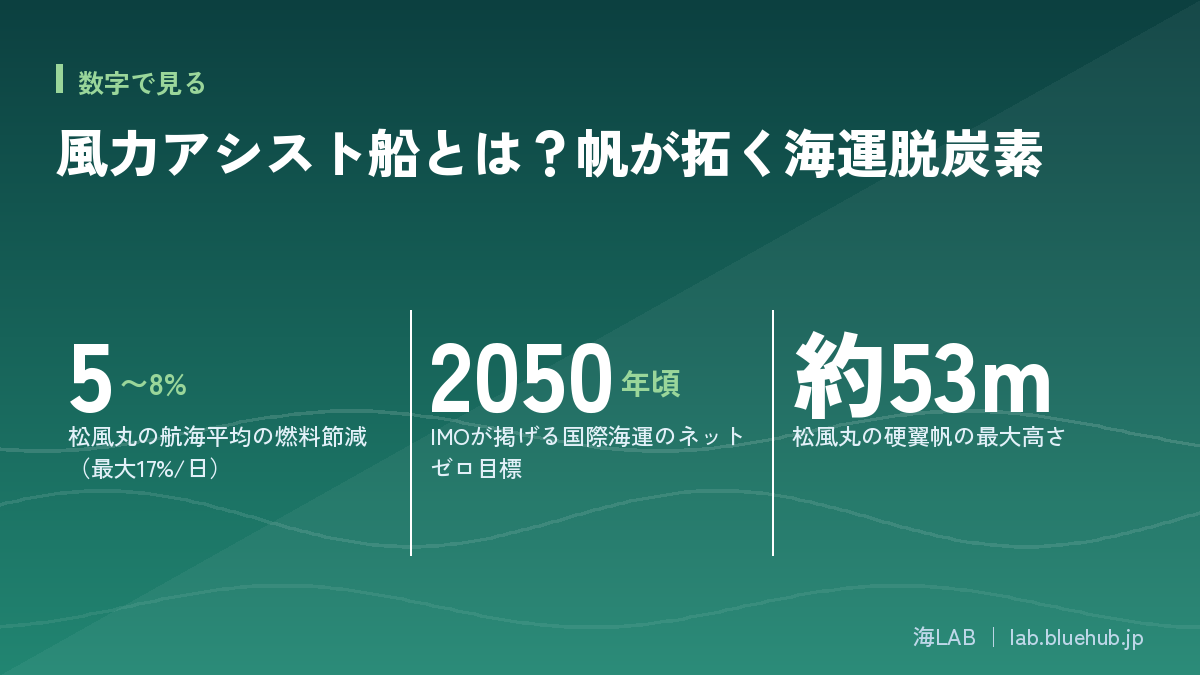
- MOL announced that Shofu Maru confirmed 5–8% average fuel savings and up to 17% on the best day.
- Types include rigid sails, rotor sails, kites and suction wings; effects vary greatly with route and ship type.
- The EU's FuelEU Maritime sets a reward factor for wind assistance, a tailwind for adoption.
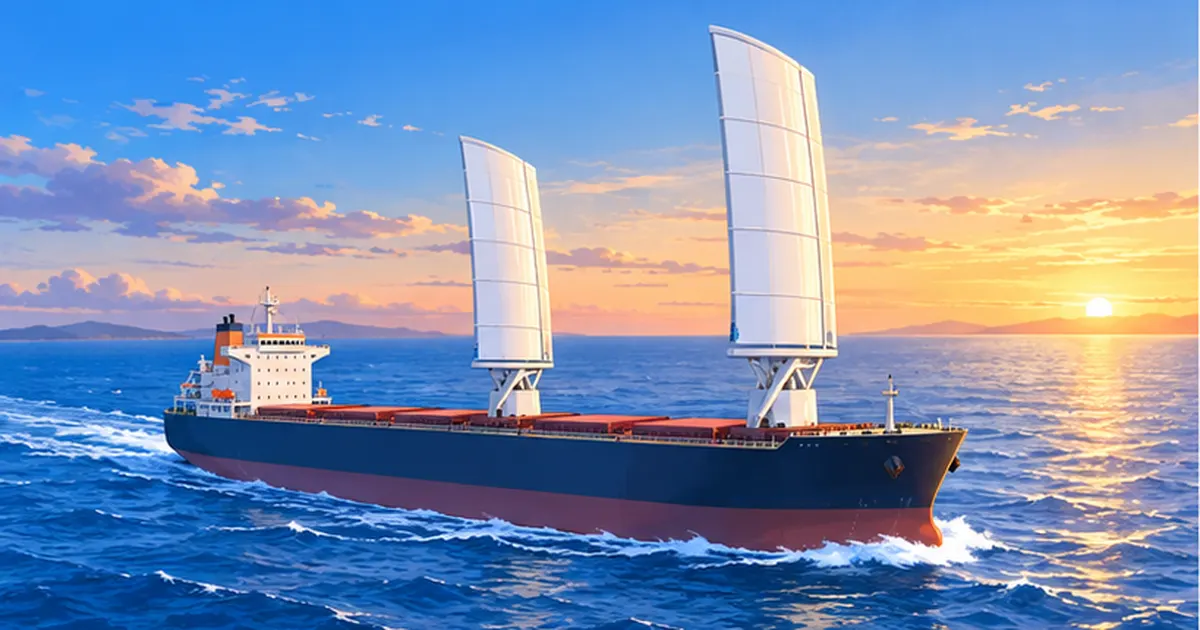
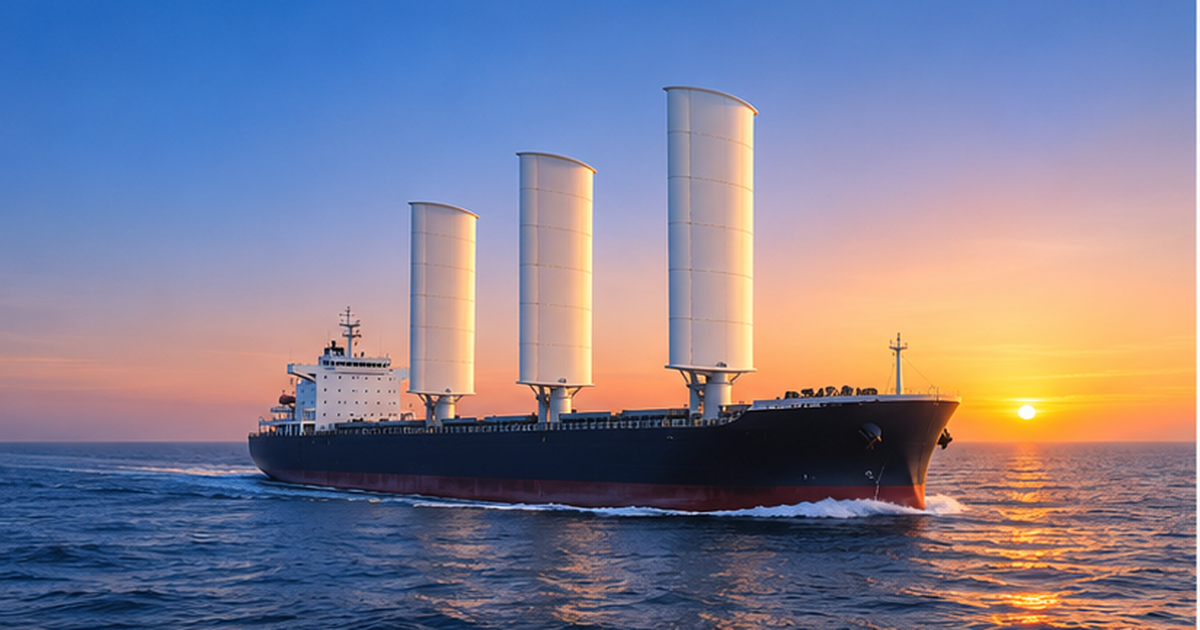
Ocean-going cargo ships that support global logistics are beginning to wear sails again. Wind-assisted ships, drawing attention as a way to cut fuel, are not a revival of old sailing ships but modern merchant ships combining advanced aerodynamics with automatic control.
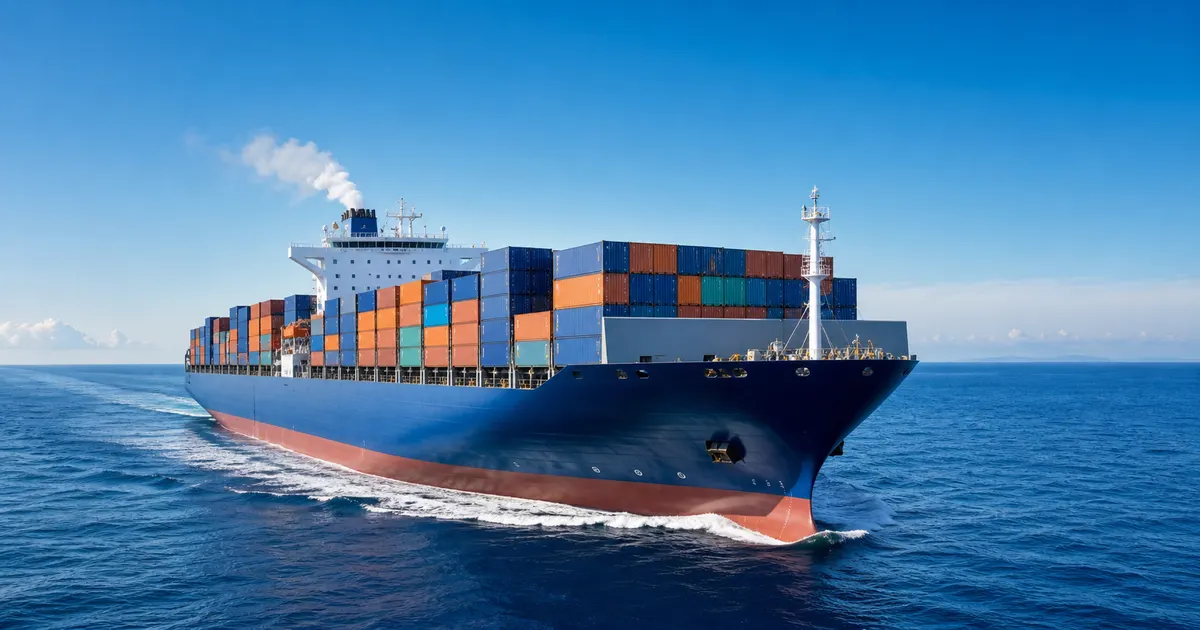
International shipping is said to account for the low single digits of global CO2 emissions, and the IMO aims for net zero by or around 2050. With next-generation fuels taking time to spread, wind is being reconsidered as a way to cut the fuel existing ships use.
This article organizes the types, Mitsui O.S.K. Lines' Shofu Maru and overseas cases, regulation and economics, and challenges, following primary sources.
What you will learn
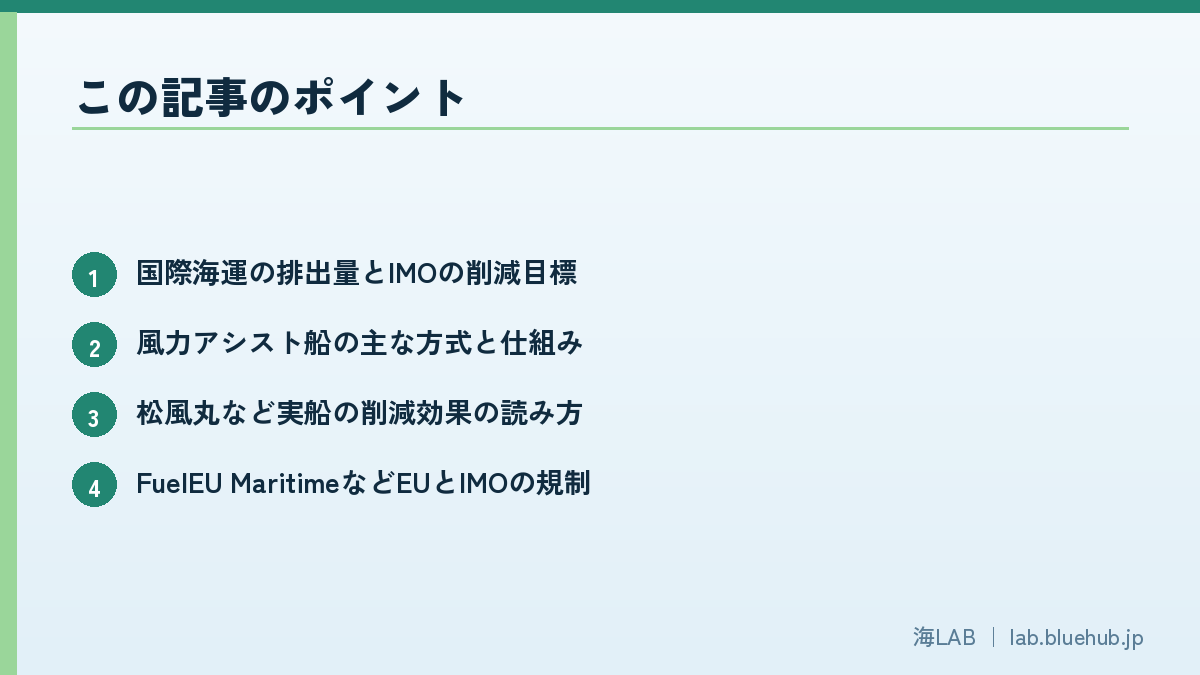
- Shipping emissions and IMO reduction targets
- Main types of wind-assisted ships and how they work
- How to read the savings of real ships such as Shofu Maru
- EU and IMO regulation including FuelEU Maritime
- Challenges and combination with other decarbonization measures
Why Sails Are Returning to Shipping Decarbonization
Emissions from international shipping and IMO targets
Ships carry most of the world's trade. According to Japan's Ministry of Land, Infrastructure, Transport and Tourism, greenhouse gases from international shipping are mostly CO2; a 2014 IMO study put 2012 emissions at about 800 million tonnes, roughly 2.2% of global CO2 emissions. The figure is old, but it shows that a large emission source sits out at sea, rarely noticed in daily life.
In July 2023 the IMO's Marine Environment Protection Committee (MEPC 80) revised the strategy for reducing greenhouse gases from international shipping. It aims for net-zero emissions by or around 2050, with indicative checkpoints of at least a 20% cut by 2030 (striving for 30%) and at least 70% by 2040 (striving for 80%), both against 2008. It also sets a target to cut carbon intensity of transport by at least 40% by 2030 compared with 2008.
- Net-zero GHG emissions by or around 2050
- 2030: at least 20% below 2008 (striving for 30%)
- 2040: at least 70% below 2008 (striving for 80%)
- By 2030, zero or near-zero emission fuels and energy should make up at least 5% (striving for 10%) of international shipping's energy
Why fuel switching alone is not enough
Next-generation fuels such as ammonia, hydrogen and methanol are promising, but supply infrastructure, fuel prices and shipbuilding lead times mean they will not spread overnight. That is why reducing the amount of fuel burned, including on existing ships, matters. The leading option is wind-assisted propulsion (WAPS), which uses the force of the wind to push the ship.
Wind is free and blows over every ocean. Because it can be used as a supplement without shutting down the engine, it helps during the transition to new fuels and saves whichever fuel is used afterward. For more on next-generation fuels, see our related article shipping decarbonization and ammonia fuel.
What Is a Wind-Assisted Ship? How It Works and Main Types
Not "wind only" but "helped by wind"
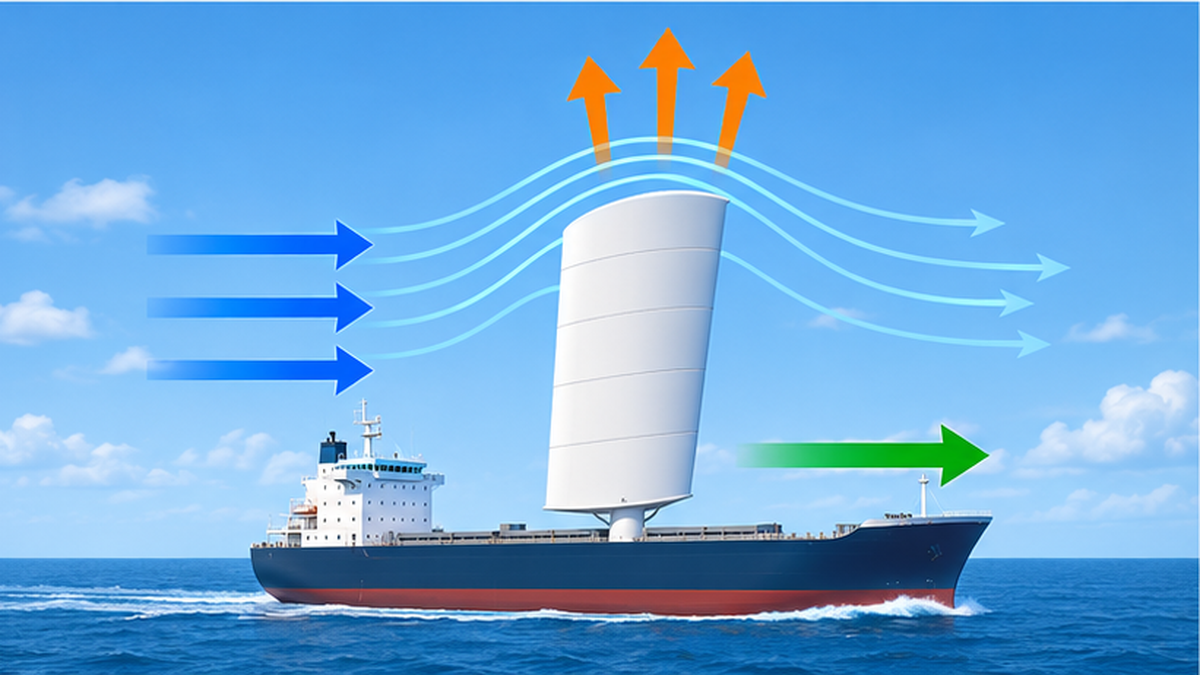
A wind-assisted ship keeps its conventional engine and propeller, but uses thrust from the wind to reduce engine load and fuel consumption. Unlike old sailing ships, it does not rely on wind alone: when wind is usable it helps, and when it is not the engine does the work. This makes it easier to adopt even for merchant ships that must keep to schedules.
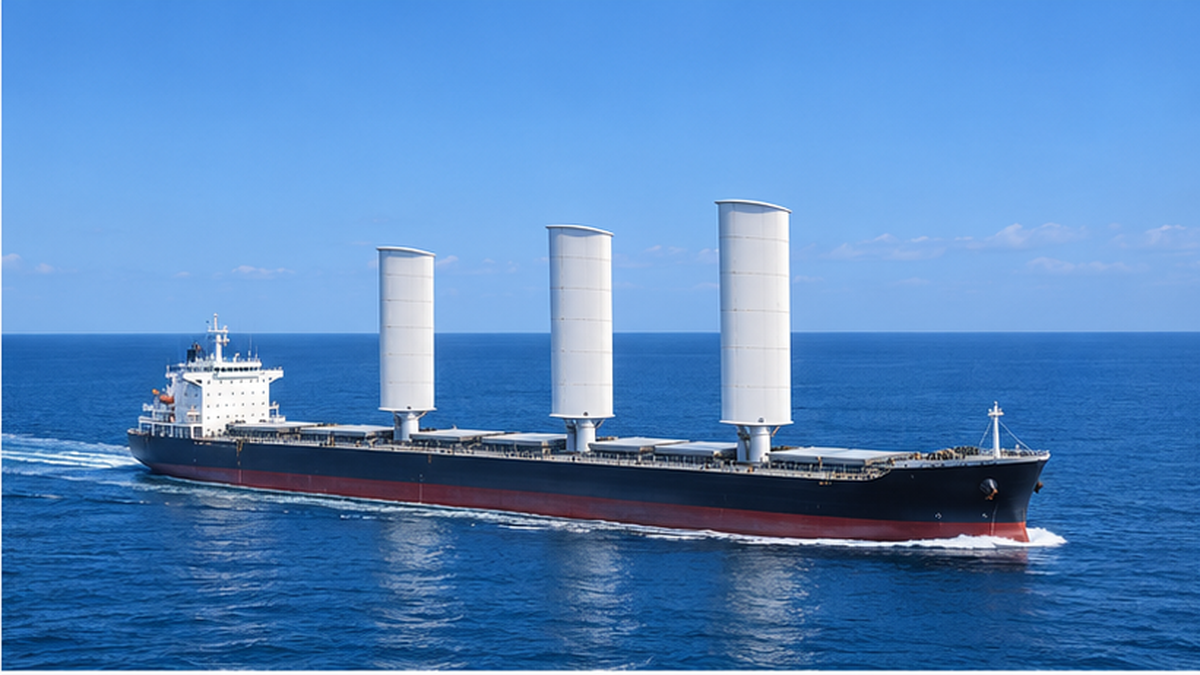
The main types are rigid wing sails, rotating cylinders (rotor sails), kites, and suction wings. Each is chosen according to ship shape, route and available deck space.
Comparison of main types
| Type | Principle | Features |
|---|---|---|
| Rigid wing sail | Generates lift from wind, like an airplane wing | Automatically controlled direction and height. Examples: Mitsui O.S.K. Lines' Wind Challenger, BAR Technologies' WindWings |
| Rotor sail | A spinning cylinder produces thrust through the Magnus effect | Relatively compact and easy to retrofit. Offered by Norsepower, Anemoi and others |
| Kite | A large kite flown high catches stronger wind | Installed at the bow, using wind at altitude |
| Suction wing | Draws air through the wing surface to increase lift | Can be kept low, suitable for ships passing under bridges |
The roots of the rotor sail
The rotor sail is based on the Flettner rotor, devised in the 1920s by German engineer Anton Flettner. Wind hitting a rotating cylinder deflects the flow and creates a sideways force, known as the Magnus effect. It long stayed outside the mainstream of merchant shipping, but rising fuel prices and environmental regulation have led to a fresh look in recent years.
Key points
- Wind assistance means "cutting fuel with wind", not "sailing on wind alone"
- Sails, rotors, kites and suction wings exist, chosen to suit the ship and route
- Some types can be retrofitted to existing ships
Japan's Rigid Sail: Mitsui O.S.K. Lines' Wind Challenger
The world's first equipped ship, Shofu Maru
In Japan, Mitsui O.S.K. Lines (MOL) has developed the Wind Challenger, a telescoping rigid-sail wind propulsion device. The huge sail is made of composites such as glass fiber reinforced plastic (GFRP), and sensors detect wind direction and speed to control its direction, extension and rotation automatically.
The first ship in the world fitted with it is the coal carrier Shofu Maru, completed in October 2022. The sail reaches a maximum height of about 53 meters. In strong wind or when entering port, the sail can be shortened for safe operation.
Fuel savings confirmed on actual voyages
In May 2024, MOL announced that on actual Shofu Maru voyages it confirmed fuel savings of up to 17% on a single day in good conditions, and 5 to 8% on average over voyages. Reports cite about 5% on average on the Japan–Australia route and about 8% on the Japan–North America west coast route.
| Route | Fuel saving | Note |
|---|---|---|
| Japan–Australia | About 5% (average) | Voyage average |
| Japan–North America west coast | About 8% (average) | North Pacific route with good winds |
| Best-condition day | Up to 17% per day | A maximum, not an average |
Read the numbers carefully
- "Up to 17%" is the value on the best day, not the average of the whole voyage.
- Results vary greatly with route, season, wind and ship type.
Future deployment plans
MOL is reported to plan wind-propulsion ships numbering 25 by 2030 and around 80 by 2035. It will not spread through one shipping company alone; shipyards, cargo owners and ports must cooperate, so accumulating a track record is key.
Global Front Line: Rotor Sails and Wing Sails in Service
Cargill's Pyxis Ocean
Overseas, the Kamsarmax bulk carrier Pyxis Ocean, chartered by grain giant Cargill, was fitted with two BAR Technologies WindWings (37.5 meters high) and began sailing in August 2023. In results published in March 2024 after about six months, savings of about 3 tonnes of fuel per day (about 14%) were reported, within 10% of the prior simulation and verified by DNV. In optimal conditions, savings of over 11 tonnes per day were reported.
These are, however, announcements by the companies involved, and results change with ship type, route and season.
Rotor sail results
On the TR Lady, fitted with three Anemoi rotor sails, Lloyd's Register confirmed the calculation method, and the average net propulsion fuel and emission saving was 9.1%, close to the predicted 10%. Anemoi also fitted five rotor sails on the 400,000-dwt very large ore carrier Sohar Max, chartered by the resource major Vale. Norsepower rotor sails have also been used on MOL's Camellia Dream, among others.
Scale of adoption
According to the International Windship Association (IWSA), the number of large merchant ships fitted or prepared for wind propulsion grew from dozens to around 100 in early 2025, with many more on order. Because reports differ in timing, please check IWSA's latest publications. Tankers and bulk carriers lead.
| Case | Type | Reported effect |
|---|---|---|
| Shofu Maru (MOL) | Rigid wing sail | 5–8% voyage average, up to 17% per day |
| Pyxis Ocean (Cargill) | 2 wing sails | About 14% (about 3 t/day), more in good conditions |
| TR Lady (Anemoi) | 3 rotor sails | Net 9.1% (method confirmed by LR) |
A quick note
- Most figures come from shipowners and manufacturers. Checking whether a third party verified a value makes comparison easier.
Regulation and Economics: Why Adoption Is Growing Now
The EU's FuelEU Maritime
From 2025 the EU's FuelEU Maritime applies, requiring a gradual cut in the greenhouse gas intensity of energy used on ships. Ships using wind assistance receive a reward factor depending on the share of propulsion provided by wind, helping them comply. The reward grows with wind's contribution and is described in some sources as equivalent to up to about a 5% cut in GHG intensity. For the exact formula, see the annex of EU Regulation (EU) 2023/1805.
Treatment under IMO rules
Internationally, how to evaluate wind assistance under IMO rules is under discussion. In 2024, France, Comoros, the Solomon Islands and the International Windship Association argued that the current framework does not fully reflect the benefits of wind assistance and proposed including it in emission calculations, as the EU system does.
Thinking about cost
Installing sails requires investment, but fuel costs during operation can be cut. A report by the environmental NGO Seas At Risk suggests that retrofitting sails could save close to half a million US dollars a year in fuel and cut fuel use and CO2 emissions by up to 12%. As this is an estimate by an advocacy group, results vary greatly by conditions.
- The higher the fuel price, the better the economics of sails
- Carbon pricing such as carbon taxes and emissions trading makes sails more attractive
- Newbuilds can integrate sails in design, but retrofits face limits on placement
Challenges: Safety, Ports and Operations
Deck space and port facilities
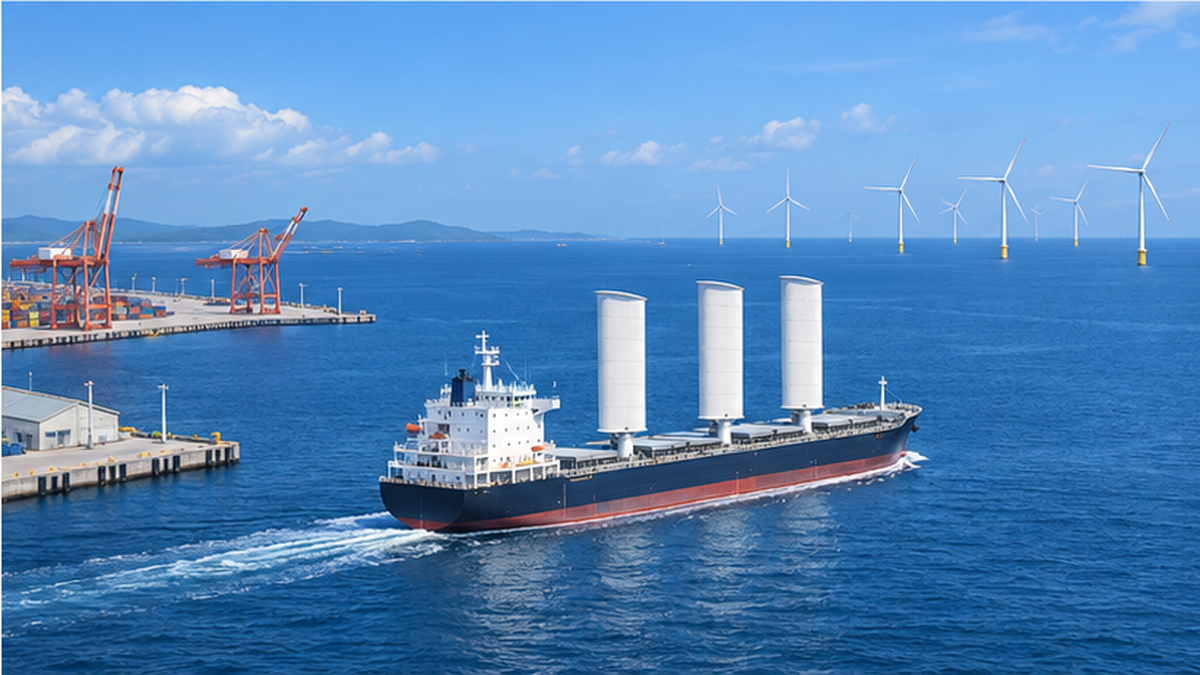
Sails and rotors put tall structures on the ship. On bulk carriers they can interfere with cargo cranes and hatch openings, and routes under bridges impose height limits. Positioning relative to port cranes and mooring in strong wind also need attention, so designs that can shorten or lower the sail are valued.
Effect depends on wind
The effect is larger on routes with steady tailwinds and crosswinds. The westerlies of the North Pacific and Atlantic and the trade wind belts are favorable, while calm areas reduce the effect. Weather and sea-state forecasts built into route planning, and routing that uses wind well, are therefore essential.
People and reliability
New equipment also raises issues of crew training, maintenance and backup in case of failure. For technologies with a short track record, how shipowners, insurers and cargo owners assess risk shapes adoption decisions. Third-party verification and publication of operating data are key to building trust.
Checklist when adopting
- What saving can be expected for the winds on the route?
- Are there conflicts with cranes, cargo holds or bridge heights?
- Can the sail be stowed in strong wind and operated safely by the crew?
Combining with Other Decarbonization Measures
Together with fuel switching and efficiency
Wind assistance is not a stand-alone way to decarbonize shipping; it is one item on a full menu that also includes fuel switching, improved hull forms, slow steaming, hull cleaning and air lubrication. Even when ammonia or hydrogen ships spread, using less fuel cuts both fuel cost and the supply needed.
Links with ports and renewable energy
Ports are also moving ahead with shore power for ships at berth and hubs for receiving hydrogen and ammonia. See also our articles hydrogen and port decarbonization and offshore wind power in Japan. On land and at sea, wind is becoming a leading player in decarbonization.
Credits and policy
Schemes such as the J-Blue Credit market turn ocean CO2 uptake and emission cuts into value. Shipping emission cuts and blue carbon are two wheels for reducing CO2 in the ocean.
Outlook and What We Can Do
Outlook toward the 2030s
IWSA projections suggest around 10,000 wind-assisted ships worldwide by 2030 and up to 40,000 by 2050, but this is a forecast by an advocacy body, and actual uptake depends on regulatory direction, fuel prices and shipbuilding and installation capacity. Coordination on the IMO net-zero framework also continues among countries, so developments need to be watched.
Japan's strengths
Japan has strengths in shipbuilding, shipping, materials and weather forecasting. In March 2020 the Ministry of Land, Infrastructure, Transport and Tourism presented a roadmap for zero-emission ships, aiming at commercial operation of zero-emission ships by 2028. Home-grown technologies such as the rigid sail could raise Japan's presence as a shipping nation.
What we can do in daily life
- Most imported goods arrive by ship. Take an interest in how they were transported
- Choose companies and products that work on low-impact logistics
- Follow ocean environment news and talk about it with family and friends
Consumer interest nudges shipping decarbonization through the choices of cargo owners and shipping companies. Wind-powered ships are also a doorway to thinking about the links between the ocean and the Earth.
Summary
- Wind-assisted ships use sails or rotors to turn wind into thrust and cut fuel
- Real ships report savings from a few percent to over ten percent on average, varying by type and route
- Regulation, fuel prices and accumulated track records are the keys, and the effect works best alongside fuel switching
References
- IMO|2023 IMO Strategy on Reduction of GHG Emissions from Ships – Strategy to reduce GHG from international shipping (2023)
- IMO|IMO's work to cut GHG emissions from ships – IMO's efforts to cut shipping GHG emissions
- MLIT (Japan) | Maritime GHG zero-emission roadmap – Japan's zero-emission ship roadmap
- MLIT (Japan) | Trends in IMO GHG reduction measures – Reduction measures for international shipping
- Norimono News | Up to 17% fuel savings: the 'counterattack of sailing ships' – Wind Challenger and Shofu Maru results
- Cargill / Business Wire|Maiden voyage outcome of world's first wind-powered ocean vessel – Pyxis Ocean trial results (March 2024)
- Seas At Risk|Wind propulsion key to cut costs and carbon in shipping – Report on cost and reduction effects of wind propulsion
- Ship & Bunker|Wind-Powered Fleet Tops 70 Ships (IWSA) – Spread of wind-propelled ships
- Bound4Blue|FuelEU Maritime compliance with wind – Explanation of the FuelEU wind reward factor
Listed in order of reliability: government and academic bodies > peer-reviewed papers > specialist bodies > reliable media