⚡ The answer in 30 seconds
- Clothing recycling lags because of blended fabrics, sorting costs, and immature collection systems; in Japanese statistics very little returns to clothing.
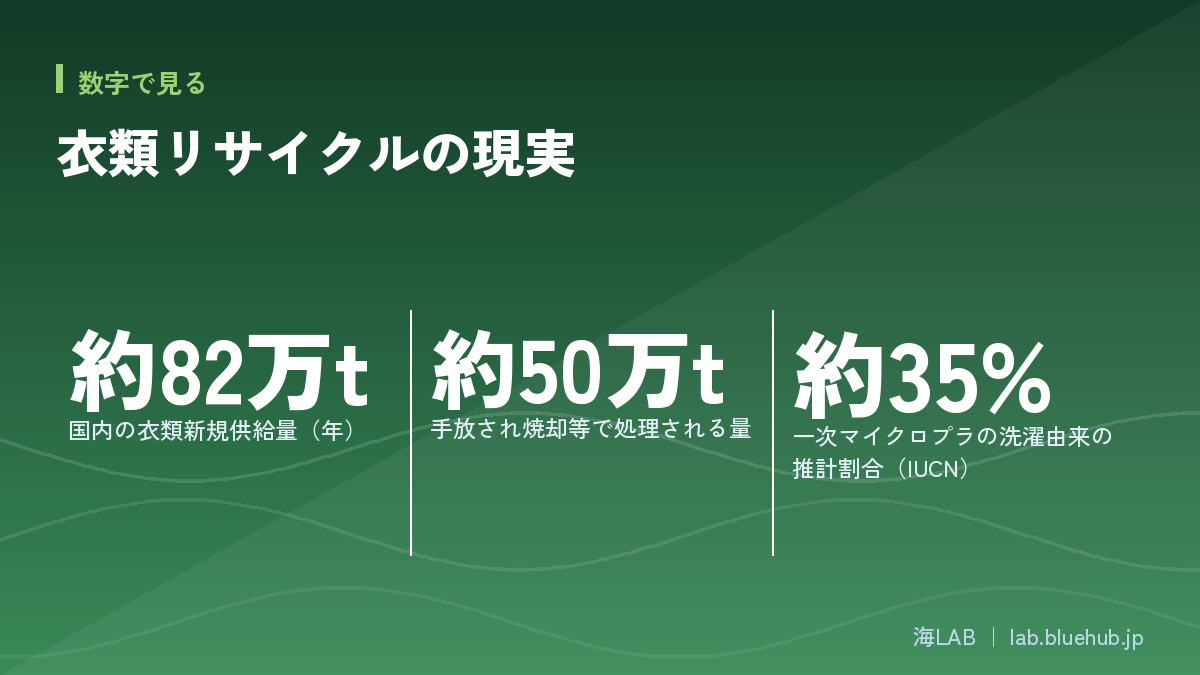
- The Ministry of the Environment estimates that of about 820,000 t of domestic supply, about 500,000 t are discarded and incinerated or similarly treated.
- Fiber fragments from washing synthetic textiles are a leading source of primary microplastics reaching the sea (about 35% by IUCN estimate).
- Wearing clothes longer, washing smartly, and prioritizing reuse reduce both waste and outflow to the sea.
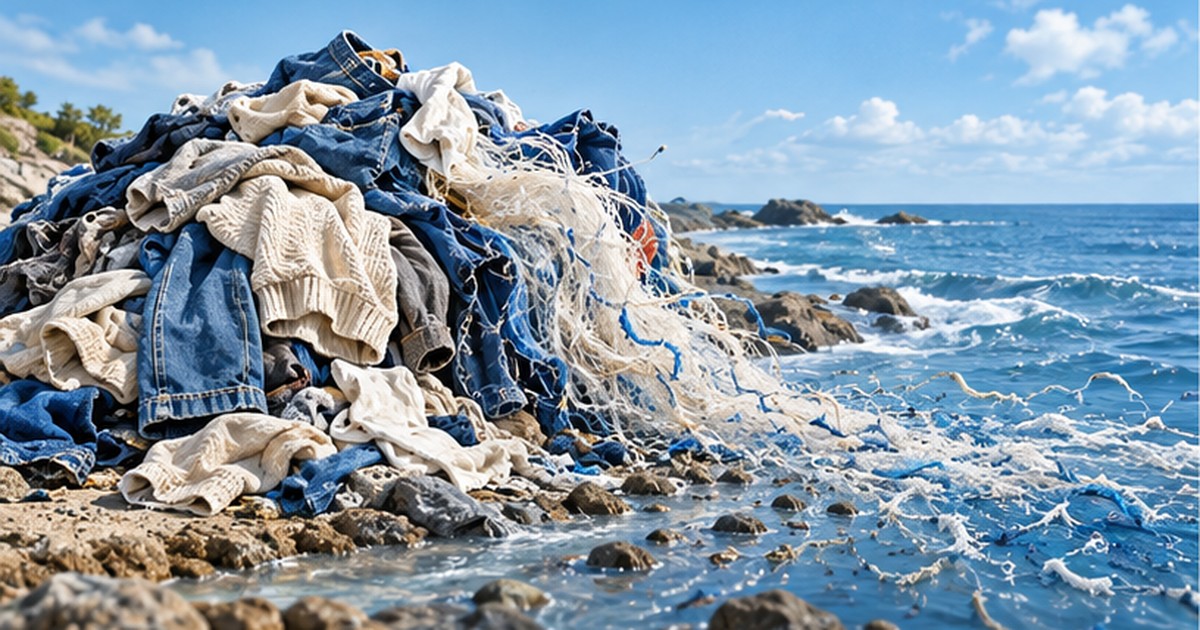
Where do the huge amounts of clothing discarded every year end up? The Ministry of the Environment's latest estimate says about 500,000 tonnes—roughly 60% of domestic supply—are incinerated or similarly treated.
And the problem is not only about throwing clothes away. Invisible fiber fragments shed every time synthetic garments are washed may reach the sea through sewers and rivers.
This article uses public data to outline the current state and challenges of clothing recycling, regeneration technologies, and microfiber countermeasures.
What you will learn in this article
- How much clothing Japan discards, and where it goes
- The environmental burden of fast fashion
- Why clothing recycling is difficult (blended fabrics, cost)
- The frontier of regeneration technologies such as fiber-to-fiber
- How microfibers from laundry reach the sea, and what households can do
- Developments in EU and Japanese policy
How much clothing is discarded every year?
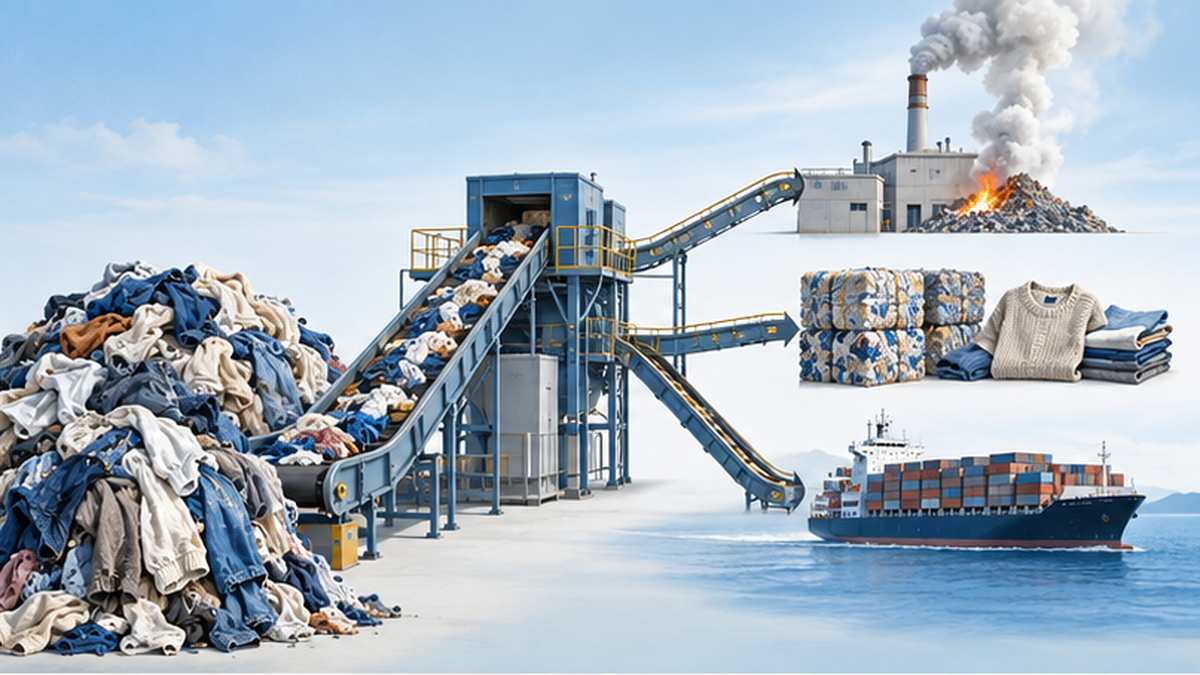
A shirt that has gone out of fashion, a dress worn only a few times, clothes left unworn at the back of the closet. For many people, letting go of clothes is a small everyday event. Yet added up across Japan, the volume far exceeds what we imagine. According to the Ministry of the Environment's “2025 Clothing Material Flow” (March 2026), new clothing supplied in Japan amounts to about 820,000 tonnes per year; of that, roughly 60%, or about 500,000 tonnes is estimated to be released from businesses and households and then processed by incineration and the like.
Dividing 500,000 tonnes by the population gives roughly 4 kg per person per year. Note that “discarded” does not equal “turned into waste.” The figure includes clothing passed to the next owner as second-hand items, and clothing diverted to other uses as wiping cloths (industrial rags) or recycled batting (fibers returned to a raw state). Even so, the amount that is worn again as clothing in Japan is limited, and most is burned or landfilled.
We also need to look at the “invisible volume” of clothing. In the flow chart, some garments stay for a while in stock or as “dormant” items (left unused in drawers) with retailers, households, and businesses. The Ministry's document notes that clothing put into these actors is stocked for some time before being discharged, so inputs and outputs in the estimated year do not match. In other words, this year's waste includes clothes bought in the past, and this year's purchases become future waste.
Businesses' side matters too. Unsold or out-of-season goods disposed of as inventory are hard for consumers to see, so the issue is less visible. In the Ministry's flow, inventory disposal from businesses appears as a small number, but the volume itself is said to be hard to grasp.
Following Japan's clothing flow in numbers
Reading the flow chart in the same document reveals where discarded clothing goes. Roughly, about 450,000 tonnes go to incineration, landfill, and thermal recovery; about 60,000 tonnes to material recycling such as wiping cloths and recycled batting; about 10,000 tonnes to domestic reuse; and about 100,000 tonnes are exported overseas as used clothing. Meanwhile, chemical recycling—decomposing fibers chemically to make thread again—is “almost zero” in nationwide statistics (totals may not add up because of rounding).
| Destination | Approx. volume (2025 flow) | Main contents |
|---|---|---|
| Incineration, landfill, thermal recovery | approx. 450,000 t | Burnable waste, business waste, etc. |
| Material recycling | approx. 60,000 t | Wiping cloths and recycled batting (fibers turned into other products) |
| Domestic reuse | approx. 10,000 t | Second-hand shops, flea markets, hand-me-downs, etc. |
| Exported overseas as used clothing | approx. 100,000 t | Sorted and sold in overseas markets |
| Chemical recycling | Almost 0 | Technology that chemically decomposes and returns material to fiber |
The government's reduction target
The government is not standing idle. The Fifth Fundamental Plan for Establishing a Sound Material-Cycle Society, approved by the Cabinet in August 2024, set a goal of cutting by 25% (versus FY2020) the clothing discarded from households by FY2030. However, published materials report that progress toward the target is still small, and achieving it will be difficult unless consumers, businesses, and municipalities move together.
So why does the volume of “discarded clothing” not fall easily? The biggest reason is that clothing is consumed more as a “fashion item” than as a “consumable.” It is often let go because of changing moods and trends before it wears out, so large amounts of good-condition clothing drop out of circulation. These are exactly the garments that deserve to be passed to the next person through reuse.
Exported used clothing is also essential to understanding the whole picture. While second-hand clothes unsold in Japan circulate in overseas markets, it has been pointed out that the inflow of large amounts of low-quality used clothing burdens receiving countries with waste. We need an international perspective so that domestic “recycling” and “reuse” do not simply move waste elsewhere on a global scale.
Key points of this section
- Domestic clothing supply is about 820,000 t a year; most of the roughly 500,000 t discarded is incinerated or landfilled
- Chemical recycling that returns material to clothing is almost zero in statistics
- There is a national target of a 25% reduction by FY2030 compared with FY2020
The environmental burden created by fast fashion
Behind rising clothing waste lies the spread of the business model known as fast fashion: supplying clothes that follow the latest trends quickly, cheaply, and in large volumes. It lets consumers enjoy fashion affordably, but it also encourages the “it's cheap, so I discard it soon” habit and has pushed up both production and waste.
Greenhouse gases and water
The United Nations Environment Programme (UNEP) says the fashion industry accounts for 2–8% of global greenhouse gas emissions (the wide range reflects differences in scope and method). Growing cotton uses large amounts of water and pesticides, and wastewater from dyeing and finishing is an issue. Synthetic fibers such as polyester are made from petroleum, so besides energy use in production, they do not readily decompose after use.
Note too that figures differ by country and region. The 2–8% range cited by UNEP changes with the scope of calculation (whether it covers everything from raw-material cultivation to disposal), national electricity emission factors, and the year of statistics used. When quoting numbers, confirm that they are “estimates” and check the source year.
The warning: “one garbage truck every second”
The Ellen MacArthur Foundation's 2017 report “A New Textiles Economy” drew wide attention by pointing out that the equivalent of one garbage truck of textiles is landfilled or incinerated every second worldwide and that the share of used clothing recycled into new clothing is less than 1% The report also estimates that hundreds of billions of dollars of material value in clothing are lost each year. The figures are dated and may differ from today's situation, but the report is still widely cited as a document showing the structure of the problem.
| Perspective | The problem | Background |
|---|---|---|
| Production | Heavy use of water, energy, and pesticides | Cotton growing, dyeing and finishing processes |
| Distribution | Overproduction beyond demand forecasts and inventory disposal | Short-cycle product launches |
| Consumption | Discarded after only a few wears | Low prices, changing trends |
| Disposal | Mostly incinerated or landfilled; very little becomes clothing again | Composite materials and the difficulty of sorting |
It is worth noting that fast fashion itself need not be rejected outright. Affordable prices have widened opportunities for many people to enjoy fashion. The essence of the problem lies less in “buying” than in “discarding after a short time with few outlets afterward.” Companies, too, are changing the model by offering durable quality, repair services, and collection and regeneration schemes.
Looking at Japanese consumers, various surveys point out that many households hold unworn or rarely worn clothing. Even if a purchase is driven by “it's cheap” or “it's on sale,” a garment with few chances to be worn ends up with a higher environmental burden per wear. That is why wearing clothes longer is the easiest and most effective environmental measure.
As a consumer, small questions at the time of purchase make a difference: “Do I already have something similar?” “Will I still want to wear it in three months?” “Can I keep it in a condition to pass on when I let it go?” Keeping these three in mind alone greatly changes a garment's lifespan.
- Simply increasing the number of wears lowers the environmental burden per garment
- It is worth considering “cheapness” together with “can it be used for a long time”
- Waste is a problem of design, production, and distribution, not only of consumers
Why is clothing recycling so hard?
While “bottle-to-bottle” circulation for PET bottles is already in practical use, clothing is not so simple. The main reason is the complexity of materials.
The biggest barrier: blended fabrics
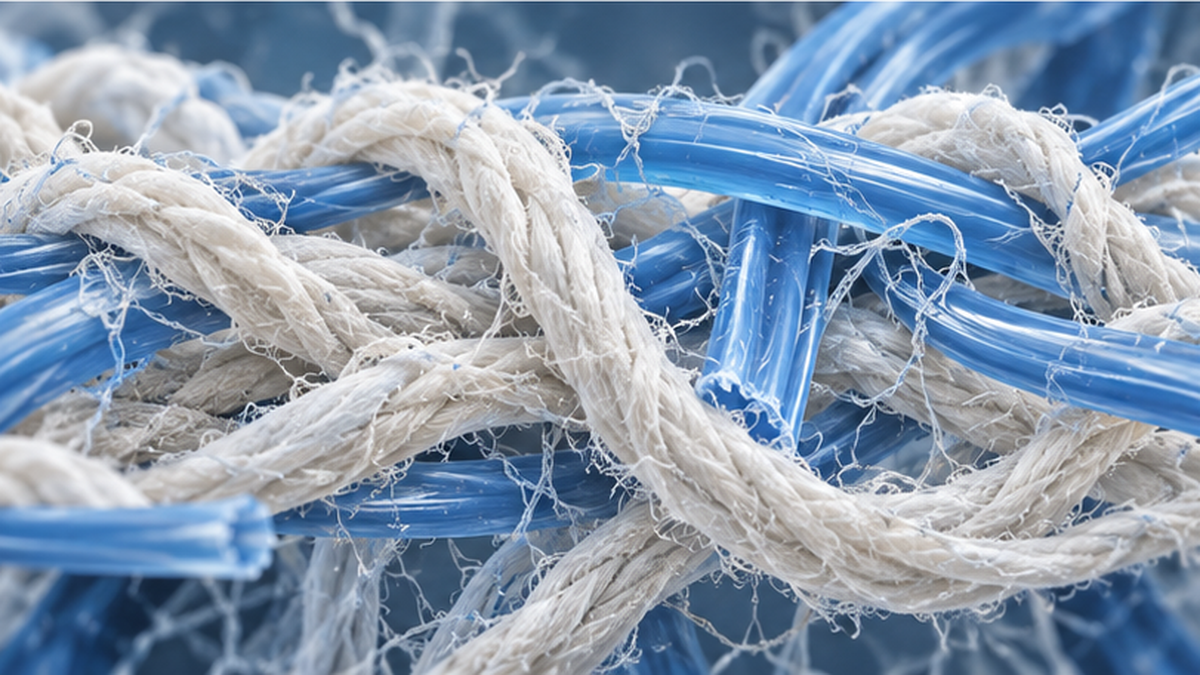
Many garments are blends of cotton and polyester. They excel in feel, wrinkle resistance, and price, but at the recycling stage a technology to cleanly separate the two fibers is required. Buttons, zippers, prints, sewing thread, and linings are also made of various materials. Removing them by hand and sorting by material takes time and cost.
There are other circumstances on the ground in Japan. For example, municipal resource collection commonly has rules such as “clothing wet from rain cannot be collected” and “heavily soiled items go in burnable waste.” This is because dirt or moisture can degrade other clothing and make it unusable. Following the rules is the first step in preserving the value of collected clothing.
Creating outlets for regenerated material is also a challenge. If demand for products made from recycled batting or recycled yarn is unstable, the chain from collection to regeneration cannot be sustained. “Coordination across the entire supply chain,” designing collection, regeneration, productization, and sales as one, is seen as the key going forward.
Quality degradation and cost
Mechanical recycling (“hanmo”) shreds fabric back into a cotton-like batting, but the fibers become short, so returning them to yarn for high-quality clothing is not easy. As a result, “cascade use” in other applications—wiping cloths, insulation, car interiors—is the main route. There is also the economic problem that recycled material is hard to make pay when virgin (new) raw material is cheaper.
Collection systems are not yet in place
Another issue is that “used clothes,” “recycling raw material,” and “waste” get mixed at the collection stage. Clothing that is dirty, wet, or moldy is unsuitable for reuse. Municipal and in-store collection are spreading, but if regeneration plants that receive the clothing lack capacity, the collected clothes have nowhere to go.
A common misunderstanding
- It is not necessarily true that “all clothes put in a collection box are reborn as new clothes”
- Many are exported as used clothing or diverted to uses such as wiping cloths and solid fuel
From fiber to fiber: the frontier of regeneration technology
Clothing recycling faces many challenges, but technology is advancing. The keyword is “fiber-to-fiber”: a cycle that makes fibers for clothing again from used clothing.
Chemical recycling
Technology that chemically breaks polyester down to its raw materials and then makes yarn of the same quality as new is moving toward practical use. In Japan, Teijin, JEPLAN, and others have pursued collection and regeneration. JEPLAN's “BRING” is a system that regenerates polyester from collected clothing, and we introduce it in detail in JEPLAN's “BRING”: how used clothes return to thread as well.
A major advantage of chemical recycling is that material quality is easier to maintain. Polyester can reportedly reach quality close to virgin material if it is decomposed to the molecular level, impurities removed, and repolymerized. Natural fibers such as cotton, on the other hand, are still at the stage of research on dissolving cellulose to make regenerated fiber, and scaling up to practical size is expected to take time.
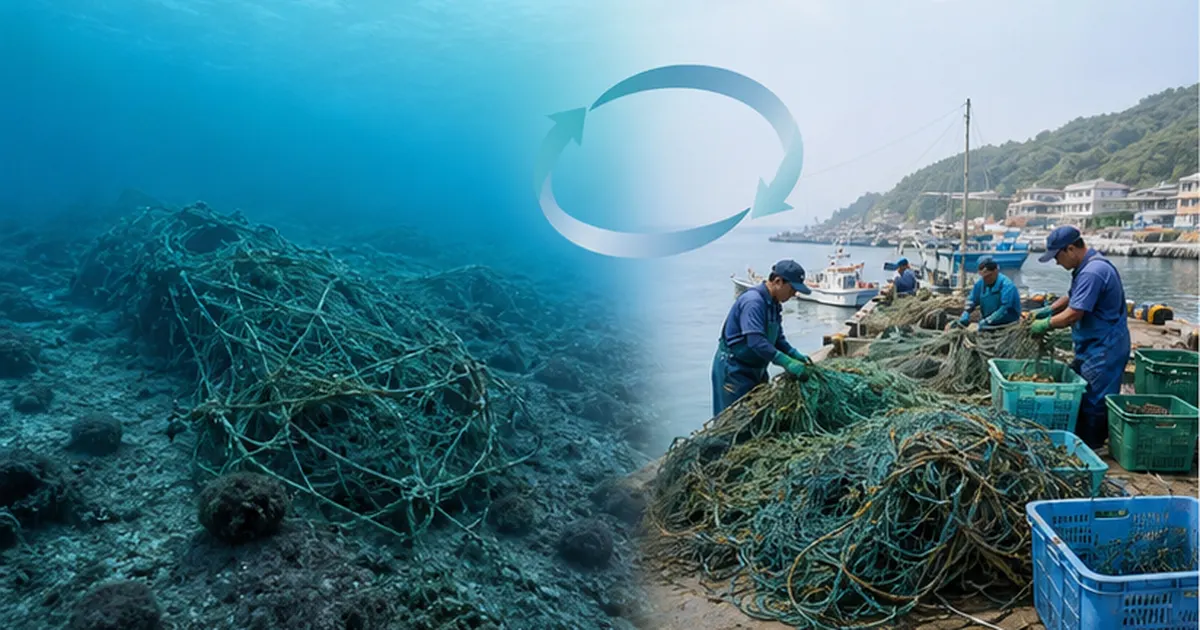
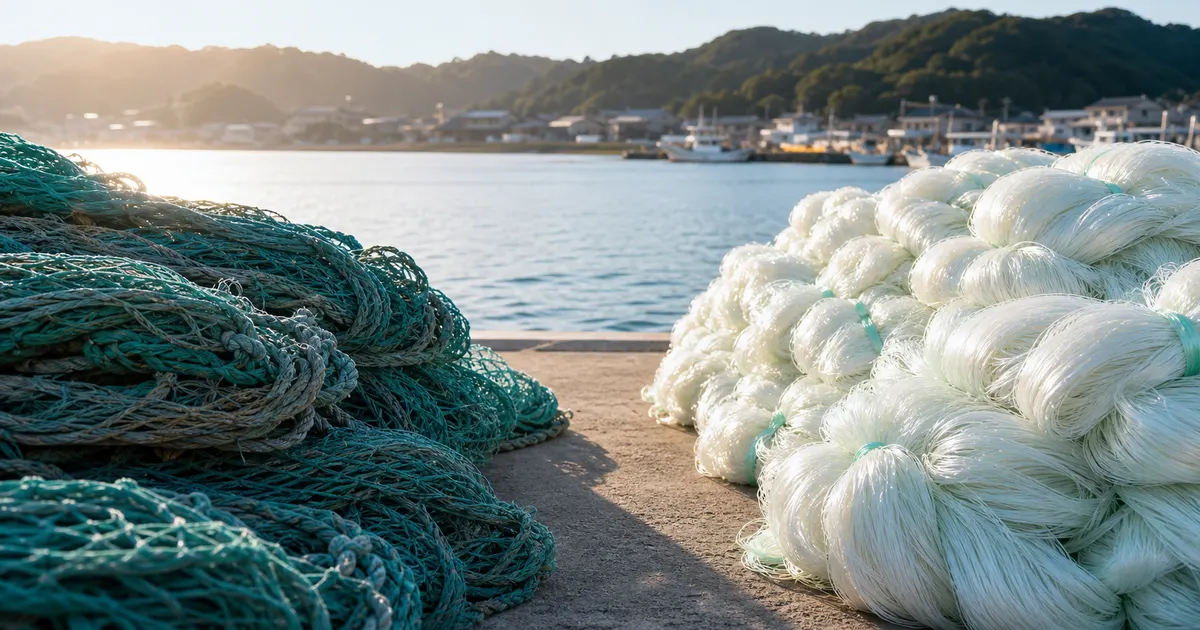
This recycling also matters for the sea. As fibers are recycled, not only do incineration and landfill decrease, but so does clothing that might leak outdoors as litter. Efforts to turn marine-derived waste such as fishing nets into clothing materials are also spreading. For details, see The Complete Guide to Used Fishing Net Recycling.
Changing it from material design
“Design-stage ingenuity” to make clothing easier to recycle is also important. Using a single material (mono-material), sewing so that garments are easy to take apart, and reducing accessories such as zippers can greatly reduce the work in later processes. Clothing made with recycled polyester is now seen in familiar stores, such as MUJI's recycled polyester: how the cycle works at everyday stores.
| Method | Mechanism | Suitable uses | Challenges |
|---|---|---|---|
| Material (recycled batting / wiping cloths) | Mechanically loosen fabric into batting or cloth pieces | Insulation, sound-absorbing material, industrial wiping cloths | Fibers are short; hard to return to high-quality clothing |
| Chemical | Decompose fibers to the molecular level and repolymerize | Yarn and clothing equal to new | Capital investment, sorting accuracy, energy |
| Thermal recovery | Use combustion heat as energy | When no other option exists | Lost as a material |
Note
- Much recycled polyester comes from PET bottles, so it is important to distinguish it from “clothes-to-clothes” circulation
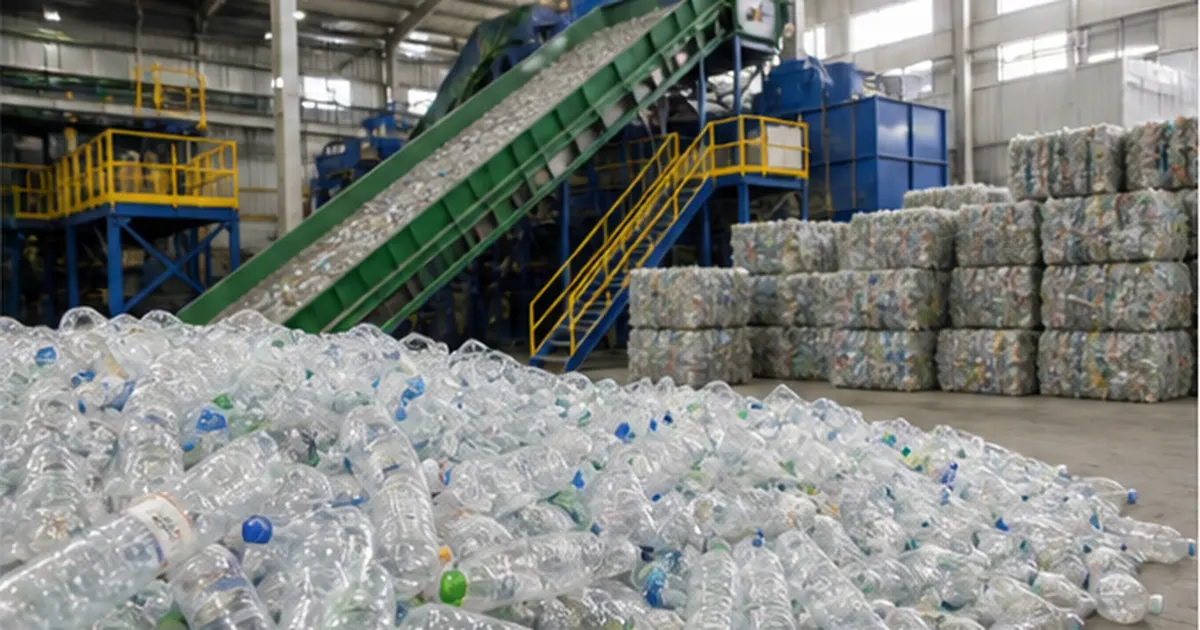
- PET-bottle-derived material is a convenient form of recycling, but it is different from the technology that completes the clothing-side loop
Fibers flowing to the sea from laundry: the microfiber problem
So far we have talked about “throwing away,” but clothing's environmental problems also arise at the “wearing and washing” stage. Garments made of synthetic fibers such as polyester, nylon, and acrylic release extremely fine fiber fragments (microfibers) into wastewater with every wash.
“Primary microplastics” reaching the sea
A 2017 report by the International Union for Conservation of Nature (IUCN) (Boucher and Friot) estimated that, among primary microplastics (plastics that enter the environment already in microscopic form) flowing into the sea, washing synthetic textiles could be the largest source at about 35% Note that this 35% is not “all microplastics in the ocean” but “a breakdown of sources of primary microplastics.” Other estimates give a smaller contribution in Europe, so the numbers have a range.
How many fiber fragments are shed is reported to differ greatly by garment type. Fleece that easily becomes fuzzy, heavily worn clothing, and washing with the strong currents of an old machine are said to shed more, and some studies report more shedding in the first washes of new garments. However, measurement methods and washing conditions are not uniform, so figures from different studies cannot simply be compared.
Another point is that fine fibers have been found in unexpected places such as the air, snow, and the deep sea. Among microplastics, fibrous ones are reported to be detected often. How fibrous particles move through the environment and how much they affect organisms is still being studied worldwide. For deep-sea pollution, see The Reality of Deep-Sea Litter for reference.
What slips through wastewater treatment
At wastewater treatment plants, most fiber fragments are removed as sludge, but some go to rivers and the sea with treated water. If the removed sludge is used on farmland, fibers also move into the soil. These pathways connect to the issue of Plastic Waste Flowing from Rivers to the Sea as well. For how washing works and what households can do, see What Are Microfibers Released by Laundry? for details.
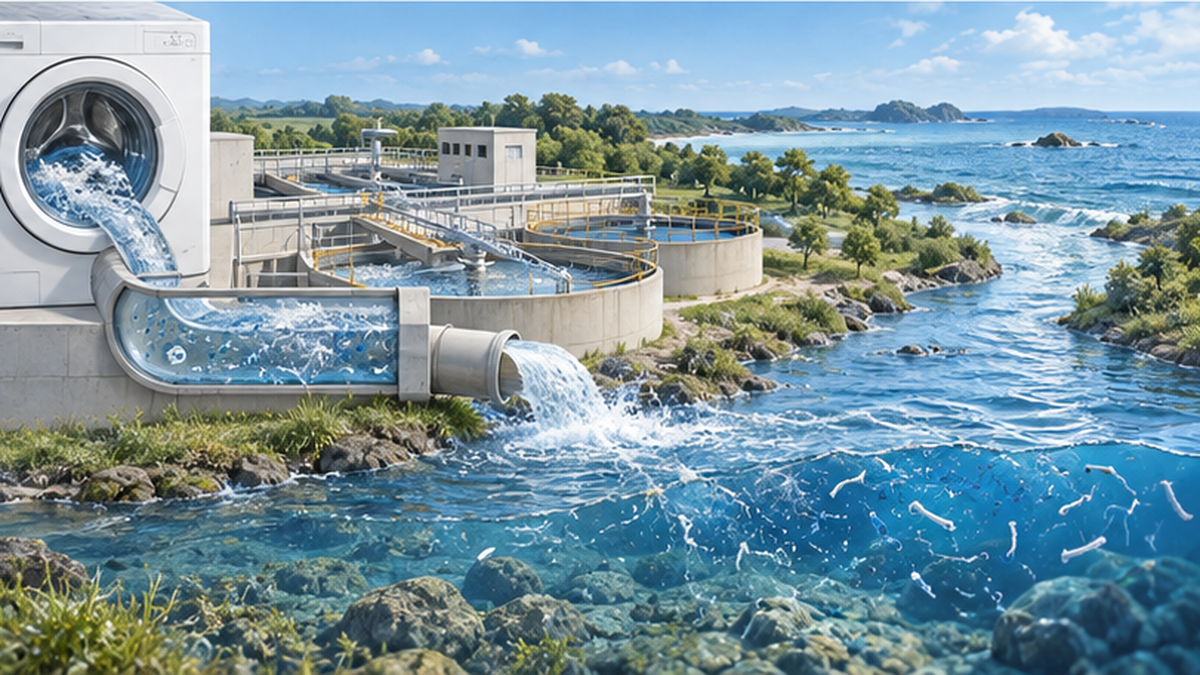
In our daily lives, there are almost no days when synthetic-fiber clothing does not go into the washing machine. So rather than fretting over whether a number is big or small, it is realistic to tackle the issue from two sides: “not letting fibers out” and “catching what comes out.” In addition to individual actions, multiple approaches are needed, such as advanced wastewater treatment, washing machine and filter technology, and fibers designed not to shed.
Effects on marine life
- Experiments have confirmed that small organisms such as plankton and shellfish take in fine fibers
- Long-term effects on ecosystems and the human body are still being studied, and evaluations have not yet settled in some areas
Microfiber countermeasures at home
It is hard to bring fiber fragments from laundry to zero, but multiple studies show that household measures can reduce releases. Numbers differ by study, but the direction is common.
- Use a laundry net: reduces friction and tends to curb fiber loss
- Review how often you wash: do not wash lightly soiled clothes every time
- Do not overstuff, wash appropriate loads: reduces rubbing between garments
- Choose lower water temperatures and shorter cycles: less damage to fibers
- Handle easily fuzzing materials such as fleece with particular care
- Use commercially available filters or laundry bags: some products claim to capture fibers, but performance varies by product
As for laundry nets, fine-mesh ones are said to curb fiber loss more easily, but if the net itself is made of synthetic fiber, it may shed fibers too. The basic idea of “washing less often and in smaller loads” is more reliable and costs nothing, compared with “what to use.”
Pay a little attention to how you dispose of fiber fragments collected from laundry. If you flush the lint from filters or bags down the drain, the effort of collecting it is wasted. Treat it as burnable waste. Some washing machine makers, municipalities, and academic institutions are also considering building filters into machines as standard, and discussion has begun about reducing outflow through equipment and systems rather than leaving it to households.
Change how you buy
Material choice is also a countermeasure. Natural fibers (cotton, linen, wool) are not categorically better, but wearing synthetic clothing “long and with care” reduces both waste and fiber release. A good habit is to ask yourself before buying, “How many times will I wear it?” and “How will I care for it?”
Three things you can do from today
- Use a laundry net and review how often you wash
- Before throwing away clothes you no longer wear, look into reuse and collection options
- Choose new clothes by asking, “Will I wear this 10 times or more?”
By material: cotton, polyester, wool, nylon
The environmental burden of clothing and its ease of recycling differ greatly by material. Here we outline the features and challenges of four representative fibers. Rather than simply deciding that “natural means eco-friendly” or “synthetic means bad,” knowing each one's strengths and weaknesses leads to smarter choices.
Cotton
Cotton feels good on the skin, absorbs moisture well, and is a natural fiber used worldwide. Growing it, however, uses a lot of water and, in some regions, pesticides. After use it biodegrades, so it may not persist in the sea as long as synthetic fibers, but that changes if dyes or finishing agents are attached. In recycling it is often diverted to wiping cloths or insulation as recycled batting; the fibers become short, so returning them to high-quality yarn is said to be difficult.
Polyester
Polyester is a petroleum-derived synthetic fiber that is strong, wrinkle-resistant, and quick-drying, so it is widely used in all kinds of clothing. It is said to hold one of the largest shares of world fiber production, making it unavoidable in any discussion of environmental problems. It suits chemical recycling and is a leading candidate for “fiber-to-fiber,” but overcoming the effects of blends and dyes remains a challenge. Fiber fragments shed in washing are a problem of synthetic fibers in general.
Wool
Wool excels at warmth and durability, and with care can be worn for years. Used woolen fabrics have long been reused as raw material for recycled batting, so it has a high affinity with material recycling. However, land use and greenhouse gas (methane) issues related to sheep farming are also debated, so wearing it “for a long time” is the premise.
Nylon
Nylon excels in strength and suppleness and is used in sportswear, stockings, and outdoor goods. It is closely linked to the sea: efforts to make recycled nylon from discarded fishing nets are well known. The flow in which yarn regenerated from fishing nets becomes clothing and bags is a good example of linking marine litter reduction with clothing circulation.
| Material | Main strengths | Environmental challenges | Direction for regeneration |
|---|---|---|---|
| Cotton | Moisture absorption, feel | Water and pesticide use | Recycled batting; research on regenerated cellulose |
| Polyester | Strong, light, quick-drying | Petroleum-derived; fiber fragments in washing | Fiber-to-fiber through chemical recycling |
| Wool | Warmth, durability | Environmental burden of sheep farming | Long history of reuse as recycled batting |
| Nylon | Strength, suppleness | Petroleum-derived; fiber fragments | Regeneration from discarded fishing nets, etc. |
What comparing materials shows is that the size of environmental burden is not decided by a single indicator. Evaluation changes depending on which stage you weigh—cultivation, production, use, disposal, or regeneration. That is why judging a garment by “how many times can I wear it” and “is there an outlet when I let it go” is the most realistic criterion.
Tips for reading material labels
- From the composition label (e.g., 60% cotton, 40% polyester) you can tell whether a garment is a blend
- Garments closer to a single material tend to be easier to recycle in the future
Global trends: EU textile rules and Japan's efforts
In 2022 the European Union published its “Strategy for Sustainable and Circular Textiles,” setting a direction that by 2030 textile products on the market should be durable, easy to repair and recycle, contain recycled fiber, and be free of hazardous substances. In addition, under the revised Waste Framework Directive, member states are required to separately collect textiles from January 2025
A notable aspect of the EU's moves is the attempt to extend the idea of “extended producer responsibility (EPR)” to textiles. It is a scheme in which businesses selling a product also bear the cost of collection and treatment after use, motivating them to make “easy-to-recycle products” from the design stage. In Japan, voluntary collection by businesses is spreading, but how costs are shared and whether to institutionalize it remain issues for the future.
Developments in Japan
In Japan, too, the Ministry of Economy, Trade and Industry and the Ministry of the Environment have set up forums to consider shifting the textile industry toward circularity. The Ministry of the Environment shares information on “sustainable fashion” and is considering measures that promote reuse, recycling, and long-term use under the goal of a 25% reduction versus FY2020. Companies are also building collection schemes, adopting recycled materials, and expanding repair services.
To follow domestic trends, we recommend checking government documents and council minutes directly. Systems are updated quickly, and this article reflects information at the time of writing. Please check the latest policies and statistics in publications from the Ministry of the Environment and the Ministry of Economy, Trade and Industry.
Summary
- Clothing disposal in Japan is on the order of 500,000 t a year, and the share that returns to clothing is very small
- Microfibers from laundry contribute to plastic pollution of the sea
- The cycle turns only when policy, technology, and consumer behavior come together
What we can do: a cycle of wearing, letting go, and choosing
The clothing problem will not be solved by placing responsibility on consumers alone, nor by leaving it only to companies and policy. What matters is each party doing what it can and building on it.
Wear: use it for a long time
The most effective step is to wear the clothes you already have for longer. Repairs, tailoring, and ways of washing greatly extend life. The more times each garment is worn, the more new production and waste are reduced.
Let go: prioritize reuse
Clothes in good condition should basically be passed to the next owner through flea-market apps, second-hand shops, hand-me-downs, or donations. Use recycling collection as a destination for clothes that can no longer be worn. Checking the business's explanation of what the collected items are regenerated into is also a useful guide.
Choose: look at materials and makers
At the time of purchase, check the use of recycled materials, availability of repair services, and material labels. Looking beyond price to “can I wear it long” and “is there an outlet when I let it go” becomes a force that moves the whole market toward circularity. Protecting the sea starts with how we live with our clothes. If you are interested in the health effects of microplastics, see Health Effects and Risks of Microplastics on the Human Body as well.
Small actions add up to great power. For example, local repair cafés, clothing swaps, and flea markets are familiar ways to reduce waste. Holding clothing collection and swap events at schools or workplaces, or combining them with local beach cleanups to turn them into environmental learning, are other ideas.
Summary checklist
- Know what is in your closet and avoid duplicate purchases
- Make laundry nets, low temperatures, and right-sized loads a habit
- Before letting go, consider reuse, collection, and repair in that order
References and sources
- Ministry of the Environment, FY2025 survey on promoting circular fashion, “2025 Clothing Material Flow”– Estimates of domestic clothing supply, discards, and destinations
- Ministry of the Environment: Sustainable Fashion– Policy and information on circular use of clothing
- Ellen MacArthur Foundation: A New Textiles Economy– 2017 report on textile waste and recycling rates
- IUCN: Primary microplastics in the oceans– Estimates of sources of primary microplastics entering the ocean (2017)
- UNEP: Fashion's tiny hidden secret– Environmental burden of the fashion industry and microfibers
- European Commission: Textiles– EU textile strategy and mandatory separate collection
- Ministry of Economy, Trade and Industry: council materials on the textile industry– Discussion on shifting the textile industry toward circularity
- JEPLAN– Efforts in collecting and regenerating clothing
* Listed in order of reliability: government agencies and academic institutions > peer-reviewed papers > specialist organizations > reliable media