⚡ In short
PHBH, the biodegradable polymer used in convenience-store iced coffee straws, is one of the rare materials that microorganisms can break down into water and carbon dioxide even in seawater. This article verifies the mechanism, the international certification, and the scientific evidence from JAMSTEC's deep-sea experiments — along with its limits — using primary sources.
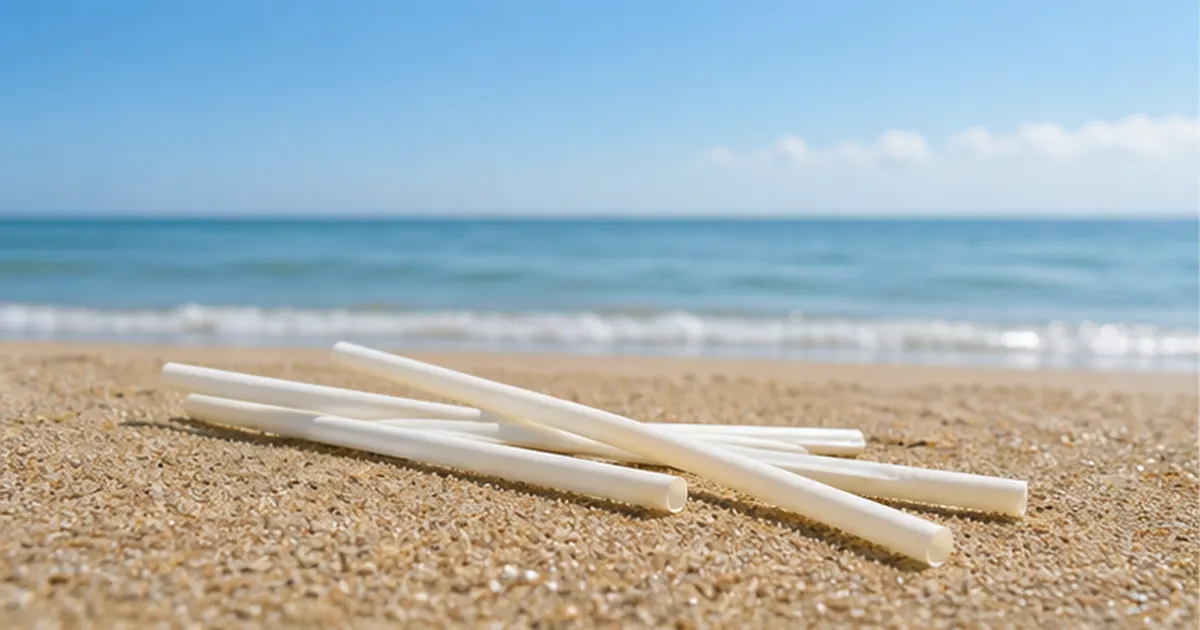
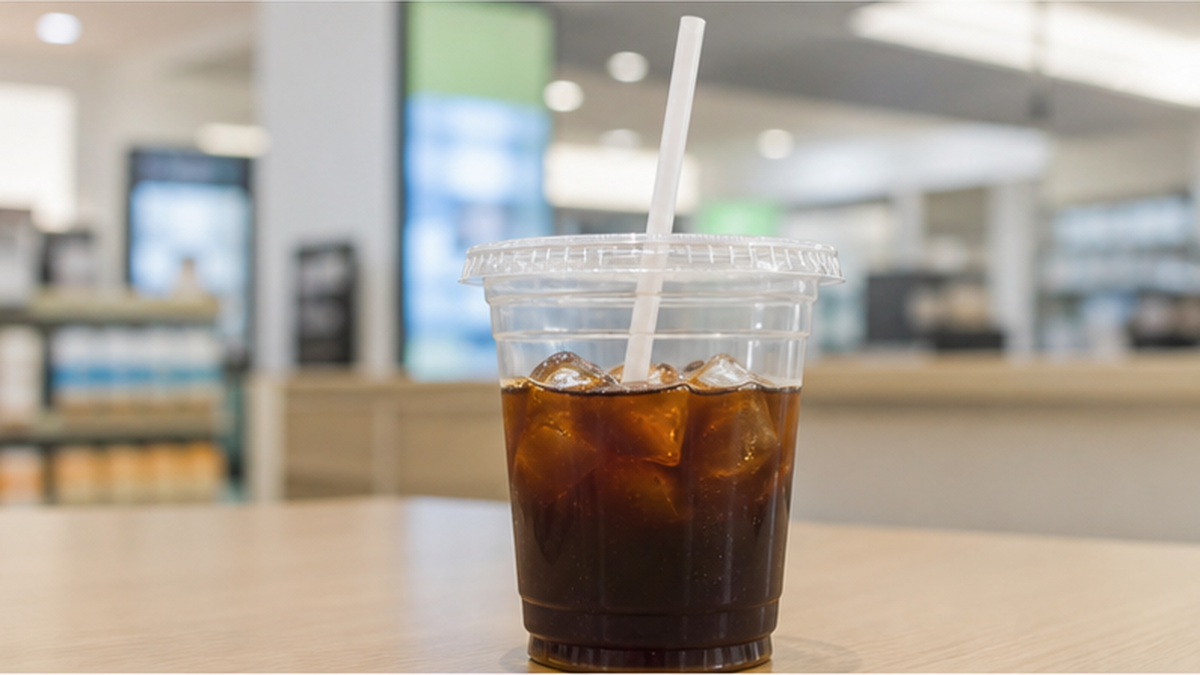
What if the straw in your iced coffee cup was actually designed to dissolve in seawater through the action of microorganisms and ultimately return to water and carbon dioxide? Some of the straws used at Seven-Eleven's "Seven Cafe" are made from PHBH, a biodegradable polymer independently developed by Kaneka.
The term "biodegradable plastic" has become common in recent years, but polylactic acid (PLA), which makes up the majority of such products on the market, has a weakness: it only breaks down in industrial composting facilities at 50°C or higher, and barely degrades in seawater at ambient temperature. In other words, a "biodegradable" label alone does not tell you whether a product will actually break down if it ends up in the ocean.
This article examines why PHBH — one of the rare exceptions — degrades in seawater, organizing the scientific evidence from primary sources such as international certification and JAMSTEC's deep-sea experiments, while also verifying the limits of biodegradable materials and how to think about them correctly.
What you'll learn in this article
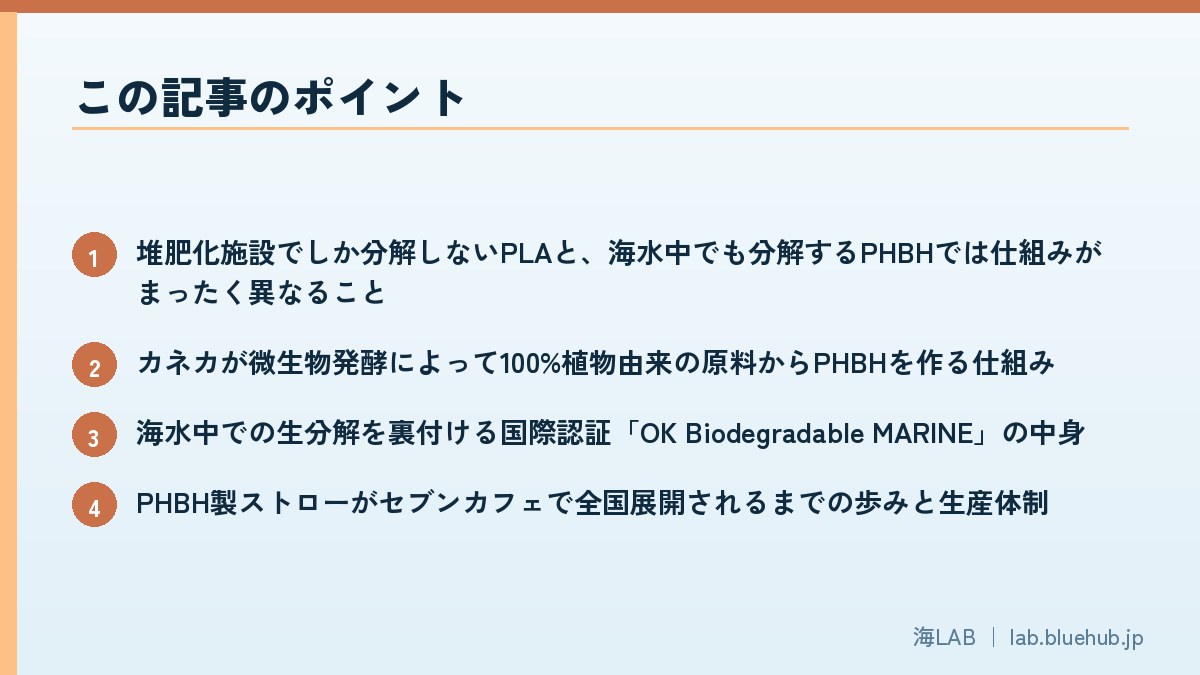
- Why PLA, which only degrades in composting facilities, and PHBH, which also degrades in seawater, work on completely different mechanisms
- How Kaneka produces PHBH from 100% plant-derived raw materials through microbial fermentation
- What the international certification "OK Biodegradable MARINE," which backs up seawater biodegradability, actually involves
- The history and production system behind PHBH straws being rolled out nationwide at Seven Cafe
- How joint research by JAMSTEC and other Japanese institutions proved that biodegradable plastics also break down in the deep sea
- Why biodegradable materials are not a free pass to litter
How much plastic waste is currently flowing into the ocean worldwide?
To understand what a biodegradable straw really means, it helps to first grasp the scale of the ocean plastic waste problem.
Where the "8 million tons a year" estimate comes from
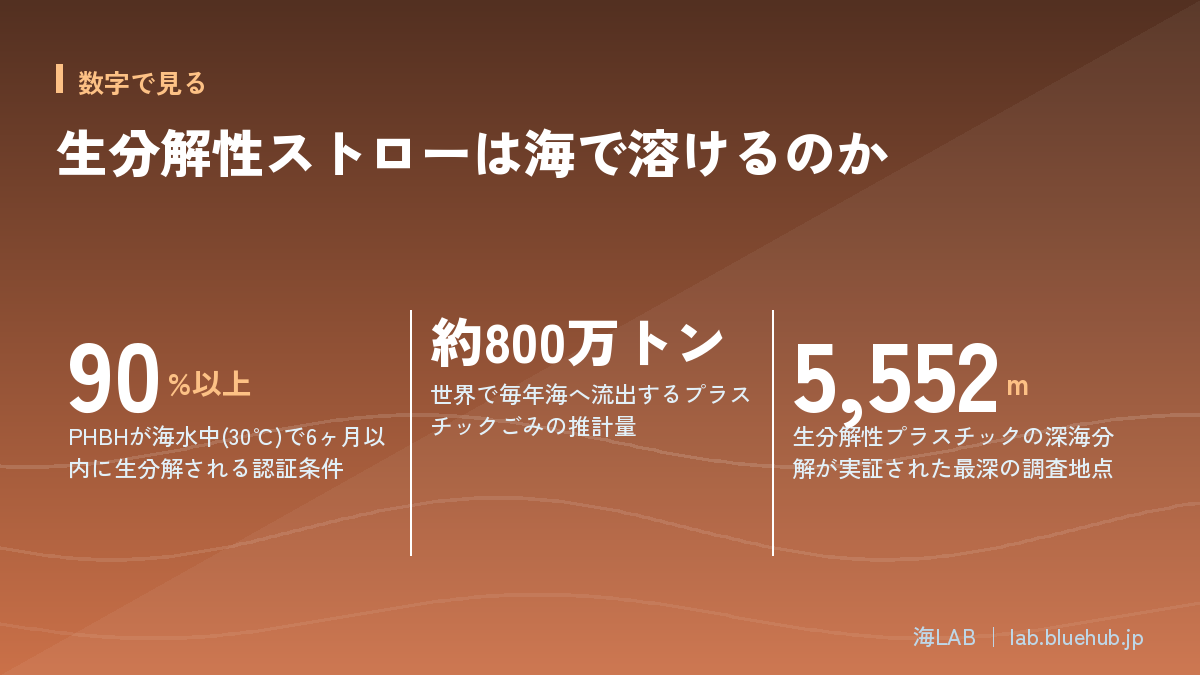
The figure "roughly 8 million tons of plastic waste flows into the ocean worldwide every year" comes from an estimate published in the journal Science in 2015 by a research team led by Jenna Jambeck of the University of Georgia, USA. Based on 2010 data, the estimate was introduced at the World Economic Forum's annual meeting in Davos, Switzerland in 2016 and has since been widely cited around the world.
Outflow from Japan and the Ministry of the Environment's latest estimate
Jambeck's research estimated that 20,000 to 60,000 tons of plastic waste flows from Japan into the ocean every year. Meanwhile, Japan's Ministry of the Environment, using a bottom-up estimate based on domestic sources and waste categories, put the figure for fiscal 2024 at 13,000 to 31,000 tons per year. The reason estimates vary so widely by method is that no internationally standardized methodology yet exists for calculating how much plastic waste actually escapes into the environment.
| Source / method | Reference year | Estimated outflow |
|---|---|---|
| Jambeck et al. (2015) — global | 2010 | ~8 million tons/year |
| Jambeck et al. (2015) — Japan | 2010 | 20,000–60,000 tons/year |
| MOE Japan — bottom-up by source/category | FY2024 | 13,000–31,000 tons/year |
| MOE Japan — macro statistics | FY2023 | 2,300–24,000 tons/year |
Do ocean plastics come from land or sea?
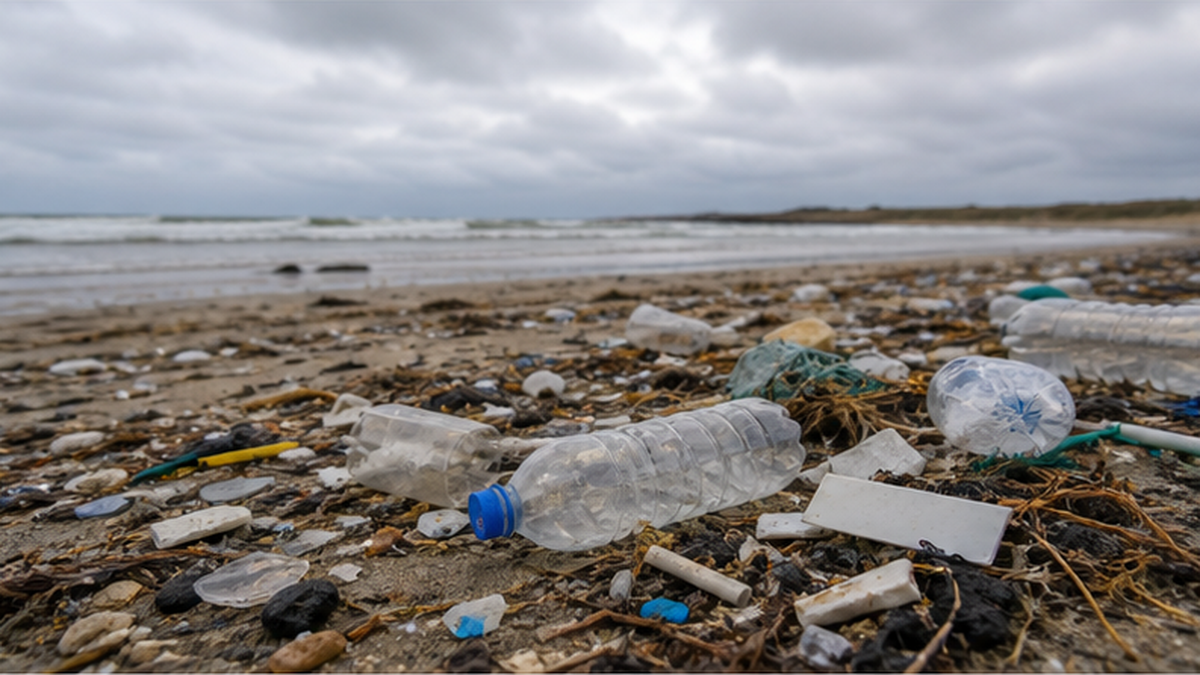
An estimated 80% of plastic waste entering the ocean originates on land — products used in cities that are carried away by wind, rain, and rivers — while the remaining roughly 20% originates at sea, such as discarded or lost fishing gear. Everyday items like straws and cutlery are a prime example of the former, showing how the design of everyday products is directly connected to the ocean plastic problem.
The ecological impact of waste that never breaks down
Petroleum-based plastics are gradually broken into smaller pieces at sea by ultraviolet light and wave action, but they barely degrade chemically and are said to persist in the environment for decades to centuries. The microscopic fragments (microplastics) produced in this process are mistakenly ingested by seabirds, fish, and shellfish, while larger fragments can entangle marine life. This long-term persistence is precisely why interest has grown in materials that break down and return to nature.
The economic damage is far from negligible
In 2015, the United Nations Environment Programme (UNEP) estimated that ocean plastic waste causes about $13 billion (roughly ¥1.4 trillion at the time) in annual economic damage to tourism, fisheries, and related industries. Beach cleanup costs, declining tourist numbers, contamination of fishing gear, and reduced catches all point to impacts that extend beyond ecosystems into local economies.
What is "biodegradable plastic," and what makes it different?
Biodegradable plastic is a general term for polymer materials that are ultimately broken down by microorganisms into water and carbon dioxide (or methane). Petroleum-based plastics barely degrade in the natural environment; ultraviolet light and wave action merely break them into small fragments (microplastics) that persist for a long time. Biodegradable plastics differ fundamentally in that microorganisms can break them down and metabolize them as a carbon source.
Composting and marine biodegradation are two different things
What's often overlooked is that the environmental conditions needed for degradation vary enormously between materials, even though they're all lumped under the single term "biodegradable." Polylactic acid (PLA), which accounts for much of the biodegradable plastic on the market, is a plant-derived material made from corn and other starches, but it requires conditions close to an industrial composting facility — 50°C or higher and high humidity — to degrade. Those conditions are not met in ambient- or low-temperature seawater or ordinary soil, so degradation barely progresses.
Why a "biodegradable" label alone isn't enough to feel reassured
- PLA straws and tableware degrade in industrial composting facilities, but barely degrade at all if they end up in the ocean
- The label "biodegradable" by itself says nothing about the environmental conditions needed for degradation
- Confirming degradation in a marine environment requires the kind of dedicated third-party certification described later
Why materials need to be designed for ocean biodegradation
Even when waste is properly sorted and disposed of, cases of it scattering from collection points or flowing into the ocean via gutters and rivers are not uncommon. This is why plastic waste flowing from rivers into the ocean has been flagged as an issue — and it's why there's real value in choosing materials that degrade in the environment even if they do escape, rather than relying solely on disposal-stage management.
| Material | Main raw material | Environment suited to degradation | Biodegradability in seawater |
|---|---|---|---|
| Petroleum-based PP/PE (polypropylene/polyethylene) | Petroleum | Does not degrade (only fragments under UV, etc.) | None |
| PLA (polylactic acid) | Starch from corn, etc. | Industrial composting at 50°C+ | Almost none (barely progresses at ambient temperature) |
| PHBH | Plant-derived oils (via microbial fermentation) | A wide range of environments — soil, fresh water, seawater | Yes (third-party certified) |
As this table shows, "plant-derived" and "degrades in the ocean" are not the same thing. PLA is plant-derived yet lacks marine biodegradability, while PHBH, made from the same kind of plant-derived raw material, does degrade in seawater. When choosing a material, what matters is not what it's made from, but which environment its degradation has actually been confirmed in.
How do microorganisms actually break down plastic?
The degradation of biodegradable plastic begins with "hydrolysis," in which enzymes (depolymerases) secreted by microorganisms cut the polymer's chains (ester bonds) into smaller fragments. Microorganisms then take up these fragments and use them as an energy source through respiration and metabolism, ultimately breaking them down into water and carbon dioxide. This process is essentially the same mechanism by which microorganisms break down fallen leaves or the remains of dead organisms in nature — the only difference is whether the target happens to be plastic or organic matter.
Japanese policy is also pushing biodegradable materials forward
The government has also been supporting the spread of such materials. In January 2021, Japan's Ministry of the Environment, Ministry of Economy, Trade and Industry, Ministry of Agriculture, Forestry and Fisheries, and Ministry of Education, Culture, Sports, Science and Technology jointly formulated a "Biodegradable Plastics Introduction Roadmap," setting a target of introducing about 2 million tons of plant-derived biomass plastics by 2030. The roadmap sorts materials into categories suited to different applications based on cost and quality considerations, positioning marine-biodegradable materials like PHBH as candidates for replacing single-use items. In addition, Japan's "Act on Promotion of Resource Circulation for Plastics" took effect in April 2022, establishing a framework requiring retailers and service providers such as convenience stores and cafes to reduce specified plastic products like disposable spoons and straws. This kind of regulatory support is one of the motivations pushing companies to consider switching to alternative materials.
PHA: a mechanism already built into microorganisms in nature
The class of polymers PHBH belongs to — PHA (polyhydroxyalkanoate) — is not an artificially invented substance. Some microorganisms found in soil and seawater synthesize PHA to store energy and carbon inside their cells, in the form of fat-like droplets, when nutrient conditions become skewed. Kaneka's production of PHBH can be described as drawing out this metabolic mechanism, which microorganisms already possess, through controlled culture conditions, to efficiently produce a copolymer with the desired monomer ratio. The fact that it is, from a microorganism's perspective, "originally its own degradable metabolite" is part of why it's also easy for other organisms to break down.
PHA itself has a long history: as early as the 1920s, French researcher Maurice Lemoigne is credited with first extracting and identifying PHB (a type of PHA) from microorganisms. In the wake of the 1970s oil crises, as industries searched for alternatives to petroleum dependence, the UK's ICI conducted years of research before commercializing microbially produced PHA in 1983 under the trade name "Biopol" — PHA-family polymers have long attracted attention as a potential substitute for petroleum-based materials.
How Kaneka's marine-biodegradable polymer "PHBH" works
PHBH is the short name for a biodegradable polymer independently developed by the chemical manufacturer Kaneka, formally classified as a type of polyhydroxyalkanoate (PHA). Marketed under the brand name "Green Planet®," its defining feature is that it is a 100% plant-derived polymer that does not use petroleum as a raw material.
A production process built on microbial fermentation
Manufacturing PHBH follows a completely different process from ordinary plastics made by chemically synthesizing petrochemical products. Microorganisms are cultured using plant-derived oils as a nutrient source, and the polymer is produced by taking advantage of the microorganisms' ability to accumulate it inside their own cells — in effect, a fermentation process. After culturing, the polymer is extracted and purified from the microorganisms and pelletized, after which it can be processed into straws, cutlery, films, and more using existing plastic molding equipment.
See details on PHBHKaneka Biodegradable Biopolymer Green Planet®Kaneka's official page summarizing PHBH's features, marine biodegradability, and applications🔗 kaneka.co.jpThe ratio of two monomers determines "hardness vs. softness"
Chemically, PHBH is a copolymer polyester made of two monomers: "3-hydroxybutyrate (3HB)" and "3-hydroxyhexanoate (3HHx)." Because the propyl side chain of 3HHx interferes with the formation of crystalline structures, a higher proportion of 3HHx lowers crystallinity, shifting the material from hard and brittle toward flexible. Research reports indicate that a 3HHx content of roughly 10 mol% or more produces clearly flexible properties. By contrast, "PHB," the same PHA-family polymer without 3HHx, is highly crystalline, hard, and brittle — a technical hallmark of PHBH is that adjusting the monomer ratio makes it possible to produce polymers with physical properties tailored to different applications.
Moldability close to conventional plastics, and wide-ranging uses
- Physical properties such as heat resistance and flexibility are close to those of existing petroleum-based plastics, allowing processing on existing molding equipment
- Adjusting additives and the monomer ratio makes it possible to design hardness and impact resistance for specific applications
- Used in a wide range of applications beyond straws and cutlery, including shopping bags, food packaging, and film
Proof it breaks down in seawater: the international certification "OK Biodegradable MARINE"
Whether a product claiming to be "biodegradable" truly breaks down in seawater shouldn't rest on a company's own claims alone — it matters that this is backed up by third-party certification. As wariness of greenwashing grows worldwide — cases where "environmentally friendly" labeling takes on a life of its own without substance behind it — being able to present measured data that meets standards set by an independent testing body has become a critical factor in the credibility of a company's claims. In September 2017, PHBH earned the "OK Biodegradable MARINE" certification, which recognizes biodegradability in seawater, from the Belgian certification body Vinçotte (now integrated into the TÜV Austria group's certification brand), which Kaneka announced publicly that November 15.
The tests required for certification
| Test item | What it verifies |
|---|---|
| Biodegradation test | Whether the polymer is actually chemically broken down in seawater |
| Ecotoxicity test | Whether the degradation process or residues have any adverse effect on plant growth, etc. |
| Heavy metal content test | Whether heavy metals from additives or pigments exceed permitted limits |
How to read "90%+ within 6 months"
The certification condition PHBH met is that 90% or more biodegrades in seawater (at a water temperature of 30°C) within 6 months. However, this is a measurement taken under standardized test conditions, and it's worth noting that actual degradation speed in the ocean will vary depending on water temperature, salinity, and the local microbial community. Even so, a material whose degradation in near-ambient-temperature seawater has been confirmed by a third party remains a rare exception among biodegradable plastics.
It has obtained the "OK Biodegradable MARINE" certification for biodegradation in seawater, contributing to the reduction of marine pollution.
— From Kaneka's official "Green Planet®" introduction page
Inside the test: measuring CO2 output in a sealed container
In a representative test method for confirming marine biodegradability (based on ASTM D7081), a sample is placed in a sealed container using seawater as the microbial source, and under constant conditions around 30°C, the amount of carbon dioxide generated as microorganisms break down the polymer is measured continuously. Since CO2 output increases as degradation proceeds, this trend allows the degree of biodegradation to be quantitatively evaluated. What supports the credibility of this certification is that it's measured under conditions close to natural seawater, rather than an accelerated test using microorganism concentrations far higher than exist in the actual ocean.
"Biodegradable" and "harmless" are verified by separate tests
This is exactly why the ecotoxicity test listed above matters. Even if a polymer is chemically broken down, if the intermediate products or additives generated in the process are harmful to marine life, the material cannot truly be called "environmentally friendly." Under OK Biodegradable MARINE, certification is issued only after confirming, through plant growth tests using the degradation residues, that no toxicity is present — a point that's easy to overlook but important: "degrading" and "being safe" are verified through separate tests.
How Seven Cafe's straws spread nationwide
After certification, how was PHBH actually adopted in real stores? The leading example is the straws provided at Seven-Eleven's "Seven Cafe." Because straws are a consumable used in huge volumes every day at more than 20,000 stores nationwide, rather than switching every store at once, the approach was to start with a trial rollout in a limited region and expand step by step.
Trial rollout in Kochi Prefecture (August 2019)
On August 6, 2019, Seven-Eleven Japan announced it had begun a trial rollout of PHBH straws at 41 stores in Kochi Prefecture. Limiting the trial to a specific region allowed the company to confirm supply-chain and operational issues before expanding further.
See this news releaseNotice of Trial Introduction of Straws Made with "Kaneka Biodegradable Polymer PHBH®"Seven-Eleven Japan's official release announcing the trial rollout in Kochi Prefecture🔗 sej.co.jpNationwide expansion and increased production capacity
- August 6, 2019: Trial rollout begins at 41 stores in Kochi Prefecture
- November 5, 2019: Expanded to about 10,000 stores across Hokkaido, Hokuriku, Kansai, Chubu, Shikoku, Kyushu, and Okinawa
- December 2019: Kaneka completes a PHBH production plant with capacity of 5,000 tons a year
- June 2, 2020: A new 8mm-diameter PHBH straw is adopted and rolled out progressively to 20,938 stores nationwide
Beyond straws: cosmetics packaging and overseas markets
PHBH's adoption isn't limited to the food and beverage industry. In August 2020, Shiseido announced it had adopted PHBH for the body and lid of a lip palette product. The fact that biodegradable polymers are now being used not just for single-use items like straws, but also for reusable cosmetics packaging, shows that PHBH's applications are gradually diversifying. Overseas, market development has centered on plastic bag applications in Europe, with future expansion expected into products that come into direct contact with the sea, such as fishing gear and marine equipment.
Scientifically proven to degrade even in the deep sea
Another important research result on the degradation performance of biodegradable plastics has been published in recent years. Plastic waste that sinks into the ocean can reach environments as extreme as the low-temperature, high-pressure deep sea. When JAMSTEC surveyed a deep-sea plain off the Boso Peninsula in 2019, it found an average of roughly 4,500 pieces of plastic waste per square kilometer — up to 7,000 in some locations — revealing that the deep sea is becoming an "invisible dumping ground."
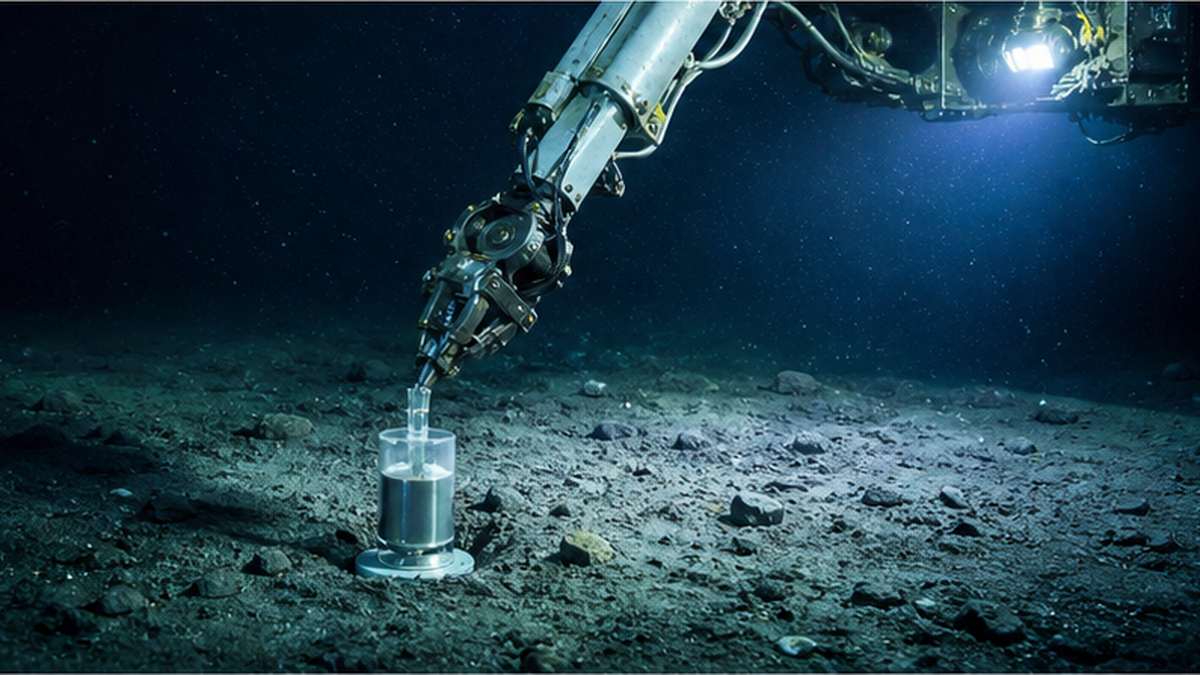
A real-sea experiment using Shinkai 6500 and Edokko 1
On January 26, 2024, the University of Tokyo, the Japan Agency for Marine-Earth Science and Technology (JAMSTEC), Gunma University, the National Institute of Technology and Evaluation (NITE), the National Institute of Advanced Industrial Science and Technology (AIST), and the Japan BioPlastics Association jointly announced that they had demonstrated that various biodegradable plastics, excluding polylactic acid, also degrade in the deep sea. The findings were published online in the international journal Nature Communications on January 25, 2024.
In the experiment, researchers used the manned submersible "Shinkai 6500," the remotely operated vehicles "Hyper-Dolphin" and "KM-ROV," and the free-fall deep-sea lander "Edokko 1" to place samples of biodegradable and conventional plastics at five locations in Japanese coastal waters, at depths ranging from 757 to 5,552 meters. They then recovered the samples and analyzed changes in weight and shape, as well as the microorganisms attached to their surfaces.
Degradation slows as depth increases
| Survey condition | Degradation rate compared with on land (coastal) |
|---|---|
| Depth of ~1,000m | About 1/5 to 1/10 of the on-land rate |
| Depth of ~5,000m | About 1/20 of the on-land rate |
A decisive difference from conventional plastic
In the same experiment, the conventional plastics used for comparison (petroleum-based materials such as polyethylene) showed almost no notable change in weight or shape during their time in the deep sea. In other words, even placed in the same deep-sea environment, biodegradable plastics steadily degraded through microbial action, while conventional plastics essentially remained intact — a clear and decisive difference.
Although PHBH is not individually named in this study, the significance of demonstrating that "biodegradable plastics in general, excluding PLA" degrade even in the deep sea is substantial. As a biopolymer likewise produced through microbial fermentation, PHBH is a strong candidate for further research into its behavior in deep-sea plastic pollution going forward.
Through these research results, we expect further progress in the research and development of biodegradable plastics as excellent materials that will help curb ocean plastic pollution in the future.
— From the joint press release by JAMSTEC, the University of Tokyo, and others (announced January 26, 2024)
Expanding production capacity and future plans
From 5,000 tons a year to a 20,000-ton system
In December 2019, Kaneka completed a plant with an annual PHBH production capacity of 5,000 tons at its Takasago Plant in Takasago City, Hyogo Prefecture, establishing mass-production capability. Securing this production capacity was what made it possible to supply nationwide chains like Seven Cafe. Further, in February 2022, Kaneka announced an investment of about ¥15 billion at the same Takasago Plant to add 15,000 tons a year of capacity, bringing total capacity to 20,000 tons a year alongside existing facilities; this expanded capacity began operating in January 2024.
A plan for 100,000 tons a year by 2030, and diversifying raw materials
Kaneka has further indicated plans to expand PHBH production to around 100,000 tons a year by 2030, and is considering candidate sites for additional plants not only in Japan but also overseas, including the United States, Belgium, and Malaysia. On the raw-material side, in 2023 Kaneka announced it had put into practical use microorganisms capable of producing PHBH from discarded cooking oil, advancing the diversification of raw-material sourcing beyond reliance on plant oils alone.
Cost is one challenge often pointed out. Because of the microbial fermentation process, PHA-family biodegradable plastics are said to cost roughly twice as much as petroleum-based polypropylene or polyethylene. Whether economies of scale from increased production, along with diversified raw-material sourcing, can narrow this price gap will shape how quickly adoption spreads going forward.
Challenges remaining for wider adoption
- Even as production increases, PHBH's share remains a small fraction compared with global plastic production of hundreds of millions of tons a year
- The microbial fermentation process tends to make manufacturing costs higher than petroleum-based plastics (roughly twice as much, as a rough guide)
- Scaling up to 100,000 tons a year will require further capital investment and building out raw-material supply networks
Biodegradable straws are not a cure-all — using them the right way
Degradation still takes months
Even though PHBH degrades in seawater, that doesn't mean it vanishes the instant it's discarded. As the certification condition of "90%+ within 6 months" indicates, degradation takes months to complete. During that time, the risk remains that marine life may accidentally ingest it, or that it may mar the landscape just like other waste.
Points worth remembering
- Being a biodegradable material is not a reason to justify littering
- Until degradation is complete — a matter of several months — it carries the same risks as ordinary plastic waste
- Even with a "biodegradable" label, it's worth checking whether marine biodegradation is actually backed by certification
Different degradation mechanisms mean different microplastic risks
Petroleum-based plastics undergo "fragmentation" — breaking into smaller pieces through UV light and wave action — whereas biodegradable polymers like PHBH follow a "surface erosion" process, in which microorganisms gradually break down molecules starting from the surface. In theory, this means that rather than degrading while leaving behind large amounts of tiny fragments (microplastics) as in fragmentation, the material shrinks gradually from the surface until it is ultimately broken down into water and carbon dioxide — a distinction said to matter for environmental impact.
Around the world, regulations are also targeting single-use plastic itself
Alongside the shift in materials, regulations restricting the distribution of single-use plastic products themselves are also spreading worldwide. The EU enacted its "Single-Use Plastics Directive (Directive (EU) 2019/904)" in 2019, and from July 2021 banned the placing on the market of certain single-use plastic products, including straws, cutlery, and expanded polystyrene containers. In Japan too, the Act on Promotion of Resource Circulation for Plastics, which took effect in 2022, calls for reductions in single-use products — measures are advancing on two fronts: "switching to materials that degrade more easily" and "reducing the amount used in the first place."
Combine it with reducing single-use items in the first place
Materials like PHBH are one option for reducing the risk associated with leakage in situations where single-use containers and straws can't be eliminated entirely — they are not meant to encourage single-use consumption itself. They deliver real value only when combined with efforts to avoid generating waste in the first place, such as using a reusable bottle or container.
Conclusion: what we can do
PHBH represents an approach to the ocean plastic problem that differs from the switch to paper straws: it aims to reduce the risk of leaked waste by designing the material itself to degrade in seawater. At the same time, understanding why ordinary plastic waste fails to degrade and simply persists helps put the value of biodegradable materials into clearer perspective.
- Look beyond the "biodegradable" label and check whether marine biodegradation is actually backed by certification
- Even with biodegradable products, don't litter — dispose of and collect them properly
- Combine it with efforts to reduce single-use items themselves, such as reusable bottles and containers
Summary of this article
- PLA, which accounts for much of biodegradable plastic, only degrades meaningfully in industrial composting facilities and barely degrades in seawater
- Kaneka's PHBH is a 100% plant-derived polymer made through microbial fermentation, internationally certified to biodegrade 90%+ in seawater (30°C) within 6 months
- Real-world adoption is steadily expanding, from Seven Cafe straws to Shiseido cosmetics packaging
- Joint research including JAMSTEC has scientifically demonstrated that biodegradable plastics in general also degrade in the deep sea
- Biodegradable materials are one option for reducing leakage risk — they do not justify littering
References & Sources
- Kaneka Biodegradable Biopolymer Green Planet® – Kaneka's official page introducing PHBH's features and applications
- Kaneka's Marine Biodegradation Certification for Biodegradable Plastic – Kaneka's official release announcing the OK Biodegradable MARINE certification (2017)
- Kaneka Biodegradable Polymer PHBH® — Completion of a 5,000-ton-a-year plant – Kaneka official news release (2019)
- Notice of Trial Introduction of Straws Made with "Kaneka Biodegradable Polymer PHBH®" – Seven-Eleven Japan official news release (2019)
- Estimate of Marine Plastic Waste Outflow from Japan (FY2024 findings) – Ministry of the Environment, Marine Environment Division, Marine Plastic Pollution Countermeasures Office
- Biodegradable Plastics Proven to Degrade Even in the Deep Sea – Joint press release by JAMSTEC, the University of Tokyo, and others (January 2024)
- Biodegradable Plastics Proven to Degrade Even in the Deep Sea – National Institute of Advanced Industrial Science and Technology (AIST) press release (January 2024)
- OK biodegradable certification – TÜV Austria's explanation page for its biodegradability certification scheme
※ Listed in order of reliability: government/academic institutions > peer-reviewed papers > specialized organizations > reputable media