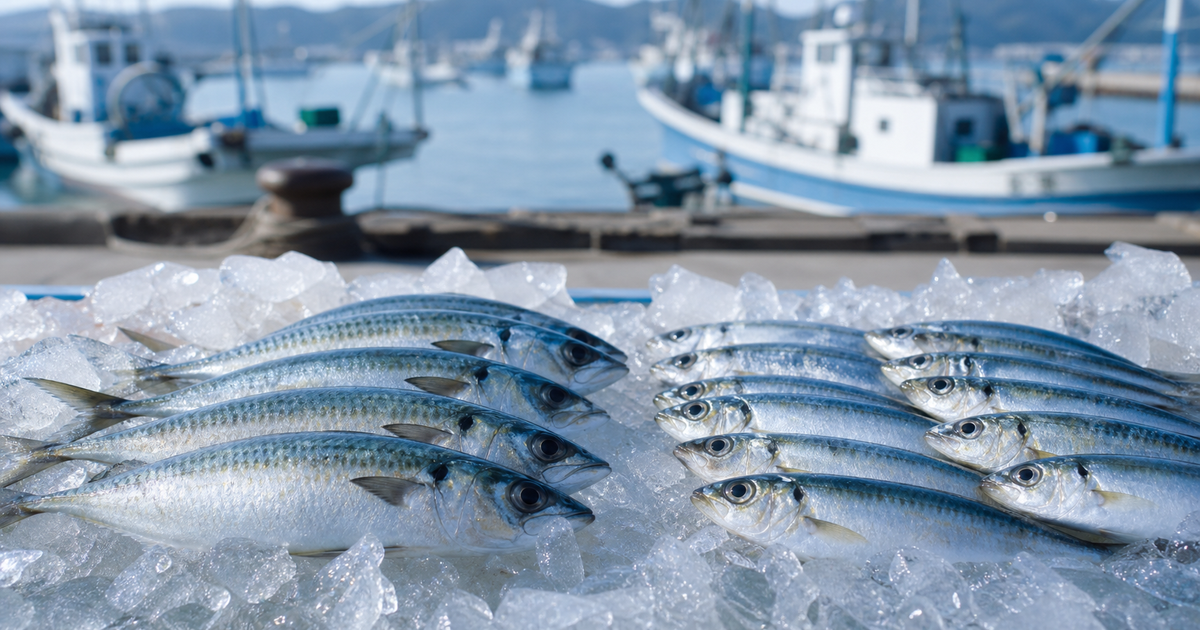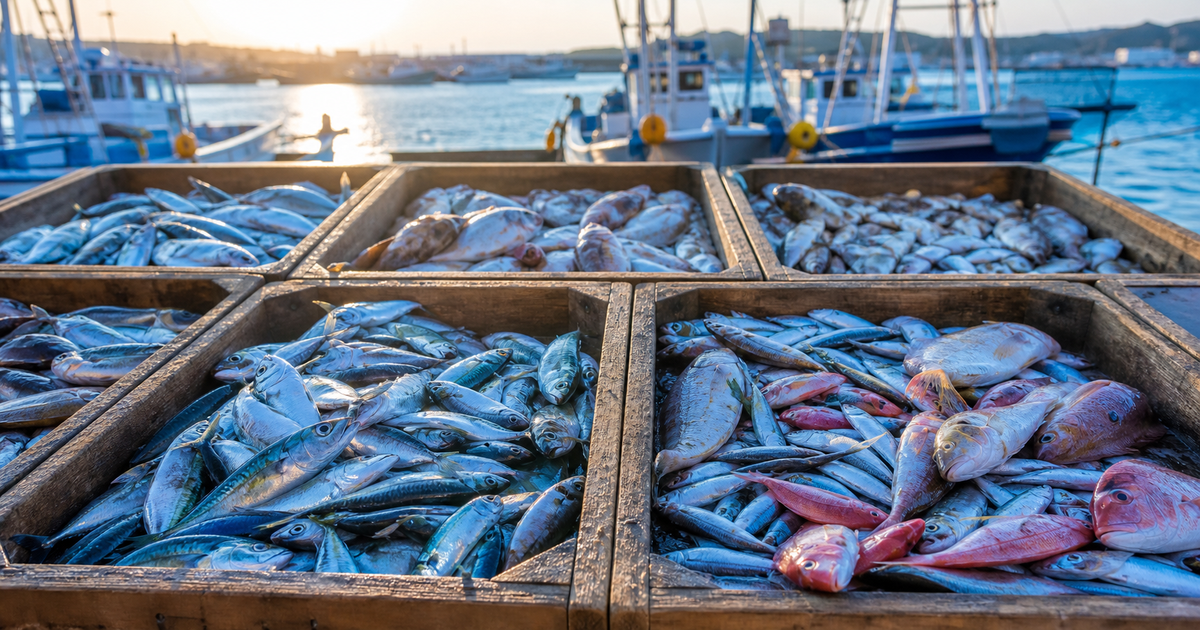
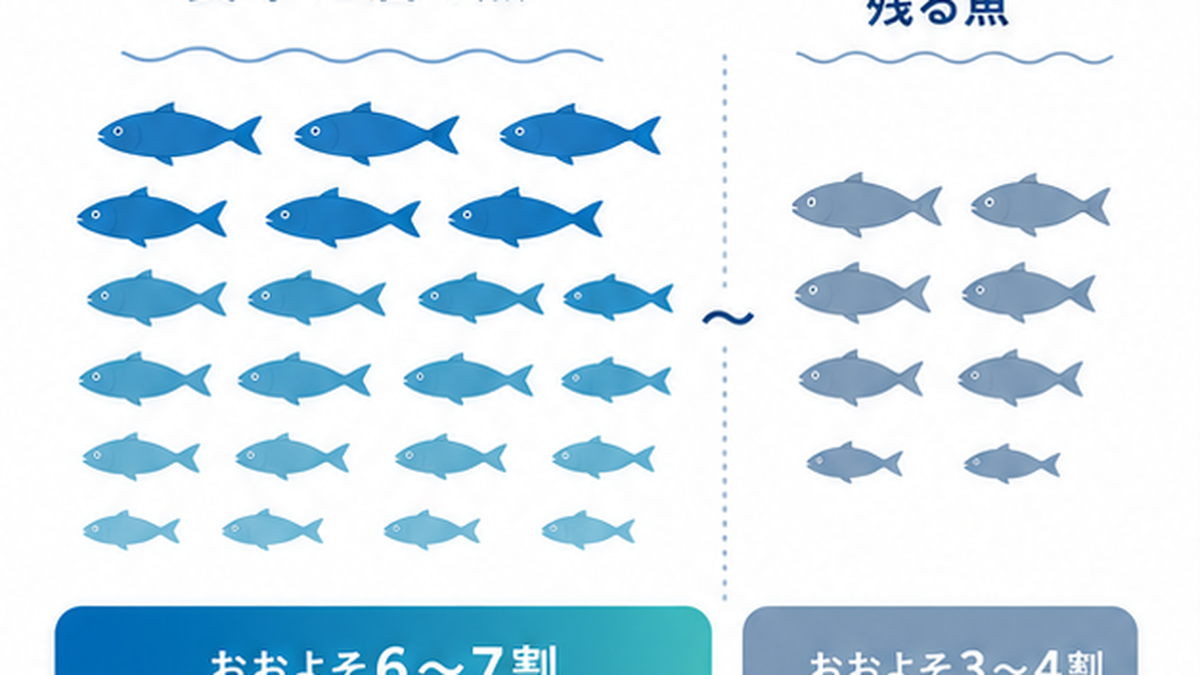
Even fish caught in the very same net don't share the same fate. Some end up on store shelves; others are thrown back into the sea or discarded on the spot. There's "bycatch" -- fish caught unintentionally alongside the target species -- and "underutilized fish," which taste perfectly good but go unpriced because of their shape, volume, or lack of recognition. In Japan, such fish are said to account for 30 to 40 percent of the total catch. Gifts from the sea that cost a life to bring ashore are disappearing before they ever reach the table.
In recent years, though, efforts to turn this waste into treasure have been spreading across the country. Processing and preparation techniques are making these fish easier to handle, while new sales channels -- subscription services, direct-sale outlets, school lunches -- are connecting them with consumers. Fish once destined for the trash are now becoming income for fishermen, local specialty products, and a way to cut food loss.
This article draws on materials from Japan's Fisheries Agency and the FAO (Food and Agriculture Organization of the United Nations) to lay out, in accessible terms, why bycatch and underutilized fish have been thrown away, how they can be turned into food, and what we as consumers can do about it. Let's look together at concrete steps toward making sure none of the ocean's bounty goes to waste.
What you'll learn in this article
- The difference between "bycatch" and "underutilized fish," and why they get thrown away
- How much fish goes to waste, uneaten, both worldwide and in Japan
- Processing and preparation techniques that turn discarded fish into products people want to buy
- The spread of new sales channels such as subscriptions, direct-sale outlets, and school lunches
- How making use of underutilized fish helps reduce food loss and conserve marine resources
- Choices we can make at the supermarket and at home to avoid waste
What Are Bycatch and Underutilized Fish?
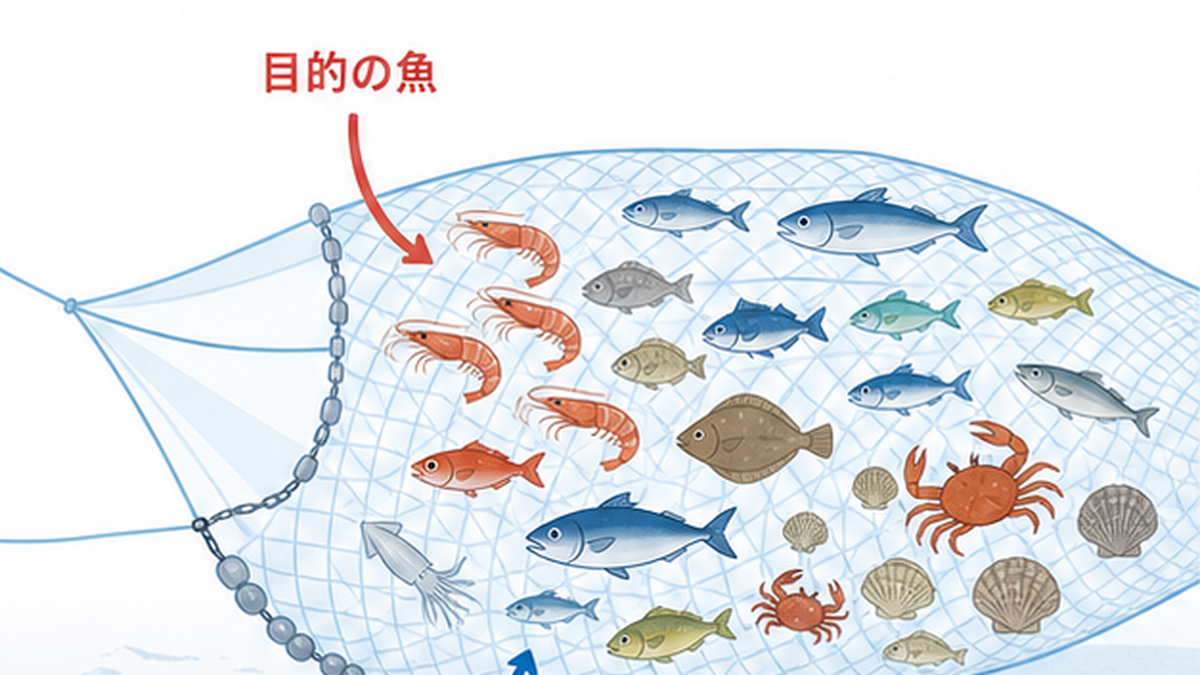
Let's start by defining our terms. Bycatch refers to fish or other creatures that get caught in a net or on a hook incidentally, while fishers are targeting a different species. When shrimp are caught with a bottom trawl net, for example, large numbers of small fish, crabs, and shellfish get mixed in along with them. Underutilized fish, meanwhile, are fish that are perfectly edible but barely make it into the market. The two categories overlap heavily -- much of what's caught as bycatch simply becomes underutilized fish.
In other words, bycatch is about what happens during the act of fishing -- how a catch ends up in the net -- while "underutilized fish" is about what happens afterward, in distribution and consumption. Yellowtail or tuna caught on purpose sell for high prices, while other fish hauled up from the very same waters on the very same day go unpriced and get thrown away. That gap is exactly what this article is about.
Not "fish you can't eat," but "fish that don't get sold"
Hearing the term "underutilized fish," you might picture something that tastes bad or simply can't be eaten -- but the truth is the opposite. Most of these fish taste good and are packed with nutrition; they're just hard to sell for a variety of reasons. Materials from Japan's Fisheries Agency describe underutilized fish as fish that get diverted to non-food uses or fetch only low prices because their size is inconsistent, or the catch volume is too small to form a proper lot. It's not a quality problem -- it's a problem with how the market is structured.
- Bycatch: fish and other creatures caught incidentally while targeting a different species
- Underutilized fish: edible fish that barely circulate in the market
- Low-utilization fish: fish that do circulate a little but are undervalued and sell only at low prices
- Common thread: there's nothing wrong with their taste or nutrition -- they're simply "hard to sell"
Familiar examples of underutilized fish
Underutilized fish aren't all exotic deep-sea species. In fact, many are simply smaller sizes of fish already familiar on our tables, or fish known only by obscure local names. Mahi-mahi (dolphinfish), lizardfish, Japanese silver croaker, filefish, small mackerel, conger eel offcuts, and deep-water rockfish are just some examples, varying by region. Many of these fish are eaten as a matter of course at their place of origin, yet fetch no price at all in urban supermarkets simply because their names aren't recognized. Mahi-mahi, for instance, is treated as a premium ingredient in Hawaii, while in parts of Japan it has long been considered a cheap fish. The very same fish can have a completely different "value" depending on the region and culture.
Why they're drawing attention now
The term "underutilized fish" isn't new, but interest in it has surged over the past few years. Behind this is the global decline in fisheries resources and a corresponding shift in mindset toward making better use of whatever fish are caught. Rising sea temperatures have also made it harder to catch traditionally dominant species, while fish "never caught before" have started turning up in nets instead -- prompting fishing communities to confront the issue of underutilized fish head-on. On top of that, growing interest among businesses and consumers in reducing food loss and pursuing the SDGs (Sustainable Development Goals) has turned the story of "making use of fish that used to be thrown away" into a selling point in its own right.
Key points from this section
- Bycatch is about "how fish get caught"; underutilized fish is about "how they're handled afterward"
- Underutilized fish arise from how distribution is structured, not from any problem with taste or nutrition
- Small sizes of familiar fish and fish known only by local names often end up as underutilized fish too
Why Edible Fish Get Thrown Away
Even when everyone knows it's a waste, several very real reasons combine to make fish get thrown away. Fishers aren't being spiteful or lazy. Under the current distribution system, there are situations where discarding a catch is actually more "rational" than trying to sell it. Let's look at the main barriers standing in the way.
Barrier 1: Inconsistent volume and size
Supermarkets and restaurant chains want to reliably source a fixed volume of fish to a fixed specification, every day. But fish brought in as bycatch vary wildly in species and size, and the volume changes drastically from day to day. Fish that can't be assembled into a consistent lot never even get a foot in the door of distribution. Few wholesalers are willing to go out of their way to buy a rare fish of which only ten were caught.
Barrier 2: Labor and cost don't match the price
Small fish require a disproportionate amount of work to prepare relative to how much edible meat they yield. Fish with lots of bones, tough skin, or that require skilled preparation can end up costing more in processing labor than they're worth. Even out on the boat, sorting and keeping fish cold within limited space and time takes effort. The judgment that ice and labor simply can't be spared for a fish that will sell for only a few tens of yen is what leads to discarding fish at sea.
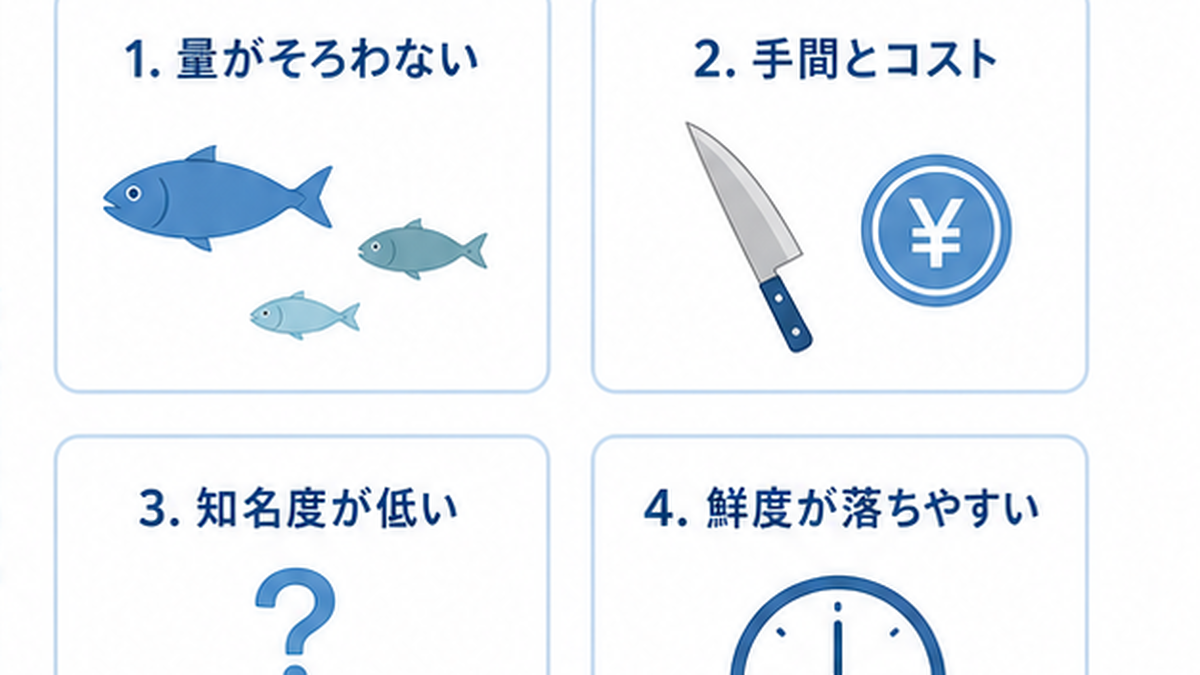
Barrier 3: No name recognition, no buyers
No matter how delicious a fish is, consumers are unlikely to pick it up if they don't recognize the name. There are psychological hurdles too -- not knowing how to cook it, not being able to explain it to family. Store staff also hesitate to stock a fish that "might just sit there unsold." This vicious cycle -- "don't know it, so don't buy it → don't buy it, so it never appears on shelves → never appears on shelves, so it stays unknown" has kept underutilized fish out of the market.
Barrier 4: Freshness fades quickly, making handling difficult
Small fish and certain species lose freshness quickly, and their commercial value drops fast as time passes after landing. If quality can't be maintained during transport from the fishing grounds to consumption areas, the fish become unsellable even after being brought all the way back. In fishing communities without nearby freezing or processing facilities, this race against time is often lost, forcing fish to be discarded. Rising sea temperatures, which are changing which fish get caught in the first place, are also making it harder for these communities to respond (see also our related article on rising sea temperatures and changes in fisheries).
What is "discarding" (投棄)?
This refers to returning caught fish to the sea on the spot, without bringing them ashore. In many cases the fish are already dead or dying, so they don't necessarily return to the sea alive. The FAO (Food and Agriculture Organization of the United Nations) points out that this kind of discarding adds up to a substantial amount worldwide every year.
What matters here is that blaming individual fishers won't solve the problem. These barriers are produced by "structures" -- how prices are set in the market, how logistics are organized, and what consumers prefer. If a fish that took effort to bring home ends up unsold and discarded anyway, with only ice and shipping costs piling up, then economically speaking, throwing it back becomes the "rational" choice. In other words, the problem of underutilized fish isn't caused by anyone's negligence -- it's a challenge produced by the structure of society as a whole. That's exactly why ingenuity needs to be layered on at every stage: processing, distribution, and consumption.
None of these barriers can be solved on its own. That's why, as we'll see in the chapters that follow, we need ingenuity that clears several barriers at once, powered by two wheels working together: "processing technology" and "new ways of selling." Technology makes fish easier to handle, sales channels create buyers, and consumers come to recognize the value -- only when all three come together does a once-discarded fish become a product worth selling.
How Much Fish Is Being Thrown Away?
Let's get a sense of the scale of this problem in numbers. That said, we should note up front that the amount of bycatch and underutilized fish is defined differently depending on the country, fishing method, and survey methodology, making it difficult to state a single precise total. Please take the figures below as giving a rough sense of scale rather than an exact count.
Millions of tons discarded worldwide every year
Reports based on FAO (Food and Agriculture Organization of the United Nations) materials estimate that more than 7 million tons of marine life are discarded by fisheries worldwide every year. From another angle, some point out that a substantial share of total fisheries production ends up being discarded or thrown away. Depending on the fishing method, bycatch can account for a large portion of the total catch -- bottom trawling in particular is known to bring in large amounts of non-target species.
How prone a fishing method is to bycatch varies enormously. Compared with pole-and-line fishing or longlining, which target fish one at a time, bottom trawling -- which drags a wide net across the seabed -- and purse seining, which encircles whole schools, both make it far easier for large amounts of non-target fish and other creatures to end up in the catch. It has been pointed out that in some fisheries, such as shrimp trawling, bycatch actually outweighs the target catch. Around the world, improvements are underway to reduce bycatch, such as designing mesh sizes more carefully and fitting nets with devices that let sea turtles escape. Improving "how fish are caught" and "making use of what gets caught" are the two wheels driving this effort forward.
| Category | Approximate scale/share | Nature of the source |
|---|---|---|
| Global annual discards | Estimated at over 7 million tons | FAO-related materials |
| Share of Japan's total catch that is underutilized fish | Said to be 30-40% | Various news reports and industry materials |
| Edible portion of seafood by weight | Roughly 50-70% of total weight | General figures from the processing/food industry |
| Japan's annual "fish scrap" output | Estimated at nearly 4 million tons per year | Estimates from the seafood processing industry |
In Japan, said to be 30-40% of the catch
Within Japan too, news reports and industry materials repeatedly cite the view that roughly 30 to 40 percent of the total catch consists of underutilized fish. Naturally, this varies a great deal by region and fishing method, but it's a striking fact that behind the fish we normally eat, a comparable amount of fish may never be reaching the table at all. At a time when Japan's fish consumption is said to be declining over the long term as people eat less seafood, failing to properly make use of fish that has already been caught is wasteful in a doubly frustrating way. In an era ahead when population decline and an aging workforce are shrinking the ranks of fishers, the ability to turn a limited catch into value without waste will become increasingly important for fishing communities.
"Fish scraps": another underused resource
It's not just whole fish that go to waste. The heads, bones, entrails, and skin left over from processing -- collectively known as "fish scraps" (gyoara) -- represent a huge resource as well. The edible portion of seafood is said to make up roughly 50 to 70 percent of its weight, with the remaining 30 to 50 percent discharged as fish scraps. In Japan, some estimates put this fish scrap volume at close to 4 million tons a year. Some of it is already put to use as fishmeal or fertilizer, but there's still substantial room left for more effective use.
Why exact figures are hard to pin down
There are reasons why it's difficult to pin down exactly how much bycatch and underutilized fish there is. First, fish discarded at sea leave no record in landing statistics, so counting the actual amount is inherently difficult. Second, where the line for "underutilized fish" gets drawn differs from person to person and region to region -- what's a fine product at one port may get no attention at all at another, and that happens all the time. Third, the share of bycatch varies enormously by fishing method; the situation for pole-and-line fishing is completely different from that for bottom trawling. Given all this, it's important to understand that any published figure always comes with a range of uncertainty.
That said, there's no need to get too hung up on the precision of any particular figure. What matters is the fact that "behind the fish we eat, a non-negligible amount of the ocean's bounty never reaches the table." Grasping that scale, even roughly, is what leads to the next step. The fact that marine resources themselves are finite is also an indispensable perspective when thinking about marine biodiversity in Japan's waters.
A note on reading these numbers
Statistics on bycatch, underutilized fish, and discards vary widely depending on definitions and survey methods. Figures like "X percent gets thrown away" are meant as a rough guide, and it's important not to let them circulate as if they were a definitive fact. They're presented here simply to convey the scale of "a substantial amount not reaching the table."
Turning Fish Into Food (1): Processing and Preparation Technology
Turning discarded fish into products worth selling. The first step is processing and preparation technology that eliminates their inherent difficulty to handle. Inconsistent volume and size, quickly fading freshness, the hassle of cleaning and filleting -- these are the barriers that processing technology helps overcome.
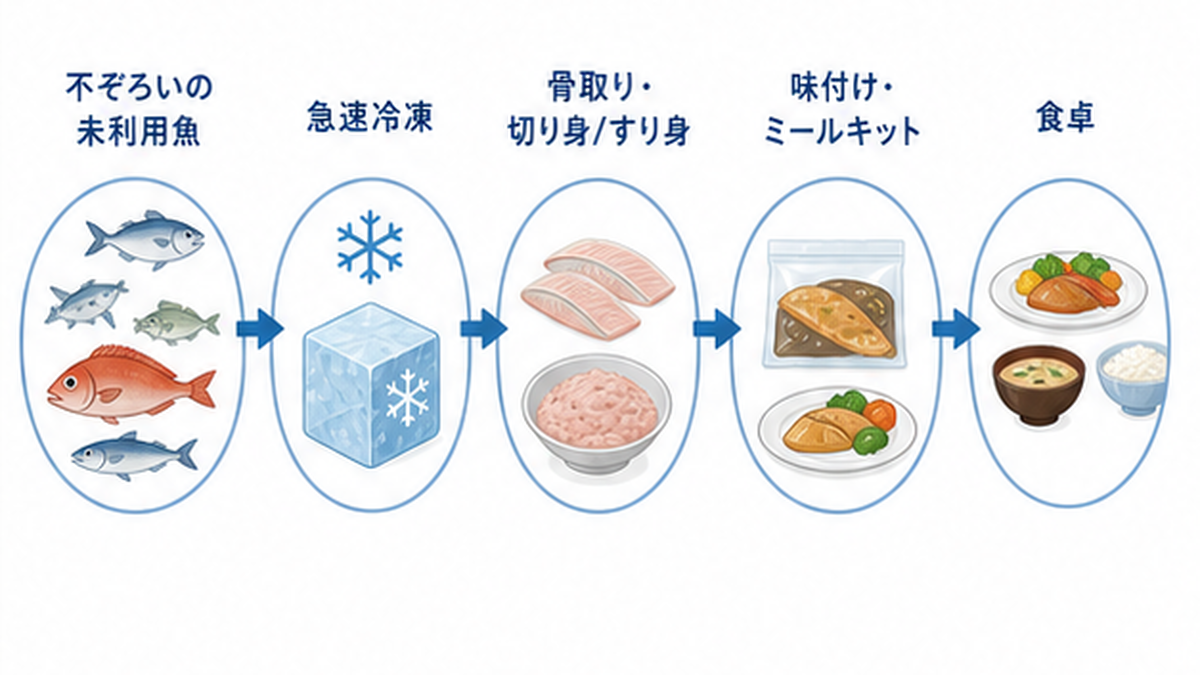
Flash-freezing and immediate processing on board and at port
The key to overcoming the freshness barrier is how quickly quality can be locked in after a fish is caught. In recent years, a growing number of systems have emerged that process fish as soon as possible after landing and flash-freeze them, allowing underutilized fish caught only in small quantities to be turned into products "in bulk." Once frozen and stockpiled, fish that don't arrive in consistent volumes can be assembled into a lot once enough has accumulated, giving them a foothold in distribution. One pet food business has been highlighted for using high-pressure processing shortly after landing to lock in freshness.
Designing for ease of eating: fillets, surimi, and seasoning
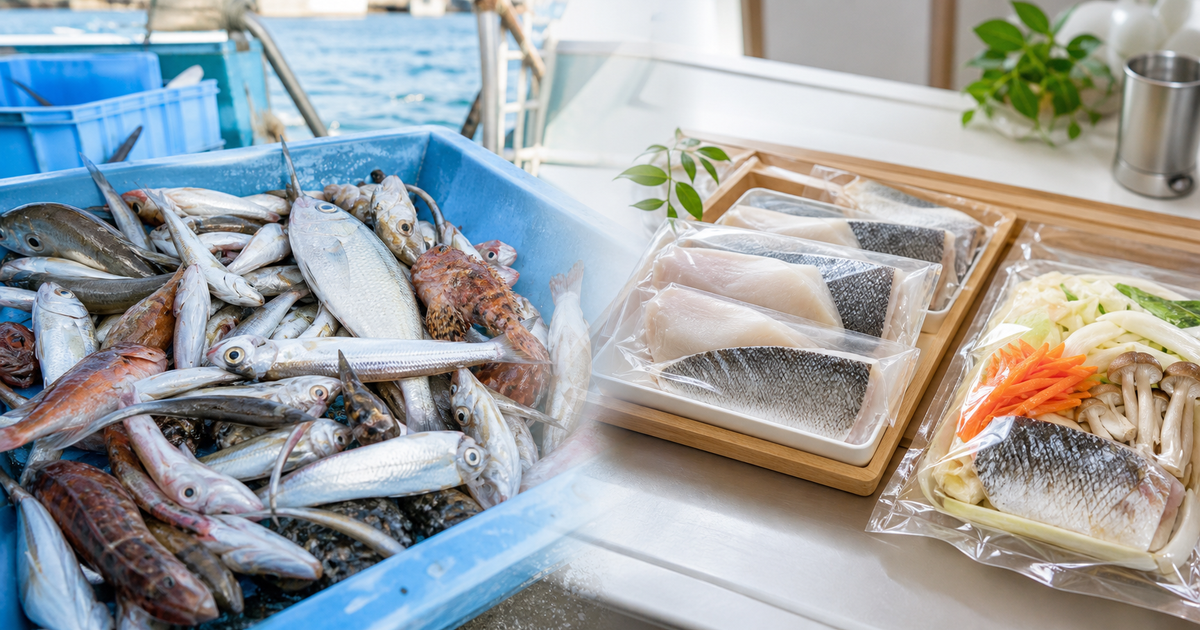
Too many bones, tough skin, an unfamiliar name -- processing can substantially lower these hurdles to "difficulty eating." Turning fish into carefully deboned fillets, or into surimi (fish paste), flaked meat, or pre-seasoned meal kits that work regardless of species, lets consumers enjoy a delicious meal without ever having to think about which fish it came from. As with an Okayama-based business that turned underutilized red sea bream into flaked-meat products and ochazuke (rice-in-tea) kits, packaging fish into a form that's "ready to cook as-is" opens up new sales channels.
Surimi in particular can be called the classic method for making use of underutilized fish. Processed fish products like kamaboko, satsuma-age, and hanpen are traditionally made by blending many different species together, so even underutilized fish that don't arrive in sufficient quantity of any single species can become adequate raw material once several species are combined. Because the fish's original shape disappears entirely, consumers feel none of the resistance that comes with an unfamiliar species. In some regions, international students, educational institutions, and fishing cooperatives have joined forces to develop new local specialty fish-paste products.
Long-shelf-life processing, such as canning and retort pouches, also pairs well with underutilized fish. Heating and pressurizing makes even the bones soft enough to eat, and the products can be stored at room temperature for a long time, so fish can be processed and stockpiled all at once during the season they're caught. Making the bones edible also has the benefit of letting people take in nutrients like calcium in their entirety. Turning fish into a form that can be eaten "anytime, anywhere, by anyone" gives fish caught only in small amounts a stable place in the market. Building this kind of primary processing infrastructure near the fishing grounds is a shortcut to overcoming the freshness barrier.
Upcycling fish scraps and offcuts
It's not just whole fish that can be put to use as a resource -- the heads, bones, and other scraps left over from processing can be too. A prime example is their use as fishmeal, fertilizer, or feed for aquaculture. Nutrient-rich fish scraps circulate back into resources that raise farmed fish, feed pets, and grow crops. This idea of not letting even the parts humans don't eat go to waste echoes the thinking behind recycling old fishing nets into new products. Both point in the same direction: using marine resources "to the very last drop."
- Flash-freezing: accumulates small quantities of fish into a lot while preserving freshness
- Deboning and filleting: lowers the hurdle of being hard to eat
- Surimi and flaked meat: usable regardless of species, without relying on name recognition
- Seasoning and meal kits: eliminates cooking effort and delivers to households
- Making use of fish scraps: circulates them as fishmeal, fertilizer, and feed
Barriers that processing overcomes
- Flash-freezing overcomes the barriers of "inconsistent volume" and "fading freshness"
- Fillets, surimi, and seasoning overcome the barriers of being "hard to eat" and "unfamiliar"
- Upcycling fish scraps makes full use of the resource, down to the last part
Turning Fish Into Food (2): Creating New Sales Channels
No matter how good the processing, a fish isn't a product unless there's somewhere to deliver it. Underutilized fish, which don't fit easily into conventional market distribution, turn out to be a particularly good match for new sales channels that bypass the market entirely. Over the past several years, this kind of ingenuity has been blossoming across the country.
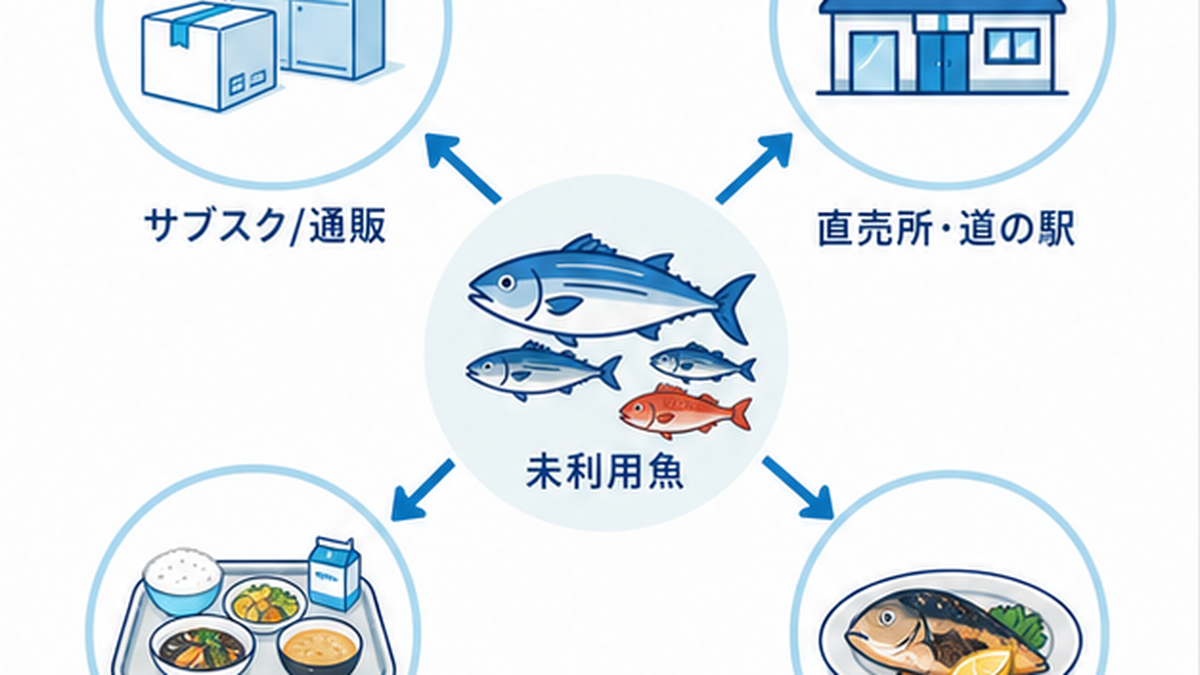
Subscriptions and mail order, delivered straight to the table
A leading example is subscription (regular-delivery) services offering meal packs made from underutilized fish. A Fukuoka-based business that launched such a service in 2021 processes and seasons a variety of underutilized fish caught that day and delivers it on a regular schedule; it has been reported that membership grew to 10,000 within a few years of launch, and later expanded to around 20,000. The key is that by selling "delicious and easy" rather than "what fish is this," the service skillfully sidesteps the name-recognition barrier. Consumers also get to enjoy the fun of receiving a different fish each time.
There are good reasons why the subscription model pairs so well with underutilized fish. First, because consumers don't specify which species they want, whatever was caught that day can be delivered flexibly. Second, regular purchasing stabilizes demand, letting fishing communities process and ship according to a plan. Third, since the fish arrives already cooked or seasoned, even households that can't fillet fish themselves can keep it up without any real hurdle. Here lies an idea that turns "inconsistent volume and size" -- the very weakness conventional market distribution has struggled with -- into a strength instead.
Direct-sale outlets, roadside stations, and e-commerce at the source
Direct-sale outlets, roadside stations, and e-commerce sites that sell fish right at the place they're caught are also powerful sales channels. At Wakasa Takahama fishing port in Fukui Prefecture, a facility handling the region's signature fish and processed underutilized-fish products combines drawing visitors as a tourist attraction with online sales, contributing to both fishers' income and the town's vitality. Selling directly from the source without going through the market creates new value even for fish that previously fetched no price at all. Efforts to lift up local fisheries also overlap with regional revitalization movements such as the revival of Sanriku's fishing industry.
School lunches: a major outlet
School lunches have drawn particular attention in recent years. In Yokohama, an initiative served menus using underutilized fish (such as mackerel in sweet-and-sour sauce) on a scale of about 200,000 meals across many of the city's elementary schools. Because school lunches represent large-scale, stable daily demand, they offer a valuable outlet capable of absorbing a substantial volume. In Hiratsuka, Kanagawa Prefecture, there's an example of students coming up with a promotional video and recipes for mahi-mahi that went on to become an actual commercial product, advancing food education and regional revitalization at the same time. At a private elementary school in Tokyo, a business running an underutilized-fish subscription service provided lunch for the entire student body, combining it with classes on the fishing industry.
What makes school lunches so effective is that they deliver the experience of "underutilized fish tastes good" to children at an early stage. The adult psychology of avoiding a fish simply because you don't recognize its name is far less likely to take hold if you already have the childhood memory of "I've eaten this before." Today's school lunch shapes the consumption habits of ten or twenty years from now. School lunches are, in that sense, a place where the future demand for underutilized fish is itself being cultivated.
Trials are also underway in restaurants and prepared foods
Trials developing menus that use underutilized fish are also underway in restaurants and in boxed lunches and prepared foods (chushoku). With professional cooking skills, even fish that are difficult to handle at home can become an appealing dish. A trial conducted in restaurants by a think tank found that how a dish is presented and described -- the ingenuity of selling it -- matters just as much as the taste itself in determining whether consumers choose it. Simply adding a line to the menu saying "made with underutilized fish from local waters," for instance, can increase the number of orders. Alongside taste, it's the "story" that gives consumers that final nudge. Establishments that source large, stable quantities, such as hotels and company cafeterias, are also seen as promising outlets for underutilized fish.
Most underutilized fish is simply discarded as-is, but cases of it being sorted on board and then put to use through direct farm-to-table sales, processing, retail, and restaurants are on the rise.
-- Summarized from materials by the Fisheries Agency and various industry sources
Summary of sales innovations
- Subscriptions and mail order: delivered on "taste and convenience" rather than name recognition
- Direct-sale outlets and e-commerce: adds new value straight from the source, bypassing the market
- School lunches: a major outlet with large, stable demand, alongside food education
- Restaurants and prepared foods: professional skill and "how it's presented" turn it into a dish people choose
The Impact on Resources and the Environment
Making use of underutilized fish isn't simply a matter of "it's a shame to waste it, so let's eat it." Several benefits are expected: reducing food loss, making effective use of marine resources, and lowering environmental impact. Let's untangle how these connect.
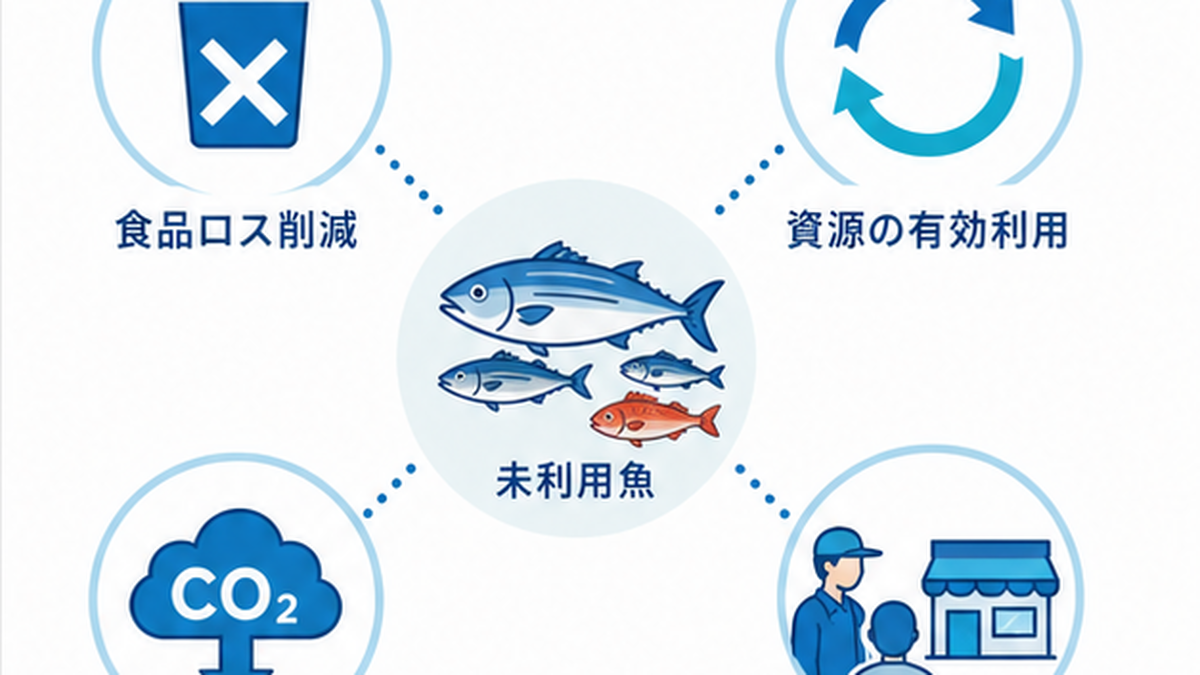
Helping reduce food loss
Fish that are caught but thrown away uneaten count as food loss in the broad sense. Delivering fish to the table without waste, after they've already given their lives to be landed, directly reduces "food that gets thrown away while still perfectly edible." Including the practice of turning fish scraps into feed or fertilizer, we can create a cycle that uses resources drawn from the sea all the way to the end. When we think of food loss, we tend to picture unsold items at home or in supermarkets, but in fact large amounts of loss occur even earlier -- at the landing stage, before fish ever reach the table. Holding onto this perspective is the first step toward grasping the full picture of the problem.
Getting more food from the same catch
Making use of underutilized fish has a major advantage: it lets us increase how much food we get without increasing how much we newly take from the sea. Since it makes use of fish already in the net, we can obtain food without placing any additional burden on the resource. In the sense that it increases the ocean's bounty while avoiding overfishing, this fits extremely well with the philosophy of sustainable fisheries. The perspective of protecting the diversity of marine life is also deeply connected to marine biodiversity in Japan's waters.
This way of thinking overlaps with the "circular economy" that has drawn attention in recent years. Using the whole fish caught -- turning the edible portion into food, the fish scraps into feed or fertilizer, and even fishing gear that ends up in the ocean into new products -- is about keeping resources circulating rather than throwing them away. The sea isn't an infinite warehouse; it's a place where a finite bounty is shared. That's precisely why treasuring a resource all the way through, once it's been obtained, is set to become the new normal for the fishing industry going forward. Making use of underutilized fish is an easy-to-understand first step at the entrance to that shift.
A greenhouse gas perspective
Wasting food also means wasting the energy used to obtain that food, along with the greenhouse gases emitted in the process of disposing of and treating it as waste. Eating a caught fish instead of throwing it away lets us "make good use of" the environmental cost already sunk into catching it. One graduate student's field project introduced an estimate suggesting that eating an underutilized-fish meal pack every month could contribute to reducing CO2 emissions (results vary depending on the assumptions behind the estimate, so this is offered only as one example). Learning about blue carbon -- the carbon-absorbing role played by marine ecosystems -- can also deepen your understanding of this connection.
Supporting local economies and the next generation of fishers
If fish that previously fetched no price becomes a source of income, it supports fishers' livelihoods and creates new jobs in the region. Processing plants, direct-sale outlets, delivery, recipe development -- an industry built around underutilized fish can become a source of vitality for fishing villages struggling with depopulation and an aging population. On Awaji Island, a fund investing in businesses that make use of underutilized species has emerged, and "fish that used to be thrown away" is drawing attention as a resource for regional revitalization.
It's easy to overlook, but reducing underutilized fish also matters for the marine ecosystem. The creatures that lose their lives to bycatch include not just fish but also species such as sea turtles, seabirds, and sharks. Once a system is in place that properly makes use of what's caught, it prompts fishers to think seriously about "what to catch and how much," which in turn encourages improvements in sorting technology and fishing methods that reduce unnecessary bycatch. Eliminating waste and protecting the ocean's diverse life turn out to be one and the same effort.
A food self-sufficiency perspective
Japan relies on imports for much of its seafood, while at the same time throwing away fish caught within its own waters. Making use of underutilized fish means using resources already obtained domestically without waste, which also carries the significance of contributing to a higher food self-sufficiency rate. Precisely because Japan is a country surrounded by the sea, there is real value in taking a fresh look at the bounty right at its shores.
The overall picture of these effects
- Reduces food loss and avoids wasting fish whose lives were already taken
- Increases the amount of food available without catching any more (kind to resources)
- May help reduce the environmental impact associated with disposal
- Supports fishers' income and jobs in the local community
What We as Consumers Can Do
Making use of underutilized fish isn't an effort that belongs only to fishers and businesses. In the end, it's we consumers who "buy it and eat it." Only once demand is created does a once-discarded fish gain value. Let's look at what we can do in our everyday shopping.
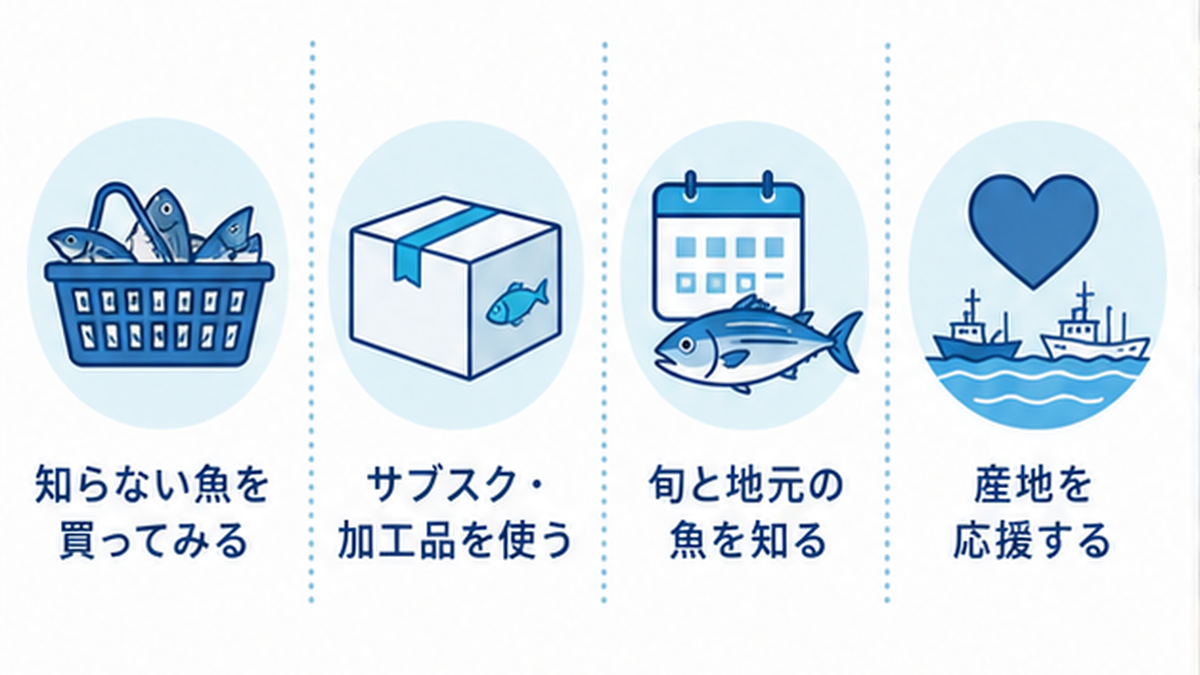
Try buying an "unfamiliar fish" once
If you spot a fish with an unfamiliar name at the supermarket or a direct-sale outlet, taking the plunge and buying it is the first step. Many underutilized fish taste good and are relatively inexpensive besides. The simple fact that "someone is buying it" creates a sales channel for that fish. If you don't know how to cook it, ask a staff member or search the species name online -- you'll often find a surprisingly simple recipe.
Make use of subscriptions and processed products
It's fine even if you're not confident filleting fish yourself. Underutilized-fish subscriptions, seasoned processed products, and meal kits let you enjoy a delicious meal without any prep work. These services should be an especially good match for busy households. Using "convenience" as your entry point lets you move toward a diet that doesn't waste the ocean's bounty, without any strain. Enjoying "what fish arrived today" together with your kids can also become a food-education opportunity to learn about where food comes from. Being able to keep it up without strain matters more than anything.
Pay attention to seasonal and local fish
Fish caught in abundance during a given season, or fish that are simply local, are in fact often underutilized or low-utilization fish. Seasonal fish taste good, are highly nutritious, and require less energy to transport from far away. Being conscious of local production for local consumption both supports the regional fishing industry and helps lower environmental impact. If you come across an unfamiliar local fish while traveling, simply tasting it is itself a way of supporting that region's sea and fishing industry.
The attitude of "not seeking out only certain fish" turns out to carry surprisingly large power too. The more we concentrate demand on specific popular species, the more fishing pressure is placed on those fish, and the easier it becomes for other fish to go to waste as surplus. Simply broadening the variety of fish that make it to your table a little spreads the burden across the ocean as a whole and creates a flow in which underutilized fish are less likely to arise in the first place. "Let's try a different fish than usual today" -- that small choice is what helps support the balance of marine resources.
Choose fish based on accurate information
When choosing fish, it's also important to make judgments based on data published by public institutions, rather than rumor or impression. For example, regarding the ALPS-treated water from Tokyo Electric Power Company's Fukushima Daiichi Nuclear Power Station, the government and related organizations continue to publish the results of ocean monitoring on an ongoing basis. Checking scientific monitoring information and supporting fishing communities without being swayed by unfounded rumors is also one of the roles consumers play in sustaining the ocean's bounty. Topics related to the marine environment are best approached calmly, grounded in fact.
Four things you can start doing today
- Buy an unfamiliar fish once (it becomes a sales channel)
- Incorporate underutilized fish easily through subscriptions and processed products
- Pay attention to seasonal and local fish
- Judge by public data, and support fishing communities with facts, not rumor
Conclusion: Treating Discarded Fish as a Gift From the Sea
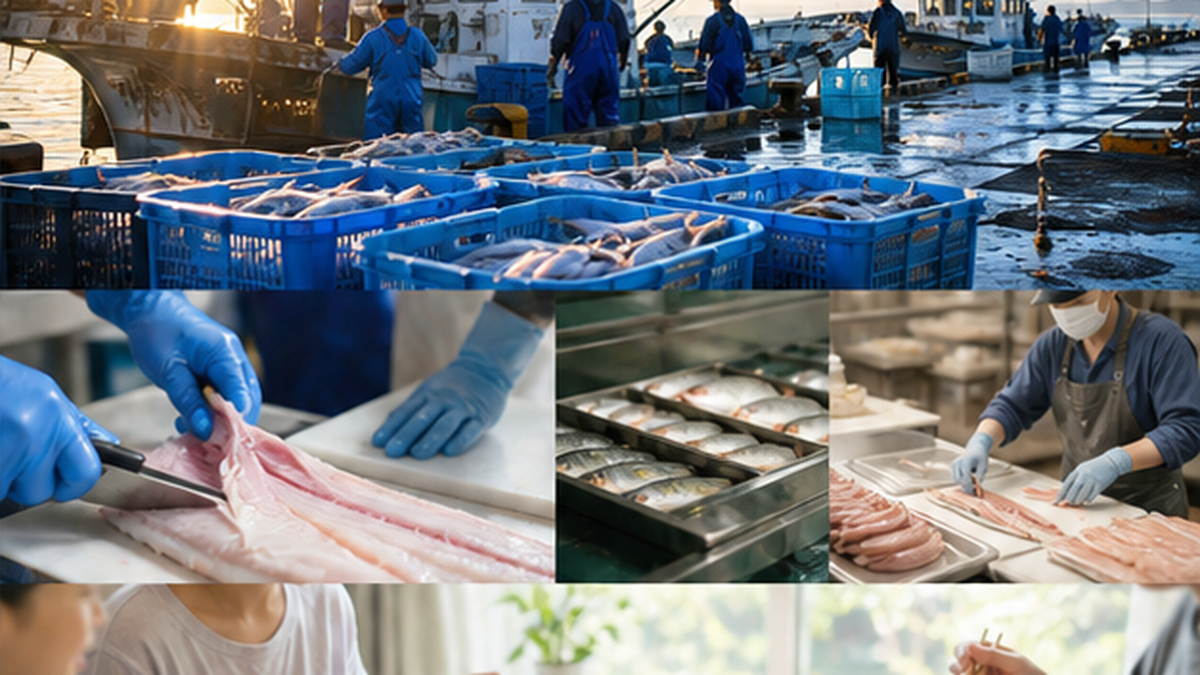
Fish caught as bycatch and thrown away, underutilized fish that never fetched a price because their names went unrecognized -- these were never "fish with no value." They were "fish that never got sold," within the structures of distribution and consumption. In Japan, said to make up 30 to 40 percent of the total catch, these fish are now being connected to the table through processing technology and new sales channels, in efforts spreading across the country.
Creating lots through flash-freezing, making fish easier to eat through surimi and seasoning. Delivering them to consumers through sales channels outside the market, such as subscriptions, direct-sale outlets, and school lunches. Each of these individually reduces food loss, increases the food supply without catching any more from the sea, and supports the livelihoods of fishers and their communities. And the final push comes from each of our own choices to "buy it, and eat it."
Summary of this article
- Bycatch and underutilized fish aren't "fish you can't eat" -- they're "fish that never got sold"
- In Japan, up to 30-40% of the catch is said to be underutilized fish, a substantial scale
- Processing such as flash-freezing, surimi, and seasoning overcomes the barriers of being hard to handle
- Sales channels outside the market, such as subscriptions, direct-sale outlets, and school lunches, connect fish to consumers
- Multiple benefits result: reduced food loss, effective use of resources, and regional revitalization
- Consumers "buying and eating unfamiliar fish" is what creates value and sales channels
Not letting the ocean's bounty go to waste. That first step doesn't belong to someone else's effort far away -- it begins with the small choice you make the next time you stand in front of the fish counter. On related topics, we also encourage you to read about rising sea temperatures and fisheries, where you can learn about changes in the marine environment, and fishing net recycling, which embodies the idea of using resources to the very last.
References and Sources
- Fisheries Agency of Japan -- Fisheries White Paper, "Making Use of Underutilized Fish -- MOTTAINAI," and related materials
- FAO (Food and Agriculture Organization of the United Nations) -- Commentary on The State of World Fisheries and Aquaculture (SOFIA)
- Japan Fisheries Research and Education Agency, National Fisheries University -- "Toward Using Bycatch Fish as Food" (Food Stories of the Seto Inland Sea)
- Mitsubishi Research Institute (MRI) -- Approaches to Making Use of "Underutilized Fish": Insights From Restaurant Trials
- National Institute for Environmental Studies, Environmental Outlook Station -- "Underutilized Fish" Used in Japan's Largest-Scale Elementary School Lunch Program
- ITmedia Business Online -- "Underutilized Fish Subscription" Membership Surpasses 10,000
- Sustainable Brand Journey -- Learning More About "Underutilized Fish"
- Ministry of Agriculture, Forestry and Fisheries -- Promoting Food Education by Farmers, Forestry Workers, and Fishers (Underutilized Fish and School Lunches)
* Listed in order of reliability: government and academic institutions > peer-reviewed papers > specialized organizations > reputable media