⚡ In short
Fukushima's seafood has been protected by a double safety net: a national limit of 100 Bq/kg and the prefectural fisheries federation's own 50 Bq/kg standard, with prefecture-wide shipment suspension triggered above 25 Bq/kg. No sample has exceeded the national limit since April 2015. This article traces the end of trial fishing, the shift to full-scale operations, the measured data after the ALPS treated water release, and the rebuilding of the Joban-mono brand.
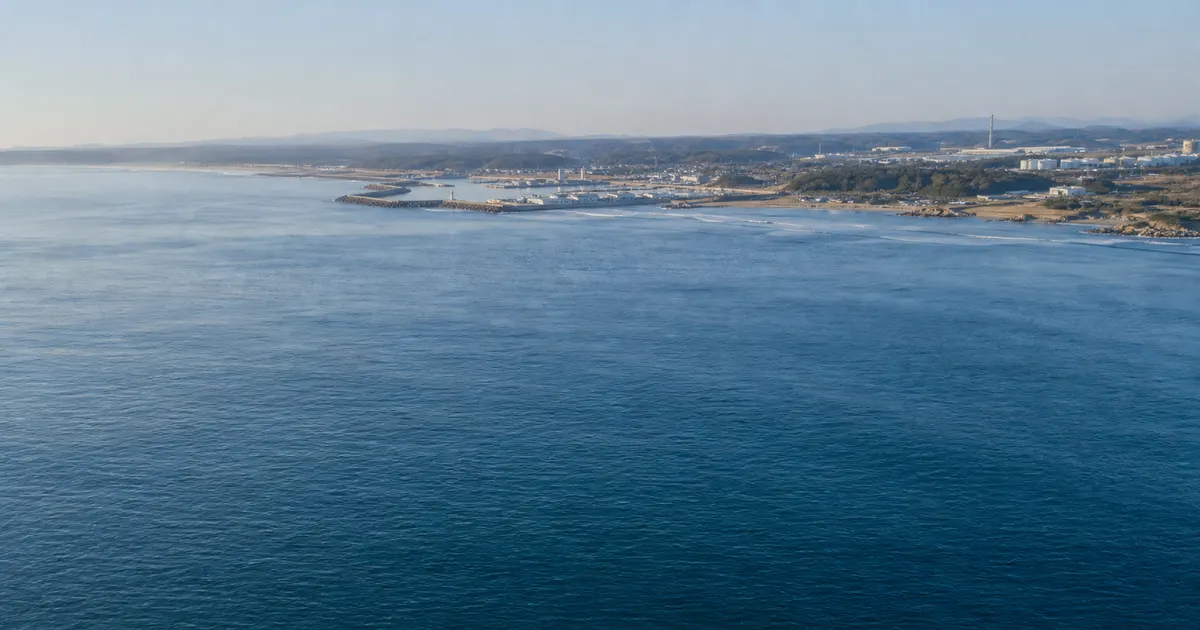
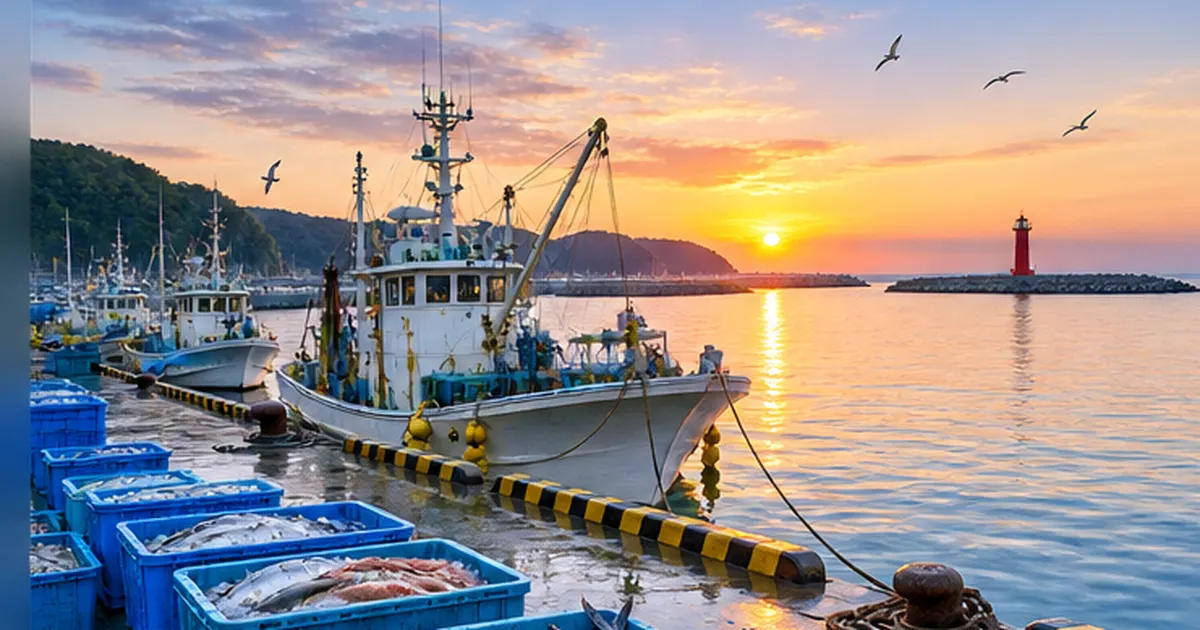
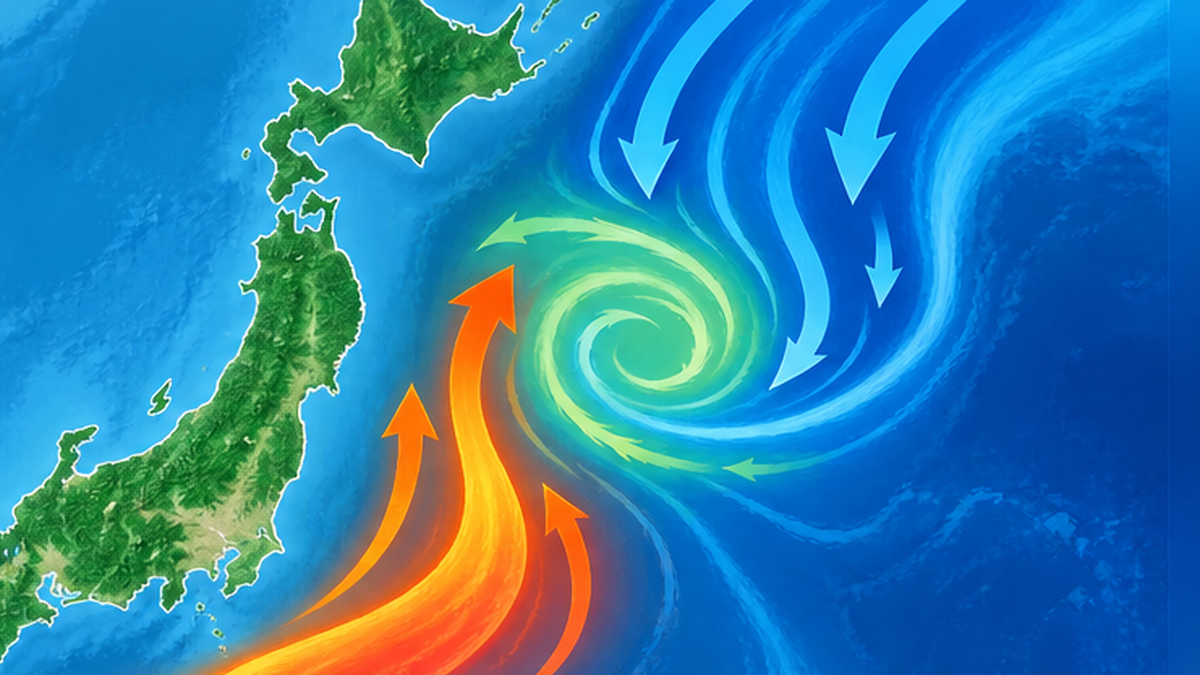
The waters off Fukushima are a "shiome no umi" — a sea of converging currents, where the warm Kuroshio flowing up from the south meets the cold Oyashio descending from the north. Where these nutrient-rich water masses mix, excellent fishing grounds form. Fish caught here have long been known as "Joban-mono" and have commanded high prices at the Tsukiji and Toyosu markets. Olive flounder, righteye flounders, fat greenling, whitebait — these firm-fleshed, well-marbled fish are the direct product of Fukushima's geographic fortune.
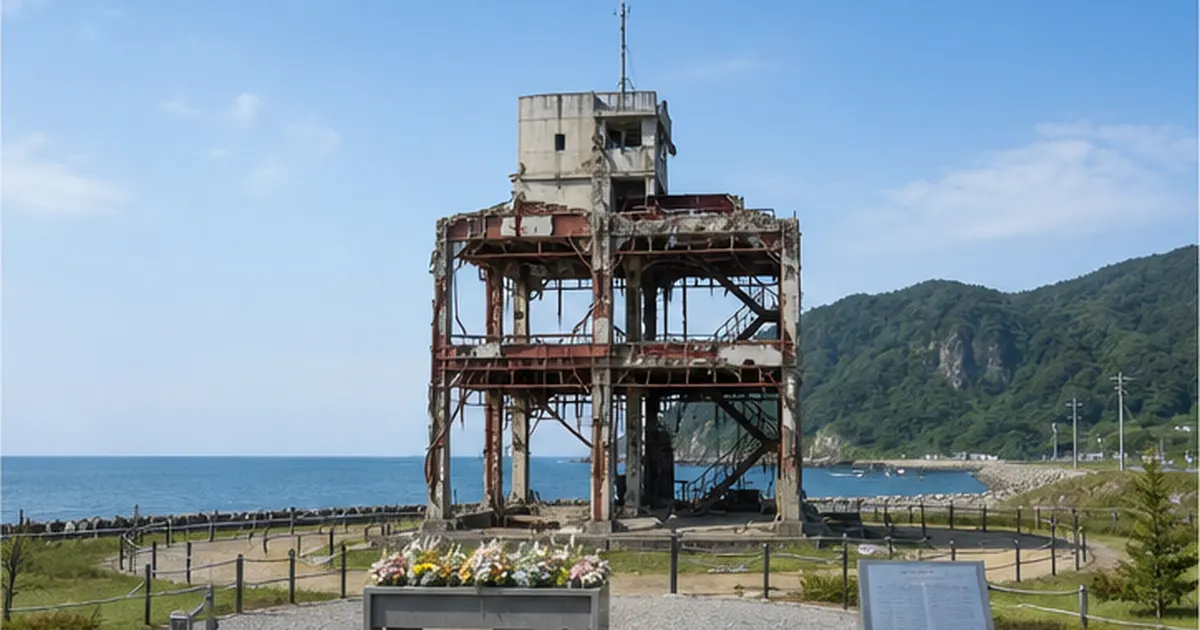
That sea was transformed in March 2011 by the Great East Japan Earthquake and the accident at Tokyo Electric Power Company's Fukushima Daiichi Nuclear Power Station. Radioactive material flowed into the ocean and coastal fishing in the prefecture came to a halt. In the fifteen years since, Fukushima's fishers and research institutions have built up a radiation monitoring program unmatched anywhere in the world for its scale and density. Between April 2011 and the end of December 2020 alone, some 66,000 samples across 240 species were tested. The testing continues every week to this day.
This article sets out how that inspection system is built, what the data show, and how far the Joban-mono brand has recovered since trial fishing ended and full-scale operations began — drawing on primary sources from the Ministry of the Environment, the Fisheries Agency, Fukushima Prefecture, and TEPCO. Assessments of safety differ depending on where one stands. Here we proceed carefully from the factual side: what has been measured, how far, and what numbers have come out.
この記事で学べること
- Why "Joban-mono" has long commanded high prices, explained through the oceanography of the waters off Fukushima where the Kuroshio and Oyashio currents meet
- How the three-layer inspection system — national limits, prefectural monitoring, and the fisheries federation's voluntary testing — works, and with what instruments
- Why the 30-40% of samples that exceeded limits in 2011 fell to zero after 2015, explained through the behavior of radiocesium in the ocean
- What is actually measured in seawater and seafood after the ALPS treated water release, and what the primary data show
- How far landings and output have recovered since the shift to full-scale operations, and what is holding the recovery back
- How to read the monitoring data, and concrete ways consumers can engage with Joban-mono
What Is "Joban-mono"? The Sea of Converging Currents
The name Joban-mono derives from the old provinces of Hitachi and Iwaki, and broadly refers to seafood caught along the coast from Ibaraki Prefecture up through Fukushima. The waters off Fukushima in particular have a distinctive set of conditions, even among Japan's fishing grounds.
The bounty of the "shiome" where Kuroshio meets Oyashio
Fukushima Prefecture faces waters where, in the prefecture's own words, "the Kuroshio and Oyashio intersect, forming excellent fishing grounds." The warm Kuroshio carries southern species northward, while the cold Oyashio is loaded with nutrients and plankton. Near the shiome where the two meet, phytoplankton bloom explosively, and the food chain builds upward through zooplankton, small fish, and finally large fish.
In addition, the continental shelf off Fukushima is relatively gentle, with broad sand-and-mud bottoms. This is ideal habitat for demersal fish such as flounders and soles, and it has shaped the roster of species that define Joban-mono. Both the currents and the seafloor topography are in place — that is the substance of the "sea of converging currents."
The species that define Joban-mono
In the Soma and Futaba areas, coastal fishing centers on demersal species such as righteye flounders, olive flounder, and fat greenling; in the Iwaki area, whitebait and small-scale trawling are prominent. Olive flounder has been selected as one of Fukushima's "Pride Fish" and can be considered the emblem of Joban-mono.
| Species | Main fishing method | Characteristics / season |
|---|---|---|
| Olive flounder (hirame) | Gillnet, trawl | Good balance of firm flesh and fat; peak from winter to spring |
| Higanfugu pufferfish | Longline, gillnet | A premium Joban-mono fish, named for the spring equinox season |
| Righteye flounders (magarei, babagarei) | Trawl | Classic simmered fish; landed year-round |
| Fat greenling (ainame) | Gillnet | Lives in rocky areas; highly rated from spring into early summer |
| Whitebait (shirasu) | Boat seine | The mainstay off Iwaki from early summer to autumn; freshness is everything |
| Mehikari (greeneyes) | Offshore trawl | The official fish of Iwaki City, known for deep-fried preparations |
The scale of the prefecture's fisheries
Fukushima's marine fishery catch stood at 79,000 tons in 2010 before the disaster, ranking 16th nationally; by 2022 it was 58,000 tons, ranking 14th. Output value fell from 18.2 billion yen before the disaster to 10.1 billion yen. Because these figures include offshore fishing, narrowing the focus to coastal fisheries reveals an even tougher recovery picture, as discussed below.
Key points from this section
- Joban-mono derives from the provinces of Hitachi and Iwaki and refers to seafood from the Ibaraki-Fukushima coast
- The waters off Fukushima are a shiome where the Kuroshio and Oyashio meet, making them nutrient-rich fishing grounds
- A gentle continental shelf with sand-and-mud bottoms suits flounders and soles
- Prefecture-wide marine fishery output fell from 18.2 billion yen before the disaster to 10.1 billion yen in 2022
What the Nuclear Accident Changed: From Shipment Restrictions to Trial Fishing
The tsunami of March 11, 2011 and the Fukushima Daiichi accident that followed dealt Fukushima's fisheries a double blow. Ports, boats, and processing facilities were physically destroyed, and the release of radioactive material into the sea meant that even if fishing resumed, the catch could not be sold.
Full voluntary suspension and shipment restrictions
Immediately after the accident, coastal and trawl fishing in Fukushima Prefecture were suspended entirely on a voluntary basis. Under the Food Sanitation Act, the national government ordered shipment restrictions on items exceeding the radiocesium limit. Many species off Fukushima were covered, and landings stopped altogether.
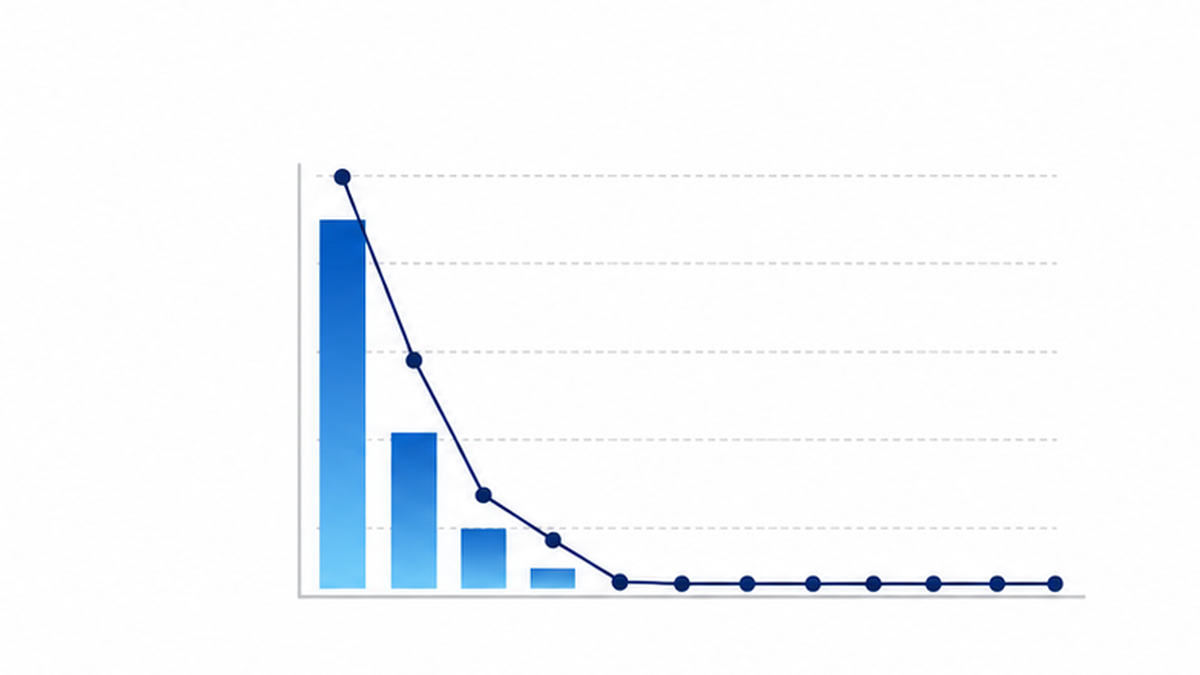
The contamination at the time was severe. According to prefectural materials, in 2011 roughly 34% of marine seafood samples exceeded 100 Bq/kg of radiocesium (other compilations put the figure at around 40%). The Fisheries Agency's nationwide survey likewise found that about 16% of samples exceeded 100 Bq/kg in 2011.
June 2012: trial fishing begins
The turning point came in June 2012. Limited to species in which radioactive material was rarely detected, and with fishing grounds and methods tightly restricted, trial fishing began. It had two purposes: to verify whether safety could be assured once fish were actually landed and distributed, and to gauge how the market would evaluate Fukushima products.
Trial fishing began in an extremely limited form — just three species off Iwaki: giant Pacific octopus, chestnut octopus, and the whelk shiraitomakibai. Species were added one at a time as testing confirmed their safety. This nearly decade-long period of trial fishing overlaps with the accumulation of the vast body of inspection data described below.

March 2021: trial fishing ends
After roughly nine years, trial fishing ended at the close of March 2021. From April of that year, Fukushima's coastal fisheries entered a transition period toward full-scale operations. This was not a declaration that everything was back to normal, but a phased plan under which each cooperative would review fishing days and grounds by method and vessel type, returning to pre-disaster landing and distribution volumes over a period of several years.
The decision rested on the monitoring figures described below. Researchers had also confirmed favorable resource conditions — larger fish and increased stock sizes for many major species — brought about, ironically, by the long suspension of fishing.
Shipment restriction vs. voluntary suspension
- Shipment restriction: a legal measure ordered by the head of the Nuclear Emergency Response Headquarters (the Prime Minister) under the Act on Special Measures Concerning Nuclear Emergency Preparedness
- Voluntary suspension: a self-imposed measure at the request of local governments or by decision of producer organizations; not legally binding but highly effective in practice
- Off Fukushima, the two have been combined to keep seafood above the limit out of the market
Three Layers of Protection: Who Measures What, and How
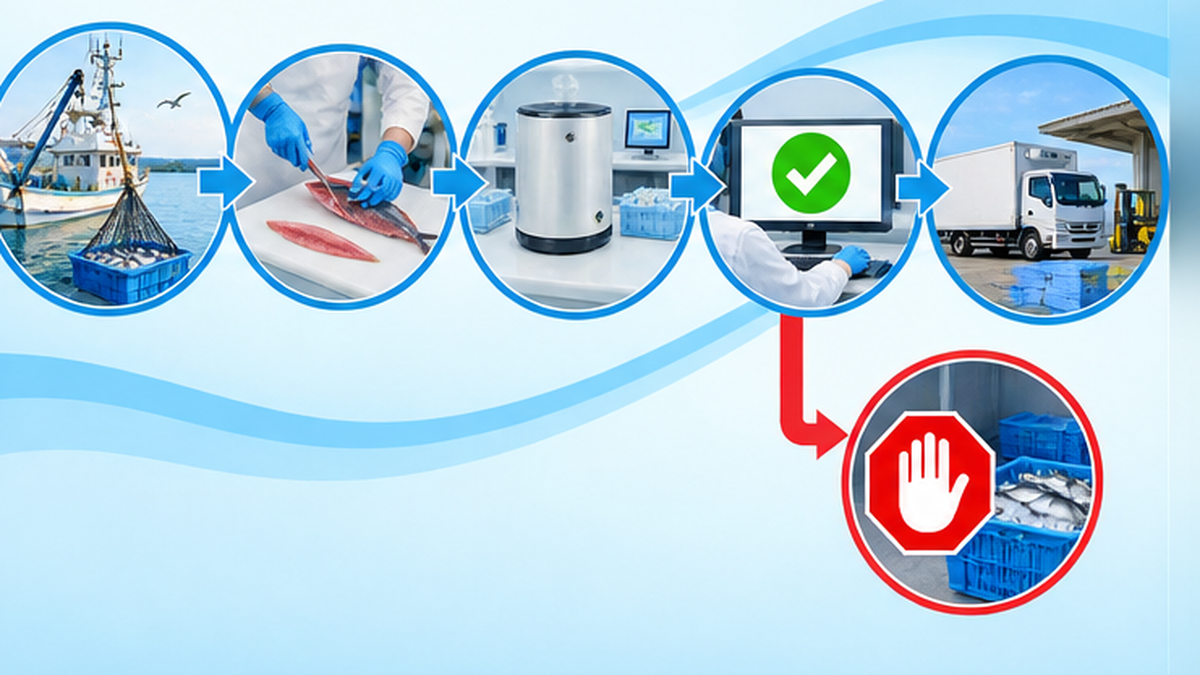
The safety of Fukushima's seafood rests on three layers: the national limit, prefectural monitoring, and the fisheries federation's voluntary testing. Each plays a different role, and their overlap closes the gaps.
Layer 1: the national limit of 100 Bq/kg
The limit for radiocesium in food is 100 becquerels per kilogram (Bq/kg) for general foods. In force since April 2012, this value is set so that dietary exposure does not exceed 1 millisievert per year, and it is strict even by international comparison (the Codex Alimentarius Commission's guideline is 1,000 Bq/kg and the EU's is 1,250 Bq/kg).
Layer 2: Fukushima Prefecture's official monitoring
Fukushima Prefecture conducts official testing every week to confirm food safety, at a scale of roughly 150 samples per week. The instrument used is a germanium semiconductor detector, a precision device that separates the energies of individual radionuclides at high resolution. It can quantify cesium-134 and cesium-137 separately and detect them reliably even at trace levels.
In addition to major commercial species, the Fisheries Agency's policy includes "items that exceeded 50 Bq/kg in the previous fiscal year" in the survey. In other words, any species that registers even a small reading is tracked intensively the following year. Results are published on Fukushima Prefecture's recovery information portal, with sample counts, species, and measured values.
Layer 3: the federation's voluntary testing and the "25 Bq/kg rule"
Closest to the front line is voluntary testing by the Fukushima Prefectural Federation of Fisheries Cooperative Associations. It is conducted at each market on every landing day, using scintillation detectors that deliver rapid results. The detection limit is set at around 12.5 Bq/kg.
Here lies a rule unique to Fukushima and stricter than the national one. Against the national limit of 100 Bq/kg, the federation sets a voluntary standard of 50 Bq/kg — and further, if voluntary testing returns a reading above 25 Bq/kg, shipments of that species are suspended across the entire prefecture. Fukushima Prefecture then performs precision testing with a germanium semiconductor detector, and shipments do not resume until safety is confirmed. Shipments for the whole prefecture are halted at one quarter of the national limit.
| Layer | Responsible body | Instrument / frequency | Limit or threshold |
|---|---|---|---|
| National limit | Ministry of Health, Labour and Welfare (Food Sanitation Act) | — | 100 Bq/kg for general foods |
| Official monitoring | Fukushima Prefecture (Agricultural Technology Centre etc.) | Germanium semiconductor detector / ~150 samples per week | Shipment restriction if above 100 Bq/kg |
| Voluntary testing | Fukushima Prefectural Fisheries Federation | Scintillation detector / every landing day at each market | Voluntary standard 50 Bq/kg; prefecture-wide suspension above 25 Bq/kg |
What matters most about the inspection system
- The national limit of 100 Bq/kg is ten times stricter than the Codex guideline of 1,000 Bq/kg
- Official prefectural testing covers about 150 samples per week using germanium semiconductor detectors
- The federation adds a voluntary standard of 50 Bq/kg and a prefecture-wide suspension trigger at 25 Bq/kg
- Results are published sample by sample on the prefecture's portal site
What the Data Show: From 34% to "Not Detected"
Describing the inspection system alone does not establish safety. What matters is how the accumulated data have actually moved.
Zero exceedances since April 2015
In Fukushima's monitoring, no seafood sample has exceeded the limit of 100 Bq/kg since April 2015. The Nikkei reported in 2018 that there had been "zero seafood above the limit for a second consecutive year," and that condition has continued since. Given that around 34% of samples exceeded the limit in 2011, the situation changed fundamentally in roughly four years.
In recent years the norm has moved beyond "below the limit" to "not detected." According to figures published by Fukushima Oishi Seafood, 99% or more of samples have shown no detectable radiocesium since 2018. Most recently, testing during July 23-29, 2026 measured 29 marine seafood samples across 19 species and 7 freshwater fish samples, and radiocesium was not detected in any of them.
Why levels fell so far
Several factors explain the decline. First, radiocesium in seawater was dispersed and diluted by ocean currents. The ocean is an enormous body of water, and released material spreads and thins over time.
Second, there is the biological half-life of cesium. Cesium taken into a fish behaves much like potassium and distributes into muscle tissue, but is excreted through metabolism. For marine fish, the biological half-life — the time for body concentration to halve — is on the order of tens to hundreds of days, so when the surrounding environment improves, concentrations in the fish follow. This contrasts with strontium, which lodges in bone for much longer.
Third, physical decay contributes. Cesium-134 has a half-life of about two years, so fifteen years after the accident it has decayed to less than one two-hundredth of its original quantity. Cesium-137, with a half-life of about 30 years, is the main focus of monitoring today.
Differences by species, and what still needs watching
While marine seafood is now almost entirely below detection, some inland-water species in rivers and lakes still require monitoring. Fresh water has a lower potassium concentration than seawater, which makes it harder for freshwater fish to excrete cesium. Cesium bound to soil washing in from forested catchments also remains a continuing source. Area-specific shipment restrictions have persisted for some inland species such as char and masu trout.
Reading the data carefully
- "Not detected" (ND) does not mean zero; it means below the detection limit. The detection limit itself must be read alongside the result
- Marine and freshwater fish behave very differently, so "Fukushima produce" cannot be treated as a single category
- Testing is sampling, not census — which is precisely why sample counts and species coverage matter
The ALPS Treated Water Release and the Measurements That Followed
In 2023 a new issue was added for a fishing industry still in recovery: the ocean release of ALPS treated water that had accumulated on the Fukushima Daiichi site. We cover this subject in more depth in "The ALPS Treated Water Release and Reputational Damage"; here we focus on its relationship to seafood monitoring.
August 24, 2023: the release begins, and the IAEA's assessment
The International Atomic Energy Agency (IAEA) published a comprehensive report on July 4, 2023, concluding that the ocean release of ALPS treated water was consistent with international safety standards. The release began on August 24, 2023.
ALPS removes radionuclides other than tritium to below regulatory levels, but tritium is an isotope of hydrogen and exists as part of the water molecule, making it technically difficult to separate from water. For this reason, the water is diluted with large volumes of seawater before release.
What the measurements actually show
According to TEPCO materials, a sample taken from the measurement and confirmation tank group C on May 16, 2025 had a tritium concentration of 250,000 Bq/L, confirming it met the requirement of below 1 million Bq/L. This is diluted with seawater before release, and during release periods water is sampled daily downstream of the seawater piping header to confirm it is below the operational limit of 1,500 Bq/L.
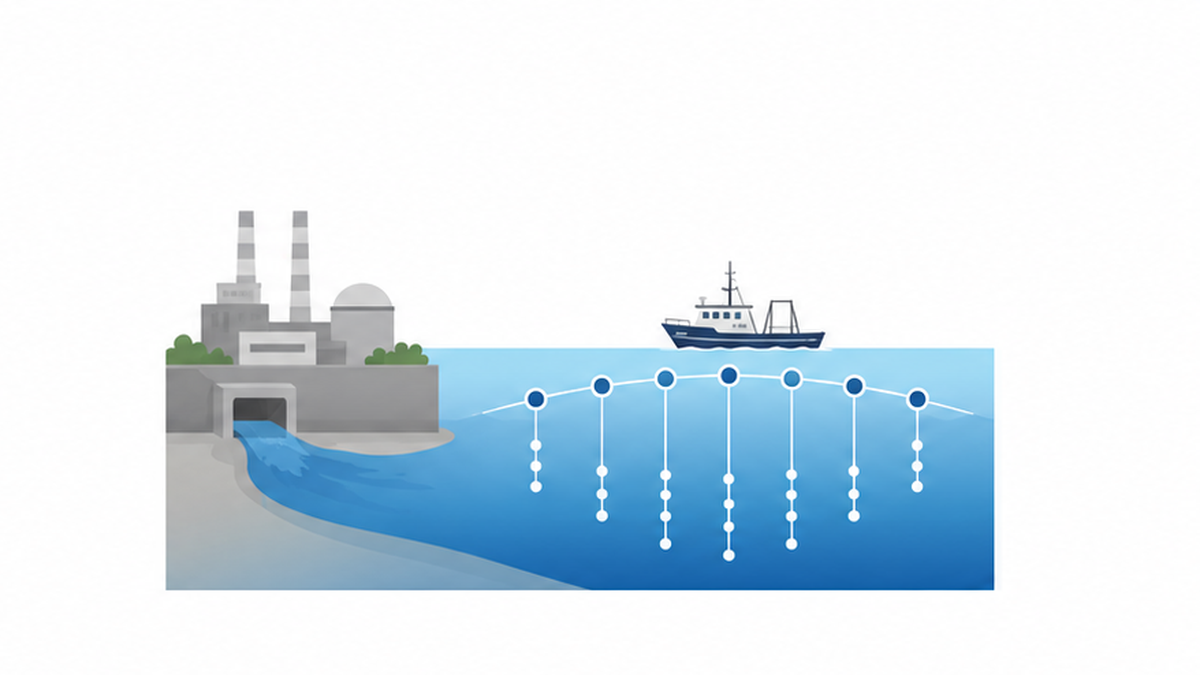
For the surrounding waters, Fukushima Prefecture's marine monitoring has confirmed that tritium concentrations in sampled seawater were below the detection limit at all nine sampling points (less than 4.2-4.3 Bq/L). The Ministry of the Environment also compiles and publishes monitoring results from the relevant agencies, and the data are open to anyone.
The link to seafood monitoring
What matters is that no change has appeared in seafood monitoring results since the release began. As noted above, radiocesium was not detected in any sample in testing through the end of July 2026. Rapid analysis of tritium in seafood is also being continued and published by the Fisheries Agency.
That said, this is not the same as a value judgment that the release poses no problem. Views such as that of the Citizens' Commission on Nuclear Energy — that the IAEA report does not provide grounds for the release — also exist. Presenting scientific data and building social consensus are separate matters, and the latter remains a work in progress.
Rapid analysis of sampled seawater found tritium concentrations below the detection limit (less than 4.2-4.3 Bq/L) at all nine sampling points, confirming no impact on people or the environment.
― Fukushima Prefecture, "Marine Monitoring Results for ALPS Treated Water"
The Shift to Full-Scale Operations: How Far Have Landings Recovered?
Even when inspection data demonstrate safety, that does not automatically rebuild an industry. The trend in actual landings and output value reveals how difficult recovery has been.
Recovery in numbers
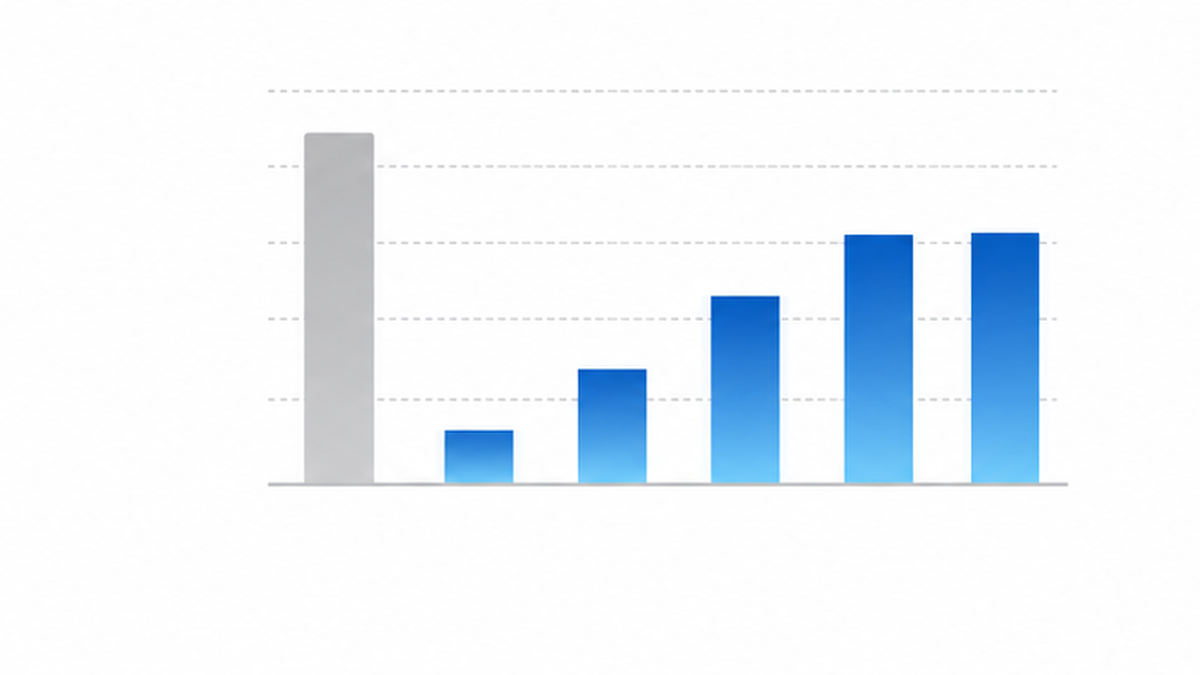
In 2020, near the end of the trial fishing period, landings were 4,532 tons — about 17% of the 2010 pre-accident level. After the shift to full-scale operations, 2022 saw 5,535 tons and 2023 reached 6,530 tons (preliminary), an 18% year-on-year increase and the highest figure since the disaster. A steady upward line.
But 2024 stalled. Total landings were flat against the previous year, yet catches of mainstay species such as whitebait and olive flounder fell, and coastal fishery output value came to 3.61 billion yen, down 340 million yen year on year. That is roughly 40% of the 2010 pre-disaster level.
| Year | Coastal fishery landings | Compared with pre-disaster / notes |
|---|---|---|
| 2010 (pre-disaster) | Baseline year | 79,000 tons and 18.2 billion yen for marine fisheries overall |
| 2020 | 4,532 tons | About 17% of the pre-accident level (late trial fishing period) |
| 2022 | 5,535 tons | Transition to full-scale operations |
| 2023 | 6,530 tons (preliminary) | Up 18% year on year; highest since the disaster |
| 2024 | Flat year on year | Output value 3.61 billion yen = about 40% of pre-disaster |
The stocks recovered, but the fish are not being caught
What is striking is that the resource itself has improved. Prefectural materials confirm larger body sizes and increased stock abundance for many major species, the result of the long suspension of fishing. The fish are there. The reason landings are not rising lies not at sea but on land.
Bottlenecks on shore
Increasing landings requires boats, fishers, processing plants, distribution, and sales channels all to be in place. During nearly a decade of restricted operations, fishers aged, younger workers moved to other industries, and processors lost their customers and closed. Recovery from the physical damage of the disaster has advanced considerably, as we saw in "Thirteen Years of Fisheries Recovery After the Great East Japan Earthquake", but networks of people and distribution do not return as readily as facilities.
There is also a risk that ramping up landings too quickly would outstrip market and processing capacity and cause prices to collapse. The federation adopted a phased approach over several years precisely because this balance of supply and demand had to be judged carefully.
Where recovery stands
- Landings: 4,532 tons in 2020 to 6,530 tons in 2023 (highest since the disaster)
- Output value: 3.61 billion yen in 2024 = about 40% of pre-disaster
- Stock abundance is up and fish are larger — conditions at sea are good
- The challenge is rebuilding the on-shore network of labor, processing, and sales channels
The Barriers: Reputation, Export Restrictions, and a Shrinking Workforce
The obstacles to rebuilding Joban-mono fall broadly into three categories.
Barrier 1: an unstable export environment
With the start of the ALPS treated water release, China suspended all imports of Japanese seafood from August 24, 2023. Four rounds of government-level consultations followed, and after talks on May 28, 2025 the two sides reached agreement on technical requirements. On June 29, 2025, China lifted the import suspension on Japanese seafood — but ten prefectures including Fukushima, Miyagi, Ibaraki, Tochigi, Gunma, Niigata, Nagano, Saitama, Tokyo, and Chiba remained excluded, leaving Fukushima products outside the scope.
Then, in November 2025, China effectively suspended imports of Japanese seafood again. According to the Ministry of Agriculture, Forestry and Fisheries, the Chinese government communicated that radiation testing was insufficient. The export environment shifts on a timescale of months, leaving producing regions unable to plan.
That said, Nikkei reporting found fishers responding coolly to China's easing, with comments such as "we sell out through new channels anyway." For regions that developed domestic sales channels during the embargo, dependence on the Chinese market is no longer what it was.
Barrier 2: reputation and price
Even with non-detection continuing in testing, consumer sentiment does not move on numbers alone. There is a distance between "below the limit" and "not worried about it," and that gap shows up in transaction prices. When the same species of the same quality fetches less because of its stated origin, it directly squeezes fishers' incomes.
At the same time, this cannot simply be dismissed as "reputational damage." It is natural for consumers to feel uncertainty, and what is needed is not to deny that uncertainty but to keep supplying material on which to judge. Fukushima's continued publication of sample-level data is exactly that: the provision of material for judgment.
Barrier 3: workforce and processing capacity
This is the most structural and the hardest to solve. The aging of the fishing workforce is a challenge nationwide, but in Fukushima nearly a decade of operational restrictions accelerated it. Having boats but no one to crew them, and catching fish but having no one to process them, is the direct reason landings do not rise even as stocks recover.
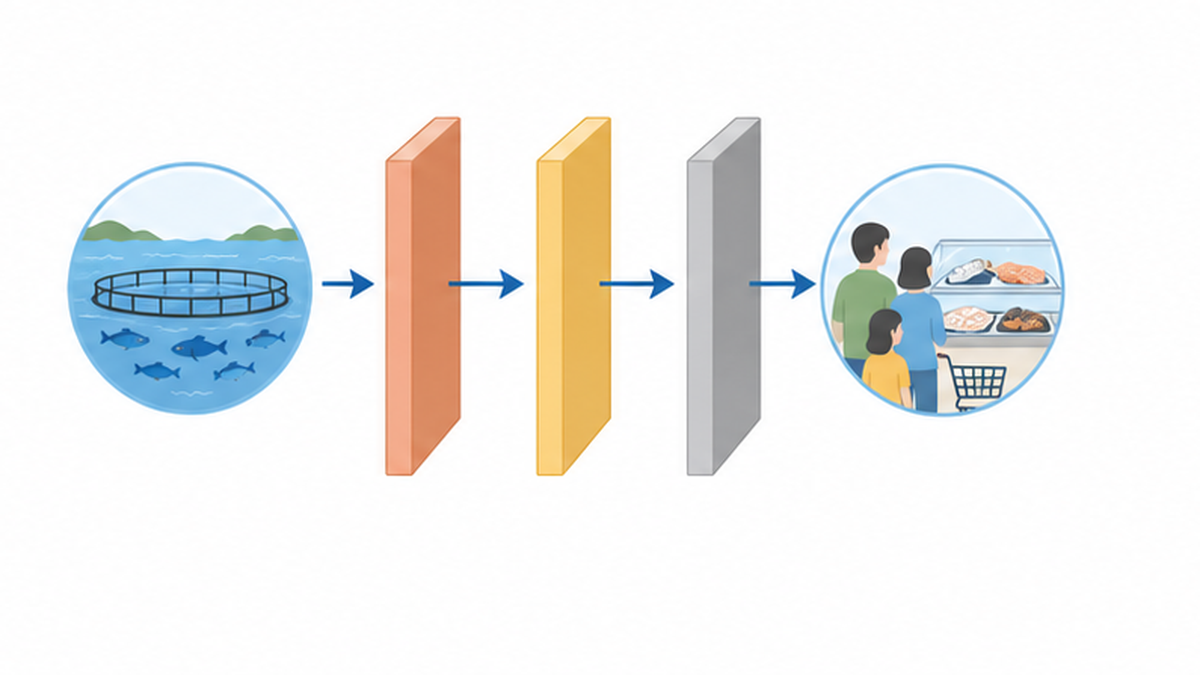
Points that are easily overlooked
- Export restrictions turn on diplomacy as well as scientific assessment, and can reverse within months
- Some regions strengthened domestic channels during the embargo, so the benefit of resumed exports is uneven
- Workforce shortages cannot be solved by testing or communication; they require entry support and income security
- Rebuilding processing and distribution cannot be completed by fishers alone
Rebuilding the Joban-mono Brand, and What Consumers Can Do
The challenges are many, but efforts to rebuild the Joban-mono brand are steadily spreading.
Disclosure itself as a strength
Fukushima's seafood is probably the most extensively documented in the world in terms of published inspection data. Species, sampling date, and measured value for each sample are updated weekly and freely accessible to anyone. This is an information asset no other producing region possesses, and it deserves recognition as an approach that makes safety verifiable rather than merely asserted.
Sites such as Fukushima Prefecture's recovery information portal and Fukushima Oishi Seafood present the inspection system and its results together. For consumers who value traceability, this arguably makes Fukushima an easier region to choose.
Opening new channels and new ways to eat
Having lived through the embargo, producers developed diverse channels: domestic direct sales, direct supply contracts with restaurants, hometown tax donation programs, and frozen and processed product development. In particular, efforts to make use of underutilized species that previously fetched little at market also overlap with reducing seafood loss.
The Sanriku region's rebuilding through branded farmed wakame, scallops, and oysters (see The Path of Sanriku's Fisheries Recovery) offers a useful reference for Fukushima as well: if returning by volume is difficult, return by unit price and by story.
Four things consumers can do
- Look at the data yourself, once: Fukushima Prefecture's monitoring results page publishes findings sample by sample. Going to the primary data rather than relying on hearsay is the most reliable basis for judgment
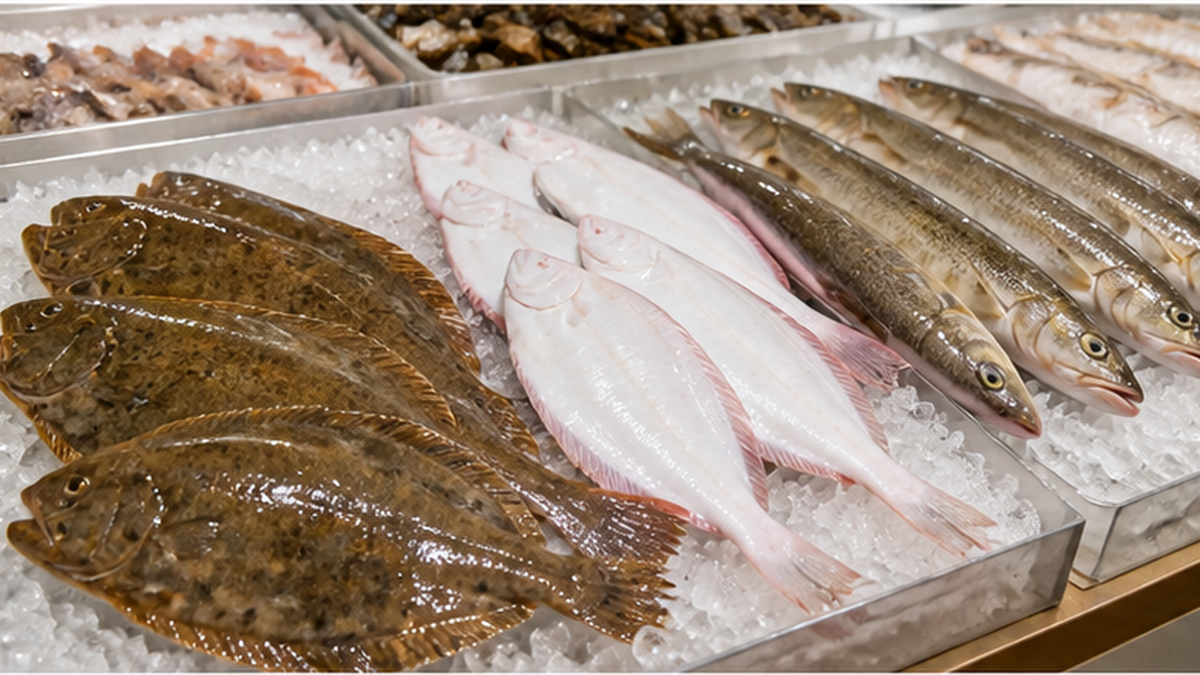
- Actually try Joban-mono: supermarket fish counters, restaurants, and hometown tax programs all offer access. You cannot judge the taste without eating it
- Do not judge by origin alone: quality varies by species, season, and fishing method. Applying the same criteria you would use for any other region is ultimately the fairest assessment
- Visit: markets and eateries in Onahama in Iwaki City or Matsukawaura in Soma City show the reality of production. Tourism spending supports producing regions too
What would it mean for "recovery" to be complete?
Is recovery complete once landings return to pre-disaster levels? Probably not. With fisheries nationwide facing an aging workforce and declining stocks, it is worth asking whether the 2010 level is even the right target.
If anything, Fukushima's fisheries start from a position no other region has: stocks that recovered during the long suspension. Rather than catching all one can, maintaining catches in line with stock abundance while raising unit prices — if that can be achieved, it could become a model for a more sustainable fishery, different in kind from what existed before the disaster. The depth of the inspection data would form the foundation of that trust.
Actions you can take today
- Bookmark Fukushima Prefecture's monitoring results page and check it even once a month
- If you see Fukushima or Joban-mono products at the fish counter, pick one up and try it
- Be ready to explain the difference between "not detected" and "below the limit" to family and friends
- If you have the chance to visit, go to a market or a cooperative-run eatery in the region
参考文献・出典
- Fukushima Prefecture – Emergency monitoring results for seafood from Fukushima (recovery information portal)
- Fisheries Agency of Japan – Results of radioactive material surveys of seafood
- Fukushima Prefecture – Fisheries in Fukushima Prefecture (trends in catch volume and output value)
- Fukushima Prefecture – Information on fisheries in Fukushima (end of trial fishing and transition to full-scale operations)
- Fukushima Oishi Seafood – Safety and reassurance measures for Fukushima seafood (inspection flow and voluntary standards)
- Fukushima Agriculture, Forestry and Fisheries Monitoring Information – Inspection system (testing with germanium semiconductor detectors)
- Ministry of the Environment, Japan – Marine monitoring information for ALPS treated water
- Ministry of Economy, Trade and Industry, Japan – IAEA confirms the safety of the ALPS treated water ocean release
- Ministry of Agriculture, Forestry and Fisheries, Japan – Information on countries and regions that tightened restrictions following the ALPS treated water release
- Fukushima Minpo – Coastal fishery landings of 6,530 tons in 2023, highest since the disaster
※ 信頼性の高い順に配列:政府機関・学術機関 > 査読済み論文 > 専門機関 > 信頼できるメディア