You've probably seen "mussels" on the shelves at the supermarket or on a bistro menu. Would it surprise you to learn that the black-shelled star of moules marinière and paella is not actually native to Japan, but an invasive species carried here by ships? This mollusk, formally known as the Mediterranean mussel (Mytilus galloprovincialis), hails from the Mediterranean Sea and has been a "settler" in Japan since the early Showa era. And the Mediterranean mussel is far from the only marine invasive species around. A crab born in the Mediterranean has established itself in Tokyo Bay, and at ports across the country, various shellfish and crustaceans are increasing in number as new residents.
Marine invasive species don't attract as much attention as land-based ones like the common dandelion or the raccoon. The ocean is hard to see into, and it's difficult to tell where "originally native" creatures end and newcomers begin. But the impact is far from small. These species devour native shellfish and fish, clog the water intakes of aquaculture farms and power plants, and quietly rewrite the balance of local ecosystems. International research bodies estimate that invasive alien species cause roughly ¥62 trillion in economic damage worldwide every year.
This article starts with the "entry points" question — where marine invasive species come from and how they get here — before moving on to specific culprits such as the Mediterranean mussel and various crabs, their impact on native ecosystems and industries, and finally the mechanisms for prevention, including the international Ballast Water Management Convention that entered into force in 2017 and Japan's domestic Invasive Alien Species Act. Throughout, we draw on primary sources such as Japan's Ministry of the Environment, the National Institute for Environmental Studies, and the International Maritime Organization (IMO). By the time you finish reading, the next time you eat mussels, you should be able to glimpse a little of the "globalization of the ocean" behind that dish.
What You'll Learn in This Article
- How marine invasive species are carried via three routes: ballast water, hull fouling, and imports/aquaculture
- That the mussels on our dinner tables are actually the Mediterranean mussel, an invasive species originally from the Mediterranean
- How crabs such as the Mediterranean shore crab have established themselves in places like Tokyo Bay and threaten native bivalves
- The damage that established invasive species cause to fisheries, aquaculture, and power plant water intake facilities
- The details of the Ballast Water Management Convention (BWM Convention), which entered into force in 2017, and its D-2 discharge standard
- What we can do to help prevent and detect invasive species early, including Japan's Invasive Alien Species Act and citizen monitoring
What Are Marine Invasive Species? — The "Invisible Stowaways" Problem
An invasive species is an organism that did not originally exist in a given area but was brought in from elsewhere through human activity. On land, well-known examples include insects that hitch rides in cargo, or pets imported and then escaping into the wild. The same thing happens in the ocean, but the stage is submerged, largely out of sight. That's exactly why marine invasive species are sometimes called "invisible stowaways."
Not all invasive species become a problem. Many fail to establish themselves in their new environment and simply disappear. But some species multiply explosively in the absence of natural predators, pushing out native organisms and disrupting the balance of the ecosystem. Such species are specifically called "invasive alien species," and the International Union for Conservation of Nature (IUCN) has compiled a list of globally significant examples called the "100 of the World's Worst Invasive Alien Species." Among marine organisms, the Mediterranean mussel, which we'll discuss shortly, is on that list. We also cover Japan's marine life as a whole in our article on Japan's Marine Biodiversity.
Three Entry Points for Marine Invasive Species
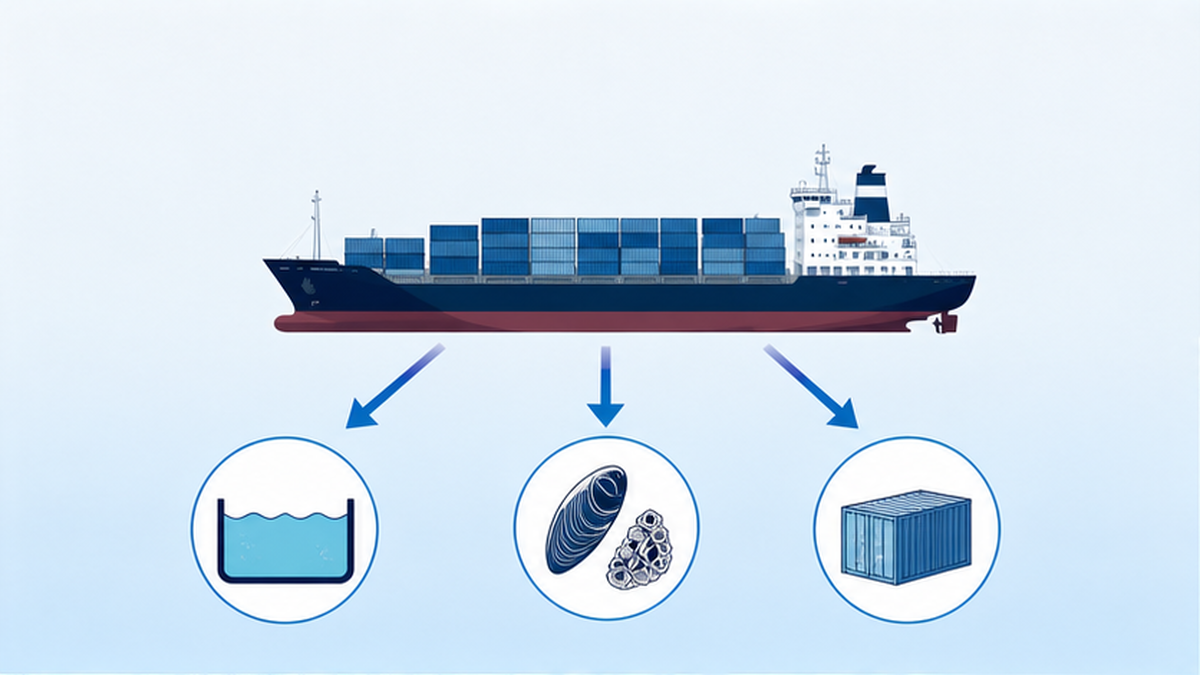
The routes by which marine organisms are carried beyond their natural range can be broadly organized into three categories. All of them are inextricably linked to human economic activity, particularly the international movement of goods.
- Ballast water: Seawater taken on by cargo ships to stabilize the hull. It carries along the plankton and shellfish larvae from the port where it was drawn, and is discharged at another port. This is the largest-scale route.
- Hull fouling: Barnacles and shellfish attach to ship hulls or marine structures and travel along with them. The risk is higher for vessels that move slowly or remain moored for long periods.
- Imports, aquaculture, and release: Cases where organisms imported for food or aquaculture — or other organisms that hitchhike along with them — spread into the wild. Releasing ornamental species is also a contributing factor.
Why Has "Ocean Globalization" Accelerated?
Behind the worsening problem of marine invasive species lies the rapid expansion of international trade since the latter half of the 20th century. As larger ships came to connect ports around the world faster and more frequently, the ocean — a "wall" organisms could never have crossed on their own — became something that could be leapt over in a matter of days or weeks. Ecosystems once separated by continents and ocean currents have become connected through trade networks.
"Invasive Species," "Introduced Species," and "Naturalized Species"
News reports and other materials also use terms like "introduced species" or "naturalized organisms," both of which refer to organisms carried outside their natural range by human activity. Japan's Ministry of the Environment defines "invasive alien species" under the Invasive Alien Species Act as those introduced since the Meiji era, and this article follows that definition.
Ecosystem Disruption Carried by Ballast Water — The Reality in the World and Japan
Of the three entry points, ballast water has by far the greatest impact. Let's start by understanding what this "ship's ballast" actually is.
What Is Ballast Water?
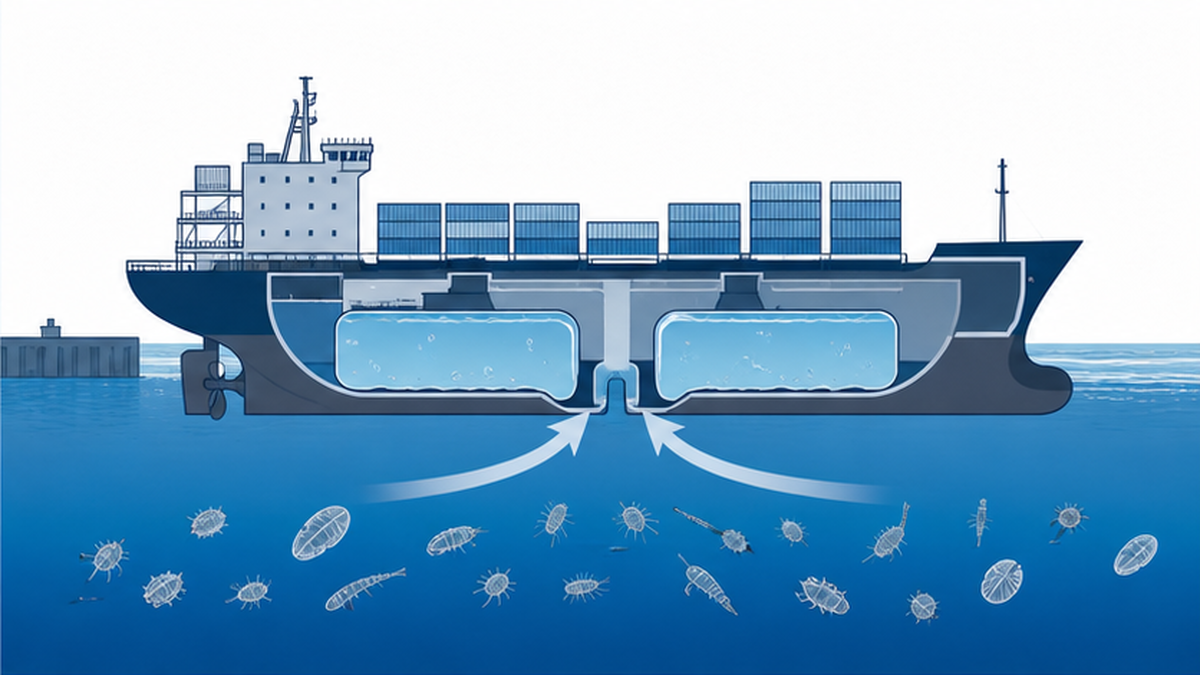
When a cargo ship unloads its cargo and becomes lighter, the hull rises, bringing the propeller and rudder closer to the surface and making the vessel unstable. To prevent this, ships take on seawater into dedicated tanks in the hull as ballast. This seawater is ballast water. Because it's discharged at the port where cargo is loaded and taken on at the port where cargo is unloaded, ballast water is continuously carried in enormous quantities from port to port around the world. The International Maritime Organization (IMO) estimates the total volume at roughly 12 billion tonnes per year worldwide.
The problem is that this seawater is not "just water." The waters at the port where it's drawn are teeming with countless plankton, bacteria, and the eggs and larvae of shellfish, crabs, and fish. All of this is sucked into the tanks together and discharged alive at a port far away. It's said that more than 7,000 aquatic species are carried in ballast water in this way, and some of them go on to establish themselves in their new surroundings.
Two Cases That Shook the World
Just how great an impact ballast water can have is illustrated by two famous cases overseas. Both are "textbook" examples repeatedly cited in ballast water research.
- The comb jelly of the Black Sea (around 1982): A species of comb jelly native to North America was brought into the Black Sea via ballast water and multiplied explosively. It devoured plankton and dealt a severe blow to catches of anchovy, an important local fishery resource.
- Zebra mussels in the Great Lakes (around 1988): Zebra mussels native to Europe invaded North America's Great Lakes and proliferated abnormally. They built up in thick layers on the water intakes of power plants and factories, clogging them and obstructing water flow, causing enormous economic damage.
What these cases show is that a single invasive species can trigger a chain of damage extending beyond the ecosystem to fisheries and industrial infrastructure. And Japan is no exception to this "globalization of the ocean." Surrounded by sea on all sides and home to some of the world's largest trade volumes, Japan's ports see enormous quantities of ballast water flowing in and out every day.
Climate Change Is Helping Invasive Species Take Hold
- Rising sea temperatures are making it easier for warm-water invasive species that previously couldn't survive Japanese winters to establish themselves
- Areas around power plants that discharge warm wastewater tend to become winter "overwintering strongholds" for invasive species even in cold months
- Changes in distribution are also occurring among native species, making the entire marine ecosystem more fluid (see also Ocean Warming and Fisheries)
The Mediterranean Mussel — The Mussels on Our Table Were Invasive Species All Along
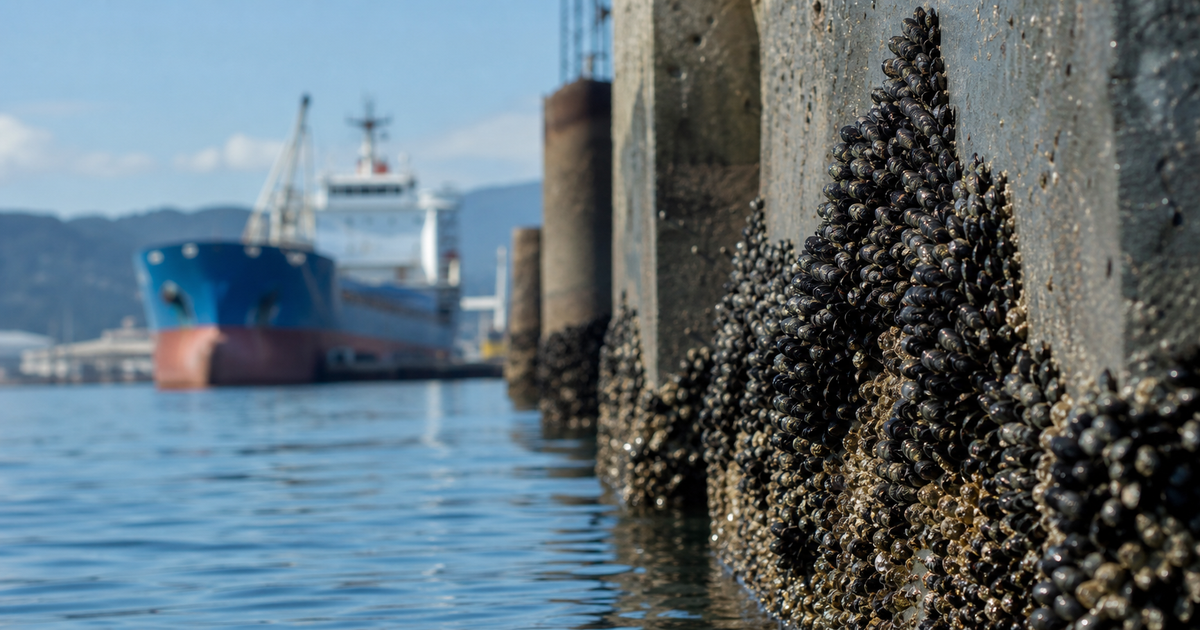
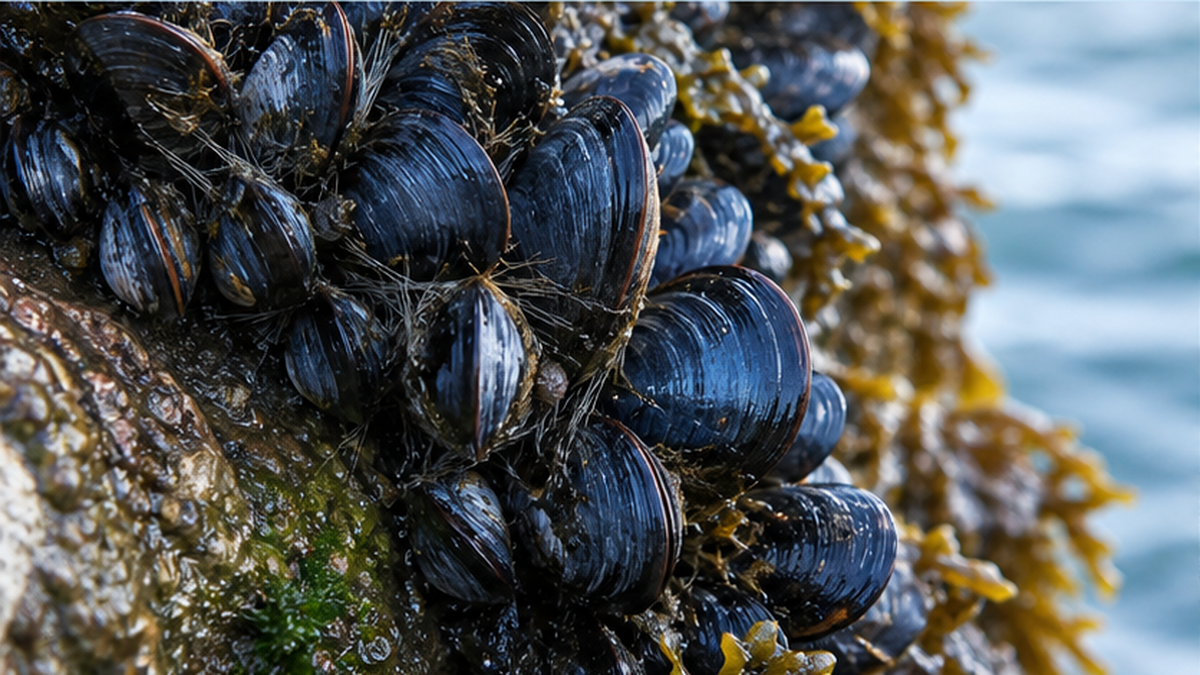
Among marine invasive species, the Mediterranean mussel is probably the one closest to our everyday lives. Many of the black bivalves served as "mussels" at restaurants are this very species. While delicious to eat, it is treated as an invasive species in Japanese waters.
The Mediterranean-Born "Mussel"
The Mediterranean mussel (scientific name: Mytilus galloprovincialis) is a bivalve originally native to the Mediterranean Sea and surrounding areas. With strong dispersal ability and fecundity, it has now spread across the globe, including to Japan. According to the National Institute for Environmental Studies' Invasive Species of Japan database, it is thought to have entered Japan via ships' ballast water and hull fouling since the early Showa era (1930s), gradually expanding its range. Because of how vigorously it has spread, it has been selected for both the IUCN's "100 of the World's Worst Invasive Alien Species" and the Ecological Society of Japan's "Japan's 100 Worst Invasive Alien Species."
Besides the Mediterranean mussel, other non-native mussel-family shellfish have also become established in Japanese waters, including the green mussel (Perna viridis) and the golden mussel. The golden mussel in particular has been designated a Specified Invasive Alien Species under the Invasive Alien Species Act because of its significant ecological impact, and keeping or transporting it is generally prohibited. The Mediterranean mussel and green mussel are listed on the Ministry of the Environment's Ecosystem Damage Prevention Invasive Species List, which calls for caution.
Both a Nuisance and a Delicacy
What makes the Mediterranean mussel interesting is that it has two faces: a "troublesome invasive species" and a "globally important food source." In Europe, it has long been an important aquaculture species and is counted among the most widely farmed shellfish in the world. Much of the mussel served on Japanese tables belongs to this group. On the other hand, wild individuals attach densely to harbor revetments, ship hulls, and intake walls, taking up space and food that native fouling organisms would otherwise use.
The question of how to make use of the shells is shared with native oysters. Efforts to recycle shells as a resource are covered in our article on Oyster Shell Recycling. The idea of putting removed individuals to use rather than wasting them — even for an invasive species — offers a useful hint for thinking about ocean challenges going forward.
| Species | Native Range | Status in Japan | Main Problem |
|---|---|---|---|
| Mediterranean mussel | Mediterranean region | Ecosystem Damage Prevention Invasive Species / Worst 100 list | Fouling of revetments and intakes; competition with native fouling organisms |
| Green mussel | Indian Ocean & western Pacific | Ecosystem Damage Prevention Invasive Species | Fouling of water intake facilities; concerns over impact on aquaculture |
| Golden mussel | China & Korean Peninsula | Specified Invasive Alien Species (keeping, etc. prohibited) | Clogging of irrigation channels and intake facilities; mass outbreaks in freshwater |
Key Points
- Much of what's called "mussel" is the invasive Mediterranean mussel
- While valuable as food, it becomes a troublesome fouling organism once it goes wild
- Even within the same mussel family, the golden mussel is legally regulated as a Specified Invasive Alien Species
The Invasion of Crabs — The Mediterranean Shore Crab and Tokyo Bay
Alongside shellfish, crabs are another group of marine invasive species drawing attention. Crabs have high mobility and are difficult to eradicate once established, causing problems around the world. In Japan, the leading example is the Mediterranean shore crab.
1984: First Recorded in Tokyo Bay
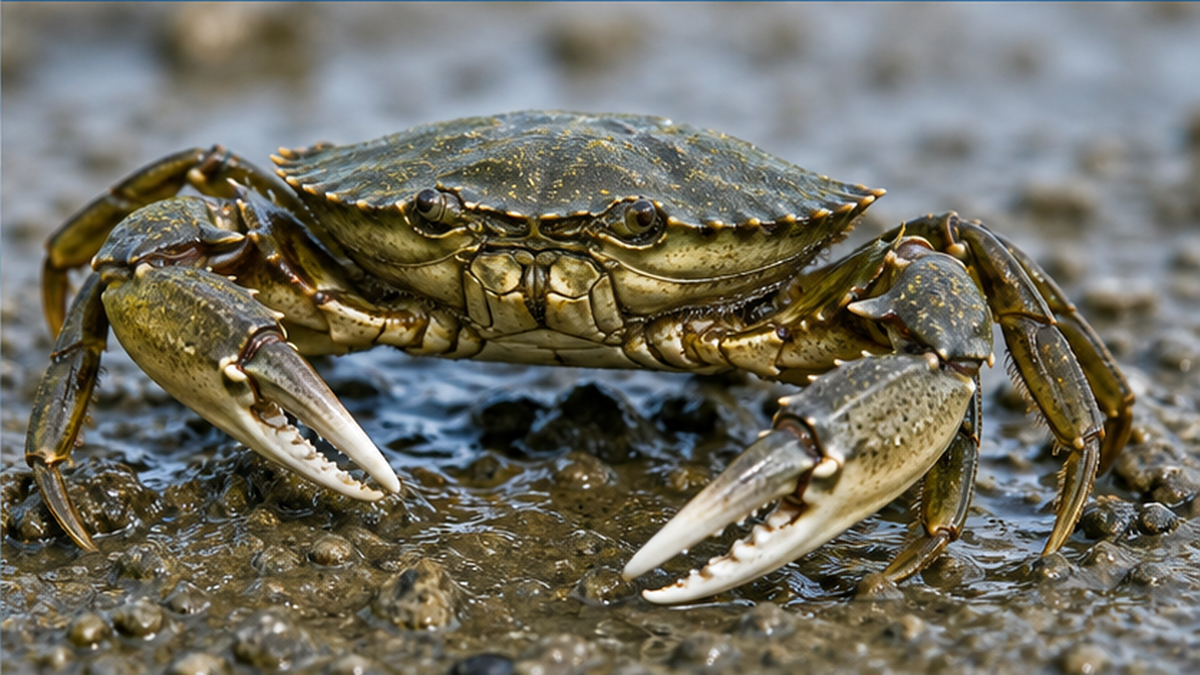
The Mediterranean shore crab (scientific name: Carcinus aestuarii), as its name suggests, is a crab distributed mainly around the Mediterranean. Carried around the world by ships' ballast water and other means, it was first recorded in Japan in Tokyo Bay in 1984. It subsequently expanded into Osaka Bay in the 1990s and is now established in bays and inland seas throughout Japan. It thrives in human-altered environments such as harbors and is commonly found in waters near cities.
Its close relative, the European green crab (Carcinus maenas), is known as a powerful invader, also included on the "100 of the World's Worst Invasive Alien Species" list. Interestingly, the wild population found in Japan has been reported to be a hybrid of the European green crab and the Mediterranean shore crab, of a type closer to the Mediterranean shore crab — a lineage found only in Japan. These green crab species are treated as species requiring caution on the Ministry of the Environment's Ecosystem Damage Prevention Invasive Species List.
A Predator's Face Hidden in a Small Body
The biggest reason green crabs are viewed with caution is their voracious appetite. Overseas research has shown that in areas where the closely related European green crab has invaded North America, it stirs up the seabed while preying on bivalves such as clams, oysters, and mussels, as well as juvenile fish and crustaceans, causing major damage to native communities and fisheries. Even though each individual is small, when their numbers grow, they have the power to completely transform the ecosystems of tidal flats and shallow waters.
In Japan too, tidal flats and shallow bays are important nursery grounds for bivalves such as clams, and these environments are treasure troves of biodiversity. The role of tidal flats is explained in detail in our article on Tidal Flat Conservation. An increase in non-native crabs in these areas is a risk that cannot be overlooked for native fishery resources.
In North America, the closely related European green crab disturbs the seabed and preys on commercially important bivalves such as clams, oysters, and mussels, as well as juvenile fish and crustaceans, causing major damage to native biological communities and fisheries.
— National Institute for Environmental Studies, Invasive Species of Japan database (entry on the Mediterranean shore crab)
The Difficulty of Distinguishing Them from Native Crabs
Non-native green crabs closely resemble native crabs such as the Japanese shore crab and the hairy crab Hemigrapsus penicillatus, making them hard to tell apart without expert knowledge. That's exactly why monitoring at harbors and tidal flats, along with accurate species identification, is key to early detection.
The Impact of Establishment on Native Ecosystems and Industry
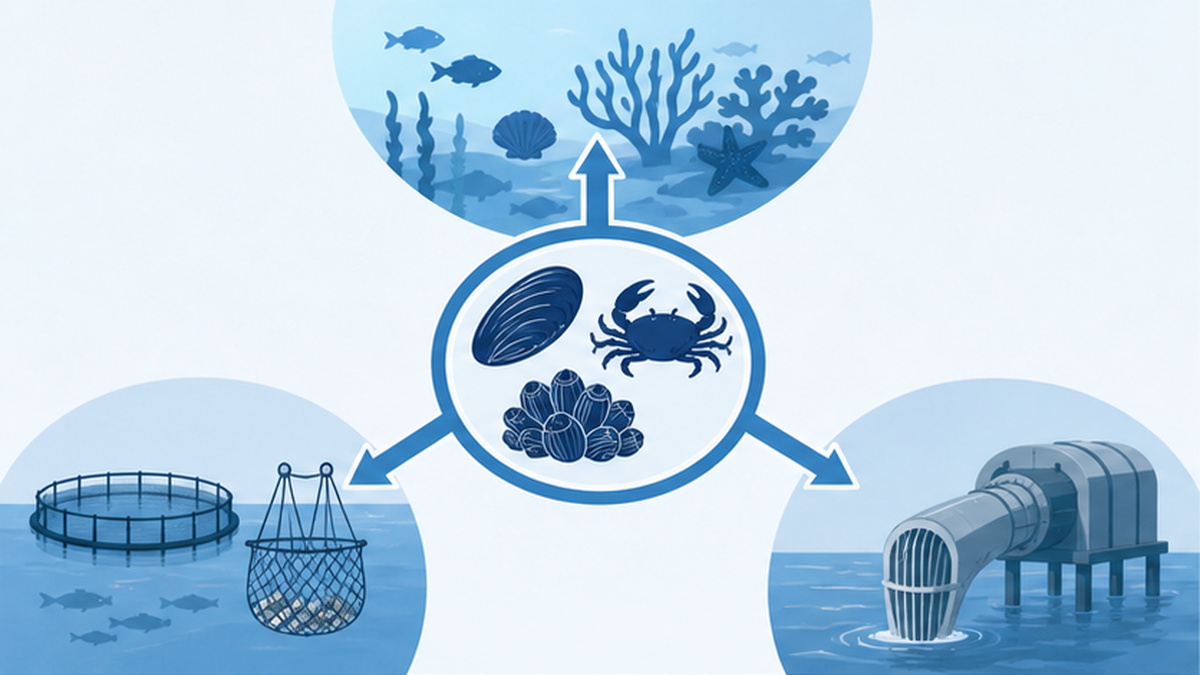
As we've seen with the Mediterranean mussel and green crabs, once an invasive species becomes established, its impact extends beyond the ecosystem to our daily lives and industries. Let's organize these impacts into three areas: "ecosystem," "fisheries," and "infrastructure."
Native Ecosystem Balance Is Disrupted
The ecological impact of invasive species can be broadly divided into three types. First, predation — eating native shellfish and juvenile fish. Second, competition — fighting over limited food and habitat, pushing out native species. Third, habitat modification — altering the seabed itself through fouling or burrowing. Species like the Mediterranean mussel, which blanket surfaces, cause competition and habitat modification, while species like green crabs cause predation and habitat modification. As these effects accumulate, the web of relationships among organisms that originally lived there quietly unravels.
Invasive species are not the only cause of ecosystem imbalance. Factors such as red tides and eutrophication caused by excess nutrients, and rising sea temperatures, are also intertwined in complex ways. The issue of invasive species needs to be considered together with these other environmental stresses, not in isolation.
A Blow to Fisheries and Aquaculture
Invasive species also have a direct impact on fisheries. When green crabs prey on bivalves such as clams, it reduces the resources available for shellfish gathering and clam fisheries. When fouling mussels attach in large numbers to aquaculture ropes, nets, and rafts, they hinder the growth of the shellfish and seaweed being farmed, add weight to the facilities, and drive up management costs. Local fisheries are something built up over a long time, much like recovery from disasters (see The Revival of Sanriku's Fisheries), and the added burden of invasive species is a heavy challenge for those on the ground.
Shutting Down Power Plants and Infrastructure
Though easily overlooked, invasive species also damage infrastructure. Thermal and nuclear power plants use huge volumes of seawater for cooling, and when fouling organisms such as barnacles and Mediterranean mussels build up thickly in intake channels, water flow is obstructed, cooling efficiency drops, and in the worst case, this can lead to a shutdown. Invasive species such as the green mussel have been reported to cause this kind of fouling damage to intake facilities, requiring ongoing manual removal. Overseas, the previously mentioned zebra mussels of the Great Lakes are a famous example of clogging power plant and factory water intakes, generating enormous countermeasure costs.
There are also estimates that convert this kind of damage into monetary terms. IPBES, the international biodiversity organization involving scientists from around the world, reports that invasive alien species cause at least US$423 billion — roughly ¥62 trillion — in global economic losses every year. This figure covers both marine and terrestrial invasive species, but marine invasive species make up part of that total.
Summary of the Three Aspects of Impact
- Ecosystem: Predation, competition, and habitat modification disrupt native relationships
- Fisheries: Decline in bivalve resources; increased management burden from fouling of aquaculture facilities
- Infrastructure: Reduced efficiency or shutdowns due to fouling and clogging of intake facilities such as power plants
The Ballast Water Management Convention — Stopping Stowaways with International Rules
Given that ballast water is the largest entry point for marine invasive species, countermeasures cannot be completed by a single country alone, since ships travel across borders. This is why the "Ballast Water Management Convention (BWM Convention)" was created as an international rule.
The Path from Adoption in 2004 to Entry Into Force in 2017
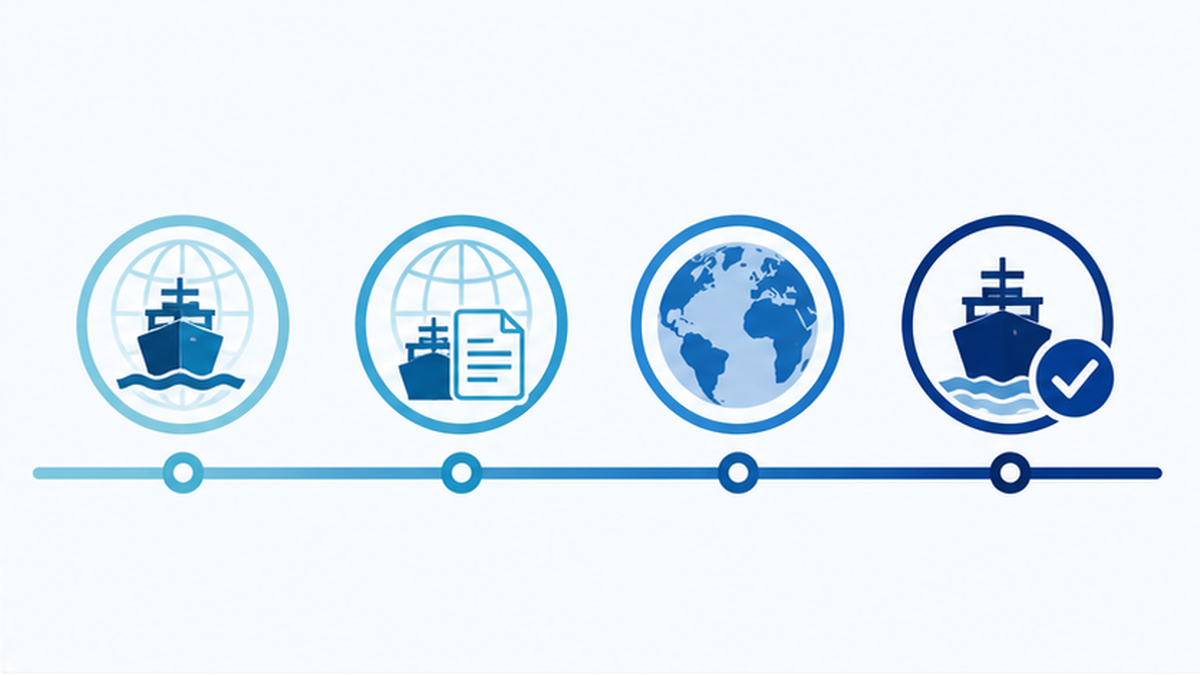
The Ballast Water Management Convention, formally titled the "International Convention for the Control and Management of Ships' Ballast Water and Sediments, 2004," was adopted by the International Maritime Organization (IMO) in February 2004. Its purpose is to prevent the transfer of harmful aquatic organisms and pathogens carried in ballast water, and to stop them from adversely affecting marine ecosystems, human health, and economic activity. However, it took a long time to enter into force. The requirements — ratification by at least 30 states, representing at least 35% of world merchant shipping tonnage — were a high bar, met when Finland ratified the convention in September 2016. It entered into force exactly one year later, on September 8, 2017.
Japan has also joined this convention. It was approved by the Diet in May 2014, Japan deposited its instrument of accession with the IMO Secretary-General in October of that year, and the convention took effect domestically on September 8, 2017, the date the convention entered into force. As a result, ballast water management became mandatory for ships entering and leaving Japanese ports.
D-1 and D-2 — Two Standards
The convention sets out a two-stage standard for how ships should manage ballast water. The transitional method, the D-1 standard (ballast water exchange), involves exchanging ballast water on the open ocean, where organisms taken on near the coast are less likely to survive. The more thorough D-2 standard (ballast water performance standard) requires ships to be equipped with treatment systems that reduce the organisms in discharged water below a set number. Ultimately, all applicable ships are to transition to the D-2 standard.
The details of the D-2 standard are specific. In treated ballast water, organisms with a minimum size of 50 micrometers or greater (mainly zooplankton) must number fewer than 10 viable organisms per cubic meter of water, and organisms with a minimum size of 10 to less than 50 micrometers (mainly phytoplankton) must number fewer than 10 viable organisms per milliliter of water. In addition, upper limits are set for indicator organisms relevant to human health, such as cholera bacteria. Ballast water treatment systems installed on ships meet this standard by combining methods such as filtration, ultraviolet irradiation, and chemical treatment.
| Standard | Content | Status |
|---|---|---|
| D-1 (Exchange standard) | Exchanges ballast water on the open ocean, reducing the survival rate of coastal organisms | Transitional, simplified method |
| D-2 (Performance standard) | Uses treatment equipment to reduce organisms in discharged water below a set number | The full standard all ships must ultimately meet |
In Japan, a system has been established in which the Ministry of the Environment reviews and evaluates the impact on aquatic environments of treatment systems that use active substances such as chemicals, confirming their safety in cooperation with the Ministry of Land, Infrastructure, Transport and Tourism and related agencies. By combining international rules with domestic systems, a framework has been built to reduce the "invisible stowaways" carried by ships at the border.
Some Routes Cannot Be Fully Prevented by the Convention Alone
The Ballast Water Management Convention only covers ballast water. For the movement of invasive species via hull fouling, the IMO has issued separate guidelines, but these do not carry the same binding force as the convention. Countermeasures are needed for each of the multiple routes, including invasions associated with imports and aquaculture.
Prevention and Early Detection: What We Can Do
International conventions and national systems form the broad framework for tackling marine invasive species. But eradicating a species once it has become established is extremely difficult, and in practice, steady efforts to "prevent further spread" and "detect it early" are essential. There are also opportunities here for ordinary citizens, not just experts, to get involved.
The Invasive Alien Species Act — A Domestic Rule
In Japan, the Invasive Alien Species Act (the Act on the Prevention of Adverse Ecological Impacts Caused by Designated Invasive Alien Species), which took effect in 2005, forms the backbone of invasive species countermeasures. This law designates organisms with a particularly high risk of harming ecosystems, human life and health, or agriculture, forestry, and fisheries as "Specified Invasive Alien Species," and generally prohibits keeping, cultivating, storing, transporting, importing, or releasing them into the wild. Among marine organisms, this includes the previously mentioned golden mussel.
Even for species not designated as Specified Invasive Alien Species, the Ministry of the Environment has created the Ecosystem Damage Prevention Invasive Species List, broadly identifying species that warrant caution. The Mediterranean mussel, green mussel, and green crabs are covered by this list, and while they fall short of a legal prohibition, there are calls for caution to avoid spreading them unnecessarily. For a broader view of marine conservation, our article on Marine Protected Areas is also a useful reference.
The Importance of Monitoring and Early Detection
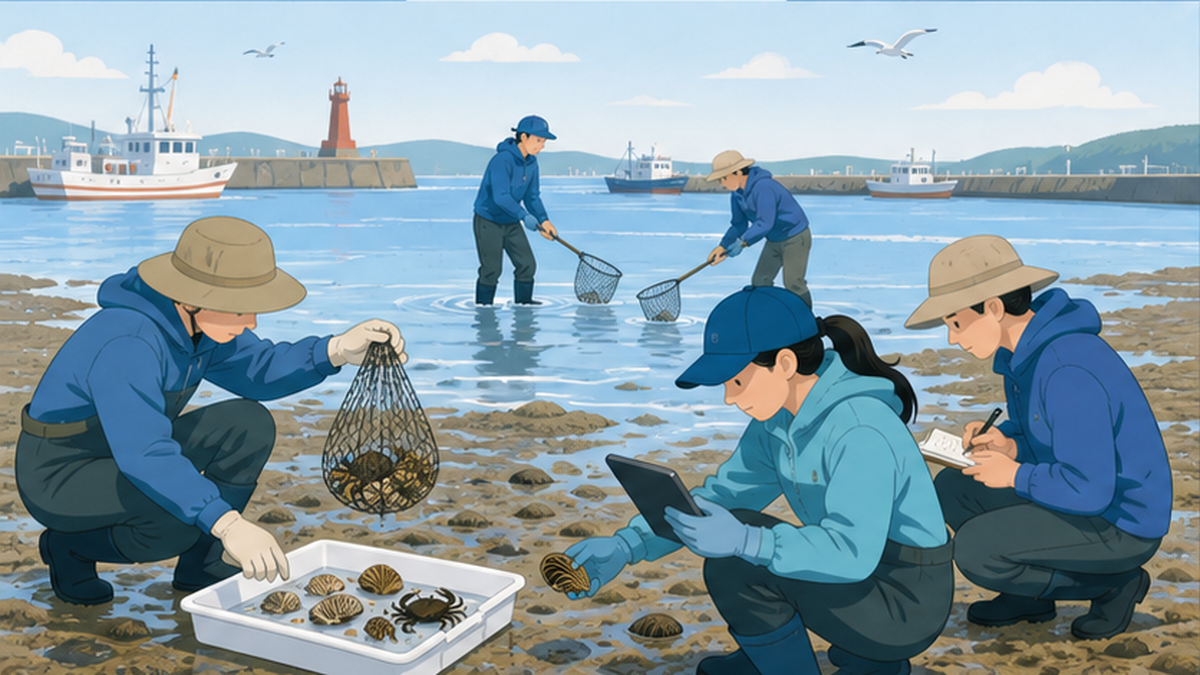
The golden rule of invasive species countermeasures is "early detection, early response." If a species can be found and dealt with soon after invading, while numbers are still low, there remains a chance of eradication or containment. Conversely, if it isn't noticed until it has spread widely, the options for action are limited. This is why continuous monitoring at harbors and tidal flats, species identification by experts, and the accumulation of records are all important. In recent years, "environmental DNA" technology — which analyzes fragments of organisms' DNA floating in seawater to determine what species are present — has also begun to be used for early detection of invasive species.
What Each of Us Can Do
Marine invasive species might seem like a distant issue, but there are things we can do in our daily lives. It isn't difficult — it's a matter of accumulating small habits.
- Don't release organisms on your own: Don't release pets or invasive species you've caught fishing into a different body of water.
- Don't bring them in or take them out: Wash off any organisms or mud attached to fishing gear or recreational equipment, and don't carry them to another location.
- Record and report sightings: If you notice an unfamiliar shellfish or crab, take a photo and share the information with your local government or a research institution.
- Learn the facts: Learning about the invasive species issue behind familiar foods like mussels is a first step toward greater awareness.
The concept of "satoumi" — rethinking the relationship between people and the sea — also offers hints for thinking about the invasive species issue. The idea of protecting the ocean's bounty through moderate human involvement is introduced in our article on The Satoumi Concept. Rather than one-sidedly managing the ocean, invasive species countermeasures can be seen as part of the wisdom of living alongside the sea.
Actions You Can Start Today
- Don't release or transport waterside creatures to a different location
- After outdoor activities, wash off any mud or organisms attached to your gear
- If you find an unfamiliar marine creature, take a photo and share the information with your local government or a research institution
- Use the mussels on your dinner table as a starting point to talk with your family about marine invasive species
Conclusion — How Should We Face "Ocean Globalization"?
Marine invasive species are, in a sense, a "byproduct of civilization" born from the international trade network we ourselves have built. As long as ships connect the world, unintended movement of organisms can never be reduced to zero. That's precisely why a multi-layered approach is needed: narrowing entry points as much as possible with international rules like the Ballast Water Management Convention, containing domestic spread with the Invasive Alien Species Act, and detecting new arrivals early through monitoring.
The Mediterranean mussel and the Mediterranean shore crab confront us with the reality that "the ocean is already connected." But at the same time, through the familiar presence of mussels on our tables, they also give us a chance to think of ocean change as something personal. Efforts to protect the connections among marine life need to move forward together with responses to warming and pollution, not just invasive species countermeasures alone. As a starting point for thinking about the future of the ocean, we encourage you to also read our articles on Japan's Marine Biodiversity and Blue Carbon Ecosystems.
Summary of This Article
- Marine invasive species are carried via three routes — ballast water, hull fouling, and imports/aquaculture — with the roughly 12 billion tonnes of ballast water moved each year being the largest entry point
- The mussel, i.e., the Mediterranean mussel, is an invasive species from the Mediterranean, selected for both the world's and Japan's 100 Worst Invasive Alien Species lists
- The Mediterranean shore crab was first recorded in Tokyo Bay in 1984, and its close relative preys on native bivalves, dealing a blow to fisheries
- The impact of invasive species extends to ecosystems, fisheries, and infrastructure such as power plants, with the global economic loss from invasive alien species estimated at roughly ¥62 trillion per year
- The Ballast Water Management Convention, in force since 2017, regulates organisms in discharged water via the D-2 standard, and in Japan, the Invasive Alien Species Act and monitoring support prevention efforts
References and Sources
- Ministry of the Environment, Japan – Regulations on the discharge of harmful ballast water / List of Japan's invasive species measures and Specified Invasive Alien Species
- Ministry of the Environment, Japan, Nature Conservation Bureau – Invasive Alien Species Act (Act on the Prevention of Adverse Ecological Impacts Caused by Designated Invasive Alien Species)
- National Institute for Environmental Studies, Invasive Species of Japan Database – Entries on the Mediterranean mussel, Mediterranean shore crab, and green mussel
- National Institute for Environmental Studies, Environmental Research and Technology – Environmental technology explanation: "Ballast Water Treatment Technology"
- Sasakawa Peace Foundation, Ocean Policy Research Institute – Ocean Newsletter No. 396, "Entry Into Force and Challenges of the Ballast Water Management Convention"
- ClassNK (Nippon Kaiji Kyokai) – Explanation of the Ballast Water Management Convention and the D-1/D-2 standards
- Ministry of Land, Infrastructure, Transport and Tourism, Maritime Bureau – On the approval of ballast water management systems
- AFPBB News – Report on economic losses from invasive alien species (covering the IPBES 2023 report; at least approx. US$423 billion, or approx. ¥62 trillion, per year)
- Central Research Institute of Electric Power Industry (CRIEPI) – Countermeasures against organisms that disrupt power plant operations (fouling organisms and intake facilities)
* Listed in order of reliability: government/academic institutions > peer-reviewed papers > specialized organizations > reliable media