⚡ In short
Lake Biwa, an ancient lake with a 4-million-year history, is home to 66 endemic species. This article explains how its water quality and ecosystem have changed through the 1977 freshwater red tide, the soap movement, and the invasive fish problem.
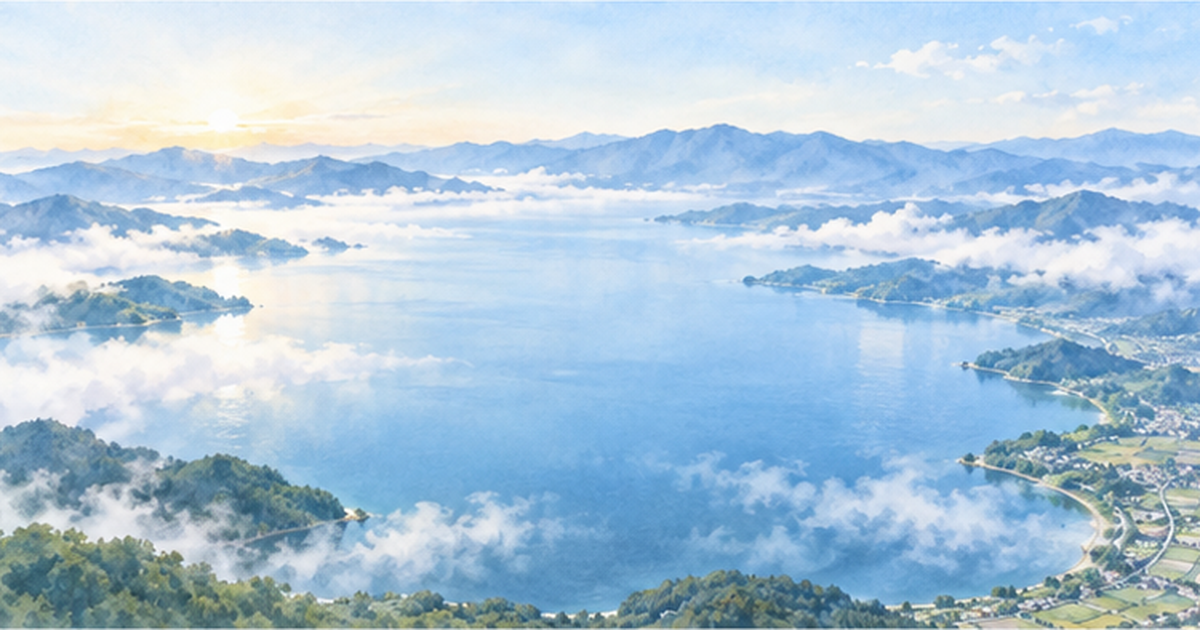
Covering about one-sixth of Shiga Prefecture's area, Lake Biwa is Japan's largest lake and also an "ancient lake" with a staggering history of roughly 4 million years. Ancient lakes — those over 100,000 years old and home to endemic species — number only about 20 worldwide, and Lake Biwa is the only one in Japan.
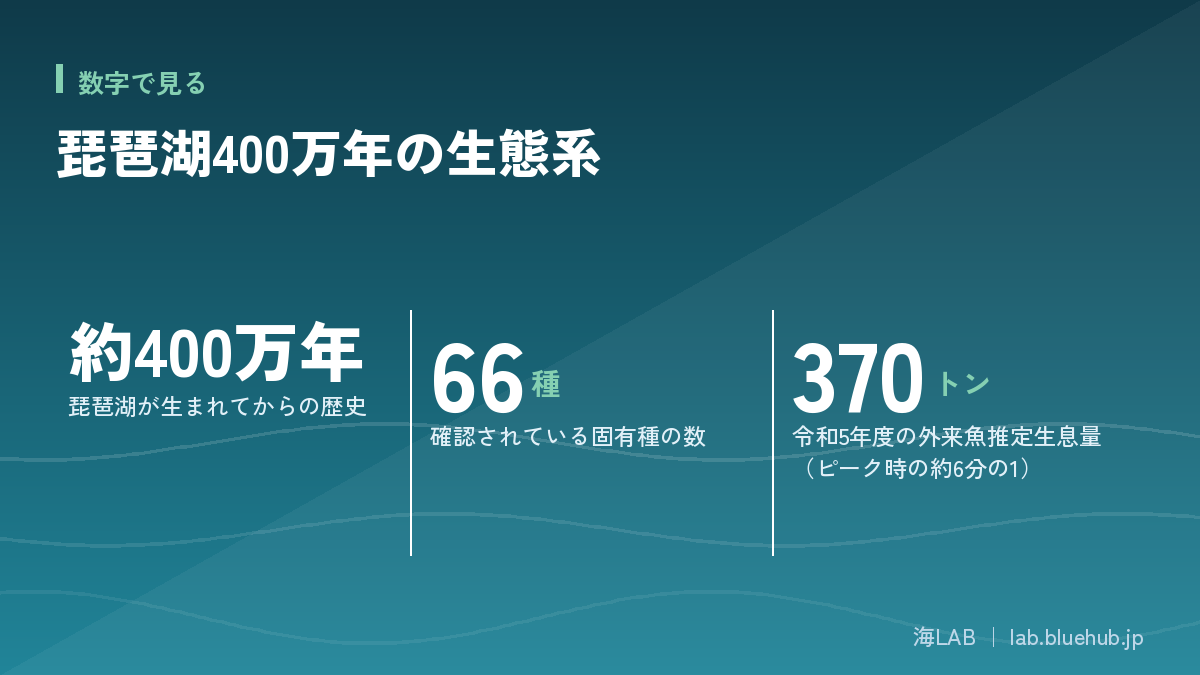
Over that vast span of time, about 66 endemic species, mainly mollusks and fish, have evolved uniquely in Lake Biwa. At the same time, during Japan's era of rapid economic growth the lake's water quality deteriorated seriously, and the 1977 freshwater red tide sparked a citizen movement that led to Japan's first ordinance of its kind.
This article organizes how Lake Biwa's ecosystem was shaped, what crises it went through, and where it stands today, based on government and research institution data.
What you'll learn in this article
- Why Lake Biwa is called an "ancient lake" and its rarity among the roughly 20 in the world
- The breakdown and evolutionary background of the 66 confirmed endemic species, mainly mollusks and fish
- The soap movement sparked by the 1977 freshwater red tide and how the Lake Biwa Ordinance works
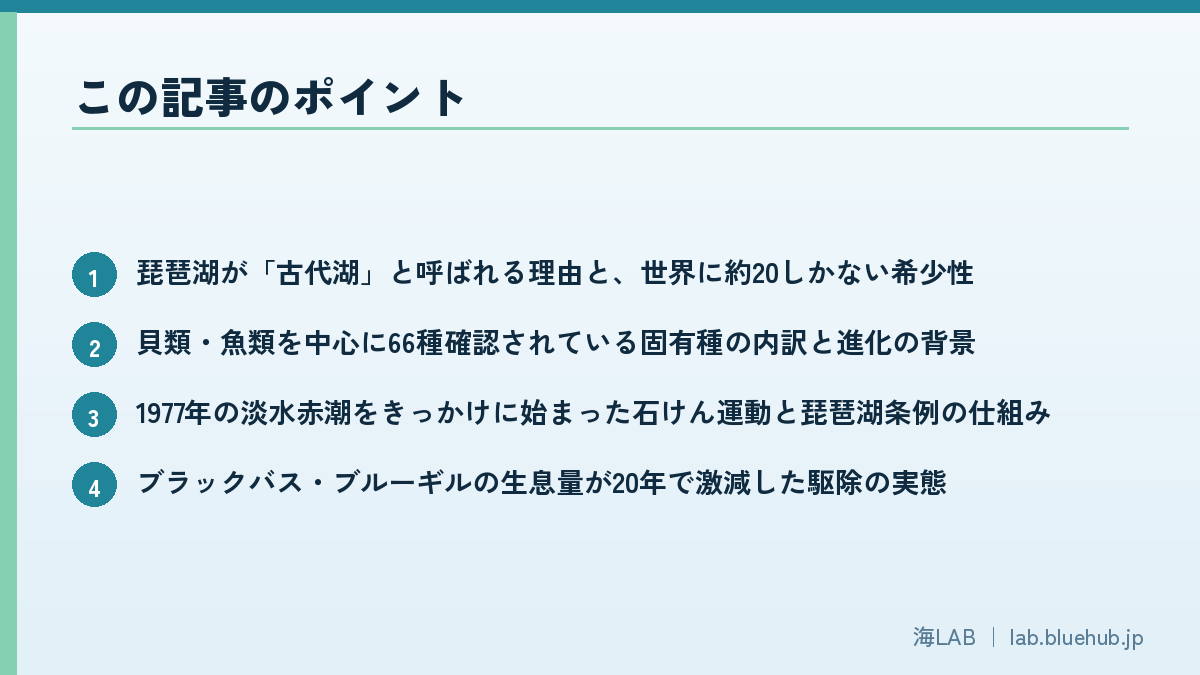
- How black bass and bluegill populations plummeted over 20 years of removal efforts
- Remaining challenges such as declining ayu (sweetfish) stocks
Why Lake Biwa Is Called an "Ancient Lake"
An "ancient lake" is one that has held water continuously for over 100,000 years, long enough for endemic species to evolve within it. Famous ancient lakes worldwide include Russia's Lake Baikal and Africa's Lake Tanganyika, but in Japan, Lake Biwa is the only one that meets this condition. Most lakes disappear within a few thousand to tens of thousands of years, filled in with sediment or dried out, so surviving this long is geologically remarkable.
About 4 million years ago: a journey that began near the Iga Basin
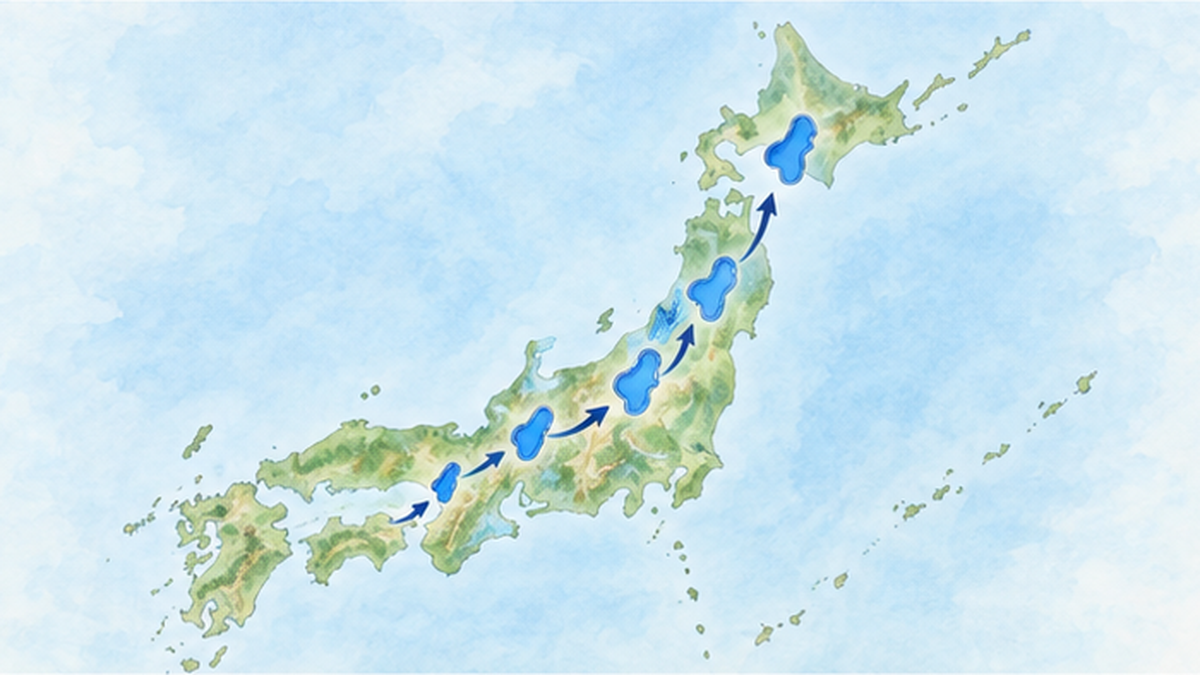
The origin of today's Lake Biwa traces back to a shallow, narrow lake that formed near present-day Iga City, Mie Prefecture, about 4 million years ago. Affected by fault-driven subsidence and sediment accumulation, the lake gradually shifted northward over time, settling into its current location a few hundred thousand years ago. This migration process is known as "Paleo-Lake Biwa," and research continues using sediment layers to reconstruct the climate and biota of each era.
A lake that survived by moving
Typical ancient lakes tend to remain in a single basin formed by large-scale tectonic activity, such as a rift valley. Lake Biwa is distinctive in that, each time an old basin was buried and disappeared due to tectonic shifts, the body of water itself moved to an adjacent new depression. This pattern of "surviving by moving" is considered one of the factors behind Lake Biwa's extraordinary 4-million-year lifespan.
Conditions for an "ancient lake"
- Must have existed continuously for over 100,000 years
- Endemic species must have evolved and diverged during that time
- Only about 20 ancient lakes are confirmed to exist worldwide
A Cradle of Evolution That Nurtured 66 Endemic Species
According to surveys by institutions such as the Lake Biwa Museum, 66 endemic species — including subspecies and varieties — have been confirmed in Lake Biwa and its surrounding waters. By taxonomic group, mollusks account for 30 species and fish for 17, together making up about 70% of the total.
| Group | Approx. share of endemic species | Representative species |
|---|---|---|
| Mollusks | Largest group (~30 species) | Seta shijimi clam, Biwa flatworm, and other mollusks |
| Fish | Second largest (~17 species) | Biwa trout, honmoroko, nigorobuna, and others |
| Others | Crustaceans, aquatic insects, etc. | Other endemic aquatic organisms of Lake Biwa |
Why mollusk diversity stands out
Mollusk diversity is especially notable among Lake Biwa's endemic species. This is thought to stem from the long-term stability of the lakebed environment, combined with the lake's varied depths and substrates (sand, mud, gravel), which have provided diverse ecological niches for mollusks. Some species, like the Seta shijimi clam, are harvested for food, while many small snail species are known mainly to researchers — this richness of mollusk fauna is one of the defining features of ancient Lake Biwa.
Origins tracing back 1–3 million years
Molecular genetics research, including work by Kyoto University, has shown that many of Lake Biwa's endemic fish species originated 1 to 3 million years ago — well before the lake took its current form. At the same time, many species are known to have rapidly expanded their populations after the modern lake formed, meaning today's diversity reflects a layering of "ancient origins" and "recent flourishing."
Endemic species rooted in local food culture
Some of Lake Biwa's endemic species are deeply woven into local food culture. Funazushi, a traditional dish dating to the Edo period, is a fermented food made from the endemic nigorobuna carp and is said to have even been eaten by Tokugawa Ieyasu. Biwa trout is a prized fish enjoyed as sashimi or grilled with salt, while honmoroko is sold as a delicacy used in simmered dishes or grilled skewers in Kyoto cuisine. The very existence of this food culture reflects how long these endemic species have coexisted with local communities.
- Nigorobuna (crucian carp family): an endemic species used to make funazushi
- Biwa trout (salmon family): a landlocked salmon relative unique to Lake Biwa
- Honmoroko (carp family): a delicacy also used in Kyoto cuisine
- Seta shijimi (mollusk): an endemic freshwater clam harvested in large quantities
The 1977 Freshwater Red Tide and the Citizen-Led "Soap Movement"
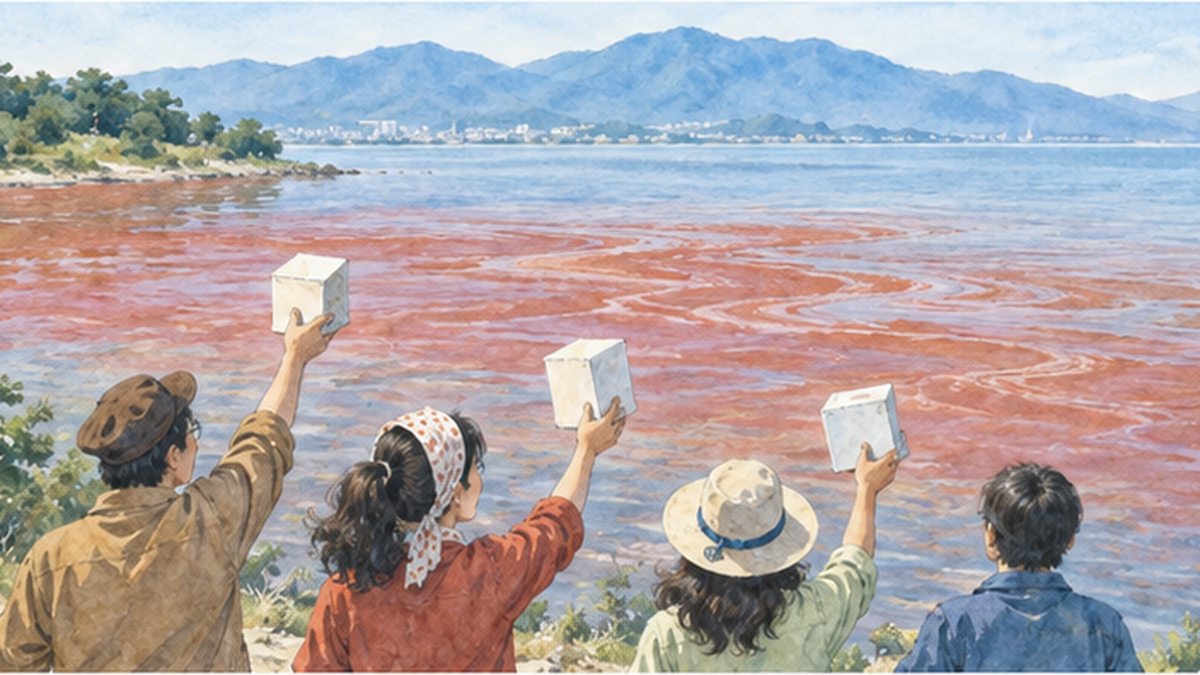
Despite nurturing a rich ecosystem, Lake Biwa faced serious water-quality degradation during Japan's era of rapid economic growth. The turning point was a large-scale freshwater red tide that occurred in May 1977.
Foul-smelling tap water and dying ayu and carp
The red tide caused unpleasant odor and taste problems in tap water, and ayu and carp died at fish farms. Phosphorus contained in synthetic detergents was identified as one contributing cause of the eutrophication, prompting a citizen-led "soap movement" that urged people to stop using synthetic detergents and switch to powdered soap.
The plankton mainly responsible for the red tide at the time was a species called Uroglena, which turns the lake surface a brownish color and produces a distinctive musty odor when it blooms in large numbers. Because Lake Biwa's water is also used as a drinking-water source for the Kansai region, the odor was felt not only by residents of Shiga but also by water users downstream in Kyoto and Osaka, which helped the movement spread beyond prefectural borders.
Japan's first Lake Biwa Ordinance
Against the backdrop of this rising citizen movement, Shiga Prefecture enacted the "Ordinance for the Prevention of Eutrophication of Lake Biwa" (commonly known as the Lake Biwa Ordinance) in July 1980, regulating nitrogen and phosphorus discharge — a first for Japan. Since then, water quality has been managed using indicators such as COD, total nitrogen (TN), and total phosphorus (TP).
Reed beds: a natural purification system
Another pillar of water-quality conservation is the protection of "reed beds" (yoshi) along the shoreline. Reed beds serve as spawning grounds where fish lay their eggs, as shelter for newly hatched fry, and as nesting sites for waterbirds. Reeds themselves also absorb nitrogen and phosphorus from the water, purifying it — meaning reed beds simultaneously prevent shoreline erosion, support biodiversity, and help maintain water quality. In 1992, Shiga Prefecture enacted the "Shiga Prefecture Ordinance on the Conservation of Lake Biwa Reed Communities" to protect reed beds from landfill and development.
Key points to remember
- The 1977 freshwater red tide was the direct trigger for the water-quality improvement movement
- Phosphorus in synthetic detergents was one of the contributing causes
- The Lake Biwa Ordinance, enacted in 1980, was a first for Japan
- A separate ordinance protecting reed beds was also enacted in 1992
Invasive Fish: Where Do Black Bass and Bluegill Stand Today?
Alongside water quality, invasive fish such as largemouth bass (black bass) and bluegill, which prey on native species, have long threatened Lake Biwa's ecosystem. Shiga Prefecture has continued removal programs targeting these species for many years.
Population down to about one-sixth of its peak
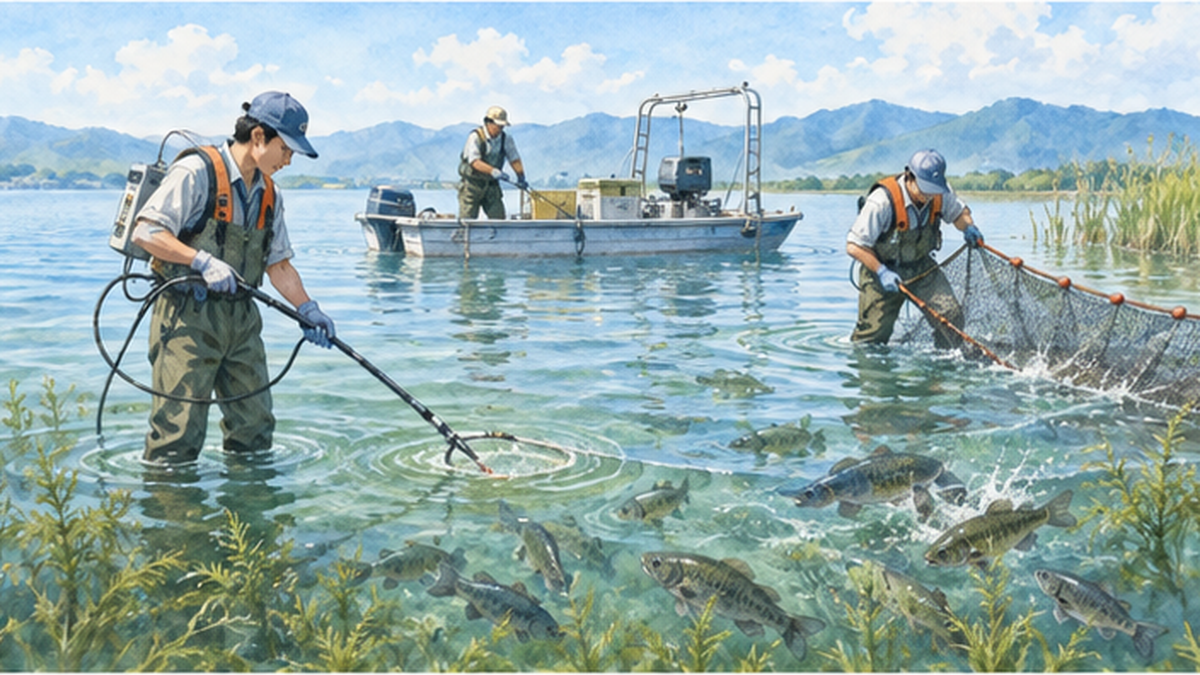
According to Shiga Prefecture estimates, the invasive fish population fell from 2,405 tons at the start of fiscal 2006 to 370 tons at the start of fiscal 2023. Of that, about 254 tons are estimated to be largemouth bass and 115 tons bluegill. Over the past ten years alone, more than 3,000 tons have been removed.
On the ground: electrofishing and gillnets
One of the main removal methods is electrofishing using dedicated survey boats. A boat temporarily runs a weak electric current through the water to stun the fish, and only largemouth bass and bluegill are selectively captured as they float to the surface. Removal also involves destroying spawning beds and using gillnets and set nets in combination, with methods adapted to the season and depth of the water.
The new challenge of diminishing returns
As the population shrinks, capture efficiency per individual declines, creating a new challenge of how to maintain effective methods such as electrofishing. Largemouth bass in particular, being strongly piscivorous and having a greater impact on native species, has declined less than bluegill and remains a priority target. In recent years, research into next-generation control methods, such as releasing sterilized individuals that cannot reproduce, has also been underway.
If you catch an invasive fish
- Releasing caught invasive fish back into Lake Biwa is prohibited by Shiga Prefecture ordinance
- They can be brought to collection boxes and holding pens set up around the prefecture
Declining Ayu Stocks and Other Remaining Challenges
Ayu (sweetfish) accounts for 40–50% of Lake Biwa's total fishery catch, making it the most important species, but its population has been on a declining trend overall since the 1990s. Since 2005, estimated stocks have repeatedly fallen below 2,000 tons, and phenomena such as poor ayu growth and declining condition of Seta shijimi clams have raised concerns about a decline in the lake's overall productivity.
Behind this lies a growing "oligotrophication" — a relative shortage of nutrients such as nitrogen and phosphorus — resulting from improved water quality, presenting a new challenge that runs in the opposite direction from water pollution. While the central theme was once "how to avoid pollution," it has now shifted to the more delicate task of "how to maintain the nutrient balance the ecosystem needs."
| Period | Main challenge | Response |
|---|---|---|
| 1970s–80s | Eutrophication, freshwater red tide | Soap movement, Lake Biwa Ordinance (nitrogen/phosphorus regulation) |
| 1990s–2000s | Predation by invasive fish | Full-scale removal programs using electrofishing, etc. |
| 2010s–present | Nutrient shortage, declining ayu stocks | New reviews of nutrient management approaches |
Where Lake Biwa's ecosystem stands today
- Eutrophication has improved, but a new nutrient-shortage issue has emerged
- Invasive fish have declined significantly but not been eradicated, requiring continued control
- Balancing water quality and ecosystem needs is key to protecting endemic species diversity
Lake Biwa's "Deep Breath" and the Impact of Climate Change
A phenomenon that researchers and officials have been watching closely in recent years is an anomaly in what is known as "Lake Biwa's deep breath." In winter, surface water cools and becomes denser, sinking to the lake bottom and equalizing oxygen levels and temperature from top to bottom — a natural process called "whole lake circulation." This is the only opportunity for oxygen to reach the lake bottom.
Warm winters halt the "deep breath"
For whole lake circulation to occur, surface water must cool enough to become denser than the water at the bottom. But with continued warm winters, the surface water fails to cool sufficiently, and circulation remains incomplete as spring arrives. Indeed, for two consecutive years starting in 2019, dissolved oxygen levels near the lake bottom were confirmed to drop below 2 milligrams per liter — a level considered unsuitable for benthic organisms.
Ongoing monitoring efforts
The Lake Biwa Environmental Research Institute and other bodies set up observation points at a depth of 90 meters in the north basin and conducted a project from April 2024 to March 2025, continuously measuring water temperature and dissolved oxygen from the surface to the lake bottom using multi-parameter water quality sensors. This kind of ongoing monitoring provides essential baseline data for determining whether the disruption of whole lake circulation is a temporary weather anomaly or a structural change driven by climate change.
Low oxygen levels at the lake bottom could directly affect the survival of benthic organisms such as the Seta shijimi clam and endemic species living in deep water — a new, climate-change-driven risk distinct from water-quality improvement or invasive fish control, and an important subject for ongoing observation of Lake Biwa's ecosystem going forward.
What the "deep breath" anomaly means
- Whole lake circulation is the only natural opportunity to deliver oxygen to the lake bottom
- Continued warm winters prevent surface water from cooling enough, leaving circulation incomplete
- Low-oxygen conditions at the lake bottom were confirmed for two consecutive years starting in 2019
- Concerns remain about impacts on benthic organisms and endemic species living in deep water
A Water Source for the Kyoto-Osaka-Kobe Region and a Place for People
Lake Biwa is not only a treasure trove of biodiversity but also a water source supporting the lives of about 14.5 million people in the Kansai region. About 460 rivers flow into the Lake Biwa basin, while only one river, the Seta River, flows out, eventually joining the Uji River and then the Yodo River before reaching Osaka Bay. This is why the lake is known as "Kansai's water jar."
The "Uminoko" environmental learning ship and passing it on
Shiga Prefecture has long run the "Uminoko" environmental learning ship program, in which every fifth-grade student in the prefecture boards the ship to sail across Lake Biwa and learn about it. Through onboard water-quality observation and biological surveys, children gain firsthand experience of the water environment in their own region. Since its launch in 1983, it has become an environmental education program experienced by generations of residents.
Balancing tourism with "Biwa-ichi" cycling
In recent years, "Biwa-ichi," a roughly 200-kilometer cycling route around Lake Biwa, has also grown in popularity, with participants increasing from about 52,000 in 2015 to about 128,000 in 2023. While this rise in tourism demand is welcomed for its economic benefits, balancing it with the protection of reed beds and wildlife habitats along the shoreline is also recognized as an ongoing challenge.
Shiga Prefecture promotes "ecotourism found nowhere else," combining lake experiences, fishing experiences, and satoyama walks, positioning the region not merely as a tourist destination but as a place to experience the lake and the life of its basin as a whole. Biwa-ichi cyclists encountering reed beds and fishing port scenery along the shore also serves as an indirect way to spread understanding of Lake Biwa's ecosystem.
A water cycle supported by the whole basin
The Lake Biwa basin receives about 1,700 millimeters of rainfall per year, and about 460 rivers flow into the lake. Yet only one river, the Seta River, flows out, later becoming the Uji River and then the Yodo River as it flows down to Osaka Bay. In other words, Lake Biwa functions like a giant regulating reservoir, temporarily holding rain that falls on the surrounding mountains before slowly releasing it toward the Kyoto-Osaka-Kobe region. This one-directional water cycle structure is also why environmental changes in the upstream basin can easily ripple through Lake Biwa and the entire Yodo River system downstream.
What visitors can do
- Some reed beds and sandy shores have access restrictions, so follow posted signage
- Never release caught invasive fish back into the water — bring them to collection boxes instead
- Enjoy activities like Biwa-ichi while making sure to take your trash home with you
What We Can Do
Lake Biwa's ecosystem has been sustained not only by government regulations and research surveys but also by the actions of individual residents, as seen in the 1977 soap movement. Knowing how to engage with the lake through travel and daily life can be a meaningful step, even for people living far away.
Environmental DNA surveys: a new approach
In recent years, "environmental DNA" surveys — which can estimate the species present just by collecting a sample of water — have increasingly been applied to ecosystem monitoring in lakes and rivers. Even in a vast body of water like Lake Biwa, this method is gaining attention as an efficient way to track the distribution of endemic and invasive species (see What Is Environmental DNA? How a Glass of Water Reveals Marine Life for more). Because it doesn't require capturing animals, it places less stress on fish and mollusks and allows efficient surveying of a wide lake surface, making it a promising tool for future Lake Biwa monitoring.
Invasive species issues are not unique to Lake Biwa, either. Similar challenges are occurring in familiar waterways, as seen with the American crayfish in freshwater environments in recent years (see Why the American Crayfish Became a Conditionally Designated Invasive Species). For the status of native freshwater fish, including Lake Biwa's medaka, see also The Real Reason Medaka Became an Endangered Species. Understanding challenges shared across lakes and rivers nationwide can help turn the story of this one lake into a lens for thinking about the future of waterways across Japan.
Having nurtured a unique ecosystem over roughly 4 million years, Lake Biwa also embodies a history that, once lost, cannot be restored. Understanding both the success of its water-quality recovery and the ongoing challenges of invasive species and climate change is the first step toward a lasting relationship with this lake.
References
- Lake Biwa Museum, "Overview of Lake Biwa" – Explanation of Lake Biwa's geological history and endemic species
- Shiga Prefecture, "What Kind of Lake Is Lake Biwa?" – Basic information on Lake Biwa
- Shiga Prefecture endemic species data (PDF) – Breakdown of the 66 endemic species by taxonomic group
- Kyoto University, "Origins of Lake Biwa's Endemic Fish Fauna" – Research introduction on molecular genetics of endemic species origins
- Aoi Biwako, "The Lake Biwa Soap Movement" – Background on the 1977 freshwater red tide and soap movement
- Shiga Prefecture, "What Is Lake Biwa Day?" – History of the Lake Biwa Ordinance and water conservation
- Shiga Prefecture invasive fish control program – Data on invasive fish population trends
- Shiga Prefecture report on ayu stocks (PDF) – Trends and challenges in ayu resource levels
* Listed in order of reliability: government/academic institutions > peer-reviewed papers > specialized organizations > reputable media