When people hear "protecting the ocean," many picture beach cleanups or improving water quality. But right now, one of the most hotly debated tools in global ocean conservation is the "Marine Protected Area (MPA)" — a mechanism that draws a boundary around part of the sea and protects it. The goal of protecting at least 30% of the Earth's land and ocean by 2030 — the "30by30" target — is now reshaping environmental policy in countries around the world.
So how much of Japan's ocean is actually protected? The answer: 13.3% of its jurisdictional waters. On paper, that clears the international baseline, but globally only 2.8% of the ocean is "effectively" protected, and the harsh reality is that many protected areas are little more than "paper parks" — protected in name only.
This article works through the basics of what a marine protected area actually is, the background of the 30by30 target, Japan's current status and share of protection, the challenges around effectiveness, and how protecting the ocean can coexist with fishing communities that depend on it — organized clearly, using primary data from the Ministry of the Environment, the Fisheries Agency, and international bodies, so that anyone from middle schoolers to adults can follow along.
What you'll learn in this article
- What a Marine Protected Area (MPA) is, and why expanding it is now so urgent
- The international background behind the "30by30 target" and Japan's numerical goals
- What makes up Japan's 13.3% of marine protected areas, and the role of offshore seabed conservation areas
- The essence of the "paper park" problem — "area achieved, but substance lacking"
- The new conservation mechanisms of OECMs and Nature Coexistence Sites
- The "spillover effect," where no-take zones actually increase catches, and the path to coexistence with local fishing
What is a Marine Protected Area (MPA)?
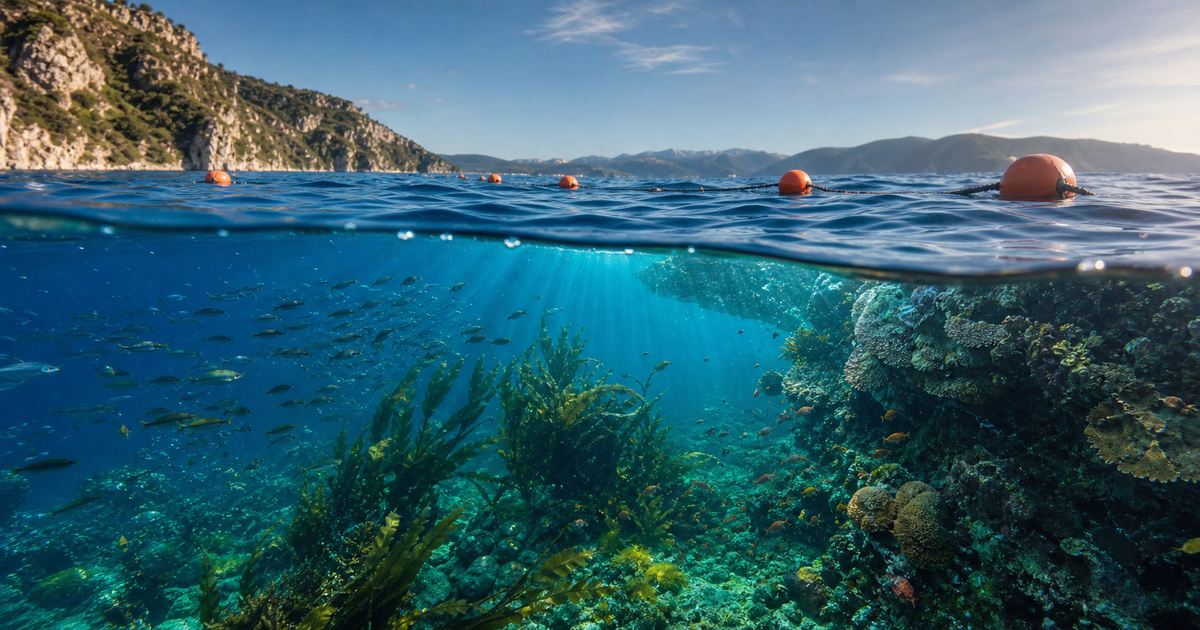
A Marine Protected Area (MPA) is a sea area that is specially managed under laws or regulatory systems to protect marine biodiversity and ecosystems. It's easiest to think of it as the ocean equivalent of a national park. But "protected area" doesn't mean an uninhabited zone where all human entry is banned. The category covers a wide range, from areas that allow fishing and tourism under certain rules, to strict zones where all extraction is prohibited.
Why protect part of the sea by drawing a boundary?
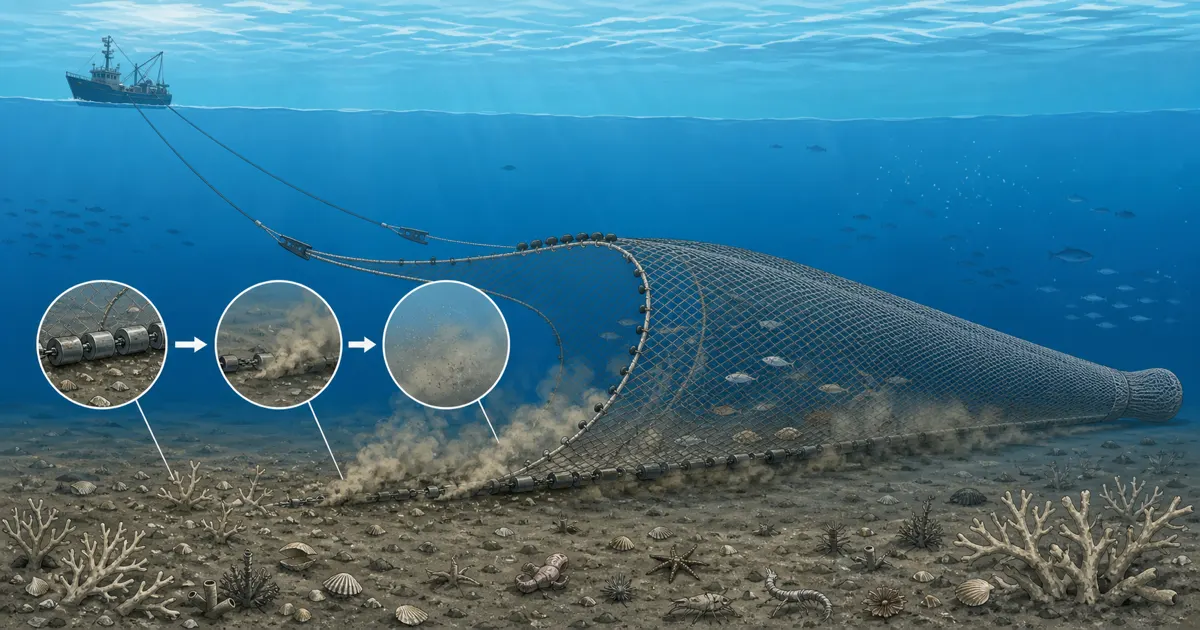
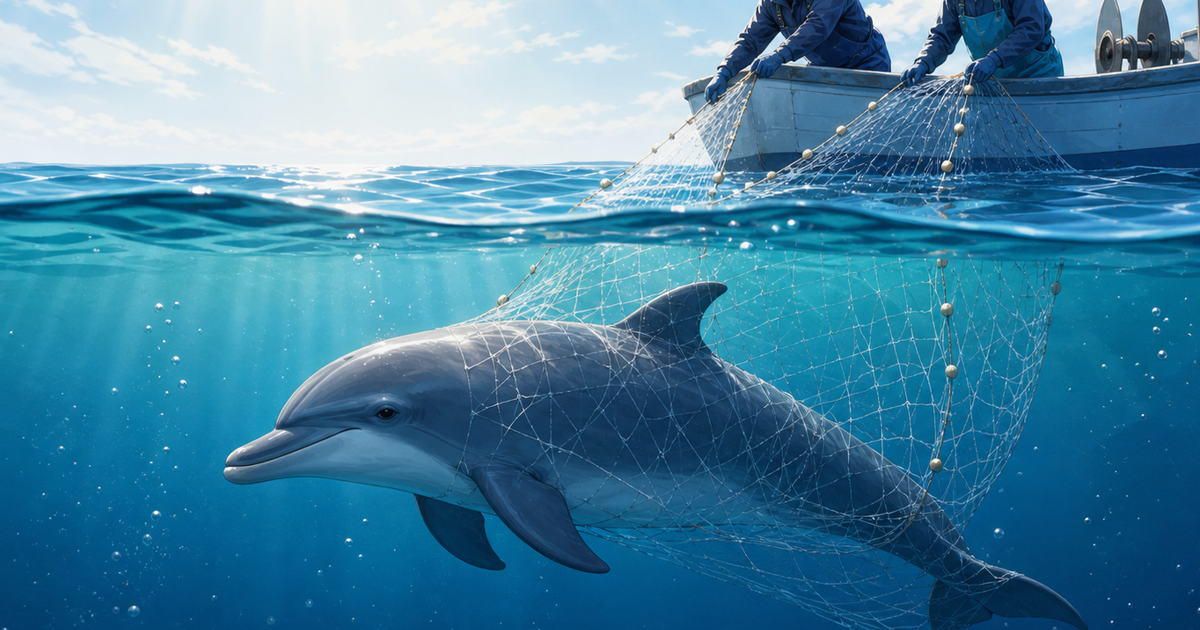
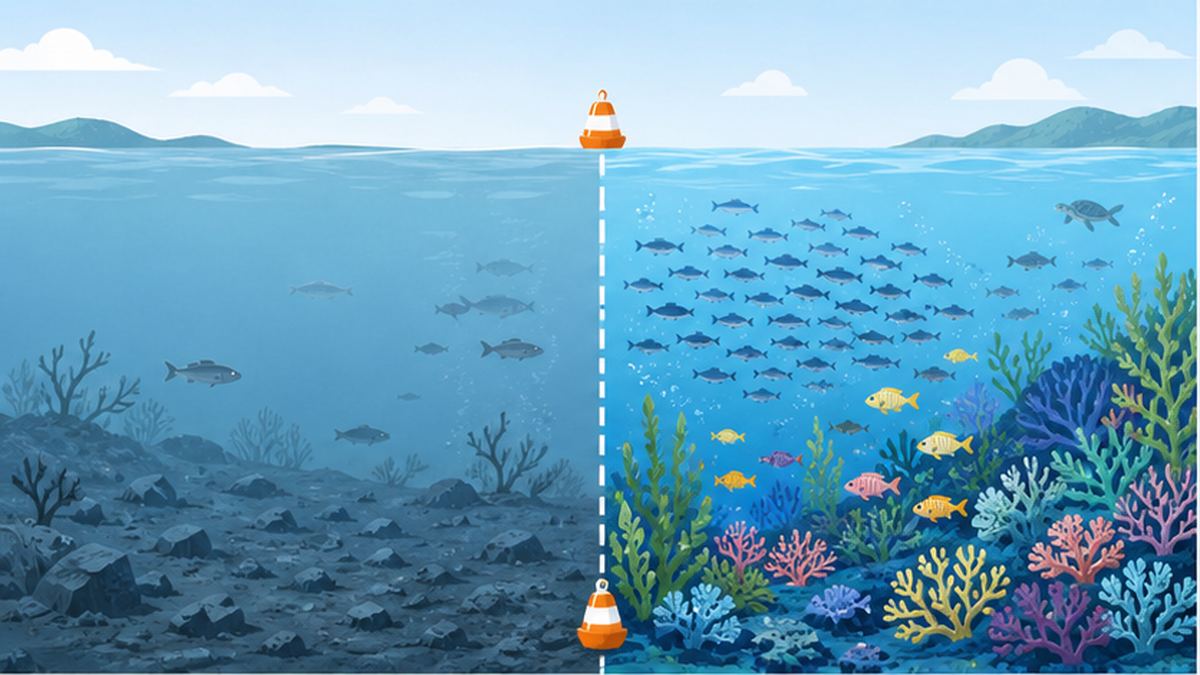
The idea of protecting parts of the ocean the same way national parks protect land on shore is a relatively recent one. Because the sea is hard to see and its waters flow across borders, it has long been treated as "nobody's land," making it easy for overfishing, pollution, and development to take hold. By designating and protecting a specific sea area, spawning grounds and nurseries for juvenile fish can be safeguarded, giving damaged ecosystems the time and space to recover on their own — that is the basic idea behind marine protected areas. As global stresses like ocean warming and acidification intensify, protected areas are playing an ever-larger role in helping ecosystems keep their "stamina" against rising sea temperatures and shifting ocean currents.
Protection comes in different "strengths"
Even though we lump them together as "marine protected areas," the actual strength of protection varies enormously. The international assessment standard known as "The MPA Guide" broadly classifies protected areas into four levels. Understanding this difference in "levels" is the key to making sense of the effectiveness debate that comes later.
| Protection level | Activities allowed | Effect on the ecosystem |
|---|---|---|
| Fully Protected | All extraction and dumping banned | Very high |
| Highly Protected | Only very minor use allowed | High |
| Lightly Protected | Some fishing and other activities allowed | Moderate |
| Minimally Protected | Many activities allowed | Limited |
Key points
- MPA = a sea area regulated by law to protect marine biodiversity
- Not "no entry" — a system of graduated rules on how the area can be used
- Even within the single category of "protected area," the strength of protection varies widely
In other words, even if a map shows an area colored in as "protected," that single color can hide everything from an almost untouched sea to waters where fishing and development continue much as before. Keeping this in mind helps explain the seemingly contradictory situation where "the protected area grew, but the ocean hasn't recovered."
Why the ocean easily falls into the "tragedy of the commons"
Economics has a famous concept called the "tragedy of the commons." In a pasture anyone can use freely, each person tries to graze more of their own livestock, and the grass ends up stripped bare, leaving everyone worse off — that's the parable. The ocean has long been a textbook case of exactly this dynamic. If one person holds back from catching fish in a given fishing ground, but someone else takes them anyway, restraint is pointless. So the logic of "better catch it now" takes hold, and resources dwindle further and further. Marine protected areas are also a device for breaking this cycle of tragedy, letting society as a whole share a rule: "let's all agree to leave a certain part of the sea alone."
Four benefits that protected areas bring
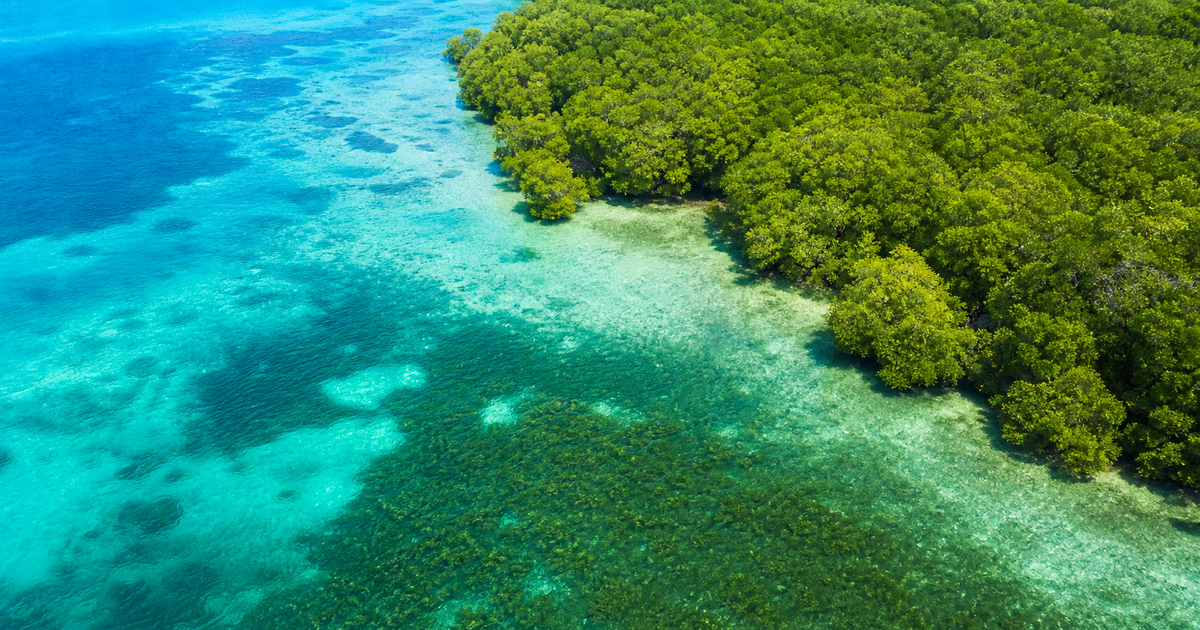
A well-managed marine protected area brings multiple benefits to our lives, beyond the direct goal of conserving biodiversity. First, "fisheries resource recovery" — increasing fish and shellfish populations that support surrounding fisheries. Second, climate action through "blue carbon," as seaweed forests, mangroves, and tidal flats absorb and store carbon dioxide. Third, contributions to "tourism and the local economy," as beautiful seas attract diving and ecotourism. And fourth, a "disaster-prevention function," as healthy ecosystems soften the force of storm surges and high waves. Protecting the ocean isn't only about distant nature — it directly supports the livelihoods of people living along the coast.
- Fisheries resources: Protecting spawning grounds and nurseries underpins fisheries
- Climate action: Blue carbon, as seaweed and tidal flats absorb carbon
- Tourism and economy: A rich ocean creates diving and ecotourism
- Disaster prevention: Healthy ecosystems soften the force of storm surges and high waves
The 30by30 target — the world's promise to "protect 30% of the ocean"
What sharply accelerated the debate over marine protected areas was the "Kunming-Montreal Global Biodiversity Framework," adopted at the 15th Conference of the Parties to the Convention on Biological Diversity (COP15) held in Montreal, Canada, in December 2022. The centerpiece of this international framework was the goal of "effectively conserving at least 30% of both land and sea as healthy ecosystems by 2030" — commonly known as the "30by30" target.
Unfinished business from the "Aichi Targets"
In fact, this isn't the first international target for protecting parts of the ocean. The "Aichi Targets," adopted in Nagoya in 2010, called for protecting 10% of marine areas through protected areas and similar measures by 2020. But the world as a whole failed to reach that 10%, and many countries entered 2020 with the target left unfinished. Reflecting on that shortfall, the new 30by30 target not only raised the number sharply to 30%, but also placed strong emphasis on the protection being "effective" and "well-managed," rather than simply securing area.
The "30by30 Alliance" framework
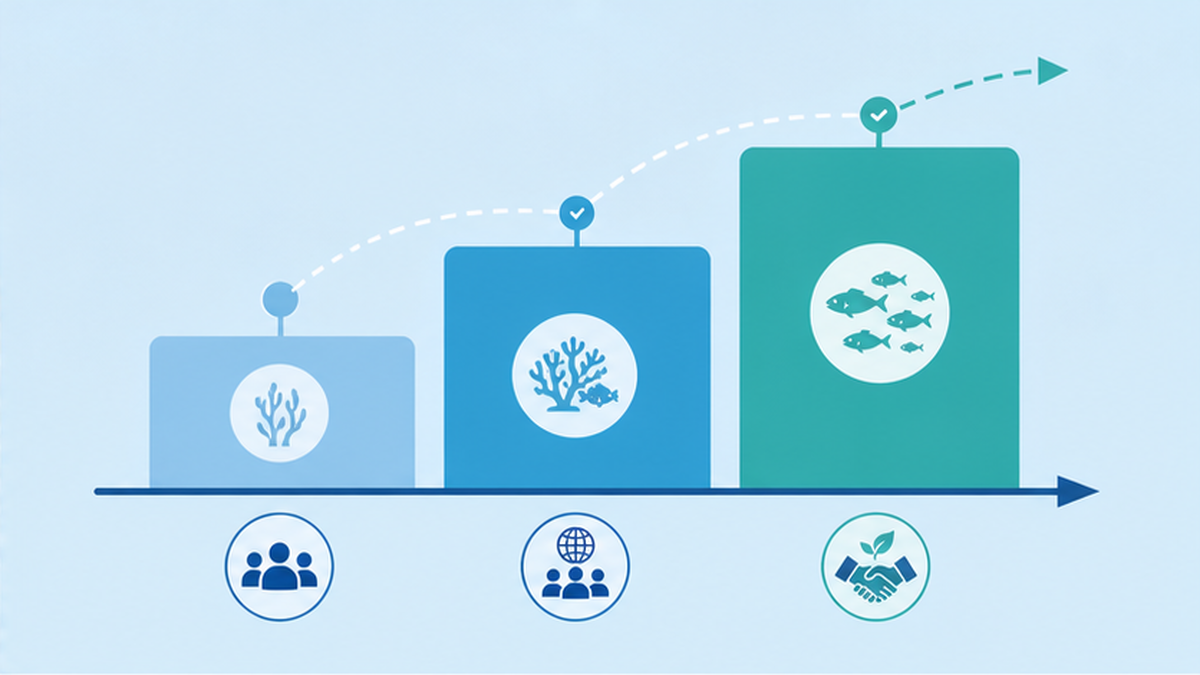
Japan has also shown a proactive stance toward the 30by30 target, with the Ministry of the Environment drawing up a "30by30 Roadmap" outlining the path to achieving it. In addition, the "30by30 Alliance for Biodiversity," in which companies, local governments, and NPOs voluntarily participate in biodiversity conservation, has also launched, drawing in the private sector alongside government. The goal of protecting 30% of the ocean is no longer solely the Ministry of the Environment's issue — it has become a theme that involves fishers, businesses, local communities, and each of us individually.
That said, the road to achieving it is not smooth. While protected areas worldwide are expanding little by little each year, given the time remaining until 2030, the reality is that the world is falling far short of the 30% target. In particular, the "high seas" that lie beyond any country's Exclusive Economic Zone have long been a blank space where no nation's management reached and protected areas were hard to establish. To address this, a "new treaty to protect biodiversity on the high seas" (the BBNJ Agreement, commonly known as the High Seas Treaty) was adopted at the United Nations in 2023, gradually putting in place the legal mechanism to allow marine protected areas even on the high seas. Achieving 30by30 will require not just each country's own efforts, but continued progress in this kind of international cooperation.
Time is running short
With only a little time left before the 2030 deadline, the world's marine protected areas continue to expand, but at the current pace, achieving the 30% target looks difficult. That's exactly why the focus isn't just on rushing to expand area, but on efficiently building up "effective protection."
Why "30%"?
The number "30%" wasn't decided as a political compromise — it emerged from an accumulation of scientific research. The internationally shared finding is that for ecosystems to maintain their function, prevent species extinction, and remain usable as a sustainable resource, at least around 30% of marine areas need to be effectively protected. Some researchers point out that an even higher share would be desirable to truly stabilize biodiversity. In other words, 30% isn't a "ceiling" — it's the "minimum line" that must be crossed to protect ecosystems.
What matters is that this target isn't simply an area quota. The Kunming-Montreal Global Biodiversity Framework explicitly states that protected areas must include places that are "particularly important for biodiversity," and that they must be "well-managed and equitably governed." The reflection that "hitting the area number while missing the crucial spots is meaningless" is written directly into the wording of the target itself.
Glossary: 30by30
An international target named for its shorthand: "by 2030, protect 30 percent." It aims to effectively conserve at least 30% of both land and sea. It is one of the core goals of the Kunming-Montreal Global Biodiversity Framework, adopted at COP15 in 2022.
Japan's marine protected areas today: the current share
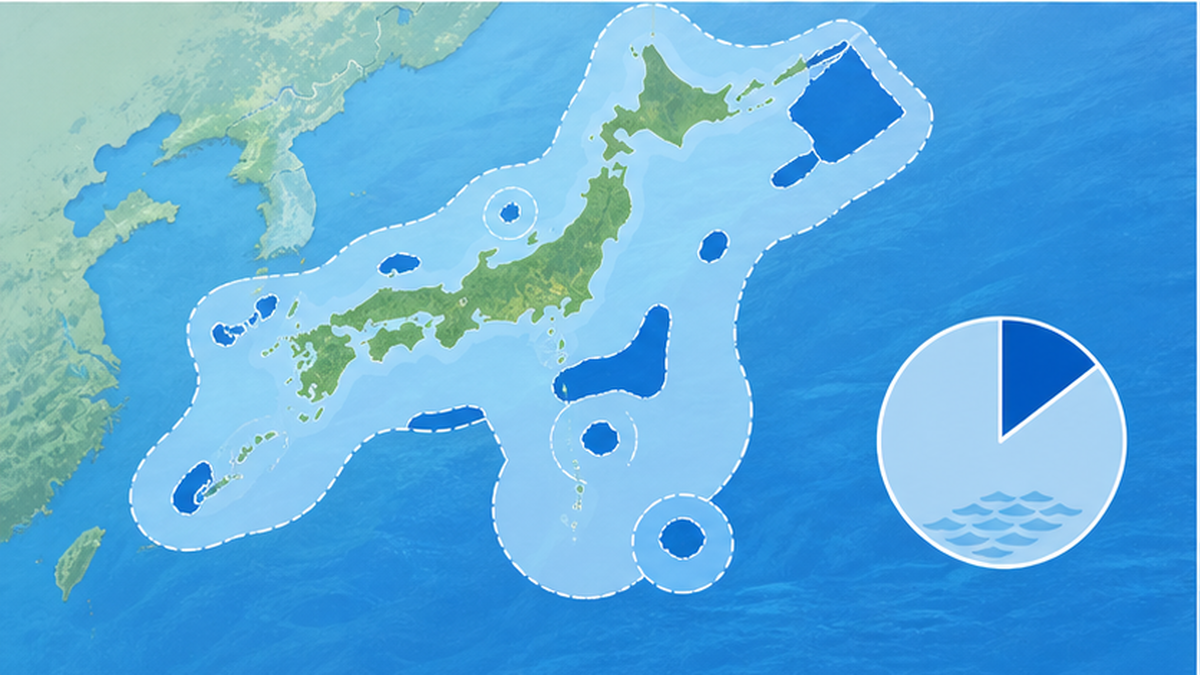
So how much of Japan's ocean is actually protected? According to figures compiled by the Ministry of the Environment and others, Japan's marine protected areas cover about 13.3% of its jurisdictional waters. Japan holds the world's sixth-largest jurisdictional waters (territorial sea plus exclusive economic zone), covering approximately 4.47 million square kilometers — about 12 times the size of its land territory. At 13.3% of that, the area under protection amounts to roughly 600,000 square kilometers.
How Japan reached "10%" all at once in 2020
Japan's share of marine protected areas made a major leap forward in 2020. Having remained in the 8% range until then, the share jumped all at once to 13.3% in December 2020, when a new type of protected area called an "Offshore Seabed Natural Environment Conservation Area" was designated for the first time. This allowed Japan to just barely meet the Aichi Target's goal of protecting "10% of marine areas by 2020." A single new designation moving the share so dramatically is itself a feature unique to Japan's vast exclusive economic zone (EEZ).
A new protected area guarding the deep offshore seabed
The Offshore Seabed Natural Environment Conservation Areas designated in 2020 cover deep-sea regions far from land, including the southernmost part of the Japan Trench, the area around the Izu-Ogasawara Trench, the Mariana Ridge area, the Nishi-Shichito Ridge area, and the northern Mariana Trench. These deep-sea areas have remained largely untouched until now, but are also places where future impacts from seabed resource development are a concern. Offshore protected areas matter both for protecting the unique evolutionary adaptations of deep-sea creatures to extreme environments, and for shielding ecosystems from trash that sinks all the way to the deep sea.
Beyond these offshore protected areas, Japan's marine protected areas are made up of an assembly of various systems with different purposes and legal bases, including nature parks (the marine portions of national and quasi-national parks), nature conservation areas, wildlife protection areas, designated natural monument sites, and protected water surfaces for safeguarding fisheries resources. Rather than one giant protected area, Japan's characteristic feature is that its 13.3% is made up by adding together numerous areas of differing character.
| Category | Example content | Main purpose |
|---|---|---|
| Nature parks | Marine areas of national and quasi-national parks | Protecting natural scenery and ecosystems |
| Offshore Seabed Natural Environment Conservation Areas | Deep-sea trenches and ridges | Conserving untouched deep-sea ecosystems |
| Nature conservation areas | Marine areas with outstanding nature remaining | Ecosystem conservation |
| Wildlife protection areas / natural monuments | Habitats of seabirds and rare species | Protection of specific species |
| Protected water surfaces | Spawning and nursery grounds for aquatic animals | Maintaining fisheries resources |
The era of scrutinizing what makes up that 13.3%
The figure of 13.3% deserves credit for exceeding the Aichi Target's 10%. But looking at its breakdown reveals challenges too. Much of Japan's marine protected area consists of zones close to "lightly protected," which broadly allow fishing and other uses, while areas under full protection — where all extraction is banned — make up only a tiny fraction by area. Measured against the "effective protection" that the 30by30 target demands, how much of that 13.3% actually has the power to restore ecosystems is Japan's homework to do. To reach the target, it's not enough to simply add new areas and push the share up to 30% — raising the quality of management in existing protected areas and tightening regulation where needed are also essential.
Also, while Japan's vast exclusive economic zone makes it relatively easy to establish new protected areas in the distant, deep offshore, coordinating interests becomes far harder in the coastal areas where people's livelihoods and fishing activities are concentrated. It is precisely the shallow coastal seas — rich in biodiversity and deeply intertwined with human activity — where protection is hardest. How Japan protects these hard-to-protect coastal waters, rather than only the offshore areas where the numbers are easier to rack up, will be the true test of its marine conservation going forward.
Japan's marine protected areas: key numbers
- Jurisdictional waters: about 4.47 million km² (about 12 times the land territory)
- Marine protected area share: about 13.3% (about 600,000 km² by area)
- Jumped from the 8% range to 13.3% with the 2020 offshore protected area designation
- An assembly of multiple systems, from nature parks to protected water surfaces
- Fully protected areas are a tiny fraction. The "breakdown" and "quality" remain homework for the future
Enough "quantity," not enough "quality" — the wall of effectiveness
Reading this far, you might think, "Japan is at 13.3%, and the world is steadily expanding protected areas too — all that's left is to push the area up to 30%." But the biggest issue surrounding marine protected areas isn't "area (quantity)" but "effect (quality)." Looking at the world as a whole reveals a serious gap between quantity and quality.
8.3% of the world's ocean is protected — but only 2.8% is effective
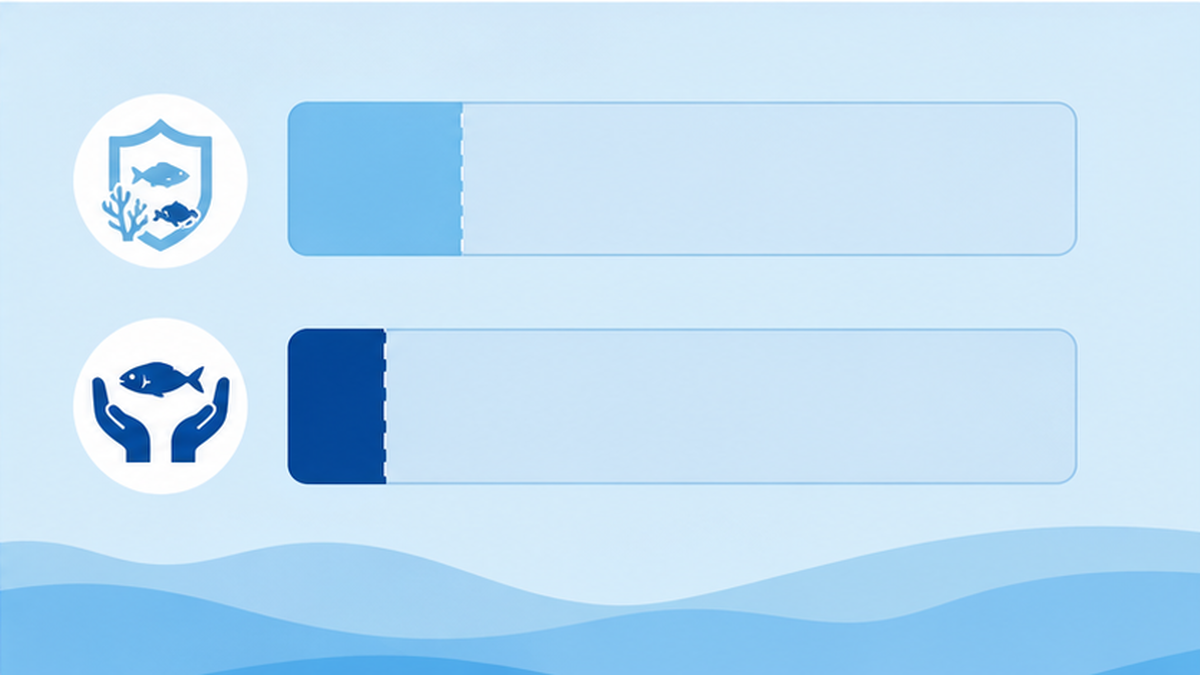
According to international tallies, about 8.3% of the world's ocean is designated as a marine protected area. And yet, only around 2.8% is estimated to have strong regulations, such as bans on extraction, actually functioning well enough to be rated "fully protected" or "highly protected." Other recent assessments have repeatedly shown a similar figure, with highly and fully protected ocean sitting around 3%. In other words, much of the ocean colored in as "protected" on a map is loosely regulated or lacks the management and enforcement to back it up, leaving it protected in name only.
The pitfall known as the "paper park"
Such nominal protected areas are called "paper parks." An area is legally designated, but in practice there aren't enough patrol vessels, budget, or staff, and illegal fishing and overfishing effectively go unchecked — such protected areas exist in large numbers around the world. International assessments have found that a substantial portion of designated protected area, by area, is classified as "not yet actually operational" or "not compatible with nature conservation," pointing to a large gap between the numbers on paper and the reality on the ground.
Even if 10% of the ocean is designated as protected, only 3% is effectively protected. The gap we need to close keeps growing.
— Summarized from a report by the Marine Conservation Institute
That's precisely why the 30by30 target places its emphasis not on "coloring in 30%" but on "actually making 30% work." Japan's 13.3% is no exception — how much of it amounts to effective protection, and whether it's backed by management plans and enforcement, will be scrutinized closely going forward. Hitting the number isn't the finish line — it's really the starting line.
What scientists keep emphasizing is that "a small, high-quality protected area beats a large, low-quality one." One study assessed the world's large-scale marine protected areas against international standards and found that, while they appear to contribute significantly by area, only a small fraction actually have strong regulations functioning in practice. Securing a large area and making its substance real are two separate challenges — and neither alone is enough to protect the ocean. Knowing that there's a long struggle over "quality" hiding behind the "30" in 30by30 changes how you read the news.
Why paper parks keep happening
So why do nominal protected areas keep being created? Several reasons overlap. One is the political pressure to "secure area first" as international deadlines close in. Because loosely regulated zones still count toward the area total, there's a temptation to rack up the numbers quickly. Another is that managing an area after designation takes too much money and manpower. Continuously monitoring a wide sea area and cracking down on illegal fishing requires enormous cost, and budgets often run out, leaving monitoring hollowed out in practice. There are also cases where reaching consensus with fishers and local communities proves difficult, and regulations can't be strengthened, leaving the area stuck at "designated only, for now."
Understanding this background reveals that creating a marine protected area isn't simply a matter of drawing lines — it's a long undertaking that mobilizes budget, personnel, dialogue with local communities, and political will. Designation isn't the finish line; that's really where the work begins. Nurturing one effective protected area does far more for the ocean's recovery than creating ten weakly regulated ones.
Caution: don't judge by the area number alone
When you see news that "protected areas have reached X%," it's important to distinguish whether that's "designated area" or "effectively protected area." Only when strong regulation and ongoing management come together does a protected area gain the power to restore ecosystems.
OECMs and Nature Coexistence Sites — another path to 30%
Protecting 30% of the ocean doesn't have to mean covering it entirely with formal, strictly designated protected areas set up by the state. That's why, alongside formal protected areas like national parks, the 30by30 target places significant weight on a new concept called the "OECM."
What is an OECM?
OECM (Other Effective area-based Conservation Measure) refers to an area outside the category of legally designated protected areas that, as a result, is nonetheless well conserved. This includes fishing grounds where fishers voluntarily set rules to manage resources, corporate-owned forests or waters conserved by companies, and traditionally maintained satoumi coastal areas — all positioned as zones that contribute to conservation. The aim is to let conservation efforts already happening on the ground be counted toward international conservation targets.

Japan's "Nature Coexistence Site" system
To put OECMs into concrete practice domestically, Japan launched a certification system called "Nature Coexistence Sites." Under this mechanism, places actively conserved by the private sector or local communities — corporate green spaces, shrine and temple forests, satoyama and satoumi landscapes, tidal flats protected by citizens — are certified by the national government, and the portions that don't overlap with existing protected areas are registered as OECMs in an international database. By fiscal 2024, more than 300 sites had been certified nationwide, and registrations continue to steadily accumulate. Marine-focused initiatives are also expected to expand going forward, opening a path for satoumi conservation activities to contribute to achieving 30by30.
- OECM = an area that isn't a formal protected area but is nonetheless well conserved as a result
- Nature Coexistence Site = Japan's domestic system for certifying OECMs (over 300 sites by fiscal 2024)
- Companies, local governments, communities, and citizens can take the lead — a major difference from conventional protected areas
- Existing satoumi conservation efforts can be counted toward international targets
Two meanings behind OECMs
The OECM mechanism carries two broad meanings. One is a contribution in terms of "quantity," bringing the ambitious 30% target within reach. Covering everything with strict, state-run protected areas is unrealistic, but accumulating conservation efforts happening in each region can bring the target closer. The other is a contribution in terms of "breadth," greatly expanding who can take part in conservation. Ocean conservation used to be led mainly by national and local governments, but with OECMs and Nature Coexistence Sites, companies, fishing cooperatives, citizen groups, and even schools can now contribute to international targets through "the sea or greenery they protect." Conservation is opening up from something for a handful of specialists into an undertaking for society as a whole.
That said, OECMs come with their own caveats. Just like paper parks, registering a name with no real substance behind it is meaningless. That's precisely why Nature Coexistence Site certification examines whether biodiversity is genuinely being protected at a given site, and whether that protection is likely to continue. Balancing an increase in numbers with verifying the substance of each site is a challenge for this system too.
Column: The wisdom of "satoumi"
A coastal sea where modest human intervention actually makes marine life more abundant has long been called "satoumi" in Japan. Rather than separating people from nature, the satoumi idea of using the sea while protecting it fits very well with the thinking behind OECMs and Nature Coexistence Sites, and is drawing attention as a conservation model Japan can share with the world.
Coexisting with local fishing — the "spillover effect," where no-take zones boost catches
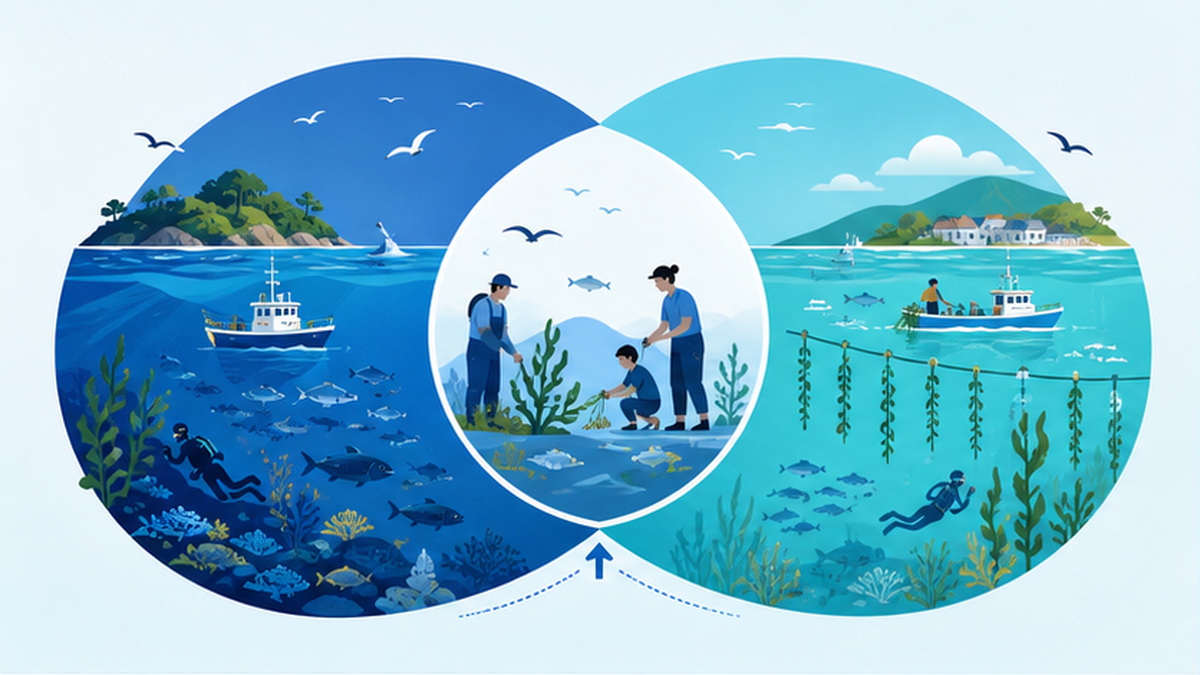
Whenever marine protected areas come up, one question always follows: "what happens to fishers' livelihoods?" If fishing is restricted to protect the sea, won't fishers' income drop? That's a reasonable worry. But looking at examples from Japan and around the world shows that a well-designed protected area can, over the long run, actually enrich fishing.
The "spillover effect" that enriches fishing
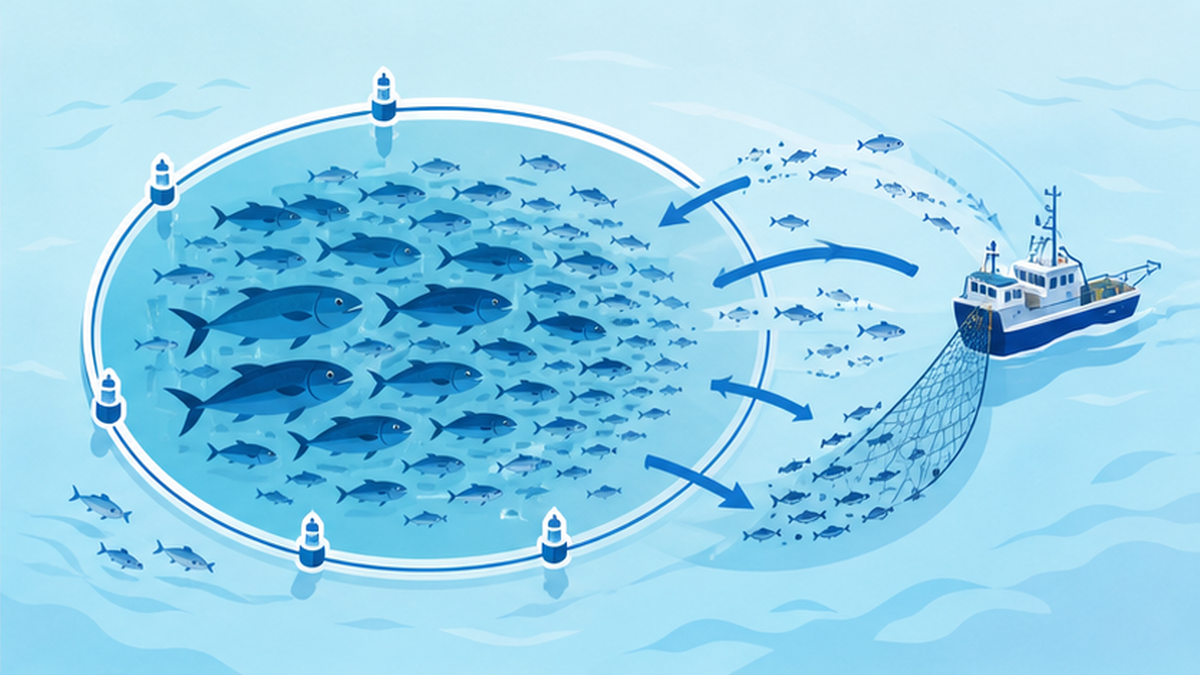
The key here is the "spillover effect." When fishing is banned inside a protected area, fish can grow undisturbed, larger breeding adults increase, and they produce far more eggs. The growing fish, eggs, and juveniles eventually spill out beyond the protected area's boundary and spread into the fishing grounds outside. As a result, catches for fishers working around the protected area actually tend to increase — that's the spillover effect. It's like protecting part of the sea as a "piggy bank," with the interest paid back to the surrounding fishing grounds.

Overseas examples back up this effect. In Belize, part of the sea was designated a no-take zone in 2011, and catches of target fish increased significantly while illegal fishing decreased. In Mexico's marine protected areas too, fish inside the zone recovered under full protection, and the benefits are reported to have spread to surrounding fisheries. Protecting and catching aren't necessarily at odds.
That said, the spillover effect isn't magic. It often takes anywhere from several years to over a decade for the effect to clearly appear. Fish need to grow, breeding adults need to increase, and their offspring need time to spread through the sea — all of that requires years. How to get through this "period of patience" is the biggest hurdle to coexistence. That's exactly why designing a protected area requires carefully working out, with scientific foresight, how to support fishers' livelihoods until the effect kicks in, and where protection would most efficiently restore resources.
Japan's stance: MPAs as a "resource-management tool"
What stands out here is Japan's own way of thinking. Rather than treating marine protected areas as "sanctuaries that shut out all human activity," Japan has positioned them as "one of the tools for resource management" to use fisheries resources sustainably. The Fisheries Agency has also made clear its policy of achieving both the conservation of marine ecosystems and biodiversity and the sustainable development of fisheries. Rather than making fishers the "enemy" of protected areas, this approach brings them in as the leading players in managing the sea — an idea that connects directly with the OECMs and Nature Coexistence Sites discussed in the previous section.
Eelgrass bed restoration in Hinase, Okayama
A symbolic success story is the Hinase district of Bisai City, Okayama Prefecture. There, fishers themselves have taken the lead for many years in restoring eelgrass beds, the "cradle" for fish, through activities like seed sowing, ongoing conservation work, and setting no-fishing zones nearby. As a result, eelgrass beds that had once shrunk to just a dozen or so hectares have recovered to roughly 250 hectares, and catches of some fish species have begun to recover along with it. Fishers becoming the guardians who restore the sea, and the sea in turn supporting the fishers again — here, the ideal of coexistence has taken tangible shape.
Three conditions for successful coexistence
Of course, simply creating a protected area doesn't automatically achieve coexistence with fishing. Comparing successful examples from Japan and around the world reveals several things in common. First, fishers themselves are involved from the very start of the planning process. Rather than having lines drawn unilaterally from above, deciding together with the people directly involved what to protect and how makes the rules more likely to be respected. Second, the effects are made visible in numbers. If there's a tangible sense that fish have increased and catches have come back, the patience feels worthwhile. Third, a mechanism exists to support people through the short-term hardship. Since recovery takes time, support to make up for lost income during that period, combined with other income sources like tourism, helps make coexistence possible.
Conversely, if these conditions are missing and only the restrictions are imposed, it can provoke backlash from fishers and lead to poaching or the system becoming hollowed out. Protecting the ocean and continuing to fish are not opposites that damage each other if pitted against one another — cooperating instead lets both flourish. How to strike this delicate balance is really what protected-area design comes down to.
Protecting the ocean and living by the ocean are not opposites — they are two sides of the same undertaking.
— Umi LAB Editorial Team
Keys to coexistence
- A protected area doesn't have to be fishing's "enemy" — it can become a "piggy bank" that grows resources
- Examples worldwide show catches in surrounding fishing grounds increasing through the spillover effect
- Japan positions MPAs as a "resource-management method," with fishers as the leading players
- Eelgrass bed restoration in Hinase, Okayama, is a fisher-led model of coexistence
Raising effectiveness — the challenges ahead
Turning marine protected areas into genuinely functioning protection takes more than expanding their area — it requires steady, ongoing work. Let's organize the challenges Japan and other countries need to overcome from here.
Challenge 1: Management and enforcement capacity
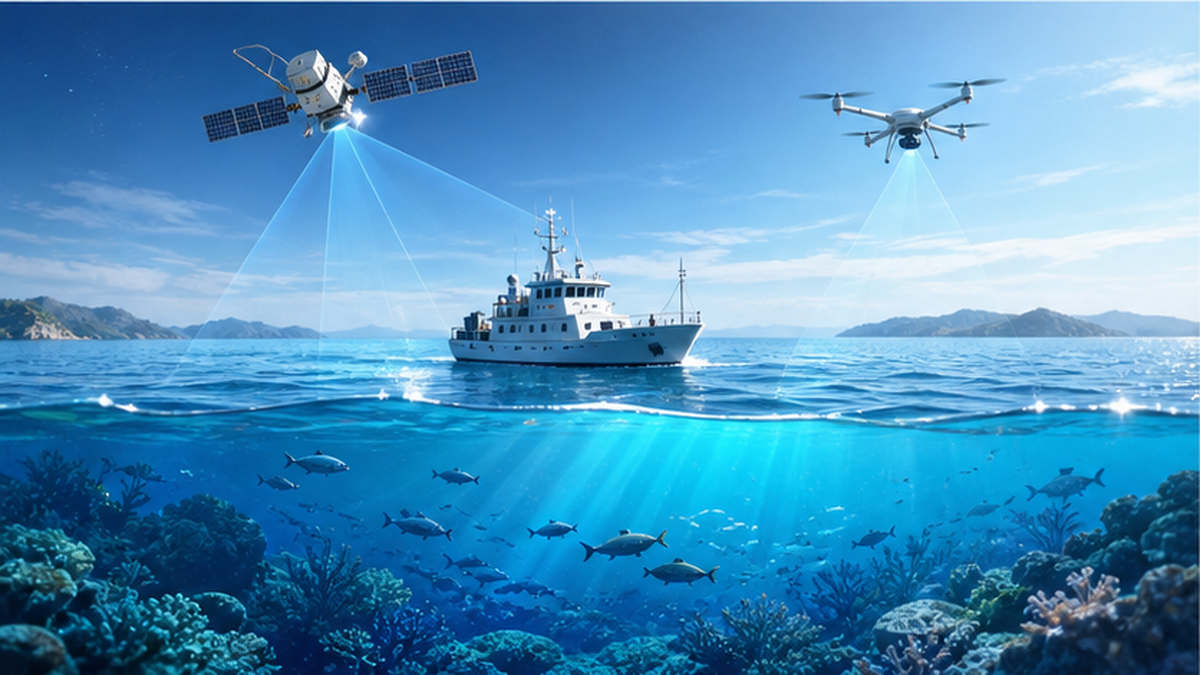
Even after an area is designated, rules won't be followed if no one is watching. Continuously monitoring a vast sea area and cracking down on illegal fishing requires personnel, budget, and technology. In recent years, monitoring technologies using satellites, the Automatic Identification System (AIS) for vessels, and drones have been advancing, expanding the tools available to watch over a wide ocean even with a limited budget. Whether such management systems can be prepared alongside designation is what determines whether an area avoids becoming a paper park.
Challenge 2: Design based on scientific data
Where and how strongly to protect an area needs to be decided by science, not by guesswork. Identifying "critical spots that must be protected" — spawning grounds, migration routes, habitats of rare species — based on survey data, and focusing protection there, maximizes the effect. As ocean learning platforms and open data continue to develop, they are also expected to build a stronger foundation for supporting this kind of scientific decision-making.
Challenge 3: A changing climate as the new baseline
Even after a protected area's boundary is drawn, there's the difficult reality that the ocean itself keeps changing. As rising sea temperatures and shifting ocean currents cause fish and other marine life to move, a protected area's "optimal" location today may no longer fit ten years from now. On top of that, phenomena such as damage to coral from ocean acidification and large-scale coral bleaching show that ecosystems can suffer even within protected areas. Going forward, the idea of "adaptive management" — flexibly reviewing a protected area's location and rules as the changing ocean demands — will become increasingly important.
Challenge 4: Stopping pollution from land
And we must not forget that a protected area's boundary does nothing to stop pollution. Plastic that flows into the ocean and chemical substances make their way relentlessly into protected areas too, ultimately affecting ecosystems and even our own bodies as microplastics. Efforts to protect the ocean by cordoning off part of it only achieve their true effect when combined with pollution controls on land and a rethink of our own everyday habits. Building protected areas and taking daily environmental action are, in that sense, one continuous undertaking.
In other words, marine protected areas alone are not an all-powerful solution. Only when combined with multiple other measures — resource management to prevent overfishing, efforts to reduce pollution from land, and climate action to cut greenhouse gas emissions — can they deliver their full effect. It's more accurate to think of a protected area not as a single "magic bullet" for protecting the ocean, but as a "foundation" that ties together a range of other efforts.
| Challenge | Description | Direction for a solution |
|---|---|---|
| Management and enforcement | Shortage of monitoring staff and budget | Using satellites, AIS, and drones |
| Scientific design | Identifying where to protect | Focused protection based on survey data |
| Climate change | Species distributions shifting | Adaptive management and periodic review |
| Pollution from land | Flows in across boundaries | Land-based pollution control and lifestyle change |
What we can do
- When reading news about "protected areas reaching X%," pay attention to whether it means designated area or effectively protected area
- Learn about and support local satoumi conservation and Nature Coexistence Site activities
- Reduce plastic waste and help cut off pollution flowing from land into the sea
- Choose seafood caught through sustainable fishing (look for certification marks)
Conclusion — from "drawing lines" to "making them work"
Marine Protected Areas (MPAs) are one of the mechanisms the world is now putting the most effort into, giving damaged ocean ecosystems the time and space to recover. Under the "30by30" target to protect 30% of the ocean by 2030, Japan has already secured 13.3% of its jurisdictional waters as protected areas. But looking across the world, much of the designated ocean remains a "paper park" in name only, and the sea that is genuinely protected falls short of 3%.
Ocean conservation going forward is shifting from the stage of drawing lines on a map to the stage of actually making what's inside those lines work. Bringing in fishers, businesses, and communities through OECMs and Nature Coexistence Sites, using the spillover effect to balance protection with catching, supporting management with science and technology, and adapting to the changing baseline of pollution from land and climate change — the work of protecting the ocean is never confined to the sea far offshore; it is directly connected to our everyday lives.
What we can do isn't necessarily anything grand. Reading news that "protected areas have grown to X%" while being conscious of whether that's designated area or effectively protected area. Learning about and supporting local satoumi conservation and Nature Coexistence Site activities. Reducing plastic waste and choosing seafood caught through sustainable fishing. Each of these small choices is, in fact, connected all the way to a distant offshore protected area. If learning the term "marine protected area" today becomes a chance for you to rethink your own relationship with the ocean, that would be a wonderful thing.
Summary of this article
- A Marine Protected Area (MPA) is a sea area managed under regulation to protect marine biodiversity, with protection coming in different levels of strength
- The 30by30 target: an international goal to effectively protect at least 30% of land and sea by 2030 (adopted at COP15 in 2022)
- Japan's marine protected areas cover 13.3% of its jurisdictional waters, a share that advanced significantly with the 2020 designation of Offshore Seabed Natural Environment Conservation Areas
- Globally, 8.3% is designated but only 2.8% is effectively protected — the "paper park" gap between quantity and quality is the biggest challenge
- OECMs and Nature Coexistence Sites bring in fishers, businesses, and communities, using the spillover effect to balance conservation with fishing
- The path ahead moves from "drawing lines" to "making them work" — management, science, climate adaptation, and land-based pollution control are the keys
References and sources
- Ministry of the Environment, Japan – 30by30 portal and 30by30 Roadmap
- Ministry of the Environment, Japan – Press release on the designation of Offshore Seabed Natural Environment Conservation Areas
- Ministry of the Environment, Japan – Kunming-Montreal Global Biodiversity Framework
- Ministry of the Environment, Japan – Nature Coexistence Site (OECM) certification system
- Fisheries Agency of Japan – Fisheries White Paper: Conservation of the marine environment and fisheries (ecosystem-based resource management)
- JAMSTEC (Japan Agency for Marine-Earth Science and Technology) – GODAC International Marine Environmental Information Center, "Japan's Marine Protected Areas"
- Marine Conservation Institute – MPAtlas, "10% Protected. 3% Effective." (analysis of the quantity and quality of marine protection)
- Protected Planet (UNEP-WCMC / IUCN) – Protected Planet Report 2024 (status of protected areas worldwide)
- National Geographic Japan – "Why does creating a marine protected area enrich fishing?" (explanation of the spillover effect)
※ Listed in order of reliability: government and academic institutions > peer-reviewed papers > specialist organizations > trusted media