⚡ In short
Most ocean litter travels down rivers. This article explains river plastic recovery technologies, from litter booms and trash screens to the solar-powered Interceptor, with cases in Japan and abroad, their limits, and what you can do.
Most litter in the sea is said to be carried there by rivers. So why not stop it in the river before it reaches the ocean? That idea is spreading river-litter recovery technology around the world.
This article compares familiar systems such as litter booms and trash screens with solar-powered devices like the Interceptor, and sorts out overseas and domestic cases along with their limits.
Sources include the Ministry of the Environment, municipal materials, peer-reviewed research and The Ocean Cleanup. Figures include estimates and design values, so please note the assumptions behind each source.
What you will learn in this article
- Why marine litter comes from rivers
- Five river-litter recovery technologies compared
- How the Interceptor works and real cases
- Efforts by Japanese municipalities and the Ministry of the Environment
- Limits of recovery technology and what we can do
Why stop plastic at the river: the entrance to the sea
The last checkpoint before the sea
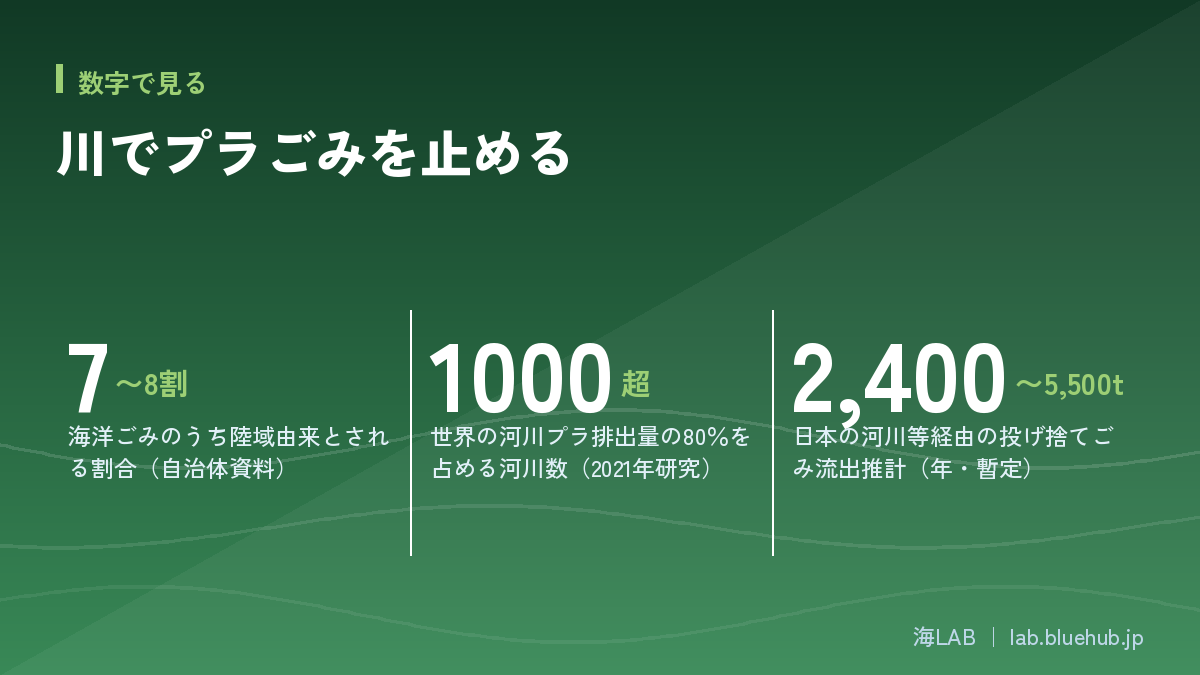
When we think of ocean litter we tend to picture trash washed up on beaches or floating offshore. Yet according to municipal explanations citing Ministry of the Environment materials, about 70–80% of marine litter originates on land and flows to the sea through rivers. Rivers are the conveyor belt linking daily life in town to the ocean.
Once plastic reaches the sea, waves and ultraviolet light break it into fragments that are extremely hard to collect. Stopping it in rivers and channels where the flow concentrates is therefore considered less laborious and cheaper.
Rivers worldwide and Japan's estimate
A 2021 study in Science Advances (Meijer et al.) estimated that rivers carry 0.8–2.7 million tonnes of plastic into the sea each year. It reported that more than 1,000 rivers account for 80% of the total, with small urban rivers contributing heavily. Familiar small rivers matter as much as the great ones.
For Japan, the Ministry of the Environment is working on estimates of plastic litter flowing to the sea via rivers. In its FY2024 review, the average of several methods for outflow from littered waste on land and in rivers came to 2,400–5,500 tonnes per year. This is provisional, and there is still no international agreement on estimation methods.

Key points of this section
- Most marine litter comes from land, with rivers as the main route
- More than 1,000 rivers are said to account for 80% of emissions worldwide
- Japan's river outflow estimate is provisional and methods are still being unified
River litter recovery: five basic types
1. Litter booms and trash fences
The oldest method is the litter boom or fence set diagonally across a river. The current guides litter to a collection point on the bank. Many Japanese municipalities use them, and Toyama City runs a project that installs booms to hold back litter. They are simple and need no power, but can be swept away in floods and require regular clearing.
2. Trash screens at pumping stations and floodgates
Pumping stations and floodgates have trash screens that rake litter out mechanically. Meant to protect equipment, the waste they collect also reveals how much and what kind of litter the river carries. Part of the Ministry of the Environment's outflow estimate uses long-term surveys of waste collected by such screens.
3. Solar-powered automatic collectors
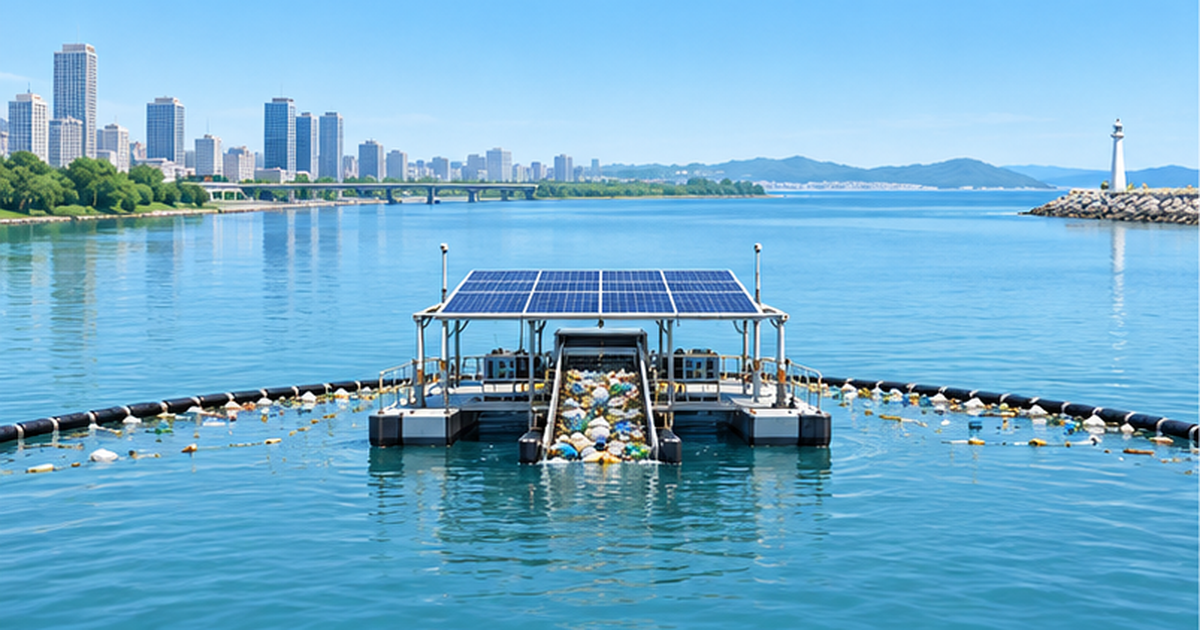
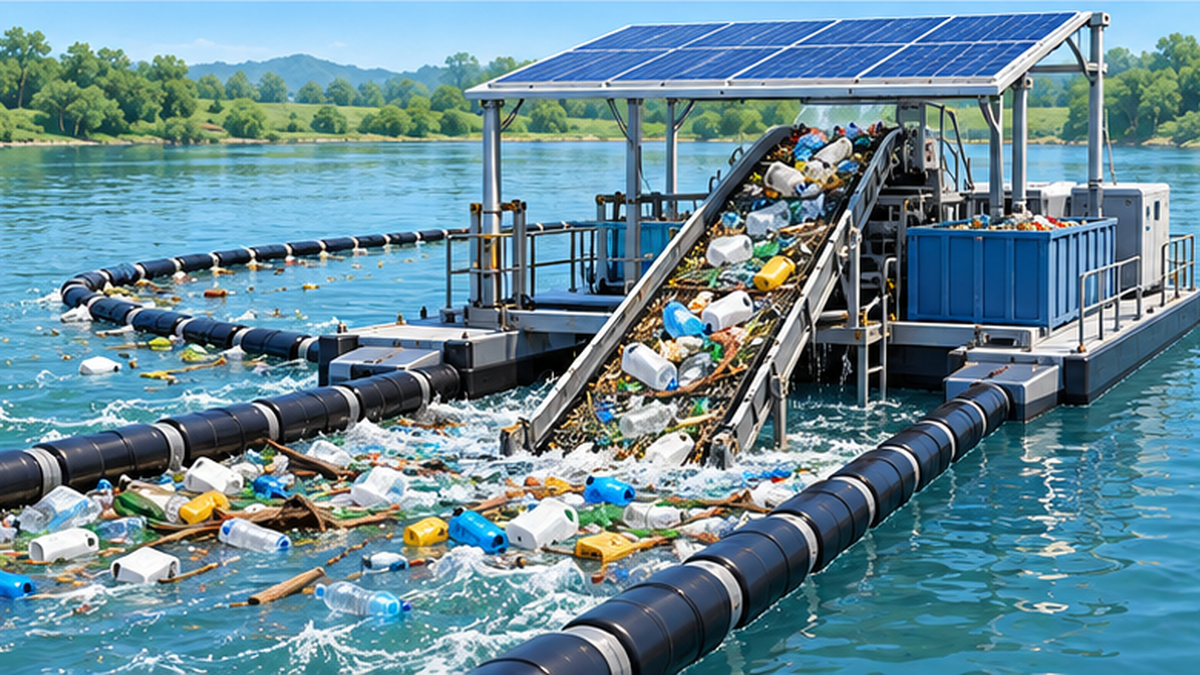
A recent focus is the Interceptor, developed by The Ocean Cleanup. It uses the river's current to guide floating litter onto a conveyor and automatically store it in containers on a barge. It runs on solar power and is described as notifying operators when nearly full. Its design capacity is said to be tens of tonnes per day, but actual recovery depends on river conditions.
4. Barrier types spanning the river
Rivers that carry large amounts of litter after every heavy rain use barrier devices stretched across their full width. The Ocean Cleanup has also recovered litter with fixed barrier systems in places such as Guatemala.
5. Estuary and harbor recovery, and citizen cleanups
The last line of defense is recovery at estuaries and harbors, using collection boats and surface-skimming devices. Equally important is recovery by citizens' own hands, such as shoreline cleanups. See our beach cleanup article on how to take part.
| Type | Main features | Weaknesses |
|---|---|---|
| Booms and fences | Low cost, no power | Lost in floods, manual clearing needed |
| Trash screens | Uses existing facilities, yields data | Limited sites |
| Automatic collectors | Continuous automatic recovery, solar-powered | Purchase and upkeep costs, permits |
| Barriers | Catch litter across the whole river | Flood damage, coordination with shipping |
| Estuary and harbor recovery | Last chance to catch | Misses litter already dispersed |
Overseas cases: The Ocean Cleanup's river projects
How the Interceptor works and where it is deployed
The Ocean Cleanup is a nonprofit known for recovering litter at sea. It unveiled the Interceptor for rivers in 2019 on the idea that "if rivers are the main source, stop it before it reaches the sea" and has deployed it around the world. News reports say the number of units, once a little over ten, is to be increased.
A barrier gathers litter in the current, a conveyor lifts it, and an automatic shuttle sorts it into six containers on a barge. Power comes from solar panels and batteries, and it is described as quiet, emission-free and able to run around the clock.
Case: Los Angeles
A June 2026 report said one unit installed at Ballona Creek near Los Angeles, California, collected about 143,710 pounds (about 65 tonnes) of trash in 2025. The group plans further units on the San Gabriel River and the Los Angeles River.
Case: Guatemala
In Guatemala, large amounts of litter pour into rivers after heavy rain. News and encyclopedia entries describe barrier devices capturing large volumes shortly after rainfall, but figures differ between sources, so this article avoids stating specific numbers.
How to read the numbers
- "50–100 tonnes per day" is a design target, not a result
- Recovery varies greatly with rainfall and season
- Results differ by river even for the same device
Japan's efforts: from litter stoppers to field surveys
Municipal booms and recovery data
Toyama City collects drifting litter in its quasi-river channels using oil fences and tracks the results. According to its materials, the recovered waste by weight was 29.2% PET bottles, 24.8% other plastics, 13.5% cans and bottles, and 32.5% other. Plastics exceeded half the weight.
An Aichi Prefecture river litter survey likewise found plastics (including expanded polystyrene) making up much of the litter scattered around rivers. However, survey sites and periods were limited, so these figures cannot be generalized nationwide.
The Ministry of the Environment's field survey
The Ministry of the Environment carries out a survey on plastic litter flowing from rivers and lakes into the sea, and published its FY2024 report in March 2025. The country is still working to measure how much flows out of which rivers.
Changing things upstream: source reduction
Recovery devices act on the exit, but the heart of the matter is reducing what flows in. Preventing littering, managing bins and bottle-to-bottle PET recycling work only when combined with changes in daily life. For the full picture see our article on plastic flowing from rivers to the sea, and for where drifting litter goes see our drifting debris tracking article.
What you can do for a nearby river
- Join a cleanup along a riverbank or channel
- Report littering to your local government
- Sort PET bottles and food containers properly
- Cut down on single-use plastics
Limits and challenges of recovery technology
Cost and maintenance
Purchase and upkeep are major issues for automatic collectors. Reports mention units costing up to USD 650,000 each. Barge swaps, hauling and disposal continue to cost money after installation.
Where recovered waste goes
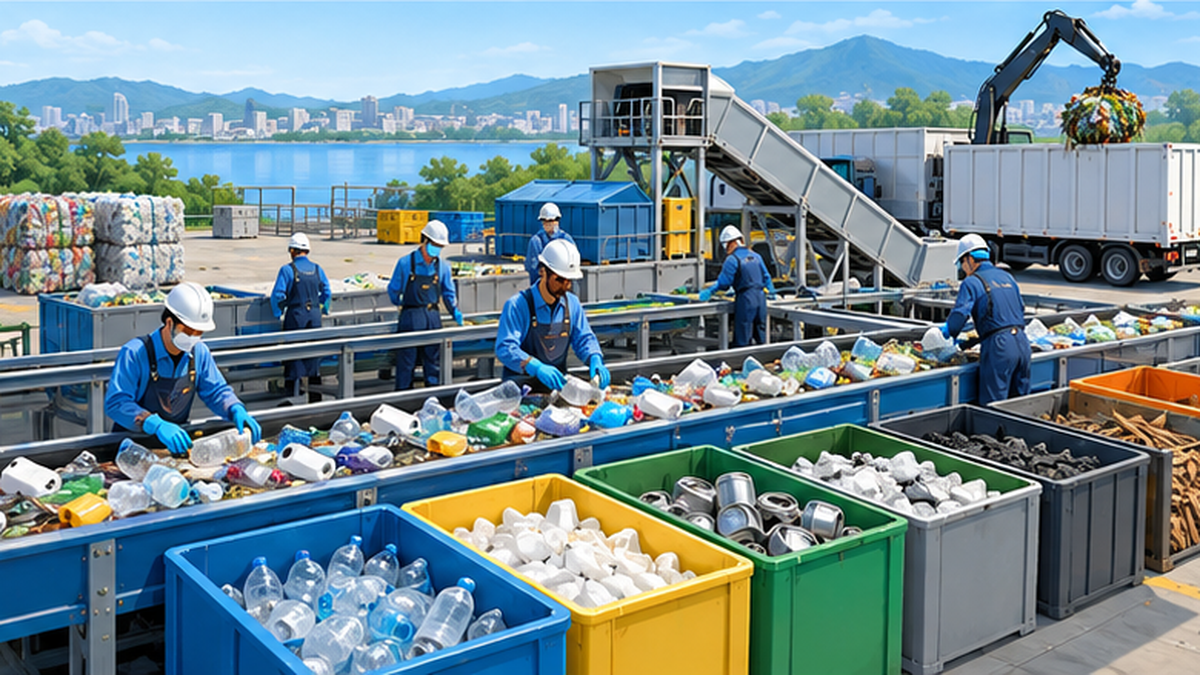
If recovered litter is not processed properly it is simply dumped elsewhere. Recovery, transport, sorting and recycling must form one chain to mean anything. Dirty river litter is hard to recycle and is often incinerated.
Only floating debris can be caught
These devices mainly catch larger litter floating near the surface. Small fragments drifting underwater and most microplastics slip through. For health and ecosystem effects see our article on microplastics and human health.
Care for ecosystems
Coexistence with river life and ships is essential. Before installation, effects on fish passage and waterbirds must be studied and local agreement obtained.
Rivers ahead and our role
Three pillars: technology, rules and citizens
River litter measures work when recovery technology, rules that reduce sources and citizen action come together. Any one alone is not enough.
Checking results with data
Recording amounts, studying composition and tracking yearly change lead to better policy. Citizen-participation surveys also widen the eyes of science.
Three actions you can take today
- Walk along a river in your town and see its litter
- Join a local cleanup or survey once
- Cut one single-use item from your shopping
Summary
- Most ocean litter is carried by rivers
- Recovery devices come in many types, each with pros and cons
- Most important is reducing the litter that flows into rivers
References and sources
- Meijer et al. (2021) More than 1000 rivers account for 80% of global riverine plastic emissions into the ocean – Science Advances 7(18)
- The Ocean Cleanup: How does the Interceptor work – How the Interceptor works
- Ministry of the Environment: FY2024 results, estimate of Japan's marine plastic outflow – Provisional estimate of outflow via rivers
- Ministry of the Environment: FY2024 survey on plastic litter flowing from rivers and lakes into the sea, report – March 2025
- Ministry of the Environment ecojin: Is the sea overflowing with plastic? – Explainer on marine plastic
- Ministry of the Environment: FY2019 White Paper on the Environment, the Circular Society and Biodiversity – Plastics at home and abroad
- The Ocean Cleanup (Wikipedia) – Organization and river projects
- Toyama City: materials on river litter and beach debris – Boom installation and composition of recovered waste
* Listed in order of reliability: government and academic institutions > peer-reviewed papers > specialist organizations > reliable media