⚡ In short
How does outdoor brand Patagonia engage with the sea? We neutrally organize, from public information, its 1%-of-sales grants, 2022 ownership restructuring, recycled fishing-net materials, neoprene-free wetsuits and seafood business.
Best known as an outdoor brand, Patagonia's ties to the sea run from donations and recycled fishing-net materials to wetsuits and seafood.
This article organizes the company's initiatives from public information and separates what is well established from what is self-reported.
Read on as an entry point to learning from corporate environmental case studies.
What you will learn
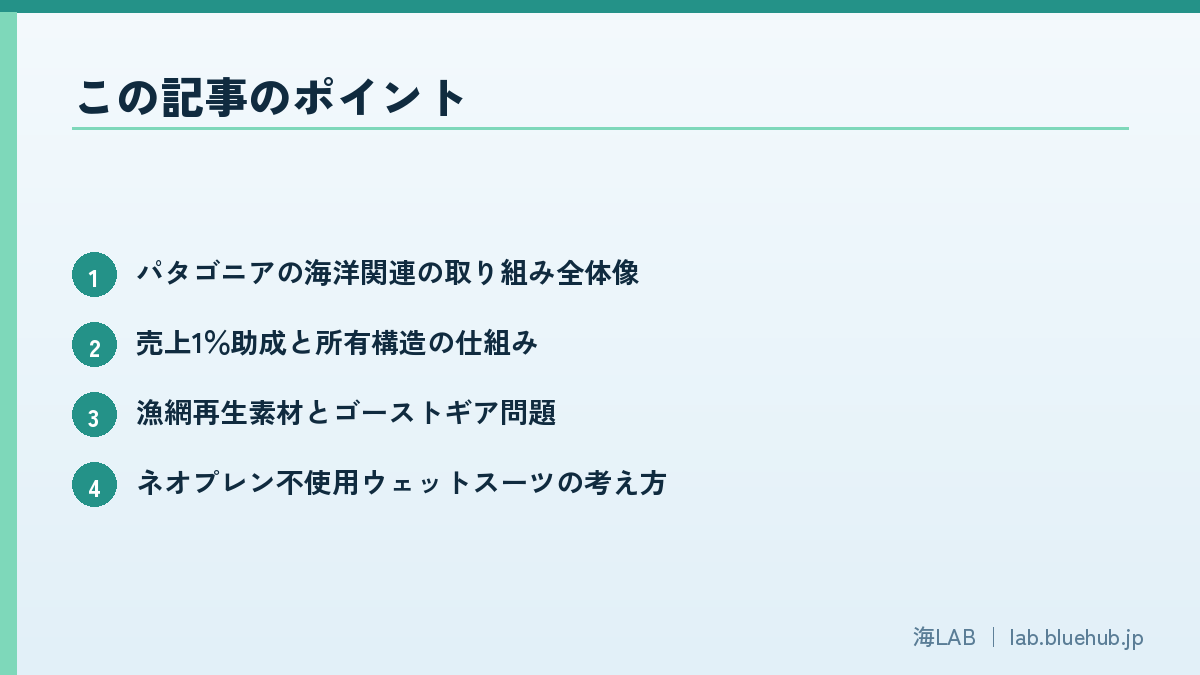
- An overview of Patagonia's ocean-related initiatives
- How the 1%-of-sales grants and the ownership structure work
- Recycled fishing-net materials and the ghost gear problem
- The thinking behind neoprene-free wetsuits
- How to read corporate environmental claims, and their limits
Why Patagonia Is Discussed as an Ocean Case Study
Patagonia is a US-born outdoor apparel brand founded in 1973 by Yvon Chouinard. It is strongly associated with mountains and rock faces, yet its links to the sea are surprisingly broad: surfing and fly fishing, support for ocean conservation groups, recycling of fishing nets, and a canned-fish business. This article focuses on its ties to the ocean.
This article looks at Patagonia's initiatives neither as praise nor as criticism, but with the aim of organizing publicly available information and reading it neutrally. Because many company announcements are self-reported, we say "according to the company" and avoid asserting figures that third parties find hard to verify.
Overview of the Ocean-Related Initiatives
Patagonia's ocean-related activities are easiest to understand in four layers: the ownership structure of the company itself, grants based on 1% of sales, a review of product materials, and its food business, Patagonia Provisions.
- Ownership structure: a mechanism that directs most profits to environmental protection (restructured in 2022)
- Grants: 1% of sales donated to grassroots environmental groups (since 1985)
- Materials: neoprene-free wetsuits and materials from recovered fishing nets
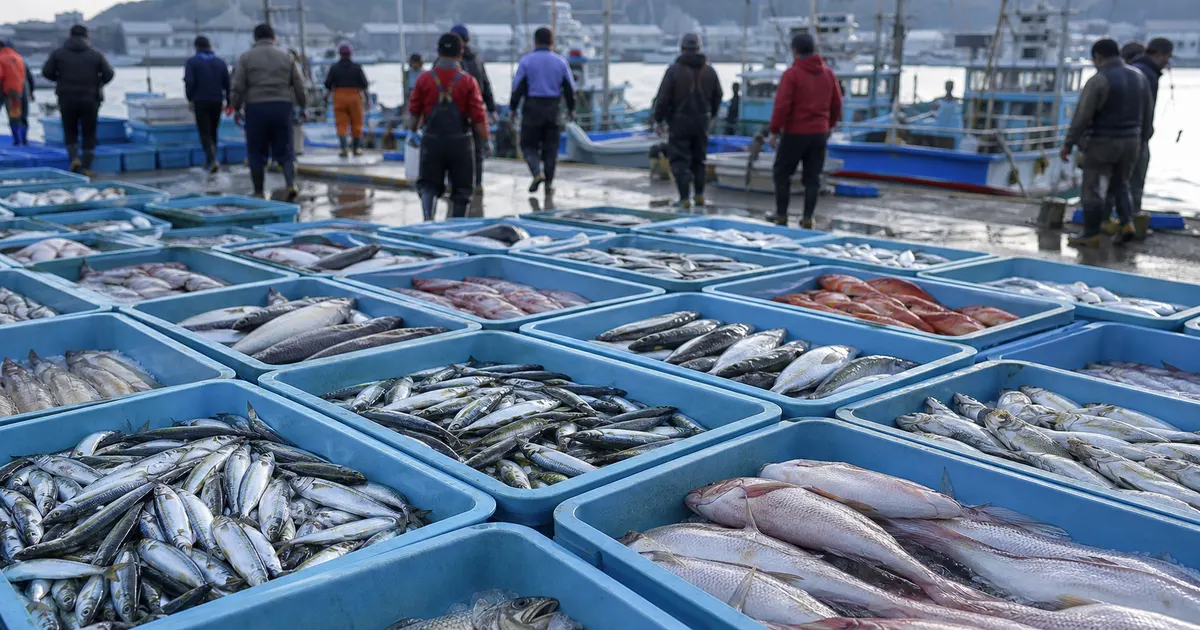
- Food: a seafood brand that narrows its choices by fishing and farming methods
Why It Is Worth Learning From a Company Case
Ocean problems such as plastic waste, bycatch, overfishing and rising sea temperatures from climate change cannot be solved by governments and researchers alone. The choices companies make about raw materials and money flows shape the impact on the sea through the supply chain. Patagonia is one of the few companies that has kept those choices public, which gives Japanese companies and consumers material for thinking about their own decisions.
How to read this article
Patagonia's figures and initiatives here rest mainly on self-reported information from the company's official pages, reports and press coverage. Where no third-party audit could be confirmed, we write "according to the company."
1% of Sales for the Sea and Nature: How the Grants Work and Their Scale
The longest-running part of Patagonia's environmental work is donating 1% of sales to grassroots environmental groups. The company's Work in Progress Report explains that since 1985 it has donated 1% of sales to grassroots nonprofits.
The Scale Shown in the Latest Report
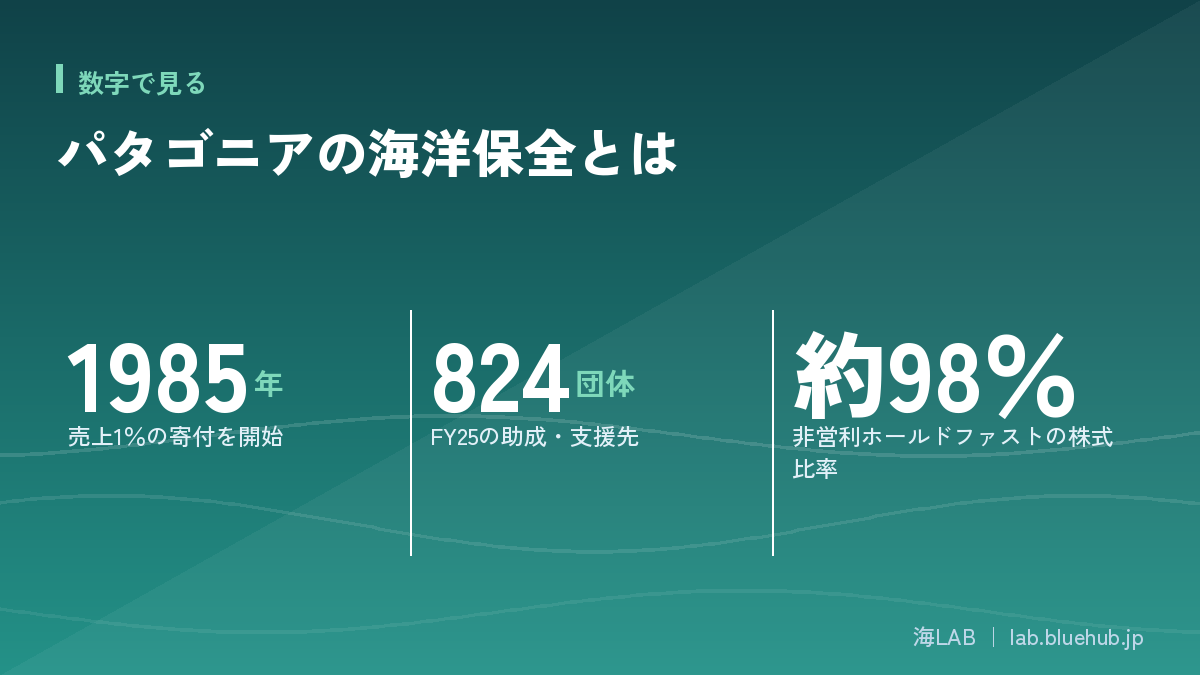
According to the company's fiscal 2025 (FY25) report, it provided about US$14.7 million in grants and in-kind support to 824 organizations through the 1% for the Planet framework. Its total environmental giving since its founding is reported at about US$240 million.
| Item | Details (company report) |
|---|---|
| Starting point | 1% of sales to grassroots groups since 1985 |
| FY25 grants | 824 groups, about $14.7 million (grants plus in-kind support) |
| Cumulative total | About $240 million |
| Areas supported | Land, rivers, ocean, climate, Indigenous support and more |
Examples of Support for Ocean Conservation Groups
In the ocean field, the international conservation NGO Oceana has said it received a grant from Patagonia in 2013. Its aim was to support campaigns against marine pollution and destructive fishing. Grants like these are distinctive because they function not as advertising spending but as funding for policy advocacy and monitoring.
A Note: The 1% Is Based on Sales
Because the standard is 1% of sales rather than profit, donations are less likely to shrink in a loss-making year. Still, whether 1% matches the scale of environmental impact is a separate question. The grants are only one way of offsetting a business's impact, and should be evaluated together with efforts to reduce the footprint of the products themselves.

In Japan too, environmental groups depend heavily on donations and grants. For fields like ocean conservation, where results are hard to see, a sustained funding mechanism matters even more, and that is one point we can learn from Patagonia's case.
The 2022 Ownership Restructuring: Directing Profits to Nature
A major part of any discussion of Patagonia is the large change in ownership announced in September 2022. In the company's announcement, the founding family gave up ownership and the message was that "Earth is now our only shareholder.".
Stock Held by the Two Entities
- Patagonia Purpose Trust: holds the voting stock (about 2% of the total). It protects the company's purpose over the long term.
- Holdfast Collective: a nonprofit that holds the non-voting stock (about 98% of the total). It uses the funds it receives to protect nature and respond to the environmental crisis.
Profits that are not reinvested go to Holdfast as dividends. The company said at the time that it expected annual dividends of around US$100 million. Note that the phrase "100% of profits" refers to what remains after reinvestment in the business.
Holdfast Grants and the Ocean
According to reports, about 70% of Holdfast grants go to protecting land, oceans and rivers. The FY25 report cites spending related to protecting Georgia's Okefenokee wetlands as an example. We could not confirm from public information how much is spent specifically on the ocean.
About the reliability of this information
Some secondary sources reverse the stock ratios for Holdfast. Here we follow the company's official announcement (September 14, 2022).
What This Structure Shows
Instead of listing the company and taking a sale profit, this is a choice to fix the use of profits to the environment by law. From the standpoint of ocean conservation, it may allow grants to continue regardless of short-term results, though there are mixed views on the structure, including the fact that a nonprofit of this kind can engage in political activity. As a case, it shows that corporate governance itself can be a tool for solving environmental problems.
Ghost Gear and Marine Plastic: Background Knowledge
To understand Patagonia's work on recycling fishing nets, you need the basics of the marine plastic and fishing gear problem.
Why Fishing Gear Is a Problem
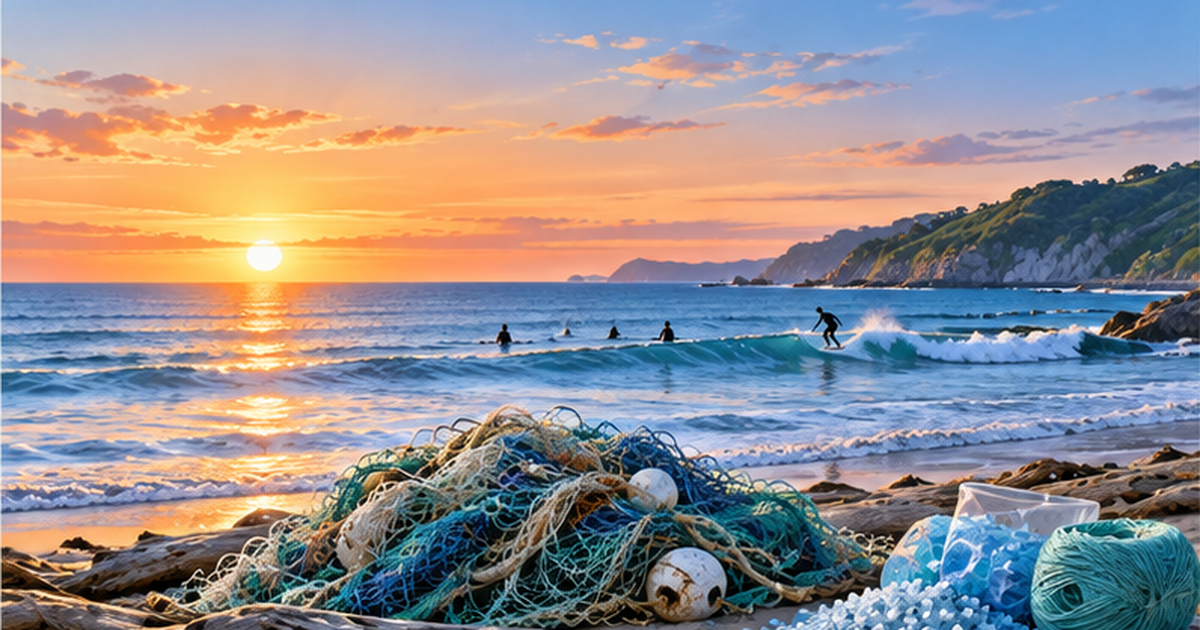
Most fishing nets and ropes are made of synthetic fibers such as nylon and polyethylene. Their strength and durability are an advantage in fishing, but once lost at sea they resist breakdown and keep entangling wildlife for a long time. Lost or discarded gear is called ghost gear and, as "invisible fishing" that keeps catching animals, it also affects fish stocks.
Main Routes of Loss
- Loss in storms or ocean currents
- Abandonment after snagging on other gear or rocks
- Illegal dumping because of disposal costs or the effort of recovery
- Improper storage of aging nets in harbors
Countermeasures fall into three groups: prevention (not letting gear escape), recovery (pulling it from the sea) and reuse (circulating it as material). Corporate recycled-material efforts mainly create demand for the "reuse" step.
Challenges and Efforts in Japan
In Japan too, disposing of old fishing nets is often a burden for fishing cooperatives and local governments. Discussion is advancing on systems that send recovered nets to material makers and on the idea of manufacturers taking responsibility through to recovery. Learning from overseas corporate cases can give hints for building domestic systems.
Tip
The impact of ghost gear is not limited to direct entanglement. Over time it can break into small pieces and may remain in marine ecosystems as microplastics.
Turning Discarded Fishing Nets Into Products: NetPlus and Ghost Gear
Among marine plastic waste, fishing gear is especially troublesome. Nets and ropes left in the sea are called "ghost gear" and keep entangling fish, sea turtles and seabirds. Patagonia has been involved in efforts to use such nets as a material.
What Is Bureo's NetPlus?
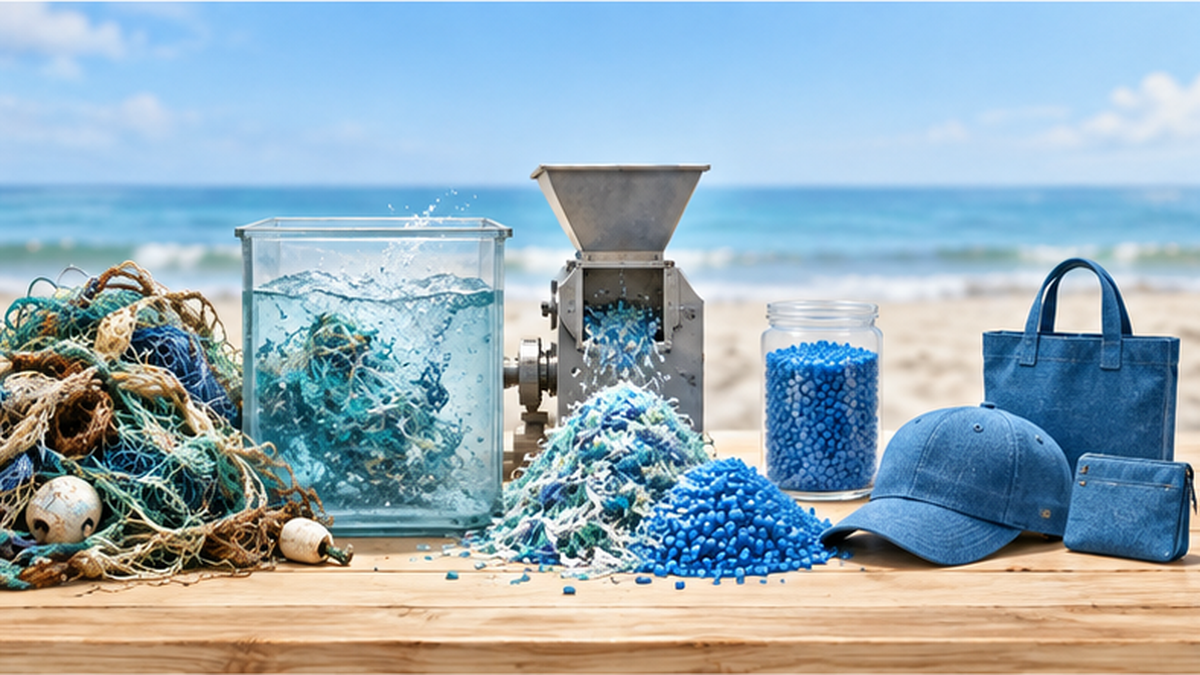
Bureo, a start-up from Chile, collects nets that fishers in Chile and Argentina have finished using and processes them into pellets of 100% recycled nylon called NetPlus. According to Patagonia, the material is used in the core of cap brims.
- Provide fishers with collection bins and buy old nets at a price per weight
- Sort, wash and crush the nets and process them into pellets
- Use the material in products as one whose origin can be traced
For fishers, this means they do not have to dump nets at sea, and it also brings income. A strength of the mechanism is that care for the environment is tied to fishers' economic incentives. However, figures on collected volumes and effects are self-reported by the company and related firms, and no third-party verification could be confirmed.
Comparison With Fishing-Net Recycling in Japan
In Japan, efforts to turn discarded fishing nets into clothing and bags are also advancing. The mechanism is explained in What Is ECONYL? How Discarded Fishing Nets Become Swimwear and Bags. For the idea of manufacturers handling recovery, see also the article on extended producer responsibility (EPR) for fishing gear.
Why Recycling the Material Is Not Enough
Recycling nets does not solve the root problem if new nets keep leaking into the sea. Recovery and recycling are only part of a three-step approach: prevent loss, recover and reuse. Companies that create demand for the material help channel money to the recovery side, but a larger volume of use can also consume new resources.
Changing Surf Gear: Neoprene-Free Wetsuits
Tools for enjoying the sea have an environmental load too. Neoprene, the standard wetsuit material, is a petroleum-based synthetic rubber. Patagonia developed wetsuits that do not use neoprene, and launched its first line in 2014, according to reports.
The Thinking Behind the Material
According to the Japanese announcement, FSC-certified natural rubber (using Yulex, derived from the resin of the Hevea tree) is blended with chlorine-free synthetic rubber to improve resistance to ozone and ultraviolet light. The company says that replacing petroleum-based material with plant-based material can cut CO2 emissions in manufacturing by up to about 80%. Because sources differ on the source plant (Hevea versus guayule), check the company's official pages for current material information.
| Item compared | Conventional neoprene | Neoprene-free line |
|---|---|---|
| Main raw material | Petroleum-based synthetic rubber | Natural rubber plus synthetic rubber |
| CO2 emissions (company claim) | Baseline | Up to about 80% lower in manufacturing |
| Challenge | Dependence on a non-renewable resource | Sustainable sourcing of natural rubber |
What "Moving Away From Petroleum" Means for the Ocean
Switching wetsuit materials is less a direct measure against marine pollution than an indirect way of protecting the sea through climate change mitigation. Rising sea temperatures and acidification affect habitats of corals and fish, so cutting CO2 at the manufacturing stage is not unrelated to ocean conservation.
Points to view with care
The label "environmentally friendly" does not automatically guarantee a lower overall environmental load. Evaluation must include product lifespan, ease of repair and recovery after use. The company's own report also says about 85% of its products have no established end-of-life solution.
Changing the Sea Through Food: Patagonia Provisions Seafood
Patagonia handles not only clothing but also a food business, Patagonia Provisions. For seafood, the company says its policy is to choose fisheries that reduce bycatch through method, place and timing and aquaculture that helps improve water quality and habitat.
Examples of Sourcing the Company Describes
- Pink salmon caught with reef nets (fixed nets) in places such as the Salish Sea off Washington State
- Sardines, mackerel and anchovies from Spain's Bay of Biscay
- Farmed mussels described as helping improve water quality and create habitat
The company's site shows figures such as about 85 tons of wild pink salmon and about 1,331 tons of farmed mussels. However, the reference year and calculation method are hard to confirm from the site alone, so it is reasonable to treat them as self-reported values.
A Caution About the Word "Regenerative"
The certification standard for the "Regenerative Organic" label the company uses was built around soil health and does not cover seafood itself. Seafood sustainability is supplemented by other frameworks such as MSC certification and expert advice (the company names Wild Fish Conservancy, among others). Consumers should make a habit of checking how a term is defined.
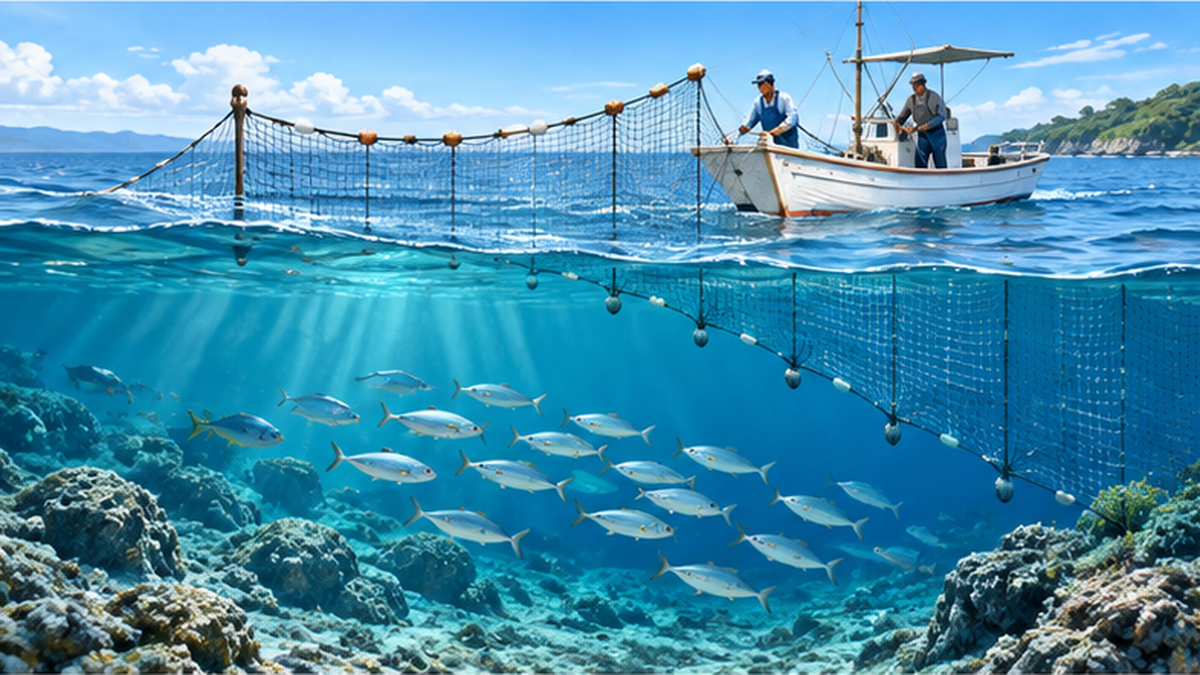
The balance between fishing and the environment cannot be separated from the problem of illegal fishing. Companies have a large role in building traceability so that illegally caught seafood does not enter the market.
Alignment With the SDGs: Goals 12, 13 and 17 as Well as 14
Applying the SDGs (Sustainable Development Goals) to Patagonia's efforts shows that several goals overlap, not only "Life Below Water" (Goal 14). When reading a corporate case, keep in mind that one initiative can span several issues.
| SDG goal | Related initiatives | What to look at |
|---|---|---|
| 14 Life Below Water | Recycling nets, seafood chosen by fishing method, grants to ocean NGOs | How much bycatch and gear loss has fallen |
| 12 Responsible Consumption and Production | Repair and resale, use of recycled materials | Whether production volume has grown |
| 13 Climate Action | Neoprene-free wetsuits, directing profits to nature | The basis of comparison for emission cuts |
| 17 Partnerships | Collaboration with grassroots groups, fishers and material companies | Transparency of funds and information |
Goal 14 (Life Below Water)
Goal 14 covers preventing marine pollution, ending overfishing and illegal fishing, and sustainable management. Recycling nets and lower-bycatch fishing methods link directly to it. At the same time, much of the plastic that flows into the sea is said to come from land, so measures must cover life on land as well as fishing.
Goal 12 (Responsible Consumption and Production)
The apparel industry consumes a great deal of resources. Using recycled materials matters, but what is needed is not only switching materials but changing consumption itself: using things longer, repairing them and passing them on. A company encouraging repair of its own products is in tension with the conventional model built on growing sales, and that too is subject to evaluation.
Goal 17 (Partnerships)
Ocean problems cannot be solved by one company alone. Fishers, material makers, nonprofits, researchers and governments must share roles. It is the foundation of long-term trust when recipients of grants publish the results of their activities and the use of funds is visible.
How to Evaluate Corporate Initiatives: Limits and Challenges
The initiatives seen so far look advanced as corporate environmental activity. Evaluation, however, needs to look at both what is being done and the overall load.
The Burden of the Apparel Industry Itself
Patagonia itself reports that about 85% of its products have no end-of-life solution. As a business that sells new goods, higher production leads to higher resource use and emissions. The company's promotion of repair services and secondhand sales (Worn Wear) can be read as a response to this contradiction, but its scale of effect is hard to verify from outside.
The Limits of Self-Reported Information
- The CO2 reduction rate for materials is the company's claim, and the basis of comparison is sometimes not stated
- Volumes of recovered nets and grant amounts depend on reports by the company and related firms
- For seafood sustainability, the presence of certification or third-party audit must be checked separately
A Checklist for Learning From Corporate Cases
| Item to check | What to look at |
|---|---|
| Source of figures | Company report, or third-party audit or paper? |
| Basis of comparison | Reduction or improvement compared with what? |
| Overall impact | Are the effects cancelled out by higher production? |
| Continuity | Is it updated in annual reports? |
A summing-up view
Corporate cases are useful not only to copy but also as material for learning how to read information. Praise and criticism alike should come after checking how solid the evidence is.
Reports on marine debris measures and sustainable use of fishery resources are increasing among Japanese companies and local governments as well. Comparing them from the same viewpoint makes it easier to tell the quality of each effort.
What We Can Do: Perspectives for Consumers, Companies and Learners
Here are points from Patagonia's case that we in Japan can apply in daily life.
What consumers can do
- Before buying, think about whether it will last and can be repaired
- For seafood, check the labeling of origin, fishing method and certification
- For products that claim environmental benefits, check for a report or third-party certification
- Join local activities such as beach cleanups
What companies and organizations can do
A starting point for companies is to identify the steps in the supply chain that tend to affect the sea (fishing gear, packaging, transport, raw material sourcing) and to set numerical targets and a reporting system.Publishing the same indicators every year, even small ones builds trust.
What learners can do
Ocean problems tangle together science, economics and policy. When reading corporate cases, also check primary sources (materials from government and research bodies) and develop the habit of thinking about what the numbers mean.
A step to take today
Pick one everyday product and look into where its materials come from and where it goes when you are done with it.
Companies that redesign the relationship between profit and environmental protection as Patagonia has are still few. Understanding the mechanism, however, gives clues for thinking about the future relationship between companies and the sea.
References and sources
- Patagonia Work in Progress Report – FY25 grant amounts, Holdfast, end-of-life solutions
- Patagonia's Next Chapter: Earth is now our only shareholder – Official announcement of the September 14, 2022 ownership restructuring
- Patagonia Provisions - Our Impact – Sourcing policy and figures for seafood and mussels
- Patagonia: A Net Plus – Introduction to NetPlus, a material from recovered fishing nets
- Oceana: Oceana receives support from Patagonia – 2013 grant for ocean conservation
- @Press: Patagonia unveils the world's first wetsuit without neoprene – Announcement of neoprene-free wetsuits
- Inside Philanthropy: Holdfast Collective – Direction of Holdfast grants
- Fast Company: Three years in, Patagonia's ownership model – Coverage of the third year of the ownership model
* Listed in order of reliability: government and academic institutions > peer-reviewed papers > specialist organizations > reliable media