⚡ In short
Resin pellets (nurdles) are the millimetre-sized granules from which plastic products are made. An estimated 230,000 tonnes spill into the ocean every year, and their surfaces concentrate toxic chemicals up to one million times seawater levels. From the X-Press Pearl disaster to the EU's new regulation and Japan's countermeasures, this article explains the issue with primary sources.
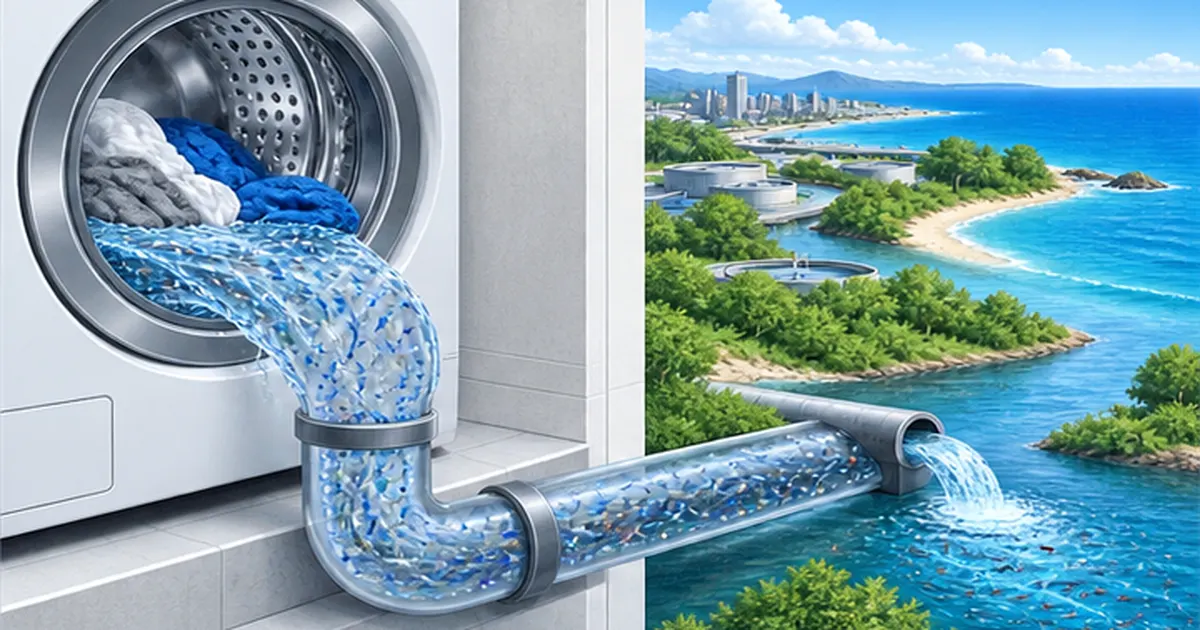
Resin pellets (nurdles) are tiny granules of plastic, a few millimetres across, that serve as the raw material for virtually every plastic product. PET bottles, washbowls, fishing nets — trace them back far enough and they all began as these little beads, melted down and moulded. What is far less known is that these pellets spill into the environment at a scale of hundreds of thousands of tonnes every year during manufacturing, transport and storage, washing up on beaches all over the world.
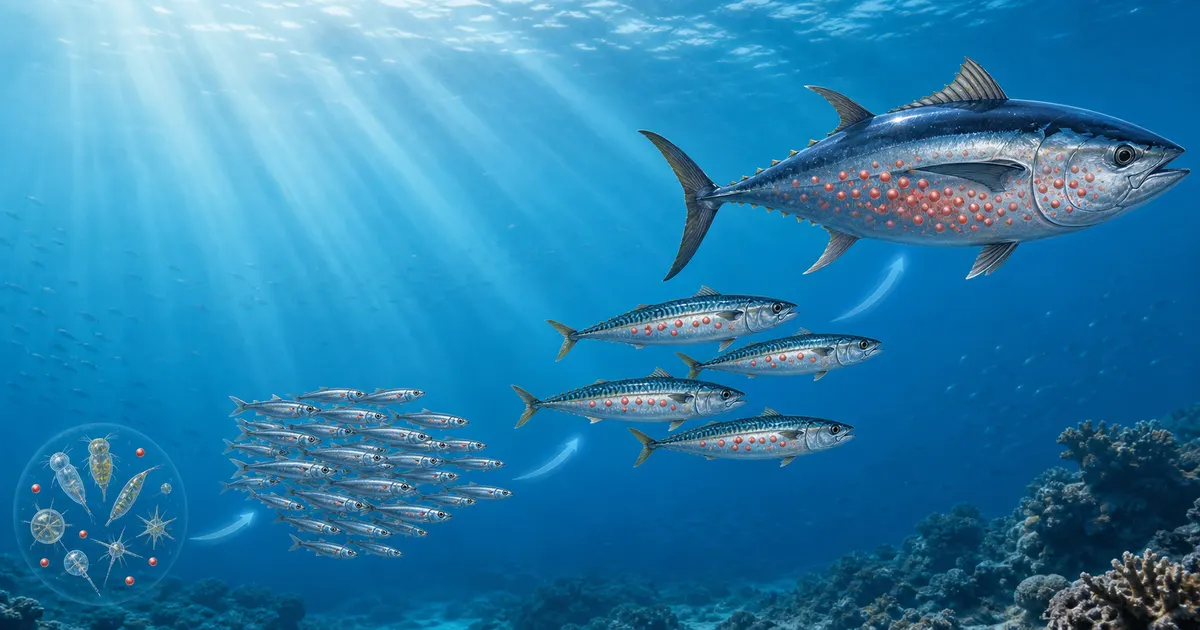
Because pellets look almost identical to fish eggs, marine animals swallow them. Worse, their surfaces soak up toxic chemicals from seawater, concentrating them up to one million times — turning the pellets into "pollutant carriers". In 2021, a container-ship fire off Sri Lanka released 1,680 tonnes of pellets into the sea, an event the United Nations described as the worst plastic spill in history. Pellets are the textbook example of a primary microplastic whose source is perfectly clear, yet whose control has lagged for decades.
This article explains, based on primary sources from government agencies and academic institutions: what resin pellets are, where and in what quantities they escape into the ocean, how they harm ecosystems, the EU pellet regulation adopted in 2025 as the world's first comprehensive rule, Japan's public- and private-sector efforts, and what each of us can do.
What you will learn in this article
- What resin pellets (nurdles) are, and why they are called "mermaid's tears"
- Where along manufacturing, transport and storage pellets escape into the sea, and how much is lost each year
- What happened in the worst spill on record — the X-Press Pearl disaster off Sri Lanka in 2021
- How pellets become "pollutant carriers", concentrating toxic chemicals up to one million times
- The world's first comprehensive regulation — EU Regulation 2025/2365 — and public and industry countermeasures in Japan
- Actions each of us can take today, starting with a nurdle hunt
What Are Resin Pellets (Nurdles)? The "Plastic Beads" That Come Before the Product
Plastic products are not made in their final shape from the start. Resin synthesised from petroleum and other feedstocks at chemical plants is first formed into granules a few millimetres across, packed into bags or containers, and shipped to product factories around the world. Those factories melt the granules and inject them into moulds to form bottles, containers and parts. This intermediate material is the "resin pellet", known in English-speaking countries by the nickname nurdle.
Lentil-Sized, and the Starting Point of Every Plastic
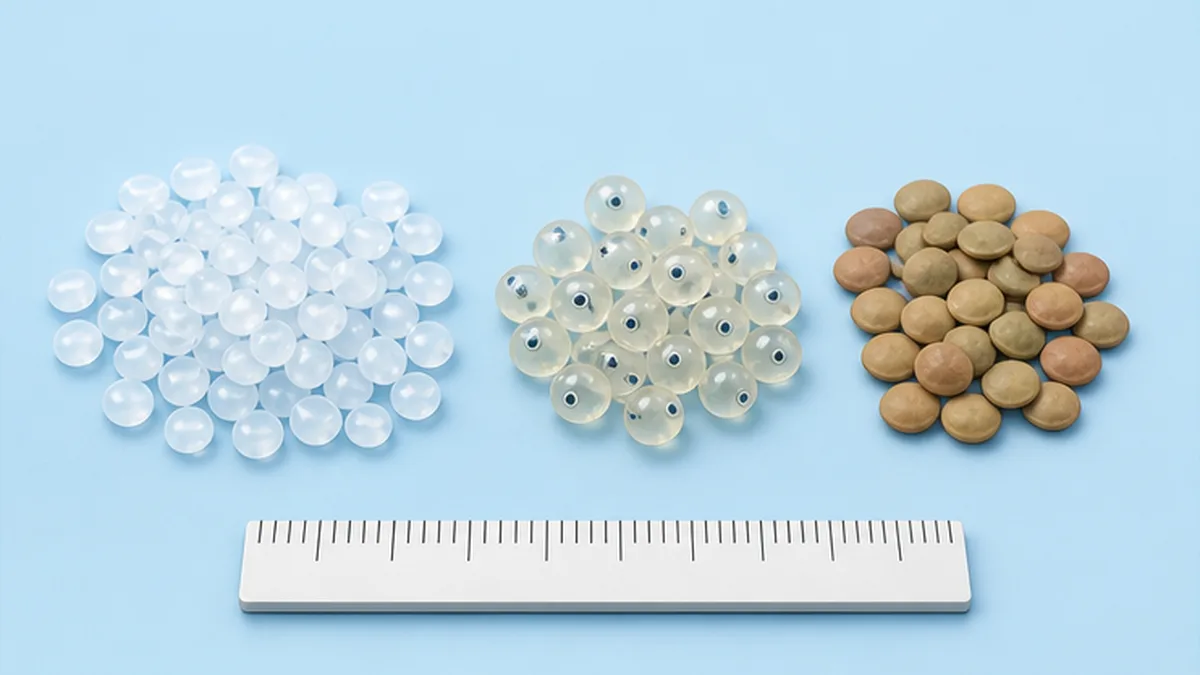
Pellets measure roughly 1–5 mm — about the same size as a lentil or a fish egg. They come in many materials, including polyethylene (PE), polypropylene (PP), polystyrene (PS) and the PET used in drink bottles; most are translucent or white, though coloured ones exist. Global plastic production now exceeds 400 million tonnes a year, and most of it passes through pellet form at some point in distribution. Pellets are, in effect, the lifeblood of the modern plastics industry.
| Item | Details |
|---|---|
| Name | Resin pellet (plastic pellet) / "nurdle" in English |
| Size | Roughly 1–5 mm in diameter (about the size of a lentil or fish egg) |
| Main materials | Polyethylene (PE), polypropylene (PP), polystyrene (PS), PET, etc. |
| Use | Intermediate raw material for almost all plastic products (melted and moulded) |
| Nickname | "Mermaid's tears" — the common name for pellets washed up on beaches |
The Archetypal "Primary Microplastic"
Microplastics are plastic particles 5 mm or smaller. In contrast to "secondary microplastics", created when products such as plastic bags or fishing nets break apart under sunlight and waves, particles that enter the environment already small are called "primary microplastics" — and resin pellets are their archetype. Japan's Government Public Relations Office and Ministry of the Environment repeatedly stress that once microplastics escape into the environment they are extremely difficult to recover, which is why preventing loss on land matters most.
Among primary microplastics, the scrub agent "microbeads" once used in face washes and toothpaste was banned in country after country, starting with the United States in 2015. Resin pellets, however, are not contained in any particular product — they leak from the industrial infrastructure itself — making them hard to target with regulation, and control has lagged badly. Estimated losses of pellets far exceed those of microbeads: a textbook case of "ease of regulation" failing to match "size of pollution".
Why "Mermaid's Tears"?
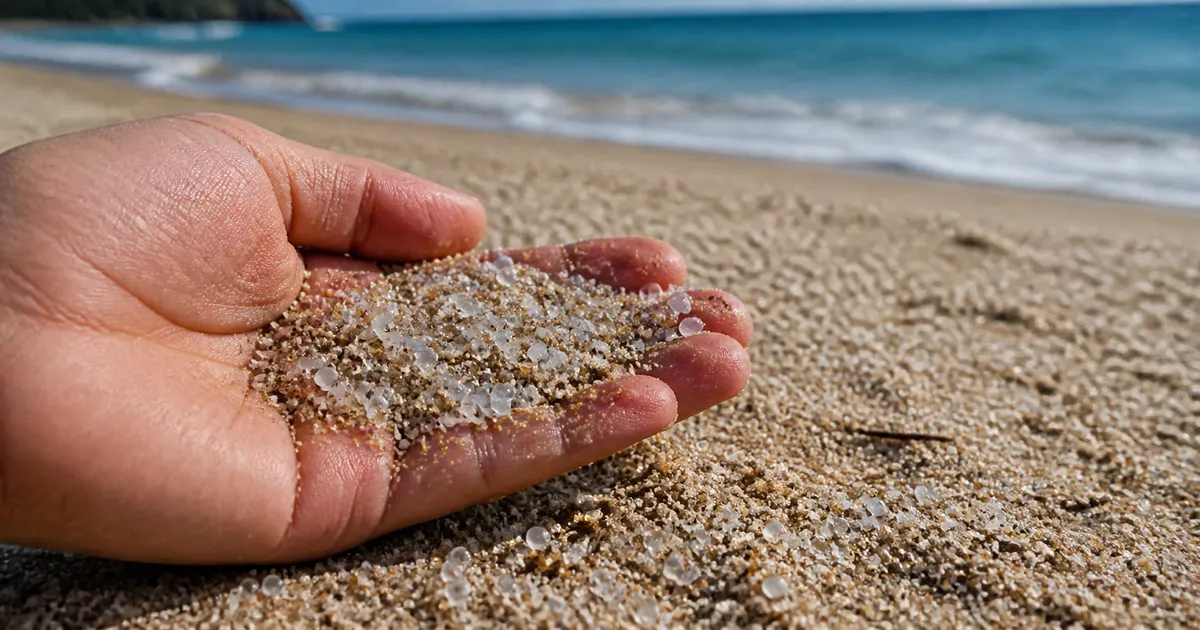
Translucent pellets washed up on the shore glitter in the sand like tiny teardrops, earning them the romantic nickname "mermaid's tears". The reality behind the pretty name is an industrial pollution problem documented in ocean surveys as far back as the 1970s — half a century of contamination. Today they are an everyday pollutant found on most of the world's beaches.
How Pellets Travel the World
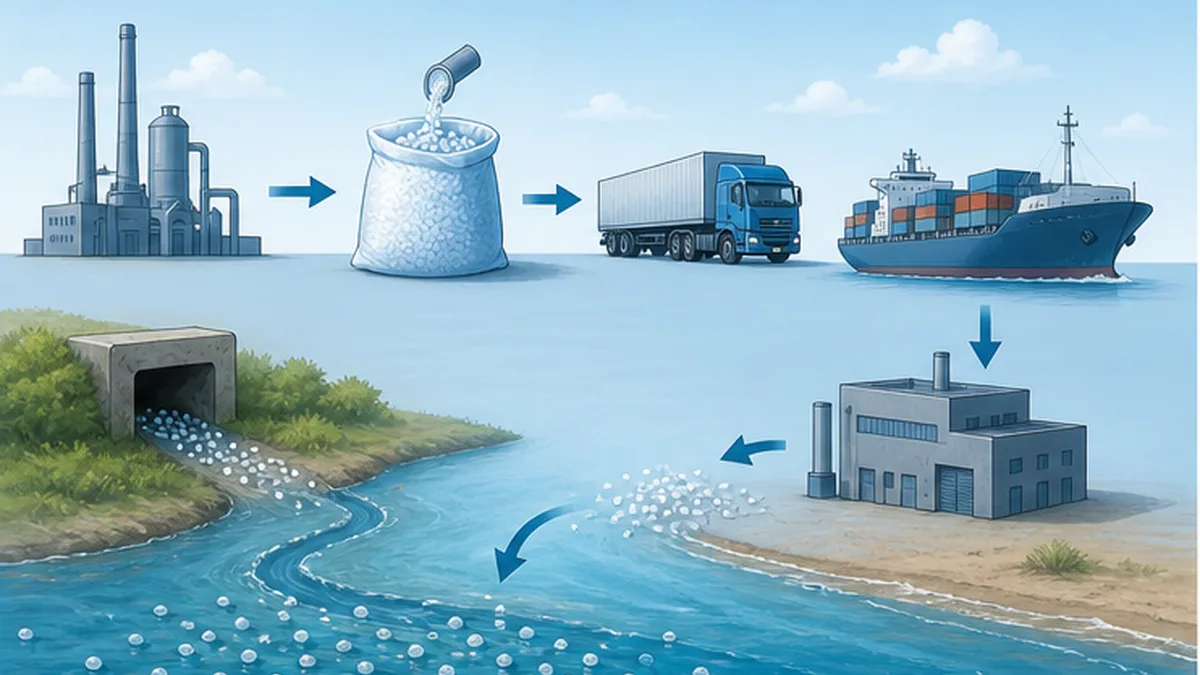
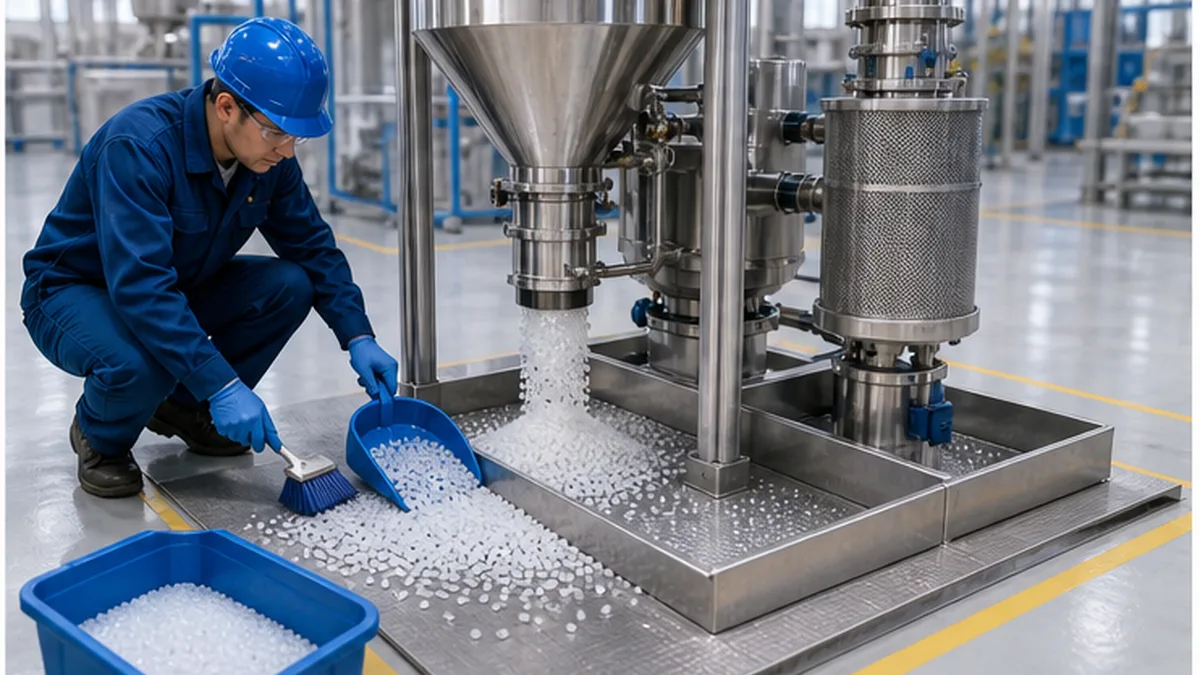
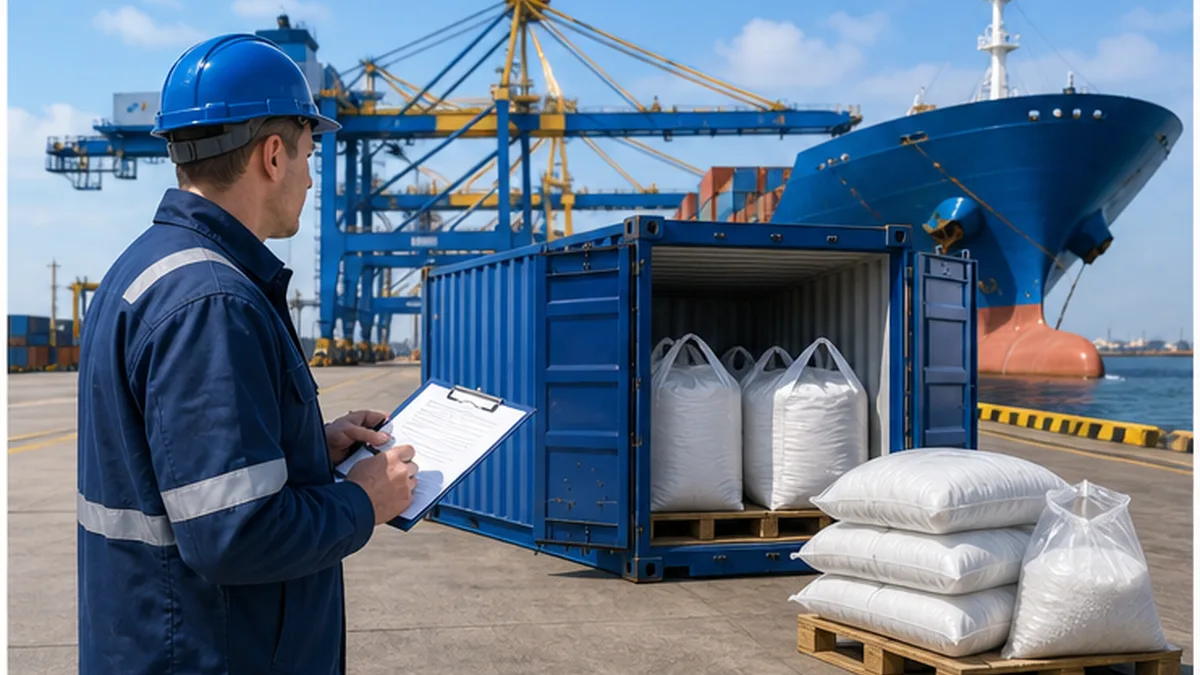
Pellet logistics are fully industrialised. At factories they are packed into bags of around 25 kg, one-tonne flexible container bags, or loaded in bulk into tank trucks and containers, then relayed by rail, truck and container ship — sometimes to product factories on the other side of the planet. This cycle of "bagging, transferring, shipping" repeats countless times a day worldwide, and every step is a potential leak point. Put the other way round: fit catch trays and drain filters at each stage of this logistics chain, and most losses could be physically prevented.
Key Points
- Resin pellets are 1–5 mm granules that serve as the intermediate raw material for nearly all plastic products
- They are the archetypal "primary microplastic" — entering the environment already small
- Once in the sea they are essentially unrecoverable, so control at the source decides everything
Hundreds of Thousands of Tonnes a Year: Where Do Pellets Escape Into the Sea?
Pellet spills may bring to mind dramatic shipping accidents, but most losses are far more mundane — an accumulation of small, everyday "spills". A handful of pellets dropped on a factory floor washes into a drain, into a river, and out to sea. Small leaks like this happen every day across supply chains worldwide.
Factories, Transport, Storage — Spills All Along the Supply Chain
- Manufacturing plants: spills while filling bags and tanks; stray granules left unswept on floors
- Transfers: torn bags and leaking hose couplings when loading trucks, railcars and container ships
- In transit: damaged containers, cargo shifts and losses overboard during sea transport
- Storage and processing: bags degrading in outdoor storage; spills when feeding machines at product factories
- Via drainage: granules entering storm drains and channels flow untreated into rivers
Each granule weighs only tens of milligrams, but the total volume of pellets in circulation is so enormous that even a tiny percentage lost adds up to a massive absolute quantity. Worse, spilled pellets are light, roll easily and wash away in rain — the worst possible properties from a containment standpoint.
The Estimates: Roughly 230,000 Tonnes Into the Ocean Every Year
An estimate compiled in 2016 by the UK environmental consultancy Eunomia puts pellet losses to the ocean at roughly 230,000 tonnes a year worldwide — by one calculation, around 10 trillion individual pellets. More recent analyses suggest losses to the environment as a whole, not just the ocean, may exceed 440,000 tonnes a year. The EU's own estimates found that some 52,000–184,000 tonnes were lost to the environment within the EU alone in 2019. Whichever estimate you take, the scale is firmly in the hundreds of thousands of tonnes.
| Estimate | Scope | Annual quantity |
|---|---|---|
| Eunomia (2016) | Losses to the ocean worldwide | ≈230,000 tonnes (≈10 trillion pellets) |
| Recent academic analyses | Losses to the environment worldwide | Possibly up to ≈446,000 tonnes |
| European Commission (2019 figures) | Losses to the environment within the EU | ≈52,000–184,000 tonnes |
The estimates vary so widely because companies are not required to report their losses, and measured data are scarce. Most figures are built up from sampling surveys at factories and logistics hubs combined with assumed loss rates. This very opacity is part of the problem — and one reason the new EU regulation obliges companies to record and document their estimated losses.
The Second-Largest Source After Tyre Dust
By weight, resin pellets are estimated to be the second-largest source of primary microplastics entering the ocean, after tyre-wear dust. But whereas tyre dust is an unavoidable by-product of use, pellets are industrial products themselves spilling through management failures — a decisive difference. Their sources — factories and transport routes — are clearly identifiable, which should make pellets the most fixable form of microplastic pollution.
Why Has the Leakage Been Tolerated for So Long?
Behind half a century of pellet loss lies a simple structure: the loss per granule is too small for anyone to feel pain. For a company, the raw-material cost of spilled pellets is negligible, and clean-up costs more than the pellets are worth. There are no penalties for spilling, and the damage falls on distant marine ecosystems and coastal communities — a textbook negative externality that never comes back to the polluter. That is precisely why the EU's approach — making loss prevention a legal obligation — is drawing worldwide attention.
Related Reading
How pellets and other plastic waste spilled on land reach the ocean via rivers is covered in detail in Plastic Waste Flowing From Rivers to the Sea: The Reality of 2 Million Tonnes a Year and Stopping It at the River.
The Worst Pellet Spill in History: Lessons of the X-Press Pearl
On top of everyday spills, large-scale accidents during sea transport make pellet pollution graver still. The defining example is the fire and sinking of the container ship X-Press Pearl off Sri Lanka in May 2021.
A Container Ship Burning Off Colombo
The Singapore-flagged X-Press Pearl caught fire on 20 May 2021 about 18 km off Colombo, Sri Lanka's largest city. The fire is believed to have started with a leak of nitric acid, of which the ship carried 25 tonnes. The vessel burned for roughly two weeks before sinking in June. Alongside the nitric acid, its cargo included 348 tonnes of bunker fuel, caustic soda, methanol and other hazardous substances — and about 1,680 tonnes of resin pellets packed into 87 containers.
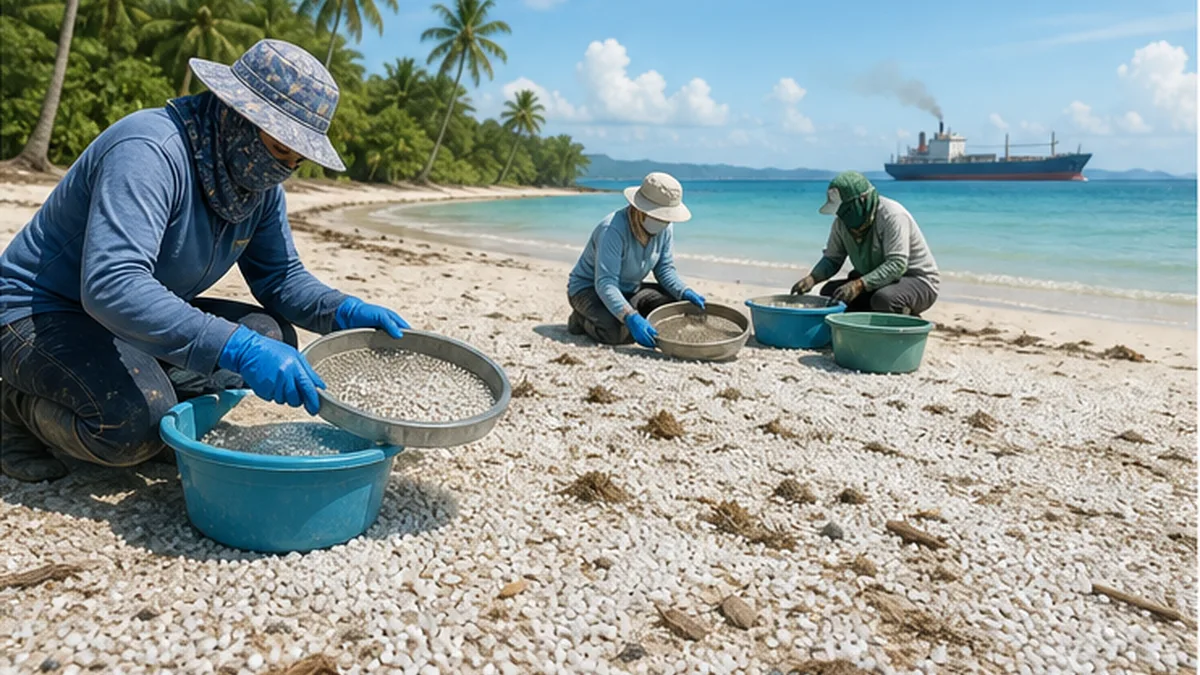
1,680 Tonnes of Pellets Blanket the Coast
The spilled pellets washed ashore in vast quantities along Sri Lanka's west coast, covering beaches white as if with snow. In its July 2021 report, the UN Environment Programme (UNEP) environmental advisory mission described the accident as the largest plastic (pellet) spill on record. More troubling still, the fire produced huge amounts of "burnt nurdles" — pellets scorched and fused by the blaze. A peer-reviewed survey found the burnt pellets irregular in shape and chemically altered, raising concern that they carry chemicals even more readily than ordinary pellets.
The pellet spill from this accident is the largest on record, and its impacts are expected to spread across borders to the coasts of the Indian Ocean.
― Summary of the UN Environment Programme (UNEP) environmental advisory mission report, July 2021
A Blow to Fisheries and Coastal Communities
After the accident the Sri Lankan government temporarily banned fishing in surrounding waters, cutting off the income of many fishing households. Pellets fouled nets, and anxiety over the freshness and safety of landed fish depressed prices. Beaches on the tourist-favoured west coast became clean-up sites, and the damage to the local economy reached a scale out of all proportion to the raw-material value of the spilled pellets. Pellet spills are a livelihood issue for coastal communities as much as an environmental one.
A Clean-Up That Never Ends
Years after the accident, pellets are still washing up on Sri Lankan beaches, with continuing reports of harm to fishing and tourism. Carried by currents, the pellets were predicted to reach the coasts of neighbouring countries across the Indian Ocean. In 2025 yet another cargo-vessel accident spilled pellets along South Asian coasts — the region keeps being confronted with the fact that sea transport is a major risk factor for pellet pollution. The X-Press Pearl disaster became the direct trigger for the maritime-transport rules written into the EU's new regulation, discussed below.
| Item | Details |
|---|---|
| Date | Fire broke out 20 May 2021; ship sank about two weeks later |
| Location | About 18 km off Colombo, Sri Lanka |
| Vessel | Container ship X-Press Pearl (Singapore-flagged) |
| Pellets aboard | About 1,680 tonnes (87 containers) |
| Other cargo | 25 t nitric acid, 348 t bunker fuel, caustic soda, methanol, etc. |
| Significance | "Largest plastic spill on record" per the UN (UNEP) report |
Impact on Ecosystems: Granules Indistinguishable From Fish Eggs
Once in the sea, pellets happen to be exactly the size, shape and colour of food for marine animals. That unlucky coincidence is what makes the ecological impact of pellet pollution so serious.
Ingestion by Seabirds, Fish and Sea Turtles
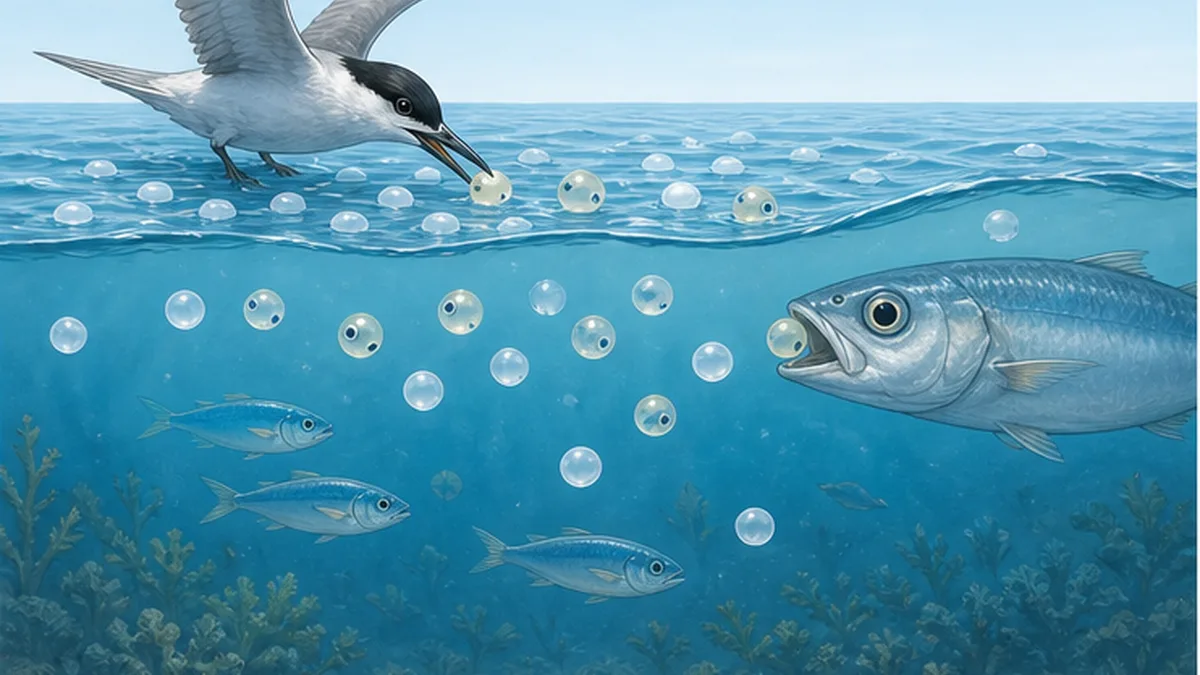
Translucent, rounded pellets closely resemble fish eggs and plankton. Seabirds pecking at the surface, fish that prey on eggs, and sea turtles that feed on jellyfish have all been documented worldwide swallowing pellets by mistake. Plastic cannot be digested, so swallowed pellets accumulate in the stomach. Animals whose stomachs are filled with a false sense of satiety stop feeding adequately, leading to malnutrition and weakening. The harm is especially well known in seabirds that feed chicks by regurgitation: pellets gathered by the parents accumulate in the chicks' stomachs.
Evidence of ingestion has accumulated over decades from stomach-content examinations of dead seabirds and analyses of fish digestive tracts; pellets are among the most frequently found foreign objects in studies of plastic impacts on marine life. Nor are the effects limited to large, visible animals. Experiments confirm that zooplankton, shellfish and bottom-dwelling organisms such as bristle worms take in finely fragmented plastic particles, and in the food-poor open ocean some organisms lay eggs on floating pellets or hitch rides on them — a further source of ecosystem disruption.
Why Recovery Is All But Impossible
What makes recovering spilled pellets so hopeless is their physical nature. At a few millimetres they are hard to separate from sand grains, and because their density is close to that of water, some float and disperse over vast areas while others foul and sink to the seabed. Even pellets that wash ashore are pulled back out by waves and work themselves deep into the sand. As the X-Press Pearl clean-up — reduced to sieving by hand — showed, no decisive technology exists for removing spilled pellets from the environment. As Japan's Government Public Relations Office stresses, the only effective countermeasure is not to recover pellets after a spill, but to prevent the spill in the first place.
Breaking Down Into "Secondary Microplastics"
Pellets stranded on beaches gradually degrade under ultraviolet light, heat and wave abrasion, their surfaces cracking as they shatter into ever-smaller particles. In other words, pellets that entered the sea as primary microplastics go on to become sources of even finer secondary microplastics and nanoplastics. How plastic grows ever smaller in the sea without ever disappearing is covered in How Marine Plastic Debris Breaks Down, and the concern that these fine particles find their way into the human body in How Microplastics Affect Human Health.
The Triple Harm of Ingestion
- Physical harm: indigestible pellets occupy the stomach, and false satiety leads to malnutrition
- Chemical harm: toxic substances concentrated on pellet surfaces may leach out in the digestive tract (detailed in the next section)
- Food-web spread: contamination may pass from small organisms up to large predators through the food chain
"Pollutant Carriers": Concentrating Chemicals Up to One Million Times Seawater Levels
The danger of pellets goes beyond physical harm from ingestion. In the sea, pellets act as "carriers" that adsorb and concentrate toxic chemicals — a fact established by pioneering research from scientists in Japan.
A Sponge Soaking Up POPs From Seawater
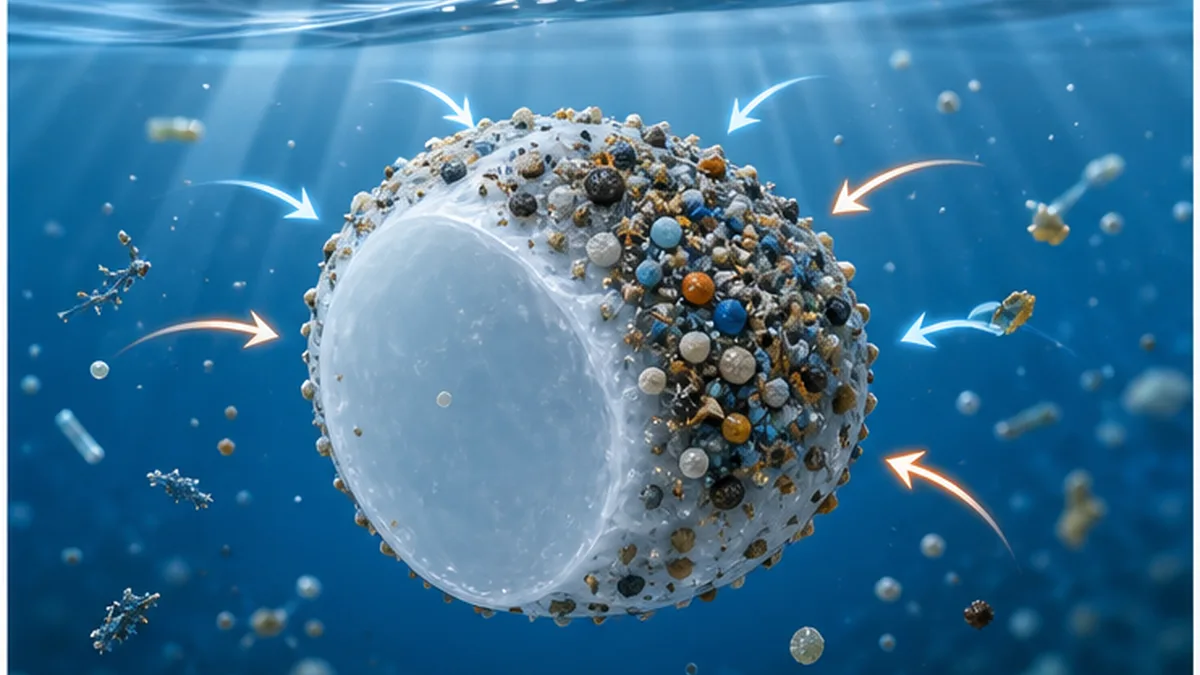
Persistent organic pollutants (POPs) such as PCBs (polychlorinated biphenyls) and DDT dissolve poorly in water but readily in oil. Because plastics are hydrocarbons — chemically akin to oil — POPs present at trace levels in seawater are drawn to drifting pellets and accumulate steadily on their surfaces. Research by Professor Hideshige Takada and colleagues at Tokyo University of Agriculture and Technology has shown concentrations reaching up to one million times those of the surrounding seawater. Pellets are floating sponges for pollutants. When an animal swallows one, contact with oils and digestive fluids in the gut can release the chemicals for uptake into the body.
Turning Pellets Into a Global "Pollution Gauge": International Pellet Watch
One ingenious project turns this adsorption on its head: International Pellet Watch (IPW), the citizen-science programme Prof. Takada's team launched in 2005. Volunteers around the world mail pellets picked up on their local beaches to the laboratory at Tokyo University of Agriculture and Technology, which analyses the POPs clinging to them and builds a map of ocean pollution. Data have been gathered from about 200 sites in some 50 countries, and the approach is internationally recognised as a low-cost way to visualise marine pollution. Picking up pellets on a beach becomes a direct contribution to global science.
Official project siteInternational Pellet WatchA citizen-science project in which volunteers worldwide mail resin pellets collected on their beaches for analysis of persistent organic pollutants (POPs), building a global map of marine pollution. Run by Prof. Hideshige Takada's laboratory at Tokyo University of Agriculture and Technology.🔗 pelletwatch.orgNot Just Adsorption: The Additives Inside the Plastic
The chemicals pellets carry are not only those adsorbed from seawater. Plastics are compounded during manufacture with a range of additives — ultraviolet stabilisers to slow degradation, flame retardants, plasticisers for flexibility. Some of these substances are suspected of harming living organisms, and research shows they can leach out as pellets weather at sea or after animals ingest them. Pellets thus drift the oceans carrying both "pollutants picked up outside" and "chemicals kneaded in from the start".
What Are POPs (Persistent Organic Pollutants)?
A class of toxic chemicals, typified by PCBs and DDT, that resist breakdown in the environment, accumulate in the fat of living organisms and travel long distances. The Stockholm Convention (in force since 2004) mandates the elimination or restriction of their production and use, but legacy contamination still lingers in seawater — and pellets gather it up.
Japan's Countermeasures: Public and Industry Efforts, and Remaining Gaps
Japan is one of the world's major plastics producers, with extensive pellet manufacturing and transport. Pellet strandings are indeed confirmed on beaches across Japan — this is no distant problem. Domestically, both government and industry bodies are working to prevent losses.
Government Measures: Loss Prevention Across the Whole Supply Chain
In May 2019 the Japanese government adopted the Resource Circulation Strategy for Plastics and the Action Plan for Marine Plastic Litter. The action plan calls for thorough measures to prevent the scattering and loss of resin pellets across the entire supply chain, from manufacturing to distribution. Through its "Plastics Smart" campaign, the Ministry of the Environment is spreading microplastic-reduction efforts among companies, municipalities and citizens. The Plastic Resource Circulation Act, in force since 2022, provides a further framework promoting resource circulation across the whole plastic life cycle.
The Ministry of the Environment's annual monitoring surveys of beach litter also confirm pellet-shaped particles among the microplastics found. They turn up especially often on beaches near industrial zones and river mouths — evidence that leakage from the domestic supply chain continues today.
Industry Self-Regulation: Operation Clean Sweep (OCS)
The flagship industry effort is the international pellet-containment programme Operation Clean Sweep® (OCS). Run by the Plastics Industry Association (PLASTICS) and the American Chemistry Council (ACC) in the United States, OCS sets out facility-management practices and work procedures to keep pellets, flakes and powder out of the environment, with resin makers, hauliers and converters participating worldwide. In Japan, the Japan Plastics Industry Federation publishes a Japanese-language OCS guide and promotes adoption among domestic companies. Major chemical makers such as BASF have set zero-pellet-loss goals of their own.
Official siteResin Pellet Loss Prevention | Japan Plastics Industry FederationPellet-loss prevention efforts by Japan's plastics industry federation, including a Japanese-language guide to the international Operation Clean Sweep® program.🔗 jpif.gr.jpThe Limits of Voluntary Action
OCS and similar industry programmes remain voluntary, however, and international critics point to limited participation and weak requirements for loss reporting and third-party verification. Japan still has no law that directly regulates pellet loss and penalises violations. It was the EU's new regulation, covered next, that finally broke through the limits of the "leave it to voluntary effort" approach.
The World's First Full-Scale Regulation: The EU Pellet Regulation (2025)
In 2025, pellet-pollution control reached a historic turning point: the European Union enacted the world's first comprehensive regulation making pellet-loss prevention a legal obligation.
The Road to Regulation (EU) 2025/2365
The European Commission proposed pellet-loss rules in October 2023. The European Parliament and the Council reached provisional agreement on 8 April 2025; the Council gave final approval on 22 September; and on 26 November the text was published in the EU Official Journal as Regulation (EU) 2025/2365. The regulation entered into force on 16 December 2025, with obligations phasing in over time. Its stated goal is zero pellet loss. By covering every stage of the supply chain, it stands apart from the industry's voluntary standards.
What Operators Must Do
- Risk-management plans: draw up and implement loss-prevention plans covering packaging, loading and unloading, equipment and staff training
- Equipment and work practices: inspect packaging integrity, clean transport vehicles, use sealed containers
- Duty to respond to spills: contain and recover any losses and prevent recurrence
- Staff training: educate employees on loss-prevention roles and procedures
- Records and reporting: document estimated annual loss quantities
- Allowances for SMEs: simplified compliance for smaller operators (self-declaration for microenterprises, etc.)
First-Ever Rules for Sea Transport — the X-Press Pearl Lesson
A defining feature of the regulation is its maritime-transport rules, drawn from the lessons of the X-Press Pearl disaster. Pellets shipped by sea must use high-quality packaging, and containers should be stowed below deck or in sheltered locations wherever possible. The rules apply not only to EU operators but also to carriers outside the EU transporting pellets to it — meaning Japanese companies doing business with the EU face practical compliance work too.
A Regulatory Tide Spreading Worldwide
The regulatory momentum is not confined to the EU. In the United States, bills seeking to regulate discharges of pellets and other primary microplastics into waterways have been repeatedly introduced in Congress, alongside state-level rules and litigation. At the United Nations, intergovernmental negotiations continue on a global plastics treaty addressing plastic pollution across its whole life cycle, from production to disposal. Because pellet containment has a clear source and readily measurable results, it ranks among the higher-priority topics in these international debates.
| Item | Details |
|---|---|
| Official name | Regulation (EU) 2025/2365 on preventing plastic pellet losses |
| Timeline | Proposed Oct 2023 → provisional agreement Apr 2025 → Council approval Sep → published in Official Journal 26 Nov |
| Entry into force | 16 December 2025 (obligations phase in over time) |
| Scope | Operators handling pellets in the EU + EU and non-EU carriers transporting to the EU |
| Main obligations | Risk-management plans, spill containment and recovery, staff training, recording annual losses |
| Sea transport | High-quality packaging and stowage below deck or in protected areas made mandatory |
Why the EU Regulation Matters Globally
- The world's first comprehensive regime making pellet-loss prevention a legal duty (a shift away from voluntary effort)
- It reaches non-EU companies shipping to the EU, so compliance work extends to Japanese firms
- Its explicit "zero pellet loss" goal offers a model for regulatory debates in other countries
What We Can Do: Start With a Nurdle Hunt
The main battleground for pellet pollution is the factory and the transport chain, but that does not mean citizens are powerless. On the contrary — observation and record-keeping by citizens on beaches has played a major worldwide role as the evidence that moves regulation.
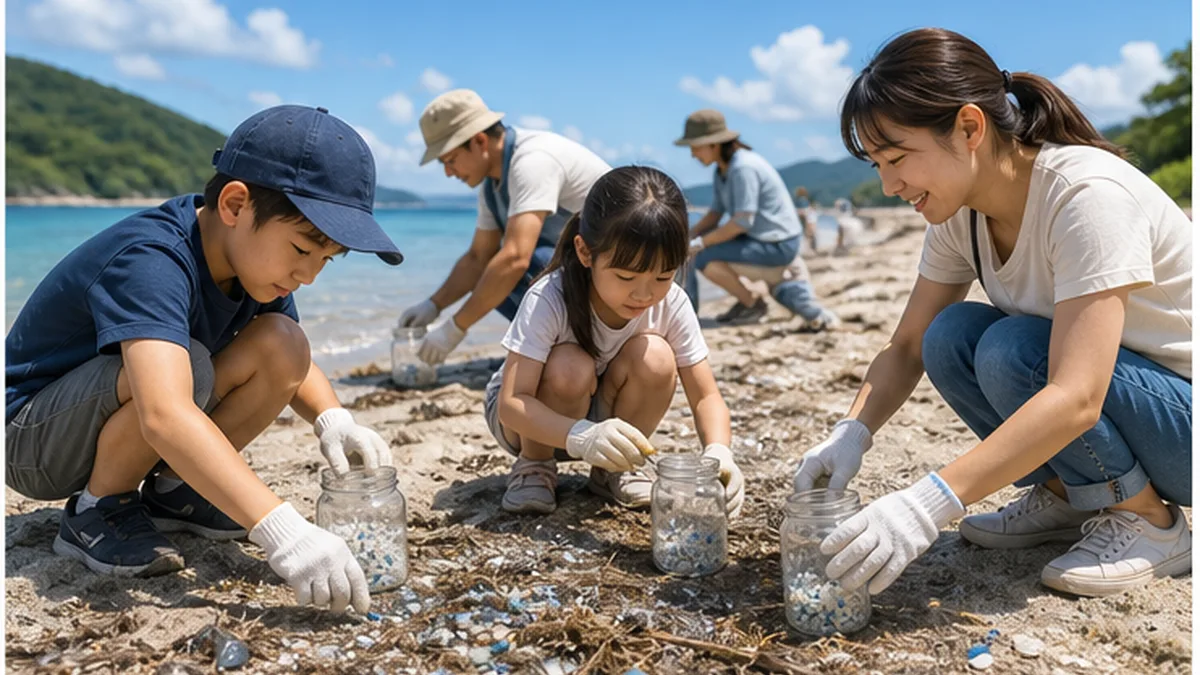
Look for "Mermaid's Tears" on the Beach — the Nurdle Hunt
The Great Nurdle Hunt, run by the UK environmental charity Fidra, is a citizen survey in which people worldwide search their beaches for pellets and report where and how many they find. The reports are gathered on a world map and have served as evidence of the spread of pellet pollution, helping push regulation forward. Taking part is simple: scan the strandline of seaweed and debris left along the high-tide mark, or scoop up a handful of sand and look closely. On Japanese beaches, too, a careful search will often turn them up.
How to take partThe Great Nurdle HuntA citizen survey run by the UK environmental charity Fidra. Sightings from beaches around the world are gathered on a map and used as evidence to push for regulation.🔗 nurdlehunt.org.ukHow to Identify a Pellet
- Size and shape: 1–5 mm across with a regular disc, cylinder or sphere shape (naturally broken fragments are irregular)
- Colour: mostly translucent, white or milky; yellowed granules are likely older ones that drifted for a long time
- Where: mixed among sand grains along the high-tide strandline of seaweed, driftwood and pumice
- Watch out: when confusable with fish eggs, small shells or pumice, check for a firmness that resists squeezing and a uniform shape
Put the Pellets You Collect to Work for Science
Pellets you pick up can be mailed to International Pellet Watch, mentioned above, to contribute to the global pollution map. Joining a local beach clean-up lets you take part both in removing stranded litter, pellets included, and in documenting the problem. The science of beach litter and how to get involved in clean-ups are covered in The Truth About Beach Litter: Sources, Currents and the Science of Beach Clean-Ups.
Backing Change as Consumers and Citizens
- Reduce plastic use itself — lower demand means fewer pellets in circulation
- Choose products from companies that join OCS or disclose their pellet management, and reward their efforts
- Share nurdle-hunt and beach-clean results with social media and local governments to raise awareness
- Call for effective loss-prevention rules in Japan too, through public comments and other channels
Among marine plastic problems, resin pellets stand out as pollution that has a clear source and could technically be prevented, yet has continued for want of a system. Now that the EU has moved to legal obligation and citizen science keeps piling up the evidence, whether the half-century flow of "mermaid's tears" can be stemmed depends on industry follow-through — and on a society that keeps watching. Start by looking closely at the tiny granules in the sand on your nearest beach.
Summary of This Article
- Resin pellets (nurdles) are 1–5 mm granules used as the raw material for plastic products — the archetypal primary microplastic
- Everyday spills across manufacturing, transport and storage add up to an estimated 230,000 tonnes (about 10 trillion pellets) entering the ocean each year
- The 2021 X-Press Pearl disaster spilled 1,680 tonnes, reported by the UN as the largest plastic spill on record
- Pellets mimic fish eggs and are readily swallowed, and they concentrate toxic chemicals up to one million times seawater levels
- The EU enacted the world's first comprehensive regulation (2025/2365) in 2025; Japan has public and industry measures but no direct legislation yet
- Citizen observation and records — nurdle hunts, contributions to IPW — are a force that moves regulation
References & Sources
- Ministry of the Environment, Japan — Plastics Smart – Reducing microplastics (primary-microplastic measures)
- Government Public Relations Office, Japan – Microplastics: nearly impossible to recover once released
- UN Environment Programme (UNEP) – X-Press Pearl maritime disaster: report of the UN environmental advisory mission (July 2021)
- EUR-Lex – Regulation (EU) 2025/2365 on preventing plastic pellet losses (full Official Journal text)
- Council of the EU press release – Council sign-off on the pellet regulation (22 September 2025)
- Japan Plastics Industry Federation – Resin-pellet loss prevention / Operation Clean Sweep®
- International Pellet Watch (Takada Laboratory, Tokyo University of Agriculture and Technology) – Global POPs monitoring using beached pellets
- The Great Nurdle Hunt (Fidra) – The pellet-pollution problem and citizen survey
- Fauna & Flora – Explained: What are nurdles?
- ACS Environmental Au – Survey of burnt-nurdle contamination from the X-Press Pearl disaster (peer-reviewed)
* Ordered by reliability: government and academic institutions > peer-reviewed papers > specialist organisations > trusted media