⚡ In short
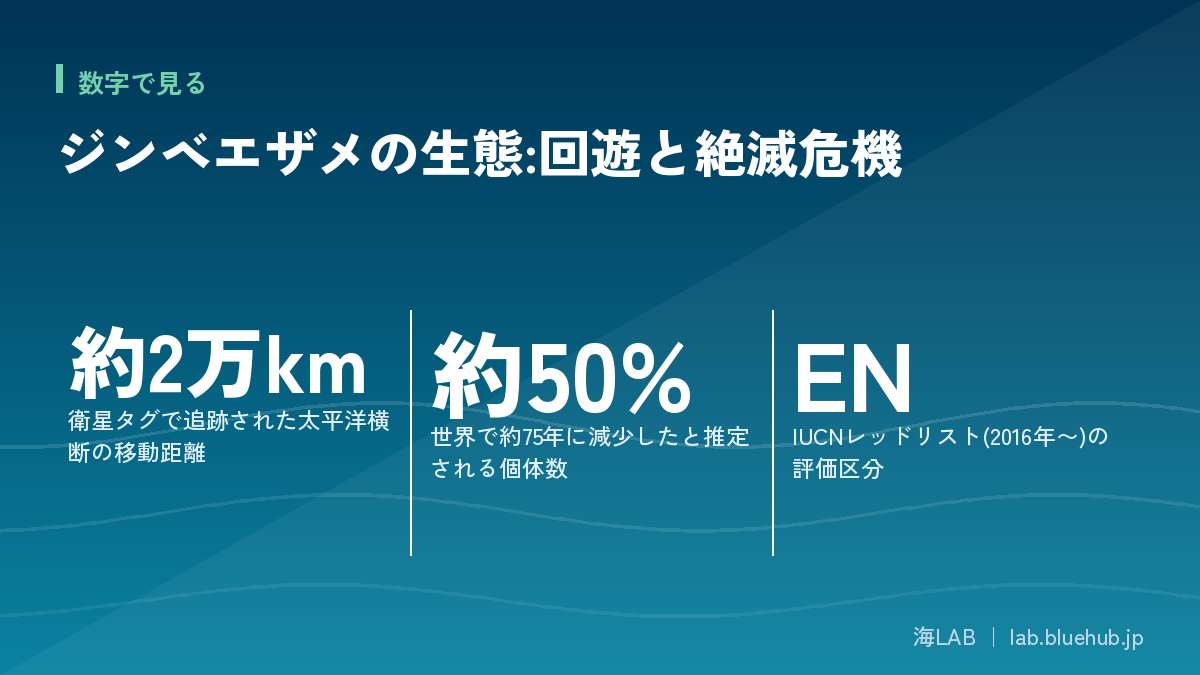
The whale shark, the world's largest fish, sustains its huge body by filter feeding, and satellite tags have tracked a trans-Pacific journey of about 20,000 km. In 2016 the IUCN uplisted it to Endangered. This article explains its biology, migration, threats and conservation from primary sources.
The whale shark is the world's largest fish, yet it never attacks people and lives on tiny plankton—a gentle giant.Its figure has charmed visitors at aquarium mega-tanks, but in the wild its numbers are falling and it is listed as a threatened species.
Satellite-linked transmitters have begun to reveal behavior that was once a mystery, such as ocean-crossing journeys and dives into the deep sea. Yet many things remain unknown, including its slow growth and the lives of juveniles.
This article organizes what is known about the whale shark's body, feeding, migration, lifespan and reproduction, the role of Japanese aquariums, and conservation challenges, based on public materials such as IUCN and CMS and academic papers.
What you will learn
- The whale shark's body and how filter feeding works
- Migration and deep dives revealed by satellite tags
- Traits of growth, lifespan and reproduction—and what is still unknown
- The IUCN assessment and threats from fishing, ships and tourism
- Observation rules and ways to take part in conservation
What kind of fish is the whale shark? The basics of the world's largest fish
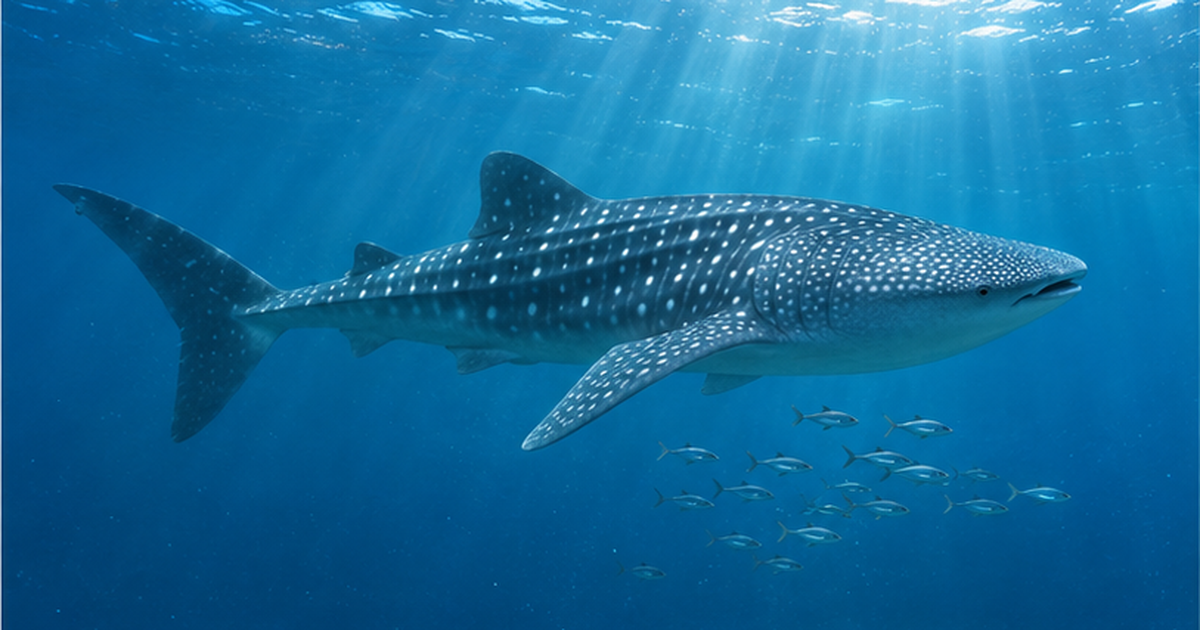
The whale shark (scientific name Rhincodon typus) is the largest living fish species. Although a shark, it filter-feeds like a whale, taking in seawater with plankton, and does not attack people. Its Japanese name, jinbei-zame, comes from white spots on its back resembling the Japanese garment jinbei.
It is widely distributed in warm tropical to temperate seas, and in Japan it is observed along the coasts of Okinawa, Ogasawara, Kochi, Kagoshima and elsewhere. Adults generally reach around 10 meters, and larger individuals have been reported, but the upper limit is not well verified and reported values vary.
Classification and appearance
The whale shark is the only species in the family Rhincodontidae, in the order Orectolobiformes. Its body is gray to bluish-gray, and the white spots and stripes on its skin differ between individuals. Because the pattern works like a fingerprint, researchers identify individuals from photographs and build records of resightings.
- The mouth opens wide at the tip of the head (in many sharks it lies on the underside)
- It has thousands of tiny teeth, but they are not used for chewing food
- The skin is thick, reaching around 10 cm at its thickest
- The shape of the dorsal and tail fins balances stable swimming and propulsion
Neither a "shark" nor a "whale" in lifestyle
Although its name includes "whale", it is entirely unrelated to whales, which are mammals. It is a cartilaginous fish that breathes with gills, and it gives birth as an ovoviviparous species, with eggs hatching inside the body. Because it is large and looks slow, it may be confused with other species, but it has no close relatives in its own family.
Where can you meet them?
Whale sharks are distributed in warm seas roughly between 30°N and 35°S. Ningaloo Reef in Western Australia, the waters off Mexico, Donsol in the Philippines, the Maldives, Tanzania and offshore Qatar are known for seasonal gatherings of many individuals. In Japan, sightings increase in the seas of Okinawa from spring to early summer, and there are also records of observations along the coasts of Ogasawara, Kochi and Kagoshima.
The center of the whale shark's distribution is the surface layer down to several hundred meters, but as noted, it can also dive into the deep sea. It is often seen at water temperatures of about 21–30°C, showing that it prefers warm seas.
Size and body features
Adult size varies by individual and region. About 10 meters is often cited, though individuals over 18 meters have been reported. Measuring accurately at sea is difficult, so the reliability of reports varies. Some individuals are said to exceed 10 tons, comparable to several large elephants.
Despite its huge body, it swims slowly, at a few kilometers per hour. It can be said to be built to gather food efficiently over a wide area while moving slowly.
Body patterns and the science of identification
The spots do not change much with age, and the arrangement of spots just behind the gills and above the pectoral fin is especially used for identification. Researchers compare spot positions like constellations using image-analysis software and match individuals automatically. This makes it possible to follow individuals for decades, almost as if naming each one.
Tagging methods are also carefully devised. Small transmitters that cause little harm are attached at the base of the dorsal fin, and photos of individuals swimming near the surface are collected from divers and tourists and matched. Such "photo identification" provides basic data for estimating numbers and migration.
Key points of this section
- The whale shark is the largest living fish and a filter feeder that does not attack people
- Spots differ between individuals and serve as clues for identification
- Unrelated to whales; a cartilaginous fish (a kind of shark)
How filter feeding works: tiny prey for a giant body
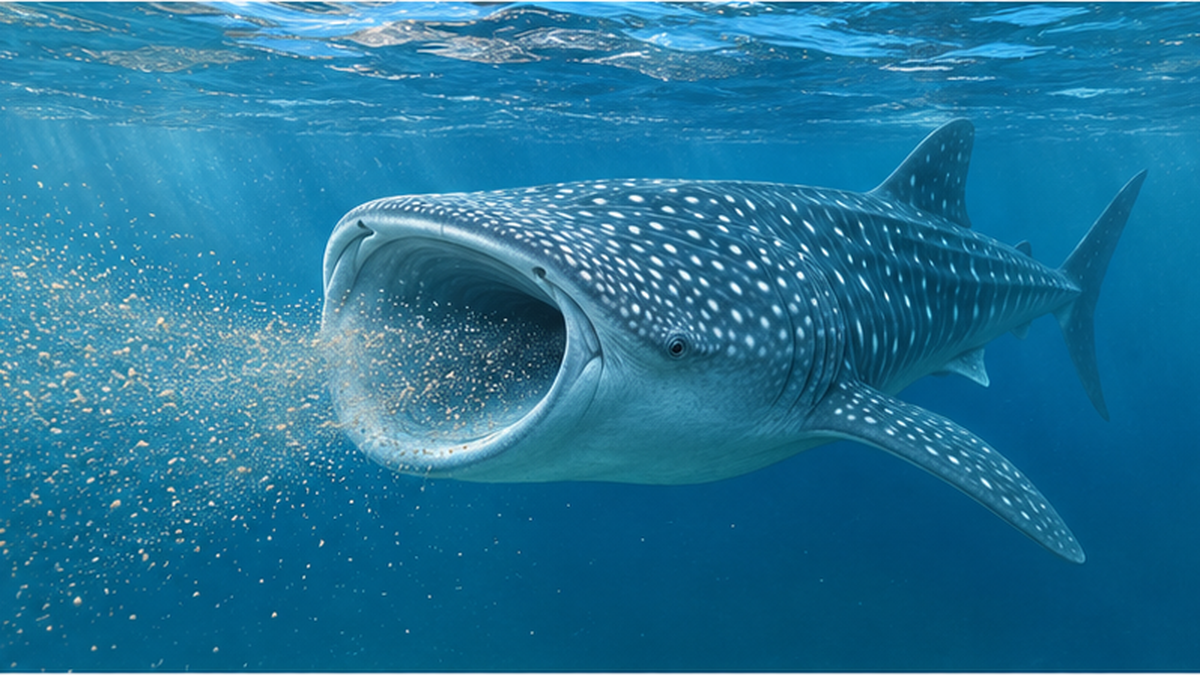
The whale shark sustains its huge body mainly on plankton and small fish. It swims with its mouth wide open, takes in seawater, and strains food with a filtering organ inside the gills before swallowing. This filter is a specialized part of the gills and is generally explained to capture particles down to around 1 mm.
Two feeding styles: suction and swimming filtration
The whale shark is reported to use two methods depending on conditions: "suction feeding", in which it stands vertically near the surface and opens and closes its mouth like a pump, and "passive filter feeding", in which it moves forward with its mouth open. It is thought to choose the former where food is dense and the latter where it is thinly spread.
- Main food: zooplankton, krill, fish eggs and small fish such as sardines
- Where food concentrates: during coral mass spawning, in upwelling waters and at fish spawning grounds
- Amount eaten: estimated to eat large quantities of plankton daily to sustain its body
How can small prey support a big body?
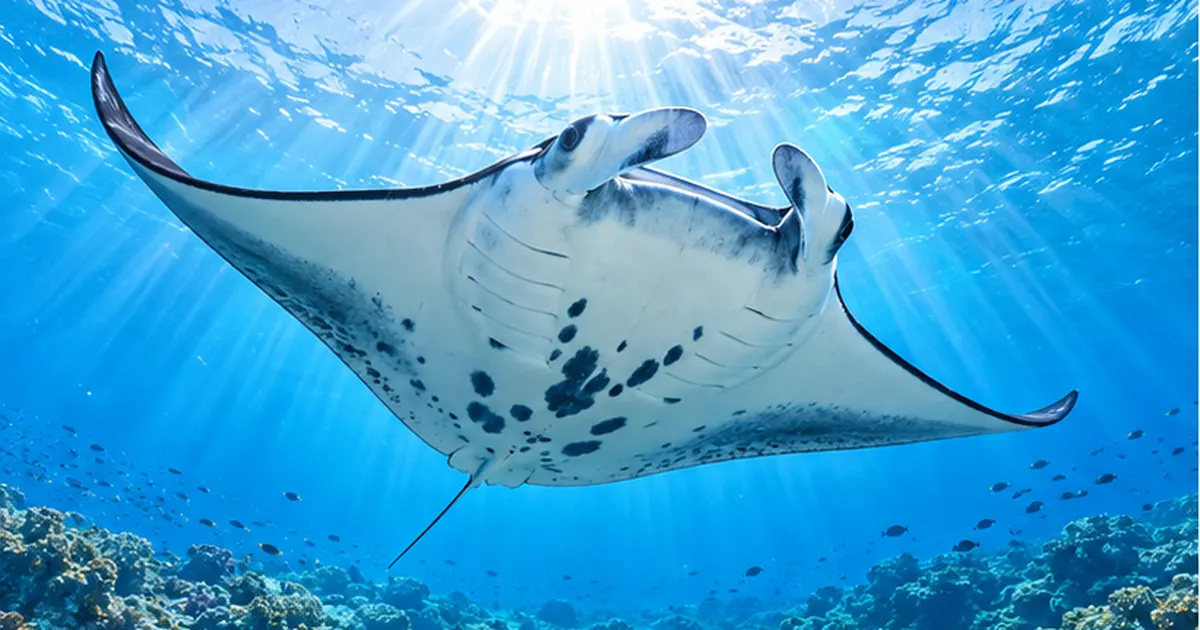
Among sharks and rays, only a few species filter-feed—besides the whale shark, the basking shark and manta rays. A huge body and large mouth are advantageous for collecting and eating small prey in large amounts. For differences from how manta rays feed, see our article on manta ray filter feeding.
Finding food: smell and environmental cues
How does the whale shark find food-rich places in the sea? Research suggests cues such as smell responding to chemicals from prey, changes in water temperature, upwelling (a flow that lifts nutrient-rich water from deep layers), and dense patches of eggs during fish spawning. During coral mass spawning, eggs and the small creatures that eat them gather near the surface, so some places see many whale sharks at once.
It has also been suggested that they may remember the time and place of such "feasts". Individuals returning to the same place in the same season each year have been confirmed from citizen-science photo data, suggesting memory-based behavior.
Position in the food chain
The whale shark eats plankton and small fish and is not an apex predator of the marine food chain. Adults are said to have few natural enemies because of their size, but juveniles are presumed to be vulnerable to large fish and others. For how small organisms support marine food webs, as with Antarctic krill, see our article on krill and the Antarctic food web.
Fun facts
- The whale shark's filter is a specialized gill structure
- Its teeth are tiny and play almost no role in chewing food
The migration mystery: a 20,000 km journey revealed by satellite tags
The whale shark is a long-distance migrant that travels thousands of kilometers. Its movements have gradually become clear in recent years thanks to satellite-linked tags attached to the body. However, a transmitter can send its position only when near the surface, so movements while diving deep remain blank.
"Anne", who crossed the Pacific from Panama
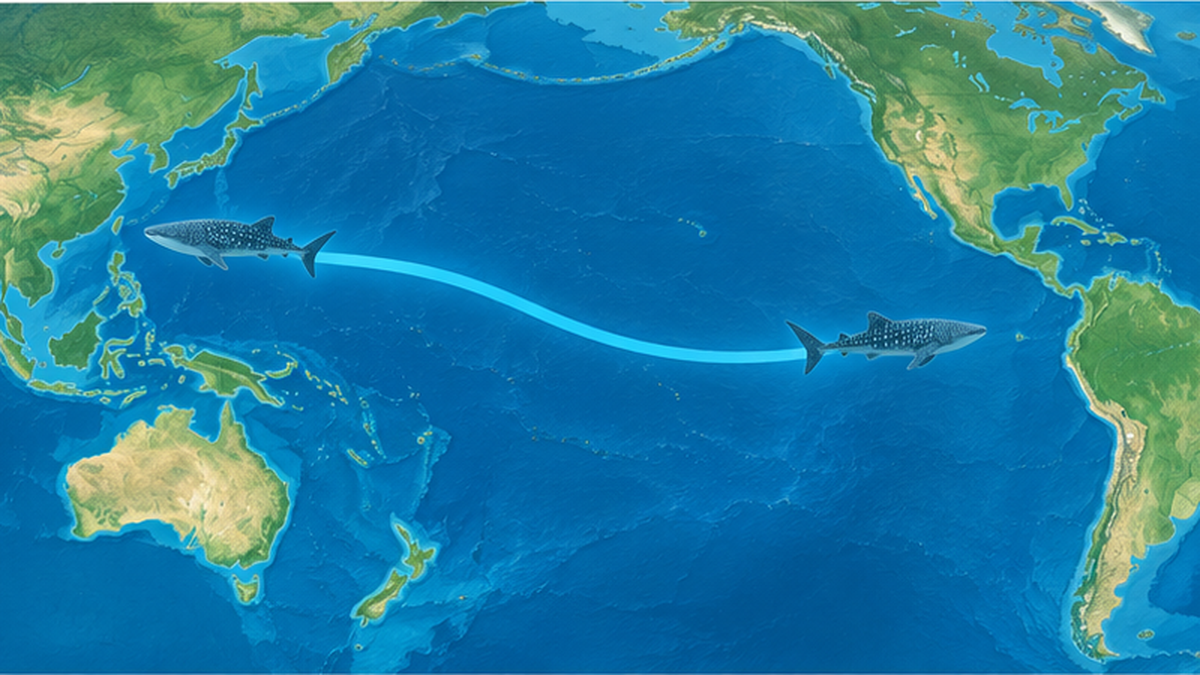
In a study reported in 2018 in Marine Biodiversity Records, a female whale shark (nicknamed Anne) tagged near Coiba Island, Panama, in 2011 traveled about 20,142 km over roughly 841 days and reached waters near the Mariana Trench. It was regarded at the time as among the longest trans-Pacific movements recorded for a shark.
- Start: near Coiba Island, Panama (eastern Pacific)
- Destination: near the Mariana Trench (western Pacific)
- Days tracked: about 841
- Distance traveled: about 20,142 km
Why they dive deep is not fully understood
Because transmitter signals drop out for periods, whale sharks are thought to dive from several hundred meters to nearly 2,000 meters. Candidate reasons include searching for deep-sea prey, regulating body temperature and oxygen, and checking direction for travel, but none has been settled. For the relationship with creatures that migrate vertically day and night, see our article on diel vertical migration of plankton for reference.
Seasonal "hotspots"
On the other hand, whale sharks are also known to return to the same places at the same time each year. Ningaloo in Western Australia, the Yucatán coast of Mexico, the Philippines, the Maldives, Qatar and Okinawa in Japan are known for gatherings of many sharks when food is abundant, and are stages for observation tours and research.
Growth, lifespan and reproduction: a slow-growing, long-lived fish
Huge animals generally take a long time to mature and tend to increase slowly. The whale shark is no exception, and the trait of "growing slowly and reproducing slowly" matters greatly for conservation.
How is age determined?
A study published in 2020 in Frontiers in Marine Science examined ring-like layers in the vertebrae of individuals from Taiwan and Pakistan using bomb radiocarbon and showed that one layer forms each year. The oldest age estimated in this study was about 50 years, but earlier literature also gives lifespan estimates from 60 to nearly 150 years, so the upper limit is uncertain.
Guide to lifespan
- In the ring validation, the oldest age confirmed was about 50 years
- Estimates of 80–120 years are also cited, but vary by study
- Churaumi Aquarium introduces research suggesting a lifespan of about 120 years
Live-bearing, sometimes with many pups
The whale shark is ovoviviparous: eggs hatch inside the mother and the young are born. There are reports that many embryos were found in a pregnant individual caught off Taiwan, suggesting it may have many young at once, but little is known about juvenile life, including where the young grow up.
At Okinawa Churaumi Aquarium, a study observing the reproductive biology of free-swimming whale sharks using underwater ultrasound and blood sampling was published in 2023. Observations in captivity help us understand ecology that is hard to study in the wild.
Late maturity makes recovery difficult
In species that take many years to mature, when adults decrease through fishing or accidents, recovery takes a long time as well. This trait lies at the root of the conservation concerns described in the next section.
Key points of this section
- Age validation shows a maximum of about 50 years (the upper limit of lifespan is still uncertain)
- Live-bearing; little is known about juvenile ecology
- Late-maturing species take time to recover once reduced
Japanese aquariums and the whale shark: history of care and research
Japan is one of the world's leaders in long-term whale shark keeping. According to materials from the Ocean Expo Commemorative Foundation, which operates Okinawa Churaumi Aquarium, the predecessor of the aquarium was the first in the world to succeed in long-term keeping of a whale shark, in 1982.
Welcoming fish caught in set nets
Most whale sharks kept in Japan are individuals that accidentally entered set nets. "Jinta" at Okinawa Churaumi Aquarium was found in a set net off Okinawa Island in March 1995 and was brought in at about 4.6 meters. According to reports, it has now grown to about 8.8 meters in total length and about 6 tons, and is continuing to set a keeping record.
- What keeping provides: long-term data on growth rate, food intake, behavior and health
- Use in research: observing reproduction, developing methods to estimate body size, and more
- Use in education: visitors can experience the real size and power
Difficulties and challenges of keeping them
The whale shark is a wide-ranging fish, so tank size, water quality and food supply require careful attention. In recent years, from a conservation viewpoint, decisions to return individuals found in set nets to the sea after checking their condition, and efforts to release captive individuals offshore, have also been discussed.
How Japanese aquariums display whale sharks
Many Japanese aquariums exhibit whale sharks in deep mega-tanks, where visitors can see the huge body from above, the side and below. This experience prompts people to think about "why we should protect large creatures". Exhibit panels increasingly introduce the decline of wild populations, bycatch and the front line of research.
Research at aquariums provides basic ecological information that is hard to observe in the wild, such as growth speed, food intake, and sleeping and resting postures. Knowledge gained from captive individuals also serves as basic material when considering conservation measures for wild ones.
Note
- Aquarium figures and records reflect information at the time of reporting. Please check each facility's official announcements for the latest values
The current decline: the IUCN assessment
In 2016, the whale shark was uplisted on the IUCN (International Union for Conservation of Nature) Red List from Vulnerable (VU) to "Endangered (EN)". The main reason is that its population keeps declining.
The decline in numbers
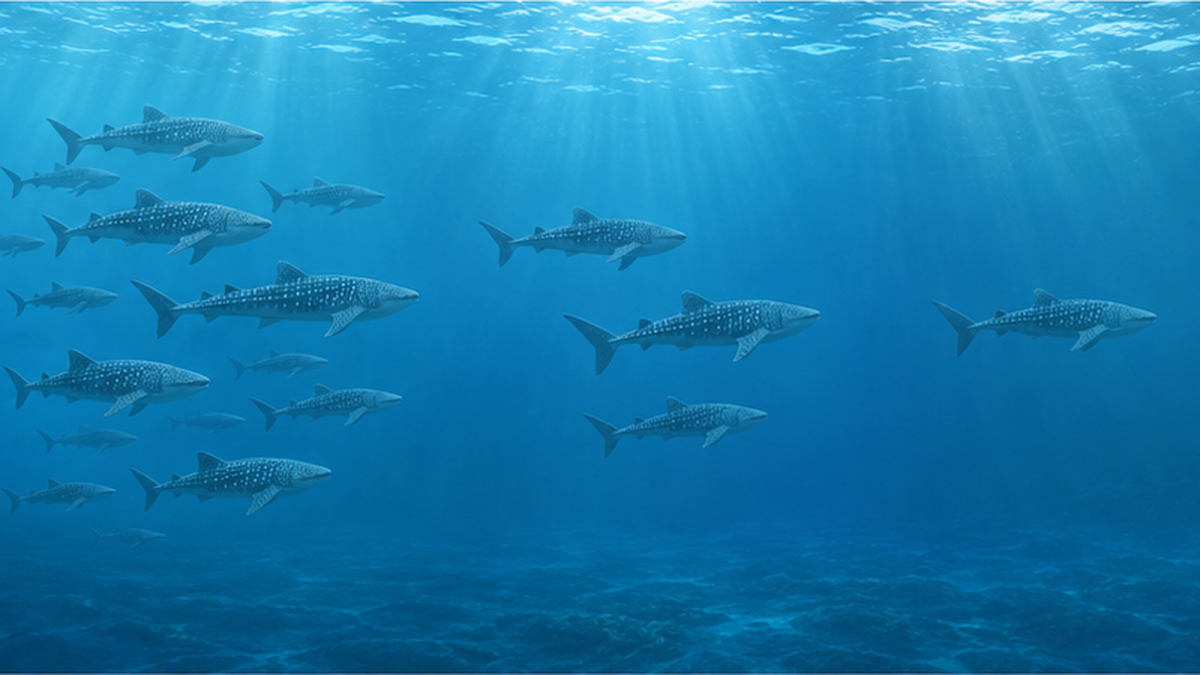
- Globally, an estimated decline of about 50% over roughly 75 years (three generations) (according to CMS, the Convention on the Conservation of Migratory Species of Wild Animals)
- A 63% decline in the Indo-Pacific is also cited (from a secondary source; checking the primary assessment is advisable)
- A decline of more than 30% is thought to have occurred in the Atlantic
- CITES-related materials give a wide range of 40–92% for the estimated decline per period
The estimates vary because it is difficult to directly count animals that move across wide oceans. Even so, multiple assessments agree that the trend is downward.
What happens when numbers fall?
Research on the whale shark's role is still under way, but it is thought to influence the movements of plankton and small-fish groups that serve as food and to carry nutrients through the sea via its large body. A decline in large animals may ripple through the balance of ecosystems, so early conservation is desirable.
The whale shark also has high value as a tourism resource, and some surveys indicate it contributes to local economies in protected waters. The idea of "sustainable use," in which living, swimming animals create value, is an important viewpoint that supports conservation.
Key points of this section
- IUCN uplisted the species in 2016 from Vulnerable to "Endangered"
- Estimated decline of about 50% globally over about 75 years
- Estimates vary, so checking the primary assessment is important
Main threats: fishing, bycatch, ship strikes and tourism
There is not just one factor reducing whale shark numbers. Overlapping human activities are thought to be affecting them.
Direct and indirect effects of fishing
In some regions such as Southeast Asia, whale sharks have been fished for meat, fins and liver oil. They are now protected in many countries, but enforcement varies by region. Bycatch in nets aimed at other fish is also a major problem, and incidents in purse seines and set nets in particular have been reported. For related issues, see our articles on the shark fin problem and bycatch of marine mammals as well.
Ship strikes
Whale sharks spend long periods near the surface to feed, so they risk collisions with large ships. The risk is high in waters where feeding grounds overlap major shipping lanes, and studies using satellite tracking data to estimate dangerous waters are advancing.
Impacts of tourism
Observation tours help local economies and raise conservation awareness, but concerns have also been raised that feeding, getting too close, and boat noise may affect whale shark behavior. For sustainable tourism, see our detailed article on sustainable ocean tourism.
Climate change and changes in the marine environment
If changes in sea temperature and currents alter the distribution of plankton that serves as food, the places and timing where whale sharks gather may also change. Marine plastic waste and noise are also among the concerning factors, but the causal links are still being worked out.
How to read the effects
- The share of "which factor matters how much" differs by region and year, and no globally common figure has been established
Common questions and misconceptions about whale sharks
Because of its friendly appearance, various images of the whale shark tend to run ahead of the facts. Here we sort out frequently asked questions.
Is it dangerous to people?
The whale shark is a gentle fish with no habit of attacking people. However, because its body is so large, a blow from its tail or a collision with a boat could injure people and sharks alike. Keeping your distance protects both.
Is it really a shark?
Yes, the whale shark is a cartilaginous fish and a member of the sharks. Its skeleton is made of cartilage rather than hard bone, and it has five pairs of gill slits on the sides. The name includes "whale" because of its size and manner of feeding; there is no phylogenetic relationship.
Is it eaten in Japan?
In some regions, whale sharks have been eaten in the past, but today, from a conservation viewpoint, they are not actively used in Japan either. Given that it is a rare species, moves to refrain from using it are spreading.
Does keeping them in aquariums help protect them?
Keeping whale sharks in aquariums contributes to research and education, but whether "keeping itself is conservation" is debated. What matters is to make the purpose of keeping clear, minimize the burden on wild populations, and return the knowledge gained to conservation.
What we can do: conservation, observation rules and efforts in Japan
Protecting the whale shark requires both an international framework and ingenuity on the ground. Internationally, it is listed in appendices of CMS (the Convention on the Conservation of Migratory Species of Wild Animals) and CITES (the Washington Convention), with certain restrictions on trade and fishing.
Rules for responsible observation
- Do not touch, chase or block its path
- Do not use flash photography or feed them
- Approach boats slowly and keep the set distance
- Choose sunscreen with less impact on the sea
- Choose certified guided tours
Joining citizen science
Because each whale shark's spots are different, "citizen science", in which divers provide photos to researchers, helps expand global individual databases. Photo-sharing efforts are carried out in many countries, including Japan.
Efforts in Japan
Aquariums are responsible for research on captive animals and for public education through exhibits. There are also efforts in cooperation with set-net fishers to release bycaught individuals safely or use them for research. It is important to turn local aquariums and observation tours into gateways to learning about the sea and into concern for conservation.
For related reading, our articles on electroreception in sharks and the symbiosis between remoras and sharks also help in understanding sharks.

What you can do from today
- Tell your family and friends about the whale shark's current situation
- When choosing an observation tour, choose an operator that follows the rules
- Read the explanations of care and research at aquariums
- Keep up actions that reduce garbage in the sea
References and sources
- IUCN Red List: Rhincodon typus (Whale Shark) – 2016 assessment (Endangered)
- IUCN: Whale sharks, winghead sharks and Bornean orangutans slide towards extinction – Announcement of the 2016 Red List update
- CMS (Convention on the Conservation of Migratory Species of Wild Animals) Whale Shark document – Global decline estimates, etc.
- Guzman et al. (2018) Longest recorded trans-Pacific migration of a whale shark – Marine Biodiversity Records
- Smithsonian: Whale shark logs longest-recorded trans-Pacific migration – 2018 press release
- Ong et al. (2020) Annual Bands in Vertebrae Validated by Bomb Radiocarbon Assays Provide Estimates of Age and Growth of Whale Sharks – Frontiers in Marine Science
- CITES Notification 2024/118 – Proposal document concerning the whale shark
- Okinawa Churaumi Aquarium research and annual report – Keeping and research of whale sharks
- Ryukyu Shimpo: Jinta's keeping record updated – Background and growth since arrival
※ Listed in order of reliability: government agencies and academic institutions > peer-reviewed papers > specialist organizations > reliable media