⚡ In short
As more people enjoy camping on coastlines and shoreline forests, open fires, light pollution, and abandoned trash are harming sea turtles, seabirds, and marine ecosystems. This article explains the globally recognized environmental ethic "Leave No Trace (LNT)" 7 principles, applied specifically to beach camping in Japan.
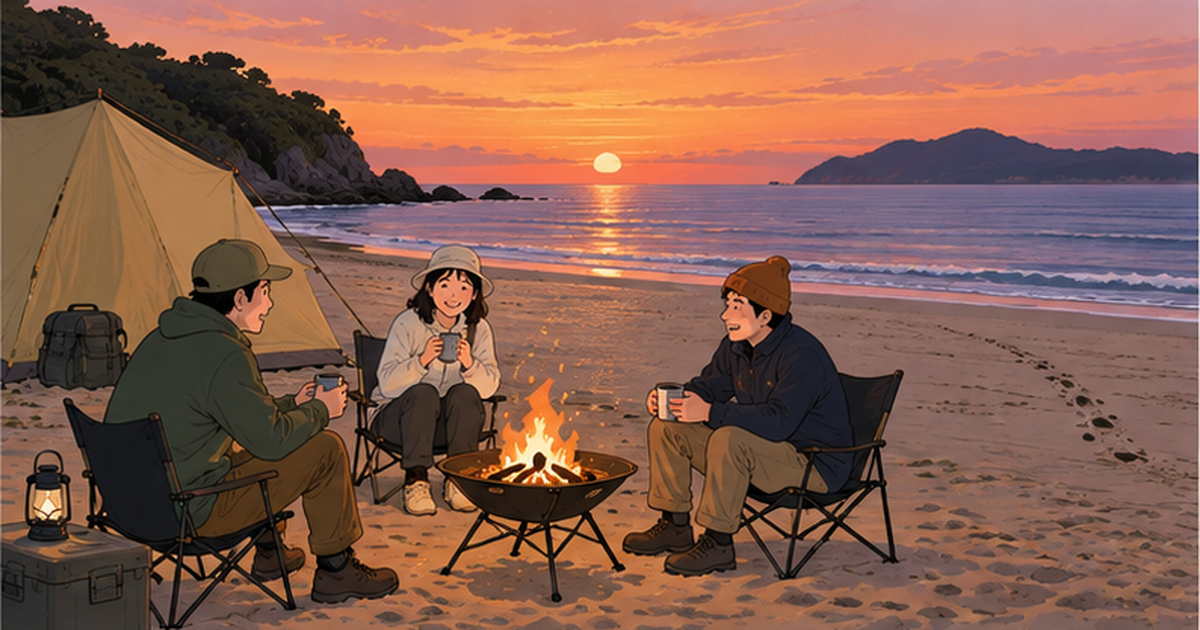
Pitching a tent on the beach at dusk, listening to the waves while gathered around a campfire — coastal camping keeps growing more popular every year. But that same sand is also where sea turtles risk their lives to come ashore and lay eggs, and it is part of an ecosystem home to countless seabirds and crustaceans. Leave No Trace (LNT) is a set of guidelines born in the United States in the 1960s to minimize the environmental impact of outdoor activity. Because a beach is where land and sea meet, even a small impact from camping can ripple outward to distant waters and other creatures.
LNT is not a set of rigid rules for "enduring nature to protect it." It is a framework of seven principles that anyone can practice, covering everything from advance preparation to packing out trash and keeping a respectful distance from wildlife. Leave No Trace Japan (LNTJ) promotes these ideas domestically, and Japan's Ministry of the Environment expresses a similar philosophy in its national park visitor etiquette.
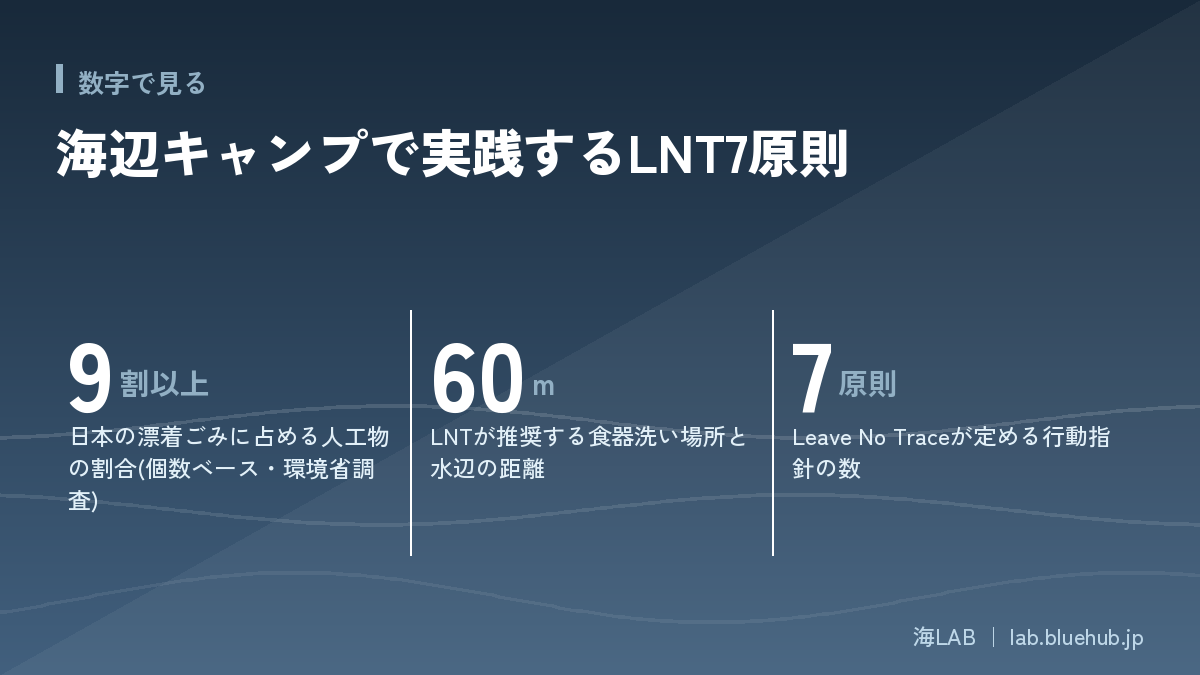
This article applies LNT's 7 principles specifically to coastal camping: why open fires are restricted, how sea turtles and seabirds are affected, and how to properly handle the trash you generate — all backed by concrete figures and examples.
What you'll learn in this article
- The content and origins of the Leave No Trace (LNT) 7 principles
- Why open fires on beaches are regulated
- How light and noise affect sea turtle nesting and hatching
- Concrete ways to pack out trash from a beach campsite
- How to behave with consideration for wildlife and other visitors
What Is Leave No Trace? An Overview of the 7 Principles
Leave No Trace (LNT) is an outdoor ethics program born in Utah, USA, in the 1960s–70s. As the number of hikers and campers surged, it was developed as a way to enjoy outdoor activity while minimizing the burden placed on nature, and it is now adopted across national parks and protected areas worldwide. Leave No Trace Japan (LNTJ) was established in 2021 to promote and teach these principles domestically.
The backdrop is a challenge shared worldwide: "growing outdoor popularity versus environmental degradation." Since the 1960s in the United States, the number of people enjoying hiking and camping surged, and popular trails and lakeshores suffered serious damage — vegetation destroyed by trampling, excessive firewood cutting, and litter scattered everywhere. Rather than land managers piling up individual bans ("don't do this," "don't do that"), the LNT 7 principles were organized as a universal framework of thinking that lets users judge each situation for themselves. This idea applies just as well to coastal camping as it does to mountain trails and lakeshores.
In Japan too, the outdoor boom since the pandemic and the rising popularity of car camping and solo camping have increased the number of people using seaside campgrounds and freely accessible beaches. This growing popularity is itself a welcome change, since it broadens opportunities to connect with nature, but it also raises the risk that "the burden on nature accumulates without anyone noticing." LNT functions as a common language to protect both the natural environment and the growing number of users during this surge.
The Seven Principles
- Plan Ahead and Prepare
- Travel and Camp on Durable Surfaces
- Dispose of Waste Properly
- Leave What You Find
- Minimize Campfire Impacts
- Respect Wildlife
- Be Considerate of Other Visitors
None of the 7 principles is simply "a list of prohibitions" — their defining feature is that each serves as an axis of judgment you apply to the situation at hand. The right action changes depending on the field: a beach campground, the edge of a tidal flat, an uninhabited island's shore. This article focuses especially on the principles most closely tied to coastal environments.
Why LNT Matters Especially at the Sea
Compared to forests or high mountains, beaches present their own unique challenges. One is the constant change caused by the tides: sand that is dry during the day can be submerged at high tide, sweeping away any belongings or trash left behind. Another is the connection between land and sea. Litter dropped in the mountains tends to stay put, but litter dropped on a beach rides the currents and can travel to distant shores or offshore waters, surfacing as a problem for other ecosystems and other regions. Beaches also frequently overlap with the habitats of creatures whose breeding season and life cycle are tightly tied to a specific season or time of day — sea turtle nesting grounds, seabird colonies, tidal flat organisms — meaning the timing of a camping trip itself can determine how much impact it has.
Why Open Fires Are Regulated on Beaches
Campfires are one of the great pleasures of beach camping, but on many beaches in Japan, open fires (lighting a fire directly on the ground) are prohibited. Much of the sand along coastlines managed by national or local government falls under laws such as the River Act, the Coast Act, and the Natural Parks Act, which is why unauthorized camping and burning are regulated.
The Difference With "Minor Fires" Using a Fire Pan
Even on beaches where open fires are banned, small fires using a fire pan (a device that keeps flames off the ground) may be permitted in some cases. In other locations, however, fires of any kind are banned outright, so checking local signage or the site manager is essential. Outdoor incineration is also prohibited in principle under the Waste Management Act, with exceptions limited to cases such as coast managers burning collected drift debris as part of coastal maintenance.
Behind these regulations lies a legal framework of management zones. Much of Japan's coastline is "public coast" managed by the national or prefectural government under the River Act and Coast Act, and it frequently overlaps with areas designated under the Natural Parks Act. These laws are primarily intended to protect against tsunamis and storm surges and to prevent coastal erosion, but as a result they also serve as the basis for restricting unauthorized camping, fire use, and vehicle access. On beaches adjoining private land, coordination with landowners or fishing cooperatives holding fishing rights may also be necessary. Rather than assuming "no one's watching, so it's fine," checking in advance who manages that stretch of sand reflects LNT's first principle: "Plan Ahead and Prepare."
Examples of Regulations That Vary by Region
Management zones and regulations differ by municipality and coast manager. One beach might permit fire-pan use in designated areas only during summer, banning all fire use the rest of the year. Elsewhere, a beach within a natural park might ban camping outright because it falls within a special protection zone. Some municipalities regulate barbecues in detail by ordinance, specifying where, when, and how cleanup must be done. Because these differences exist, it's essential to check the official information from the municipality or coast manager responsible for that beach, rather than relying solely on social media or past personal accounts.
What an Open Fire Leaves Behind on the Sand
- Scorch marks and charcoal that remain undecomposed for a long time
- Microbes and small creatures killed by the heat take time to recover
- Charred material and ash washed into the sea by wind and rain hinder the ecosystem and beach litter surveys
Cleanup Practices LNT Recommends
- Use a fire pan and never light a fire directly on the ground or sand
- Completely burned ash can be returned to nature as a mineral component, but any unburned charcoal should be packed out and disposed of as combustible waste
- Don't gather firewood on site — bring only what you need (dead wood on site is part of the ecosystem)
Even when using a fire pan, how you place it affects the burden on the beach. A fire pan with thin legs set directly on the sand transfers heat that can locally bake the sand hard, and that patch may take a long time before microbes and small sand-dwelling creatures return. Laying a heat-resistant sheet underneath, choosing a day with little wind, and keeping burn time to the minimum necessary are all ways to put LNT's "Minimize Campfire Impacts" principle into practice.
Sea Turtles and Coastal Light and Sound: An Invisible Impact
Japan's beaches are also a precious place where loggerhead and green sea turtles come ashore at great personal risk to lay their eggs. Camping lights and campfire glow are known to affect this nesting behavior and the behavior of hatchlings far more than one might expect.
A female sea turtle spends an entire night coming ashore, digging a nest with her hind flippers, laying her eggs, and refilling the hole before returning to the sea. Throughout this process she is highly sensitive to light, noise, and any sign of human presence, and if she senses even the slightest danger, she will abandon the attempt and return to the sea (known as a "false crawl"). Once a turtle abandons a nesting attempt, she may exhaust her energy and miss the next opportunity to nest, or settle for a less suitable location. What looks to humans like a quiet nighttime camping scene is, for a sea turtle, the site of a life-or-death reproductive act — worth keeping in mind.
The Mechanism of Light Pollution
Sea turtles are said to be sensitive to short-wavelength light toward the blue end of the spectrum, and relatively insensitive to long-wavelength light toward the red end. Artificial light near a nesting beach can cause adult turtles to abort their nesting or landing behavior, or cause hatchlings to wander off in the wrong direction — toward streetlights or campsite lighting — instead of the sea.
Risks Facing Hatchlings After Emergence
The moment a hatchling emerges from the sand, instinct drives it to head toward the brightest direction. In natural conditions, the sea surface reflecting moonlight or starlight appears brightest, serving as the hatchling's guide toward the ocean. But when streetlights, campsite lighting, or car headlights sit behind the beach, hatchlings can mistake that artificial light for "the sea" and wander inland instead. Hatchlings that go astray face a sharply reduced survival rate — exhausting themselves and becoming dehydrated, wandering onto roads and being struck by vehicles, or falling prey to crows, stray cats, and other predators.
| Action | Main Impact on Sea Turtles |
|---|---|
| Nighttime lighting or campfire glow | Aborted nesting, hatchlings misdirected |
| Fireworks or loud noise | Nesting adults become alarmed and retreat |
| Vehicles driving onto the beach | Compacted sand at nesting sites, damaged eggs |
| Tents pitched during the day | Reduced beach space suitable for nesting |
What Beach Campers Can Do
- During nesting season (roughly early summer through autumn, with regional variation), avoid strong nighttime lighting and campfires, or switch to red-toned lights
- Avoid fireworks, loud music, and other disruptions to the nighttime quiet
- Pitch tents away from areas showing nesting tracks (footprint-like marks)
- On beaches known as nesting sites, follow the guidance and regulations of local sea turtle conservation groups
In regions where sea turtle nesting has been confirmed — Okinawa, Amami, Tanegashima and Yakushima, parts of Shikoku and the Kii Peninsula, and more — local conservation groups and beach-use guidelines are often already in place. Researching whether a beach is known as a sea turtle nesting site during the planning stage, and choosing an area with lower nesting likelihood during the season (or considering a different location entirely), is one way to apply LNT's "Plan Ahead and Prepare" principle to the coast.
Sea Turtles Face Multiple, Compounding Threats
- Loss of nesting grounds due to coastal development
- Nesting disrupted by light pollution, vehicles, and pets
- Bycatch in fishing operations, ingestion of marine plastic
- Rising sand temperatures from climate change (affecting sex determination)
Sea turtles have a trait known as "temperature-dependent sex determination," in which the sex of hatchlings is determined by the temperature the eggs experience in the sand. Higher sand temperatures tend to produce more females, lower temperatures more males, and rising sand temperatures from climate change are thought to potentially skew the population's sex ratio over the long term. Light pollution and trampling from camping add an "additional human-caused stress" on top of these climate-driven threats, and even small individual impacts can accumulate to undermine a beach's function as a nesting ground. For more on sea turtle biology and conservation efforts, see "The Life and Conservation of Sea Turtles: Sex Determined by Nest Temperature, and the Threats of Bycatch and Plastic."
The Reality of Marine Debris: Where Does Camping Trash End Up?
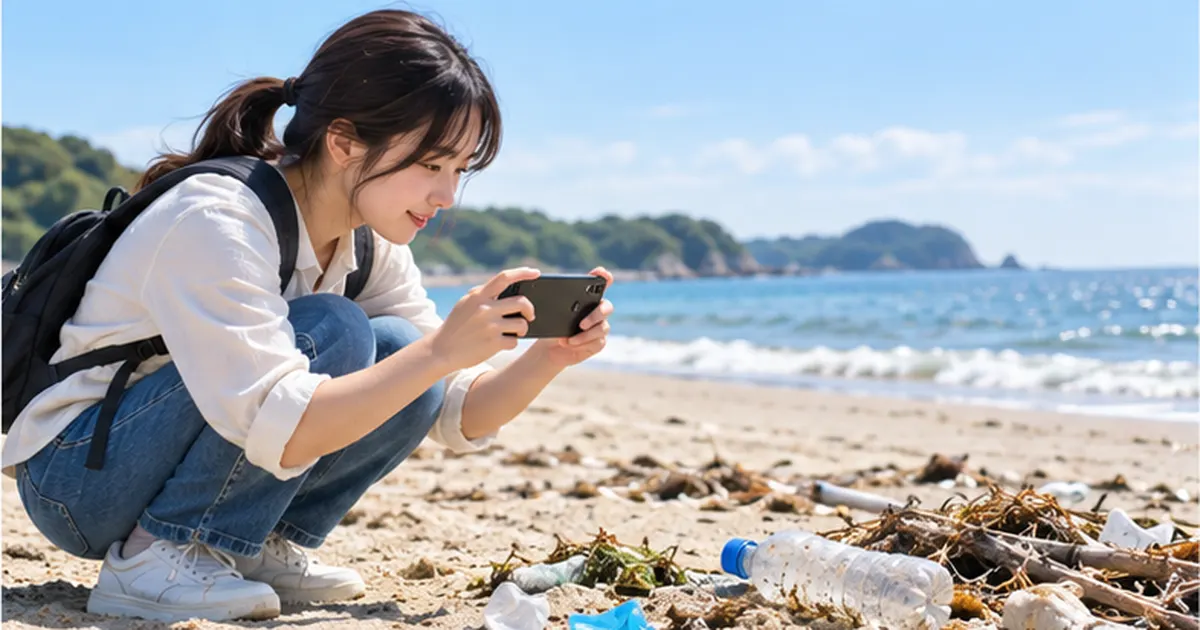
Trash left behind at the beach gets carried off by wind and waves and eventually washes up on another shore as "beach litter." Ongoing monitoring surveys conducted by Japan's Ministry of the Environment back up this reality with hard numbers.
Over a five-year period starting in fiscal 2015, the Ministry of the Environment selected 23 sites nationwide and conducted beach litter monitoring surveys at roughly 10 sites per year. The surveys sort collected litter by type and calculate composition ratios using three metrics: weight, volume, and count. Comparing these three metrics matters — natural debris like driftwood, for example, weighs a lot but has a low item count, while small plastic fragments like bottle caps barely register by weight yet make up a large share by count. The repeated lesson from this survey is that "apparent volume" alone can be misleading.
This beach litter doesn't necessarily come from nearby beaches or campgrounds. It's not uncommon for litter carried by ocean currents and seasonal winds to have drifted in from distant regions or even overseas. That's why the mindset shouldn't stop at "as long as we pack out our own trash, there's no problem" — picking up any litter you notice, within reason, and taking it with you is a small contribution any beachgoer can make. To learn more about the sources and composition of beach litter, see "The Truth About Beach Litter: 93% Plastic by Count, Its Sources, and the Science of Ocean Currents and Beach Cleanups."
The Concrete Damage Caused by Beach Litter
Marine plastic debris is known to cause harm when seabirds, sea turtles, and fish mistake it for jellyfish or food and ingest it, and when fishing nets and ropes entangle animals in bycatch and entanglement injuries. Over time, plastic breaks down under UV light and wave action into "microplastics" (tiny plastic particles under 5mm), which enter the food chain from plankton up to large fish. Small plastic fragments left behind from camping can become part of this same process.
The Composition of Beach Litter
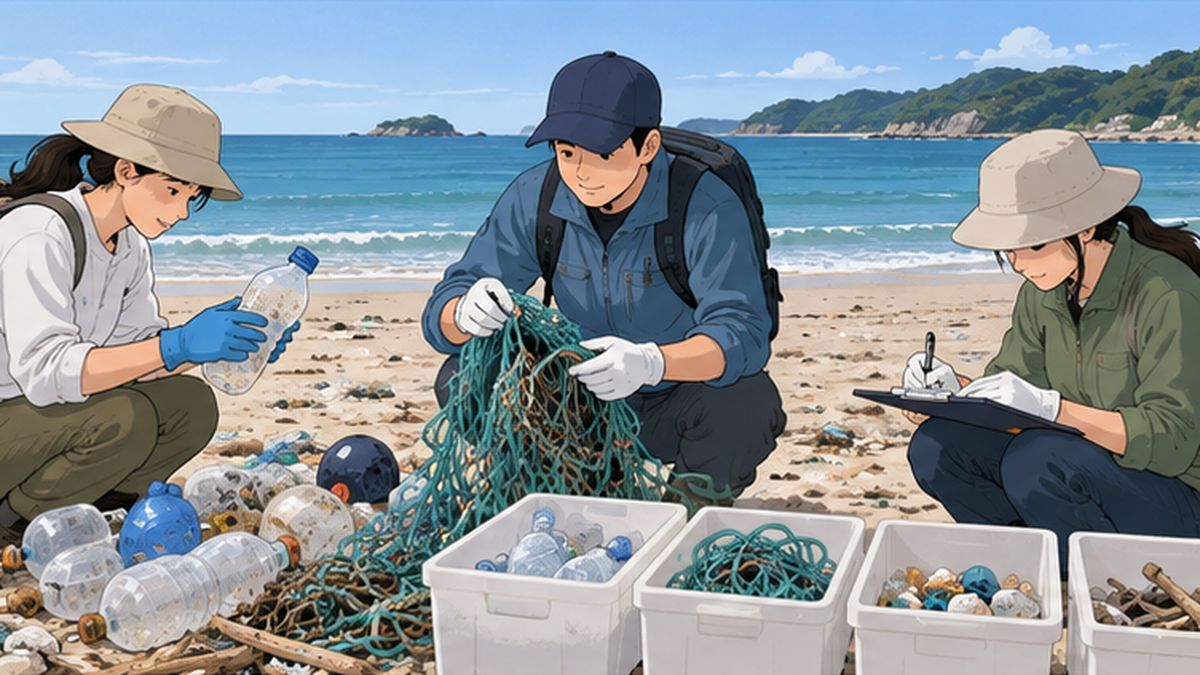
Nationwide surveys by the Ministry of the Environment have repeatedly reported that, by count, man-made items make up 80–90% or more of litter at most survey sites, with plastics (beverage bottles, fishing nets and rope, plastic bags, etc.) accounting for a large share of that. By weight, the proportion of natural debris (such as driftwood) rises, but by count and volume, plastic litter is overwhelmingly dominant.
How Camping Trash Flows Into the Sea
- Strong winds blow away trash bags or food packaging left out while setting up camp
- Belongings or trash left near the waterline get swept away at high tide
- Leftover fragments from burning trash containing plastic in a campfire scatter in the wind
- Food scraps or cooking waste buried directly in the sand fail to decompose and attract wildlife
What's especially easy to overlook is "small trash." Bottle caps, torn straw wrappers, spent firework debris, scraps of duct tape used to patch a tent — each piece is light and small enough to go unnoticed. Yet as beach litter surveys show, these small plastic fragments are exactly what drives up the count-based share of litter, and they're also the size most easily swallowed by mistake by seabirds and sea turtles. Rather than stopping at "collect the big trash and call it done" during teardown, keeping an eye out for small fragments scattered across the sand is the last line of defense against camping trash reaching the sea.
Proper Waste Disposal: Practicing LNT on the Beach
LNT's "Dispose of Waste Properly" principle is especially important for beach camping. The basic rule is simple: "pack out everything you bring in."
Everyone knows the phrase "pack it out," but actually following through takes preparation and process. Before you leave, prepare several trash bags (separated for burnable, non-burnable, food waste, etc.) and anchor them somewhere with a weight so they don't blow away. Food waste like vegetable scraps and fish bones generated while cooking should go into a sealable bag to control odor and pests. Whether you treat this extra step as "a hassle" or not is ultimately what determines whether that beach stays clean.
Concrete Practices
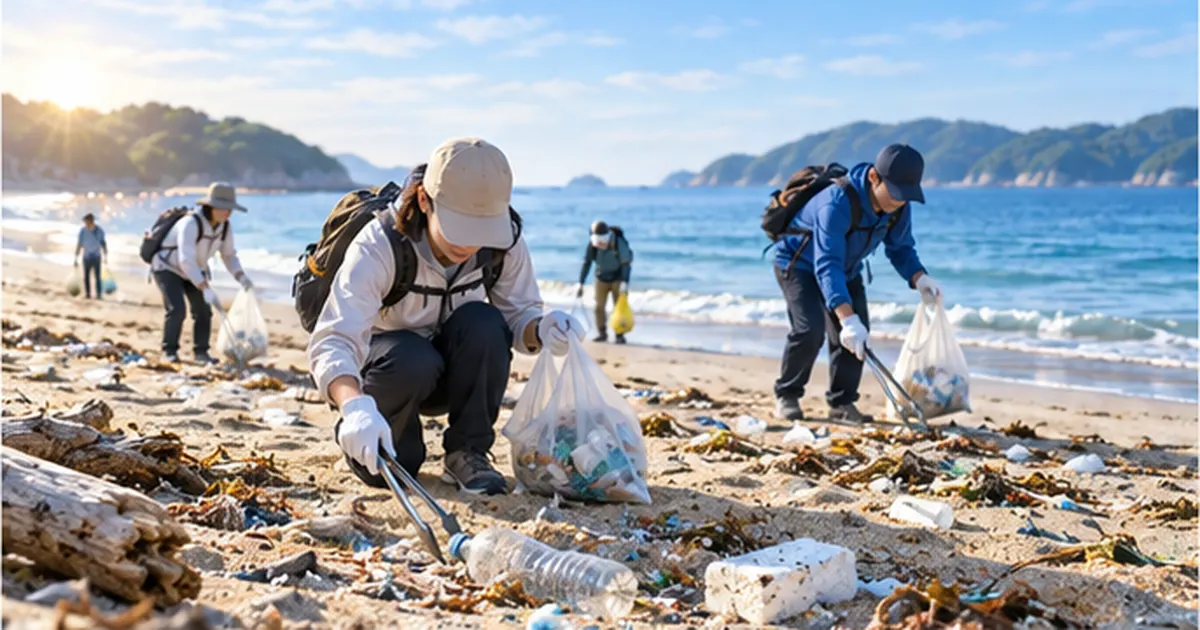
- Gather all trash, including food waste and scraps, into bags for pack-out
- Before leaving, scan the entire campsite area for small litter (cable ties, food wrapper scraps, etc.)
- Wash dishes away from the waterline, and collect food scraps from the wash water with a strainer
- If using soap or detergent, choose a low-impact product and use only a small amount
Handling Dishwashing and Wastewater
In LNT, wastewater generated from washing dishes is also treated as a form of "waste." The reason for washing away from any water source (including the shoreline and river mouths), whether seawater or fresh, is to prevent oil and food residue from flowing directly into the ecosystem. Wiping down dishes with paper or a scraper before washing — a "pre-wipe" — cuts down on both the water and detergent you need. Food scraps mixed into the wash water should be collected with a strainer and packed out as combustible waste. When using soap or detergent, choose a highly biodegradable product and keep the amount to a minimum.
Its Relation to "Leave What You Find"
Among shells and other beach debris, some play an important role as part of the ecosystem. Even if you're tempted to take home an unusual shell or piece of seaweed, LNT's philosophy is to leave it where it is. Conversely, if you spot obvious man-made litter — even if it isn't yours — picking it up within reason and taking it with you contributes to "consideration for other visitors."
Shells become homes for hermit crabs and part of the beach's calcium carbonate cycle. Seaweed and driftwood can serve as hiding places for small crustaceans or nesting material for birds. Taking things home "because they're pretty" or "as a souvenir" can, cumulatively, alter the physical composition of the beach itself. Capturing a photo as a record and leaving the item where you found it is a simple habit that puts this principle into practice.
Self-Check List Before Breaking Camp
- Did you restore the ground and sand where your tent stood to its original state?
- Did you fully clean up the campfire remains and charcoal?
- Did you pick up even small pieces of trash (rubber bands, cable ties, etc.)?
- Did you pack out all leftover food and condiments?
Respecting Wildlife: Distance Is the Best Form of Consideration
Beaches are home not just to sea turtles, but to seabird colonies, crabs, hermit crabs, and small creatures living in tide pools. LNT's "Respect Wildlife" principle boils down to the basics: don't feed animals, don't approach them needlessly, and observe from a distance.
"Consideration for wildlife" may sound like a lofty idea, but in practice it's often something people do "without even realizing it." For example, catching a crab or hermit crab wandering near your tent out of curiosity, taking a photo, and then releasing it somewhere else. Even without any ill intent, this forcibly displaces the creature from its home range and can cause it to lose its territory or burrow. When observing, it's best not to move the animal from where it is and to keep any handling to an absolute minimum.
The Harm Caused Through Food
Leaving food scraps unattended while camping teaches crows, cats, raccoon dogs, and other animals to associate the taste with humans, making them dependent on human food. This causes nutritional imbalance for the wildlife and increases the risk of trouble from more frequent contact with people.
Once a wild animal learns that "humans give out food," it may start approaching other campers just as boldly, rummaging through belongings or acting aggressively. In some cases, the animal itself ends up targeted for culling as a "pest." It's worth understanding that not feeding wildlife, while it may feel like withholding kindness from an animal in front of you, actually protects that animal from greater risk down the line.
Consideration for Seabirds and Tidal Flat Life
- Don't approach seabird breeding colonies; observe from a distance using binoculars
- If you collect a creature from a tide pool, gently return it to its original spot after observing it
- When camping with pets, keep them on a leash to prevent contact with wildlife
Distance Guidelines Worth Remembering
- Observe seabird colonies from at least several dozen meters away
- Don't shine light on a nesting sea turtle — watch quietly from a distance (follow the rules of local observation tours)
- Never offer food to wildlife or deliberately try to lure it closer
Camping on Durable Surfaces: Where to Pitch Your Tent
LNT's second principle, "Travel and Camp on Durable Surfaces," calls for choosing stable ground with little vegetation — dry patches of beach, existing campsites, and the like. On the coast, it's especially important to avoid dune vegetation and areas showing nesting tracks.
Places to Avoid
| Location | Reason |
|---|---|
| Dune vegetation zones | Beach plants help prevent coastal erosion and are vulnerable to trampling |
| Intertidal zone (submerged at high tide) | Flood risk, plus habitat for tidal flat organisms |
| Beach areas showing nesting tracks or burrows | Disrupts sea turtle and seabird breeding behavior |
| Private land or areas under fishing rights | Can lead to legal trouble |
Beach plants growing on dunes — such as sand sedge, beach vitex, and beach morning glory — send roots deep to anchor the sand, helping prevent coastal erosion and blowing sand. Repeated trampling damages the roots, causing the sand to lose its stability and collapse more easily, which in turn worsens erosion damage during typhoons and high waves. When looking for a spot to pitch a tent, prioritize bare ground or maintained areas already free of vegetation, and avoid trampling areas where greenery remains.
Many beach resorts and auto-campgrounds have designated zones and maintained setup areas precisely to account for this kind of environmental burden. Using a facility with clear rules is itself one form of practicing LNT.
Choosing a "Managed Beach" Over a "Free Beach"
The spirit of LNT differs from the idea that "anything goes in nature." Rather, actively choosing a site that management has developed with environmental impact in mind is, in the end, the more rational way to reduce the burden on nature. Campgrounds and auto-campsites attached to beach resorts typically have proper restrooms, cooking areas, and trash collection points, offering the advantage of localizing ecological impact compared to individuals camping freely on an undesignated beach. It's worth understanding that the image of "freedom amid inconvenient, untouched nature" and the goal of "minimizing impact on nature" don't always align.
Planning Ahead and Consideration for Others: What You Can Do Before You Go
LNT's very first principle, "Plan Ahead and Prepare," actually delivers the biggest payoff. Checking the regulations at your destination in advance (open fire bans, no-camping zones, etc.) and gathering the necessary gear (a fire pan, bags for packing out trash, red-toned lights, etc.) prevents most of the misjudgments and trouble that occur on site.
What to Check Before You Leave
- Check the official website of the municipality or coast manager responsible for that beach to confirm whether camping, fires, and vehicle access are allowed
- Check whether the season coincides with sea turtle nesting or seabird breeding periods
- Check tide tables and plan your tent location to avoid areas that flood at high tide
- Find out in advance whether there are official trash disposal points or restrooms nearby, and if not, pack gear on the assumption you'll need to carry everything out
The Final Principle: "Be Considerate of Other Visitors"
The beach is shared by a diverse mix of users — anglers, local fishing communities, other campers, people out for a walk. Keeping music at a reasonable volume, setting up camp without blocking pathways, and staying quiet at night are forms of consideration that protect not just the natural environment but relationships between people, making them an important pillar of LNT as well.
Relationships with local fishing communities in particular are an easily overlooked but important consideration. Coastlines and rocky shores are often subject to fishing rights, and pitching a tent where it overlaps with gear storage or work paths can interfere with the next morning's fishing operations. Small gestures — not blocking paths and facilities locals use daily, greeting fishers already at work early in the morning — build up into good relationships between campers and residents, which in turn helps ensure that camping on that beach continues to be tolerated for a long time to come.
Summary of This Article
- The LNT 7 principles cover planning, campsite selection, waste disposal, preserving natural objects, campfires, wildlife, and consideration for others
- Beach fire restrictions matter not only legally but also for protecting the beach ecosystem
- Sea turtles are sensitive to light — nighttime lighting and campfires can affect nesting and hatching
- Most beach litter is plastic; always pack out everything you bring
- Keeping your distance from wildlife and never feeding it is the most important form of consideration
References and Sources
- Ministry of the Environment, Japan — National Park Visitor Etiquette – Basic manners for national park visitors
- Leave No Trace Japan (LNTJ) — The 7 Principles – Detailed explanation of the LNT 7 principles
- Ministry of the Environment, Japan — Results of the FY2019 Marine Litter Survey – Nationwide beach litter composition survey results
- Ministry of the Environment, Japan — FY2023 Beach Litter Composition Survey Data Summary – Latest beach litter composition data
- Ministry of the Environment, Japan — Marine Litter Survey (Including Microplastics) – Overview of marine litter surveys
- WWF Japan — Sea Turtles Facing the Threat of Extinction – Overview of threats facing sea turtles
- Sea Turtle Association of Japan — Threats to Sea Turtles – Details on threats to sea turtles, including light pollution
※ Listed in order of reliability: government and academic institutions > peer-reviewed papers > specialist organizations > reputable media