⚡ In short
The Japanese eel is classified as Endangered (EN), yet it still lines store shelves. Japan's wild catch hit a record low of just 52 tons in 2024. From the mechanics of farming and imports to the CITES COP20 showdown and the frontier of full-cycle aquaculture, this article lays out the whole eel problem in numbers.
Eating eel on the midsummer "Day of the Ox"—a custom long taken for granted in Japan—now stands at a crossroads. The Japanese eel is an endangered species, classified as Endangered (EN) by both the International Union for Conservation of Nature (IUCN) and Japan's Ministry of the Environment. And yet, grilled eel still lines supermarket shelves today, and lines form outside specialty restaurants. Few people can squarely answer the simple question: "If it's about to go extinct, is it okay to eat it?"
The numbers are sobering. Japan's wild eel catch, which stood at 3,000–4,000 tons per year in the early 20th century, fell to just 52 tons in 2024, the lowest since records began. Catches of glass eels—the juveniles that supply eel farming—have also plummeted, and at the CITES Conference of the Parties (COP20) in November–December 2025, a proposal to place all species of the genus Anguilla, including the Japanese eel, under international trade regulation was formally debated.
Drawing on primary sources from the Fisheries Agency, the Ministry of the Environment, and the Fisheries Research and Education Agency, this article walks through the key questions in order: Why has the eel declined? Why can we still eat it? When will full-cycle aquaculture become practical? And what should we do? By the end, you will likely see eel in a whole new light.
What you will learn in this article
- How far catches of Japanese eel and glass eels have fallen (latest data)
- What the "Endangered (EN)" listings by IUCN and the Ministry of the Environment mean, and why eating eel is not banned
- How farmed eel depends entirely on wild juveniles (glass eels)
- How international trade regulation of eel was debated at CITES COP20 (2025)
- The state of the art in full-cycle aquaculture and the remaining hurdles to commercialization
- Sustainable ways consumers can engage with eel starting today
The State of the Japanese Eel Resource in Numbers—Down to 1/60th in a Century
Let us start with data, not impressions. Japan is one of the world's largest eel-consuming nations, and what happens on its dinner tables directly affects the resource across East Asia. According to the "Current Status of International Fishery Resources" compiled by the Fisheries Agency and the Fisheries Research and Education Agency, indicators of the Japanese eel's resource status have deteriorated consistently over recent decades.
The wild catch keeps hitting record lows
Japan's catch of wild adult eels was stable at 3,000–4,000 tons per year from 1915 to 1943. From 1970 onward, however, it declined relentlessly: to the 600-ton range in the early 2000s, then below 100 tons from 2015. And the 2024 catch was a mere 52 tons—roughly 1/60th of the early-20th-century level, and the lowest since records began.
| Period | Japan's wild eel catch |
|---|---|
| 1915–1943 | Stable at roughly 3,000–4,000 tons |
| Early 2000s | Over 600 tons |
| 2015 onward | Below 100 tons |
| 2020 | 65 tons (record low at the time) |
| 2024 | 52 tons (new record low) |
Glass eels, the seed of farming, have also crashed
More than 99% of the eel sold in stores is farmed, but that farming relies on catching wild juveniles called glass eels and growing them out. Japan's glass eel catch has also fallen over the long term, from a peak of over 200 tons in the early 1960s to around 10 tons in recent years—dropping to just a few tons in poor years. No juveniles, no farming: the very foundation of the eel supply is thinning out.
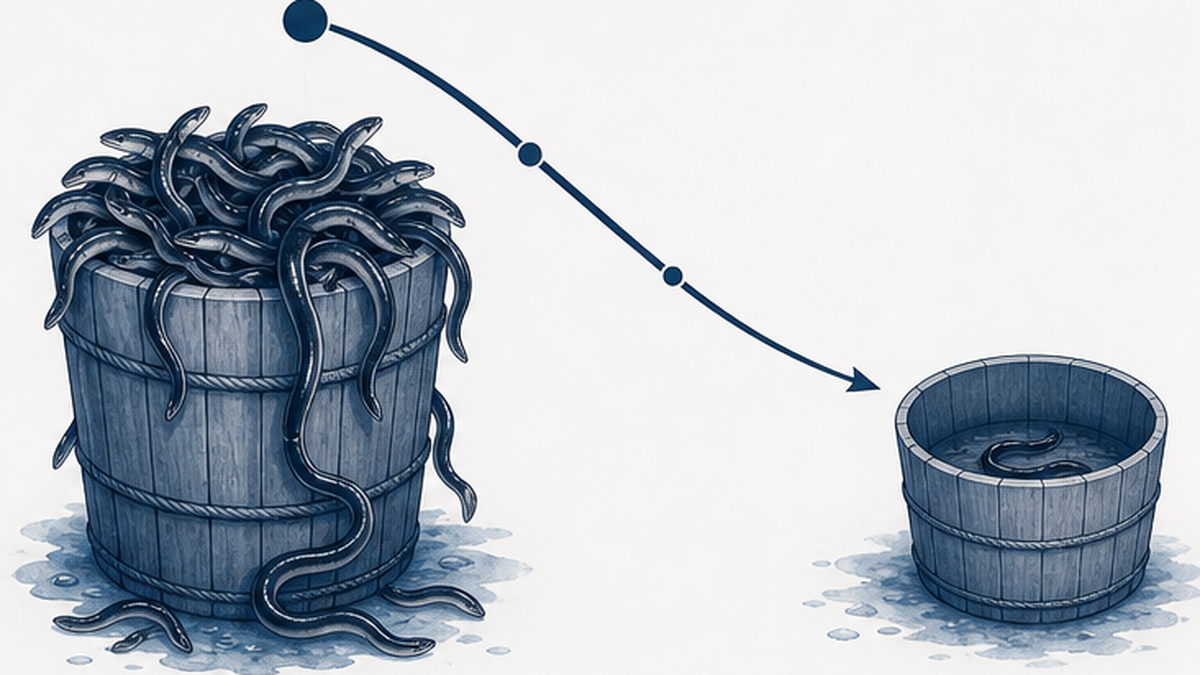
Such a steep decline is not unique to eel. For the broader structure of overfishing across the world's fishery resources, see our related article "Why Does Overfishing Happen? The Mechanics of Fishery Stock Collapse".
Key points of this section
- Japan's wild eel catch hit a record-low 52 tons in 2024 (about 1/60th of the early-20th-century level)
- The glass eel catch that seeds farming has fallen from over 200 tons at its peak to around 10 tons in recent years
- The decline is hitting adults and juveniles at the same time
What Kind of Fish Is the Japanese Eel? A Life Shrouded in Mystery
Before considering countermeasures, let us look at what kind of life the Japanese eel leads. Until quite recently, no one even knew where this fish was born. That enigmatic life history is a root cause of why managing and protecting the resource has been so difficult.
A "catadromous" fish that travels thousands of kilometers across the Pacific
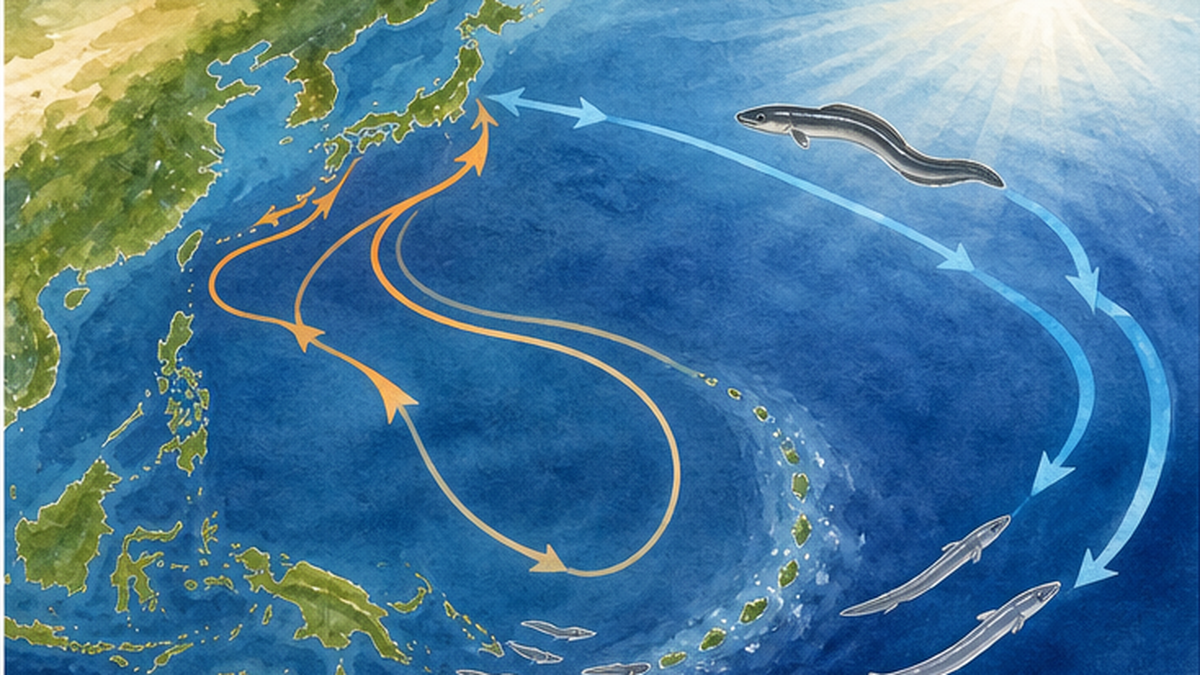
Whereas salmon are born in rivers and grow at sea, eels do the opposite. The Japanese eel's spawning ground lies in the open ocean west of the Mariana Islands, more than 2,000 km from Japan. In 2009, a University of Tokyo research team collected wild eel eggs there for the first time anywhere in the world, scientifically confirming the long-mysterious spawning site. Larvae born in the open ocean drift thousands of kilometers on the North Equatorial Current and the Kuroshio, reaching East Asian coasts in about half a year. After growing in rivers and estuaries for five to more than ten years, they set out once again for the distant southern spawning grounds. Humans have never observed this grand migration in full, and much about the eel's life in the open ocean remains unknown.
A fish whose name changes as it grows
Eels change dramatically in form and name at each stage of growth. Because each stage occupies a different habitat, conserving the resource requires protecting the sea, rivers, and estuaries as one connected whole.
- Leptocephalus—a transparent, willow-leaf-shaped larva drifting in the open ocean
- Glass eel—a transparent juvenile of 5–6 cm arriving at the coast; this is the stage caught for aquaculture
- Elver ("kuroko")—a young pigmented eel beginning to ascend rivers
- Yellow eel—the growth stage spent for years to over a decade in rivers and estuaries, with a yellowish belly
- Silver eel—the adult descending to the sea to spawn, its body turning silver and its eyes enlarging
A mysterious life history has made protection difficult
The spawning ground was confirmed only a little over a decade ago. Rearing eels artificially from egg to adult is extremely difficult, and accurately estimating how much of the resource remains is no easy task either. The migration route spans the waters of Japan, China, Korea, and Taiwan, so no single country can protect it alone. "Poorly understood biology," "crossing national borders," and "harvested at the juvenile stage"—keep in mind that this triple difficulty sits at the starting point of eel resource management.
Why the Decline? Three Factors: Overfishing, Habitat Loss, and Ocean Variability
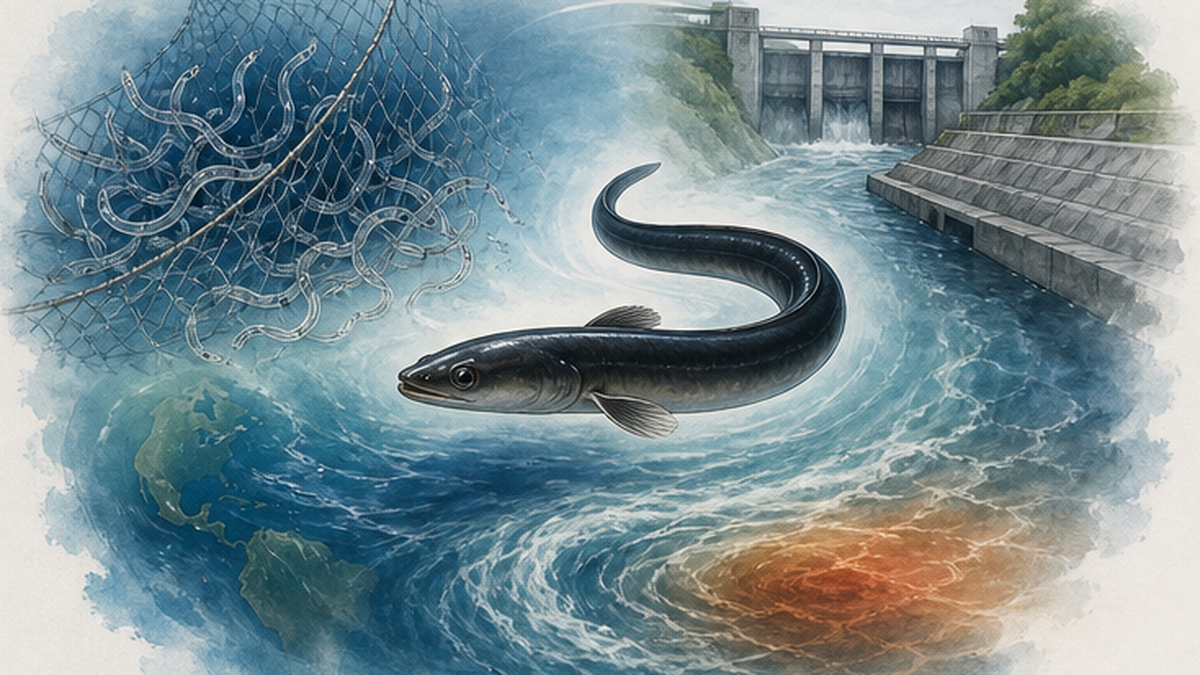
Why has the Japanese eel declined so far? The Fisheries Agency cites three factors behind the falling glass eel catch: "ocean environmental variability," "deterioration of habitat," and "excessive harvesting of glass eels (overfishing)." However, science has not determined how much each factor contributes; the reality is that multiple factors are intertwined.
Factor 1: Overharvest—both juveniles and adults have been caught
Eels have been fished at every stage of life: glass eels (juveniles), yellow eels (young individuals), and silver eels (adults heading off to spawn). The most serious problem is a structure that takes both juveniles that have not yet spawned and adults on their way to spawn. If they are caught before leaving the next generation, it is no surprise the resource fails to replenish itself.
Factor 2: Degraded rivers and coasts—the places eels live have vanished
The Japanese eel is a catadromous fish that spends most of its life in rivers, estuaries, and coastal waters. Yet since Japan's era of rapid economic growth, dams and weirs have fragmented rivers and blocked upstream migration, while concrete revetments have stripped away the rock crevices and muddy bottoms that serve as shelter. The Ministry of the Environment also identifies changes in river and coastal habitats as a major factor in the population decline.
The population of the Japanese eel has declined greatly compared with the 1960s and 70s, and changes in habitats such as rivers and coastal waters are considered one of the factors behind the decline.
— Ministry of the Environment, "Approach to Conserving Japanese Eel Habitat"
- Fragmentation of migration routes by dams and weirs—eels cannot reach upstream habitat
- Concrete channelization—loss of feeding grounds and shelter (rock crevices, mud bottoms, vegetation)
- Reclamation of tidal flats and wetlands—loss of the places where eels spend their growth years
Factor 3: Ocean variability—the long journey from spawning grounds to Japan
As we saw in the previous chapter, Japanese eels are born far to the south in the waters west of the Mariana Islands and ride ocean currents to the coasts of East Asia. Because of this, when currents and water temperatures shift—during El Niño events, for example—the fraction of juveniles that manage to reach the coast is thought to change substantially. Recent climate change may be amplifying this uncertainty further.
For more on these habitat challenges and conservation efforts such as installing stone-basket shelters, see our related article "Protecting the Japanese Eel—The Front Lines of Conservation".
What "Endangered (EN)" Actually Means—Why Eating Eel Is Not Banned
To answer the question "Is it okay to eat an endangered species?", we first need to understand precisely what "endangered species" means. In fact, the designation carries none of the legal force many people imagine.
Two red lists: the Ministry of the Environment and IUCN
In February 2013, the Japanese eel was listed as Endangered (EN) on the Ministry of the Environment's 4th Red List. In June 2014, the International Union for Conservation of Nature (IUCN) assessed it as Endangered as well. The IUCN's rationale was that the population was judged to have declined by more than 50% over three generations (12–45 years for eels). "EN" denotes species facing a high risk of extinction in the near future—one step below the most critical wild category—putting the eel in the same risk class as the crested ibis and the giant panda.
Nor is the Japanese eel alone in its plight. Of the dozen-plus species in the genus Anguilla worldwide, the European eel is assessed by IUCN as Critically Endangered (CR), the most severe category, and the American eel is also assessed as endangered. It is precisely because eel resources are shrinking simultaneously around the world that, as described below, a proposal emerged to regulate international trade in the entire genus at once.
Red lists have no legal force
The crucial point is that a red list is a scientific assessment of extinction risk, not a law banning capture or sale. In Japan, capture and trade are legally restricted only when a species is designated under frameworks such as the Act on Conservation of Endangered Species ("domestic rare wildlife species")—and the Japanese eel has not been so designated. In other words, being an endangered species and being legal to catch, sell, and eat can coexist without contradiction under the current system.
What "Endangered (EN)" means
- The third-most-severe category on the IUCN Red List (excluding Extinct and Extinct in the Wild)
- Species assessed as facing a high risk of extinction in the wild in the near future
- Listing itself carries no legal force to prohibit capture or trade
- The Japanese eel is listed EN by both the Ministry of the Environment (2013) and IUCN (2014)
"Not regulated" and "safe" are different things
The Fisheries Agency's position is that with proper management there is no risk of extinction, and it is proceeding with resource management on that basis—but many researchers counter that current management is insufficient. The absence of a legal ban does not mean the resource is secure. This "gap in the system" is the very heart of what makes the eel problem so confusing.

Why Eel Is Still on the Table—How Farming and Imports Work
The wild catch is only 52 tons, yet Japan consumes roughly 60,000 tons of eel a year. Filling that thousand-fold gap are farming and imports. But that "farming" rests on a critical premise that many people misunderstand.
Eel "farming" starts with wild-caught juveniles
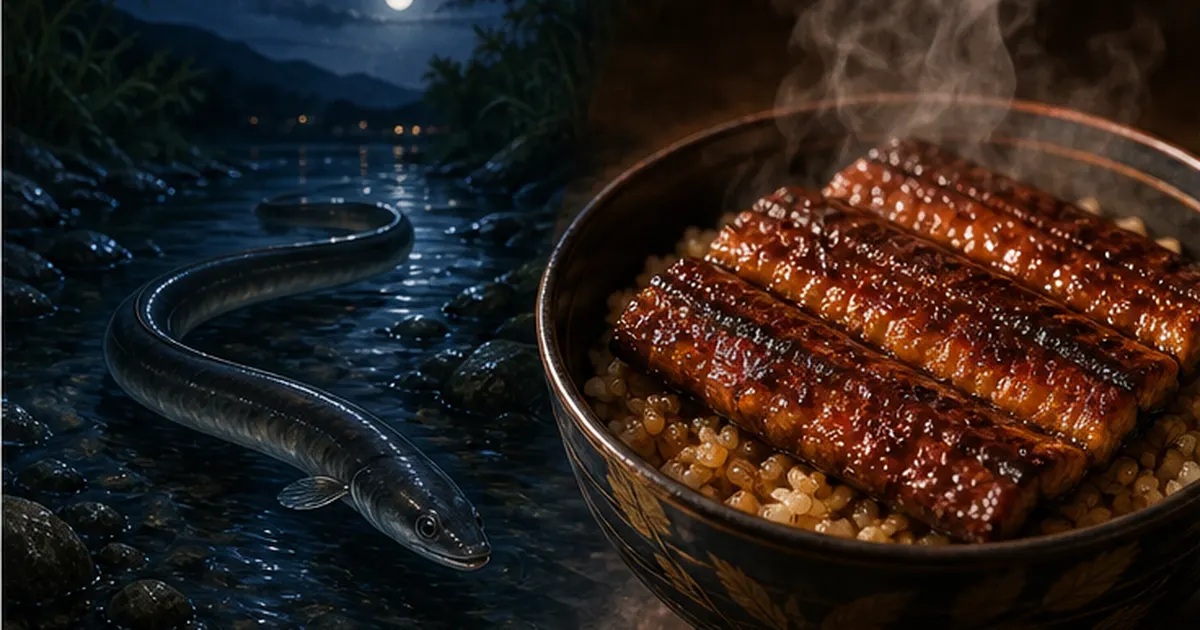
Eel farming does not raise eels from eggs. It catches wild glass eels as they ascend rivers from winter to spring, grows them in ponds for six months to a year and a half, and ships them—that is the reality of today's aquaculture. In other words, farmed eel is ultimately 100% wild resource. If glass eels can no longer be caught, the farming industry itself cannot continue. The scramble for juveniles has driven prices sky-high, and glass eels have come to be traded at such prices that they are called "white diamonds."
The reality of supply—more than two-thirds imported
Breaking down Japan's 2024 supply of 60,941 tons: imports accounted for 44,730 tons, about 73% of the total; domestic aquaculture for 16,159 tons; and the domestic wild catch for a mere 52 tons (under 0.1%). Most imports are kabayaki (grilled eel) and live eels farmed in China and Taiwan—and these too are raised from wild glass eels caught in East Asian waters. Supply peaked at about 160,000 tons in 2000; today it has shrunk to less than 40% of that.
| Supply source | Volume (2024) | Share |
|---|---|---|
| Imports (China, Taiwan, etc.) | 44,730 tons | ~73% |
| Domestic aquaculture | 16,159 tons | ~27% |
| Domestic wild catch | 52 tons | Under 0.1% |
| Total | 60,941 tons | 100% |
The strain on the resource shows up clearly in prices. The average annual wholesale price of eel at Tokyo's central market was around 2,300 yen per kilogram in 2009–2010, but surged through the 2010s as glass eel shortages persisted, reaching 4,998 yen in 2022—more than double. Prices have stayed around 5,000 yen in recent years. Once an everyday food of the common people, eel is steadily becoming an unaffordable luxury as the resource shrinks.
The European eel: a cautionary precedent
We must not forget the European eel, which fell into crisis before the Japanese eel. Japan once imported large volumes of European eel farmed in China, but after the stock collapsed, the species was assessed by IUCN as Critically Endangered (CR)—the most severe category—and since 2009 its international trade has been regulated under CITES Appendix II. The EU has in principle halted exports outside the bloc. The lesson of the European eel—"used up before regulation caught up"—is a weighty precedent for thinking about the Japanese eel's future.
For the environmental impacts of aquaculture and the search for sustainable farming, see our related article "Weighing the Environmental Impact of Aquaculture".
CITES COP20—The Battle over International Trade Regulation
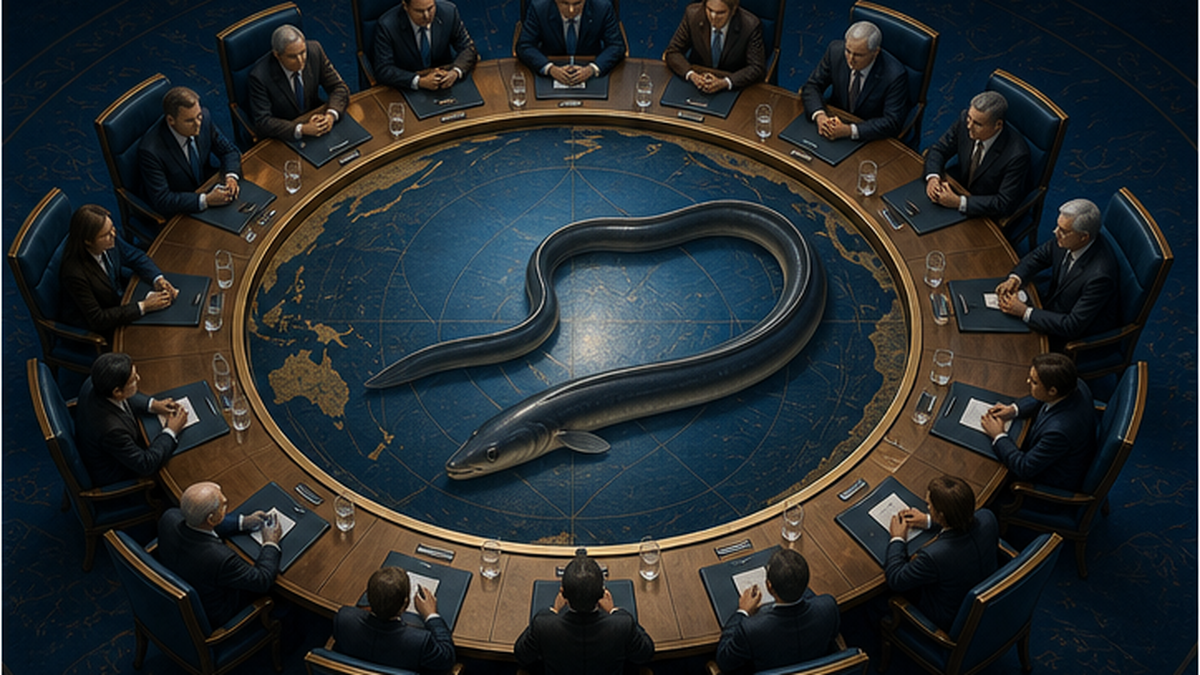
In 2025, the eel problem took center stage in international politics. At the 20th Conference of the Parties (COP20) to CITES, the convention regulating international trade in wild fauna and flora, regulation of all species of the genus Anguilla—including the Japanese eel—became a formal agenda item.
What the EU and Panama's "Appendix II" proposal meant
In June 2025, the EU and Panama submitted a proposal to list all species of the genus Anguilla, including the Japanese eel, in CITES Appendix II. Once listed in Appendix II, a species—even if not immediately threatened with extinction—cannot be traded internationally without an export permit issued by the exporting country's government. Because other eels are hard to distinguish visually from the already-regulated European eel, the proponents' logic was that regulating the whole genus was necessary to close the loophole.
The outcome at COP20—the proposal was rejected
COP20 was held from November 24 to December 5, 2025, in Samarkand, Uzbekistan, with 163 countries and the EU participating. The proposal to list the genus Anguilla in Appendix II went to a vote but was rejected through the opposition of many parties, including Japan. The Japanese government argued that the Japanese eel is already managed under the Japan–China–Korea–Taiwan framework and that the listing lacked scientific justification, and it had lobbied other parties intensively. For Japan, which relies on imports for over 70% of supply, international trade regulation was an issue that could strike directly at the dinner table.
Rejection is not the end
The rejection did not make the problem go away. International debate over eel conservation and trade management continues, and the next conference, COP21, will be held in Panama in 2028. If the resource does not improve, another listing proposal may well be submitted. What the international community has served notice of is, in effect, homework: "If you don't want regulation, demonstrate recovery with results."
What would have happened had Appendix II listing passed? Trade would not have been banned outright, but every export would require the exporting government to certify that the trade does not threaten the species' survival and to issue permits. If kabayaki, live eels, and juveniles were all covered, distribution costs for import-dependent Japan would certainly have risen, very likely shrinking supply and pushing up prices. It is clear that the eel problem is at once an environmental issue and an economic issue for the dinner table.
Points of caution
- Rejection does not mean "the resource is safe"—it is merely a postponement of regulation
- The European eel has been in Appendix II since 2009—the Japanese eel could follow the same path
- Recovery results will be scrutinized before COP21 (2028, Panama)
Where Resource Management Stands—Pond-Stocking Limits and the Shadow of Poaching
"Japan is already managing the resource"—this was the basis of Japan's argument at COP20, namely the international framework in East Asia. Yet more than a few voices question how effective that management really is. Let us look at both the light and the shadow.
The Japan–China–Korea–Taiwan pond-stocking quota system
Japan, China, Korea, and Taiwan—the users of the Japanese eel—agreed in 2014 to cap the quantity of glass eels placed into aquaculture ponds ("pond stocking"), a system in operation since 2015. The combined cap for the four countries and regions is 78.8 tons, of which Japan's share is 21.7 tons. Within Japan, glass eel harvesting is to be halted once farmers' actual pond stocking reaches the cap.
| Country/region | Pond-stocking cap |
|---|---|
| China | 36 tons |
| Japan | 21.7 tons |
| Taiwan, Korea, etc. | Remaining ~21 tons |
| Total | 78.8 tons |
The system remains in operation today: in Japan's 2026 fishing season, for example, glass eel harvesting is to be suspended if pond stocking reaches the 21.7-ton cap. A mechanism that says "stop catching once the cap is reached" does carry real meaning as a first step in resource management.
The structural problem: limits set too high
But the framework faces a fundamental criticism. The 78.8-ton cap was set at 20% below the harvest of the 2014 season—a relatively abundant year for glass eels—not on the basis of any stock assessment. In practice, East Asia's total pond stocking has fallen well short of the cap year after year; when you can catch all you can and still not hit the limit, it is hard to call the cap a functioning regulation. Researchers continue to argue that the limits should be lowered to levels that would actually allow the resource to recover.
Poaching and unreported catch—the black market in "white diamonds"
The other grave shadow is glass eel poaching and opaque distribution. Because glass eels command high prices, they are prime targets for poaching, and unreported harvesting and trade have distorted the very data on which management depends. To change this, Japan amended its Fisheries Act and, from December 2023, designated the glass eel a "specified aquatic animal or plant": harvesting without a license is now punishable by up to 3 years of imprisonment or a fine of up to 30 million yen. Securing traceability—the ability to track the distribution chain—is the next major challenge.
Opaque distribution is not merely a question of morals. In past years, the quantity of glass eels stocked into ponds not infrequently exceeded the sum of reported domestic catch and legitimate imports, with the gap attributed to unreported harvesting and illicit imports. If we cannot know accurately how much is actually being caught, then stock assessments and pond-stocking caps alike are built on sand. Anti-poaching measures and transparent distribution are the very foundation of eel resource management.
Restocking and habitat creation—effectiveness still unproven
Alongside regulation, efforts to actively increase the resource are under way across Japan: programs that buy adult eels from fishers and release them to the sea to spawn, releases of glass eels and young eels, and installation of "ishikura" stone baskets—cages filled with stones that create hiding places for eels. However, scientific verification of how many released eels actually reach the spawning grounds and leave offspring is still insufficient. Some researchers argue that before restocking, the real path to recovery is to catch less and restore river habitats—and the debate over priorities continues.
Can Full-Cycle Aquaculture Save the Eel? From 40,000 Yen to 1,821 Yen
"Full-cycle aquaculture" raises eels without relying on wild juveniles. If realized at scale, it could fundamentally change the resource problem—so how far along is it? In short: the technology is complete, and the endgame is now a battle against cost.
2010: the world's first closed-cycle success
Full-cycle aquaculture means hatching eels artificially, raising them to adulthood, and then taking eggs from those adults to raise the next generation—closing the cycle so that no wild resource is needed at all. In 2010, the Fisheries Research Agency (now the Fisheries Research and Education Agency) became the first in the world to complete this cycle. Baby eels (leptocephali) require highly specialized feed and are extremely difficult to rear; decades of research went into the achievement.
Costs cut to less than 1/20th in seven years
The obstacle was production cost. In 2016, producing one artificial glass eel cost 40,127 yen—about 70 times the price of a wild glass eel (roughly 500–600 yen)—and commercialization looked like a pipe dream. But rearing technology improved rapidly, and by 2023 the cost had fallen to 1,821 yen per fish. The Fisheries Research and Education Agency aims to get below 1,000 yen in fiscal 2027. Private-sector entrants are also multiplying: in 2025, Yanmar unveiled a new tank designed for mass production of eel seedlings.
| Year | Production cost per artificial glass eel |
|---|---|
| 2016 | 40,127 yen |
| 2023 | 1,821 yen (down ~96%) |
| FY2027 (target) | Under 1,000 yen |
| (Reference) Wild glass eel | Roughly 500–600 yen per fish |
Behind the falling costs lies an accumulation of painstaking innovation. The Fisheries Research and Education Agency has pursued research integrated across five areas: technology from egg collection to hatching, larval feed development, high-productivity tank design, labor-saving automated feeding, and selective breeding for fast-growing strains. In particular, improvements to the specialized larval feed—once based primarily on shark eggs—and the development of tank shapes in which larvae thrive have been major breakthroughs toward mass production.
Remaining challenges—scale and speed
Current production of artificial glass eels is on the order of tens of thousands of fish per year. Domestic aquaculture needs tens of millions to on the order of a hundred million juveniles annually, so a gap of nearly a thousand-fold in scale remains. Trial sales of fully farmed eel have begun in places, but at around 5,000 yen per fish they are still expensive. Will the technology clear the walls of cost and scale first, or will the wild resource hit its limit first? The eel's future hangs on the outcome of this race.

Where full-cycle aquaculture stands
- World-first closed-cycle success in 2010 (Fisheries Research and Education Agency)
- Production cost down from 40,127 yen per fish in 2016 to 1,821 yen in 2023
- Target of under 1,000 yen in FY2027; the gap with wild juveniles (500–600 yen) is narrowing
- Output is still tens of thousands of fish a year—major scale-up needed for commercial levels
What We Can Do—"Not Eating" Is Not the Only Answer
Having read this far, you may feel that perhaps we should stop eating eel altogether. But reducing consumption to zero is not the only solution. There are realistic actions consumers can take to preserve both the eel-eating culture and the resource.
Don't chase cheapness—imagine what's behind the price
Behind extremely cheap eel may lurk bulk purchasing and mass disposal, or juveniles of murky origin. Indeed, the problem of kabayaki stocked in bulk for the Day of the Ox going unsold and being thrown away has been taken up by the Consumer Affairs Agency as a case study in food loss. "On special occasions, at a trustworthy restaurant, at a fair price"—eating less often and raising the value of each meal is the most realistic choice for protecting the food culture while easing pressure on the resource.
Rethinking the "Day of the Ox"
The custom of eating eel in summer is famously said—among various theories—to have begun in the Edo period, when the scholar Hiraga Gennai devised the advertising slogan "Today is the Day of the Ox" for an eel restaurant struggling with slow summer sales. In fact, wild eel is at its seasonal best from autumn to winter, when it fattens up ahead of spawning. Summer's concentrated consumption is, historically speaking, partly a manufactured demand—and that concentration is one driver of unsold stock and waste. Ordering eel by reservation whenever you actually want it, rather than fixating on the Day of the Ox, by itself reduces food loss and pressure on the resource.
Check the source—labeling and traceability
When buying, look at origin labels and at whether the business discloses information about production and distribution. In Japan, the number of eel farmers who disclose how they obtain juveniles and how they farm, and of retailers and restaurant chains with sustainability-minded procurement policies, is slowly growing. Consumers caring about "where this eel came from" is itself pressure that squeezes opaque supply chains out of the market.
Ways to engage beyond eating
- Support river restoration where eels can live—participate in or donate to activities such as installing ishikura stone-basket shelters and river cleanups
- Share accurate knowledge—simply correcting the misconception that "farmed eel has nothing to do with wild resources" is meaningful
- Cheer on technological progress such as full-cycle aquaculture—choosing trial-sale products is a vote for research and development
- Back stronger resource management through elections and public comments—science-based caps and traceability systems are decided by policy
Passing the culture on to the future
Kabayaki is a crystallization of Japanese food culture stretching back to the Edo period. But a culture endures only as long as the resource that supports it. As the European eel's lesson shows, once regulation arrives—or the fish are gone—options narrow drastically. Fortunately, the exit of full-cycle aquaculture is coming into view, and stronger penalties and international management frameworks have begun to move. What remains is the demand side: whether we consumers can steer toward ways of eating that do not outpace the resource's speed of recovery. A future in which people still thrill to a bowl of unaju a century from now lies at the end of the choices each of us makes today.
Actions you can take today
- Make eel a treat for special occasions—eat it less often, at trustworthy specialty restaurants
- Check origin labels and procurement policies before buying
- Avoid extremely cheap eel and eel of unknown origin
- Learn about and support activities protecting eel habitat, such as ishikura stone-basket installation
Summary of this article
- The Japanese eel is recognized as endangered by both the Ministry of the Environment and IUCN; the 2024 wild catch was a record-low 52 tons
- Red lists carry no legal force, and supply continues through farming (dependent on wild juveniles) and imports
- The trade-regulation proposal was rejected at COP20 (2025), but the question may return at COP21 in 2028
- Full-cycle aquaculture has reached 1,821 yen per fish—a race between commercialization and resource depletion continues
- Consumers can join the solution by eating less often, checking sources, and paying fair prices
References and Sources
- Fisheries Agency – Information on eels (resource status, pond-stocking quota management)
- Fisheries Agency – The situation surrounding eels and countermeasures (July 2026)
- Fisheries Agency / Fisheries Research and Education Agency – Current Status of International Fishery Resources FY2025: Japanese eel
- Ministry of the Environment – Approach to conserving Japanese eel habitat
- Ministry of the Environment – Summary of results of CITES COP20
- Fisheries Research and Education Agency – Information on artificial eel seedling production technology (full-cycle aquaculture, costs)
- Ministry of Agriculture, Forestry and Fisheries – On the state of eel imports
- WWF Japan – The history of people and eels (consumption and the resource problem)
- Kaifu Lab, Chuo University – Will the Japanese eel go extinct? (commentary by researchers)
- Yanmar Holdings – Development of a tank for mass production of eel seedlings (2025 news release)
* Ordered by reliability: government and academic institutions > peer-reviewed papers > specialist organizations > trusted media